What Grammar-Land Can Teach Us About English
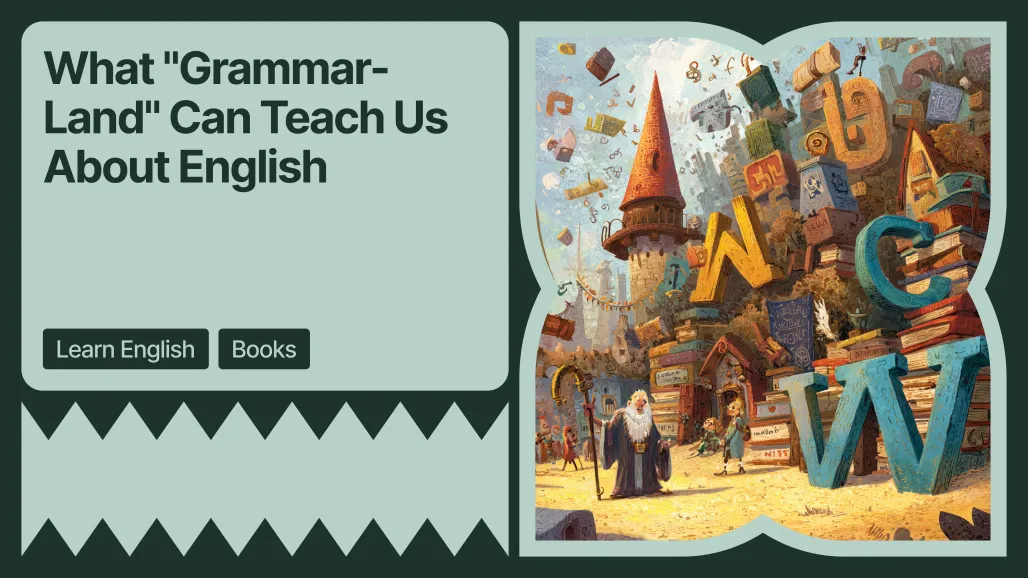
Discover Grammar-Land, where grammar comes to life through characters like Mr. Noun and Dr. Verb—fun for learners of all ages!
📖 What Is Grammar-Land About?
Judge Grammar
Mr. Noun – The Name of Everything
Dr. Verb – The Do-er of the Sentence
Little Article – Small But Essential
Mr. Pronoun – The Helper Who Replaces Nouns
Mr. Adjective – The Colorful Describer
Adverb – The Enhancer
Conjunction – The Connector
Mr. Preposition – The Place and Time Guide
What We Learn from Grammar‑Land
Why is grammar so hard to remember? Maybe it's because no one ever put it on trial and made each part of speech explain their job!
That’s what happens in Grammar-Land, a fun book written by M.L. Nesbitt in 1877. But Grammar-Land is not just a story. It’s also a great way to learn grammar. It helps both native English speakers and English learners understand grammar in a fun way. It’s also perfect for teaching grammar to children, using characters and stories to make learning easy.
Now, let’s meet the characters and learn what they can teach us!
📖 What Is Grammar-Land About?
Grammar-Land is a fun story where grammar rules are part of a big court case!
In this land, all the parts of speech—like nouns, verbs, and adjectives—are people. They live in Grammar-Land and must follow the rules set by Judge Grammar.
But one day, the rules are not being followed! Words are being used wrongly, and there is a lot of confusion. Judge Grammar decides to hold a trial. He calls each part of speech to court to explain its job.
The readers (you!) are invited from “Schoolroomshire” to watch and learn as the case goes on. Each character talks about their job in a sentence and why they are important.
Don’t worry—we won’t spoil the ending! But you’ll meet funny, proud, and helpful characters who will help you remember grammar forever.
Judge Grammar
Judge Grammar is the ruler of Grammar-Land. He knows all the rules and expects every word to play its part correctly. He calls all the parts of speech to court when there's confusion—and that’s where the lessons begin.

Mr. Noun – The Name of Everything
Mr. Noun enters the court standing proud and tall:

This shows that nouns are the building blocks of language—they name people, places, things, or ideas. Mr. Noun is “a stout big fellow, very well dressed,” which helps us remember that nouns are strong and important. They form the core of our sentences.
Dr. Verb – The Do-er of the Sentence
Dr. Verb bursts into court with urgency and claims that the verb is the most important word in every sentence:

Verbs are action or “being” words like run, eat, or is. Dr. Verb is lively and says he makes sentences move. Without a verb, sentences feel weak or incomplete.
Little Article – Small But Essential
Soft-spoken Article reminds everyone:

Though tiny, Article is important. It tells us whether a noun is general (a cat) or specific (the cat). The book describes Article as small and ragged but very useful.
Mr. Pronoun – The Helper Who Replaces Nouns
Mr. Pronoun steps up to speak:

He explains why he is called Pronoun:

Pronouns replace nouns like he, she, it, or they, so we don’t keep repeating the same noun. He’s polite and helpful, always ready to step in when Mr. Noun gets tired.
Mr. Adjective – The Colorful Describer
Mr. Adjective loves to chat and add color:

He adds descriptions like big, blue, or happy to nouns. He’s colorful and artistic, helping us picture things clearly.
Adverb – The Enhancer
Adverb, always nearby, can seem as an annoying precence to Dr. Verb:

He explains where the name comes from:

Adverbs modify verbs, adjectives, or other adverbs—like “run quickly“, ”very tall“, ”quite softly“. He’s subtle and graceful, often helping Dr. Verb or Mr. Adjective by making their actions or qualities more clear. He's smart and flexible, and often goes unnoticed—but is always there, doing his work.
Conjunction – The Connector
When things need joining, Mr. Conjunction steps forward:

He connects words and ideas, using and, but, because. He helps sentences work together smoothly. He’s described as calm and cooperative, and he loves structure and teamwork.
Mr. Preposition – The Place and Time Guide
Perky Preposition proudly declares:

He shows where or when something happens—on the table, before lunch. He’s small but guides us to understand relations in sentences. In the book, he's a bit bossy—he likes order and loves helping others find their proper place.

What We Learn from Grammar‑Land
Even though it was written over 100 years ago, Grammar-Land is still one of the most fun and easy ways to understand English grammar. Instead of long grammar lessons, this book tells a story—with characters, funny moments, and even a courtroom!
Each part of speech becomes a person with a job. They all come to court to explain what they do in a sentence. This helps us remember grammar better because we connect it to a character and a story.
The book shows us how all the words work together in a sentence. Sometimes, the characters argue about who is the most important, but Judge Grammar reminds them that every part of speech matters.
You’ll also learn:
- How to use the right word in the right place
- How different words work together
- Why some words must agree in number (like he runs vs. they run)
- That grammar can be fun—not scary!
Grammar-Land is also a great way to teach grammar to children. It’s perfect for students, parents, or English learners who want to enjoy learning. This charming book reminds us: grammar is not just rules—it’s a story where every word has a place and a personality. Dive into the full book with WholeReader!
May your grammar always be friendly—and may your nouns, verbs, and adjectives live happily ever after!