Summer Reading List for Middle School Students (Grades 7–9)
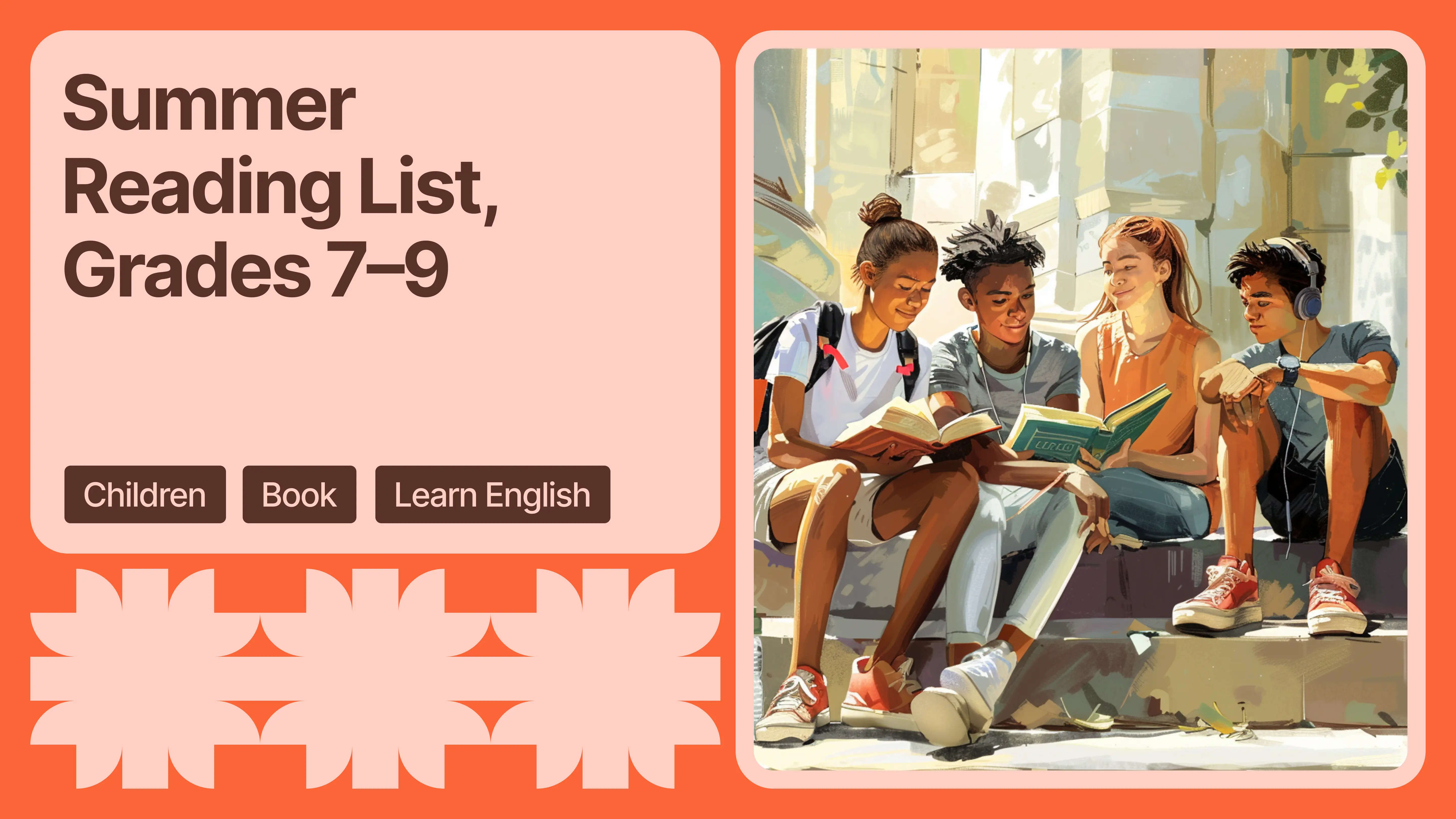
Classic summer reads for Grades 7–9 to build fluency, vocabulary, critical thinking, and reading stamina with free audio support.
Grade 7 Reading List
Grade 8 Reading List
Grade 9 Reading List
How To Use the List
Summer reading matters in middle school because students are moving into longer books, deeper themes, and more independent thinking. At this age, regular reading helps students keep their vocabulary growing, sharpen comprehension, and build the stamina they need for high school-level work.
The books below are classic titles that offer adventure, mystery, humor, suspense, history, and big ideas. Since many of them are longer than elementary-level books, students do not need to read every title on the list. A good summer goal is to choose at least three books that match the student’s interests and reading level. Every title is available free on WholeReader with immersive audio, so students can listen while following the text — a helpful way to stay focused, hear fluent pronunciation, and make challenging books more approachable.
Grade 7 Reading List
Seventh graders are ready for stories with stronger plots, more independent reading, and characters who face real choices. This is the time for transition from children literature to more adult and universal stories.
Ozma of Oz – L. Frank Baum Dorothy returns to a magical world filled with strange creatures, danger, and wonder. It is an imaginative choice for students who enjoy fantasy and want a smoother bridge into longer chapter books.
The Secret of the Old Clock – Carolyn Keene Nancy Drew solves her first mystery involving a hidden will and a family secret. Its clear pacing and strong sense of curiosity make it especially good for building reading confidence.
The Hidden Staircase – Carolyn Keene Nancy investigates strange events in a mysterious house with hidden spaces and suspicious clues. The suspense keeps readers moving while strengthening logic, prediction, and attention to detail.
Treasure Island – Robert Louis Stevenson A young boy is pulled into a dangerous search for buried treasure, pirates, and betrayal.
Around the World in Eighty Days – Jules Verne Phileas Fogg races around the world on a bold bet, facing delays, surprises, and narrow escapes.
The Canterville Ghost – Oscar Wilde A ghost tries to frighten an American family, but they are not easily impressed. The story mixes humor and the supernatural, making it a lively introduction to irony, tone, and comic storytelling.
Kim – Rudyard Kipling Kim is a clever boy caught between adventure, identity, and the world of spies in India.
Gulliver’s Travels – Jonathan Swift Gulliver visits strange lands where tiny people, giants, and unusual societies reveal surprising truths about human behavior.
Little Women – Louisa May Alcott The March sisters grow up through joy, disappointment, work, and family responsibility.
Grade 8 Reading List
Eighth graders can handle more complex books with deeper themes, stronger atmosphere, and more challenging vocabulary.
White Fang – Jack London A wild animal moves between cruelty, survival, and trust. The story helps students think about environment, behavior, and change.
20,000 Leagues Under the Sea – Jules Verne Captain Nemo’s underwater world is full of danger, discovery, and mystery. The book blends adventure and science, making it a strong choice for students who enjoy exploration.
The Time Machine – H. G. Wells A scientist travels far into the future and discovers a world shaped by human choices.
The Blue Bird – Maurice Maeterlinck Two children search for the Blue Bird of Happiness and discover unexpected truths along the way. The dreamlike story encourages reflection, symbolism, and discussion about what happiness really means.
The Turn of the Screw – Henry James A governess begins to suspect that something frightening is happening in the house where she works. This eerie story is best for confident readers who enjoy ambiguity and suspense.
Tarzan of the Apes – Edgar Rice Burroughs A boy raised in the jungle must understand both the natural world and human society. The adventure invites discussion about identity, survival, and belonging.
Captains Courageous – Rudyard Kipling A spoiled boy is rescued by fishermen and learns discipline, work, and responsibility at sea. This coming-of-age story is especially useful for discussing character change and maturity.
Dr. Jekyll and Mr. Hyde – Robert Louis Stevenson A respected doctor hides a terrifying second self. The novella is short, gripping, and rich with ideas about human nature, choices, and moral conflict.
The Hound of the Baskervilles – Arthur Conan Doyle Sherlock Holmes investigates a family curse, a dark moor, and a terrifying hound. The mystery makes the narrative gripping and hard to put down even for students who struggle with reading long texts.
Oliver Twist – Charles Dickens Oliver faces poverty, danger, and injustice in Victorian England. The novel introduces more complex language and gives students a powerful story about empathy, resilience, and social inequality.
Grade 9 Reading List
Ninth graders are preparing for high school reading and can begin working with more layered themes, complex characters, and literary style.
The Call of the Wild – Jack London Buck is taken from comfort into the harsh wilderness, where he must adapt to survive. The story is short, intense, and excellent for discussing instinct, transformation, and theme.
The War of the Worlds – H. G. Wells An alien invasion throws human confidence into chaos. The novel combines suspense with deeper questions to discuss about power, fear, and survival.
Jane Eyre – Charlotte Brontë Jane grows from a mistreated child into a woman determined to keep her independence and self-respect.
Frankenstein – Mary Shelley A scientist creates life and must face the consequences of his ambition. The story is ideal for high school preparation because it raises questions about responsibility, loneliness, ethics, and humanity that can be raised in form of discussions or essays.
The Invisible Man – H. G. Wells A scientist gains invisibility but loses control of himself and his choices. The novel encourages students to think about power, isolation, and the consequences of unchecked ambition.
The Importance of Being Earnest – Oscar Wilde This witty play is full of mistaken identities, clever dialogue, and social comedy. It is a lively way to introduce students to drama, satire, and the pleasure of sharp language.
The Life and Adventures of Robinson Crusoe – Daniel Defoe A timeless tale of survival and resilience that raises many important questions about human nature and the tolls of isolation.
The Story of Joan of Arc – Andrew Lang Joan’s story introduces courage, conviction, and leadership in a historical setting. It is a strong choice for students who enjoy biography and real-life heroism.
The Great Gatsby – F. Scott Fitzgerald A story of wealth, longing, and illusion in 1920s America. It a strong bridge into high school literary analysis.
The Picture of Dorian Gray – Oscar Wilde Dorian remains young while his portrait reveals the truth about his choices. The novel invites discussion about vanity, influence, morality, and the cost of living without responsibility.
How To Use the List
Students do not need to finish the entire list. For middle school readers, choosing at least three books over the summer is a strong and realistic goal, especially when the choices include longer novels. Encourage students to pick a mix: one book that feels comfortable, one that stretches them, and one they are genuinely excited to read.
After each book, encourage students to retell the main events in their own words, explain how a character changed, and discuss one important idea from the story. These conversations help students move beyond simply finishing a book and toward understanding it. Listening to audio while following the text can make challenging books easier to complete, especially when the language is older or the chapters are long. With steady practice, students return to school with stronger vocabulary, better focus, and more confidence as independent readers.