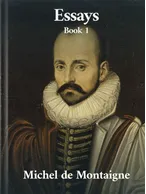
Michel de Montaigne, born on February 28, 1533, in the Château de Montaigne, France, is celebrated as one of the most significant figures of the French Renaissance and a pioneer of the essay as a literary form. He died on September 13, 1592, in the same region, leaving behind a remarkable legacy in philosophy and literature. Montaigne’s occupation encompassed roles as a philosopher, essayist, and public official, having served as the mayor of Bordeaux.
Montaigne's early life was marked by a unique upbringing that significantly influenced his later work. He was raised in a wealthy family, with a father who was a humanist and a mother who encouraged a liberal education. Montaigne's exposure to diverse languages and cultures cultivated his intellectual curiosity. His education was further enriched by his studies at the Collège de Guyenne in Bordeaux, where he encountered classical literature, philosophy, and rhetoric.
His literary career blossomed with the publication of "Essais" in 1580, a groundbreaking work that established the essay as a distinct genre. Through his introspective and conversational style, Montaigne explored themes of human experience, morality, and the complexity of self. His reflections on skepticism and the nature of knowledge were particularly influential, inspiring later thinkers such as René Descartes and Friedrich Nietzsche.
In his personal life, Montaigne experienced profound losses, including the death of his close friend Étienne de La Boétie, which deeply affected him and shaped his views on friendship and mortality. He married Françoise de la Chassaigne, with whom he had several children, yet he often struggled with the demands of family life and public duties. Despite his challenges, Montaigne's legacy endures as a cornerstone of modern thought, advocating for the value of introspection and the importance of individual experience in understanding the world.
William Carew Hazlitt, born on April 10, 1834, in England, was a prominent figure in the realm of literature, particularly known for his work as an editor, bibliographer, and literary critic. He passed away on May 22, 1913, in London. Hazlitt's occupation primarily revolved around his contributions to literature, where he became known for his writings on the works of classic authors, including his notable editions of works by William Shakespeare and other literary giants.
Hazlitt was raised in a family that valued literature and culture, which greatly influenced his intellectual development. He was educated at the prestigious University College London, where he honed his skills in literature and criticism. His early career saw him working in various literary roles, including contributions to journals and periodicals that focused on literature and criticism.
Throughout his literary career, Hazlitt was best known for his bibliographical works, such as "The Collections of the English Dramatic Poets" and "A New Dictionary of the English Language." His meticulous research and insightful commentary on classic literature brought renewed interest to many forgotten authors. His passion for literature also extended to his personal life, where he maintained relationships with contemporary writers and thinkers, further solidifying his place in literary circles.
In summary, both Michel de Montaigne and William Carew Hazlitt significantly shaped the literary landscape of their respective eras. Montaigne’s introspective essays provided a foundation for modern thought, while Hazlitt’s scholarly contributions preserved and celebrated the works of classic authors. Their legacies continue to resonate in the realms of philosophy and literature, inspiring generations to reflect on the human experience.
Michel de Montaigne was a French Renaissance philosopher and writer, best known for developing the essay as a literary form.