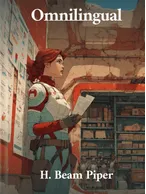
H. Beam Piper, born Horace Beam Piper on March 23, 1904, in Altoona, Pennsylvania, was a prominent American science fiction author whose work significantly influenced the genre. He passed away on November 6, 1964, in Williamsport, Pennsylvania. Piper's literary contributions primarily focused on science fiction, where he explored themes of alternate history, time travel, and the complexities of interstellar civilizations.
Piper's early life was marked by a fascination with stories and an overwhelming curiosity about technology and the future. After graduating from high school, he worked in various jobs, including as a clerk and a laborer, which provided him with a wealth of experiences that would later inform his writing. His early exposure to literature and his interest in science laid the foundation for his future career as an author.
Piper's literary career took off in the 1940s when he began publishing short stories in science fiction magazines. His notable works include the "Terra" series, which features the famous novel "Little Fuzzy," published in 1962. This work, along with others such as "The Cosmic Computer" and "Space Viking," solidified Piper's reputation as a master of speculative fiction. His narratives often incorporated rigorous scientific principles, making his stories not only imaginative but also plausible.
In his personal life, Piper faced several challenges, including financial difficulties and the struggles of being a writer in a competitive field. Despite these obstacles, he remained dedicated to his craft. Tragically, Piper's life ended in suicide, a reflection of the immense pressures he faced. Today, his work continues to resonate with readers and remains influential, ensuring that H. Beam Piper's legacy endures in the realm of science fiction.
H. Beam Piper was an American science fiction author best known for his works in the mid-20th century, particularly during the Golden Age of Science Fiction.