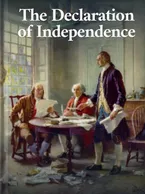
Benjamin Franklin, born on January 17, 1706, in Boston, Massachusetts, was a polymath who excelled as a printer, inventor, scientist, and statesman. He passed away on April 17, 1790, in Philadelphia, Pennsylvania. Franklin is renowned for his contributions to the American Enlightenment and for his influential works, including "Poor Richard's Almanack" and "The Autobiography of Benjamin Franklin." His early life was marked by modest beginnings; he was the son of a candle maker and was largely self-educated. Franklin's literary career began with his work as a printer, which facilitated the dissemination of his essays and political writings, ultimately shaping public opinion in the colonies.
John Adams, born on October 30, 1735, in Braintree, Massachusetts, was a prominent lawyer, diplomat, and the second President of the United States. He died on July 4, 1826, in Quincy, Massachusetts, coincidentally on the same day as Thomas Jefferson. Adams is known for his significant role in drafting the Declaration of Independence and his notable works include "Diary and Autobiography of John Adams." His early life was characterized by a strong education, culminating in a law degree from Harvard. Adams’ literary career was deeply intertwined with his political life, producing numerous letters and essays that provide insight into the Revolutionary era.
Thomas Jefferson, born on April 13, 1743, in Shadwell, Virginia, was a statesman, architect, and the third President of the United States. He died on July 4, 1826, in Charlottesville, Virginia. Jefferson is best known for drafting the Declaration of Independence and his writings, including "Notes on the State of Virginia." His early life was enriched by a classical education, and he cultivated a passion for science and philosophy. Jefferson's literary contributions were vast, reflecting his Enlightenment ideals and his vision for American democracy.
Robert R. Livingston was born on November 27, 1746, in New York City and died on February 26, 1813, in the same city. A lawyer and statesman, he played a crucial role in the early political landscape of the United States and was instrumental in the drafting of the Declaration of Independence. His early life was spent in an affluent family, allowing for an extensive education. Livingston's literary career was less prolific than his counterparts but included significant political writings and correspondence that influenced governance.
Roger Sherman, born on April 19, 1721, in Newton, Massachusetts, and died on July 23, 1793, in New Haven, Connecticut, was a lawyer and politician, recognized as the only Founding Father to sign all four major documents of the United States: the Continental Association, the Declaration of Independence, the Articles of Confederation, and the Constitution. He grew up in a humble household and received a basic education. Sherman's literary contributions mainly comprised his speeches and letters, which were vital in shaping early American political thought.
Together, these figures not only shaped the foundation of the United States but also enriched its literary and philosophical landscape, leaving a lasting legacy that continues to influence the nation today.
Benjamin Franklin was a key diplomat, securing crucial French support for the American colonies, which was instrumental in their victory over Britain.