The book was published in 1896.
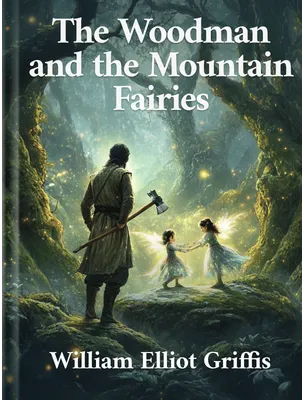
Keel Wee is a woodcutter who stops to watch two mountain fairies playing a game. He becomes so interested that he forgets everything around him. When the game ends, Keel Wee discovers that hundreds of years have passed. His village has changed, and everyone he knew is gone. What is he going to do?
In the enchanting tale, "The Woodman and the Mountain Fairies," William Elliot Griffis invites readers into a world where magic and nature intertwine. At the heart of this story is a humble woodman, a kind-hearted individual who lives in harmony with the forest. His life takes a turn when he encounters a group of mysterious mountain fairies, ethereal beings who bring both wonder and challenges into his life. As he navigates this newfound connection, the woodman must confront his own fears and desires, leading to a journey filled with adventure and self-discovery.
The central theme of the story revolves around the delicate balance between human life and the magical realm, exploring how choices affect not only oneself but also the world around them. Will the woodman find a way to bridge the gap between his ordinary life and the extraordinary happenings of the fairies? Join him on this captivating adventure where friendship, bravery, and the beauty of nature come together in a tale that speaks to the heart of every reader.
Full Name: William Elliot Griffis
Birthdate: September 17, 1843
Place of Birth: New York City, New York, USA
Date and Place of Death: November 7, 1928, in the same city
Occupation: Author, educator, and historian
Notable Works: Griffis is known for his books such as "The Mikado's Empire," "Japan: In History, Folk-Lore, and Art," and "The Story of New Jersey." He wrote extensively about Japan and American history.
Early Life: Griffis grew up in a family that valued education. He attended public schools and later studied at Union College in Schenectady, New York. His interest in other cultures began early.
Literary Career: Griffis became a missionary in Japan and developed a deep understanding of Japanese culture. His writings introduced many Americans to Japan. He wrote about various topics, including history, geography, and travel. His works were influential in shaping Western perceptions of Japan.
Personal Life: Griffis married Clara Frances McCarty in 1870. They had several children. His passion for education extended beyond writing; he also taught in various schools and colleges throughout his life. Griffis was an active member of his community and often spoke about education and culture.
William Elliot Griffis was an American author, educator, and historian known for his children's literature and works on Japanese culture.
Griffis was inspired by Japanese folklore and his experiences living in Japan, which influenced many of his stories.
The book is primarily a children's fantasy story, with elements of folklore.
The main characters include a kind woodman and various mountain fairies, each with their own unique personalities.
The story follows a woodman who discovers a magical world inhabited by fairies and learns valuable lessons about kindness and friendship.
Key themes include the importance of kindness, the beauty of nature, and the value of friendship.
Yes, the fairies symbolize the wonders of nature and the woodman represents the harmony between humans and the natural world.
The book was well-received for its imaginative storytelling and beautiful illustrations, appealing to both children and adults.
There are no well-known adaptations of this book into film or stage, but it remains a beloved classic in children's literature.
0%
0:00h