The original version of 'Robinson Crusoe' was published in 1719.
[{"id":"para_1","index":0,"start":0,"offset":359,"words":7,"paraNum":"","lastModified":1779970867000,"semanticType":"title-book-title","voicework":"audio_file","blockId":"robinson_crusoe_adapted_en-bl2t","language":"en","wordsRange":{"start":202000000,"end":210000000},"paragraphVersion":41,"direction":"ltr","paragraph":"<h1 class=\"ilm-title ilm-x-large\" id=\"para_1\" semantictype=\"title-book-title\" data-ilmid=\"robinson_crusoe_adapted_en-bl2t\" data-audio=\"1\" data-chapter=\"para_1\" data-words-count=\"7\" data-before=\"0\" data-ww=\"\"><span class=\"block-pb\"> <span class=\"block-pb is-animated\"></span> </span><span class=\"itm-wrap\">The Life and Adventures of Robinson Crusoe</span></h1>","hasContent":true,"isFirst":true,"isLast":false},{"id":"para_2","index":1,"start":359,"offset":325,"words":1,"paraNum":"","lastModified":1779970875000,"semanticType":"title-subtitle","voicework":"audio_file","blockId":"robinson_crusoe_adapted_en-blgg","language":"en","wordsRange":{"start":277333333,"end":344666667},"paragraphVersion":39,"direction":"ltr","paragraph":"<h1 class=\"ilm-title ilm-subtitle\" id=\"para_2\" semantictype=\"title-subtitle\" data-ilmid=\"robinson_crusoe_adapted_en-blgg\" data-audio=\"1\" data-chapter=\"para_2\" data-words-count=\"1\" data-before=\"7\" data-ww=\"\"><span class=\"block-pb\"> <span class=\"block-pb is-animated\"></span> </span><span class=\"itm-wrap\">[adapted]</span></h1>","hasContent":true,"isFirst":false,"isLast":false},{"id":"para_3","index":2,"start":684,"offset":351,"words":2,"paraNum":"","lastModified":1779970500000,"semanticType":"title-author","voicework":"audio_file","blockId":"robinson_crusoe_adapted_en-bl2v","language":"en","wordsRange":{"start":412000000,"end":416000000},"paragraphVersion":48,"direction":"ltr","paragraph":"<h1 class=\"ilm-title ilm-large ilm-author ilm-nopad\" id=\"para_3\" semantictype=\"title-author\" data-ilmid=\"robinson_crusoe_adapted_en-bl2v\" data-audio=\"1\" data-chapter=\"para_3\" data-words-count=\"2\" data-before=\"8\" data-ww=\"\"><span class=\"block-pb\"> <span class=\"block-pb is-animated\"></span> </span><span class=\"itm-wrap\">by <br>Daniel Defoe</span></h1>","hasContent":true,"isFirst":false,"isLast":false},{"id":"para_4","index":3,"start":1035,"offset":155,"words":0,"paraNum":"","lastModified":1778583578000,"semanticType":"line","blockId":"robinson_crusoe_adapted_en-bl2w","language":"en","wordsRange":{"start":516000000,"end":518000000},"paragraphVersion":10,"direction":"ltr","paragraph":"<hr class=\"ilm-hr ilm-small\" id=\"para_4\" semantictype=\"line\" data-ilmid=\"robinson_crusoe_adapted_en-bl2w\" data-words-count=\"0\" data-before=\"10\" data-ww=\"\">","hasContent":true,"isFirst":false,"isLast":false},{"id":"para_5","index":4,"start":1190,"offset":567,"words":4,"paraNum":"","lastModified":1779970514000,"semanticType":"header-chapter-header","voicework":"audio_file","blockId":"robinson_crusoe_adapted_en-bl2x","language":"en","wordsRange":{"start":618000000,"end":623000000},"paragraphVersion":34,"direction":"ltr","paragraph":"<h2 class=\"ilm-header ilm-h2 ilm-large\" id=\"para_5\" semantictype=\"header-chapter-header\" data-ilmid=\"robinson_crusoe_adapted_en-bl2x\" data-audio=\"1\" data-chapter=\"para_5\" data-words-count=\"4\" data-before=\"10\" data-ww=\"\"><span class=\"block-pb\"> <span class=\"block-pb is-animated\"></span> </span><span class=\"itm-wrap\"><span class=\"chapter-text\"><span class=\"chapter-number\"><span class=\"chapter-label\"></span><span class=\"chapter-value\"></span></span><span class=\"chapter-title\"><b>Chapter </b><b>1.</b><b><br> </b><b>Starting </b><b>Life</b></span></span></span></h2>","hasContent":true,"isFirst":false,"isLast":false},{"id":"para_6","index":5,"start":1757,"offset":686,"words":70,"paraNum":"1.1","lastModified":1779970969000,"semanticType":"par","voicework":"audio_file","blockId":"robinson_crusoe_adapted_en-bl2y","language":"en","wordsRange":{"start":723000000,"end":794000000},"paragraphVersion":35,"direction":"ltr","paragraph":"<p id=\"para_6\" semantictype=\"par\" data-ilmid=\"robinson_crusoe_adapted_en-bl2y\" data-audio=\"1\" data-words-count=\"70\" data-before=\"14\" data-ww=\"\"><span class=\"block-num\" data-id=\"1.1\"></span><span class=\"block-pb\"> <span class=\"block-pb is-animated\"></span> </span><span class=\"itm-wrap\">I was born in 1632, in the city of York. My father came from Bremen. He first lived in Hull, and later moved to York. He made money by trade, then stopped working. He married my mother there. My mother’s family name was Robinson. My own name was Robinson Kreutznaer. But in England the name changed in common speech. Soon we called ourselves Crusoe. My friends called me Robinson Crusoe.</span></p>","hasContent":true,"isFirst":false,"isLast":false},{"id":"para_7","index":6,"start":2443,"offset":673,"words":78,"paraNum":"1.2","lastModified":1779970533000,"semanticType":"par","voicework":"audio_file","blockId":"robinson_crusoe_adapted_en-bl2z","language":"en","wordsRange":{"start":894000000,"end":973000000},"paragraphVersion":35,"direction":"ltr","paragraph":"<p id=\"para_7\" semantictype=\"par\" data-ilmid=\"robinson_crusoe_adapted_en-bl2z\" data-audio=\"1\" data-words-count=\"78\" data-before=\"84\" data-ww=\"\"><span class=\"block-num\" data-id=\"1.2\"></span><span class=\"block-pb\"> <span class=\"block-pb is-animated\"></span> </span><span class=\"itm-wrap\">I had two older brothers. One was a soldier. He was killed near Dunkirk. I never knew what happened to my second brother. Later, my father and mother also did not know what had happened to me. I was the third son, and I was not taught a trade. From a young age, I wanted to travel. My father gave me a good education and wanted me to study law. But I wanted only to go to sea.</span></p>","hasContent":true,"isFirst":false,"isLast":false},{"id":"para_8","index":7,"start":3116,"offset":529,"words":49,"paraNum":"1.3","lastModified":1779970552000,"semanticType":"par","voicework":"audio_file","blockId":"robinson_crusoe_adapted_en-bl30","language":"en","wordsRange":{"start":1073000000,"end":1123000000},"paragraphVersion":35,"direction":"ltr","paragraph":"<p id=\"para_8\" semantictype=\"par\" data-ilmid=\"robinson_crusoe_adapted_en-bl30\" data-audio=\"1\" data-words-count=\"49\" data-before=\"162\" data-ww=\"\"><span class=\"block-num\" data-id=\"1.3\"></span><span class=\"block-pb\"> <span class=\"block-pb is-animated\"></span> </span><span class=\"itm-wrap\">My father was old, wise, and serious. One morning he called me into his room. He was ill with gout. He asked why I wanted to leave my home and country. I had no need to go. I could live well in England, work, and have a quiet life.</span></p>","hasContent":true,"isFirst":false,"isLast":false},{"id":"para_9","index":8,"start":3645,"offset":736,"words":86,"paraNum":"1.4","lastModified":1779970974000,"semanticType":"par","voicework":"audio_file","blockId":"robinson_crusoe_adapted_en-bl31","language":"en","wordsRange":{"start":1223000000,"end":1310000000},"paragraphVersion":31,"direction":"ltr","paragraph":"<p id=\"para_9\" semantictype=\"par\" data-ilmid=\"robinson_crusoe_adapted_en-bl31\" data-audio=\"1\" data-words-count=\"86\" data-before=\"211\" data-ww=\"\"><span class=\"block-num\" data-id=\"1.4\"></span><span class=\"block-pb\"> <span class=\"block-pb is-animated\"></span> </span><span class=\"itm-wrap\">He said poor men went abroad because they had nothing. Rich and proud men went abroad because they wanted great names. But I was in the middle place in life. He said this was the safest and happiest place. It had fewer dangers than poverty or wealth. Then he begged me not to be foolish. He would help me begin a good life at home. He told me to remember my older brother. He had gone to war against my father’s advice, and he had died.</span></p>","hasContent":true,"isFirst":false,"isLast":false},{"id":"para_10","index":9,"start":4381,"offset":724,"words":88,"paraNum":"1.5","lastModified":1779970975000,"semanticType":"par","voicework":"audio_file","blockId":"robinson_crusoe_adapted_en-bl32","language":"en","wordsRange":{"start":1410000000,"end":1499000000},"paragraphVersion":31,"direction":"ltr","paragraph":"<p id=\"para_10\" semantictype=\"par\" data-ilmid=\"robinson_crusoe_adapted_en-bl32\" data-audio=\"1\" data-words-count=\"88\" data-before=\"297\" data-ww=\"\"><span class=\"block-num\" data-id=\"1.5\"></span><span class=\"block-pb\"> <span class=\"block-pb is-animated\"></span> </span><span class=\"itm-wrap\">At last my father said he would pray for me. But he warned me that if I went to sea, God would not bless me. One day I would be sorry, and perhaps no one would be there to help me. Tears ran down his face, especially when he spoke of my dead brother. Then he stopped, because his heart was too full. His words touched me. I decided to stay at home. But after a few days, my strong feelings faded. Soon I wanted the sea again.</span></p>","hasContent":true,"isFirst":false,"isLast":false},{"id":"para_11","index":10,"start":5105,"offset":733,"words":88,"paraNum":"1.6","lastModified":1779970580000,"semanticType":"par","voicework":"audio_file","blockId":"robinson_crusoe_adapted_en-bl33","language":"en","wordsRange":{"start":1599000000,"end":1688000000},"paragraphVersion":31,"direction":"ltr","paragraph":"<p id=\"para_11\" semantictype=\"par\" data-ilmid=\"robinson_crusoe_adapted_en-bl33\" data-audio=\"1\" data-words-count=\"88\" data-before=\"385\" data-ww=\"\"><span class=\"block-num\" data-id=\"1.6\"></span><span class=\"block-pb\"> <span class=\"block-pb is-animated\"></span> </span><span class=\"itm-wrap\">Some weeks later, I spoke to my mother. I asked her to speak to my father. I said that if he let me make one voyage, I would return if I did not like it. My mother became angry. She said she would never help me ruin myself. I would never have my parents’ consent. Later she told my father. He sighed and said, “That boy might be happy if he stayed at home. But if he goes abroad, he will be the most miserable person ever born.”</span></p>","hasContent":true,"isFirst":false,"isLast":false},{"id":"para_12","index":11,"start":5838,"offset":610,"words":67,"paraNum":"1.7","lastModified":1779970950000,"semanticType":"par","voicework":"audio_file","blockId":"robinson_crusoe_adapted_en-bl34","language":"en","wordsRange":{"start":1788000000,"end":1856000000},"paragraphVersion":31,"direction":"ltr","paragraph":"<p id=\"para_12\" semantictype=\"par\" data-ilmid=\"robinson_crusoe_adapted_en-bl34\" data-audio=\"1\" data-words-count=\"67\" data-before=\"473\" data-ww=\"\"><span class=\"block-num\" data-id=\"1.7\"></span><span class=\"block-pb\"> <span class=\"block-pb is-animated\"></span> </span><span class=\"itm-wrap\">Almost a year passed before I left. Then one day I went to Hull. A friend was sailing to London on his father’s ship. He asked me to go with him and said it would cost me nothing. I did not ask my father or mother. I did not even send them a word. On 1 September 1651, I went on board a ship bound for London.</span></p>","hasContent":true,"isFirst":false,"isLast":false},{"id":"para_13","index":12,"start":6448,"offset":775,"words":94,"paraNum":"1.8","lastModified":1779970953000,"semanticType":"par","voicework":"audio_file","blockId":"robinson_crusoe_adapted_en-bl35","language":"en","wordsRange":{"start":1956000000,"end":2051000000},"paragraphVersion":31,"direction":"ltr","paragraph":"<p id=\"para_13\" semantictype=\"par\" data-ilmid=\"robinson_crusoe_adapted_en-bl35\" data-audio=\"1\" data-words-count=\"94\" data-before=\"540\" data-ww=\"\"><span class=\"block-num\" data-id=\"1.8\"></span><span class=\"block-pb\"> <span class=\"block-pb is-animated\"></span> </span><span class=\"itm-wrap\">My troubles began at once. The ship had hardly left the Humber when the wind rose and the sea became terrible. I had never been at sea before. I was sick and full of fear. My father’s tears and my mother’s words came back to me. I believed God was punishing me for leaving home. The storm grew worse. Each wave seemed ready to swallow us. I promised that if God saved my life, I would go home and never step into a ship again. I saw that my father’s quiet life was best.</span></p>","hasContent":true,"isFirst":false,"isLast":false},{"id":"para_14","index":13,"start":7223,"offset":642,"words":69,"paraNum":"1.9","lastModified":1779970959000,"semanticType":"par","voicework":"audio_file","blockId":"robinson_crusoe_adapted_en-bl36","language":"en","wordsRange":{"start":2151000000,"end":2221000000},"paragraphVersion":31,"direction":"ltr","paragraph":"<p id=\"para_14\" semantictype=\"par\" data-ilmid=\"robinson_crusoe_adapted_en-bl36\" data-audio=\"1\" data-words-count=\"69\" data-before=\"634\" data-ww=\"\"><span class=\"block-num\" data-id=\"1.9\"></span><span class=\"block-pb\"> <span class=\"block-pb is-animated\"></span> </span><span class=\"itm-wrap\">But the next day the wind fell. By evening the weather was fine, and the sea was calm and beautiful. My friend laughed at my fear. He said it had only been a little wind. Then he gave me punch to drink. That night I forgot my fear, my promises, and my good thoughts. In a few days I had pushed away my conscience. But another trial was coming.</span></p>","hasContent":true,"isFirst":false,"isLast":false},{"id":"para_15","index":14,"start":7865,"offset":550,"words":48,"paraNum":"1.10","lastModified":1779970554000,"semanticType":"par","voicework":"audio_file","blockId":"robinson_crusoe_adapted_en-bl37","language":"en","wordsRange":{"start":2321000000,"end":2370000000},"paragraphVersion":31,"direction":"ltr","paragraph":"<p id=\"para_15\" semantictype=\"par\" data-ilmid=\"robinson_crusoe_adapted_en-bl37\" data-audio=\"1\" data-words-count=\"48\" data-before=\"703\" data-ww=\"\"><span class=\"block-num\" data-id=\"1.10\"></span><span class=\"block-pb\"> <span class=\"block-pb is-animated\"></span> </span><span class=\"itm-wrap\">On the sixth day, we reached Yarmouth Roads. The wind was against us, so we had to anchor there. For several days the sailors were cheerful. But on the eighth morning, the wind grew strong. By noon the sea was very high, and waves came over the ship.</span></p>","hasContent":true,"isFirst":false,"isLast":false},{"id":"para_16","index":15,"start":8415,"offset":565,"words":51,"paraNum":"1.11","lastModified":1779970606000,"semanticType":"par","voicework":"audio_file","blockId":"robinson_crusoe_adapted_en-bl38","language":"en","wordsRange":{"start":2470000000,"end":2522000000},"paragraphVersion":34,"direction":"ltr","paragraph":"<p id=\"para_16\" semantictype=\"par\" data-ilmid=\"robinson_crusoe_adapted_en-bl38\" data-audio=\"1\" data-words-count=\"51\" data-before=\"751\" data-ww=\"\"><span class=\"block-num\" data-id=\"1.11\"></span><span class=\"block-pb\"> <span class=\"block-pb is-animated\"></span> </span><span class=\"itm-wrap\">Now even the sailors looked afraid. I heard the master say, “Lord, be kind to us. We shall all be lost.” I looked out and saw only danger. The sea rose like mountains. Some ships had cut down their masts. One ship had sunk. Others were driven away by the storm.</span></p>","hasContent":true,"isFirst":false,"isLast":false},{"id":"para_17","index":16,"start":8980,"offset":690,"words":77,"paraNum":"1.12","lastModified":1779970945000,"semanticType":"par","voicework":"audio_file","blockId":"robinson_crusoe_adapted_en-bl39","language":"en","wordsRange":{"start":2622000000,"end":2700000000},"paragraphVersion":31,"direction":"ltr","paragraph":"<p id=\"para_17\" semantictype=\"par\" data-ilmid=\"robinson_crusoe_adapted_en-bl39\" data-audio=\"1\" data-words-count=\"77\" data-before=\"802\" data-ww=\"\"><span class=\"block-num\" data-id=\"1.12\"></span><span class=\"block-pb\"> <span class=\"block-pb is-animated\"></span> </span><span class=\"itm-wrap\">By evening our men cut away the fore-mast and then the main-mast. In the night someone cried that the ship had a leak. All the men were called to the pump. I worked with the others, though my heart was full of terror. The master fired guns to ask for help. I did not understand and thought the ship had broken. I fainted. No one could care for me, because every man feared for his own life.</span></p>","hasContent":true,"isFirst":false,"isLast":false},{"id":"para_18","index":17,"start":9670,"offset":537,"words":49,"paraNum":"1.13","lastModified":1779970572000,"semanticType":"par","voicework":"audio_file","blockId":"robinson_crusoe_adapted_en-bl3a","language":"en","wordsRange":{"start":2800000000,"end":2850000000},"paragraphVersion":31,"direction":"ltr","paragraph":"<p id=\"para_18\" semantictype=\"par\" data-ilmid=\"robinson_crusoe_adapted_en-bl3a\" data-audio=\"1\" data-words-count=\"49\" data-before=\"879\" data-ww=\"\"><span class=\"block-num\" data-id=\"1.13\"></span><span class=\"block-pb\"> <span class=\"block-pb is-animated\"></span> </span><span class=\"itm-wrap\">The water kept rising. At last another ship sent a boat. It came near with great danger. Our men threw a rope, and we all got into the boat. Soon after we left, we saw our ship sink. Then I understood what it meant for a ship to founder.</span></p>","hasContent":true,"isFirst":false,"isLast":false},{"id":"para_19","index":18,"start":10207,"offset":538,"words":47,"paraNum":"1.14","lastModified":1779970927000,"semanticType":"par","voicework":"audio_file","blockId":"robinson_crusoe_adapted_en-bl3b","language":"en","wordsRange":{"start":2950000000,"end":2998000000},"paragraphVersion":31,"direction":"ltr","paragraph":"<p id=\"para_19\" semantictype=\"par\" data-ilmid=\"robinson_crusoe_adapted_en-bl3b\" data-audio=\"1\" data-words-count=\"47\" data-before=\"928\" data-ww=\"\"><span class=\"block-num\" data-id=\"1.14\"></span><span class=\"block-pb\"> <span class=\"block-pb is-animated\"></span> </span><span class=\"itm-wrap\">The men rowed toward shore. People ran along the beach to help us. At last, near Winterton, we came safely to land. We walked to Yarmouth. The people there were kind and gave us lodging and money, so we could go to London or back to Hull.</span></p>","hasContent":true,"isFirst":false,"isLast":false},{"id":"para_20","index":19,"start":10745,"offset":583,"words":59,"paraNum":"1.15","lastModified":1779970588000,"semanticType":"par","voicework":"audio_file","blockId":"robinson_crusoe_adapted_en-bl3c","language":"en","wordsRange":{"start":3098000000,"end":3158000000},"paragraphVersion":31,"direction":"ltr","paragraph":"<p id=\"para_20\" semantictype=\"par\" data-ilmid=\"robinson_crusoe_adapted_en-bl3c\" data-audio=\"1\" data-words-count=\"59\" data-before=\"975\" data-ww=\"\"><span class=\"block-num\" data-id=\"1.15\"></span><span class=\"block-pb\"> <span class=\"block-pb is-animated\"></span> </span><span class=\"itm-wrap\">If I had gone home then, I might have been happy. My father had heard that the ship was lost, and for some time he did not know I was alive. He would have received me with joy. But I could not make myself return. My reason told me to go home, but my stubborn heart pushed me forward.</span></p>","hasContent":true,"isFirst":false,"isLast":false},{"id":"para_21","index":20,"start":11328,"offset":628,"words":62,"paraNum":"1.16","lastModified":1779970937000,"semanticType":"par","voicework":"audio_file","blockId":"robinson_crusoe_adapted_en-bl3d","language":"en","wordsRange":{"start":3258000000,"end":3321000000},"paragraphVersion":31,"direction":"ltr","paragraph":"<p id=\"para_21\" semantictype=\"par\" data-ilmid=\"robinson_crusoe_adapted_en-bl3d\" data-audio=\"1\" data-words-count=\"62\" data-before=\"1034\" data-ww=\"\"><span class=\"block-num\" data-id=\"1.16\"></span><span class=\"block-pb\"> <span class=\"block-pb is-animated\"></span> </span><span class=\"itm-wrap\">The captain’s son, my friend, was now changed. His father also spoke to me. “Young man,” he said, “you should never go to sea again. This is a clear warning.” I asked if he would go to sea again. “That is different,” he said. “It is my work. But you came only to try it. Heaven has shown you what may happen.”</span></p>","hasContent":true,"isFirst":false,"isLast":false},{"id":"para_22","index":21,"start":11956,"offset":756,"words":95,"paraNum":"1.17","lastModified":1779970608000,"semanticType":"par","voicework":"audio_file","blockId":"robinson_crusoe_adapted_en-bl3e","language":"en","wordsRange":{"start":3421000000,"end":3517000000},"paragraphVersion":31,"direction":"ltr","paragraph":"<p id=\"para_22\" semantictype=\"par\" data-ilmid=\"robinson_crusoe_adapted_en-bl3e\" data-audio=\"1\" data-words-count=\"95\" data-before=\"1096\" data-ww=\"\"><span class=\"block-num\" data-id=\"1.17\"></span><span class=\"block-pb\"> <span class=\"block-pb is-animated\"></span> </span><span class=\"itm-wrap\">I told him some of my story. He became angry and said he would never sail with me again. Later he spoke more calmly. He told me to go back to my father. If I did not, he said, I would meet only trouble until my father’s words came true. Soon after, we parted, and I never saw him again. I had some money, so I travelled by land to London. On the road, and after I reached the city, I struggled with myself. Should I go home, or should I go to sea again?</span></p>","hasContent":true,"isFirst":false,"isLast":false},{"id":"para_23","index":22,"start":12712,"offset":567,"words":51,"paraNum":"1.18","lastModified":1779970930000,"semanticType":"par","voicework":"audio_file","blockId":"robinson_crusoe_adapted_en-bl3f","language":"en","wordsRange":{"start":3617000000,"end":3669000000},"paragraphVersion":31,"direction":"ltr","paragraph":"<p id=\"para_23\" semantictype=\"par\" data-ilmid=\"robinson_crusoe_adapted_en-bl3f\" data-audio=\"1\" data-words-count=\"51\" data-before=\"1191\" data-ww=\"\"><span class=\"block-num\" data-id=\"1.18\"></span><span class=\"block-pb\"> <span class=\"block-pb is-animated\"></span> </span><span class=\"itm-wrap\">Shame stopped me from going home. I thought the neighbours would laugh at me. I felt ashamed to see my father and mother. I have often thought since then that young people are strange. They are not ashamed to do wrong, but they are ashamed to turn back and do right.</span></p>","hasContent":true,"isFirst":false,"isLast":false},{"id":"para_24","index":23,"start":13279,"offset":525,"words":47,"paraNum":"1.19","lastModified":1779970614000,"semanticType":"par","voicework":"audio_file","blockId":"robinson_crusoe_adapted_en-bl3g","language":"en","wordsRange":{"start":3769000000,"end":3817000000},"paragraphVersion":31,"direction":"ltr","paragraph":"<p id=\"para_24\" semantictype=\"par\" data-ilmid=\"robinson_crusoe_adapted_en-bl3g\" data-audio=\"1\" data-words-count=\"47\" data-before=\"1242\" data-ww=\"\"><span class=\"block-num\" data-id=\"1.19\"></span><span class=\"block-pb\"> <span class=\"block-pb is-animated\"></span> </span><span class=\"itm-wrap\">For some time I stayed in London and did not know what to do. But as the memory of danger grew weaker, my wish to go home also grew weaker. At last I gave up all thoughts of returning, and I began to look for another voyage.</span></p>","hasContent":true,"isFirst":false,"isLast":false},{"id":"para_25","index":24,"start":13804,"offset":158,"words":0,"paraNum":"","lastModified":1778583578000,"semanticType":"line","blockId":"robinson_crusoe_adapted_en-bl3h","language":"en","wordsRange":{"start":3917000000,"end":3919000000},"paragraphVersion":10,"direction":"ltr","paragraph":"<hr class=\"ilm-hr ilm-small\" id=\"para_25\" semantictype=\"line\" data-ilmid=\"robinson_crusoe_adapted_en-bl3h\" data-words-count=\"0\" data-before=\"1289\" data-ww=\"\">","hasContent":true,"isFirst":false,"isLast":false},{"id":"para_26","index":25,"start":13962,"offset":583,"words":5,"paraNum":"","lastModified":1779968016000,"semanticType":"header-chapter-header","voicework":"audio_file","blockId":"robinson_crusoe_adapted_en-bl3i","language":"en","wordsRange":{"start":4019000000,"end":4025000000},"paragraphVersion":25,"direction":"ltr","paragraph":"<h2 class=\"ilm-header ilm-h2 ilm-large\" id=\"para_26\" semantictype=\"header-chapter-header\" data-ilmid=\"robinson_crusoe_adapted_en-bl3i\" data-audio=\"1\" data-chapter=\"para_26\" data-words-count=\"5\" data-before=\"1289\" data-ww=\"\"><span class=\"block-pb\"> <span class=\"block-pb is-animated\"></span> </span><span class=\"itm-wrap\"><span class=\"chapter-text\"><span class=\"chapter-number\"><span class=\"chapter-label\"></span><span class=\"chapter-value\"></span></span><span class=\"chapter-title\"><b>Chapter </b><b>2.</b><b><br> </b><b>Slavery </b><b>and </b><b>Escape</b></span></span></span></h2>","hasContent":true,"isFirst":false,"isLast":false},{"id":"para_27","index":26,"start":14545,"offset":490,"words":37,"paraNum":"2.1","lastModified":1779967627000,"semanticType":"par","voicework":"audio_file","blockId":"robinson_crusoe_adapted_en-bl3j","language":"en","wordsRange":{"start":4125000000,"end":4163000000},"paragraphVersion":25,"direction":"ltr","paragraph":"<p id=\"para_27\" semantictype=\"par\" data-ilmid=\"robinson_crusoe_adapted_en-bl3j\" data-audio=\"1\" data-words-count=\"37\" data-before=\"1294\" data-ww=\"\"><span class=\"block-num\" data-id=\"2.1\"></span><span class=\"block-pb\"> <span class=\"block-pb is-animated\"></span> </span><span class=\"itm-wrap\">The same restless wish that first took me from my father’s house now led me into worse danger. I went on board a ship bound for the coast of Africa. Sailors called this a voyage to Guinea.</span></p>","hasContent":true,"isFirst":false,"isLast":false},{"id":"para_28","index":27,"start":15035,"offset":525,"words":49,"paraNum":"2.2","lastModified":1779967913000,"semanticType":"par","voicework":"audio_file","blockId":"robinson_crusoe_adapted_en-bl3k","language":"en","wordsRange":{"start":4263000000,"end":4313000000},"paragraphVersion":25,"direction":"ltr","paragraph":"<p id=\"para_28\" semantictype=\"par\" data-ilmid=\"robinson_crusoe_adapted_en-bl3k\" data-audio=\"1\" data-words-count=\"49\" data-before=\"1331\" data-ww=\"\"><span class=\"block-num\" data-id=\"2.2\"></span><span class=\"block-pb\"> <span class=\"block-pb is-animated\"></span> </span><span class=\"itm-wrap\">I was foolish again. I did not join the ship as a common sailor. If I had done that, I could have learned the work of the sea. But I had money and good clothes, so I went as a gentleman. I did no real work and learned little.</span></p>","hasContent":true,"isFirst":false,"isLast":false},{"id":"para_29","index":28,"start":15560,"offset":583,"words":60,"paraNum":"2.3","lastModified":1779968033000,"semanticType":"par","voicework":"audio_file","blockId":"robinson_crusoe_adapted_en-bl3l","language":"en","wordsRange":{"start":4413000000,"end":4474000000},"paragraphVersion":25,"direction":"ltr","paragraph":"<p id=\"para_29\" semantictype=\"par\" data-ilmid=\"robinson_crusoe_adapted_en-bl3l\" data-audio=\"1\" data-words-count=\"60\" data-before=\"1380\" data-ww=\"\"><span class=\"block-num\" data-id=\"2.3\"></span><span class=\"block-pb\"> <span class=\"block-pb is-animated\"></span> </span><span class=\"itm-wrap\">In London I met the master of a ship. He had traded on the coast of Guinea before and had done well. He liked my company. When he heard that I wished to see the world, he invited me to sail with him. I would pay nothing. I could also take some goods and trade them for my own profit.</span></p>","hasContent":true,"isFirst":false,"isLast":false},{"id":"para_30","index":29,"start":16143,"offset":751,"words":82,"paraNum":"2.4","lastModified":1779967720000,"semanticType":"par","voicework":"audio_file","blockId":"robinson_crusoe_adapted_en-bl3m","language":"en","wordsRange":{"start":4574000000,"end":4657000000},"paragraphVersion":25,"direction":"ltr","paragraph":"<p id=\"para_30\" semantictype=\"par\" data-ilmid=\"robinson_crusoe_adapted_en-bl3m\" data-audio=\"1\" data-words-count=\"82\" data-before=\"1440\" data-ww=\"\"><span class=\"block-num\" data-id=\"2.4\"></span><span class=\"block-pb\"> <span class=\"block-pb is-animated\"></span> </span><span class=\"itm-wrap\">I accepted gladly. The captain was honest and kind. I took about forty pounds in small goods, as he advised. This voyage was the only truly successful one in all my early adventures. The captain taught me some navigation and how to understand a ship’s course. I learned both to be a sailor and a merchant. I returned to London with gold dust worth almost three hundred pounds. This success filled my head with proud hopes. It helped lead me to ruin.</span></p>","hasContent":true,"isFirst":false,"isLast":false},{"id":"para_31","index":30,"start":16894,"offset":610,"words":59,"paraNum":"2.5","lastModified":1779967538000,"semanticType":"par","voicework":"audio_file","blockId":"robinson_crusoe_adapted_en-bl3n","language":"en","wordsRange":{"start":4757000000,"end":4817000000},"paragraphVersion":25,"direction":"ltr","paragraph":"<p id=\"para_31\" semantictype=\"par\" data-ilmid=\"robinson_crusoe_adapted_en-bl3n\" data-audio=\"1\" data-words-count=\"59\" data-before=\"1522\" data-ww=\"\"><span class=\"block-num\" data-id=\"2.5\"></span><span class=\"block-pb\"> <span class=\"block-pb is-animated\"></span> </span><span class=\"itm-wrap\">Soon after we returned, my good friend the captain died. I decided to make the same voyage again. I sailed in the same ship, now under the command of his former mate. I left two hundred pounds with the captain’s widow, who was honest and kept it safely for me. I carried less than one hundred pounds with me.</span></p>","hasContent":true,"isFirst":false,"isLast":false},{"id":"para_32","index":31,"start":17504,"offset":493,"words":37,"paraNum":"2.6","lastModified":1779967567000,"semanticType":"par","voicework":"audio_file","blockId":"robinson_crusoe_adapted_en-bl3o","language":"en","wordsRange":{"start":4917000000,"end":4955000000},"paragraphVersion":25,"direction":"ltr","paragraph":"<p id=\"para_32\" semantictype=\"par\" data-ilmid=\"robinson_crusoe_adapted_en-bl3o\" data-audio=\"1\" data-words-count=\"37\" data-before=\"1581\" data-ww=\"\"><span class=\"block-num\" data-id=\"2.6\"></span><span class=\"block-pb\"> <span class=\"block-pb is-animated\"></span> </span><span class=\"itm-wrap\">This second voyage was the most unhappy voyage a man could make. Near the Canary Islands, a pirate ship from Sallee came after us. We tried to escape, but it gained on us. We prepared to fight.</span></p>","hasContent":true,"isFirst":false,"isLast":false},{"id":"para_33","index":32,"start":17997,"offset":738,"words":87,"paraNum":"2.7","lastModified":1779967585000,"semanticType":"par","voicework":"audio_file","blockId":"robinson_crusoe_adapted_en-bl3p","language":"en","wordsRange":{"start":5055000000,"end":5143000000},"paragraphVersion":25,"direction":"ltr","paragraph":"<p id=\"para_33\" semantictype=\"par\" data-ilmid=\"robinson_crusoe_adapted_en-bl3p\" data-audio=\"1\" data-words-count=\"87\" data-before=\"1618\" data-ww=\"\"><span class=\"block-num\" data-id=\"2.7\"></span><span class=\"block-pb\"> <span class=\"block-pb is-animated\"></span> </span><span class=\"itm-wrap\">Our ship had twelve guns. The pirate had eighteen. We fired at them and drove them back once. But they came again. This time many men boarded our ship. We fought hard, but our ship was damaged. Three of our men were killed and eight were hurt. At last we had to yield. We were taken as prisoners to Sallee, a port of the Moors. I was not sent far inland like some of the others. The pirate captain kept me for himself. I became his slave.</span></p>","hasContent":true,"isFirst":false,"isLast":false},{"id":"para_34","index":33,"start":18735,"offset":538,"words":48,"paraNum":"2.8","lastModified":1779967688000,"semanticType":"par","voicework":"audio_file","blockId":"robinson_crusoe_adapted_en-bl3q","language":"en","wordsRange":{"start":5243000000,"end":5292000000},"paragraphVersion":25,"direction":"ltr","paragraph":"<p id=\"para_34\" semantictype=\"par\" data-ilmid=\"robinson_crusoe_adapted_en-bl3q\" data-audio=\"1\" data-words-count=\"48\" data-before=\"1705\" data-ww=\"\"><span class=\"block-num\" data-id=\"2.8\"></span><span class=\"block-pb\"> <span class=\"block-pb is-animated\"></span> </span><span class=\"itm-wrap\">This change almost broke my heart. A short time before, I had been a merchant. Now I was a poor slave. I remembered my father’s warning. He had said I would be miserable and have no one to help me. Now I thought his words had come true.</span></p>","hasContent":true,"isFirst":false,"isLast":false},{"id":"para_35","index":34,"start":19273,"offset":609,"words":63,"paraNum":"2.9","lastModified":1779967943000,"semanticType":"par","voicework":"audio_file","blockId":"robinson_crusoe_adapted_en-bl3r","language":"en","wordsRange":{"start":5392000000,"end":5456000000},"paragraphVersion":25,"direction":"ltr","paragraph":"<p id=\"para_35\" semantictype=\"par\" data-ilmid=\"robinson_crusoe_adapted_en-bl3r\" data-audio=\"1\" data-words-count=\"63\" data-before=\"1753\" data-ww=\"\"><span class=\"block-num\" data-id=\"2.9\"></span><span class=\"block-pb\"> <span class=\"block-pb is-animated\"></span> </span><span class=\"itm-wrap\">At first I hoped my master would take me to sea with him. Then perhaps a Spanish or Portuguese warship might capture him, and I might be set free. But he left me on shore. I worked in his garden and did hard work around his house. When he returned from the sea, I slept in the cabin and looked after the ship.</span></p>","hasContent":true,"isFirst":false,"isLast":false},{"id":"para_36","index":35,"start":19882,"offset":782,"words":99,"paraNum":"2.10","lastModified":1779967886000,"semanticType":"par","voicework":"audio_file","blockId":"robinson_crusoe_adapted_en-bl3s","language":"en","wordsRange":{"start":5556000000,"end":5656000000},"paragraphVersion":25,"direction":"ltr","paragraph":"<p id=\"para_36\" semantictype=\"par\" data-ilmid=\"robinson_crusoe_adapted_en-bl3s\" data-audio=\"1\" data-words-count=\"99\" data-before=\"1816\" data-ww=\"\"><span class=\"block-num\" data-id=\"2.10\"></span><span class=\"block-pb\"> <span class=\"block-pb is-animated\"></span> </span><span class=\"itm-wrap\">For two years I thought of nothing but escape. But I had no friend to help me. There was no Englishman, Irishman, or Scotsman near me. I had many dreams of freedom, but no real plan. Then a chance came. My master stayed at home longer than usual, because he had no money to send out his ship. He often went fishing in a small boat. He took me with him, and also a young boy called Xury. I was good at catching fish, so sometimes he sent me out with Xury and a Moor to fish for him.</span></p>","hasContent":true,"isFirst":false,"isLast":false},{"id":"para_37","index":36,"start":20664,"offset":522,"words":45,"paraNum":"2.11","lastModified":1779967703000,"semanticType":"par","voicework":"audio_file","blockId":"robinson_crusoe_adapted_en-bl3t","language":"en","wordsRange":{"start":5756000000,"end":5802000000},"paragraphVersion":25,"direction":"ltr","paragraph":"<p id=\"para_37\" semantictype=\"par\" data-ilmid=\"robinson_crusoe_adapted_en-bl3t\" data-audio=\"1\" data-words-count=\"45\" data-before=\"1915\" data-ww=\"\"><span class=\"block-num\" data-id=\"2.11\"></span><span class=\"block-pb\"> <span class=\"block-pb is-animated\"></span> </span><span class=\"itm-wrap\">One morning, when we were fishing, a thick fog rose. We lost sight of the shore. We rowed all day and all night. In the morning we found that we had gone out to sea, not toward land. At last we returned, tired and hungry.</span></p>","hasContent":true,"isFirst":false,"isLast":false},{"id":"para_38","index":37,"start":21186,"offset":680,"words":71,"paraNum":"2.12","lastModified":1779967900000,"semanticType":"par","voicework":"audio_file","blockId":"robinson_crusoe_adapted_en-bl3u","language":"en","wordsRange":{"start":5902000000,"end":5974000000},"paragraphVersion":25,"direction":"ltr","paragraph":"<p id=\"para_38\" semantictype=\"par\" data-ilmid=\"robinson_crusoe_adapted_en-bl3u\" data-audio=\"1\" data-words-count=\"71\" data-before=\"1960\" data-ww=\"\"><span class=\"block-num\" data-id=\"2.12\"></span><span class=\"block-pb\"> <span class=\"block-pb is-animated\"></span> </span><span class=\"itm-wrap\">After this, my master became more careful. He had a larger boat prepared, with a small cabin, a sail, food, water, and room to rest. We often used this boat for fishing. One day my master planned to take some important guests fishing. He sent extra food and drink to the boat. He also ordered me to prepare three guns with powder and shot, because they wished to shoot birds too.</span></p>","hasContent":true,"isFirst":false,"isLast":false},{"id":"para_39","index":38,"start":21866,"offset":636,"words":71,"paraNum":"2.13","lastModified":1779967990000,"semanticType":"par","voicework":"audio_file","blockId":"robinson_crusoe_adapted_en-bl3v","language":"en","wordsRange":{"start":6074000000,"end":6146000000},"paragraphVersion":25,"direction":"ltr","paragraph":"<p id=\"para_39\" semantictype=\"par\" data-ilmid=\"robinson_crusoe_adapted_en-bl3v\" data-audio=\"1\" data-words-count=\"71\" data-before=\"2031\" data-ww=\"\"><span class=\"block-num\" data-id=\"2.13\"></span><span class=\"block-pb\"> <span class=\"block-pb is-animated\"></span> </span><span class=\"itm-wrap\">The next morning my master came alone. His guests could not come. He told me to go out with the Moor and Xury and catch fish for supper. At once the thought of escape came back to me. My master was not coming. I now had a small boat, food, guns, and a chance. I did not know where I would go. I only wanted to get away from that place.</span></p>","hasContent":true,"isFirst":false,"isLast":false},{"id":"para_40","index":39,"start":22502,"offset":638,"words":65,"paraNum":"2.14","lastModified":1779967644000,"semanticType":"par","voicework":"audio_file","blockId":"robinson_crusoe_adapted_en-bl3w","language":"en","wordsRange":{"start":6246000000,"end":6312000000},"paragraphVersion":25,"direction":"ltr","paragraph":"<p id=\"para_40\" semantictype=\"par\" data-ilmid=\"robinson_crusoe_adapted_en-bl3w\" data-audio=\"1\" data-words-count=\"65\" data-before=\"2102\" data-ww=\"\"><span class=\"block-num\" data-id=\"2.14\"></span><span class=\"block-pb\"> <span class=\"block-pb is-animated\"></span> </span><span class=\"itm-wrap\">I told the Moor that we should not eat our master’s bread. So he brought more biscuits and three jars of fresh water. While he was on shore, I secretly put more things into the boat: bottles, wax, thread, a hatchet, a saw, and a hammer. I also asked him to bring powder and shot, so we might shoot birds. He did this without suspicion.</span></p>","hasContent":true,"isFirst":false,"isLast":false},{"id":"para_41","index":40,"start":23140,"offset":690,"words":80,"paraNum":"2.15","lastModified":1779967974000,"semanticType":"par","voicework":"audio_file","blockId":"robinson_crusoe_adapted_en-bl3x","language":"en","wordsRange":{"start":6412000000,"end":6493000000},"paragraphVersion":25,"direction":"ltr","paragraph":"<p id=\"para_41\" semantictype=\"par\" data-ilmid=\"robinson_crusoe_adapted_en-bl3x\" data-audio=\"1\" data-words-count=\"80\" data-before=\"2167\" data-ww=\"\"><span class=\"block-num\" data-id=\"2.15\"></span><span class=\"block-pb\"> <span class=\"block-pb is-animated\"></span> </span><span class=\"itm-wrap\">Then we sailed out of the port as if we were going to fish. The guards at the castle knew us and did not stop us. After a while I said, “This will not do. Our master will not be pleased. We must go farther out.” The Moor agreed. I steered the boat farther from shore. Then I gave Xury the helm and went forward. I came behind the Moor, took him by surprise, and threw him into the sea.</span></p>","hasContent":true,"isFirst":false,"isLast":false},{"id":"para_42","index":41,"start":23830,"offset":646,"words":74,"paraNum":"2.16","lastModified":1779967554000,"semanticType":"par","voicework":"audio_file","blockId":"robinson_crusoe_adapted_en-bl3y","language":"en","wordsRange":{"start":6593000000,"end":6668000000},"paragraphVersion":25,"direction":"ltr","paragraph":"<p id=\"para_42\" semantictype=\"par\" data-ilmid=\"robinson_crusoe_adapted_en-bl3y\" data-audio=\"1\" data-words-count=\"74\" data-before=\"2247\" data-ww=\"\"><span class=\"block-num\" data-id=\"2.16\"></span><span class=\"block-pb\"> <span class=\"block-pb is-animated\"></span> </span><span class=\"itm-wrap\">He swam well and called for me to take him back. He promised to go anywhere with me. But I did not trust him. I pointed a gun at him and said, “I have not hurt you. Swim to shore, and I will not hurt you. But if you come near the boat, I will shoot. I must have my liberty.” So he turned and swam toward land. I believe he reached it safely.</span></p>","hasContent":true,"isFirst":false,"isLast":false},{"id":"para_43","index":42,"start":24476,"offset":561,"words":56,"paraNum":"2.17","lastModified":1779967658000,"semanticType":"par","voicework":"audio_file","blockId":"robinson_crusoe_adapted_en-bl3z","language":"en","wordsRange":{"start":6768000000,"end":6825000000},"paragraphVersion":25,"direction":"ltr","paragraph":"<p id=\"para_43\" semantictype=\"par\" data-ilmid=\"robinson_crusoe_adapted_en-bl3z\" data-audio=\"1\" data-words-count=\"56\" data-before=\"2321\" data-ww=\"\"><span class=\"block-num\" data-id=\"2.17\"></span><span class=\"block-pb\"> <span class=\"block-pb is-animated\"></span> </span><span class=\"itm-wrap\">Then I turned to Xury. I said, “Xury, if you are faithful to me, I will be good to you. But if you are not true, I must throw you into the sea too.” The boy smiled and promised to be faithful. He said he would go all over the world with me. I believed him.</span></p>","hasContent":true,"isFirst":false,"isLast":false},{"id":"para_44","index":43,"start":25037,"offset":553,"words":49,"paraNum":"2.18","lastModified":1779967869000,"semanticType":"par","voicework":"audio_file","blockId":"robinson_crusoe_adapted_en-bl40","language":"en","wordsRange":{"start":6925000000,"end":6975000000},"paragraphVersion":25,"direction":"ltr","paragraph":"<p id=\"para_44\" semantictype=\"par\" data-ilmid=\"robinson_crusoe_adapted_en-bl40\" data-audio=\"1\" data-words-count=\"49\" data-before=\"2377\" data-ww=\"\"><span class=\"block-num\" data-id=\"2.18\"></span><span class=\"block-pb\"> <span class=\"block-pb is-animated\"></span> </span><span class=\"itm-wrap\">At first I sailed out to sea, so people might think I was going toward the Straits. But when night came, I changed course and sailed south along the African coast. The wind was fair, and the sea was calm. By the next afternoon, we were far from Sallee.</span></p>","hasContent":true,"isFirst":false,"isLast":false},{"id":"para_45","index":44,"start":25590,"offset":559,"words":54,"paraNum":"2.19","lastModified":1779967673000,"semanticType":"par","voicework":"audio_file","blockId":"robinson_crusoe_adapted_en-bl41","language":"en","wordsRange":{"start":7075000000,"end":7130000000},"paragraphVersion":25,"direction":"ltr","paragraph":"<p id=\"para_45\" semantictype=\"par\" data-ilmid=\"robinson_crusoe_adapted_en-bl41\" data-audio=\"1\" data-words-count=\"54\" data-before=\"2426\" data-ww=\"\"><span class=\"block-num\" data-id=\"2.19\"></span><span class=\"block-pb\"> <span class=\"block-pb is-animated\"></span> </span><span class=\"itm-wrap\">I was still afraid of the Moors, so I did not stop for five days. At last the wind changed, and I believed no ship was still chasing us. We came to the mouth of a little river and anchored there. I did not know what country it was. I only wanted fresh water.</span></p>","hasContent":true,"isFirst":false,"isLast":false},{"id":"para_46","index":45,"start":26149,"offset":503,"words":38,"paraNum":"2.20","lastModified":1779967612000,"semanticType":"par","voicework":"audio_file","blockId":"robinson_crusoe_adapted_en-bl42","language":"en","wordsRange":{"start":7230000000,"end":7269000000},"paragraphVersion":25,"direction":"ltr","paragraph":"<p id=\"para_46\" semantictype=\"par\" data-ilmid=\"robinson_crusoe_adapted_en-bl42\" data-audio=\"1\" data-words-count=\"38\" data-before=\"2480\" data-ww=\"\"><span class=\"block-num\" data-id=\"2.20\"></span><span class=\"block-pb\"> <span class=\"block-pb is-animated\"></span> </span><span class=\"itm-wrap\">When night came, we heard terrible noises from the shore. Wild animals roared, barked, and howled. Xury begged me not to go on land before morning. I agreed. We stayed in the boat, but we did not sleep.</span></p>","hasContent":true,"isFirst":false,"isLast":false},{"id":"para_47","index":46,"start":26652,"offset":632,"words":64,"paraNum":"2.21","lastModified":1779967854000,"semanticType":"par","voicework":"audio_file","blockId":"robinson_crusoe_adapted_en-bl43","language":"en","wordsRange":{"start":7369000000,"end":7434000000},"paragraphVersion":25,"direction":"ltr","paragraph":"<p id=\"para_47\" semantictype=\"par\" data-ilmid=\"robinson_crusoe_adapted_en-bl43\" data-audio=\"1\" data-words-count=\"64\" data-before=\"2518\" data-ww=\"\"><span class=\"block-num\" data-id=\"2.21\"></span><span class=\"block-pb\"> <span class=\"block-pb is-animated\"></span> </span><span class=\"itm-wrap\">During the night many great animals came down to the water. One large creature swam toward our boat. We could not see it clearly, but we heard it breathing. Xury thought it was a lion. I fired a gun at it, and it turned back toward shore. Then the cries of the animals became even louder. They had perhaps never heard a gun before.</span></p>","hasContent":true,"isFirst":false,"isLast":false},{"id":"para_48","index":47,"start":27284,"offset":704,"words":83,"paraNum":"2.22","lastModified":1779967959000,"semanticType":"par","voicework":"audio_file","blockId":"robinson_crusoe_adapted_en-bl44","language":"en","wordsRange":{"start":7534000000,"end":7618000000},"paragraphVersion":25,"direction":"ltr","paragraph":"<p id=\"para_48\" semantictype=\"par\" data-ilmid=\"robinson_crusoe_adapted_en-bl44\" data-audio=\"1\" data-words-count=\"83\" data-before=\"2582\" data-ww=\"\"><span class=\"block-num\" data-id=\"2.22\"></span><span class=\"block-pb\"> <span class=\"block-pb is-animated\"></span> </span><span class=\"itm-wrap\">In the morning we needed water. Xury offered to go alone with a jar. He said, “If wild men come, they eat me. You go away.” His words touched me, and I loved him for them. I said, “No, Xury. We will both go. If men come, we will fight together.” We took our guns and two jars. Soon Xury found fresh water. He also shot a small animal like a hare, and we were glad to have meat. We saw no people.</span></p>","hasContent":true,"isFirst":false,"isLast":false},{"id":"para_49","index":48,"start":27988,"offset":609,"words":61,"paraNum":"2.23","lastModified":1779967605000,"semanticType":"par","voicework":"audio_file","blockId":"robinson_crusoe_adapted_en-bl45","language":"en","wordsRange":{"start":7718000000,"end":7780000000},"paragraphVersion":25,"direction":"ltr","paragraph":"<p id=\"para_49\" semantictype=\"par\" data-ilmid=\"robinson_crusoe_adapted_en-bl45\" data-audio=\"1\" data-words-count=\"61\" data-before=\"2665\" data-ww=\"\"><span class=\"block-num\" data-id=\"2.23\"></span><span class=\"block-pb\"> <span class=\"block-pb is-animated\"></span> </span><span class=\"itm-wrap\">After this we sailed south along the coast. I hoped to reach a place where English ships came to trade. I did not know exactly where we were, and I had no instruments to guide me. Sometimes I thought I saw the high mountain of Tenerife in the Canary Islands, but the wind and sea would not let me sail there.</span></p>","hasContent":true,"isFirst":false,"isLast":false},{"id":"para_50","index":49,"start":28597,"offset":578,"words":58,"paraNum":"2.24","lastModified":1779968003000,"semanticType":"par","voicework":"audio_file","blockId":"robinson_crusoe_adapted_en-bl46","language":"en","wordsRange":{"start":7880000000,"end":7939000000},"paragraphVersion":25,"direction":"ltr","paragraph":"<p id=\"para_50\" semantictype=\"par\" data-ilmid=\"robinson_crusoe_adapted_en-bl46\" data-audio=\"1\" data-words-count=\"58\" data-before=\"2726\" data-ww=\"\"><span class=\"block-num\" data-id=\"2.24\"></span><span class=\"block-pb\"> <span class=\"block-pb is-animated\"></span> </span><span class=\"itm-wrap\">We often had to land for water. One morning we anchored near a point of land. Xury saw a great lion sleeping on a hill near the shore. I loaded our guns and fired. The first shot broke its leg. The second shot hit its head. Then Xury swam to shore with a gun and shot it again.</span></p>","hasContent":true,"isFirst":false,"isLast":false},{"id":"para_51","index":50,"start":29175,"offset":516,"words":50,"paraNum":"2.25","lastModified":1779967927000,"semanticType":"par","voicework":"audio_file","blockId":"robinson_crusoe_adapted_en-bl47","language":"en","wordsRange":{"start":8039000000,"end":8090000000},"paragraphVersion":25,"direction":"ltr","paragraph":"<p id=\"para_51\" semantictype=\"par\" data-ilmid=\"robinson_crusoe_adapted_en-bl47\" data-audio=\"1\" data-words-count=\"50\" data-before=\"2784\" data-ww=\"\"><span class=\"block-num\" data-id=\"2.25\"></span><span class=\"block-pb\"> <span class=\"block-pb is-animated\"></span> </span><span class=\"itm-wrap\">The lion was not food for us, and I was sorry to spend so much powder. But I thought the skin might be useful. Xury and I worked all day to take it off. We dried it on top of the cabin, and later I used it as a bed.</span></p>","hasContent":true,"isFirst":false,"isLast":false},{"id":"para_52","index":51,"start":29691,"offset":158,"words":0,"paraNum":"","lastModified":1778583578000,"semanticType":"line","blockId":"robinson_crusoe_adapted_en-bl48","language":"en","wordsRange":{"start":8190000000,"end":8192000000},"paragraphVersion":10,"direction":"ltr","paragraph":"<hr class=\"ilm-hr ilm-small\" id=\"para_52\" semantictype=\"line\" data-ilmid=\"robinson_crusoe_adapted_en-bl48\" data-words-count=\"0\" data-before=\"2834\" data-ww=\"\">","hasContent":true,"isFirst":false,"isLast":false},{"id":"para_53","index":52,"start":29849,"offset":605,"words":7,"paraNum":"","lastModified":1779968061000,"semanticType":"header-chapter-header","voicework":"audio_file","blockId":"robinson_crusoe_adapted_en-bl49","language":"en","wordsRange":{"start":8292000000,"end":8300000000},"paragraphVersion":25,"direction":"ltr","paragraph":"<h2 class=\"ilm-header ilm-h2 ilm-large\" id=\"para_53\" semantictype=\"header-chapter-header\" data-ilmid=\"robinson_crusoe_adapted_en-bl49\" data-audio=\"1\" data-chapter=\"para_53\" data-words-count=\"7\" data-before=\"2834\" data-ww=\"\"><span class=\"block-pb\"> <span class=\"block-pb is-animated\"></span> </span><span class=\"itm-wrap\"><span class=\"chapter-text\"><span class=\"chapter-number\"><span class=\"chapter-label\"></span><span class=\"chapter-value\"></span></span><span class=\"chapter-title\"><b>Chapter </b><b>3.</b><b><br> </b><b>Wrecked </b><b>on </b><b>an </b><b>Empty </b><b>Island</b></span></span></span></h2>","hasContent":true,"isFirst":false,"isLast":false},{"id":"para_54","index":53,"start":30454,"offset":661,"words":72,"paraNum":"3.1","lastModified":1779968050000,"semanticType":"par","voicework":"audio_file","blockId":"robinson_crusoe_adapted_en-bl4a","language":"en","wordsRange":{"start":8400000000,"end":8473000000},"paragraphVersion":25,"direction":"ltr","paragraph":"<p id=\"para_54\" semantictype=\"par\" data-ilmid=\"robinson_crusoe_adapted_en-bl4a\" data-audio=\"1\" data-words-count=\"72\" data-before=\"2841\" data-ww=\"\"><span class=\"block-num\" data-id=\"3.1\"></span><span class=\"block-pb\"> <span class=\"block-pb is-animated\"></span> </span><span class=\"itm-wrap\">After we left that place, Xury and I sailed south for ten or twelve days. We used our food carefully, because we had little left. We went to shore only when we needed fresh water. I hoped to reach the Gambia or Senegal River, near Cape Verde. I knew European ships often sailed near that coast. If we did not find a ship, I did not know what would become of us.</span></p>","hasContent":true,"isFirst":false,"isLast":false},{"id":"para_55","index":54,"start":31115,"offset":732,"words":87,"paraNum":"3.2","lastModified":1779967735000,"semanticType":"par","voicework":"audio_file","blockId":"robinson_crusoe_adapted_en-bl4b","language":"en","wordsRange":{"start":8573000000,"end":8661000000},"paragraphVersion":25,"direction":"ltr","paragraph":"<p id=\"para_55\" semantictype=\"par\" data-ilmid=\"robinson_crusoe_adapted_en-bl4b\" data-audio=\"1\" data-words-count=\"87\" data-before=\"2913\" data-ww=\"\"><span class=\"block-num\" data-id=\"3.2\"></span><span class=\"block-pb\"> <span class=\"block-pb is-animated\"></span> </span><span class=\"itm-wrap\">After about ten more days, we began to see people on the shore. They were black and had no clothes. I thought about going to them, but Xury said, “No go, no go.” So I kept the boat at a safe distance and spoke by signs. They seemed friendly. I showed that we needed food. Two men ran inland and came back with dried meat and corn. They placed it on the shore and moved away, so we could take it safely. We thanked them by signs.</span></p>","hasContent":true,"isFirst":false,"isLast":false},{"id":"para_56","index":55,"start":31847,"offset":765,"words":96,"paraNum":"3.3","lastModified":1779967750000,"semanticType":"par","voicework":"audio_file","blockId":"robinson_crusoe_adapted_en-bl4c","language":"en","wordsRange":{"start":8761000000,"end":8858000000},"paragraphVersion":25,"direction":"ltr","paragraph":"<p id=\"para_56\" semantictype=\"par\" data-ilmid=\"robinson_crusoe_adapted_en-bl4c\" data-audio=\"1\" data-words-count=\"96\" data-before=\"3000\" data-ww=\"\"><span class=\"block-num\" data-id=\"3.3\"></span><span class=\"block-pb\"> <span class=\"block-pb is-animated\"></span> </span><span class=\"itm-wrap\">Then two large wild animals ran from the hills into the sea. The people were very afraid. One animal came near our boat. I fired my gun and killed it. The people were amazed by the noise and fire of the gun. They pulled the dead animal to shore and saw that it was a fine spotted leopard. They wanted the meat, so I gave it to them. I asked for the skin, and they gave it to me. They also brought more food and filled our jars with water. Then Xury and I sailed on.</span></p>","hasContent":true,"isFirst":false,"isLast":false},{"id":"para_57","index":56,"start":32612,"offset":841,"words":110,"paraNum":"3.4","lastModified":1779954327000,"semanticType":"par","voicework":"audio_file","blockId":"robinson_crusoe_adapted_en-bl4d","language":"en","wordsRange":{"start":8958000000,"end":9069000000},"paragraphVersion":33,"direction":"ltr","paragraph":"<p id=\"para_57\" semantictype=\"par\" data-ilmid=\"robinson_crusoe_adapted_en-bl4d\" data-audio=\"1\" data-words-count=\"110\" data-before=\"3096\" data-ww=\"\"><span class=\"block-num\" data-id=\"3.4\"></span><span class=\"block-pb\"> <span class=\"block-pb is-animated\"></span> </span><span class=\"itm-wrap\">For eleven more days we kept south. At last I saw land reaching far into the sea. I believed it was Cape Verde, and that the Cape Verde Islands were not far away. I did not know whether to sail toward the islands or stay near the coast. While I was thinking, Xury cried, “Master, master, a ship with a sail!” He feared it was one of our old master’s ships. But I saw it was a Portuguese ship. I sailed toward it as fast as I could. At first I thought we could not reach it, but the men on the ship saw us. They slowed down and waited.</span></p>","hasContent":true,"isFirst":false,"isLast":false},{"id":"para_58","index":57,"start":33453,"offset":783,"words":96,"paraNum":"3.5","lastModified":1779968080000,"semanticType":"par","voicework":"audio_file","blockId":"robinson_crusoe_adapted_en-bl4e","language":"en","wordsRange":{"start":9169000000,"end":9266000000},"paragraphVersion":25,"direction":"ltr","paragraph":"<p id=\"para_58\" semantictype=\"par\" data-ilmid=\"robinson_crusoe_adapted_en-bl4e\" data-audio=\"1\" data-words-count=\"96\" data-before=\"3206\" data-ww=\"\"><span class=\"block-num\" data-id=\"3.5\"></span><span class=\"block-pb\"> <span class=\"block-pb is-animated\"></span> </span><span class=\"itm-wrap\">When we came near, they called to me in several languages. I understood none of them. At last a Scottish sailor spoke to me. I told him I was English and had escaped from slavery at Sallee. They kindly took Xury, me, and all our goods on board. I was full of joy. I offered everything I had to the captain, but he refused. He said he had saved my life as he would wish another man to save his. He called me “Mr. Englishman” and said my goods would help me when we reached Brazil.</span></p>","hasContent":true,"isFirst":false,"isLast":false},{"id":"para_59","index":58,"start":34236,"offset":655,"words":70,"paraNum":"3.6","lastModified":1779968109000,"semanticType":"par","voicework":"audio_file","blockId":"robinson_crusoe_adapted_en-bl4f","language":"en","wordsRange":{"start":9366000000,"end":9437000000},"paragraphVersion":25,"direction":"ltr","paragraph":"<p id=\"para_59\" semantictype=\"par\" data-ilmid=\"robinson_crusoe_adapted_en-bl4f\" data-audio=\"1\" data-words-count=\"70\" data-before=\"3302\" data-ww=\"\"><span class=\"block-num\" data-id=\"3.6\"></span><span class=\"block-pb\"> <span class=\"block-pb is-animated\"></span> </span><span class=\"itm-wrap\">The captain bought my boat and some of my goods. He also bought the lion skin and the leopard skin. He offered money for Xury too. I did not want to sell the poor boy’s freedom, because he had helped me so faithfully. But the captain promised to free him after ten years, if Xury became a Christian. Xury said he was willing to go with him, so I agreed.</span></p>","hasContent":true,"isFirst":false,"isLast":false},{"id":"para_60","index":59,"start":34891,"offset":721,"words":81,"paraNum":"3.7","lastModified":1779967840000,"semanticType":"par","voicework":"audio_file","blockId":"robinson_crusoe_adapted_en-bl4g","language":"en","wordsRange":{"start":9537000000,"end":9619000000},"paragraphVersion":25,"direction":"ltr","paragraph":"<p id=\"para_60\" semantictype=\"par\" data-ilmid=\"robinson_crusoe_adapted_en-bl4g\" data-audio=\"1\" data-words-count=\"81\" data-before=\"3372\" data-ww=\"\"><span class=\"block-num\" data-id=\"3.7\"></span><span class=\"block-pb\"> <span class=\"block-pb is-animated\"></span> </span><span class=\"itm-wrap\">We had a good voyage to Brazil. After about twenty-two days, we came to All Saints’ Bay. Once more I was saved from a miserable life. In Brazil the Portuguese captain helped me again. He introduced me to a good man who owned a sugar plantation. I lived with this man for a time and learned how people planted sugar and made it ready for sale. I saw that planters could become rich. So I decided to become a planter too.</span></p>","hasContent":true,"isFirst":false,"isLast":false}]
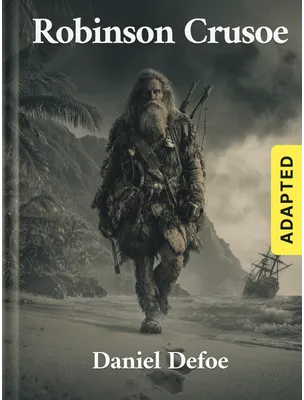
[adapted]
by
Daniel Defoe
Chapter 1.
Starting Life
I was born in 1632, in the city of York. My father came from Bremen. He first lived in Hull, and later moved to York. He made money by trade, then stopped working. He married my mother there. My mother’s family name was Robinson. My own name was Robinson Kreutznaer. But in England the name changed in common speech. Soon we called ourselves Crusoe. My friends called me Robinson Crusoe.
I had two older brothers. One was a soldier. He was killed near Dunkirk. I never knew what happened to my second brother. Later, my father and mother also did not know what had happened to me. I was the third son, and I was not taught a trade. From a young age, I wanted to travel. My father gave me a good education and wanted me to study law. But I wanted only to go to sea.
My father was old, wise, and serious. One morning he called me into his room. He was ill with gout. He asked why I wanted to leave my home and country. I had no need to go. I could live well in England, work, and have a quiet life.
He said poor men went abroad because they had nothing. Rich and proud men went abroad because they wanted great names. But I was in the middle place in life. He said this was the safest and happiest place. It had fewer dangers than poverty or wealth. Then he begged me not to be foolish. He would help me begin a good life at home. He told me to remember my older brother. He had gone to war against my father’s advice, and he had died.
At last my father said he would pray for me. But he warned me that if I went to sea, God would not bless me. One day I would be sorry, and perhaps no one would be there to help me. Tears ran down his face, especially when he spoke of my dead brother. Then he stopped, because his heart was too full. His words touched me. I decided to stay at home. But after a few days, my strong feelings faded. Soon I wanted the sea again.
Some weeks later, I spoke to my mother. I asked her to speak to my father. I said that if he let me make one voyage, I would return if I did not like it. My mother became angry. She said she would never help me ruin myself. I would never have my parents’ consent. Later she told my father. He sighed and said, “That boy might be happy if he stayed at home. But if he goes abroad, he will be the most miserable person ever born.”
Almost a year passed before I left. Then one day I went to Hull. A friend was sailing to London on his father’s ship. He asked me to go with him and said it would cost me nothing. I did not ask my father or mother. I did not even send them a word. On 1 September 1651, I went on board a ship bound for London.
My troubles began at once. The ship had hardly left the Humber when the wind rose and the sea became terrible. I had never been at sea before. I was sick and full of fear. My father’s tears and my mother’s words came back to me. I believed God was punishing me for leaving home. The storm grew worse. Each wave seemed ready to swallow us. I promised that if God saved my life, I would go home and never step into a ship again. I saw that my father’s quiet life was best.
But the next day the wind fell. By evening the weather was fine, and the sea was calm and beautiful. My friend laughed at my fear. He said it had only been a little wind. Then he gave me punch to drink. That night I forgot my fear, my promises, and my good thoughts. In a few days I had pushed away my conscience. But another trial was coming.
On the sixth day, we reached Yarmouth Roads. The wind was against us, so we had to anchor there. For several days the sailors were cheerful. But on the eighth morning, the wind grew strong. By noon the sea was very high, and waves came over the ship.
Now even the sailors looked afraid. I heard the master say, “Lord, be kind to us. We shall all be lost.” I looked out and saw only danger. The sea rose like mountains. Some ships had cut down their masts. One ship had sunk. Others were driven away by the storm.
By evening our men cut away the fore-mast and then the main-mast. In the night someone cried that the ship had a leak. All the men were called to the pump. I worked with the others, though my heart was full of terror. The master fired guns to ask for help. I did not understand and thought the ship had broken. I fainted. No one could care for me, because every man feared for his own life.
The water kept rising. At last another ship sent a boat. It came near with great danger. Our men threw a rope, and we all got into the boat. Soon after we left, we saw our ship sink. Then I understood what it meant for a ship to founder.
The men rowed toward shore. People ran along the beach to help us. At last, near Winterton, we came safely to land. We walked to Yarmouth. The people there were kind and gave us lodging and money, so we could go to London or back to Hull.
If I had gone home then, I might have been happy. My father had heard that the ship was lost, and for some time he did not know I was alive. He would have received me with joy. But I could not make myself return. My reason told me to go home, but my stubborn heart pushed me forward.
The captain’s son, my friend, was now changed. His father also spoke to me. “Young man,” he said, “you should never go to sea again. This is a clear warning.” I asked if he would go to sea again. “That is different,” he said. “It is my work. But you came only to try it. Heaven has shown you what may happen.”
I told him some of my story. He became angry and said he would never sail with me again. Later he spoke more calmly. He told me to go back to my father. If I did not, he said, I would meet only trouble until my father’s words came true. Soon after, we parted, and I never saw him again. I had some money, so I travelled by land to London. On the road, and after I reached the city, I struggled with myself. Should I go home, or should I go to sea again?
Shame stopped me from going home. I thought the neighbours would laugh at me. I felt ashamed to see my father and mother. I have often thought since then that young people are strange. They are not ashamed to do wrong, but they are ashamed to turn back and do right.
For some time I stayed in London and did not know what to do. But as the memory of danger grew weaker, my wish to go home also grew weaker. At last I gave up all thoughts of returning, and I began to look for another voyage.
Chapter 2.
Slavery and Escape
The same restless wish that first took me from my father’s house now led me into worse danger. I went on board a ship bound for the coast of Africa. Sailors called this a voyage to Guinea.
I was foolish again. I did not join the ship as a common sailor. If I had done that, I could have learned the work of the sea. But I had money and good clothes, so I went as a gentleman. I did no real work and learned little.
In London I met the master of a ship. He had traded on the coast of Guinea before and had done well. He liked my company. When he heard that I wished to see the world, he invited me to sail with him. I would pay nothing. I could also take some goods and trade them for my own profit.
I accepted gladly. The captain was honest and kind. I took about forty pounds in small goods, as he advised. This voyage was the only truly successful one in all my early adventures. The captain taught me some navigation and how to understand a ship’s course. I learned both to be a sailor and a merchant. I returned to London with gold dust worth almost three hundred pounds. This success filled my head with proud hopes. It helped lead me to ruin.
Soon after we returned, my good friend the captain died. I decided to make the same voyage again. I sailed in the same ship, now under the command of his former mate. I left two hundred pounds with the captain’s widow, who was honest and kept it safely for me. I carried less than one hundred pounds with me.
This second voyage was the most unhappy voyage a man could make. Near the Canary Islands, a pirate ship from Sallee came after us. We tried to escape, but it gained on us. We prepared to fight.
Our ship had twelve guns. The pirate had eighteen. We fired at them and drove them back once. But they came again. This time many men boarded our ship. We fought hard, but our ship was damaged. Three of our men were killed and eight were hurt. At last we had to yield. We were taken as prisoners to Sallee, a port of the Moors. I was not sent far inland like some of the others. The pirate captain kept me for himself. I became his slave.
This change almost broke my heart. A short time before, I had been a merchant. Now I was a poor slave. I remembered my father’s warning. He had said I would be miserable and have no one to help me. Now I thought his words had come true.
At first I hoped my master would take me to sea with him. Then perhaps a Spanish or Portuguese warship might capture him, and I might be set free. But he left me on shore. I worked in his garden and did hard work around his house. When he returned from the sea, I slept in the cabin and looked after the ship.
For two years I thought of nothing but escape. But I had no friend to help me. There was no Englishman, Irishman, or Scotsman near me. I had many dreams of freedom, but no real plan. Then a chance came. My master stayed at home longer than usual, because he had no money to send out his ship. He often went fishing in a small boat. He took me with him, and also a young boy called Xury. I was good at catching fish, so sometimes he sent me out with Xury and a Moor to fish for him.
One morning, when we were fishing, a thick fog rose. We lost sight of the shore. We rowed all day and all night. In the morning we found that we had gone out to sea, not toward land. At last we returned, tired and hungry.
After this, my master became more careful. He had a larger boat prepared, with a small cabin, a sail, food, water, and room to rest. We often used this boat for fishing. One day my master planned to take some important guests fishing. He sent extra food and drink to the boat. He also ordered me to prepare three guns with powder and shot, because they wished to shoot birds too.
The next morning my master came alone. His guests could not come. He told me to go out with the Moor and Xury and catch fish for supper. At once the thought of escape came back to me. My master was not coming. I now had a small boat, food, guns, and a chance. I did not know where I would go. I only wanted to get away from that place.
I told the Moor that we should not eat our master’s bread. So he brought more biscuits and three jars of fresh water. While he was on shore, I secretly put more things into the boat: bottles, wax, thread, a hatchet, a saw, and a hammer. I also asked him to bring powder and shot, so we might shoot birds. He did this without suspicion.
Then we sailed out of the port as if we were going to fish. The guards at the castle knew us and did not stop us. After a while I said, “This will not do. Our master will not be pleased. We must go farther out.” The Moor agreed. I steered the boat farther from shore. Then I gave Xury the helm and went forward. I came behind the Moor, took him by surprise, and threw him into the sea.
He swam well and called for me to take him back. He promised to go anywhere with me. But I did not trust him. I pointed a gun at him and said, “I have not hurt you. Swim to shore, and I will not hurt you. But if you come near the boat, I will shoot. I must have my liberty.” So he turned and swam toward land. I believe he reached it safely.
Then I turned to Xury. I said, “Xury, if you are faithful to me, I will be good to you. But if you are not true, I must throw you into the sea too.” The boy smiled and promised to be faithful. He said he would go all over the world with me. I believed him.
At first I sailed out to sea, so people might think I was going toward the Straits. But when night came, I changed course and sailed south along the African coast. The wind was fair, and the sea was calm. By the next afternoon, we were far from Sallee.
I was still afraid of the Moors, so I did not stop for five days. At last the wind changed, and I believed no ship was still chasing us. We came to the mouth of a little river and anchored there. I did not know what country it was. I only wanted fresh water.
When night came, we heard terrible noises from the shore. Wild animals roared, barked, and howled. Xury begged me not to go on land before morning. I agreed. We stayed in the boat, but we did not sleep.
During the night many great animals came down to the water. One large creature swam toward our boat. We could not see it clearly, but we heard it breathing. Xury thought it was a lion. I fired a gun at it, and it turned back toward shore. Then the cries of the animals became even louder. They had perhaps never heard a gun before.
In the morning we needed water. Xury offered to go alone with a jar. He said, “If wild men come, they eat me. You go away.” His words touched me, and I loved him for them. I said, “No, Xury. We will both go. If men come, we will fight together.” We took our guns and two jars. Soon Xury found fresh water. He also shot a small animal like a hare, and we were glad to have meat. We saw no people.
After this we sailed south along the coast. I hoped to reach a place where English ships came to trade. I did not know exactly where we were, and I had no instruments to guide me. Sometimes I thought I saw the high mountain of Tenerife in the Canary Islands, but the wind and sea would not let me sail there.
We often had to land for water. One morning we anchored near a point of land. Xury saw a great lion sleeping on a hill near the shore. I loaded our guns and fired. The first shot broke its leg. The second shot hit its head. Then Xury swam to shore with a gun and shot it again.
The lion was not food for us, and I was sorry to spend so much powder. But I thought the skin might be useful. Xury and I worked all day to take it off. We dried it on top of the cabin, and later I used it as a bed.
Chapter 3.
Wrecked on an Empty Island
After we left that place, Xury and I sailed south for ten or twelve days. We used our food carefully, because we had little left. We went to shore only when we needed fresh water. I hoped to reach the Gambia or Senegal River, near Cape Verde. I knew European ships often sailed near that coast. If we did not find a ship, I did not know what would become of us.
After about ten more days, we began to see people on the shore. They were black and had no clothes. I thought about going to them, but Xury said, “No go, no go.” So I kept the boat at a safe distance and spoke by signs. They seemed friendly. I showed that we needed food. Two men ran inland and came back with dried meat and corn. They placed it on the shore and moved away, so we could take it safely. We thanked them by signs.
Then two large wild animals ran from the hills into the sea. The people were very afraid. One animal came near our boat. I fired my gun and killed it. The people were amazed by the noise and fire of the gun. They pulled the dead animal to shore and saw that it was a fine spotted leopard. They wanted the meat, so I gave it to them. I asked for the skin, and they gave it to me. They also brought more food and filled our jars with water. Then Xury and I sailed on.
For eleven more days we kept south. At last I saw land reaching far into the sea. I believed it was Cape Verde, and that the Cape Verde Islands were not far away. I did not know whether to sail toward the islands or stay near the coast. While I was thinking, Xury cried, “Master, master, a ship with a sail!” He feared it was one of our old master’s ships. But I saw it was a Portuguese ship. I sailed toward it as fast as I could. At first I thought we could not reach it, but the men on the ship saw us. They slowed down and waited.
When we came near, they called to me in several languages. I understood none of them. At last a Scottish sailor spoke to me. I told him I was English and had escaped from slavery at Sallee. They kindly took Xury, me, and all our goods on board. I was full of joy. I offered everything I had to the captain, but he refused. He said he had saved my life as he would wish another man to save his. He called me “Mr. Englishman” and said my goods would help me when we reached Brazil.
The captain bought my boat and some of my goods. He also bought the lion skin and the leopard skin. He offered money for Xury too. I did not want to sell the poor boy’s freedom, because he had helped me so faithfully. But the captain promised to free him after ten years, if Xury became a Christian. Xury said he was willing to go with him, so I agreed.
We had a good voyage to Brazil. After about twenty-two days, we came to All Saints’ Bay. Once more I was saved from a miserable life. In Brazil the Portuguese captain helped me again. He introduced me to a good man who owned a sugar plantation. I lived with this man for a time and learned how people planted sugar and made it ready for sale. I saw that planters could become rich. So I decided to become a planter too.