The book was published in 1834.
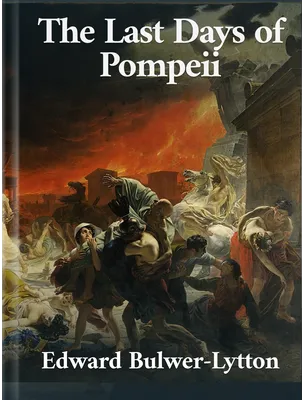
The Last Days of Pompeii is a novel written by Edward Bulwer-Lytton in 1834. The novel was inspired by the painting The Last Day of Pompeii by the Russian painter Karl Briullov, which Bulwer-Lytton had seen in Milan. It culminates in the cataclysmic destruction of the city of Pompeii by the eruption of Mount Vesuvius in AD 79.
In the thrilling tale of "The Last Days of Pompeii," author Edward Bulwer-Lytton immerses readers in the vibrant and tumultuous world of ancient Rome. Set against the backdrop of the bustling city of Pompeii, the story follows the lives of several captivating characters, including the noble and courageous Glaucus, the beautiful and tragic Ione, and the sinister figure of Arbaces. As the city thrives with life, a dark shadow looms overhead, threatening to change everything.
The central theme of the novel revolves around love, destiny, and the inevitable clash between human ambition and the forces of nature. As the characters navigate their desires and fears, they are faced with the looming eruption of Mount Vesuvius, which serves as both a literal and metaphorical force of destruction. Will love triumph in the face of catastrophe, or will the chaos of fate tear them apart?
With rich descriptions and emotional depth, Bulwer-Lytton crafts a gripping narrative that explores the fragility of life and the enduring power of love. Join the journey through Pompeii’s last days, where every moment counts and the specter of disaster is ever-present.
Full Name: Edward George Earle Lytton Bulwer
Birthdate: May 25, 1803
Place of Birth: Kensington, London, England
Date and Place of Death: January 18, 1873, in Torquay, Devon, England
Occupation: Novelist, playwright, and politician
Notable Works: Some of his famous works include "Pelham," "The Last Days of Pompeii," "Rienzi," and "The Lady of Lyons."
Early Life: Edward Bulwer-Lytton came from a well-off family. He attended Cambridge University and was known for his intelligence and talent in writing from a young age.
Literary Career: Bulwer-Lytton started his writing career in the 1820s. He became famous for his novels that combined romance, adventure, and social commentary. His works often explored themes of power, ambition, and the supernatural. He was also a pioneer in the genre of science fiction.
Personal Life: Bulwer-Lytton had a tumultuous personal life, including a troubled marriage to Rosina Wheeler, which ended in separation. Despite his challenges, he remained a popular figure in Victorian society and was involved in politics, serving as a member of Parliament.
The author is Edward Bulwer-Lytton, a famous English novelist and playwright.
He was inspired by the ruins of Pompeii and wanted to explore the lives of people before the volcanic eruption.
The novel is a historical fiction, with elements of adventure and romance.
The main characters include Glaucus, a young nobleman, and Ione, a beautiful priestess.
The story follows Glaucus as he navigates love, betrayal, and the impending doom of Pompeii.
Key themes include fate, the clash of cultures, and the fragility of life.
Yes, the eruption of Vesuvius symbolizes the unpredictable nature of life and the consequences of human actions.
It was well-received and became popular, praised for its vivid descriptions and emotional depth.
Yes, the book has been adapted into films, plays, and even operas over the years.