Wuthering Heights Is Not the Love Story Most People Think It Is
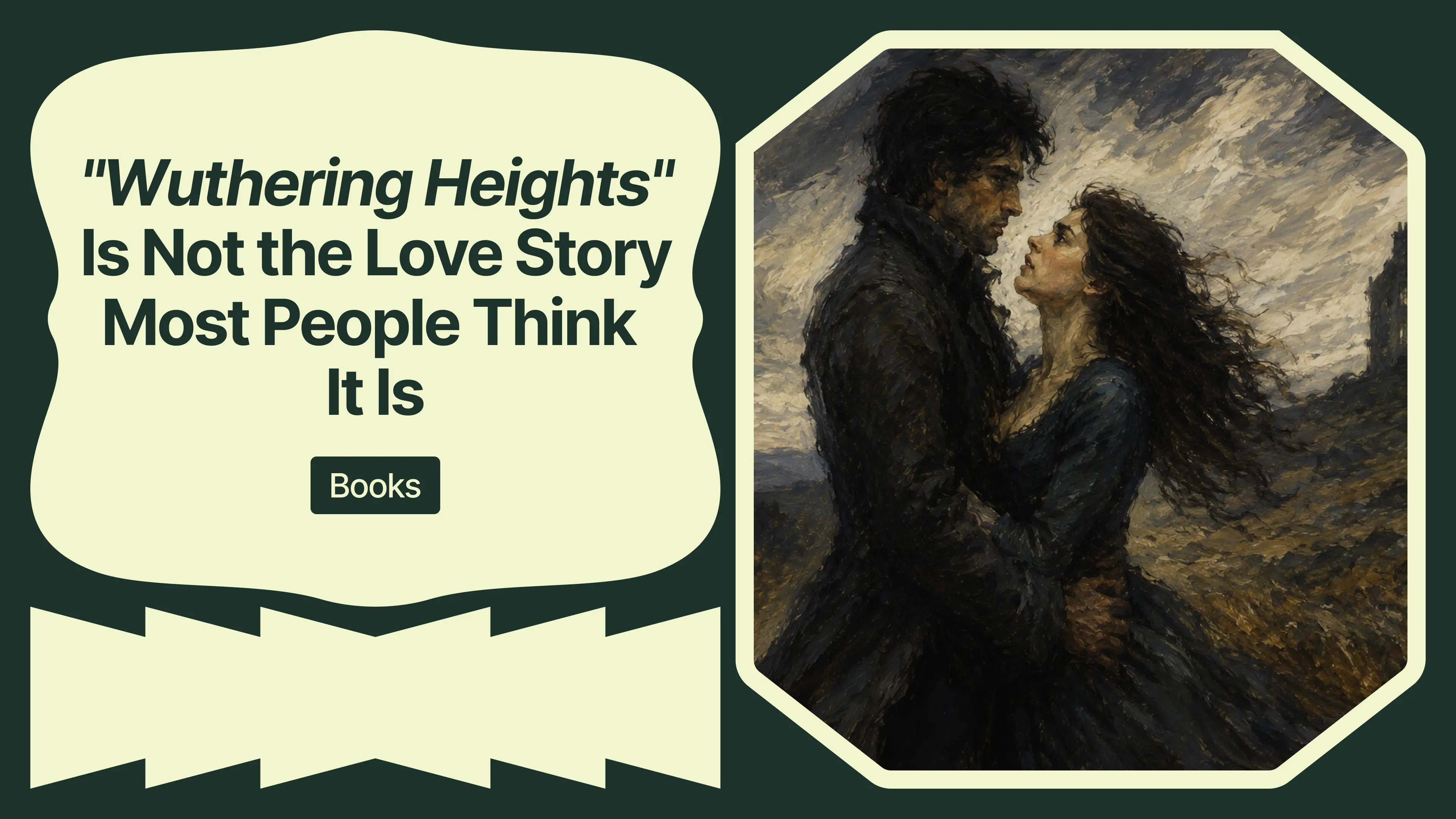
This article explores the dark side of Wuthering Heights, showing how obsession, trauma, and revenge shape Catherine and Heathcliff's bond.
The Romance That Captures Readers
Heathcliff Learns Love Through Rejection
Catherine Wants Two Different Lives
Why Catherine and Heathcliff Choose Each Other
Revenge Takes the Place of Love
A Love Story or a Warning?
Many readers first encounter Wuthering Heights as teenagers and come away with an impression that Heathcliff and Catherine share one of the greatest love stories in literature. But if you try reading it again years later...
The passion is still overwhelming, the famous declarations are still dramatic. But when you read the novel as an adult, something dark and uncomfortable becomes impossible to ignore: this relationship leaves destruction wherever it goes. You notice how people suffer, how families fall apart, how revenge replaces happiness. Now you can see clearly that their timeless love is actually tangled with control, pride, and obsession. So why didn't you notice it at first?
The Romance That Captures Readers
Part of the novel's appeal comes from the intensity of Catherine and Heathcliff's bond. They grow up together at Wuthering Heights and form a connection that seems stronger than ordinary friendship. Catherine's most famous declaration remains one of the best-known lines in English literature:

It is easy to understand why generations of teen readers have found this romantic. Catherine does not just loves Heathcliff - she feels that he is part of her identity.

Few literary couples express their connection in such dramatic terms, which resonates with the intensity of feelings during our teen years. But Emily Brontë gives readers these powerful declarations while also showing the damage that follows from them.
So let's dive a bit deeper to see where all this intensity comes from and how the characters become the way they are.
Heathcliff Learns Love Through Rejection
When Mr. Earnshaw brings Heathcliff home to Wuthering Heights, he arrives as an outsider. Nobody knows where he came from, he has no family, no property, and no social position.

From the beginning, he is treated as someone who does not belong.

After Mr. Earnshaw's death, Heathcliff is pushed down from family member to servant - he loses education, status, and any sense of security. Years of rejection shape the person he becomes. By adulthood, Heathcliff expects cruelty from others. He trusts very few people and carries every insult with him. His attachment to Catherine becomes the only stable emotional connection in his life.
That attachment grows stronger, to the point of possession, because everything else is taken away. As a result, Heathcliff never learns how to love without possession. Losing Catherine feels less like losing a relationship and more like losing part of himself. When she marries Edgar, this event becomes the center of his life, and the revenge that follows grows from that wound.
Catherine Wants Two Different Lives
Catherine's childhood is less harsh than Heathcliff's, but it shapes her in its own way. At Wuthering Heights, she grows up wild, impulsive, and largely free from social expectations. Running across the moors with Heathcliff gives her a sense of freedom that few young women of her time experienced.
Everything changes when she spends time with the Lintons at Thrushcross Grange. Their world offers comfort, refinement, and social status, and Catherine quickly sees its appeal. Before long, she finds herself wanting both worlds. She wants the freedom she shares with Heathcliff, while also gaining the security and advantages that come with the life Edgar can offer. When she tells Nelly,

she reveals how deeply social status has begun to influence her thinking. The contradiction sits at the center of her character. Catherine cannot imagine a life without Heathcliff, but she also cannot imagine giving up the advantages that come with marrying Edgar. Her tragedy begins when she tries to build a life that contains two incompatible visions of happiness.
Why Catherine and Heathcliff Choose Each Other
Many readers fall in love with Catherine and Heathcliff before they fully understand them. As teenagers, it is easy to focus on the intensity of their connection. They seem to share a bond that nobody else can understand. They reject social expectations, speak in dramatic declarations, and remain emotionally tied to each other even when circumstances pull them apart. Catherine's famous words,

sound like the ultimate expression of romantic love. Read this way, Wuthering Heights can feel like a story about two people whose feelings are stronger than the world around them. A second reading often creates a different impression: Catherine struggles to see where Heathcliff ends and she begins, as their bond is built on identification as much as affection.
Catherine and Heathcliff understand each other deeply, yet they rarely bring out the best in each other. Their connection grows from shared loneliness, wounded pride, and emotions that neither learns to control. Part of what draws them together is how completely they recognize themselves in each other. Both feel out of place in the worlds around them. Both resist the expectations others try to impose on them. In each other, they find someone who seems to understand thoughts and feelings that nobody else can reach.
This helps explain why other relationships could never satisfy them. Edgar Linton offers Catherine kindness, stability, and a comfortable life. On paper, he seems a far better partner. Yet Edgar belongs to a world of order and restraint, while Catherine is drawn to intensity. Life with him provides security, but not the emotional force she experiences with Heathcliff. The same pattern appears in Heathcliff's treatment of Isabella Linton. Isabella loves him and is willing to sacrifice a great deal for him, but none of it matters. She cannot reach the part of him that remains tied to Catherine, nor can she understand the anger and longing that drive him.
As the novel unfolds, Catherine and Heathcliff become trapped by the very connection that draws them together. Neither learns how to handle strong emotions in a healthy way. They do not calm each other, they do not help each other grow. Instead, they encourage each other's pride, jealousy, and obsession. That is why their relationship can feels so powerful but proves to be so destructive at the same time. The qualities that unite them also make it difficult for either of them to find peace. Even when they are apart, they continue shaping each other's lives and harming the people around them.
Readers often finish the novel wondering whether Catherine and Heathcliff were destined to be together. Or did they recognize themselves in each other so completely that neither could escape the worst parts of their own nature?
Revenge Takes the Place of Love
The older many readers become, the harder it is to see Heathcliff as a romantic hero. His childhood earns our sympathy. He grows up unwanted, humiliated, and deprived of opportunities that others take for granted. When Catherine chooses Edgar, it is easy to understand why Heathcliff feels betrayed and devastated.
On a first reading, his return can almost feel triumphant. He comes back wealthier, more confident, and determined to reclaim some control over his life. But that impression does not last long. As the story unfolds, revenge gradually becomes the driving force behind many of his actions. Heathcliff did not come back to get justice (like Edmond Dantès type of hero would) - he wants others to suffer as he suffered. Hindley, Edgar, Isabella, and even the next generation become targets in a plan that stretches across years.
His marriage to Isabella makes his intentions clear. While she imagines herself part of a dark and passionate romance, Heathcliff sees her very differently. At one point, he openly admits:

By this stage of the novel, Heathcliff takes satisfaction in other people's pain. But revenge never gives him what he is looking for. Even after Catherine's death, he remains consumed by her. One of the novel's most haunting moments comes when he begs her ghost:

The words might sound romantic to a dramatic teenage mind. Adults will notice that they reveal a man unable to let go of grief, anger, or obsession. Catherine remains the center of his life, but the attachment brings neither comfort nor peace.
This is where many adult readers begin to see Heathcliff differently. The passionate outsider from the opening chapters has become someone who harms nearly everyone around him, including himself. His love for Catherine survives, but it becomes tangled with resentment, possession, and a need to keep old wounds open. By the end of the novel, another question begins to emerge. Do we redeem Heathcliff as the man he becomes, or as the lonely boy he once was?
A Love Story or a Warning?
Emily Brontë does not tell readers how to judge Catherine and Heathcliff. She lets the relationship speak through its consequences. Their bond grows from loneliness, pride, anger, and a fierce need to be understood. They recognize each other deeply, but they do not know how to care for each other safely. They mistake intensity for truth and suffering for proof of love. The red flags are everywhere. Catherine wants Heathcliff without giving up status and comfort. Heathcliff wants Catherine with a force that becomes possessive and cruel. Neither of them respects emotional limits, neither accepts loss with dignity. When they are hurt, they make others pay for it.
The damage spreads far beyond the two of them: Edgar is trapped in a marriage shadowed by Catherine’s attachment to Heathcliff, Isabella is drawn into a fantasy that turns into misery. Hindley’s hatred helps create the man Heathcliff becomes, and Heathcliff later passes that pain to the next generation through Hareton, Linton, and young Cathy.
Wuthering Heights is an unsettling story about the relationship can look romantic from a distance, especially when read as pure passion, but up close, the novel becomes a study of obsession, emotional cruelty, and love without care. By the final page, the question remains uncomfortable: Are Catherine and Heathcliff one of literature’s greatest romances, or one of its clearest warnings about what happens when love turns into possession?
Perhaps that is why Wuthering Heights changes as we grow older. As teenagers, we often see a love powerful enough to defy the world. As adults, we begin to notice the cost of that love - not only to Catherine and Heathcliff, but to everyone caught in its path.