The Swiss Family Robinson. Survival, Family, and Fun
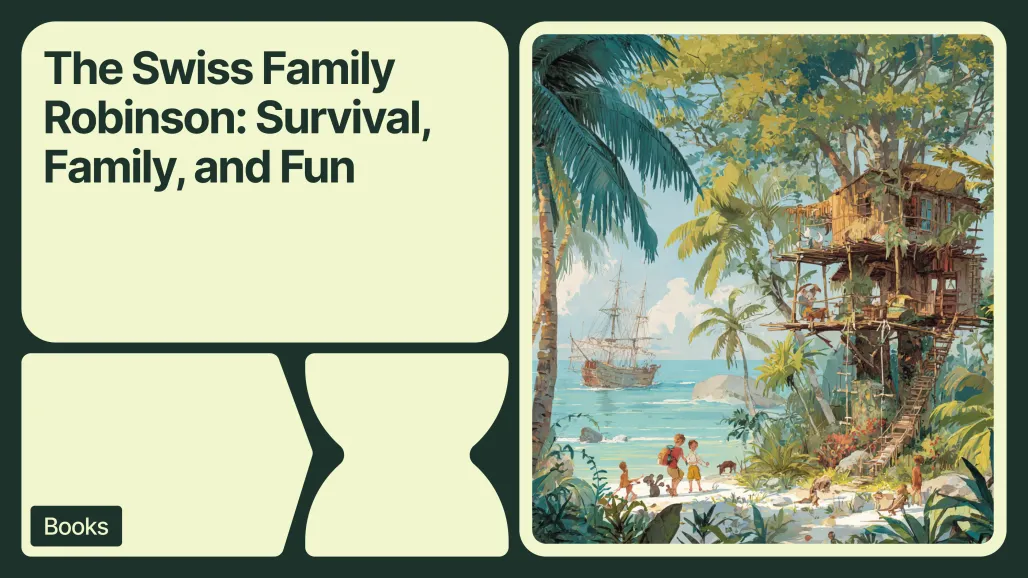
A shipwrecked family learns to survive with courage, creativity, and love in "The Swiss Family Robinson"—a timeless tale of adventure.
🏝️ What Would You Do on a Desert Island?
1: Shipwreck and First Survival
2: Exploring and Gathering
3: Building and Settling In
4: Learning to Live with Nature
5: Growing Wiser
Ready to Begin Your Own Island Adventure?
🏝️ What Would You Do on a Desert Island?
Imagine this: You and your family are on a ship. Suddenly, there’s a huge storm. The ship crashes—and you all end up on a wild, empty island. No phones. No stores. No people. Just nature.
What would you do? Could you survive? Could you build a home? Would you work together—or fall apart?
After the huge success of the book Robinson Crusoe, many people started asking the same question: “What if this happened to me?” Readers loved the idea of adventure, danger, and surviving in nature. This started a new type of story—the island survival tale.
One of the most famous of these stories is The Swiss Family Robinson, written by Swiss author Johann David Wyss in 1812. But this book is different from Robinson Crusoe. It’s not about one man alone—it’s about a whole family: a mother, father, and four sons, all working together to survive and create a new life.
It’s a fun, exciting, and inspiring story—with lots of clever ideas, animals, surprises, and heart. Let’s take a closer look at what makes it so special!
1: Shipwreck and First Survival
Lesson: Stay calm and use what you have.
The story begins with fear and danger—a storm, a wrecked ship, and an uncertain future. But the family quickly chooses not to panic. Instead, they work together and use what’s around them to survive.

In this first chapter, we learn the value of clear thinking, teamwork, and being resourceful in scary moments.
2: Exploring and Gathering
Lesson: Observe, explore, and be curious.
Once they reach land, the family begins exploring their surroundings. They find wild animals, strange plants, and useful materials. Every walk becomes a learning adventure.
They don’t just grab what they can—they ask questions, make plans, and think about how to use the things they find.

This part of the book teaches us to look closely, stay curious, and learn from nature.
3: Building and Settling In
Lesson: Create a home wherever you are.
The family doesn’t just survive—they start to build a life. They make tools, plant gardens, and even build clever shelters (some very surprising!). Each person helps in their own way. They also bring books, faith, and love into their daily life, showing that a real home is not just walls—it’s how you live together.

This part reminds us that with hope, creativity, and shared effort, we can feel at home even in a strange place.
4: Learning to Live with Nature
Lesson: Respect animals and the world around you.
The family meets many animals—some helpful, some dangerous. But they don’t just fight everything. They learn to study, tame, and respect nature. They build relationships with the land and animals instead of destroying them.
They also teach their children not just how to hunt or fish—but how to think, notice, and care.

This part of the story encourages us to live in harmony with nature—not just control it.
5: Growing Wiser
Lesson: Adventure is great—but knowledge keeps you alive.
As time passes, the family doesn’t only survive—they grow. They ask more questions, read more books, and try new things. Every challenge teaches them something.
What makes their adventure special is that they don’t give up learning. Even in a wild place, they keep teaching, reading, and thinking—showing that knowledge is one of the best tools we have.

Finally, we see how learning and imagination help not just to survive—but to truly live.
Ready to Begin Your Own Island Adventure?
If you love stories about nature, creativity, and family, this classic is for you. It’s exciting and fun—with new discoveries in every chapter. It also reminds us that family, love, and learning are what matter most.
You can read it online for free here on WholeReader Bring your imagination—and maybe a rope and a knife!