Secrets, Tea, and Sadness in James Joyce's "Dubliners"
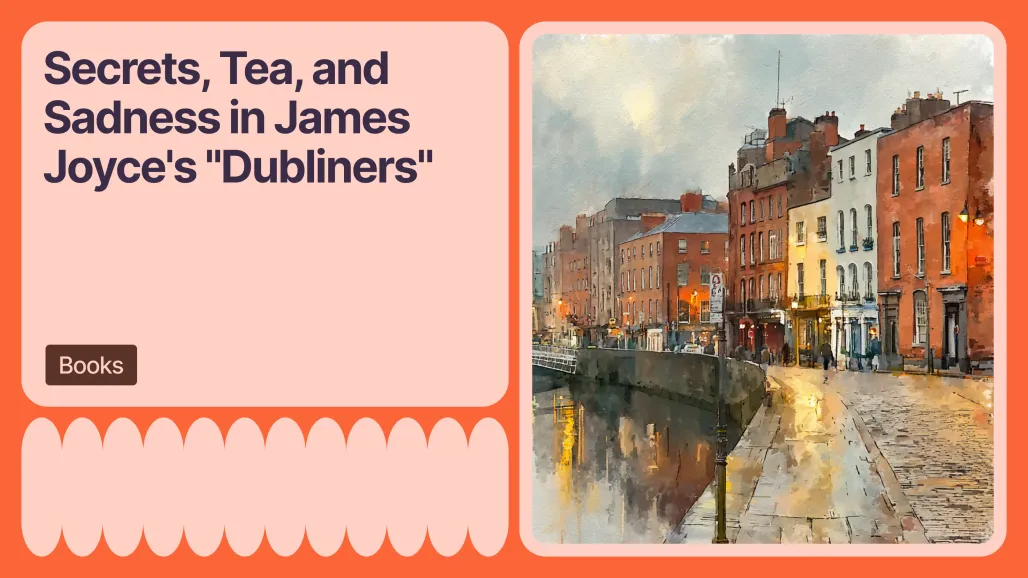
Step into old Dublin with Dubliners by James Joyce—15 quiet, powerful stories about real life, Irish culture, and everyday emotions.
Who Was James Joyce?
Welcome to Dublin
What’s Inside the Book?
“Araby”
“Eveline”
“The Dead”
What “Dubliners” Teaches Us About Ireland
Final Thought
What if a book could take you back in time to the streets of Dublin, Ireland, over 100 years ago — not with big adventures or battles, but with quiet moments, small sadnesses, and people just trying to live their lives?
That’s what Dubliners by James Joyce does. It's a short story collection, but it reads like a quiet map of human emotion — full of missed chances, family drama, awkward dinners, and people drinking a lot of tea while feeling slightly disappointed.
Who Was James Joyce?
James Joyce is one of the most famous writers in the world — and a national treasure in Ireland. He was born in Dublin in 1882, into a large Catholic family. His father had money problems, and his mother was quiet and religious. Joyce was a brilliant student and loved languages, books, and music.
As a young man, he left Ireland and lived in cities like Trieste, Zurich, and Paris. But even though he lived abroad, his heart stayed in Dublin. Almost everything he wrote is set in Ireland, especially his home city.
Joyce became a key figure in modernist literature — a new writing style in the 20th century that focused on the mind, emotions, and deep inner thoughts. He liked to write about everyday life, but in a very careful, artistic way.
His first big book was Dubliners (1914), followed by A Portrait of the Artist as a Young Man (1916), the groundbreaking Ulysses (1922), and the strange and complex Finnegans Wake (1939). Ulysses is often called one of the greatest novels ever written — and also one of the most difficult!
Even today, Irish people celebrate Joyce’s work. Every year on June 16, fans around the world mark “Bloomsday”, the day Ulysses takes place. His face appears on murals, coins, and museum walls. And yet, it all started with Dubliners — the simple, honest stories of a city and its people.
“For myself, I always write about Dublin, because if I can get to the heart of Dublin I can get to the heart of all the cities of the world.”
— James Joyce
Welcome to Dublin
The Dublin in Dubliners is not a cheerful tourist city. It’s not full of laughter and green hats. It’s full of quiet moments, big emotions, and people who feel stuck.
The tone of the book is soft, sometimes sad, but always honest. Each story takes place in a different part of Dublin and shows different parts of life — from childhood to old age, from falling in love to facing death. Some characters dream of escape. Others can’t even imagine it.

Joyce called this feeling paralysis. Many of his characters want to move forward, but something inside or around them keeps them still.
At the same time, Dubliners shows Irish culture in every detail — family dinners, Catholic beliefs, local gossip, music, and how people speak or stay silent. The stories feel small, but they are full of truth.

What’s Inside the Book?
The book has 15 short stories, each one telling a quiet but deep moment from the lives of people in Dublin. They include boys and girls, workers and lovers, old men and tired housewives. Some stories are short and simple. Others are more emotional and complex.
Here are a few highlights:
“Araby”
A boy falls in love and dreams of buying a gift for a girl at a bazaar. But life disappoints him.

“Eveline”
A young woman must decide: leave Dublin with a man who promises a better life, or stay in the life she knows?

“The Dead”
A dinner party on a snowy night brings old memories, new feelings, and one of the most beautiful endings in literature.

What “Dubliners” Teaches Us About Ireland
Dubliners is more than a book — it’s a window into Irish life at the start of the 20th century. Through its quiet stories and everyday characters, James Joyce shows us what it felt like to live in Dublin during a time of deep change, confusion, and stillness.
When Joyce was writing, Ireland was still part of the British Empire. Dublin was the capital, but not a powerful one. It was a city full of poverty, religious control, and political tension. The Catholic Church played a big role in people's lives, not just in faith but in daily habits and decisions. Many Dubliners lived with rules they didn’t always understand or agree with — and few people felt they could escape.
Here’s what we learn:
- Family is everything — but also a source of pressure and duty.
- Religion shapes daily life, often quietly but powerfully.
- Many people feel trapped by money, tradition, or social rules.
- Irish identity is shaped by history, language, and silence.
- Tea, politeness, and music are key parts of social life.
These ideas show up in every story. Some characters want to leave but can’t. Others say very little but feel very much. And others follow the same routine every day, because it’s safer than change.
But Dubliners also celebrates the little details of Irish life: a quiet street at dusk, the sound of a piano from an upstairs window, the awkwardness of a first crush, or the rhythm of footsteps on the pavement. These are small things, but they make the stories feel real — and make Dublin itself feel alive.
And above all, Dubliners reminds us that Irish people — like all people — carry emotions they don’t always say out loud. Joyce writes about that silence, and in doing so, gives it a voice. To read Dubliners is to feel what it means to live with pride, sadness, love, frustration, and memory — all at once, often in the same room.
Final Thought
Dubliners isn’t loud. It doesn’t have car chases or magical endings. But it shows something even more powerful: real human emotion, captured in small, perfect moments.
If you want to walk the streets of old Dublin, hear its voices, and feel its quiet struggles—read this book. One story at a time is enough.
Start reading here: Dubliners by James Joyce