Reading "Anne of Green Gables" in the Classroom and at Home. A Parent-Teacher’s Guide to Language, Literature, and Life
Discover how Anne of Green Gables inspires kids to learn language, explore emotions, and connect past and present through story.
Meeting Anne Shirley: A Character to Love and Learn From
A Window Into Childhood Then and Now
Language, Imagination, and Learning Through Story
Lessons That Stay in the Heart
Reading With Purpose: Ideas for Parents and Teachers
More Books by L. M. Montgomery
The Timeless Magic of Anne
“It’s delightful when your imaginations come true, isn’t it?” — Anne Shirley
There are children’s books that entertain, and then there are those that shape how young readers see the world. Anne of Green Gables by L. M. Montgomery is one of those rare treasures — a story that delights, teaches, and stays in the heart long after the last page. For parents and teachers alike, it’s more than just a classic novel; it’s a doorway into meaningful conversation, language growth, and emotional understanding.
Meeting Anne Shirley: A Character to Love and Learn From
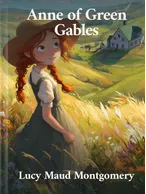
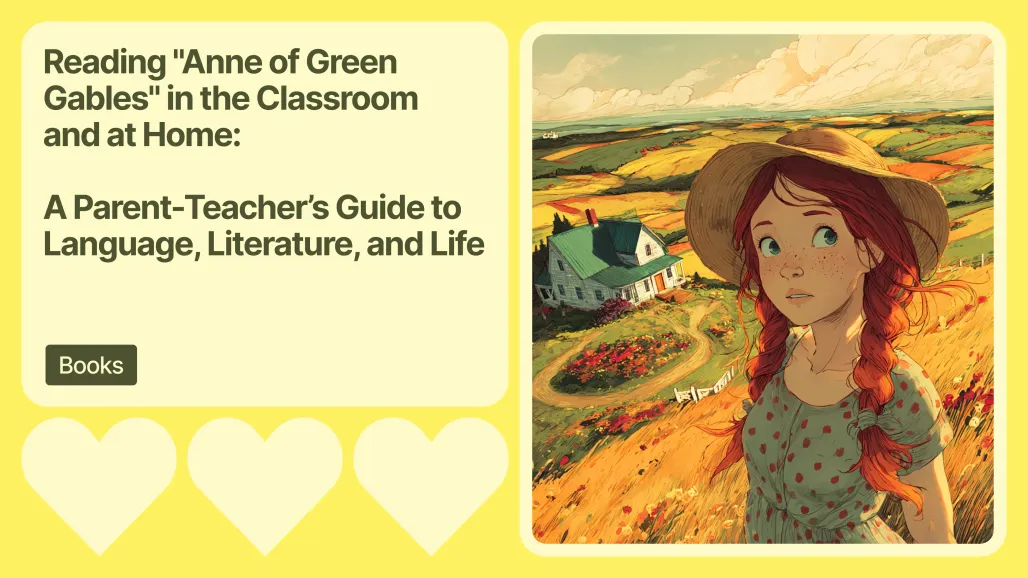
When readers first meet Anne Shirley — a red-haired orphan with bright eyes and a vivid imagination — they often see a part of themselves in her. Anne arrives at Green Gables by mistake, expecting love and family but finding uncertainty instead. Yet her optimism, curiosity, and creativity transform not only her life but also the lives of those around her.
Anne isn’t a perfect child — and that’s why children love her. She talks too much, forgets things, gets lost in her daydreams, and makes mistakes that are both funny and touching. She also feels deeply: joy, sadness, anger, and hope all live close to the surface.

Today, many readers see Anne as a character who might be neurodivergent, especially ADHD-coded. Her boundless energy, quick shifts of attention, and emotional intensity make her not only relatable but also a beautiful example of how different ways of thinking can be sources of creativity and connection.

A Window Into Childhood Then and Now
Reading Anne of Green Gables with children opens up an opportunity to talk about how childhood has changed over the last hundred years. When Anne first appeared in 1908, life for children was very different. There were no smartphones, no modern schools, and certainly no streaming cartoons — but there were chores, long walks, and plenty of time to imagine.

Anne’s world is slower and simpler, yet filled with wonder. Discussing her story can lead to meaningful conversations about values and upbringing — about gratitude, friendship, respect, and what it means to belong. Children can compare Anne’s life to their own, noticing both the challenges and the charms of her time. It’s a perfect way to connect past and present childhoods while showing how emotions, dreams, and hopes remain timeless.
Language, Imagination, and Learning Through Story
One of the greatest joys of reading Anne of Green Gables is its beautiful, expressive language. Montgomery’s writing flows with warmth and humor, filled with words that sparkle like the world Anne describes. The story becomes a gentle but powerful tool for developing English vocabulary and expression — especially for ESL learners or young readers eager to grow their confidence.
Anne’s speech is full of unusual and delightful words that capture her vivid imagination: words like “bosom friend,” “kindred spirit,” “tragical,” and “epistle.” She describes everyday things with dramatic flair — a walk becomes a “romance,” and a letter is never just a letter, but an “epistle.” Children are enchanted by how she turns simple thoughts into expressive, colorful language. Reading aloud or listening to the audio-aligned book helps young readers absorb the natural rhythm of her sentences, explore emotionally rich dialogue, and enjoy the poetic beauty of her world.

Teachers and parents can make reading sessions interactive: pausing to talk about words, asking what Anne might mean, or writing “Anne-style” diary entries full of feeling and flair. These activities help children not only understand the story but also find their own voice in English.
Lessons That Stay in the Heart
Beyond its charming plot and humor, Anne of Green Gables offers deep lessons about kindness, self-acceptance, and resilience. Anne’s journey — from being an unwanted orphan to a beloved member of the Cuthbert family — mirrors every child’s longing to be seen and valued for who they truly are.
Her relationship with Marilla and Matthew shows how love can grow in unexpected places. Her friendship with Diana Barry celebrates loyalty and forgiveness. And her rivalry (and later friendship) with Gilbert Blythe teaches readers that respect can come from understanding, not competition.
Anne’s curiosity and creativity also show that imagination isn’t just play — it’s a way to survive and to see beauty in life. When she declares,

she reminds us all, children and adults alike, to notice the joy in ordinary things.
Reading With Purpose: Ideas for Parents and Teachers
Reading Anne of Green Gables together — whether in class or at home — can become a shared adventure. The story is long but episodic, meaning it can be read one chapter at a time, with each chapter offering a new “lesson” or moment to discuss.
Teachers can use it to build reading comprehension, creative writing, and vocabulary lessons. Parents can enjoy it as a bedtime read, pausing to talk about Anne’s ideas and emotions. Children can write letters to Anne, describe what a “kindred spirit” means to them, or imagine how they’d handle her scrapes and surprises.
The key is to read with empathy, letting the story guide discussion about courage, friendship, mistakes, and dreams. The more you talk about Anne, the more her lessons come to life.

More Books by L. M. Montgomery
If you or your child loved Anne of Green Gables, there’s a whole series waiting to be explored. Montgomery continued Anne’s story through several sequels that follow her from girlhood to adulthood. In “Anne of Avonlea”, Anne becomes a teacher in her hometown, still full of imagination but now learning to guide others. “Anne of the Island” takes her to college, where she faces new friendships, challenges, and questions of love. Later books like Anne’s House of Dreams and Rilla of Ingleside show Anne building a life and family, all while staying true to her passionate and curious spirit.
L. M. Montgomery also wrote several standalone novels that carry the same magic and emotional richness as the Anne books, with new characters for readers to discover.
“The Story Girl” introduces a group of cousins on Prince Edward Island and their enchanting cousin Sara Stanley, who can turn any event into a story. Children and adults alike will be drawn into the playful charm of this book — and many may see it as a quiet inspiration for modern storytelling series.
For slightly older readers, “The Blue Castle” is a hidden gem. It's the story of Valancy Stirling, a quiet woman who decides to break free from her dull, controlling life and live on her own terms. The book explores themes of courage, independence, and joy in unexpected places. It's often considered Montgomery’s most grown-up novel, and a wonderful read for teens and adults.
Montgomery’s world is always full of gentle humor, emotional truth, and characters who feel real — no matter their age or story. Whether you're revisiting Avonlea or discovering a new corner of Prince Edward Island, L. M. Montgomery’s books offer a timeless celebration of imagination, friendship, and the beauty of everyday life.
The Timeless Magic of Anne
More than a century after its publication, Anne of Green Gables still feels alive. It continues to comfort, inspire, and teach — not through heavy lessons, but through laughter, curiosity, and heartfelt honesty.
For children, Anne is a friend who understands what it’s like to feel different. For adults, she’s a reminder of how powerful imagination can be. And for everyone — readers, parents, and teachers — she’s proof that stories can build empathy, enrich language, and keep childhood wonder alive.

It’s a feeling every reader shares by the end of her story.