Pollyanna and the Meaning of Positive Thinking
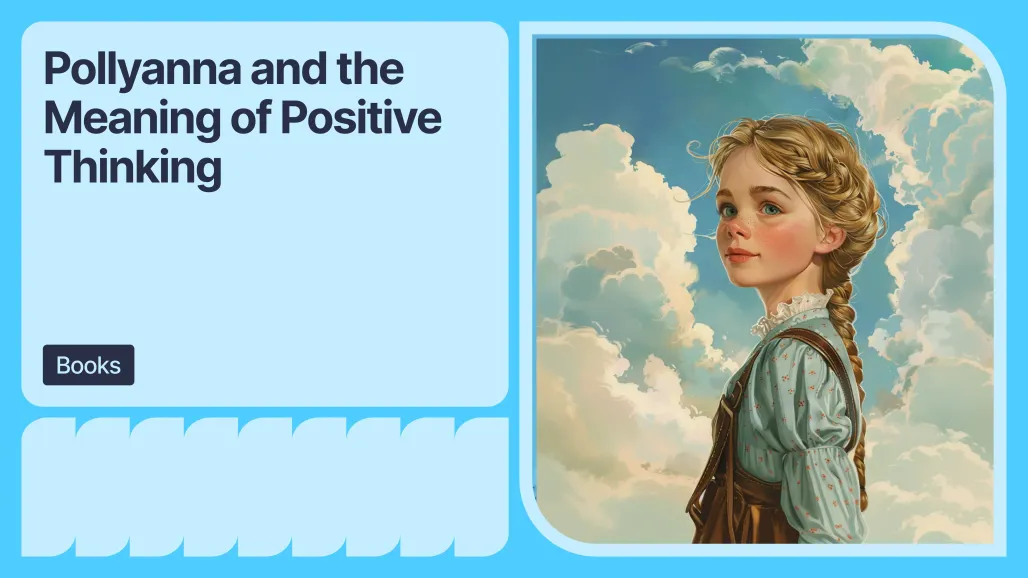
This article explores Pollyanna's message of positive thinking, its impact, limits, and how it can inspire thoughtful discussion with children.
Who Was Eleanor H. Porter?
What the Story is About
The Glad Game
Positive Change in the Community
When Positive Thinking Is Hard — and Too Much
Adaptations and Cultural Impact
What Pollyanna Can Teach Children (and Adults)
Hope with Eyes Open
Pollyanna is a classic children’s novel by American author Eleanor H. Porter, first published in 1913. The book became a phenomenon in its time and has remained a beloved story for over a century. It introduced readers to a young girl whose belief in looking on the bright side of life — no matter the situation — captured imaginations and changed many hearts.
Who Was Eleanor H. Porter?
Eleanor Emily Hodgman Porter (1868–1920) was an American novelist born in New Hampshire. She trained in music but eventually found her calling in writing stories that combined warmth, wisdom, and simple moral depth. Her most famous creation, Pollyanna, sold exceptionally well and quickly inspired sequels — some penned by Porter herself, and others by different authors after her death — due to the story’s lasting popularity.
What the Story is About
Pollyanna follows Pollyanna Whittier, an eleven-year-old orphan who goes to live with her stern Aunt Polly in the small town of Beldingsville, Vermont. Upon her arrival, Pollyanna introduces everyone she meets to “The Glad Game” — a cheerful habit of finding something to be glad about in every situation.
The game began when Pollyanna received a pair of crutches instead of the doll she had hoped for. Her father, a minister, encouraged her to be glad she didn’t need the crutches.

That lesson stayed with her, and now she uses it to transform her life and the lives of those around her. As Pollyanna interacts with the townspeople — from the bitter Mrs. Snow to the reclusive Mr. Pendleton — her optimism begins to work quiet changes in them.
But the real test comes when Pollyanna herself is hurt in an accident and loses the use of her legs. Suddenly, the Glad Game becomes harder to play. The story deepens, asking whether Pollyanna’s philosophy can truly hold up in moments of personal hardship.
The Glad Game
At the heart of the story is the Glad Game — a practice of actively choosing to focus on the good, even in disappointing or painful moments. Pollyanna explains it this way:

This simple approach to life touches everyone she meets. Her sunny perspective offers real comfort, helping others see their lives with more hope and less fear. It reflects the power of positive thinking, which modern psychology supports as a way to increase well-being, reduce stress, and build resilience.
Interestingly, the “Pollyanna principle” is now a real term in psychology. It describes our tendency to focus more on pleasant memories and experiences — something Pollyanna intuitively did long before scientists studied it.
Positive Change in the Community
Porter’s novel shows that optimism isn’t just personal — it can ripple out and affect others. Pollyanna’s joyful attitude helps soften the edges of a town filled with lonely, frustrated, or closed-off people. Aunt Polly, cold and rule-driven, begins to rediscover warmth. Even those considered hopeless cases begin to feel valued and seen.
In this sense, Pollyanna is not about ignoring life’s problems but about how one person’s mindset can inspire emotional connection and healing across an entire community.

When Positive Thinking Is Hard — and Too Much
Still, the novel doesn’t present positive thinking as magical or easy. When Pollyanna loses her ability to walk, she stops playing the Glad Game. She admits she can’t find anything to be glad about — and that honesty is one of the most important parts of the book.

This moment invites reflection on toxic positivity — the idea that people should always be happy and grateful, even when experiencing grief, illness, or pain. In real life, pretending to be happy all the time can make it harder to process real emotions. It can even make someone feel guilty for feeling sad.
Thankfully, Pollyanna doesn’t suggest forcing fake smiles. Instead, it shows a fuller picture: sometimes, we all struggle to find the light. But if we stay open and let others help us, that light can return.
Adaptations and Cultural Impact
Pollyanna has been adapted many times, showing just how widely her story has touched hearts around the world.
The most famous version is the 1960 Disney film starring Hayley Mills, which introduced Pollyanna to a new generation. It captures the joyful spirit of the novel and earned Mills a special Academy Award for her performance. While the film softens some of the book’s darker moments, it keeps the core message of hope and kindness.
Other notable versions include the 1986 BBC miniseries, which is more faithful to the book’s tone and setting, and a 2003 TV adaptation starring Georgina Terry, which updates the visuals while keeping the story’s heart.
In Japan, Pollyanna became a beloved anime series in 1986, part of the World Masterpiece Theater collection. This version is especially loved for its gentle storytelling and charming illustrations that stay true to the novel’s emotional depth.
The name “Pollyanna” has even entered everyday language — used to describe someone who is always optimistic, sometimes to a fault. While this term is sometimes used critically, it also shows just how deeply the story has entered modern culture.
What Pollyanna Can Teach Children (and Adults)
There is a lot children can learn from Pollyanna — especially when the ideas are explored thoughtfully with a parent or teacher:
- Hope and gratitude: The Glad Game encourages noticing good things even in hard times.
- Resilience: Pollyanna doesn’t deny difficulty, but practices finding something to be glad about — a skill that supports emotional strength.
- Empathy and kindness: Her interactions show how positivity can help build relationships and community.

At the same time, some parts of Pollyanna’s philosophy deserve careful conversation:
Real pain deserves real attention: Not every problem can simply be “looked on the bright side.” Children should know it’s okay to feel sad or angry and talk about those feelings openly.
Toxic positivity awareness: Helping kids understand that encouragement should not deny real struggles fosters emotional intelligence.
A balanced approach might be: celebrate the positivity that Pollyanna models, but also acknowledge and discuss moments when her optimism is challenged and when sadness is natural. This makes the message richer and more meaningful.
Hope with Eyes Open
Pollyanna remains a beloved classic because it speaks to a universal desire: to find light in darkness and joy in everyday life. Yet its real wisdom lies not in insisting on happiness at all times, but in learning to recognize the small reasons for gladness even while growing through difficulty. This nuanced lesson — of hope laced with honesty — is what makes the novel worthy of reading again and again.
