Black Women Writing Freedom on Their Own Terms
Explore how black women claimed freedom through faith, action, and writing, shaping history and paving the way for future generations.
Jarena Lee
Sojourner Truth
Harriet Jacobs
Harriet Tubman
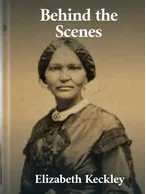
Elizabeth Keckley
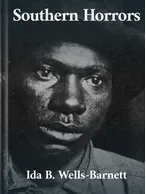
Ida B. Wells-Barnett
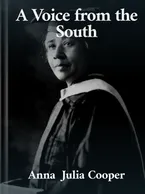
Anna Julia Cooper
A Shared Legacy
Black history is often told through laws, wars, and famous speeches. But it is also told through books written by Black women who refused to be silent. These women wrote in different moments, under different limits, but with a shared purpose: to claim their humanity and speak truth in their own voices.
The writers and figures in this article lived at a time when Black women were denied education, safety, and public authority. Their books and stories helped open doors that did not yet exist. By insisting on being heard, they made space for later Black women writers of the 20th and 21st centuries, including Zora Neale Hurston, Toni Morrison, Maya Angelou, Audre Lorde, Alice Walker, and many others.
This article follows these early voices in roughly chronological order. Together, their lives show how Black women used faith, action, work, journalism, and education to shape the meaning of freedom — and how their words continue to echo far beyond their own time.
Jarena Lee
(1783–1864)
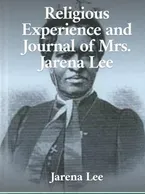
Jarena Lee was born free in New Jersey in 1783. From a young age, she felt called to preach. This was deeply controversial. Women were not allowed to preach in most churches, and Black women faced even stronger opposition.
In Religious Experience and Journal of Mrs. Jarena Lee (1836), Lee explains why she refused to stay silent:

Lee traveled thousands of miles preaching across the United States. Often, she did so without official permission. She faced ridicule and rejection, but she continued.
Her book is one of the earliest autobiographies written by a Black American woman. It shows how faith gave her authority when society offered her none. Lee did not wait for acceptance. She claimed her voice and used it.
Sojourner Truth
(c. 1797–1883)
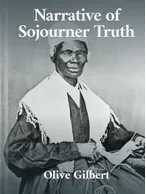
Sojourner Truth was born enslaved in New York. She freed herself in 1826, one year before slavery ended in that state. She became a powerful speaker for abolition and women’s rights.
Her life story was recorded in Narrative of Sojourner Truth (1850), dictated to Olive Gilbert. Truth did not read or write, but she understood the power of words and public speech.
One of her most famous ideas appears again and again in her story: that truth does not need decoration. She spoke directly, using her own experience as evidence of injustice.

Truth’s presence challenged many people. She was a Black woman speaking publicly, confidently, and without apology. Her life showed that authority does not come only from education or position, but from lived truth.
Harriet Jacobs
(1813–1897)
Harriet Jacobs, born enslaved in North Carolina in 1813, faced constant pressure and harassment from her enslaver from a young age. Showing great bravery, Jacobs chose to write about this part of her life openly and honestly.
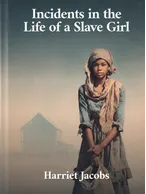
Her book, Incidents in the Life of a Slave Girl, was published in 1861 under the pseudonym “Linda Brent.” Jacobs used a false name to protect herself and her family. Writing about the private suffering of enslaved women was considered improper and even shameful, especially for women. Jacobs knew she risked judgment and disbelief, but she believed the truth mattered more.
To protect her children, Jacobs made an extraordinary decision. She hid for nearly seven years in a small attic space above her grandmother’s house. The space was so low she could not stand, and so cramped it caused lasting pain and illness. From there, she could sometimes watch her children through a small opening, without being able to speak to them.

Jacobs shows that slavery did not only control labor. It controlled bodies, families, and futures. Her story centers on motherhood and the constant fear of having children sold away.
Today, Incidents in the Life of a Slave Girl is recognized as one of the most important accounts of slavery in American literature. It reminds us that survival itself can be an act of resistance — and that some truths are hardest, and most necessary, to tell.
Harriet Tubman
(c. 1822–1913)
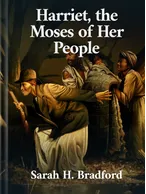
Harriet Tubman did not write her own autobiography, but her life was recorded while she was alive. Harriet, the Moses of Her People by Sarah Bradford (1869) helped make her work known to a wider public.
Her life, that might sound like a superhero movie, started this way: Tubman was born enslaved in Maryland. After escaping slavery in 1849, she returned to the South many times to help others escape through the Underground Railroad. Each journey put her life at risk.
Bradford records Tubman’s deep sense of responsibility toward others:

Tubman also served the Union Army during the Civil War as a nurse, scout, and spy. Later in life, she supported women’s voting rights and cared for elderly Black people.
Her story shows freedom not as a single moment, but as ongoing work. Tubman acted again and again, even when the cost was high.
Elizabeth Keckley
(1818–1907)
Elizabeth Keckley was also born enslaved, in Virginia. Through skill and determination, she became a successful dressmaker and bought freedom for herself and her son. In Washington, D.C., Keckley became the personal dressmaker and close confidante of Mary Todd Lincoln. In 1868, she published Behind the Scenes.

Her honesty came at a price. Many readers felt she had shared too much about the Lincoln family. As a result, her business suffered.
Today, the book is recognized as a rare firsthand account of life inside the White House during and after the Civil War. It also shows how Black women were expected to give loyalty and emotional labor, even when that loyalty was not returned.
Keckley’s story reminds us that freedom did not mean safety or equality. Speaking honestly still carried risk.
Ida B. Wells-Barnett
(1862–1931)
Ida B. Wells's journey started in Mississippi in 1862. She was born into slavery and freed as an infant by the Civil War. As an adult, she became a journalist, teacher, and anti-lynching activist.
In Southern Horrors (1892), Wells exposed the reality of lynching in the United States. She challenged the false claim that lynching protected white women. Instead, she showed it was used to control and terrorize Black communities.
She wrote with urgency and clarity:

Wells gathered data, investigated cases, and published names and facts. This work put her life in danger. Her newspaper office was destroyed, and she was forced to leave the South.
Wells shows how writing itself became a form of resistance. Her work connects personal courage with public accountability.
Anna Julia Cooper
(1858–1964)
Anna Julia Cooper was born into slavery in North Carolina in 1858. After the Civil War, she gained access to education and became a scholar, teacher, and activist.
Her book A Voice from the South (1892) argues that the future of Black communities depends on the education and leadership of Black women.
One of her most quoted lines remains powerful today:

Cooper believed Black women carried knowledge shaped by both racism and sexism. She argued this perspective was essential, not secondary. Her work looks forward. It asks what justice, leadership, and equality should look like in a society rebuilding after slavery.
A Shared Legacy
These women lived very different lives. Most were born enslaved. Some were born free. Some preached, some spoke, some wrote, and some acted quietly behind the scenes.
What they shared was courage and conviction.
Their books and stories pushed against silence. They recorded experiences that history often tried to erase. They insisted that Black women’s lives, thoughts, and labor mattered.
Reading these works today helps us understand freedom not as a single event, but as a long, ongoing struggle. These women did not wait to be invited into history. They wrote themselves into it — clearly, honestly, and on their own terms.