Ben-Hur and Its Historical and Religious World Explained
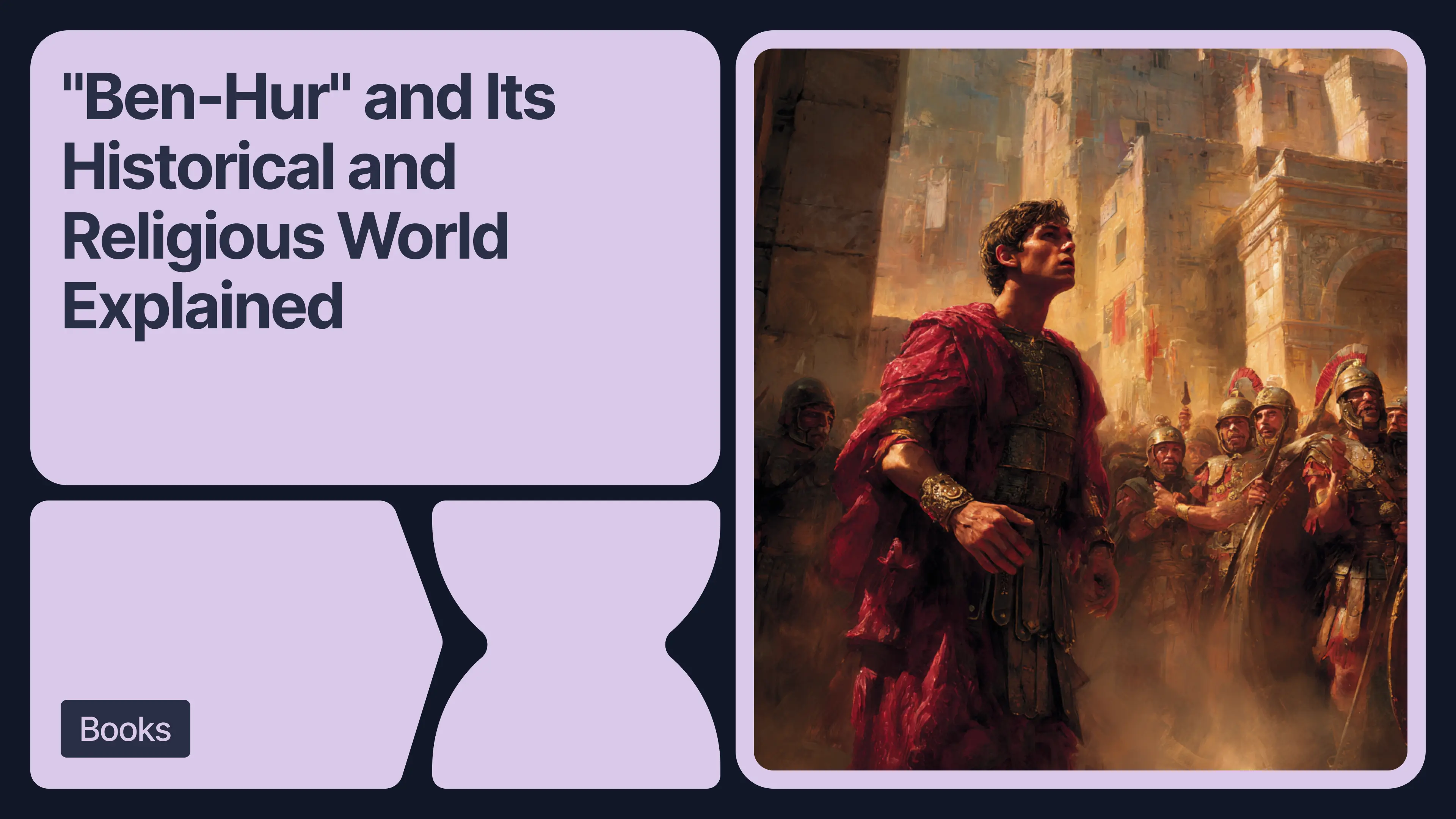
This article explores Ben-Hur’s world under Roman rule, his struggle with revenge, and the influence of compassion in his life.
Life Under Roman Authority
A Story Told Alongside the Gospels
When Revenge Takes Hold
A World That Does Not Give Easy Answers
Lew Wallace’s Ben-Hur: A Tale of the Christ tells a personal story within a wider setting. Ancient Judea shapes what people can do, what they fear, and what they hope for.
The novel takes place under Roman rule, where authority is strict and often unfair, and where small acts of kindness can carry unexpected meaning.

Life Under Roman Authority
The story unfolds at a time when Judea is controlled by the Roman Empire. Roman officials make decisions that few can question. Judah Ben-Hur’s life changes after an accident involving a Roman officer. He is judged quickly, without a real chance to defend himself. His fate is decided by power, without as much as an examination of what happened.
This moment shows how the system works. For people like Ben-Hur, the outcome depends less on truth and more on position. You can sense this pressure in their daily life. People are careful in what they say and do. At the same time, Roman rule presents itself as orderly and firm.
The system appears stable, yet for many it feels uncertain and unsafe:

A Story Told Alongside the Gospels
Ben-Hur does not retell the life of Jesus directly. What it does is, it places a fictional story next to events that many readers already know.
Key moments from the Gospels appear in the background. The journey of the wise men, the growing attention around Christ, and later scenes from his final days all exist within the same timeline as Ben-Hur’s life. This creates an unusual structure: as Ben-Hur’s personal story moves forward, another, larger story unfolds beside it.

The two do not fully merge, but they do influence each other. Ben-Hur does not begin as a follower of Christ, he is focused on his own loss and his own goals. At the same time, he lives in a world where new ideas about mercy and forgiveness are beginning to spread. The reader sees both paths at once: one is driven by anger and the desire to act, and the other moves gently, without force.
When Revenge Takes Hold
At the beginning, Judah Ben-Hur is thoughtful and confident, but after he loses his home and family, his thinking changes. His anger grows and begins to guide him. He does not let go of what was done to him. At one point, his thoughts show how strong this feeling has become:

Revenge is no longer a passing reaction - it shapes his plans and gives direction to his actions. However, the story does not remain fixed in this state: as Ben-Hur travels, he meets people who live differently. Some act with restraint, some show kindness without expecting anything in return. These encounters stay with him and slowly affect how he sees his own path.
A question begins to emerge: Is justice only about punishment, or can it take another form?
A World That Does Not Give Easy Answers
The novel presents a world where power, suffering, and belief exist at the same time. Some people accept their position, while others try to rise within the system. Ben-Hur moves between these ways of thinking, without settling easily.

By the end, one idea remains open: If power shapes the world, what place does compassion truly have within it? Read the book to find the answers for yourself.