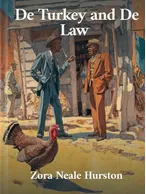
Zora Neale Hurston, an iconic figure of the Harlem Renaissance, was born on January 7, 1891, in Notasulga, Alabama. She was the fifth of eight children in a family with deep roots in the African American community, and her early experiences in the racially segregated South greatly influenced her literary voice. Hurston's family moved to Eatonville, Florida, one of the first all-Black towns incorporated in the United States, which became a recurring setting in her works.
Hurston's journey into the literary world began in earnest after she graduated from Barnard College in 1928, where she studied anthropology. Her academic background allowed her to explore and document African American culture and folklore, which became a hallmark of her literary career. She gained prominence in the 1930s with her groundbreaking novels, the most notable being "Their Eyes Were Watching God," published in 1937. This work is celebrated for its rich language, strong female protagonist, and exploration of themes related to gender and race.
In addition to her novels, Hurston published numerous essays and short stories, and she was a key figure in the Harlem Renaissance, collaborating with other literary giants like Langston Hughes. Despite her success, Hurston faced financial difficulties later in life and struggled to find publishers for her work. She passed away on January 28, 1960, in Fort Pierce, Florida, in relative obscurity.
Hurston's personal life was as vibrant as her literary contributions. She was married three times and had various relationships, often reflecting the themes of love and independence found in her writing. Today, Zora Neale Hurston is celebrated not only for her contributions to literature but also for her pioneering role in capturing the complexities of African American life in the early 20th century. Her legacy continues to inspire new generations of writers and scholars.
Zora Neale Hurston was an influential African American author, anthropologist, and filmmaker, best known for her work during the Harlem Renaissance.