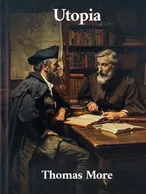
Thomas More, born on February 7, 1478, in London, England, was a prominent statesman, humanist, and author known for his profound contributions to literature and political thought. He played a pivotal role during the reign of King Henry VIII and is best remembered for his unwavering principles and moral integrity, which ultimately led to his martyrdom. More died on July 6, 1535, in London, where he was executed for refusing to accept the king's supremacy over the Church of England.
More's early life was characterized by a rigorous education. He attended St. Anthony's School in London and later studied at Oxford University, where he was influenced by the humanist ideas of the Renaissance. His early exposure to classical literature and philosophy shaped his thinking and laid the foundation for his later works. After leaving Oxford, More pursued a career in law, becoming a barrister and gaining a reputation for his sharp intellect and eloquence.
More's literary career took off with the publication of "Utopia" in 1516, a seminal work that presented his vision of an ideal society based on reason and communal ownership. This work not only showcased his literary talent but also reflected his deep engagement with social and political issues of his time. More continued to write extensively, producing works such as "The Apology of Sir Thomas More" and "A Dialogue of Comfort Against Tribulation," which explored themes of faith, morality, and the human condition.
In his personal life, More was a devoted family man, marrying Jane Colt and later, after her death, Alice Middleton. He had four children and maintained a close relationship with his family throughout his life. More’s commitment to his principles, particularly his Catholic faith, often put him at odds with the political climate of his time, culminating in his refusal to endorse Henry VIII's separation from the Catholic Church. His execution marked him as a martyr for his beliefs, solidifying his legacy as a champion of conscience and integrity. Thomas More remains an enduring figure in literature and history, reflecting the complexities of faith, politics, and human morality.
Thomas More was a 16th-century English lawyer, social philosopher, author, and statesman, best known for his book 'Utopia'.