'The Will to Power II' was published posthumously in 1887, based on notes collected by Friedrich Nietzsche.
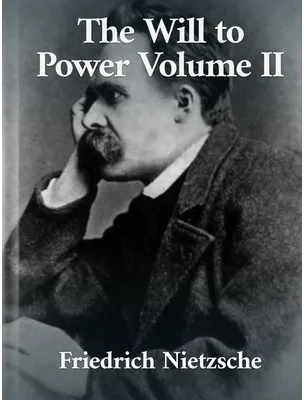
The Will to Power II is the second half of a book of notes, writings, and fragments of work from Friedrich Nietzsche. The collection was brought together by the philosopher's sister Elisba eth. She titled the book after a proposed book Nietsche was to write before his death. The work was translated and published in 1910. Read this collection of posthumous pieces and work that fills in the gaps and closes out Nietsche's life work.
In "The Will to Power II," Friedrich Nietzsche delves deeper into the complexities of human ambition and the relentless pursuit of greatness. This thought-provoking continuation builds on the philosophical ideas introduced in the first volume, exploring the lives of individuals fueled by an insatiable drive to assert their will and shape their destinies. Nietzsche invites readers into a world where the struggle for power becomes a central theme, highlighting the tension between ambition and morality. The main characters, each embodying different facets of humanity's quest for dominance, grapple with profound existential questions that challenge their beliefs and values.
As they navigate the tumultuous landscape of their desires, readers will witness the interplay of strength and vulnerability, ambition and despair. Nietzsche’s sharp insights compel us to reflect on our own aspirations and the lengths we might go to achieve them. With clarity and depth, "The Will to Power II" serves not only as a philosophical treatise but also as a mirror reflecting the raw essence of human nature. Prepare to embark on a journey that questions the very foundations of power, morality, and the human spirit.
Full Name: Friedrich Wilhelm Nietzsche
Birthdate: October 15, 1844
Place of Birth: Röcken, Prussia (now Germany)
Date and Place of Death: August 25, 1900, in Weimar, Germany
Occupation: Philosopher, poet, and cultural critic
Notable Works: Some of Nietzsche's most famous works include "Thus Spoke Zarathustra," "Beyond Good and Evil," "The Birth of Tragedy," and "Ecce Homo."
Early Life: Nietzsche was born into a religious family; his father was a Lutheran pastor. He showed early talent in music and literature. After his father's death when he was just five, Nietzsche was raised by his mother and sister.
Literary Career: Nietzsche began his academic career as a philologist but soon turned to philosophy. His ideas challenged traditional beliefs, and he explored themes like morality, religion, and individuality. He gained recognition but also faced criticism for his radical views.
Personal Life: Nietzsche struggled with health problems throughout his life, including mental illness later on. He never married and had few close friendships. His works often reflect his thoughts on solitude and the human condition.
Friedrich Nietzsche was a German philosopher, poet, and cultural critic known for his ideas on morality, religion, and individualism.
Nietzsche's inspiration came from his desire to explore the concept of power and how it influences human behavior and society.
'The Will to Power II' is primarily philosophical, but it also incorporates elements of poetry and essays.
The book does not have traditional characters; instead, it presents Nietzsche's philosophical ideas and concepts.
'The Will to Power II' does not follow a linear plot but rather presents a collection of Nietzsche's thoughts on power, morality, and existence.
Key themes include the nature of power, the critique of morality, the concept of the Übermensch (Overman), and the idea of eternal recurrence.
Nietzsche uses various symbols, such as the 'will to power' itself, to represent human ambition and the driving force behind actions.
'The Will to Power II' received mixed reviews, with some praising its bold ideas while others criticized its complexity and style.
While there are no direct adaptations, Nietzsche's ideas have influenced many works in literature, art, and philosophy across various cultures.