The book was published in 1892.
[{"id":"para_1","index":0,"start":0,"offset":319,"words":4,"paraNum":"","lastModified":1660382586000,"semanticType":"title-book-title","voicework":"no_audio","blockId":"why_is_negro_lynched_ffa_en-bl2u","language":"en","wordsRange":{"start":304000000,"end":310000000},"paragraphVersion":47,"direction":"ltr","paragraph":"<h1 class=\"ilm-title\" id=\"para_1\" semantictype=\"title-book-title\" data-ilmid=\"why_is_negro_lynched_ffa_en-bl2u\" data-chapter=\"para_1\" data-words-count=\"4\" data-before=\"0\" data-ww=\"\"><span class=\"block-pb\"> <span class=\"block-pb is-animated\"></span> </span><span class=\"itm-wrap\">Why Is the Negro<br>Lynched?</span></h1>","hasContent":true,"isFirst":true,"isLast":false},{"id":"para_2","index":1,"start":319,"offset":332,"words":5,"paraNum":"","lastModified":1631687328000,"semanticType":"title-subtitle","voicework":"no_audio","blockId":"why_is_negro_lynched_ffa_en-bl86","language":"en","wordsRange":{"start":343333333,"end":376666667},"paragraphVersion":46,"direction":"ltr","paragraph":"<h1 class=\"ilm-title ilm-subtitle\" id=\"para_2\" semantictype=\"title-subtitle\" data-ilmid=\"why_is_negro_lynched_ffa_en-bl86\" data-chapter=\"para_2\" data-words-count=\"5\" data-before=\"4\" data-ww=\"\"><span class=\"block-pb\"> <span class=\"block-pb is-animated\"></span> </span><span class=\"itm-wrap\">(“The Lesson of the Hour”)</span></h1>","hasContent":true,"isFirst":false,"isLast":false},{"id":"para_3","index":2,"start":651,"offset":356,"words":4,"paraNum":"","lastModified":1660379208000,"semanticType":"title-author","voicework":"no_audio","blockId":"why_is_negro_lynched_ffa_en-bl2v","language":"en","wordsRange":{"start":410000000,"end":416000000},"paragraphVersion":60,"direction":"ltr","paragraph":"<h1 class=\"ilm-title ilm-author ilm-x-large ilm-nopad\" id=\"para_3\" semantictype=\"title-author\" data-ilmid=\"why_is_negro_lynched_ffa_en-bl2v\" data-chapter=\"para_3\" data-words-count=\"4\" data-before=\"9\" data-ww=\"\"><span class=\"block-pb\"> <span class=\"block-pb is-animated\"></span> </span><span class=\"itm-wrap\">by the late<br>Frederick Douglas<br></span></h1>","hasContent":true,"isFirst":false,"isLast":false},{"id":"para_4","index":3,"start":1007,"offset":166,"words":0,"paraNum":"","lastModified":1631686846000,"semanticType":"line","blockId":"why_is_negro_lynched_ffa_en-bl31","language":"en","wordsRange":{"start":1171000000,"end":1173000000},"paragraphVersion":48,"direction":"ltr","paragraph":"<hr class=\"ilm-hr ilm-small ilm-nopad\" id=\"para_4\" semantictype=\"line\" data-ilmid=\"why_is_negro_lynched_ffa_en-bl31\" data-words-count=\"0\" data-before=\"13\" data-ww=\"\">","hasContent":true,"isFirst":false,"isLast":false},{"id":"para_5","index":4,"start":1173,"offset":1908,"words":0,"paraNum":"","lastModified":1660740511000,"semanticType":"illustration","blockId":"why_is_negro_lynched_ffa_en-bl8h","language":"en","wordsRange":{"start":1383333333,"end":1593666667},"paragraphVersion":29,"direction":"ltr","paragraph":"<div class=\"ilm-illustration\" id=\"para_5\" semantictype=\"illustration\" data-ilmid=\"why_is_negro_lynched_ffa_en-bl8h\" data-words-count=\"0\" data-before=\"13\" data-ww=\"\"><img width=\"600\" height=\"475\" data-src=\"ch0p0\" src=\"data:image/webp;base64,UklGRrwEAABXRUJQVlA4ILAEAAAwFwCdASo8ADAAPm0uk0akIiGhLVmZIIANiWkAFG/8PPAnxcejvbfka85+Yf0xfT8Mu1t/hPyf4aDkX9Z/3P2Uc630z9EH9H/yfqZ/lPCu8m9gT8p/9v06P+T/J/kB7d/pz2A/5r/Wv+d2DfQ9/cBbmpLXMss2X4AEBxlVw4FnsTf9QSXfTgywKrDs1G6pN8JsWJMAyWBlTy8QVZBSdokUhz9/v383WvgrUHI3IZGoyXVQyDj3ewDaWJVPOkK4lpK6AAD+/4eSSyinVMa6e1zeK/UWH9Qd/Wjr/6G8LWtPapI0RNgzkuWWarWSgoZm61OETqcNsFf0jPSbsiRhQWdX9rdMCESJMk8CPidB4+uGVB1Df/ys6jpxr8l2SNpdJ4Oh4Eug3jbyc+A7V/+lVHyPNkgJAHA5CNTyZ0gnFy9YskLoPy8h9h7fR/hqfv+2WBbRH3mMoP6pqg1WEzlOFgTTkiIlkoI9kCxKncdSBHz3/LkANV+bMLSUO2p2YN47OiTeeHWB1IeeKSRpRYViXVMDhC7IrtAsu802qcdKjm00G5xPJYvV0OxQCvaZnnrZi6wtxXh1KInh1EZIThjmYfIU5nbTz6s+caqWfF3mtQtGIc3zWAZjPgXs4ZCW1X8c+5PAXxiiKnXdK+5EbHQafzHc40GJi99Z0UVpemdvGHpQMV9d1HyqeQIqDBocoZcHH36nMfZ9418eakmvWngmQOtYWZ5JY7OL8DQIh/Gboz9dA1J6iAaRndPj5bnKtY+PeyXXxe3i+HsVBz70sOibvb3j1s4tRuahjF3D7V3QGTRbin2ZgAiIRAzv9C8rWjPHtbAOqloN0iLELWdIglZ2xbr3fxip5pA7t0+613sL0rIcWgRbQhATIZMUC9jdGJ2AUQsnuRjB2bb1vEya6a3NKlAjdK1aeV9Uu9716vWpMNjE8izU93FP2rz33FGfkc7mX6K03+yIMznOf8AH/7pke7SJbbpxTXWx6I7BDD7wN35Oywz0kqb7uMOC8Ht5Nr9A/VTIa1tmV2Dj3wSULiROB/N33IKx/Mwyz3BxfXPuRsBf/yager/3X173S4clsG4aPRm5A9MaSn1MAsMB9c1cs6c8XuYDdW4iIJadMUd44CHp8eHKdYTI2nEGjCm8HldVlacz9XReWAo6gRh7aC9Add3frW0TX/dHln+JjIP1BWH+zo6PJrweGjr/6ddNx9BrSmvwg60bbkBc+YWwK6YH76Vqf8UIWlHAayhB6+KzavkRMNUYwh9he23YN6s+VMkMpOS+OMmiSS9O6n2pdHevo7meScUeBDoDecSfjkhk4fdZp/I9A3mGv9j2DlpHDvi4j25D6YTx7veebe8q9jhkwU5JPCzPaPa89x0NPzsB36QooWi27rxPUeT6dHHav4rvLtlXepw9824wBOE4t0j1HQc0L9AWqTO3wzTx6gr+KvC3Jy1jkLueZ1G21qCUldeoG/IKl3hTheuJ+ybTZXmV+Xm2lHFudz//eQWW40dUMCbLUGATpn15CnoB4NnqumXcinctRcWYQU+hz5hSrCAyJnyYs+NFf4zCYhwy/qpUICLPBzXkOud7xDp/5x9ZD5MWQAA=\" alt=\"Why Is the Negro Lynched?\"></div>","hasContent":true,"isFirst":false,"isLast":false},{"id":"para_6","index":5,"start":3081,"offset":495,"words":1,"paraNum":"","lastModified":1631705709000,"semanticType":"header-chapter-header","voicework":"no_audio","blockId":"why_is_negro_lynched_ffa_en-bl37","language":"en","wordsRange":{"start":1804000000,"end":1806000000},"paragraphVersion":49,"direction":"ltr","paragraph":"<h2 class=\"ilm-header ilm-h2 ilm-large\" id=\"para_6\" semantictype=\"header-chapter-header\" data-ilmid=\"why_is_negro_lynched_ffa_en-bl37\" data-chapter=\"para_6\" data-words-count=\"1\" data-before=\"13\" data-ww=\"\"><span class=\"block-pb\"> <span class=\"block-pb is-animated\"></span> </span><span class=\"itm-wrap\"><span class=\"chapter-text\"><span class=\"chapter-number\"><span class=\"chapter-label\"></span><span class=\"chapter-value\"></span></span><span class=\"chapter-title\">I<br></span></span></span></h2>","hasContent":true,"isFirst":false,"isLast":false},{"id":"para_7","index":6,"start":3576,"offset":712,"words":15,"paraNum":"","lastModified":1660529404000,"semanticType":"header-subheader","voicework":"no_audio","blockId":"why_is_negro_lynched_ffa_en-bl38","language":"en","wordsRange":{"start":1906000000,"end":1923000000},"paragraphVersion":79,"direction":"ltr","paragraph":"<h3 class=\"ilm-header ilm-h3\" id=\"para_7\" semantictype=\"header-subheader\" data-ilmid=\"why_is_negro_lynched_ffa_en-bl38\" data-chapter=\"para_7\" data-words-count=\"15\" data-before=\"14\" data-ww=\"\"><span class=\"block-pb\"> <span class=\"block-pb is-animated\"></span> </span><span class=\"itm-wrap\">The Afro-American People Indicted on a New Charge.<br> Introductory — the Writer’s Claim to Be <span class=\"intricate-word\"><span class=\"-nowrap-content\">Heard<a data-fnid=\"1\" epub:type=\"noteref\" href=\"#n0\" class=\"space\"></a> </span></span></span></h3><aside id=\"n0\" data-audio=\"0\" data-fnid=\"1\" class=\"bh-fn\" epub:type=\"footnote\" data-ww=\"\"><span>The headings and divisions are not in the original copy.</span></aside>","hasContent":true,"isFirst":false,"isLast":false},{"id":"para_8","index":7,"start":4288,"offset":883,"words":104,"paraNum":"1.1.1","lastModified":1631705706000,"semanticType":"par","voicework":"no_audio","blockId":"why_is_negro_lynched_ffa_en-bl39","language":"en","wordsRange":{"start":2023000000,"end":2128000000},"paragraphVersion":44,"direction":"ltr","paragraph":"<p id=\"para_8\" semantictype=\"par\" data-ilmid=\"why_is_negro_lynched_ffa_en-bl39\" data-words-count=\"104\" data-before=\"29\" data-ww=\"\"><span class=\"block-num\" data-id=\"1.1.1\"></span><span class=\"block-pb\"> <span class=\"block-pb is-animated\"></span> </span><span class=\"itm-wrap\">I PROPOSE to give you a coloured man’s view of the so-called “Negro Problem.” We have had the Southern white man’s view of this subject at large in the press, in the pulpit and on the platform. He has spoken in the pride of his power and to willing ears. Coloured by his peculiar environments, his version has been presented with abundant repetition, with startling emphasis, and with every advantage to his side of the question. We have also had the Northern white man’s view of the subject, tempered by his distance from the scene and by his different, if not his higher, civilization.</span></p>","hasContent":true,"isFirst":false,"isLast":false},{"id":"para_9","index":8,"start":5171,"offset":1139,"words":155,"paraNum":"1.1.2","lastModified":1631710432000,"semanticType":"par","voicework":"no_audio","blockId":"why_is_negro_lynched_ffa_en-bl3a","language":"en","wordsRange":{"start":2228000000,"end":2386000000},"paragraphVersion":46,"direction":"ltr","paragraph":"<p id=\"para_9\" semantictype=\"par\" data-ilmid=\"why_is_negro_lynched_ffa_en-bl3a\" data-words-count=\"155\" data-before=\"133\" data-ww=\"\"><span class=\"block-num\" data-id=\"1.1.2\"></span><span class=\"block-pb\"> <span class=\"block-pb is-animated\"></span> </span><span class=\"itm-wrap\">This quality and quantity of evidence, may be considered by some men as all sufficient upon which to found an intelligent judgment of the whole matter in controversy, and, therefore, it may be thought my testimony is not needed. But experience has taught us that it is sometimes wise and necessary to have more than two witnesses to bring out the whole truth. Especially is this the case where one of such witnesses has a powerful motive for suppressing or distorting the facts, as in this case. I therefore insist upon my right to take the witness stand and give my version of this Southern question, and though it shall widely differ from that of both the North and South, I shall submit the same to the candid judgment of all who hear me in full confidence that it will be received as true, by honest men and women of both sections of this Republic.</span></p>","hasContent":true,"isFirst":false,"isLast":false},{"id":"para_10","index":9,"start":6310,"offset":993,"words":127,"paraNum":"1.1.3","lastModified":1631705706000,"semanticType":"par","voicework":"no_audio","blockId":"why_is_negro_lynched_ffa_en-bl3b","language":"en","wordsRange":{"start":2486000000,"end":2614000000},"paragraphVersion":45,"direction":"ltr","paragraph":"<p id=\"para_10\" semantictype=\"par\" data-ilmid=\"why_is_negro_lynched_ffa_en-bl3b\" data-words-count=\"127\" data-before=\"288\" data-ww=\"\"><span class=\"block-num\" data-id=\"1.1.3\"></span><span class=\"block-pb\"> <span class=\"block-pb is-animated\"></span> </span><span class=\"itm-wrap\">There is one thing, however, in which I think we must all agree at the start. It is that this so-called but mis-called Negro problem is one of the most important and urgent subjects that can now engage public attention. Its solution is, and ought to be, the serious business of the best American wisdom and statesmanship. For it involves the honour or dishonour, the glory or shame, the happiness or misery, of the whole American people. It not only touches the good name and fame of the Republic, but its highest moral welfare and its permanent safety. The evil with which it confronts us is coupled with a peril at once great and increasing, and one which should be removed, if it can be, without delay.</span></p>","hasContent":true,"isFirst":false,"isLast":false},{"id":"para_11","index":10,"start":7303,"offset":158,"words":0,"paraNum":"","lastModified":1631710497000,"semanticType":"line","blockId":"why_is_negro_lynched_ffa_en-bl87","language":"en","wordsRange":{"start":2647333333,"end":2680666667},"paragraphVersion":44,"direction":"ltr","paragraph":"<hr class=\"ilm-hr ilm-small\" id=\"para_11\" semantictype=\"line\" data-ilmid=\"why_is_negro_lynched_ffa_en-bl87\" data-words-count=\"0\" data-before=\"415\" data-ww=\"\">","hasContent":true,"isFirst":false,"isLast":false},{"id":"para_12","index":11,"start":7461,"offset":326,"words":3,"paraNum":"","lastModified":1660407594000,"semanticType":"header-subheader","voicework":"no_audio","blockId":"why_is_negro_lynched_ffa_en-bl3c","language":"en","wordsRange":{"start":2714000000,"end":2718000000},"paragraphVersion":64,"direction":"ltr","paragraph":"<h3 class=\"ilm-header ilm-h3\" id=\"para_12\" semantictype=\"header-subheader\" data-ilmid=\"why_is_negro_lynched_ffa_en-bl3c\" data-chapter=\"para_12\" data-words-count=\"3\" data-before=\"415\" data-ww=\"\"><span class=\"block-pb\"> <span class=\"block-pb is-animated\"></span> </span><span class=\"itm-wrap\">Epidemic of Mob-Law<br></span></h3>","hasContent":true,"isFirst":false,"isLast":false},{"id":"para_13","index":12,"start":7787,"offset":1991,"words":301,"paraNum":"1.2.1","lastModified":1631711001000,"semanticType":"par","voicework":"no_audio","blockId":"why_is_negro_lynched_ffa_en-bl3d","language":"en","wordsRange":{"start":2818000000,"end":3122000000},"paragraphVersion":52,"direction":"ltr","paragraph":"<p id=\"para_13\" semantictype=\"par\" data-ilmid=\"why_is_negro_lynched_ffa_en-bl3d\" data-words-count=\"301\" data-before=\"418\" data-ww=\"\"><span class=\"block-num\" data-id=\"1.2.1\"></span><span class=\"block-pb\"> <span class=\"block-pb is-animated\"></span> </span><span class=\"itm-wrap\">The presence of eight millions of people in any section of this country, constituting an aggrieved class, smarting under terrible wrongs, denied the exercise of the commonest rights of humanity, and regarded by the ruling class of that section as outside of the government, outside of the law, outside of society, having nothing in common with the people with whom they live, the sport of mob violence and murder, is not only a disgrace and a scandal to that particular section, but a menace to the peace and security of the whole country. There is, as we all know, a perfect epidemic of mob law and persecution now prevailing at the South, and the indications of a speedy end are not hopeful. Great and terrible as have been its ravages in the past, it now seems to be increasing, not only in the number of its victims, but in its frantic rage and savage extravagance. Lawless vengeance is beginning to be visited upon white men as well as black. Our newspapers are daily disfigured by its ghastly horrors. It is no longer local but national; no longer confined to the South but has invaded the North. The contagion is spreading, extending and overleaping geographical lines and state boundaries, and if permitted to go on, threatens to destroy all respect for law and order, not only in the South but in all parts of our common country, North as well as South. For certain it is, that crime allowed to go unpunished, unresisted and unarrested, will breed crime. When the poison of anarchy is once in the air, like the pestilence that walketh in darkness, the winds of heaven will take it up and favour its diffusion. Though it may strike down the weak to-day, it will strike down the strong to-morrow.</span></p>","hasContent":true,"isFirst":false,"isLast":false},{"id":"para_14","index":13,"start":9778,"offset":1105,"words":140,"paraNum":"1.2.2","lastModified":1631710959000,"semanticType":"par","voicework":"no_audio","blockId":"why_is_negro_lynched_ffa_en-bl3e","language":"en","wordsRange":{"start":3222000000,"end":3363000000},"paragraphVersion":50,"direction":"ltr","paragraph":"<p id=\"para_14\" semantictype=\"par\" data-ilmid=\"why_is_negro_lynched_ffa_en-bl3e\" data-words-count=\"140\" data-before=\"719\" data-ww=\"\"><span class=\"block-num\" data-id=\"1.2.2\"></span><span class=\"block-pb\"> <span class=\"block-pb is-animated\"></span> </span><span class=\"itm-wrap\">Not a breeze comes to us from the late rebellious states that is not tainted and freighted with Negro blood. In its thirst for blood and its rage for vengeance, the mob has blindly, boldly and defiantly supplanted sheriffs, constables and police. It has assumed all the functions of civil authority. It laughs at legal processes, courts and juries, and its red-handed murderers range abroad unchecked and unchallenged by law or by public opinion. If the mob is in pursuit of Negroes who happen to be accused of crime, innocent or guilty, prison walls and iron bars afford no protection. Jail doors are battered down in the presence of unresisting jailors, and the accused, awaiting trial in the courts of law, are dragged out and hanged, shot, stabbed or burned to death, as the blind and irresponsible mob may elect.</span></p>","hasContent":true,"isFirst":false,"isLast":false},{"id":"para_15","index":14,"start":10883,"offset":921,"words":105,"paraNum":"1.2.3","lastModified":1631710959000,"semanticType":"par","voicework":"no_audio","blockId":"why_is_negro_lynched_ffa_en-bl3f","language":"en","wordsRange":{"start":3463000000,"end":3569000000},"paragraphVersion":50,"direction":"ltr","paragraph":"<p id=\"para_15\" semantictype=\"par\" data-ilmid=\"why_is_negro_lynched_ffa_en-bl3f\" data-words-count=\"105\" data-before=\"859\" data-ww=\"\"><span class=\"block-num\" data-id=\"1.2.3\"></span><span class=\"block-pb\"> <span class=\"block-pb is-animated\"></span> </span><span class=\"itm-wrap\">We claim to be a highly-civilized and Christian country. I will not stop to deny this claim, yet I fearlessly affirm that there is nothing in the history of savages to surpass the blood-chilling horrors and fiendish excesses perpetrated against the coloured people of this country, by the so-called enlightened and Christian people of the South. It is commonly thought that only the lowest and most disgusting birds and beasts, such as buzzards, vultures and hyenas, will gloat over and prey upon dead bodies; but the Southern mob, in its rage, feeds its vengeance by shooting, stabbing and burning their victims, when they are dead.</span></p>","hasContent":true,"isFirst":false,"isLast":false},{"id":"para_16","index":15,"start":11804,"offset":1931,"words":303,"paraNum":"1.2.4","lastModified":1631711167000,"semanticType":"par","voicework":"no_audio","blockId":"why_is_negro_lynched_ffa_en-bl3g","language":"en","wordsRange":{"start":3669000000,"end":3975000000},"paragraphVersion":52,"direction":"ltr","paragraph":"<p id=\"para_16\" semantictype=\"par\" data-ilmid=\"why_is_negro_lynched_ffa_en-bl3g\" data-words-count=\"303\" data-before=\"964\" data-ww=\"\"><span class=\"block-num\" data-id=\"1.2.4\"></span><span class=\"block-pb\"> <span class=\"block-pb is-animated\"></span> </span><span class=\"itm-wrap\">Now, what is the special charge by which this ferocity is justified, and by which mob law is excused and defended even by good men North and South? It is a charge of recent origin; a charge never brought before; a charge never heard of in the time of slavery or in any other time in our history. It is a charge of assaults by Negroes upon white women. This new charge, once fairly started on the wings of rumour, no matter by whom or in what manner originated, whether well or ill-founded, whether true or false, is certain to raise a mob and to subject the accused to immediate torture and death. It is nothing that there may be a mistake in his case as to identity. It is nothing that the victim pleads “not guilty.” It is nothing that the accused is of fair reputation and his accuser is of an abandoned character. It is nothing that the majesty of the law is defied and insulted; no time is allowed for defence or explanation; he is bound with cords, hurried off amid the frantic yells and curses of the mob to the scaffold, and there, under its ghastly shadow, he is tortured, till by pain or promises, he is made to think that he can possibly gain time or save his life by confession — confesses — and then, whether guilty or innocent, he is shot, hanged, stabbed or burned to death amid the wild shouts of the mob. When the will of the mob is accomplished, when its thirst for blood has been quenched, when its victim is speechless, silent and dead, his mobocratic accusers and murderers of course have the ear of the world all to themselves, and the world, hearing only the testimony of the mob, generally approves its verdict.</span></p>","hasContent":true,"isFirst":false,"isLast":false},{"id":"para_17","index":16,"start":13735,"offset":563,"words":48,"paraNum":"1.2.5","lastModified":1631710959000,"semanticType":"par","voicework":"no_audio","blockId":"why_is_negro_lynched_ffa_en-bl3h","language":"en","wordsRange":{"start":4075000000,"end":4124000000},"paragraphVersion":51,"direction":"ltr","paragraph":"<p id=\"para_17\" semantictype=\"par\" data-ilmid=\"why_is_negro_lynched_ffa_en-bl3h\" data-words-count=\"48\" data-before=\"1267\" data-ww=\"\"><span class=\"block-num\" data-id=\"1.2.5\"></span><span class=\"block-pb\"> <span class=\"block-pb is-animated\"></span> </span><span class=\"itm-wrap\">Such, then, is the state of Southern law and civilization at this moment, in relation to the coloured citizens of that section of our country. Though the picture is dark and terrible, I venture to affirm that no man, North or South, can successfully deny its essential truth.</span></p>","hasContent":true,"isFirst":false,"isLast":false},{"id":"para_18","index":17,"start":14298,"offset":159,"words":0,"paraNum":"","lastModified":1631711189000,"semanticType":"line","blockId":"why_is_negro_lynched_ffa_en-bl88","language":"en","wordsRange":{"start":4157333333,"end":4190666667},"paragraphVersion":43,"direction":"ltr","paragraph":"<hr class=\"ilm-hr ilm-small\" id=\"para_18\" semantictype=\"line\" data-ilmid=\"why_is_negro_lynched_ffa_en-bl88\" data-words-count=\"0\" data-before=\"1315\" data-ww=\"\">","hasContent":true,"isFirst":false,"isLast":false},{"id":"para_19","index":18,"start":14457,"offset":333,"words":4,"paraNum":"","lastModified":1660407602000,"semanticType":"header-subheader","voicework":"no_audio","blockId":"why_is_negro_lynched_ffa_en-bl3i","language":"en","wordsRange":{"start":4224000000,"end":4229000000},"paragraphVersion":66,"direction":"ltr","paragraph":"<h3 class=\"ilm-header ilm-h3\" id=\"para_19\" semantictype=\"header-subheader\" data-ilmid=\"why_is_negro_lynched_ffa_en-bl3i\" data-chapter=\"para_19\" data-words-count=\"4\" data-before=\"1315\" data-ww=\"\"><span class=\"block-pb\"> <span class=\"block-pb is-animated\"></span> </span><span class=\"itm-wrap\">Attitude of Upper Classes<br></span></h3>","hasContent":true,"isFirst":false,"isLast":false},{"id":"para_20","index":19,"start":14790,"offset":1372,"words":190,"paraNum":"1.3.1","lastModified":1631711193000,"semanticType":"par","voicework":"no_audio","blockId":"why_is_negro_lynched_ffa_en-bl3j","language":"en","wordsRange":{"start":4329000000,"end":4520000000},"paragraphVersion":56,"direction":"ltr","paragraph":"<p id=\"para_20\" semantictype=\"par\" data-ilmid=\"why_is_negro_lynched_ffa_en-bl3j\" data-words-count=\"190\" data-before=\"1319\" data-ww=\"\"><span class=\"block-num\" data-id=\"1.3.1\"></span><span class=\"block-pb\"> <span class=\"block-pb is-animated\"></span> </span><span class=\"itm-wrap\">Now the question arises, and it is important to know, how this state of affairs is viewed by the better classes of the Southern States. I will tell you, and I venture to say in advance, if our hearts were not already hardened by familiarity with crimes against the Negro, we should be shocked and astonished, not only by these mobocratic crimes, but by the attitude of the better classes of the Southern people and their law-makers, towards the perpetrators of them. With a few noble exceptions, just enough to prove the rule, the upper classes of the South seem to be in full sympathy with the mob and its deeds. There are but few earnest words ever uttered against either. Press, platform and pulpit are generally either silent or they openly apologise for the mob and its deeds. The mobocratic murderers are not only permitted to go free, untried and unpunished, but are lauded and applauded as honourable men and good citizens, the high-minded guardians of Southern virtue. If lynch law is in any case condemned by them, it is only condemned in one breath and excused in another.</span></p>","hasContent":true,"isFirst":false,"isLast":false},{"id":"para_21","index":20,"start":16162,"offset":946,"words":121,"paraNum":"1.3.2","lastModified":1631711373000,"semanticType":"par","voicework":"no_audio","blockId":"why_is_negro_lynched_ffa_en-bl3k","language":"en","wordsRange":{"start":4620000000,"end":4744000000},"paragraphVersion":58,"direction":"ltr","paragraph":"<p id=\"para_21\" semantictype=\"par\" data-ilmid=\"why_is_negro_lynched_ffa_en-bl3k\" data-words-count=\"121\" data-before=\"1509\" data-ww=\"\"><span class=\"block-num\" data-id=\"1.3.2\"></span><span class=\"block-pb\"> <span class=\"block-pb is-animated\"></span> </span><span class=\"itm-wrap\">The great trouble with the Negro in the South is that all presumptions are against him. A white man has but to blacken his face and commit a crime to have some Negro lynched in his stead. An abandoned woman has only to start a cry, true or false, that she has been insulted by a black man, to have him arrested and summarily murdered by the mob. Frightened and tortured by his captors, confused, he may be, into telling crooked stories about his whereabouts at the time when the crime is alleged to have been committed, and the death penalty is at once inflicted, though his story may be but the incoherency of ignorance or the distraction caused by terror.</span></p>","hasContent":true,"isFirst":false,"isLast":false},{"id":"para_22","index":21,"start":17108,"offset":580,"words":52,"paraNum":"1.3.3","lastModified":1631711193000,"semanticType":"par","voicework":"no_audio","blockId":"why_is_negro_lynched_ffa_en-bl3l","language":"en","wordsRange":{"start":4844000000,"end":4897000000},"paragraphVersion":56,"direction":"ltr","paragraph":"<p id=\"para_22\" semantictype=\"par\" data-ilmid=\"why_is_negro_lynched_ffa_en-bl3l\" data-words-count=\"52\" data-before=\"1630\" data-ww=\"\"><span class=\"block-num\" data-id=\"1.3.3\"></span><span class=\"block-pb\"> <span class=\"block-pb is-animated\"></span> </span><span class=\"itm-wrap\">In confirmation of what I have said, I have before me the utterances of some of the best people of the South, and also the testimony of one from the North, a lady of high character, from whom, considering her antecedents, we should have expected a more considerate, just and humane utterance.</span></p>","hasContent":true,"isFirst":false,"isLast":false},{"id":"para_23","index":22,"start":17688,"offset":809,"words":92,"paraNum":"1.3.4","lastModified":1631711193000,"semanticType":"par","voicework":"no_audio","blockId":"why_is_negro_lynched_ffa_en-bl3m","language":"en","wordsRange":{"start":4997000000,"end":5090000000},"paragraphVersion":56,"direction":"ltr","paragraph":"<p id=\"para_23\" semantictype=\"par\" data-ilmid=\"why_is_negro_lynched_ffa_en-bl3m\" data-words-count=\"92\" data-before=\"1682\" data-ww=\"\"><span class=\"block-num\" data-id=\"1.3.4\"></span><span class=\"block-pb\"> <span class=\"block-pb is-animated\"></span> </span><span class=\"itm-wrap\">In a late number of the <i>Forum, </i>Bishop Haygood, author of the “Brother in Black,” says that “The most alarming fact is that execution by lynching has ceased to surprise us. The burning of a human being for any crime, it is thought, is a horror that does not occur outside of the Southern states of the American Union, yet unless assaults by Negroes come to an end, there will most probably be still further display of vengeance that will shock the world, and men who are just will consider the provocation.”</span></p>","hasContent":true,"isFirst":false,"isLast":false},{"id":"para_24","index":23,"start":18497,"offset":1085,"words":131,"paraNum":"1.3.5","lastModified":1631711193000,"semanticType":"par","voicework":"no_audio","blockId":"why_is_negro_lynched_ffa_en-bl3n","language":"en","wordsRange":{"start":5190000000,"end":5322000000},"paragraphVersion":56,"direction":"ltr","paragraph":"<p id=\"para_24\" semantictype=\"par\" data-ilmid=\"why_is_negro_lynched_ffa_en-bl3n\" data-words-count=\"131\" data-before=\"1774\" data-ww=\"\"><span class=\"block-num\" data-id=\"1.3.5\"></span><span class=\"block-pb\"> <span class=\"block-pb is-animated\"></span> </span><span class=\"itm-wrap\">In an open letter addressed to me by ex-Governor Chamberlain, of South Carolina, published in the Charleston <i>News </i><i>and </i><i>Courier, </i>in reply to an article of mine on the subject of lynching, published in the <i>North </i><i>American </i><i>Review, </i>the ex-Governor says: “Your denunciation of the South on this point is directed exclusively, or nearly so, against the application of lynch law for the punishment of one crime; the existence, I suppose I might say the prevalence, of this crime at the South is undeniable. But I read your article in vain for any special denunciation of the crime itself. As you say, your people are lynched, tortured and burned, for assault on white women. As you value your own good fame and safety as a race, stamp out the infamous crime.”</span></p>","hasContent":true,"isFirst":false,"isLast":false},{"id":"para_25","index":24,"start":19582,"offset":1177,"words":155,"paraNum":"1.3.6","lastModified":1631711416000,"semanticType":"par","voicework":"no_audio","blockId":"why_is_negro_lynched_ffa_en-bl3o","language":"en","wordsRange":{"start":5422000000,"end":5580000000},"paragraphVersion":59,"direction":"ltr","paragraph":"<p id=\"para_25\" semantictype=\"par\" data-ilmid=\"why_is_negro_lynched_ffa_en-bl3o\" data-words-count=\"155\" data-before=\"1905\" data-ww=\"\"><span class=\"block-num\" data-id=\"1.3.6\"></span><span class=\"block-pb\"> <span class=\"block-pb is-animated\"></span> </span><span class=\"itm-wrap\">And now comes the sweet voice of a Northern woman, Miss Frances Willard, of the W. C. T. U., distinguished among her sisters for benevolence and Christian charity. She speaks in the same bitter tone and hurls against us the same blasting accusation. She says in a letter now before me, “I pity the Southerners. The problem in their hands is immeasurable. The coloured race multiplies like the locusts of Egypt. The safety of women, of childhood, of the home, is menaced in a thousand localities at this moment, so that men dare not go beyond the sight of their own roof tree.” Such, then, is the crushing indictment drawn up against the Southern Negroes, drawn up, too, by persons who are perhaps the fairest and most humane of the Negro’s accusers. Yet even they paint him as a moral monster, ferociously invading the sacred rights of woman and endangering the homes of the whites.</span></p>","hasContent":true,"isFirst":false,"isLast":false},{"id":"para_26","index":25,"start":20759,"offset":159,"words":0,"paraNum":"","lastModified":1631711441000,"semanticType":"line","blockId":"why_is_negro_lynched_ffa_en-bl89","language":"en","wordsRange":{"start":5613333333,"end":5646666667},"paragraphVersion":42,"direction":"ltr","paragraph":"<hr class=\"ilm-hr ilm-small\" id=\"para_26\" semantictype=\"line\" data-ilmid=\"why_is_negro_lynched_ffa_en-bl89\" data-words-count=\"0\" data-before=\"2060\" data-ww=\"\">","hasContent":true,"isFirst":false,"isLast":false},{"id":"para_27","index":26,"start":20918,"offset":339,"words":5,"paraNum":"","lastModified":1660407611000,"semanticType":"header-subheader","voicework":"no_audio","blockId":"why_is_negro_lynched_ffa_en-bl3p","language":"en","wordsRange":{"start":5680000000,"end":5686000000},"paragraphVersion":55,"direction":"ltr","paragraph":"<h3 class=\"ilm-header ilm-h3\" id=\"para_27\" semantictype=\"header-subheader\" data-ilmid=\"why_is_negro_lynched_ffa_en-bl3p\" data-chapter=\"para_27\" data-words-count=\"5\" data-before=\"2060\" data-ww=\"\"><span class=\"block-pb\"> <span class=\"block-pb is-animated\"></span> </span><span class=\"itm-wrap\">Incrimination of the Whole Race<br></span></h3>","hasContent":true,"isFirst":false,"isLast":false},{"id":"para_28","index":27,"start":21257,"offset":520,"words":42,"paraNum":"1.4.1","lastModified":1631711450000,"semanticType":"par","voicework":"no_audio","blockId":"why_is_negro_lynched_ffa_en-bl3q","language":"en","wordsRange":{"start":5786000000,"end":5829000000},"paragraphVersion":62,"direction":"ltr","paragraph":"<p id=\"para_28\" semantictype=\"par\" data-ilmid=\"why_is_negro_lynched_ffa_en-bl3q\" data-words-count=\"42\" data-before=\"2065\" data-ww=\"\"><span class=\"block-num\" data-id=\"1.4.1\"></span><span class=\"block-pb\"> <span class=\"block-pb is-animated\"></span> </span><span class=\"itm-wrap\">Now, I hold, no less than his accusers, that the crime alleged against the Negro is the most revolting which men can commit. It is a crime that awakens the intensest abhorrence and tempts mankind to kill the criminal on first sight.</span></p>","hasContent":true,"isFirst":false,"isLast":false},{"id":"para_29","index":28,"start":21777,"offset":823,"words":96,"paraNum":"1.4.2","lastModified":1631711450000,"semanticType":"par","voicework":"no_audio","blockId":"why_is_negro_lynched_ffa_en-bl3r","language":"en","wordsRange":{"start":5929000000,"end":6026000000},"paragraphVersion":62,"direction":"ltr","paragraph":"<p id=\"para_29\" semantictype=\"par\" data-ilmid=\"why_is_negro_lynched_ffa_en-bl3r\" data-words-count=\"96\" data-before=\"2107\" data-ww=\"\"><span class=\"block-num\" data-id=\"1.4.2\"></span><span class=\"block-pb\"> <span class=\"block-pb is-animated\"></span> </span><span class=\"itm-wrap\">But this charge thus brought against the Negro and as constantly reiterated by his enemies, is plainly enough not merely a charge against the individual culprit, as would be the case with an individual of any other race, but it is in large measure a charge constructively against the coloured people as such. It throws over every man of colour a mantle of odium, and sets upon him a mark of popular hate, more distressing than the mark set upon the first murderer. It points the Negro out as an object of suspicion, avoidance and hate.</span></p>","hasContent":true,"isFirst":false,"isLast":false},{"id":"para_30","index":29,"start":22600,"offset":1079,"words":155,"paraNum":"1.4.3","lastModified":1631712125000,"semanticType":"par","voicework":"no_audio","blockId":"why_is_negro_lynched_ffa_en-bl3s","language":"en","wordsRange":{"start":6126000000,"end":6284000000},"paragraphVersion":64,"direction":"ltr","paragraph":"<p id=\"para_30\" semantictype=\"par\" data-ilmid=\"why_is_negro_lynched_ffa_en-bl3s\" data-words-count=\"155\" data-before=\"2203\" data-ww=\"\"><span class=\"block-num\" data-id=\"1.4.3\"></span><span class=\"block-pb\"> <span class=\"block-pb is-animated\"></span> </span><span class=\"itm-wrap\">It is in this form of the charge that you and I and all of us are required to meet it and refute it, if that can be done. In the opinion of some of us it were well to say nothing about it, that the least said about it the better. They would have us suffer quietly under the odium in silence. In this I do not concur. Taking this charge in its broad and comprehensive sense, the sense in which it is presented and as now stated, it strikes at the whole coloured race, and, therefore, as a coloured man, I am bound to meet it. I am grateful for the opportunity now afforded me to meet it. For I believe it can be met and met successfully. I hold that a people too spiritless to defend themselves against unjust imputations, are not worth defending, and are not worthy to defend anything else.</span></p>","hasContent":true,"isFirst":false,"isLast":false},{"id":"para_31","index":30,"start":23679,"offset":159,"words":0,"paraNum":"","lastModified":1631604919000,"semanticType":"line","blockId":"why_is_negro_lynched_ffa_en-bl3t","language":"en","wordsRange":{"start":6384000000,"end":6386000000},"paragraphVersion":37,"direction":"ltr","paragraph":"<hr class=\"ilm-hr ilm-small\" id=\"para_31\" semantictype=\"line\" data-ilmid=\"why_is_negro_lynched_ffa_en-bl3t\" data-words-count=\"0\" data-before=\"2358\" data-ww=\"\">","hasContent":true,"isFirst":false,"isLast":false},{"id":"para_32","index":31,"start":23838,"offset":500,"words":1,"paraNum":"","lastModified":1631893145000,"semanticType":"header-chapter-header","voicework":"no_audio","blockId":"why_is_negro_lynched_ffa_en-bl3u","language":"en","wordsRange":{"start":6486000000,"end":6488000000},"paragraphVersion":64,"direction":"ltr","paragraph":"<h2 class=\"ilm-header ilm-h2 ilm-large\" id=\"para_32\" semantictype=\"header-chapter-header\" data-ilmid=\"why_is_negro_lynched_ffa_en-bl3u\" data-chapter=\"para_32\" data-words-count=\"1\" data-before=\"2358\" data-ww=\"\"><span class=\"block-pb\"> <span class=\"block-pb is-animated\"></span> </span><span class=\"itm-wrap\"><span class=\"chapter-text\"><span class=\"chapter-number\"><span class=\"chapter-label\"></span><span class=\"chapter-value\"></span></span><span class=\"chapter-title\">II<br></span></span></span></h2>","hasContent":true,"isFirst":false,"isLast":false},{"id":"para_33","index":32,"start":24338,"offset":376,"words":9,"paraNum":"","lastModified":1660407622000,"semanticType":"header-subheader","voicework":"no_audio","blockId":"why_is_negro_lynched_ffa_en-bl3v","language":"en","wordsRange":{"start":6588000000,"end":6598000000},"paragraphVersion":69,"direction":"ltr","paragraph":"<h3 class=\"ilm-header ilm-h3\" id=\"para_33\" semantictype=\"header-subheader\" data-ilmid=\"why_is_negro_lynched_ffa_en-bl3v\" data-chapter=\"para_33\" data-words-count=\"9\" data-before=\"2359\" data-ww=\"\"><span class=\"block-pb\"> <span class=\"block-pb is-animated\"></span> </span><span class=\"itm-wrap\">The Defence — “Not Guilty.” Character of Their Accusers Challenged</span></h3>","hasContent":true,"isFirst":false,"isLast":false},{"id":"para_34","index":33,"start":24714,"offset":587,"words":49,"paraNum":"2.1.1","lastModified":1631712200000,"semanticType":"par","voicework":"no_audio","blockId":"why_is_negro_lynched_ffa_en-bl3w","language":"en","wordsRange":{"start":6698000000,"end":6748000000},"paragraphVersion":56,"direction":"ltr","paragraph":"<p id=\"para_34\" semantictype=\"par\" data-ilmid=\"why_is_negro_lynched_ffa_en-bl3w\" data-words-count=\"49\" data-before=\"2368\" data-ww=\"\"><span class=\"block-num\" data-id=\"2.1.1\"></span><span class=\"block-pb\"> <span class=\"block-pb is-animated\"></span> </span><span class=\"itm-wrap\">Without boasting in advance, but relying upon the goodness of my cause, I will say here I am ready to confront ex-Governor Chamberlain, Bishop Fitzgerald, Bishop Haygood and good Miss Frances Willard and all others, singly or altogether, who bring this charge against the coloured people as a class.</span></p>","hasContent":true,"isFirst":false,"isLast":false},{"id":"para_35","index":34,"start":25301,"offset":839,"words":107,"paraNum":"2.1.2","lastModified":1631712200000,"semanticType":"par","voicework":"no_audio","blockId":"why_is_negro_lynched_ffa_en-bl3x","language":"en","wordsRange":{"start":6848000000,"end":6956000000},"paragraphVersion":56,"direction":"ltr","paragraph":"<p id=\"para_35\" semantictype=\"par\" data-ilmid=\"why_is_negro_lynched_ffa_en-bl3x\" data-words-count=\"107\" data-before=\"2417\" data-ww=\"\"><span class=\"block-num\" data-id=\"2.1.2\"></span><span class=\"block-pb\"> <span class=\"block-pb is-animated\"></span> </span><span class=\"itm-wrap\">But I want however, to be clearly understood at the outset. I do not pretend that Negroes are saints and angels. I do not deny that they are capable of committing the crime imputed to them, but utterly deny that they are any more addicted to the commission of that crime than is true of any other variety of the human family. In entering upon my argument, I may be allowed to say again what should be taken for granted at the start, that I am not a defender of any man guilty of this atrocious crime, but a defender of the coloured people as a class.</span></p>","hasContent":true,"isFirst":false,"isLast":false},{"id":"para_36","index":35,"start":26140,"offset":841,"words":103,"paraNum":"2.1.3","lastModified":1631712200000,"semanticType":"par","voicework":"no_audio","blockId":"why_is_negro_lynched_ffa_en-bl3y","language":"en","wordsRange":{"start":7056000000,"end":7160000000},"paragraphVersion":56,"direction":"ltr","paragraph":"<p id=\"para_36\" semantictype=\"par\" data-ilmid=\"why_is_negro_lynched_ffa_en-bl3y\" data-words-count=\"103\" data-before=\"2524\" data-ww=\"\"><span class=\"block-num\" data-id=\"2.1.3\"></span><span class=\"block-pb\"> <span class=\"block-pb is-animated\"></span> </span><span class=\"itm-wrap\">In answer, then, to the terrible indictment thus read, and speaking for the coloured people as a class, I venture in their name and in their stead, here and now, to plead “not guilty,” and shall submit my case with confidence of acquittal by good men and women, North and South, before whom we are, as a class, now being tried. In daring to do this I know that the moral atmosphere about me is not favourable to my cause. The sentiment left by slavery is still with us, and the moral vision of the American people is still darkened by its presence.</span></p>","hasContent":true,"isFirst":false,"isLast":false},{"id":"para_37","index":36,"start":26981,"offset":733,"words":90,"paraNum":"2.1.4","lastModified":1631712200000,"semanticType":"par","voicework":"no_audio","blockId":"why_is_negro_lynched_ffa_en-bl3z","language":"en","wordsRange":{"start":7260000000,"end":7351000000},"paragraphVersion":56,"direction":"ltr","paragraph":"<p id=\"para_37\" semantictype=\"par\" data-ilmid=\"why_is_negro_lynched_ffa_en-bl3z\" data-words-count=\"90\" data-before=\"2627\" data-ww=\"\"><span class=\"block-num\" data-id=\"2.1.4\"></span><span class=\"block-pb\"> <span class=\"block-pb is-animated\"></span> </span><span class=\"itm-wrap\">It is the misfortune of the coloured people of this country that the sins of the few are visited more or less upon the many. In respect to the offenders, I am with General Grant and every other honest man. My motto is, “Let no guilty man escape.” But while I say this, and mean to say it strongly, I am also here to say, let no guilty man be condemned and killed by the mob, or crushed under the weight of a charge of which he is not guilty.</span></p>","hasContent":true,"isFirst":false,"isLast":false},{"id":"para_38","index":37,"start":27714,"offset":1117,"words":160,"paraNum":"2.1.5","lastModified":1631712248000,"semanticType":"par","voicework":"no_audio","blockId":"why_is_negro_lynched_ffa_en-bl40","language":"en","wordsRange":{"start":7451000000,"end":7614000000},"paragraphVersion":58,"direction":"ltr","paragraph":"<p id=\"para_38\" semantictype=\"par\" data-ilmid=\"why_is_negro_lynched_ffa_en-bl40\" data-words-count=\"160\" data-before=\"2717\" data-ww=\"\"><span class=\"block-num\" data-id=\"2.1.5\"></span><span class=\"block-pb\"> <span class=\"block-pb is-animated\"></span> </span><span class=\"itm-wrap\">I need not be told that the cause I have undertaken to support is not to be maintained by any mere confident assertions or general denials, however strongly worded. If I had no better ground to stand upon than this, I would at once leave the field of controversy and give up the coloured man’s cause to his accusers. I am also aware that I am here to do in some measure what the masters of logic say is impossible to be done. I know that I cannot prove a negative; there is one thing that I can and will do. I will call in question the affirmative. I can and will show that there are sound reasons for doubting and denying this horrible charge of rape as the special and peculiar crime of the coloured people of the South. I doubt it, and deny it with all my soul. My doubt and denial are based upon three fundamental grounds.</span></p>","hasContent":true,"isFirst":false,"isLast":false},{"id":"para_39","index":38,"start":28831,"offset":818,"words":96,"paraNum":"2.1.6","lastModified":1631712200000,"semanticType":"par","voicework":"no_audio","blockId":"why_is_negro_lynched_ffa_en-bl41","language":"en","wordsRange":{"start":7714000000,"end":7811000000},"paragraphVersion":56,"direction":"ltr","paragraph":"<p id=\"para_39\" semantictype=\"par\" data-ilmid=\"why_is_negro_lynched_ffa_en-bl41\" data-words-count=\"96\" data-before=\"2877\" data-ww=\"\"><span class=\"block-num\" data-id=\"2.1.6\"></span><span class=\"block-pb\"> <span class=\"block-pb is-animated\"></span> </span><span class=\"itm-wrap\">The first ground is, the well-established and well-tested character of the Negro on the very point upon which he is now so violently and persistently accused. I contend that his whole history in bondage and out of bondage contradicts and gives the lie to the allegation. My second ground for doubt and denial is based upon what I know of the character and antecedents of the men and women who bring this charge against him. My third ground is the palpable unfitness of the mob to testify and which is the main witness in the case.</span></p>","hasContent":true,"isFirst":false,"isLast":false},{"id":"para_40","index":39,"start":29649,"offset":1423,"words":209,"paraNum":"2.1.7","lastModified":1631712264000,"semanticType":"par","voicework":"no_audio","blockId":"why_is_negro_lynched_ffa_en-bl42","language":"en","wordsRange":{"start":7911000000,"end":8123000000},"paragraphVersion":58,"direction":"ltr","paragraph":"<p id=\"para_40\" semantictype=\"par\" data-ilmid=\"why_is_negro_lynched_ffa_en-bl42\" data-words-count=\"209\" data-before=\"2973\" data-ww=\"\"><span class=\"block-num\" data-id=\"2.1.7\"></span><span class=\"block-pb\"> <span class=\"block-pb is-animated\"></span> </span><span class=\"itm-wrap\">I therefore affirm that a fierce and frenzied mob is not and ought not to be deemed a competent witness against any man accused of any crime whatever, and especially the crime now in question. The ease with which a mob can be collected, the slight causes by which it can be set in motion, and the element of which it is composed, deprives its testimony of the qualities necessary to sound judgment and that which should inspire confidence and command belief. Blinded by its own fury, it is moved by impulses utterly unfavourable to a clear perception of facts and the ability to make an impartial statement of the simple truth. At the outset, I challenge the credibility of the mob, and as the mob is the main witness in the case against the Negro I appeal from the judgment of the mob to the judgment of law-abiding men, in support of my challenge. I lay special emphasis on the fact that it is the mob and the mob only that the country has recognised and accepted as its accredited witness against the Negro. The mob is its law, its judge, jury and executioner. I need not argue this point further. Its truth is borne upon its face.</span></p>","hasContent":true,"isFirst":false,"isLast":false},{"id":"para_41","index":40,"start":31072,"offset":1010,"words":129,"paraNum":"2.1.8","lastModified":1631712200000,"semanticType":"par","voicework":"no_audio","blockId":"why_is_negro_lynched_ffa_en-bl43","language":"en","wordsRange":{"start":8223000000,"end":8353000000},"paragraphVersion":56,"direction":"ltr","paragraph":"<p id=\"para_41\" semantictype=\"par\" data-ilmid=\"why_is_negro_lynched_ffa_en-bl43\" data-words-count=\"129\" data-before=\"3182\" data-ww=\"\"><span class=\"block-num\" data-id=\"2.1.8\"></span><span class=\"block-pb\"> <span class=\"block-pb is-animated\"></span> </span><span class=\"itm-wrap\">But I go further. I dare not only to impeach the mob, I impeach and discredit the veracity of men generally, whether mobocrats or otherwise who sympathise with lynch law, whenever or wherever the acts of coloured men are in question. It seems impossible for such men to judge a coloured man fairly. I hold that men who openly and deliberately nullify the laws and violate the provisions of the Constitution of their country, which they have solemnly sworn to support and execute, are not entitled to unqualified belief in any case, and certainly not in the case of the Negro. I apply to them the legal maxim, “False in one, false in all.” Especially do I apply this maxim when the conduct of the Negro is in question.</span></p>","hasContent":true,"isFirst":false,"isLast":false},{"id":"para_42","index":41,"start":32082,"offset":935,"words":108,"paraNum":"2.1.9","lastModified":1631712200000,"semanticType":"par","voicework":"no_audio","blockId":"why_is_negro_lynched_ffa_en-bl44","language":"en","wordsRange":{"start":8453000000,"end":8562000000},"paragraphVersion":56,"direction":"ltr","paragraph":"<p id=\"para_42\" semantictype=\"par\" data-ilmid=\"why_is_negro_lynched_ffa_en-bl44\" data-words-count=\"108\" data-before=\"3311\" data-ww=\"\"><span class=\"block-num\" data-id=\"2.1.9\"></span><span class=\"block-pb\"> <span class=\"block-pb is-animated\"></span> </span><span class=\"itm-wrap\">Again I question the Negro’s accusers on another important ground; I have no confidence in the veracity of men who publicly justify themselves in cheating the Negro out of his constitutional right to vote. The men who do this, either by false returns, or by taking advantage of the Negro’s illiteracy, or by surrounding the ballot box with obstacles and sinuosities intended to bewilder him and defeat his rightful exercise of the elective franchise, are men who should not be believed on oath. That this is done and approved in Southern States is notorious. It has been openly defended by so-called honest men inside and outside of Congress.</span></p>","hasContent":true,"isFirst":false,"isLast":false},{"id":"para_43","index":42,"start":33017,"offset":674,"words":64,"paraNum":"2.1.10","lastModified":1631712200000,"semanticType":"par","voicework":"no_audio","blockId":"why_is_negro_lynched_ffa_en-bl45","language":"en","wordsRange":{"start":8662000000,"end":8727000000},"paragraphVersion":56,"direction":"ltr","paragraph":"<p id=\"para_43\" semantictype=\"par\" data-ilmid=\"why_is_negro_lynched_ffa_en-bl45\" data-words-count=\"64\" data-before=\"3419\" data-ww=\"\"><span class=\"block-num\" data-id=\"2.1.10\"></span><span class=\"block-pb\"> <span class=\"block-pb is-animated\"></span> </span><span class=\"itm-wrap\">I met this shameless defence of crime face to face at the late Chicago Auxiliary Congress, during the World’s Columbian Exposition, in a solemn paper by Prof. Weeks, of North Carolina, who boldly advocated this kind of fraud as necessary and justifiable in order to secure Anglo-Saxon supremacy, and in doing so, as I believe, he voiced the moral sentiment of Southern men generally.</span></p>","hasContent":true,"isFirst":false,"isLast":false},{"id":"para_44","index":43,"start":33691,"offset":1192,"words":165,"paraNum":"2.1.11","lastModified":1631712299000,"semanticType":"par","voicework":"no_audio","blockId":"why_is_negro_lynched_ffa_en-bl46","language":"en","wordsRange":{"start":8827000000,"end":8995000000},"paragraphVersion":59,"direction":"ltr","paragraph":"<p id=\"para_44\" semantictype=\"par\" data-ilmid=\"why_is_negro_lynched_ffa_en-bl46\" data-words-count=\"165\" data-before=\"3483\" data-ww=\"\"><span class=\"block-num\" data-id=\"2.1.11\"></span><span class=\"block-pb\"> <span class=\"block-pb is-animated\"></span> </span><span class=\"itm-wrap\">Now, men who openly defraud the Negro of his vote by all manner of artifice, who justify it and boast of it in the face of the world’s civilization, as was done by Prof. Weeks at Chicago, I hardly need say that such men are not to be depended upon for truth in any case where the rights of the Negro are involved. Their testimony in the case of any other people than the Negro would be instantly and utterly discredited, and why not the same in this case? Every honest man will see that this point is well taken. It has for its support common sense, common honesty, and the best sentiment of mankind. On the other hand, it has nothing to oppose it but a vulgar, popular prejudice against the coloured people of our country, a prejudice which we all know strikes men with moral blindness and renders them incapable of seeing any distinction between right and wrong where coloured people are concerned.</span></p>","hasContent":true,"isFirst":false,"isLast":false},{"id":"para_45","index":44,"start":34883,"offset":159,"words":0,"paraNum":"","lastModified":1631712324000,"semanticType":"line","blockId":"why_is_negro_lynched_ffa_en-bl8a","language":"en","wordsRange":{"start":9028333333,"end":9061666667},"paragraphVersion":41,"direction":"ltr","paragraph":"<hr class=\"ilm-hr ilm-small\" id=\"para_45\" semantictype=\"line\" data-ilmid=\"why_is_negro_lynched_ffa_en-bl8a\" data-words-count=\"0\" data-before=\"3648\" data-ww=\"\">","hasContent":true,"isFirst":false,"isLast":false},{"id":"para_46","index":45,"start":35042,"offset":350,"words":7,"paraNum":"","lastModified":1660407631000,"semanticType":"header-subheader","voicework":"no_audio","blockId":"why_is_negro_lynched_ffa_en-bl47","language":"en","wordsRange":{"start":9095000000,"end":9103000000},"paragraphVersion":64,"direction":"ltr","paragraph":"<h3 class=\"ilm-header ilm-h3\" id=\"para_46\" semantictype=\"header-subheader\" data-ilmid=\"why_is_negro_lynched_ffa_en-bl47\" data-chapter=\"para_46\" data-words-count=\"7\" data-before=\"3648\" data-ww=\"\"><span class=\"block-pb\"> <span class=\"block-pb is-animated\"></span> </span><span class=\"itm-wrap\">The Negro’s Clean Record during War Time<br></span></h3>","hasContent":true,"isFirst":false,"isLast":false},{"id":"para_47","index":46,"start":35392,"offset":1380,"words":187,"paraNum":"2.2.1","lastModified":1631712330000,"semanticType":"par","voicework":"no_audio","blockId":"why_is_negro_lynched_ffa_en-bl48","language":"en","wordsRange":{"start":9203000000,"end":9391000000},"paragraphVersion":62,"direction":"ltr","paragraph":"<p id=\"para_47\" semantictype=\"par\" data-ilmid=\"why_is_negro_lynched_ffa_en-bl48\" data-words-count=\"187\" data-before=\"3655\" data-ww=\"\"><span class=\"block-num\" data-id=\"2.2.1\"></span><span class=\"block-pb\"> <span class=\"block-pb is-animated\"></span> </span><span class=\"itm-wrap\">But I come to a stronger position. I rest my denial not merely upon general principles but upon well-known facts. I reject the charge brought against the Negro as a class, because all through the late war, while the slave-masters of the South were absent from their homes, in the field of rebellion, with bullets in their pockets, treason in their hearts, broad blades in their bloody hands, seeking the life of the nation, with the vile purpose of perpetuating the enslavement of the Negro, their wives, their daughters, their sisters and their mothers were left in the absolute custody of these same Negroes, and during all those long four years of terrible conflict, when the Negro had every opportunity to commit the abominable crime now alleged against him, there was never a single instance of such crime reported or charged against him. He was never accused of assault, insult, or an attempt to commit an assault upon any white woman in the whole South. A fact like this, though negative, speaks volumes, and ought to have some weight with the American people on the present question.</span></p>","hasContent":true,"isFirst":false,"isLast":false},{"id":"para_48","index":47,"start":36772,"offset":1467,"words":211,"paraNum":"2.2.2","lastModified":1631712359000,"semanticType":"par","voicework":"no_audio","blockId":"why_is_negro_lynched_ffa_en-bl49","language":"en","wordsRange":{"start":9491000000,"end":9704000000},"paragraphVersion":65,"direction":"ltr","paragraph":"<p id=\"para_48\" semantictype=\"par\" data-ilmid=\"why_is_negro_lynched_ffa_en-bl49\" data-words-count=\"211\" data-before=\"3842\" data-ww=\"\"><span class=\"block-num\" data-id=\"2.2.2\"></span><span class=\"block-pb\"> <span class=\"block-pb is-animated\"></span> </span><span class=\"itm-wrap\">Then, again, on general principles, I do not believe the charge, because it implies an improbable change, if not an impossible change in the mental and moral character and composition of the Negro. It implies a radical change wholly inconsistent with the well-known facts of human nature. It is a contradiction to human experience. History does not present an example of a transformation in the character of any class of men so extreme, so unnatural and so complete as is implied in this charge. The change is too great and the period for it too brief. Instances may be cited where men fall like stars from heaven, but such is not the usual experience with the masses. Decline in the moral character of such is not sudden, but gradual. The downward steps are marked at first by slow degrees and by increasing momentum, going from bad to worse as they proceed. Time is an element in such changes, and I contend that the Negroes of the South have not had time to experience this great change and reach this lower depth of infamy. On the contrary, in point of fact, they have been, and still are, improving and ascending to higher and still higher levels of moral and social worth.</span></p>","hasContent":true,"isFirst":false,"isLast":false},{"id":"para_49","index":48,"start":38239,"offset":159,"words":0,"paraNum":"","lastModified":1631712380000,"semanticType":"line","blockId":"why_is_negro_lynched_ffa_en-bl8b","language":"en","wordsRange":{"start":9737333333,"end":9770666667},"paragraphVersion":40,"direction":"ltr","paragraph":"<hr class=\"ilm-hr ilm-small\" id=\"para_49\" semantictype=\"line\" data-ilmid=\"why_is_negro_lynched_ffa_en-bl8b\" data-words-count=\"0\" data-before=\"4053\" data-ww=\"\">","hasContent":true,"isFirst":false,"isLast":false},{"id":"para_50","index":49,"start":38398,"offset":402,"words":12,"paraNum":"","lastModified":1660407640000,"semanticType":"header-subheader","voicework":"no_audio","blockId":"why_is_negro_lynched_ffa_en-bl4a","language":"en","wordsRange":{"start":9804000000,"end":9817000000},"paragraphVersion":57,"direction":"ltr","paragraph":"<h3 class=\"ilm-header ilm-h3\" id=\"para_50\" semantictype=\"header-subheader\" data-ilmid=\"why_is_negro_lynched_ffa_en-bl4a\" data-chapter=\"para_50\" data-words-count=\"12\" data-before=\"4053\" data-ww=\"\"><span class=\"block-pb\"> <span class=\"block-pb is-animated\"></span> </span><span class=\"itm-wrap\">Excuses for Lynching — Delicacy of Subject; Possibility of Criminal’s Escape from Justice<br></span></h3>","hasContent":true,"isFirst":false,"isLast":false},{"id":"para_51","index":50,"start":38800,"offset":2054,"words":322,"paraNum":"2.3.1","lastModified":1631712387000,"semanticType":"par","voicework":"no_audio","blockId":"why_is_negro_lynched_ffa_en-bl4b","language":"en","wordsRange":{"start":9917000000,"end":10240000000},"paragraphVersion":68,"direction":"ltr","paragraph":"<p id=\"para_51\" semantictype=\"par\" data-ilmid=\"why_is_negro_lynched_ffa_en-bl4b\" data-words-count=\"322\" data-before=\"4065\" data-ww=\"\"><span class=\"block-num\" data-id=\"2.3.1\"></span><span class=\"block-pb\"> <span class=\"block-pb is-animated\"></span> </span><span class=\"itm-wrap\">Again I utterly deny the charge on the fundamental ground that those who bring the charge do not and dare not give the Negro a chance to be heard in his own defence. He is not allowed to show the deceptive conditions out of which the charge has originated. He is not allowed to vindicate his own character from blame, or to criminate the character and motives of his accusers. Even the mobocrats themselves admit that it would be fatal to their purpose to have the character of the Negro’s accusers brought into court. They pretend to a delicate regard for the feelings of the parties alleged to have been assaulted. They are too modest to have them brought into court. They are, therefore, for lynching and against giving a fair trial to the accused. This excuse, it is needless to say, is contemptible and hypocritical. It is not only mock modesty, but mob modesty. Men who can collect hundreds and thousands of their kind, if we believe them, thirsting for vengeance, and can spread before them in the tempest and whirlwind of vulgar passion, the most disgusting details of crime, connecting the names of women with the same, should not be allowed to shelter themselves under any pretence of modesty. Such a pretence is absurd and shameless upon the face of it. Who does not know that the modesty of womanhood is always and in every such case an object for special protection in a court of law? On the other hand, who does not know that a lawless mob, composed in part of the basest men, can have no such respect for the modesty of women, as has a court of law. No woman need be ashamed to confront one who has insulted or assaulted her in any court of law. Besides, innocence does not hesitate to come to the rescue of justice, and need not even in this case.</span></p>","hasContent":true,"isFirst":false,"isLast":false},{"id":"para_52","index":51,"start":40854,"offset":561,"words":51,"paraNum":"2.3.2","lastModified":1631712447000,"semanticType":"par","voicework":"no_audio","blockId":"why_is_negro_lynched_ffa_en-bl4c","language":"en","wordsRange":{"start":10340000000,"end":10394000000},"paragraphVersion":70,"direction":"ltr","paragraph":"<p id=\"para_52\" semantictype=\"par\" data-ilmid=\"why_is_negro_lynched_ffa_en-bl4c\" data-words-count=\"51\" data-before=\"4387\" data-ww=\"\"><span class=\"block-num\" data-id=\"2.3.2\"></span><span class=\"block-pb\"> <span class=\"block-pb is-animated\"></span> </span><span class=\"itm-wrap\">Again, I do not believe it, and deny it because if the evidence were deemed sufficient to bring the accused to the scaffold by a verdict of an impartial jury, there could be and would be no objection to having the alleged offender tried in conformity to due process of law.</span></p>","hasContent":true,"isFirst":false,"isLast":false},{"id":"para_53","index":52,"start":41415,"offset":1020,"words":131,"paraNum":"2.3.3","lastModified":1631712387000,"semanticType":"par","voicework":"no_audio","blockId":"why_is_negro_lynched_ffa_en-bl4d","language":"en","wordsRange":{"start":10494000000,"end":10626000000},"paragraphVersion":68,"direction":"ltr","paragraph":"<p id=\"para_53\" semantictype=\"par\" data-ilmid=\"why_is_negro_lynched_ffa_en-bl4d\" data-words-count=\"131\" data-before=\"4438\" data-ww=\"\"><span class=\"block-num\" data-id=\"2.3.3\"></span><span class=\"block-pb\"> <span class=\"block-pb is-animated\"></span> </span><span class=\"itm-wrap\">The only excuse for lynch law, which has a shadow of support in it is, that the criminal would probably otherwise be allowed to escape the punishment due to his crime. But this excuse is not employed by the lynchers, though it is sometimes so employed by those who apologise for the lynchers. But for it there is no foundation whatever, in a country like the South, where public opinion, the laws, the courts, the juries, the advocates, are all against the Negro, especially one alleged to be guilty of the crime now charged. That such an one would be permitted to escape condign punishment, is not only untenable but an insult to common sense. The chances are that not even an innocent Negro so charged would be allowed to escape.</span></p>","hasContent":true,"isFirst":false,"isLast":false},{"id":"para_54","index":53,"start":42435,"offset":159,"words":0,"paraNum":"","lastModified":1631604919000,"semanticType":"line","blockId":"why_is_negro_lynched_ffa_en-bl4e","language":"en","wordsRange":{"start":10726000000,"end":10728000000},"paragraphVersion":37,"direction":"ltr","paragraph":"<hr class=\"ilm-hr ilm-small\" id=\"para_54\" semantictype=\"line\" data-ilmid=\"why_is_negro_lynched_ffa_en-bl4e\" data-words-count=\"0\" data-before=\"4569\" data-ww=\"\">","hasContent":true,"isFirst":false,"isLast":false},{"id":"para_55","index":54,"start":42594,"offset":501,"words":1,"paraNum":"","lastModified":1631893118000,"semanticType":"header-chapter-header","voicework":"no_audio","blockId":"why_is_negro_lynched_ffa_en-bl4f","language":"en","wordsRange":{"start":10828000000,"end":10830000000},"paragraphVersion":77,"direction":"ltr","paragraph":"<h2 class=\"ilm-header ilm-h2 ilm-large\" id=\"para_55\" semantictype=\"header-chapter-header\" data-ilmid=\"why_is_negro_lynched_ffa_en-bl4f\" data-chapter=\"para_55\" data-words-count=\"1\" data-before=\"4569\" data-ww=\"\"><span class=\"block-pb\"> <span class=\"block-pb is-animated\"></span> </span><span class=\"itm-wrap\"><span class=\"chapter-text\"><span class=\"chapter-number\"><span class=\"chapter-label\"></span><span class=\"chapter-value\"></span></span><span class=\"chapter-title\">III<br></span></span></span></h2>","hasContent":true,"isFirst":false,"isLast":false},{"id":"para_56","index":55,"start":43095,"offset":385,"words":10,"paraNum":"","lastModified":1660407741000,"semanticType":"header-subheader","voicework":"no_audio","blockId":"why_is_negro_lynched_ffa_en-bl4g","language":"en","wordsRange":{"start":10930000000,"end":10941000000},"paragraphVersion":69,"direction":"ltr","paragraph":"<h3 class=\"ilm-header ilm-h3\" id=\"para_56\" semantictype=\"header-subheader\" data-ilmid=\"why_is_negro_lynched_ffa_en-bl4g\" data-chapter=\"para_56\" data-words-count=\"10\" data-before=\"4570\" data-ww=\"\"><span class=\"block-pb\"> <span class=\"block-pb is-animated\"></span> </span><span class=\"itm-wrap\">The Three Stages of Negro Persecution.<br> Their Object — His Disfranchisement</span></h3>","hasContent":true,"isFirst":false,"isLast":false},{"id":"para_57","index":56,"start":43480,"offset":1168,"words":151,"paraNum":"3.1.1","lastModified":1631712526000,"semanticType":"par","voicework":"no_audio","blockId":"why_is_negro_lynched_ffa_en-bl4h","language":"en","wordsRange":{"start":11041000000,"end":11193000000},"paragraphVersion":70,"direction":"ltr","paragraph":"<p id=\"para_57\" semantictype=\"par\" data-ilmid=\"why_is_negro_lynched_ffa_en-bl4h\" data-words-count=\"151\" data-before=\"4580\" data-ww=\"\"><span class=\"block-num\" data-id=\"3.1.1\"></span><span class=\"block-pb\"> <span class=\"block-pb is-animated\"></span> </span><span class=\"itm-wrap\">But I come to another fact, and an all important fact, bearing upon this case. You will remember that during all the first years of reconstruction, and long after the war, Negroes were slain by scores. The world was shocked by these murders, so that the Southern press and people found it necessary to invent, adopt and propagate almost every species of falsehood to create sympathy for themselves, and to formulate excuses for thus gratifying their brutal instincts against the Negro; there was never at that time a charge made against any Negro involving an assault upon any white woman or upon little white children in all the South. During all this time the white women and children were absolutely safe. During all this time there was no call for Miss Willard’s pity, or for Bishop Haygood’s defence of burning Negroes to death, but killing Negroes went on all the same.</span></p>","hasContent":true,"isFirst":false,"isLast":false},{"id":"para_58","index":57,"start":44648,"offset":1876,"words":276,"paraNum":"3.1.2","lastModified":1631712550000,"semanticType":"par","voicework":"no_audio","blockId":"why_is_negro_lynched_ffa_en-bl4i","language":"en","wordsRange":{"start":11293000000,"end":11572000000},"paragraphVersion":72,"direction":"ltr","paragraph":"<p id=\"para_58\" semantictype=\"par\" data-ilmid=\"why_is_negro_lynched_ffa_en-bl4i\" data-words-count=\"276\" data-before=\"4731\" data-ww=\"\"><span class=\"block-num\" data-id=\"3.1.2\"></span><span class=\"block-pb\"> <span class=\"block-pb is-animated\"></span> </span><span class=\"itm-wrap\">You will remember also that during this time the justification for the murder of Negroes was said to be Negro conspiracies, Negro insurrections, Negro schemes to murder all the white people, Negro plots to burn the town and to commit violence generally. These were the excuses then depended upon, but never a word was then said or whispered about Negro outrages upon white women and children. So far as the history of that time is concerned, white women and children were absolutely safe, and husbands and fathers could leave their homes without the slightest anxiety for the safety of their families. But now mark the change and the reasons for the change. When events proved that no such conspiracies, no such insurrections as were then pretended to exist, and which were then paraded before the world in glaring headlines in the columns of nearly all our newspapers, had ever existed or were even meditated — when these excuses had run their course and had served their wicked purpose, when the huts of the Negroes had been searched, and searched in vain for guns and ammunition to prove these charges against the Negro, and no such proof was found, when there was no way open thereafter to prove these charges against the Negro, and no way to make the North believe in them, they did not even then bring forward the present allegation, but went on harassing and killing Negroes just the same. But this time they based their right to kill on the ground that it was necessary to check the domination and supremacy of the Negro and to secure the absolute rule of the Anglo-Saxon race.</span></p>","hasContent":true,"isFirst":false,"isLast":false},{"id":"para_59","index":58,"start":46524,"offset":1245,"words":160,"paraNum":"3.1.3","lastModified":1631712526000,"semanticType":"par","voicework":"no_audio","blockId":"why_is_negro_lynched_ffa_en-bl4j","language":"en","wordsRange":{"start":11672000000,"end":11833000000},"paragraphVersion":70,"direction":"ltr","paragraph":"<p id=\"para_59\" semantictype=\"par\" data-ilmid=\"why_is_negro_lynched_ffa_en-bl4j\" data-words-count=\"160\" data-before=\"5007\" data-ww=\"\"><span class=\"block-num\" data-id=\"3.1.3\"></span><span class=\"block-pb\"> <span class=\"block-pb is-animated\"></span> </span><span class=\"itm-wrap\">It is important to notice and emphasize here the significant fact that there has been three distinct periods of persecutions of the Negroes in the South, and three distinct sets of excuses for this persecution. They have come along precisely in the order they were most needed. Each was made to fit its special place. First, you remember, as I have said, it was insurrection. When that wore out, Negro supremacy became the excuse. When that was worn out, then came the charge of assault upon defenceless women. I undertake to say that this orderly arrangement and periodicity of excuses are significant. They mean something, and should not be overlooked. They show design, plan, purpose and invention. And now that Negro insurrection and Negro domination are no longer defensible as an excuse for Negro persecution, there has come in due course another suited to the occasion, and that is the heart-rending cry of the white women and little white children.</span></p>","hasContent":true,"isFirst":false,"isLast":false},{"id":"para_60","index":59,"start":47769,"offset":914,"words":115,"paraNum":"3.1.4","lastModified":1631712581000,"semanticType":"par","voicework":"no_audio","blockId":"why_is_negro_lynched_ffa_en-bl4k","language":"en","wordsRange":{"start":11933000000,"end":12051000000},"paragraphVersion":72,"direction":"ltr","paragraph":"<p id=\"para_60\" semantictype=\"par\" data-ilmid=\"why_is_negro_lynched_ffa_en-bl4k\" data-words-count=\"115\" data-before=\"5167\" data-ww=\"\"><span class=\"block-num\" data-id=\"3.1.4\"></span><span class=\"block-pb\"> <span class=\"block-pb is-animated\"></span> </span><span class=\"itm-wrap\">Now, my friends, I ask what is the manifest meaning of this charge at this time? What is the meaning of the singular omission of this charge during the two periods preceding the present? Why was not this charge made at that time as now? The Negro was the same man then as to-day. Why, I ask again, was not this dreadful charge brought forward against the Negro in war times and in reconstruction times? Had it existed either in war times or during reconstruction, does any man doubt that it would have been added to the other charges and proclaimed upon the house-tops and at the street corners, as this charge is at present?</span></p>","hasContent":true,"isFirst":false,"isLast":false}]
Why Is the Negro
(“The Lesson of the Hour”)
by the late
Frederick Douglas

I
I PROPOSE to give you a coloured man’s view of the so-called “Negro Problem.” We have had the Southern white man’s view of this subject at large in the press, in the pulpit and on the platform. He has spoken in the pride of his power and to willing ears. Coloured by his peculiar environments, his version has been presented with abundant repetition, with startling emphasis, and with every advantage to his side of the question. We have also had the Northern white man’s view of the subject, tempered by his distance from the scene and by his different, if not his higher, civilization.
This quality and quantity of evidence, may be considered by some men as all sufficient upon which to found an intelligent judgment of the whole matter in controversy, and, therefore, it may be thought my testimony is not needed. But experience has taught us that it is sometimes wise and necessary to have more than two witnesses to bring out the whole truth. Especially is this the case where one of such witnesses has a powerful motive for suppressing or distorting the facts, as in this case. I therefore insist upon my right to take the witness stand and give my version of this Southern question, and though it shall widely differ from that of both the North and South, I shall submit the same to the candid judgment of all who hear me in full confidence that it will be received as true, by honest men and women of both sections of this Republic.
There is one thing, however, in which I think we must all agree at the start. It is that this so-called but mis-called Negro problem is one of the most important and urgent subjects that can now engage public attention. Its solution is, and ought to be, the serious business of the best American wisdom and statesmanship. For it involves the honour or dishonour, the glory or shame, the happiness or misery, of the whole American people. It not only touches the good name and fame of the Republic, but its highest moral welfare and its permanent safety. The evil with which it confronts us is coupled with a peril at once great and increasing, and one which should be removed, if it can be, without delay.
Epidemic of Mob-Law
The presence of eight millions of people in any section of this country, constituting an aggrieved class, smarting under terrible wrongs, denied the exercise of the commonest rights of humanity, and regarded by the ruling class of that section as outside of the government, outside of the law, outside of society, having nothing in common with the people with whom they live, the sport of mob violence and murder, is not only a disgrace and a scandal to that particular section, but a menace to the peace and security of the whole country. There is, as we all know, a perfect epidemic of mob law and persecution now prevailing at the South, and the indications of a speedy end are not hopeful. Great and terrible as have been its ravages in the past, it now seems to be increasing, not only in the number of its victims, but in its frantic rage and savage extravagance. Lawless vengeance is beginning to be visited upon white men as well as black. Our newspapers are daily disfigured by its ghastly horrors. It is no longer local but national; no longer confined to the South but has invaded the North. The contagion is spreading, extending and overleaping geographical lines and state boundaries, and if permitted to go on, threatens to destroy all respect for law and order, not only in the South but in all parts of our common country, North as well as South. For certain it is, that crime allowed to go unpunished, unresisted and unarrested, will breed crime. When the poison of anarchy is once in the air, like the pestilence that walketh in darkness, the winds of heaven will take it up and favour its diffusion. Though it may strike down the weak to-day, it will strike down the strong to-morrow.
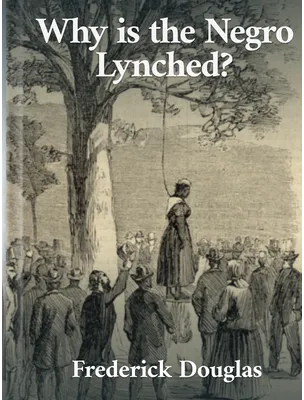
Not a breeze comes to us from the late rebellious states that is not tainted and freighted with Negro blood. In its thirst for blood and its rage for vengeance, the mob has blindly, boldly and defiantly supplanted sheriffs, constables and police. It has assumed all the functions of civil authority. It laughs at legal processes, courts and juries, and its red-handed murderers range abroad unchecked and unchallenged by law or by public opinion. If the mob is in pursuit of Negroes who happen to be accused of crime, innocent or guilty, prison walls and iron bars afford no protection. Jail doors are battered down in the presence of unresisting jailors, and the accused, awaiting trial in the courts of law, are dragged out and hanged, shot, stabbed or burned to death, as the blind and irresponsible mob may elect.
We claim to be a highly-civilized and Christian country. I will not stop to deny this claim, yet I fearlessly affirm that there is nothing in the history of savages to surpass the blood-chilling horrors and fiendish excesses perpetrated against the coloured people of this country, by the so-called enlightened and Christian people of the South. It is commonly thought that only the lowest and most disgusting birds and beasts, such as buzzards, vultures and hyenas, will gloat over and prey upon dead bodies; but the Southern mob, in its rage, feeds its vengeance by shooting, stabbing and burning their victims, when they are dead.
Now, what is the special charge by which this ferocity is justified, and by which mob law is excused and defended even by good men North and South? It is a charge of recent origin; a charge never brought before; a charge never heard of in the time of slavery or in any other time in our history. It is a charge of assaults by Negroes upon white women. This new charge, once fairly started on the wings of rumour, no matter by whom or in what manner originated, whether well or ill-founded, whether true or false, is certain to raise a mob and to subject the accused to immediate torture and death. It is nothing that there may be a mistake in his case as to identity. It is nothing that the victim pleads “not guilty.” It is nothing that the accused is of fair reputation and his accuser is of an abandoned character. It is nothing that the majesty of the law is defied and insulted; no time is allowed for defence or explanation; he is bound with cords, hurried off amid the frantic yells and curses of the mob to the scaffold, and there, under its ghastly shadow, he is tortured, till by pain or promises, he is made to think that he can possibly gain time or save his life by confession — confesses — and then, whether guilty or innocent, he is shot, hanged, stabbed or burned to death amid the wild shouts of the mob. When the will of the mob is accomplished, when its thirst for blood has been quenched, when its victim is speechless, silent and dead, his mobocratic accusers and murderers of course have the ear of the world all to themselves, and the world, hearing only the testimony of the mob, generally approves its verdict.
Such, then, is the state of Southern law and civilization at this moment, in relation to the coloured citizens of that section of our country. Though the picture is dark and terrible, I venture to affirm that no man, North or South, can successfully deny its essential truth.
Attitude of Upper Classes
Now the question arises, and it is important to know, how this state of affairs is viewed by the better classes of the Southern States. I will tell you, and I venture to say in advance, if our hearts were not already hardened by familiarity with crimes against the Negro, we should be shocked and astonished, not only by these mobocratic crimes, but by the attitude of the better classes of the Southern people and their law-makers, towards the perpetrators of them. With a few noble exceptions, just enough to prove the rule, the upper classes of the South seem to be in full sympathy with the mob and its deeds. There are but few earnest words ever uttered against either. Press, platform and pulpit are generally either silent or they openly apologise for the mob and its deeds. The mobocratic murderers are not only permitted to go free, untried and unpunished, but are lauded and applauded as honourable men and good citizens, the high-minded guardians of Southern virtue. If lynch law is in any case condemned by them, it is only condemned in one breath and excused in another.
The great trouble with the Negro in the South is that all presumptions are against him. A white man has but to blacken his face and commit a crime to have some Negro lynched in his stead. An abandoned woman has only to start a cry, true or false, that she has been insulted by a black man, to have him arrested and summarily murdered by the mob. Frightened and tortured by his captors, confused, he may be, into telling crooked stories about his whereabouts at the time when the crime is alleged to have been committed, and the death penalty is at once inflicted, though his story may be but the incoherency of ignorance or the distraction caused by terror.
In confirmation of what I have said, I have before me the utterances of some of the best people of the South, and also the testimony of one from the North, a lady of high character, from whom, considering her antecedents, we should have expected a more considerate, just and humane utterance.
In a late number of the Forum, Bishop Haygood, author of the “Brother in Black,” says that “The most alarming fact is that execution by lynching has ceased to surprise us. The burning of a human being for any crime, it is thought, is a horror that does not occur outside of the Southern states of the American Union, yet unless assaults by Negroes come to an end, there will most probably be still further display of vengeance that will shock the world, and men who are just will consider the provocation.”
In an open letter addressed to me by ex-Governor Chamberlain, of South Carolina, published in the Charleston News and Courier, in reply to an article of mine on the subject of lynching, published in the North American Review, the ex-Governor says: “Your denunciation of the South on this point is directed exclusively, or nearly so, against the application of lynch law for the punishment of one crime; the existence, I suppose I might say the prevalence, of this crime at the South is undeniable. But I read your article in vain for any special denunciation of the crime itself. As you say, your people are lynched, tortured and burned, for assault on white women. As you value your own good fame and safety as a race, stamp out the infamous crime.”
And now comes the sweet voice of a Northern woman, Miss Frances Willard, of the W. C. T. U., distinguished among her sisters for benevolence and Christian charity. She speaks in the same bitter tone and hurls against us the same blasting accusation. She says in a letter now before me, “I pity the Southerners. The problem in their hands is immeasurable. The coloured race multiplies like the locusts of Egypt. The safety of women, of childhood, of the home, is menaced in a thousand localities at this moment, so that men dare not go beyond the sight of their own roof tree.” Such, then, is the crushing indictment drawn up against the Southern Negroes, drawn up, too, by persons who are perhaps the fairest and most humane of the Negro’s accusers. Yet even they paint him as a moral monster, ferociously invading the sacred rights of woman and endangering the homes of the whites.
Incrimination of the Whole Race
Now, I hold, no less than his accusers, that the crime alleged against the Negro is the most revolting which men can commit. It is a crime that awakens the intensest abhorrence and tempts mankind to kill the criminal on first sight.
But this charge thus brought against the Negro and as constantly reiterated by his enemies, is plainly enough not merely a charge against the individual culprit, as would be the case with an individual of any other race, but it is in large measure a charge constructively against the coloured people as such. It throws over every man of colour a mantle of odium, and sets upon him a mark of popular hate, more distressing than the mark set upon the first murderer. It points the Negro out as an object of suspicion, avoidance and hate.
It is in this form of the charge that you and I and all of us are required to meet it and refute it, if that can be done. In the opinion of some of us it were well to say nothing about it, that the least said about it the better. They would have us suffer quietly under the odium in silence. In this I do not concur. Taking this charge in its broad and comprehensive sense, the sense in which it is presented and as now stated, it strikes at the whole coloured race, and, therefore, as a coloured man, I am bound to meet it. I am grateful for the opportunity now afforded me to meet it. For I believe it can be met and met successfully. I hold that a people too spiritless to defend themselves against unjust imputations, are not worth defending, and are not worthy to defend anything else.
II
The Defence — “Not Guilty.” Character of Their Accusers Challenged
Without boasting in advance, but relying upon the goodness of my cause, I will say here I am ready to confront ex-Governor Chamberlain, Bishop Fitzgerald, Bishop Haygood and good Miss Frances Willard and all others, singly or altogether, who bring this charge against the coloured people as a class.
But I want however, to be clearly understood at the outset. I do not pretend that Negroes are saints and angels. I do not deny that they are capable of committing the crime imputed to them, but utterly deny that they are any more addicted to the commission of that crime than is true of any other variety of the human family. In entering upon my argument, I may be allowed to say again what should be taken for granted at the start, that I am not a defender of any man guilty of this atrocious crime, but a defender of the coloured people as a class.
In answer, then, to the terrible indictment thus read, and speaking for the coloured people as a class, I venture in their name and in their stead, here and now, to plead “not guilty,” and shall submit my case with confidence of acquittal by good men and women, North and South, before whom we are, as a class, now being tried. In daring to do this I know that the moral atmosphere about me is not favourable to my cause. The sentiment left by slavery is still with us, and the moral vision of the American people is still darkened by its presence.
It is the misfortune of the coloured people of this country that the sins of the few are visited more or less upon the many. In respect to the offenders, I am with General Grant and every other honest man. My motto is, “Let no guilty man escape.” But while I say this, and mean to say it strongly, I am also here to say, let no guilty man be condemned and killed by the mob, or crushed under the weight of a charge of which he is not guilty.
I need not be told that the cause I have undertaken to support is not to be maintained by any mere confident assertions or general denials, however strongly worded. If I had no better ground to stand upon than this, I would at once leave the field of controversy and give up the coloured man’s cause to his accusers. I am also aware that I am here to do in some measure what the masters of logic say is impossible to be done. I know that I cannot prove a negative; there is one thing that I can and will do. I will call in question the affirmative. I can and will show that there are sound reasons for doubting and denying this horrible charge of rape as the special and peculiar crime of the coloured people of the South. I doubt it, and deny it with all my soul. My doubt and denial are based upon three fundamental grounds.
The first ground is, the well-established and well-tested character of the Negro on the very point upon which he is now so violently and persistently accused. I contend that his whole history in bondage and out of bondage contradicts and gives the lie to the allegation. My second ground for doubt and denial is based upon what I know of the character and antecedents of the men and women who bring this charge against him. My third ground is the palpable unfitness of the mob to testify and which is the main witness in the case.
I therefore affirm that a fierce and frenzied mob is not and ought not to be deemed a competent witness against any man accused of any crime whatever, and especially the crime now in question. The ease with which a mob can be collected, the slight causes by which it can be set in motion, and the element of which it is composed, deprives its testimony of the qualities necessary to sound judgment and that which should inspire confidence and command belief. Blinded by its own fury, it is moved by impulses utterly unfavourable to a clear perception of facts and the ability to make an impartial statement of the simple truth. At the outset, I challenge the credibility of the mob, and as the mob is the main witness in the case against the Negro I appeal from the judgment of the mob to the judgment of law-abiding men, in support of my challenge. I lay special emphasis on the fact that it is the mob and the mob only that the country has recognised and accepted as its accredited witness against the Negro. The mob is its law, its judge, jury and executioner. I need not argue this point further. Its truth is borne upon its face.
But I go further. I dare not only to impeach the mob, I impeach and discredit the veracity of men generally, whether mobocrats or otherwise who sympathise with lynch law, whenever or wherever the acts of coloured men are in question. It seems impossible for such men to judge a coloured man fairly. I hold that men who openly and deliberately nullify the laws and violate the provisions of the Constitution of their country, which they have solemnly sworn to support and execute, are not entitled to unqualified belief in any case, and certainly not in the case of the Negro. I apply to them the legal maxim, “False in one, false in all.” Especially do I apply this maxim when the conduct of the Negro is in question.
Again I question the Negro’s accusers on another important ground; I have no confidence in the veracity of men who publicly justify themselves in cheating the Negro out of his constitutional right to vote. The men who do this, either by false returns, or by taking advantage of the Negro’s illiteracy, or by surrounding the ballot box with obstacles and sinuosities intended to bewilder him and defeat his rightful exercise of the elective franchise, are men who should not be believed on oath. That this is done and approved in Southern States is notorious. It has been openly defended by so-called honest men inside and outside of Congress.
I met this shameless defence of crime face to face at the late Chicago Auxiliary Congress, during the World’s Columbian Exposition, in a solemn paper by Prof. Weeks, of North Carolina, who boldly advocated this kind of fraud as necessary and justifiable in order to secure Anglo-Saxon supremacy, and in doing so, as I believe, he voiced the moral sentiment of Southern men generally.
Now, men who openly defraud the Negro of his vote by all manner of artifice, who justify it and boast of it in the face of the world’s civilization, as was done by Prof. Weeks at Chicago, I hardly need say that such men are not to be depended upon for truth in any case where the rights of the Negro are involved. Their testimony in the case of any other people than the Negro would be instantly and utterly discredited, and why not the same in this case? Every honest man will see that this point is well taken. It has for its support common sense, common honesty, and the best sentiment of mankind. On the other hand, it has nothing to oppose it but a vulgar, popular prejudice against the coloured people of our country, a prejudice which we all know strikes men with moral blindness and renders them incapable of seeing any distinction between right and wrong where coloured people are concerned.
The Negro’s Clean Record during War Time
But I come to a stronger position. I rest my denial not merely upon general principles but upon well-known facts. I reject the charge brought against the Negro as a class, because all through the late war, while the slave-masters of the South were absent from their homes, in the field of rebellion, with bullets in their pockets, treason in their hearts, broad blades in their bloody hands, seeking the life of the nation, with the vile purpose of perpetuating the enslavement of the Negro, their wives, their daughters, their sisters and their mothers were left in the absolute custody of these same Negroes, and during all those long four years of terrible conflict, when the Negro had every opportunity to commit the abominable crime now alleged against him, there was never a single instance of such crime reported or charged against him. He was never accused of assault, insult, or an attempt to commit an assault upon any white woman in the whole South. A fact like this, though negative, speaks volumes, and ought to have some weight with the American people on the present question.
Then, again, on general principles, I do not believe the charge, because it implies an improbable change, if not an impossible change in the mental and moral character and composition of the Negro. It implies a radical change wholly inconsistent with the well-known facts of human nature. It is a contradiction to human experience. History does not present an example of a transformation in the character of any class of men so extreme, so unnatural and so complete as is implied in this charge. The change is too great and the period for it too brief. Instances may be cited where men fall like stars from heaven, but such is not the usual experience with the masses. Decline in the moral character of such is not sudden, but gradual. The downward steps are marked at first by slow degrees and by increasing momentum, going from bad to worse as they proceed. Time is an element in such changes, and I contend that the Negroes of the South have not had time to experience this great change and reach this lower depth of infamy. On the contrary, in point of fact, they have been, and still are, improving and ascending to higher and still higher levels of moral and social worth.
Excuses for Lynching — Delicacy of Subject; Possibility of Criminal’s Escape from Justice
Again I utterly deny the charge on the fundamental ground that those who bring the charge do not and dare not give the Negro a chance to be heard in his own defence. He is not allowed to show the deceptive conditions out of which the charge has originated. He is not allowed to vindicate his own character from blame, or to criminate the character and motives of his accusers. Even the mobocrats themselves admit that it would be fatal to their purpose to have the character of the Negro’s accusers brought into court. They pretend to a delicate regard for the feelings of the parties alleged to have been assaulted. They are too modest to have them brought into court. They are, therefore, for lynching and against giving a fair trial to the accused. This excuse, it is needless to say, is contemptible and hypocritical. It is not only mock modesty, but mob modesty. Men who can collect hundreds and thousands of their kind, if we believe them, thirsting for vengeance, and can spread before them in the tempest and whirlwind of vulgar passion, the most disgusting details of crime, connecting the names of women with the same, should not be allowed to shelter themselves under any pretence of modesty. Such a pretence is absurd and shameless upon the face of it. Who does not know that the modesty of womanhood is always and in every such case an object for special protection in a court of law? On the other hand, who does not know that a lawless mob, composed in part of the basest men, can have no such respect for the modesty of women, as has a court of law. No woman need be ashamed to confront one who has insulted or assaulted her in any court of law. Besides, innocence does not hesitate to come to the rescue of justice, and need not even in this case.
Again, I do not believe it, and deny it because if the evidence were deemed sufficient to bring the accused to the scaffold by a verdict of an impartial jury, there could be and would be no objection to having the alleged offender tried in conformity to due process of law.
The only excuse for lynch law, which has a shadow of support in it is, that the criminal would probably otherwise be allowed to escape the punishment due to his crime. But this excuse is not employed by the lynchers, though it is sometimes so employed by those who apologise for the lynchers. But for it there is no foundation whatever, in a country like the South, where public opinion, the laws, the courts, the juries, the advocates, are all against the Negro, especially one alleged to be guilty of the crime now charged. That such an one would be permitted to escape condign punishment, is not only untenable but an insult to common sense. The chances are that not even an innocent Negro so charged would be allowed to escape.
III
The Three Stages of Negro Persecution.
Their Object — His Disfranchisement
But I come to another fact, and an all important fact, bearing upon this case. You will remember that during all the first years of reconstruction, and long after the war, Negroes were slain by scores. The world was shocked by these murders, so that the Southern press and people found it necessary to invent, adopt and propagate almost every species of falsehood to create sympathy for themselves, and to formulate excuses for thus gratifying their brutal instincts against the Negro; there was never at that time a charge made against any Negro involving an assault upon any white woman or upon little white children in all the South. During all this time the white women and children were absolutely safe. During all this time there was no call for Miss Willard’s pity, or for Bishop Haygood’s defence of burning Negroes to death, but killing Negroes went on all the same.
You will remember also that during this time the justification for the murder of Negroes was said to be Negro conspiracies, Negro insurrections, Negro schemes to murder all the white people, Negro plots to burn the town and to commit violence generally. These were the excuses then depended upon, but never a word was then said or whispered about Negro outrages upon white women and children. So far as the history of that time is concerned, white women and children were absolutely safe, and husbands and fathers could leave their homes without the slightest anxiety for the safety of their families. But now mark the change and the reasons for the change. When events proved that no such conspiracies, no such insurrections as were then pretended to exist, and which were then paraded before the world in glaring headlines in the columns of nearly all our newspapers, had ever existed or were even meditated — when these excuses had run their course and had served their wicked purpose, when the huts of the Negroes had been searched, and searched in vain for guns and ammunition to prove these charges against the Negro, and no such proof was found, when there was no way open thereafter to prove these charges against the Negro, and no way to make the North believe in them, they did not even then bring forward the present allegation, but went on harassing and killing Negroes just the same. But this time they based their right to kill on the ground that it was necessary to check the domination and supremacy of the Negro and to secure the absolute rule of the Anglo-Saxon race.
It is important to notice and emphasize here the significant fact that there has been three distinct periods of persecutions of the Negroes in the South, and three distinct sets of excuses for this persecution. They have come along precisely in the order they were most needed. Each was made to fit its special place. First, you remember, as I have said, it was insurrection. When that wore out, Negro supremacy became the excuse. When that was worn out, then came the charge of assault upon defenceless women. I undertake to say that this orderly arrangement and periodicity of excuses are significant. They mean something, and should not be overlooked. They show design, plan, purpose and invention. And now that Negro insurrection and Negro domination are no longer defensible as an excuse for Negro persecution, there has come in due course another suited to the occasion, and that is the heart-rending cry of the white women and little white children.
Now, my friends, I ask what is the manifest meaning of this charge at this time? What is the meaning of the singular omission of this charge during the two periods preceding the present? Why was not this charge made at that time as now? The Negro was the same man then as to-day. Why, I ask again, was not this dreadful charge brought forward against the Negro in war times and in reconstruction times? Had it existed either in war times or during reconstruction, does any man doubt that it would have been added to the other charges and proclaimed upon the house-tops and at the street corners, as this charge is at present?