'Vāsavadattā' was written by Subandhu, an ancient Indian author, and is believed to have been composed in the 7th century CE. It is often published as part of collections of classical Sanskrit literature.
[{"id":"para_1","index":0,"start":0,"offset":333,"words":1,"paraNum":"","lastModified":1637657121000,"semanticType":"title-book-title","voicework":"no_audio","blockId":"vasavadatta_a_sanskrit_romance_by_subandhu_ffa_en-bl2s","language":"en","wordsRange":{"start":100000000,"end":102000000},"paragraphVersion":26,"direction":"ltr","paragraph":"<h1 class=\"ilm-title ilm-h1\" id=\"para_1\" semantictype=\"title-book-title\" data-ilmid=\"vasavadatta_a_sanskrit_romance_by_subandhu_ffa_en-bl2s\" data-chapter=\"para_1\" data-words-count=\"1\" data-before=\"0\" data-ww=\"\"><span class=\"block-pb\"> <span class=\"block-pb is-animated\"></span> </span><span class=\"itm-wrap\">Vāsavadattā</span></h1>","hasContent":true,"isFirst":true,"isLast":false},{"id":"para_2","index":1,"start":333,"offset":349,"words":3,"paraNum":"","lastModified":1637717773000,"semanticType":"title-subtitle","voicework":"no_audio","blockId":"vasavadatta_a_sanskrit_romance_by_subandhu_ffa_en-bl2t","language":"en","wordsRange":{"start":202000000,"end":206000000},"paragraphVersion":32,"direction":"ltr","paragraph":"<h1 class=\"ilm-title ilm-h1 ilm-subtitle\" id=\"para_2\" semantictype=\"title-subtitle\" data-ilmid=\"vasavadatta_a_sanskrit_romance_by_subandhu_ffa_en-bl2t\" data-chapter=\"para_2\" data-words-count=\"3\" data-before=\"1\" data-ww=\"\"><span class=\"block-pb\"> <span class=\"block-pb is-animated\"></span> </span><span class=\"itm-wrap\">A Sanskrit Romance</span></h1>","hasContent":true,"isFirst":false,"isLast":false},{"id":"para_3","index":2,"start":682,"offset":357,"words":1,"paraNum":"","lastModified":1670228296000,"semanticType":"title-author","voicework":"no_audio","blockId":"vasavadatta_a_sanskrit_romance_by_subandhu_ffa_en-bl2u","language":"en","wordsRange":{"start":306000000,"end":309000000},"paragraphVersion":49,"direction":"ltr","paragraph":"<h1 class=\"ilm-title ilm-author ilm-x-large ilm-nopad\" id=\"para_3\" semantictype=\"title-author\" data-ilmid=\"vasavadatta_a_sanskrit_romance_by_subandhu_ffa_en-bl2u\" data-chapter=\"para_3\" data-words-count=\"1\" data-before=\"4\" data-ww=\"\"><span class=\"block-pb\"> <span class=\"block-pb is-animated\"></span> </span><span class=\"itm-wrap\">by <br>Subandhu</span></h1>","hasContent":true,"isFirst":false,"isLast":false},{"id":"para_4","index":3,"start":1039,"offset":374,"words":7,"paraNum":"","lastModified":1670228278000,"semanticType":"title-translator","voicework":"no_audio","blockId":"vasavadatta_a_sanskrit_romance_by_subandhu_ffa_en-bl68","language":"en","wordsRange":{"start":342333333,"end":375666667},"paragraphVersion":33,"direction":"ltr","paragraph":"<h1 class=\"ilm-title ilm-translator ilm-x-small\" id=\"para_4\" semantictype=\"title-translator\" data-ilmid=\"vasavadatta_a_sanskrit_romance_by_subandhu_ffa_en-bl68\" data-chapter=\"para_4\" data-words-count=\"7\" data-before=\"5\" data-ww=\"\"><span class=\"block-pb\"> <span class=\"block-pb is-animated\"></span> </span><span class=\"itm-wrap\">Translated by Louis H. Gray, Ph.D.</span></h1>","hasContent":true,"isFirst":false,"isLast":false},{"id":"para_5","index":4,"start":1413,"offset":178,"words":0,"paraNum":"","lastModified":1637657121000,"semanticType":"line","blockId":"vasavadatta_a_sanskrit_romance_by_subandhu_ffa_en-bl2v","language":"en","wordsRange":{"start":409000000,"end":411000000},"paragraphVersion":27,"direction":"ltr","paragraph":"<hr class=\"ilm-hr ilm-small\" id=\"para_5\" semantictype=\"line\" data-ilmid=\"vasavadatta_a_sanskrit_romance_by_subandhu_ffa_en-bl2v\" data-words-count=\"0\" data-before=\"12\" data-ww=\"\">","hasContent":true,"isFirst":false,"isLast":false},{"id":"para_6","index":5,"start":1591,"offset":1638,"words":0,"paraNum":"","lastModified":1667307739000,"semanticType":"illustration","blockId":"vasavadatta_a_sanskrit_romance_by_subandhu_ffa_en-bl67","language":"en","wordsRange":{"start":444333333,"end":477666667},"paragraphVersion":29,"direction":"ltr","paragraph":"<div class=\"ilm-illustration\" id=\"para_6\" semantictype=\"illustration\" data-ilmid=\"vasavadatta_a_sanskrit_romance_by_subandhu_ffa_en-bl67\" data-words-count=\"0\" data-before=\"12\" data-ww=\"\"><img width=\"600\" height=\"387\" data-src=\"ch0p0\" src=\"data:image/webp;base64,UklGRuoDAABXRUJQVlA4IN4DAACQEQCdASo8ACcAPmkskUWkIqGWrM9sQAaEswBOmUJAokWV1qBhOLhXo622fOv+jHej96G/3NAa5tfe8cXtbwY375WfBnTEs9+gP0uUxMw2cyHKmDyiUWS45xYRz7e9mcz4iZKB/sFquBY+JjugcOLJcg2J5lOr59mo9D5nuUgZh8lGSZnkAGgzTFcTXRbX2w73rlhgAAD+/tMfJMwmxK+DytkjWdvoRTjfjRH0vngTXUV38P+/qA8YgHJqUN5xvsvT9QjW5PGHw0Y5ma+u+btKq8ahIloW8+uQ3dcq1Qo5yjqTqvQJ8Hu3khDVlGcFqCPbZll9WablmPrBok3Uu3I2WhJcm2pGZwbTJRdgog2wg8JCj/2/DeXVtMusiMI+f5pApDsjlW1DmyVZpdGDDxt77h5jLwcZJmvhpUqjGLN4S5rguTt2EOb1r2hoqv2abgGFr+pjELzyztpcoyxYgQKY3KEk/RS2mp/ahtD6KCvGvQRVB2DkLp11mp/qLdrzE7xs9YaX2sDpy1pQckixLNgllz7y1H/Nzz5TBJgRve+QW33HEtbFnEFJCAPsgSYeMpWckU2BvltLM9LY62Y67JWFGHyetV/q9ndpn7S+X2H37WGqpxi+zHSgl+9xXKfI7yRfLPYF4IJA9WXA5H/hnp4wRsYnrMMP/Kn6U8pKHTYkoLsENRLQTK2L59bgKw5VozoBMMBsr/7FOKLf72PywxD/FfB1JY5jpWCqPsJJJM4hiVoT9tsFznDlcsbMrUZdYaWoBdev6Vxh+Wweln3Tu1nXfrvG57oI8ZqZAeMkXccwcvWzCWU9AaE8/5cSTte1J5C+B3DzzvrHdN4jUexZD/RZQoAeUEY1RmZ7WFcl+GiHJYllwdUbaoUJ82KkVIKF6dqVShgDIXo6lfKo13P2LtN/Vswj6ZbviXdxuINZWDDg1d/aILyORbgEujPEuTXt0XuWAGqcETVG5SrgaGBCuL9toTXiKk8mazu74AcvJnbpAd/eA0tcy2zMsMYnsfIRoeJeidnQSoZGiNcWB22AgkZCNCnWIU7o4OK2oHi1TcQnW/an1VC21hj1urRN2vPWLPKy1yG+h4NxzyjGyip7LnirNR9/mpzHrOotccdGR2YX1Cn4X/WEOPceDwT/QhYHt+N0UFldums6FE7Ija/Bhlt8yYF5P3rSuFDHYtQaB3afM2DJBYeMZ9jkSlpmcHwNF91fOwiMLpUpGfAs8AuZfCSEqJPRaS+xNX7lej8X/9jiIZX6wkoh0PobQgpblzEWXljYiG+BOXzPfoAAYi1P2TMLQ6yi7ofxTnQC6rwAAAA=\" alt=\"Vāsavadattā\"></div>","hasContent":true,"isFirst":false,"isLast":false},{"id":"para_7","index":6,"start":3229,"offset":497,"words":25,"paraNum":"1","lastModified":1670228221000,"semanticType":"par","voicework":"no_audio","blockId":"vasavadatta_a_sanskrit_romance_by_subandhu_ffa_en-bl2x","language":"en","wordsRange":{"start":615000000,"end":644000000},"paragraphVersion":41,"direction":"ltr","paragraph":"<p class=\"ilm-blockquote\" id=\"para_7\" semantictype=\"par\" data-ilmid=\"vasavadatta_a_sanskrit_romance_by_subandhu_ffa_en-bl2x\" data-words-count=\"25\" data-before=\"12\" data-ww=\"\"><span class=\"block-num\" data-id=\"1\"></span><span class=\"block-pb\"> <span class=\"block-pb is-animated\"></span> </span><span class=\"itm-wrap\">[2] Victorious is divine Sarasvatī,<br>Who aideth bards of keen and nimble wit<br>To see the world, as ‘twere a jujube-fruit,<br>Lying within the hollow of their hands.</span></p>","hasContent":true,"isFirst":false,"isLast":false},{"id":"para_8","index":7,"start":3726,"offset":900,"words":41,"paraNum":"2","lastModified":1670228221000,"semanticType":"par","voicework":"no_audio","blockId":"vasavadatta_a_sanskrit_romance_by_subandhu_ffa_en-bl2y","language":"en","wordsRange":{"start":744000000,"end":791000000},"paragraphVersion":39,"direction":"ltr","paragraph":"<p class=\"ilm-blockquote\" id=\"para_8\" semantictype=\"par\" data-ilmid=\"vasavadatta_a_sanskrit_romance_by_subandhu_ffa_en-bl2y\" data-words-count=\"41\" data-before=\"37\" data-ww=\"\"><span class=\"block-num\" data-id=\"2\"></span><span class=\"block-pb\"> <span class=\"block-pb is-animated\"></span> </span><span class=\"itm-wrap\">Victorious, too, is Hari, resting now,<br>The while he smileth on the shepherd lads<br>Whose upraised arms <span class=\"intricate-word\"><span class=\"-nowrap-content\">bend<a data-fnid=\"1\" epub:type=\"noteref\" href=\"#n0\" class=\"space\"></a> </span></span>‘neath the awful weight<br>Of their vast burden; yet cry unto him:<br>‘Ah, weary art thou, let the mountain be;<br>We will sustain it, Kṛṣṇa, lord of all’!</span></p><aside id=\"n0\" data-audio=\"0\" data-fnid=\"1\" class=\"bh-fn\" epub:type=\"footnote\" data-ww=\"\">Tel. ed. and Srirangam text, ‘arms bent in vain. ’<br></aside>","hasContent":true,"isFirst":false,"isLast":false},{"id":"para_9","index":8,"start":4626,"offset":1060,"words":29,"paraNum":"3","lastModified":1670228221000,"semanticType":"par","voicework":"no_audio","blockId":"vasavadatta_a_sanskrit_romance_by_subandhu_ffa_en-bl2z","language":"en","wordsRange":{"start":891000000,"end":924000000},"paragraphVersion":41,"direction":"ltr","paragraph":"<p class=\"ilm-blockquote\" id=\"para_9\" semantictype=\"par\" data-ilmid=\"vasavadatta_a_sanskrit_romance_by_subandhu_ffa_en-bl2z\" data-words-count=\"29\" data-before=\"78\" data-ww=\"\"><span class=\"block-num\" data-id=\"3\"></span><span class=\"block-pb\"> <span class=\"block-pb is-animated\"></span> </span><span class=\"itm-wrap\">[3] May <span class=\"intricate-word\"><span class=\"-nowrap-content\">he<a data-fnid=\"1\" epub:type=\"noteref\" href=\"#n1\" class=\"space\"></a> </span></span>whose waist is girded keep you safe,<br>Yea, he whose serried furrows brightly shine;<br>E’en while the zone he hath too tightly drawn<br>Doth work distraction by its <span class=\"intricate-word\"><span class=\"-nowrap-content\">beauteousness.<a data-fnid=\"2\" epub:type=\"noteref\" href=\"#n2\"></a> </span></span></span></p><aside id=\"n1\" data-audio=\"0\" data-fnid=\"1\" class=\"bh-fn\" epub:type=\"footnote\" data-ww=\"\">Kṛṣṇa. <br></aside><aside id=\"n2\" data-audio=\"0\" data-fnid=\"2\" class=\"bh-fn\" epub:type=\"footnote\" data-ww=\"\">Tel. ed. interchanges this stanza with the one following. <br></aside>","hasContent":true,"isFirst":false,"isLast":false},{"id":"para_10","index":9,"start":5686,"offset":1044,"words":26,"paraNum":"4","lastModified":1670228221000,"semanticType":"par","voicework":"no_audio","blockId":"vasavadatta_a_sanskrit_romance_by_subandhu_ffa_en-bl30","language":"en","wordsRange":{"start":1024000000,"end":1054000000},"paragraphVersion":43,"direction":"ltr","paragraph":"<p class=\"ilm-blockquote\" id=\"para_10\" semantictype=\"par\" data-ilmid=\"vasavadatta_a_sanskrit_romance_by_subandhu_ffa_en-bl30\" data-words-count=\"26\" data-before=\"107\" data-ww=\"\"><span class=\"block-num\" data-id=\"4\"></span><span class=\"block-pb\"> <span class=\"block-pb is-animated\"></span> </span><span class=\"itm-wrap\">[4] Victorious is the <span class=\"intricate-word\"><span class=\"-nowrap-content\">god<a data-fnid=\"1\" epub:type=\"noteref\" href=\"#n3\" class=\"space\"></a> </span></span>whose crescent gleams<br>Like to a silvern pearl by Umā <span class=\"intricate-word\"><span class=\"-nowrap-content\">set<a data-fnid=\"2\" epub:type=\"noteref\" href=\"#n4\" class=\"space\"></a> </span></span><br>Upon his brow, when from his blazing eye<br>She gathereth the black collyrium.</span></p><aside id=\"n3\" data-audio=\"0\" data-fnid=\"1\" class=\"bh-fn\" epub:type=\"footnote\" data-ww=\"\">Śiva. <br></aside><aside id=\"n4\" data-audio=\"0\" data-fnid=\"2\" class=\"bh-fn\" epub:type=\"footnote\" data-ww=\"\">Srirangam text, against the metre, adds ‘upon his head. <br></aside>","hasContent":true,"isFirst":false,"isLast":false},{"id":"para_11","index":10,"start":6730,"offset":809,"words":25,"paraNum":"5","lastModified":1670228221000,"semanticType":"par","voicework":"no_audio","blockId":"vasavadatta_a_sanskrit_romance_by_subandhu_ffa_en-bl31","language":"en","wordsRange":{"start":1154000000,"end":1183000000},"paragraphVersion":54,"direction":"ltr","paragraph":"<p class=\"ilm-blockquote\" id=\"para_11\" semantictype=\"par\" data-ilmid=\"vasavadatta_a_sanskrit_romance_by_subandhu_ffa_en-bl31\" data-words-count=\"25\" data-before=\"133\" data-ww=\"\"><span class=\"block-num\" data-id=\"5\"></span><span class=\"block-pb\"> <span class=\"block-pb is-animated\"></span> </span><span class=\"itm-wrap\">How blessèd are those souls beneficent<br>Who work the weal of others, for to them<br>The moon that openeth the lotus-buds<br>Doth give a twofold meed of <span class=\"intricate-word\"><span class=\"-nowrap-content\">radiance!<a data-fnid=\"1\" epub:type=\"noteref\" href=\"#n5\"></a> </span></span></span></p><aside id=\"n5\" data-audio=\"0\" data-fnid=\"1\" class=\"bh-fn\" epub:type=\"footnote\" data-ww=\"\">Translated in Böhtlingk, Indische Sprüche, 2 ed., No. 4552, St. Petersburg, 1870-1873. <br></aside>","hasContent":true,"isFirst":false,"isLast":false},{"id":"para_12","index":11,"start":7539,"offset":1468,"words":35,"paraNum":"6","lastModified":1670856394000,"semanticType":"par","voicework":"no_audio","blockId":"vasavadatta_a_sanskrit_romance_by_subandhu_ffa_en-bl32","language":"en","wordsRange":{"start":1283000000,"end":1323000000},"paragraphVersion":62,"direction":"ltr","paragraph":"<p class=\"ilm-blockquote\" id=\"para_12\" semantictype=\"par\" data-ilmid=\"vasavadatta_a_sanskrit_romance_by_subandhu_ffa_en-bl32\" data-words-count=\"35\" data-before=\"158\" data-ww=\"\"><span class=\"block-num\" data-id=\"6\"></span><span class=\"block-pb\"> <span class=\"block-pb is-animated\"></span> </span><span class=\"itm-wrap\">[5] The wise say sooth: ‘More loathsome than a snake<br>Is he whose soul is filled with wickedness’:<br>The serpent ‘hateth the ichneumon tribe’<br>But leaves his brethren safe; while knavish folk<br>With venomed tongues ‘destroy their nearest <span class=\"intricate-word\"><span class=\"-nowrap-content\">kin’.<a data-fnid=\"1\" epub:type=\"noteref\" href=\"#n6\"></a> </span></span></span></p><aside id=\"n6\" data-audio=\"0\" data-fnid=\"1\" class=\"bh-fn\" epub:type=\"footnote\" data-ww=\"\">Böhtlingk, op. cit. No, 6214. The stanza is still popular in Mithila (see Grierson, <i>Curiosities of Indian Literature, </i>pp. 8-9, Bankipore, 1895, who says: ‘Here <i>naku-</i><i>ladvēṣī</i> is a threefold pun. It means either “hating the ichnenmon,” or “not hating his own race,” or “not hating the members of the family of the man he has bitten”).’ My attention was kindly called to this reference by Professor Zachariae (card of May 2, 1907), and Dr. Grierson very courteously loaned me his personal copy of the little book. It should be noted that the modem proverb reads <i>mṛṣā na</i> instead of <i>na mṛṣā.</i><br></aside>","hasContent":true,"isFirst":false,"isLast":false},{"id":"para_13","index":12,"start":9007,"offset":1158,"words":31,"paraNum":"7","lastModified":1670228221000,"semanticType":"par","voicework":"no_audio","blockId":"vasavadatta_a_sanskrit_romance_by_subandhu_ffa_en-bl33","language":"en","wordsRange":{"start":1423000000,"end":1458000000},"paragraphVersion":49,"direction":"ltr","paragraph":"<p class=\"ilm-blockquote\" id=\"para_13\" semantictype=\"par\" data-ilmid=\"vasavadatta_a_sanskrit_romance_by_subandhu_ffa_en-bl33\" data-words-count=\"31\" data-before=\"193\" data-ww=\"\"><span class=\"block-num\" data-id=\"7\"></span><span class=\"block-pb\"> <span class=\"block-pb is-animated\"></span> </span><span class=\"itm-wrap\">[6] In evil only are the wicked wise;<br>Like as the owl is blind, save in the <span class=\"intricate-word\"><span class=\"-nowrap-content\">dark.<a data-fnid=\"1\" epub:type=\"noteref\" href=\"#n7\"></a> </span></span><br>There is but one eclipse — foul calumny;<br>Only the clouds that hide the moon are <span class=\"intricate-word\"><span class=\"-nowrap-content\">black.<a data-fnid=\"2\" epub:type=\"noteref\" href=\"#n8\"></a> </span></span></span></p><aside id=\"n7\" data-audio=\"0\" data-fnid=\"1\" class=\"bh-fn\" epub:type=\"footnote\" data-ww=\"\">Böhtlingk, <i>Indische Sprüche, </i>2 ed., No. 142, St. Petersburg, 1870-1873. <br></aside><aside id=\"n8\" data-audio=\"0\" data-fnid=\"2\" class=\"bh-fn\" epub:type=\"footnote\" data-ww=\"\">Böhtlingk, <i>op. cit.</i> No. 6126; Tel. ed. and Srirangam text interchange this stanza with the one following. <br></aside>","hasContent":true,"isFirst":false,"isLast":false},{"id":"para_14","index":13,"start":10165,"offset":833,"words":36,"paraNum":"8","lastModified":1670228221000,"semanticType":"par","voicework":"no_audio","blockId":"vasavadatta_a_sanskrit_romance_by_subandhu_ffa_en-bl34","language":"en","wordsRange":{"start":1558000000,"end":1599000000},"paragraphVersion":42,"direction":"ltr","paragraph":"<p class=\"ilm-blockquote\" id=\"para_14\" semantictype=\"par\" data-ilmid=\"vasavadatta_a_sanskrit_romance_by_subandhu_ffa_en-bl34\" data-words-count=\"36\" data-before=\"224\" data-ww=\"\"><span class=\"block-num\" data-id=\"8\"></span><span class=\"block-pb\"> <span class=\"block-pb is-animated\"></span> </span><span class=\"itm-wrap\">[7] And when with sooty and polluting touch<br>The man of evil fain would smirch the good,<br>He doth increase the radiance of the just;<br>E’en as the ashes in the grinder’s hand<br>Do but enhance the lustrous mirror’s <span class=\"intricate-word\"><span class=\"-nowrap-content\">sheen.<a data-fnid=\"1\" epub:type=\"noteref\" href=\"#n9\"></a> </span></span></span></p><aside id=\"n9\" data-audio=\"0\" data-fnid=\"1\" class=\"bh-fn\" epub:type=\"footnote\" data-ww=\"\">Böhtlingk, <i>op. </i><i>cit. </i>No. 7376. <br></aside>","hasContent":true,"isFirst":false,"isLast":false},{"id":"para_15","index":14,"start":10998,"offset":661,"words":43,"paraNum":"9","lastModified":1670228221000,"semanticType":"par","voicework":"no_audio","blockId":"vasavadatta_a_sanskrit_romance_by_subandhu_ffa_en-bl35","language":"en","wordsRange":{"start":1699000000,"end":1748000000},"paragraphVersion":58,"direction":"ltr","paragraph":"<p class=\"ilm-blockquote\" id=\"para_15\" semantictype=\"par\" data-ilmid=\"vasavadatta_a_sanskrit_romance_by_subandhu_ffa_en-bl35\" data-words-count=\"43\" data-before=\"260\" data-ww=\"\"><span class=\"block-num\" data-id=\"9\"></span><span class=\"block-pb\"> <span class=\"block-pb is-animated\"></span> </span><span class=\"itm-wrap\">Yet ‘drought doth rule’ o’er all, the “cranes sport not”,<br>Nor doth the ‘“heron seek the azure vault”;,<br>For lo, the lake hath left this mortal world;<br>All ‘joy is fled’;, and “strange kings now bear rule”.<br>Wasting the earth with ‘“fratricidal”’ strife,<br>For Vikramāditya hath passed away.</span></p>","hasContent":true,"isFirst":false,"isLast":false},{"id":"para_16","index":15,"start":11659,"offset":794,"words":30,"paraNum":"10","lastModified":1670228221000,"semanticType":"par","voicework":"no_audio","blockId":"vasavadatta_a_sanskrit_romance_by_subandhu_ffa_en-bl36","language":"en","wordsRange":{"start":1848000000,"end":1882000000},"paragraphVersion":38,"direction":"ltr","paragraph":"<p class=\"ilm-blockquote\" id=\"para_16\" semantictype=\"par\" data-ilmid=\"vasavadatta_a_sanskrit_romance_by_subandhu_ffa_en-bl36\" data-words-count=\"30\" data-before=\"303\" data-ww=\"\"><span class=\"block-num\" data-id=\"10\"></span><span class=\"block-pb\"> <span class=\"block-pb is-animated\"></span> </span><span class=\"itm-wrap\">[8] The words of goodly bards rejoice thine ears,<br>E’en when thou knowest not their wondrous skill;<br>For in a jasmine wreath thine eyes delight,<br>Though to thy senses come no perfumes <span class=\"intricate-word\"><span class=\"-nowrap-content\">sweet.<a data-fnid=\"1\" epub:type=\"noteref\" href=\"#n10\"></a> </span></span></span></p><aside id=\"n10\" data-audio=\"0\" data-fnid=\"1\" class=\"bh-fn\" epub:type=\"footnote\" data-ww=\"\">Böhtlingk, <i>op. cit.</i> No. 680. <br></aside>","hasContent":true,"isFirst":false,"isLast":false},{"id":"para_17","index":16,"start":12453,"offset":771,"words":24,"paraNum":"11","lastModified":1670228221000,"semanticType":"par","voicework":"no_audio","blockId":"vasavadatta_a_sanskrit_romance_by_subandhu_ffa_en-bl37","language":"en","wordsRange":{"start":1982000000,"end":2010000000},"paragraphVersion":38,"direction":"ltr","paragraph":"<p class=\"ilm-blockquote\" id=\"para_17\" semantictype=\"par\" data-ilmid=\"vasavadatta_a_sanskrit_romance_by_subandhu_ffa_en-bl37\" data-words-count=\"24\" data-before=\"333\" data-ww=\"\"><span class=\"block-num\" data-id=\"11\"></span><span class=\"block-pb\"> <span class=\"block-pb is-animated\"></span> </span><span class=\"itm-wrap\">The noble gain true knowledge of themselves<br>By observation of their fellow men;<br>As on the mirror’s polished surface falls<br>The vision of the soul’s own <span class=\"intricate-word\"><span class=\"-nowrap-content\">magnitude.<a data-fnid=\"1\" epub:type=\"noteref\" href=\"#n11\"></a> </span></span></span></p><aside id=\"n11\" data-audio=\"0\" data-fnid=\"1\" class=\"bh-fn\" epub:type=\"footnote\" data-ww=\"\">Böhtlingk, <i>op. cit. </i>No. 2148. <br></aside>","hasContent":true,"isFirst":false,"isLast":false},{"id":"para_18","index":17,"start":13224,"offset":799,"words":24,"paraNum":"12","lastModified":1670228221000,"semanticType":"par","voicework":"no_audio","blockId":"vasavadatta_a_sanskrit_romance_by_subandhu_ffa_en-bl38","language":"en","wordsRange":{"start":2110000000,"end":2138000000},"paragraphVersion":38,"direction":"ltr","paragraph":"<p class=\"ilm-blockquote\" id=\"para_18\" semantictype=\"par\" data-ilmid=\"vasavadatta_a_sanskrit_romance_by_subandhu_ffa_en-bl38\" data-words-count=\"24\" data-before=\"357\" data-ww=\"\"><span class=\"block-num\" data-id=\"12\"></span><span class=\"block-pb\"> <span class=\"block-pb is-animated\"></span> </span><span class=\"itm-wrap\">[9] Through great Sarasvatī this book was writ<br>By Sujana’s one brother, whom mankind<br>Doth call Subandhu, skilled full dextrously<br>To interweave in every word a <span class=\"intricate-word\"><span class=\"-nowrap-content\">pun.<a data-fnid=\"1\" epub:type=\"noteref\" href=\"#n12\"></a> </span></span></span></p><aside id=\"n12\" data-audio=\"0\" data-fnid=\"1\" class=\"bh-fn\" epub:type=\"footnote\" data-ww=\"\">Omitted by Tel. ed. and Srirangam text. Cf. Introduction, p. 13. <br></aside>","hasContent":true,"isFirst":false,"isLast":false},{"id":"para_19","index":18,"start":14023,"offset":954,"words":43,"paraNum":"13","lastModified":1670228221000,"semanticType":"par","voicework":"no_audio","blockId":"vasavadatta_a_sanskrit_romance_by_subandhu_ffa_en-bl39","language":"en","wordsRange":{"start":2238000000,"end":2282000000},"paragraphVersion":43,"direction":"ltr","paragraph":"<p id=\"para_19\" semantictype=\"par\" data-ilmid=\"vasavadatta_a_sanskrit_romance_by_subandhu_ffa_en-bl39\" data-words-count=\"43\" data-before=\"381\" data-ww=\"\"><span class=\"block-num\" data-id=\"13\"></span><span class=\"block-pb\"> <span class=\"block-pb is-animated\"></span> </span><span class=\"itm-wrap\">[10] There was a king named Cintāmaṇi, whose like had never <span class=\"intricate-word\"><span class=\"-nowrap-content\">existed,<a data-fnid=\"1\" epub:type=\"noteref\" href=\"#n13\"></a> </span></span>whose nail-jewelled feet were unscarred, though rubbed by the edge of a touchstone which was the series of the beautiful crest-gems of the circle of all the princes of the earth.</span></p><aside id=\"n13\" data-audio=\"0\" data-fnid=\"1\" class=\"bh-fn\" epub:type=\"footnote\" data-ww=\"\">Tel. ed., ‘of no mean nature.’ For a somewhat similar description of a king see <i>Kādambarī, </i>pp. 7-14, Bombay ed., 1890 (tr. Ridding, pp. 3-5, London, 1896). <br></aside>","hasContent":true,"isFirst":false,"isLast":false},{"id":"para_20","index":19,"start":14977,"offset":3969,"words":266,"paraNum":"14","lastModified":1670856430000,"semanticType":"par","voicework":"no_audio","blockId":"vasavadatta_a_sanskrit_romance_by_subandhu_ffa_en-bl3a","language":"en","wordsRange":{"start":2382000000,"end":2648000000},"paragraphVersion":82,"direction":"ltr","paragraph":"<p id=\"para_20\" semantictype=\"par\" data-ilmid=\"vasavadatta_a_sanskrit_romance_by_subandhu_ffa_en-bl3a\" data-words-count=\"266\" data-before=\"424\" data-ww=\"\"><span class=\"block-num\" data-id=\"14\"></span><span class=\"block-pb\"> <span class=\"block-pb is-animated\"></span> </span><span class=\"itm-wrap\">[11] He caused astonishment by ‘gifts of gold, food, raiment, and estates’ as Nṛsiṃha caused astonishment by ‘rending the body of <span class=\"intricate-word\"><span class=\"-nowrap-content\">Hiraṇyakaśipu;<a data-fnid=\"1\" epub:type=\"noteref\" href=\"#n14\"></a> </span></span>he gave joy to the ‘divinities by his goods’ as Kṛṣṇa gave joy to ‘Vasudēva’; [12] he ‘conquered with ease’ the circle of the earth as Nārāyaṇa ‘upheld’ the circle of the world by his ‘boar’s form’; he produced ‘glorious and blissful’ prosperity as Kaṃsa’s foe produced prosperity for ‘Yaśōdā and Nanda’; he made ‘poetry honoured’ as Ānakadundubhi made ‘Kāvyā <span class=\"intricate-word\"><span class=\"-nowrap-content\">afraid;<a data-fnid=\"2\" epub:type=\"noteref\" href=\"#n15\"></a> </span></span>[13] he had his <span class=\"intricate-word\"><span class=\"-nowrap-content\">lotus<a data-fnid=\"3\" epub:type=\"noteref\" href=\"#n16\" class=\"space\"></a> </span></span>feet embellished by the <span class=\"intricate-word\"><span class=\"-nowrap-content\">rays<a data-fnid=\"4\" epub:type=\"noteref\" href=\"#n17\" class=\"space\"></a> </span></span>of the crest-jewels of ‘many serpents’ as Sāgaraśāyi had his <span class=\"intricate-word\"><span class=\"-nowrap-content\">lotus<a data-fnid=\"5\" epub:type=\"noteref\" href=\"#n18\" class=\"space\"></a> </span></span>feet embellished by the <span class=\"intricate-word\"><span class=\"-nowrap-content\">rays<a data-fnid=\"6\" epub:type=\"noteref\" href=\"#n19\" class=\"space\"></a> </span></span>of the crest-jewel of the ‘cosmic serpent’; he protected ‘unceasingly’ as Varuṇa protected the ‘western regions’; he adorned ‘petitions with gifts’ as Agastya adorned the ‘southern districts’; he was the lord of a hundred ‘armies’ and “habitually levied just taxes” as the ocean is the lord of a hundred ‘rivers’ and is the “habitat of fish”; [14] he was followed by a ‘great army’ and repulsed “obstacles” as Hara is followed by ‘Mahāsēna’ and repulses “Māra”; he was the home of the ‘wise’ and the dwelling-place of the “acts of all men” as Mēru is the home of the ‘gods’ and the dwelling-place of “Viśvakarman”; he ‘rejoiced in generosity at festal times’ and removed sorrow by his “beauty” as the sun ‘loves not the night’ and removes the sorrow of “Chāyā”; he gave ‘unimpeded’ prosperity and afforded delight in “intercourse” as the God of the Flowery <span class=\"intricate-word\"><span class=\"-nowrap-content\">Banner<a data-fnid=\"7\" epub:type=\"noteref\" href=\"#n20\" class=\"space\"></a> </span></span>gave prosperity to ‘Aniruddha’ and afforded delight to “Rati”.</span></p><aside id=\"n14\" data-audio=\"0\" data-fnid=\"1\" class=\"bh-fn\" epub:type=\"footnote\" data-ww=\"\">Cf. <i>Viṣṇupurāṇa</i>, i. 17-20. <br></aside><aside id=\"n15\" data-audio=\"0\" data-fnid=\"2\" class=\"bh-fn\" epub:type=\"footnote\" data-ww=\"\">Cf. <i>Harivaṃśa</i>, 59. <br></aside><aside id=\"n16\" data-audio=\"0\" data-fnid=\"3\" class=\"bh-fn\" epub:type=\"footnote\" data-ww=\"\">Tel. ed. and Srirangam text omit ‘lotus. ’<br></aside><aside id=\"n17\" data-audio=\"0\" data-fnid=\"4\" class=\"bh-fn\" epub:type=\"footnote\" data-ww=\"\">Tel. ed., ‘series. ’<br></aside><aside id=\"n18\" data-audio=\"0\" data-fnid=\"5\" class=\"bh-fn\" epub:type=\"footnote\" data-ww=\"\">Tel. ed. and Srirangam text omit ‘lotus. ’<br></aside><aside id=\"n19\" data-audio=\"0\" data-fnid=\"6\" class=\"bh-fn\" epub:type=\"footnote\" data-ww=\"\">Tel. ed., ‘series. ’<br></aside><aside id=\"n20\" data-audio=\"0\" data-fnid=\"7\" class=\"bh-fn\" epub:type=\"footnote\" data-ww=\"\">Kāma. <br></aside>","hasContent":true,"isFirst":false,"isLast":false},{"id":"para_21","index":20,"start":18946,"offset":1689,"words":129,"paraNum":"15","lastModified":1670856459000,"semanticType":"par","voicework":"no_audio","blockId":"vasavadatta_a_sanskrit_romance_by_subandhu_ffa_en-bl3b","language":"en","wordsRange":{"start":2748000000,"end":2877000000},"paragraphVersion":59,"direction":"ltr","paragraph":"<p id=\"para_21\" semantictype=\"par\" data-ilmid=\"vasavadatta_a_sanskrit_romance_by_subandhu_ffa_en-bl3b\" data-words-count=\"129\" data-before=\"690\" data-ww=\"\"><span class=\"block-num\" data-id=\"15\"></span><span class=\"block-pb\"> <span class=\"block-pb is-animated\"></span> </span><span class=\"itm-wrap\">[15] Though a ‘demigod’, he was a “god”, for he was a “benevolent” ‘receptacle of wisdom’; though a ‘Dhṛtarāṣṭra’, he was a “friend of Bhīma”, for he was a ‘ruler of a kingdom’ “who loved virtue”; though ‘come to earth’, he took <span class=\"intricate-word\"><span class=\"-nowrap-content\">refuge<a data-fnid=\"1\" epub:type=\"noteref\" href=\"#n21\" class=\"space\"></a> </span></span>in the “courts of the gods”, for he was ‘filled with patience’ and took <span class=\"intricate-word\"><span class=\"-nowrap-content\">refuge<a data-fnid=\"2\" epub:type=\"noteref\" href=\"#n22\" class=\"space\"></a> </span></span>in “good government” [16] though a ‘great reed’ by nature, he was “smooth” within, for his was the nature of ‘Arjuna’, “upright” within; [17] though born of a ‘buffalo’, he was “begotten by a bull”, for he was born of a ‘queen’ and was a “producer of government”; though no ‘central gem of a necklace’, he was the “midmost jewel of a throat-band”, for he was a ‘fearless’, “mighty leader”.</span></p><aside id=\"n21\" data-audio=\"0\" data-fnid=\"1\" class=\"bh-fn\" epub:type=\"footnote\" data-ww=\"\">Srirangam text, ‘he was the refuge of. ’<br></aside><aside id=\"n22\" data-audio=\"0\" data-fnid=\"2\" class=\"bh-fn\" epub:type=\"footnote\" data-ww=\"\">Srirangam text, ‘he was the refuge of. ’<br></aside>","hasContent":true,"isFirst":false,"isLast":false},{"id":"para_22","index":21,"start":20635,"offset":6012,"words":252,"paraNum":"16","lastModified":1670856475000,"semanticType":"par","voicework":"no_audio","blockId":"vasavadatta_a_sanskrit_romance_by_subandhu_ffa_en-bl3c","language":"en","wordsRange":{"start":2977000000,"end":3231000000},"paragraphVersion":88,"direction":"ltr","paragraph":"<p id=\"para_22\" semantictype=\"par\" data-ilmid=\"vasavadatta_a_sanskrit_romance_by_subandhu_ffa_en-bl3c\" data-words-count=\"252\" data-before=\"819\" data-ww=\"\"><span class=\"block-num\" data-id=\"16\"></span><span class=\"block-pb\"> <span class=\"block-pb is-animated\"></span> </span><span class=\"itm-wrap\">While he ruled the earth, <span class=\"intricate-word\"><span class=\"-nowrap-content\">‘quibblings<a data-fnid=\"1\" epub:type=\"noteref\" href=\"#n23\" class=\"space\"></a> </span></span>and fallacies’ were practised only in <span class=\"intricate-word\"><span class=\"-nowrap-content\">arguments<a data-fnid=\"2\" epub:type=\"noteref\" href=\"#n24\" class=\"space\"></a> </span></span>(for there was no need of ‘habitually checking <span class=\"intricate-word\"><span class=\"-nowrap-content\">deceit’);<a data-fnid=\"3\" epub:type=\"noteref\" href=\"#n25\"></a> </span></span>[18] there was ‘infidelity’ only among materialists (for there was no ‘poverty’); there was employment of a ‘spur’ only in executing <span class=\"intricate-word\"><span class=\"-nowrap-content\">commands<a data-fnid=\"4\" epub:type=\"noteref\" href=\"#n26\" class=\"space\"></a> </span></span>(for there was no employment of ‘petty enemies’); there was ‘picking’ [19] only on lutes (for there was no ‘back-biting’); there was association with ‘threshing-floors’ only in the case of rice (for there was no association with ‘evil men’); there was capture of ‘snakes’ only among serpent-charmers (for there was no need to capture ‘liars’); ‘imposts’ were cut only in the receipt of taxes (for there was no amputation of <span class=\"intricate-word\"><span class=\"-nowrap-content\">‘hands’);<a data-fnid=\"5\" epub:type=\"noteref\" href=\"#n27\"></a> </span></span>‘roots’ were plucked out only in the case of “wormwood-trees” (for “ascetics” did not pluck out their ‘eyes’); [20] only lotuses opposed the ‘moon’ (for there was no opposition to <span class=\"intricate-word\"><span class=\"-nowrap-content\">‘Brāhmans’;<a data-fnid=\"6\" epub:type=\"noteref\" href=\"#n28\"></a> </span></span>‘‘ruler of the world’’ was applied only to the elephant of the <span class=\"intricate-word\"><span class=\"-nowrap-content\">north<a data-fnid=\"7\" epub:type=\"noteref\" href=\"#n29\" class=\"space\"></a> </span></span>(but not to any man save the ‘king’); there were ‘fire-tests and balance-tests’ only in the case of different sorts of gold (for there were no ‘ordeals by fire or <span class=\"intricate-word\"><span class=\"-nowrap-content\">balance’);<a data-fnid=\"8\" epub:type=\"noteref\" href=\"#n30\"></a> </span></span>only jewels were ‘pierced by needles’ (for there was no ‘disturbance by suggestive movements’); only in <span class=\"intricate-word\"><span class=\"-nowrap-content\">child-bearing<a data-fnid=\"9\" epub:type=\"noteref\" href=\"#n31\" class=\"space\"></a> </span></span>was there rending with ‘griping pains’ (for there was no rending by ‘impalement’); [21] ‘Duḥśāsana was known’ only in the <i>Bhārata</i><span class=\"intricate-word\"><span class=\"-nowrap-content\"><a data-fnid=\"10\" epub:type=\"noteref\" href=\"#n32\"></a> </span></span>(for there was no ‘glimpse of evil instruction’); the ‘sun’s rays opened <span class=\"intricate-word\"><span class=\"-nowrap-content\">leaves’<a data-fnid=\"11\" epub:type=\"noteref\" href=\"#n33\"></a> </span></span>only in the case of lotuses (for there was no ‘sawing <span class=\"intricate-word\"><span class=\"-nowrap-content\">asunder’).<a data-fnid=\"12\" epub:type=\"noteref\" href=\"#n34\"></a> </span></span></span></p><aside id=\"n23\" data-audio=\"0\" data-fnid=\"1\" class=\"bh-fn\" epub:type=\"footnote\" data-ww=\"\">Srirangam text adds ‘futile answers. ’<br></aside><aside id=\"n24\" data-audio=\"0\" data-fnid=\"2\" class=\"bh-fn\" epub:type=\"footnote\" data-ww=\"\">Tel. ed., ‘only in Nyāya textbooks. ’<br></aside><aside id=\"n25\" data-audio=\"0\" data-fnid=\"3\" class=\"bh-fn\" epub:type=\"footnote\" data-ww=\"\">Srirangam text adds ‘and castes. '<br></aside><aside id=\"n26\" data-audio=\"0\" data-fnid=\"4\" class=\"bh-fn\" epub:type=\"footnote\" data-ww=\"\">Tel. ed. and Srirangam text, ‘only in yōga-exercises. ’<br></aside><aside id=\"n27\" data-audio=\"0\" data-fnid=\"5\" class=\"bh-fn\" epub:type=\"footnote\" data-ww=\"\">Tel. ed. and Srirangam text, ‘there was hand-cutting only in blossoms. ’<br></aside><aside id=\"n28\" data-audio=\"0\" data-fnid=\"6\" class=\"bh-fn\" epub:type=\"footnote\" data-ww=\"\">Tel. ed. and Srirangam text, ‘the king. ’<br></aside><aside id=\"n29\" data-audio=\"0\" data-fnid=\"7\" class=\"bh-fn\" epub:type=\"footnote\" data-ww=\"\">Tel. ed. and Srirangam text, ‘only to the world-elephants. ’<br></aside><aside id=\"n30\" data-audio=\"0\" data-fnid=\"8\" class=\"bh-fn\" epub:type=\"footnote\" data-ww=\"\">In the ordeal by balance the accused was twice weighed. If he was lighter at the second weighing than at the first, he was acquitted; but if heavier, he was condemned. In the fire-ordeal the defendant was required to carry a heated metal pot a certain distance, and was adjudged innocent if his hands, which might be bound with leaves as a partial protection, remained unburned (see Jolly, <i>Recht und Sitte</i>, p. 145, Strassburg, 1896). <br></aside><aside id=\"n31\" data-audio=\"0\" data-fnid=\"9\" class=\"bh-fn\" epub:type=\"footnote\" data-ww=\"\">Tel. ed., ‘in new (i. e. ‘first’) child-bearings of young women’; Srirangam text, ‘in child-bearings. ’<br></aside><aside id=\"n32\" data-audio=\"0\" data-fnid=\"10\" class=\"bh-fn\" epub:type=\"footnote\" data-ww=\"\">Tel. ed. and Srirangam text, ‘in the <i>Mahābhārata</i>. ’<br></aside><aside id=\"n33\" data-audio=\"0\" data-fnid=\"11\" class=\"bh-fn\" epub:type=\"footnote\" data-ww=\"\">Tel. ed. and Srirangam text, ‘the opening of leaves of lotuses by the rays of the sun was the very utmost decree. ’<br></aside><aside id=\"n34\" data-audio=\"0\" data-fnid=\"12\" class=\"bh-fn\" epub:type=\"footnote\" data-ww=\"\">Cf. the Iranian legend of the sawing asunder of Yima by Spityura (Yašt, 19. 46). <br></aside>","hasContent":true,"isFirst":false,"isLast":false},{"id":"para_23","index":22,"start":26647,"offset":1997,"words":100,"paraNum":"17","lastModified":1670856481000,"semanticType":"par","voicework":"no_audio","blockId":"vasavadatta_a_sanskrit_romance_by_subandhu_ffa_en-bl3d","language":"en","wordsRange":{"start":3331000000,"end":3432000000},"paragraphVersion":58,"direction":"ltr","paragraph":"<p id=\"para_23\" semantictype=\"par\" data-ilmid=\"vasavadatta_a_sanskrit_romance_by_subandhu_ffa_en-bl3d\" data-words-count=\"100\" data-before=\"1071\" data-ww=\"\"><span class=\"block-num\" data-id=\"17\"></span><span class=\"block-pb\"> <span class=\"block-pb is-animated\"></span> </span><span class=\"itm-wrap\">Though the Great Boar was intent on upholding the ‘earth’, yet he (Cintāmaṇi) clove ‘mountains’. Rāghava entered the forest with ‘Sītā’ leaving his native land (but Cintāmaṇi entered the forest having his ‘native land’). Bharata had affection for Rāma, yet made ‘Rāma depart’ from his kingdom (but Cintāmaṇi made ‘peace’ in his kingdom). [22] When Nala was united to Damayantī it was a ‘marriage of one already wedded’ (but Cintāmaṇi ‘regained his territory’). Pṛthu ‘levelled the earth by banishing the mountains’<span class=\"intricate-word\"><span class=\"-nowrap-content\"><a data-fnid=\"1\" epub:type=\"noteref\" href=\"#n35\"></a> (</span></span>but Cintāmaṇi (covered the earth by sending forth his <span class=\"intricate-word\"><span class=\"-nowrap-content\">offspring’).<a data-fnid=\"2\" epub:type=\"noteref\" href=\"#n36\"></a> </span></span>There was, therefore, no reason to mention former <span class=\"intricate-word\"><span class=\"-nowrap-content\">kings.<a data-fnid=\"3\" epub:type=\"noteref\" href=\"#n37\"></a> </span></span></span></p><aside id=\"n35\" data-audio=\"0\" data-fnid=\"1\" class=\"bh-fn\" epub:type=\"footnote\" data-ww=\"\">Cf. <i>Mahābhārata, </i>7. 69. <br></aside><aside id=\"n36\" data-audio=\"0\" data-fnid=\"2\" class=\"bh-fn\" epub:type=\"footnote\" data-ww=\"\">This rendering seems justified, by the context and by the paronomasiac meanings of the words employed, although the commentary does not allude to the applicability of the passage to Cintāmaṇi. <br></aside><aside id=\"n37\" data-audio=\"0\" data-fnid=\"3\" class=\"bh-fn\" epub:type=\"footnote\" data-ww=\"\">Tel. ed. adds ‘but rather (there was occasion) of blame (of them). ’<br></aside>","hasContent":true,"isFirst":false,"isLast":false},{"id":"para_24","index":23,"start":28644,"offset":997,"words":113,"paraNum":"18","lastModified":1670856485000,"semanticType":"par","voicework":"no_audio","blockId":"vasavadatta_a_sanskrit_romance_by_subandhu_ffa_en-bl3e","language":"en","wordsRange":{"start":3532000000,"end":3646000000},"paragraphVersion":45,"direction":"ltr","paragraph":"<p id=\"para_24\" semantictype=\"par\" data-ilmid=\"vasavadatta_a_sanskrit_romance_by_subandhu_ffa_en-bl3e\" data-words-count=\"113\" data-before=\"1171\" data-ww=\"\"><span class=\"block-num\" data-id=\"18\"></span><span class=\"block-pb\"> <span class=\"block-pb is-animated\"></span> </span><span class=\"itm-wrap\">He, moreover, was another sort of monarch and had humbled all the princes on earth. Thus he was a mountain with a visible exaltation of ‘peak’, which never ceased to delight the “Gandharvas who roamed along its slopes”; for he never ceased, with his visible exaltation of ‘majesty’, to delight the “steeds that bore his army”. [23] He was a ‘Himālaya’, though not shaken by “snow” nor suited to the birth of “Umā”, for he was ‘indeed a lotus’ unshaken by “pride” and unsuited for the birth of “deceit”. He was a “snowy” ‘bullock’-banner set upon a “hill”, for he was “indeed exalted in speech” and set as a banner of ‘justice’.</span></p>","hasContent":true,"isFirst":false,"isLast":false},{"id":"para_25","index":24,"start":29641,"offset":5222,"words":222,"paraNum":"19","lastModified":1670857190000,"semanticType":"par","voicework":"no_audio","blockId":"vasavadatta_a_sanskrit_romance_by_subandhu_ffa_en-bl3f","language":"en","wordsRange":{"start":3746000000,"end":3968000000},"paragraphVersion":72,"direction":"ltr","paragraph":"<p id=\"para_25\" semantictype=\"par\" data-ilmid=\"vasavadatta_a_sanskrit_romance_by_subandhu_ffa_en-bl3f\" data-words-count=\"222\" data-before=\"1284\" data-ww=\"\"><span class=\"block-num\" data-id=\"19\"></span><span class=\"block-pb\"> <span class=\"block-pb is-animated\"></span> </span><span class=\"itm-wrap\">He was a ‘wind’, ‘bending all the forest down’, ‘a friend of the fire’, ‘eager for the clouds’, and ‘bearing along the flowers’; for he was ‘ever patient’, ‘straightening every crooked <span class=\"intricate-word\"><span class=\"-nowrap-content\">way’,<a data-fnid=\"1\" epub:type=\"noteref\" href=\"#n38\"></a> </span></span>‘foremost of ascetics’, ‘not avid of sensual <span class=\"intricate-word\"><span class=\"-nowrap-content\">pleasures’,<a data-fnid=\"2\" epub:type=\"noteref\" href=\"#n39\"></a> </span></span>and the ‘joy of the wise’. [24] He was a mine of gems ‘with no <span class=\"intricate-word\"><span class=\"-nowrap-content\">serpents’,<a data-fnid=\"3\" epub:type=\"noteref\" href=\"#n40\"></a> </span></span><span class=\"intricate-word\"><span class=\"-nowrap-content\">exceeding<a data-fnid=\"4\" epub:type=\"noteref\" href=\"#n41\" class=\"space\"></a> </span></span>deep its ‘boundaries’, ‘no otter a terror to it’, ever a very refuge for ‘fishes’, ‘filled with water’, ‘bearing <span class=\"intricate-word\"><span class=\"-nowrap-content\">ships’,<a data-fnid=\"5\" epub:type=\"noteref\" href=\"#n42\"></a> </span></span>whereto (belonged) the <span class=\"intricate-word\"><span class=\"-nowrap-content\">‘mountain<a data-fnid=\"6\" epub:type=\"noteref\" href=\"#n43\" class=\"space\"></a> </span></span>and the crocodile’, ‘the mighty lord of rivers’, the ‘ocean’; [25] for he was ‘no <span class=\"intricate-word\"><span class=\"-nowrap-content\">knave’,<a data-fnid=\"7\" epub:type=\"noteref\" href=\"#n44\"></a> </span></span><span class=\"intricate-word\"><span class=\"-nowrap-content\">exceeding<a data-fnid=\"8\" epub:type=\"noteref\" href=\"#n45\" class=\"space\"></a> </span></span>deep his ‘decorum’, ‘no light of his dismaying any’, ever a refuge like the <span class=\"intricate-word\"><span class=\"-nowrap-content\">‘moon’,<a data-fnid=\"9\" epub:type=\"noteref\" href=\"#n46\"></a> </span></span>‘delightsome’, ‘rich in <span class=\"intricate-word\"><span class=\"-nowrap-content\">children’,<a data-fnid=\"10\" epub:type=\"noteref\" href=\"#n47\"></a> </span></span>‘his serenity unshaken’, ‘great, proud’, and ‘with a signet ring’. [26] As the moon causes joy in the ‘night season’, is the <span class=\"intricate-word\"><span class=\"-nowrap-content\">friend<a data-fnid=\"11\" epub:type=\"noteref\" href=\"#n48\" class=\"space\"></a> </span></span>of ‘white lotuses’, has his mansion filled with all the ‘digits’, and is ‘unsurpassed by the constellations’; he caused joy in the ‘festivals’, was the <span class=\"intricate-word\"><span class=\"-nowrap-content\">friend<a data-fnid=\"12\" epub:type=\"noteref\" href=\"#n49\" class=\"space\"></a> </span></span>of ‘pleasure groves on earth’, had his mansion filled with all the ‘arts’, and ‘subdued the excessive might of his foes’. As Sumēru caused the ‘sun to rise’, gave a ‘golden glory’, and had ‘wealth surpassing the (other) mountains’; he caused the ‘prosperity of his friends’, possessed ‘every beauty’, and had ‘good fortune impregnable and abundant’.</span></p><aside id=\"n38\" data-audio=\"0\" data-fnid=\"1\" class=\"bh-fn\" epub:type=\"footnote\" data-ww=\"\">Or, ‘banishing all famine. ’<br></aside><aside id=\"n39\" data-audio=\"0\" data-fnid=\"2\" class=\"bh-fn\" epub:type=\"footnote\" data-ww=\"\">Or, ‘eager for the gods. ’<br></aside><aside id=\"n40\" data-audio=\"0\" data-fnid=\"3\" class=\"bh-fn\" epub:type=\"footnote\" data-ww=\"\">Tel. ed., ‘with no <i>timayas</i>’ (glossed as ‘a sort of fish,’ i. e. ‘a whale’); Srirangam text, ‘with no fear of serpents. ’<br></aside><aside id=\"n41\" data-audio=\"0\" data-fnid=\"4\" class=\"bh-fn\" epub:type=\"footnote\" data-ww=\"\">Tel. ed. and Srirangam text omit. <br></aside><aside id=\"n42\" data-audio=\"0\" data-fnid=\"5\" class=\"bh-fn\" epub:type=\"footnote\" data-ww=\"\">Tel. ed. and Srirangam text, ‘with a good bed. ’<br></aside><aside id=\"n43\" data-audio=\"0\" data-fnid=\"6\" class=\"bh-fn\" epub:type=\"footnote\" data-ww=\"\">Māināka. <br></aside><aside id=\"n44\" data-audio=\"0\" data-fnid=\"7\" class=\"bh-fn\" epub:type=\"footnote\" data-ww=\"\">Tel. ed., ‘unbending’; Srirangam text, ‘fearing not his subjects. ’<br></aside><aside id=\"n45\" data-audio=\"0\" data-fnid=\"8\" class=\"bh-fn\" epub:type=\"footnote\" data-ww=\"\">Tel. ed. and Srirangam text omit. <br></aside><aside id=\"n46\" data-audio=\"0\" data-fnid=\"9\" class=\"bh-fn\" epub:type=\"footnote\" data-ww=\"\">Tel. ed., ‘ever with a moon-like mind. ’<br></aside><aside id=\"n47\" data-audio=\"0\" data-fnid=\"10\" class=\"bh-fn\" epub:type=\"footnote\" data-ww=\"\">Tel. ed. and Srirangam text, ‘receptacle of virtue. ’<br></aside><aside id=\"n48\" data-audio=\"0\" data-fnid=\"11\" class=\"bh-fn\" epub:type=\"footnote\" data-ww=\"\">Tel. ed., ‘the one friend. ’<br></aside><aside id=\"n49\" data-audio=\"0\" data-fnid=\"12\" class=\"bh-fn\" epub:type=\"footnote\" data-ww=\"\">Tel. ed., ‘the one friend. ’<br></aside>","hasContent":true,"isFirst":false,"isLast":false},{"id":"para_26","index":25,"start":34863,"offset":802,"words":77,"paraNum":"20","lastModified":1670856863000,"semanticType":"par","voicework":"no_audio","blockId":"vasavadatta_a_sanskrit_romance_by_subandhu_ffa_en-bl3g","language":"en","wordsRange":{"start":4068000000,"end":4146000000},"paragraphVersion":59,"direction":"ltr","paragraph":"<p id=\"para_26\" semantictype=\"par\" data-ilmid=\"vasavadatta_a_sanskrit_romance_by_subandhu_ffa_en-bl3g\" data-words-count=\"77\" data-before=\"1506\" data-ww=\"\"><span class=\"block-num\" data-id=\"20\"></span><span class=\"block-pb\"> <span class=\"block-pb is-animated\"></span> </span><span class=\"itm-wrap\">[27] Even had Arjuna been ever with them, the ranks of his foes would not have been equal to the ‘combats in the <i>Mahābhārata</i>’, for they were not equal to ‘bearing great burdens’. Though ‘Bhīṣma’, he was “unkind to Śāntanu”, for he was ‘terrible’ and had a “ceaseless desire for glory”; though ‘wandering on the mountains’, “he dwelt not on the hills”, for he was ‘accompanied by his attendants’ and “needed not the admiration of his family”.</span></p>","hasContent":true,"isFirst":false,"isLast":false},{"id":"para_27","index":26,"start":35665,"offset":4554,"words":260,"paraNum":"21","lastModified":1670856870000,"semanticType":"par","voicework":"no_audio","blockId":"vasavadatta_a_sanskrit_romance_by_subandhu_ffa_en-bl3h","language":"en","wordsRange":{"start":4246000000,"end":4506000000},"paragraphVersion":74,"direction":"ltr","paragraph":"<p id=\"para_27\" semantictype=\"par\" data-ilmid=\"vasavadatta_a_sanskrit_romance_by_subandhu_ffa_en-bl3h\" data-words-count=\"260\" data-before=\"1583\" data-ww=\"\"><span class=\"block-num\" data-id=\"21\"></span><span class=\"block-pb\"> <span class=\"block-pb is-animated\"></span> </span><span class=\"itm-wrap\">[28] And, furthermore, he <span class=\"intricate-word\"><span class=\"-nowrap-content\">‘wavered<a data-fnid=\"1\" epub:type=\"noteref\" href=\"#n50\" class=\"space\"></a> </span></span>not from the path of a warrior’, as <span class=\"intricate-word\"><span class=\"-nowrap-content\">Triśaṅku<a data-fnid=\"2\" epub:type=\"noteref\" href=\"#n51\" class=\"space\"></a> </span></span><span class=\"intricate-word\"><span class=\"-nowrap-content\">‘wavered<a data-fnid=\"3\" epub:type=\"noteref\" href=\"#n52\" class=\"space\"></a> </span></span>in the path of the constellations’; though he was ‘Śiva’, “he drank no poison”, for he was a ‘giver of weal’ and “not depressed”; though he was a ‘fire’, he was not a “flame”, for he was a ‘purifier’ and free from “evil habits”; though he was a ‘burner’, he was not a “consumer”, for he had a ‘longing for hermitages’ and was no “destroyer”; [29] he was no Yama ‘snatching life away suddenly’, for he did not ‘deprive of life without reason’; he was no Rāhu increasing his ‘radiance by swallowing the sun’s <span class=\"intricate-word\"><span class=\"-nowrap-content\">disc’,<a data-fnid=\"4\" epub:type=\"noteref\" href=\"#n53\"></a> </span></span>for he did not increase his ‘greed by seizing the kingdom of a friend’; he was no Nala <span class=\"intricate-word\"><span class=\"-nowrap-content\">crushed<a data-fnid=\"5\" epub:type=\"noteref\" href=\"#n54\" class=\"space\"></a> </span></span>by ‘Kali’, for he was not <span class=\"intricate-word\"><span class=\"-nowrap-content\">crushed<a data-fnid=\"6\" epub:type=\"noteref\" href=\"#n55\" class=\"space\"></a> </span></span>by ‘strife’; he was no Cakri exhilarated by the death of <span class=\"intricate-word\"><span class=\"-nowrap-content\">‘Śṛgāla’,<a data-fnid=\"7\" epub:type=\"noteref\" href=\"#n56\"></a> </span></span>for he was not exhilarated by the death of a ‘craven’; he was attended by ‘glory and generosity’ as the cowherd Nanda was attended by ‘Yaśōdā’; he ‘planned peace and war’ as Jarāsanda’s ‘body was disrupted <span class=\"intricate-word\"><span class=\"-nowrap-content\">union;<a data-fnid=\"8\" epub:type=\"noteref\" href=\"#n57\"></a> </span></span>he possessed ‘generosity and luxury’ as Bhārgava ‘ever wandered in the clouds’; [30] he was attended by ‘good friends’ and commanded “good counsel” as Daśaratha was attended by ‘Sumitrā’ and commanded “Sumantra”; he was ‘devoted to worthy objects of generosity’ and protected the “earth” as Dilīpa was ‘beloved by Sudakṣiṇā’ and protected the <span class=\"intricate-word\"><span class=\"-nowrap-content\">“cow”;<a data-fnid=\"9\" epub:type=\"noteref\" href=\"#n58\"></a> </span></span>his glory was exalted by his ‘virtuous life’ as Rāma’s glory was exalted by the ‘birth of Kuśa and Lava’.</span></p><aside id=\"n50\" data-audio=\"0\" data-fnid=\"1\" class=\"bh-fn\" epub:type=\"footnote\" data-ww=\"\">Tel. ed. and Srirangam text, ‘fell. ’<br></aside><aside id=\"n51\" data-audio=\"0\" data-fnid=\"2\" class=\"bh-fn\" epub:type=\"footnote\" data-ww=\"\">Srirangam text, ‘though Triśaṅku .... for he had triple powers. ’<br></aside><aside id=\"n52\" data-audio=\"0\" data-fnid=\"3\" class=\"bh-fn\" epub:type=\"footnote\" data-ww=\"\">Tel. ed. and Srirangam text, ‘fell. ’<br></aside><aside id=\"n53\" data-audio=\"0\" data-fnid=\"4\" class=\"bh-fn\" epub:type=\"footnote\" data-ww=\"\">Cf. <i>Mahābhārata, </i>I. 19. <br></aside><aside id=\"n54\" data-audio=\"0\" data-fnid=\"5\" class=\"bh-fn\" epub:type=\"footnote\" data-ww=\"\">Tel. ed. and Srirangam text, ‘having his body conquered’; cf. <i>Mahābhārata, </i>3- 58-61. <br></aside><aside id=\"n55\" data-audio=\"0\" data-fnid=\"6\" class=\"bh-fn\" epub:type=\"footnote\" data-ww=\"\">Tel. ed. and Srirangam text, ‘having his body conquered’; cf. Mahdbhdrata, 3- 58-61. <br></aside><aside id=\"n56\" data-audio=\"0\" data-fnid=\"7\" class=\"bh-fn\" epub:type=\"footnote\" data-ww=\"\">Cf. <i>Harivaṃśa, </i>100. <br></aside><aside id=\"n57\" data-audio=\"0\" data-fnid=\"8\" class=\"bh-fn\" epub:type=\"footnote\" data-ww=\"\">Cf. <i>Mahābhārata</i>, 2. 17. <br></aside><aside id=\"n58\" data-audio=\"0\" data-fnid=\"9\" class=\"bh-fn\" epub:type=\"footnote\" data-ww=\"\">Cf. <i>Raghuvaṃśa, </i>1-2. <br></aside>","hasContent":true,"isFirst":false,"isLast":false},{"id":"para_28","index":27,"start":40219,"offset":4159,"words":264,"paraNum":"22","lastModified":1670856893000,"semanticType":"par","voicework":"no_audio","blockId":"vasavadatta_a_sanskrit_romance_by_subandhu_ffa_en-bl3i","language":"en","wordsRange":{"start":4606000000,"end":4871000000},"paragraphVersion":51,"direction":"ltr","paragraph":"<p id=\"para_28\" semantictype=\"par\" data-ilmid=\"vasavadatta_a_sanskrit_romance_by_subandhu_ffa_en-bl3i\" data-words-count=\"264\" data-before=\"1843\" data-ww=\"\"><span class=\"block-num\" data-id=\"22\"></span><span class=\"block-pb\"> <span class=\"block-pb is-animated\"></span> </span><span class=\"itm-wrap\">He had a son named Kandarpakētu. He was the ‘joy of the hermits’ as the coral-tree ‘stands in Indra’s <span class=\"intricate-word\"><span class=\"-nowrap-content\">garden’;<a data-fnid=\"1\" epub:type=\"noteref\" href=\"#n59\"></a> </span></span>[31] he ‘produced weal’ as Himālaya was the ‘birthplace of Śiva’; he was ‘marked by his luxurious pleasures’ as Mandara is ‘scarred by the body of the serpent’; his ‘crores were enjoyed by great kings’ as Kāilāsa’s ‘summit is enjoyed by the Great <span class=\"intricate-word\"><span class=\"-nowrap-content\">Lord’;<a data-fnid=\"2\" epub:type=\"noteref\" href=\"#n60\"></a> </span></span>he gave pleasure to many ‘women’ as the spring gives pleasure in many ‘gardens’; [32] he made the ‘earth’ resound as Mandara, lifted on high in the churning of the ocean of milk, made the ‘water’ resound; he ‘took delight in love’ as the God of Passion’s <span class=\"intricate-word\"><span class=\"-nowrap-content\">Bond<a data-fnid=\"3\" epub:type=\"noteref\" href=\"#n61\" class=\"space\"></a> </span></span>(rejoices Rati); he was shaken by (meditation) as the collected ashes of Śiva are shaken at ‘twilight’;<span class=\"intricate-word\"><span class=\"-nowrap-content\"><a data-fnid=\"4\" epub:type=\"noteref\" href=\"#n62\"></a> [</span></span>33] he had a (pure heart) and “clung to Viṣṇu’s feet” as an autumn cloud has a (lurid centre) and “depends from the <span class=\"intricate-word\"><span class=\"-nowrap-content\">sky”;<a data-fnid=\"5\" epub:type=\"noteref\" href=\"#n63\"></a> </span></span>he was accustomed to (all passion and merriment) as Arjuna was accustomed to be (courageous in battle); [34] he was adorned with a (garland of the circle of the earth) as Kaṃsa was adorned with a (blue lotus garland); he gave joy to the <span class=\"intricate-word\"><span class=\"-nowrap-content\">‘humble’<a data-fnid=\"6\" epub:type=\"noteref\" href=\"#n64\"></a> </span></span>and “delighted the wise” as Tārkṣya gave joy to <span class=\"intricate-word\"><span class=\"-nowrap-content\">‘Vinatā’<a data-fnid=\"7\" epub:type=\"noteref\" href=\"#n65\"></a> </span></span>and had “Sumukha for a son”; he (clasped) a beautiful form to his “breast” as Viṣṇu (changed) his beautiful form into a “boar”; he had (time and justice) put into his own power as Śāntanava had (Death) put into his own power; [35] he governed (full happily) as the host of Kāuravas was led by ‘Suśarman’.</span></p><aside id=\"n59\" data-audio=\"0\" data-fnid=\"1\" class=\"bh-fn\" epub:type=\"footnote\" data-ww=\"\">The heaven of Indra, the home of warriors fallen in battle, and the future hope of popular classic Hinduism, is particularly renowned for its wonderful coral-tree, which, according to <i>Viṣṇupurāṇa, </i>5. 30, was produced at the churning of the ocean of milk, and which has golden bark, copper-coloured leaves, and flowers of surpassing fragrance. <br></aside><aside id=\"n60\" data-audio=\"0\" data-fnid=\"2\" class=\"bh-fn\" epub:type=\"footnote\" data-ww=\"\">Śiva. <br></aside><aside id=\"n61\" data-audio=\"0\" data-fnid=\"3\" class=\"bh-fn\" epub:type=\"footnote\" data-ww=\"\">Kāma. <br></aside><aside id=\"n62\" data-audio=\"0\" data-fnid=\"4\" class=\"bh-fn\" epub:type=\"footnote\" data-ww=\"\">An allusion to Śiva's revel dances at nightfall. <br></aside><aside id=\"n63\" data-audio=\"0\" data-fnid=\"5\" class=\"bh-fn\" epub:type=\"footnote\" data-ww=\"\">Srirangam text, ‘he had a ‘pure heart’ as an autumn cloud has a ‘lurid centre’; he ‘clung to Visnu's feet’ as the moon ‘depends from the sky’. ’<br></aside><aside id=\"n64\" data-audio=\"0\" data-fnid=\"6\" class=\"bh-fn\" epub:type=\"footnote\" data-ww=\"\">Tel. ed. and Srirangam text omit. <br></aside><aside id=\"n65\" data-audio=\"0\" data-fnid=\"7\" class=\"bh-fn\" epub:type=\"footnote\" data-ww=\"\">Cf. <i>Rāmāyaṇa</i>, i. 30, <br></aside>","hasContent":true,"isFirst":false,"isLast":false},{"id":"para_29","index":28,"start":44378,"offset":937,"words":101,"paraNum":"23","lastModified":1670856914000,"semanticType":"par","voicework":"no_audio","blockId":"vasavadatta_a_sanskrit_romance_by_subandhu_ffa_en-bl3j","language":"en","wordsRange":{"start":4971000000,"end":5073000000},"paragraphVersion":54,"direction":"ltr","paragraph":"<p id=\"para_29\" semantictype=\"par\" data-ilmid=\"vasavadatta_a_sanskrit_romance_by_subandhu_ffa_en-bl3j\" data-words-count=\"101\" data-before=\"2107\" data-ww=\"\"><span class=\"block-num\" data-id=\"23\"></span><span class=\"block-pb\"> <span class=\"block-pb is-animated\"></span> </span><span class=\"itm-wrap\">Though ‘Subāhu’, he was a joy to “Rāma”, for he had ‘beautiful arms’ and gave joy to “women”; though he had ‘two eyes’, he was “Śiva”, for he was a “great monarch” who ‘gazed on all alike’; though ‘made of pearls’, his “waist had no central jewel”, for he was ‘free from disease’ and “virile”; as a cloud [36] ‘terrifies flamingoes with showers of exceeding purity’, he ‘slew kings terrified by the edge of his flashing sword’; though a light upon a ‘pole’, his “wick was not consumed”, for he was the light of his ‘race’ and his “estate was unimpaired”.</span></p>","hasContent":true,"isFirst":false,"isLast":false},{"id":"para_30","index":29,"start":45315,"offset":1315,"words":111,"paraNum":"24","lastModified":1670856929000,"semanticType":"par","voicework":"no_audio","blockId":"vasavadatta_a_sanskrit_romance_by_subandhu_ffa_en-bl3k","language":"en","wordsRange":{"start":5173000000,"end":5284000000},"paragraphVersion":49,"direction":"ltr","paragraph":"<p id=\"para_30\" semantictype=\"par\" data-ilmid=\"vasavadatta_a_sanskrit_romance_by_subandhu_ffa_en-bl3k\" data-words-count=\"111\" data-before=\"2208\" data-ww=\"\"><span class=\"block-num\" data-id=\"24\"></span><span class=\"block-pb\"> <span class=\"block-pb is-animated\"></span> </span><span class=\"itm-wrap\">The noble, resembling oceans with beauteous ‘mountains’, with ‘waters’ increased exceedingly, and with ‘contented creatures’, attained their highest growth through him who was, as it were, the moon when its “house has all its digits, removes the distress of night, opens the white lotuses”, [37] is a friend to “white lotus <span class=\"intricate-word\"><span class=\"-nowrap-content\">groves”,<a data-fnid=\"1\" epub:type=\"noteref\" href=\"#n66\"></a> </span></span>and “adorns a quarter of the sky”; for the noble, with ‘radiant limbs’, with ‘life’ increased exceedingly, and with ‘amiable qualities’, [38] attained their highest growth through him who was the “home of the aggregation of all virtues, delighted in Śiva’s way, destroyed his enemies”, was a friend of “pleasure groves on earth”, and had his “hopes fulfilled”.</span></p><aside id=\"n66\" data-audio=\"0\" data-fnid=\"1\" class=\"bh-fn\" epub:type=\"footnote\" data-ww=\"\">Tel. ed. and Srirangam text omit. <br></aside>","hasContent":true,"isFirst":false,"isLast":false},{"id":"para_31","index":30,"start":46630,"offset":3529,"words":195,"paraNum":"25","lastModified":1670856935000,"semanticType":"par","voicework":"no_audio","blockId":"vasavadatta_a_sanskrit_romance_by_subandhu_ffa_en-bl3l","language":"en","wordsRange":{"start":5384000000,"end":5580000000},"paragraphVersion":49,"direction":"ltr","paragraph":"<p id=\"para_31\" semantictype=\"par\" data-ilmid=\"vasavadatta_a_sanskrit_romance_by_subandhu_ffa_en-bl3l\" data-words-count=\"195\" data-before=\"2319\" data-ww=\"\"><span class=\"block-num\" data-id=\"25\"></span><span class=\"block-pb\"> <span class=\"block-pb is-animated\"></span> </span><span class=\"itm-wrap\">And the hearts of women rejoiced at the sight of him who was like the God of the Dolphin Banner, causing ‘Aniruddha’ delight, ‘dear to Rati’, and ‘armed with an arrow of flowers’; for he caused ‘unimpeded’ delight, was a ‘friend of wantonness’, and ‘surpassed the Flower-God’. For him who was as the spring with the ‘attendant southern breeze’, with ‘sweet <span class=\"intricate-word\"><span class=\"-nowrap-content\">koel-notes’<a data-fnid=\"1\" epub:type=\"noteref\" href=\"#n67\"></a> </span></span>pleasing the <span class=\"intricate-word\"><span class=\"-nowrap-content\">ear,<a data-fnid=\"2\" epub:type=\"noteref\" href=\"#n68\"></a> </span></span>expanding the ‘buds’, making the ‘forests bend’, [39] ‘delightsome with fragrant flowers’, with ‘lotuses’ easy for all to gather, possessing an abundance of ‘white thorn-apple trees’ spread abroad, but passing over the ‘wormwood’, damsels felt attachment, being like creepers of the forest with a thousand “buds”, crowded with “bees”, charming with “sprigs”, and with “sportive birds”; since he had a ‘continual income for the attendant <span class=\"intricate-word\"><span class=\"-nowrap-content\">nobles’,<a data-fnid=\"3\" epub:type=\"noteref\" href=\"#n69\"></a> </span></span>possessed a ‘sweet koel-voice’ pleasing the <span class=\"intricate-word\"><span class=\"-nowrap-content\">ear,<a data-fnid=\"4\" epub:type=\"noteref\" href=\"#n70\"></a> </span></span>expanded ‘love’, gave a ‘charming colour to women’, ‘delighted in learned sages’, possessed ‘good fortune’ easy for all to gather, spread abroad an abundance of ‘gold’, and surpassed his ‘foes’, while the damsels [40] were filled with a thousand “anxieties”, were sought by <span class=\"intricate-word\"><span class=\"-nowrap-content\">“lovers”,<a data-fnid=\"5\" epub:type=\"noteref\" href=\"#n71\"></a> </span></span>were charming because of their “coral <span class=\"intricate-word\"><span class=\"-nowrap-content\">necklaces”,<a data-fnid=\"6\" epub:type=\"noteref\" href=\"#n72\"></a> </span></span>and were at the “wanton age”.</span></p><aside id=\"n67\" data-audio=\"0\" data-fnid=\"1\" class=\"bh-fn\" epub:type=\"footnote\" data-ww=\"\">The notes of the koel, or Indian cuckoo (<i>Etidynamis orientalis, </i>Linn.), though in themselves scarcely pleasant, are hailed with delight as a harbinger of spring, and the bird is, therefore, regarded as a friend of love. <br></aside><aside id=\"n68\" data-audio=\"0\" data-fnid=\"2\" class=\"bh-fn\" epub:type=\"footnote\" data-ww=\"\">Tel. ed. and Srirangam text, ‘the eye and ear. ’<br></aside><aside id=\"n69\" data-audio=\"0\" data-fnid=\"3\" class=\"bh-fn\" epub:type=\"footnote\" data-ww=\"\">Or, ‘was a competency for his retainers, sages, and honourable men. ’<br></aside><aside id=\"n70\" data-audio=\"0\" data-fnid=\"4\" class=\"bh-fn\" epub:type=\"footnote\" data-ww=\"\">Tel. ed. and Srirangam text, ‘the eye and ear. ’<br></aside><aside id=\"n71\" data-audio=\"0\" data-fnid=\"5\" class=\"bh-fn\" epub:type=\"footnote\" data-ww=\"\">Or, ‘had curls on their foreheads. ’<br></aside><aside id=\"n72\" data-audio=\"0\" data-fnid=\"6\" class=\"bh-fn\" epub:type=\"footnote\" data-ww=\"\">Or, ‘because of their long hair. ’<br></aside>","hasContent":true,"isFirst":false,"isLast":false},{"id":"para_32","index":31,"start":50159,"offset":2358,"words":112,"paraNum":"26","lastModified":1670228221000,"semanticType":"par","voicework":"no_audio","blockId":"vasavadatta_a_sanskrit_romance_by_subandhu_ffa_en-bl3m","language":"en","wordsRange":{"start":5680000000,"end":5793000000},"paragraphVersion":36,"direction":"ltr","paragraph":"<p id=\"para_32\" semantictype=\"par\" data-ilmid=\"vasavadatta_a_sanskrit_romance_by_subandhu_ffa_en-bl3m\" data-words-count=\"112\" data-before=\"2514\" data-ww=\"\"><span class=\"block-num\" data-id=\"26\"></span><span class=\"block-pb\"> <span class=\"block-pb is-animated\"></span> </span><span class=\"itm-wrap\">And by his staff-like arm on the field of battle [41] the bow was gained, by the bow the arrows, by the arrows his foeman’s head, by <span class=\"intricate-word\"><span class=\"-nowrap-content\">this<a data-fnid=\"1\" epub:type=\"noteref\" href=\"#n73\" class=\"space\"></a> </span></span>the <span class=\"intricate-word\"><span class=\"-nowrap-content\">world,<a data-fnid=\"2\" epub:type=\"noteref\" href=\"#n74\"></a> </span></span>by <span class=\"intricate-word\"><span class=\"-nowrap-content\">this<a data-fnid=\"3\" epub:type=\"noteref\" href=\"#n75\" class=\"space\"></a> </span></span>a leader such as had never been before, by the leader fame, by fame the seven seas, by the seas the renown of the kings of the Kṛta and other ages, and by <span class=\"intricate-word\"><span class=\"-nowrap-content\">that<a data-fnid=\"4\" epub:type=\"noteref\" href=\"#n76\" class=\"space\"></a> </span></span>constancy, and by <span class=\"intricate-word\"><span class=\"-nowrap-content\">this<a data-fnid=\"5\" epub:type=\"noteref\" href=\"#n77\" class=\"space\"></a> </span></span>something marvellous every instant. And the periphery of the bosoms of the lovely wives of his foes, who had been consumed by the fire of his majesty, was deserted by their pearl necklaces, as if terrified by the blows of their hands.</span></p><aside id=\"n73\" data-audio=\"0\" data-fnid=\"1\" class=\"bh-fn\" epub:type=\"footnote\" data-ww=\"\">Tel. ed, and Srirangam text, ‘by the foeman's head. ’<br></aside><aside id=\"n74\" data-audio=\"0\" data-fnid=\"2\" class=\"bh-fn\" epub:type=\"footnote\" data-ww=\"\">Tel. ed., ‘by the world unprecedented renown as a leader, and by renown fame. ’<br></aside><aside id=\"n75\" data-audio=\"0\" data-fnid=\"3\" class=\"bh-fn\" epub:type=\"footnote\" data-ww=\"\">Srirangam text, ‘by the world. ’<br></aside><aside id=\"n76\" data-audio=\"0\" data-fnid=\"4\" class=\"bh-fn\" epub:type=\"footnote\" data-ww=\"\">Tel. ed. and Srirangam text, ‘by renown. ’<br></aside><aside id=\"n77\" data-audio=\"0\" data-fnid=\"5\" class=\"bh-fn\" epub:type=\"footnote\" data-ww=\"\">Tel. ed. and Srirangam text, ‘by constancy. ’<br></aside>","hasContent":true,"isFirst":false,"isLast":false},{"id":"para_33","index":32,"start":52517,"offset":3672,"words":165,"paraNum":"27","lastModified":1670228221000,"semanticType":"par","voicework":"no_audio","blockId":"vasavadatta_a_sanskrit_romance_by_subandhu_ffa_en-bl3n","language":"en","wordsRange":{"start":5893000000,"end":6058000000},"paragraphVersion":46,"direction":"ltr","paragraph":"<p id=\"para_33\" semantictype=\"par\" data-ilmid=\"vasavadatta_a_sanskrit_romance_by_subandhu_ffa_en-bl3n\" data-words-count=\"165\" data-before=\"2626\" data-ww=\"\"><span class=\"block-num\" data-id=\"27\"></span><span class=\"block-pb\"> <span class=\"block-pb is-animated\"></span> </span><span class=\"itm-wrap\">[42] And his sword, as if coloured with lac from the feet of the Goddess of Victory which had been moistened with the blood of slain infantry, elephants, and horses, shone over a sea of conflict whose shores were covered with quantities of <span class=\"intricate-word\"><span class=\"-nowrap-content\">pearls<a data-fnid=\"1\" epub:type=\"noteref\" href=\"#n78\" class=\"space\"></a> </span></span>fallen from must <span class=\"intricate-word\"><span class=\"-nowrap-content\">elephants’<a data-fnid=\"2\" epub:type=\"noteref\" href=\"#n79\"></a> </span></span>frontal lobes which were shattered by sharp arrows, with flying ‘birds’, with hundreds of ‘rivers and white and blue lotuses’ whose manifold charms were spread through the ‘beautiful’ <span class=\"intricate-word\"><span class=\"-nowrap-content\">waters,<a data-fnid=\"3\" epub:type=\"noteref\" href=\"#n80\"></a> </span></span><span class=\"intricate-word\"><span class=\"-nowrap-content\">with<a data-fnid=\"4\" epub:type=\"noteref\" href=\"#n81\" class=\"space\"></a> </span></span>‘dancing waters’, and terrible because of the fierce pride of the ‘<i>cārubhaṭa</i>’-fish which were eager to consort with the [43] ‘<i>surasundarīs</i>’; since it shone on a sea of <span class=\"intricate-word\"><span class=\"-nowrap-content\">conflict<a data-fnid=\"5\" epub:type=\"noteref\" href=\"#n82\" class=\"space\"></a> </span></span>whose shores were covered with quantities of pearls fallen from must elephants’ frontal lobes which were shattered by sharp arrows, with flying ‘darts’, with hundreds of ‘fleshless, white-umbrellaed armies’ whose manifold charms were spread through the ‘red’ waters, <span class=\"intricate-word\"><span class=\"-nowrap-content\">with<a data-fnid=\"6\" epub:type=\"noteref\" href=\"#n83\" class=\"space\"></a> </span></span>‘convulsing corpses’, and terrible because of the fierce pride of ‘warriors’ eager to consort with the ‘Apsarasas’.</span></p><aside id=\"n78\" data-audio=\"0\" data-fnid=\"1\" class=\"bh-fn\" epub:type=\"footnote\" data-ww=\"\">Srirangam text, ‘round pearls. ’<br></aside><aside id=\"n79\" data-audio=\"0\" data-fnid=\"2\" class=\"bh-fn\" epub:type=\"footnote\" data-ww=\"\">The frontal lobe of an elephant is believed to contain a pearl, called <i>kuñjaramaṇi</i><br>or <i>gajamaṇi, </i>which is possessed of magic properties (Crooke, <i>Popular Religion and</i><br><i>Folk-Lore of Northern India, </i>2 ed., 2. 240, Westminster, 1896). <br></aside><aside id=\"n80\" data-audio=\"0\" data-fnid=\"3\" class=\"bh-fn\" epub:type=\"footnote\" data-ww=\"\">Tel. ed. and Srirangam text, not alluding to pun, ‘with tortoises (clinging) on the<br>feet of elephants coming up from the beautiful water, with lovely white and blue<br>lotuses, with hundreds of rivers. ’<br></aside><aside id=\"n81\" data-audio=\"0\" data-fnid=\"4\" class=\"bh-fn\" epub:type=\"footnote\" data-ww=\"\">Tel. ed. and Srirangam text, ‘undulating with. ’<br></aside><aside id=\"n82\" data-audio=\"0\" data-fnid=\"5\" class=\"bh-fn\" epub:type=\"footnote\" data-ww=\"\">Tel. ed. and Srirangam text, ‘in the forefront of battle, as on a sea terrible with the roaring noise of soldiers marching in eagerness to consort with the Apsarasas’ — apparently with no attempt to pun. <br></aside><aside id=\"n83\" data-audio=\"0\" data-fnid=\"6\" class=\"bh-fn\" epub:type=\"footnote\" data-ww=\"\">Tel. ed. and Srirangam text, ‘undulating with. ’<br></aside>","hasContent":true,"isFirst":false,"isLast":false},{"id":"para_34","index":33,"start":56189,"offset":21048,"words":865,"paraNum":"28","lastModified":1670856950000,"semanticType":"par","voicework":"no_audio","blockId":"vasavadatta_a_sanskrit_romance_by_subandhu_ffa_en-bl3o","language":"en","wordsRange":{"start":6158000000,"end":7024000000},"paragraphVersion":53,"direction":"ltr","paragraph":"<p id=\"para_34\" semantictype=\"par\" data-ilmid=\"vasavadatta_a_sanskrit_romance_by_subandhu_ffa_en-bl3o\" data-words-count=\"865\" data-before=\"2791\" data-ww=\"\"><span class=\"block-num\" data-id=\"28\"></span><span class=\"block-pb\"> <span class=\"block-pb is-animated\"></span> </span><span class=\"itm-wrap\">[44] Then, once upon a time, when the night was finished; when the Lotus-Lord of shell-like beauty was sinking with his spouse, the Night, into the <span class=\"intricate-word\"><span class=\"-nowrap-content\">western<a data-fnid=\"1\" epub:type=\"noteref\" href=\"#n84\" class=\"space\"></a> </span></span>sea; while he was white, as it were, with the curds which constitute a morsel of food for (Buddhist) ascetics at their mealtime, and was like a mass of Yamunā’s foam by night, and resembled a fragment of <span class=\"intricate-word\"><span class=\"-nowrap-content\">stone<a data-fnid=\"2\" epub:type=\"noteref\" href=\"#n85\" class=\"space\"></a> </span></span>for the polishing of Mēnakā’s nails, and had the shade of the soma-plant in the centre of his body, and resembled the silvern <span class=\"intricate-word\"><span class=\"-nowrap-content\">earring<a data-fnid=\"3\" epub:type=\"noteref\" href=\"#n86\" class=\"space\"></a> </span></span>of a head laid softly down on the pillow of the western mount, and seemed to be the goblet of Lady Night containing a remnant of wine; [45] when the bees had their feet caught in the pollen of the white lotuses which had been converted into <span class=\"intricate-word\"><span class=\"-nowrap-content\">cold<a data-fnid=\"4\" epub:type=\"noteref\" href=\"#n87\" class=\"space\"></a> </span></span>paste by the dew; when by their soft chatter the <i>mainas</i> revealed women at their rendezvous; when the huts of the ascetics awoke intent on study; when the streets resounded with poetic tales chanted by mendicants in the <i>vibhāsa</i> <span class=\"intricate-word\"><span class=\"-nowrap-content\">mode;<a data-fnid=\"5\" epub:type=\"noteref\" href=\"#n88\"></a> </span></span>[46] when the lamps seemed unable, because of their exceeding <span class=\"intricate-word\"><span class=\"-nowrap-content\">thinness,<a data-fnid=\"6\" epub:type=\"noteref\" href=\"#n89\"></a> </span></span>to bear the blackness of <span class=\"intricate-word\"><span class=\"-nowrap-content\">night<a data-fnid=\"7\" epub:type=\"noteref\" href=\"#n90\" class=\"space\"></a> </span></span>which they had entirely swallowed up, and which they vomited, as it <span class=\"intricate-word\"><span class=\"-nowrap-content\">were,<a data-fnid=\"8\" epub:type=\"noteref\" href=\"#n91\"></a> </span></span>under the guise of lampblack, and were exhausted by having stretched their necks a hundred times as if to see the tremulous delights of amorous union,<span class=\"intricate-word\"><span class=\"-nowrap-content\"><a data-fnid=\"9\" epub:type=\"noteref\" href=\"#n92\"></a> [</span></span>47] and had been witnesses of manifold ways of wanton <span class=\"intricate-word\"><span class=\"-nowrap-content\">sport,<a data-fnid=\"10\" epub:type=\"noteref\" href=\"#n93\"></a> </span></span>seeming to protect the <span class=\"intricate-word\"><span class=\"-nowrap-content\">darkness<a data-fnid=\"11\" epub:type=\"noteref\" href=\"#n94\" class=\"space\"></a> </span></span>lurking beneath them as if it were a refugee; when they had become ‘dull’ because their “oil” had been consumed as <span class=\"intricate-word\"><span class=\"-nowrap-content\">knaves<a data-fnid=\"12\" epub:type=\"noteref\" href=\"#n95\" class=\"space\"></a> </span></span>become ‘slack’ because their “affections” have been consumed; when they had reached the end of their ‘wicks’ as the exceedingly aged reach the end of their ‘lives’; when they had only their ‘bowls’ left as noble lords reduced in their estate have only their ‘bodies’ left; [48] when they were ‘put in the middle of the house’ as demons ‘wander abroad at the end and middle of night’; when they had ‘moths’ flying about them as the ‘sun’ descends on the summit of the western mount; when the gifts of flowers in the boudoirs, that had been noisy with the <span class=\"intricate-word\"><span class=\"-nowrap-content\">humming<a data-fnid=\"13\" epub:type=\"noteref\" href=\"#n96\" class=\"space\"></a> </span></span>of swarms of bees <span class=\"intricate-word\"><span class=\"-nowrap-content\">delighting<a data-fnid=\"14\" epub:type=\"noteref\" href=\"#n97\" class=\"space\"></a> </span></span>in the abundance of unceasing <span class=\"intricate-word\"><span class=\"-nowrap-content\">drops<a data-fnid=\"15\" epub:type=\"noteref\" href=\"#n98\" class=\"space\"></a> </span></span>of honey had withered; [49] when the downy Nepal jasmines had fallen from the tresses; when fair women seemed to be pouring forth teardrops for grief at separation from their <span class=\"intricate-word\"><span class=\"-nowrap-content\">lovers<a data-fnid=\"16\" epub:type=\"noteref\" href=\"#n99\" class=\"space\"></a> </span></span>and, with bud-like <span class=\"intricate-word\"><span class=\"-nowrap-content\">feet<a data-fnid=\"17\" epub:type=\"noteref\" href=\"#n100\" class=\"space\"></a> </span></span>tinkling with anklets, delayed, as it were, the departure of their best beloved; when the mist of <span class=\"intricate-word\"><span class=\"-nowrap-content\">perspiration<a data-fnid=\"18\" epub:type=\"noteref\" href=\"#n101\" class=\"space\"></a> </span></span>had been dried by the wind of the wings of a swarm of bees enamoured of the perfume of the wreaths of half-opened Malabar <span class=\"intricate-word\"><span class=\"-nowrap-content\">jasmine<a data-fnid=\"19\" epub:type=\"noteref\" href=\"#n102\" class=\"space\"></a> </span></span>in thick tresses dishevelled by weariness of intense passion in the waning night; [50] when damsels were <span class=\"intricate-word\"><span class=\"-nowrap-content\">tuneful<a data-fnid=\"20\" epub:type=\"noteref\" href=\"#n103\" class=\"space\"></a> </span></span>with the jingle of the bracelets on their tremulous, slender arms while they illumined their apartments by the light of the <span class=\"intricate-word\"><span class=\"-nowrap-content\">rays<a data-fnid=\"21\" epub:type=\"noteref\" href=\"#n104\" class=\"space\"></a> </span></span>of their milk-white teeth, revealed through their sobbing at the pain caused by the loosening of the hair which adhered to the <span class=\"intricate-word\"><span class=\"-nowrap-content\">fresh<a data-fnid=\"22\" epub:type=\"noteref\" href=\"#n105\" class=\"space\"></a> </span></span>nail-marks;<span class=\"intricate-word\"><span class=\"-nowrap-content\"><a data-fnid=\"23\" epub:type=\"noteref\" href=\"#n106\"></a> [</span></span>51] while their attendants, wearied with importunities for another glimpse, saw lovers constantly; while (the damsels themselves) felt bashful just for an instant at the endearing words of the house-parrots who had <span class=\"intricate-word\"><span class=\"-nowrap-content\">remembered<a data-fnid=\"24\" epub:type=\"noteref\" href=\"#n107\" class=\"space\"></a> </span></span>a hundred shameless speeches uttered in the night;<span class=\"intricate-word\"><span class=\"-nowrap-content\"><a data-fnid=\"25\" epub:type=\"noteref\" href=\"#n108\"></a> [</span></span>52] when they (the damsels) had the beauty, as it were, of an autumnal day with ‘clouds not adorned by <span class=\"intricate-word\"><span class=\"-nowrap-content\">sky’,<a data-fnid=\"26\" epub:type=\"noteref\" href=\"#n109\"></a> </span></span>for their ‘bosoms were adorned by the marks of nails’; when they seemed nigh unto death and had their faces set toward the ‘city of the Lord of <span class=\"intricate-word\"><span class=\"-nowrap-content\">Life’,<a data-fnid=\"27\" epub:type=\"noteref\" href=\"#n110\"></a> </span></span>for their faces were set toward their ‘lovers’ persons’; when they resembled a row of trees in a forest in the spring-tide abounding in ‘sap’, for they abounded in ‘anxiety’; when they were embraced by their lovers; when there blew a wind that rocked the filaments of the flowers and removed their pollen from the hair [53] of damsels wearing delightsomely tinkling jewels, whilst it had an abundance of expanded white lotuses, and caused pleasure, and rejoiced in union, and rained down a fire of <span class=\"intricate-word\"><span class=\"-nowrap-content\">chaff,<a data-fnid=\"28\" epub:type=\"noteref\" href=\"#n111\"></a> </span></span>as it were, on <span class=\"intricate-word\"><span class=\"-nowrap-content\">lonely<a data-fnid=\"29\" epub:type=\"noteref\" href=\"#n112\" class=\"space\"></a> </span></span>girls lightly deserted by their lovers, and surrendered them wholly to the burning arrows of love, and carried far [54] the plaint of the Brahminy <span class=\"intricate-word\"><span class=\"-nowrap-content\">duck;<a data-fnid=\"30\" epub:type=\"noteref\" href=\"#n113\"></a> </span></span>then (Kandarpakētu) saw in a <span class=\"intricate-word\"><span class=\"-nowrap-content\">dream<a data-fnid=\"31\" epub:type=\"noteref\" href=\"#n114\" class=\"space\"></a> </span></span>a <span class=\"intricate-word\"><span class=\"-nowrap-content\">damsel<a data-fnid=\"32\" epub:type=\"noteref\" href=\"#n115\" class=\"space\"></a> </span></span>about eighteen years of age with her hips <span class=\"intricate-word\"><span class=\"-nowrap-content\">girt<a data-fnid=\"33\" epub:type=\"noteref\" href=\"#n116\" class=\"space\"></a> </span></span>round with the bond of a <span class=\"intricate-word\"><span class=\"-nowrap-content\">girdle<a data-fnid=\"34\" epub:type=\"noteref\" href=\"#n117\" class=\"space\"></a> </span></span>which was the <span class=\"intricate-word\"><span class=\"-nowrap-content\">gate<a data-fnid=\"35\" epub:type=\"noteref\" href=\"#n118\" class=\"space\"></a> </span></span>of the city of delight of her thighs; which was the golden rampart of the great treasure-house of the city of <span class=\"intricate-word\"><span class=\"-nowrap-content\">joy;<a data-fnid=\"36\" epub:type=\"noteref\" href=\"#n119\"></a> </span></span>which was a trench for the line of the tendril of <span class=\"intricate-word\"><span class=\"-nowrap-content\">down;<a data-fnid=\"37\" epub:type=\"noteref\" href=\"#n120\"></a> </span></span>which was a halo for the disc of the moon of her hips; which had a golden inscription consisting of a line of down that proclaimed victory over the triple <span class=\"intricate-word\"><span class=\"-nowrap-content\">world;<a data-fnid=\"38\" epub:type=\"noteref\" href=\"#n121\"></a> </span></span>which was the line of the moat of the prison of the hearts of all men; [55] and was as the bar of the chamber of a flock of birds which were the glances of the <span class=\"intricate-word\"><span class=\"-nowrap-content\">world.<a data-fnid=\"39\" epub:type=\"noteref\" href=\"#n122\"></a> </span></span></span></p><aside id=\"n84\" data-audio=\"0\" data-fnid=\"1\" class=\"bh-fn\" epub:type=\"footnote\" data-ww=\"\">The distinctly conventional character of Subandhu’s romance is well illustrated by his making the moon set in the west because the sun does. <br></aside><aside id=\"n85\" data-audio=\"0\" data-fnid=\"2\" class=\"bh-fn\" epub:type=\"footnote\" data-ww=\"\">Tel. ed., ‘crystalline stone’; Srirangam text, ‘fragment of white stone for the polishing. ’<br></aside><aside id=\"n86\" data-audio=\"0\" data-fnid=\"3\" class=\"bh-fn\" epub:type=\"footnote\" data-ww=\"\">Tel. ed., ‘the circle of the silvern earring of night, with her head softly resting,’ etc.; similarly the Srirangam text. <br></aside><aside id=\"n87\" data-audio=\"0\" data-fnid=\"4\" class=\"bh-fn\" epub:type=\"footnote\" data-ww=\"\">Tel. ed. and Srirangam text, ‘cold, icy water. ’<br></aside><aside id=\"n88\" data-audio=\"0\" data-fnid=\"5\" class=\"bh-fn\" epub:type=\"footnote\" data-ww=\"\">Tel. ed., ‘<i>hāsa</i> mode. ’<br></aside><aside id=\"n89\" data-audio=\"0\" data-fnid=\"6\" class=\"bh-fn\" epub:type=\"footnote\" data-ww=\"\">Or, ‘emptiness. ’<br></aside><aside id=\"n90\" data-audio=\"0\" data-fnid=\"7\" class=\"bh-fn\" epub:type=\"footnote\" data-ww=\"\">Tel. ed. and Srirangam text, ‘mass of nocturnal blackness. ’<br></aside><aside id=\"n91\" data-audio=\"0\" data-fnid=\"8\" class=\"bh-fn\" epub:type=\"footnote\" data-ww=\"\">Tel. ed. and Srirangam text omit ‘as it were. ’<br></aside><aside id=\"n92\" data-audio=\"0\" data-fnid=\"9\" class=\"bh-fn\" epub:type=\"footnote\" data-ww=\"\">Tel. ed,, ‘the quivering of amorous women. ’<br></aside><aside id=\"n93\" data-audio=\"0\" data-fnid=\"10\" class=\"bh-fn\" epub:type=\"footnote\" data-ww=\"\">Tel. ed., ‘varied love-joys with delights manifold’; Srirangam text, ‘wanton sport with perturbations manifold. ’<br></aside><aside id=\"n94\" data-audio=\"0\" data-fnid=\"11\" class=\"bh-fn\" epub:type=\"footnote\" data-ww=\"\">Tel. ed. and Srirangam text, ‘mass of darkness. ’<br></aside><aside id=\"n95\" data-audio=\"0\" data-fnid=\"12\" class=\"bh-fn\" epub:type=\"footnote\" data-ww=\"\">Tel. ed. and Srirangam text, ‘the voices of knaves. ’<br></aside><aside id=\"n96\" data-audio=\"0\" data-fnid=\"13\" class=\"bh-fn\" epub:type=\"footnote\" data-ww=\"\">Tel. ed. and Srirangam text, ‘sound of the humming. ’<br></aside><aside id=\"n97\" data-audio=\"0\" data-fnid=\"14\" class=\"bh-fn\" epub:type=\"footnote\" data-ww=\"\">Tel. ed. and Srirangam text, ‘stupefied with the intoxication of tasting. ’<br></aside><aside id=\"n98\" data-audio=\"0\" data-fnid=\"15\" class=\"bh-fn\" epub:type=\"footnote\" data-ww=\"\">Tel. ed. , ‘drops fallen unceasingly’; Srirangam text, ‘drops falling unceasingly. ’<br></aside><aside id=\"n99\" data-audio=\"0\" data-fnid=\"16\" class=\"bh-fn\" epub:type=\"footnote\" data-ww=\"\">Tel. ed. and Srirangam text, ‘best beloved. ’<br></aside><aside id=\"n100\" data-audio=\"0\" data-fnid=\"17\" class=\"bh-fn\" epub:type=\"footnote\" data-ww=\"\">Tel. ed. and Srirangam text add ‘when they (the fair women) shone with bud-like feet. ’<br></aside><aside id=\"n101\" data-audio=\"0\" data-fnid=\"18\" class=\"bh-fn\" epub:type=\"footnote\" data-ww=\"\">Tel. ed., ‘particles of the mist of perspiration’; Srirangam text, ‘particles of perspiration. ’<br></aside><aside id=\"n102\" data-audio=\"0\" data-fnid=\"19\" class=\"bh-fn\" epub:type=\"footnote\" data-ww=\"\">Tel. ed. and Srirangam text, ‘<i>mādhavī</i>’. <br></aside><aside id=\"n103\" data-audio=\"0\" data-fnid=\"20\" class=\"bh-fn\" epub:type=\"footnote\" data-ww=\"\">Tel. ed. and Srirangam text, ‘charming. ’<br></aside><aside id=\"n104\" data-audio=\"0\" data-fnid=\"21\" class=\"bh-fn\" epub:type=\"footnote\" data-ww=\"\">Tel. ed. and Srirangam text omit ‘rays. ’<br></aside><aside id=\"n105\" data-audio=\"0\" data-fnid=\"22\" class=\"bh-fn\" epub:type=\"footnote\" data-ww=\"\">Tel. ed. and Srirangam text omit ‘fresh. ’<br></aside><aside id=\"n106\" data-audio=\"0\" data-fnid=\"23\" class=\"bh-fn\" epub:type=\"footnote\" data-ww=\"\">See Schmidt, <i>Beiträge ztir indischen Erotik, </i>pp. 47S-496, Leipzig, 1902. <br></aside><aside id=\"n107\" data-audio=\"0\" data-fnid=\"24\" class=\"bh-fn\" epub:type=\"footnote\" data-ww=\"\">Tel. ed., ‘who made up speeches of love’s shamelessness’; Srirangam text, ‘who remembered speeches of love’s shamelessness. ’<br></aside><aside id=\"n108\" data-audio=\"0\" data-fnid=\"25\" class=\"bh-fn\" epub:type=\"footnote\" data-ww=\"\">The same embarrassing habit of the parrot is mentioned by Amaru (see Böhtlingk, <i>Indische Sprüche, </i>2 ed., No. 2710, St. Petersburg, 1870-1873J. <br></aside><aside id=\"n109\" data-audio=\"0\" data-fnid=\"26\" class=\"bh-fn\" epub:type=\"footnote\" data-ww=\"\">Their beauty was like the dark massed clouds. <br></aside><aside id=\"n110\" data-audio=\"0\" data-fnid=\"27\" class=\"bh-fn\" epub:type=\"footnote\" data-ww=\"\">A euphemism for Yama, the God of Death. <br></aside><aside id=\"n111\" data-audio=\"0\" data-fnid=\"28\" class=\"bh-fn\" epub:type=\"footnote\" data-ww=\"\">A fire of chaff being proverbially sudden and intense; Tel. ed. and Srirangam text, ‘powder of a fire of chaff,’ also omitting ‘rained down.’ <br></aside><aside id=\"n112\" data-audio=\"0\" data-fnid=\"29\" class=\"bh-fn\" epub:type=\"footnote\" data-ww=\"\">Tel. ed., * lonely, deserted.*<br></aside><aside id=\"n113\" data-audio=\"0\" data-fnid=\"30\" class=\"bh-fn\" epub:type=\"footnote\" data-ww=\"\">According to the conventions of Sanskrit literature, two indiscreet lovers were transformed into Brahminy ducks (<i>Cascara rutila, </i>Pallas) and condemned to pass each night separated by a river, from whose opposite banks they continually call to each other. <br></aside><aside id=\"n114\" data-audio=\"0\" data-fnid=\"31\" class=\"bh-fn\" epub:type=\"footnote\" data-ww=\"\">Cf. Hall, Introd., pp. 30-31, note; and, for parallels in Sanskrit romances and dramas, as well as in <i>The Thousand Nights and One Night, </i>see Gray, ‘Literary Studies on the Sanskrit Novel,’ in <i>WZKM. </i>18. 40-41, 50. For a more modem parallel, reference may be made to the PanjabI legends of Princess Adhik Anup Dai, daughter of Raja Sirkat (a hero of the Raja Rasalu cycle), and of Jalali, the black- smith’s daughter (Temple, <i>Legends of the Panjāb, </i>I. 233 ; 2. 168-169, Bombay, 1884-1900). The same motif is found in early European romances, as in the <i>Artus de la Bretagne</i> and <i>Palmerin de Oliva</i> (Dunlop, <i>History of Prose Fiction, </i>I. 258-259, 380, London, 1896). See also, for other instances of dreams toward morning, <i>Harṣacarita, </i>pp. 136-138, 166, 207, Bombay ed., 1892 (tr. Cowell and Thomas, pp. 105-106, 132-133, 177, London, 1897); <i>Kādambarī, </i>pp. 135-136, Bombay ed., 1890 (tr. Ridding, p. 57, London, 1896); <i>Bṛhatkathāślōkasaṃgraha, </i>2. 43 (ed. and tr. Lacote, Paris, 1908); Natesa Sastri, <i>Dravidian Nights, </i>p. 49, Madras, 1886; Frere, <i>Old Deccan Days, </i>2 ed., pp. 68-69, London, 1870. In India, as elsewhere in the East, dreams play an important role in divination, and the wide sphere of Sanskrit oneiro- mancy has been admirably discussed by Julius von Negelein (<i>Der Traumschlüssel des Fagaddēva, </i>Giessen, 1912), on the basis of a critical edition and translation of Jagaddēva’s <i>Svapnacintāmaṇi. </i>It seems generally agreed that dreams toward morning come true (cf. the texts cited by Hall, <i>loc. cit.). </i>According to the <i>Kathāsaritsāgara, </i>46. 150, ‘the slow or speedy fruitage of it [a dream] depends on the difference of time [when it is beheld]; but this dream, being seen at the end of the night, will give a speedy fulfilment’; and it may be added that the Asura princess Uṣā, to whom Subandhu himself alludes (below, p. 61), first saw her future husband, Aniruddha, in a dream (<i>Kathāsaritsāgara, </i>31. 11-32, tr. Tawney, i. 276-277, Calcutta, 1880). <br></aside><aside id=\"n115\" data-audio=\"0\" data-fnid=\"32\" class=\"bh-fn\" epub:type=\"footnote\" data-ww=\"\">This detailed description of the heroine, to which many parallels might be cited in Sanskrit literature, becomes of special interest when compared with the well-known representations of the female form in Indian art, in which the breasts and hips are of exaggerated development, while the waist is correspondingly slender. Vāsavadattā is to be classed, from Subandhu’s description, as a <i>padminī, </i>having, among other characteristics, a moon-like face, eyes with reddish corners, dark, heavy hair, a line of down on the abdomen, and a slow gait ; a <i>taruṇī, </i>as being between sixteen and thirty, and a <i>dāvasattvā, </i>as being noble in conduct and wealthy (Schmidt, <i>Beiträge zur indischen Erotik, </i>pp. 220-224, 243-253, Leipzig, 1902). For similar, but far briefer, descriptions of Oriental beauties, see, for example, Swynnerton, <i>Romantic Tales from the Panjāb, </i>pp. 391-392, London, 1903; <i>The Thousand Nights and One Night, </i>tr. Pa5Tie, 3. 111-112; 4. 295; 7. 147, 210; 8. 103-104, London, 1882-1884, <br></aside><aside id=\"n116\" data-audio=\"0\" data-fnid=\"33\" class=\"bh-fn\" epub:type=\"footnote\" data-ww=\"\">Tel. ed. and Srirangam text, ‘marked out. ’<br></aside><aside id=\"n117\" data-audio=\"0\" data-fnid=\"34\" class=\"bh-fn\" epub:type=\"footnote\" data-ww=\"\">Tel. ed., ‘new girdle. ’<br></aside><aside id=\"n118\" data-audio=\"0\" data-fnid=\"35\" class=\"bh-fn\" epub:type=\"footnote\" data-ww=\"\">Tel. ed. and Srirangam text, ‘garland of. ’<br></aside><aside id=\"n119\" data-audio=\"0\" data-fnid=\"36\" class=\"bh-fn\" epub:type=\"footnote\" data-ww=\"\">Tel. ed. and Srirangam text, ‘the golden rampart of the abode of the treasure of her thighs, Love’s great depository. ’<br></aside><aside id=\"n120\" data-audio=\"0\" data-fnid=\"37\" class=\"bh-fn\" epub:type=\"footnote\" data-ww=\"\">Tel. ed., ‘zone of the trench for the multiform tendril of down’; Srirangam text also adds ‘zone. ’<br></aside><aside id=\"n121\" data-audio=\"0\" data-fnid=\"38\" class=\"bh-fn\" epub:type=\"footnote\" data-ww=\"\">Tel. ed., ‘which had Love’s golden inscription with a row of letters that proclaimed his victory over the wide triple world’; similarly the Srirangam text. <br></aside><aside id=\"n122\" data-audio=\"0\" data-fnid=\"39\" class=\"bh-fn\" epub:type=\"footnote\" data-ww=\"\">She attracted and kept captive, like so many birds, the glances of every one. Tel. ed., ‘as the golden bar of the chamber of the abode of her thighs for birds which were the glances of the whole world’; Srirangam text, ‘as the golden bar of the chamber of the abode of birds which were the glances of the whole world. ’<br></aside>","hasContent":true,"isFirst":false,"isLast":false},{"id":"para_35","index":34,"start":77237,"offset":2147,"words":108,"paraNum":"29","lastModified":1670228221000,"semanticType":"par","voicework":"no_audio","blockId":"vasavadatta_a_sanskrit_romance_by_subandhu_ffa_en-bl3p","language":"en","wordsRange":{"start":7124000000,"end":7233000000},"paragraphVersion":48,"direction":"ltr","paragraph":"<p id=\"para_35\" semantictype=\"par\" data-ilmid=\"vasavadatta_a_sanskrit_romance_by_subandhu_ffa_en-bl3p\" data-words-count=\"108\" data-before=\"3656\" data-ww=\"\"><span class=\"block-num\" data-id=\"29\"></span><span class=\"block-pb\"> <span class=\"block-pb is-animated\"></span> </span><span class=\"itm-wrap\">(She was) adorned with a waist which seemed full of sorrow through failure to see her moon-like face that was hidden by the burden of her swelling breasts; which appeared to be filled with weariness from the <span class=\"intricate-word\"><span class=\"-nowrap-content\">oppression<a data-fnid=\"1\" epub:type=\"noteref\" href=\"#n123\" class=\"space\"></a> </span></span>of the urns of her bosom and the circlets of her <span class=\"intricate-word\"><span class=\"-nowrap-content\">heavy<a data-fnid=\"2\" epub:type=\"noteref\" href=\"#n124\" class=\"space\"></a> </span></span>hips; which had apparently conceived a deep resentment for her massy buttocks;<span class=\"intricate-word\"><span class=\"-nowrap-content\"><a data-fnid=\"3\" epub:type=\"noteref\" href=\"#n125\"></a> [</span></span>56] which seemed filled with exhaustion from the restraining <span class=\"intricate-word\"><span class=\"-nowrap-content\">hand<a data-fnid=\"4\" epub:type=\"noteref\" href=\"#n126\" class=\"space\"></a> </span></span>of the Creator who had compressed it exceedingly; and which had become extremely slender, as if on account of its anxious thought: ‘Suppose mine own breasts should fall on me like projections from a height’?</span></p><aside id=\"n123\" data-audio=\"0\" data-fnid=\"1\" class=\"bh-fn\" epub:type=\"footnote\" data-ww=\"\">Tel. ed. and Srirangam text, ‘the confined oppression on both sides from. ’<br></aside><aside id=\"n124\" data-audio=\"0\" data-fnid=\"2\" class=\"bh-fn\" epub:type=\"footnote\" data-ww=\"\">Tel. ed. and Srirangam text, ‘very heavy. ’<br></aside><aside id=\"n125\" data-audio=\"0\" data-fnid=\"3\" class=\"bh-fn\" epub:type=\"footnote\" data-ww=\"\">Because her waist shrank away from them. <br></aside><aside id=\"n126\" data-audio=\"0\" data-fnid=\"4\" class=\"bh-fn\" epub:type=\"footnote\" data-ww=\"\">Srirangam text, ‘as if with pain produced by the seizure of the hand.’ <br></aside>","hasContent":true,"isFirst":false,"isLast":false},{"id":"para_36","index":35,"start":79384,"offset":3380,"words":176,"paraNum":"30","lastModified":1670228221000,"semanticType":"par","voicework":"no_audio","blockId":"vasavadatta_a_sanskrit_romance_by_subandhu_ffa_en-bl3q","language":"en","wordsRange":{"start":7333000000,"end":7510000000},"paragraphVersion":42,"direction":"ltr","paragraph":"<p id=\"para_36\" semantictype=\"par\" data-ilmid=\"vasavadatta_a_sanskrit_romance_by_subandhu_ffa_en-bl3q\" data-words-count=\"176\" data-before=\"3764\" data-ww=\"\"><span class=\"block-num\" data-id=\"30\"></span><span class=\"block-pb\"> <span class=\"block-pb is-animated\"></span> </span><span class=\"itm-wrap\">(She was) beautified by breasts with golden jewels filled with gems of <span class=\"intricate-word\"><span class=\"-nowrap-content\">passion;<a data-fnid=\"1\" epub:type=\"noteref\" href=\"#n127\"></a> </span></span>with nipples for seals; apparently nailed with iron under the guise of nipples through fear of falling because of their vast circumference; [57] accumulations of loveliness, as it were, remaining after the consecration of all her members; the lotuses, so to say, of the pool of the heart; possessed of the beauty of a pillow for the <span class=\"intricate-word\"><span class=\"-nowrap-content\">cheek<a data-fnid=\"2\" epub:type=\"noteref\" href=\"#n128\" class=\"space\"></a> </span></span>of Love; the fruit of the tendril of the line of down; caskets full of the dust of the lure that increases the pride of <span class=\"intricate-word\"><span class=\"-nowrap-content\">passion;<a data-fnid=\"3\" epub:type=\"noteref\" href=\"#n129\"></a> </span></span>heavy with the fall of the hearts of all mankind; the fruits of the mighty tree of existence; the product of the great tree of youth; two Brahminy ducks, charming with necklaces of pearl for lotus-filaments;<span class=\"intricate-word\"><span class=\"-nowrap-content\"><a data-fnid=\"4\" epub:type=\"noteref\" href=\"#n130\"></a> [</span></span>58] fruits of the tree of Prayāga, which seemed to stand at the juncture of the line of down with her necklace of <span class=\"intricate-word\"><span class=\"-nowrap-content\">pearl;<a data-fnid=\"5\" epub:type=\"noteref\" href=\"#n131\"></a> </span></span>the solitary <span class=\"intricate-word\"><span class=\"-nowrap-content\">dwelling<a data-fnid=\"6\" epub:type=\"noteref\" href=\"#n132\" class=\"space\"></a> </span></span>of the God of Love when overcome by weariness from the conquest of the triple world.</span></p><aside id=\"n127\" data-audio=\"0\" data-fnid=\"1\" class=\"bh-fn\" epub:type=\"footnote\" data-ww=\"\">Tel. ed. and Srirangam text, ‘golden caskets filled with gems of passion. ’<br></aside><aside id=\"n128\" data-audio=\"0\" data-fnid=\"2\" class=\"bh-fn\" epub:type=\"footnote\" data-ww=\"\">Tel. ed. , ‘a box of the unguent of Love’; Srirangam text, ‘a pillow for the disport of Love. ’<br></aside><aside id=\"n129\" data-audio=\"0\" data-fnid=\"3\" class=\"bh-fn\" epub:type=\"footnote\" data-ww=\"\">Tel. ed., ‘dust of the proud nature of passion’; Srirangam text, ‘dust that increases the pride of passion. ’<br></aside><aside id=\"n130\" data-audio=\"0\" data-fnid=\"4\" class=\"bh-fn\" epub:type=\"footnote\" data-ww=\"\">Tel. ed. and Srirangam text, ‘hidden through their greed of lotus-filaments (which were) pearl necklaces. ’<br></aside><aside id=\"n131\" data-audio=\"0\" data-fnid=\"5\" class=\"bh-fn\" epub:type=\"footnote\" data-ww=\"\">Tel. ed., ‘the shores of Prayaga in the guise of the junction of the Ganges and the Jumna, (which were) her pearl necklace and line of down’; similarly the Srirangam text. <br></aside><aside id=\"n132\" data-audio=\"0\" data-fnid=\"6\" class=\"bh-fn\" epub:type=\"footnote\" data-ww=\"\">Tel. ed., ‘the solitary rest-house’; Srirangam text, ‘the victory rest-house. ’<br></aside>","hasContent":true,"isFirst":false,"isLast":false},{"id":"para_37","index":36,"start":82764,"offset":2771,"words":175,"paraNum":"31","lastModified":1670228221000,"semanticType":"par","voicework":"no_audio","blockId":"vasavadatta_a_sanskrit_romance_by_subandhu_ffa_en-bl3r","language":"en","wordsRange":{"start":7610000000,"end":7786000000},"paragraphVersion":45,"direction":"ltr","paragraph":"<p id=\"para_37\" semantictype=\"par\" data-ilmid=\"vasavadatta_a_sanskrit_romance_by_subandhu_ffa_en-bl3r\" data-words-count=\"175\" data-before=\"3940\" data-ww=\"\"><span class=\"block-num\" data-id=\"31\"></span><span class=\"block-pb\"> <span class=\"block-pb is-animated\"></span> </span><span class=\"itm-wrap\">(She was) beauteous with a bud-like lower lip which had the glow of eventide in close <span class=\"intricate-word\"><span class=\"-nowrap-content\">proximity<a data-fnid=\"1\" epub:type=\"noteref\" href=\"#n133\" class=\"space\"></a> </span></span>to her moon-like face; which had what seemed to be a minium seal as a guard for the jewels of her teeth; [59] which was coloured, as it were, by the flushing redness of her <span class=\"intricate-word\"><span class=\"-nowrap-content\">heart;<a data-fnid=\"2\" epub:type=\"noteref\" href=\"#n134\"></a> </span></span>which was, so to say, a fresh <span class=\"intricate-word\"><span class=\"-nowrap-content\">bud<a data-fnid=\"3\" epub:type=\"noteref\" href=\"#n135\" class=\"space\"></a> </span></span>of the coral-tree from Passion’s sea. (She was) adorned by a pair of eyes which were longer than a very tender screw-pine blossom; with languidly tremulous glances; giving rise to a suspicion that they were the windows of wanton Love abiding in the inner chamber of her heart; causing beatitude by their very passion; [60] with redness in their corners as if for anger at her ears, which hindered their further <span class=\"intricate-word\"><span class=\"-nowrap-content\">extension;<a data-fnid=\"4\" epub:type=\"noteref\" href=\"#n136\"></a> </span></span>seeming to whiten all the world; making the sky seem filled with a forest of expanded lotuses; pouring forth, so to say, thousands of oceans of milk; seeming to surpass the loveliness of a garland of downy Nepal jasmine and blue <span class=\"intricate-word\"><span class=\"-nowrap-content\">lotus.<a data-fnid=\"5\" epub:type=\"noteref\" href=\"#n137\"></a> </span></span></span></p><aside id=\"n133\" data-audio=\"0\" data-fnid=\"1\" class=\"bh-fn\" epub:type=\"footnote\" data-ww=\"\">Tel. ed. and Srirangam text, ‘continual close proximity. ’<br></aside><aside id=\"n134\" data-audio=\"0\" data-fnid=\"2\" class=\"bh-fn\" epub:type=\"footnote\" data-ww=\"\">Tel. ed., ‘inward redness. ’<br></aside><aside id=\"n135\" data-audio=\"0\" data-fnid=\"3\" class=\"bh-fn\" epub:type=\"footnote\" data-ww=\"\">Tel. ed. and Srirangam text, ‘a bit. ’<br></aside><aside id=\"n136\" data-audio=\"0\" data-fnid=\"4\" class=\"bh-fn\" epub:type=\"footnote\" data-ww=\"\">The eyes of an Indian beauty are conventionally supposed to extend to her ears. <br></aside><aside id=\"n137\" data-audio=\"0\" data-fnid=\"5\" class=\"bh-fn\" epub:type=\"footnote\" data-ww=\"\">Tel. ed., ‘surpassing a garland of blue lotuses clinging to downy Nepal jasmine-flowers. ’<br></aside>","hasContent":true,"isFirst":false,"isLast":false},{"id":"para_38","index":37,"start":85535,"offset":3440,"words":100,"paraNum":"32","lastModified":1670857026000,"semanticType":"par","voicework":"no_audio","blockId":"vasavadatta_a_sanskrit_romance_by_subandhu_ffa_en-bl3s","language":"en","wordsRange":{"start":7886000000,"end":7987000000},"paragraphVersion":53,"direction":"ltr","paragraph":"<p id=\"para_38\" semantictype=\"par\" data-ilmid=\"vasavadatta_a_sanskrit_romance_by_subandhu_ffa_en-bl3s\" data-words-count=\"100\" data-before=\"4115\" data-ww=\"\"><span class=\"block-num\" data-id=\"32\"></span><span class=\"block-pb\"> <span class=\"block-pb is-animated\"></span> </span><span class=\"itm-wrap\">(She was) beautified by a nose which was the <span class=\"intricate-word\"><span class=\"-nowrap-content\">column<a data-fnid=\"1\" epub:type=\"noteref\" href=\"#n138\" class=\"space\"></a> </span></span>of the balance for the jewels of her teeth;<span class=\"intricate-word\"><span class=\"-nowrap-content\"><a data-fnid=\"2\" epub:type=\"noteref\" href=\"#n139\"></a> [</span></span>61] the bridge betwixt the oceans of her <span class=\"intricate-word\"><span class=\"-nowrap-content\">eyes;<a data-fnid=\"3\" epub:type=\"noteref\" href=\"#n140\"></a> </span></span>a wall, as it were, between two elephants mad with youthful passion. (She was) adorned with delicate brows which were clusters of bees about her blue-lotus <span class=\"intricate-word\"><span class=\"-nowrap-content\">eyes;<a data-fnid=\"4\" epub:type=\"noteref\" href=\"#n141\"></a> </span></span><span class=\"intricate-word\"><span class=\"-nowrap-content\">portals<a data-fnid=\"5\" epub:type=\"noteref\" href=\"#n142\" class=\"space\"></a> </span></span>of her face that formed the abode of Love; the <span class=\"intricate-word\"><span class=\"-nowrap-content\">shores<a data-fnid=\"6\" epub:type=\"noteref\" href=\"#n143\" class=\"space\"></a> </span></span>of Passion’s sea; wantoning in youthful dancing. She possessed, as it were, the loveliness of the sky in the rainy season [62] with ‘clouds’ swelling with beauty, for her ‘breasts’ swelled with <span class=\"intricate-word\"><span class=\"-nowrap-content\">beauty.<a data-fnid=\"7\" epub:type=\"noteref\" href=\"#n144\"></a> </span></span></span></p><aside id=\"n138\" data-audio=\"0\" data-fnid=\"1\" class=\"bh-fn\" epub:type=\"footnote\" data-ww=\"\">Tel. ed., ‘trunk. ’<br></aside><aside id=\"n139\" data-audio=\"0\" data-fnid=\"2\" class=\"bh-fn\" epub:type=\"footnote\" data-ww=\"\">Compare the Euphnistic passage in Ben Jonson's <i>Cynthia s Revels, </i>5. 2: ‘You that tell your mistress, her beauty is all composed of theft; her hair stole from Apollo's goldy-locks; her white and red, lilies and roses stolen out of paradise; her eyes two stars, plucked from the sky; her nose the gnomon of Love's dial, that tells you how the clock of your heart goes; and for her other parts, as you cannot reckon them, they are so many; so you cannot recount them, they are so manifest. ’<br></aside><aside id=\"n140\" data-audio=\"0\" data-fnid=\"3\" class=\"bh-fn\" epub:type=\"footnote\" data-ww=\"\">Tel. ed. and Srirangam text, ‘the bridge, as it were, betwixt the ambrosial oceans of her eyes. ’<br></aside><aside id=\"n141\" data-audio=\"0\" data-fnid=\"4\" class=\"bh-fn\" epub:type=\"footnote\" data-ww=\"\">The bees being extremely fond of the lotus. <br></aside><aside id=\"n142\" data-audio=\"0\" data-fnid=\"5\" class=\"bh-fn\" epub:type=\"footnote\" data-ww=\"\">Tel. ed. and Srirangam text, ‘garlands of the portals. ’<br></aside><aside id=\"n143\" data-audio=\"0\" data-fnid=\"6\" class=\"bh-fn\" epub:type=\"footnote\" data-ww=\"\">Tel. ed. and Srirangam text, ‘currents. ’<br></aside><aside id=\"n144\" data-audio=\"0\" data-fnid=\"7\" class=\"bh-fn\" epub:type=\"footnote\" data-ww=\"\">Tel. ed, and Srirangam text, ‘‘clouds swelling with rain’’ and ‘‘breasts shining with pearl necklaces’. ’<br></aside>","hasContent":true,"isFirst":false,"isLast":false},{"id":"para_39","index":38,"start":88975,"offset":3132,"words":170,"paraNum":"33","lastModified":1670228221000,"semanticType":"par","voicework":"no_audio","blockId":"vasavadatta_a_sanskrit_romance_by_subandhu_ffa_en-bl3t","language":"en","wordsRange":{"start":8087000000,"end":8258000000},"paragraphVersion":56,"direction":"ltr","paragraph":"<p id=\"para_39\" semantictype=\"par\" data-ilmid=\"vasavadatta_a_sanskrit_romance_by_subandhu_ffa_en-bl3t\" data-words-count=\"170\" data-before=\"4215\" data-ww=\"\"><span class=\"block-num\" data-id=\"33\"></span><span class=\"block-pb\"> <span class=\"block-pb is-animated\"></span> </span><span class=\"itm-wrap\">Like <span class=\"intricate-word\"><span class=\"-nowrap-content\">one<a data-fnid=\"1\" epub:type=\"noteref\" href=\"#n145\" class=\"space\"></a> </span></span>who has gained the cry of Victory she stood on the tip of a trembling <span class=\"intricate-word\"><span class=\"-nowrap-content\">‘balance’,<a data-fnid=\"2\" epub:type=\"noteref\" href=\"#n146\"></a> </span></span>for she had trembling ‘anklets’; she was like Suyōdhana’s valour while his eyes rested on ‘Karṇa’, for her eyes extended to her ‘ears’; she seemed to have the sportiveness of the <span class=\"intricate-word\"><span class=\"-nowrap-content\">Dwarfs<a data-fnid=\"3\" epub:type=\"noteref\" href=\"#n147\" class=\"space\"></a> </span></span>in exhibiting his ‘destruction of <span class=\"intricate-word\"><span class=\"-nowrap-content\">Bali’,<a data-fnid=\"4\" epub:type=\"noteref\" href=\"#n148\"></a> </span></span>for she revealed her ‘furrowed folds’; she was like the station of the sun in Scorpio ‘after traversing Virgo and Libra’, for she ‘transcended comparison with other damsels’; [63] she rejoiced in ‘unblemished beauty’ as Uṣā rejoiced at the sight of <span class=\"intricate-word\"><span class=\"-nowrap-content\">‘Aniruddha’;<a data-fnid=\"5\" epub:type=\"noteref\" href=\"#n149\"></a> </span></span>she had the ‘beauty of lovely eyes’ as Śacī ‘delighted in gazing on Indra’s pleasure groves’; she had, as it were, the sportful dancing of Śiva with his ‘quivering serpent’, for she had beautiful ‘eyes and ears’; she had lofty dark ‘nipples’ as a <span class=\"intricate-word\"><span class=\"-nowrap-content\">forest<a data-fnid=\"6\" epub:type=\"noteref\" href=\"#n150\" class=\"space\"></a> </span></span>has lofty dark ‘bread-fruit trees’; [64] she was adorned with a ‘beautiful throat and with armlets’ as the army of monkeys was adorned by ‘Sugrīva and Aṅgada’.</span></p><aside id=\"n145\" data-audio=\"0\" data-fnid=\"1\" class=\"bh-fn\" epub:type=\"footnote\" data-ww=\"\">Tel. ed., ‘like a king. ’<br></aside><aside id=\"n146\" data-audio=\"0\" data-fnid=\"2\" class=\"bh-fn\" epub:type=\"footnote\" data-ww=\"\">This seems to be introduced merely for the sake of the pun on <i>tulākōṭi. <br></i></aside><aside id=\"n147\" data-audio=\"0\" data-fnid=\"3\" class=\"bh-fn\" epub:type=\"footnote\" data-ww=\"\">Viṣṇu. <br></aside><aside id=\"n148\" data-audio=\"0\" data-fnid=\"4\" class=\"bh-fn\" epub:type=\"footnote\" data-ww=\"\">Cf. <i>Rāmāyaṇa, </i>I. 29; <i>Bhāgavatapurāṇa, </i>8. 21-23. <br></aside><aside id=\"n149\" data-audio=\"0\" data-fnid=\"5\" class=\"bh-fn\" epub:type=\"footnote\" data-ww=\"\">Cf. <i>Harivaṃśa, </i>173-186; <i>Kathāsaritsāgara, </i>6. 31. <br></aside><aside id=\"n150\" data-audio=\"0\" data-fnid=\"6\" class=\"bh-fn\" epub:type=\"footnote\" data-ww=\"\">Tel. ed. and Srirangam text, ‘the Vindhya forest. ’<br></aside>","hasContent":true,"isFirst":false,"isLast":false},{"id":"para_40","index":39,"start":92107,"offset":2536,"words":75,"paraNum":"34","lastModified":1670228221000,"semanticType":"par","voicework":"no_audio","blockId":"vasavadatta_a_sanskrit_romance_by_subandhu_ffa_en-bl3u","language":"en","wordsRange":{"start":8358000000,"end":8434000000},"paragraphVersion":49,"direction":"ltr","paragraph":"<p id=\"para_40\" semantictype=\"par\" data-ilmid=\"vasavadatta_a_sanskrit_romance_by_subandhu_ffa_en-bl3u\" data-words-count=\"75\" data-before=\"4385\" data-ww=\"\"><span class=\"block-num\" data-id=\"34\"></span><span class=\"block-pb\"> <span class=\"block-pb is-animated\"></span> </span><span class=\"itm-wrap\">She seemed to be made of <span class=\"intricate-word\"><span class=\"-nowrap-content\">planets:<a data-fnid=\"1\" epub:type=\"noteref\" href=\"#n151\"></a> </span></span>of the ‘Sun’, for she had a ‘shining’ ornament; of the ‘Moon’, for she had a ‘beautiful’ round <span class=\"intricate-word\"><span class=\"-nowrap-content\">face;<a data-fnid=\"2\" epub:type=\"noteref\" href=\"#n152\"></a> </span></span>of ‘Mars’, for she had a ‘rosy’ <span class=\"intricate-word\"><span class=\"-nowrap-content\">bud-like<a data-fnid=\"3\" epub:type=\"noteref\" href=\"#n153\" class=\"space\"></a> </span></span>lower lip; of ‘Mercury’, for she had a ‘lovely’ appearance; of ‘Jupiter’, for she had ‘heavy’ round hips; of ‘Venus’, for she had ‘wide-open’ lotus <span class=\"intricate-word\"><span class=\"-nowrap-content\">eyes;<a data-fnid=\"4\" epub:type=\"noteref\" href=\"#n154\"></a> </span></span>of ‘Saturn’, for she had ‘slow-moving’ steps; of ‘Rāhu’, for she had ‘dark’ heavy <span class=\"intricate-word\"><span class=\"-nowrap-content\">hair.<a data-fnid=\"5\" epub:type=\"noteref\" href=\"#n155\"></a> </span></span></span></p><aside id=\"n151\" data-audio=\"0\" data-fnid=\"1\" class=\"bh-fn\" epub:type=\"footnote\" data-ww=\"\">A similar thought is expressed by Bhartṛhari (Böhtlingk, <i> Indische Sprüche, </i>2 ed., No. 2169, St. Petersburg, 1870-1873). In like fashion a girl is described as made of flowers in <i>Harṣacarita, </i>p. 38, Bombay ed., 1892 (tr. Covvell and Thomas, p. 263, London, 1897). <br></aside><aside id=\"n152\" data-audio=\"0\" data-fnid=\"2\" class=\"bh-fn\" epub:type=\"footnote\" data-ww=\"\">Tel. ed. and Srirangam text, ‘for she had a smile of ‘white beauty’.’ <br></aside><aside id=\"n153\" data-audio=\"0\" data-fnid=\"3\" class=\"bh-fn\" epub:type=\"footnote\" data-ww=\"\">Tel. ed. and Srirangam text omit ‘bud-like. ’<br></aside><aside id=\"n154\" data-audio=\"0\" data-fnid=\"4\" class=\"bh-fn\" epub:type=\"footnote\" data-ww=\"\">Tel. ed. and Srirangam text insert, transferring this further down, ‘of ‘Venus’, for she had a ‘white’ pearl necklace. ’<br></aside><aside id=\"n155\" data-audio=\"0\" data-fnid=\"5\" class=\"bh-fn\" epub:type=\"footnote\" data-ww=\"\">Tel. ed. and Srirangam text omit. <br></aside>","hasContent":true,"isFirst":false,"isLast":false},{"id":"para_41","index":40,"start":94643,"offset":4676,"words":154,"paraNum":"35","lastModified":1670228221000,"semanticType":"par","voicework":"no_audio","blockId":"vasavadatta_a_sanskrit_romance_by_subandhu_ffa_en-bl3v","language":"en","wordsRange":{"start":8534000000,"end":8689000000},"paragraphVersion":41,"direction":"ltr","paragraph":"<p id=\"para_41\" semantictype=\"par\" data-ilmid=\"vasavadatta_a_sanskrit_romance_by_subandhu_ffa_en-bl3v\" data-words-count=\"154\" data-before=\"4460\" data-ww=\"\"><span class=\"block-num\" data-id=\"35\"></span><span class=\"block-pb\"> <span class=\"block-pb is-animated\"></span> </span><span class=\"itm-wrap\">She was a picture, as it were, on the wall of life;<span class=\"intricate-word\"><span class=\"-nowrap-content\"><a data-fnid=\"1\" epub:type=\"noteref\" href=\"#n156\"></a> [</span></span>65] the place of assembly, so to say, of the loveliness of the triple world; apparently the perfect elixir for the Great <span class=\"intricate-word\"><span class=\"-nowrap-content\">Ascetic<a data-fnid=\"2\" epub:type=\"noteref\" href=\"#n157\" class=\"space\"></a> </span></span>in his <span class=\"intricate-word\"><span class=\"-nowrap-content\">youth;<a data-fnid=\"3\" epub:type=\"noteref\" href=\"#n158\"></a> </span></span>seemingly the place of Passion’s fancy; the repository, so it would seem, of delight; [66] the flag of conquest over the threefold <span class=\"intricate-word\"><span class=\"-nowrap-content\">earth,<a data-fnid=\"4\" epub:type=\"noteref\" href=\"#n159\"></a> </span></span>as it were, of the God of the Dolphin <span class=\"intricate-word\"><span class=\"-nowrap-content\">Banner;<a data-fnid=\"5\" epub:type=\"noteref\" href=\"#n160\"></a> </span></span>evidently the manifestation of <span class=\"intricate-word\"><span class=\"-nowrap-content\">intellect;<a data-fnid=\"6\" epub:type=\"noteref\" href=\"#n161\"></a> </span></span>the conqueror, it would seem, of <span class=\"intricate-word\"><span class=\"-nowrap-content\">Passion;<a data-fnid=\"7\" epub:type=\"noteref\" href=\"#n162\"></a> </span></span>a powder, so to say, to numb the <span class=\"intricate-word\"><span class=\"-nowrap-content\">senses;<a data-fnid=\"8\" epub:type=\"noteref\" href=\"#n163\"></a> </span></span>a power, one would think, to bewilder Love; apparently the joyous abode of beauty; the sole sanctuary, as it were, of good <span class=\"intricate-word\"><span class=\"-nowrap-content\">fortune;<a data-fnid=\"9\" epub:type=\"noteref\" href=\"#n164\"></a> </span></span>seemingly the place where loveliness had its origin;<span class=\"intricate-word\"><span class=\"-nowrap-content\"><a data-fnid=\"10\" epub:type=\"noteref\" href=\"#n165\"></a> [</span></span>67] well nigh a perfect seduction of the <span class=\"intricate-word\"><span class=\"-nowrap-content\">mind;<a data-fnid=\"11\" epub:type=\"noteref\" href=\"#n166\"></a> </span></span>almost a <span class=\"intricate-word\"><span class=\"-nowrap-content\">blind<a data-fnid=\"12\" epub:type=\"noteref\" href=\"#n167\" class=\"space\"></a> </span></span>of the juggler Love; a production of the Creator, so to say, for the enchantment of the triple world.</span></p><aside id=\"n156\" data-audio=\"0\" data-fnid=\"1\" class=\"bh-fn\" epub:type=\"footnote\" data-ww=\"\">Tel. ed. and Srirangam text, ‘like a picture on the life-wall of the theatre of the triple world. ’<br></aside><aside id=\"n157\" data-audio=\"0\" data-fnid=\"2\" class=\"bh-fn\" epub:type=\"footnote\" data-ww=\"\">Śiva. <br></aside><aside id=\"n158\" data-audio=\"0\" data-fnid=\"3\" class=\"bh-fn\" epub:type=\"footnote\" data-ww=\"\">Tel. ed., ‘the perfect elixir of youth. ’<br></aside><aside id=\"n159\" data-audio=\"0\" data-fnid=\"4\" class=\"bh-fn\" epub:type=\"footnote\" data-ww=\"\">Tel. ed. and Srirangam text omit ‘over the threefold earth. ’<br></aside><aside id=\"n160\" data-audio=\"0\" data-fnid=\"5\" class=\"bh-fn\" epub:type=\"footnote\" data-ww=\"\">Kāma. <br></aside><aside id=\"n161\" data-audio=\"0\" data-fnid=\"6\" class=\"bh-fn\" epub:type=\"footnote\" data-ww=\"\">Tel. ed. and Srirangam text omit. <br></aside><aside id=\"n162\" data-audio=\"0\" data-fnid=\"7\" class=\"bh-fn\" epub:type=\"footnote\" data-ww=\"\">Tel. ed. and Srirangam text, ‘the battle-ground, as it were, of Love. ’<br></aside><aside id=\"n163\" data-audio=\"0\" data-fnid=\"8\" class=\"bh-fn\" epub:type=\"footnote\" data-ww=\"\">Tel. ed., ‘the confusion, so to say, of all the senses. ’<br></aside><aside id=\"n164\" data-audio=\"0\" data-fnid=\"9\" class=\"bh-fn\" epub:type=\"footnote\" data-ww=\"\">Tel. ed,, 'good fortune's birth-hall, as it were, of friends' disport. ’<br></aside><aside id=\"n165\" data-audio=\"0\" data-fnid=\"10\" class=\"bh-fn\" epub:type=\"footnote\" data-ww=\"\">Tel. ed. and Srirangam text, ‘rendezvous. ’<br></aside><aside id=\"n166\" data-audio=\"0\" data-fnid=\"11\" class=\"bh-fn\" epub:type=\"footnote\" data-ww=\"\">Tel. ed. and Srirangam text, ‘wellnigh a perfect spell for the winning of love’ (Srirangam text, ‘mind’). <br></aside><aside id=\"n167\" data-audio=\"0\" data-fnid=\"12\" class=\"bh-fn\" epub:type=\"footnote\" data-ww=\"\">Tel. ed. and Srirangam text, ‘almost a mighty drug to bind the eyes. ’<br></aside>","hasContent":true,"isFirst":false,"isLast":false},{"id":"para_42","index":41,"start":99319,"offset":3387,"words":152,"paraNum":"36","lastModified":1670228221000,"semanticType":"par","voicework":"no_audio","blockId":"vasavadatta_a_sanskrit_romance_by_subandhu_ffa_en-bl3w","language":"en","wordsRange":{"start":8789000000,"end":8942000000},"paragraphVersion":41,"direction":"ltr","paragraph":"<p id=\"para_42\" semantictype=\"par\" data-ilmid=\"vasavadatta_a_sanskrit_romance_by_subandhu_ffa_en-bl3w\" data-words-count=\"152\" data-before=\"4614\" data-ww=\"\"><span class=\"block-num\" data-id=\"36\"></span><span class=\"block-pb\"> <span class=\"block-pb is-animated\"></span> </span><span class=\"itm-wrap\">Then, while he drank her in, as it were, with eyes dilated with joy, sleep, which he had long served, became <span class=\"intricate-word\"><span class=\"-nowrap-content\">jealous<a data-fnid=\"1\" epub:type=\"noteref\" href=\"#n168\" class=\"space\"></a> </span></span>and deserted him. [68] But when he awoke, he was unable to sustain himself, being drowned, so to speak, in a sea of poison, and as if submerged in the words of his enemies. Thus then, for an instant, he embraced the sky, and with outstretched <span class=\"intricate-word\"><span class=\"-nowrap-content\">arms<a data-fnid=\"2\" epub:type=\"noteref\" href=\"#n169\" class=\"space\"></a> </span></span>cried to his beloved, as if she were painted in the <span class=\"intricate-word\"><span class=\"-nowrap-content\">heavens,<a data-fnid=\"3\" epub:type=\"noteref\" href=\"#n170\"></a> </span></span>graven on his eye, and carven on his heart: ‘O, dearest one, come! come! Where dost thou <span class=\"intricate-word\"><span class=\"-nowrap-content\">go’?<a data-fnid=\"4\" epub:type=\"noteref\" href=\"#n171\"></a> </span></span>Then in that very place he passed the day on his bed, with his eyes <span class=\"intricate-word\"><span class=\"-nowrap-content\">closed,<a data-fnid=\"5\" epub:type=\"noteref\" href=\"#n172\"></a> </span></span>with all his attendants barred out, with the doors shut, [69] and refusing all enjoyment of <span class=\"intricate-word\"><span class=\"-nowrap-content\">food,<a data-fnid=\"6\" epub:type=\"noteref\" href=\"#n173\"></a> </span></span>betel, and the like. Thus, <span class=\"intricate-word\"><span class=\"-nowrap-content\">too,<a data-fnid=\"7\" epub:type=\"noteref\" href=\"#n174\"></a> </span></span>he spent the night as well with longings for the coming of the dream.</span></p><aside id=\"n168\" data-audio=\"0\" data-fnid=\"1\" class=\"bh-fn\" epub:type=\"footnote\" data-ww=\"\">In like manner life becomes jealous of Mahāśvētā because of her love for Pundarīka in the <i>Kādambarī, </i>p. 325, Bombay ed., 1890 (tr. Ridding, p. 128, London, 1896). <br></aside><aside id=\"n169\" data-audio=\"0\" data-fnid=\"2\" class=\"bh-fn\" epub:type=\"footnote\" data-ww=\"\">Tel. ed., ‘stretching out his arms for an instant to the sky to embrace it'; Srirangam text, ‘blindly stretching out his arms to the sky to embrace it. ’<br></aside><aside id=\"n170\" data-audio=\"0\" data-fnid=\"3\" class=\"bh-fn\" epub:type=\"footnote\" data-ww=\"\">Tel. ed. and Srirangam text, ‘in the heavens and its subdivisions. ’<br></aside><aside id=\"n171\" data-audio=\"0\" data-fnid=\"4\" class=\"bh-fn\" epub:type=\"footnote\" data-ww=\"\">Tel. ed. and Srirangam text, ‘O, dearest one, go not ! go not’! <br></aside><aside id=\"n172\" data-audio=\"0\" data-fnid=\"5\" class=\"bh-fn\" epub:type=\"footnote\" data-ww=\"\">Tel. ed. and Srirangam text, ‘clinging to his couch. ’<br></aside><aside id=\"n173\" data-audio=\"0\" data-fnid=\"6\" class=\"bh-fn\" epub:type=\"footnote\" data-ww=\"\">Tel. ed. and Srirangam text omit ‘food. ’<br></aside><aside id=\"n174\" data-audio=\"0\" data-fnid=\"7\" class=\"bh-fn\" epub:type=\"footnote\" data-ww=\"\">Tel. ed. and Srirangam text add ‘somehow or other. ’<br></aside>","hasContent":true,"isFirst":false,"isLast":false},{"id":"para_43","index":42,"start":102706,"offset":1565,"words":101,"paraNum":"37","lastModified":1670857042000,"semanticType":"par","voicework":"no_audio","blockId":"vasavadatta_a_sanskrit_romance_by_subandhu_ffa_en-bl3x","language":"en","wordsRange":{"start":9042000000,"end":9144000000},"paragraphVersion":50,"direction":"ltr","paragraph":"<p id=\"para_43\" semantictype=\"par\" data-ilmid=\"vasavadatta_a_sanskrit_romance_by_subandhu_ffa_en-bl3x\" data-words-count=\"101\" data-before=\"4766\" data-ww=\"\"><span class=\"block-num\" data-id=\"37\"></span><span class=\"block-pb\"> <span class=\"block-pb is-animated\"></span> </span><span class=\"itm-wrap\">Then his confidential friend, named Makaranda, somehow gained <span class=\"intricate-word\"><span class=\"-nowrap-content\">entrance<a data-fnid=\"1\" epub:type=\"noteref\" href=\"#n175\" class=\"space\"></a> </span></span>and thus addressed Kandarpakētu, who was overwhelmed with the wounds of the arrows of Love: ‘My friend, [70] why dost thou take to this unwonted course, which is unbecoming to a man of honour? When they behold this conduct of thine, the good are swayed by perplexity, while the wicked, on the other hand, make it out to be undesirable and <span class=\"intricate-word\"><span class=\"-nowrap-content\">indecorous;<a data-fnid=\"2\" epub:type=\"noteref\" href=\"#n176\"></a> </span></span>for the heart of the evil man finds its highest delight centred in bringing to light what is undesirable. Who, pray, can discern the true character of such an one?</span></p><aside id=\"n175\" data-audio=\"0\" data-fnid=\"1\" class=\"bh-fn\" epub:type=\"footnote\" data-ww=\"\">Tel. ed, and Srirangam text, ‘gained entrance and a sight (of Kandarpakētu). ’<br></aside><aside id=\"n176\" data-audio=\"0\" data-fnid=\"2\" class=\"bh-fn\" epub:type=\"footnote\" data-ww=\"\">Tel. ed. and Srirangam text, ‘pursue thy (Srirangam text, ‘this’) indecorous and undesirable course. ’<br></aside>","hasContent":true,"isFirst":false,"isLast":false},{"id":"para_44","index":43,"start":104271,"offset":2459,"words":154,"paraNum":"38","lastModified":1670857052000,"semanticType":"par","voicework":"no_audio","blockId":"vasavadatta_a_sanskrit_romance_by_subandhu_ffa_en-bl3y","language":"en","wordsRange":{"start":9244000000,"end":9398000000},"paragraphVersion":60,"direction":"ltr","paragraph":"<p id=\"para_44\" semantictype=\"par\" data-ilmid=\"vasavadatta_a_sanskrit_romance_by_subandhu_ffa_en-bl3y\" data-words-count=\"154\" data-before=\"4867\" data-ww=\"\"><span class=\"block-num\" data-id=\"38\"></span><span class=\"block-pb\"> <span class=\"block-pb is-animated\"></span> </span><span class=\"itm-wrap\">‘Thus, even though a ‘Bhīma’, he is “no foe of <span class=\"intricate-word\"><span class=\"-nowrap-content\">Baka”,<a data-fnid=\"1\" epub:type=\"noteref\" href=\"#n177\"></a> </span></span>for he is ‘horrible’ and a “foe of them that praise him”; though a ‘fire’, he is a “wind”, for he is a ‘devourer of his own place of refuge’ and a “dog in his mother”;<span class=\"intricate-word\"><span class=\"-nowrap-content\"><a data-fnid=\"2\" epub:type=\"noteref\" href=\"#n178\"></a> [</span></span>71] though very ‘pungent’, he is of “fine flavour”, for he is very ‘cruel’ and “utterly insipid”; he does not abandon his ‘bitterness’, though “flattered by clasped hands and prostration at his <span class=\"intricate-word\"><span class=\"-nowrap-content\">feet”,<a data-fnid=\"3\" epub:type=\"noteref\" href=\"#n179\"></a> </span></span>even as mustard-oil abandons not its ‘sharpness’, though “caressed with both hands and held to the head”; he is ‘delightful on account of his freedom from faults’ (at first), but afterwards is unpleasant and “cruel” even as the fruit of the palmyra-palm tastes ‘pleasant at first’, but is disagreeable and “sharp” at the last; he, when ‘deserted’, wrinkles his brow even as the dust of the feet, when ‘shaken off’, discolours the head.</span></p><aside id=\"n177\" data-audio=\"0\" data-fnid=\"1\" class=\"bh-fn\" epub:type=\"footnote\" data-ww=\"\">See <i>Mahābhārata, </i>I. 159-166. <br></aside><aside id=\"n178\" data-audio=\"0\" data-fnid=\"2\" class=\"bh-fn\" epub:type=\"footnote\" data-ww=\"\">A false etymological pun on Matarisvan, an obscure Vedic deity (on whom see Macdonell, <i>Vedic Mythology, </i>pp. 71-72, Strassburg, 1897; Hillebrandt, <i>Vedische Mythologie, </i>2. 149-153, Breslau, 1899; and the authorities there cited). The name probably means ‘having water as his mother’ (Fay, <i> JAOS. </i>16. clxxii-clxxiii), or, less plausibly, ‘materiae puer’ (Fay, <i>KZ. </i>45. 134-135). <br></aside><aside id=\"n179\" data-audio=\"0\" data-fnid=\"3\" class=\"bh-fn\" epub:type=\"footnote\" data-ww=\"\">Literally, ‘sustained by the head (of his suppliant). ’<br></aside>","hasContent":true,"isFirst":false,"isLast":false},{"id":"para_45","index":44,"start":106730,"offset":947,"words":102,"paraNum":"39","lastModified":1670857057000,"semanticType":"par","voicework":"no_audio","blockId":"vasavadatta_a_sanskrit_romance_by_subandhu_ffa_en-bl3z","language":"en","wordsRange":{"start":9498000000,"end":9601000000},"paragraphVersion":52,"direction":"ltr","paragraph":"<p id=\"para_45\" semantictype=\"par\" data-ilmid=\"vasavadatta_a_sanskrit_romance_by_subandhu_ffa_en-bl3z\" data-words-count=\"102\" data-before=\"5021\" data-ww=\"\"><span class=\"block-num\" data-id=\"39\"></span><span class=\"block-pb\"> <span class=\"block-pb is-animated\"></span> </span><span class=\"itm-wrap\">‘He ‘confirms his folly’ in proportion as he is “humoured” even as the fruit of the poison-tree ‘strengthens madness’ in proportion as it is “honoured”; [72] he has no lack of ‘enemies’ with his “bad conduct” even as there is no dearth of ‘water’ in “low ground”; he brings distress to the ‘good’ with his “great jealousy” even as a summer day brings distress to the ‘flowers’ with its “swarms of gnats”; he is cunning in binding ‘sins’ together and eager to “destroy the works of all men” even as the darkness is cunning in binding ‘night’ together and eager for “sunset”.</span></p>","hasContent":true,"isFirst":false,"isLast":false},{"id":"para_46","index":45,"start":107677,"offset":2626,"words":151,"paraNum":"40","lastModified":1670228221000,"semanticType":"par","voicework":"no_audio","blockId":"vasavadatta_a_sanskrit_romance_by_subandhu_ffa_en-bl40","language":"en","wordsRange":{"start":9701000000,"end":9852000000},"paragraphVersion":55,"direction":"ltr","paragraph":"<p id=\"para_46\" semantictype=\"par\" data-ilmid=\"vasavadatta_a_sanskrit_romance_by_subandhu_ffa_en-bl40\" data-words-count=\"151\" data-before=\"5123\" data-ww=\"\"><span class=\"block-num\" data-id=\"40\"></span><span class=\"block-pb\"> <span class=\"block-pb is-animated\"></span> </span><span class=\"itm-wrap\">[73] ‘Though ‘Śiva’, he is “Viṣṇu”, for he is a ‘prince’ of “unseemly <span class=\"intricate-word\"><span class=\"-nowrap-content\">conduct”;<a data-fnid=\"1\" epub:type=\"noteref\" href=\"#n180\"></a> </span></span>he is ‘deaf’ and “praises not his subjects” even as Indra’s horse ‘cried aloud’ and “exulted in his birth from the ocean”; he agitates the heart of a good man, even though he is ‘disturbed’ and shows “affection”, like as the churning-stick agitates the heart of the cream, even though it is ‘separated’ and shows “butter”;<span class=\"intricate-word\"><span class=\"-nowrap-content\"><a data-fnid=\"2\" epub:type=\"noteref\" href=\"#n181\"></a> [</span></span>74] he is noisy with ‘self-praise’ and “garrulous of his wanderings in the worlds” even as an offering to the Yakṣas is noisy with ‘crows’ and “bears evidence of wandering <span class=\"intricate-word\"><span class=\"-nowrap-content\">dogs”;<a data-fnid=\"3\" epub:type=\"noteref\" href=\"#n182\"></a> </span></span>his visage is distorted from ‘entire lack of self-control’ and his “generosity” is suppressed even as a must <span class=\"intricate-word\"><span class=\"-nowrap-content\">elephant<a data-fnid=\"4\" epub:type=\"noteref\" href=\"#n183\" class=\"space\"></a> </span></span>fixes his distorted visage on ‘his female’ and suppresses his “ichor”; he is ‘not alarmed by fear of God’ even as a bull is ‘wearied from union with the cow’.</span></p><aside id=\"n180\" data-audio=\"0\" data-fnid=\"1\" class=\"bh-fn\" epub:type=\"footnote\" data-ww=\"\">Tel. ed. and Srirangam text, ‘he has ‘unseemly conduct’ even as Rudra has ‘abnormal eyes’; he is ‘deceitful’ even as Viṣṇu ‘holds a disc’. ’<br></aside><aside id=\"n181\" data-audio=\"0\" data-fnid=\"2\" class=\"bh-fn\" epub:type=\"footnote\" data-ww=\"\">Tel. ed., not expressing ‘of a good man,' has 'shows continually. ’<br></aside><aside id=\"n182\" data-audio=\"0\" data-fnid=\"3\" class=\"bh-fn\" epub:type=\"footnote\" data-ww=\"\">Tel. ed. and Srirangam text, ‘he ‘wanders about the world’ even as an offering to the Yakṣas has ‘flocks of crows’,’ etc. <br></aside><aside id=\"n183\" data-audio=\"0\" data-fnid=\"4\" class=\"bh-fn\" epub:type=\"footnote\" data-ww=\"\">Tel. ed. and Srirangam text, ‘as an elephant. ’<br></aside>","hasContent":true,"isFirst":false,"isLast":false},{"id":"para_47","index":46,"start":110303,"offset":3088,"words":212,"paraNum":"41","lastModified":1670857089000,"semanticType":"par","voicework":"no_audio","blockId":"vasavadatta_a_sanskrit_romance_by_subandhu_ffa_en-bl41","language":"en","wordsRange":{"start":9952000000,"end":10165000000},"paragraphVersion":67,"direction":"ltr","paragraph":"<p id=\"para_47\" semantictype=\"par\" data-ilmid=\"vasavadatta_a_sanskrit_romance_by_subandhu_ffa_en-bl41\" data-words-count=\"212\" data-before=\"5274\" data-ww=\"\"><span class=\"block-num\" data-id=\"41\"></span><span class=\"block-pb\"> <span class=\"block-pb is-animated\"></span> </span><span class=\"itm-wrap\">‘He is ‘miserable through his disgrace of his family’ and is devoted to “evil <span class=\"intricate-word\"><span class=\"-nowrap-content\">ways”<a data-fnid=\"1\" epub:type=\"noteref\" href=\"#n184\"></a> </span></span>even as a paramour is ‘distressed by an error in his name’ and is devoted to the “way of the fair”; [75] he causes slowness in ‘softly modulated and excellent’ speech even as the disease of <span class=\"intricate-word\"><span class=\"-nowrap-content\">indigestion<a data-fnid=\"2\" epub:type=\"noteref\" href=\"#n185\" class=\"space\"></a> </span></span>causes slowness in ‘body’ (and) speech; he is devoted to the ‘breaking of agreements’ and a friend of the “foes of his lord” even as a jackal is devoted to the ‘flesh of a corpse’ and delights in the “night”; [76] ‘the sight of him causes distress to his kindred’ even as a corpse is ‘deprived of the use of its eyes’; he destroys ‘good fortune’ even as the axe cuts the ‘sandal-wood’; he ‘destroys his family’ and cuts down “men gifted with patience” even as the spade ‘cleaves the earth’ and cuts down the “creatures that share in the soil”;<span class=\"intricate-word\"><span class=\"-nowrap-content\"><a data-fnid=\"3\" epub:type=\"noteref\" href=\"#n186\"></a> [</span></span>77] he engages in ‘low actions’ even as a dog engaged in ‘venereal acts’ makes good folk ashamed; he, for all his ‘charms of hair and face’, has no pleasure in his “lute, skilful though he is” like as a must elephant ‘delights in the forest’, yet has no pleasure in the “spreading greensward, even though he traverses <span class=\"intricate-word\"><span class=\"-nowrap-content\">it.”<a data-fnid=\"4\" epub:type=\"noteref\" href=\"#n187\"></a> </span></span></span></p><aside id=\"n184\" data-audio=\"0\" data-fnid=\"1\" class=\"bh-fn\" epub:type=\"footnote\" data-ww=\"\">If <i>vāmādhvan</i> be synonymous with <i>vāmācāra, </i>this may be an allusion to the infamous ‘left hand' Tantra-worship (Hopkins, <i>Religions of India, </i>pp. 490-492, Boston, 1895). <br></aside><aside id=\"n185\" data-audio=\"0\" data-fnid=\"2\" class=\"bh-fn\" epub:type=\"footnote\" data-ww=\"\">See Jolly, <i>Medicin, </i>p. 77, Strassburg, 1901. <br></aside><aside id=\"n186\" data-audio=\"0\" data-fnid=\"3\" class=\"bh-fn\" epub:type=\"footnote\" data-ww=\"\">Trees, according to the commentator Śivarāma. <br></aside><aside id=\"n187\" data-audio=\"0\" data-fnid=\"4\" class=\"bh-fn\" epub:type=\"footnote\" data-ww=\"\">Tel. ed., ‘he has no pleasure in his ‘goodly youth’’ (<i>yavasam</i> + <i>san</i> = <i>saṃvayasam); </i>Srirangam text, ‘he rejoices not in ‘his companions of equal age’ even as the elephant ‘continually’ rejoices not,....’ (<i>yavasam</i> +<i> sa</i> = <i>savayasam). <br></i></aside>","hasContent":true,"isFirst":false,"isLast":false},{"id":"para_48","index":47,"start":113391,"offset":4825,"words":200,"paraNum":"42","lastModified":1670857102000,"semanticType":"par","voicework":"no_audio","blockId":"vasavadatta_a_sanskrit_romance_by_subandhu_ffa_en-bl42","language":"en","wordsRange":{"start":10265000000,"end":10466000000},"paragraphVersion":48,"direction":"ltr","paragraph":"<p id=\"para_48\" semantictype=\"par\" data-ilmid=\"vasavadatta_a_sanskrit_romance_by_subandhu_ffa_en-bl42\" data-words-count=\"200\" data-before=\"5486\" data-ww=\"\"><span class=\"block-num\" data-id=\"42\"></span><span class=\"block-pb\"> <span class=\"block-pb is-animated\"></span> </span><span class=\"itm-wrap\">[78] ‘The shoots of evil vices are born without seed and grow without a stock, and hard they are to uproot; if a particle of iniquity enters into the heart of the wicked, it is a terrible thing. But into the heart of the good it enters not; and if at any time it does enter, [79] it is like quicksilver, unstable for an instant; the virtuous, even as deer, are obedient to the voice of <span class=\"intricate-word\"><span class=\"-nowrap-content\">one<a data-fnid=\"1\" epub:type=\"noteref\" href=\"#n188\" class=\"space\"></a> </span></span>who knows their pleasure; persons like thee easily capture the heart of a <span class=\"intricate-word\"><span class=\"-nowrap-content\">friend<a data-fnid=\"2\" epub:type=\"noteref\" href=\"#n189\" class=\"space\"></a> </span></span>as do the wagtails of the autumn-tide; and the <span class=\"intricate-word\"><span class=\"-nowrap-content\">wise<a data-fnid=\"3\" epub:type=\"noteref\" href=\"#n190\" class=\"space\"></a> </span></span>give no unseemly counsel, while the friendship of the foolish is thrown on the side of profit. [80] And <span class=\"intricate-word\"><span class=\"-nowrap-content\">likewise,<a data-fnid=\"4\" epub:type=\"noteref\" href=\"#n191\"></a> </span></span>when milk, <span class=\"intricate-word\"><span class=\"-nowrap-content\">fancying<a data-fnid=\"5\" epub:type=\"noteref\" href=\"#n192\" class=\"space\"></a> </span></span>that “water is as milk because of its sweetness, coolness, purity, and healing of distress,” enters into friendship (with water), destruction is wrought by water itself, when it reflects that “ruin has come in times gone by through the decoction of me myself, increased by union with that <span class=\"intricate-word\"><span class=\"-nowrap-content\">(milk).”<a data-fnid=\"6\" epub:type=\"noteref\" href=\"#n193\"></a> </span></span>This conduct is, therefore, extraordinary; follow the course, my <span class=\"intricate-word\"><span class=\"-nowrap-content\">friend,<a data-fnid=\"7\" epub:type=\"noteref\" href=\"#n194\"></a> </span></span>which is customary among the upright; [81] the noble themselves go utterly astray by mistaking their <span class=\"intricate-word\"><span class=\"-nowrap-content\">direction.’<a data-fnid=\"8\" epub:type=\"noteref\" href=\"#n195\"></a> </span></span></span></p><aside id=\"n188\" data-audio=\"0\" data-fnid=\"1\" class=\"bh-fn\" epub:type=\"footnote\" data-ww=\"\">Tel. ed., ‘take refuge with one’; Srirangam text, ‘the virtuous are not, like deer, obedient to a petty pleasure. ’<br></aside><aside id=\"n189\" data-audio=\"0\" data-fnid=\"2\" class=\"bh-fn\" epub:type=\"footnote\" data-ww=\"\">Tel. ed., ‘persons like thee take away pleasure, as do the wagtails’; Srirangam text, ‘persons like thee obtain the weal of a host of friends. ’<br></aside><aside id=\"n190\" data-audio=\"0\" data-fnid=\"3\" class=\"bh-fn\" epub:type=\"footnote\" data-ww=\"\">Tel. ed., ‘the friendly-minded. ’<br></aside><aside id=\"n191\" data-audio=\"0\" data-fnid=\"4\" class=\"bh-fn\" epub:type=\"footnote\" data-ww=\"\">Tel. ed. omits ‘and likewise. ’<br></aside><aside id=\"n192\" data-audio=\"0\" data-fnid=\"5\" class=\"bh-fn\" epub:type=\"footnote\" data-ww=\"\">Tel. ed. and Srirangam text add ‘from the identity of sound. ’<br></aside><aside id=\"n193\" data-audio=\"0\" data-fnid=\"6\" class=\"bh-fn\" epub:type=\"footnote\" data-ww=\"\">Tel. ed., ‘by water, thinking that “ruin has come upon me aforetime in the decoction of milk, which had gained increase from union with myself”’; similarly the Srirangam text. The close union of mingled water and milk becomes, in Sanskrit literature, a type of the truest and most altruistic friendship (cf. Böhtlingk, <i> Indische Sprüche, </i>2 ed., Nos. 2024, 2026, St. Petersburg, 1870-1873). The passage may, perhaps, be partially elucidated by a stanza from Bhartṛhari (<i>ib. </i>No. 2026), thus rendered by Tawney (<i>Two Centuries of Bhartrihari, </i>pp. 30-31, Calcutta, 1877): <br>‘Milk to the water with it mixed its native virtues gave, <br>Which, pitying sore its tortured friend, rushed on a flaming grave; <br>The milk, unwilling to be left, must share its fellow’s fate, — <br>True friendship envy cannot reach, nor fiery pains abate’! <br></aside><aside id=\"n194\" data-audio=\"0\" data-fnid=\"7\" class=\"bh-fn\" epub:type=\"footnote\" data-ww=\"\">Tel. ed. and Srirangam text omit ‘my friend. ’<br></aside><aside id=\"n195\" data-audio=\"0\" data-fnid=\"8\" class=\"bh-fn\" epub:type=\"footnote\" data-ww=\"\">Tel. ed. and Srirangam text, ‘the good, though going astray by mistaking their direction, again regain the right path. ’<br></aside>","hasContent":true,"isFirst":false,"isLast":false},{"id":"para_49","index":48,"start":118216,"offset":3150,"words":118,"paraNum":"43","lastModified":1670228221000,"semanticType":"par","voicework":"no_audio","blockId":"vasavadatta_a_sanskrit_romance_by_subandhu_ffa_en-bl43","language":"en","wordsRange":{"start":10566000000,"end":10685000000},"paragraphVersion":44,"direction":"ltr","paragraph":"<p id=\"para_49\" semantictype=\"par\" data-ilmid=\"vasavadatta_a_sanskrit_romance_by_subandhu_ffa_en-bl43\" data-words-count=\"118\" data-before=\"5686\" data-ww=\"\"><span class=\"block-num\" data-id=\"43\"></span><span class=\"block-pb\"> <span class=\"block-pb is-animated\"></span> </span><span class=\"itm-wrap\">When he (Makaranda) had said <span class=\"intricate-word\"><span class=\"-nowrap-content\">this,<a data-fnid=\"1\" epub:type=\"noteref\" href=\"#n196\"></a> </span></span>and more to the same effect, Kandarpakētu, dominated by the wounds of <span class=\"intricate-word\"><span class=\"-nowrap-content\">many<a data-fnid=\"2\" epub:type=\"noteref\" href=\"#n197\" class=\"space\"></a> </span></span>arrows of Love, somehow said slowly: ‘Good friend, my <span class=\"intricate-word\"><span class=\"-nowrap-content\">mind<a data-fnid=\"3\" epub:type=\"noteref\" href=\"#n198\" class=\"space\"></a> </span></span>is confused by a ‘hundred afflictions’ as Diti was confused by <span class=\"intricate-word\"><span class=\"-nowrap-content\">‘Indra’.<a data-fnid=\"4\" epub:type=\"noteref\" href=\"#n199\"></a> </span></span>This is no time for advice; my limbs seem to be on fire; [82] my faculties are boiling, so to speak; my vitals feel as if <span class=\"intricate-word\"><span class=\"-nowrap-content\">bursting;<a data-fnid=\"5\" epub:type=\"noteref\" href=\"#n200\"></a> </span></span>my breath is almost leaving me; my senses are wellnigh eradicated; and my memory is <span class=\"intricate-word\"><span class=\"-nowrap-content\">destroyed.<a data-fnid=\"6\" epub:type=\"noteref\" href=\"#n201\"></a> </span></span>Now, therefore, if thou didst share the sorrows and joys of our playing together in the <span class=\"intricate-word\"><span class=\"-nowrap-content\">dust,<a data-fnid=\"7\" epub:type=\"noteref\" href=\"#n202\"></a> </span></span>then follow me.’ So speaking he went forth from the city with him, unnoticed by his retinue.</span></p><aside id=\"n196\" data-audio=\"0\" data-fnid=\"1\" class=\"bh-fn\" epub:type=\"footnote\" data-ww=\"\">Tel. ed. and Srirangam text, ‘his dear friend, Makaranda, having said,’ etc. <br></aside><aside id=\"n197\" data-audio=\"0\" data-fnid=\"2\" class=\"bh-fn\" epub:type=\"footnote\" data-ww=\"\">Tel. ed. and Srirangam text omit ‘many. ’<br></aside><aside id=\"n198\" data-audio=\"0\" data-fnid=\"3\" class=\"bh-fn\" epub:type=\"footnote\" data-ww=\"\">Tel. ed. and Srirangam text, ‘the mind of folk like us. ’<br></aside><aside id=\"n199\" data-audio=\"0\" data-fnid=\"4\" class=\"bh-fn\" epub:type=\"footnote\" data-ww=\"\">Cf. <i>Rāmāyaṇa, </i>I. 46. <br></aside><aside id=\"n200\" data-audio=\"0\" data-fnid=\"5\" class=\"bh-fn\" epub:type=\"footnote\" data-ww=\"\">Tel. ed. omits this clause. <br></aside><aside id=\"n201\" data-audio=\"0\" data-fnid=\"6\" class=\"bh-fn\" epub:type=\"footnote\" data-ww=\"\">Tel. ed. and Srirangam text, ‘is, as it were, destroyed. ’<br></aside><aside id=\"n202\" data-audio=\"0\" data-fnid=\"7\" class=\"bh-fn\" epub:type=\"footnote\" data-ww=\"\">Alluding to their childhood days as playmates. Tel. ed. and Srirangam text, ‘Now this is enough of this talk. If thou didst share the joys and sorrows of our laying in the dust, then let it be come together with me. ’<br></aside>","hasContent":true,"isFirst":false,"isLast":false},{"id":"para_50","index":49,"start":121366,"offset":5078,"words":185,"paraNum":"44","lastModified":1670228221000,"semanticType":"par","voicework":"no_audio","blockId":"vasavadatta_a_sanskrit_romance_by_subandhu_ffa_en-bl44","language":"en","wordsRange":{"start":10785000000,"end":10972000000},"paragraphVersion":47,"direction":"ltr","paragraph":"<p id=\"para_50\" semantictype=\"par\" data-ilmid=\"vasavadatta_a_sanskrit_romance_by_subandhu_ffa_en-bl44\" data-words-count=\"185\" data-before=\"5804\" data-ww=\"\"><span class=\"block-num\" data-id=\"44\"></span><span class=\"block-pb\"> <span class=\"block-pb is-animated\"></span> </span><span class=\"itm-wrap\">Straightway, after going a distance of several hundred <i>nalvas,</i><span class=\"intricate-word\"><span class=\"-nowrap-content\"><a data-fnid=\"1\" epub:type=\"noteref\" href=\"#n203\"></a> </span></span>a great <span class=\"intricate-word\"><span class=\"-nowrap-content\">mountain,<a data-fnid=\"2\" epub:type=\"noteref\" href=\"#n204\"></a> </span></span>called Vindhya, was seen with its thousand peaks bowed down to <span class=\"intricate-word\"><span class=\"-nowrap-content\">earth,<a data-fnid=\"3\" epub:type=\"noteref\" href=\"#n205\"></a> </span></span>restrained by Agastya’s word;<span class=\"intricate-word\"><span class=\"-nowrap-content\"><a data-fnid=\"4\" epub:type=\"noteref\" href=\"#n206\"></a> [</span></span>83] with its <span class=\"intricate-word\"><span class=\"-nowrap-content\">sides<a data-fnid=\"5\" epub:type=\"noteref\" href=\"#n207\" class=\"space\"></a> </span></span>thronged with hundreds of savages eager to slaughter hundreds of female yaks who had been delighted by hearing the songs of pairs of Vidyādharas (then) slumbering <span class=\"intricate-word\"><span class=\"-nowrap-content\">peacefully<a data-fnid=\"6\" epub:type=\"noteref\" href=\"#n208\" class=\"space\"></a> </span></span>in the bowers within its caves; with its rocky sides cooled by breezes bearing the perfume of trickling yellow <span class=\"intricate-word\"><span class=\"-nowrap-content\">sandal-wood<a data-fnid=\"7\" epub:type=\"noteref\" href=\"#n209\" class=\"space\"></a> </span></span>broken and dragged down by the trunks of the elephants on its ridges;<span class=\"intricate-word\"><span class=\"-nowrap-content\"><a data-fnid=\"8\" epub:type=\"noteref\" href=\"#n210\"></a> [</span></span>84] with the <span class=\"intricate-word\"><span class=\"-nowrap-content\">monkeys<a data-fnid=\"9\" epub:type=\"noteref\" href=\"#n211\" class=\"space\"></a> </span></span>eager to lick their paws wet with the sap of the palmyra-palm fruit which had been broken by its exceedingly long fall; with its borders fragrant with the perfume of the juice of various fruits sipped again and <span class=\"intricate-word\"><span class=\"-nowrap-content\">again<a data-fnid=\"10\" epub:type=\"noteref\" href=\"#n212\" class=\"space\"></a> </span></span>by pairs of <i>chickores</i> dwelling near its overhanging cascades; [85] seeming to sustain a host of stars clinging to its summit since its peak was speckled by <span class=\"intricate-word\"><span class=\"-nowrap-content\">pearls<a data-fnid=\"11\" epub:type=\"noteref\" href=\"#n213\" class=\"space\"></a> </span></span>fallen from the temples of must elephants which had been cloven by the edges of the sharp claws of thousands of bold lions.</span></p><aside id=\"n203\" data-audio=\"0\" data-fnid=\"1\" class=\"bh-fn\" epub:type=\"footnote\" data-ww=\"\">A <i>nalva</i> is equivalent to 400 cubits. Tel. ed., ‘then, having gone with him a journey measured by several hundred <i>nalvas</i>’; similarly the Srirangam text. <br></aside><aside id=\"n204\" data-audio=\"0\" data-fnid=\"2\" class=\"bh-fn\" epub:type=\"footnote\" data-ww=\"\">Tel. ed. and Srirangam text omit ‘great.’ With this description of the Vindhya Cartellieri (‘Subandhu and Bāṇa,’ in <i>WZKM. </i>I. 132) compares that given by the <i>Kādambarī, </i>pp. 38-43, Bombay ed., 1890 (tr. Ridding, pp. 16-18, London, 1896). <br></aside><aside id=\"n205\" data-audio=\"0\" data-fnid=\"3\" class=\"bh-fn\" epub:type=\"footnote\" data-ww=\"\">Tel. ed. and Srirangam text, ‘to the chasms of the earth. ’<br></aside><aside id=\"n206\" data-audio=\"0\" data-fnid=\"4\" class=\"bh-fn\" epub:type=\"footnote\" data-ww=\"\">Cf. <i>Mahābhārata, </i>3. 103-104. <br></aside><aside id=\"n207\" data-audio=\"0\" data-fnid=\"5\" class=\"bh-fn\" epub:type=\"footnote\" data-ww=\"\">Tel. ed. and Srirangam text, ‘with its sloping sides thronged with hosts of savages eager to slaughter herds of female yaks. ’<br></aside><aside id=\"n208\" data-audio=\"0\" data-fnid=\"6\" class=\"bh-fn\" epub:type=\"footnote\" data-ww=\"\">Tel. ed. and Srirangam text omit ‘peacefully,’ the latter having ‘awakened from sleep. ’<br></aside><aside id=\"n209\" data-audio=\"0\" data-fnid=\"7\" class=\"bh-fn\" epub:type=\"footnote\" data-ww=\"\">Tel. ed. and Srirangam text, ‘sandal-wood sap. ’<br></aside><aside id=\"n210\" data-audio=\"0\" data-fnid=\"8\" class=\"bh-fn\" epub:type=\"footnote\" data-ww=\"\">Tel. ed. and Srirangam text, ‘elephants come to its sloping ridges. ’<br></aside><aside id=\"n211\" data-audio=\"0\" data-fnid=\"9\" class=\"bh-fn\" epub:type=\"footnote\" data-ww=\"\">Tel. ed. and Srirangam text, ‘with hosts of monkeys. ’<br></aside><aside id=\"n212\" data-audio=\"0\" data-fnid=\"10\" class=\"bh-fn\" epub:type=\"footnote\" data-ww=\"\">Tel. ed. omits ‘again and again. ’<br></aside><aside id=\"n213\" data-audio=\"0\" data-fnid=\"11\" class=\"bh-fn\" epub:type=\"footnote\" data-ww=\"\">Tel. ed. and Srirangam text, ‘massy pearls. ’<br></aside>","hasContent":true,"isFirst":false,"isLast":false},{"id":"para_51","index":50,"start":126444,"offset":5700,"words":314,"paraNum":"45","lastModified":1670857127000,"semanticType":"par","voicework":"no_audio","blockId":"vasavadatta_a_sanskrit_romance_by_subandhu_ffa_en-bl45","language":"en","wordsRange":{"start":11072000000,"end":11382000000},"paragraphVersion":66,"direction":"ltr","paragraph":"<p id=\"para_51\" semantictype=\"par\" data-ilmid=\"vasavadatta_a_sanskrit_romance_by_subandhu_ffa_en-bl45\" data-words-count=\"314\" data-before=\"5989\" data-ww=\"\"><span class=\"block-num\" data-id=\"45\"></span><span class=\"block-pb\"> <span class=\"block-pb is-animated\"></span> </span><span class=\"itm-wrap\">The shadow of its foot was haunted by ‘bears, gayals, griffins, lions, and lotuses’ as Sugrīva [86] had the shadow of his feet honoured by <span class=\"intricate-word\"><span class=\"-nowrap-content\">‘Ṛkṣa,<a data-fnid=\"1\" epub:type=\"noteref\" href=\"#n214\"></a> </span></span>Gavaya, Sarabha, Kēsari, and <span class=\"intricate-word\"><span class=\"-nowrap-content\">Kumuda’:<a data-fnid=\"2\" epub:type=\"noteref\" href=\"#n215\"></a> </span></span>its ‘peace was disturbed by the exhalations of elephants’ as the Lord of <span class=\"intricate-word\"><span class=\"-nowrap-content\">Cattle<a data-fnid=\"3\" epub:type=\"noteref\" href=\"#n216\" class=\"space\"></a> </span></span>has his ‘ashes disturbed by the hissing of his serpent’; it had a ‘chaplet of beautiful forests’ as <span class=\"intricate-word\"><span class=\"-nowrap-content\">Janārdana<a data-fnid=\"4\" epub:type=\"noteref\" href=\"#n217\" class=\"space\"></a> </span></span>wears ‘beautiful sylvan garlands’; it had ‘<i>dita</i>-bark and <i>syandana</i>-trees’ as the God of a Thousand <span class=\"intricate-word\"><span class=\"-nowrap-content\">Rays<a data-fnid=\"5\" epub:type=\"noteref\" href=\"#n218\" class=\"space\"></a> </span></span>has a ‘chariot with seven steeds’; [87] it was ‘full of caverns and infested with jackals’ as Śiva had ‘Kartikēya near him and was attended by Pārvatī’; it was full of ‘jungles and wastes and was covered with white thorn-apples’ as a paramour is filled with ‘petulance and passion for his mistress and is amorous’; it had ‘Arabian jasmine-plants and <i>Arjuna</i>-trees’ as Śrīparvata has the ‘<i>Mallikārjuna</i>’ near it; [88] it had ‘Italian panic and bind-weed’ as Naravāhanadatta was the ‘husband of <span class=\"intricate-word\"><span class=\"-nowrap-content\">Priyaṅguśyāmā;<a data-fnid=\"6\" epub:type=\"noteref\" href=\"#n219\"></a> </span></span>it ‘formed a place for emblic myrobalan-trees’ as a child is ‘held by its nurse’; it had a series of <span class=\"intricate-word\"><span class=\"-nowrap-content\">forests<a data-fnid=\"7\" epub:type=\"noteref\" href=\"#n220\" class=\"space\"></a> </span></span>rosy with the ‘reddish lustre of <span class=\"intricate-word\"><span class=\"-nowrap-content\">ruddle<a data-fnid=\"8\" epub:type=\"noteref\" href=\"#n221\" class=\"space\"></a> </span></span>as the dawn of day makes the series of <span class=\"intricate-word\"><span class=\"-nowrap-content\">forests<a data-fnid=\"9\" epub:type=\"noteref\" href=\"#n222\" class=\"space\"></a> </span></span>rosy with the ‘radiance of the mountain-born Aruṇa’; it was impenetrable on account of ‘many creeping plants’ as the dark lunar fortnight is impenetrable on account of its ‘blackness’; it had gifts of a ‘hundred crores’ as Karṇa had the gift of ‘Indra’s bolt’; [89] it was covered with ‘tail feathers moulted by peacocks’ as Bhīṣma was <span class=\"intricate-word\"><span class=\"-nowrap-content\">covered<a data-fnid=\"10\" epub:type=\"noteref\" href=\"#n223\" class=\"space\"></a> </span></span>with ‘crescent-headed arrows’; it was filled with ‘elephants and was fragrant from the perfume of its jungles’ as the <i>Kāmasūtra</i> was written by ‘Mallanāga and contains the delight and enjoyment of mistresses’; it was a refuge for the race of ‘deer’ as Hiraṇyakaśipu was a refuge for the race of <span class=\"intricate-word\"><span class=\"-nowrap-content\">‘Śambara’.<a data-fnid=\"11\" epub:type=\"noteref\" href=\"#n224\"></a> </span></span></span></p><aside id=\"n214\" data-audio=\"0\" data-fnid=\"1\" class=\"bh-fn\" epub:type=\"footnote\" data-ww=\"\">Jāmbavat, the king of the bears. <br></aside><aside id=\"n215\" data-audio=\"0\" data-fnid=\"2\" class=\"bh-fn\" epub:type=\"footnote\" data-ww=\"\">Tel. ed. and Srirangam text, ‘‘Kumuda and Panasa’ ... ‘lotuses and jack-trees’. ’<br></aside><aside id=\"n216\" data-audio=\"0\" data-fnid=\"3\" class=\"bh-fn\" epub:type=\"footnote\" data-ww=\"\">Śiva. <br></aside><aside id=\"n217\" data-audio=\"0\" data-fnid=\"4\" class=\"bh-fn\" epub:type=\"footnote\" data-ww=\"\">Viṣṇū. Tel. ed., ‘it had a ‘chaplet of magnificent forests’, as Janārdana wears ‘full-blown sylvan garlands’. ’<br></aside><aside id=\"n218\" data-audio=\"0\" data-fnid=\"5\" class=\"bh-fn\" epub:type=\"footnote\" data-ww=\"\">Sūrya. <br></aside><aside id=\"n219\" data-audio=\"0\" data-fnid=\"6\" class=\"bh-fn\" epub:type=\"footnote\" data-ww=\"\">See Lacôte, <i>Essai sur Guṇāḍhya et la Bṛhatkatkā, </i>pp. 213, 228, Paris, 1908. <br></aside><aside id=\"n220\" data-audio=\"0\" data-fnid=\"7\" class=\"bh-fn\" epub:type=\"footnote\" data-ww=\"\">Tel. ed. and Srirangam text, ‘leafy forests. ’<br></aside><aside id=\"n221\" data-audio=\"0\" data-fnid=\"8\" class=\"bh-fn\" epub:type=\"footnote\" data-ww=\"\">Tel. ed. and Srirangam text omit ‘‘ruddle’ ... ‘mountain-born’. ’<br></aside><aside id=\"n222\" data-audio=\"0\" data-fnid=\"9\" class=\"bh-fn\" epub:type=\"footnote\" data-ww=\"\">Tel. ed. and Srirangam text, ‘leafy forests. ’<br></aside><aside id=\"n223\" data-audio=\"0\" data-fnid=\"10\" class=\"bh-fn\" epub:type=\"footnote\" data-ww=\"\">Tel. ed. and Srirangam text, ‘had his body covered.’ Cf. Hopkins, ‘Position of the Ruling Caste in Ancient India,’ in <i>FAOS. </i>13. 278. <br></aside><aside id=\"n224\" data-audio=\"0\" data-fnid=\"11\" class=\"bh-fn\" epub:type=\"footnote\" data-ww=\"\">Cf. <i>Viṣṇupurāṇa, </i>I. 19; 5. 27. <br></aside>","hasContent":true,"isFirst":false,"isLast":false},{"id":"para_52","index":51,"start":132144,"offset":1818,"words":117,"paraNum":"46","lastModified":1670228221000,"semanticType":"par","voicework":"no_audio","blockId":"vasavadatta_a_sanskrit_romance_by_subandhu_ffa_en-bl46","language":"en","wordsRange":{"start":11482000000,"end":11599000000},"paragraphVersion":49,"direction":"ltr","paragraph":"<p id=\"para_52\" semantictype=\"par\" data-ilmid=\"vasavadatta_a_sanskrit_romance_by_subandhu_ffa_en-bl46\" data-words-count=\"117\" data-before=\"6303\" data-ww=\"\"><span class=\"block-num\" data-id=\"46\"></span><span class=\"block-pb\"> <span class=\"block-pb is-animated\"></span> </span><span class=\"itm-wrap\">Because of the guise of its ruddle it seemed to have been employed by Aruṇa to trace the path of the chariot of the sun;<span class=\"intricate-word\"><span class=\"-nowrap-content\"><a data-fnid=\"1\" epub:type=\"noteref\" href=\"#n225\"></a> [</span></span>90] it watched, as it were, the journey of Agastya with eyes dilated because the sun and moon had come upon its summit; on account of the old sloughs of snakes it seemed to have a mass of entrails hanging <span class=\"intricate-word\"><span class=\"-nowrap-content\">out;<a data-fnid=\"2\" epub:type=\"noteref\" href=\"#n226\"></a> </span></span>as Kumbhakarṇa had a host of monkeys come within his <span class=\"intricate-word\"><span class=\"-nowrap-content\">‘teeth’,<a data-fnid=\"3\" epub:type=\"noteref\" href=\"#n227\"></a> </span></span>it had a host of monkeys come upon its ‘summit’; [91] it had bowers of screw-pines for the rendezvous of the assembled nymphs of Śacī’s Lord who marked their pathway with a series of footprints dyed with red henna.</span></p><aside id=\"n225\" data-audio=\"0\" data-fnid=\"1\" class=\"bh-fn\" epub:type=\"footnote\" data-ww=\"\">Tel. ed. and Srirangam text, ‘the sun on high. ’<br></aside><aside id=\"n226\" data-audio=\"0\" data-fnid=\"2\" class=\"bh-fn\" epub:type=\"footnote\" data-ww=\"\">Tel. ed., ‘tubular entrails hanging out of chasms cleft by thunderbolts’; similarly the Srirangam text. <br></aside><aside id=\"n227\" data-audio=\"0\" data-fnid=\"3\" class=\"bh-fn\" epub:type=\"footnote\" data-ww=\"\">Cf. <i>Rāmāyaṇa, </i>6. 67. <br></aside>","hasContent":true,"isFirst":false,"isLast":false},{"id":"para_53","index":52,"start":133962,"offset":1039,"words":109,"paraNum":"47","lastModified":1670228221000,"semanticType":"par","voicework":"no_audio","blockId":"vasavadatta_a_sanskrit_romance_by_subandhu_ffa_en-bl47","language":"en","wordsRange":{"start":11699000000,"end":11807000000},"paragraphVersion":50,"direction":"ltr","paragraph":"<p id=\"para_53\" semantictype=\"par\" data-ilmid=\"vasavadatta_a_sanskrit_romance_by_subandhu_ffa_en-bl47\" data-words-count=\"109\" data-before=\"6420\" data-ww=\"\"><span class=\"block-num\" data-id=\"47\"></span><span class=\"block-pb\"> <span class=\"block-pb is-animated\"></span> </span><span class=\"itm-wrap\">Though of ‘no family’, it was adorned by a “noble ancestry”, for it did ‘not cling to the ground’ and it was “adorned with beautiful bamboos”; though it was ‘evidently safe’, it yielded the “fruit of death”, for it had ‘<i>hara</i>-nut trees’ and yielded “plantains”; though ‘measured’, it was “measureless”, for it had ‘plateaus’ and was “immeasurable”; [92] though ‘noisy’, it was “silent”, for it had a ‘river’ and was “still”; though a ‘Bhīma’, it was a friend of “Kīcaka”, for it was ‘terrible’ and a friend of “reeds”; though it hid its ‘garments’, it had brilliant “raiment”, for it hid the ‘sky’ and had brilliant “sunbeams”.</span></p>","hasContent":true,"isFirst":false,"isLast":false},{"id":"para_54","index":53,"start":135001,"offset":1207,"words":55,"paraNum":"48","lastModified":1670228221000,"semanticType":"par","voicework":"no_audio","blockId":"vasavadatta_a_sanskrit_romance_by_subandhu_ffa_en-bl48","language":"en","wordsRange":{"start":11907000000,"end":11962000000},"paragraphVersion":48,"direction":"ltr","paragraph":"<p id=\"para_54\" semantictype=\"par\" data-ilmid=\"vasavadatta_a_sanskrit_romance_by_subandhu_ffa_en-bl48\" data-words-count=\"55\" data-before=\"6529\" data-ww=\"\"><span class=\"block-num\" data-id=\"48\"></span><span class=\"block-pb\"> <span class=\"block-pb is-animated\"></span> </span><span class=\"itm-wrap\">[93] It showed, <span class=\"intricate-word\"><span class=\"-nowrap-content\">moreover,<a data-fnid=\"1\" epub:type=\"noteref\" href=\"#n228\"></a> </span></span>a ‘malady of many of its components’ as if by a “great abdominal <span class=\"intricate-word\"><span class=\"-nowrap-content\">swelling”,<a data-fnid=\"2\" epub:type=\"noteref\" href=\"#n229\"></a> </span></span>for it indicated a ‘change of many metals’ by its “thick bushes”; as a good man shows his ‘greatness’ by “habits of mercy”, it showed its ‘loftiness’ by the “course of the planets on its summits”.</span></p><aside id=\"n228\" data-audio=\"0\" data-fnid=\"1\" class=\"bh-fn\" epub:type=\"footnote\" data-ww=\"\">Tel. ed. and Srirangam text, ‘like a sick man. ’<br></aside><aside id=\"n229\" data-audio=\"0\" data-fnid=\"2\" class=\"bh-fn\" epub:type=\"footnote\" data-ww=\"\">See Jolly, <i>Medicin, </i>pp. 79-80, Strassburg, 1901. <br></aside>","hasContent":true,"isFirst":false,"isLast":false},{"id":"para_55","index":54,"start":136208,"offset":3032,"words":150,"paraNum":"49","lastModified":1670857136000,"semanticType":"par","voicework":"no_audio","blockId":"vasavadatta_a_sanskrit_romance_by_subandhu_ffa_en-bl49","language":"en","wordsRange":{"start":12062000000,"end":12213000000},"paragraphVersion":64,"direction":"ltr","paragraph":"<p id=\"para_55\" semantictype=\"par\" data-ilmid=\"vasavadatta_a_sanskrit_romance_by_subandhu_ffa_en-bl49\" data-words-count=\"150\" data-before=\"6584\" data-ww=\"\"><span class=\"block-num\" data-id=\"49\"></span><span class=\"block-pb\"> <span class=\"block-pb is-animated\"></span> </span><span class=\"itm-wrap\">As the Mīmāṃsā and Nyāya philosophies conceal the views of the ‘Digambara Jains’, it concealed the view of the ‘quarters of heaven and of the sky’. It also had its vicinage adorned with pools which were delightful on account of the appearance of the ‘blue <span class=\"intricate-word\"><span class=\"-nowrap-content\">lotus’,<a data-fnid=\"1\" epub:type=\"noteref\" href=\"#n230\"></a> </span></span>as the <i>Harivaṃśa</i> is delightful on account of the appearance of ‘Puṣkara’; [94] that were thronged with ‘pairs of fishes and with crabs’ as the Zodiac has ‘Pisces, Gemini, and <span class=\"intricate-word\"><span class=\"-nowrap-content\">Cancer’;<a data-fnid=\"2\" epub:type=\"noteref\" href=\"#n231\"></a> </span></span>and that had hosts of ‘birds, elephants, galangal, and young medlar-trees’ as the parts of the day have the host of ‘Śakuni, Nāga, Bhadra, and <span class=\"intricate-word\"><span class=\"-nowrap-content\">Vālava’.<a data-fnid=\"3\" epub:type=\"noteref\" href=\"#n232\"></a> </span></span>It also showed manifold ‘metrical’ charms with “<i>kusumavicitrās, </i><i>vaṃśapatrapatitas, </i><i>sukumāralalitās, </i><i>puṣpitāgrās, </i><i>śikhariṇīs, </i><i>praharṣiṇīs</i> and <i>latās</i>”,<span class=\"intricate-word\"><span class=\"-nowrap-content\"><a data-fnid=\"4\" epub:type=\"noteref\" href=\"#n233\"></a> </span></span>since it showed manifold charms ‘produced’ through its “creepers, lovely on account of their flowers, which had fallen on the bamboo leaves, tender in their grace, tipped with blossoms, crested, and charming.”</span></p><aside id=\"n230\" data-audio=\"0\" data-fnid=\"1\" class=\"bh-fn\" epub:type=\"footnote\" data-ww=\"\">Tel. ed. and Srirangam text, ‘‘the blue lotus and the <i>bedda</i>-nut tree’, as the <i>Harivaṃśa</i> is delightful on account of the appearance of ‘Viṣṇu’. ’<br></aside><aside id=\"n231\" data-audio=\"0\" data-fnid=\"2\" class=\"bh-fn\" epub:type=\"footnote\" data-ww=\"\">Tel. ed and Srirangam text, ‘thronged with pairs of ‘fishes, dolphins, and crabs’, as the Zodiac has ‘Pisces, Capricorn, Cancer, and Gemini’. ’<br></aside><aside id=\"n232\" data-audio=\"0\" data-fnid=\"3\" class=\"bh-fn\" epub:type=\"footnote\" data-ww=\"\">See Ginzel, <i>Handbuch der mathematischen und technischen Chronologie, </i>I. 359-361, Leipzig, 1906. <br></aside><aside id=\"n233\" data-audio=\"0\" data-fnid=\"4\" class=\"bh-fn\" epub:type=\"footnote\" data-ww=\"\">See Weber, <i>Ueber die Metrik der Inder, </i>pp. 380, 394, 366, 361-362, 393, 384, Berlin, 1863; Colebrooke, <i>Miscellaneous Essays, </i>2. 144, London, 1873. Srirangam text, like Hall’s manuscript D and the commentator, adds ‘like the <i>Chandōviciti</i>. ’<br></aside>","hasContent":true,"isFirst":false,"isLast":false},{"id":"para_56","index":55,"start":139240,"offset":7827,"words":349,"paraNum":"50","lastModified":1670857155000,"semanticType":"par","voicework":"no_audio","blockId":"vasavadatta_a_sanskrit_romance_by_subandhu_ffa_en-bl4a","language":"en","wordsRange":{"start":12313000000,"end":12663000000},"paragraphVersion":62,"direction":"ltr","paragraph":"<p id=\"para_56\" semantictype=\"par\" data-ilmid=\"vasavadatta_a_sanskrit_romance_by_subandhu_ffa_en-bl4a\" data-words-count=\"349\" data-before=\"6734\" data-ww=\"\"><span class=\"block-num\" data-id=\"50\"></span><span class=\"block-pb\"> <span class=\"block-pb is-animated\"></span> </span><span class=\"itm-wrap\">[95] As if by a very dear mistress with outstretched wavy arms, it was embraced, furthermore, by the Rēvā, whose waters were perfumed by the abundance of the drops of liquid which had fallen from the <span class=\"intricate-word\"><span class=\"-nowrap-content\">fragments<a data-fnid=\"1\" epub:type=\"noteref\" href=\"#n234\" class=\"space\"></a> </span></span>of fullblown lotuses shaken by many monstrous tails of <span class=\"intricate-word\"><span class=\"-nowrap-content\"><i>bhāḥkūṭa</i>-fish<a data-fnid=\"2\" epub:type=\"noteref\" href=\"#n235\" class=\"space\"></a> </span></span>that had been terrified by the notes, indistinct for passion, of geese and herons; whose waters had been drunk up by the circling navels of beauties of Pulinda kings at their evening ablutions;<span class=\"intricate-word\"><span class=\"-nowrap-content\"><a data-fnid=\"3\" epub:type=\"noteref\" href=\"#n236\"></a> [</span></span>96] whose banks resounded with the din of flamingoes noisy with <span class=\"intricate-word\"><span class=\"-nowrap-content\">passion;<a data-fnid=\"4\" epub:type=\"noteref\" href=\"#n237\"></a> </span></span>whose waters were curdled with drops of the streams of ichor exuded from the temple lobes of must elephants near its <span class=\"intricate-word\"><span class=\"-nowrap-content\">banks;<a data-fnid=\"5\" epub:type=\"noteref\" href=\"#n238\"></a> </span></span>with the gardens on its shores witnesses to the triturition of the tremulous sport of pairs of young deities delightfully ensconced on the sand formed by the abundant dust fallen from the forests of screw-pines that grew along its banks; [97] in whose waters dove the nymphs who dwelt in bowers within bits of rose-apple that had fallen near the <span class=\"intricate-word\"><span class=\"-nowrap-content\">forests<a data-fnid=\"6\" epub:type=\"noteref\" href=\"#n239\" class=\"space\"></a> </span></span>on its banks; whose <span class=\"intricate-word\"><span class=\"-nowrap-content\">environs<a data-fnid=\"7\" epub:type=\"noteref\" href=\"#n240\" class=\"space\"></a> </span></span>were lauded by pairs of divinities drawn by curiosity at the sound of the sweet, low notes of the many gallinules that nestled in the creepers of chair-bottom cane growing on its shores;<span class=\"intricate-word\"><span class=\"-nowrap-content\"><a data-fnid=\"8\" epub:type=\"noteref\" href=\"#n241\"></a> [</span></span>98] whose banks were strident with the <span class=\"intricate-word\"><span class=\"-nowrap-content\">screams<a data-fnid=\"9\" epub:type=\"noteref\" href=\"#n242\" class=\"space\"></a> </span></span>of multitudes of wild cocks whose nests thronged the bowers of <span class=\"intricate-word\"><span class=\"-nowrap-content\">reeds<a data-fnid=\"10\" epub:type=\"noteref\" href=\"#n243\" class=\"space\"></a> </span></span>that had sprung up near its shores; whose soft banks were trodden by the water <span class=\"intricate-word\"><span class=\"-nowrap-content\">nymphs;<a data-fnid=\"11\" epub:type=\"noteref\" href=\"#n244\"></a> </span></span>whose <span class=\"intricate-word\"><span class=\"-nowrap-content\">tremulous<a data-fnid=\"12\" epub:type=\"noteref\" href=\"#n245\" class=\"space\"></a> </span></span>waves were rippled by the breezes from the gardens; [99] whose demi-carp were watched by female <span class=\"intricate-word\"><span class=\"-nowrap-content\">herons<a data-fnid=\"13\" epub:type=\"noteref\" href=\"#n246\" class=\"space\"></a> </span></span>which had entered the numerous bowers of reeds; whose <span class=\"intricate-word\"><span class=\"-nowrap-content\">reed-forests<a data-fnid=\"14\" epub:type=\"noteref\" href=\"#n247\" class=\"space\"></a> </span></span>were terrible from supporting paddy birds eager for the shoals of small fish; the water near whose bank was coloured by the shoals of exceedingly quick <i>rājilas </i>fleeing from the sight of the <i>uddaṇḍapālas</i> who moved within the circles of its <span class=\"intricate-word\"><span class=\"-nowrap-content\">rippling<a data-fnid=\"15\" epub:type=\"noteref\" href=\"#n248\" class=\"space\"></a> </span></span>waves; [100] whose <span class=\"intricate-word\"><span class=\"-nowrap-content\">shores<a data-fnid=\"16\" epub:type=\"noteref\" href=\"#n249\" class=\"space\"></a> </span></span>were dug up by <span class=\"intricate-word\"><span class=\"-nowrap-content\">hundreds<a data-fnid=\"17\" epub:type=\"noteref\" href=\"#n250\" class=\"space\"></a> </span></span>of barbarians whose greed for getting treasure had been aroused by the sight of the mating of pairs of wagtails.</span></p><aside id=\"n234\" data-audio=\"0\" data-fnid=\"1\" class=\"bh-fn\" epub:type=\"footnote\" data-ww=\"\">Tel. ed. and Srirangam text, ‘fallen from masses of lotuses. ’<br></aside><aside id=\"n235\" data-audio=\"0\" data-fnid=\"2\" class=\"bh-fn\" epub:type=\"footnote\" data-ww=\"\">Tel. ed., ‘by monstrous jaws of <i>utkuṭa</i>-fish.’; similarly the Srirangam text, though the latter has ‘<i>bhākūṭa</i>-fish. ’<br></aside><aside id=\"n236\" data-audio=\"0\" data-fnid=\"3\" class=\"bh-fn\" epub:type=\"footnote\" data-ww=\"\">Tel. ed., ‘concealed in the circles of the deep navels of beauties of Pulinda kings bathing at eventide’; similarly the Srirangam text. <br></aside><aside id=\"n237\" data-audio=\"0\" data-fnid=\"4\" class=\"bh-fn\" epub:type=\"footnote\" data-ww=\"\">This clause is omitted by Tel. ed. <br></aside><aside id=\"n238\" data-audio=\"0\" data-fnid=\"5\" class=\"bh-fn\" epub:type=\"footnote\" data-ww=\"\">Tel. ed., ‘abundance of drops ... falling from the rounded frontal lobes of the huge must elephants standing near its banks’; Srirangam text, ‘must elephants standing near the river-banks. ’<br></aside><aside id=\"n239\" data-audio=\"0\" data-fnid=\"6\" class=\"bh-fn\" epub:type=\"footnote\" data-ww=\"\">Tel. ed. and Srirangam text, ‘lotuses fallen in the cavities on its banks. ’<br></aside><aside id=\"n240\" data-audio=\"0\" data-fnid=\"7\" class=\"bh-fn\" epub:type=\"footnote\" data-ww=\"\">Tel. ed. and Srirangam text, ‘delightsomeness. ’<br></aside><aside id=\"n241\" data-audio=\"0\" data-fnid=\"8\" class=\"bh-fn\" epub:type=\"footnote\" data-ww=\"\">Tel. ed., ‘sound of the abundant amorous sport of the gallinules that nestled in the forests of chair-bottom cane. ’<br></aside><aside id=\"n242\" data-audio=\"0\" data-fnid=\"9\" class=\"bh-fn\" epub:type=\"footnote\" data-ww=\"\">Srirangam text, ‘made by. ’<br></aside><aside id=\"n243\" data-audio=\"0\" data-fnid=\"10\" class=\"bh-fn\" epub:type=\"footnote\" data-ww=\"\">Tel. ed., ‘screams of wild cocks thronging the bowers of masses of reeds. ’<br></aside><aside id=\"n244\" data-audio=\"0\" data-fnid=\"11\" class=\"bh-fn\" epub:type=\"footnote\" data-ww=\"\">Tel. ed. and Srirangam text, ‘whose very soft sands were trodden by water nymphs eager to enjoy the sunshine. ’<br></aside><aside id=\"n245\" data-audio=\"0\" data-fnid=\"12\" class=\"bh-fn\" epub:type=\"footnote\" data-ww=\"\">Tel. ed., ‘very tremulous. ’<br></aside><aside id=\"n246\" data-audio=\"0\" data-fnid=\"13\" class=\"bh-fn\" epub:type=\"footnote\" data-ww=\"\">Tel. ed. and Srirangam text, ‘evil female herons. ’<br></aside><aside id=\"n247\" data-audio=\"0\" data-fnid=\"14\" class=\"bh-fn\" epub:type=\"footnote\" data-ww=\"\">Tel. ed. and Srirangam text, ‘the tendrils of whose reed-forests. ’<br></aside><aside id=\"n248\" data-audio=\"0\" data-fnid=\"15\" class=\"bh-fn\" epub:type=\"footnote\" data-ww=\"\">Tel. ed. and Srirangam text omit. <br></aside><aside id=\"n249\" data-audio=\"0\" data-fnid=\"16\" class=\"bh-fn\" epub:type=\"footnote\" data-ww=\"\">Tel. ed. and Srirangam text, ‘uneven shores. ’<br></aside><aside id=\"n250\" data-audio=\"0\" data-fnid=\"17\" class=\"bh-fn\" epub:type=\"footnote\" data-ww=\"\">Tel ed. omits ‘hundreds. ’<br></aside>","hasContent":true,"isFirst":false,"isLast":false},{"id":"para_57","index":56,"start":147067,"offset":1293,"words":116,"paraNum":"51","lastModified":1670228221000,"semanticType":"par","voicework":"no_audio","blockId":"vasavadatta_a_sanskrit_romance_by_subandhu_ffa_en-bl4b","language":"en","wordsRange":{"start":12763000000,"end":12880000000},"paragraphVersion":40,"direction":"ltr","paragraph":"<p id=\"para_57\" semantictype=\"par\" data-ilmid=\"vasavadatta_a_sanskrit_romance_by_subandhu_ffa_en-bl4b\" data-words-count=\"116\" data-before=\"7083\" data-ww=\"\"><span class=\"block-num\" data-id=\"51\"></span><span class=\"block-pb\"> <span class=\"block-pb is-animated\"></span> </span><span class=\"itm-wrap\">[101] As if angry, it displayed a ‘distortion of its face’, for it displayed an ‘outlet and waves’; drunk, so to say, it had a ‘tottering gait’, for it had a ‘winding current’; it was the beauty of the dawn, as it were, that gives ‘time’ increase, for it gave its ‘shores’ increase; it was like unto the place of combat of the Bhāratas with ‘quivering corpses’, for it had ‘dancing waters’; it was, one might fancy, the rainy season with ‘peacocks appearing but serpents hidden’, for its ‘pools were hid by expanded lotuses’; [102] it seemed to be one who courts a ‘king’ out of desire for <span class=\"intricate-word\"><span class=\"-nowrap-content\">gain,<a data-fnid=\"1\" epub:type=\"noteref\" href=\"#n251\"></a> </span></span>for it courted the ‘mountain’. And also —</span></p><aside id=\"n251\" data-audio=\"0\" data-fnid=\"1\" class=\"bh-fn\" epub:type=\"footnote\" data-ww=\"\">Tel. ed., ‘it seemed an amorous woman ‘courting a king’. ’<br></aside>","hasContent":true,"isFirst":false,"isLast":false},{"id":"para_58","index":57,"start":148360,"offset":796,"words":29,"paraNum":"52","lastModified":1670228221000,"semanticType":"par","voicework":"no_audio","blockId":"vasavadatta_a_sanskrit_romance_by_subandhu_ffa_en-bl4c","language":"en","wordsRange":{"start":12980000000,"end":13013000000},"paragraphVersion":53,"direction":"ltr","paragraph":"<p class=\"ilm-blockquote\" id=\"para_58\" semantictype=\"par\" data-ilmid=\"vasavadatta_a_sanskrit_romance_by_subandhu_ffa_en-bl4c\" data-words-count=\"29\" data-before=\"7199\" data-ww=\"\"><span class=\"block-num\" data-id=\"52\"></span><span class=\"block-pb\"> <span class=\"block-pb is-animated\"></span> </span><span class=\"itm-wrap\">Even to-day it seems to call on <span class=\"intricate-word\"><span class=\"-nowrap-content\">him<a data-fnid=\"1\" epub:type=\"noteref\" href=\"#n252\" class=\"space\"></a> </span></span><br>Who from a jar was born, while on its heights<br>Loud scream the elephants, with temples rent<br>By tawny lions’ fearsome claws and keen.</span></p><aside id=\"n252\" data-audio=\"0\" data-fnid=\"1\" class=\"bh-fn\" epub:type=\"footnote\" data-ww=\"\">Agastya; cf. <i>Rāmāyaṇa, </i>7· 57·<br></aside>","hasContent":true,"isFirst":false,"isLast":false},{"id":"para_59","index":58,"start":149156,"offset":326,"words":3,"paraNum":"53","lastModified":1670228221000,"semanticType":"par","voicework":"no_audio","blockId":"vasavadatta_a_sanskrit_romance_by_subandhu_ffa_en-bl4d","language":"en","wordsRange":{"start":13113000000,"end":13117000000},"paragraphVersion":34,"direction":"ltr","paragraph":"<p id=\"para_59\" semantictype=\"par\" data-ilmid=\"vasavadatta_a_sanskrit_romance_by_subandhu_ffa_en-bl4d\" data-words-count=\"3\" data-before=\"7228\" data-ww=\"\"><span class=\"block-num\" data-id=\"53\"></span><span class=\"block-pb\"> <span class=\"block-pb is-animated\"></span> </span><span class=\"itm-wrap\">Then said Makaranda:</span></p>","hasContent":true,"isFirst":false,"isLast":false},{"id":"para_60","index":59,"start":149482,"offset":1451,"words":39,"paraNum":"54","lastModified":1670894533000,"semanticType":"par","voicework":"no_audio","blockId":"vasavadatta_a_sanskrit_romance_by_subandhu_ffa_en-bl4e","language":"en","wordsRange":{"start":13217000000,"end":13262000000},"paragraphVersion":63,"direction":"ltr","paragraph":"<p class=\"ilm-blockquote\" id=\"para_60\" semantictype=\"par\" data-ilmid=\"vasavadatta_a_sanskrit_romance_by_subandhu_ffa_en-bl4e\" data-words-count=\"39\" data-before=\"7231\" data-ww=\"\"><span class=\"block-num\" data-id=\"54\"></span><span class=\"block-pb\"> <span class=\"block-pb is-animated\"></span> </span><span class=\"itm-wrap\">[103] ‘Behold this lion with his sinewy frame,<br>Now rising high behind and now <span class=\"intricate-word\"><span class=\"-nowrap-content\">before;<a data-fnid=\"1\" epub:type=\"noteref\" href=\"#n253\"></a> </span></span><br>His curving tail along his archèd back.<br>His cavernous mouth, and white-tipped fangs agleam;<br>Yea, and his ears <span class=\"intricate-word\"><span class=\"-nowrap-content\">erect,<a data-fnid=\"2\" epub:type=\"noteref\" href=\"#n254\"></a> </span></span>the while he springs<br>Upon the lordly king of <span class=\"intricate-word\"><span class=\"-nowrap-content\">elephants.<a data-fnid=\"3\" epub:type=\"noteref\" href=\"#n255\"></a> </span></span></span></p><aside id=\"n253\" data-audio=\"0\" data-fnid=\"1\" class=\"bh-fn\" epub:type=\"footnote\" data-ww=\"\">Tel. ed. and Srirangam text interchange the order of the epithets. <br></aside><aside id=\"n254\" data-audio=\"0\" data-fnid=\"2\" class=\"bh-fn\" epub:type=\"footnote\" data-ww=\"\">Tel. ed., ‘neck erect. ’<br></aside><aside id=\"n255\" data-audio=\"0\" data-fnid=\"3\" class=\"bh-fn\" epub:type=\"footnote\" data-ww=\"\">The literal translation of this stanza is given above. <br></aside>","hasContent":true,"isFirst":false,"isLast":false}]
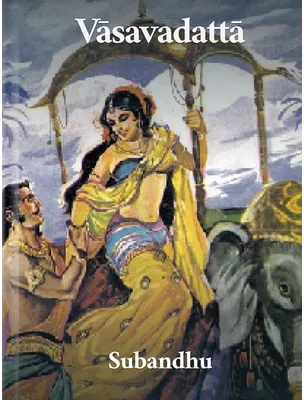
A Sanskrit Romance
by
Subandhu
Translated by Louis H. Gray, Ph.D.

[2] Victorious is divine Sarasvatī,
Who aideth bards of keen and nimble wit
To see the world, as ‘twere a jujube-fruit,
Lying within the hollow of their hands.
Yet ‘drought doth rule’ o’er all, the “cranes sport not”,
Nor doth the ‘“heron seek the azure vault”;,
For lo, the lake hath left this mortal world;
All ‘joy is fled’;, and “strange kings now bear rule”.
Wasting the earth with ‘“fratricidal”’ strife,
For Vikramāditya hath passed away.
[11] He caused astonishment by ‘gifts of gold, food, raiment, and estates’ as Nṛsiṃha caused astonishment by ‘rending the body of Hiraṇyakaśipu; he gave joy to the ‘divinities by his goods’ as Kṛṣṇa gave joy to ‘Vasudēva’; [12] he ‘conquered with ease’ the circle of the earth as Nārāyaṇa ‘upheld’ the circle of the world by his ‘boar’s form’; he produced ‘glorious and blissful’ prosperity as Kaṃsa’s foe produced prosperity for ‘Yaśōdā and Nanda’; he made ‘poetry honoured’ as Ānakadundubhi made ‘Kāvyā afraid; [13] he had his lotus feet embellished by the rays of the crest-jewels of ‘many serpents’ as Sāgaraśāyi had his lotus feet embellished by the rays of the crest-jewel of the ‘cosmic serpent’; he protected ‘unceasingly’ as Varuṇa protected the ‘western regions’; he adorned ‘petitions with gifts’ as Agastya adorned the ‘southern districts’; he was the lord of a hundred ‘armies’ and “habitually levied just taxes” as the ocean is the lord of a hundred ‘rivers’ and is the “habitat of fish”; [14] he was followed by a ‘great army’ and repulsed “obstacles” as Hara is followed by ‘Mahāsēna’ and repulses “Māra”; he was the home of the ‘wise’ and the dwelling-place of the “acts of all men” as Mēru is the home of the ‘gods’ and the dwelling-place of “Viśvakarman”; he ‘rejoiced in generosity at festal times’ and removed sorrow by his “beauty” as the sun ‘loves not the night’ and removes the sorrow of “Chāyā”; he gave ‘unimpeded’ prosperity and afforded delight in “intercourse” as the God of the Flowery Banner gave prosperity to ‘Aniruddha’ and afforded delight to “Rati”.
[15] Though a ‘demigod’, he was a “god”, for he was a “benevolent” ‘receptacle of wisdom’; though a ‘Dhṛtarāṣṭra’, he was a “friend of Bhīma”, for he was a ‘ruler of a kingdom’ “who loved virtue”; though ‘come to earth’, he took refuge in the “courts of the gods”, for he was ‘filled with patience’ and took refuge in “good government” [16] though a ‘great reed’ by nature, he was “smooth” within, for his was the nature of ‘Arjuna’, “upright” within; [17] though born of a ‘buffalo’, he was “begotten by a bull”, for he was born of a ‘queen’ and was a “producer of government”; though no ‘central gem of a necklace’, he was the “midmost jewel of a throat-band”, for he was a ‘fearless’, “mighty leader”.
While he ruled the earth, ‘quibblings and fallacies’ were practised only in arguments (for there was no need of ‘habitually checking deceit’); [18] there was ‘infidelity’ only among materialists (for there was no ‘poverty’); there was employment of a ‘spur’ only in executing commands (for there was no employment of ‘petty enemies’); there was ‘picking’ [19] only on lutes (for there was no ‘back-biting’); there was association with ‘threshing-floors’ only in the case of rice (for there was no association with ‘evil men’); there was capture of ‘snakes’ only among serpent-charmers (for there was no need to capture ‘liars’); ‘imposts’ were cut only in the receipt of taxes (for there was no amputation of ‘hands’); ‘roots’ were plucked out only in the case of “wormwood-trees” (for “ascetics” did not pluck out their ‘eyes’); [20] only lotuses opposed the ‘moon’ (for there was no opposition to ‘Brāhmans’; ‘‘ruler of the world’’ was applied only to the elephant of the north (but not to any man save the ‘king’); there were ‘fire-tests and balance-tests’ only in the case of different sorts of gold (for there were no ‘ordeals by fire or balance’); only jewels were ‘pierced by needles’ (for there was no ‘disturbance by suggestive movements’); only in child-bearing was there rending with ‘griping pains’ (for there was no rending by ‘impalement’); [21] ‘Duḥśāsana was known’ only in the Bhārata (for there was no ‘glimpse of evil instruction’); the ‘sun’s rays opened leaves’ only in the case of lotuses (for there was no ‘sawing asunder’).
Though the Great Boar was intent on upholding the ‘earth’, yet he (Cintāmaṇi) clove ‘mountains’. Rāghava entered the forest with ‘Sītā’ leaving his native land (but Cintāmaṇi entered the forest having his ‘native land’). Bharata had affection for Rāma, yet made ‘Rāma depart’ from his kingdom (but Cintāmaṇi made ‘peace’ in his kingdom). [22] When Nala was united to Damayantī it was a ‘marriage of one already wedded’ (but Cintāmaṇi ‘regained his territory’). Pṛthu ‘levelled the earth by banishing the mountains’ (but Cintāmaṇi (covered the earth by sending forth his offspring’). There was, therefore, no reason to mention former kings.
He, moreover, was another sort of monarch and had humbled all the princes on earth. Thus he was a mountain with a visible exaltation of ‘peak’, which never ceased to delight the “Gandharvas who roamed along its slopes”; for he never ceased, with his visible exaltation of ‘majesty’, to delight the “steeds that bore his army”. [23] He was a ‘Himālaya’, though not shaken by “snow” nor suited to the birth of “Umā”, for he was ‘indeed a lotus’ unshaken by “pride” and unsuited for the birth of “deceit”. He was a “snowy” ‘bullock’-banner set upon a “hill”, for he was “indeed exalted in speech” and set as a banner of ‘justice’.
He was a ‘wind’, ‘bending all the forest down’, ‘a friend of the fire’, ‘eager for the clouds’, and ‘bearing along the flowers’; for he was ‘ever patient’, ‘straightening every crooked way’, ‘foremost of ascetics’, ‘not avid of sensual pleasures’, and the ‘joy of the wise’. [24] He was a mine of gems ‘with no serpents’, exceeding deep its ‘boundaries’, ‘no otter a terror to it’, ever a very refuge for ‘fishes’, ‘filled with water’, ‘bearing ships’, whereto (belonged) the ‘mountain and the crocodile’, ‘the mighty lord of rivers’, the ‘ocean’; [25] for he was ‘no knave’, exceeding deep his ‘decorum’, ‘no light of his dismaying any’, ever a refuge like the ‘moon’, ‘delightsome’, ‘rich in children’, ‘his serenity unshaken’, ‘great, proud’, and ‘with a signet ring’. [26] As the moon causes joy in the ‘night season’, is the friend of ‘white lotuses’, has his mansion filled with all the ‘digits’, and is ‘unsurpassed by the constellations’; he caused joy in the ‘festivals’, was the friend of ‘pleasure groves on earth’, had his mansion filled with all the ‘arts’, and ‘subdued the excessive might of his foes’. As Sumēru caused the ‘sun to rise’, gave a ‘golden glory’, and had ‘wealth surpassing the (other) mountains’; he caused the ‘prosperity of his friends’, possessed ‘every beauty’, and had ‘good fortune impregnable and abundant’.
[27] Even had Arjuna been ever with them, the ranks of his foes would not have been equal to the ‘combats in the Mahābhārata’, for they were not equal to ‘bearing great burdens’. Though ‘Bhīṣma’, he was “unkind to Śāntanu”, for he was ‘terrible’ and had a “ceaseless desire for glory”; though ‘wandering on the mountains’, “he dwelt not on the hills”, for he was ‘accompanied by his attendants’ and “needed not the admiration of his family”.
[28] And, furthermore, he ‘wavered not from the path of a warrior’, as Triśaṅku ‘wavered in the path of the constellations’; though he was ‘Śiva’, “he drank no poison”, for he was a ‘giver of weal’ and “not depressed”; though he was a ‘fire’, he was not a “flame”, for he was a ‘purifier’ and free from “evil habits”; though he was a ‘burner’, he was not a “consumer”, for he had a ‘longing for hermitages’ and was no “destroyer”; [29] he was no Yama ‘snatching life away suddenly’, for he did not ‘deprive of life without reason’; he was no Rāhu increasing his ‘radiance by swallowing the sun’s disc’, for he did not increase his ‘greed by seizing the kingdom of a friend’; he was no Nala crushed by ‘Kali’, for he was not crushed by ‘strife’; he was no Cakri exhilarated by the death of ‘Śṛgāla’, for he was not exhilarated by the death of a ‘craven’; he was attended by ‘glory and generosity’ as the cowherd Nanda was attended by ‘Yaśōdā’; he ‘planned peace and war’ as Jarāsanda’s ‘body was disrupted union; he possessed ‘generosity and luxury’ as Bhārgava ‘ever wandered in the clouds’; [30] he was attended by ‘good friends’ and commanded “good counsel” as Daśaratha was attended by ‘Sumitrā’ and commanded “Sumantra”; he was ‘devoted to worthy objects of generosity’ and protected the “earth” as Dilīpa was ‘beloved by Sudakṣiṇā’ and protected the “cow”; his glory was exalted by his ‘virtuous life’ as Rāma’s glory was exalted by the ‘birth of Kuśa and Lava’.
He had a son named Kandarpakētu. He was the ‘joy of the hermits’ as the coral-tree ‘stands in Indra’s garden’; [31] he ‘produced weal’ as Himālaya was the ‘birthplace of Śiva’; he was ‘marked by his luxurious pleasures’ as Mandara is ‘scarred by the body of the serpent’; his ‘crores were enjoyed by great kings’ as Kāilāsa’s ‘summit is enjoyed by the Great Lord’; he gave pleasure to many ‘women’ as the spring gives pleasure in many ‘gardens’; [32] he made the ‘earth’ resound as Mandara, lifted on high in the churning of the ocean of milk, made the ‘water’ resound; he ‘took delight in love’ as the God of Passion’s Bond (rejoices Rati); he was shaken by (meditation) as the collected ashes of Śiva are shaken at ‘twilight’; [33] he had a (pure heart) and “clung to Viṣṇu’s feet” as an autumn cloud has a (lurid centre) and “depends from the sky”; he was accustomed to (all passion and merriment) as Arjuna was accustomed to be (courageous in battle); [34] he was adorned with a (garland of the circle of the earth) as Kaṃsa was adorned with a (blue lotus garland); he gave joy to the ‘humble’ and “delighted the wise” as Tārkṣya gave joy to ‘Vinatā’ and had “Sumukha for a son”; he (clasped) a beautiful form to his “breast” as Viṣṇu (changed) his beautiful form into a “boar”; he had (time and justice) put into his own power as Śāntanava had (Death) put into his own power; [35] he governed (full happily) as the host of Kāuravas was led by ‘Suśarman’.
Though ‘Subāhu’, he was a joy to “Rāma”, for he had ‘beautiful arms’ and gave joy to “women”; though he had ‘two eyes’, he was “Śiva”, for he was a “great monarch” who ‘gazed on all alike’; though ‘made of pearls’, his “waist had no central jewel”, for he was ‘free from disease’ and “virile”; as a cloud [36] ‘terrifies flamingoes with showers of exceeding purity’, he ‘slew kings terrified by the edge of his flashing sword’; though a light upon a ‘pole’, his “wick was not consumed”, for he was the light of his ‘race’ and his “estate was unimpaired”.
The noble, resembling oceans with beauteous ‘mountains’, with ‘waters’ increased exceedingly, and with ‘contented creatures’, attained their highest growth through him who was, as it were, the moon when its “house has all its digits, removes the distress of night, opens the white lotuses”, [37] is a friend to “white lotus groves”, and “adorns a quarter of the sky”; for the noble, with ‘radiant limbs’, with ‘life’ increased exceedingly, and with ‘amiable qualities’, [38] attained their highest growth through him who was the “home of the aggregation of all virtues, delighted in Śiva’s way, destroyed his enemies”, was a friend of “pleasure groves on earth”, and had his “hopes fulfilled”.
And the hearts of women rejoiced at the sight of him who was like the God of the Dolphin Banner, causing ‘Aniruddha’ delight, ‘dear to Rati’, and ‘armed with an arrow of flowers’; for he caused ‘unimpeded’ delight, was a ‘friend of wantonness’, and ‘surpassed the Flower-God’. For him who was as the spring with the ‘attendant southern breeze’, with ‘sweet koel-notes’ pleasing the ear, expanding the ‘buds’, making the ‘forests bend’, [39] ‘delightsome with fragrant flowers’, with ‘lotuses’ easy for all to gather, possessing an abundance of ‘white thorn-apple trees’ spread abroad, but passing over the ‘wormwood’, damsels felt attachment, being like creepers of the forest with a thousand “buds”, crowded with “bees”, charming with “sprigs”, and with “sportive birds”; since he had a ‘continual income for the attendant nobles’, possessed a ‘sweet koel-voice’ pleasing the ear, expanded ‘love’, gave a ‘charming colour to women’, ‘delighted in learned sages’, possessed ‘good fortune’ easy for all to gather, spread abroad an abundance of ‘gold’, and surpassed his ‘foes’, while the damsels [40] were filled with a thousand “anxieties”, were sought by “lovers”, were charming because of their “coral necklaces”, and were at the “wanton age”.
And by his staff-like arm on the field of battle [41] the bow was gained, by the bow the arrows, by the arrows his foeman’s head, by this the world, by this a leader such as had never been before, by the leader fame, by fame the seven seas, by the seas the renown of the kings of the Kṛta and other ages, and by that constancy, and by this something marvellous every instant. And the periphery of the bosoms of the lovely wives of his foes, who had been consumed by the fire of his majesty, was deserted by their pearl necklaces, as if terrified by the blows of their hands.
[42] And his sword, as if coloured with lac from the feet of the Goddess of Victory which had been moistened with the blood of slain infantry, elephants, and horses, shone over a sea of conflict whose shores were covered with quantities of pearls fallen from must elephants’ frontal lobes which were shattered by sharp arrows, with flying ‘birds’, with hundreds of ‘rivers and white and blue lotuses’ whose manifold charms were spread through the ‘beautiful’ waters, with ‘dancing waters’, and terrible because of the fierce pride of the ‘cārubhaṭa’-fish which were eager to consort with the [43] ‘surasundarīs’; since it shone on a sea of conflict whose shores were covered with quantities of pearls fallen from must elephants’ frontal lobes which were shattered by sharp arrows, with flying ‘darts’, with hundreds of ‘fleshless, white-umbrellaed armies’ whose manifold charms were spread through the ‘red’ waters, with ‘convulsing corpses’, and terrible because of the fierce pride of ‘warriors’ eager to consort with the ‘Apsarasas’.
[44] Then, once upon a time, when the night was finished; when the Lotus-Lord of shell-like beauty was sinking with his spouse, the Night, into the western sea; while he was white, as it were, with the curds which constitute a morsel of food for (Buddhist) ascetics at their mealtime, and was like a mass of Yamunā’s foam by night, and resembled a fragment of stone for the polishing of Mēnakā’s nails, and had the shade of the soma-plant in the centre of his body, and resembled the silvern earring of a head laid softly down on the pillow of the western mount, and seemed to be the goblet of Lady Night containing a remnant of wine; [45] when the bees had their feet caught in the pollen of the white lotuses which had been converted into cold paste by the dew; when by their soft chatter the mainas revealed women at their rendezvous; when the huts of the ascetics awoke intent on study; when the streets resounded with poetic tales chanted by mendicants in the vibhāsa mode; [46] when the lamps seemed unable, because of their exceeding thinness, to bear the blackness of night which they had entirely swallowed up, and which they vomited, as it were, under the guise of lampblack, and were exhausted by having stretched their necks a hundred times as if to see the tremulous delights of amorous union, [47] and had been witnesses of manifold ways of wanton sport, seeming to protect the darkness lurking beneath them as if it were a refugee; when they had become ‘dull’ because their “oil” had been consumed as knaves become ‘slack’ because their “affections” have been consumed; when they had reached the end of their ‘wicks’ as the exceedingly aged reach the end of their ‘lives’; when they had only their ‘bowls’ left as noble lords reduced in their estate have only their ‘bodies’ left; [48] when they were ‘put in the middle of the house’ as demons ‘wander abroad at the end and middle of night’; when they had ‘moths’ flying about them as the ‘sun’ descends on the summit of the western mount; when the gifts of flowers in the boudoirs, that had been noisy with the humming of swarms of bees delighting in the abundance of unceasing drops of honey had withered; [49] when the downy Nepal jasmines had fallen from the tresses; when fair women seemed to be pouring forth teardrops for grief at separation from their lovers and, with bud-like feet tinkling with anklets, delayed, as it were, the departure of their best beloved; when the mist of perspiration had been dried by the wind of the wings of a swarm of bees enamoured of the perfume of the wreaths of half-opened Malabar jasmine in thick tresses dishevelled by weariness of intense passion in the waning night; [50] when damsels were tuneful with the jingle of the bracelets on their tremulous, slender arms while they illumined their apartments by the light of the rays of their milk-white teeth, revealed through their sobbing at the pain caused by the loosening of the hair which adhered to the fresh nail-marks; [51] while their attendants, wearied with importunities for another glimpse, saw lovers constantly; while (the damsels themselves) felt bashful just for an instant at the endearing words of the house-parrots who had remembered a hundred shameless speeches uttered in the night; [52] when they (the damsels) had the beauty, as it were, of an autumnal day with ‘clouds not adorned by sky’, for their ‘bosoms were adorned by the marks of nails’; when they seemed nigh unto death and had their faces set toward the ‘city of the Lord of Life’, for their faces were set toward their ‘lovers’ persons’; when they resembled a row of trees in a forest in the spring-tide abounding in ‘sap’, for they abounded in ‘anxiety’; when they were embraced by their lovers; when there blew a wind that rocked the filaments of the flowers and removed their pollen from the hair [53] of damsels wearing delightsomely tinkling jewels, whilst it had an abundance of expanded white lotuses, and caused pleasure, and rejoiced in union, and rained down a fire of chaff, as it were, on lonely girls lightly deserted by their lovers, and surrendered them wholly to the burning arrows of love, and carried far [54] the plaint of the Brahminy duck; then (Kandarpakētu) saw in a dream a damsel about eighteen years of age with her hips girt round with the bond of a girdle which was the gate of the city of delight of her thighs; which was the golden rampart of the great treasure-house of the city of joy; which was a trench for the line of the tendril of down; which was a halo for the disc of the moon of her hips; which had a golden inscription consisting of a line of down that proclaimed victory over the triple world; which was the line of the moat of the prison of the hearts of all men; [55] and was as the bar of the chamber of a flock of birds which were the glances of the world.
(She was) adorned with a waist which seemed full of sorrow through failure to see her moon-like face that was hidden by the burden of her swelling breasts; which appeared to be filled with weariness from the oppression of the urns of her bosom and the circlets of her heavy hips; which had apparently conceived a deep resentment for her massy buttocks; [56] which seemed filled with exhaustion from the restraining hand of the Creator who had compressed it exceedingly; and which had become extremely slender, as if on account of its anxious thought: ‘Suppose mine own breasts should fall on me like projections from a height’?
(She was) beautified by breasts with golden jewels filled with gems of passion; with nipples for seals; apparently nailed with iron under the guise of nipples through fear of falling because of their vast circumference; [57] accumulations of loveliness, as it were, remaining after the consecration of all her members; the lotuses, so to say, of the pool of the heart; possessed of the beauty of a pillow for the cheek of Love; the fruit of the tendril of the line of down; caskets full of the dust of the lure that increases the pride of passion; heavy with the fall of the hearts of all mankind; the fruits of the mighty tree of existence; the product of the great tree of youth; two Brahminy ducks, charming with necklaces of pearl for lotus-filaments; [58] fruits of the tree of Prayāga, which seemed to stand at the juncture of the line of down with her necklace of pearl; the solitary dwelling of the God of Love when overcome by weariness from the conquest of the triple world.
(She was) beauteous with a bud-like lower lip which had the glow of eventide in close proximity to her moon-like face; which had what seemed to be a minium seal as a guard for the jewels of her teeth; [59] which was coloured, as it were, by the flushing redness of her heart; which was, so to say, a fresh bud of the coral-tree from Passion’s sea. (She was) adorned by a pair of eyes which were longer than a very tender screw-pine blossom; with languidly tremulous glances; giving rise to a suspicion that they were the windows of wanton Love abiding in the inner chamber of her heart; causing beatitude by their very passion; [60] with redness in their corners as if for anger at her ears, which hindered their further extension; seeming to whiten all the world; making the sky seem filled with a forest of expanded lotuses; pouring forth, so to say, thousands of oceans of milk; seeming to surpass the loveliness of a garland of downy Nepal jasmine and blue lotus.
(She was) beautified by a nose which was the column of the balance for the jewels of her teeth; [61] the bridge betwixt the oceans of her eyes; a wall, as it were, between two elephants mad with youthful passion. (She was) adorned with delicate brows which were clusters of bees about her blue-lotus eyes; portals of her face that formed the abode of Love; the shores of Passion’s sea; wantoning in youthful dancing. She possessed, as it were, the loveliness of the sky in the rainy season [62] with ‘clouds’ swelling with beauty, for her ‘breasts’ swelled with beauty.
Like one who has gained the cry of Victory she stood on the tip of a trembling ‘balance’, for she had trembling ‘anklets’; she was like Suyōdhana’s valour while his eyes rested on ‘Karṇa’, for her eyes extended to her ‘ears’; she seemed to have the sportiveness of the Dwarfs in exhibiting his ‘destruction of Bali’, for she revealed her ‘furrowed folds’; she was like the station of the sun in Scorpio ‘after traversing Virgo and Libra’, for she ‘transcended comparison with other damsels’; [63] she rejoiced in ‘unblemished beauty’ as Uṣā rejoiced at the sight of ‘Aniruddha’; she had the ‘beauty of lovely eyes’ as Śacī ‘delighted in gazing on Indra’s pleasure groves’; she had, as it were, the sportful dancing of Śiva with his ‘quivering serpent’, for she had beautiful ‘eyes and ears’; she had lofty dark ‘nipples’ as a forest has lofty dark ‘bread-fruit trees’; [64] she was adorned with a ‘beautiful throat and with armlets’ as the army of monkeys was adorned by ‘Sugrīva and Aṅgada’.
She seemed to be made of planets: of the ‘Sun’, for she had a ‘shining’ ornament; of the ‘Moon’, for she had a ‘beautiful’ round face; of ‘Mars’, for she had a ‘rosy’ bud-like lower lip; of ‘Mercury’, for she had a ‘lovely’ appearance; of ‘Jupiter’, for she had ‘heavy’ round hips; of ‘Venus’, for she had ‘wide-open’ lotus eyes; of ‘Saturn’, for she had ‘slow-moving’ steps; of ‘Rāhu’, for she had ‘dark’ heavy hair.
She was a picture, as it were, on the wall of life; [65] the place of assembly, so to say, of the loveliness of the triple world; apparently the perfect elixir for the Great Ascetic in his youth; seemingly the place of Passion’s fancy; the repository, so it would seem, of delight; [66] the flag of conquest over the threefold earth, as it were, of the God of the Dolphin Banner; evidently the manifestation of intellect; the conqueror, it would seem, of Passion; a powder, so to say, to numb the senses; a power, one would think, to bewilder Love; apparently the joyous abode of beauty; the sole sanctuary, as it were, of good fortune; seemingly the place where loveliness had its origin; [67] well nigh a perfect seduction of the mind; almost a blind of the juggler Love; a production of the Creator, so to say, for the enchantment of the triple world.
Then, while he drank her in, as it were, with eyes dilated with joy, sleep, which he had long served, became jealous and deserted him. [68] But when he awoke, he was unable to sustain himself, being drowned, so to speak, in a sea of poison, and as if submerged in the words of his enemies. Thus then, for an instant, he embraced the sky, and with outstretched arms cried to his beloved, as if she were painted in the heavens, graven on his eye, and carven on his heart: ‘O, dearest one, come! come! Where dost thou go’? Then in that very place he passed the day on his bed, with his eyes closed, with all his attendants barred out, with the doors shut, [69] and refusing all enjoyment of food, betel, and the like. Thus, too, he spent the night as well with longings for the coming of the dream.
Then his confidential friend, named Makaranda, somehow gained entrance and thus addressed Kandarpakētu, who was overwhelmed with the wounds of the arrows of Love: ‘My friend, [70] why dost thou take to this unwonted course, which is unbecoming to a man of honour? When they behold this conduct of thine, the good are swayed by perplexity, while the wicked, on the other hand, make it out to be undesirable and indecorous; for the heart of the evil man finds its highest delight centred in bringing to light what is undesirable. Who, pray, can discern the true character of such an one?
‘Thus, even though a ‘Bhīma’, he is “no foe of Baka”, for he is ‘horrible’ and a “foe of them that praise him”; though a ‘fire’, he is a “wind”, for he is a ‘devourer of his own place of refuge’ and a “dog in his mother”; [71] though very ‘pungent’, he is of “fine flavour”, for he is very ‘cruel’ and “utterly insipid”; he does not abandon his ‘bitterness’, though “flattered by clasped hands and prostration at his feet”, even as mustard-oil abandons not its ‘sharpness’, though “caressed with both hands and held to the head”; he is ‘delightful on account of his freedom from faults’ (at first), but afterwards is unpleasant and “cruel” even as the fruit of the palmyra-palm tastes ‘pleasant at first’, but is disagreeable and “sharp” at the last; he, when ‘deserted’, wrinkles his brow even as the dust of the feet, when ‘shaken off’, discolours the head.
‘He ‘confirms his folly’ in proportion as he is “humoured” even as the fruit of the poison-tree ‘strengthens madness’ in proportion as it is “honoured”; [72] he has no lack of ‘enemies’ with his “bad conduct” even as there is no dearth of ‘water’ in “low ground”; he brings distress to the ‘good’ with his “great jealousy” even as a summer day brings distress to the ‘flowers’ with its “swarms of gnats”; he is cunning in binding ‘sins’ together and eager to “destroy the works of all men” even as the darkness is cunning in binding ‘night’ together and eager for “sunset”.
[73] ‘Though ‘Śiva’, he is “Viṣṇu”, for he is a ‘prince’ of “unseemly conduct”; he is ‘deaf’ and “praises not his subjects” even as Indra’s horse ‘cried aloud’ and “exulted in his birth from the ocean”; he agitates the heart of a good man, even though he is ‘disturbed’ and shows “affection”, like as the churning-stick agitates the heart of the cream, even though it is ‘separated’ and shows “butter”; [74] he is noisy with ‘self-praise’ and “garrulous of his wanderings in the worlds” even as an offering to the Yakṣas is noisy with ‘crows’ and “bears evidence of wandering dogs”; his visage is distorted from ‘entire lack of self-control’ and his “generosity” is suppressed even as a must elephant fixes his distorted visage on ‘his female’ and suppresses his “ichor”; he is ‘not alarmed by fear of God’ even as a bull is ‘wearied from union with the cow’.
‘He is ‘miserable through his disgrace of his family’ and is devoted to “evil ways” even as a paramour is ‘distressed by an error in his name’ and is devoted to the “way of the fair”; [75] he causes slowness in ‘softly modulated and excellent’ speech even as the disease of indigestion causes slowness in ‘body’ (and) speech; he is devoted to the ‘breaking of agreements’ and a friend of the “foes of his lord” even as a jackal is devoted to the ‘flesh of a corpse’ and delights in the “night”; [76] ‘the sight of him causes distress to his kindred’ even as a corpse is ‘deprived of the use of its eyes’; he destroys ‘good fortune’ even as the axe cuts the ‘sandal-wood’; he ‘destroys his family’ and cuts down “men gifted with patience” even as the spade ‘cleaves the earth’ and cuts down the “creatures that share in the soil”; [77] he engages in ‘low actions’ even as a dog engaged in ‘venereal acts’ makes good folk ashamed; he, for all his ‘charms of hair and face’, has no pleasure in his “lute, skilful though he is” like as a must elephant ‘delights in the forest’, yet has no pleasure in the “spreading greensward, even though he traverses it.”
[78] ‘The shoots of evil vices are born without seed and grow without a stock, and hard they are to uproot; if a particle of iniquity enters into the heart of the wicked, it is a terrible thing. But into the heart of the good it enters not; and if at any time it does enter, [79] it is like quicksilver, unstable for an instant; the virtuous, even as deer, are obedient to the voice of one who knows their pleasure; persons like thee easily capture the heart of a friend as do the wagtails of the autumn-tide; and the wise give no unseemly counsel, while the friendship of the foolish is thrown on the side of profit. [80] And likewise, when milk, fancying that “water is as milk because of its sweetness, coolness, purity, and healing of distress,” enters into friendship (with water), destruction is wrought by water itself, when it reflects that “ruin has come in times gone by through the decoction of me myself, increased by union with that (milk).” This conduct is, therefore, extraordinary; follow the course, my friend, which is customary among the upright; [81] the noble themselves go utterly astray by mistaking their direction.’
When he (Makaranda) had said this, and more to the same effect, Kandarpakētu, dominated by the wounds of many arrows of Love, somehow said slowly: ‘Good friend, my mind is confused by a ‘hundred afflictions’ as Diti was confused by ‘Indra’. This is no time for advice; my limbs seem to be on fire; [82] my faculties are boiling, so to speak; my vitals feel as if bursting; my breath is almost leaving me; my senses are wellnigh eradicated; and my memory is destroyed. Now, therefore, if thou didst share the sorrows and joys of our playing together in the dust, then follow me.’ So speaking he went forth from the city with him, unnoticed by his retinue.
Straightway, after going a distance of several hundred nalvas, a great mountain, called Vindhya, was seen with its thousand peaks bowed down to earth, restrained by Agastya’s word; [83] with its sides thronged with hundreds of savages eager to slaughter hundreds of female yaks who had been delighted by hearing the songs of pairs of Vidyādharas (then) slumbering peacefully in the bowers within its caves; with its rocky sides cooled by breezes bearing the perfume of trickling yellow sandal-wood broken and dragged down by the trunks of the elephants on its ridges; [84] with the monkeys eager to lick their paws wet with the sap of the palmyra-palm fruit which had been broken by its exceedingly long fall; with its borders fragrant with the perfume of the juice of various fruits sipped again and again by pairs of chickores dwelling near its overhanging cascades; [85] seeming to sustain a host of stars clinging to its summit since its peak was speckled by pearls fallen from the temples of must elephants which had been cloven by the edges of the sharp claws of thousands of bold lions.
The shadow of its foot was haunted by ‘bears, gayals, griffins, lions, and lotuses’ as Sugrīva [86] had the shadow of his feet honoured by ‘Ṛkṣa, Gavaya, Sarabha, Kēsari, and Kumuda’: its ‘peace was disturbed by the exhalations of elephants’ as the Lord of Cattle has his ‘ashes disturbed by the hissing of his serpent’; it had a ‘chaplet of beautiful forests’ as Janārdana wears ‘beautiful sylvan garlands’; it had ‘dita-bark and syandana-trees’ as the God of a Thousand Rays has a ‘chariot with seven steeds’; [87] it was ‘full of caverns and infested with jackals’ as Śiva had ‘Kartikēya near him and was attended by Pārvatī’; it was full of ‘jungles and wastes and was covered with white thorn-apples’ as a paramour is filled with ‘petulance and passion for his mistress and is amorous’; it had ‘Arabian jasmine-plants and Arjuna-trees’ as Śrīparvata has the ‘Mallikārjuna’ near it; [88] it had ‘Italian panic and bind-weed’ as Naravāhanadatta was the ‘husband of Priyaṅguśyāmā; it ‘formed a place for emblic myrobalan-trees’ as a child is ‘held by its nurse’; it had a series of forests rosy with the ‘reddish lustre of ruddle as the dawn of day makes the series of forests rosy with the ‘radiance of the mountain-born Aruṇa’; it was impenetrable on account of ‘many creeping plants’ as the dark lunar fortnight is impenetrable on account of its ‘blackness’; it had gifts of a ‘hundred crores’ as Karṇa had the gift of ‘Indra’s bolt’; [89] it was covered with ‘tail feathers moulted by peacocks’ as Bhīṣma was covered with ‘crescent-headed arrows’; it was filled with ‘elephants and was fragrant from the perfume of its jungles’ as the Kāmasūtra was written by ‘Mallanāga and contains the delight and enjoyment of mistresses’; it was a refuge for the race of ‘deer’ as Hiraṇyakaśipu was a refuge for the race of ‘Śambara’.
Because of the guise of its ruddle it seemed to have been employed by Aruṇa to trace the path of the chariot of the sun; [90] it watched, as it were, the journey of Agastya with eyes dilated because the sun and moon had come upon its summit; on account of the old sloughs of snakes it seemed to have a mass of entrails hanging out; as Kumbhakarṇa had a host of monkeys come within his ‘teeth’, it had a host of monkeys come upon its ‘summit’; [91] it had bowers of screw-pines for the rendezvous of the assembled nymphs of Śacī’s Lord who marked their pathway with a series of footprints dyed with red henna.
Though of ‘no family’, it was adorned by a “noble ancestry”, for it did ‘not cling to the ground’ and it was “adorned with beautiful bamboos”; though it was ‘evidently safe’, it yielded the “fruit of death”, for it had ‘hara-nut trees’ and yielded “plantains”; though ‘measured’, it was “measureless”, for it had ‘plateaus’ and was “immeasurable”; [92] though ‘noisy’, it was “silent”, for it had a ‘river’ and was “still”; though a ‘Bhīma’, it was a friend of “Kīcaka”, for it was ‘terrible’ and a friend of “reeds”; though it hid its ‘garments’, it had brilliant “raiment”, for it hid the ‘sky’ and had brilliant “sunbeams”.
As the Mīmāṃsā and Nyāya philosophies conceal the views of the ‘Digambara Jains’, it concealed the view of the ‘quarters of heaven and of the sky’. It also had its vicinage adorned with pools which were delightful on account of the appearance of the ‘blue lotus’, as the Harivaṃśa is delightful on account of the appearance of ‘Puṣkara’; [94] that were thronged with ‘pairs of fishes and with crabs’ as the Zodiac has ‘Pisces, Gemini, and Cancer’; and that had hosts of ‘birds, elephants, galangal, and young medlar-trees’ as the parts of the day have the host of ‘Śakuni, Nāga, Bhadra, and Vālava’. It also showed manifold ‘metrical’ charms with “kusumavicitrās, vaṃśapatrapatitas, sukumāralalitās, puṣpitāgrās, śikhariṇīs, praharṣiṇīs and latās”, since it showed manifold charms ‘produced’ through its “creepers, lovely on account of their flowers, which had fallen on the bamboo leaves, tender in their grace, tipped with blossoms, crested, and charming.”
[95] As if by a very dear mistress with outstretched wavy arms, it was embraced, furthermore, by the Rēvā, whose waters were perfumed by the abundance of the drops of liquid which had fallen from the fragments of fullblown lotuses shaken by many monstrous tails of bhāḥkūṭa-fish that had been terrified by the notes, indistinct for passion, of geese and herons; whose waters had been drunk up by the circling navels of beauties of Pulinda kings at their evening ablutions; [96] whose banks resounded with the din of flamingoes noisy with passion; whose waters were curdled with drops of the streams of ichor exuded from the temple lobes of must elephants near its banks; with the gardens on its shores witnesses to the triturition of the tremulous sport of pairs of young deities delightfully ensconced on the sand formed by the abundant dust fallen from the forests of screw-pines that grew along its banks; [97] in whose waters dove the nymphs who dwelt in bowers within bits of rose-apple that had fallen near the forests on its banks; whose environs were lauded by pairs of divinities drawn by curiosity at the sound of the sweet, low notes of the many gallinules that nestled in the creepers of chair-bottom cane growing on its shores; [98] whose banks were strident with the screams of multitudes of wild cocks whose nests thronged the bowers of reeds that had sprung up near its shores; whose soft banks were trodden by the water nymphs; whose tremulous waves were rippled by the breezes from the gardens; [99] whose demi-carp were watched by female herons which had entered the numerous bowers of reeds; whose reed-forests were terrible from supporting paddy birds eager for the shoals of small fish; the water near whose bank was coloured by the shoals of exceedingly quick rājilas fleeing from the sight of the uddaṇḍapālas who moved within the circles of its rippling waves; [100] whose shores were dug up by hundreds of barbarians whose greed for getting treasure had been aroused by the sight of the mating of pairs of wagtails.
[101] As if angry, it displayed a ‘distortion of its face’, for it displayed an ‘outlet and waves’; drunk, so to say, it had a ‘tottering gait’, for it had a ‘winding current’; it was the beauty of the dawn, as it were, that gives ‘time’ increase, for it gave its ‘shores’ increase; it was like unto the place of combat of the Bhāratas with ‘quivering corpses’, for it had ‘dancing waters’; it was, one might fancy, the rainy season with ‘peacocks appearing but serpents hidden’, for its ‘pools were hid by expanded lotuses’; [102] it seemed to be one who courts a ‘king’ out of desire for gain, for it courted the ‘mountain’. And also —
Then said Makaranda: