The book was published in 2015 as a modern adaptation of Leo Tolstoy's original story.
[{"id":"para_1","index":0,"start":0,"offset":330,"words":4,"paraNum":"","lastModified":1773728540000,"semanticType":"title-book-title","voicework":"tts","blockId":"the_two_old_men_ffa_1_en-bl2s","language":"en","wordsRange":{"start":100000000,"end":105000000},"paragraphVersion":39,"direction":"ltr","paragraph":"<h1 class=\"ilm-title ilm-x-large\" id=\"para_1\" semantictype=\"title-book-title\" data-ilmid=\"the_two_old_men_ffa_1_en-bl2s\" data-audio=\"1\" data-chapter=\"para_1\" data-words-count=\"4\" data-before=\"0\" data-ww=\"\"><span class=\"block-pb\"> <span class=\"block-pb is-animated\"></span> </span><span class=\"itm-wrap\">The Two Old Men</span></h1>","hasContent":true,"isFirst":true,"isLast":false},{"id":"para_2","index":1,"start":330,"offset":323,"words":1,"paraNum":"","lastModified":1773728631000,"semanticType":"title-subtitle","voicework":"tts","blockId":"the_two_old_men_ffa_1_en-bl9q","language":"en","wordsRange":{"start":138333333,"end":171666667},"paragraphVersion":58,"direction":"ltr","paragraph":"<h1 class=\"ilm-title ilm-subtitle\" id=\"para_2\" semantictype=\"title-subtitle\" data-ilmid=\"the_two_old_men_ffa_1_en-bl9q\" data-audio=\"1\" data-chapter=\"para_2\" data-words-count=\"1\" data-before=\"4\" data-ww=\"\"><span class=\"block-pb\"> <span class=\"block-pb is-animated\"></span> </span><span class=\"itm-wrap\">[adapted]</span></h1>","hasContent":true,"isFirst":false,"isLast":false},{"id":"para_3","index":2,"start":653,"offset":348,"words":2,"paraNum":"","lastModified":1773728774000,"semanticType":"title-author","voicework":"tts","blockId":"the_two_old_men_ffa_1_en-bl2u","language":"en","wordsRange":{"start":205000000,"end":209000000},"paragraphVersion":87,"direction":"ltr","paragraph":"<h1 class=\"ilm-title ilm-author ilm-large ilm-nopad\" id=\"para_3\" semantictype=\"title-author\" data-ilmid=\"the_two_old_men_ffa_1_en-bl2u\" data-audio=\"1\" data-chapter=\"para_3\" data-words-count=\"2\" data-before=\"5\" data-ww=\"\"><span class=\"block-pb\"> <span class=\"block-pb is-animated\"></span> </span><span class=\"itm-wrap\">by <br>Leo Tolstoy</span></h1>","hasContent":true,"isFirst":false,"isLast":false},{"id":"para_4","index":3,"start":1001,"offset":152,"words":0,"paraNum":"","lastModified":1636670060000,"semanticType":"line","blockId":"the_two_old_men_ffa_1_en-bl2v","language":"en","wordsRange":{"start":309000000,"end":409000000},"paragraphVersion":14,"direction":"ltr","paragraph":"<hr class=\"ilm-hr ilm-small\" id=\"para_4\" semantictype=\"line\" data-ilmid=\"the_two_old_men_ffa_1_en-bl2v\" data-words-count=\"0\" data-before=\"7\" data-ww=\"\">","hasContent":true,"isFirst":false,"isLast":false},{"id":"para_5","index":4,"start":1153,"offset":1504,"words":0,"paraNum":"","lastModified":1674652732000,"semanticType":"illustration","blockId":"the_two_old_men_ffa_1_en-bl9h","language":"en","wordsRange":{"start":509000000,"end":609000000},"paragraphVersion":14,"direction":"ltr","paragraph":"<div class=\"ilm-illustration\" id=\"para_5\" semantictype=\"illustration\" data-ilmid=\"the_two_old_men_ffa_1_en-bl9h\" data-words-count=\"0\" data-before=\"7\" data-ww=\"\"><img width=\"512\" height=\"339\" data-src=\"ch0p0\" src=\"data:image/webp;base64,UklGRpADAABXRUJQVlA4IIQDAAAwDwCdASozACIAPm0ukkYkIqGhLUkggA2JYwC2+7M1KeH/w0wT4LcFuIF21vx7AG+VZM4h9KnM+8g31P7BgqEoRlT6pAcGohb1dB8mnCOx5D2l9id3TD/Xy9M7nyOAhZA5yK8F92iCRYrrKG6W1cdthlUFHtCrWSo6kUykuDjfuIoAAP7KrzwLvyUDQEmfRJ7Xtwpn4gT2MCEOaPmpw9e04q7eiVgvnNMcSJlgaJ1R0vpaMuPTJKX1OYyYgZYAysMRQsVtdsdWk7+C6MRDZh8uO5hnwW330ohl7hVR3qfhuV2AZiN7iqi9Mlg4m673WNQ/lpVBEzJcFERgDU/Fh5Lqtz52CkzIWO14OroThSvt4TdRnBVT0FprU/Cv6c17mGQ9ocU/Gs0jjP0KVAn8C4897BGRxHMcfgl/L6GZCxXzhgGDeOy7604EiA2+ZtleBjIPaVHVwAsjq9XdSFRJ665+FnVuCEh1VEiRp+AlJWRoULOq4crp8g+tg9LcGUjg5wpvGOvOzf8k4YpcNHuxeZZnXZdRFMN0tCVVKfmcWDJVlGKSuN0FIaY3JI2MhQsF0U4MsvF7ka41EvEB0W7YqqM8nMoGHyoaF8/siCVYqFDA7RI4y6aFSj2BUvakb+OPw5Z7h918UcCxyUF09doTY9L6j4vqX2L1cEAyEN1DorppIb/uHR1KxiM1iPZdTcG3PoHtGdHgK53k/LVCeQ4jssK681umZq79jR3h4fQh/hfLADd5S4K3djI8hODGKVYSqZG51iBzRMgTEAvPnxVIxhWpvUvuzkmCz98NvV6aq3/PBg/rbh7nB80jBs4FSmJeE/z9yGr2USYheR6jsCjSFk1FSWZ2TtwpkNI4QAlia7b4Sw3qdxkUfIiVEVD0jf99d/dt9FlQQck3/UqYwjB3/o9Cwr2W8hw3t+sZpL/r0z/S0QTlY6lamt9uew09gzpbEjUBs+msZe/MT6L/RXbXUWwkKC31e1LuSbyXyjkFf+ksLH2MenzGWWo+gok9el/IEuX+ITUwiNRGnWjiHpqxMj4+RfXoB0nCRJGQs3YrrPNZyJwC1w0nH6MWKXXQOw7VqJphIH/EXci+CAnMlPy+PJ5Yr64RLHRZwQr5Ur0yWnY1hS0rbeD6LeDdIg/+wndjf0R1ioICnhRgIjizr/h8xZa0axL8wgvkC4irmQIS8YAMAE3aAAA=\" alt=\"The Two Old Men (adapted)\"></div>","hasContent":true,"isFirst":false,"isLast":false},{"id":"para_6","index":5,"start":2657,"offset":864,"words":124,"paraNum":"","lastModified":1773728516000,"semanticType":"par","voicework":"tts","blockId":"the_two_old_men_ffa_1_en-bl2x","language":"en","wordsRange":{"start":709000000,"end":834000000},"paragraphVersion":39,"direction":"ltr","paragraph":"<p class=\"ilm-blockquote\" id=\"para_6\" semantictype=\"par\" data-ilmid=\"the_two_old_men_ffa_1_en-bl2x\" data-audio=\"1\" data-words-count=\"124\" data-before=\"7\" data-ww=\"\"><span class=\"block-pb\"> <span class=\"block-pb is-animated\"></span> </span><span class=\"itm-wrap\">So, being tired from his journey, he sat on the well: and it was about noon. A woman from Samaria came to draw water: Jesus said to her, Give me a drink. (For his followers had gone to the city to buy food.) Then the woman from Samaria said to him, How is it that you, being a Jew, ask for a drink from me, a woman from Samaria? for Jews do not have anything to do with Samaritans. Jesus answered and said to her, If you knew the gift of God, and who it is that says to you, Give me a drink; you would have asked him, for the Father is looking for such people to worship him. (John 4:19-23.)</span></p>","hasContent":true,"isFirst":false,"isLast":false},{"id":"para_7","index":6,"start":3521,"offset":154,"words":0,"paraNum":"","lastModified":1674777794000,"semanticType":"line","blockId":"the_two_old_men_ffa_1_en-bl9i","language":"en","wordsRange":{"start":934000000,"end":1034000000},"paragraphVersion":14,"direction":"ltr","paragraph":"<hr class=\"ilm-hr ilm-small\" id=\"para_7\" semantictype=\"line\" data-ilmid=\"the_two_old_men_ffa_1_en-bl9i\" data-words-count=\"0\" data-before=\"131\" data-ww=\"\">","hasContent":true,"isFirst":false,"isLast":false},{"id":"para_8","index":7,"start":3675,"offset":508,"words":1,"paraNum":"","lastModified":1773728586000,"semanticType":"header-chapter-header","voicework":"tts","blockId":"the_two_old_men_ffa_1_en-bl2y","language":"en","wordsRange":{"start":1134000000,"end":1136000000},"paragraphVersion":41,"direction":"ltr","paragraph":"<h2 class=\"ilm-header ilm-h2 ilm-large\" id=\"para_8\" semantictype=\"header-chapter-header\" data-ilmid=\"the_two_old_men_ffa_1_en-bl2y\" data-audio=\"1\" data-chapter=\"para_8\" data-words-count=\"1\" data-before=\"131\" data-ww=\"\"><span class=\"block-pb\"> <span class=\"block-pb is-animated\"></span> </span><span class=\"itm-wrap\"><span class=\"chapter-text\"><span class=\"chapter-number\"><span class=\"chapter-label\"></span><span class=\"chapter-value\"></span></span><span class=\"chapter-title\">I<br></span></span></span></h2>","hasContent":true,"isFirst":false,"isLast":false},{"id":"para_9","index":8,"start":4183,"offset":491,"words":42,"paraNum":"1.1","lastModified":1773728811000,"semanticType":"par","voicework":"tts","blockId":"the_two_old_men_ffa_1_en-bl2z","language":"en","wordsRange":{"start":1236000000,"end":1277000000},"paragraphVersion":54,"direction":"ltr","paragraph":"<p id=\"para_9\" semantictype=\"par\" data-ilmid=\"the_two_old_men_ffa_1_en-bl2z\" data-audio=\"1\" data-words-count=\"42\" data-before=\"132\" data-ww=\"\"><span class=\"block-num\" data-id=\"1.1\"></span><span class=\"block-pb\"> <span class=\"block-pb is-animated\"></span> </span><span class=\"itm-wrap\">Two old men got ready to go to old Jerusalem to pray to God. One of them was a rich farmer; his name was Efím Tarásych Shevelév. The other was not a rich man, and his name was Eliséy Bodróv.</span></p>","hasContent":true,"isFirst":false,"isLast":false},{"id":"para_10","index":9,"start":4674,"offset":752,"words":87,"paraNum":"1.2","lastModified":1773728674000,"semanticType":"par","voicework":"tts","blockId":"the_two_old_men_ffa_1_en-bl30","language":"en","wordsRange":{"start":1377000000,"end":1464000000},"paragraphVersion":84,"direction":"ltr","paragraph":"<p id=\"para_10\" semantictype=\"par\" data-ilmid=\"the_two_old_men_ffa_1_en-bl30\" data-audio=\"1\" data-words-count=\"87\" data-before=\"174\" data-ww=\"\"><span class=\"block-num\" data-id=\"1.2\"></span><span class=\"block-pb\"> <span class=\"block-pb is-animated\"></span> </span><span class=\"itm-wrap\">Efím was a steady man: he did not drink alcohol, nor smoke cigarettes, nor use tobacco powder, had never used bad words in his life, and was a serious, strong old man. He had served two times as an elder, and had left that job without any debt. He had a large family, — two sons and a married grandson, — and all lived together. In looks he was a healthy, bearded man who stood straight, and only in his seventies did a gray line appear in his beard.</span></p>","hasContent":true,"isFirst":false,"isLast":false},{"id":"para_11","index":10,"start":5426,"offset":795,"words":96,"paraNum":"1.3","lastModified":1773728839000,"semanticType":"par","voicework":"tts","blockId":"the_two_old_men_ffa_1_en-bl31","language":"en","wordsRange":{"start":1564000000,"end":1665000000},"paragraphVersion":62,"direction":"ltr","paragraph":"<p id=\"para_11\" semantictype=\"par\" data-ilmid=\"the_two_old_men_ffa_1_en-bl31\" data-audio=\"1\" data-words-count=\"96\" data-before=\"261\" data-ww=\"\"><span class=\"block-num\" data-id=\"1.3\"></span><span class=\"block-pb\"> <span class=\"block-pb is-animated\"></span> </span><span class=\"itm-wrap\">Eliséy was neither rich nor poor; before, he worked as a carpenter, but in his old age he stayed at home and kept bees. One son was away earning money, and another was living at home. Eliséy was a kind and cheerful man. He liked to drink alcohol and use powdered tobacco, and sing songs; but he was a peaceful man, and was friendly with his family and with the neighbours. In looks he was a short, dark-skinned man, with a curly beard and, like his saint, Prophet Elisha, his whole head was bald.</span></p>","hasContent":true,"isFirst":false,"isLast":false},{"id":"para_12","index":11,"start":6221,"offset":618,"words":68,"paraNum":"1.4","lastModified":1773728453000,"semanticType":"par","voicework":"tts","blockId":"the_two_old_men_ffa_1_en-bl34","language":"en","wordsRange":{"start":1765000000,"end":1833000000},"paragraphVersion":36,"direction":"ltr","paragraph":"<p id=\"para_12\" semantictype=\"par\" data-ilmid=\"the_two_old_men_ffa_1_en-bl34\" data-audio=\"1\" data-words-count=\"68\" data-before=\"357\" data-ww=\"\"><span class=\"block-num\" data-id=\"1.4\"></span><span class=\"block-pb\"> <span class=\"block-pb is-animated\"></span> </span><span class=\"itm-wrap\">The old men had long ago made a promise and agreed to go together, but Tarásych had no time before: he had so much work to do. As soon as one thing ended, another began; now he had to help his grandson get married, now he was waiting for his younger son to come back from the army, and now he had to build him a new hut.</span></p>","hasContent":true,"isFirst":false,"isLast":false},{"id":"para_13","index":12,"start":6839,"offset":362,"words":15,"paraNum":"1.5","lastModified":1773727049000,"semanticType":"par","voicework":"tts","blockId":"the_two_old_men_ffa_1_en-bl35","language":"en","wordsRange":{"start":1933000000,"end":1949000000},"paragraphVersion":22,"direction":"ltr","paragraph":"<p id=\"para_13\" semantictype=\"par\" data-ilmid=\"the_two_old_men_ffa_1_en-bl35\" data-audio=\"1\" data-words-count=\"15\" data-before=\"425\" data-ww=\"\"><span class=\"block-num\" data-id=\"1.5\"></span><span class=\"block-pb\"> <span class=\"block-pb is-animated\"></span> </span><span class=\"itm-wrap\">On a holiday the two old men once met, and they sat down on logs.</span></p>","hasContent":true,"isFirst":false,"isLast":false},{"id":"para_14","index":13,"start":7201,"offset":367,"words":12,"paraNum":"1.6","lastModified":1773727485000,"semanticType":"par","voicework":"tts","blockId":"the_two_old_men_ffa_1_en-bl36","language":"en","wordsRange":{"start":2049000000,"end":2062000000},"paragraphVersion":77,"direction":"ltr","paragraph":"<p id=\"para_14\" semantictype=\"par\" data-ilmid=\"the_two_old_men_ffa_1_en-bl36\" data-audio=\"1\" data-words-count=\"12\" data-before=\"440\" data-ww=\"\"><span class=\"block-num\" data-id=\"1.6\"></span><span class=\"block-pb\"> <span class=\"block-pb is-animated\"></span> </span><span class=\"itm-wrap\">“Well,” said Eliséy, “when are we going to keep our promise?”</span></p>","hasContent":true,"isFirst":false,"isLast":false},{"id":"para_15","index":14,"start":7568,"offset":317,"words":3,"paraNum":"1.7","lastModified":1773727124000,"semanticType":"par","voicework":"tts","blockId":"the_two_old_men_ffa_1_en-bl37","language":"en","wordsRange":{"start":2162000000,"end":2165000000},"paragraphVersion":40,"direction":"ltr","paragraph":"<p id=\"para_15\" semantictype=\"par\" data-ilmid=\"the_two_old_men_ffa_1_en-bl37\" data-audio=\"1\" data-words-count=\"3\" data-before=\"452\" data-ww=\"\"><span class=\"block-num\" data-id=\"1.7\"></span><span class=\"block-pb\"> <span class=\"block-pb is-animated\"></span> </span><span class=\"itm-wrap\">Efím looked unhappy.</span></p>","hasContent":true,"isFirst":false,"isLast":false},{"id":"para_16","index":15,"start":7885,"offset":596,"words":61,"paraNum":"1.8","lastModified":1773727222000,"semanticType":"par","voicework":"tts","blockId":"the_two_old_men_ffa_1_en-bl38","language":"en","wordsRange":{"start":2265000000,"end":2332000000},"paragraphVersion":22,"direction":"ltr","paragraph":"<p id=\"para_16\" semantictype=\"par\" data-ilmid=\"the_two_old_men_ffa_1_en-bl38\" data-audio=\"1\" data-words-count=\"61\" data-before=\"455\" data-ww=\"\"><span class=\"block-num\" data-id=\"1.8\"></span><span class=\"block-pb\"> <span class=\"block-pb is-animated\"></span> </span><span class=\"itm-wrap\">“We have to wait,” he said, “because this year is hard for me. I have started to build a house, — I thought I could do it with one hundred, but now it is already in the third. And still it is not done. We will have to leave it till summer. In the summer, God willing, we will go for sure.”</span></p>","hasContent":true,"isFirst":false,"isLast":false},{"id":"para_17","index":16,"start":8481,"offset":408,"words":21,"paraNum":"1.9","lastModified":1773727687000,"semanticType":"par","voicework":"tts","blockId":"the_two_old_men_ffa_1_en-bl39","language":"en","wordsRange":{"start":2432000000,"end":2456000000},"paragraphVersion":25,"direction":"ltr","paragraph":"<p id=\"para_17\" semantictype=\"par\" data-ilmid=\"the_two_old_men_ffa_1_en-bl39\" data-audio=\"1\" data-words-count=\"21\" data-before=\"516\" data-ww=\"\"><span class=\"block-num\" data-id=\"1.9\"></span><span class=\"block-pb\"> <span class=\"block-pb is-animated\"></span> </span><span class=\"itm-wrap\">“I think,” said Eliséy, “there is no point in waiting. We should go at once. Spring is the best time.”</span></p>","hasContent":true,"isFirst":false,"isLast":false},{"id":"para_18","index":17,"start":8889,"offset":371,"words":15,"paraNum":"1.10","lastModified":1773727610000,"semanticType":"par","voicework":"tts","blockId":"the_two_old_men_ffa_1_en-bl3a","language":"en","wordsRange":{"start":2556000000,"end":2573000000},"paragraphVersion":22,"direction":"ltr","paragraph":"<p id=\"para_18\" semantictype=\"par\" data-ilmid=\"the_two_old_men_ffa_1_en-bl3a\" data-audio=\"1\" data-words-count=\"15\" data-before=\"537\" data-ww=\"\"><span class=\"block-num\" data-id=\"1.10\"></span><span class=\"block-pb\"> <span class=\"block-pb is-animated\"></span> </span><span class=\"itm-wrap\">“The time is all right, but the work has started, so how can I stop?”</span></p>","hasContent":true,"isFirst":false,"isLast":false},{"id":"para_19","index":18,"start":9260,"offset":363,"words":14,"paraNum":"1.11","lastModified":1773727560000,"semanticType":"par","voicework":"tts","blockId":"the_two_old_men_ffa_1_en-bl3b","language":"en","wordsRange":{"start":2673000000,"end":2686000000},"paragraphVersion":22,"direction":"ltr","paragraph":"<p id=\"para_19\" semantictype=\"par\" data-ilmid=\"the_two_old_men_ffa_1_en-bl3b\" data-audio=\"1\" data-words-count=\"14\" data-before=\"552\" data-ww=\"\"><span class=\"block-num\" data-id=\"1.11\"></span><span class=\"block-pb\"> <span class=\"block-pb is-animated\"></span> </span><span class=\"itm-wrap\">“Do you have nobody to take care of it? Your son will do it.”</span></p>","hasContent":true,"isFirst":false,"isLast":false},{"id":"para_20","index":19,"start":9623,"offset":353,"words":9,"paraNum":"1.12","lastModified":1773727491000,"semanticType":"par","voicework":"tts","blockId":"the_two_old_men_ffa_1_en-bl3c","language":"en","wordsRange":{"start":2786000000,"end":2796000000},"paragraphVersion":22,"direction":"ltr","paragraph":"<p id=\"para_20\" semantictype=\"par\" data-ilmid=\"the_two_old_men_ffa_1_en-bl3c\" data-audio=\"1\" data-words-count=\"9\" data-before=\"566\" data-ww=\"\"><span class=\"block-num\" data-id=\"1.12\"></span><span class=\"block-pb\"> <span class=\"block-pb is-animated\"></span> </span><span class=\"itm-wrap\">“Do it? My oldest cannot be trusted, — he drinks.”</span></p>","hasContent":true,"isFirst":false,"isLast":false},{"id":"para_21","index":20,"start":9976,"offset":377,"words":15,"paraNum":"1.13","lastModified":1773727641000,"semanticType":"par","voicework":"tts","blockId":"the_two_old_men_ffa_1_en-bl3d","language":"en","wordsRange":{"start":2896000000,"end":2912000000},"paragraphVersion":22,"direction":"ltr","paragraph":"<p id=\"para_21\" semantictype=\"par\" data-ilmid=\"the_two_old_men_ffa_1_en-bl3d\" data-audio=\"1\" data-words-count=\"15\" data-before=\"575\" data-ww=\"\"><span class=\"block-num\" data-id=\"1.13\"></span><span class=\"block-pb\"> <span class=\"block-pb is-animated\"></span> </span><span class=\"itm-wrap\">“When we die, friend, they will be fine without us. Let your son learn it!”</span></p>","hasContent":true,"isFirst":false,"isLast":false},{"id":"para_22","index":21,"start":10353,"offset":369,"words":15,"paraNum":"1.14","lastModified":1773727627000,"semanticType":"par","voicework":"tts","blockId":"the_two_old_men_ffa_1_en-bl3e","language":"en","wordsRange":{"start":3012000000,"end":3027000000},"paragraphVersion":22,"direction":"ltr","paragraph":"<p id=\"para_22\" semantictype=\"par\" data-ilmid=\"the_two_old_men_ffa_1_en-bl3e\" data-audio=\"1\" data-words-count=\"15\" data-before=\"590\" data-ww=\"\"><span class=\"block-num\" data-id=\"1.14\"></span><span class=\"block-pb\"> <span class=\"block-pb is-animated\"></span> </span><span class=\"itm-wrap\">“That is true, but I still want to see things done in front of me.”</span></p>","hasContent":true,"isFirst":false,"isLast":false},{"id":"para_23","index":22,"start":10722,"offset":676,"words":71,"paraNum":"1.15","lastModified":1773727538000,"semanticType":"par","voicework":"tts","blockId":"the_two_old_men_ffa_1_en-bl3g","language":"en","wordsRange":{"start":3127000000,"end":3200000000},"paragraphVersion":22,"direction":"ltr","paragraph":"<p id=\"para_23\" semantictype=\"par\" data-ilmid=\"the_two_old_men_ffa_1_en-bl3g\" data-audio=\"1\" data-words-count=\"71\" data-before=\"605\" data-ww=\"\"><span class=\"block-num\" data-id=\"1.15\"></span><span class=\"block-pb\"> <span class=\"block-pb is-animated\"></span> </span><span class=\"itm-wrap\">“Oh, dear man! You can never take care of everything. A few days ago the women in my house were washing and cleaning up for the holidays. Many things had to be done, and everything could not be taken care of. My oldest son’s wife, a clever woman, said: ‘It is lucky the holidays come without waiting for us, or else, even if we work very hard, we would never finish.’”</span></p>","hasContent":true,"isFirst":false,"isLast":false},{"id":"para_24","index":23,"start":11398,"offset":322,"words":4,"paraNum":"1.16","lastModified":1773726995000,"semanticType":"par","voicework":"tts","blockId":"the_two_old_men_ffa_1_en-bl9m","language":"en","wordsRange":{"start":3300000000,"end":3305000000},"paragraphVersion":22,"direction":"ltr","paragraph":"<p id=\"para_24\" semantictype=\"par\" data-ilmid=\"the_two_old_men_ffa_1_en-bl9m\" data-audio=\"1\" data-words-count=\"4\" data-before=\"676\" data-ww=\"\"><span class=\"block-num\" data-id=\"1.16\"></span><span class=\"block-pb\"> <span class=\"block-pb is-animated\"></span> </span><span class=\"itm-wrap\">Tarásych began to think.</span></p>","hasContent":true,"isFirst":false,"isLast":false},{"id":"para_25","index":24,"start":11720,"offset":457,"words":29,"paraNum":"1.17","lastModified":1773727506000,"semanticType":"par","voicework":"tts","blockId":"the_two_old_men_ffa_1_en-bl3i","language":"en","wordsRange":{"start":3405000000,"end":3438000000},"paragraphVersion":22,"direction":"ltr","paragraph":"<p id=\"para_25\" semantictype=\"par\" data-ilmid=\"the_two_old_men_ffa_1_en-bl3i\" data-audio=\"1\" data-words-count=\"29\" data-before=\"680\" data-ww=\"\"><span class=\"block-num\" data-id=\"1.17\"></span><span class=\"block-pb\"> <span class=\"block-pb is-animated\"></span> </span><span class=\"itm-wrap\">“I have spent a lot of money on this building,” he said, “and I can’t start the holy journey with nothing. One hundred roubles is not a small thing.”</span></p>","hasContent":true,"isFirst":false,"isLast":false},{"id":"para_26","index":25,"start":12177,"offset":313,"words":2,"paraNum":"1.18","lastModified":1773727746000,"semanticType":"par","voicework":"tts","blockId":"the_two_old_men_ffa_1_en-bl3j","language":"en","wordsRange":{"start":3538000000,"end":3541000000},"paragraphVersion":26,"direction":"ltr","paragraph":"<p id=\"para_26\" semantictype=\"par\" data-ilmid=\"the_two_old_men_ffa_1_en-bl3j\" data-audio=\"1\" data-words-count=\"2\" data-before=\"709\" data-ww=\"\"><span class=\"block-num\" data-id=\"1.18\"></span><span class=\"block-pb\"> <span class=\"block-pb is-animated\"></span> </span><span class=\"itm-wrap\">Eliséy laughed.</span></p>","hasContent":true,"isFirst":false,"isLast":false},{"id":"para_27","index":26,"start":12490,"offset":482,"words":36,"paraNum":"1.19","lastModified":1773728887000,"semanticType":"par","voicework":"tts","blockId":"the_two_old_men_ffa_1_en-bl9u","language":"en","wordsRange":{"start":3710333333,"end":3743666667},"paragraphVersion":29,"direction":"ltr","paragraph":"<p id=\"para_27\" semantictype=\"par\" data-ilmid=\"the_two_old_men_ffa_1_en-bl9u\" data-audio=\"1\" data-words-count=\"36\" data-before=\"711\" data-ww=\"\"><span class=\"block-num\" data-id=\"1.19\"></span><span class=\"block-pb\"> <span class=\"block-pb is-animated\"></span> </span><span class=\"itm-wrap\">“Don’t do wrong, friend!” he said. “You have ten times as much as me, but still you talk about money. Just say when we will start. I have no money, but it will be all right.”</span></p>","hasContent":true,"isFirst":false,"isLast":false},{"id":"para_28","index":27,"start":12972,"offset":314,"words":2,"paraNum":"1.20","lastModified":1773727786000,"semanticType":"par","voicework":"tts","blockId":"the_two_old_men_ffa_1_en-bl3l","language":"en","wordsRange":{"start":3777000000,"end":3780000000},"paragraphVersion":27,"direction":"ltr","paragraph":"<p id=\"para_28\" semantictype=\"par\" data-ilmid=\"the_two_old_men_ffa_1_en-bl3l\" data-audio=\"1\" data-words-count=\"2\" data-before=\"747\" data-ww=\"\"><span class=\"block-num\" data-id=\"1.20\"></span><span class=\"block-pb\"> <span class=\"block-pb is-animated\"></span> </span><span class=\"itm-wrap\">Tarásych smiled.</span></p>","hasContent":true,"isFirst":false,"isLast":false},{"id":"para_29","index":28,"start":13286,"offset":372,"words":13,"paraNum":"1.21","lastModified":1773727786000,"semanticType":"par","voicework":"tts","blockId":"the_two_old_men_ffa_1_en-bl3m","language":"en","wordsRange":{"start":3880000000,"end":3896000000},"paragraphVersion":26,"direction":"ltr","paragraph":"<p id=\"para_29\" semantictype=\"par\" data-ilmid=\"the_two_old_men_ffa_1_en-bl3m\" data-audio=\"1\" data-words-count=\"13\" data-before=\"749\" data-ww=\"\"><span class=\"block-num\" data-id=\"1.21\"></span><span class=\"block-pb\"> <span class=\"block-pb is-animated\"></span> </span><span class=\"itm-wrap\">“You are very rich!” he said. “Where will you get the money from?”</span></p>","hasContent":true,"isFirst":false,"isLast":false},{"id":"para_30","index":29,"start":13658,"offset":458,"words":32,"paraNum":"1.22","lastModified":1773727786000,"semanticType":"par","voicework":"tts","blockId":"the_two_old_men_ffa_1_en-bl3n","language":"en","wordsRange":{"start":3996000000,"end":4031000000},"paragraphVersion":26,"direction":"ltr","paragraph":"<p id=\"para_30\" semantictype=\"par\" data-ilmid=\"the_two_old_men_ffa_1_en-bl3n\" data-audio=\"1\" data-words-count=\"32\" data-before=\"762\" data-ww=\"\"><span class=\"block-num\" data-id=\"1.22\"></span><span class=\"block-pb\"> <span class=\"block-pb is-animated\"></span> </span><span class=\"itm-wrap\">“I will look around in the house and will get some there; and if that is not enough, I will give my neighbour ten beehives. He has been asking me for them.”</span></p>","hasContent":true,"isFirst":false,"isLast":false},{"id":"para_31","index":30,"start":14116,"offset":364,"words":13,"paraNum":"1.23","lastModified":1773727786000,"semanticType":"par","voicework":"tts","blockId":"the_two_old_men_ffa_1_en-bl3o","language":"en","wordsRange":{"start":4131000000,"end":4144000000},"paragraphVersion":26,"direction":"ltr","paragraph":"<p id=\"para_31\" semantictype=\"par\" data-ilmid=\"the_two_old_men_ffa_1_en-bl3o\" data-audio=\"1\" data-words-count=\"13\" data-before=\"794\" data-ww=\"\"><span class=\"block-num\" data-id=\"1.23\"></span><span class=\"block-pb\"> <span class=\"block-pb is-animated\"></span> </span><span class=\"itm-wrap\">“You will have a good group of bees! You will worry about it.”</span></p>","hasContent":true,"isFirst":false,"isLast":false},{"id":"para_32","index":31,"start":14480,"offset":451,"words":27,"paraNum":"1.24","lastModified":1773727786000,"semanticType":"par","voicework":"tts","blockId":"the_two_old_men_ffa_1_en-bl3p","language":"en","wordsRange":{"start":4244000000,"end":4267000000},"paragraphVersion":26,"direction":"ltr","paragraph":"<p id=\"para_32\" semantictype=\"par\" data-ilmid=\"the_two_old_men_ffa_1_en-bl3p\" data-audio=\"1\" data-words-count=\"27\" data-before=\"807\" data-ww=\"\"><span class=\"block-num\" data-id=\"1.24\"></span><span class=\"block-pb\"> <span class=\"block-pb is-animated\"></span> </span><span class=\"itm-wrap\">“Worrying? No, my friend! I have never worried about anything in life but the bad things I have done. There is nothing more important than the soul.”</span></p>","hasContent":true,"isFirst":false,"isLast":false},{"id":"para_33","index":32,"start":14931,"offset":376,"words":16,"paraNum":"1.25","lastModified":1773727786000,"semanticType":"par","voicework":"tts","blockId":"the_two_old_men_ffa_1_en-bl3q","language":"en","wordsRange":{"start":4367000000,"end":4385000000},"paragraphVersion":26,"direction":"ltr","paragraph":"<p id=\"para_33\" semantictype=\"par\" data-ilmid=\"the_two_old_men_ffa_1_en-bl3q\" data-audio=\"1\" data-words-count=\"16\" data-before=\"834\" data-ww=\"\"><span class=\"block-num\" data-id=\"1.25\"></span><span class=\"block-pb\"> <span class=\"block-pb is-animated\"></span> </span><span class=\"itm-wrap\">“That is true, but still, it is not good if things are not right at home.”</span></p>","hasContent":true,"isFirst":false,"isLast":false},{"id":"para_34","index":33,"start":15307,"offset":412,"words":24,"paraNum":"1.26","lastModified":1773727786000,"semanticType":"par","voicework":"tts","blockId":"the_two_old_men_ffa_1_en-bl3r","language":"en","wordsRange":{"start":4485000000,"end":4511000000},"paragraphVersion":26,"direction":"ltr","paragraph":"<p id=\"para_34\" semantictype=\"par\" data-ilmid=\"the_two_old_men_ffa_1_en-bl3r\" data-audio=\"1\" data-words-count=\"24\" data-before=\"850\" data-ww=\"\"><span class=\"block-num\" data-id=\"1.26\"></span><span class=\"block-pb\"> <span class=\"block-pb is-animated\"></span> </span><span class=\"itm-wrap\">“If things are not right in our hearts, it is worse. We have made a promise, so let us go! Really, let us go!”</span></p>","hasContent":true,"isFirst":false,"isLast":false},{"id":"para_35","index":34,"start":15719,"offset":155,"words":0,"paraNum":"","lastModified":1636671092000,"semanticType":"line","blockId":"the_two_old_men_ffa_1_en-bl3s","language":"en","wordsRange":{"start":4611000000,"end":4711000000},"paragraphVersion":14,"direction":"ltr","paragraph":"<hr class=\"ilm-hr ilm-small\" id=\"para_35\" semantictype=\"line\" data-ilmid=\"the_two_old_men_ffa_1_en-bl3s\" data-words-count=\"0\" data-before=\"874\" data-ww=\"\">","hasContent":true,"isFirst":false,"isLast":false},{"id":"para_36","index":35,"start":15874,"offset":511,"words":1,"paraNum":"","lastModified":1773726546000,"semanticType":"header-chapter-header","voicework":"tts","blockId":"the_two_old_men_ffa_1_en-bl3t","language":"en","wordsRange":{"start":4811000000,"end":4813000000},"paragraphVersion":21,"direction":"ltr","paragraph":"<h2 class=\"ilm-header ilm-h2 ilm-large\" id=\"para_36\" semantictype=\"header-chapter-header\" data-ilmid=\"the_two_old_men_ffa_1_en-bl3t\" data-audio=\"1\" data-chapter=\"para_36\" data-words-count=\"1\" data-before=\"874\" data-ww=\"\"><span class=\"block-pb\"> <span class=\"block-pb is-animated\"></span> </span><span class=\"itm-wrap\"><span class=\"chapter-text\"><span class=\"chapter-number\"><span class=\"chapter-label\"></span><span class=\"chapter-value\"></span></span><span class=\"chapter-title\">II<br></span></span></span></h2>","hasContent":true,"isFirst":false,"isLast":false},{"id":"para_37","index":36,"start":16385,"offset":403,"words":21,"paraNum":"2.1","lastModified":1773729390000,"semanticType":"par","voicework":"tts","blockId":"the_two_old_men_ffa_1_en-bl3u","language":"en","wordsRange":{"start":4913000000,"end":4935000000},"paragraphVersion":43,"direction":"ltr","paragraph":"<p id=\"para_37\" semantictype=\"par\" data-ilmid=\"the_two_old_men_ffa_1_en-bl3u\" data-audio=\"1\" data-words-count=\"21\" data-before=\"875\" data-ww=\"\"><span class=\"block-num\" data-id=\"2.1\"></span><span class=\"block-pb\"> <span class=\"block-pb is-animated\"></span> </span><span class=\"itm-wrap\">Eliséy got his friend to go. Efím thought and thought about it, and the next morning he came to Eliséy.</span></p>","hasContent":true,"isFirst":false,"isLast":false},{"id":"para_38","index":37,"start":16788,"offset":429,"words":25,"paraNum":"2.2","lastModified":1773729456000,"semanticType":"par","voicework":"tts","blockId":"the_two_old_men_ffa_1_en-bl3v","language":"en","wordsRange":{"start":5035000000,"end":5061000000},"paragraphVersion":22,"direction":"ltr","paragraph":"<p id=\"para_38\" semantictype=\"par\" data-ilmid=\"the_two_old_men_ffa_1_en-bl3v\" data-audio=\"1\" data-words-count=\"25\" data-before=\"896\" data-ww=\"\"><span class=\"block-num\" data-id=\"2.2\"></span><span class=\"block-pb\"> <span class=\"block-pb is-animated\"></span> </span><span class=\"itm-wrap\">“Well, let us go,” he said, “you are right. God decides about life and death. We must go while we are alive and are strong.”</span></p>","hasContent":true,"isFirst":false,"isLast":false},{"id":"para_39","index":38,"start":17217,"offset":329,"words":7,"paraNum":"2.3","lastModified":1773728946000,"semanticType":"par","voicework":"tts","blockId":"the_two_old_men_ffa_1_en-bl3w","language":"en","wordsRange":{"start":5161000000,"end":5169000000},"paragraphVersion":22,"direction":"ltr","paragraph":"<p id=\"para_39\" semantictype=\"par\" data-ilmid=\"the_two_old_men_ffa_1_en-bl3w\" data-audio=\"1\" data-words-count=\"7\" data-before=\"921\" data-ww=\"\"><span class=\"block-num\" data-id=\"2.3\"></span><span class=\"block-pb\"> <span class=\"block-pb is-animated\"></span> </span><span class=\"itm-wrap\">A week later the old men started.</span></p>","hasContent":true,"isFirst":false,"isLast":false},{"id":"para_40","index":39,"start":17546,"offset":398,"words":19,"paraNum":"2.4","lastModified":1773728916000,"semanticType":"par","voicework":"tts","blockId":"the_two_old_men_ffa_1_en-bl3x","language":"en","wordsRange":{"start":5269000000,"end":5289000000},"paragraphVersion":22,"direction":"ltr","paragraph":"<p id=\"para_40\" semantictype=\"par\" data-ilmid=\"the_two_old_men_ffa_1_en-bl3x\" data-audio=\"1\" data-words-count=\"19\" data-before=\"928\" data-ww=\"\"><span class=\"block-num\" data-id=\"2.4\"></span><span class=\"block-pb\"> <span class=\"block-pb is-animated\"></span> </span><span class=\"itm-wrap\">Tarásych had money at home. He took one hundred roubles with him and left two hundred with his wife.</span></p>","hasContent":true,"isFirst":false,"isLast":false},{"id":"para_41","index":40,"start":17944,"offset":621,"words":60,"paraNum":"2.5","lastModified":1773728934000,"semanticType":"par","voicework":"tts","blockId":"the_two_old_men_ffa_1_en-bl3y","language":"en","wordsRange":{"start":5389000000,"end":5449000000},"paragraphVersion":25,"direction":"ltr","paragraph":"<p id=\"para_41\" semantictype=\"par\" data-ilmid=\"the_two_old_men_ffa_1_en-bl3y\" data-audio=\"1\" data-words-count=\"60\" data-before=\"947\" data-ww=\"\"><span class=\"block-num\" data-id=\"2.5\"></span><span class=\"block-pb\"> <span class=\"block-pb is-animated\"></span> </span><span class=\"itm-wrap\">Eliséy, too, got ready. He sold his neighbour ten beehives and the new bees from ten other beehives. For the whole he received seventy roubles. The other thirty roubles he collected from everybody in the house. His wife gave him the last she had — she had saved it for her funeral; his son’s wife gave him what she had.</span></p>","hasContent":true,"isFirst":false,"isLast":false},{"id":"para_42","index":41,"start":18565,"offset":960,"words":126,"paraNum":"2.6","lastModified":1773728907000,"semanticType":"par","voicework":"tts","blockId":"the_two_old_men_ffa_1_en-bl3z","language":"en","wordsRange":{"start":5549000000,"end":5669000000},"paragraphVersion":28,"direction":"ltr","paragraph":"<p id=\"para_42\" semantictype=\"par\" data-ilmid=\"the_two_old_men_ffa_1_en-bl3z\" data-audio=\"1\" data-words-count=\"126\" data-before=\"1007\" data-ww=\"\"><span class=\"block-num\" data-id=\"2.6\"></span><span class=\"block-pb\"> <span class=\"block-pb is-animated\"></span> </span><span class=\"itm-wrap\">Efím Tarásych left all his matters to his oldest son: he told him where to cut the grass, and how many fields to cut the grass in, and where to carry the animal waste, and how to finish the hut and cover it with straw. He thought about everything, and gave his orders. But the only order that Eliséy gave was that his wife should put the young bees apart from the hives that were sold and give the neighbour what belonged to him without cheating him, but about home matters he did not even speak: “The needs themselves,” he thought, “will show you what to do and how to do it. You have been farming yourselves, so you will do what seems best to you.”</span></p>","hasContent":true,"isFirst":false,"isLast":false},{"id":"para_43","index":42,"start":19525,"offset":627,"words":66,"paraNum":"2.7","lastModified":1773728994000,"semanticType":"par","voicework":"tts","blockId":"the_two_old_men_ffa_1_en-bl40","language":"en","wordsRange":{"start":5769000000,"end":5829000000},"paragraphVersion":22,"direction":"ltr","paragraph":"<p id=\"para_43\" semantictype=\"par\" data-ilmid=\"the_two_old_men_ffa_1_en-bl40\" data-audio=\"1\" data-words-count=\"66\" data-before=\"1133\" data-ww=\"\"><span class=\"block-num\" data-id=\"2.7\"></span><span class=\"block-pb\"> <span class=\"block-pb is-animated\"></span> </span><span class=\"itm-wrap\">The old men got ready. The people at home baked a lot of flat cakes for them, and they made bags for themselves, cut out new leg wraps, put on new short boots, took extra shoes made of tree bark, and started. The people at home went with them past the fence and said good-bye to them, and the old men left for their holy journey.</span></p>","hasContent":true,"isFirst":false,"isLast":false},{"id":"para_44","index":43,"start":20152,"offset":1133,"words":174,"paraNum":"2.8","lastModified":1773729478000,"semanticType":"par","voicework":"tts","blockId":"the_two_old_men_ffa_1_en-bl43","language":"en","wordsRange":{"start":5929000000,"end":6104000000},"paragraphVersion":25,"direction":"ltr","paragraph":"<p id=\"para_44\" semantictype=\"par\" data-ilmid=\"the_two_old_men_ffa_1_en-bl43\" data-audio=\"1\" data-words-count=\"174\" data-before=\"1199\" data-ww=\"\"><span class=\"block-num\" data-id=\"2.8\"></span><span class=\"block-pb\"> <span class=\"block-pb is-animated\"></span> </span><span class=\"itm-wrap\">Eliséy left in a happy mood, and as soon as he left his village he forgot all his worries. The only care he had was how to please his companion, how to keep from saying a rude word to anybody, how to reach the goal in peace and love, and how to get home again. As Eliséy walked along the road he either said a quiet prayer or repeated the stories of the saints he knew. Whenever he met a person on the road, or when he came to an inn, he tried to be as kind to everybody as he could, and to say to them words about God. He walked along and was happy. There was only one thing Eliséy could not do: he wanted to stop using snuff and had left his snuff box at home, but he wanted it very much. On the road a man offered him some. He argued with himself and moved away from his companion so he would not make him sin, and took a pinch.</span></p>","hasContent":true,"isFirst":false,"isLast":false},{"id":"para_45","index":44,"start":21285,"offset":874,"words":114,"paraNum":"2.9","lastModified":1773743468000,"semanticType":"par","voicework":"tts","blockId":"the_two_old_men_ffa_1_en-bl44","language":"en","wordsRange":{"start":6204000000,"end":6315000000},"paragraphVersion":68,"direction":"ltr","paragraph":"<p id=\"para_45\" semantictype=\"par\" data-ilmid=\"the_two_old_men_ffa_1_en-bl44\" data-audio=\"1\" data-words-count=\"114\" data-before=\"1373\" data-ww=\"\"><span class=\"block-num\" data-id=\"2.9\"></span><span class=\"block-pb\"> <span class=\"block-pb is-animated\"></span> </span><span class=\"itm-wrap\">Efím Tarásych walked firmly and well; he did nothing bad and did not say any empty words, but there was no happiness in his heart. The worries about his home did not leave his mind. He was thinking all the time about what was going on at home, — if he had not forgotten to tell his son something to do, and if his son was doing things in the right way. When he saw along the road that they were planting potatoes or carrying animal waste, he wondered if his son was doing as he had been told. He just felt like returning, and showing him what to do, and doing it himself.</span></p>","hasContent":true,"isFirst":false,"isLast":false},{"id":"para_46","index":45,"start":22159,"offset":156,"words":0,"paraNum":"","lastModified":1636672020000,"semanticType":"line","blockId":"the_two_old_men_ffa_1_en-bl45","language":"en","wordsRange":{"start":6415000000,"end":6515000000},"paragraphVersion":14,"direction":"ltr","paragraph":"<hr class=\"ilm-hr ilm-small\" id=\"para_46\" semantictype=\"line\" data-ilmid=\"the_two_old_men_ffa_1_en-bl45\" data-words-count=\"0\" data-before=\"1487\" data-ww=\"\">","hasContent":true,"isFirst":false,"isLast":false},{"id":"para_47","index":46,"start":22315,"offset":513,"words":1,"paraNum":"","lastModified":1773729980000,"semanticType":"header-chapter-header","voicework":"tts","blockId":"the_two_old_men_ffa_1_en-bl46","language":"en","wordsRange":{"start":6615000000,"end":6617000000},"paragraphVersion":31,"direction":"ltr","paragraph":"<h2 class=\"ilm-header ilm-h2 ilm-large\" id=\"para_47\" semantictype=\"header-chapter-header\" data-ilmid=\"the_two_old_men_ffa_1_en-bl46\" data-audio=\"1\" data-chapter=\"para_47\" data-words-count=\"1\" data-before=\"1487\" data-ww=\"\"><span class=\"block-pb\"> <span class=\"block-pb is-animated\"></span> </span><span class=\"itm-wrap\"><span class=\"chapter-text\"><span class=\"chapter-number\"><span class=\"chapter-label\"></span><span class=\"chapter-value\"></span></span><span class=\"chapter-title\">III<br></span></span></span></h2>","hasContent":true,"isFirst":false,"isLast":false},{"id":"para_48","index":47,"start":22828,"offset":859,"words":104,"paraNum":"3.1","lastModified":1773728981000,"semanticType":"par","voicework":"tts","blockId":"the_two_old_men_ffa_1_en-bl47","language":"en","wordsRange":{"start":6717000000,"end":6814333333},"paragraphVersion":29,"direction":"ltr","paragraph":"<p id=\"para_48\" semantictype=\"par\" data-ilmid=\"the_two_old_men_ffa_1_en-bl47\" data-audio=\"1\" data-words-count=\"104\" data-before=\"1488\" data-ww=\"\"><span class=\"block-num\" data-id=\"3.1\"></span><span class=\"block-pb\"> <span class=\"block-pb is-animated\"></span> </span><span class=\"itm-wrap\">The old men walked for live weeks. They wore out their home-made shoes made of bark and began to buy new ones. They reached the country of the Little-Russians. Before this they had been paying for a place to sleep at night and for their dinner, but when they came to the Little-Russians, people tried to be first in inviting them to their houses. They let them come in, and fed them, and took no money from them, but even filled their wallets with bread, and now and then with flat cakes. So the old men walked without spending money some seven hundred versts.</span></p>","hasContent":true,"isFirst":false,"isLast":false},{"id":"para_49","index":48,"start":23687,"offset":939,"words":118,"paraNum":"3.2","lastModified":1773729536000,"semanticType":"par","voicework":"tts","blockId":"the_two_old_men_ffa_1_en-bl9r","language":"en","wordsRange":{"start":6814666667,"end":6933000000},"paragraphVersion":21,"direction":"ltr","paragraph":"<p id=\"para_49\" semantictype=\"par\" data-ilmid=\"the_two_old_men_ffa_1_en-bl9r\" data-audio=\"1\" data-words-count=\"118\" data-before=\"1592\" data-ww=\"\"><span class=\"block-num\" data-id=\"3.2\"></span><span class=\"block-pb\"> <span class=\"block-pb is-animated\"></span> </span><span class=\"itm-wrap\">They crossed into another region and came to a place where the crops had failed. There they let them into the houses and did not take any money for their night’s stay, but would not feed them. And they did not give them bread everywhere, — in some places the old men could not get any even for money. The previous year, so the people said, nothing had grown. Those who had been rich lost all they had, — they sold everything; those who had lived in comfort had nothing left; and the poor people either left the country completely, or became beggars, or just managed to live at home. In the winter they lived on husks and wild spinach.</span></p>","hasContent":true,"isFirst":false,"isLast":false},{"id":"para_50","index":49,"start":24626,"offset":763,"words":88,"paraNum":"3.3","lastModified":1773729595000,"semanticType":"par","voicework":"tts","blockId":"the_two_old_men_ffa_1_en-bl48","language":"en","wordsRange":{"start":7033000000,"end":7117000000},"paragraphVersion":30,"direction":"ltr","paragraph":"<p id=\"para_50\" semantictype=\"par\" data-ilmid=\"the_two_old_men_ffa_1_en-bl48\" data-audio=\"1\" data-words-count=\"88\" data-before=\"1710\" data-ww=\"\"><span class=\"block-num\" data-id=\"3.3\"></span><span class=\"block-pb\"> <span class=\"block-pb is-animated\"></span> </span><span class=\"itm-wrap\">One night the two old men stayed in a small town. There they bought about fifteen pounds of bread. In the morning they left before sunrise, so they could walk a good distance before it got hot. They walked about ten miles and reached a stream. They sat down, filled their cups with water, softened the bread with it and ate it, and changed the cloths on their legs. They sat a while and rested. Eliséy took out his snuff box. Efím Tarásych shook his head at him.</span></p>","hasContent":true,"isFirst":false,"isLast":false},{"id":"para_51","index":50,"start":25389,"offset":356,"words":10,"paraNum":"3.4","lastModified":1773730040000,"semanticType":"par","voicework":"tts","blockId":"the_two_old_men_ffa_1_en-bl4b","language":"en","wordsRange":{"start":7217000000,"end":7228000000},"paragraphVersion":28,"direction":"ltr","paragraph":"<p id=\"para_51\" semantictype=\"par\" data-ilmid=\"the_two_old_men_ffa_1_en-bl4b\" data-audio=\"1\" data-words-count=\"10\" data-before=\"1798\" data-ww=\"\"><span class=\"block-num\" data-id=\"3.4\"></span><span class=\"block-pb\"> <span class=\"block-pb is-animated\"></span> </span><span class=\"itm-wrap\">“Why don’t you throw away that bad thing?” he asked.</span></p>","hasContent":true,"isFirst":false,"isLast":false},{"id":"para_52","index":51,"start":25745,"offset":320,"words":4,"paraNum":"3.5","lastModified":1773729110000,"semanticType":"par","voicework":"tts","blockId":"the_two_old_men_ffa_1_en-bl4c","language":"en","wordsRange":{"start":7328000000,"end":7333000000},"paragraphVersion":27,"direction":"ltr","paragraph":"<p id=\"para_52\" semantictype=\"par\" data-ilmid=\"the_two_old_men_ffa_1_en-bl4c\" data-audio=\"1\" data-words-count=\"4\" data-before=\"1808\" data-ww=\"\"><span class=\"block-num\" data-id=\"3.5\"></span><span class=\"block-pb\"> <span class=\"block-pb is-animated\"></span> </span><span class=\"itm-wrap\">Eliséy waved his hand.</span></p>","hasContent":true,"isFirst":false,"isLast":false},{"id":"para_53","index":52,"start":26065,"offset":361,"words":11,"paraNum":"3.6","lastModified":1773729651000,"semanticType":"par","voicework":"tts","blockId":"the_two_old_men_ffa_1_en-bl4d","language":"en","wordsRange":{"start":7433000000,"end":7444000000},"paragraphVersion":24,"direction":"ltr","paragraph":"<p id=\"para_53\" semantictype=\"par\" data-ilmid=\"the_two_old_men_ffa_1_en-bl4d\" data-audio=\"1\" data-words-count=\"11\" data-before=\"1812\" data-ww=\"\"><span class=\"block-num\" data-id=\"3.6\"></span><span class=\"block-pb\"> <span class=\"block-pb is-animated\"></span> </span><span class=\"itm-wrap\">“Sin is stronger than me,” he said. “What should I do?”</span></p>","hasContent":true,"isFirst":false,"isLast":false},{"id":"para_54","index":53,"start":26426,"offset":595,"words":57,"paraNum":"3.7","lastModified":1773729173000,"semanticType":"par","voicework":"tts","blockId":"the_two_old_men_ffa_1_en-bl4e","language":"en","wordsRange":{"start":7544000000,"end":7602000000},"paragraphVersion":26,"direction":"ltr","paragraph":"<p id=\"para_54\" semantictype=\"par\" data-ilmid=\"the_two_old_men_ffa_1_en-bl4e\" data-audio=\"1\" data-words-count=\"57\" data-before=\"1823\" data-ww=\"\"><span class=\"block-num\" data-id=\"3.7\"></span><span class=\"block-pb\"> <span class=\"block-pb is-animated\"></span> </span><span class=\"itm-wrap\">They got up and walked on. They walked another ten miles. They came to a large village, and passed through it. It was quite warm then. Eliséy was tired, and wanted to stop and get a drink, but Tarásych would not stop. Tarásych was a better walker, and Eliséy found it hard to keep up with him.</span></p>","hasContent":true,"isFirst":false,"isLast":false},{"id":"para_55","index":54,"start":27021,"offset":334,"words":8,"paraNum":"3.8","lastModified":1773729140000,"semanticType":"par","voicework":"tts","blockId":"the_two_old_men_ffa_1_en-bl4f","language":"en","wordsRange":{"start":7702000000,"end":7712000000},"paragraphVersion":24,"direction":"ltr","paragraph":"<p id=\"para_55\" semantictype=\"par\" data-ilmid=\"the_two_old_men_ffa_1_en-bl4f\" data-audio=\"1\" data-words-count=\"8\" data-before=\"1880\" data-ww=\"\"><span class=\"block-num\" data-id=\"3.8\"></span><span class=\"block-pb\"> <span class=\"block-pb is-animated\"></span> </span><span class=\"itm-wrap\">“I want to get a drink,” he said.</span></p>","hasContent":true,"isFirst":false,"isLast":false},{"id":"para_56","index":55,"start":27355,"offset":334,"words":7,"paraNum":"3.9","lastModified":1773730790000,"semanticType":"par","voicework":"tts","blockId":"the_two_old_men_ffa_1_en-bl4g","language":"en","wordsRange":{"start":7812000000,"end":7820000000},"paragraphVersion":31,"direction":"ltr","paragraph":"<p id=\"para_56\" semantictype=\"par\" data-ilmid=\"the_two_old_men_ffa_1_en-bl4g\" data-audio=\"1\" data-words-count=\"7\" data-before=\"1888\" data-ww=\"\"><span class=\"block-num\" data-id=\"3.9\"></span><span class=\"block-pb\"> <span class=\"block-pb is-animated\"></span> </span><span class=\"itm-wrap\">“Well, drink! I do not want any.”</span></p>","hasContent":true,"isFirst":false,"isLast":false},{"id":"para_57","index":56,"start":27689,"offset":314,"words":2,"paraNum":"3.10","lastModified":1773729546000,"semanticType":"par","voicework":"tts","blockId":"the_two_old_men_ffa_1_en-bl4h","language":"en","wordsRange":{"start":7920000000,"end":7923000000},"paragraphVersion":27,"direction":"ltr","paragraph":"<p id=\"para_57\" semantictype=\"par\" data-ilmid=\"the_two_old_men_ffa_1_en-bl4h\" data-audio=\"1\" data-words-count=\"2\" data-before=\"1895\" data-ww=\"\"><span class=\"block-num\" data-id=\"3.10\"></span><span class=\"block-pb\"> <span class=\"block-pb is-animated\"></span> </span><span class=\"itm-wrap\">Eliséy stopped.</span></p>","hasContent":true,"isFirst":false,"isLast":false},{"id":"para_58","index":57,"start":28003,"offset":435,"words":29,"paraNum":"3.11","lastModified":1773729021000,"semanticType":"par","voicework":"tts","blockId":"the_two_old_men_ffa_1_en-bl4i","language":"en","wordsRange":{"start":8023000000,"end":8052000000},"paragraphVersion":24,"direction":"ltr","paragraph":"<p id=\"para_58\" semantictype=\"par\" data-ilmid=\"the_two_old_men_ffa_1_en-bl4i\" data-audio=\"1\" data-words-count=\"29\" data-before=\"1897\" data-ww=\"\"><span class=\"block-num\" data-id=\"3.11\"></span><span class=\"block-pb\"> <span class=\"block-pb is-animated\"></span> </span><span class=\"itm-wrap\">“Do not wait for me,” he said. “I will just go into a small house and get a drink of water. I will be with you again very soon.”</span></p>","hasContent":true,"isFirst":false,"isLast":false},{"id":"para_59","index":58,"start":28438,"offset":413,"words":21,"paraNum":"3.12","lastModified":1773729156000,"semanticType":"par","voicework":"tts","blockId":"the_two_old_men_ffa_1_en-bl4j","language":"en","wordsRange":{"start":8152000000,"end":8174000000},"paragraphVersion":27,"direction":"ltr","paragraph":"<p id=\"para_59\" semantictype=\"par\" data-ilmid=\"the_two_old_men_ffa_1_en-bl4j\" data-audio=\"1\" data-words-count=\"21\" data-before=\"1926\" data-ww=\"\"><span class=\"block-num\" data-id=\"3.12\"></span><span class=\"block-pb\"> <span class=\"block-pb is-animated\"></span> </span><span class=\"itm-wrap\">“All right,” he said. And Efím Tarásych went on alone along the road, while Eliséy turned to go into a hut.</span></p>","hasContent":true,"isFirst":false,"isLast":false},{"id":"para_60","index":59,"start":28851,"offset":812,"words":100,"paraNum":"3.13","lastModified":1773729520000,"semanticType":"par","voicework":"tts","blockId":"the_two_old_men_ffa_1_en-bl4k","language":"en","wordsRange":{"start":8274000000,"end":8374333333},"paragraphVersion":31,"direction":"ltr","paragraph":"<p id=\"para_60\" semantictype=\"par\" data-ilmid=\"the_two_old_men_ffa_1_en-bl4k\" data-audio=\"1\" data-words-count=\"100\" data-before=\"1947\" data-ww=\"\"><span class=\"block-num\" data-id=\"3.13\"></span><span class=\"block-pb\"> <span class=\"block-pb is-animated\"></span> </span><span class=\"itm-wrap\">Eliséy came to the hut. It was a small clay house; the lower part was black, the upper white, and the clay had long ago fallen off, — clearly it had not been fixed for a long time, — and the roof was open at one end. The entrance was from the yard. Eliséy stepped into the yard, and there saw that a thin, beardless man with his shirt tucked into his trousers in Little-Russian fashion was lying near the pile of earth. The man had clearly lain down in a cool place, but now the sun was shining hot on him.</span></p>","hasContent":true,"isFirst":false,"isLast":false}]
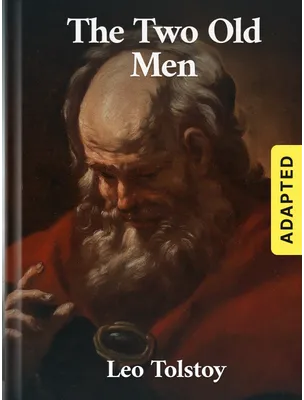
[adapted]
by
Leo Tolstoy

So, being tired from his journey, he sat on the well: and it was about noon. A woman from Samaria came to draw water: Jesus said to her, Give me a drink. (For his followers had gone to the city to buy food.) Then the woman from Samaria said to him, How is it that you, being a Jew, ask for a drink from me, a woman from Samaria? for Jews do not have anything to do with Samaritans. Jesus answered and said to her, If you knew the gift of God, and who it is that says to you, Give me a drink; you would have asked him, for the Father is looking for such people to worship him. (John 4:19-23.)
I
Two old men got ready to go to old Jerusalem to pray to God. One of them was a rich farmer; his name was Efím Tarásych Shevelév. The other was not a rich man, and his name was Eliséy Bodróv.
Efím was a steady man: he did not drink alcohol, nor smoke cigarettes, nor use tobacco powder, had never used bad words in his life, and was a serious, strong old man. He had served two times as an elder, and had left that job without any debt. He had a large family, — two sons and a married grandson, — and all lived together. In looks he was a healthy, bearded man who stood straight, and only in his seventies did a gray line appear in his beard.
Eliséy was neither rich nor poor; before, he worked as a carpenter, but in his old age he stayed at home and kept bees. One son was away earning money, and another was living at home. Eliséy was a kind and cheerful man. He liked to drink alcohol and use powdered tobacco, and sing songs; but he was a peaceful man, and was friendly with his family and with the neighbours. In looks he was a short, dark-skinned man, with a curly beard and, like his saint, Prophet Elisha, his whole head was bald.
The old men had long ago made a promise and agreed to go together, but Tarásych had no time before: he had so much work to do. As soon as one thing ended, another began; now he had to help his grandson get married, now he was waiting for his younger son to come back from the army, and now he had to build him a new hut.
On a holiday the two old men once met, and they sat down on logs.
“Well,” said Eliséy, “when are we going to keep our promise?”
Efím looked unhappy.
“We have to wait,” he said, “because this year is hard for me. I have started to build a house, — I thought I could do it with one hundred, but now it is already in the third. And still it is not done. We will have to leave it till summer. In the summer, God willing, we will go for sure.”
“I think,” said Eliséy, “there is no point in waiting. We should go at once. Spring is the best time.”
“The time is all right, but the work has started, so how can I stop?”
“Do you have nobody to take care of it? Your son will do it.”
“Do it? My oldest cannot be trusted, — he drinks.”
“When we die, friend, they will be fine without us. Let your son learn it!”
“That is true, but I still want to see things done in front of me.”
“Oh, dear man! You can never take care of everything. A few days ago the women in my house were washing and cleaning up for the holidays. Many things had to be done, and everything could not be taken care of. My oldest son’s wife, a clever woman, said: ‘It is lucky the holidays come without waiting for us, or else, even if we work very hard, we would never finish.’”
Tarásych began to think.
“I have spent a lot of money on this building,” he said, “and I can’t start the holy journey with nothing. One hundred roubles is not a small thing.”
Eliséy laughed.
“Don’t do wrong, friend!” he said. “You have ten times as much as me, but still you talk about money. Just say when we will start. I have no money, but it will be all right.”
Tarásych smiled.
“You are very rich!” he said. “Where will you get the money from?”
“I will look around in the house and will get some there; and if that is not enough, I will give my neighbour ten beehives. He has been asking me for them.”
“You will have a good group of bees! You will worry about it.”
“Worrying? No, my friend! I have never worried about anything in life but the bad things I have done. There is nothing more important than the soul.”
“That is true, but still, it is not good if things are not right at home.”
“If things are not right in our hearts, it is worse. We have made a promise, so let us go! Really, let us go!”
II
Eliséy got his friend to go. Efím thought and thought about it, and the next morning he came to Eliséy.
“Well, let us go,” he said, “you are right. God decides about life and death. We must go while we are alive and are strong.”
A week later the old men started.
Tarásych had money at home. He took one hundred roubles with him and left two hundred with his wife.
Eliséy, too, got ready. He sold his neighbour ten beehives and the new bees from ten other beehives. For the whole he received seventy roubles. The other thirty roubles he collected from everybody in the house. His wife gave him the last she had — she had saved it for her funeral; his son’s wife gave him what she had.
Efím Tarásych left all his matters to his oldest son: he told him where to cut the grass, and how many fields to cut the grass in, and where to carry the animal waste, and how to finish the hut and cover it with straw. He thought about everything, and gave his orders. But the only order that Eliséy gave was that his wife should put the young bees apart from the hives that were sold and give the neighbour what belonged to him without cheating him, but about home matters he did not even speak: “The needs themselves,” he thought, “will show you what to do and how to do it. You have been farming yourselves, so you will do what seems best to you.”
The old men got ready. The people at home baked a lot of flat cakes for them, and they made bags for themselves, cut out new leg wraps, put on new short boots, took extra shoes made of tree bark, and started. The people at home went with them past the fence and said good-bye to them, and the old men left for their holy journey.
Eliséy left in a happy mood, and as soon as he left his village he forgot all his worries. The only care he had was how to please his companion, how to keep from saying a rude word to anybody, how to reach the goal in peace and love, and how to get home again. As Eliséy walked along the road he either said a quiet prayer or repeated the stories of the saints he knew. Whenever he met a person on the road, or when he came to an inn, he tried to be as kind to everybody as he could, and to say to them words about God. He walked along and was happy. There was only one thing Eliséy could not do: he wanted to stop using snuff and had left his snuff box at home, but he wanted it very much. On the road a man offered him some. He argued with himself and moved away from his companion so he would not make him sin, and took a pinch.
Efím Tarásych walked firmly and well; he did nothing bad and did not say any empty words, but there was no happiness in his heart. The worries about his home did not leave his mind. He was thinking all the time about what was going on at home, — if he had not forgotten to tell his son something to do, and if his son was doing things in the right way. When he saw along the road that they were planting potatoes or carrying animal waste, he wondered if his son was doing as he had been told. He just felt like returning, and showing him what to do, and doing it himself.
III
The old men walked for live weeks. They wore out their home-made shoes made of bark and began to buy new ones. They reached the country of the Little-Russians. Before this they had been paying for a place to sleep at night and for their dinner, but when they came to the Little-Russians, people tried to be first in inviting them to their houses. They let them come in, and fed them, and took no money from them, but even filled their wallets with bread, and now and then with flat cakes. So the old men walked without spending money some seven hundred versts.
They crossed into another region and came to a place where the crops had failed. There they let them into the houses and did not take any money for their night’s stay, but would not feed them. And they did not give them bread everywhere, — in some places the old men could not get any even for money. The previous year, so the people said, nothing had grown. Those who had been rich lost all they had, — they sold everything; those who had lived in comfort had nothing left; and the poor people either left the country completely, or became beggars, or just managed to live at home. In the winter they lived on husks and wild spinach.
One night the two old men stayed in a small town. There they bought about fifteen pounds of bread. In the morning they left before sunrise, so they could walk a good distance before it got hot. They walked about ten miles and reached a stream. They sat down, filled their cups with water, softened the bread with it and ate it, and changed the cloths on their legs. They sat a while and rested. Eliséy took out his snuff box. Efím Tarásych shook his head at him.
“Why don’t you throw away that bad thing?” he asked.
Eliséy waved his hand.
“Sin is stronger than me,” he said. “What should I do?”
They got up and walked on. They walked another ten miles. They came to a large village, and passed through it. It was quite warm then. Eliséy was tired, and wanted to stop and get a drink, but Tarásych would not stop. Tarásych was a better walker, and Eliséy found it hard to keep up with him.
“I want to get a drink,” he said.
“Well, drink! I do not want any.”
Eliséy stopped.
“Do not wait for me,” he said. “I will just go into a small house and get a drink of water. I will be with you again very soon.”
“All right,” he said. And Efím Tarásych went on alone along the road, while Eliséy turned to go into a hut.
Eliséy came to the hut. It was a small clay house; the lower part was black, the upper white, and the clay had long ago fallen off, — clearly it had not been fixed for a long time, — and the roof was open at one end. The entrance was from the yard. Eliséy stepped into the yard, and there saw that a thin, beardless man with his shirt tucked into his trousers in Little-Russian fashion was lying near the pile of earth. The man had clearly lain down in a cool place, but now the sun was shining hot on him.