'Symposium' was written by Plato around 380 BC. It is one of his most famous dialogues.
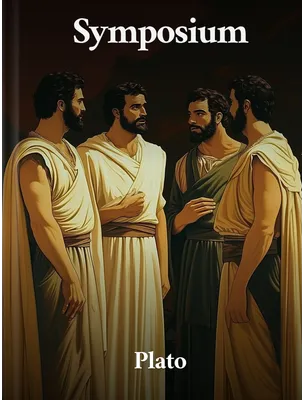
Symposiusm written by Plato, tells of a banquet where many great men, including Socrates, give speeches regarding the god Eros. Eros is the controversial Greek god of love and desire. While the speeches are all supposed to be in praise of Eros, the speakers are competing against one another. The speakers are well respected and include a playwright, military figure, doctor, and legal expert.
In the timeless dialogue "Symposium," written by the great philosopher Plato, a gathering of intellectual minds sparks profound discussions about love and desire. Set in ancient Athens, the story unfolds during a banquet where prominent figures like Socrates, Aristophanes, and Agathon come together to share their thoughts on what love truly means. As each character presents their unique perspective, the evening takes a delightful turn, revealing the complexities and beauties of human relationships.
The central theme revolves around the nature of love—its various forms and its significance in our lives. As the guests engage in lively debates, they confront their own beliefs and experiences, leading to moments of insight and revelation. With wit and wisdom, "Symposium" invites readers to explore the depths of affection and the quest for true connection. Join these thinkers as they navigate the intricate landscape of love, leaving you to ponder your own understanding of this universal emotion.
Full Name: Plato
Birthdate: Circa 428/427 BC
Place of Birth: Athens, Greece
Date and Place of Death: Circa 348/347 BC, Athens, Greece
Occupation: Philosopher, Mathematician, Writer
Notable Works: "The Republic," "The Symposium," "Phaedrus," "Phaedo," "Timaeus," and "Critias."
Early Life: Plato was born into an aristocratic family in Athens. Little is known about his early life, but it is believed he received a good education. He was influenced by the ideas of Socrates, who became his mentor during his youth.
Literary Career: After Socrates' death, Plato founded the Academy in Athens, one of the first institutions of higher learning in the Western world. He wrote dialogues featuring Socratic discussions, exploring topics like justice, beauty, and the nature of knowledge. His works laid the foundation for Western philosophy.
Personal Life: Plato never married and had no known children. He traveled extensively, visiting places like Italy and Egypt, where he studied different philosophies. His teachings and ideas have had a lasting impact on philosophy, politics, and education.
Plato was a Greek philosopher and student of Socrates. He was inspired by ideas about love and beauty, particularly in the context of relationships.
'Symposium' is a philosophical dialogue, which means it explores complex ideas through conversations between characters.
The main characters include Socrates, Aristophanes, and Alcibiades, each offering different perspectives on love.
The plot revolves around a banquet where guests discuss the nature of love, sharing their thoughts and experiences.
Key themes include the nature of love, the pursuit of beauty, and the connection between love and virtue.
Symbols in 'Symposium' include the banquet itself, which represents the sharing of ideas, and the various speeches that symbolize different views on love.
'Symposium' is highly regarded in philosophy and literature, praised for its depth and insight into human relationships.
Yes, 'Symposium' has been adapted into plays, films, and modern interpretations that explore its themes.
'Symposium' has influenced Western thought on love and relationships, shaping philosophical discussions for centuries.