'The Story of a Conscience' was published in 1904.
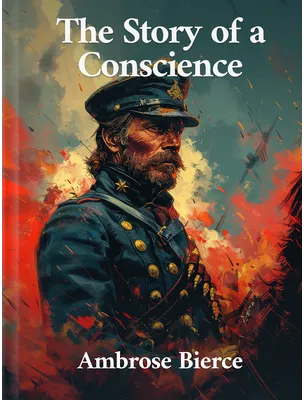
Captain Parrol Hartroy stood at his post, talking quietly with the sentinel. A civilian approached, whistling, but was stopped by the soldier. He wore rough clothes and carried a stick, looking unkempt but confident. The soldier asked for his pass, and the civilian handed it over casually, recognizing the captain. But something stirred in the captain's memory. The civilian was Dramer Brune, a Confederate spy...
In the intriguing tale, "The Story of a Conscience," Ambrose Bierce delves into the complex landscape of morality and self-discovery. The story follows the journey of a man grappling with the weight of his own conscience, as he navigates a world filled with temptation and moral ambiguity. With vivid characters that embody various aspects of human nature, readers are drawn into a narrative that questions the very essence of right and wrong.
As the protagonist faces pivotal choices, he encounters both allies and adversaries who challenge his beliefs and force him to confront his deepest fears. The central conflict revolves around the struggle between societal expectations and personal integrity, making it a timeless exploration of the human spirit. Bierce's masterful storytelling invites readers to reflect on their own moral dilemmas and the consequences of their decisions. Prepare to embark on a thought-provoking journey that will leave you pondering the true nature of conscience long after you turn the last page.
Full Name: Ambrose Gwinnett Bierce
Birthdate: June 24, 1842
Place of Birth: Meigs County, Ohio, USA
Date and Place of Death: Unknown, likely in Mexico, around 1914
Occupation: Writer, journalist, and Civil War veteran
Notable Works: "The Devil's Dictionary," "An Occurrence at Owl Creek Bridge," "Chicamauga," and "The Death of Halpin Frayser."
Early Life: Ambrose Bierce was born into a large family in Ohio. He grew up in a rural environment and faced a difficult childhood, including the death of his mother when he was young. He was educated at home and showed an early interest in literature.
Literary Career: Bierce became a notable writer in the late 19th century. He served in the Civil War, which influenced much of his work. His stories often explored themes of war, death, and the human experience. "The Devil's Dictionary" is a satirical work that defines common words in a humorous and cynical way.
Personal Life: Bierce was known for his sharp wit and often dark humor. He had a complicated personal life, including a troubled marriage and the loss of his children. In his later years, he traveled to Mexico during the revolution and mysteriously disappeared, leaving behind many unanswered questions about his fate.
Ambrose Bierce was an American writer, journalist, and Civil War veteran known for his satirical style and dark humor.
The book is often classified as a work of fiction with elements of satire and moral commentary.
The main character is a man who grapples with his conscience, exploring themes of morality and personal responsibility.
The story follows a man's internal struggle as he confronts his own conscience and the choices he has made in life.
Key themes include morality, guilt, the nature of conscience, and the consequences of one's actions.
Yes, the conscience itself serves as a powerful symbol representing the moral compass of the protagonist.
The book received mixed reviews; some praised its insight into human nature, while others found it challenging.
As of now, there are no major film or stage adaptations of 'The Story of a Conscience.'
The book has influenced discussions about morality and conscience in literature and continues to be studied for its themes.