'The Storm' was published in 1704.
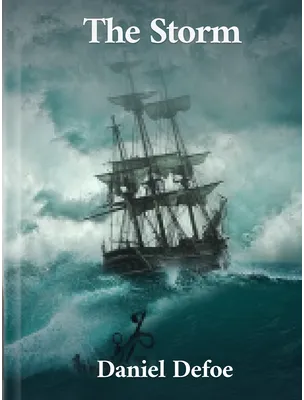
The Storm (1704) is a work of journalism and science reporting by British author Daniel Defoe. It has been called the first substantial work of modern journalism, the first detailed account of a hurricane in Britain. It relates the events of a week-long storm that hit London starting on 24 November and reaching its height on the night of 26/27 November 1703 (7/8 December 1703 in the Gregorian Calendar).
In the heart of the turbulent seas, where waves clash and winds howl, lies the gripping tale of "The Storm" by Daniel Defoe. This captivating adventure follows the intrepid protagonist, a lone sailor whose life is forever changed when he encounters nature's wrath. As the tempest rages, he must confront not only the fierce elements but also his deepest fears and the isolation of the open ocean. Defoe masterfully weaves a story of survival, resilience, and the struggle against overwhelming odds. Through vivid descriptions and a pulse-pounding narrative, readers are drawn into the chaos of the storm and the journey of self-discovery it ignites. Will our hero triumph over the forces of nature, or will the storm claim him as its own? Join this thrilling voyage and uncover the mysteries that lie within the heart of the storm.
Full Name: Daniel Defoe
Birthdate: September 13, 1660
Place of Birth: London, England
Date and Place of Death: April 24, 1731, in London, England
Occupation: Novelist, pamphleteer, and journalist
Notable Works: Defoe is best known for his novel "Robinson Crusoe," published in 1719. Other important works include "Moll Flanders," "A Journal of the Plague Year," and "Captain Singleton."
Early Life: Defoe was born into a middle-class family. He was the son of a butcher and received a good education. He studied at a dissenting academy, where he learned about business and writing.
Literary Career: Defoe's writing career began in the late 17th century. He wrote political pamphlets and essays before turning to fiction. "Robinson Crusoe" became a huge success and established him as a leading novelist. He wrote many other novels and works of non-fiction, often reflecting his interest in adventure and the human experience.
Personal Life: Defoe married Mary Tuffley in 1684, and they had several children. He faced financial difficulties throughout his life, leading to imprisonment for debt at one point. Despite his struggles, he remained a prolific writer and is now considered one of the founders of the English novel.
Daniel Defoe was an English writer and journalist, best known for his novel 'Robinson Crusoe' and his works on economics and politics.
Defoe was inspired by the Great Storm of 1703, one of the most severe storms to hit England, which caused widespread destruction.
'The Storm' is often classified as a narrative poem and a work of non-fiction due to its detailed account of a real event.
The main 'character' in 'The Storm' is the storm itself, but Defoe also includes various people affected by it, giving a human perspective.
'The Storm' describes the events of the Great Storm of 1703, detailing its impact on the landscape and people, without revealing too much about individual stories.
Key themes include the power of nature, human vulnerability, and the unpredictability of life.
The storm symbolizes chaos and destruction, reflecting the uncontrollable forces of nature and their effects on humanity.
'The Storm' was well-received for its vivid descriptions and realistic portrayal of the storm's impact, establishing Defoe as a significant writer.
While 'The Storm' has not been widely adapted into film or theater, its themes have influenced many works about nature and disaster.