'The Star (adapted)' was published in 2023, based on the original story by H. G. Wells.
[{"id":"para_1","index":0,"start":0,"offset":328,"words":2,"paraNum":"","lastModified":1765455233000,"semanticType":"title-book-title","voicework":"tts","blockId":"the_star_short_story_ffa_1_en-bl50","language":"en","wordsRange":{"start":100000000,"end":103000000},"paragraphVersion":41,"direction":"ltr","paragraph":"<h1 class=\"ilm-title ilm-x-large\" id=\"para_1\" semantictype=\"title-book-title\" data-ilmid=\"the_star_short_story_ffa_1_en-bl50\" data-audio=\"1\" data-chapter=\"para_1\" data-words-count=\"2\" data-before=\"0\" data-ww=\"\"><span class=\"block-pb\"> <span class=\"block-pb is-animated\"></span> </span><span class=\"itm-wrap\">The Star</span></h1>","hasContent":true,"isFirst":true,"isLast":false},{"id":"para_2","index":1,"start":328,"offset":329,"words":1,"paraNum":"","lastModified":1765456492000,"semanticType":"title-subtitle","voicework":"tts","blockId":"the_star_short_story_ffa_1_en-bl12q","language":"en","wordsRange":{"start":136333333,"end":169666667},"paragraphVersion":50,"direction":"ltr","paragraph":"<h1 class=\"ilm-title ilm-subtitle\" id=\"para_2\" semantictype=\"title-subtitle\" data-ilmid=\"the_star_short_story_ffa_1_en-bl12q\" data-audio=\"1\" data-chapter=\"para_2\" data-words-count=\"1\" data-before=\"2\" data-ww=\"\"><span class=\"block-pb\"> <span class=\"block-pb is-animated\"></span> </span><span class=\"itm-wrap\">[adapted]</span></h1>","hasContent":true,"isFirst":false,"isLast":false},{"id":"para_3","index":2,"start":657,"offset":358,"words":3,"paraNum":"","lastModified":1765455884000,"semanticType":"title-author","voicework":"tts","blockId":"the_star_short_story_ffa_1_en-bl12l","language":"en","wordsRange":{"start":203000000,"end":208000000},"paragraphVersion":47,"direction":"ltr","paragraph":"<h1 class=\"ilm-title ilm-author ilm-large ilm-nopad\" id=\"para_3\" semantictype=\"title-author\" data-ilmid=\"the_star_short_story_ffa_1_en-bl12l\" data-audio=\"1\" data-chapter=\"para_3\" data-words-count=\"3\" data-before=\"3\" data-ww=\"\"><span class=\"block-pb\"> <span class=\"block-pb is-animated\"></span> </span><span class=\"itm-wrap\">by <br>H. G. Wells<br></span></h1>","hasContent":true,"isFirst":false,"isLast":false},{"id":"para_4","index":3,"start":1015,"offset":158,"words":0,"paraNum":"","lastModified":1665493471000,"semanticType":"line","blockId":"the_star_short_story_ffa_1_en-bl12m","language":"en","wordsRange":{"start":308000000,"end":408000000},"paragraphVersion":25,"direction":"ltr","paragraph":"<hr class=\"ilm-hr ilm-small\" id=\"para_4\" semantictype=\"line\" data-ilmid=\"the_star_short_story_ffa_1_en-bl12m\" data-words-count=\"0\" data-before=\"6\" data-ww=\"\">","hasContent":true,"isFirst":false,"isLast":false},{"id":"para_5","index":4,"start":1173,"offset":811,"words":0,"paraNum":"","lastModified":1666083693000,"semanticType":"illustration","blockId":"the_star_short_story_ffa_1_en-bl12n","language":"en","wordsRange":{"start":508000000,"end":608000000},"paragraphVersion":25,"direction":"ltr","paragraph":"<div class=\"ilm-illustration\" id=\"para_5\" semantictype=\"illustration\" data-ilmid=\"the_star_short_story_ffa_1_en-bl12n\" data-words-count=\"0\" data-before=\"6\" data-ww=\"\"><img width=\"600\" height=\"338\" data-src=\"ch0p0\" src=\"data:image/webp;base64,UklGRooBAABXRUJQVlA4IH4BAACQCQCdASo8ACIAPmksjkWkIqEZW25kQAaEsYBSWdWDPDGDIXOv6izrZY9gdhBMTs8lPdAvf/9kDp14WAh0p1RDgpa5as0O2cnyhWQZMwnx4KExIeCQAP7+J61xCJJjAm75jCRTxnFIDXyhlKqIxqhBrLjjX27Pdk90ycqqN2y/YDLiu9y7Hsd1RPu/eYYxGeCHjjdaDeqSWXvAPjV0WOam4hZ6XtSNvmpjGkdBKuNXE3p+K+AEeH7Y89rOY/U9fjZ3KS3q0NmH5OVyeb8/QB1fe41iaedR/Zc5TN+HP4P3bp0vazzHF8wzg5kTn1dps3MheaPQvdHKJb1QD7xuypoQXycu3/j5iim1RM5xpc2jACBUJY42eksemgskYtmI0pGHITF0/Pi/5nOq8lurcN3txxnux3cc3n8s4tJUUQDsu60KX+XfKJApQcg0mxzuXO0CfCK3/pnsOzqp1buHfuPdXaymie/PrwxY5nN+4tKo3KEFgVZTx0RtxlAl7YAA\" alt=\"The Star (adapted)\"></div>","hasContent":true,"isFirst":false,"isLast":false},{"id":"para_6","index":5,"start":1984,"offset":634,"words":61,"paraNum":"1","lastModified":1765455117000,"semanticType":"par","voicework":"tts","blockId":"the_star_short_story_ffa_1_en-bl52","language":"en","wordsRange":{"start":708000000,"end":764333333},"paragraphVersion":63,"direction":"ltr","paragraph":"<p id=\"para_6\" semantictype=\"par\" data-ilmid=\"the_star_short_story_ffa_1_en-bl52\" data-audio=\"1\" data-words-count=\"61\" data-before=\"6\" data-ww=\"\"><span class=\"block-num\" data-id=\"1\"></span><span class=\"block-pb\"> <span class=\"block-pb is-animated\"></span> </span><span class=\"itm-wrap\">It was on the first day of the new year that the announcement was made, almost at the same time from three observatories, that the movement of the planet Neptune, the farthest of all the planets that move around the sun, had become very unusual and not regular. Ogilvy had already pointed out a possible slowing in its speed in December.</span></p>","hasContent":true,"isFirst":false,"isLast":false},{"id":"para_7","index":6,"start":2618,"offset":574,"words":48,"paraNum":"2","lastModified":1765455221000,"semanticType":"par","voicework":"tts","blockId":"the_star_short_story_ffa_1_en-bl12o","language":"en","wordsRange":{"start":764666667,"end":819333333},"paragraphVersion":58,"direction":"ltr","paragraph":"<p id=\"para_7\" semantictype=\"par\" data-ilmid=\"the_star_short_story_ffa_1_en-bl12o\" data-audio=\"1\" data-words-count=\"48\" data-before=\"67\" data-ww=\"\"><span class=\"block-num\" data-id=\"2\"></span><span class=\"block-pb\"> <span class=\"block-pb is-animated\"></span> </span><span class=\"itm-wrap\">Such news was not likely to interest a world where most people did not know that the planet Neptune existed, nor, outside the group of professional astronomers, did the later discovery of a dim, far-away spot of light in the area of the troubled planet cause much excitement.</span></p>","hasContent":true,"isFirst":false,"isLast":false},{"id":"para_8","index":7,"start":3192,"offset":616,"words":53,"paraNum":"3","lastModified":1765420452000,"semanticType":"par","voicework":"tts","blockId":"the_star_short_story_ffa_1_en-bl12p","language":"en","wordsRange":{"start":819666667,"end":872000000},"paragraphVersion":43,"direction":"ltr","paragraph":"<p id=\"para_8\" semantictype=\"par\" data-ilmid=\"the_star_short_story_ffa_1_en-bl12p\" data-audio=\"1\" data-words-count=\"53\" data-before=\"115\" data-ww=\"\"><span class=\"block-num\" data-id=\"3\"></span><span class=\"block-pb\"> <span class=\"block-pb is-animated\"></span> </span><span class=\"itm-wrap\">Scientists, however, found the news surprising enough, even before people knew that the new object was quickly growing larger and brighter, that its movement was very different from the regular path of the planets, and that the change in the path of Neptune and its moon was now becoming something never seen before.</span></p>","hasContent":true,"isFirst":false,"isLast":false},{"id":"para_9","index":8,"start":3808,"offset":827,"words":96,"paraNum":"4","lastModified":1765455211000,"semanticType":"par","voicework":"tts","blockId":"the_star_short_story_ffa_1_en-bl53","language":"en","wordsRange":{"start":972000000,"end":1064333333},"paragraphVersion":52,"direction":"ltr","paragraph":"<p id=\"para_9\" semantictype=\"par\" data-ilmid=\"the_star_short_story_ffa_1_en-bl53\" data-audio=\"1\" data-words-count=\"96\" data-before=\"168\" data-ww=\"\"><span class=\"block-num\" data-id=\"4\"></span><span class=\"block-pb\"> <span class=\"block-pb is-animated\"></span> </span><span class=\"itm-wrap\">Few people without training in science can understand the great loneliness of the solar system. The sun, with its tiny dots of planets, its dust of small planets, and its very light comets, moves in a huge empty space that is almost too much to imagine. Beyond the orbit of Neptune there is space, empty so far as humans have seen, without warmth or light or sound, empty nothing, for twenty million times a million miles. That is the smallest guess of the distance to be crossed before the very nearest of the stars is reached.</span></p>","hasContent":true,"isFirst":false,"isLast":false},{"id":"para_10","index":9,"start":4635,"offset":844,"words":101,"paraNum":"5","lastModified":1765455198000,"semanticType":"par","voicework":"tts","blockId":"the_star_short_story_ffa_1_en-bl12r","language":"en","wordsRange":{"start":1064666667,"end":1160000000},"paragraphVersion":34,"direction":"ltr","paragraph":"<p id=\"para_10\" semantictype=\"par\" data-ilmid=\"the_star_short_story_ffa_1_en-bl12r\" data-audio=\"1\" data-words-count=\"101\" data-before=\"264\" data-ww=\"\"><span class=\"block-num\" data-id=\"5\"></span><span class=\"block-pb\"> <span class=\"block-pb is-animated\"></span> </span><span class=\"itm-wrap\">And, except for a few comets less solid than the thinnest flame, nothing had ever, as far as people knew, crossed this wide emptiness of space, until early in the twentieth century this strange traveler appeared. It was a huge mass of stuff, bulky, heavy, rushing without warning out of the dark mystery of the sky into the bright light of the sun. By the second day it was clearly visible to any good instrument, as a speck with a hardly noticeable size, in the group of stars Leo near Regulus. In a little while an opera glass could see it.</span></p>","hasContent":true,"isFirst":false,"isLast":false},{"id":"para_11","index":10,"start":5479,"offset":987,"words":124,"paraNum":"6","lastModified":1765455274000,"semanticType":"par","voicework":"tts","blockId":"the_star_short_story_ffa_1_en-bl54","language":"en","wordsRange":{"start":1260000000,"end":1378000000},"paragraphVersion":45,"direction":"ltr","paragraph":"<p id=\"para_11\" semantictype=\"par\" data-ilmid=\"the_star_short_story_ffa_1_en-bl54\" data-audio=\"1\" data-words-count=\"124\" data-before=\"365\" data-ww=\"\"><span class=\"block-num\" data-id=\"6\"></span><span class=\"block-pb\"> <span class=\"block-pb is-animated\"></span> </span><span class=\"itm-wrap\">On the third day of the new year, newspaper readers in both halves of the world learned for the first time how important this strange thing in the sky was. “A Planetary Collision,” one London paper used this as the headline, and it stated Duchaine’s opinion that this strange new planet would probably hit Neptune. The editorial writers wrote more about the topic. So that in most of the capitals of the world, on January 3rd, there was an expectation, even if vague, of some event in the sky that would happen soon; and as night followed the sunset around the world, thousands of men turned their eyes up to the sky to see — the old familiar stars just as they had always been.</span></p>","hasContent":true,"isFirst":false,"isLast":false},{"id":"para_12","index":11,"start":6466,"offset":1041,"words":131,"paraNum":"7","lastModified":1765456164000,"semanticType":"par","voicework":"tts","blockId":"the_star_short_story_ffa_1_en-bl55","language":"en","wordsRange":{"start":1478000000,"end":1601000000},"paragraphVersion":44,"direction":"ltr","paragraph":"<p id=\"para_12\" semantictype=\"par\" data-ilmid=\"the_star_short_story_ffa_1_en-bl55\" data-audio=\"1\" data-words-count=\"131\" data-before=\"489\" data-ww=\"\"><span class=\"block-num\" data-id=\"7\"></span><span class=\"block-pb\"> <span class=\"block-pb is-animated\"></span> </span><span class=\"itm-wrap\">Until it was dawn in London and Pollux was setting and the stars above grew pale. The winter dawn it was, a weak, thin gathering of daylight, and the light of gas and candles shone yellow in the windows to show where people were awake. But the yawning policeman saw it, the busy crowds in the markets stopped with open mouths, workmen going to their work early, milkmen, the drivers of news-carts, people from late parties going home tired and pale, homeless wanderers, guards on their rounds, and in the country, labourers walking to the fields, poachers sneaking home, all over the dim, waking country it could be seen — and out at sea by sailors watching for the day — a great white star, that had come suddenly into the western sky!</span></p>","hasContent":true,"isFirst":false,"isLast":false},{"id":"para_13","index":12,"start":7507,"offset":851,"words":97,"paraNum":"8","lastModified":1765455783000,"semanticType":"par","voicework":"tts","blockId":"the_star_short_story_ffa_1_en-bl56","language":"en","wordsRange":{"start":1701000000,"end":1799000000},"paragraphVersion":44,"direction":"ltr","paragraph":"<p id=\"para_13\" semantictype=\"par\" data-ilmid=\"the_star_short_story_ffa_1_en-bl56\" data-audio=\"1\" data-words-count=\"97\" data-before=\"620\" data-ww=\"\"><span class=\"block-num\" data-id=\"8\"></span><span class=\"block-pb\"> <span class=\"block-pb is-animated\"></span> </span><span class=\"itm-wrap\">It was brighter than any star in our skies; brighter than the evening star at its brightest. It still shone white and big, not just a twinkling spot of light, but a small round clear shining disc, an hour after the day began. And in places where science has not reached, men stared and were afraid, telling each other about the wars and diseases that these fiery signs in the sky warn about. Strong Boers, dark Hottentots, Gold Coast negroes, Frenchmen, Spaniards, Portuguese, stood in the warmth of the sunrise watching this strange new star go down.</span></p>","hasContent":true,"isFirst":false,"isLast":false},{"id":"para_14","index":13,"start":8358,"offset":907,"words":112,"paraNum":"9","lastModified":1765455799000,"semanticType":"par","voicework":"tts","blockId":"the_star_short_story_ffa_1_en-bl57","language":"en","wordsRange":{"start":1899000000,"end":2009333333},"paragraphVersion":48,"direction":"ltr","paragraph":"<p id=\"para_14\" semantictype=\"par\" data-ilmid=\"the_star_short_story_ffa_1_en-bl57\" data-audio=\"1\" data-words-count=\"112\" data-before=\"717\" data-ww=\"\"><span class=\"block-num\" data-id=\"9\"></span><span class=\"block-pb\"> <span class=\"block-pb is-animated\"></span> </span><span class=\"itm-wrap\">And in a hundred observatories there had been hidden excitement, rising almost to loud shouting, as the two far bodies had come together fast, and a running back and forth, to get cameras and a spectroscope, and this tool and that, to record this new amazing sight, the destruction of a world. For it was a world, a sister planet of our earth, much bigger than our earth indeed, that had so suddenly burst into burning death. Neptune it was, had been hit, straight on, by the strange planet from outer space, and the heat of the crash had at once turned two solid worlds into one huge mass of glowing fire.</span></p>","hasContent":true,"isFirst":false,"isLast":false},{"id":"para_15","index":14,"start":9265,"offset":777,"words":96,"paraNum":"10","lastModified":1765456158000,"semanticType":"par","voicework":"tts","blockId":"the_star_short_story_ffa_1_en-bl12s","language":"en","wordsRange":{"start":2009666667,"end":2098000000},"paragraphVersion":29,"direction":"ltr","paragraph":"<p id=\"para_15\" semantictype=\"par\" data-ilmid=\"the_star_short_story_ffa_1_en-bl12s\" data-audio=\"1\" data-words-count=\"96\" data-before=\"829\" data-ww=\"\"><span class=\"block-num\" data-id=\"10\"></span><span class=\"block-pb\"> <span class=\"block-pb is-animated\"></span> </span><span class=\"itm-wrap\">Around the world that day, two hours before dawn, the pale great white star went, fading only as it sank to the west and the sun rose above it. Everywhere people were amazed at it, but of all those who saw it none could have been more amazed than those sailors, who often watched the stars, who far away at sea had heard nothing of its coming and saw it now rise like a tiny moon and climb toward the top of the sky and hang overhead and sink to the west as the night passed.</span></p>","hasContent":true,"isFirst":false,"isLast":false},{"id":"para_16","index":15,"start":10042,"offset":909,"words":118,"paraNum":"11","lastModified":1765455852000,"semanticType":"par","voicework":"tts","blockId":"the_star_short_story_ffa_1_en-bl58","language":"en","wordsRange":{"start":2198000000,"end":2313000000},"paragraphVersion":47,"direction":"ltr","paragraph":"<p id=\"para_16\" semantictype=\"par\" data-ilmid=\"the_star_short_story_ffa_1_en-bl58\" data-audio=\"1\" data-words-count=\"118\" data-before=\"925\" data-ww=\"\"><span class=\"block-num\" data-id=\"11\"></span><span class=\"block-pb\"> <span class=\"block-pb is-animated\"></span> </span><span class=\"itm-wrap\">And when next it rose over Europe, everywhere there were crowds of people watching on the sides of hills, on the roofs of houses, in open spaces, looking to the east to see the great new star rise. It rose with a white glow in front of it, like the bright light of a white fire, and those who had seen it appear the night before cried out when they saw it. “It is larger,” they cried. “It is brighter!” And, indeed, the moon, a quarter full and going down in the west, looked much bigger, but hardly, in all its width, did it have as much brightness now as the little circle of the strange new star.</span></p>","hasContent":true,"isFirst":false,"isLast":false},{"id":"para_17","index":16,"start":10951,"offset":536,"words":32,"paraNum":"12","lastModified":1765512744000,"semanticType":"par","voicework":"tts","blockId":"the_star_short_story_ffa_1_en-bl59","language":"en","wordsRange":{"start":2413000000,"end":2445000000},"paragraphVersion":52,"direction":"ltr","paragraph":"<p id=\"para_17\" semantictype=\"par\" data-ilmid=\"the_star_short_story_ffa_1_en-bl59\" data-audio=\"1\" data-words-count=\"32\" data-before=\"1043\" data-ww=\"\"><span class=\"block-num\" data-id=\"12\"></span><span class=\"block-pb\"> <span class=\"block-pb is-animated\"></span> </span><span class=\"itm-wrap\">“It is brighter!” shouted the people crowding in the streets. But in the dark observatory buildings the watchers held their breath and looked at one another. <i>“It </i><i>is </i><i>nearer,”</i> they said. <i>“Nearer!”</i></span></p>","hasContent":true,"isFirst":false,"isLast":false},{"id":"para_18","index":17,"start":11487,"offset":941,"words":108,"paraNum":"13","lastModified":1765456191000,"semanticType":"par","voicework":"tts","blockId":"the_star_short_story_ffa_1_en-bl5a","language":"en","wordsRange":{"start":2545000000,"end":2645333333},"paragraphVersion":50,"direction":"ltr","paragraph":"<p id=\"para_18\" semantictype=\"par\" data-ilmid=\"the_star_short_story_ffa_1_en-bl5a\" data-audio=\"1\" data-words-count=\"108\" data-before=\"1075\" data-ww=\"\"><span class=\"block-num\" data-id=\"13\"></span><span class=\"block-pb\"> <span class=\"block-pb is-animated\"></span> </span><span class=\"itm-wrap\">And voice after voice repeated, “It is nearer,” and the clicking telegraph machine picked that up, and it moved along telephone wires, and in a thousand cities dirty printers touched the letters. “It is nearer.” Men writing in offices, hit by a strange, sudden thought, threw down their pens, men talking in a thousand places suddenly saw a strange, terrible idea in those words, “It is nearer.” It hurried along streets that were waking up, it was shouted down the cold, still roads of quiet villages, men who had read these things from the moving tape stood in yellow-lit doorways shouting the news to the people passing by.</span></p>","hasContent":true,"isFirst":false,"isLast":false},{"id":"para_19","index":18,"start":12428,"offset":559,"words":42,"paraNum":"14","lastModified":1765455872000,"semanticType":"par","voicework":"tts","blockId":"the_star_short_story_ffa_1_en-bl12t","language":"en","wordsRange":{"start":2645666667,"end":2688000000},"paragraphVersion":28,"direction":"ltr","paragraph":"<p id=\"para_19\" semantictype=\"par\" data-ilmid=\"the_star_short_story_ffa_1_en-bl12t\" data-audio=\"1\" data-words-count=\"42\" data-before=\"1183\" data-ww=\"\"><span class=\"block-num\" data-id=\"14\"></span><span class=\"block-pb\"> <span class=\"block-pb is-animated\"></span> </span><span class=\"itm-wrap\">“It is closer.” Pretty women, blushing and shining, heard the news told jokingly between the dances, and pretended a smart interest they did not feel. “Closer! Really. How strange! How very, very clever people must be to find out things like that!”</span></p>","hasContent":true,"isFirst":false,"isLast":false},{"id":"para_20","index":19,"start":12987,"offset":564,"words":46,"paraNum":"15","lastModified":1765456182000,"semanticType":"par","voicework":"tts","blockId":"the_star_short_story_ffa_1_en-bl5b","language":"en","wordsRange":{"start":2788000000,"end":2830000000},"paragraphVersion":49,"direction":"ltr","paragraph":"<p id=\"para_20\" semantictype=\"par\" data-ilmid=\"the_star_short_story_ffa_1_en-bl5b\" data-audio=\"1\" data-words-count=\"46\" data-before=\"1225\" data-ww=\"\"><span class=\"block-num\" data-id=\"15\"></span><span class=\"block-pb\"> <span class=\"block-pb is-animated\"></span> </span><span class=\"itm-wrap\">Lonely poor travelers walking through the winter night said those words softly to comfort themselves — looking up at the sky. “It needs to be nearer, because the night is very cold. It doesn’t seem to give much warmth even if it is nearer, all the same.”</span></p>","hasContent":true,"isFirst":false,"isLast":false},{"id":"para_21","index":20,"start":13551,"offset":391,"words":18,"paraNum":"16","lastModified":1765455902000,"semanticType":"par","voicework":"tts","blockId":"the_star_short_story_ffa_1_en-bl5c","language":"en","wordsRange":{"start":2930000000,"end":2946000000},"paragraphVersion":48,"direction":"ltr","paragraph":"<p id=\"para_21\" semantictype=\"par\" data-ilmid=\"the_star_short_story_ffa_1_en-bl5c\" data-audio=\"1\" data-words-count=\"18\" data-before=\"1271\" data-ww=\"\"><span class=\"block-num\" data-id=\"16\"></span><span class=\"block-pb\"> <span class=\"block-pb is-animated\"></span> </span><span class=\"itm-wrap\">“What is a new star to me?” cried the crying woman on her knees beside her dead body.</span></p>","hasContent":true,"isFirst":false,"isLast":false},{"id":"para_22","index":21,"start":13942,"offset":699,"words":68,"paraNum":"17","lastModified":1765456212000,"semanticType":"par","voicework":"tts","blockId":"the_star_short_story_ffa_1_en-bl5d","language":"en","wordsRange":{"start":3046000000,"end":3111000000},"paragraphVersion":48,"direction":"ltr","paragraph":"<p id=\"para_22\" semantictype=\"par\" data-ilmid=\"the_star_short_story_ffa_1_en-bl5d\" data-audio=\"1\" data-words-count=\"68\" data-before=\"1289\" data-ww=\"\"><span class=\"block-num\" data-id=\"17\"></span><span class=\"block-pb\"> <span class=\"block-pb is-animated\"></span> </span><span class=\"itm-wrap\">The schoolboy, getting up early to study for his exam, figured it out by himself — with the great white star, shining wide and bright through the ice patterns on his window. “Centrifugal, centripetal,” he said, with his chin on his fist. “Stop a planet in its path, take away its centrifugal force, what then? The centripetal force has it, and down it falls into the sun! And this — !”</span></p>","hasContent":true,"isFirst":false,"isLast":false},{"id":"para_23","index":22,"start":14641,"offset":339,"words":7,"paraNum":"18","lastModified":1765455893000,"semanticType":"par","voicework":"tts","blockId":"the_star_short_story_ffa_1_en-bl5e","language":"en","wordsRange":{"start":3211000000,"end":3220000000},"paragraphVersion":48,"direction":"ltr","paragraph":"<p id=\"para_23\" semantictype=\"par\" data-ilmid=\"the_star_short_story_ffa_1_en-bl5e\" data-audio=\"1\" data-words-count=\"7\" data-before=\"1357\" data-ww=\"\"><span class=\"block-num\" data-id=\"18\"></span><span class=\"block-pb\"> <span class=\"block-pb is-animated\"></span> </span><span class=\"itm-wrap\">“Are we in the way? I wonder — ”</span></p>","hasContent":true,"isFirst":false,"isLast":false},{"id":"para_24","index":23,"start":14980,"offset":973,"words":121,"paraNum":"19","lastModified":1765455938000,"semanticType":"par","voicework":"tts","blockId":"the_star_short_story_ffa_1_en-bl5f","language":"en","wordsRange":{"start":3320000000,"end":3443000000},"paragraphVersion":48,"direction":"ltr","paragraph":"<p id=\"para_24\" semantictype=\"par\" data-ilmid=\"the_star_short_story_ffa_1_en-bl5f\" data-audio=\"1\" data-words-count=\"121\" data-before=\"1364\" data-ww=\"\"><span class=\"block-num\" data-id=\"19\"></span><span class=\"block-pb\"> <span class=\"block-pb is-animated\"></span> </span><span class=\"itm-wrap\">The light of that day ended like the others, and with the later hours of the cold darkness the strange star rose again. And it was now so bright that the growing moon seemed like a pale yellow ghost of itself, hanging huge in the sunset. In a South African city a great man had married, and the streets were lit to welcome his return with his bride. “Even the skies have lit up,” said a flatterer. Under Capricorn, two black lovers, facing the wild animals and evil spirits, for love of each other, crouched together in a cane thicket where the fireflies flew. “That is our star,” they whispered, and felt strangely comforted by the soft brightness of its light.</span></p>","hasContent":true,"isFirst":false,"isLast":false},{"id":"para_25","index":24,"start":15953,"offset":1007,"words":132,"paraNum":"20","lastModified":1765456249000,"semanticType":"par","voicework":"tts","blockId":"the_star_short_story_ffa_1_en-bl5g","language":"en","wordsRange":{"start":3543000000,"end":3666000000},"paragraphVersion":51,"direction":"ltr","paragraph":"<p id=\"para_25\" semantictype=\"par\" data-ilmid=\"the_star_short_story_ffa_1_en-bl5g\" data-audio=\"1\" data-words-count=\"132\" data-before=\"1485\" data-ww=\"\"><span class=\"block-num\" data-id=\"20\"></span><span class=\"block-pb\"> <span class=\"block-pb is-animated\"></span> </span><span class=\"itm-wrap\">The great mathematician sat in his private room and pushed the papers away from him. His calculations were already finished. In a small white bottle there was still a little of the medicine that had kept him awake and active for four long nights. Each day, calm, clear, patient as always, he had given his lesson to his students, and then had come back at once to this very important calculation. His face was serious, a little thin and tired, and he was hot and too active from the medicine. For some time he seemed lost in thought. Then he went to the window, and the window blind went up with a click. Half way up the sky, over the crowded roofs, chimneys and church towers of the city, the star hung.</span></p>","hasContent":true,"isFirst":false,"isLast":false},{"id":"para_26","index":25,"start":16960,"offset":543,"words":48,"paraNum":"21","lastModified":1765456255000,"semanticType":"par","voicework":"tts","blockId":"the_star_short_story_ffa_1_en-bl5h","language":"en","wordsRange":{"start":3766000000,"end":3816000000},"paragraphVersion":48,"direction":"ltr","paragraph":"<p id=\"para_26\" semantictype=\"par\" data-ilmid=\"the_star_short_story_ffa_1_en-bl5h\" data-audio=\"1\" data-words-count=\"48\" data-before=\"1617\" data-ww=\"\"><span class=\"block-num\" data-id=\"21\"></span><span class=\"block-pb\"> <span class=\"block-pb is-animated\"></span> </span><span class=\"itm-wrap\">He looked at it like one might look into the eyes of a brave enemy. “You may kill me,” he said after a silence. “But I can hold you — and all the universe as well — in the grip of this little brain. I would not change. Even now.”</span></p>","hasContent":true,"isFirst":false,"isLast":false},{"id":"para_27","index":26,"start":17503,"offset":735,"words":86,"paraNum":"22","lastModified":1765456214000,"semanticType":"par","voicework":"tts","blockId":"the_star_short_story_ffa_1_en-bl5i","language":"en","wordsRange":{"start":3916000000,"end":4002333333},"paragraphVersion":52,"direction":"ltr","paragraph":"<p id=\"para_27\" semantictype=\"par\" data-ilmid=\"the_star_short_story_ffa_1_en-bl5i\" data-audio=\"1\" data-words-count=\"86\" data-before=\"1665\" data-ww=\"\"><span class=\"block-num\" data-id=\"22\"></span><span class=\"block-pb\"> <span class=\"block-pb is-animated\"></span> </span><span class=\"itm-wrap\">He looked at the little bottle. “There will be no need to sleep again,” he said. The next day at noon, exactly on time, he entered his lecture hall, put his hat on the end of the table as he usually did, and carefully chose a large piece of chalk. It was a joke among his students that he could not lecture without that piece of chalk to play with in his fingers, and once he could not do anything because they hid all his chalk.</span></p>","hasContent":true,"isFirst":false,"isLast":false},{"id":"para_28","index":27,"start":18238,"offset":680,"words":65,"paraNum":"23","lastModified":1765455820000,"semanticType":"par","voicework":"tts","blockId":"the_star_short_story_ffa_1_en-bl12u","language":"en","wordsRange":{"start":4002666667,"end":4069000000},"paragraphVersion":27,"direction":"ltr","paragraph":"<p id=\"para_28\" semantictype=\"par\" data-ilmid=\"the_star_short_story_ffa_1_en-bl12u\" data-audio=\"1\" data-words-count=\"65\" data-before=\"1751\" data-ww=\"\"><span class=\"block-num\" data-id=\"23\"></span><span class=\"block-pb\"> <span class=\"block-pb is-animated\"></span> </span><span class=\"itm-wrap\">He came and looked under his grey eyebrows at the rising rows of young fresh faces, and spoke with his usual careful, plain way of speaking. “Things have happened — things beyond my control,” he said and paused, “which will stop me from finishing the course I had planned. It seems, gentlemen, if I may say it clearly and briefly, that — Man has lived for nothing.”</span></p>","hasContent":true,"isFirst":false,"isLast":false},{"id":"para_29","index":28,"start":18918,"offset":676,"words":69,"paraNum":"24","lastModified":1765512724000,"semanticType":"par","voicework":"tts","blockId":"the_star_short_story_ffa_1_en-bl5j","language":"en","wordsRange":{"start":4169000000,"end":4237000000},"paragraphVersion":58,"direction":"ltr","paragraph":"<p id=\"para_29\" semantictype=\"par\" data-ilmid=\"the_star_short_story_ffa_1_en-bl5j\" data-audio=\"1\" data-words-count=\"69\" data-before=\"1816\" data-ww=\"\"><span class=\"block-num\" data-id=\"24\"></span><span class=\"block-pb\"> <span class=\"block-pb is-animated\"></span> </span><span class=\"itm-wrap\">The students glanced at one another. Had they heard right? Mad? There were raised eyebrows and grinning lips, but one or two faces remained focused on his calm face with grey hair. “It will be interesting,” he was saying, “to use this morning for an explanation, as far as I can make it clear to you, of the sums that have led me to this result. Let us suppose — ”</span></p>","hasContent":true,"isFirst":false,"isLast":false},{"id":"para_30","index":29,"start":19594,"offset":508,"words":33,"paraNum":"25","lastModified":1765455909000,"semanticType":"par","voicework":"tts","blockId":"the_star_short_story_ffa_1_en-bl5k","language":"en","wordsRange":{"start":4337000000,"end":4374000000},"paragraphVersion":50,"direction":"ltr","paragraph":"<p id=\"para_30\" semantictype=\"par\" data-ilmid=\"the_star_short_story_ffa_1_en-bl5k\" data-audio=\"1\" data-words-count=\"33\" data-before=\"1885\" data-ww=\"\"><span class=\"block-num\" data-id=\"25\"></span><span class=\"block-pb\"> <span class=\"block-pb is-animated\"></span> </span><span class=\"itm-wrap\">He turned to the blackboard, thinking about a diagram in his usual way. “What was that about ‘lived in vain?’” whispered one student to another. “Listen,” said the other, nodding at the teacher.</span></p>","hasContent":true,"isFirst":false,"isLast":false},{"id":"para_31","index":30,"start":20102,"offset":335,"words":6,"paraNum":"26","lastModified":1765456269000,"semanticType":"par","voicework":"tts","blockId":"the_star_short_story_ffa_1_en-bl5l","language":"en","wordsRange":{"start":4474000000,"end":4481000000},"paragraphVersion":50,"direction":"ltr","paragraph":"<p id=\"para_31\" semantictype=\"par\" data-ilmid=\"the_star_short_story_ffa_1_en-bl5l\" data-audio=\"1\" data-words-count=\"6\" data-before=\"1918\" data-ww=\"\"><span class=\"block-num\" data-id=\"26\"></span><span class=\"block-pb\"> <span class=\"block-pb is-animated\"></span> </span><span class=\"itm-wrap\">And soon they began to understand.</span></p>","hasContent":true,"isFirst":false,"isLast":false},{"id":"para_32","index":31,"start":20437,"offset":864,"words":108,"paraNum":"27","lastModified":1765455828000,"semanticType":"par","voicework":"tts","blockId":"the_star_short_story_ffa_1_en-bl5m","language":"en","wordsRange":{"start":4581000000,"end":4686333333},"paragraphVersion":54,"direction":"ltr","paragraph":"<p id=\"para_32\" semantictype=\"par\" data-ilmid=\"the_star_short_story_ffa_1_en-bl5m\" data-audio=\"1\" data-words-count=\"108\" data-before=\"1924\" data-ww=\"\"><span class=\"block-num\" data-id=\"27\"></span><span class=\"block-pb\"> <span class=\"block-pb is-animated\"></span> </span><span class=\"itm-wrap\">That night the star rose later, for its steady eastward movement had taken it some way across Leo towards Virgo, and its brightness was so great that the sky became a bright blue as it rose, and every star was hidden one by one, except only Jupiter high overhead, Capella, Aldebaran, Sirius and the pointer stars of the Bear. It was very white and beautiful. In many parts of the world that night a pale ring went around it. It was clearly larger; in the clear sky of the tropics that bent the light it seemed as if it was nearly a quarter the size of the moon.</span></p>","hasContent":true,"isFirst":false,"isLast":false},{"id":"para_33","index":32,"start":21301,"offset":528,"words":44,"paraNum":"28","lastModified":1765456285000,"semanticType":"par","voicework":"tts","blockId":"the_star_short_story_ffa_1_en-bl12v","language":"en","wordsRange":{"start":4686666667,"end":4732000000},"paragraphVersion":26,"direction":"ltr","paragraph":"<p id=\"para_33\" semantictype=\"par\" data-ilmid=\"the_star_short_story_ffa_1_en-bl12v\" data-audio=\"1\" data-words-count=\"44\" data-before=\"2032\" data-ww=\"\"><span class=\"block-num\" data-id=\"28\"></span><span class=\"block-pb\"> <span class=\"block-pb is-animated\"></span> </span><span class=\"itm-wrap\">The frost was still on the ground in England, but the world was as bright as if it were summer moonlight. You could see to read quite ordinary print by that cold clear light, and in the cities the lamps burnt yellow and pale.</span></p>","hasContent":true,"isFirst":false,"isLast":false},{"id":"para_34","index":33,"start":21829,"offset":850,"words":103,"paraNum":"29","lastModified":1765456337000,"semanticType":"par","voicework":"tts","blockId":"the_star_short_story_ffa_1_en-bl5n","language":"en","wordsRange":{"start":4832000000,"end":4928000000},"paragraphVersion":52,"direction":"ltr","paragraph":"<p id=\"para_34\" semantictype=\"par\" data-ilmid=\"the_star_short_story_ffa_1_en-bl5n\" data-audio=\"1\" data-words-count=\"103\" data-before=\"2076\" data-ww=\"\"><span class=\"block-num\" data-id=\"29\"></span><span class=\"block-pb\"> <span class=\"block-pb is-animated\"></span> </span><span class=\"itm-wrap\">And everywhere the world was awake that night, and throughout the Christian lands a low, sad sound hung in the cold air over the countryside like the buzzing of bees in the heather, and this low, humming noise grew to a loud ringing in the cities. It was the ringing of the bells in a million bell towers and steeples, calling the people to sleep no more, to do no more wrong, but to come together in their churches and pray. And overhead, growing larger and brighter, as the earth moved on its way and the night passed, the very bright star rose.</span></p>","hasContent":true,"isFirst":false,"isLast":false},{"id":"para_35","index":34,"start":22679,"offset":771,"words":85,"paraNum":"30","lastModified":1765456304000,"semanticType":"par","voicework":"tts","blockId":"the_star_short_story_ffa_1_en-bl5o","language":"en","wordsRange":{"start":5028000000,"end":5109333333},"paragraphVersion":56,"direction":"ltr","paragraph":"<p id=\"para_35\" semantictype=\"par\" data-ilmid=\"the_star_short_story_ffa_1_en-bl5o\" data-audio=\"1\" data-words-count=\"85\" data-before=\"2179\" data-ww=\"\"><span class=\"block-num\" data-id=\"30\"></span><span class=\"block-pb\"> <span class=\"block-pb is-animated\"></span> </span><span class=\"itm-wrap\">And the streets and houses were lit in all the cities, the shipyards were bright, and all roads that led to the hills were lit and crowded all night long. And in all the seas around the countries, ships with beating engines, and ships with full sails, full of men and living creatures, were sailing out to the ocean and the north. For already the warning of the great mathematician had been sent by telegraph all over the world, and translated into a hundred languages.</span></p>","hasContent":true,"isFirst":false,"isLast":false},{"id":"para_36","index":35,"start":23450,"offset":890,"words":108,"paraNum":"31","lastModified":1765455971000,"semanticType":"par","voicework":"tts","blockId":"the_star_short_story_ffa_1_en-bl12w","language":"en","wordsRange":{"start":5109666667,"end":5207333333},"paragraphVersion":29,"direction":"ltr","paragraph":"<p id=\"para_36\" semantictype=\"par\" data-ilmid=\"the_star_short_story_ffa_1_en-bl12w\" data-audio=\"1\" data-words-count=\"108\" data-before=\"2264\" data-ww=\"\"><span class=\"block-num\" data-id=\"31\"></span><span class=\"block-pb\"> <span class=\"block-pb is-animated\"></span> </span><span class=\"itm-wrap\">The new planet and Neptune, locked together in a hot grip, were spinning straight ahead, ever faster and faster towards the sun. Already every second this burning mass flew a hundred miles, and every second its great speed increased. As it flew now, in fact, it would pass a hundred million miles away from the earth and hardly affect it. But near the path it was meant to take, so far only slightly changed, the very big planet Jupiter spun, and his moons went in a fine circle round the sun. Every moment now the pull between the hot star and the biggest of the planets grew stronger.</span></p>","hasContent":true,"isFirst":false,"isLast":false},{"id":"para_37","index":36,"start":24340,"offset":749,"words":75,"paraNum":"32","lastModified":1765456319000,"semanticType":"par","voicework":"tts","blockId":"the_star_short_story_ffa_1_en-bl12x","language":"en","wordsRange":{"start":5207666667,"end":5280000000},"paragraphVersion":24,"direction":"ltr","paragraph":"<p id=\"para_37\" semantictype=\"par\" data-ilmid=\"the_star_short_story_ffa_1_en-bl12x\" data-audio=\"1\" data-words-count=\"75\" data-before=\"2372\" data-ww=\"\"><span class=\"block-num\" data-id=\"32\"></span><span class=\"block-pb\"> <span class=\"block-pb is-animated\"></span> </span><span class=\"itm-wrap\">And the result of that pull? Surely Jupiter would be turned aside from its path into an oval path, and the burning star, pulled by Jupiter’s pull away from its rush toward the sun, would “follow a curved path” and perhaps hit, and certainly pass very close to, our earth. “Earthquakes, volcanic eruptions, storms, sea waves, floods, and a steady rise in temperature to I do not know what limit” — so predicted the great mathematician.</span></p>","hasContent":true,"isFirst":false,"isLast":false},{"id":"para_38","index":37,"start":25089,"offset":403,"words":20,"paraNum":"33","lastModified":1765455938000,"semanticType":"par","voicework":"tts","blockId":"the_star_short_story_ffa_1_en-bl5p","language":"en","wordsRange":{"start":5380000000,"end":5400000000},"paragraphVersion":57,"direction":"ltr","paragraph":"<p id=\"para_38\" semantictype=\"par\" data-ilmid=\"the_star_short_story_ffa_1_en-bl5p\" data-audio=\"1\" data-words-count=\"20\" data-before=\"2447\" data-ww=\"\"><span class=\"block-num\" data-id=\"33\"></span><span class=\"block-pb\"> <span class=\"block-pb is-animated\"></span> </span><span class=\"itm-wrap\">And above, to show his words were true, alone and cold and pale, shone the star of the coming danger.</span></p>","hasContent":true,"isFirst":false,"isLast":false},{"id":"para_39","index":38,"start":25492,"offset":533,"words":42,"paraNum":"34","lastModified":1765455999000,"semanticType":"par","voicework":"tts","blockId":"the_star_short_story_ffa_1_en-bl5q","language":"en","wordsRange":{"start":5500000000,"end":5544000000},"paragraphVersion":56,"direction":"ltr","paragraph":"<p id=\"para_39\" semantictype=\"par\" data-ilmid=\"the_star_short_story_ffa_1_en-bl5q\" data-audio=\"1\" data-words-count=\"42\" data-before=\"2467\" data-ww=\"\"><span class=\"block-num\" data-id=\"34\"></span><span class=\"block-pb\"> <span class=\"block-pb is-animated\"></span> </span><span class=\"itm-wrap\">To many who stared at it that night until their eyes hurt, it seemed that it was coming closer. And that night, too, the weather changed, and the ice that had held all Central Europe and France and England softened towards melting.</span></p>","hasContent":true,"isFirst":false,"isLast":false},{"id":"para_40","index":39,"start":26025,"offset":996,"words":125,"paraNum":"35","lastModified":1765455980000,"semanticType":"par","voicework":"tts","blockId":"the_star_short_story_ffa_1_en-bl5r","language":"en","wordsRange":{"start":5644000000,"end":5770333333},"paragraphVersion":60,"direction":"ltr","paragraph":"<p id=\"para_40\" semantictype=\"par\" data-ilmid=\"the_star_short_story_ffa_1_en-bl5r\" data-audio=\"1\" data-words-count=\"125\" data-before=\"2509\" data-ww=\"\"><span class=\"block-num\" data-id=\"35\"></span><span class=\"block-pb\"> <span class=\"block-pb is-animated\"></span> </span><span class=\"itm-wrap\">But you must not think because I have talked about people praying all night and people getting on ships and people running away to the mountains that the whole world was already in great fear because of the star. In fact, the usual ways still ruled the world, and except for the talk in free moments and the beauty of the night, nine people out of ten were still busy with their usual jobs. In all the cities the shops, except one here and there, opened and closed at their usual hours, the doctor and the funeral worker did their work, the workers went to the factories, soldiers trained, students studied, lovers looked for each other, thieves hid and ran away, politicians made their plans.</span></p>","hasContent":true,"isFirst":false,"isLast":false},{"id":"para_41","index":40,"start":27021,"offset":922,"words":107,"paraNum":"36","lastModified":1765456008000,"semanticType":"par","voicework":"tts","blockId":"the_star_short_story_ffa_1_en-bl12y","language":"en","wordsRange":{"start":5770666667,"end":5880333333},"paragraphVersion":27,"direction":"ltr","paragraph":"<p id=\"para_41\" semantictype=\"par\" data-ilmid=\"the_star_short_story_ffa_1_en-bl12y\" data-audio=\"1\" data-words-count=\"107\" data-before=\"2634\" data-ww=\"\"><span class=\"block-num\" data-id=\"36\"></span><span class=\"block-pb\"> <span class=\"block-pb is-animated\"></span> </span><span class=\"itm-wrap\">The printing presses of the newspapers roared through the nights, and many priests from different churches would not open their churches to help what they thought was a silly panic. The newspapers kept saying the lesson of the year 1000 — for then, too, people had expected the end. The star was no star — only gas — a comet; and even if it was a star it could not hit the earth. Nothing like this had happened before. Common sense was strong everywhere, mocking, joking, a little ready to trouble the stubborn fearful. That night, at seven-fifteen by Greenwich time, the star would be at its nearest to Jupiter.</span></p>","hasContent":true,"isFirst":false,"isLast":false},{"id":"para_42","index":41,"start":27943,"offset":719,"words":74,"paraNum":"37","lastModified":1765456348000,"semanticType":"par","voicework":"tts","blockId":"the_star_short_story_ffa_1_en-bl12z","language":"en","wordsRange":{"start":5880666667,"end":5954000000},"paragraphVersion":22,"direction":"ltr","paragraph":"<p id=\"para_42\" semantictype=\"par\" data-ilmid=\"the_star_short_story_ffa_1_en-bl12z\" data-audio=\"1\" data-words-count=\"74\" data-before=\"2741\" data-ww=\"\"><span class=\"block-num\" data-id=\"37\"></span><span class=\"block-pb\"> <span class=\"block-pb is-animated\"></span> </span><span class=\"itm-wrap\">Then the world would see how things would go. The great mathematician’s serious warnings were taken by many as nothing but fancy showing off. Common sense at last, a little upset by arguing, showed its firm beliefs by going to bed. So, too, the wild and rough people, already tired of the new thing, went about their nightly business, and except for a howling dog here and there, the animal world ignored the star.</span></p>","hasContent":true,"isFirst":false,"isLast":false},{"id":"para_43","index":42,"start":28662,"offset":571,"words":51,"paraNum":"38","lastModified":1765456435000,"semanticType":"par","voicework":"tts","blockId":"the_star_short_story_ffa_1_en-bl5s","language":"en","wordsRange":{"start":6054000000,"end":6106000000},"paragraphVersion":62,"direction":"ltr","paragraph":"<p id=\"para_43\" semantictype=\"par\" data-ilmid=\"the_star_short_story_ffa_1_en-bl5s\" data-audio=\"1\" data-words-count=\"51\" data-before=\"2815\" data-ww=\"\"><span class=\"block-num\" data-id=\"38\"></span><span class=\"block-pb\"> <span class=\"block-pb is-animated\"></span> </span><span class=\"itm-wrap\">But still, when at last the people watching in the countries in Europe saw the star come up, an hour later it is true, but no larger than it had been the night before, there were still plenty awake to laugh at the great mathematician — to think the danger had passed.</span></p>","hasContent":true,"isFirst":false,"isLast":false},{"id":"para_44","index":43,"start":29233,"offset":892,"words":118,"paraNum":"39","lastModified":1765456033000,"semanticType":"par","voicework":"tts","blockId":"the_star_short_story_ffa_1_en-bl5t","language":"en","wordsRange":{"start":6206000000,"end":6315333333},"paragraphVersion":64,"direction":"ltr","paragraph":"<p id=\"para_44\" semantictype=\"par\" data-ilmid=\"the_star_short_story_ffa_1_en-bl5t\" data-audio=\"1\" data-words-count=\"118\" data-before=\"2866\" data-ww=\"\"><span class=\"block-num\" data-id=\"39\"></span><span class=\"block-pb\"> <span class=\"block-pb is-animated\"></span> </span><span class=\"itm-wrap\">But after this the laughter stopped. The star grew — it grew in a very steady way, hour after hour, a little larger each hour, a little nearer the highest point in the sky at midnight, and brighter and brighter, until it had turned night into a second day. If it had come straight to the earth instead of in a curved path, if it had lost no speed to Jupiter, it must have jumped the space between in a day, but in fact it took five days altogether to come to our planet. The next night it had become a third the size of the moon before it set to people in England, and the thaw was sure.</span></p>","hasContent":true,"isFirst":false,"isLast":false},{"id":"para_45","index":44,"start":30125,"offset":1090,"words":140,"paraNum":"40","lastModified":1765456399000,"semanticType":"par","voicework":"tts","blockId":"the_star_short_story_ffa_1_en-bl130","language":"en","wordsRange":{"start":6315666667,"end":6451000000},"paragraphVersion":21,"direction":"ltr","paragraph":"<p id=\"para_45\" semantictype=\"par\" data-ilmid=\"the_star_short_story_ffa_1_en-bl130\" data-audio=\"1\" data-words-count=\"140\" data-before=\"2984\" data-ww=\"\"><span class=\"block-num\" data-id=\"40\"></span><span class=\"block-pb\"> <span class=\"block-pb is-animated\"></span> </span><span class=\"itm-wrap\">It rose over America near the size of the moon, but blinding white to look at, and hot; and a puff of hot wind blew now with its rising and growing strength, and in Virginia, and Brazil, and down the St. Lawrence valley, it shone on and off through fast-moving thick thunder clouds, flashing purple lightning, and hail never seen before. In Manitoba there was melting and terrible floods. And upon all the mountains of the earth the snow and ice began to melt that night, and all the rivers coming out of high land flowed thick and muddy, and soon — in their upper parts — with swirling trees and the bodies of animals and men. They rose steadily, steadily in the ghostly brightness, and came slowly over their river banks at last, behind the people running away from their valleys.</span></p>","hasContent":true,"isFirst":false,"isLast":false},{"id":"para_46","index":45,"start":31215,"offset":954,"words":120,"paraNum":"41","lastModified":1765456104000,"semanticType":"par","voicework":"tts","blockId":"the_star_short_story_ffa_1_en-bl5u","language":"en","wordsRange":{"start":6551000000,"end":6677000000},"paragraphVersion":66,"direction":"ltr","paragraph":"<p id=\"para_46\" semantictype=\"par\" data-ilmid=\"the_star_short_story_ffa_1_en-bl5u\" data-audio=\"1\" data-words-count=\"120\" data-before=\"3124\" data-ww=\"\"><span class=\"block-num\" data-id=\"41\"></span><span class=\"block-pb\"> <span class=\"block-pb is-animated\"></span> </span><span class=\"itm-wrap\">And along the coast of Argentina and up the South Atlantic the tides were higher than anyone could remember, and the storms pushed the waters, in many cases, tens of miles inland, drowning whole cities. And the heat grew so great during the night that the rising of the sun was like a shadow coming. The earthquakes began and grew until all down America from the Arctic Circle to Cape Horn, hillsides were sliding, cracks were opening, and houses and walls were crumbling to ruin. The whole side of Cotopaxi slipped out in one great shaking, and a great flood of lava poured out so high and wide and fast and liquid that in one day it reached the sea.</span></p>","hasContent":true,"isFirst":false,"isLast":false},{"id":"para_47","index":46,"start":32169,"offset":801,"words":91,"paraNum":"42","lastModified":1765456037000,"semanticType":"par","voicework":"tts","blockId":"the_star_short_story_ffa_1_en-bl5v","language":"en","wordsRange":{"start":6777000000,"end":6868333333},"paragraphVersion":66,"direction":"ltr","paragraph":"<p id=\"para_47\" semantictype=\"par\" data-ilmid=\"the_star_short_story_ffa_1_en-bl5v\" data-audio=\"1\" data-words-count=\"91\" data-before=\"3244\" data-ww=\"\"><span class=\"block-num\" data-id=\"42\"></span><span class=\"block-pb\"> <span class=\"block-pb is-animated\"></span> </span><span class=\"itm-wrap\">So the star, with the pale moon behind it, moved across the Pacific, with thunderstorms trailing behind like the edge of a robe, and the growing tidal wave that followed behind it, foaming and ready, poured over island after island and swept them clear of people. Until that wave came at last — in a blinding light and with heat like a furnace, fast and terrible it came — a wall of water, fifty feet high, roaring loudly, on the long coasts of Asia, and swept in across the flat lands of China.</span></p>","hasContent":true,"isFirst":false,"isLast":false},{"id":"para_48","index":47,"start":32970,"offset":865,"words":103,"paraNum":"43","lastModified":1765456053000,"semanticType":"par","voicework":"tts","blockId":"the_star_short_story_ffa_1_en-bl131","language":"en","wordsRange":{"start":6868666667,"end":6966000000},"paragraphVersion":20,"direction":"ltr","paragraph":"<p id=\"para_48\" semantictype=\"par\" data-ilmid=\"the_star_short_story_ffa_1_en-bl131\" data-audio=\"1\" data-words-count=\"103\" data-before=\"3335\" data-ww=\"\"><span class=\"block-num\" data-id=\"43\"></span><span class=\"block-pb\"> <span class=\"block-pb is-animated\"></span> </span><span class=\"itm-wrap\">For a time the star, hotter now and bigger and brighter than the sun at its strongest, shone with cruel brightness on the wide and crowded country; towns and villages with their temples and trees, roads, wide farm fields, millions of sleepless people staring in helpless fear at the glowing sky; and then, low and growing, came the sound of the flood. And so it was with millions of men that night — a flight to nowhere, with arms and legs made heavy by the heat and breathing hard and short, and the flood like a wall, fast and white, behind. And then death.</span></p>","hasContent":true,"isFirst":false,"isLast":false},{"id":"para_49","index":48,"start":33835,"offset":1177,"words":160,"paraNum":"44","lastModified":1765456372000,"semanticType":"par","voicework":"tts","blockId":"the_star_short_story_ffa_1_en-bl5w","language":"en","wordsRange":{"start":7066000000,"end":7223000000},"paragraphVersion":65,"direction":"ltr","paragraph":"<p id=\"para_49\" semantictype=\"par\" data-ilmid=\"the_star_short_story_ffa_1_en-bl5w\" data-audio=\"1\" data-words-count=\"160\" data-before=\"3438\" data-ww=\"\"><span class=\"block-num\" data-id=\"44\"></span><span class=\"block-pb\"> <span class=\"block-pb is-animated\"></span> </span><span class=\"itm-wrap\">China was lit glowing white, but over Japan and Java and all the islands of Eastern Asia the great star looked like a ball of dull red fire because of the steam, smoke, and ash that the volcanoes were throwing out to greet its coming. Above was the lava, hot gases and ash, and below the boiling floods, and the whole earth shook and rumbled with the shocks of earthquakes. Soon the very old snows of Thibet and the Himalaya were melting and pouring down in ten million deepening channels that came together onto the plains of Burmah and Hindostan. The tangled tops of the Indian jungles were on fire in a thousand places, and below the fast waters around the stems were dark things that still struggled weakly and reflected the blood-red flames. And in a helpless confusion a great many men and women fled down the wide rivers to that one last hope of men — the open sea.</span></p>","hasContent":true,"isFirst":false,"isLast":false},{"id":"para_50","index":49,"start":35012,"offset":562,"words":44,"paraNum":"45","lastModified":1765456138000,"semanticType":"par","voicework":"tts","blockId":"the_star_short_story_ffa_1_en-bl5x","language":"en","wordsRange":{"start":7323000000,"end":7364000000},"paragraphVersion":64,"direction":"ltr","paragraph":"<p id=\"para_50\" semantictype=\"par\" data-ilmid=\"the_star_short_story_ffa_1_en-bl5x\" data-audio=\"1\" data-words-count=\"44\" data-before=\"3598\" data-ww=\"\"><span class=\"block-num\" data-id=\"45\"></span><span class=\"block-pb\"> <span class=\"block-pb is-animated\"></span> </span><span class=\"itm-wrap\">The star grew larger, and larger, hotter, and brighter with a terrible speed now. The tropical ocean had stopped shining, and the swirling steam rose in ghost-like rings from the black waves that crashed again and again, spotted with ships thrown by the storm.</span></p>","hasContent":true,"isFirst":false,"isLast":false},{"id":"para_51","index":50,"start":35574,"offset":1119,"words":155,"paraNum":"46","lastModified":1765456431000,"semanticType":"par","voicework":"tts","blockId":"the_star_short_story_ffa_1_en-bl5y","language":"en","wordsRange":{"start":7464000000,"end":7613000000},"paragraphVersion":64,"direction":"ltr","paragraph":"<p id=\"para_51\" semantictype=\"par\" data-ilmid=\"the_star_short_story_ffa_1_en-bl5y\" data-audio=\"1\" data-words-count=\"155\" data-before=\"3642\" data-ww=\"\"><span class=\"block-num\" data-id=\"46\"></span><span class=\"block-pb\"> <span class=\"block-pb is-animated\"></span> </span><span class=\"itm-wrap\">And then a strange thing happened. It seemed to the people in Europe who watched for the star to rise that the world must have stopped its turning. In a thousand open places on low hills and high land the people who had run there from the floods and the falling houses and sliding hillsides watched for that rising, but it did not come. Hour followed hour through a terrible waiting, and the star did not rise. Once again people looked at the old groups of stars they had thought were lost to them forever. In England it was hot and clear overhead, though the ground shook all the time, but in the tropics, Sirius and Capella and Aldebaran showed through a cloud of steam. And when at last the great star rose nearly ten hours late, the sun rose close after it, and in the center of its white heart was a black disk.</span></p>","hasContent":true,"isFirst":false,"isLast":false},{"id":"para_52","index":51,"start":36693,"offset":776,"words":93,"paraNum":"47","lastModified":1765456398000,"semanticType":"par","voicework":"tts","blockId":"the_star_short_story_ffa_1_en-bl5z","language":"en","wordsRange":{"start":7713000000,"end":7804333333},"paragraphVersion":68,"direction":"ltr","paragraph":"<p id=\"para_52\" semantictype=\"par\" data-ilmid=\"the_star_short_story_ffa_1_en-bl5z\" data-audio=\"1\" data-words-count=\"93\" data-before=\"3797\" data-ww=\"\"><span class=\"block-num\" data-id=\"47\"></span><span class=\"block-pb\"> <span class=\"block-pb is-animated\"></span> </span><span class=\"itm-wrap\">Over Asia the star had begun to fall behind the movement of the sky, and then suddenly, as it hung over India, its light had been hidden. All the plain of India from the mouth of the Indus to the mouths of the Ganges was a shallow sheet of shining water that night, out of which rose temples and palaces, mounds and hills, black with people. Every mosque tower was a crowded mass of people, who fell one by one into the muddy waters, as heat and fear were too much for them.</span></p>","hasContent":true,"isFirst":false,"isLast":false},{"id":"para_53","index":52,"start":37469,"offset":834,"words":103,"paraNum":"48","lastModified":1765456067000,"semanticType":"par","voicework":"tts","blockId":"the_star_short_story_ffa_1_en-bl132","language":"en","wordsRange":{"start":7804666667,"end":7899000000},"paragraphVersion":19,"direction":"ltr","paragraph":"<p id=\"para_53\" semantictype=\"par\" data-ilmid=\"the_star_short_story_ffa_1_en-bl132\" data-audio=\"1\" data-words-count=\"103\" data-before=\"3890\" data-ww=\"\"><span class=\"block-num\" data-id=\"48\"></span><span class=\"block-pb\"> <span class=\"block-pb is-animated\"></span> </span><span class=\"itm-wrap\">The whole land seemed to be crying, and suddenly there swept a shadow across that fire of deep sadness, and a breath of cold wind, and a coming together of clouds, out of the cooling air. Men looking up, almost blinded, at the star, saw that a black circle was moving slowly across the light. It was the moon, coming between the star and the earth. And even as men cried to God at this relief, out of the East with a strange speed no one could explain the sun sprang up. And then star, sun and moon rushed together across the sky.</span></p>","hasContent":true,"isFirst":false,"isLast":false},{"id":"para_54","index":53,"start":38303,"offset":1052,"words":143,"paraNum":"49","lastModified":1765456201000,"semanticType":"par","voicework":"tts","blockId":"the_star_short_story_ffa_1_en-bl60","language":"en","wordsRange":{"start":7999000000,"end":8137000000},"paragraphVersion":67,"direction":"ltr","paragraph":"<p id=\"para_54\" semantictype=\"par\" data-ilmid=\"the_star_short_story_ffa_1_en-bl60\" data-audio=\"1\" data-words-count=\"143\" data-before=\"3993\" data-ww=\"\"><span class=\"block-num\" data-id=\"49\"></span><span class=\"block-pb\"> <span class=\"block-pb is-animated\"></span> </span><span class=\"itm-wrap\">So it was that soon, to the European watchers, the star and the sun rose close to each other, moved very fast for a while and then more slowly, and at last stopped, the star and the sun joined into one bright flame at the top of the sky. The moon no longer covered the star but could not be seen in the brightness of the sky. And though those who were still alive mostly looked at it with that dull, slow feeling that hunger, tiredness, heat, and hopelessness cause, there were still men who could understand the meaning of these signs. The star and the earth had been at their nearest, had turned around each other, and the star had passed. Already it was moving away, faster and faster, in the last part of its very fast journey down into the sun.</span></p>","hasContent":true,"isFirst":false,"isLast":false},{"id":"para_55","index":54,"start":39355,"offset":810,"words":93,"paraNum":"50","lastModified":1765456410000,"semanticType":"par","voicework":"tts","blockId":"the_star_short_story_ffa_1_en-bl61","language":"en","wordsRange":{"start":8237000000,"end":8325333333},"paragraphVersion":70,"direction":"ltr","paragraph":"<p id=\"para_55\" semantictype=\"par\" data-ilmid=\"the_star_short_story_ffa_1_en-bl61\" data-audio=\"1\" data-words-count=\"93\" data-before=\"4136\" data-ww=\"\"><span class=\"block-num\" data-id=\"50\"></span><span class=\"block-pb\"> <span class=\"block-pb is-animated\"></span> </span><span class=\"itm-wrap\">And then the clouds came together, blocking the view of the sky, the thunder and lightning made a cover around the world; all over the earth there was such a heavy rain as people had never seen before, and where the volcanoes burned red against the cloud cover there came down floods of mud. Everywhere the waters were pouring off the land, leaving ruins filled with mud, and the earth covered like a beach after a storm with all that had floated, and the dead bodies of the people and animals, its children.</span></p>","hasContent":true,"isFirst":false,"isLast":false},{"id":"para_56","index":55,"start":40165,"offset":618,"words":57,"paraNum":"51","lastModified":1765456452000,"semanticType":"par","voicework":"tts","blockId":"the_star_short_story_ffa_1_en-bl133","language":"en","wordsRange":{"start":8325666667,"end":8382000000},"paragraphVersion":18,"direction":"ltr","paragraph":"<p id=\"para_56\" semantictype=\"par\" data-ilmid=\"the_star_short_story_ffa_1_en-bl133\" data-audio=\"1\" data-words-count=\"57\" data-before=\"4229\" data-ww=\"\"><span class=\"block-num\" data-id=\"51\"></span><span class=\"block-pb\"> <span class=\"block-pb is-animated\"></span> </span><span class=\"itm-wrap\">For days the water ran off the land, washing away soil and trees and houses in the way, and piling up huge earth walls and scooping out huge gullies over the countryside. Those were the days of darkness that followed the star and the heat. All through them, and for many weeks and months, the earthquakes continued.</span></p>","hasContent":true,"isFirst":false,"isLast":false},{"id":"para_57","index":56,"start":40783,"offset":859,"words":102,"paraNum":"52","lastModified":1765456486000,"semanticType":"par","voicework":"tts","blockId":"the_star_short_story_ffa_1_en-bl62","language":"en","wordsRange":{"start":8482000000,"end":8578000000},"paragraphVersion":69,"direction":"ltr","paragraph":"<p id=\"para_57\" semantictype=\"par\" data-ilmid=\"the_star_short_story_ffa_1_en-bl62\" data-audio=\"1\" data-words-count=\"102\" data-before=\"4286\" data-ww=\"\"><span class=\"block-num\" data-id=\"52\"></span><span class=\"block-pb\"> <span class=\"block-pb is-animated\"></span> </span><span class=\"itm-wrap\">But the star had passed, and men, driven by hunger and getting courage only slowly, might go back slowly to their ruined cities, buried grain stores, and wet fields. The few ships that had escaped the storms of that time came back shocked and broken and felt their way carefully through the new signs and shallow places of once familiar ports. And as the storms ended men noticed that everywhere the days were hotter than before, and the sun larger, and the moon, now only one third as big as before, now took eighty days between one new moon and the next.</span></p>","hasContent":true,"isFirst":false,"isLast":false},{"id":"para_58","index":57,"start":41642,"offset":832,"words":99,"paraNum":"53","lastModified":1765456127000,"semanticType":"par","voicework":"tts","blockId":"the_star_short_story_ffa_1_en-bl63","language":"en","wordsRange":{"start":8678000000,"end":8772000000},"paragraphVersion":68,"direction":"ltr","paragraph":"<p id=\"para_58\" semantictype=\"par\" data-ilmid=\"the_star_short_story_ffa_1_en-bl63\" data-audio=\"1\" data-words-count=\"99\" data-before=\"4388\" data-ww=\"\"><span class=\"block-num\" data-id=\"53\"></span><span class=\"block-pb\"> <span class=\"block-pb is-animated\"></span> </span><span class=\"itm-wrap\">But about the new friendship that soon grew among people, about the keeping safe of laws and books and machines, about the strange change that had come to Iceland and Greenland and the shores of Baffin’s Bay, so that the sailors who came there soon found them green and pleasant, and could hardly believe their eyes, this story does not tell. And not about the moving of people, now that the earth was hotter, to the north and to the south towards the poles of the earth. It is only about the coming and the passing of the Star.</span></p>","hasContent":true,"isFirst":false,"isLast":false},{"id":"para_59","index":58,"start":42474,"offset":717,"words":69,"paraNum":"54","lastModified":1765455854000,"semanticType":"par","voicework":"tts","blockId":"the_star_short_story_ffa_1_en-bl64","language":"en","wordsRange":{"start":8872000000,"end":8941333333},"paragraphVersion":72,"direction":"ltr","paragraph":"<p id=\"para_59\" semantictype=\"par\" data-ilmid=\"the_star_short_story_ffa_1_en-bl64\" data-audio=\"1\" data-words-count=\"69\" data-before=\"4487\" data-ww=\"\"><span class=\"block-num\" data-id=\"54\"></span><span class=\"block-pb\"> <span class=\"block-pb is-animated\"></span> </span><span class=\"itm-wrap\">The Martian astronomers — for there are astronomers on Mars, although they are very different from people — were naturally very interested in these things. They saw them from their own point of view, of course. “Thinking about the size and heat of the object that was thrown through our solar system into the sun,” one wrote, “it is surprising how little damage the earth, which it almost hit, has had.”</span></p>","hasContent":true,"isFirst":false,"isLast":false},{"id":"para_60","index":59,"start":43191,"offset":619,"words":59,"paraNum":"55","lastModified":1765456466000,"semanticType":"par","voicework":"tts","blockId":"the_star_short_story_ffa_1_en-bl134","language":"en","wordsRange":{"start":8941666667,"end":8997000000},"paragraphVersion":17,"direction":"ltr","paragraph":"<p id=\"para_60\" semantictype=\"par\" data-ilmid=\"the_star_short_story_ffa_1_en-bl134\" data-audio=\"1\" data-words-count=\"59\" data-before=\"4556\" data-ww=\"\"><span class=\"block-num\" data-id=\"55\"></span><span class=\"block-pb\"> <span class=\"block-pb is-animated\"></span> </span><span class=\"itm-wrap\">All the familiar marks of the continents and the large areas of the seas remain whole, and in fact the only difference seems to be a shrinking of the white areas (thought to be frozen water) around each pole.” This only shows how small the biggest of human disasters may seem, at a distance of a few million miles.</span></p>","hasContent":true,"isFirst":false,"isLast":false}]
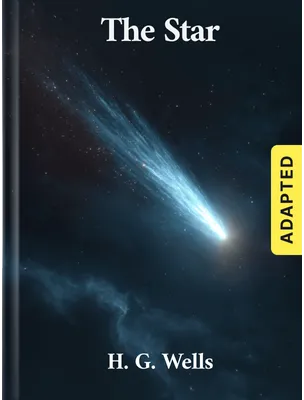
[adapted]
by
H. G. Wells

It was on the first day of the new year that the announcement was made, almost at the same time from three observatories, that the movement of the planet Neptune, the farthest of all the planets that move around the sun, had become very unusual and not regular. Ogilvy had already pointed out a possible slowing in its speed in December.
Such news was not likely to interest a world where most people did not know that the planet Neptune existed, nor, outside the group of professional astronomers, did the later discovery of a dim, far-away spot of light in the area of the troubled planet cause much excitement.
Scientists, however, found the news surprising enough, even before people knew that the new object was quickly growing larger and brighter, that its movement was very different from the regular path of the planets, and that the change in the path of Neptune and its moon was now becoming something never seen before.
Few people without training in science can understand the great loneliness of the solar system. The sun, with its tiny dots of planets, its dust of small planets, and its very light comets, moves in a huge empty space that is almost too much to imagine. Beyond the orbit of Neptune there is space, empty so far as humans have seen, without warmth or light or sound, empty nothing, for twenty million times a million miles. That is the smallest guess of the distance to be crossed before the very nearest of the stars is reached.
And, except for a few comets less solid than the thinnest flame, nothing had ever, as far as people knew, crossed this wide emptiness of space, until early in the twentieth century this strange traveler appeared. It was a huge mass of stuff, bulky, heavy, rushing without warning out of the dark mystery of the sky into the bright light of the sun. By the second day it was clearly visible to any good instrument, as a speck with a hardly noticeable size, in the group of stars Leo near Regulus. In a little while an opera glass could see it.
On the third day of the new year, newspaper readers in both halves of the world learned for the first time how important this strange thing in the sky was. “A Planetary Collision,” one London paper used this as the headline, and it stated Duchaine’s opinion that this strange new planet would probably hit Neptune. The editorial writers wrote more about the topic. So that in most of the capitals of the world, on January 3rd, there was an expectation, even if vague, of some event in the sky that would happen soon; and as night followed the sunset around the world, thousands of men turned their eyes up to the sky to see — the old familiar stars just as they had always been.
Until it was dawn in London and Pollux was setting and the stars above grew pale. The winter dawn it was, a weak, thin gathering of daylight, and the light of gas and candles shone yellow in the windows to show where people were awake. But the yawning policeman saw it, the busy crowds in the markets stopped with open mouths, workmen going to their work early, milkmen, the drivers of news-carts, people from late parties going home tired and pale, homeless wanderers, guards on their rounds, and in the country, labourers walking to the fields, poachers sneaking home, all over the dim, waking country it could be seen — and out at sea by sailors watching for the day — a great white star, that had come suddenly into the western sky!
It was brighter than any star in our skies; brighter than the evening star at its brightest. It still shone white and big, not just a twinkling spot of light, but a small round clear shining disc, an hour after the day began. And in places where science has not reached, men stared and were afraid, telling each other about the wars and diseases that these fiery signs in the sky warn about. Strong Boers, dark Hottentots, Gold Coast negroes, Frenchmen, Spaniards, Portuguese, stood in the warmth of the sunrise watching this strange new star go down.
And in a hundred observatories there had been hidden excitement, rising almost to loud shouting, as the two far bodies had come together fast, and a running back and forth, to get cameras and a spectroscope, and this tool and that, to record this new amazing sight, the destruction of a world. For it was a world, a sister planet of our earth, much bigger than our earth indeed, that had so suddenly burst into burning death. Neptune it was, had been hit, straight on, by the strange planet from outer space, and the heat of the crash had at once turned two solid worlds into one huge mass of glowing fire.
Around the world that day, two hours before dawn, the pale great white star went, fading only as it sank to the west and the sun rose above it. Everywhere people were amazed at it, but of all those who saw it none could have been more amazed than those sailors, who often watched the stars, who far away at sea had heard nothing of its coming and saw it now rise like a tiny moon and climb toward the top of the sky and hang overhead and sink to the west as the night passed.
And when next it rose over Europe, everywhere there were crowds of people watching on the sides of hills, on the roofs of houses, in open spaces, looking to the east to see the great new star rise. It rose with a white glow in front of it, like the bright light of a white fire, and those who had seen it appear the night before cried out when they saw it. “It is larger,” they cried. “It is brighter!” And, indeed, the moon, a quarter full and going down in the west, looked much bigger, but hardly, in all its width, did it have as much brightness now as the little circle of the strange new star.
“It is brighter!” shouted the people crowding in the streets. But in the dark observatory buildings the watchers held their breath and looked at one another. “It is nearer,” they said. “Nearer!”
And voice after voice repeated, “It is nearer,” and the clicking telegraph machine picked that up, and it moved along telephone wires, and in a thousand cities dirty printers touched the letters. “It is nearer.” Men writing in offices, hit by a strange, sudden thought, threw down their pens, men talking in a thousand places suddenly saw a strange, terrible idea in those words, “It is nearer.” It hurried along streets that were waking up, it was shouted down the cold, still roads of quiet villages, men who had read these things from the moving tape stood in yellow-lit doorways shouting the news to the people passing by.
“It is closer.” Pretty women, blushing and shining, heard the news told jokingly between the dances, and pretended a smart interest they did not feel. “Closer! Really. How strange! How very, very clever people must be to find out things like that!”
Lonely poor travelers walking through the winter night said those words softly to comfort themselves — looking up at the sky. “It needs to be nearer, because the night is very cold. It doesn’t seem to give much warmth even if it is nearer, all the same.”
“What is a new star to me?” cried the crying woman on her knees beside her dead body.
The schoolboy, getting up early to study for his exam, figured it out by himself — with the great white star, shining wide and bright through the ice patterns on his window. “Centrifugal, centripetal,” he said, with his chin on his fist. “Stop a planet in its path, take away its centrifugal force, what then? The centripetal force has it, and down it falls into the sun! And this — !”
“Are we in the way? I wonder — ”
The light of that day ended like the others, and with the later hours of the cold darkness the strange star rose again. And it was now so bright that the growing moon seemed like a pale yellow ghost of itself, hanging huge in the sunset. In a South African city a great man had married, and the streets were lit to welcome his return with his bride. “Even the skies have lit up,” said a flatterer. Under Capricorn, two black lovers, facing the wild animals and evil spirits, for love of each other, crouched together in a cane thicket where the fireflies flew. “That is our star,” they whispered, and felt strangely comforted by the soft brightness of its light.
The great mathematician sat in his private room and pushed the papers away from him. His calculations were already finished. In a small white bottle there was still a little of the medicine that had kept him awake and active for four long nights. Each day, calm, clear, patient as always, he had given his lesson to his students, and then had come back at once to this very important calculation. His face was serious, a little thin and tired, and he was hot and too active from the medicine. For some time he seemed lost in thought. Then he went to the window, and the window blind went up with a click. Half way up the sky, over the crowded roofs, chimneys and church towers of the city, the star hung.
He looked at it like one might look into the eyes of a brave enemy. “You may kill me,” he said after a silence. “But I can hold you — and all the universe as well — in the grip of this little brain. I would not change. Even now.”
He looked at the little bottle. “There will be no need to sleep again,” he said. The next day at noon, exactly on time, he entered his lecture hall, put his hat on the end of the table as he usually did, and carefully chose a large piece of chalk. It was a joke among his students that he could not lecture without that piece of chalk to play with in his fingers, and once he could not do anything because they hid all his chalk.
He came and looked under his grey eyebrows at the rising rows of young fresh faces, and spoke with his usual careful, plain way of speaking. “Things have happened — things beyond my control,” he said and paused, “which will stop me from finishing the course I had planned. It seems, gentlemen, if I may say it clearly and briefly, that — Man has lived for nothing.”
The students glanced at one another. Had they heard right? Mad? There were raised eyebrows and grinning lips, but one or two faces remained focused on his calm face with grey hair. “It will be interesting,” he was saying, “to use this morning for an explanation, as far as I can make it clear to you, of the sums that have led me to this result. Let us suppose — ”
He turned to the blackboard, thinking about a diagram in his usual way. “What was that about ‘lived in vain?’” whispered one student to another. “Listen,” said the other, nodding at the teacher.
And soon they began to understand.
That night the star rose later, for its steady eastward movement had taken it some way across Leo towards Virgo, and its brightness was so great that the sky became a bright blue as it rose, and every star was hidden one by one, except only Jupiter high overhead, Capella, Aldebaran, Sirius and the pointer stars of the Bear. It was very white and beautiful. In many parts of the world that night a pale ring went around it. It was clearly larger; in the clear sky of the tropics that bent the light it seemed as if it was nearly a quarter the size of the moon.
The frost was still on the ground in England, but the world was as bright as if it were summer moonlight. You could see to read quite ordinary print by that cold clear light, and in the cities the lamps burnt yellow and pale.
And everywhere the world was awake that night, and throughout the Christian lands a low, sad sound hung in the cold air over the countryside like the buzzing of bees in the heather, and this low, humming noise grew to a loud ringing in the cities. It was the ringing of the bells in a million bell towers and steeples, calling the people to sleep no more, to do no more wrong, but to come together in their churches and pray. And overhead, growing larger and brighter, as the earth moved on its way and the night passed, the very bright star rose.
And the streets and houses were lit in all the cities, the shipyards were bright, and all roads that led to the hills were lit and crowded all night long. And in all the seas around the countries, ships with beating engines, and ships with full sails, full of men and living creatures, were sailing out to the ocean and the north. For already the warning of the great mathematician had been sent by telegraph all over the world, and translated into a hundred languages.
The new planet and Neptune, locked together in a hot grip, were spinning straight ahead, ever faster and faster towards the sun. Already every second this burning mass flew a hundred miles, and every second its great speed increased. As it flew now, in fact, it would pass a hundred million miles away from the earth and hardly affect it. But near the path it was meant to take, so far only slightly changed, the very big planet Jupiter spun, and his moons went in a fine circle round the sun. Every moment now the pull between the hot star and the biggest of the planets grew stronger.
And the result of that pull? Surely Jupiter would be turned aside from its path into an oval path, and the burning star, pulled by Jupiter’s pull away from its rush toward the sun, would “follow a curved path” and perhaps hit, and certainly pass very close to, our earth. “Earthquakes, volcanic eruptions, storms, sea waves, floods, and a steady rise in temperature to I do not know what limit” — so predicted the great mathematician.
And above, to show his words were true, alone and cold and pale, shone the star of the coming danger.
To many who stared at it that night until their eyes hurt, it seemed that it was coming closer. And that night, too, the weather changed, and the ice that had held all Central Europe and France and England softened towards melting.
But you must not think because I have talked about people praying all night and people getting on ships and people running away to the mountains that the whole world was already in great fear because of the star. In fact, the usual ways still ruled the world, and except for the talk in free moments and the beauty of the night, nine people out of ten were still busy with their usual jobs. In all the cities the shops, except one here and there, opened and closed at their usual hours, the doctor and the funeral worker did their work, the workers went to the factories, soldiers trained, students studied, lovers looked for each other, thieves hid and ran away, politicians made their plans.
The printing presses of the newspapers roared through the nights, and many priests from different churches would not open their churches to help what they thought was a silly panic. The newspapers kept saying the lesson of the year 1000 — for then, too, people had expected the end. The star was no star — only gas — a comet; and even if it was a star it could not hit the earth. Nothing like this had happened before. Common sense was strong everywhere, mocking, joking, a little ready to trouble the stubborn fearful. That night, at seven-fifteen by Greenwich time, the star would be at its nearest to Jupiter.
Then the world would see how things would go. The great mathematician’s serious warnings were taken by many as nothing but fancy showing off. Common sense at last, a little upset by arguing, showed its firm beliefs by going to bed. So, too, the wild and rough people, already tired of the new thing, went about their nightly business, and except for a howling dog here and there, the animal world ignored the star.
But still, when at last the people watching in the countries in Europe saw the star come up, an hour later it is true, but no larger than it had been the night before, there were still plenty awake to laugh at the great mathematician — to think the danger had passed.
But after this the laughter stopped. The star grew — it grew in a very steady way, hour after hour, a little larger each hour, a little nearer the highest point in the sky at midnight, and brighter and brighter, until it had turned night into a second day. If it had come straight to the earth instead of in a curved path, if it had lost no speed to Jupiter, it must have jumped the space between in a day, but in fact it took five days altogether to come to our planet. The next night it had become a third the size of the moon before it set to people in England, and the thaw was sure.
It rose over America near the size of the moon, but blinding white to look at, and hot; and a puff of hot wind blew now with its rising and growing strength, and in Virginia, and Brazil, and down the St. Lawrence valley, it shone on and off through fast-moving thick thunder clouds, flashing purple lightning, and hail never seen before. In Manitoba there was melting and terrible floods. And upon all the mountains of the earth the snow and ice began to melt that night, and all the rivers coming out of high land flowed thick and muddy, and soon — in their upper parts — with swirling trees and the bodies of animals and men. They rose steadily, steadily in the ghostly brightness, and came slowly over their river banks at last, behind the people running away from their valleys.
And along the coast of Argentina and up the South Atlantic the tides were higher than anyone could remember, and the storms pushed the waters, in many cases, tens of miles inland, drowning whole cities. And the heat grew so great during the night that the rising of the sun was like a shadow coming. The earthquakes began and grew until all down America from the Arctic Circle to Cape Horn, hillsides were sliding, cracks were opening, and houses and walls were crumbling to ruin. The whole side of Cotopaxi slipped out in one great shaking, and a great flood of lava poured out so high and wide and fast and liquid that in one day it reached the sea.
So the star, with the pale moon behind it, moved across the Pacific, with thunderstorms trailing behind like the edge of a robe, and the growing tidal wave that followed behind it, foaming and ready, poured over island after island and swept them clear of people. Until that wave came at last — in a blinding light and with heat like a furnace, fast and terrible it came — a wall of water, fifty feet high, roaring loudly, on the long coasts of Asia, and swept in across the flat lands of China.
For a time the star, hotter now and bigger and brighter than the sun at its strongest, shone with cruel brightness on the wide and crowded country; towns and villages with their temples and trees, roads, wide farm fields, millions of sleepless people staring in helpless fear at the glowing sky; and then, low and growing, came the sound of the flood. And so it was with millions of men that night — a flight to nowhere, with arms and legs made heavy by the heat and breathing hard and short, and the flood like a wall, fast and white, behind. And then death.
China was lit glowing white, but over Japan and Java and all the islands of Eastern Asia the great star looked like a ball of dull red fire because of the steam, smoke, and ash that the volcanoes were throwing out to greet its coming. Above was the lava, hot gases and ash, and below the boiling floods, and the whole earth shook and rumbled with the shocks of earthquakes. Soon the very old snows of Thibet and the Himalaya were melting and pouring down in ten million deepening channels that came together onto the plains of Burmah and Hindostan. The tangled tops of the Indian jungles were on fire in a thousand places, and below the fast waters around the stems were dark things that still struggled weakly and reflected the blood-red flames. And in a helpless confusion a great many men and women fled down the wide rivers to that one last hope of men — the open sea.
The star grew larger, and larger, hotter, and brighter with a terrible speed now. The tropical ocean had stopped shining, and the swirling steam rose in ghost-like rings from the black waves that crashed again and again, spotted with ships thrown by the storm.
And then a strange thing happened. It seemed to the people in Europe who watched for the star to rise that the world must have stopped its turning. In a thousand open places on low hills and high land the people who had run there from the floods and the falling houses and sliding hillsides watched for that rising, but it did not come. Hour followed hour through a terrible waiting, and the star did not rise. Once again people looked at the old groups of stars they had thought were lost to them forever. In England it was hot and clear overhead, though the ground shook all the time, but in the tropics, Sirius and Capella and Aldebaran showed through a cloud of steam. And when at last the great star rose nearly ten hours late, the sun rose close after it, and in the center of its white heart was a black disk.
Over Asia the star had begun to fall behind the movement of the sky, and then suddenly, as it hung over India, its light had been hidden. All the plain of India from the mouth of the Indus to the mouths of the Ganges was a shallow sheet of shining water that night, out of which rose temples and palaces, mounds and hills, black with people. Every mosque tower was a crowded mass of people, who fell one by one into the muddy waters, as heat and fear were too much for them.
The whole land seemed to be crying, and suddenly there swept a shadow across that fire of deep sadness, and a breath of cold wind, and a coming together of clouds, out of the cooling air. Men looking up, almost blinded, at the star, saw that a black circle was moving slowly across the light. It was the moon, coming between the star and the earth. And even as men cried to God at this relief, out of the East with a strange speed no one could explain the sun sprang up. And then star, sun and moon rushed together across the sky.
So it was that soon, to the European watchers, the star and the sun rose close to each other, moved very fast for a while and then more slowly, and at last stopped, the star and the sun joined into one bright flame at the top of the sky. The moon no longer covered the star but could not be seen in the brightness of the sky. And though those who were still alive mostly looked at it with that dull, slow feeling that hunger, tiredness, heat, and hopelessness cause, there were still men who could understand the meaning of these signs. The star and the earth had been at their nearest, had turned around each other, and the star had passed. Already it was moving away, faster and faster, in the last part of its very fast journey down into the sun.
And then the clouds came together, blocking the view of the sky, the thunder and lightning made a cover around the world; all over the earth there was such a heavy rain as people had never seen before, and where the volcanoes burned red against the cloud cover there came down floods of mud. Everywhere the waters were pouring off the land, leaving ruins filled with mud, and the earth covered like a beach after a storm with all that had floated, and the dead bodies of the people and animals, its children.
For days the water ran off the land, washing away soil and trees and houses in the way, and piling up huge earth walls and scooping out huge gullies over the countryside. Those were the days of darkness that followed the star and the heat. All through them, and for many weeks and months, the earthquakes continued.
But the star had passed, and men, driven by hunger and getting courage only slowly, might go back slowly to their ruined cities, buried grain stores, and wet fields. The few ships that had escaped the storms of that time came back shocked and broken and felt their way carefully through the new signs and shallow places of once familiar ports. And as the storms ended men noticed that everywhere the days were hotter than before, and the sun larger, and the moon, now only one third as big as before, now took eighty days between one new moon and the next.
But about the new friendship that soon grew among people, about the keeping safe of laws and books and machines, about the strange change that had come to Iceland and Greenland and the shores of Baffin’s Bay, so that the sailors who came there soon found them green and pleasant, and could hardly believe their eyes, this story does not tell. And not about the moving of people, now that the earth was hotter, to the north and to the south towards the poles of the earth. It is only about the coming and the passing of the Star.
The Martian astronomers — for there are astronomers on Mars, although they are very different from people — were naturally very interested in these things. They saw them from their own point of view, of course. “Thinking about the size and heat of the object that was thrown through our solar system into the sun,” one wrote, “it is surprising how little damage the earth, which it almost hit, has had.”
All the familiar marks of the continents and the large areas of the seas remain whole, and in fact the only difference seems to be a shrinking of the white areas (thought to be frozen water) around each pole.” This only shows how small the biggest of human disasters may seem, at a distance of a few million miles.