'The Star' was first published in 1897.
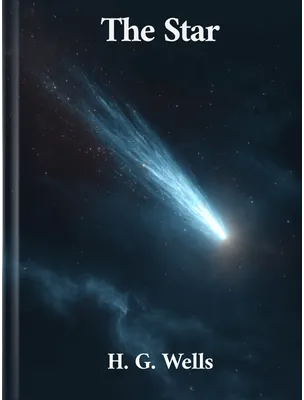
"The Star" is an 1897 apocalyptic short story by H. G. Wells.
In January (about 1900, presumably), the people of Earth awaken to the news that a strange luminous object has entered the Solar System, disturbing the orbit of the planet Neptune. The object, a celestial body, is visible in the sky in the constellation of Leo. Although initially it is only of interest to astronomers, eventually the world media announces that it is a star heading toward the center of our star system.
In the captivating tale "The Star" by H. G. Wells, the cosmos holds a secret that threatens the very existence of Earth. As a mysterious celestial body moves through the heavens, it brings with it an air of dread and uncertainty. The story follows a group of characters, including a thoughtful astronomer and a family caught in the chaos of impending doom. Each character wrestles with their own fears and hopes as they confront the possibility of a world forever changed.
Wells masterfully weaves a narrative that explores humanity's place in the universe and the delicate balance between knowledge and ignorance. The looming disaster forces everyone to reflect on their lives, relationships, and the fragility of civilization. As the clock ticks down, the stakes rise, and the question remains: how will humanity respond when faced with the unimaginable? Join the journey through the stars and the depths of human emotion in this thought-provoking story that challenges our understanding of fate and survival.
Full Name: Herbert George Wells
Birthdate: September 21, 1866
Place of Birth: Bromley, Kent, England
Date and Place of Death: August 13, 1946, in London, England
Occupation: Author, historian, and social commentator
Notable Works: Some of Wells's famous books include "The Time Machine," "The War of the Worlds," "The Invisible Man," and "The First Men in the Moon."
Early Life: H. G. Wells was born into a working-class family. His father was a shopkeeper, and his mother worked as a domestic servant. He had a difficult childhood, but he was an eager student and loved reading from a young age.
Literary Career: Wells began his writing career in the late 19th century. He became known for his science fiction stories that explored futuristic ideas and social issues. His work often combined adventure with deep thoughts about society and humanity.
Personal Life: Wells was married twice and had three children. He was known for his progressive views on politics and society, often advocating for social reform. His ideas about the future and technology influenced many readers and writers.
H. G. Wells was an English writer known for his contributions to science fiction, including classics like 'The Time Machine' and 'The War of the Worlds.'
'The Star' is a science fiction short story that explores cosmic themes and the impact of celestial events on Earth.
The story focuses mainly on an unnamed narrator and his observations of the catastrophic event caused by a star.
The plot revolves around a cataclysmic event involving a star that threatens Earth's existence, leading to reflections on humanity's place in the universe.
Key themes include human vulnerability, the insignificance of mankind in the cosmos, and the impact of scientific discovery.
The star symbolizes both the beauty and danger of the universe, representing nature's power and humanity's fragility.
'The Star' was generally well-received, praised for its imaginative concept and philosophical depth.
As of now, there are no major film or television adaptations of 'The Star,' but it remains a popular story in literary discussions.
'The Star' has influenced discussions about science fiction and existentialism, prompting readers to consider humanity's role in the universe.