The book 'Sharks' was published on April 15, 2021.
[{"id":"para_1","index":0,"start":0,"offset":323,"words":3,"paraNum":"","lastModified":1777295270000,"semanticType":"title-subtitle","voicework":"tts","blockId":"sharks_easy_reads_en-bl3c","language":"en","wordsRange":{"start":33333333,"end":66666667},"paragraphVersion":27,"direction":"ltr","paragraph":"<h1 class=\"ilm-title ilm-subtitle\" id=\"para_1\" semantictype=\"title-subtitle\" data-ilmid=\"sharks_easy_reads_en-bl3c\" data-audio=\"1\" data-chapter=\"para_1\" data-words-count=\"3\" data-before=\"0\" data-ww=\"\"><span class=\"block-pb\"> <span class=\"block-pb is-animated\"></span> </span><span class=\"itm-wrap\">Did you know?</span></h1>","hasContent":true,"isFirst":true,"isLast":false},{"id":"para_2","index":1,"start":323,"offset":315,"words":1,"paraNum":"","lastModified":1777295195000,"semanticType":"title-book-title","voicework":"tts","blockId":"sharks_easy_reads_en-bl3d","language":"en","wordsRange":{"start":77777778,"end":88888889},"paragraphVersion":29,"direction":"ltr","paragraph":"<h1 class=\"ilm-title ilm-large\" id=\"para_2\" semantictype=\"title-book-title\" data-ilmid=\"sharks_easy_reads_en-bl3d\" data-audio=\"1\" data-chapter=\"para_2\" data-words-count=\"1\" data-before=\"3\" data-ww=\"\"><span class=\"block-pb\"> <span class=\"block-pb is-animated\"></span> </span><span class=\"itm-wrap\">Sharks</span></h1>","hasContent":true,"isFirst":false,"isLast":false},{"id":"para_3","index":2,"start":638,"offset":348,"words":2,"paraNum":"","lastModified":1777295338000,"semanticType":"title-author","voicework":"tts","blockId":"sharks_easy_reads_en-bl2s","language":"en","wordsRange":{"start":100000000,"end":102000000},"paragraphVersion":43,"direction":"ltr","paragraph":"<h1 class=\"ilm-title ilm-author ilm-x-large ilm-nopad\" id=\"para_3\" semantictype=\"title-author\" data-ilmid=\"sharks_easy_reads_en-bl2s\" data-audio=\"1\" data-chapter=\"para_3\" data-words-count=\"2\" data-before=\"4\" data-ww=\"\"><span class=\"block-pb\"> <span class=\"block-pb is-animated\"></span> </span><span class=\"itm-wrap\">by <br>Sophie Walker</span></h1>","hasContent":true,"isFirst":false,"isLast":false},{"id":"para_4","index":3,"start":986,"offset":148,"words":0,"paraNum":"","lastModified":1777294037000,"semanticType":"line","blockId":"sharks_easy_reads_en-bl3e","language":"en","wordsRange":{"start":135333333,"end":168666667},"paragraphVersion":17,"direction":"ltr","paragraph":"<hr class=\"ilm-hr ilm-small\" id=\"para_4\" semantictype=\"line\" data-ilmid=\"sharks_easy_reads_en-bl3e\" data-words-count=\"0\" data-before=\"6\" data-ww=\"\">","hasContent":true,"isFirst":false,"isLast":false},{"id":"para_5","index":4,"start":1134,"offset":1597,"words":0,"paraNum":"","lastModified":1777294263000,"semanticType":"illustration","blockId":"sharks_easy_reads_en-bl3f","language":"en","wordsRange":{"start":179777778,"end":190888889},"paragraphVersion":31,"direction":"ltr","paragraph":"<div class=\"ilm-illustration\" id=\"para_5\" semantictype=\"illustration\" data-ilmid=\"sharks_easy_reads_en-bl3f\" data-words-count=\"0\" data-before=\"6\" data-ww=\"\"><img width=\"419\" height=\"600\" data-src=\"ch0p0\" src=\"data:image/webp;base64,UklGRuYDAABXRUJQVlA4INoDAABQEQCdASoqADwAPm0ukUYkIqGhKrgO+IANiWwAsR8l/RyMbN/feBiMTCa25+5D8oDrYPQA6VnyjqxHzXhQFMj2PWzqgq5e8+pJyS/H7eVyLvu0ykNd2qdAWN+mRT+2Gh35Lz27FnC2vp5ijWyUz+XDRWLdMsq/I1IumVbYsZwLCCCK3kWYwMwqLCu092r4U0m1GAAA/v8zHBmBFXor9clwS6OOpzTJyGNA9bW7f7xF+HJf99HMVuQqwZ56abhrXn8yCH1N5JSfvMxipwbfSCda54pW7SiA8OBsf30lpugpjlNJGINlvWOVK5ynE+y3nm814z36T6B+UzQHJiJck4yXHm0PMdTK3QiPt2LxmWC54uF1UlC/GFCt8vXO+JaVCwzHm6vFTb5WfE0/qUKpORpnRmZOFTkMCJYQ7YuOiXlusZC81sxDh29RQrjdcRUyl6q1zI9tv3yK/6/jCFznhAZYA67kT0XtLPsu7JU88S1wJWB5iSrLrUjka7ESoWyE69yzcYI5DLu5xXBTkf9xKF3wPGYqznKcCAdku953aW6Jh59b33+RdEHLpdWCl5ddWV6iGl0aP0qnSNY5i1LhtgLrU52BhIE5qCAyVo9bNHMSJno3V3wt+e6qken6NysI0O5/ryxEN9BLBnTjtKk/Xu9w/TQTg/MvkklmrFGdSIHqunVNw/XLaS0qBRvEO4ItAZRj+Mv+xj1KHwC/dxOkVWrlOcmkMstCA/Kjroy7O87eo0FLC5+bVK/Zs2Rw4pc5DIB5MV6dehKbmAgfiO+GGrzRrR9O7/zuFDTNidGr9mdNWBu5EfUbup2Vm9X6INaM2Krc3Q0BqeSL63P6SipHm7vYyWSUYRG1zK/T8LQ+OZ2KZIfszWPd16MeMF6+L7WOJl18F/xAk6CDK8Ow+Jx7+5cmIeZErlR9FscqX314TM2lhTKM7nD9dp6BkeStopOalogPq/PO4pmCnxuw21VirAy5qQ4pd+iPcpL0YGOZMIegPxgECD6UJ0IaywXSrp8XjAOzZGohNKh2T+g7X+EI578cEr+JHAksfoWsf9Tg3oYHa240CH4408qn4Q+cqQAurSxIRPIj9we3w75YaE12UATs9703Exo/RD7od/eimr37tbs66j0aCKddKro5/nmB3aeuKS+hayImdzsZIwvSa+Kmbqrfi7t56b+5ms08i8M9CREiyt5eRXz7qATOcRUbh0fJaAOrzLpc9zCRB8NF98B0CZa5vquOUCA7v9h1UMySD5kNrR0K2tEfa0GXX+kjXjBu3ysTs6hcq2lOru8b5b8HZqtcZNgoEAAAAA==\" alt=\"Sharks\"></div>","hasContent":true,"isFirst":false,"isLast":false},{"id":"para_6","index":5,"start":2731,"offset":640,"words":62,"paraNum":"1","lastModified":1777294764000,"semanticType":"par","voicework":"tts","blockId":"sharks_easy_reads_en-bl2t","language":"en","wordsRange":{"start":202000000,"end":265000000},"paragraphVersion":41,"direction":"ltr","paragraph":"<p id=\"para_6\" semantictype=\"par\" data-ilmid=\"sharks_easy_reads_en-bl2t\" data-audio=\"1\" data-words-count=\"62\" data-before=\"6\" data-ww=\"\"><span class=\"block-num\" data-id=\"1\"></span><span class=\"block-pb\"> <span class=\"block-pb is-animated\"></span> </span><span class=\"itm-wrap\">Welcome to the big blue ocean! Meet Hiro and his teacher, Thalassa. Today, they are visiting the aquarium to learn about one of the most famous animals in the sea: the shark. Many people are afraid of sharks, but they are actually very helpful and interesting. “Are you ready to learn some amazing facts?” asks Thalassa. Hiro nods with a big smile.</span></p>","hasContent":true,"isFirst":false,"isLast":false},{"id":"para_7","index":6,"start":3371,"offset":1486,"words":0,"paraNum":"","lastModified":1777294296000,"semanticType":"illustration","blockId":"sharks_easy_reads_en-bl2u","language":"en","wordsRange":{"start":365000000,"end":367000000},"paragraphVersion":40,"direction":"ltr","paragraph":"<div class=\"ilm-illustration\" id=\"para_7\" semantictype=\"illustration\" data-ilmid=\"sharks_easy_reads_en-bl2u\" data-words-count=\"0\" data-before=\"68\" data-ww=\"\"><img width=\"419\" height=\"600\" data-src=\"ch0p1\" src=\"data:image/webp;base64,UklGRpIDAABXRUJQVlA4IIYDAABQEACdASoqADwAPm0uk0akIqGhKBVeMIANiWYAxQt/l3gmu1h1dufzx2mO7y9PtebX1fJ+rBntJNdYrqEdLU9n+PxpXebZC5Zy5JHor34Qsa8PKr/d6FkB0W7lMHIEoIi1b+qmNJPc22q1Bu8sOwcluChiOO0Dxs6Szm9tbKCtrPj+jhUUOjU4LVFgAP7/AJqlzs31TY2i8cAg3Vi4Ozg24N6obCDe3pL1lr93vJ5pwHfr5A2tm5BRr2jAd8Dd2dnqgHnyOnLU/bL8QgJ/otF3TCSC4HETO6CjmoahHBkReqZ8b98ypdoz+4DzxsWBKBSbug2Z7n/iAofW5li7/4mQeee63N6SMqFOMMm72KIWPn9z48xtFS/nMWb7TtiYnwnWZdRC+10Ic6xsONsdsf9G82uvNqHcb+glog+f/FEIiXDhvVNW4O4dtTQITUG/xlP2PUL6cq2vGfsvMnY9I3iF98NDWSW3DJpMPnux+3FbvU6QJTphVrhgfWAPH9JwZtyN6qryEiBMkj37nO8udhFdHrd/hXViH+uLxvm+TPvQ/r6irTojQSNJ9gokincAz/Hj9PWTdf2kvmYfQFlwTrRrjp8du0D7T764i5q4SG23yl7V1TG0O1Ufo/HsG0/xfwiG8G2ryiF1cC1RX8/xmuX57SRFtQY/jlaT8SC5mXCZA+wwwNTRRIwSGLBwaGLk39vZ+6+U4eANCRXz3NjH/Pz8wpEiUntPDhRLJtSeODE9L2RF6eYmE9b4b+LWcsy6ccaaj74c926sB/09HFi7iZJ/FzZ/sVyUWXgPooB2XDNapjDQDzSwGiu3stzQ/YcCn3BhwOyea+Chn7+4pWpRBSCjlVxnbAfR4YPdAydgyKexQNT20KNQvk/Bw5b9MNcw5QBpBLzHUxCch3yQ1BsmJlnPBXytXPICAOPr7rQnaiw1nfxuD89ZZoMW2ZoEzxe8DpOp8663xrMO/VN8eaeT7kt70YHIzTT++a62TQvNQ9glm6yabEoyZe2+VQSOm/Fo1SKU9EQp8WbPw8xE+eiUgnMfwqI0OVoQT4g1YaZrJvKfKrPQivw/4Wv70XXfWKtmMX9qbY2TF7P9ASMj0P7m5tE38oGQ9b7xBjDYswYB4N4DSWWudiLSMppGSqgmPj6RbzGg9KH0xguPb/hPJezKWZlRHIuAzftFMHs1CWFBgSui7h0EIAAAAA==\" alt=\"Sharks\"></div>","hasContent":true,"isFirst":false,"isLast":false},{"id":"para_8","index":7,"start":4857,"offset":934,"words":60,"paraNum":"2","lastModified":1777295183000,"semanticType":"par","voicework":"tts","blockId":"sharks_easy_reads_en-bl2v","language":"en","wordsRange":{"start":467000000,"end":528000000},"paragraphVersion":39,"direction":"ltr","paragraph":"<p id=\"para_8\" semantictype=\"par\" data-ilmid=\"sharks_easy_reads_en-bl2v\" data-audio=\"1\" data-words-count=\"60\" data-before=\"68\" data-ww=\"\"><span class=\"block-num\" data-id=\"2\"></span><span class=\"block-pb\"> <span class=\"block-pb is-animated\"></span> </span><span class=\"itm-wrap\">Did you know that sharks do not have any bones? Their bodies are made of <span class=\"intricate-word\"><span class=\"-nowrap-content\">cartilage.<a data-fnid=\"1\" epub:type=\"noteref\" href=\"#n0\"></a> </span></span>Hiro touches his own nose and bends his ear. “Cartilage is soft and bendy,” Thalassa explains. This light material helps sharks stay afloat and swim very fast. Because they have no heavy bones, they can turn quickly to catch their food or escape danger.</span></p><aside id=\"n0\" data-audio=\"0\" data-fnid=\"1\" class=\"bh-fn\" epub:type=\"footnote\" data-ww=\"\"><span>a strong, flexible tissue (like what your ears and nose are made of)</span></aside>","hasContent":true,"isFirst":false,"isLast":false},{"id":"para_9","index":8,"start":5791,"offset":1547,"words":0,"paraNum":"","lastModified":1777294321000,"semanticType":"illustration","blockId":"sharks_easy_reads_en-bl2w","language":"en","wordsRange":{"start":628000000,"end":630000000},"paragraphVersion":47,"direction":"ltr","paragraph":"<div class=\"ilm-illustration\" id=\"para_9\" semantictype=\"illustration\" data-ilmid=\"sharks_easy_reads_en-bl2w\" data-words-count=\"0\" data-before=\"128\" data-ww=\"\"><img width=\"419\" height=\"600\" data-src=\"ch0p2\" src=\"data:image/webp;base64,UklGRsADAABXRUJQVlA4ILQDAACwEACdASoqADwAPm0wkkckIqGhKAqogA2JZAC1G1TV0f/gnSxXvMtd5Yr+Xn137OchyIj29wS+5hRjcfK9Rofkn1Ck5pd2+06o69FcTBWeK9ZUVVkh3Yf9EnJgVmmD5b1fchTry6Pf5vAob3q904yKVm4zOXU3UGscS2TrQzY+gb0RTrMIGHu9GLAzddAAAP7/ak3K3WwHivfeZEVdtHp2pmFaX3BqhYf9PphSS5PR78DfZBDKxKfMacm9JQ8BAYn6pij66Wz/ggOtctoN40ECiggFN4jxYeDgWwYVzIXQqXYgoh6nByqzudlSLpb+toC+hIZUdjrJeM4Co9JFj4DRRpVT0ffoGFzKqVrG5OufqulugqMGXSW8Yne7rC7EjhfUnljR+ocf0/6hSSZ6aRQZLUilN3POfKmVAZMtoWWlD+BKwyqVqClU3c016Z8la0lWNKj7w2oFFO1Mw12RWZlJlad89xlwvoviRWGkRkuj9zWD83alAHWIKB7gcKK09gC+B0aes5070pdFK0aqEEi/bbJfnyf332vTpoH1YGDosWe9BwqvRuYex/sUAKdu/u77PM2CG5vF2Ha6ZwWIBXzM/BxDNCu9wHyPyTajP2CBkHT/CUEXreEpJZMrkR1QhdnouWeZXhTkFwDZIf8SdB34tafPkUuH9IvQzrrrZaDrwMNh0dN3M+7EdLtU/ndnQihlcRlUVu6+fyDi+VUAtV7Jqny7difiLB5Bm5dbI+123bBT/L8ME6xgFSMfiQRke1ZFN6Y2JgmYnzesEFu17+kf3rzkvh5uuQnz1qh17M/vSTFrO0kvdfIrPopnXRmmCif3mKYtcd9gd01lyPuJXyqg0DO7NP0ftBwId/yVXGz/U5vNRPP3C4B1mvifwNtfk+iaOAL83nUDn8RlMtOxCyC1hwqobevPGCtioNjJ2r+ibnuLEjfAF0JsoEeeDhFTEL61ddcrEwprzxsgV6YM0K2jHDI6bog52k1GImCxFLWvDVjORFk9F7icIFIlUr7/Ivt+I7yJIylhcP8ybB5CMPLnrvJzkanMNK2OEO9ZHyIcKqu7duWbfcNf2iZcte57LVeCxY+KfBBfJJecOPRt+DxWjlIH3x6l+Bu30Pt19yGhhEU60oeJKPJli4MDz5puGt92OYqZv6SnRzsT1s7385Ve7jsSdePO46SQ+eZX6Zt4l91BEOsK4wWh6rtvSegmwie9yilgpIFtadas2kx4db6945bjk6zoFQP5EwhTXPCwjgq3QAA=\" alt=\"Sharks\"></div>","hasContent":true,"isFirst":false,"isLast":false},{"id":"para_10","index":9,"start":7338,"offset":635,"words":71,"paraNum":"3","lastModified":1777295258000,"semanticType":"par","voicework":"tts","blockId":"sharks_easy_reads_en-bl2x","language":"en","wordsRange":{"start":730000000,"end":802000000},"paragraphVersion":39,"direction":"ltr","paragraph":"<p id=\"para_10\" semantictype=\"par\" data-ilmid=\"sharks_easy_reads_en-bl2x\" data-audio=\"1\" data-words-count=\"71\" data-before=\"128\" data-ww=\"\"><span class=\"block-num\" data-id=\"3\"></span><span class=\"block-pb\"> <span class=\"block-pb is-animated\"></span> </span><span class=\"itm-wrap\">Sharks come in all shapes and sizes. Thalassa holds up a small model of a Dwarf Lantern Shark. It is so tiny that it can fit in a person’s hand! Then, she points to a picture of a Whale Shark, which can be as long as a school bus. There are over 500 different types of sharks in the world, and most of them are not dangerous to humans at all.</span></p>","hasContent":true,"isFirst":false,"isLast":false},{"id":"para_11","index":10,"start":7973,"offset":1620,"words":0,"paraNum":"","lastModified":1777294356000,"semanticType":"illustration","blockId":"sharks_easy_reads_en-bl2y","language":"en","wordsRange":{"start":902000000,"end":904000000},"paragraphVersion":49,"direction":"ltr","paragraph":"<div class=\"ilm-illustration\" id=\"para_11\" semantictype=\"illustration\" data-ilmid=\"sharks_easy_reads_en-bl2y\" data-words-count=\"0\" data-before=\"199\" data-ww=\"\"><img width=\"419\" height=\"600\" data-src=\"ch0p3\" src=\"data:image/webp;base64,UklGRvYDAABXRUJQVlA4IOoDAAAQEQCdASoqADwAPm0qkUWkIqGWrM7YQAbEtQBlVf/ps70eBjjbbvnkvRnvGG8q/4+gZcufuWUhSdvsy42C+lK+OdCdnwerP+57gzEsdaR4azLjaAgHJhTwaYTh3X9y7XZapIiBo358b1T26lVuTCBibkGd5g5EyM3NuSk8ws+j1KnVI5xS04ZWmVufbAj4Uu6AAP7+gkBjMbQLcuFWH/8TmY2/t/1XBkUfa8u0/z6bbqtrOnAfGDBi9Wecq4SeQC5/it86G3+qfKxFNosfaqKfs7ikaQySEB7MnUAFGS+Yo49qP4mSswZ8WYEmOwP9DfEM/pGSLOPXqEHb8/rBybD5EdITKln/yXpK4LhIzzLmwW4I+kws7CnfSyu02T86baGj4X7G05bRnr0LjgnEt6/jW956L9Op36ic5d+SVK3Zb9/7WPdv/TEos3/4/lIs4BuwYQNBTaum9sbWA9PaqcJf4SWezY++XX54aqORFOWsq8B07tnilA7bvwNilepj2omMwMwmfAxS5EAOhX0BAw+tzfcGWO9yXmeIPtTXjt1xQyWF+PRp23agA20bSsSwoi85pOP9pYyUfQFset05J9KSaZMHlafWYsXLZe51NE9GUiPH13pAn7b/1C9VTF4uHnScGVEOgYAHMm1DuS1wjDMgZqkLwQKPo9Kf8BYvBORnAV+fZlRilDW+xMV3gp2LKXFkjTH8ci1zgIgWyQaC7m0e5Bff7ZDAlwsdLH/N38lnvEJGpvfZnybNsVM1lZ+bASl6GXwKiseNmc4wW70eZ8s9TP9RUMue3X0DTPVjpsHfXsMrD43+LjAiRZ3QgGPN7RLyvev5l4cyA13/uj9bxv9R3CFm+4qbEPe+TG3mzRITrskHJnVIHBnO6vJiXRbqZbqMZHQP93gFPOezZZBHVcGkQOnm+uMqMajhti8DYSMMAC7nOKFF9qAcUT7SDjB4QJd+eTlZy3cua3hd8RxSzYfmh1N71Ptfgxxby+cfQEjIFH3nnBqu1gl37BkLv8V4+SNIAR/5bzgmxrcCmGY+fFCECHC4m9ED11apguwktC8L+p2CK82wh5z0ko7YExfU9ibkRth6ESNtLwmLS1UXlpOrYEi4sNj0RHwh32RXnPtsdyacqkAxteMKvuBhRq9oSC4mkxu9I+iVBK2IwOOAd+Fks6IhkhNfUUSaO5lh6KT1MD9WJmasOY2z3ADL/rawBxXnvd7A7rcc7fMefiDVyvHTr3gYoZzVUX7NOvmWaNJd0Eid6GP2cIXCTqKKgIcIvGRFJPmegwAbIJgQQl4DrYBmWBEzhwhXi0v4xVDK4VEQRK99KeZ5/qAAAAA=\" alt=\"Sharks\"></div>","hasContent":true,"isFirst":false,"isLast":false},{"id":"para_12","index":11,"start":9593,"offset":639,"words":65,"paraNum":"4","lastModified":1777295169000,"semanticType":"par","voicework":"tts","blockId":"sharks_easy_reads_en-bl2z","language":"en","wordsRange":{"start":1004000000,"end":1070000000},"paragraphVersion":41,"direction":"ltr","paragraph":"<p id=\"para_12\" semantictype=\"par\" data-ilmid=\"sharks_easy_reads_en-bl2z\" data-audio=\"1\" data-words-count=\"65\" data-before=\"199\" data-ww=\"\"><span class=\"block-num\" data-id=\"4\"></span><span class=\"block-pb\"> <span class=\"block-pb is-animated\"></span> </span><span class=\"itm-wrap\">Let’s look at their teeth! Sharks are very famous for their sharp teeth. But did you know that sharks can lose thousands of teeth in their lifetime? When a shark loses a tooth, a new one moves forward to take its place, like a conveyor belt. Hiro finds a small, triangular shark tooth in a display box. “It feels like a sharp stone,” he says.</span></p>","hasContent":true,"isFirst":false,"isLast":false},{"id":"para_13","index":12,"start":10232,"offset":1156,"words":0,"paraNum":"","lastModified":1777294369000,"semanticType":"illustration","blockId":"sharks_easy_reads_en-bl30","language":"en","wordsRange":{"start":1170000000,"end":1172000000},"paragraphVersion":44,"direction":"ltr","paragraph":"<div class=\"ilm-illustration\" id=\"para_13\" semantictype=\"illustration\" data-ilmid=\"sharks_easy_reads_en-bl30\" data-words-count=\"0\" data-before=\"264\" data-ww=\"\"><img width=\"419\" height=\"600\" data-src=\"ch0p4\" src=\"data:image/webp;base64,UklGRpoCAABXRUJQVlA4II4CAACwDACdASoqADwAPm00lUekIyIhJWpogA2JYgCnR2MRlCJ+GlmIGxqeEZ/OzKVu7YedcR1dF3+lXweFAfEgn2O+M7ZrpptdgyPqiwU6akEu2VPUorMcATLjaz1cK0oBMGypdBa1reENA5vWUUqwAAD+/3Z1LOPBB/CUkVxVkKDtwLD2kSJtsCYu1HHEeU/ufVXkO1v3iI9JDj4LCgXgXycnKJhCF+jsmcDlitXOlCcwRfcECBfw4TlEgyxEd3mIQTqfPqEOK0vUFxnJJzMkxFao0gqvt7jq9GwuYjxp+O6LEg9xL8jD1VZHZJ57AbotsIvf+JTjg6Mn8JYCpk0xeYD/FbdUeWPkcQ3H8KhIPq8jmXp7hoIarAQQzS8K1/VLIob1TbUk+Mp8IYE4qfUFjX3rBLQ9bUfzRuz20iCz7GQYZxfF9qxziPn96clW0HwRJFlDYYDb1s+97+YQligs/BXV/n6gVr2jL0CU4LnO3j4vsyVGeUMrtUofP1XoQrQOIdbXyP5+nhW7V1+KuO4QHzbXydxNppvLkvldDf1h8yuZJkhcC8RcN8muuHMi2O+Tl4rAvn7JTTQkX4r8x6RRUJLnoyFRF+aKSEfFM8S5Gbk3lj95UPSIJ5gWXJvazPHCY1v+smu+KF+3XgDmZJLQss29h08QRwSVA+f9MCfnJVVYXsSNpwQiGmz8u71qXGbUHhYJYVKkF3VT9aF3b+2Y1Qt2Yd64PV6d5IEWL9hTikg32h+gQj85y0ZdfmwcbpnaZa5tF5VsjwzAHR38anpSm/wZz8ESbZ8G6rA3Peac6pM+B5wdTq0nsJYqBqCgC7ivjqrAMBUOv3PB3vJgrXRx12yWqE4FwOWWG491hfuAAAA=\" alt=\"Sharks\"></div>","hasContent":true,"isFirst":false,"isLast":false},{"id":"para_14","index":13,"start":11388,"offset":622,"words":57,"paraNum":"5","lastModified":1777295213000,"semanticType":"par","voicework":"tts","blockId":"sharks_easy_reads_en-bl31","language":"en","wordsRange":{"start":1272000000,"end":1330000000},"paragraphVersion":42,"direction":"ltr","paragraph":"<p id=\"para_14\" semantictype=\"par\" data-ilmid=\"sharks_easy_reads_en-bl31\" data-audio=\"1\" data-words-count=\"57\" data-before=\"264\" data-ww=\"\"><span class=\"block-num\" data-id=\"5\"></span><span class=\"block-pb\"> <span class=\"block-pb is-animated\"></span> </span><span class=\"itm-wrap\">Most sharks must keep swimming to stay alive. This is because they need to keep water moving over their gills to breathe oxygen. A shark named Chondra is swimming nearby. Chondra never stops moving, even when she is resting! If she stops swimming, she cannot breathe well. This is why sharks are the champions of constant movement.</span></p>","hasContent":true,"isFirst":false,"isLast":false},{"id":"para_15","index":14,"start":12010,"offset":1480,"words":0,"paraNum":"","lastModified":1777294381000,"semanticType":"illustration","blockId":"sharks_easy_reads_en-bl32","language":"en","wordsRange":{"start":1430000000,"end":1432000000},"paragraphVersion":46,"direction":"ltr","paragraph":"<div class=\"ilm-illustration\" id=\"para_15\" semantictype=\"illustration\" data-ilmid=\"sharks_easy_reads_en-bl32\" data-words-count=\"0\" data-before=\"321\" data-ww=\"\"><img width=\"419\" height=\"600\" data-src=\"ch0p5\" src=\"data:image/webp;base64,UklGRo4DAABXRUJQVlA4IIIDAADwEACdASoqADwAPm0ykUakIyGhKrv8AIANiUAVhm7CMoNfgNtrzxXoz3kfebZ9Nz4hJUqb9sxVhRpmGf/2v9gU0cCZxv/+fYLLTQ/dcOVrlO1azuV8PBTTS5q2j6Oo68twtWnGW6PtMkpCjxetNQf/2fXM4zKaGrotLSZ5knHCN3D1O/jhp/kfk93LH1NH0AAA/v8yz0WtadL/Ia53A+JxvZxK35b4w1nY4s6PyIYfAxcS0z9V1D53SALx6IT6imLRG352Dny/OYgWSZ2pWjwCrpGgkHJ9yHGcf3hPrS1oRao8Yt8t6rv3/rYB8VKmHMTJ3FEGg/+70iYH3Cdnx2ZvPkVfzPBRwZ6A6Qv1KZkchwOaDjqwSjwQQkKd0RlnR/NoPXhGTao3V9H7ylr9lQVrP5+/d/t7aY3PZVOVjM7wOX4JNtqLdTiPAyr08ldJZNkpIGlbw5aYGczMFPQkzirliSf6RCuSOBexYkBMhxba2uwjRrOCskCH/HRO2RvdCa7y/Rhy3u0+mWwxToezTo57qUBoGXEsPemIGHYoOtW79csnEyOjR9Fu+r9Ic/oqDoNMYrRFiy9I6alzmPHDM9QhZ4Zj++TcO5mA4zNCrKhaIck9xXqn/UyXqNqe/YVnBsbXJqDxQo7EVNAMPyZP71Xu+d5MqOO0OVDq2DqxAMiigsdUcUGSvlcT43e6NjYeB61mD+Z6wogdxuAo0Cbl2nra8Z9KEVfPnnPO1cuUkqUdPu/zwZjfs9O2I45Mfiil2Yu/d6+P9aBGMCEqlS8l88uoTqz/6w2Icxoe9/JRuJDJ3V0Lu7PldqNqe5GJG0QYN5MTn6bMeQK+UIuPP2pKGySXEoRZO+q6fmBIWf8m697drpd58OrXXM3veTY1MCc5KBmuQHh2KNW44U/44yDvqTOR9RomwMtbZhmTdfOfdd73Rzw7SwrbSRP/RIycMokgrIzX7J44XOil3u6acJxjgb+MZKlLZ7GQxxKb4Qf2GPnR24bBfnt9IT0h6yFVT2VFA4zEs7zp3xO1W0gifBVub1abbaqSIHFyDij5ELsXVppUzXa+b5iGoWfOdHHxrKWI0ynRj+f9tfvPaVXz33ZnZuu4/v869iuUz6A9ehrEUJjZlIHRUHQjDXzWEYgUFYtUDMqfl99Y3Ns2v4M2+fTinyoeX6thr/s5mJNhgBWMvJKkpAAA\" alt=\"Sharks\"></div>","hasContent":true,"isFirst":false,"isLast":false},{"id":"para_16","index":15,"start":13490,"offset":621,"words":56,"paraNum":"6","lastModified":1777295243000,"semanticType":"par","voicework":"tts","blockId":"sharks_easy_reads_en-bl33","language":"en","wordsRange":{"start":1532000000,"end":1589000000},"paragraphVersion":45,"direction":"ltr","paragraph":"<p id=\"para_16\" semantictype=\"par\" data-ilmid=\"sharks_easy_reads_en-bl33\" data-audio=\"1\" data-words-count=\"56\" data-before=\"321\" data-ww=\"\"><span class=\"block-num\" data-id=\"6\"></span><span class=\"block-pb\"> <span class=\"block-pb is-animated\"></span> </span><span class=\"itm-wrap\">Sharks have a “sixth sense.” Besides seeing, smelling, and hearing, they can feel electricity! Hiro watches Chondra through a underwater window. Every living thing, like a small fish hiding in the sand, gives off a tiny bit of electricity. Chondra uses special spots on her snout to find her dinner, even if she cannot see it.</span></p>","hasContent":true,"isFirst":false,"isLast":false},{"id":"para_17","index":16,"start":14111,"offset":1556,"words":0,"paraNum":"","lastModified":1777294399000,"semanticType":"illustration","blockId":"sharks_easy_reads_en-bl34","language":"en","wordsRange":{"start":1689000000,"end":1691000000},"paragraphVersion":48,"direction":"ltr","paragraph":"<div class=\"ilm-illustration\" id=\"para_17\" semantictype=\"illustration\" data-ilmid=\"sharks_easy_reads_en-bl34\" data-words-count=\"0\" data-before=\"377\" data-ww=\"\"><img width=\"419\" height=\"600\" data-src=\"ch0p6\" src=\"data:image/webp;base64,UklGRsYDAABXRUJQVlA4ILoDAADwEACdASoqADwAPm0wk0akIyGhKrv7AIANiWQAt+vMR9FpRpv14I23E28DfVd53rt3FZy8+tZI5wv1bxoMo57+5oV+N8m2xReFWDXmkQR5Rx7c2UxoTM9P+adlg+lM4NWesXFaVDr/EoNoMhWmWkWgahWKpTXjQ3vUCD4GBSpILcPiS056zbOKul1vavSF4QAA/v+YSTqaFfc5RYivm2od/1UTXMJ655XO73W3q4ETbwL8cU/mytjR5Awjz/SOuZzrrFSw87zG8dtaXmSw+oP598OenKMDvkDF2QlJU8TBvNEhS8SqL3rAfVYO6ymgip+wBq1O9M+oB/m/vw4JagBMntj6WvPezAC+frje3m4xz5P7gUIW5utY78746hKbOo8xjjYkZ437VjJ2C5o1VCrMBfoVtiePbCzjgbP1Gx9HpRrZkTrO/NMbdrUnifsu5i3KhCXalJldVoZuI5BU3HVMXeAYJTHiXuwp3CT9oz/M/rA0FiOLGFOgO8sBuR4K3WDmVwpEb1oQEdqLUzgAW3b6QqUONh3+4S3W5FP/dFP4gXngvzLDzpNt7ALvWtcl78sTfqX6b5/axeLPzoLDQ8+l6+PJTff5I+SiHPRmYrek7FTLl0aPslk1SyLkvPrh3G17I3DJtYnEqXST3uMpJBqOcM09fY+x9zsCHpjlrXqF+cdN/HPoaZta3V331Y4yuaXEQKCVU21RxgMcEMy8T+WeGHWIRtjd0R3VLVSXPpaMT9xvRG8a3vUjshXVCrcns4cubTev2WRV1yu6ZnrnZsVwN5MrttpbcxTvvBurce/6y/mhNvFbKLAqS7TkBuWLeBDUna7jc87+g7wPgaDKmNdmjOcZqu2OXhld5ZYNsiun+609ng7cqJ6Jsw4OWVLQxbEpSQ7i6up7c6MrF0fISfEhT1iajv2WLEeXC5GBCfavZaOuB9PgtfzTzNaUciKbPMf15N1U5Ithe56GC6aZq34g3ccaFQ/6wevwPMJ8t//ePymFRgDfvTlp1f6wmx0286LZSyKvxfwwRHpN09C5nUov6ypZ+fkGGhQ+sGYtJQwyx6fpYhVhiVvOyim7UYpdoZV9n+rOALd0dhAGFLRY7q59sL5RXxcL9NyXdg5N1Z1iUYie7hH5myznPyeu5t+llb2MIEusQWn1AW3aIv2YI2wmTUlnjFCMGbNzxTGJ6oRjPs50Z1aYR1URwvLykKLP3wY0szBKgr0iGoWtc1fA9LWAomb5SI0eNQBVEwvBddqoczcVvXoS1zXAAAA=\" alt=\"Sharks\"></div>","hasContent":true,"isFirst":false,"isLast":false},{"id":"para_18","index":17,"start":15667,"offset":623,"words":58,"paraNum":"7","lastModified":1777295153000,"semanticType":"par","voicework":"tts","blockId":"sharks_easy_reads_en-bl35","language":"en","wordsRange":{"start":1791000000,"end":1850000000},"paragraphVersion":47,"direction":"ltr","paragraph":"<p id=\"para_18\" semantictype=\"par\" data-ilmid=\"sharks_easy_reads_en-bl35\" data-audio=\"1\" data-words-count=\"58\" data-before=\"377\" data-ww=\"\"><span class=\"block-num\" data-id=\"7\"></span><span class=\"block-pb\"> <span class=\"block-pb is-animated\"></span> </span><span class=\"itm-wrap\">If you touched a shark, it would feel like sandpaper. Thalassa shows Hiro a piece of shark skin under a microscope. It is covered in tiny scales that look like little teeth. These scales help the shark swim quietly through the water and protect them from scratches. “It’s like they are wearing a suit of armor!” Hiro exclaims.</span></p>","hasContent":true,"isFirst":false,"isLast":false},{"id":"para_19","index":18,"start":16290,"offset":1428,"words":0,"paraNum":"","lastModified":1777294416000,"semanticType":"illustration","blockId":"sharks_easy_reads_en-bl36","language":"en","wordsRange":{"start":1950000000,"end":1952000000},"paragraphVersion":50,"direction":"ltr","paragraph":"<div class=\"ilm-illustration\" id=\"para_19\" semantictype=\"illustration\" data-ilmid=\"sharks_easy_reads_en-bl36\" data-words-count=\"0\" data-before=\"435\" data-ww=\"\"><img width=\"419\" height=\"600\" data-src=\"ch0p7\" src=\"data:image/webp;base64,UklGRmYDAABXRUJQVlA4IFoDAACQDwCdASoqADwAPm00k0ekIyGhKBVbiIANiWgArDL7R9FeQnvy4J24A56Cyep9Zy/hXFNT+hzKrl7xtgb9iJXUiCYuFyJvs9+Uf55Xptt2wgBgzj0DkXr4EB5bQnyvdPJndl1j6B2uBu7Lw0Vr9sgs3rVQVc2PpJWgWMC0OZjox/P+aEAAAP7/asU9HjEwiJ9GIYfcztZxtQ9YOmCj7q4IQm0SPtPZO+wSbGkd5AJLUjYIU8tsjKAph8d4XhF0SRg5f6cGna5fQaSuQtgP9qdzMhRq56PGK7/8HZY8CURpfYF8sMZw58oEHxWB6fXHxoB1wpypSTmti9La/TMEfp4wnvDwvZfkcaZ4zcd6XfjKADkIH5HVWXX/dH52s7WPW0xQvAhhrmoDk1AQFofG1X8X+8uzXZkEHOusP+Bbk3Qbk8I+tNhrgcK4DFF0RoEaOEfXCdRbtWU0VsPWcxHE/2r76olMiam9GkHWtJQ6jZJt4kOXt/H1NTUL8Oj2SGHsKeAtB6CMQC8CyA7QX7UdeySQrCTW7sQ4Lv6qIOzy7ua7Ge2tlwGpL4yuOGBMkGt+OdV378FYJbOGtgirw4bMR9kiBbs6kZ/q3SsfC9OmoyT41aOuco8sZtYj5fv3fN/xtMPpCBD7iEG0e2/d5r5DMHC09pG/LvYmWI72edYSLOqNA59YeK+NVynPmWlHGR/eutTULj09y9UBGAxfdRbbPgzncewlyC4IfiAQcBt5haAh6XGbr+C8VxjQv87pf++SWHZeBKIVk4F2leR8KaYAlSIUaprayr9NSBlR8IsROHUPbUZSVYZKMYBWzVxZ8+93lwjBymJl2+mYPCfSUOUXegxQhAlMb4xFycBPf3950wDA/gqOhNz79DD/ljaRnam2g4CX3e9APBPGwkJMNkA3tAwoLlroJCldewjZadmCZKBPJ09Xl8CnMN8sPIVTicRlRZ/oO6P4Jhbf2h0ZwBbXNtWWZCzxVEpg3rgdSX2KwzqVrjiw3a0UIrnl6lf+OkjPuA3BHkgbPXMqf7kCgMASYgtP+HSayJXiS1693Km1F7tTj05nWFyR+iMjjA/7fqgHf91dOmszXMy+1G6ytkSUfxPZiV4nS8kM13i4jU2KiyJKhvXsAyLujaQAAAA=\" alt=\"Sharks\"></div>","hasContent":true,"isFirst":false,"isLast":false},{"id":"para_20","index":19,"start":17718,"offset":610,"words":55,"paraNum":"8","lastModified":1777295123000,"semanticType":"par","voicework":"tts","blockId":"sharks_easy_reads_en-bl37","language":"en","wordsRange":{"start":2052000000,"end":2108000000},"paragraphVersion":49,"direction":"ltr","paragraph":"<p id=\"para_20\" semantictype=\"par\" data-ilmid=\"sharks_easy_reads_en-bl37\" data-audio=\"1\" data-words-count=\"55\" data-before=\"435\" data-ww=\"\"><span class=\"block-num\" data-id=\"8\"></span><span class=\"block-pb\"> <span class=\"block-pb is-animated\"></span> </span><span class=\"itm-wrap\">Sharks are the “doctors” of the ocean. They keep the sea healthy by eating sick or old fish. This makes sure the other fish stay strong and the ocean stays balanced. Chondra swims over a colorful coral reef, watching the schools of fish. Without sharks, the ocean would become very messy and unhealthy for everyone.</span></p>","hasContent":true,"isFirst":false,"isLast":false},{"id":"para_21","index":20,"start":18328,"offset":1556,"words":0,"paraNum":"","lastModified":1777294430000,"semanticType":"illustration","blockId":"sharks_easy_reads_en-bl38","language":"en","wordsRange":{"start":2208000000,"end":2210000000},"paragraphVersion":52,"direction":"ltr","paragraph":"<div class=\"ilm-illustration\" id=\"para_21\" semantictype=\"illustration\" data-ilmid=\"sharks_easy_reads_en-bl38\" data-words-count=\"0\" data-before=\"490\" data-ww=\"\"><img width=\"419\" height=\"600\" data-src=\"ch0p8\" src=\"data:image/webp;base64,UklGRsYDAABXRUJQVlA4ILoDAAAwEQCdASoqADwAPm0qkUakIiGhKrv8AIANiWwAnTO0iqyMaiwzfoonbbbnzH+bxpoHoAdKPPu+Un2Huhl6fjvNDjA8A/CNBEUc6t4Q6r6czvSCOR64e9BaTsyHPd7QTQIY5FDN67RFpFP6wHLWa8NkHeIbW/BSyP++mnXyrehoVk/cm03FUmbuALDOPwxBn/coAAD+/5hIiFnFnFY019HM8fMwHwTql3JurZQt9aLDv7gOgduhhBi+8jX5ou6CXKg/xPp3pOfe9Nzukf0x/Tz2XvwyR3/3ZQzP1eF3EqxrsADa1hPBLRLFj/CP+UqEWwDs6kXu5vy50LiezVqxbBksaL13RNLDErhZVIrqRr1vV5PNpEzFhNfY3o15KMd+EWFjUmGSc1T9tKD78HVF2ZvtynVBGpKfXlyXr2XznZbNDR1axWpUIzzIWw9gt/A9UHBfkhv2ZmI6xlf9OmTL/f/pt6BXrz4CYkQxb3SOlW/mc5ZThxqK7X4M6OBeyw9UUznX7/XblNbLjtlzVLuhrAzZ2YI7IZxIsXWZ03PJdMKZuyplCEy87pmx5mOd2rh9LOFwg9fkMfvxAfii6RKIm0ncCxOPFMsGR7F9cUDmayBykUK5V+9enkNPAnZ+10ciNL6Jqhn5qYz26iTcfSrit1/RkThpOQa/hzbOWCCG5BHB0rhnp+Qxi6JsgUiRvhOEpQlnxPpzvUD3geoYRuVyv7UKFI8x1xqsx1/ijX0I//vKjJpDOtosf4BsMISJh3L9JV5EUsVzlx2kR56Pi17cqgQvlGZa5lILpZe9wGaT+p8EkAJWXc50fsVZ10WJUtvB/AORCWhH31ubxBSKmWAhvfAh/kcKZEUdsBh3iFsdIsQFTXn0EkMlElUsWVysPnL1l1sfZW0l3+cZD+8j5hMAOrimYs4jtuEoMk/IcPvjJfYnetAzEfn0l6ocXN/QersPr7oJnvTLCzuPQVKDZ1VeztOwsrpLaOfK9EZFUziS37O0yDoahgAnV64hWZG/ywBqjv+ff3Qd7mvratlHD5aLoyQXDw634UpbPVuglX9OqvEnhxTKOTu3MTfboL0hRS6xnY2kQZ7Lya4nx8/Xeef13mjAR6NpYfFX39b5OviODlkKlBSHD07y1f6rUi5mzKisi8a/mJQg3pRlG4il2nERQGVGDAZ1hHtPyvY6eT3OeRoN2yh2PzyZ40yyUl9qcDCr7u0l4oHWFkylt2tB04vmCUziak/ECvbH0nLsYmU+XiTI2Fk7396zGQoAAAA=\" alt=\"Sharks\"></div>","hasContent":true,"isFirst":false,"isLast":false},{"id":"para_22","index":21,"start":19884,"offset":615,"words":56,"paraNum":"9","lastModified":1777295228000,"semanticType":"par","voicework":"tts","blockId":"sharks_easy_reads_en-bl39","language":"en","wordsRange":{"start":2310000000,"end":2367000000},"paragraphVersion":51,"direction":"ltr","paragraph":"<p id=\"para_22\" semantictype=\"par\" data-ilmid=\"sharks_easy_reads_en-bl39\" data-audio=\"1\" data-words-count=\"56\" data-before=\"490\" data-ww=\"\"><span class=\"block-num\" data-id=\"9\"></span><span class=\"block-pb\"> <span class=\"block-pb is-animated\"></span> </span><span class=\"itm-wrap\">Many sharks are in danger because of overfishing and pollution. “We need to protect them,” Thalassa says. Hiro helps Thalassa put up a colorful poster that says “Save Our Sharks.” By learning about sharks and keeping the beaches clean, we can help sharks like Chondra live a long and happy life in the deep blue sea.</span></p>","hasContent":true,"isFirst":false,"isLast":false},{"id":"para_23","index":22,"start":20499,"offset":1448,"words":0,"paraNum":"","lastModified":1777294458000,"semanticType":"illustration","blockId":"sharks_easy_reads_en-bl3a","language":"en","wordsRange":{"start":2467000000,"end":2469000000},"paragraphVersion":54,"direction":"ltr","paragraph":"<div class=\"ilm-illustration\" id=\"para_23\" semantictype=\"illustration\" data-ilmid=\"sharks_easy_reads_en-bl3a\" data-words-count=\"0\" data-before=\"546\" data-ww=\"\"><img width=\"419\" height=\"600\" data-src=\"ch0p9\" src=\"data:image/webp;base64,UklGRnYDAABXRUJQVlA4IGoDAABwDwCdASoqADwAPm0ukkekIiGhKBqriIANiWwAtvtChaE9Rvv1u9l2ybzBPqea/2nKXKoHkjkdZS3t7AGzI7YPdjDvhyK2ZYMjOI+m12WyTPJKYEawMpDwQLdmfyqWGfdEf9Q33PZcG0NvxDF2BCnLLkwKbfqz1D3b8dRRP2/gra9T+AAA/v9234UWhDWUCnkJIPkwmbdLxviHciMhkmCexey5ajii4vApO2PAMrrkCLD0g1ZyP4SpGDnvrheKqVh0puIYYJso6HDT1tfyuEMeXIwfeutfFan+MkXMTfu8LTzG19tWeN741cYD+l4zRj31AbKk5+vBhsggHFq35RNTgKbIhx0xkxunFFlkfrcHVGP2Owqi7UJGnFvpfBV3lJ175698RtRf1VfFMrBhXmPFYJ9LfDn121/O2nhninmF07IOFVmDElDIAkXHXP7v9peC8dDOr7X9JIDCYw2/+JqPgRvMe2fL3gZxyMGHMIl8IRCKa24KSMXLzRee7ACmMU0OeXqzWY7p6LCFNSX0nXJJmBG6gLpFrWWTfNRADcR8LyBm6UxODgLtRQPudpFC4ffSHLBAsZDZiIvkO+EhgIHqWvDreuAQEBSdvB5UDvTmXlDTzTUT52X7T+YD+UU0XjOBT/62q9so5L1iWL9BhSvMCrtLV+ymx78XdPAySsTVnKWYdLpS16frXuZknWqxMw3qc9OxJM+UwhFFkH3wfS/6CdBJTNWbpBz45tOiXcSVoTbHTyNZem6UopQeLMdAURyIPx45XQSjDKgWS0a1ExWd6OSsz3KTZvTf72oJXN1z4GiGiaVNh2PZpID8EwvAPO/eHdhs0lRSCda71mJEzD1FJN5G1m1utJnlwCXxQuawdo6yO2ZviOU7QAUQf+2kbFJ3B2mb+vVk9S8ohHm6adIQ0BZhnHjCVx/r8+6Ssbt/gJEJJeIkB9zxK5kPrR0CHtFr42QQtxz5lU+7Y4Hu+s7AlYilZKj2JWIVR1UypKRUOGLEhgDxSBNHccy8zUsdCvvPyczxHEiNkBNWsZuMr1mipj2A8vAgzEicOwh+jmzZ2+kyKpfABFBjIEifxol9b4ShEvk7UJGUKtDvxS1cZrTI6yepMHSn1Nk9IS0Fu0l3VXzHWqPphLPD5QG+4Bg6QC5yTMnmnkrYwAAA\" alt=\"Sharks\"></div>","hasContent":true,"isFirst":false,"isLast":false},{"id":"para_24","index":23,"start":21947,"offset":615,"words":56,"paraNum":"10","lastModified":1777295658000,"semanticType":"par","voicework":"tts","blockId":"sharks_easy_reads_en-bl3b","language":"en","wordsRange":{"start":2569000000,"end":2626000000},"paragraphVersion":72,"direction":"ltr","paragraph":"<p id=\"para_24\" semantictype=\"par\" data-ilmid=\"sharks_easy_reads_en-bl3b\" data-audio=\"1\" data-words-count=\"56\" data-before=\"546\" data-ww=\"\"><span class=\"block-num\" data-id=\"10\"></span><span class=\"block-pb\"> <span class=\"block-pb is-animated\"></span> </span><span class=\"itm-wrap\">Hiro’s day at the aquarium is over, but he isn’t afraid of sharks anymore. Now, he knows they are amazing creatures with no bones, infinite teeth, and a special sixth sense. As he leaves, he waves goodbye to the water. “See you later, sharks!” he whispers. He can’t wait to tell his friends everything he learned.</span></p>","hasContent":true,"isFirst":false,"isLast":false},{"id":"para_25","index":24,"start":22562,"offset":151,"words":0,"paraNum":"","lastModified":1777294493000,"semanticType":"line","blockId":"sharks_easy_reads_en-bl3g","language":"en","wordsRange":{"start":2726000000,"end":2826000000},"paragraphVersion":14,"direction":"ltr","paragraph":"<hr class=\"ilm-hr ilm-small\" id=\"para_25\" semantictype=\"line\" data-ilmid=\"sharks_easy_reads_en-bl3g\" data-words-count=\"0\" data-before=\"602\" data-ww=\"\">","hasContent":true,"isFirst":false,"isLast":true}]
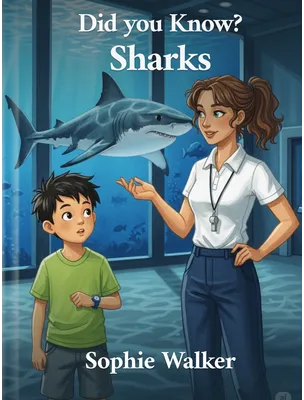
Sharks
by
Sophie Walker

Welcome to the big blue ocean! Meet Hiro and his teacher, Thalassa. Today, they are visiting the aquarium to learn about one of the most famous animals in the sea: the shark. Many people are afraid of sharks, but they are actually very helpful and interesting. “Are you ready to learn some amazing facts?” asks Thalassa. Hiro nods with a big smile.

Did you know that sharks do not have any bones? Their bodies are made of cartilage. Hiro touches his own nose and bends his ear. “Cartilage is soft and bendy,” Thalassa explains. This light material helps sharks stay afloat and swim very fast. Because they have no heavy bones, they can turn quickly to catch their food or escape danger.

Sharks come in all shapes and sizes. Thalassa holds up a small model of a Dwarf Lantern Shark. It is so tiny that it can fit in a person’s hand! Then, she points to a picture of a Whale Shark, which can be as long as a school bus. There are over 500 different types of sharks in the world, and most of them are not dangerous to humans at all.

Let’s look at their teeth! Sharks are very famous for their sharp teeth. But did you know that sharks can lose thousands of teeth in their lifetime? When a shark loses a tooth, a new one moves forward to take its place, like a conveyor belt. Hiro finds a small, triangular shark tooth in a display box. “It feels like a sharp stone,” he says.

Most sharks must keep swimming to stay alive. This is because they need to keep water moving over their gills to breathe oxygen. A shark named Chondra is swimming nearby. Chondra never stops moving, even when she is resting! If she stops swimming, she cannot breathe well. This is why sharks are the champions of constant movement.

Sharks have a “sixth sense.” Besides seeing, smelling, and hearing, they can feel electricity! Hiro watches Chondra through a underwater window. Every living thing, like a small fish hiding in the sand, gives off a tiny bit of electricity. Chondra uses special spots on her snout to find her dinner, even if she cannot see it.

If you touched a shark, it would feel like sandpaper. Thalassa shows Hiro a piece of shark skin under a microscope. It is covered in tiny scales that look like little teeth. These scales help the shark swim quietly through the water and protect them from scratches. “It’s like they are wearing a suit of armor!” Hiro exclaims.

Sharks are the “doctors” of the ocean. They keep the sea healthy by eating sick or old fish. This makes sure the other fish stay strong and the ocean stays balanced. Chondra swims over a colorful coral reef, watching the schools of fish. Without sharks, the ocean would become very messy and unhealthy for everyone.

Many sharks are in danger because of overfishing and pollution. “We need to protect them,” Thalassa says. Hiro helps Thalassa put up a colorful poster that says “Save Our Sharks.” By learning about sharks and keeping the beaches clean, we can help sharks like Chondra live a long and happy life in the deep blue sea.

Hiro’s day at the aquarium is over, but he isn’t afraid of sharks anymore. Now, he knows they are amazing creatures with no bones, infinite teeth, and a special sixth sense. As he leaves, he waves goodbye to the water. “See you later, sharks!” he whispers. He can’t wait to tell his friends everything he learned.