'The Ransom of Red Chief' was originally published in 1907 by O. Henry. The adapted version maintains the essence of the original story while making it accessible for a broader audience.
[{"id":"para_1","index":0,"start":0,"offset":352,"words":5,"paraNum":"","lastModified":1758623943000,"semanticType":"title-book-title","voicework":"tts","blockId":"the_ransom_of_red_chief_short_story_en-bl2u","language":"en","wordsRange":{"start":100000000,"end":106000000},"paragraphVersion":22,"direction":"ltr","paragraph":"<h1 class=\"ilm-title ilm-x-large\" id=\"para_1\" semantictype=\"title-book-title\" data-ilmid=\"the_ransom_of_red_chief_short_story_en-bl2u\" data-audio=\"1\" data-chapter=\"para_1\" data-words-count=\"5\" data-before=\"0\" data-ww=\"\"><span class=\"block-pb\"> <span class=\"block-pb is-animated\"></span> </span><span class=\"itm-wrap\">The Ransom of Red Chief</span></h1>","hasContent":true,"isFirst":true,"isLast":false},{"id":"para_2","index":1,"start":352,"offset":337,"words":1,"paraNum":"","lastModified":1758623976000,"semanticType":"title-subtitle","voicework":"tts","blockId":"the_ransom_of_red_chief_short_story_en-bl5r","language":"en","wordsRange":{"start":139333333,"end":172666667},"paragraphVersion":36,"direction":"ltr","paragraph":"<h1 class=\"ilm-title ilm-subtitle\" id=\"para_2\" semantictype=\"title-subtitle\" data-ilmid=\"the_ransom_of_red_chief_short_story_en-bl5r\" data-audio=\"1\" data-chapter=\"para_2\" data-words-count=\"1\" data-before=\"5\" data-ww=\"\"><span class=\"block-pb\"> <span class=\"block-pb is-animated\"></span> </span><span class=\"itm-wrap\">[adapted]</span></h1>","hasContent":true,"isFirst":false,"isLast":false},{"id":"para_3","index":2,"start":689,"offset":359,"words":2,"paraNum":"","lastModified":1758624722000,"semanticType":"title-author","voicework":"tts","blockId":"the_ransom_of_red_chief_short_story_en-bl5n","language":"en","wordsRange":{"start":206000000,"end":210000000},"paragraphVersion":35,"direction":"ltr","paragraph":"<h1 class=\"ilm-title ilm-author ilm-nopad ilm-large\" id=\"para_3\" semantictype=\"title-author\" data-ilmid=\"the_ransom_of_red_chief_short_story_en-bl5n\" data-audio=\"1\" data-chapter=\"para_3\" data-words-count=\"2\" data-before=\"6\" data-ww=\"\"><span class=\"block-pb\"> <span class=\"block-pb is-animated\"></span> </span><span class=\"itm-wrap\">by <br>O. Henry</span></h1>","hasContent":true,"isFirst":false,"isLast":false},{"id":"para_4","index":3,"start":1048,"offset":166,"words":0,"paraNum":"","lastModified":1722497021000,"semanticType":"line","blockId":"the_ransom_of_red_chief_short_story_en-bl5o","language":"en","wordsRange":{"start":310000000,"end":410000000},"paragraphVersion":11,"direction":"ltr","paragraph":"<hr class=\"ilm-hr ilm-small\" id=\"para_4\" semantictype=\"line\" data-ilmid=\"the_ransom_of_red_chief_short_story_en-bl5o\" data-words-count=\"0\" data-before=\"8\" data-ww=\"\">","hasContent":true,"isFirst":false,"isLast":false},{"id":"para_5","index":4,"start":1214,"offset":1846,"words":0,"paraNum":"","lastModified":1722500188000,"semanticType":"illustration","blockId":"the_ransom_of_red_chief_short_story_en-bl5q","language":"en","wordsRange":{"start":510000000,"end":610000000},"paragraphVersion":11,"direction":"ltr","paragraph":"<div class=\"ilm-illustration\" id=\"para_5\" semantictype=\"illustration\" data-ilmid=\"the_ransom_of_red_chief_short_story_en-bl5q\" data-words-count=\"0\" data-before=\"8\" data-ww=\"\"><img width=\"600\" height=\"343\" data-src=\"ch0p0\" src=\"data:image/webp;base64,UklGRoAEAABXRUJQVlA4IHQEAABwEwCdASo8ACIAPm0wkkWkIyGWrmW0QAbEoAnTLeweyLLc2wD3uei54TTYP2A4HWu3cUfK37xkT0af5Xx578drbda/CeY/bYek3fJeVepJ/UvPxzqfUnsE9J79sQ8giOx5Crg+tPQXvfqH++gMvGbC+OMwPffjuTvp8H8KMOsWihfbtzjlxuZvYmnVGdg0QAwZarjvnsXJA8yhMsFPBAQsjiwCgAD+90Uysu4feAstiZe0lIgZ8y2ekwk943dgi7F4y5yfXsmJuh8wWfzKr0h1lHXO/+rwd/madKM325SLS/Q/BCl7fm/KIUtGNjaZBxEqlm5TvFNXvwEIx/KpJwNiWvArTYl1t4q/9ECMfEZ4XSJRBDdQ23aKc25bSC0FIN5B12kopgyf1lnlj7a2KsOVZgtufagRynJyxaY7Dbe1oOjXnLPztNASr4mJsdt+6LzdWhIcckXdy/diNQNcRaJt2D+/IW4D93E/1AvvtN9gAVNsVb5oKbyPiAMjzDgacUdQvfOGKzXSUJzM7owkaY37VuRSD7IyFwxYPQpqnXRo9fh7xlw8H23Hlf5q+872Xh8y3WbnFfOFIoM9lodAnMl1xjuqnkA7fdS3dR+DJZfcJ+Uw5SPHqT2G8JLo7EGZPodPYruSoczp/YFlmVSLxmqsN6Ian9YZyAc1u2WM1nai7Sgl78l9bKHv4jfeIRxIusNHVH1v1fqJETOxLig4lYnrvt9/290O/0MGXEaCuHk2SC4myB+/xhP0rEdoDFMpro1d8FDN9jI/IP0vIcInVPxJmMR/QmQDzQrO1qdWKIA25WkkfPXul5+PAZS0C+RGL2N7zzGjRbk7X6h+VyQZYUZl3wSkK/W5NXbJ3sC8gk7x9mnQZ3Y5GjeZmfm+Gw3aKJa0o00xOMHM24zzSu5S4LagUWKmSL0FZSetXK8ajzs6ianTZPrzi31zHUsJfrqJ8LhP0lzztJnednnp0iiBnznLkbfE/TERKasG75k0EmfxOdbOSIq3gfOrpD+HZyh9/Xle+TTLX7I5xWMK608VLWT22+5NrQpXjGErlE1Lf/08nObBKbumZAf2L3MgcDqwvAXJGMEgkD3xJXNUzcpgruk35FZvrXUiC/wugWyQdctRcsUntWkky3zfuYVrS/9qsZSrKOXnPFS81PCTsQKZVSuT8HYRcigM2aA8CXLGEmhaWKhmkvA9yFV/BssoeayaPQAnAMu3Bl7nWFk/5EjziKhA0fY2x9OmA2NrUBWSrB4B3PHJTtQ/SD2Alzn0d3KRvFKYwPRchOylBwuBsnDT1mYiWwIl945d+0iez/x803Bfb0PvtCq1wTWedpXXGstfr3wxkUsuu8OZQEjR64GZQEjRk44gfwa/9IkqCs6I9s52Ir7OCrOstvPSPAza+j1AnY1z0MpdBb0Ltyy8pnOw0/h7f8JMA3vEVnAiTD/YYO9MJn1XmuUyYWFN2Ke6hDJKIcjm4xBAbWiskOIe85ZAP5+/ra6DZ1jHRUhmvnVhQDClDPEgAAA=\" alt=\"The Ransom of Red Chief (adapted)\"></div>","hasContent":true,"isFirst":false,"isLast":false},{"id":"para_6","index":5,"start":3060,"offset":584,"words":52,"paraNum":"1","lastModified":1758623324000,"semanticType":"par","voicework":"tts","blockId":"the_ransom_of_red_chief_short_story_en-bl2v","language":"en","wordsRange":{"start":710000000,"end":761000000},"paragraphVersion":26,"direction":"ltr","paragraph":"<p id=\"para_6\" semantictype=\"par\" data-ilmid=\"the_ransom_of_red_chief_short_story_en-bl2v\" data-audio=\"1\" data-words-count=\"52\" data-before=\"8\" data-ww=\"\"><span class=\"block-num\" data-id=\"1\"></span><span class=\"block-pb\"> <span class=\"block-pb is-animated\"></span> </span><span class=\"itm-wrap\">It looked like a good thing: but wait till I tell you. We were down South, in Alabama—Bill Driscoll and myself—when this kidnapping idea came to us. It was, as Bill later said, “during a short time when we were not thinking right”; but we didn’t know that until later.</span></p>","hasContent":true,"isFirst":false,"isLast":false},{"id":"para_7","index":6,"start":3644,"offset":505,"words":37,"paraNum":"2","lastModified":1758623324000,"semanticType":"par","voicework":"tts","blockId":"the_ransom_of_red_chief_short_story_en-bl2w","language":"en","wordsRange":{"start":861000000,"end":896000000},"paragraphVersion":26,"direction":"ltr","paragraph":"<p id=\"para_7\" semantictype=\"par\" data-ilmid=\"the_ransom_of_red_chief_short_story_en-bl2w\" data-audio=\"1\" data-words-count=\"37\" data-before=\"60\" data-ww=\"\"><span class=\"block-num\" data-id=\"2\"></span><span class=\"block-pb\"> <span class=\"block-pb is-animated\"></span> </span><span class=\"itm-wrap\">There was a town down there, as flat as a pancake, and called Summit, of course. It had people of as harmless and pleased with themselves a class of country people as ever gathered around a Maypole.</span></p>","hasContent":true,"isFirst":false,"isLast":false},{"id":"para_8","index":7,"start":4149,"offset":972,"words":118,"paraNum":"3","lastModified":1758623324000,"semanticType":"par","voicework":"tts","blockId":"the_ransom_of_red_chief_short_story_en-bl2x","language":"en","wordsRange":{"start":996000000,"end":1112000000},"paragraphVersion":26,"direction":"ltr","paragraph":"<p id=\"para_8\" semantictype=\"par\" data-ilmid=\"the_ransom_of_red_chief_short_story_en-bl2x\" data-audio=\"1\" data-words-count=\"118\" data-before=\"97\" data-ww=\"\"><span class=\"block-num\" data-id=\"3\"></span><span class=\"block-pb\"> <span class=\"block-pb is-animated\"></span> </span><span class=\"itm-wrap\">Bill and me had a shared amount of about six hundred dollars, and we needed just two thousand dollars more to carry out a fake town-lot plan in Western Illinois with. We talked it over on the front steps of the hotel. Love for children, says we, is strong in small country communities; so, and for other reasons, a kidnapping plan should work better there than in the area of newspapers that send reporters out in normal clothes to make people talk about such things. We knew that Summit couldn’t get after us with anything stronger than policemen and, maybe, some lazy bloodhounds and an angry article or two in the Weekly Farmers’ Budget. So, it looked good.</span></p>","hasContent":true,"isFirst":false,"isLast":false},{"id":"para_9","index":8,"start":5121,"offset":860,"words":104,"paraNum":"4","lastModified":1758624341000,"semanticType":"par","voicework":"tts","blockId":"the_ransom_of_red_chief_short_story_en-bl2y","language":"en","wordsRange":{"start":1212000000,"end":1302000000},"paragraphVersion":29,"direction":"ltr","paragraph":"<p id=\"para_9\" semantictype=\"par\" data-ilmid=\"the_ransom_of_red_chief_short_story_en-bl2y\" data-audio=\"1\" data-words-count=\"104\" data-before=\"215\" data-ww=\"\"><span class=\"block-num\" data-id=\"4\"></span><span class=\"block-pb\"> <span class=\"block-pb is-animated\"></span> </span><span class=\"itm-wrap\">We picked for our victim the only child of an important citizen named Ebenezer Dorset. The father was respectable and mean with money, a man who liked house loans, and a stern, honest collection-plate passer at church, and one who took houses when people did not pay. The kid was a boy of ten, with freckles that stood out, and hair the colour of the cover of the magazine you buy at the news-stand when you want to catch a train. Bill and me thought that Ebenezer would agree to pay a ransom of exactly two thousand dollars. But wait till I tell you.</span></p>","hasContent":true,"isFirst":false,"isLast":false},{"id":"para_10","index":9,"start":5981,"offset":461,"words":28,"paraNum":"5","lastModified":1758624636000,"semanticType":"par","voicework":"tts","blockId":"the_ransom_of_red_chief_short_story_en-bl2z","language":"en","wordsRange":{"start":1402000000,"end":1432000000},"paragraphVersion":25,"direction":"ltr","paragraph":"<p id=\"para_10\" semantictype=\"par\" data-ilmid=\"the_ransom_of_red_chief_short_story_en-bl2z\" data-audio=\"1\" data-words-count=\"28\" data-before=\"319\" data-ww=\"\"><span class=\"block-num\" data-id=\"5\"></span><span class=\"block-pb\"> <span class=\"block-pb is-animated\"></span> </span><span class=\"itm-wrap\">About two miles from Summit was a little mountain, covered with thick cedar woods. On the back side of this mountain was a cave. There we kept supplies.</span></p>","hasContent":true,"isFirst":false,"isLast":false},{"id":"para_11","index":10,"start":6442,"offset":480,"words":34,"paraNum":"6","lastModified":1758624369000,"semanticType":"par","voicework":"tts","blockId":"the_ransom_of_red_chief_short_story_en-bl30","language":"en","wordsRange":{"start":1532000000,"end":1561000000},"paragraphVersion":26,"direction":"ltr","paragraph":"<p id=\"para_11\" semantictype=\"par\" data-ilmid=\"the_ransom_of_red_chief_short_story_en-bl30\" data-audio=\"1\" data-words-count=\"34\" data-before=\"347\" data-ww=\"\"><span class=\"block-num\" data-id=\"6\"></span><span class=\"block-pb\"> <span class=\"block-pb is-animated\"></span> </span><span class=\"itm-wrap\">One evening after the sun went down we drove in a carriage past old Dorset’s house. The kid was in the street, throwing rocks at a kitten on the fence on the other side.</span></p>","hasContent":true,"isFirst":false,"isLast":false},{"id":"para_12","index":11,"start":6922,"offset":392,"words":16,"paraNum":"7","lastModified":1758625056000,"semanticType":"par","voicework":"tts","blockId":"the_ransom_of_red_chief_short_story_en-bl31","language":"en","wordsRange":{"start":1661000000,"end":1680000000},"paragraphVersion":26,"direction":"ltr","paragraph":"<p id=\"para_12\" semantictype=\"par\" data-ilmid=\"the_ransom_of_red_chief_short_story_en-bl31\" data-audio=\"1\" data-words-count=\"16\" data-before=\"381\" data-ww=\"\"><span class=\"block-num\" data-id=\"7\"></span><span class=\"block-pb\"> <span class=\"block-pb is-animated\"></span> </span><span class=\"itm-wrap\">“Hey, little boy!” says Bill, “do you want a bag of candy and a nice ride?”</span></p>","hasContent":true,"isFirst":false,"isLast":false},{"id":"para_13","index":12,"start":7314,"offset":366,"words":13,"paraNum":"8","lastModified":1758624381000,"semanticType":"par","voicework":"tts","blockId":"the_ransom_of_red_chief_short_story_en-bl32","language":"en","wordsRange":{"start":1780000000,"end":1794000000},"paragraphVersion":26,"direction":"ltr","paragraph":"<p id=\"para_13\" semantictype=\"par\" data-ilmid=\"the_ransom_of_red_chief_short_story_en-bl32\" data-audio=\"1\" data-words-count=\"13\" data-before=\"397\" data-ww=\"\"><span class=\"block-num\" data-id=\"8\"></span><span class=\"block-pb\"> <span class=\"block-pb is-animated\"></span> </span><span class=\"itm-wrap\">The boy hits Bill right in the eye with a piece of brick.</span></p>","hasContent":true,"isFirst":false,"isLast":false},{"id":"para_14","index":13,"start":7680,"offset":408,"words":17,"paraNum":"9","lastModified":1758624411000,"semanticType":"par","voicework":"tts","blockId":"the_ransom_of_red_chief_short_story_en-bl33","language":"en","wordsRange":{"start":1894000000,"end":1912000000},"paragraphVersion":26,"direction":"ltr","paragraph":"<p id=\"para_14\" semantictype=\"par\" data-ilmid=\"the_ransom_of_red_chief_short_story_en-bl33\" data-audio=\"1\" data-words-count=\"17\" data-before=\"410\" data-ww=\"\"><span class=\"block-num\" data-id=\"9\"></span><span class=\"block-pb\"> <span class=\"block-pb is-animated\"></span> </span><span class=\"itm-wrap\">“That will cost the old man an extra five hundred dollars,” says Bill, climbing over the wheel.</span></p>","hasContent":true,"isFirst":false,"isLast":false},{"id":"para_15","index":14,"start":8088,"offset":622,"words":63,"paraNum":"10","lastModified":1758624313000,"semanticType":"par","voicework":"tts","blockId":"the_ransom_of_red_chief_short_story_en-bl34","language":"en","wordsRange":{"start":2012000000,"end":2080000000},"paragraphVersion":26,"direction":"ltr","paragraph":"<p id=\"para_15\" semantictype=\"par\" data-ilmid=\"the_ransom_of_red_chief_short_story_en-bl34\" data-audio=\"1\" data-words-count=\"63\" data-before=\"427\" data-ww=\"\"><span class=\"block-num\" data-id=\"10\"></span><span class=\"block-pb\"> <span class=\"block-pb is-animated\"></span> </span><span class=\"itm-wrap\">That boy fought like a strong bear; but, at last, we got him down in the bottom of the carriage and drove away. We took him up to the cave, and I tied the horse in the cedar thicket. After dark I drove the carriage to the little village, three miles away, where we had rented it, and walked back to the mountain.</span></p>","hasContent":true,"isFirst":false,"isLast":false},{"id":"para_16","index":15,"start":8710,"offset":607,"words":59,"paraNum":"11","lastModified":1758624650000,"semanticType":"par","voicework":"tts","blockId":"the_ransom_of_red_chief_short_story_en-bl35","language":"en","wordsRange":{"start":2180000000,"end":2239000000},"paragraphVersion":29,"direction":"ltr","paragraph":"<p id=\"para_16\" semantictype=\"par\" data-ilmid=\"the_ransom_of_red_chief_short_story_en-bl35\" data-audio=\"1\" data-words-count=\"59\" data-before=\"490\" data-ww=\"\"><span class=\"block-num\" data-id=\"11\"></span><span class=\"block-pb\"> <span class=\"block-pb is-animated\"></span> </span><span class=\"itm-wrap\">Bill was sticking bandages over the scratches and bruises on his face. There was a fire burning behind the big rock at the opening of the cave, and the boy was watching a pot of boiling coffee, with two vulture tail feathers stuck in his red hair. He points a stick at me when I come up, and says:</span></p>","hasContent":true,"isFirst":false,"isLast":false},{"id":"para_17","index":16,"start":9317,"offset":418,"words":22,"paraNum":"12","lastModified":1758624355000,"semanticType":"par","voicework":"tts","blockId":"the_ransom_of_red_chief_short_story_en-bl36","language":"en","wordsRange":{"start":2339000000,"end":2358000000},"paragraphVersion":26,"direction":"ltr","paragraph":"<p id=\"para_17\" semantictype=\"par\" data-ilmid=\"the_ransom_of_red_chief_short_story_en-bl36\" data-audio=\"1\" data-words-count=\"22\" data-before=\"549\" data-ww=\"\"><span class=\"block-num\" data-id=\"12\"></span><span class=\"block-pb\"> <span class=\"block-pb is-animated\"></span> </span><span class=\"itm-wrap\">“Ha! bad white face, do you dare to come into the camp of Red Chief, the one people fear on the plains?”</span></p>","hasContent":true,"isFirst":false,"isLast":false},{"id":"para_18","index":17,"start":9735,"offset":699,"words":68,"paraNum":"13","lastModified":1758625080000,"semanticType":"par","voicework":"tts","blockId":"the_ransom_of_red_chief_short_story_en-bl37","language":"en","wordsRange":{"start":2458000000,"end":2516000000},"paragraphVersion":26,"direction":"ltr","paragraph":"<p id=\"para_18\" semantictype=\"par\" data-ilmid=\"the_ransom_of_red_chief_short_story_en-bl37\" data-audio=\"1\" data-words-count=\"68\" data-before=\"571\" data-ww=\"\"><span class=\"block-num\" data-id=\"13\"></span><span class=\"block-pb\"> <span class=\"block-pb is-animated\"></span> </span><span class=\"itm-wrap\">“He’s all right now,” says Bill, rolling up his pants and looking at some blue marks on his lower legs. “We’re playing Indian. We’re making Buffalo Bill’s show look like old slide pictures of Palestine in the town hall. I’m Old Hank, the hunter, Red Chief’s prisoner, and I’m going to have the skin on my head cut off at sunrise. By Geronimo! that kid can kick hard.”</span></p>","hasContent":true,"isFirst":false,"isLast":false},{"id":"para_19","index":18,"start":10434,"offset":600,"words":59,"paraNum":"14","lastModified":1758624434000,"semanticType":"par","voicework":"tts","blockId":"the_ransom_of_red_chief_short_story_en-bl38","language":"en","wordsRange":{"start":2616000000,"end":2679000000},"paragraphVersion":26,"direction":"ltr","paragraph":"<p id=\"para_19\" semantictype=\"par\" data-ilmid=\"the_ransom_of_red_chief_short_story_en-bl38\" data-audio=\"1\" data-words-count=\"59\" data-before=\"639\" data-ww=\"\"><span class=\"block-num\" data-id=\"14\"></span><span class=\"block-pb\"> <span class=\"block-pb is-animated\"></span> </span><span class=\"itm-wrap\">Yes, sir, that boy seemed to be having a great time. The fun of camping out in a cave had made him forget that he was a prisoner himself. He right away gave me the name Snake-eye, the Spy, and said that, when his warriors came back from fighting, I was to be burned at the stake at sunrise.</span></p>","hasContent":true,"isFirst":false,"isLast":false},{"id":"para_20","index":19,"start":11034,"offset":459,"words":29,"paraNum":"15","lastModified":1758624611000,"semanticType":"par","voicework":"tts","blockId":"the_ransom_of_red_chief_short_story_en-bl39","language":"en","wordsRange":{"start":2779000000,"end":2808000000},"paragraphVersion":26,"direction":"ltr","paragraph":"<p id=\"para_20\" semantictype=\"par\" data-ilmid=\"the_ransom_of_red_chief_short_story_en-bl39\" data-audio=\"1\" data-words-count=\"29\" data-before=\"698\" data-ww=\"\"><span class=\"block-num\" data-id=\"15\"></span><span class=\"block-pb\"> <span class=\"block-pb is-animated\"></span> </span><span class=\"itm-wrap\">Then we had dinner; and he filled his mouth full of bacon and bread and gravy, and began to talk. He made a speech during dinner something like this:</span></p>","hasContent":true,"isFirst":false,"isLast":false},{"id":"para_21","index":20,"start":11493,"offset":1045,"words":143,"paraNum":"16","lastModified":1758625123000,"semanticType":"par","voicework":"tts","blockId":"the_ransom_of_red_chief_short_story_en-bl3a","language":"en","wordsRange":{"start":2908000000,"end":3052000000},"paragraphVersion":26,"direction":"ltr","paragraph":"<p id=\"para_21\" semantictype=\"par\" data-ilmid=\"the_ransom_of_red_chief_short_story_en-bl3a\" data-audio=\"1\" data-words-count=\"143\" data-before=\"727\" data-ww=\"\"><span class=\"block-num\" data-id=\"16\"></span><span class=\"block-pb\"> <span class=\"block-pb is-animated\"></span> </span><span class=\"itm-wrap\">“I like this fine. I never camped out before; but I had a pet ‘possum once, and I was nine last birthday. I hate to go to school. Rats ate sixteen of Jimmy Talbot’s aunt’s spotted hen’s eggs. Are there any real Indians in these woods? I want some more gravy. Does the trees moving make the wind blow? We had five puppies. What makes your nose so red, Hank? My father has lots of money. Are the stars hot? I beat Ed Walker twice, Saturday. I don’t like girls. You mustn’t catch toads unless you use a string. Do oxen make any noise? Why are oranges round? Have you got beds to sleep on in this cave? Amos Murray has got six toes. A parrot can talk, but a monkey or a fish can’t. How many does it take to make twelve?”</span></p>","hasContent":true,"isFirst":false,"isLast":false},{"id":"para_22","index":21,"start":12538,"offset":607,"words":60,"paraNum":"17","lastModified":1758624347000,"semanticType":"par","voicework":"tts","blockId":"the_ransom_of_red_chief_short_story_en-bl3b","language":"en","wordsRange":{"start":3152000000,"end":3212000000},"paragraphVersion":26,"direction":"ltr","paragraph":"<p id=\"para_22\" semantictype=\"par\" data-ilmid=\"the_ransom_of_red_chief_short_story_en-bl3b\" data-audio=\"1\" data-words-count=\"60\" data-before=\"870\" data-ww=\"\"><span class=\"block-num\" data-id=\"17\"></span><span class=\"block-pb\"> <span class=\"block-pb is-animated\"></span> </span><span class=\"itm-wrap\">Every few minutes he would remember that he was an annoying redskin, and pick up his stick gun and tiptoe to the mouth of the cave to look for the scouts of the hated pale-face. Now and then he would let out a war cry that made Old Hank the Trapper shiver. That boy had Bill scared from the start.</span></p>","hasContent":true,"isFirst":false,"isLast":false},{"id":"para_23","index":22,"start":13145,"offset":377,"words":13,"paraNum":"18","lastModified":1758624395000,"semanticType":"par","voicework":"tts","blockId":"the_ransom_of_red_chief_short_story_en-bl3c","language":"en","wordsRange":{"start":3312000000,"end":3326000000},"paragraphVersion":26,"direction":"ltr","paragraph":"<p id=\"para_23\" semantictype=\"par\" data-ilmid=\"the_ransom_of_red_chief_short_story_en-bl3c\" data-audio=\"1\" data-words-count=\"13\" data-before=\"930\" data-ww=\"\"><span class=\"block-num\" data-id=\"18\"></span><span class=\"block-pb\"> <span class=\"block-pb is-animated\"></span> </span><span class=\"itm-wrap\">“Red Chief,” I say to the kid, “would you like to go home?”</span></p>","hasContent":true,"isFirst":false,"isLast":false},{"id":"para_24","index":23,"start":13522,"offset":478,"words":33,"paraNum":"19","lastModified":1758625105000,"semanticType":"par","voicework":"tts","blockId":"the_ransom_of_red_chief_short_story_en-bl3d","language":"en","wordsRange":{"start":3426000000,"end":3460000000},"paragraphVersion":26,"direction":"ltr","paragraph":"<p id=\"para_24\" semantictype=\"par\" data-ilmid=\"the_ransom_of_red_chief_short_story_en-bl3d\" data-audio=\"1\" data-words-count=\"33\" data-before=\"943\" data-ww=\"\"><span class=\"block-num\" data-id=\"19\"></span><span class=\"block-pb\"> <span class=\"block-pb is-animated\"></span> </span><span class=\"itm-wrap\">“Aw, what for?” he says. “I don’t have any fun at home. I hate to go to school. I like to camp out. You won’t take me back home again, Snake-eye, will you?”</span></p>","hasContent":true,"isFirst":false,"isLast":false},{"id":"para_25","index":24,"start":14000,"offset":387,"words":15,"paraNum":"20","lastModified":1758624617000,"semanticType":"par","voicework":"tts","blockId":"the_ransom_of_red_chief_short_story_en-bl3e","language":"en","wordsRange":{"start":3560000000,"end":3573000000},"paragraphVersion":26,"direction":"ltr","paragraph":"<p id=\"para_25\" semantictype=\"par\" data-ilmid=\"the_ransom_of_red_chief_short_story_en-bl3e\" data-audio=\"1\" data-words-count=\"15\" data-before=\"976\" data-ww=\"\"><span class=\"block-num\" data-id=\"20\"></span><span class=\"block-pb\"> <span class=\"block-pb is-animated\"></span> </span><span class=\"itm-wrap\">“Not right away,” I say. “We will stay here in the cave for a while.”</span></p>","hasContent":true,"isFirst":false,"isLast":false},{"id":"para_26","index":25,"start":14387,"offset":400,"words":18,"paraNum":"21","lastModified":1758624502000,"semanticType":"par","voicework":"tts","blockId":"the_ransom_of_red_chief_short_story_en-bl3f","language":"en","wordsRange":{"start":3673000000,"end":3688000000},"paragraphVersion":27,"direction":"ltr","paragraph":"<p id=\"para_26\" semantictype=\"par\" data-ilmid=\"the_ransom_of_red_chief_short_story_en-bl3f\" data-audio=\"1\" data-words-count=\"18\" data-before=\"991\" data-ww=\"\"><span class=\"block-num\" data-id=\"21\"></span><span class=\"block-pb\"> <span class=\"block-pb is-animated\"></span> </span><span class=\"itm-wrap\">“All right!” he says. “That will be fine. I never had so much fun in all my life.”</span></p>","hasContent":true,"isFirst":false,"isLast":false},{"id":"para_27","index":26,"start":14787,"offset":861,"words":104,"paraNum":"22","lastModified":1758630441000,"semanticType":"par","voicework":"tts","blockId":"the_ransom_of_red_chief_short_story_en-bl5s","language":"en","wordsRange":{"start":3924333333,"end":3957666667},"paragraphVersion":28,"direction":"ltr","paragraph":"<p id=\"para_27\" semantictype=\"par\" data-ilmid=\"the_ransom_of_red_chief_short_story_en-bl5s\" data-audio=\"1\" data-words-count=\"104\" data-before=\"1009\" data-ww=\"\"><span class=\"block-num\" data-id=\"22\"></span><span class=\"block-pb\"> <span class=\"block-pb is-animated\"></span> </span><span class=\"itm-wrap\">We went to bed about eleven o’clock. We spread out some wide blankets and quilts and put Red Chief between us. We weren’t afraid he’d run away. He kept us awake for three hours, jumping up and reaching for his rifle and screaming: “Hist! pard,” in my and Bill’s ears, as the imagined crackle of a small stick or the soft sound of a leaf showed his young mind the quiet, secret approach of the outlaw band. At last I fell into a restless sleep, and dreamed that I had been kidnapped and chained to a tree by a fierce pirate with red hair.</span></p>","hasContent":true,"isFirst":false,"isLast":false},{"id":"para_28","index":27,"start":15648,"offset":705,"words":71,"paraNum":"23","lastModified":1758630441000,"semanticType":"par","voicework":"tts","blockId":"the_ransom_of_red_chief_short_story_en-bl3h","language":"en","wordsRange":{"start":3991000000,"end":4063000000},"paragraphVersion":31,"direction":"ltr","paragraph":"<p id=\"para_28\" semantictype=\"par\" data-ilmid=\"the_ransom_of_red_chief_short_story_en-bl3h\" data-audio=\"1\" data-words-count=\"71\" data-before=\"1113\" data-ww=\"\"><span class=\"block-num\" data-id=\"23\"></span><span class=\"block-pb\"> <span class=\"block-pb is-animated\"></span> </span><span class=\"itm-wrap\">Just at sunrise I was woken up by a series of awful screams from Bill. They weren’t yells, or howls, or shouts, or whoops, or cries, such as you’d expect from a man’s voice—they were simply rude, scary, embarrassing screams, such as women make when they see ghosts or caterpillars. It’s an awful thing to hear a strong, very upset, fat man scream without control in a cave at sunrise.</span></p>","hasContent":true,"isFirst":false,"isLast":false},{"id":"para_29","index":28,"start":16353,"offset":642,"words":65,"paraNum":"24","lastModified":1758630441000,"semanticType":"par","voicework":"tts","blockId":"the_ransom_of_red_chief_short_story_en-bl3i","language":"en","wordsRange":{"start":4163000000,"end":4224000000},"paragraphVersion":33,"direction":"ltr","paragraph":"<p id=\"para_29\" semantictype=\"par\" data-ilmid=\"the_ransom_of_red_chief_short_story_en-bl3i\" data-audio=\"1\" data-words-count=\"65\" data-before=\"1184\" data-ww=\"\"><span class=\"block-num\" data-id=\"24\"></span><span class=\"block-pb\"> <span class=\"block-pb is-animated\"></span> </span><span class=\"itm-wrap\">I jumped up to see what was wrong. Red Chief was sitting on Bill’s chest, with one hand twisted in Bill’s hair. In the other he had the sharp knife we used for cutting bacon; and he was working hard and really trying to cut off the skin on top of Bill’s head, as the punishment that had been decided for him the night before.</span></p>","hasContent":true,"isFirst":false,"isLast":false},{"id":"para_30","index":29,"start":16995,"offset":719,"words":88,"paraNum":"25","lastModified":1758630441000,"semanticType":"par","voicework":"tts","blockId":"the_ransom_of_red_chief_short_story_en-bl3j","language":"en","wordsRange":{"start":4324000000,"end":4422000000},"paragraphVersion":30,"direction":"ltr","paragraph":"<p id=\"para_30\" semantictype=\"par\" data-ilmid=\"the_ransom_of_red_chief_short_story_en-bl3j\" data-audio=\"1\" data-words-count=\"88\" data-before=\"1249\" data-ww=\"\"><span class=\"block-num\" data-id=\"25\"></span><span class=\"block-pb\"> <span class=\"block-pb is-animated\"></span> </span><span class=\"itm-wrap\">I got the knife away from the kid and made him lie down again. But from that moment Bill gave up. He laid down on his side of the bed, but he did not sleep again the whole time that boy was with us. I slept for a short time, but near sunrise I remembered that Red Chief had said I was to be burned at the stake at sunrise. I wasn’t nervous or afraid; but I sat up and lit my pipe and leaned against a rock.</span></p>","hasContent":true,"isFirst":false,"isLast":false},{"id":"para_31","index":30,"start":17714,"offset":366,"words":10,"paraNum":"26","lastModified":1758630441000,"semanticType":"par","voicework":"tts","blockId":"the_ransom_of_red_chief_short_story_en-bl3k","language":"en","wordsRange":{"start":4522000000,"end":4533000000},"paragraphVersion":30,"direction":"ltr","paragraph":"<p id=\"para_31\" semantictype=\"par\" data-ilmid=\"the_ransom_of_red_chief_short_story_en-bl3k\" data-audio=\"1\" data-words-count=\"10\" data-before=\"1337\" data-ww=\"\"><span class=\"block-num\" data-id=\"26\"></span><span class=\"block-pb\"> <span class=\"block-pb is-animated\"></span> </span><span class=\"itm-wrap\">“Why are you getting up so early, Sam?” asked Bill.</span></p>","hasContent":true,"isFirst":false,"isLast":false},{"id":"para_32","index":31,"start":18080,"offset":424,"words":22,"paraNum":"27","lastModified":1758630441000,"semanticType":"par","voicework":"tts","blockId":"the_ransom_of_red_chief_short_story_en-bl3l","language":"en","wordsRange":{"start":4633000000,"end":4655000000},"paragraphVersion":30,"direction":"ltr","paragraph":"<p id=\"para_32\" semantictype=\"par\" data-ilmid=\"the_ransom_of_red_chief_short_story_en-bl3l\" data-audio=\"1\" data-words-count=\"22\" data-before=\"1347\" data-ww=\"\"><span class=\"block-num\" data-id=\"27\"></span><span class=\"block-pb\"> <span class=\"block-pb is-animated\"></span> </span><span class=\"itm-wrap\">“Me?” I said. “Oh, I have a kind of pain in my shoulder. I thought sitting up would make it feel better.”</span></p>","hasContent":true,"isFirst":false,"isLast":false},{"id":"para_33","index":32,"start":18504,"offset":597,"words":53,"paraNum":"28","lastModified":1758630441000,"semanticType":"par","voicework":"tts","blockId":"the_ransom_of_red_chief_short_story_en-bl3m","language":"en","wordsRange":{"start":4755000000,"end":4808000000},"paragraphVersion":30,"direction":"ltr","paragraph":"<p id=\"para_33\" semantictype=\"par\" data-ilmid=\"the_ransom_of_red_chief_short_story_en-bl3m\" data-audio=\"1\" data-words-count=\"53\" data-before=\"1369\" data-ww=\"\"><span class=\"block-num\" data-id=\"28\"></span><span class=\"block-pb\"> <span class=\"block-pb is-animated\"></span> </span><span class=\"itm-wrap\">“You’re a liar!” says Bill. “You’re afraid. You were to be burned at sunrise, and you were afraid he would do it. And he would, too, if he could find a matchstick. Isn’t it awful, Sam? Do you think anybody will pay money to get a little naughty child like that back home?”</span></p>","hasContent":true,"isFirst":false,"isLast":false},{"id":"para_34","index":33,"start":19101,"offset":508,"words":40,"paraNum":"29","lastModified":1758630441000,"semanticType":"par","voicework":"tts","blockId":"the_ransom_of_red_chief_short_story_en-bl3n","language":"en","wordsRange":{"start":4908000000,"end":4947000000},"paragraphVersion":31,"direction":"ltr","paragraph":"<p id=\"para_34\" semantictype=\"par\" data-ilmid=\"the_ransom_of_red_chief_short_story_en-bl3n\" data-audio=\"1\" data-words-count=\"40\" data-before=\"1422\" data-ww=\"\"><span class=\"block-num\" data-id=\"29\"></span><span class=\"block-pb\"> <span class=\"block-pb is-animated\"></span> </span><span class=\"itm-wrap\">“Sure,” said I. “A wild kid like that is just the kind that parents love a lot. Now, you and the Chief get up and cook breakfast, while I go up on the top of this mountain and look around.”</span></p>","hasContent":true,"isFirst":false,"isLast":false},{"id":"para_35","index":34,"start":19609,"offset":1054,"words":134,"paraNum":"30","lastModified":1758630441000,"semanticType":"par","voicework":"tts","blockId":"the_ransom_of_red_chief_short_story_en-bl5t","language":"en","wordsRange":{"start":5222333333,"end":5255666667},"paragraphVersion":29,"direction":"ltr","paragraph":"<p id=\"para_35\" semantictype=\"par\" data-ilmid=\"the_ransom_of_red_chief_short_story_en-bl5t\" data-audio=\"1\" data-words-count=\"134\" data-before=\"1462\" data-ww=\"\"><span class=\"block-num\" data-id=\"30\"></span><span class=\"block-pb\"> <span class=\"block-pb is-animated\"></span> </span><span class=\"itm-wrap\">I went up to the top of the little mountain and looked over the nearby area. Over toward Summit I expected to see the strong farmers of the village armed with scythes and pitchforks searching the countryside for the wicked kidnappers. But what I saw was a quiet scene with one man plowing with a brown mule. Nobody was searching the creek; no messengers ran here and there, bringing messages of no news to the worried parents. There was a forest-like feeling of sleepy quiet filling that part of Alabama that I could see. “Perhaps,” says I to myself, “it has not yet been found out that the wolves have carried away the tender little lamb from the sheep pen. Heaven help the wolves!” says I, and I went down the mountain to breakfast.</span></p>","hasContent":true,"isFirst":false,"isLast":false},{"id":"para_36","index":35,"start":20663,"offset":463,"words":34,"paraNum":"31","lastModified":1758630441000,"semanticType":"par","voicework":"tts","blockId":"the_ransom_of_red_chief_short_story_en-bl3p","language":"en","wordsRange":{"start":5289000000,"end":5324000000},"paragraphVersion":35,"direction":"ltr","paragraph":"<p id=\"para_36\" semantictype=\"par\" data-ilmid=\"the_ransom_of_red_chief_short_story_en-bl3p\" data-audio=\"1\" data-words-count=\"34\" data-before=\"1596\" data-ww=\"\"><span class=\"block-num\" data-id=\"31\"></span><span class=\"block-pb\"> <span class=\"block-pb is-animated\"></span> </span><span class=\"itm-wrap\">When I got to the cave I found Bill up against the side of it, breathing hard, and the boy saying he would hit him with a rock half as big as a coconut.</span></p>","hasContent":true,"isFirst":false,"isLast":false},{"id":"para_37","index":36,"start":21126,"offset":470,"words":32,"paraNum":"32","lastModified":1758630441000,"semanticType":"par","voicework":"tts","blockId":"the_ransom_of_red_chief_short_story_en-bl3q","language":"en","wordsRange":{"start":5424000000,"end":5456000000},"paragraphVersion":34,"direction":"ltr","paragraph":"<p id=\"para_37\" semantictype=\"par\" data-ilmid=\"the_ransom_of_red_chief_short_story_en-bl3q\" data-audio=\"1\" data-words-count=\"32\" data-before=\"1630\" data-ww=\"\"><span class=\"block-num\" data-id=\"32\"></span><span class=\"block-pb\"> <span class=\"block-pb is-animated\"></span> </span><span class=\"itm-wrap\">“He put a very hot boiled potato down my back,” said Bill, “and then mashed it with his foot; and I slapped his ears. Do you have a gun with you, Sam?”</span></p>","hasContent":true,"isFirst":false,"isLast":false},{"id":"para_38","index":37,"start":21596,"offset":516,"words":39,"paraNum":"33","lastModified":1758630441000,"semanticType":"par","voicework":"tts","blockId":"the_ransom_of_red_chief_short_story_en-bl3r","language":"en","wordsRange":{"start":5556000000,"end":5598000000},"paragraphVersion":34,"direction":"ltr","paragraph":"<p id=\"para_38\" semantictype=\"par\" data-ilmid=\"the_ransom_of_red_chief_short_story_en-bl3r\" data-audio=\"1\" data-words-count=\"39\" data-before=\"1662\" data-ww=\"\"><span class=\"block-num\" data-id=\"33\"></span><span class=\"block-pb\"> <span class=\"block-pb is-animated\"></span> </span><span class=\"itm-wrap\">I took the rock away from the boy and kind of fixed the argument. “I’ll get you,” says the kid to Bill. “No man has ever hit the Red Chief without getting punished for it. You better be careful!”</span></p>","hasContent":true,"isFirst":false,"isLast":false},{"id":"para_39","index":38,"start":22112,"offset":446,"words":25,"paraNum":"34","lastModified":1758630441000,"semanticType":"par","voicework":"tts","blockId":"the_ransom_of_red_chief_short_story_en-bl3s","language":"en","wordsRange":{"start":5698000000,"end":5724000000},"paragraphVersion":34,"direction":"ltr","paragraph":"<p id=\"para_39\" semantictype=\"par\" data-ilmid=\"the_ransom_of_red_chief_short_story_en-bl3s\" data-audio=\"1\" data-words-count=\"25\" data-before=\"1701\" data-ww=\"\"><span class=\"block-num\" data-id=\"34\"></span><span class=\"block-pb\"> <span class=\"block-pb is-animated\"></span> </span><span class=\"itm-wrap\">After breakfast the kid takes a piece of leather with strings tied around it out of his pocket and goes outside the cave unwrapping it.</span></p>","hasContent":true,"isFirst":false,"isLast":false},{"id":"para_40","index":39,"start":22558,"offset":413,"words":18,"paraNum":"35","lastModified":1758630441000,"semanticType":"par","voicework":"tts","blockId":"the_ransom_of_red_chief_short_story_en-bl3t","language":"en","wordsRange":{"start":5824000000,"end":5842000000},"paragraphVersion":34,"direction":"ltr","paragraph":"<p id=\"para_40\" semantictype=\"par\" data-ilmid=\"the_ransom_of_red_chief_short_story_en-bl3t\" data-audio=\"1\" data-words-count=\"18\" data-before=\"1726\" data-ww=\"\"><span class=\"block-num\" data-id=\"35\"></span><span class=\"block-pb\"> <span class=\"block-pb is-animated\"></span> </span><span class=\"itm-wrap\">“What is he doing now?” says Bill, worried. “You don’t think he will run away, do you, Sam?”</span></p>","hasContent":true,"isFirst":false,"isLast":false},{"id":"para_41","index":40,"start":22971,"offset":798,"words":87,"paraNum":"36","lastModified":1758630441000,"semanticType":"par","voicework":"tts","blockId":"the_ransom_of_red_chief_short_story_en-bl3u","language":"en","wordsRange":{"start":5942000000,"end":6031000000},"paragraphVersion":34,"direction":"ltr","paragraph":"<p id=\"para_41\" semantictype=\"par\" data-ilmid=\"the_ransom_of_red_chief_short_story_en-bl3u\" data-audio=\"1\" data-words-count=\"87\" data-before=\"1744\" data-ww=\"\"><span class=\"block-num\" data-id=\"36\"></span><span class=\"block-pb\"> <span class=\"block-pb is-animated\"></span> </span><span class=\"itm-wrap\">“No need to fear that,” I say. “He doesn’t seem to like staying at home much. But we have to make a plan about the ransom. There doesn’t seem to be much excitement around Summit because he is missing; but maybe they haven’t noticed yet that he’s gone. His folks may think he’s spending the night with Aunt Jane or one of the neighbours. Anyhow, he’ll be missed to-day. To-night we must send a message to his father asking for the two thousand dollars for his return.”</span></p>","hasContent":true,"isFirst":false,"isLast":false},{"id":"para_42","index":41,"start":23769,"offset":510,"words":41,"paraNum":"37","lastModified":1758630441000,"semanticType":"par","voicework":"tts","blockId":"the_ransom_of_red_chief_short_story_en-bl3v","language":"en","wordsRange":{"start":6131000000,"end":6174000000},"paragraphVersion":34,"direction":"ltr","paragraph":"<p id=\"para_42\" semantictype=\"par\" data-ilmid=\"the_ransom_of_red_chief_short_story_en-bl3v\" data-audio=\"1\" data-words-count=\"41\" data-before=\"1831\" data-ww=\"\"><span class=\"block-num\" data-id=\"37\"></span><span class=\"block-pb\"> <span class=\"block-pb is-animated\"></span> </span><span class=\"itm-wrap\">Just then we heard a kind of war cry, like David might have made when he beat the champion Goliath. It was a sling that Red Chief had pulled out of his pocket, and he was swinging it around his head.</span></p>","hasContent":true,"isFirst":false,"isLast":false},{"id":"para_43","index":42,"start":24279,"offset":672,"words":77,"paraNum":"38","lastModified":1758630441000,"semanticType":"par","voicework":"tts","blockId":"the_ransom_of_red_chief_short_story_en-bl3w","language":"en","wordsRange":{"start":6274000000,"end":6353000000},"paragraphVersion":34,"direction":"ltr","paragraph":"<p id=\"para_43\" semantictype=\"par\" data-ilmid=\"the_ransom_of_red_chief_short_story_en-bl3w\" data-audio=\"1\" data-words-count=\"77\" data-before=\"1872\" data-ww=\"\"><span class=\"block-num\" data-id=\"38\"></span><span class=\"block-pb\"> <span class=\"block-pb is-animated\"></span> </span><span class=\"itm-wrap\">I moved aside, and heard a loud thump and a kind of sigh from Bill, like a horse makes when you take its saddle off. A round black rock the size of an egg had hit Bill just behind his left ear. He went all loose and fell in the fire across the frying pan of hot water for washing the dishes. I dragged him out and poured cold water on his head for half an hour.</span></p>","hasContent":true,"isFirst":false,"isLast":false},{"id":"para_44","index":43,"start":24951,"offset":439,"words":25,"paraNum":"39","lastModified":1758630441000,"semanticType":"par","voicework":"tts","blockId":"the_ransom_of_red_chief_short_story_en-bl3x","language":"en","wordsRange":{"start":6453000000,"end":6477000000},"paragraphVersion":33,"direction":"ltr","paragraph":"<p id=\"para_44\" semantictype=\"par\" data-ilmid=\"the_ransom_of_red_chief_short_story_en-bl3x\" data-audio=\"1\" data-words-count=\"25\" data-before=\"1949\" data-ww=\"\"><span class=\"block-num\" data-id=\"39\"></span><span class=\"block-pb\"> <span class=\"block-pb is-animated\"></span> </span><span class=\"itm-wrap\">After a while, Bill sits up and feels behind his ear and says: “Sam, do you know who my favourite person from the Bible is?”</span></p>","hasContent":true,"isFirst":false,"isLast":false},{"id":"para_45","index":44,"start":25390,"offset":374,"words":9,"paraNum":"40","lastModified":1758630441000,"semanticType":"par","voicework":"tts","blockId":"the_ransom_of_red_chief_short_story_en-bl3y","language":"en","wordsRange":{"start":6577000000,"end":6589000000},"paragraphVersion":34,"direction":"ltr","paragraph":"<p id=\"para_45\" semantictype=\"par\" data-ilmid=\"the_ransom_of_red_chief_short_story_en-bl3y\" data-audio=\"1\" data-words-count=\"9\" data-before=\"1974\" data-ww=\"\"><span class=\"block-num\" data-id=\"40\"></span><span class=\"block-pb\"> <span class=\"block-pb is-animated\"></span> </span><span class=\"itm-wrap\">“Calm down,” I say. “You’ll think clearly again soon.”</span></p>","hasContent":true,"isFirst":false,"isLast":false},{"id":"para_46","index":45,"start":25764,"offset":403,"words":16,"paraNum":"41","lastModified":1758630441000,"semanticType":"par","voicework":"tts","blockId":"the_ransom_of_red_chief_short_story_en-bl3z","language":"en","wordsRange":{"start":6689000000,"end":6706000000},"paragraphVersion":34,"direction":"ltr","paragraph":"<p id=\"para_46\" semantictype=\"par\" data-ilmid=\"the_ransom_of_red_chief_short_story_en-bl3z\" data-audio=\"1\" data-words-count=\"16\" data-before=\"1983\" data-ww=\"\"><span class=\"block-num\" data-id=\"41\"></span><span class=\"block-pb\"> <span class=\"block-pb is-animated\"></span> </span><span class=\"itm-wrap\">“King Herod,” he says. “You won’t go away and leave me here alone, will you, Sam?”</span></p>","hasContent":true,"isFirst":false,"isLast":false},{"id":"para_47","index":46,"start":26167,"offset":397,"words":18,"paraNum":"42","lastModified":1758630441000,"semanticType":"par","voicework":"tts","blockId":"the_ransom_of_red_chief_short_story_en-bl40","language":"en","wordsRange":{"start":6806000000,"end":6821000000},"paragraphVersion":34,"direction":"ltr","paragraph":"<p id=\"para_47\" semantictype=\"par\" data-ilmid=\"the_ransom_of_red_chief_short_story_en-bl40\" data-audio=\"1\" data-words-count=\"18\" data-before=\"1999\" data-ww=\"\"><span class=\"block-num\" data-id=\"42\"></span><span class=\"block-pb\"> <span class=\"block-pb is-animated\"></span> </span><span class=\"itm-wrap\">I went out and caught that boy and shook him until his little spots on his face shook.</span></p>","hasContent":true,"isFirst":false,"isLast":false},{"id":"para_48","index":47,"start":26564,"offset":422,"words":20,"paraNum":"43","lastModified":1758630441000,"semanticType":"par","voicework":"tts","blockId":"the_ransom_of_red_chief_short_story_en-bl41","language":"en","wordsRange":{"start":6921000000,"end":6942000000},"paragraphVersion":34,"direction":"ltr","paragraph":"<p id=\"para_48\" semantictype=\"par\" data-ilmid=\"the_ransom_of_red_chief_short_story_en-bl41\" data-audio=\"1\" data-words-count=\"20\" data-before=\"2017\" data-ww=\"\"><span class=\"block-num\" data-id=\"43\"></span><span class=\"block-pb\"> <span class=\"block-pb is-animated\"></span> </span><span class=\"itm-wrap\">“If you don’t behave,” I say, “I’ll take you straight home. Now, are you going to be good, or not?”</span></p>","hasContent":true,"isFirst":false,"isLast":false},{"id":"para_49","index":48,"start":26986,"offset":529,"words":40,"paraNum":"44","lastModified":1758630441000,"semanticType":"par","voicework":"tts","blockId":"the_ransom_of_red_chief_short_story_en-bl42","language":"en","wordsRange":{"start":7042000000,"end":7083000000},"paragraphVersion":34,"direction":"ltr","paragraph":"<p id=\"para_49\" semantictype=\"par\" data-ilmid=\"the_ransom_of_red_chief_short_story_en-bl42\" data-audio=\"1\" data-words-count=\"40\" data-before=\"2037\" data-ww=\"\"><span class=\"block-num\" data-id=\"44\"></span><span class=\"block-pb\"> <span class=\"block-pb is-animated\"></span> </span><span class=\"itm-wrap\">“I was only joking,” he says unhappily. “I didn’t mean to hurt Old Hank. But what did he hit me for? I’ll behave, Snake-eye, if you won’t send me home, and if you’ll let me play the Black Scout to-day.”</span></p>","hasContent":true,"isFirst":false,"isLast":false},{"id":"para_50","index":49,"start":27515,"offset":575,"words":52,"paraNum":"45","lastModified":1758630441000,"semanticType":"par","voicework":"tts","blockId":"the_ransom_of_red_chief_short_story_en-bl43","language":"en","wordsRange":{"start":7183000000,"end":7236000000},"paragraphVersion":34,"direction":"ltr","paragraph":"<p id=\"para_50\" semantictype=\"par\" data-ilmid=\"the_ransom_of_red_chief_short_story_en-bl43\" data-audio=\"1\" data-words-count=\"52\" data-before=\"2077\" data-ww=\"\"><span class=\"block-num\" data-id=\"45\"></span><span class=\"block-pb\"> <span class=\"block-pb is-animated\"></span> </span><span class=\"itm-wrap\">“I don’t know the game,” I say. “That’s for you and Mr. Bill to decide. He’s your playmate for the day. I’m going away for a while, for work. Now, you come in and make friends with him and say you are sorry for hurting him, or you go home at once.”</span></p>","hasContent":true,"isFirst":false,"isLast":false},{"id":"para_51","index":50,"start":28090,"offset":679,"words":75,"paraNum":"46","lastModified":1758630441000,"semanticType":"par","voicework":"tts","blockId":"the_ransom_of_red_chief_short_story_en-bl44","language":"en","wordsRange":{"start":7336000000,"end":7408000000},"paragraphVersion":34,"direction":"ltr","paragraph":"<p id=\"para_51\" semantictype=\"par\" data-ilmid=\"the_ransom_of_red_chief_short_story_en-bl44\" data-audio=\"1\" data-words-count=\"75\" data-before=\"2129\" data-ww=\"\"><span class=\"block-num\" data-id=\"46\"></span><span class=\"block-pb\"> <span class=\"block-pb is-animated\"></span> </span><span class=\"itm-wrap\">I made him and Bill shake hands, and then I took Bill to one side and told him I was going to Poplar Cove, a little village three miles from the cave, and find out what I could about what people in Summit thought of the kidnapping. Also, I thought it best to send a firm letter to old man Dorset that day, asking for the ransom money and telling how it should be paid.</span></p>","hasContent":true,"isFirst":false,"isLast":false},{"id":"para_52","index":51,"start":28769,"offset":647,"words":58,"paraNum":"47","lastModified":1758630441000,"semanticType":"par","voicework":"tts","blockId":"the_ransom_of_red_chief_short_story_en-bl45","language":"en","wordsRange":{"start":7508000000,"end":7567000000},"paragraphVersion":34,"direction":"ltr","paragraph":"<p id=\"para_52\" semantictype=\"par\" data-ilmid=\"the_ransom_of_red_chief_short_story_en-bl45\" data-audio=\"1\" data-words-count=\"58\" data-before=\"2204\" data-ww=\"\"><span class=\"block-num\" data-id=\"47\"></span><span class=\"block-pb\"> <span class=\"block-pb is-animated\"></span> </span><span class=\"itm-wrap\">“You know, Sam,” says Bill, “I have stayed with you without fear in earthquakes, fire, and flood—in poker games, dynamite blasts, police raids, train robberies, and big storms. I never got scared until we kidnapped that two-legged rocket of a kid. He is making me crazy. You won’t leave me with him for long, will you, Sam?”</span></p>","hasContent":true,"isFirst":false,"isLast":false},{"id":"para_53","index":52,"start":29416,"offset":474,"words":30,"paraNum":"48","lastModified":1758630441000,"semanticType":"par","voicework":"tts","blockId":"the_ransom_of_red_chief_short_story_en-bl46","language":"en","wordsRange":{"start":7667000000,"end":7697000000},"paragraphVersion":33,"direction":"ltr","paragraph":"<p id=\"para_53\" semantictype=\"par\" data-ilmid=\"the_ransom_of_red_chief_short_story_en-bl46\" data-audio=\"1\" data-words-count=\"30\" data-before=\"2262\" data-ww=\"\"><span class=\"block-num\" data-id=\"48\"></span><span class=\"block-pb\"> <span class=\"block-pb is-animated\"></span> </span><span class=\"itm-wrap\">“I’ll be back some time this afternoon,” I say. “You must keep the boy busy and quiet until I come back. And now we’ll write the letter to old Dorset.”</span></p>","hasContent":true,"isFirst":false,"isLast":false},{"id":"para_54","index":53,"start":29890,"offset":910,"words":103,"paraNum":"49","lastModified":1758630441000,"semanticType":"par","voicework":"tts","blockId":"the_ransom_of_red_chief_short_story_en-bl47","language":"en","wordsRange":{"start":7797000000,"end":7900000000},"paragraphVersion":34,"direction":"ltr","paragraph":"<p id=\"para_54\" semantictype=\"par\" data-ilmid=\"the_ransom_of_red_chief_short_story_en-bl47\" data-audio=\"1\" data-words-count=\"103\" data-before=\"2292\" data-ww=\"\"><span class=\"block-num\" data-id=\"49\"></span><span class=\"block-pb\"> <span class=\"block-pb is-animated\"></span> </span><span class=\"itm-wrap\">Bill and I got paper and pencil and worked on the letter while Red Chief, with a blanket wrapped around him, walked up and down proudly, guarding the entrance of the cave. Bill begged me, crying, to make the ransom fifteen hundred dollars instead of two thousand. “I ain’t trying,” says he, “to speak against the famous good side of parents’ love, but we’re dealing with humans, and it ain’t human for anyone to give up two thousand dollars for that forty-pound piece of freckled wildcat. I’m willing to take a chance at fifteen hundred dollars. You can put the difference on me.”</span></p>","hasContent":true,"isFirst":false,"isLast":false},{"id":"para_55","index":54,"start":30800,"offset":390,"words":16,"paraNum":"50","lastModified":1758630441000,"semanticType":"par","voicework":"tts","blockId":"the_ransom_of_red_chief_short_story_en-bl48","language":"en","wordsRange":{"start":8000000000,"end":8016000000},"paragraphVersion":34,"direction":"ltr","paragraph":"<p id=\"para_55\" semantictype=\"par\" data-ilmid=\"the_ransom_of_red_chief_short_story_en-bl48\" data-audio=\"1\" data-words-count=\"16\" data-before=\"2395\" data-ww=\"\"><span class=\"block-num\" data-id=\"50\"></span><span class=\"block-pb\"> <span class=\"block-pb is-animated\"></span> </span><span class=\"itm-wrap\">So, to help Bill, I agreed, and we wrote a letter together that went like this:</span></p>","hasContent":true,"isFirst":false,"isLast":false},{"id":"para_56","index":55,"start":31190,"offset":310,"words":3,"paraNum":"","lastModified":1758629856000,"semanticType":"par","voicework":"tts","blockId":"the_ransom_of_red_chief_short_story_en-bl49","language":"en","wordsRange":{"start":8116000000,"end":8120000000},"paragraphVersion":22,"direction":"ltr","paragraph":"<p class=\"ilm-blockquote\" id=\"para_56\" semantictype=\"par\" data-ilmid=\"the_ransom_of_red_chief_short_story_en-bl49\" data-audio=\"1\" data-words-count=\"3\" data-before=\"2411\" data-ww=\"\"><span class=\"block-pb\"> <span class=\"block-pb is-animated\"></span> </span><span class=\"itm-wrap\">Ebenezer Dorset, Mr.:</span></p>","hasContent":true,"isFirst":false,"isLast":false},{"id":"para_57","index":56,"start":31500,"offset":1108,"words":148,"paraNum":"51","lastModified":1758630441000,"semanticType":"par","voicework":"tts","blockId":"the_ransom_of_red_chief_short_story_en-bl4a","language":"en","wordsRange":{"start":8220000000,"end":8365000000},"paragraphVersion":34,"direction":"ltr","paragraph":"<p class=\"ilm-blockquote\" id=\"para_57\" semantictype=\"par\" data-ilmid=\"the_ransom_of_red_chief_short_story_en-bl4a\" data-audio=\"1\" data-words-count=\"148\" data-before=\"2414\" data-ww=\"\"><span class=\"block-num\" data-id=\"51\"></span><span class=\"block-pb\"> <span class=\"block-pb is-animated\"></span> </span><span class=\"itm-wrap\">We have your boy hidden in a place far from Summit. It is no use for you or even the best detectives to try to find him. For sure, the only conditions on which you can have him given back to you are these: We want fifteen hundred dollars in large bills for his return: the money to be left at midnight tonight at the same place and in the same box as your reply—as described below. If you agree to these conditions, send your answer in writing by a single messenger tonight at half past eight o’clock. After crossing Owl Creek, on the road to Poplar Cove, there are three large trees about a hundred yards apart, close to the fence of the wheat field on the right-hand side. At the bottom of the fence-post, opposite the third tree, you will find a small cardboard box.</span></p>","hasContent":true,"isFirst":false,"isLast":false},{"id":"para_58","index":57,"start":32608,"offset":433,"words":20,"paraNum":"52","lastModified":1758630441000,"semanticType":"par","voicework":"tts","blockId":"the_ransom_of_red_chief_short_story_en-bl4b","language":"en","wordsRange":{"start":8465000000,"end":8480000000},"paragraphVersion":34,"direction":"ltr","paragraph":"<p class=\"ilm-blockquote\" id=\"para_58\" semantictype=\"par\" data-ilmid=\"the_ransom_of_red_chief_short_story_en-bl4b\" data-audio=\"1\" data-words-count=\"20\" data-before=\"2562\" data-ww=\"\"><span class=\"block-num\" data-id=\"52\"></span><span class=\"block-pb\"> <span class=\"block-pb is-animated\"></span> </span><span class=\"itm-wrap\">The person who brings the message will put the answer in this box and go back to Summit right away.</span></p>","hasContent":true,"isFirst":false,"isLast":false},{"id":"para_59","index":58,"start":33041,"offset":427,"words":22,"paraNum":"53","lastModified":1758630441000,"semanticType":"par","voicework":"tts","blockId":"the_ransom_of_red_chief_short_story_en-bl4c","language":"en","wordsRange":{"start":8580000000,"end":8602000000},"paragraphVersion":34,"direction":"ltr","paragraph":"<p class=\"ilm-blockquote\" id=\"para_59\" semantictype=\"par\" data-ilmid=\"the_ransom_of_red_chief_short_story_en-bl4c\" data-audio=\"1\" data-words-count=\"22\" data-before=\"2582\" data-ww=\"\"><span class=\"block-num\" data-id=\"53\"></span><span class=\"block-pb\"> <span class=\"block-pb is-animated\"></span> </span><span class=\"itm-wrap\">If you try any tricks or do not do what we ask as we said, you will never see your boy again.</span></p>","hasContent":true,"isFirst":false,"isLast":false},{"id":"para_60","index":59,"start":33468,"offset":517,"words":37,"paraNum":"54","lastModified":1758630441000,"semanticType":"par","voicework":"tts","blockId":"the_ransom_of_red_chief_short_story_en-bl4d","language":"en","wordsRange":{"start":8702000000,"end":8740000000},"paragraphVersion":33,"direction":"ltr","paragraph":"<p class=\"ilm-blockquote\" id=\"para_60\" semantictype=\"par\" data-ilmid=\"the_ransom_of_red_chief_short_story_en-bl4d\" data-audio=\"1\" data-words-count=\"37\" data-before=\"2604\" data-ww=\"\"><span class=\"block-num\" data-id=\"54\"></span><span class=\"block-pb\"> <span class=\"block-pb is-animated\"></span> </span><span class=\"itm-wrap\">If you pay the money as asked, he will be returned to you safe and well within three hours. These conditions are final, and if you do not agree to them there will be no more messages.</span></p>","hasContent":true,"isFirst":false,"isLast":false}]
[adapted]
by
O. Henry

It looked like a good thing: but wait till I tell you. We were down South, in Alabama—Bill Driscoll and myself—when this kidnapping idea came to us. It was, as Bill later said, “during a short time when we were not thinking right”; but we didn’t know that until later.
There was a town down there, as flat as a pancake, and called Summit, of course. It had people of as harmless and pleased with themselves a class of country people as ever gathered around a Maypole.
Bill and me had a shared amount of about six hundred dollars, and we needed just two thousand dollars more to carry out a fake town-lot plan in Western Illinois with. We talked it over on the front steps of the hotel. Love for children, says we, is strong in small country communities; so, and for other reasons, a kidnapping plan should work better there than in the area of newspapers that send reporters out in normal clothes to make people talk about such things. We knew that Summit couldn’t get after us with anything stronger than policemen and, maybe, some lazy bloodhounds and an angry article or two in the Weekly Farmers’ Budget. So, it looked good.
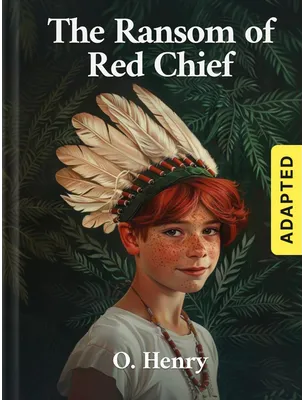
We picked for our victim the only child of an important citizen named Ebenezer Dorset. The father was respectable and mean with money, a man who liked house loans, and a stern, honest collection-plate passer at church, and one who took houses when people did not pay. The kid was a boy of ten, with freckles that stood out, and hair the colour of the cover of the magazine you buy at the news-stand when you want to catch a train. Bill and me thought that Ebenezer would agree to pay a ransom of exactly two thousand dollars. But wait till I tell you.
About two miles from Summit was a little mountain, covered with thick cedar woods. On the back side of this mountain was a cave. There we kept supplies.
One evening after the sun went down we drove in a carriage past old Dorset’s house. The kid was in the street, throwing rocks at a kitten on the fence on the other side.
“Hey, little boy!” says Bill, “do you want a bag of candy and a nice ride?”
The boy hits Bill right in the eye with a piece of brick.
“That will cost the old man an extra five hundred dollars,” says Bill, climbing over the wheel.
That boy fought like a strong bear; but, at last, we got him down in the bottom of the carriage and drove away. We took him up to the cave, and I tied the horse in the cedar thicket. After dark I drove the carriage to the little village, three miles away, where we had rented it, and walked back to the mountain.
Bill was sticking bandages over the scratches and bruises on his face. There was a fire burning behind the big rock at the opening of the cave, and the boy was watching a pot of boiling coffee, with two vulture tail feathers stuck in his red hair. He points a stick at me when I come up, and says:
“Ha! bad white face, do you dare to come into the camp of Red Chief, the one people fear on the plains?”
“He’s all right now,” says Bill, rolling up his pants and looking at some blue marks on his lower legs. “We’re playing Indian. We’re making Buffalo Bill’s show look like old slide pictures of Palestine in the town hall. I’m Old Hank, the hunter, Red Chief’s prisoner, and I’m going to have the skin on my head cut off at sunrise. By Geronimo! that kid can kick hard.”
Yes, sir, that boy seemed to be having a great time. The fun of camping out in a cave had made him forget that he was a prisoner himself. He right away gave me the name Snake-eye, the Spy, and said that, when his warriors came back from fighting, I was to be burned at the stake at sunrise.
Then we had dinner; and he filled his mouth full of bacon and bread and gravy, and began to talk. He made a speech during dinner something like this:
“I like this fine. I never camped out before; but I had a pet ‘possum once, and I was nine last birthday. I hate to go to school. Rats ate sixteen of Jimmy Talbot’s aunt’s spotted hen’s eggs. Are there any real Indians in these woods? I want some more gravy. Does the trees moving make the wind blow? We had five puppies. What makes your nose so red, Hank? My father has lots of money. Are the stars hot? I beat Ed Walker twice, Saturday. I don’t like girls. You mustn’t catch toads unless you use a string. Do oxen make any noise? Why are oranges round? Have you got beds to sleep on in this cave? Amos Murray has got six toes. A parrot can talk, but a monkey or a fish can’t. How many does it take to make twelve?”
Every few minutes he would remember that he was an annoying redskin, and pick up his stick gun and tiptoe to the mouth of the cave to look for the scouts of the hated pale-face. Now and then he would let out a war cry that made Old Hank the Trapper shiver. That boy had Bill scared from the start.
“Red Chief,” I say to the kid, “would you like to go home?”
“Aw, what for?” he says. “I don’t have any fun at home. I hate to go to school. I like to camp out. You won’t take me back home again, Snake-eye, will you?”
“Not right away,” I say. “We will stay here in the cave for a while.”
“All right!” he says. “That will be fine. I never had so much fun in all my life.”
We went to bed about eleven o’clock. We spread out some wide blankets and quilts and put Red Chief between us. We weren’t afraid he’d run away. He kept us awake for three hours, jumping up and reaching for his rifle and screaming: “Hist! pard,” in my and Bill’s ears, as the imagined crackle of a small stick or the soft sound of a leaf showed his young mind the quiet, secret approach of the outlaw band. At last I fell into a restless sleep, and dreamed that I had been kidnapped and chained to a tree by a fierce pirate with red hair.
Just at sunrise I was woken up by a series of awful screams from Bill. They weren’t yells, or howls, or shouts, or whoops, or cries, such as you’d expect from a man’s voice—they were simply rude, scary, embarrassing screams, such as women make when they see ghosts or caterpillars. It’s an awful thing to hear a strong, very upset, fat man scream without control in a cave at sunrise.
I jumped up to see what was wrong. Red Chief was sitting on Bill’s chest, with one hand twisted in Bill’s hair. In the other he had the sharp knife we used for cutting bacon; and he was working hard and really trying to cut off the skin on top of Bill’s head, as the punishment that had been decided for him the night before.
I got the knife away from the kid and made him lie down again. But from that moment Bill gave up. He laid down on his side of the bed, but he did not sleep again the whole time that boy was with us. I slept for a short time, but near sunrise I remembered that Red Chief had said I was to be burned at the stake at sunrise. I wasn’t nervous or afraid; but I sat up and lit my pipe and leaned against a rock.
“Why are you getting up so early, Sam?” asked Bill.
“Me?” I said. “Oh, I have a kind of pain in my shoulder. I thought sitting up would make it feel better.”
“You’re a liar!” says Bill. “You’re afraid. You were to be burned at sunrise, and you were afraid he would do it. And he would, too, if he could find a matchstick. Isn’t it awful, Sam? Do you think anybody will pay money to get a little naughty child like that back home?”
“Sure,” said I. “A wild kid like that is just the kind that parents love a lot. Now, you and the Chief get up and cook breakfast, while I go up on the top of this mountain and look around.”
I went up to the top of the little mountain and looked over the nearby area. Over toward Summit I expected to see the strong farmers of the village armed with scythes and pitchforks searching the countryside for the wicked kidnappers. But what I saw was a quiet scene with one man plowing with a brown mule. Nobody was searching the creek; no messengers ran here and there, bringing messages of no news to the worried parents. There was a forest-like feeling of sleepy quiet filling that part of Alabama that I could see. “Perhaps,” says I to myself, “it has not yet been found out that the wolves have carried away the tender little lamb from the sheep pen. Heaven help the wolves!” says I, and I went down the mountain to breakfast.
When I got to the cave I found Bill up against the side of it, breathing hard, and the boy saying he would hit him with a rock half as big as a coconut.
“He put a very hot boiled potato down my back,” said Bill, “and then mashed it with his foot; and I slapped his ears. Do you have a gun with you, Sam?”
I took the rock away from the boy and kind of fixed the argument. “I’ll get you,” says the kid to Bill. “No man has ever hit the Red Chief without getting punished for it. You better be careful!”
After breakfast the kid takes a piece of leather with strings tied around it out of his pocket and goes outside the cave unwrapping it.
“What is he doing now?” says Bill, worried. “You don’t think he will run away, do you, Sam?”
“No need to fear that,” I say. “He doesn’t seem to like staying at home much. But we have to make a plan about the ransom. There doesn’t seem to be much excitement around Summit because he is missing; but maybe they haven’t noticed yet that he’s gone. His folks may think he’s spending the night with Aunt Jane or one of the neighbours. Anyhow, he’ll be missed to-day. To-night we must send a message to his father asking for the two thousand dollars for his return.”
Just then we heard a kind of war cry, like David might have made when he beat the champion Goliath. It was a sling that Red Chief had pulled out of his pocket, and he was swinging it around his head.
I moved aside, and heard a loud thump and a kind of sigh from Bill, like a horse makes when you take its saddle off. A round black rock the size of an egg had hit Bill just behind his left ear. He went all loose and fell in the fire across the frying pan of hot water for washing the dishes. I dragged him out and poured cold water on his head for half an hour.
After a while, Bill sits up and feels behind his ear and says: “Sam, do you know who my favourite person from the Bible is?”
“Calm down,” I say. “You’ll think clearly again soon.”
“King Herod,” he says. “You won’t go away and leave me here alone, will you, Sam?”
I went out and caught that boy and shook him until his little spots on his face shook.
“If you don’t behave,” I say, “I’ll take you straight home. Now, are you going to be good, or not?”
“I was only joking,” he says unhappily. “I didn’t mean to hurt Old Hank. But what did he hit me for? I’ll behave, Snake-eye, if you won’t send me home, and if you’ll let me play the Black Scout to-day.”
“I don’t know the game,” I say. “That’s for you and Mr. Bill to decide. He’s your playmate for the day. I’m going away for a while, for work. Now, you come in and make friends with him and say you are sorry for hurting him, or you go home at once.”
I made him and Bill shake hands, and then I took Bill to one side and told him I was going to Poplar Cove, a little village three miles from the cave, and find out what I could about what people in Summit thought of the kidnapping. Also, I thought it best to send a firm letter to old man Dorset that day, asking for the ransom money and telling how it should be paid.
“You know, Sam,” says Bill, “I have stayed with you without fear in earthquakes, fire, and flood—in poker games, dynamite blasts, police raids, train robberies, and big storms. I never got scared until we kidnapped that two-legged rocket of a kid. He is making me crazy. You won’t leave me with him for long, will you, Sam?”
“I’ll be back some time this afternoon,” I say. “You must keep the boy busy and quiet until I come back. And now we’ll write the letter to old Dorset.”
Bill and I got paper and pencil and worked on the letter while Red Chief, with a blanket wrapped around him, walked up and down proudly, guarding the entrance of the cave. Bill begged me, crying, to make the ransom fifteen hundred dollars instead of two thousand. “I ain’t trying,” says he, “to speak against the famous good side of parents’ love, but we’re dealing with humans, and it ain’t human for anyone to give up two thousand dollars for that forty-pound piece of freckled wildcat. I’m willing to take a chance at fifteen hundred dollars. You can put the difference on me.”
So, to help Bill, I agreed, and we wrote a letter together that went like this:
Ebenezer Dorset, Mr.:
We have your boy hidden in a place far from Summit. It is no use for you or even the best detectives to try to find him. For sure, the only conditions on which you can have him given back to you are these: We want fifteen hundred dollars in large bills for his return: the money to be left at midnight tonight at the same place and in the same box as your reply—as described below. If you agree to these conditions, send your answer in writing by a single messenger tonight at half past eight o’clock. After crossing Owl Creek, on the road to Poplar Cove, there are three large trees about a hundred yards apart, close to the fence of the wheat field on the right-hand side. At the bottom of the fence-post, opposite the third tree, you will find a small cardboard box.
The person who brings the message will put the answer in this box and go back to Summit right away.
If you try any tricks or do not do what we ask as we said, you will never see your boy again.
If you pay the money as asked, he will be returned to you safe and well within three hours. These conditions are final, and if you do not agree to them there will be no more messages.