[{"id":"para_1","index":0,"start":0,"offset":336,"words":2,"paraNum":"","lastModified":1776169775000,"semanticType":"title-book-title","voicework":"tts","blockId":"postmaster_short_story_ffa_1_en-blmk","language":"en","wordsRange":{"start":100000000,"end":103000000},"paragraphVersion":23,"direction":"ltr","paragraph":"<h1 class=\"ilm-title ilm-x-large\" id=\"para_1\" semantictype=\"title-book-title\" data-ilmid=\"postmaster_short_story_ffa_1_en-blmk\" data-audio=\"1\" data-chapter=\"para_1\" data-words-count=\"2\" data-before=\"0\" data-ww=\"\"><span class=\"block-pb\"> <span class=\"block-pb is-animated\"></span> </span><span class=\"itm-wrap\">The Postmaster</span></h1>","hasContent":true,"isFirst":true,"isLast":false},{"id":"para_2","index":1,"start":336,"offset":330,"words":1,"paraNum":"","lastModified":1776169761000,"semanticType":"title-subtitle","voicework":"tts","blockId":"postmaster_short_story_ffa_1_en-bltv","language":"en","wordsRange":{"start":136333333,"end":169666667},"paragraphVersion":33,"direction":"ltr","paragraph":"<h1 class=\"ilm-title ilm-subtitle\" id=\"para_2\" semantictype=\"title-subtitle\" data-ilmid=\"postmaster_short_story_ffa_1_en-bltv\" data-audio=\"1\" data-chapter=\"para_2\" data-words-count=\"1\" data-before=\"2\" data-ww=\"\"><span class=\"block-pb\"> <span class=\"block-pb is-animated\"></span> </span><span class=\"itm-wrap\">[adapted]</span></h1>","hasContent":true,"isFirst":false,"isLast":false},{"id":"para_3","index":2,"start":666,"offset":363,"words":2,"paraNum":"","lastModified":1776171388000,"semanticType":"title-author","voicework":"tts","blockId":"postmaster_short_story_ffa_1_en-bltm","language":"en","wordsRange":{"start":203000000,"end":207000000},"paragraphVersion":67,"direction":"ltr","paragraph":"<h1 class=\"ilm-title ilm-author ilm-large ilm-nopad\" id=\"para_3\" semantictype=\"title-author\" data-ilmid=\"postmaster_short_story_ffa_1_en-bltm\" data-audio=\"1\" data-chapter=\"para_3\" data-words-count=\"2\" data-before=\"3\" data-ww=\"\"><span class=\"block-pb\"> <span class=\"block-pb is-animated\"></span> </span><span class=\"itm-wrap\">by <br>Rabindranath Tagore</span></h1>","hasContent":true,"isFirst":false,"isLast":false},{"id":"para_4","index":3,"start":1029,"offset":159,"words":0,"paraNum":"","lastModified":1743432121000,"semanticType":"line","blockId":"postmaster_short_story_ffa_1_en-bltn","language":"en","wordsRange":{"start":307000000,"end":407000000},"paragraphVersion":14,"direction":"ltr","paragraph":"<hr class=\"ilm-hr ilm-small\" id=\"para_4\" semantictype=\"line\" data-ilmid=\"postmaster_short_story_ffa_1_en-bltn\" data-words-count=\"0\" data-before=\"5\" data-ww=\"\">","hasContent":true,"isFirst":false,"isLast":false},{"id":"para_5","index":4,"start":1188,"offset":1538,"words":0,"paraNum":"","lastModified":1744020094000,"semanticType":"illustration","blockId":"postmaster_short_story_ffa_1_en-bltu","language":"en","wordsRange":{"start":507000000,"end":607000000},"paragraphVersion":14,"direction":"ltr","paragraph":"<div class=\"ilm-illustration\" id=\"para_5\" semantictype=\"illustration\" data-ilmid=\"postmaster_short_story_ffa_1_en-bltu\" data-words-count=\"0\" data-before=\"5\" data-ww=\"\"><img width=\"600\" height=\"343\" data-src=\"ch0p0\" src=\"data:image/webp;base64,UklGRqQDAABXRUJQVlA4IJgDAACwEACdASo8ACIAPm0wk0akIyGhKrv7AIANiUATplcZCJC92ccKGRuBOd105negp9Hx9+oJFZJe+f7zsm2895Xom6V+ad5H377tfjS/8MLYT1kjFfYeAw8ticJFJo00FNldxseXuk9b69j+SACdKOkiDtV6sBmmQILaJG6RBDhWteKYCxl6iblgn1RDP9hAAP7+Yth+GACsyiNTwq3RfgFg0eoITMAMITpdqmridgV/Zfvbo0B8zPTzQjK54XV0vJS4ToG1f0opGesOfQ9PGXBP14vfUAvKTPfC86HddZHcdIJOJlR2hlb/nv3Dq3djKWvOTefR7OSLlfKwrEvrxRFl7SXcZm+noY4fQX4fYDac+M1ORpMp7X9Qkua/ykELOra76H9ZyVX6Wl7JQHeM4HcK98tXr8vpSVAFpMC4jz6zAKQaFahS/FEjrNSEYpb14PRwIMDMf1+gmRBX45G0HAwGmOz6qzxVz1jm+iRK2mCziq6UBm9llzjU3nHdpbpDmFFqSe52Kz7uivDeaei5s94Opwfa+QfjLqKn9e4BefpNogYsZKzN0OVV+wUlAn956lcdi+kTRW9DNFrMgAngpk5Gt3STt1Z4H6dxsGvcWsUnNPpv1ugPWIPx/cNETnzzJ9PSgzEQwZIsYEsYhgxdYbHIjGqe/2OVJ60f5k2YIT+lwf9FX7l4oQc4zKGJHPFbxRvxeemUDhRMG62yruLoBa7LLPhPIvnGDPVmvTrUKx0x9MVfxk08duAgF3hE5YZ0VmNasoYEVi6eHupv0jk4/4HMT/O76/Nsw3f9mEfT8u/OPM7XGOa2nag3XV15yFv5er9g2Zvk5pZ/k/C+V33c9/r5TsRcLfehZ4q7ULp5AHNVOey4DJFpg9OF6HgH7KPu9EkO0wXat0nf+uUTle7X32/aYiljnYWPDlb0gQjiWHTTA+sR8Pr7fDAxhf3ne85eX8coXfhhqe9bTyuczJwLUo33/3/0wI4V98qL8FHFWkEB4syKaPXSy7pdsmafc0ejLfj+o8a4L5CdlkY8Fd8nrevQFtOVAQlYwW87qowXYWsI26AD8js2flTqB5zEb1IvPr122W//M+MG/9friMOxQ1+fXj+9Kp0Xle7P8Wu/TjZvkmqXwNnUsyXIq20ASSUanuEZpi0TxHp/c40YpebJCkJiGIP90KulgtmUfE1aVxTzjy18UDt/EKOFRc/k1TnEiL8EeAvmO2AAAA==\" alt=\"The Postmaster (adapted)\"></div>","hasContent":true,"isFirst":false,"isLast":false},{"id":"para_6","index":5,"start":2726,"offset":499,"words":37,"paraNum":"1","lastModified":1776170076000,"semanticType":"par","voicework":"tts","blockId":"postmaster_short_story_ffa_1_en-blml","language":"en","wordsRange":{"start":707000000,"end":747000000},"paragraphVersion":30,"direction":"ltr","paragraph":"<p id=\"para_6\" semantictype=\"par\" data-ilmid=\"postmaster_short_story_ffa_1_en-blml\" data-audio=\"1\" data-words-count=\"37\" data-before=\"5\" data-ww=\"\"><span class=\"block-num\" data-id=\"1\"></span><span class=\"block-pb\"> <span class=\"block-pb is-animated\"></span> </span><span class=\"itm-wrap\">The postmaster first started his job in the village of Ulapur. Though the village was a small one, there was an indigo factory nearby, and the owner, an Englishman, had helped to set up a post office.</span></p>","hasContent":true,"isFirst":false,"isLast":false},{"id":"para_7","index":6,"start":3225,"offset":529,"words":42,"paraNum":"2","lastModified":1776170092000,"semanticType":"par","voicework":"tts","blockId":"postmaster_short_story_ffa_1_en-blmm","language":"en","wordsRange":{"start":847000000,"end":890000000},"paragraphVersion":30,"direction":"ltr","paragraph":"<p id=\"para_7\" semantictype=\"par\" data-ilmid=\"postmaster_short_story_ffa_1_en-blmm\" data-audio=\"1\" data-words-count=\"42\" data-before=\"42\" data-ww=\"\"><span class=\"block-num\" data-id=\"2\"></span><span class=\"block-pb\"> <span class=\"block-pb is-animated\"></span> </span><span class=\"itm-wrap\">Our postmaster was from Calcutta. He felt very uncomfortable in this faraway village. His office and living room were in a dark shed with a roof of straw, not far from a green, dirty pond, surrounded on all sides by thick plants.</span></p>","hasContent":true,"isFirst":false,"isLast":false},{"id":"para_8","index":7,"start":3754,"offset":606,"words":55,"paraNum":"3","lastModified":1776170049000,"semanticType":"par","voicework":"tts","blockId":"postmaster_short_story_ffa_1_en-blmn","language":"en","wordsRange":{"start":990000000,"end":1049000000},"paragraphVersion":27,"direction":"ltr","paragraph":"<p id=\"para_8\" semantictype=\"par\" data-ilmid=\"postmaster_short_story_ffa_1_en-blmn\" data-audio=\"1\" data-words-count=\"55\" data-before=\"84\" data-ww=\"\"><span class=\"block-num\" data-id=\"3\"></span><span class=\"block-pb\"> <span class=\"block-pb is-animated\"></span> </span><span class=\"itm-wrap\">The men working in the indigo factory had no free time; also, they were not good company for decent people. Also, a Calcutta boy is not good at getting along with others. Among strangers he seems either proud or uncomfortable. Anyway, the postmaster had very little company; and he did not have much to do.</span></p>","hasContent":true,"isFirst":false,"isLast":false},{"id":"para_9","index":8,"start":4360,"offset":760,"words":90,"paraNum":"4","lastModified":1776170951000,"semanticType":"par","voicework":"tts","blockId":"postmaster_short_story_ffa_1_en-blmo","language":"en","wordsRange":{"start":1149000000,"end":1245000000},"paragraphVersion":30,"direction":"ltr","paragraph":"<p id=\"para_9\" semantictype=\"par\" data-ilmid=\"postmaster_short_story_ffa_1_en-blmo\" data-audio=\"1\" data-words-count=\"90\" data-before=\"139\" data-ww=\"\"><span class=\"block-num\" data-id=\"4\"></span><span class=\"block-pb\"> <span class=\"block-pb is-animated\"></span> </span><span class=\"itm-wrap\">At times he tried to write a poem or two. That the movement of the leaves and the clouds in the sky were enough to fill life with joy — such were the feelings he tried to express. But God knows that the poor man would have felt it like the gift of a new life, if some genie from the <i>Arabian </i><i>Nights</i> had in one night taken away the trees, leaves and all, and replaced them with a stone road, hiding the clouds from view with rows of tall houses.</span></p>","hasContent":true,"isFirst":false,"isLast":false},{"id":"para_10","index":9,"start":5120,"offset":469,"words":33,"paraNum":"5","lastModified":1776170031000,"semanticType":"par","voicework":"tts","blockId":"postmaster_short_story_ffa_1_en-blmp","language":"en","wordsRange":{"start":1345000000,"end":1377000000},"paragraphVersion":27,"direction":"ltr","paragraph":"<p id=\"para_10\" semantictype=\"par\" data-ilmid=\"postmaster_short_story_ffa_1_en-blmp\" data-audio=\"1\" data-words-count=\"33\" data-before=\"229\" data-ww=\"\"><span class=\"block-num\" data-id=\"5\"></span><span class=\"block-pb\"> <span class=\"block-pb is-animated\"></span> </span><span class=\"itm-wrap\">The postmaster’s pay was small. He had to cook his own meals, which he used to share with Ratan, a girl with no parents from the village, who did small jobs for him.</span></p>","hasContent":true,"isFirst":false,"isLast":false},{"id":"para_11","index":10,"start":5589,"offset":1006,"words":75,"paraNum":"6","lastModified":1776170363000,"semanticType":"par","voicework":"tts","blockId":"postmaster_short_story_ffa_1_en-blmq","language":"en","wordsRange":{"start":1477000000,"end":1554000000},"paragraphVersion":32,"direction":"ltr","paragraph":"<p id=\"para_11\" semantictype=\"par\" data-ilmid=\"postmaster_short_story_ffa_1_en-blmq\" data-audio=\"1\" data-words-count=\"75\" data-before=\"262\" data-ww=\"\"><span class=\"block-num\" data-id=\"6\"></span><span class=\"block-pb\"> <span class=\"block-pb is-animated\"></span> </span><span class=\"itm-wrap\">When in the evening the smoke began to rise from the village <span class=\"intricate-word\"><span class=\"-nowrap-content\">cow-sheds,<a data-fnid=\"1\" epub:type=\"noteref\" href=\"#n0\"></a> </span></span>and the cicadas chirped in every bush; when the fakirs of the Baul group sang their high songs in their daily meeting place, when any poet, who had tried to watch the movement of the leaves in the thick bamboo bushes, would have felt a cold shiver run down his back, the postmaster would light his little lamp, and call out ‘Ratan.’</span></p><aside id=\"n0\" data-audio=\"0\" data-fnid=\"1\" class=\"bh-fn\" epub:type=\"footnote\" data-ww=\"\"><span>Smoky fires are lit in the cow-sheds to keep away mosquitoes</span></aside>","hasContent":true,"isFirst":false,"isLast":false},{"id":"para_12","index":11,"start":6595,"offset":483,"words":29,"paraNum":"7","lastModified":1776170121000,"semanticType":"par","voicework":"tts","blockId":"postmaster_short_story_ffa_1_en-blms","language":"en","wordsRange":{"start":1654000000,"end":1684333333},"paragraphVersion":34,"direction":"ltr","paragraph":"<p id=\"para_12\" semantictype=\"par\" data-ilmid=\"postmaster_short_story_ffa_1_en-blms\" data-audio=\"1\" data-words-count=\"29\" data-before=\"337\" data-ww=\"\"><span class=\"block-num\" data-id=\"7\"></span><span class=\"block-pb\"> <span class=\"block-pb is-animated\"></span> </span><span class=\"itm-wrap\">Ratan would sit outside waiting for this call, and, instead of coming in right away, would reply: ‘Did you call me, sir?’ <br>‘What are you doing?’ the postmaster would ask.</span></p>","hasContent":true,"isFirst":false,"isLast":false},{"id":"para_13","index":12,"start":7078,"offset":471,"words":30,"paraNum":"8","lastModified":1776170375000,"semanticType":"par","voicework":"tts","blockId":"postmaster_short_story_ffa_1_en-bltw","language":"en","wordsRange":{"start":1684666667,"end":1716000000},"paragraphVersion":26,"direction":"ltr","paragraph":"<p id=\"para_13\" semantictype=\"par\" data-ilmid=\"postmaster_short_story_ffa_1_en-bltw\" data-audio=\"1\" data-words-count=\"30\" data-before=\"366\" data-ww=\"\"><span class=\"block-num\" data-id=\"8\"></span><span class=\"block-pb\"> <span class=\"block-pb is-animated\"></span> </span><span class=\"itm-wrap\">‘I have to go and light the kitchen fire,’ would be the answer. <br>And the postmaster would say: ‘Oh, let the kitchen fire be for a while; light my pipe first.’</span></p>","hasContent":true,"isFirst":false,"isLast":false},{"id":"para_14","index":13,"start":7549,"offset":556,"words":45,"paraNum":"9","lastModified":1776170108000,"semanticType":"par","voicework":"tts","blockId":"postmaster_short_story_ffa_1_en-blmw","language":"en","wordsRange":{"start":1816000000,"end":1859000000},"paragraphVersion":30,"direction":"ltr","paragraph":"<p id=\"para_14\" semantictype=\"par\" data-ilmid=\"postmaster_short_story_ffa_1_en-blmw\" data-audio=\"1\" data-words-count=\"45\" data-before=\"396\" data-ww=\"\"><span class=\"block-num\" data-id=\"9\"></span><span class=\"block-pb\"> <span class=\"block-pb is-animated\"></span> </span><span class=\"itm-wrap\">At last Ratan would enter, with cheeks puffed out, blowing hard on a hot coal to make a flame to light the tobacco. This would give the postmaster a chance to talk. ‘Well, Ratan,’ perhaps he would begin, ‘do you remember anything of your mother?’</span></p>","hasContent":true,"isFirst":false,"isLast":false},{"id":"para_15","index":14,"start":8105,"offset":922,"words":112,"paraNum":"10","lastModified":1776170396000,"semanticType":"par","voicework":"tts","blockId":"postmaster_short_story_ffa_1_en-blto","language":"en","wordsRange":{"start":1959000000,"end":2077000000},"paragraphVersion":29,"direction":"ltr","paragraph":"<p id=\"para_15\" semantictype=\"par\" data-ilmid=\"postmaster_short_story_ffa_1_en-blto\" data-audio=\"1\" data-words-count=\"112\" data-before=\"441\" data-ww=\"\"><span class=\"block-num\" data-id=\"10\"></span><span class=\"block-pb\"> <span class=\"block-pb is-animated\"></span> </span><span class=\"itm-wrap\">That was a good subject. Ratan partly remembered, and partly didn’t. Her father had loved her more than her mother; she remembered him more clearly. He used to come home in the evening after his work, and one or two evenings were clearer than others, like pictures in her mind. Ratan would sit on the floor near the postmaster’s feet, as memories filled her mind. She remembered a little brother that she had — and how on some long-ago cloudy day she had played fishing with him on the edge of the pond, with a small stick for a pretend fishing rod. Such little things would push out bigger events from her mind.</span></p>","hasContent":true,"isFirst":false,"isLast":false},{"id":"para_16","index":15,"start":9027,"offset":540,"words":43,"paraNum":"11","lastModified":1776170152000,"semanticType":"par","voicework":"tts","blockId":"postmaster_short_story_ffa_1_en-bltp","language":"en","wordsRange":{"start":2177000000,"end":2227000000},"paragraphVersion":29,"direction":"ltr","paragraph":"<p id=\"para_16\" semantictype=\"par\" data-ilmid=\"postmaster_short_story_ffa_1_en-bltp\" data-audio=\"1\" data-words-count=\"43\" data-before=\"553\" data-ww=\"\"><span class=\"block-num\" data-id=\"11\"></span><span class=\"block-pb\"> <span class=\"block-pb is-animated\"></span> </span><span class=\"itm-wrap\">So, as they talked, it often got very late, and the postmaster felt too lazy to cook anything. Ratan then quickly lit the fire, and toasted some flat bread, which, with the cold leftovers of the morning meal, was enough for their supper.</span></p>","hasContent":true,"isFirst":false,"isLast":false},{"id":"para_17","index":16,"start":9567,"offset":1285,"words":124,"paraNum":"12","lastModified":1776170412000,"semanticType":"par","voicework":"tts","blockId":"postmaster_short_story_ffa_1_en-blmx","language":"en","wordsRange":{"start":2327000000,"end":2451000000},"paragraphVersion":31,"direction":"ltr","paragraph":"<p id=\"para_17\" semantictype=\"par\" data-ilmid=\"postmaster_short_story_ffa_1_en-blmx\" data-audio=\"1\" data-words-count=\"124\" data-before=\"596\" data-ww=\"\"><span class=\"block-num\" data-id=\"12\"></span><span class=\"block-pb\"> <span class=\"block-pb is-animated\"></span> </span><span class=\"itm-wrap\">On some evenings, sitting at his desk in the corner of the big empty shed, the postmaster also would remember his own home, of his mother and his sister, of those for whom in his time away from home his heart was sad, — memories which kept coming back to him, but which he could not talk about with the men of the factory, though he found himself naturally talking about them out loud in the presence of the simple little girl. And so it came about that the girl would speak of his people as mother, brother, and <span class=\"intricate-word\"><span class=\"-nowrap-content\">sister,<a data-fnid=\"1\" epub:type=\"noteref\" href=\"#n1\"></a> </span></span>as if she had known them all her life. In fact, she had a complete picture of each one of them in her little heart.</span></p><aside id=\"n1\" data-audio=\"0\" data-fnid=\"1\" class=\"bh-fn\" epub:type=\"footnote\" data-ww=\"\"><span>Family servants call the master and mistress father and mother and the children older brothers and sisters.</span></aside>","hasContent":true,"isFirst":false,"isLast":false},{"id":"para_18","index":17,"start":10852,"offset":585,"words":56,"paraNum":"13","lastModified":1776170168000,"semanticType":"par","voicework":"tts","blockId":"postmaster_short_story_ffa_1_en-blmz","language":"en","wordsRange":{"start":2551000000,"end":2610000000},"paragraphVersion":29,"direction":"ltr","paragraph":"<p id=\"para_18\" semantictype=\"par\" data-ilmid=\"postmaster_short_story_ffa_1_en-blmz\" data-audio=\"1\" data-words-count=\"56\" data-before=\"720\" data-ww=\"\"><span class=\"block-num\" data-id=\"13\"></span><span class=\"block-pb\"> <span class=\"block-pb is-animated\"></span> </span><span class=\"itm-wrap\">One noon, during a break in the rain, a cool, soft wind was blowing; the smell of the wet grass and leaves in the hot sun felt like the warm breath of the tired earth on one’s body. A bird that did not stop went on all the afternoon repeating its one complaint in Nature’s room.</span></p>","hasContent":true,"isFirst":false,"isLast":false},{"id":"para_19","index":18,"start":11437,"offset":910,"words":111,"paraNum":"14","lastModified":1776170427000,"semanticType":"par","voicework":"tts","blockId":"postmaster_short_story_ffa_1_en-bln0","language":"en","wordsRange":{"start":2710000000,"end":2824000000},"paragraphVersion":29,"direction":"ltr","paragraph":"<p id=\"para_19\" semantictype=\"par\" data-ilmid=\"postmaster_short_story_ffa_1_en-bln0\" data-audio=\"1\" data-words-count=\"111\" data-before=\"776\" data-ww=\"\"><span class=\"block-num\" data-id=\"14\"></span><span class=\"block-pb\"> <span class=\"block-pb is-animated\"></span> </span><span class=\"itm-wrap\">The postmaster had nothing to do. The shine of the just washed leaves, and the piled-up leftover rain clouds moving away were nice to see; and the postmaster was watching them, and thinking to himself: ‘Oh, if only someone like me were near — just one loving person that I could hold close to my heart!’ This was exactly, he kept thinking, what that bird was trying to say, and it was the same feeling that the whispering leaves were trying to show. But no one knows, or would believe, that such an idea might also come to a poorly paid village postmaster in the deep, quiet midday break in his work.</span></p>","hasContent":true,"isFirst":false,"isLast":false},{"id":"para_20","index":19,"start":12347,"offset":935,"words":60,"paraNum":"15","lastModified":1776170199000,"semanticType":"par","voicework":"tts","blockId":"postmaster_short_story_ffa_1_en-bln1","language":"en","wordsRange":{"start":2924000000,"end":2986000000},"paragraphVersion":36,"direction":"ltr","paragraph":"<p id=\"para_20\" semantictype=\"par\" data-ilmid=\"postmaster_short_story_ffa_1_en-bln1\" data-audio=\"1\" data-words-count=\"60\" data-before=\"887\" data-ww=\"\"><span class=\"block-num\" data-id=\"15\"></span><span class=\"block-pb\"> <span class=\"block-pb is-animated\"></span> </span><span class=\"itm-wrap\">The postmaster sighed, and called out ‘Ratan.’ Ratan was then lying under the guava tree, busy eating not ripe guavas. <br>When she heard her master’s voice, she ran up, out of breath, saying: ‘Were you calling me, <span class=\"intricate-word\"><span class=\"-nowrap-content\">Dada?’<a data-fnid=\"1\" epub:type=\"noteref\" href=\"#n2\"></a> </span></span><br>‘I was thinking,’ said the postmaster, ‘of teaching you to read,’ and then for the rest of the afternoon he taught her the letters.</span></p><aside id=\"n2\" data-audio=\"0\" data-fnid=\"1\" class=\"bh-fn\" epub:type=\"footnote\" data-ww=\"\"><span>Dada = elder brother.</span></aside>","hasContent":true,"isFirst":false,"isLast":false},{"id":"para_21","index":20,"start":13282,"offset":368,"words":14,"paraNum":"16","lastModified":1776170436000,"semanticType":"par","voicework":"tts","blockId":"postmaster_short_story_ffa_1_en-bln3","language":"en","wordsRange":{"start":3086000000,"end":3102000000},"paragraphVersion":29,"direction":"ltr","paragraph":"<p id=\"para_21\" semantictype=\"par\" data-ilmid=\"postmaster_short_story_ffa_1_en-bln3\" data-audio=\"1\" data-words-count=\"14\" data-before=\"947\" data-ww=\"\"><span class=\"block-num\" data-id=\"16\"></span><span class=\"block-pb\"> <span class=\"block-pb is-animated\"></span> </span><span class=\"itm-wrap\">So, in a very short time, Ratan had got up to the double letters.</span></p>","hasContent":true,"isFirst":false,"isLast":false},{"id":"para_22","index":21,"start":13650,"offset":590,"words":54,"paraNum":"17","lastModified":1776170137000,"semanticType":"par","voicework":"tts","blockId":"postmaster_short_story_ffa_1_en-bln4","language":"en","wordsRange":{"start":3202000000,"end":3251000000},"paragraphVersion":29,"direction":"ltr","paragraph":"<p id=\"para_22\" semantictype=\"par\" data-ilmid=\"postmaster_short_story_ffa_1_en-bln4\" data-audio=\"1\" data-words-count=\"54\" data-before=\"961\" data-ww=\"\"><span class=\"block-num\" data-id=\"17\"></span><span class=\"block-pb\"> <span class=\"block-pb is-animated\"></span> </span><span class=\"itm-wrap\">It seemed like the rain of the season would never stop. Canals, ditches, and low places were all full of water and spilling over. Day and night the sound of rain was heard, and the croaking of frogs. The village roads became impossible to use, and shopping had to be done in small boats.</span></p>","hasContent":true,"isFirst":false,"isLast":false},{"id":"para_23","index":22,"start":14240,"offset":674,"words":67,"paraNum":"18","lastModified":1776171264000,"semanticType":"par","voicework":"tts","blockId":"postmaster_short_story_ffa_1_en-bln5","language":"en","wordsRange":{"start":3351000000,"end":3414333333},"paragraphVersion":33,"direction":"ltr","paragraph":"<p id=\"para_23\" semantictype=\"par\" data-ilmid=\"postmaster_short_story_ffa_1_en-bln5\" data-audio=\"1\" data-words-count=\"67\" data-before=\"1015\" data-ww=\"\"><span class=\"block-num\" data-id=\"18\"></span><span class=\"block-pb\"> <span class=\"block-pb is-animated\"></span> </span><span class=\"itm-wrap\">One very cloudy morning, the postmaster’s little student had been waiting outside the door for a long time for him to call her, but, not hearing it as usual, she picked up her worn book, and slowly entered the room. She found her master lying on his bed, and, thinking he was resting, she was about to leave on tiptoe, when she suddenly heard her name — ‘Ratan!’</span></p>","hasContent":true,"isFirst":false,"isLast":false},{"id":"para_24","index":23,"start":14914,"offset":454,"words":28,"paraNum":"19","lastModified":1776171247000,"semanticType":"par","voicework":"tts","blockId":"postmaster_short_story_ffa_1_en-bltx","language":"en","wordsRange":{"start":3414666667,"end":3443000000},"paragraphVersion":22,"direction":"ltr","paragraph":"<p id=\"para_24\" semantictype=\"par\" data-ilmid=\"postmaster_short_story_ffa_1_en-bltx\" data-audio=\"1\" data-words-count=\"28\" data-before=\"1082\" data-ww=\"\"><span class=\"block-num\" data-id=\"19\"></span><span class=\"block-pb\"> <span class=\"block-pb is-animated\"></span> </span><span class=\"itm-wrap\">She turned right away and asked: ‘Were you sleeping, Dada?’ The postmaster in a sad voice said: ‘I am not well. Feel my head; is it very hot?’</span></p>","hasContent":true,"isFirst":false,"isLast":false},{"id":"para_25","index":24,"start":15368,"offset":605,"words":57,"paraNum":"20","lastModified":1776170213000,"semanticType":"par","voicework":"tts","blockId":"postmaster_short_story_ffa_1_en-bln6","language":"en","wordsRange":{"start":3543000000,"end":3593000000},"paragraphVersion":35,"direction":"ltr","paragraph":"<p id=\"para_25\" semantictype=\"par\" data-ilmid=\"postmaster_short_story_ffa_1_en-bln6\" data-audio=\"1\" data-words-count=\"57\" data-before=\"1110\" data-ww=\"\"><span class=\"block-num\" data-id=\"20\"></span><span class=\"block-pb\"> <span class=\"block-pb is-animated\"></span> </span><span class=\"itm-wrap\">In the loneliness of his time away from home, and in the sadness of the rains, his sick body needed a little gentle care. He wanted to remember the touch on the forehead of soft hands with bracelets that made a light sound, to imagine the presence of a loving woman, the nearness of mother and sister.</span></p>","hasContent":true,"isFirst":false,"isLast":false},{"id":"para_26","index":25,"start":15973,"offset":629,"words":60,"paraNum":"21","lastModified":1776170454000,"semanticType":"par","voicework":"tts","blockId":"postmaster_short_story_ffa_1_en-bltq","language":"en","wordsRange":{"start":3693000000,"end":3755000000},"paragraphVersion":31,"direction":"ltr","paragraph":"<p id=\"para_26\" semantictype=\"par\" data-ilmid=\"postmaster_short_story_ffa_1_en-bltq\" data-audio=\"1\" data-words-count=\"60\" data-before=\"1167\" data-ww=\"\"><span class=\"block-num\" data-id=\"21\"></span><span class=\"block-pb\"> <span class=\"block-pb is-animated\"></span> </span><span class=\"itm-wrap\">And the man away from home was not disappointed. Ratan stopped being a little girl. She at once became like a mother, called the village doctor, gave the sick man his pills at the right times, stayed up all night by his pillow, cooked his porridge for him, and now and then asked: ‘Are you feeling a little better, Dada?’</span></p>","hasContent":true,"isFirst":false,"isLast":false},{"id":"para_27","index":26,"start":16602,"offset":542,"words":43,"paraNum":"22","lastModified":1776170228000,"semanticType":"par","voicework":"tts","blockId":"postmaster_short_story_ffa_1_en-bln7","language":"en","wordsRange":{"start":3855000000,"end":3906000000},"paragraphVersion":31,"direction":"ltr","paragraph":"<p id=\"para_27\" semantictype=\"par\" data-ilmid=\"postmaster_short_story_ffa_1_en-bln7\" data-audio=\"1\" data-words-count=\"43\" data-before=\"1227\" data-ww=\"\"><span class=\"block-num\" data-id=\"22\"></span><span class=\"block-pb\"> <span class=\"block-pb is-animated\"></span> </span><span class=\"itm-wrap\">It was some time before the postmaster, with a weak body, could leave his sickbed. ‘No more of this,’ he said firmly. ‘I must get a transfer.’ He at once wrote a request to Calcutta for a transfer, because the place was unhealthy.</span></p>","hasContent":true,"isFirst":false,"isLast":false},{"id":"para_28","index":27,"start":17144,"offset":686,"words":72,"paraNum":"23","lastModified":1776170484000,"semanticType":"par","voicework":"tts","blockId":"postmaster_short_story_ffa_1_en-bln8","language":"en","wordsRange":{"start":4006000000,"end":4072000000},"paragraphVersion":31,"direction":"ltr","paragraph":"<p id=\"para_28\" semantictype=\"par\" data-ilmid=\"postmaster_short_story_ffa_1_en-bln8\" data-audio=\"1\" data-words-count=\"72\" data-before=\"1270\" data-ww=\"\"><span class=\"block-num\" data-id=\"23\"></span><span class=\"block-pb\"> <span class=\"block-pb is-animated\"></span> </span><span class=\"itm-wrap\">When her work as a nurse was over, Ratan again went back to her old place outside the door. But she did not hear the same old call anymore. She would sometimes look inside quietly to see the postmaster sitting on his chair, or lying on his bed, and staring into the air without thinking. While Ratan was waiting for her call, the postmaster was waiting for an answer to his request.</span></p>","hasContent":true,"isFirst":false,"isLast":false},{"id":"para_29","index":28,"start":17830,"offset":605,"words":55,"paraNum":"24","lastModified":1776170468000,"semanticType":"par","voicework":"tts","blockId":"postmaster_short_story_ffa_1_en-bltt","language":"en","wordsRange":{"start":4172000000,"end":4228000000},"paragraphVersion":31,"direction":"ltr","paragraph":"<p id=\"para_29\" semantictype=\"par\" data-ilmid=\"postmaster_short_story_ffa_1_en-bltt\" data-audio=\"1\" data-words-count=\"55\" data-before=\"1342\" data-ww=\"\"><span class=\"block-num\" data-id=\"24\"></span><span class=\"block-pb\"> <span class=\"block-pb is-animated\"></span> </span><span class=\"itm-wrap\">The girl read her old lessons over and over again — her great fear was that, when the call came, she might make mistakes with the double consonants. At last, after a week, the call did come one evening. With a very happy heart Ratan rushed into the room with her — ‘Were you calling me, Dada?’</span></p>","hasContent":true,"isFirst":false,"isLast":false},{"id":"para_30","index":29,"start":18435,"offset":494,"words":24,"paraNum":"25","lastModified":1776170257000,"semanticType":"par","voicework":"tts","blockId":"postmaster_short_story_ffa_1_en-bln9","language":"en","wordsRange":{"start":4328000000,"end":4357000000},"paragraphVersion":34,"direction":"ltr","paragraph":"<p id=\"para_30\" semantictype=\"par\" data-ilmid=\"postmaster_short_story_ffa_1_en-bln9\" data-audio=\"1\" data-words-count=\"24\" data-before=\"1397\" data-ww=\"\"><span class=\"block-num\" data-id=\"25\"></span><span class=\"block-pb\"> <span class=\"block-pb is-animated\"></span> </span><span class=\"itm-wrap\">The postmaster said: ‘I am going away tomorrow, Ratan.’ <br>‘Where are you going, Dada?’ <br>‘I am going home.’ <br>‘When will you come back?’ <br>‘I am not coming back.’</span></p>","hasContent":true,"isFirst":false,"isLast":false},{"id":"para_31","index":30,"start":18929,"offset":483,"words":34,"paraNum":"26","lastModified":1776170496000,"semanticType":"par","voicework":"tts","blockId":"postmaster_short_story_ffa_1_en-blne","language":"en","wordsRange":{"start":4457000000,"end":4493000000},"paragraphVersion":31,"direction":"ltr","paragraph":"<p id=\"para_31\" semantictype=\"par\" data-ilmid=\"postmaster_short_story_ffa_1_en-blne\" data-audio=\"1\" data-words-count=\"34\" data-before=\"1421\" data-ww=\"\"><span class=\"block-num\" data-id=\"26\"></span><span class=\"block-pb\"> <span class=\"block-pb is-animated\"></span> </span><span class=\"itm-wrap\">Ratan asked no other question. The postmaster, on his own, continued to tell her that his request to move to another place was refused, so he had left his job, and was going home.</span></p>","hasContent":true,"isFirst":false,"isLast":false},{"id":"para_32","index":31,"start":19412,"offset":503,"words":41,"paraNum":"27","lastModified":1776170182000,"semanticType":"par","voicework":"tts","blockId":"postmaster_short_story_ffa_1_en-blnf","language":"en","wordsRange":{"start":4593000000,"end":4632000000},"paragraphVersion":31,"direction":"ltr","paragraph":"<p id=\"para_32\" semantictype=\"par\" data-ilmid=\"postmaster_short_story_ffa_1_en-blnf\" data-audio=\"1\" data-words-count=\"41\" data-before=\"1455\" data-ww=\"\"><span class=\"block-num\" data-id=\"27\"></span><span class=\"block-pb\"> <span class=\"block-pb is-animated\"></span> </span><span class=\"itm-wrap\">For a long time neither of them spoke another word. The lamp kept burning with a weak light, and from a hole in one corner of the straw roof water kept dripping into a clay pot on the floor under it.</span></p>","hasContent":true,"isFirst":false,"isLast":false},{"id":"para_33","index":32,"start":19915,"offset":486,"words":39,"paraNum":"28","lastModified":1776171307000,"semanticType":"par","voicework":"tts","blockId":"postmaster_short_story_ffa_1_en-blng","language":"en","wordsRange":{"start":4732000000,"end":4770333333},"paragraphVersion":39,"direction":"ltr","paragraph":"<p id=\"para_33\" semantictype=\"par\" data-ilmid=\"postmaster_short_story_ffa_1_en-blng\" data-audio=\"1\" data-words-count=\"39\" data-before=\"1496\" data-ww=\"\"><span class=\"block-num\" data-id=\"28\"></span><span class=\"block-pb\"> <span class=\"block-pb is-animated\"></span> </span><span class=\"itm-wrap\">After a while Ratan stood up, and went to the kitchen to make the meal; but she was not as quick at it as on other days. Many new things to think about had come into her little mind.</span></p>","hasContent":true,"isFirst":false,"isLast":false},{"id":"para_34","index":33,"start":20401,"offset":549,"words":43,"paraNum":"29","lastModified":1776170273000,"semanticType":"par","voicework":"tts","blockId":"postmaster_short_story_ffa_1_en-blty","language":"en","wordsRange":{"start":4770666667,"end":4815000000},"paragraphVersion":24,"direction":"ltr","paragraph":"<p id=\"para_34\" semantictype=\"par\" data-ilmid=\"postmaster_short_story_ffa_1_en-blty\" data-audio=\"1\" data-words-count=\"43\" data-before=\"1535\" data-ww=\"\"><span class=\"block-num\" data-id=\"29\"></span><span class=\"block-pb\"> <span class=\"block-pb is-animated\"></span> </span><span class=\"itm-wrap\">When the postmaster had finished his dinner, the girl suddenly asked him: ‘Dada, will you take me to your home?’ <br>The postmaster laughed. ‘What an idea!’ he said; but he did not think he needed to explain to the girl why it was silly.</span></p>","hasContent":true,"isFirst":false,"isLast":false},{"id":"para_35","index":34,"start":20950,"offset":447,"words":24,"paraNum":"30","lastModified":1776170527000,"semanticType":"par","voicework":"tts","blockId":"postmaster_short_story_ffa_1_en-blni","language":"en","wordsRange":{"start":4915000000,"end":4935000000},"paragraphVersion":37,"direction":"ltr","paragraph":"<p id=\"para_35\" semantictype=\"par\" data-ilmid=\"postmaster_short_story_ffa_1_en-blni\" data-audio=\"1\" data-words-count=\"24\" data-before=\"1578\" data-ww=\"\"><span class=\"block-num\" data-id=\"30\"></span><span class=\"block-pb\"> <span class=\"block-pb is-animated\"></span> </span><span class=\"itm-wrap\">That whole night, when she was awake and in her dreams, the postmaster’s laughing answer kept coming back to her mind — ‘What an idea!’</span></p>","hasContent":true,"isFirst":false,"isLast":false},{"id":"para_36","index":35,"start":21397,"offset":698,"words":78,"paraNum":"31","lastModified":1776170289000,"semanticType":"par","voicework":"tts","blockId":"postmaster_short_story_ffa_1_en-blnj","language":"en","wordsRange":{"start":5035000000,"end":5120000000},"paragraphVersion":33,"direction":"ltr","paragraph":"<p id=\"para_36\" semantictype=\"par\" data-ilmid=\"postmaster_short_story_ffa_1_en-blnj\" data-audio=\"1\" data-words-count=\"78\" data-before=\"1602\" data-ww=\"\"><span class=\"block-num\" data-id=\"31\"></span><span class=\"block-pb\"> <span class=\"block-pb is-animated\"></span> </span><span class=\"itm-wrap\">When he got up in the morning, the postmaster found his bath ready. He had kept his Calcutta habit of bathing in water brought and kept in pots, instead of jumping into the river as people in the village did. For some reason, the girl could not ask him when he would leave, so she had brought the water from the river long before sunrise, so that it would be ready as early as he might want it.</span></p>","hasContent":true,"isFirst":false,"isLast":false},{"id":"para_37","index":36,"start":22095,"offset":546,"words":44,"paraNum":"32","lastModified":1776170542000,"semanticType":"par","voicework":"tts","blockId":"postmaster_short_story_ffa_1_en-blts","language":"en","wordsRange":{"start":5220000000,"end":5263000000},"paragraphVersion":36,"direction":"ltr","paragraph":"<p id=\"para_37\" semantictype=\"par\" data-ilmid=\"postmaster_short_story_ffa_1_en-blts\" data-audio=\"1\" data-words-count=\"44\" data-before=\"1680\" data-ww=\"\"><span class=\"block-num\" data-id=\"32\"></span><span class=\"block-pb\"> <span class=\"block-pb is-animated\"></span> </span><span class=\"itm-wrap\">After the bath, someone called for Ratan. She came in quietly, and looked at her master’s face, waiting for orders. The master said: ‘Do not worry about my going away, Ratan; I will tell the person who comes after me to look after you.’</span></p>","hasContent":true,"isFirst":false,"isLast":false},{"id":"para_38","index":37,"start":22641,"offset":623,"words":57,"paraNum":"33","lastModified":1776170303000,"semanticType":"par","voicework":"tts","blockId":"postmaster_short_story_ffa_1_en-blnk","language":"en","wordsRange":{"start":5363000000,"end":5423333333},"paragraphVersion":37,"direction":"ltr","paragraph":"<p id=\"para_38\" semantictype=\"par\" data-ilmid=\"postmaster_short_story_ffa_1_en-blnk\" data-audio=\"1\" data-words-count=\"57\" data-before=\"1724\" data-ww=\"\"><span class=\"block-num\" data-id=\"33\"></span><span class=\"block-pb\"> <span class=\"block-pb is-animated\"></span> </span><span class=\"itm-wrap\">These words were kindly meant, no doubt: but a woman’s heart is hard to understand! Ratan had taken many scoldings from her master without complaint, but these kind words she could not bear. She burst out crying, and said: ‘No, no, you need not tell anybody anything at all about me; I don’t want to stay here.’</span></p>","hasContent":true,"isFirst":false,"isLast":false},{"id":"para_39","index":38,"start":23264,"offset":380,"words":13,"paraNum":"34","lastModified":1776170330000,"semanticType":"par","voicework":"tts","blockId":"postmaster_short_story_ffa_1_en-bltz","language":"en","wordsRange":{"start":5423666667,"end":5436000000},"paragraphVersion":23,"direction":"ltr","paragraph":"<p id=\"para_39\" semantictype=\"par\" data-ilmid=\"postmaster_short_story_ffa_1_en-bltz\" data-audio=\"1\" data-words-count=\"13\" data-before=\"1781\" data-ww=\"\"><span class=\"block-num\" data-id=\"34\"></span><span class=\"block-pb\"> <span class=\"block-pb is-animated\"></span> </span><span class=\"itm-wrap\">The postmaster was very surprised. He had never seen Ratan like this before.</span></p>","hasContent":true,"isFirst":false,"isLast":false},{"id":"para_40","index":39,"start":23644,"offset":633,"words":61,"paraNum":"35","lastModified":1776170559000,"semanticType":"par","voicework":"tts","blockId":"postmaster_short_story_ffa_1_en-blnm","language":"en","wordsRange":{"start":5536000000,"end":5594333333},"paragraphVersion":40,"direction":"ltr","paragraph":"<p id=\"para_40\" semantictype=\"par\" data-ilmid=\"postmaster_short_story_ffa_1_en-blnm\" data-audio=\"1\" data-words-count=\"61\" data-before=\"1794\" data-ww=\"\"><span class=\"block-num\" data-id=\"35\"></span><span class=\"block-pb\"> <span class=\"block-pb is-animated\"></span> </span><span class=\"itm-wrap\">The new person arrived as expected, and the postmaster, after handing over his duties, got ready to leave. Just before he started he called Ratan, and said: ‘Here is something for you; I hope it will help you for a little while.’ He took out of his pocket all of his month’s pay, keeping only a little for his travel costs.</span></p>","hasContent":true,"isFirst":false,"isLast":false},{"id":"para_41","index":40,"start":24277,"offset":464,"words":30,"paraNum":"36","lastModified":1776170316000,"semanticType":"par","voicework":"tts","blockId":"postmaster_short_story_ffa_1_en-blu0","language":"en","wordsRange":{"start":5594666667,"end":5627000000},"paragraphVersion":19,"direction":"ltr","paragraph":"<p id=\"para_41\" semantictype=\"par\" data-ilmid=\"postmaster_short_story_ffa_1_en-blu0\" data-audio=\"1\" data-words-count=\"30\" data-before=\"1855\" data-ww=\"\"><span class=\"block-num\" data-id=\"36\"></span><span class=\"block-pb\"> <span class=\"block-pb is-animated\"></span> </span><span class=\"itm-wrap\">Then Ratan fell down at his feet and cried: ‘Oh, Dada, please, don’t give me anything, don’t worry about me at all,’ and then she ran away out of sight.</span></p>","hasContent":true,"isFirst":false,"isLast":false},{"id":"para_42","index":41,"start":24741,"offset":460,"words":28,"paraNum":"37","lastModified":1776170587000,"semanticType":"par","voicework":"tts","blockId":"postmaster_short_story_ffa_1_en-blnn","language":"en","wordsRange":{"start":5727000000,"end":5760000000},"paragraphVersion":38,"direction":"ltr","paragraph":"<p id=\"para_42\" semantictype=\"par\" data-ilmid=\"postmaster_short_story_ffa_1_en-blnn\" data-audio=\"1\" data-words-count=\"28\" data-before=\"1885\" data-ww=\"\"><span class=\"block-num\" data-id=\"37\"></span><span class=\"block-pb\"> <span class=\"block-pb is-animated\"></span> </span><span class=\"itm-wrap\">The postmaster sighed, picked up his bag, put his umbrella over his shoulder, and, with a man carrying his colorful metal trunk, he slowly went to the boat.</span></p>","hasContent":true,"isFirst":false,"isLast":false},{"id":"para_43","index":42,"start":25201,"offset":966,"words":129,"paraNum":"38","lastModified":1776170351000,"semanticType":"par","voicework":"tts","blockId":"postmaster_short_story_ffa_1_en-blno","language":"en","wordsRange":{"start":5860000000,"end":5978000000},"paragraphVersion":37,"direction":"ltr","paragraph":"<p id=\"para_43\" semantictype=\"par\" data-ilmid=\"postmaster_short_story_ffa_1_en-blno\" data-audio=\"1\" data-words-count=\"129\" data-before=\"1913\" data-ww=\"\"><span class=\"block-num\" data-id=\"38\"></span><span class=\"block-pb\"> <span class=\"block-pb is-animated\"></span> </span><span class=\"itm-wrap\">When he got in and the boat started to move, and the river, high from the rain, like a stream of tears rising from the earth, swirled and seemed to cry at the front of the boat, then he felt a kind of pain in his heart; the sad face of a village girl seemed to show him the great, silent sadness of Mother Earth herself that filled everything. At one moment he felt a sudden wish to go back, and take with him that lonely, homeless girl, left alone by everyone. But the wind had just filled the sails, the boat had gone far into the middle of the strong current, and already the village was left behind, and the burning ground outside the village could be seen.</span></p>","hasContent":true,"isFirst":false,"isLast":false},{"id":"para_44","index":43,"start":26167,"offset":523,"words":36,"paraNum":"39","lastModified":1776170572000,"semanticType":"par","voicework":"tts","blockId":"postmaster_short_story_ffa_1_en-blnp","language":"en","wordsRange":{"start":6078000000,"end":6115000000},"paragraphVersion":37,"direction":"ltr","paragraph":"<p id=\"para_44\" semantictype=\"par\" data-ilmid=\"postmaster_short_story_ffa_1_en-blnp\" data-audio=\"1\" data-words-count=\"36\" data-before=\"2042\" data-ww=\"\"><span class=\"block-num\" data-id=\"39\"></span><span class=\"block-pb\"> <span class=\"block-pb is-animated\"></span> </span><span class=\"itm-wrap\">So the traveller, carried on the water of the fast-flowing river, comforted himself with thoughts on the very many meetings and goodbyes happening in the world — on death, the great goodbye, from which no one returns.</span></p>","hasContent":true,"isFirst":false,"isLast":false},{"id":"para_45","index":44,"start":26690,"offset":571,"words":53,"paraNum":"40","lastModified":1776170603000,"semanticType":"par","voicework":"tts","blockId":"postmaster_short_story_ffa_1_en-blnq","language":"en","wordsRange":{"start":6215000000,"end":6270000000},"paragraphVersion":37,"direction":"ltr","paragraph":"<p id=\"para_45\" semantictype=\"par\" data-ilmid=\"postmaster_short_story_ffa_1_en-blnq\" data-audio=\"1\" data-words-count=\"53\" data-before=\"2078\" data-ww=\"\"><span class=\"block-num\" data-id=\"40\"></span><span class=\"block-pb\"> <span class=\"block-pb is-animated\"></span> </span><span class=\"itm-wrap\">But Ratan had no deep thoughts. She was walking around the post office crying a lot. It may be that she still had a hidden hope in some corner of her heart that her Dada would return, and that is why she could not pull herself away. Sadly for the foolish human heart!</span></p>","hasContent":true,"isFirst":false,"isLast":false},{"id":"para_46","index":45,"start":27261,"offset":163,"words":0,"paraNum":"","lastModified":1743431852000,"semanticType":"line","blockId":"postmaster_short_story_ffa_1_en-bltl","language":"en","wordsRange":{"start":6370000000,"end":6470000000},"paragraphVersion":14,"direction":"ltr","paragraph":"<hr class=\"ilm-hr ilm-small\" id=\"para_46\" semantictype=\"line\" data-ilmid=\"postmaster_short_story_ffa_1_en-bltl\" data-words-count=\"0\" data-before=\"2131\" data-ww=\"\">","hasContent":true,"isFirst":false,"isLast":true}]
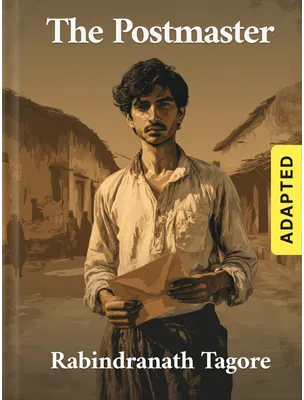
[adapted]
by
Rabindranath Tagore

The postmaster first started his job in the village of Ulapur. Though the village was a small one, there was an indigo factory nearby, and the owner, an Englishman, had helped to set up a post office.
Our postmaster was from Calcutta. He felt very uncomfortable in this faraway village. His office and living room were in a dark shed with a roof of straw, not far from a green, dirty pond, surrounded on all sides by thick plants.
The men working in the indigo factory had no free time; also, they were not good company for decent people. Also, a Calcutta boy is not good at getting along with others. Among strangers he seems either proud or uncomfortable. Anyway, the postmaster had very little company; and he did not have much to do.
At times he tried to write a poem or two. That the movement of the leaves and the clouds in the sky were enough to fill life with joy — such were the feelings he tried to express. But God knows that the poor man would have felt it like the gift of a new life, if some genie from the Arabian Nights had in one night taken away the trees, leaves and all, and replaced them with a stone road, hiding the clouds from view with rows of tall houses.
The postmaster’s pay was small. He had to cook his own meals, which he used to share with Ratan, a girl with no parents from the village, who did small jobs for him.
When in the evening the smoke began to rise from the village cow-sheds, and the cicadas chirped in every bush; when the fakirs of the Baul group sang their high songs in their daily meeting place, when any poet, who had tried to watch the movement of the leaves in the thick bamboo bushes, would have felt a cold shiver run down his back, the postmaster would light his little lamp, and call out ‘Ratan.’
Ratan would sit outside waiting for this call, and, instead of coming in right away, would reply: ‘Did you call me, sir?’
‘What are you doing?’ the postmaster would ask.
‘I have to go and light the kitchen fire,’ would be the answer.
And the postmaster would say: ‘Oh, let the kitchen fire be for a while; light my pipe first.’
At last Ratan would enter, with cheeks puffed out, blowing hard on a hot coal to make a flame to light the tobacco. This would give the postmaster a chance to talk. ‘Well, Ratan,’ perhaps he would begin, ‘do you remember anything of your mother?’
That was a good subject. Ratan partly remembered, and partly didn’t. Her father had loved her more than her mother; she remembered him more clearly. He used to come home in the evening after his work, and one or two evenings were clearer than others, like pictures in her mind. Ratan would sit on the floor near the postmaster’s feet, as memories filled her mind. She remembered a little brother that she had — and how on some long-ago cloudy day she had played fishing with him on the edge of the pond, with a small stick for a pretend fishing rod. Such little things would push out bigger events from her mind.
So, as they talked, it often got very late, and the postmaster felt too lazy to cook anything. Ratan then quickly lit the fire, and toasted some flat bread, which, with the cold leftovers of the morning meal, was enough for their supper.
On some evenings, sitting at his desk in the corner of the big empty shed, the postmaster also would remember his own home, of his mother and his sister, of those for whom in his time away from home his heart was sad, — memories which kept coming back to him, but which he could not talk about with the men of the factory, though he found himself naturally talking about them out loud in the presence of the simple little girl. And so it came about that the girl would speak of his people as mother, brother, and sister, as if she had known them all her life. In fact, she had a complete picture of each one of them in her little heart.
One noon, during a break in the rain, a cool, soft wind was blowing; the smell of the wet grass and leaves in the hot sun felt like the warm breath of the tired earth on one’s body. A bird that did not stop went on all the afternoon repeating its one complaint in Nature’s room.
The postmaster had nothing to do. The shine of the just washed leaves, and the piled-up leftover rain clouds moving away were nice to see; and the postmaster was watching them, and thinking to himself: ‘Oh, if only someone like me were near — just one loving person that I could hold close to my heart!’ This was exactly, he kept thinking, what that bird was trying to say, and it was the same feeling that the whispering leaves were trying to show. But no one knows, or would believe, that such an idea might also come to a poorly paid village postmaster in the deep, quiet midday break in his work.
The postmaster sighed, and called out ‘Ratan.’ Ratan was then lying under the guava tree, busy eating not ripe guavas.
When she heard her master’s voice, she ran up, out of breath, saying: ‘Were you calling me, Dada?’
‘I was thinking,’ said the postmaster, ‘of teaching you to read,’ and then for the rest of the afternoon he taught her the letters.
So, in a very short time, Ratan had got up to the double letters.
It seemed like the rain of the season would never stop. Canals, ditches, and low places were all full of water and spilling over. Day and night the sound of rain was heard, and the croaking of frogs. The village roads became impossible to use, and shopping had to be done in small boats.
One very cloudy morning, the postmaster’s little student had been waiting outside the door for a long time for him to call her, but, not hearing it as usual, she picked up her worn book, and slowly entered the room. She found her master lying on his bed, and, thinking he was resting, she was about to leave on tiptoe, when she suddenly heard her name — ‘Ratan!’
She turned right away and asked: ‘Were you sleeping, Dada?’ The postmaster in a sad voice said: ‘I am not well. Feel my head; is it very hot?’
In the loneliness of his time away from home, and in the sadness of the rains, his sick body needed a little gentle care. He wanted to remember the touch on the forehead of soft hands with bracelets that made a light sound, to imagine the presence of a loving woman, the nearness of mother and sister.
And the man away from home was not disappointed. Ratan stopped being a little girl. She at once became like a mother, called the village doctor, gave the sick man his pills at the right times, stayed up all night by his pillow, cooked his porridge for him, and now and then asked: ‘Are you feeling a little better, Dada?’
It was some time before the postmaster, with a weak body, could leave his sickbed. ‘No more of this,’ he said firmly. ‘I must get a transfer.’ He at once wrote a request to Calcutta for a transfer, because the place was unhealthy.
When her work as a nurse was over, Ratan again went back to her old place outside the door. But she did not hear the same old call anymore. She would sometimes look inside quietly to see the postmaster sitting on his chair, or lying on his bed, and staring into the air without thinking. While Ratan was waiting for her call, the postmaster was waiting for an answer to his request.
The girl read her old lessons over and over again — her great fear was that, when the call came, she might make mistakes with the double consonants. At last, after a week, the call did come one evening. With a very happy heart Ratan rushed into the room with her — ‘Were you calling me, Dada?’
The postmaster said: ‘I am going away tomorrow, Ratan.’
‘Where are you going, Dada?’
‘I am going home.’
‘When will you come back?’
‘I am not coming back.’
Ratan asked no other question. The postmaster, on his own, continued to tell her that his request to move to another place was refused, so he had left his job, and was going home.
For a long time neither of them spoke another word. The lamp kept burning with a weak light, and from a hole in one corner of the straw roof water kept dripping into a clay pot on the floor under it.
After a while Ratan stood up, and went to the kitchen to make the meal; but she was not as quick at it as on other days. Many new things to think about had come into her little mind.
When the postmaster had finished his dinner, the girl suddenly asked him: ‘Dada, will you take me to your home?’
The postmaster laughed. ‘What an idea!’ he said; but he did not think he needed to explain to the girl why it was silly.
That whole night, when she was awake and in her dreams, the postmaster’s laughing answer kept coming back to her mind — ‘What an idea!’
When he got up in the morning, the postmaster found his bath ready. He had kept his Calcutta habit of bathing in water brought and kept in pots, instead of jumping into the river as people in the village did. For some reason, the girl could not ask him when he would leave, so she had brought the water from the river long before sunrise, so that it would be ready as early as he might want it.
After the bath, someone called for Ratan. She came in quietly, and looked at her master’s face, waiting for orders. The master said: ‘Do not worry about my going away, Ratan; I will tell the person who comes after me to look after you.’
These words were kindly meant, no doubt: but a woman’s heart is hard to understand! Ratan had taken many scoldings from her master without complaint, but these kind words she could not bear. She burst out crying, and said: ‘No, no, you need not tell anybody anything at all about me; I don’t want to stay here.’
The postmaster was very surprised. He had never seen Ratan like this before.
The new person arrived as expected, and the postmaster, after handing over his duties, got ready to leave. Just before he started he called Ratan, and said: ‘Here is something for you; I hope it will help you for a little while.’ He took out of his pocket all of his month’s pay, keeping only a little for his travel costs.
Then Ratan fell down at his feet and cried: ‘Oh, Dada, please, don’t give me anything, don’t worry about me at all,’ and then she ran away out of sight.
The postmaster sighed, picked up his bag, put his umbrella over his shoulder, and, with a man carrying his colorful metal trunk, he slowly went to the boat.
When he got in and the boat started to move, and the river, high from the rain, like a stream of tears rising from the earth, swirled and seemed to cry at the front of the boat, then he felt a kind of pain in his heart; the sad face of a village girl seemed to show him the great, silent sadness of Mother Earth herself that filled everything. At one moment he felt a sudden wish to go back, and take with him that lonely, homeless girl, left alone by everyone. But the wind had just filled the sails, the boat had gone far into the middle of the strong current, and already the village was left behind, and the burning ground outside the village could be seen.
So the traveller, carried on the water of the fast-flowing river, comforted himself with thoughts on the very many meetings and goodbyes happening in the world — on death, the great goodbye, from which no one returns.
But Ratan had no deep thoughts. She was walking around the post office crying a lot. It may be that she still had a hidden hope in some corner of her heart that her Dada would return, and that is why she could not pull herself away. Sadly for the foolish human heart!