The adapted version of 'The Plymouth Express Affair' was published in 2023.
[{"id":"para_1","index":0,"start":0,"offset":354,"words":4,"paraNum":"","lastModified":1773737931000,"semanticType":"title-book-title","voicework":"tts","blockId":"the_plymouth_express_affair_short_en-bl2s","language":"en","wordsRange":{"start":100000000,"end":105000000},"paragraphVersion":26,"direction":"ltr","paragraph":"<h1 class=\"ilm-title ilm-x-large\" id=\"para_1\" semantictype=\"title-book-title\" data-ilmid=\"the_plymouth_express_affair_short_en-bl2s\" data-audio=\"1\" data-chapter=\"para_1\" data-words-count=\"4\" data-before=\"0\" data-ww=\"\"><span class=\"block-pb\"> <span class=\"block-pb is-animated\"></span> </span><span class=\"itm-wrap\">The Plymouth Express Affair</span></h1>","hasContent":true,"isFirst":true,"isLast":false},{"id":"para_2","index":1,"start":354,"offset":335,"words":1,"paraNum":"","lastModified":1773737946000,"semanticType":"title-subtitle","voicework":"tts","blockId":"the_plymouth_express_affair_short_en-bl8o","language":"en","wordsRange":{"start":138333333,"end":171666667},"paragraphVersion":36,"direction":"ltr","paragraph":"<h1 class=\"ilm-title ilm-subtitle\" id=\"para_2\" semantictype=\"title-subtitle\" data-ilmid=\"the_plymouth_express_affair_short_en-bl8o\" data-audio=\"1\" data-chapter=\"para_2\" data-words-count=\"1\" data-before=\"4\" data-ww=\"\"><span class=\"block-pb\"> <span class=\"block-pb is-animated\"></span> </span><span class=\"itm-wrap\">[adapted]</span></h1>","hasContent":true,"isFirst":false,"isLast":false},{"id":"para_3","index":2,"start":689,"offset":364,"words":2,"paraNum":"","lastModified":1773738254000,"semanticType":"title-author","voicework":"tts","blockId":"the_plymouth_express_affair_short_en-bl2t","language":"en","wordsRange":{"start":205000000,"end":209000000},"paragraphVersion":37,"direction":"ltr","paragraph":"<h1 class=\"ilm-title ilm-author ilm-large ilm-nopad\" id=\"para_3\" semantictype=\"title-author\" data-ilmid=\"the_plymouth_express_affair_short_en-bl2t\" data-audio=\"1\" data-chapter=\"para_3\" data-words-count=\"2\" data-before=\"5\" data-ww=\"\"><span class=\"block-pb\"> <span class=\"block-pb is-animated\"></span> </span><span class=\"itm-wrap\">by <br>Agatha Christie</span></h1>","hasContent":true,"isFirst":false,"isLast":false},{"id":"para_4","index":3,"start":1053,"offset":164,"words":0,"paraNum":"","lastModified":1722851731000,"semanticType":"line","blockId":"the_plymouth_express_affair_short_en-bl8c","language":"en","wordsRange":{"start":309000000,"end":409000000},"paragraphVersion":17,"direction":"ltr","paragraph":"<hr class=\"ilm-hr ilm-small\" id=\"para_4\" semantictype=\"line\" data-ilmid=\"the_plymouth_express_affair_short_en-bl8c\" data-words-count=\"0\" data-before=\"7\" data-ww=\"\">","hasContent":true,"isFirst":false,"isLast":false},{"id":"para_5","index":4,"start":1217,"offset":1932,"words":0,"paraNum":"","lastModified":1722952939000,"semanticType":"illustration","blockId":"the_plymouth_express_affair_short_en-bl8g","language":"en","wordsRange":{"start":509000000,"end":609000000},"paragraphVersion":17,"direction":"ltr","paragraph":"<div class=\"ilm-illustration\" id=\"para_5\" semantictype=\"illustration\" data-ilmid=\"the_plymouth_express_affair_short_en-bl8g\" data-words-count=\"0\" data-before=\"7\" data-ww=\"\"><img width=\"600\" height=\"343\" data-src=\"ch0p0\" src=\"data:image/webp;base64,UklGRr4EAABXRUJQVlA4ILIEAADwFACdASo8ACIAPmkmkEWkIiGarfwAQAaEswBOmVehZkgV9q5hXttX5gPNy9HW9HegB0r3+Lr3H7J4E+BD017U8YuIX15/s/IDv52r/8tvNmXe+X1Au92uyeSefLz/c5D09/4fcN/XjrVDaLGPREmxm6S2K2vkSRuPGVAW/c4PTcvbULRT0/7FAJ7vopzqyadBfPUpcq54w1dUaixMsxq9JbemYdmTDht4cRGFsbsgfAD+4pPRy7JKoFEyuVSj5kv3vFhqP12El/TUp5OD5pa6LhC9siC1cJr66amNmtIoUBBB0YRPmD2KW3YZtjk3aecb6GDIGzUF+xsHKAkd9UotT2im3twDMYbQOAofQQBbOvb3jZ2c+seuITVBCeoe/TS91Z4OblUz7nFowia1COzRDCKRxnP0ft/EfQ2icE/5iXBdl6CM2xEpeodDWXSYMUbDGDeL9zT6czX/lmyQ4oUsr/eowYyk+WhJ5j7duavWRw0Scbb4N7Dsjmq/xSaTPlb+fV1GFupnXx9thYfzFh2WkXVG1DHMTwWusVtfxT+HmVD/Xfw8li3P4wTH58TWrhFAV8yFMDfPcz04S+b6SK8nFzzb5vynp6yMewRwf9D9aYbmQdARKAbz2aHKCdvID+oFQYymKuv8ufManHIpc7fh2U7rDH+51HR+zcMVcLcOzdCj68C5nB+a+u8IIuAoh275E4uQRmWrCt6fR1yMfvQhh5vSoDH/KUbGobNT39vCdjoIaFw/tSbX0ovpnFi+/Zt7u71fYKmOqqmPxBuHiwbCJZ9kLlnvtPn8IzCy32vJuuGFaz9I/YFdB4DygqjOMQQEhWLUQKVfn3wTAi7JjMW4wOd+wmgmSX40Leh/fcy7Dmd3e2k1QS9BvOzK+J1fcbLBVvyTAd0bK+T6FSRb+k19BHCOPUbT3pxYueRSn/83T9oqbJsvdwiVKSEy+kYU7w5HKmdX13rWr6yKvBJdtSr+Rh7wLy4TMr+pjCczqeWYHeIZU5qvcKCOIOD/+RNhIWnxLtyu0v4qHFdxRkd08Qk4ehPxr8jvewxvv+yPHyK0q4x/oMNcr1eHXh5L//Dimy1O9L7M2rLMatp1opJojRvcmB61bbvlaB8R4xW2AOlcJHqURLnL0xOeR0CaWNi2G0qusl85rq0I4EXvzmJwA12/svkkkm3qXJ9sAZsss3EMW/SZrQbulyIorScXry5jDH1J033TrfiHdmH/ggZk+4DVw68DSJstXsRVxwyKiJcgjgCza4dpfYgQ8YHtI8BqCYu5JWCj2Uuiws5lIf9D8LLLPb8mg2f69JRI3W6hqh4HcBnLdWDYYh3T8mniBPP+MPLsR+2OYyv40b+2NdHhh+FmSrEsFlNkRDfPgXaCunx+LTtlhPVyIB2Utu+WxD4y3ghG1kzxm8vUHWAYjX41u/97xMa8rkNchmojPw5ZRliJWO93xWn7J88MPNyvv/tFnI3Zz/8+MJcpwSVeFtpsxEuMsxoVC3g1DFbgzBIztPHLp6VC+5tPRc5xLkWu41PW/HHc01etxgsFNQloVWI3jWwj/2b/Imnq3nuXp2ppr+bODrkDNZUfkABauV6m6VJQ6wAAAA==\" alt=\"The Plymouth Express Affair (adapted)\"></div>","hasContent":true,"isFirst":false,"isLast":false},{"id":"para_6","index":5,"start":3149,"offset":679,"words":70,"paraNum":"1","lastModified":1773784210000,"semanticType":"par","voicework":"tts","blockId":"the_plymouth_express_affair_short_en-bl2u","language":"en","wordsRange":{"start":709000000,"end":775000000},"paragraphVersion":42,"direction":"ltr","paragraph":"<p id=\"para_6\" semantictype=\"par\" data-ilmid=\"the_plymouth_express_affair_short_en-bl2u\" data-audio=\"1\" data-words-count=\"70\" data-before=\"7\" data-ww=\"\"><span class=\"block-num\" data-id=\"1\"></span><span class=\"block-pb\"> <span class=\"block-pb is-animated\"></span> </span><span class=\"itm-wrap\">Alec Simpson, R. N., stepped from the platform at Newton Abbot into a first-class train car of the Plymouth Express. A porter followed him with a heavy suitcase. He was about to lift it up to the shelf, but the young sailor stopped him. “No — leave it on the seat. I’ll put it up later. Here you are.” <br>“Thank you, sir.” The porter, given a big tip, went away.</span></p>","hasContent":true,"isFirst":false,"isLast":false},{"id":"para_7","index":6,"start":3828,"offset":474,"words":28,"paraNum":"2","lastModified":1773756442000,"semanticType":"par","voicework":"tts","blockId":"the_plymouth_express_affair_short_en-bl2x","language":"en","wordsRange":{"start":875000000,"end":903000000},"paragraphVersion":30,"direction":"ltr","paragraph":"<p id=\"para_7\" semantictype=\"par\" data-ilmid=\"the_plymouth_express_affair_short_en-bl2x\" data-audio=\"1\" data-words-count=\"28\" data-before=\"77\" data-ww=\"\"><span class=\"block-num\" data-id=\"2\"></span><span class=\"block-pb\"> <span class=\"block-pb is-animated\"></span> </span><span class=\"itm-wrap\">Doors banged; a very loud voice shouted: “Plymouth only. Change for Torquay. Plymouth next stop.” Then a whistle blew, and the train moved slowly out of the station.</span></p>","hasContent":true,"isFirst":false,"isLast":false},{"id":"para_8","index":7,"start":4302,"offset":700,"words":76,"paraNum":"3","lastModified":1773756460000,"semanticType":"par","voicework":"tts","blockId":"the_plymouth_express_affair_short_en-bl2y","language":"en","wordsRange":{"start":1003000000,"end":1079000000},"paragraphVersion":30,"direction":"ltr","paragraph":"<p id=\"para_8\" semantictype=\"par\" data-ilmid=\"the_plymouth_express_affair_short_en-bl2y\" data-audio=\"1\" data-words-count=\"76\" data-before=\"105\" data-ww=\"\"><span class=\"block-num\" data-id=\"3\"></span><span class=\"block-pb\"> <span class=\"block-pb is-animated\"></span> </span><span class=\"itm-wrap\">Lieutenant Simpson had the train carriage to himself. The December air was cold, and he closed the window. Then he sniffed a little, and frowned. What a smell there was! Reminded him of that time in the hospital, and the operation on his leg. Yes, chloroform; that was it! He opened the window again, and moved to a seat with its back to the engine. He took a pipe out of his pocket and lit it.</span></p>","hasContent":true,"isFirst":false,"isLast":false},{"id":"para_9","index":8,"start":5002,"offset":817,"words":89,"paraNum":"4","lastModified":1773784195000,"semanticType":"par","voicework":"tts","blockId":"the_plymouth_express_affair_short_en-bl8m","language":"en","wordsRange":{"start":1179000000,"end":1267000000},"paragraphVersion":54,"direction":"ltr","paragraph":"<p id=\"para_9\" semantictype=\"par\" data-ilmid=\"the_plymouth_express_affair_short_en-bl8m\" data-audio=\"1\" data-words-count=\"89\" data-before=\"181\" data-ww=\"\"><span class=\"block-num\" data-id=\"4\"></span><span class=\"block-pb\"> <span class=\"block-pb is-animated\"></span> </span><span class=\"itm-wrap\">For a short time he sat still, looking out into the night and smoking. At last he woke himself up, and opening the suitcase, took out some papers and magazines, then closed the suitcase again and tried to push it under the opposite seat — with no success. Some hidden thing stopped it. He pushed harder with growing impatience, but it still stuck out halfway into the carriage. <br>“Why on earth won’t it go in?” he said quietly, and pulling it out completely, he bent down and looked under the seat….</span></p>","hasContent":true,"isFirst":false,"isLast":false},{"id":"para_10","index":9,"start":5819,"offset":446,"words":27,"paraNum":"5","lastModified":1773756741000,"semanticType":"par","voicework":"tts","blockId":"the_plymouth_express_affair_short_en-bl32","language":"en","wordsRange":{"start":1367000000,"end":1396000000},"paragraphVersion":30,"direction":"ltr","paragraph":"<p id=\"para_10\" semantictype=\"par\" data-ilmid=\"the_plymouth_express_affair_short_en-bl32\" data-audio=\"1\" data-words-count=\"27\" data-before=\"270\" data-ww=\"\"><span class=\"block-num\" data-id=\"5\"></span><span class=\"block-pb\"> <span class=\"block-pb is-animated\"></span> </span><span class=\"itm-wrap\">A moment later a cry sounded in the night, and the great train came to a forced stop because of the hard pulling of the communication cord.</span></p>","hasContent":true,"isFirst":false,"isLast":false},{"id":"para_11","index":10,"start":6265,"offset":433,"words":20,"paraNum":"6","lastModified":1773756787000,"semanticType":"par","voicework":"tts","blockId":"the_plymouth_express_affair_short_en-bl33","language":"en","wordsRange":{"start":1496000000,"end":1517000000},"paragraphVersion":30,"direction":"ltr","paragraph":"<p id=\"para_11\" semantictype=\"par\" data-ilmid=\"the_plymouth_express_affair_short_en-bl33\" data-audio=\"1\" data-words-count=\"20\" data-before=\"297\" data-ww=\"\"><span class=\"block-num\" data-id=\"6\"></span><span class=\"block-pb\"> <span class=\"block-pb is-animated\"></span> </span><span class=\"itm-wrap\">“My friend,” said Poirot. “You have, I know, been very interested in this mystery of the Plymouth Express. Read this.”</span></p>","hasContent":true,"isFirst":false,"isLast":false},{"id":"para_12","index":11,"start":6698,"offset":385,"words":17,"paraNum":"7","lastModified":1773756771000,"semanticType":"par","voicework":"tts","blockId":"the_plymouth_express_affair_short_en-bl34","language":"en","wordsRange":{"start":1617000000,"end":1636333333},"paragraphVersion":33,"direction":"ltr","paragraph":"<p id=\"para_12\" semantictype=\"par\" data-ilmid=\"the_plymouth_express_affair_short_en-bl34\" data-audio=\"1\" data-words-count=\"17\" data-before=\"317\" data-ww=\"\"><span class=\"block-num\" data-id=\"7\"></span><span class=\"block-pb\"> <span class=\"block-pb is-animated\"></span> </span><span class=\"itm-wrap\">I picked up the note he pushed across the table to me. It was short and clear.</span></p>","hasContent":true,"isFirst":false,"isLast":false},{"id":"para_13","index":12,"start":7083,"offset":462,"words":19,"paraNum":"8","lastModified":1774009388000,"semanticType":"par","voicework":"tts","blockId":"the_plymouth_express_affair_short_en-bl8p","language":"en","wordsRange":{"start":1636666667,"end":1657000000},"paragraphVersion":36,"direction":"ltr","paragraph":"<p class=\"ilm-blockquote\" id=\"para_13\" semantictype=\"par\" data-ilmid=\"the_plymouth_express_affair_short_en-bl8p\" data-audio=\"1\" data-words-count=\"19\" data-before=\"334\" data-ww=\"\"><span class=\"block-num\" data-id=\"8\"></span><span class=\"block-pb\"> <span class=\"block-pb is-animated\"></span> </span><span class=\"itm-wrap\">Dear Sir: <br><br>I would be grateful if you can come to see me as soon as you can. <br><br>Yours faithfully, <br>Ebenezer Halliday.</span></p>","hasContent":true,"isFirst":false,"isLast":false},{"id":"para_14","index":13,"start":7545,"offset":817,"words":90,"paraNum":"9","lastModified":1773806046000,"semanticType":"par","voicework":"tts","blockId":"the_plymouth_express_affair_short_en-bl39","language":"en","wordsRange":{"start":1757000000,"end":1844000000},"paragraphVersion":43,"direction":"ltr","paragraph":"<p id=\"para_14\" semantictype=\"par\" data-ilmid=\"the_plymouth_express_affair_short_en-bl39\" data-audio=\"1\" data-words-count=\"90\" data-before=\"353\" data-ww=\"\"><span class=\"block-num\" data-id=\"9\"></span><span class=\"block-pb\"> <span class=\"block-pb is-animated\"></span> </span><span class=\"itm-wrap\">The connection was not clear to me, and I looked questioningly at Poirot. To answer, he picked up the newspaper and read out loud: “‘A shocking discovery was made last night. A young officer in the navy returning to Plymouth found under the seat in his train compartment, the body of a woman, stabbed in the heart. The officer right away pulled the emergency cord, and the train was brought to a stop. The woman who was about thirty years old, and wearing expensive clothes, has not been identified yet.’</span></p>","hasContent":true,"isFirst":false,"isLast":false},{"id":"para_15","index":14,"start":8362,"offset":627,"words":55,"paraNum":"10","lastModified":1773756804000,"semanticType":"par","voicework":"tts","blockId":"the_plymouth_express_affair_short_en-bl3b","language":"en","wordsRange":{"start":1944000000,"end":2000000000},"paragraphVersion":32,"direction":"ltr","paragraph":"<p id=\"para_15\" semantictype=\"par\" data-ilmid=\"the_plymouth_express_affair_short_en-bl3b\" data-audio=\"1\" data-words-count=\"55\" data-before=\"443\" data-ww=\"\"><span class=\"block-num\" data-id=\"10\"></span><span class=\"block-pb\"> <span class=\"block-pb is-animated\"></span> </span><span class=\"itm-wrap\">“And later we have this: ‘The woman found dead in the Plymouth Express has been named as the Honorable Mrs. Rupert Carrington.’ You see now, my friend? Or if you do not, I will add this. Mrs. Rupert Carrington was, before her marriage, Flossie Halliday, daughter of old man Halliday, the steel king of America.”</span></p>","hasContent":true,"isFirst":false,"isLast":false},{"id":"para_16","index":15,"start":8989,"offset":670,"words":58,"paraNum":"11","lastModified":1773784181000,"semanticType":"par","voicework":"tts","blockId":"the_plymouth_express_affair_short_en-bl8i","language":"en","wordsRange":{"start":2100000000,"end":2160000000},"paragraphVersion":44,"direction":"ltr","paragraph":"<p id=\"para_16\" semantictype=\"par\" data-ilmid=\"the_plymouth_express_affair_short_en-bl8i\" data-audio=\"1\" data-words-count=\"58\" data-before=\"498\" data-ww=\"\"><span class=\"block-num\" data-id=\"11\"></span><span class=\"block-pb\"> <span class=\"block-pb is-animated\"></span> </span><span class=\"itm-wrap\">“And he has sent for you? Great!” <br>“I did him a little favor in the past — a case about bearer bonds. And once, when I was in Paris for a royal visit, someone pointed out Mademoiselle Flossie to me. <i>The </i><i>pretty </i><i>little </i><i>schoolgirl!</i> She had a <i>nice </i><i>dowry</i> too! It caused trouble. She nearly got into a bad mess.”</span></p>","hasContent":true,"isFirst":false,"isLast":false},{"id":"para_17","index":16,"start":9659,"offset":674,"words":62,"paraNum":"12","lastModified":1773783998000,"semanticType":"par","voicework":"tts","blockId":"the_plymouth_express_affair_short_en-bl8j","language":"en","wordsRange":{"start":2260000000,"end":2328000000},"paragraphVersion":38,"direction":"ltr","paragraph":"<p id=\"para_17\" semantictype=\"par\" data-ilmid=\"the_plymouth_express_affair_short_en-bl8j\" data-audio=\"1\" data-words-count=\"62\" data-before=\"556\" data-ww=\"\"><span class=\"block-num\" data-id=\"12\"></span><span class=\"block-pb\"> <span class=\"block-pb is-animated\"></span> </span><span class=\"itm-wrap\">“How was that?” <br>“A certain Count de la Rochefour. <i>A </i><i>very </i><i>bad </i><i>man!</i> A bad man, as you would say. An adventurer, plain and simple, who knew how to please a romantic young girl. Luckily her father found out in time. He took her back to America quickly. I heard of her marriage some years later, but I know nothing of her husband.”</span></p>","hasContent":true,"isFirst":false,"isLast":false},{"id":"para_18","index":17,"start":10333,"offset":630,"words":57,"paraNum":"13","lastModified":1773783968000,"semanticType":"par","voicework":"tts","blockId":"the_plymouth_express_affair_short_en-bl3g","language":"en","wordsRange":{"start":2428000000,"end":2487333333},"paragraphVersion":36,"direction":"ltr","paragraph":"<p id=\"para_18\" semantictype=\"par\" data-ilmid=\"the_plymouth_express_affair_short_en-bl3g\" data-audio=\"1\" data-words-count=\"57\" data-before=\"618\" data-ww=\"\"><span class=\"block-num\" data-id=\"13\"></span><span class=\"block-pb\"> <span class=\"block-pb is-animated\"></span> </span><span class=\"itm-wrap\">“H’m,” I said. “The Honorable Rupert Carrington is not handsome, everyone says. He had almost spent all his own money on horse racing, and I think old Mr. Halliday’s money came just in time. I would say that for a good-looking, polite, not honest at all young cheat, it would be hard to find someone like him!”</span></p>","hasContent":true,"isFirst":false,"isLast":false},{"id":"para_19","index":18,"start":10963,"offset":609,"words":50,"paraNum":"14","lastModified":1773783938000,"semanticType":"par","voicework":"tts","blockId":"the_plymouth_express_affair_short_en-bl8q","language":"en","wordsRange":{"start":2487666667,"end":2541000000},"paragraphVersion":29,"direction":"ltr","paragraph":"<p id=\"para_19\" semantictype=\"par\" data-ilmid=\"the_plymouth_express_affair_short_en-bl8q\" data-audio=\"1\" data-words-count=\"50\" data-before=\"675\" data-ww=\"\"><span class=\"block-num\" data-id=\"14\"></span><span class=\"block-pb\"> <span class=\"block-pb is-animated\"></span> </span><span class=\"itm-wrap\">“Ah, the poor little lady! <i>She </i><i>was </i><i>not </i><i>lucky!” </i><br>“I think he made it very clear right away that it was her money, and not her, that he wanted. I think they separated almost right away. I have heard talk lately that there was going to be a clear legal separation.”</span></p>","hasContent":true,"isFirst":false,"isLast":false},{"id":"para_20","index":19,"start":11572,"offset":490,"words":33,"paraNum":"15","lastModified":1773756951000,"semanticType":"par","voicework":"tts","blockId":"the_plymouth_express_affair_short_en-bl3j","language":"en","wordsRange":{"start":2641000000,"end":2675333333},"paragraphVersion":42,"direction":"ltr","paragraph":"<p id=\"para_20\" semantictype=\"par\" data-ilmid=\"the_plymouth_express_affair_short_en-bl3j\" data-audio=\"1\" data-words-count=\"33\" data-before=\"725\" data-ww=\"\"><span class=\"block-num\" data-id=\"15\"></span><span class=\"block-pb\"> <span class=\"block-pb is-animated\"></span> </span><span class=\"itm-wrap\">“Old man Halliday is no fool. He would not let her use her money easily.” <br>“I suppose so. Anyway, I know as a fact that the Honorable Rupert is said to be very poor.” <br></span></p>","hasContent":true,"isFirst":false,"isLast":false},{"id":"para_21","index":20,"start":12062,"offset":527,"words":36,"paraNum":"16","lastModified":1773783917000,"semanticType":"par","voicework":"tts","blockId":"the_plymouth_express_affair_short_en-bl8r","language":"en","wordsRange":{"start":2675666667,"end":2714000000},"paragraphVersion":29,"direction":"ltr","paragraph":"<p id=\"para_21\" semantictype=\"par\" data-ilmid=\"the_plymouth_express_affair_short_en-bl8r\" data-audio=\"1\" data-words-count=\"36\" data-before=\"758\" data-ww=\"\"><span class=\"block-num\" data-id=\"16\"></span><span class=\"block-pb\"> <span class=\"block-pb is-animated\"></span> </span><span class=\"itm-wrap\">“Ah-ha! I wonder — ” <br>“You wonder what?” <br>“My good friend, do not shout at me like that. You are interested, I see. Suppose you come with me to see Mr. Halliday. There is a taxi stand at the corner.”</span></p>","hasContent":true,"isFirst":false,"isLast":false},{"id":"para_22","index":21,"start":12589,"offset":548,"words":47,"paraNum":"17","lastModified":1773756818000,"semanticType":"par","voicework":"tts","blockId":"the_plymouth_express_affair_short_en-bl3o","language":"en","wordsRange":{"start":2814000000,"end":2859000000},"paragraphVersion":35,"direction":"ltr","paragraph":"<p id=\"para_22\" semantictype=\"par\" data-ilmid=\"the_plymouth_express_affair_short_en-bl3o\" data-audio=\"1\" data-words-count=\"47\" data-before=\"794\" data-ww=\"\"><span class=\"block-num\" data-id=\"17\"></span><span class=\"block-pb\"> <span class=\"block-pb is-animated\"></span> </span><span class=\"itm-wrap\">A very few minutes were enough to take us quickly to the very fine house in Park Lane rented by the rich American. We were shown into the library, and almost immediately we were joined by a large, fat man, with sharp eyes and a strong chin.</span></p>","hasContent":true,"isFirst":false,"isLast":false},{"id":"para_23","index":22,"start":13137,"offset":834,"words":104,"paraNum":"18","lastModified":1773786095000,"semanticType":"par","voicework":"tts","blockId":"the_plymouth_express_affair_short_en-bl3p","language":"en","wordsRange":{"start":2959000000,"end":3071000000},"paragraphVersion":62,"direction":"ltr","paragraph":"<p id=\"para_23\" semantictype=\"par\" data-ilmid=\"the_plymouth_express_affair_short_en-bl3p\" data-audio=\"1\" data-words-count=\"104\" data-before=\"841\" data-ww=\"\"><span class=\"block-num\" data-id=\"18\"></span><span class=\"block-pb\"> <span class=\"block-pb is-animated\"></span> </span><span class=\"itm-wrap\">“Mr. Poirot?” said Mr. Halliday. “I think I don’t need to tell you why I want you. You’ve read the papers, and I never waste time. I heard you were in London, and I remembered the good work you did on that case with the bonds. Never forget a name. I’ve got the best of Scotland Yard, but I’ll have my own man too. Money is no problem. All my dollars were for my little girl — and now she’s gone, I’ll spend my last cent to catch the bad person that did it! See? So it’s up to you to get the job done.”</span></p>","hasContent":true,"isFirst":false,"isLast":false},{"id":"para_24","index":23,"start":13971,"offset":559,"words":47,"paraNum":"19","lastModified":1773783906000,"semanticType":"par","voicework":"tts","blockId":"the_plymouth_express_affair_short_en-bl3q","language":"en","wordsRange":{"start":3171000000,"end":3219000000},"paragraphVersion":37,"direction":"ltr","paragraph":"<p id=\"para_24\" semantictype=\"par\" data-ilmid=\"the_plymouth_express_affair_short_en-bl3q\" data-audio=\"1\" data-words-count=\"47\" data-before=\"945\" data-ww=\"\"><span class=\"block-num\" data-id=\"19\"></span><span class=\"block-pb\"> <span class=\"block-pb is-animated\"></span> </span><span class=\"itm-wrap\">Poirot bowed his head. <br>“I accept, sir, even more gladly because I saw your daughter in Paris several times. And now I will ask you to tell me what happened on her trip to Plymouth and any other details that you think have to do with the case.”</span></p>","hasContent":true,"isFirst":false,"isLast":false},{"id":"para_25","index":24,"start":14530,"offset":920,"words":108,"paraNum":"20","lastModified":1773783687000,"semanticType":"par","voicework":"tts","blockId":"the_plymouth_express_affair_short_en-bl3s","language":"en","wordsRange":{"start":3319000000,"end":3423000000},"paragraphVersion":34,"direction":"ltr","paragraph":"<p id=\"para_25\" semantictype=\"par\" data-ilmid=\"the_plymouth_express_affair_short_en-bl3s\" data-audio=\"1\" data-words-count=\"108\" data-before=\"992\" data-ww=\"\"><span class=\"block-num\" data-id=\"20\"></span><span class=\"block-pb\"> <span class=\"block-pb is-animated\"></span> </span><span class=\"itm-wrap\">“Well, to start with,” answered Halliday, “she wasn’t going to Plymouth. She was going to join a house party at Avonmead Court, the Duchess of Swansea’s home. She left London by the 12:14 from Paddington, arriving at Bristol (where she had to change) at 2:50. The main Plymouth express trains, of course, go via Westbury, and do not go near Bristol at all. The 12:14 does a nonstop run to Bristol, after that stopping at Weston, Taunton, Exeter and Newton Abbot. My daughter traveled alone in her carriage, which was reserved up to Bristol, her maid was in a third-class carriage in the next coach.”</span></p>","hasContent":true,"isFirst":false,"isLast":false},{"id":"para_26","index":25,"start":15450,"offset":789,"words":71,"paraNum":"21","lastModified":1773783865000,"semanticType":"par","voicework":"tts","blockId":"the_plymouth_express_affair_short_en-bl3t","language":"en","wordsRange":{"start":3523000000,"end":3601000000},"paragraphVersion":49,"direction":"ltr","paragraph":"<p id=\"para_26\" semantictype=\"par\" data-ilmid=\"the_plymouth_express_affair_short_en-bl3t\" data-audio=\"1\" data-words-count=\"71\" data-before=\"1100\" data-ww=\"\"><span class=\"block-num\" data-id=\"21\"></span><span class=\"block-pb\"> <span class=\"block-pb is-animated\"></span> </span><span class=\"itm-wrap\">Poirot nodded, and Mr. Halliday continued: “The party at Avonmead Court was to be a very lively one, with several dances, and so my daughter had with her nearly all her jewels — worth perhaps about a hundred thousand dollars.” <br><i>“One </i><i>moment,”</i> said Poirot, stopping him. “Who looked after the jewels? Your daughter, or the maid?” <br>“My daughter always looked after them herself, carrying them in a small blue leather case.” <br>“Go on, sir.”</span></p>","hasContent":true,"isFirst":false,"isLast":false},{"id":"para_27","index":26,"start":16239,"offset":1198,"words":166,"paraNum":"22","lastModified":1773783661000,"semanticType":"par","voicework":"tts","blockId":"the_plymouth_express_affair_short_en-bl3x","language":"en","wordsRange":{"start":3701000000,"end":3868000000},"paragraphVersion":34,"direction":"ltr","paragraph":"<p id=\"para_27\" semantictype=\"par\" data-ilmid=\"the_plymouth_express_affair_short_en-bl3x\" data-audio=\"1\" data-words-count=\"166\" data-before=\"1171\" data-ww=\"\"><span class=\"block-num\" data-id=\"22\"></span><span class=\"block-pb\"> <span class=\"block-pb is-animated\"></span> </span><span class=\"itm-wrap\">“At Bristol the maid, Jane Mason, picked up her employer’s toilet bag and coats, which were with her, and came to the door of Flossie’s train compartment. To her great surprise, my daughter said that she was not getting off at Bristol, but was going on farther. She told Mason to take out the luggage and put it in the cloak-room. She could have tea in the refreshment room, but she should wait at the station for her employer, who would come back to Bristol on a train during the afternoon. The maid, although very surprised, did as she was told. She put the luggage in the cloak-room and had some tea. But train after train came in, and her employer did not come. After the last train arrived, she left the luggage where it was, and went to a hotel near the station for the night. This morning she read about the tragedy, and went back to town on the first train she could get.”</span></p>","hasContent":true,"isFirst":false,"isLast":false},{"id":"para_28","index":27,"start":17437,"offset":599,"words":51,"paraNum":"23","lastModified":1773784403000,"semanticType":"par","voicework":"tts","blockId":"the_plymouth_express_affair_short_en-bl3y","language":"en","wordsRange":{"start":3968000000,"end":4021000000},"paragraphVersion":40,"direction":"ltr","paragraph":"<p id=\"para_28\" semantictype=\"par\" data-ilmid=\"the_plymouth_express_affair_short_en-bl3y\" data-audio=\"1\" data-words-count=\"51\" data-before=\"1337\" data-ww=\"\"><span class=\"block-num\" data-id=\"23\"></span><span class=\"block-pb\"> <span class=\"block-pb is-animated\"></span> </span><span class=\"itm-wrap\">“Is there nothing to explain your daughter’s sudden change of plan?” <br>“Well, there is this: Jane Mason said that, at Bristol, Flossie was no longer alone in her train carriage. There was a man in it who stood looking out of the other window so that she could not see his face.”</span></p>","hasContent":true,"isFirst":false,"isLast":false},{"id":"para_29","index":28,"start":18036,"offset":568,"words":36,"paraNum":"24","lastModified":1773784432000,"semanticType":"par","voicework":"tts","blockId":"the_plymouth_express_affair_short_en-bl8e","language":"en","wordsRange":{"start":4121000000,"end":4162000000},"paragraphVersion":40,"direction":"ltr","paragraph":"<p id=\"para_29\" semantictype=\"par\" data-ilmid=\"the_plymouth_express_affair_short_en-bl8e\" data-audio=\"1\" data-words-count=\"36\" data-before=\"1388\" data-ww=\"\"><span class=\"block-num\" data-id=\"24\"></span><span class=\"block-pb\"> <span class=\"block-pb is-animated\"></span> </span><span class=\"itm-wrap\">“The train was a corridor train, of course?” <br>“Yes.” <br>“Which side was the corridor?” <br>“On the platform side. My daughter was standing in the corridor as she talked to Mason.” <br>“And there is no doubt in your mind — excuse me!”</span></p>","hasContent":true,"isFirst":false,"isLast":false},{"id":"para_30","index":29,"start":18604,"offset":717,"words":62,"paraNum":"25","lastModified":1773784464000,"semanticType":"par","voicework":"tts","blockId":"the_plymouth_express_affair_short_en-bl8f","language":"en","wordsRange":{"start":4262000000,"end":4330000000},"paragraphVersion":43,"direction":"ltr","paragraph":"<p id=\"para_30\" semantictype=\"par\" data-ilmid=\"the_plymouth_express_affair_short_en-bl8f\" data-audio=\"1\" data-words-count=\"62\" data-before=\"1424\" data-ww=\"\"><span class=\"block-num\" data-id=\"25\"></span><span class=\"block-pb\"> <span class=\"block-pb is-animated\"></span> </span><span class=\"itm-wrap\">He got up, and carefully straightened the ink bottle, which was a little crooked. <br><i>“Excuse </i><i>me,”</i> he continued, sitting down again. “It makes me nervous to see anything crooked. Strange, isn’t it? I was saying, sir, that you have no doubt that this meeting, probably a surprise, was the cause of your daughter’s sudden change of plan?” <br>“It seems the only reasonable guess.”</span></p>","hasContent":true,"isFirst":false,"isLast":false},{"id":"para_31","index":30,"start":19321,"offset":466,"words":29,"paraNum":"26","lastModified":1773784477000,"semanticType":"par","voicework":"tts","blockId":"the_plymouth_express_affair_short_en-bl46","language":"en","wordsRange":{"start":4430000000,"end":4460000000},"paragraphVersion":40,"direction":"ltr","paragraph":"<p id=\"para_31\" semantictype=\"par\" data-ilmid=\"the_plymouth_express_affair_short_en-bl46\" data-audio=\"1\" data-words-count=\"29\" data-before=\"1486\" data-ww=\"\"><span class=\"block-num\" data-id=\"26\"></span><span class=\"block-pb\"> <span class=\"block-pb is-animated\"></span> </span><span class=\"itm-wrap\">“You have no idea who the man we are talking about might be?” <br>The rich man paused for a moment, and then answered. “No — I do not know at all.”</span></p>","hasContent":true,"isFirst":false,"isLast":false},{"id":"para_32","index":31,"start":19787,"offset":743,"words":75,"paraNum":"27","lastModified":1773784495000,"semanticType":"par","voicework":"tts","blockId":"the_plymouth_express_affair_short_en-bl49","language":"en","wordsRange":{"start":4560000000,"end":4637000000},"paragraphVersion":43,"direction":"ltr","paragraph":"<p id=\"para_32\" semantictype=\"par\" data-ilmid=\"the_plymouth_express_affair_short_en-bl49\" data-audio=\"1\" data-words-count=\"75\" data-before=\"1515\" data-ww=\"\"><span class=\"block-num\" data-id=\"27\"></span><span class=\"block-pb\"> <span class=\"block-pb is-animated\"></span> </span><span class=\"itm-wrap\">“Now — about the finding of the body?” <br>“It was found by a young navy officer who right away called for help. There was a doctor on the train. He looked at the body. She had first been put to sleep with chloroform, and then stabbed. He said that he thought she had been dead about four hours, so it was probably done soon after leaving Bristol. — Probably between there and Weston, possibly between Weston and Taunton.”</span></p>","hasContent":true,"isFirst":false,"isLast":false},{"id":"para_33","index":32,"start":20530,"offset":558,"words":34,"paraNum":"28","lastModified":1773784536000,"semanticType":"par","voicework":"tts","blockId":"the_plymouth_express_affair_short_en-bl4b","language":"en","wordsRange":{"start":4737000000,"end":4775000000},"paragraphVersion":40,"direction":"ltr","paragraph":"<p id=\"para_33\" semantictype=\"par\" data-ilmid=\"the_plymouth_express_affair_short_en-bl4b\" data-audio=\"1\" data-words-count=\"34\" data-before=\"1590\" data-ww=\"\"><span class=\"block-num\" data-id=\"28\"></span><span class=\"block-pb\"> <span class=\"block-pb is-animated\"></span> </span><span class=\"itm-wrap\">“And the jewel box.” <br>“The jewel box, Mr. Poirot, was missing.” <br>“One thing more, sir. Your daughter’s money — who gets it when she dies?” <br>“Flossie made a will soon after her wedding, leaving everything to her husband.”</span></p>","hasContent":true,"isFirst":false,"isLast":false},{"id":"para_34","index":33,"start":21088,"offset":876,"words":111,"paraNum":"29","lastModified":1773785458000,"semanticType":"par","voicework":"tts","blockId":"the_plymouth_express_affair_short_en-bl8k","language":"en","wordsRange":{"start":4875000000,"end":4991000000},"paragraphVersion":59,"direction":"ltr","paragraph":"<p id=\"para_34\" semantictype=\"par\" data-ilmid=\"the_plymouth_express_affair_short_en-bl8k\" data-audio=\"1\" data-words-count=\"111\" data-before=\"1624\" data-ww=\"\"><span class=\"block-num\" data-id=\"29\"></span><span class=\"block-pb\"> <span class=\"block-pb is-animated\"></span> </span><span class=\"itm-wrap\">He paused for a moment, and then continued: “I may as well tell you, Mr. Poirot, that I think of my son-in-law as a dishonest and bad man, and that, on my advice, my daughter was about to free herself from him by law — not a hard thing. I arranged her money so that he could not use it while she was alive, but although they have lived completely apart for some years, she has often given in to his demands for money, rather than face a public scandal. But I decided to stop this, and at last Flossie agreed, and my lawyers were told to start a case in court.”</span></p>","hasContent":true,"isFirst":false,"isLast":false},{"id":"para_35","index":34,"start":21964,"offset":437,"words":21,"paraNum":"30","lastModified":1773785513000,"semanticType":"par","voicework":"tts","blockId":"the_plymouth_express_affair_short_en-bl4f","language":"en","wordsRange":{"start":5091000000,"end":5113000000},"paragraphVersion":37,"direction":"ltr","paragraph":"<p id=\"para_35\" semantictype=\"par\" data-ilmid=\"the_plymouth_express_affair_short_en-bl4f\" data-audio=\"1\" data-words-count=\"21\" data-before=\"1735\" data-ww=\"\"><span class=\"block-num\" data-id=\"30\"></span><span class=\"block-pb\"> <span class=\"block-pb is-animated\"></span> </span><span class=\"itm-wrap\">“And where is Mr. Carrington?” <br>“In town. I think he was away in the country yesterday, but he came back last night.”</span></p>","hasContent":true,"isFirst":false,"isLast":false},{"id":"para_36","index":35,"start":22401,"offset":466,"words":24,"paraNum":"31","lastModified":1773785529000,"semanticType":"par","voicework":"tts","blockId":"the_plymouth_express_affair_short_en-bl4h","language":"en","wordsRange":{"start":5213000000,"end":5240000000},"paragraphVersion":37,"direction":"ltr","paragraph":"<p id=\"para_36\" semantictype=\"par\" data-ilmid=\"the_plymouth_express_affair_short_en-bl4h\" data-audio=\"1\" data-words-count=\"24\" data-before=\"1756\" data-ww=\"\"><span class=\"block-num\" data-id=\"31\"></span><span class=\"block-pb\"> <span class=\"block-pb is-animated\"></span> </span><span class=\"itm-wrap\">Poirot thought for a little while. Then he said: “I think that is all, sir.” <br>“You would like to see the maid, Jane Mason?” <br>“Yes, please.”</span></p>","hasContent":true,"isFirst":false,"isLast":false},{"id":"para_37","index":36,"start":22867,"offset":522,"words":43,"paraNum":"32","lastModified":1773784552000,"semanticType":"par","voicework":"tts","blockId":"the_plymouth_express_affair_short_en-bl4k","language":"en","wordsRange":{"start":5340000000,"end":5380000000},"paragraphVersion":34,"direction":"ltr","paragraph":"<p id=\"para_37\" semantictype=\"par\" data-ilmid=\"the_plymouth_express_affair_short_en-bl4k\" data-audio=\"1\" data-words-count=\"43\" data-before=\"1780\" data-ww=\"\"><span class=\"block-num\" data-id=\"32\"></span><span class=\"block-pb\"> <span class=\"block-pb is-animated\"></span> </span><span class=\"itm-wrap\">Halliday rang the bell, and gave a short order to the servant. A few minutes later Jane Mason entered the room, a decent woman with a hard face, as calm when a very bad thing happens as only a good servant can be.</span></p>","hasContent":true,"isFirst":false,"isLast":false},{"id":"para_38","index":37,"start":23389,"offset":632,"words":46,"paraNum":"33","lastModified":1773804323000,"semanticType":"par","voicework":"tts","blockId":"the_plymouth_express_affair_short_en-bl4l","language":"en","wordsRange":{"start":5480000000,"end":5535000000},"paragraphVersion":40,"direction":"ltr","paragraph":"<p id=\"para_38\" semantictype=\"par\" data-ilmid=\"the_plymouth_express_affair_short_en-bl4l\" data-audio=\"1\" data-words-count=\"46\" data-before=\"1823\" data-ww=\"\"><span class=\"block-num\" data-id=\"33\"></span><span class=\"block-pb\"> <span class=\"block-pb is-animated\"></span> </span><span class=\"itm-wrap\">“May I ask a few questions? Your mistress was just as usual before leaving yesterday morning? Not excited or worried?” <br>“Oh, no sir!” <br>“But at Bristol she was very different?” <br>“Yes sir, really upset — so nervous she didn’t seem to know what she was saying.” <br>“What did she say exactly?”</span></p>","hasContent":true,"isFirst":false,"isLast":false},{"id":"para_39","index":38,"start":24021,"offset":892,"words":101,"paraNum":"34","lastModified":1773786266000,"semanticType":"par","voicework":"tts","blockId":"the_plymouth_express_affair_short_en-bl4q","language":"en","wordsRange":{"start":5635000000,"end":5738000000},"paragraphVersion":40,"direction":"ltr","paragraph":"<p id=\"para_39\" semantictype=\"par\" data-ilmid=\"the_plymouth_express_affair_short_en-bl4q\" data-audio=\"1\" data-words-count=\"101\" data-before=\"1869\" data-ww=\"\"><span class=\"block-num\" data-id=\"34\"></span><span class=\"block-pb\"> <span class=\"block-pb is-animated\"></span> </span><span class=\"itm-wrap\">“Well sir, as well as I can remember, she said: ‘Mason, I’ve got to change my plans. Something has happened — I mean, I’m not getting out here after all. I must go on. Take out the luggage and put it in the luggage room; then have some tea, and wait for me in the station.’ <br>“‘Wait for you here, ma’am?’ I asked. <br>“‘Yes, yes. Don’t leave the station. I will return by a later train. I don’t know when. It may not be until quite late.’ <br>“‘Very well, ma’am,’ I says. It wasn’t my job to ask questions, but I thought it very strange.”</span></p>","hasContent":true,"isFirst":false,"isLast":false},{"id":"para_40","index":39,"start":24913,"offset":612,"words":54,"paraNum":"35","lastModified":1773786308000,"semanticType":"par","voicework":"tts","blockId":"the_plymouth_express_affair_short_en-bl4u","language":"en","wordsRange":{"start":5838000000,"end":5889000000},"paragraphVersion":37,"direction":"ltr","paragraph":"<p id=\"para_40\" semantictype=\"par\" data-ilmid=\"the_plymouth_express_affair_short_en-bl4u\" data-audio=\"1\" data-words-count=\"54\" data-before=\"1970\" data-ww=\"\"><span class=\"block-num\" data-id=\"35\"></span><span class=\"block-pb\"> <span class=\"block-pb is-animated\"></span> </span><span class=\"itm-wrap\">“It was not like the lady you work for, right?” <br>“Very much not like her, sir.” <br>“What did you think?” <br>“Well sir, I thought it was about the man in the train car. She didn’t speak to him, but she turned around once or twice as if to ask him if she was doing the right thing.”</span></p>","hasContent":true,"isFirst":false,"isLast":false},{"id":"para_41","index":40,"start":25525,"offset":588,"words":50,"paraNum":"36","lastModified":1773804338000,"semanticType":"par","voicework":"tts","blockId":"the_plymouth_express_affair_short_en-bl4y","language":"en","wordsRange":{"start":5989000000,"end":6040000000},"paragraphVersion":37,"direction":"ltr","paragraph":"<p id=\"para_41\" semantictype=\"par\" data-ilmid=\"the_plymouth_express_affair_short_en-bl4y\" data-audio=\"1\" data-words-count=\"50\" data-before=\"2024\" data-ww=\"\"><span class=\"block-num\" data-id=\"36\"></span><span class=\"block-pb\"> <span class=\"block-pb is-animated\"></span> </span><span class=\"itm-wrap\">“But you didn’t see the man’s face?” <br>“No sir; he stood with his back to me all the time.” <br>“Can you say what he looked like at all?” <br>“He had on a light brown coat, and a traveling cap. He was tall and thin, like, and the back of his head was dark.”</span></p>","hasContent":true,"isFirst":false,"isLast":false},{"id":"para_42","index":41,"start":26113,"offset":697,"words":58,"paraNum":"37","lastModified":1773786444000,"semanticType":"par","voicework":"tts","blockId":"the_plymouth_express_affair_short_en-bl52","language":"en","wordsRange":{"start":6140000000,"end":6203000000},"paragraphVersion":46,"direction":"ltr","paragraph":"<p id=\"para_42\" semantictype=\"par\" data-ilmid=\"the_plymouth_express_affair_short_en-bl52\" data-audio=\"1\" data-words-count=\"58\" data-before=\"2074\" data-ww=\"\"><span class=\"block-num\" data-id=\"37\"></span><span class=\"block-pb\"> <span class=\"block-pb is-animated\"></span> </span><span class=\"itm-wrap\">“You didn’t know him?”<br> “Oh, no, I don’t think so, sir.”<br> “It was not your employer, Mr. Carrington, perhaps?”<br> Mason looked very surprised. “Oh! I don’t think so, sir!”<br> “But you are not <i>sure?”</i><br> “It was about the employer’s size, sir — but I never thought it was him. We so rarely saw him. I couldn’t say it <i>wasn’t</i> him!”</span></p>","hasContent":true,"isFirst":false,"isLast":false},{"id":"para_43","index":42,"start":26810,"offset":479,"words":33,"paraNum":"38","lastModified":1773786456000,"semanticType":"par","voicework":"tts","blockId":"the_plymouth_express_affair_short_en-bl59","language":"en","wordsRange":{"start":6303000000,"end":6338333333},"paragraphVersion":38,"direction":"ltr","paragraph":"<p id=\"para_43\" semantictype=\"par\" data-ilmid=\"the_plymouth_express_affair_short_en-bl59\" data-audio=\"1\" data-words-count=\"33\" data-before=\"2132\" data-ww=\"\"><span class=\"block-num\" data-id=\"38\"></span><span class=\"block-pb\"> <span class=\"block-pb is-animated\"></span> </span><span class=\"itm-wrap\">Poirot picked up a pin from the carpet, and frowned at it seriously; then he went on: “Could the man have got on the train at Bristol before you got to the carriage?”</span></p>","hasContent":true,"isFirst":false,"isLast":false},{"id":"para_44","index":43,"start":27289,"offset":715,"words":69,"paraNum":"39","lastModified":1773786490000,"semanticType":"par","voicework":"tts","blockId":"the_plymouth_express_affair_short_en-bl8s","language":"en","wordsRange":{"start":6338666667,"end":6414000000},"paragraphVersion":27,"direction":"ltr","paragraph":"<p id=\"para_44\" semantictype=\"par\" data-ilmid=\"the_plymouth_express_affair_short_en-bl8s\" data-audio=\"1\" data-words-count=\"69\" data-before=\"2165\" data-ww=\"\"><span class=\"block-num\" data-id=\"39\"></span><span class=\"block-pb\"> <span class=\"block-pb is-animated\"></span> </span><span class=\"itm-wrap\">Mason thought. <br>“Yes sir, I think it would. My compartment was very crowded, and it was some minutes before I could get out — and then there was a very large crowd on the platform, and that made me late too. But he’d only have had a minute or two to speak to the lady, that way. I thought he’d come along the corridor.” <br>“That is more likely, certainly.” <br>He stopped, still frowning.</span></p>","hasContent":true,"isFirst":false,"isLast":false},{"id":"para_45","index":44,"start":28004,"offset":589,"words":49,"paraNum":"40","lastModified":1773786503000,"semanticType":"par","voicework":"tts","blockId":"the_plymouth_express_affair_short_en-bl5e","language":"en","wordsRange":{"start":6514000000,"end":6565000000},"paragraphVersion":40,"direction":"ltr","paragraph":"<p id=\"para_45\" semantictype=\"par\" data-ilmid=\"the_plymouth_express_affair_short_en-bl5e\" data-audio=\"1\" data-words-count=\"49\" data-before=\"2234\" data-ww=\"\"><span class=\"block-num\" data-id=\"40\"></span><span class=\"block-pb\"> <span class=\"block-pb is-animated\"></span> </span><span class=\"itm-wrap\">“You know how the lady was dressed, sir?” <br>“The newspapers give a few details, but I would like you to check them.” <br>“She was wearing a white fox fur hat, sir, with a white veil with spots, and a blue wool coat and skirt — the kind of blue they call electric.”</span></p>","hasContent":true,"isFirst":false,"isLast":false},{"id":"para_46","index":45,"start":28593,"offset":576,"words":34,"paraNum":"41","lastModified":1773787388000,"semanticType":"par","voicework":"tts","blockId":"the_plymouth_express_affair_short_en-bl5h","language":"en","wordsRange":{"start":6665000000,"end":6707000000},"paragraphVersion":45,"direction":"ltr","paragraph":"<p id=\"para_46\" semantictype=\"par\" data-ilmid=\"the_plymouth_express_affair_short_en-bl5h\" data-audio=\"1\" data-words-count=\"34\" data-before=\"2283\" data-ww=\"\"><span class=\"block-num\" data-id=\"41\"></span><span class=\"block-pb\"> <span class=\"block-pb is-animated\"></span> </span><span class=\"itm-wrap\">“H’m, very noticeable.” <br>“Yes,” said Halliday. <br>“Inspector Japp hopes that this may help us find the place where the crime happened. Anyone who saw her would remember her.” <br><i>“Exactly! —</i> Thank you, miss.” <br>The maid left the room.</span></p>","hasContent":true,"isFirst":false,"isLast":false},{"id":"para_47","index":46,"start":29169,"offset":525,"words":29,"paraNum":"42","lastModified":1773787417000,"semanticType":"par","voicework":"tts","blockId":"the_plymouth_express_affair_short_en-bl5k","language":"en","wordsRange":{"start":6807000000,"end":6841000000},"paragraphVersion":45,"direction":"ltr","paragraph":"<p id=\"para_47\" semantictype=\"par\" data-ilmid=\"the_plymouth_express_affair_short_en-bl5k\" data-audio=\"1\" data-words-count=\"29\" data-before=\"2317\" data-ww=\"\"><span class=\"block-num\" data-id=\"42\"></span><span class=\"block-pb\"> <span class=\"block-pb is-animated\"></span> </span><span class=\"itm-wrap\">“Well!” Poirot got up quickly. “That is all I can do here — except, sir, that I ask you to tell me everything — really <i>everything!” </i><br>“I have done it.” <br>“You are sure?” <br>“Sure.”</span></p>","hasContent":true,"isFirst":false,"isLast":false},{"id":"para_48","index":47,"start":29694,"offset":511,"words":26,"paraNum":"43","lastModified":1773787431000,"semanticType":"par","voicework":"tts","blockId":"the_plymouth_express_affair_short_en-bl5o","language":"en","wordsRange":{"start":6941000000,"end":6973000000},"paragraphVersion":42,"direction":"ltr","paragraph":"<p id=\"para_48\" semantictype=\"par\" data-ilmid=\"the_plymouth_express_affair_short_en-bl5o\" data-audio=\"1\" data-words-count=\"26\" data-before=\"2346\" data-ww=\"\"><span class=\"block-num\" data-id=\"43\"></span><span class=\"block-pb\"> <span class=\"block-pb is-animated\"></span> </span><span class=\"itm-wrap\">“Then there is nothing more to say. I must not take the case.” <br>“Why?” <br>“Because you have not been honest with me.” <br>“I promise you — ” <br>“No, you are hiding something.”</span></p>","hasContent":true,"isFirst":false,"isLast":false},{"id":"para_49","index":48,"start":30205,"offset":615,"words":50,"paraNum":"44","lastModified":1773787448000,"semanticType":"par","voicework":"tts","blockId":"the_plymouth_express_affair_short_en-bl5t","language":"en","wordsRange":{"start":7073000000,"end":7127000000},"paragraphVersion":42,"direction":"ltr","paragraph":"<p id=\"para_49\" semantictype=\"par\" data-ilmid=\"the_plymouth_express_affair_short_en-bl5t\" data-audio=\"1\" data-words-count=\"50\" data-before=\"2372\" data-ww=\"\"><span class=\"block-num\" data-id=\"44\"></span><span class=\"block-pb\"> <span class=\"block-pb is-animated\"></span> </span><span class=\"itm-wrap\">There was a moment’s pause, and then Halliday took a paper from his pocket and handed it to my friend. <br>“I guess that’s what you want, Mr. Poirot — though how you know about it really surprises me!” <br>Poirot smiled, and opened the paper. It was a letter written in thin, slanted handwriting.</span></p>","hasContent":true,"isFirst":false,"isLast":false},{"id":"para_50","index":49,"start":30820,"offset":334,"words":4,"paraNum":"45","lastModified":1774009473000,"semanticType":"par","voicework":"tts","blockId":"the_plymouth_express_affair_short_en-bl5w","language":"en","wordsRange":{"start":7227000000,"end":7231375817},"paragraphVersion":64,"direction":"ltr","paragraph":"<p id=\"para_50\" semantictype=\"par\" data-ilmid=\"the_plymouth_express_affair_short_en-bl5w\" data-audio=\"1\" data-words-count=\"4\" data-before=\"2422\" data-ww=\"\"><span class=\"block-num\" data-id=\"45\"></span><span class=\"block-pb\"> <span class=\"block-pb is-animated\"></span> </span><span class=\"itm-wrap\">Poirot read it aloud. <br></span></p>","hasContent":true,"isFirst":false,"isLast":false},{"id":"para_51","index":50,"start":31154,"offset":913,"words":93,"paraNum":"46","lastModified":1774009477000,"semanticType":"par","voicework":"tts","blockId":"the_plymouth_express_affair_short_en-bl8w","language":"en","wordsRange":{"start":7231712419,"end":7330000000},"paragraphVersion":11,"direction":"ltr","paragraph":"<p class=\"ilm-blockquote\" id=\"para_51\" semantictype=\"par\" data-ilmid=\"the_plymouth_express_affair_short_en-bl8w\" data-audio=\"1\" data-words-count=\"93\" data-before=\"2426\" data-ww=\"\"><span class=\"block-num\" data-id=\"46\"></span><span class=\"block-pb\"> <span class=\"block-pb is-animated\"></span> </span><span class=\"itm-wrap\"><br>“‘Dear Madam: <br><br>“‘It is with great pleasure that I look forward to the joy of meeting you again. After your so kind reply to my letter, I can hardly wait. I have never forgotten those days in Paris. It is very sad that you are leaving London tomorrow. However, before very long, and perhaps sooner than you think, I will have the joy of seeing once more the lady whose picture has always been the most important in my heart. <br>“‘Believe, dear madam, all the promises of my most faithful and unchanged feelings — <br><br>“‘Armand de la Rochefour.’”</span></p>","hasContent":true,"isFirst":false,"isLast":false},{"id":"para_52","index":51,"start":32067,"offset":666,"words":63,"paraNum":"47","lastModified":1774009473000,"semanticType":"par","voicework":"tts","blockId":"the_plymouth_express_affair_short_en-bl60","language":"en","wordsRange":{"start":7430000000,"end":7493000000},"paragraphVersion":42,"direction":"ltr","paragraph":"<p id=\"para_52\" semantictype=\"par\" data-ilmid=\"the_plymouth_express_affair_short_en-bl60\" data-audio=\"1\" data-words-count=\"63\" data-before=\"2519\" data-ww=\"\"><span class=\"block-num\" data-id=\"47\"></span><span class=\"block-pb\"> <span class=\"block-pb is-animated\"></span> </span><span class=\"itm-wrap\">Poirot handed the letter back to Halliday with a bow. <br>“I think, sir, that you did not know that your daughter planned to see the Count de la Rochefour again?” <br>“It was a great shock to me! I found this letter in my daughter’s handbag. As you probably know, Mr. Poirot, this man who calls himself a count is an adventurer of the worst kind.”</span></p>","hasContent":true,"isFirst":false,"isLast":false},{"id":"para_53","index":52,"start":32733,"offset":322,"words":2,"paraNum":"48","lastModified":1774009473000,"semanticType":"par","voicework":"tts","blockId":"the_plymouth_express_affair_short_en-bl63","language":"en","wordsRange":{"start":7593000000,"end":7596000000},"paragraphVersion":38,"direction":"ltr","paragraph":"<p id=\"para_53\" semantictype=\"par\" data-ilmid=\"the_plymouth_express_affair_short_en-bl63\" data-audio=\"1\" data-words-count=\"2\" data-before=\"2582\" data-ww=\"\"><span class=\"block-num\" data-id=\"48\"></span><span class=\"block-pb\"> <span class=\"block-pb is-animated\"></span> </span><span class=\"itm-wrap\">Poirot nodded.</span></p>","hasContent":true,"isFirst":false,"isLast":false},{"id":"para_54","index":53,"start":33055,"offset":846,"words":95,"paraNum":"49","lastModified":1774009473000,"semanticType":"par","voicework":"tts","blockId":"the_plymouth_express_affair_short_en-bl64","language":"en","wordsRange":{"start":7696000000,"end":7791000000},"paragraphVersion":41,"direction":"ltr","paragraph":"<p id=\"para_54\" semantictype=\"par\" data-ilmid=\"the_plymouth_express_affair_short_en-bl64\" data-audio=\"1\" data-words-count=\"95\" data-before=\"2584\" data-ww=\"\"><span class=\"block-num\" data-id=\"49\"></span><span class=\"block-pb\"> <span class=\"block-pb is-animated\"></span> </span><span class=\"itm-wrap\">“But what I want to know is how you knew about this letter?” <br>My friend smiled. “Sir, I did not. But to follow footprints, and know about cigarette ash is not enough for a detective. He must also be good at understanding people! I knew that you did not like and did not trust your son-in-law. He gets something from your daughter’s death; the maid’s description of the mysterious man is quite like him. Yet you do not want to follow him! Why? Surely because you suspect someone else. So you were not telling me something.”</span></p>","hasContent":true,"isFirst":false,"isLast":false},{"id":"para_55","index":54,"start":33901,"offset":808,"words":85,"paraNum":"50","lastModified":1774009473000,"semanticType":"par","voicework":"tts","blockId":"the_plymouth_express_affair_short_en-bl66","language":"en","wordsRange":{"start":7891000000,"end":7976000000},"paragraphVersion":41,"direction":"ltr","paragraph":"<p id=\"para_55\" semantictype=\"par\" data-ilmid=\"the_plymouth_express_affair_short_en-bl66\" data-audio=\"1\" data-words-count=\"85\" data-before=\"2679\" data-ww=\"\"><span class=\"block-num\" data-id=\"50\"></span><span class=\"block-pb\"> <span class=\"block-pb is-animated\"></span> </span><span class=\"itm-wrap\">“You’re right, Mr. Poirot. I was sure that Rupert was guilty until I found this letter. It upset me very much.” <br>“Yes. The Count says: ‘Before very long, and perhaps sooner than you think.’ Clearly, he would not want to wait until you heard about his coming back. Was it he who traveled down from London on the 12:14, and walked along the corridor to your daughter’s compartment? The Count de la Rochefour is also, if I remember correctly, tall and dark!” <br>The rich man nodded.</span></p>","hasContent":true,"isFirst":false,"isLast":false},{"id":"para_56","index":55,"start":34709,"offset":471,"words":30,"paraNum":"51","lastModified":1774009473000,"semanticType":"par","voicework":"tts","blockId":"the_plymouth_express_affair_short_en-bl68","language":"en","wordsRange":{"start":8076000000,"end":8110000000},"paragraphVersion":41,"direction":"ltr","paragraph":"<p id=\"para_56\" semantictype=\"par\" data-ilmid=\"the_plymouth_express_affair_short_en-bl68\" data-audio=\"1\" data-words-count=\"30\" data-before=\"2764\" data-ww=\"\"><span class=\"block-num\" data-id=\"51\"></span><span class=\"block-pb\"> <span class=\"block-pb is-animated\"></span> </span><span class=\"itm-wrap\">“Well, sir, I will say good day. Scotland Yard, has, I think, a list of the jewels?” <br>“Yes, I think Inspector Japp is here now if you want to see him.”</span></p>","hasContent":true,"isFirst":false,"isLast":false},{"id":"para_57","index":56,"start":35180,"offset":546,"words":41,"paraNum":"52","lastModified":1774009473000,"semanticType":"par","voicework":"tts","blockId":"the_plymouth_express_affair_short_en-bl6b","language":"en","wordsRange":{"start":8210000000,"end":8257000000},"paragraphVersion":44,"direction":"ltr","paragraph":"<p id=\"para_57\" semantictype=\"par\" data-ilmid=\"the_plymouth_express_affair_short_en-bl6b\" data-audio=\"1\" data-words-count=\"41\" data-before=\"2794\" data-ww=\"\"><span class=\"block-num\" data-id=\"52\"></span><span class=\"block-pb\"> <span class=\"block-pb is-animated\"></span> </span><span class=\"itm-wrap\">Japp was an old friend of ours, and greeted Poirot with a kind of friendly teasing. <br>“And how are you, sir? No bad feeling between us, though we see things in different ways. How are the ‘little gray cells,’ eh? Going strong?”</span></p>","hasContent":true,"isFirst":false,"isLast":false},{"id":"para_58","index":57,"start":35726,"offset":770,"words":81,"paraNum":"53","lastModified":1774009473000,"semanticType":"par","voicework":"tts","blockId":"the_plymouth_express_affair_short_en-bl6d","language":"en","wordsRange":{"start":8357000000,"end":8444000000},"paragraphVersion":41,"direction":"ltr","paragraph":"<p id=\"para_58\" semantictype=\"par\" data-ilmid=\"the_plymouth_express_affair_short_en-bl6d\" data-audio=\"1\" data-words-count=\"81\" data-before=\"2835\" data-ww=\"\"><span class=\"block-num\" data-id=\"53\"></span><span class=\"block-pb\"> <span class=\"block-pb is-animated\"></span> </span><span class=\"itm-wrap\">Poirot smiled at him. <br>“They work, my dear Japp; yes, they do!” <br>“Then that’s all right. Think it was the Honorable Rupert, or a thief? We’re watching all the usual places, of course. We will know if the jewels are sold, and of course whoever did it isn’t going to keep them to look at their shine. Not likely! I’m trying to find out where Rupert Carrington was yesterday. Seems a bit of a mystery about it. I’ve got a man watching him.”</span></p>","hasContent":true,"isFirst":false,"isLast":false},{"id":"para_59","index":58,"start":36496,"offset":628,"words":48,"paraNum":"54","lastModified":1774009473000,"semanticType":"par","voicework":"tts","blockId":"the_plymouth_express_affair_short_en-bl6f","language":"en","wordsRange":{"start":8544000000,"end":8596000000},"paragraphVersion":41,"direction":"ltr","paragraph":"<p id=\"para_59\" semantictype=\"par\" data-ilmid=\"the_plymouth_express_affair_short_en-bl6f\" data-audio=\"1\" data-words-count=\"48\" data-before=\"2916\" data-ww=\"\"><span class=\"block-num\" data-id=\"54\"></span><span class=\"block-pb\"> <span class=\"block-pb is-animated\"></span> </span><span class=\"itm-wrap\">“A great way to be careful, but maybe a day late,” said Poirot gently. <br>“You always have your joke, Mr. Poirot. Well, I’m going to Paddington. Bristol, Weston, Taunton, that’s my route. Goodbye.” <br>“You will come and see me this evening, and tell me the result?” <br>“Of course, if I’m back.”</span></p>","hasContent":true,"isFirst":false,"isLast":false},{"id":"para_60","index":59,"start":37124,"offset":866,"words":98,"paraNum":"55","lastModified":1774009473000,"semanticType":"par","voicework":"tts","blockId":"the_plymouth_express_affair_short_en-bl6j","language":"en","wordsRange":{"start":8696000000,"end":8789000000},"paragraphVersion":45,"direction":"ltr","paragraph":"<p id=\"para_60\" semantictype=\"par\" data-ilmid=\"the_plymouth_express_affair_short_en-bl6j\" data-audio=\"1\" data-words-count=\"98\" data-before=\"2964\" data-ww=\"\"><span class=\"block-num\" data-id=\"55\"></span><span class=\"block-pb\"> <span class=\"block-pb is-animated\"></span> </span><span class=\"itm-wrap\">“That good Inspector believes in things in motion,” said Poirot softly as our friend left. “He travels; he measures footprints; he collects mud and cigarette ash! He is very busy! He is eager beyond words! And if I talked about psychology to him, do you know what he would do, my friend? He would smile! He would say to himself: ‘Poor old Poirot! He is getting old! He grows old and confused!’ Japp is the ‘younger generation knocking on the door.’ And <i>indeed!</i> They are so busy knocking that they do not notice that the door is open!”</span></p>","hasContent":true,"isFirst":false,"isLast":false}]
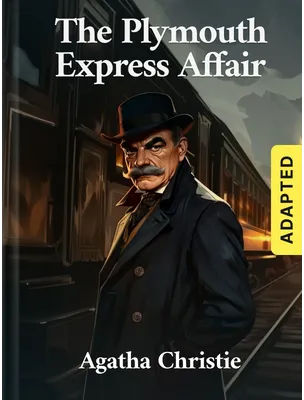
[adapted]
by
Agatha Christie

Alec Simpson, R. N., stepped from the platform at Newton Abbot into a first-class train car of the Plymouth Express. A porter followed him with a heavy suitcase. He was about to lift it up to the shelf, but the young sailor stopped him. “No — leave it on the seat. I’ll put it up later. Here you are.”
“Thank you, sir.” The porter, given a big tip, went away.
Doors banged; a very loud voice shouted: “Plymouth only. Change for Torquay. Plymouth next stop.” Then a whistle blew, and the train moved slowly out of the station.
Lieutenant Simpson had the train carriage to himself. The December air was cold, and he closed the window. Then he sniffed a little, and frowned. What a smell there was! Reminded him of that time in the hospital, and the operation on his leg. Yes, chloroform; that was it! He opened the window again, and moved to a seat with its back to the engine. He took a pipe out of his pocket and lit it.
For a short time he sat still, looking out into the night and smoking. At last he woke himself up, and opening the suitcase, took out some papers and magazines, then closed the suitcase again and tried to push it under the opposite seat — with no success. Some hidden thing stopped it. He pushed harder with growing impatience, but it still stuck out halfway into the carriage.
“Why on earth won’t it go in?” he said quietly, and pulling it out completely, he bent down and looked under the seat….
A moment later a cry sounded in the night, and the great train came to a forced stop because of the hard pulling of the communication cord.
“My friend,” said Poirot. “You have, I know, been very interested in this mystery of the Plymouth Express. Read this.”
I picked up the note he pushed across the table to me. It was short and clear.
Dear Sir:
I would be grateful if you can come to see me as soon as you can.
Yours faithfully,
Ebenezer Halliday.
The connection was not clear to me, and I looked questioningly at Poirot. To answer, he picked up the newspaper and read out loud: “‘A shocking discovery was made last night. A young officer in the navy returning to Plymouth found under the seat in his train compartment, the body of a woman, stabbed in the heart. The officer right away pulled the emergency cord, and the train was brought to a stop. The woman who was about thirty years old, and wearing expensive clothes, has not been identified yet.’
“And later we have this: ‘The woman found dead in the Plymouth Express has been named as the Honorable Mrs. Rupert Carrington.’ You see now, my friend? Or if you do not, I will add this. Mrs. Rupert Carrington was, before her marriage, Flossie Halliday, daughter of old man Halliday, the steel king of America.”
“And he has sent for you? Great!”
“I did him a little favor in the past — a case about bearer bonds. And once, when I was in Paris for a royal visit, someone pointed out Mademoiselle Flossie to me. The pretty little schoolgirl! She had a nice dowry too! It caused trouble. She nearly got into a bad mess.”
“How was that?”
“A certain Count de la Rochefour. A very bad man! A bad man, as you would say. An adventurer, plain and simple, who knew how to please a romantic young girl. Luckily her father found out in time. He took her back to America quickly. I heard of her marriage some years later, but I know nothing of her husband.”
“H’m,” I said. “The Honorable Rupert Carrington is not handsome, everyone says. He had almost spent all his own money on horse racing, and I think old Mr. Halliday’s money came just in time. I would say that for a good-looking, polite, not honest at all young cheat, it would be hard to find someone like him!”
“Ah, the poor little lady! She was not lucky!”
“I think he made it very clear right away that it was her money, and not her, that he wanted. I think they separated almost right away. I have heard talk lately that there was going to be a clear legal separation.”
“Old man Halliday is no fool. He would not let her use her money easily.”
“I suppose so. Anyway, I know as a fact that the Honorable Rupert is said to be very poor.”
“Ah-ha! I wonder — ”
“You wonder what?”
“My good friend, do not shout at me like that. You are interested, I see. Suppose you come with me to see Mr. Halliday. There is a taxi stand at the corner.”
A very few minutes were enough to take us quickly to the very fine house in Park Lane rented by the rich American. We were shown into the library, and almost immediately we were joined by a large, fat man, with sharp eyes and a strong chin.
“Mr. Poirot?” said Mr. Halliday. “I think I don’t need to tell you why I want you. You’ve read the papers, and I never waste time. I heard you were in London, and I remembered the good work you did on that case with the bonds. Never forget a name. I’ve got the best of Scotland Yard, but I’ll have my own man too. Money is no problem. All my dollars were for my little girl — and now she’s gone, I’ll spend my last cent to catch the bad person that did it! See? So it’s up to you to get the job done.”
Poirot bowed his head.
“I accept, sir, even more gladly because I saw your daughter in Paris several times. And now I will ask you to tell me what happened on her trip to Plymouth and any other details that you think have to do with the case.”
“Well, to start with,” answered Halliday, “she wasn’t going to Plymouth. She was going to join a house party at Avonmead Court, the Duchess of Swansea’s home. She left London by the 12:14 from Paddington, arriving at Bristol (where she had to change) at 2:50. The main Plymouth express trains, of course, go via Westbury, and do not go near Bristol at all. The 12:14 does a nonstop run to Bristol, after that stopping at Weston, Taunton, Exeter and Newton Abbot. My daughter traveled alone in her carriage, which was reserved up to Bristol, her maid was in a third-class carriage in the next coach.”
Poirot nodded, and Mr. Halliday continued: “The party at Avonmead Court was to be a very lively one, with several dances, and so my daughter had with her nearly all her jewels — worth perhaps about a hundred thousand dollars.”
“One moment,” said Poirot, stopping him. “Who looked after the jewels? Your daughter, or the maid?”
“My daughter always looked after them herself, carrying them in a small blue leather case.”
“Go on, sir.”
“At Bristol the maid, Jane Mason, picked up her employer’s toilet bag and coats, which were with her, and came to the door of Flossie’s train compartment. To her great surprise, my daughter said that she was not getting off at Bristol, but was going on farther. She told Mason to take out the luggage and put it in the cloak-room. She could have tea in the refreshment room, but she should wait at the station for her employer, who would come back to Bristol on a train during the afternoon. The maid, although very surprised, did as she was told. She put the luggage in the cloak-room and had some tea. But train after train came in, and her employer did not come. After the last train arrived, she left the luggage where it was, and went to a hotel near the station for the night. This morning she read about the tragedy, and went back to town on the first train she could get.”
“Is there nothing to explain your daughter’s sudden change of plan?”
“Well, there is this: Jane Mason said that, at Bristol, Flossie was no longer alone in her train carriage. There was a man in it who stood looking out of the other window so that she could not see his face.”
“The train was a corridor train, of course?”
“Yes.”
“Which side was the corridor?”
“On the platform side. My daughter was standing in the corridor as she talked to Mason.”
“And there is no doubt in your mind — excuse me!”
He got up, and carefully straightened the ink bottle, which was a little crooked.
“Excuse me,” he continued, sitting down again. “It makes me nervous to see anything crooked. Strange, isn’t it? I was saying, sir, that you have no doubt that this meeting, probably a surprise, was the cause of your daughter’s sudden change of plan?”
“It seems the only reasonable guess.”
“You have no idea who the man we are talking about might be?”
The rich man paused for a moment, and then answered. “No — I do not know at all.”
“Now — about the finding of the body?”
“It was found by a young navy officer who right away called for help. There was a doctor on the train. He looked at the body. She had first been put to sleep with chloroform, and then stabbed. He said that he thought she had been dead about four hours, so it was probably done soon after leaving Bristol. — Probably between there and Weston, possibly between Weston and Taunton.”
“And the jewel box.”
“The jewel box, Mr. Poirot, was missing.”
“One thing more, sir. Your daughter’s money — who gets it when she dies?”
“Flossie made a will soon after her wedding, leaving everything to her husband.”
He paused for a moment, and then continued: “I may as well tell you, Mr. Poirot, that I think of my son-in-law as a dishonest and bad man, and that, on my advice, my daughter was about to free herself from him by law — not a hard thing. I arranged her money so that he could not use it while she was alive, but although they have lived completely apart for some years, she has often given in to his demands for money, rather than face a public scandal. But I decided to stop this, and at last Flossie agreed, and my lawyers were told to start a case in court.”
“And where is Mr. Carrington?”
“In town. I think he was away in the country yesterday, but he came back last night.”
Poirot thought for a little while. Then he said: “I think that is all, sir.”
“You would like to see the maid, Jane Mason?”
“Yes, please.”
Halliday rang the bell, and gave a short order to the servant. A few minutes later Jane Mason entered the room, a decent woman with a hard face, as calm when a very bad thing happens as only a good servant can be.
“May I ask a few questions? Your mistress was just as usual before leaving yesterday morning? Not excited or worried?”
“Oh, no sir!”
“But at Bristol she was very different?”
“Yes sir, really upset — so nervous she didn’t seem to know what she was saying.”
“What did she say exactly?”
“Well sir, as well as I can remember, she said: ‘Mason, I’ve got to change my plans. Something has happened — I mean, I’m not getting out here after all. I must go on. Take out the luggage and put it in the luggage room; then have some tea, and wait for me in the station.’
“‘Wait for you here, ma’am?’ I asked.
“‘Yes, yes. Don’t leave the station. I will return by a later train. I don’t know when. It may not be until quite late.’
“‘Very well, ma’am,’ I says. It wasn’t my job to ask questions, but I thought it very strange.”
“It was not like the lady you work for, right?”
“Very much not like her, sir.”
“What did you think?”
“Well sir, I thought it was about the man in the train car. She didn’t speak to him, but she turned around once or twice as if to ask him if she was doing the right thing.”
“But you didn’t see the man’s face?”
“No sir; he stood with his back to me all the time.”
“Can you say what he looked like at all?”
“He had on a light brown coat, and a traveling cap. He was tall and thin, like, and the back of his head was dark.”
“You didn’t know him?”
“Oh, no, I don’t think so, sir.”
“It was not your employer, Mr. Carrington, perhaps?”
Mason looked very surprised. “Oh! I don’t think so, sir!”
“But you are not sure?”
“It was about the employer’s size, sir — but I never thought it was him. We so rarely saw him. I couldn’t say it wasn’t him!”
Poirot picked up a pin from the carpet, and frowned at it seriously; then he went on: “Could the man have got on the train at Bristol before you got to the carriage?”
Mason thought.
“Yes sir, I think it would. My compartment was very crowded, and it was some minutes before I could get out — and then there was a very large crowd on the platform, and that made me late too. But he’d only have had a minute or two to speak to the lady, that way. I thought he’d come along the corridor.”
“That is more likely, certainly.”
He stopped, still frowning.
“You know how the lady was dressed, sir?”
“The newspapers give a few details, but I would like you to check them.”
“She was wearing a white fox fur hat, sir, with a white veil with spots, and a blue wool coat and skirt — the kind of blue they call electric.”
“H’m, very noticeable.”
“Yes,” said Halliday.
“Inspector Japp hopes that this may help us find the place where the crime happened. Anyone who saw her would remember her.”
“Exactly! — Thank you, miss.”
The maid left the room.
“Well!” Poirot got up quickly. “That is all I can do here — except, sir, that I ask you to tell me everything — really everything!”
“I have done it.”
“You are sure?”
“Sure.”
“Then there is nothing more to say. I must not take the case.”
“Why?”
“Because you have not been honest with me.”
“I promise you — ”
“No, you are hiding something.”
There was a moment’s pause, and then Halliday took a paper from his pocket and handed it to my friend.
“I guess that’s what you want, Mr. Poirot — though how you know about it really surprises me!”
Poirot smiled, and opened the paper. It was a letter written in thin, slanted handwriting.
Poirot read it aloud.
“‘Dear Madam:
“‘It is with great pleasure that I look forward to the joy of meeting you again. After your so kind reply to my letter, I can hardly wait. I have never forgotten those days in Paris. It is very sad that you are leaving London tomorrow. However, before very long, and perhaps sooner than you think, I will have the joy of seeing once more the lady whose picture has always been the most important in my heart.
“‘Believe, dear madam, all the promises of my most faithful and unchanged feelings —
“‘Armand de la Rochefour.’”
Poirot handed the letter back to Halliday with a bow.
“I think, sir, that you did not know that your daughter planned to see the Count de la Rochefour again?”
“It was a great shock to me! I found this letter in my daughter’s handbag. As you probably know, Mr. Poirot, this man who calls himself a count is an adventurer of the worst kind.”
Poirot nodded.
“But what I want to know is how you knew about this letter?”
My friend smiled. “Sir, I did not. But to follow footprints, and know about cigarette ash is not enough for a detective. He must also be good at understanding people! I knew that you did not like and did not trust your son-in-law. He gets something from your daughter’s death; the maid’s description of the mysterious man is quite like him. Yet you do not want to follow him! Why? Surely because you suspect someone else. So you were not telling me something.”
“You’re right, Mr. Poirot. I was sure that Rupert was guilty until I found this letter. It upset me very much.”
“Yes. The Count says: ‘Before very long, and perhaps sooner than you think.’ Clearly, he would not want to wait until you heard about his coming back. Was it he who traveled down from London on the 12:14, and walked along the corridor to your daughter’s compartment? The Count de la Rochefour is also, if I remember correctly, tall and dark!”
The rich man nodded.
“Well, sir, I will say good day. Scotland Yard, has, I think, a list of the jewels?”
“Yes, I think Inspector Japp is here now if you want to see him.”
Japp was an old friend of ours, and greeted Poirot with a kind of friendly teasing.
“And how are you, sir? No bad feeling between us, though we see things in different ways. How are the ‘little gray cells,’ eh? Going strong?”
Poirot smiled at him.
“They work, my dear Japp; yes, they do!”
“Then that’s all right. Think it was the Honorable Rupert, or a thief? We’re watching all the usual places, of course. We will know if the jewels are sold, and of course whoever did it isn’t going to keep them to look at their shine. Not likely! I’m trying to find out where Rupert Carrington was yesterday. Seems a bit of a mystery about it. I’ve got a man watching him.”
“A great way to be careful, but maybe a day late,” said Poirot gently.
“You always have your joke, Mr. Poirot. Well, I’m going to Paddington. Bristol, Weston, Taunton, that’s my route. Goodbye.”
“You will come and see me this evening, and tell me the result?”
“Of course, if I’m back.”
“That good Inspector believes in things in motion,” said Poirot softly as our friend left. “He travels; he measures footprints; he collects mud and cigarette ash! He is very busy! He is eager beyond words! And if I talked about psychology to him, do you know what he would do, my friend? He would smile! He would say to himself: ‘Poor old Poirot! He is getting old! He grows old and confused!’ Japp is the ‘younger generation knocking on the door.’ And indeed! They are so busy knocking that they do not notice that the door is open!”