These chapters are part of Charles Dickens's first novel, 'The Pickwick Papers,' originally published in 1836-1837. '21-23' refers to specific sections of this serialized work.
[{"id":"para_1","index":0,"start":0,"offset":342,"words":3,"paraNum":"","lastModified":1732661665000,"semanticType":"title-book-title","voicework":"audio_file","blockId":"the_pickwick_papers_21_23_ffa_en-bl2s","language":"en","wordsRange":{"start":100000000,"end":104000000},"paragraphVersion":61,"direction":"ltr","paragraph":"<h1 class=\"ilm-title ilm-x-large\" id=\"para_1\" semantictype=\"title-book-title\" data-ilmid=\"the_pickwick_papers_21_23_ffa_en-bl2s\" data-audio=\"1\" data-chapter=\"para_1\" data-words-count=\"3\" data-before=\"0\" data-ww=\"\"><span class=\"block-pb\"> <span class=\"block-pb is-animated\"></span> </span><span class=\"itm-wrap\">The Pickwick Papers</span></h1>","hasContent":true,"isFirst":true,"isLast":false},{"id":"para_2","index":1,"start":342,"offset":350,"words":2,"paraNum":"","lastModified":1732661670000,"semanticType":"title-author","voicework":"audio_file","blockId":"the_pickwick_papers_21_23_ffa_en-bl2t","language":"en","wordsRange":{"start":204000000,"end":208000000},"paragraphVersion":68,"direction":"ltr","paragraph":"<h1 class=\"ilm-title ilm-author ilm-large\" id=\"para_2\" semantictype=\"title-author\" data-ilmid=\"the_pickwick_papers_21_23_ffa_en-bl2t\" data-audio=\"1\" data-chapter=\"para_2\" data-words-count=\"2\" data-before=\"3\" data-ww=\"\"><span class=\"block-pb\"> <span class=\"block-pb is-animated\"></span> </span><span class=\"itm-wrap\">by <br>Charles Dickens</span></h1>","hasContent":true,"isFirst":false,"isLast":false},{"id":"para_3","index":2,"start":692,"offset":160,"words":0,"paraNum":"","lastModified":1634748183000,"semanticType":"line","blockId":"the_pickwick_papers_21_23_ffa_en-bld6","language":"en","wordsRange":{"start":241333333,"end":274666667},"paragraphVersion":40,"direction":"ltr","paragraph":"<hr class=\"ilm-hr ilm-small\" id=\"para_3\" semantictype=\"line\" data-ilmid=\"the_pickwick_papers_21_23_ffa_en-bld6\" data-words-count=\"0\" data-before=\"5\" data-ww=\"\">","hasContent":true,"isFirst":false,"isLast":false},{"id":"para_4","index":3,"start":852,"offset":1656,"words":0,"paraNum":"","lastModified":1677494032000,"semanticType":"illustration","blockId":"the_pickwick_papers_21_23_ffa_en-blda","language":"en","wordsRange":{"start":321777778,"end":368888889},"paragraphVersion":34,"direction":"ltr","paragraph":"<div class=\"ilm-illustration\" id=\"para_4\" semantictype=\"illustration\" data-ilmid=\"the_pickwick_papers_21_23_ffa_en-blda\" data-words-count=\"0\" data-before=\"5\" data-ww=\"\"><img width=\"560\" height=\"600\" data-src=\"ch0p0\" src=\"data:image/webp;base64,UklGRvwDAABXRUJQVlA4IPADAADwDwCdASo4ADwAPm00kkekIyGhKBgMAIANiWkAEglaYvnOG6zUiQHSLiZWL8U6GbPbqFKqTKT1pk9WCfLIE24Lwllo4DfDJ3+RTLc50hdLBwPsx7KhT8iTFHR0L6nBKRa1sJgZwqMTZUMMkAbikm2diaGHN0P290y29n9nKUWfH34Tf9al2QgAAP7/UEiVCYiHfOtCWXJX00Xr17OIZaEeHm7+xlZFrPcEtXI9vYHx4LCD2x8pN0zyi5MGyAM0bVXEp2+1Chq/8fQsmqnnsdATAphK1pZE9NrUOWxnVYgPsmnGGuETJhAZctmY0/ZhfU9YYiWkrldP6CFv2eixDIJ4Il9ewAwFUJGAnLkwDH5BHcizsH3einoILKlJatpl115nDP7XtZq3RF3WefOVsX1R85r5ibW1n6mhea/Bgv4I3/pJoWOPR6AR4Y9afs+GBEl2/gB8ICN74Al+zp1Iw8kag6UhzRsNL09Uw45qbqStQ7zHw66XKU8JGC2aqX9IwDL8Xvkp87z8MI+75iCIvoRGCJFiSewaq3fevUVV5G7frfzG/Ps1xSyQl9mqtdmgOSUGHdFn3SESrP9C4hdDec1eu5+sn3HOCsK9dYHnPh5w62JQSb/5dlRMZaoINYt1KR9g43Y8WSfjLfKvqRHXEB9Y2jweAs/5cG7uqQnOPnR++/pwM/Cpz8ySMy6tpYkt4+I7S6NM6h//xi/xTmZr8AYosdxTd0wSaicMY2W47AuzbKsMmh3Rk3Q1QyYjctvap8Frr6cuy6E8pj5VirGT+6N3Zhhl3vu/taGOcQvMmKOZJ+y83GsaolSkeYNKdGo6kGhZt///Ssyat8V455DnW4b8QMdT6j3afCDg8Zq0++e5z01j7UulnVO0mNvemDw5i5CNGrdgW7eL+XgshNE5HvAAjGeuAmKwOa+4voNXSe7bq6soD5AOayYIFduCQJo19xVE/xZlZVtQW29kZ2TEbPmhgUs5e3u6k0b2rmvGrzCn4cL1Kua/io1dyvH+2G6u5wnmKko2SFvZpoGnCM3J9/+ivXvCGXWgKIUaBbpuvPTIvqAieN2Lx0R/+O1y2s8V1xliVbDDb9chO9VNPMS1L/FBeAftRWzabYzRZyhu85sp2PnFrK7uIV8xjSIqWFOuA6xKyefkOJ7+FErORrJHq388BtPt3+s8PmfHy/2OVLcrny7ZjtpF4pbjYPPO8ol13gud7jEL545bY2wiHT1SVStozfIKC5AJ4uyaZ5bkDgmB/MGMzED6KANWQASMVVrLSDy4/sMjWiRvhCPARlMgtpR+iaS0PgyYdgVhYNTH9ul5vFNn1mH1ipi9sDDBA7AAAAA=\" alt=\"The Pickwick Papers 21-23\"></div>","hasContent":true,"isFirst":false,"isLast":false},{"id":"para_5","index":4,"start":2508,"offset":629,"words":21,"paraNum":"","lastModified":1732617591000,"semanticType":"header-chapter-header","voicework":"audio_file","blockId":"the_pickwick_papers_21_23_ffa_en-bl2v","language":"en","wordsRange":{"start":416000000,"end":438000000},"paragraphVersion":59,"direction":"ltr","paragraph":"<h2 class=\"ilm-header ilm-h2 ilm-large\" id=\"para_5\" semantictype=\"header-chapter-header\" data-ilmid=\"the_pickwick_papers_21_23_ffa_en-bl2v\" data-audio=\"1\" data-chapter=\"para_5\" data-words-count=\"21\" data-before=\"5\" data-ww=\"\"><span class=\"block-pb\"> <span class=\"block-pb is-animated\"></span> </span><span class=\"itm-wrap\"><span class=\"chapter-text\"><span class=\"chapter-number\"><span class=\"chapter-label\"></span><span class=\"chapter-value\"></span></span><span class=\"chapter-title\">Chapter XXI.<br> In Which the Old Man Launches Forth into His Favourite Theme, and Relates a Story about a Queer Client</span></span></span></h2>","hasContent":true,"isFirst":false,"isLast":false},{"id":"para_6","index":5,"start":3137,"offset":454,"words":24,"paraNum":"21.1","lastModified":1732617645000,"semanticType":"par","voicework":"audio_file","blockId":"the_pickwick_papers_21_23_ffa_en-bl2w","language":"en","wordsRange":{"start":538000000,"end":563000000},"paragraphVersion":71,"direction":"ltr","paragraph":"<p id=\"para_6\" semantictype=\"par\" data-ilmid=\"the_pickwick_papers_21_23_ffa_en-bl2w\" data-audio=\"1\" data-words-count=\"24\" data-before=\"26\" data-ww=\"\"><span class=\"block-num\" data-id=\"21.1\"></span><span class=\"block-pb\"> <span class=\"block-pb is-animated\"></span> </span><span class=\"itm-wrap\">‘Aha!’ said the old man, a brief description of whose manner and appearance concluded the last chapter, ‘aha! who was talking about the inns?’</span></p>","hasContent":true,"isFirst":false,"isLast":false},{"id":"para_7","index":6,"start":3591,"offset":403,"words":15,"paraNum":"21.2","lastModified":1732625706000,"semanticType":"par","voicework":"audio_file","blockId":"the_pickwick_papers_21_23_ffa_en-bl2x","language":"en","wordsRange":{"start":663000000,"end":679000000},"paragraphVersion":56,"direction":"ltr","paragraph":"<p id=\"para_7\" semantictype=\"par\" data-ilmid=\"the_pickwick_papers_21_23_ffa_en-bl2x\" data-audio=\"1\" data-words-count=\"15\" data-before=\"50\" data-ww=\"\"><span class=\"block-num\" data-id=\"21.2\"></span><span class=\"block-pb\"> <span class=\"block-pb is-animated\"></span> </span><span class=\"itm-wrap\">‘I was, Sir,’ replied Mr. Pickwick — ‘I was observing what singular old places they are.’</span></p>","hasContent":true,"isFirst":false,"isLast":false},{"id":"para_8","index":7,"start":3994,"offset":1645,"words":231,"paraNum":"21.3","lastModified":1732625780000,"semanticType":"par","voicework":"audio_file","blockId":"the_pickwick_papers_21_23_ffa_en-bl2y","language":"en","wordsRange":{"start":779000000,"end":1010000000},"paragraphVersion":63,"direction":"ltr","paragraph":"<p id=\"para_8\" semantictype=\"par\" data-ilmid=\"the_pickwick_papers_21_23_ffa_en-bl2y\" data-audio=\"1\" data-words-count=\"231\" data-before=\"65\" data-ww=\"\"><span class=\"block-num\" data-id=\"21.3\"></span><span class=\"block-pb\"> <span class=\"block-pb is-animated\"></span> </span><span class=\"itm-wrap\">‘<i>You</i>!’ said the old man contemptuously. ‘What do <i>you</i> know of the time when young men shut themselves up in those lonely rooms, and read and read, hour after hour, and night after night, till their reason wandered beneath their midnight studies; till their mental powers were exhausted; till morning’s light brought no freshness or health to them; and they sank beneath the unnatural devotion of their youthful energies to their dry old books? Coming down to a later time, and a very different day, what do <i>you</i> know of the gradual sinking beneath consumption, or the quick wasting of fever — the grand results of “life” and dissipation — which men have undergone in these same rooms? How many vain pleaders for mercy, do you think, have turned away heart-sick from the lawyer’s office, to find a resting-place in the Thames, or a refuge in the jail? They are no ordinary houses, those. There is not a panel in the old wainscotting, but what, if it were endowed with the powers of speech and memory, could start from the wall, and tell its tale of horror — the romance of life, Sir, the romance of life! Common-place as they may seem now, I tell you they are strange old places, and I would rather hear many a legend with a terrific-sounding name, than the true history of one old set of chambers.’</span></p>","hasContent":true,"isFirst":false,"isLast":false},{"id":"para_9","index":8,"start":5639,"offset":597,"words":48,"paraNum":"21.4","lastModified":1732617612000,"semanticType":"par","voicework":"audio_file","blockId":"the_pickwick_papers_21_23_ffa_en-bl2z","language":"en","wordsRange":{"start":1110000000,"end":1159000000},"paragraphVersion":52,"direction":"ltr","paragraph":"<p id=\"para_9\" semantictype=\"par\" data-ilmid=\"the_pickwick_papers_21_23_ffa_en-bl2z\" data-audio=\"1\" data-words-count=\"48\" data-before=\"296\" data-ww=\"\"><span class=\"block-num\" data-id=\"21.4\"></span><span class=\"block-pb\"> <span class=\"block-pb is-animated\"></span> </span><span class=\"itm-wrap\">There was something so odd in the old man’s sudden energy, and the subject which had called it forth, that Mr. Pickwick was prepared with no observation in reply; and the old man checking his impetuosity, and resuming the leer, which had disappeared during his previous excitement, said —</span></p>","hasContent":true,"isFirst":false,"isLast":false},{"id":"para_10","index":9,"start":6236,"offset":973,"words":114,"paraNum":"21.5","lastModified":1732626852000,"semanticType":"par","voicework":"audio_file","blockId":"the_pickwick_papers_21_23_ffa_en-bl30","language":"en","wordsRange":{"start":1259000000,"end":1374000000},"paragraphVersion":56,"direction":"ltr","paragraph":"<p id=\"para_10\" semantictype=\"par\" data-ilmid=\"the_pickwick_papers_21_23_ffa_en-bl30\" data-audio=\"1\" data-words-count=\"114\" data-before=\"344\" data-ww=\"\"><span class=\"block-num\" data-id=\"21.5\"></span><span class=\"block-pb\"> <span class=\"block-pb is-animated\"></span> </span><span class=\"itm-wrap\">‘Look at them in another light — their most common-place and least romantic. What fine places of slow torture they are! Think of the needy man who has spent his all, beggared himself, and pinched his friends, to enter the profession, which is destined never to yield him a morsel of bread. The waiting — the hope — the disappointment — the fear — the misery — the poverty — the blight on his hopes, and end to his career — the suicide perhaps, or the shabby, slipshod drunkard. Am I not right about them?’ And the old man rubbed his hands, and leered as if in delight at having found another point of view in which to place his favourite subject.</span></p>","hasContent":true,"isFirst":false,"isLast":false},{"id":"para_11","index":10,"start":7209,"offset":424,"words":21,"paraNum":"21.6","lastModified":1732626869000,"semanticType":"par","voicework":"audio_file","blockId":"the_pickwick_papers_21_23_ffa_en-bl31","language":"en","wordsRange":{"start":1474000000,"end":1496000000},"paragraphVersion":54,"direction":"ltr","paragraph":"<p id=\"para_11\" semantictype=\"par\" data-ilmid=\"the_pickwick_papers_21_23_ffa_en-bl31\" data-audio=\"1\" data-words-count=\"21\" data-before=\"458\" data-ww=\"\"><span class=\"block-num\" data-id=\"21.6\"></span><span class=\"block-pb\"> <span class=\"block-pb is-animated\"></span> </span><span class=\"itm-wrap\">Mr. Pickwick eyed the old man with great curiosity, and the remainder of the company smiled, and looked on in silence.</span></p>","hasContent":true,"isFirst":false,"isLast":false},{"id":"para_12","index":11,"start":7633,"offset":486,"words":30,"paraNum":"21.7","lastModified":1732626882000,"semanticType":"par","voicework":"audio_file","blockId":"the_pickwick_papers_21_23_ffa_en-bl32","language":"en","wordsRange":{"start":1596000000,"end":1627000000},"paragraphVersion":54,"direction":"ltr","paragraph":"<p id=\"para_12\" semantictype=\"par\" data-ilmid=\"the_pickwick_papers_21_23_ffa_en-bl32\" data-audio=\"1\" data-words-count=\"30\" data-before=\"479\" data-ww=\"\"><span class=\"block-num\" data-id=\"21.7\"></span><span class=\"block-pb\"> <span class=\"block-pb is-animated\"></span> </span><span class=\"itm-wrap\">‘Talk of your German universities,’ said the little old man. ‘Pooh, pooh! there’s romance enough at home without going half a mile for it; only people never think of it.’</span></p>","hasContent":true,"isFirst":false,"isLast":false},{"id":"para_13","index":12,"start":8119,"offset":417,"words":16,"paraNum":"21.8","lastModified":1732626894000,"semanticType":"par","voicework":"audio_file","blockId":"the_pickwick_papers_21_23_ffa_en-bl33","language":"en","wordsRange":{"start":1727000000,"end":1744000000},"paragraphVersion":54,"direction":"ltr","paragraph":"<p id=\"para_13\" semantictype=\"par\" data-ilmid=\"the_pickwick_papers_21_23_ffa_en-bl33\" data-audio=\"1\" data-words-count=\"16\" data-before=\"509\" data-ww=\"\"><span class=\"block-num\" data-id=\"21.8\"></span><span class=\"block-pb\"> <span class=\"block-pb is-animated\"></span> </span><span class=\"itm-wrap\">‘I never thought of the romance of this particular subject before, certainly,’ said Mr. Pickwick, laughing.</span></p>","hasContent":true,"isFirst":false,"isLast":false},{"id":"para_14","index":13,"start":8536,"offset":777,"words":87,"paraNum":"21.9","lastModified":1732626919000,"semanticType":"par","voicework":"audio_file","blockId":"the_pickwick_papers_21_23_ffa_en-bl34","language":"en","wordsRange":{"start":1844000000,"end":1932000000},"paragraphVersion":54,"direction":"ltr","paragraph":"<p id=\"para_14\" semantictype=\"par\" data-ilmid=\"the_pickwick_papers_21_23_ffa_en-bl34\" data-audio=\"1\" data-words-count=\"87\" data-before=\"525\" data-ww=\"\"><span class=\"block-num\" data-id=\"21.9\"></span><span class=\"block-pb\"> <span class=\"block-pb is-animated\"></span> </span><span class=\"itm-wrap\">‘To be sure you didn’t,’ said the little old man; ‘of course not. As a friend of mine used to say to me, “What is there in chambers in particular?” “Queer old places,” said I. “Not at all,” said he. “Lonely,” said I. “Not a bit of it,” said he. He died one morning of apoplexy, as he was going to open his outer door. Fell with his head in his own letter-box, and there he lay for eighteen months. Everybody thought he’d gone out of town.’</span></p>","hasContent":true,"isFirst":false,"isLast":false},{"id":"para_15","index":14,"start":9313,"offset":369,"words":11,"paraNum":"21.10","lastModified":1732629807000,"semanticType":"par","voicework":"audio_file","blockId":"the_pickwick_papers_21_23_ffa_en-bl35","language":"en","wordsRange":{"start":2032000000,"end":2044000000},"paragraphVersion":54,"direction":"ltr","paragraph":"<p id=\"para_15\" semantictype=\"par\" data-ilmid=\"the_pickwick_papers_21_23_ffa_en-bl35\" data-audio=\"1\" data-words-count=\"11\" data-before=\"612\" data-ww=\"\"><span class=\"block-num\" data-id=\"21.10\"></span><span class=\"block-pb\"> <span class=\"block-pb is-animated\"></span> </span><span class=\"itm-wrap\">‘And how was he found out at last?’ inquired Mr. Pickwick.</span></p>","hasContent":true,"isFirst":false,"isLast":false},{"id":"para_16","index":15,"start":9682,"offset":708,"words":73,"paraNum":"21.11","lastModified":1732629834000,"semanticType":"par","voicework":"audio_file","blockId":"the_pickwick_papers_21_23_ffa_en-bl36","language":"en","wordsRange":{"start":2144000000,"end":2218000000},"paragraphVersion":54,"direction":"ltr","paragraph":"<p id=\"para_16\" semantictype=\"par\" data-ilmid=\"the_pickwick_papers_21_23_ffa_en-bl36\" data-audio=\"1\" data-words-count=\"73\" data-before=\"623\" data-ww=\"\"><span class=\"block-num\" data-id=\"21.11\"></span><span class=\"block-pb\"> <span class=\"block-pb is-animated\"></span> </span><span class=\"itm-wrap\">‘The benchers determined to have his door broken open, as he hadn’t paid any rent for two years. So they did. Forced the lock; and a very dusty skeleton in a blue coat, black knee-shorts, and silks, fell forward in the arms of the porter who opened the door. Queer, that. Rather, perhaps; rather, eh?’ The little old man put his head more on one side, and rubbed his hands with unspeakable glee.</span></p>","hasContent":true,"isFirst":false,"isLast":false},{"id":"para_17","index":16,"start":10390,"offset":2029,"words":304,"paraNum":"21.12","lastModified":1732629926000,"semanticType":"par","voicework":"audio_file","blockId":"the_pickwick_papers_21_23_ffa_en-bl37","language":"en","wordsRange":{"start":2318000000,"end":2623000000},"paragraphVersion":56,"direction":"ltr","paragraph":"<p id=\"para_17\" semantictype=\"par\" data-ilmid=\"the_pickwick_papers_21_23_ffa_en-bl37\" data-audio=\"1\" data-words-count=\"304\" data-before=\"696\" data-ww=\"\"><span class=\"block-num\" data-id=\"21.12\"></span><span class=\"block-pb\"> <span class=\"block-pb is-animated\"></span> </span><span class=\"itm-wrap\">‘I know another case,’ said the little old man, when his chuckles had in some degree subsided. ‘It occurred in Clifford’s Inn. Tenant of a top set — bad character — shut himself up in his bedroom closet, and took a dose of arsenic. The steward thought he had run away: opened the door, and put a bill up. Another man came, took the chambers, furnished them, and went to live there. Somehow or other he couldn’t sleep — always restless and uncomfortable. “Odd,” says he. “I’ll make the other room my bedchamber, and this my sitting-room.” He made the change, and slept very well at night, but suddenly found that, somehow, he couldn’t read in the evening: he got nervous and uncomfortable, and used to be always snuffing his candles and staring about him. “I can’t make this out,” said he, when he came home from the play one night, and was drinking a glass of cold grog, with his back to the wall, in order that he mightn’t be able to fancy there was any one behind him — “I can’t make it out,” said he; and just then his eyes rested on the little closet that had been always locked up, and a shudder ran through his whole frame from top to toe. “I have felt this strange feeling before,” said he, “I cannot help thinking there’s something wrong about that closet.” He made a strong effort, plucked up his courage, shivered the lock with a blow or two of the poker, opened the door, and there, sure enough, standing bolt upright in the corner, was the last tenant, with a little bottle clasped firmly in his hand, and his face — well!’ As the little old man concluded, he looked round on the attentive faces of his wondering auditory with a smile of grim delight.</span></p>","hasContent":true,"isFirst":false,"isLast":false},{"id":"para_18","index":17,"start":12419,"offset":457,"words":25,"paraNum":"21.13","lastModified":1732617589000,"semanticType":"par","voicework":"audio_file","blockId":"the_pickwick_papers_21_23_ffa_en-bl38","language":"en","wordsRange":{"start":2723000000,"end":2749000000},"paragraphVersion":50,"direction":"ltr","paragraph":"<p id=\"para_18\" semantictype=\"par\" data-ilmid=\"the_pickwick_papers_21_23_ffa_en-bl38\" data-audio=\"1\" data-words-count=\"25\" data-before=\"1000\" data-ww=\"\"><span class=\"block-num\" data-id=\"21.13\"></span><span class=\"block-pb\"> <span class=\"block-pb is-animated\"></span> </span><span class=\"itm-wrap\">‘What strange things these are you tell us of, Sir,’ said Mr. Pickwick, minutely scanning the old man’s countenance, by the aid of his glasses.</span></p>","hasContent":true,"isFirst":false,"isLast":false},{"id":"para_19","index":18,"start":12876,"offset":456,"words":23,"paraNum":"21.14","lastModified":1732629951000,"semanticType":"par","voicework":"audio_file","blockId":"the_pickwick_papers_21_23_ffa_en-bl39","language":"en","wordsRange":{"start":2849000000,"end":2873000000},"paragraphVersion":54,"direction":"ltr","paragraph":"<p id=\"para_19\" semantictype=\"par\" data-ilmid=\"the_pickwick_papers_21_23_ffa_en-bl39\" data-audio=\"1\" data-words-count=\"23\" data-before=\"1025\" data-ww=\"\"><span class=\"block-num\" data-id=\"21.14\"></span><span class=\"block-pb\"> <span class=\"block-pb is-animated\"></span> </span><span class=\"itm-wrap\">‘Strange!’ said the little old man. ‘Nonsense; you think them strange, because you know nothing about it. They are funny, but not uncommon.’</span></p>","hasContent":true,"isFirst":false,"isLast":false},{"id":"para_20","index":19,"start":13332,"offset":357,"words":5,"paraNum":"21.15","lastModified":1732629959000,"semanticType":"par","voicework":"audio_file","blockId":"the_pickwick_papers_21_23_ffa_en-bl3a","language":"en","wordsRange":{"start":2973000000,"end":2979000000},"paragraphVersion":54,"direction":"ltr","paragraph":"<p id=\"para_20\" semantictype=\"par\" data-ilmid=\"the_pickwick_papers_21_23_ffa_en-bl3a\" data-audio=\"1\" data-words-count=\"5\" data-before=\"1048\" data-ww=\"\"><span class=\"block-num\" data-id=\"21.15\"></span><span class=\"block-pb\"> <span class=\"block-pb is-animated\"></span> </span><span class=\"itm-wrap\">‘Funny!’ exclaimed Mr. Pickwick involuntarily.</span></p>","hasContent":true,"isFirst":false,"isLast":false},{"id":"para_21","index":20,"start":13689,"offset":449,"words":23,"paraNum":"21.16","lastModified":1732617610000,"semanticType":"par","voicework":"audio_file","blockId":"the_pickwick_papers_21_23_ffa_en-bl3b","language":"en","wordsRange":{"start":3079000000,"end":3103000000},"paragraphVersion":52,"direction":"ltr","paragraph":"<p id=\"para_21\" semantictype=\"par\" data-ilmid=\"the_pickwick_papers_21_23_ffa_en-bl3b\" data-audio=\"1\" data-words-count=\"23\" data-before=\"1053\" data-ww=\"\"><span class=\"block-num\" data-id=\"21.16\"></span><span class=\"block-pb\"> <span class=\"block-pb is-animated\"></span> </span><span class=\"itm-wrap\">‘Yes, funny, are they not?’ replied the little old man, with a diabolical leer; and then, without pausing for an answer, he continued —</span></p>","hasContent":true,"isFirst":false,"isLast":false},{"id":"para_22","index":21,"start":14138,"offset":5846,"words":986,"paraNum":"21.17","lastModified":1732630771000,"semanticType":"par","voicework":"audio_file","blockId":"the_pickwick_papers_21_23_ffa_en-bl3c","language":"en","wordsRange":{"start":3203000000,"end":4189000000},"paragraphVersion":71,"direction":"ltr","paragraph":"<p id=\"para_22\" semantictype=\"par\" data-ilmid=\"the_pickwick_papers_21_23_ffa_en-bl3c\" data-audio=\"1\" data-words-count=\"986\" data-before=\"1076\" data-ww=\"\"><span class=\"block-num\" data-id=\"21.17\"></span><span class=\"block-pb\"> <span class=\"block-pb is-animated\"></span> </span><span class=\"itm-wrap\">‘I knew another man — let me see — forty years ago now — who took an old, damp, rotten set of chambers, in one of the most ancient inns, that had been shut up and empty for years and years before. There were lots of old women’s stories about the place, and it certainly was very far from being a cheerful one; but he was poor, and the rooms were cheap, and that would have been quite a sufficient reason for him, if they had been ten times worse than they really were. He was obliged to take some mouldering fixtures that were on the place, and, among the rest, was a great lumbering wooden press for papers, with large glass doors, and a green curtain inside; a pretty useless thing for him, for he had no papers to put in it; and as to his clothes, he carried them about with him, and that wasn’t very hard work, either. Well, he had moved in all his furniture — it wasn’t quite a truck-full — and had sprinkled it about the room, so as to make the four chairs look as much like a dozen as possible, and was sitting down before the fire at night, drinking the first glass of two gallons of whisky he had ordered on credit, wondering whether it would ever be paid for, and if so, in how many years’ time, when his eyes encountered the glass doors of the wooden press. “Ah,” says he, “if I hadn’t been obliged to take that ugly article at the old broker’s valuation, I might have got something comfortable for the money. I’ll tell you what it is, old fellow,” he said, speaking aloud to the press, having nothing else to speak to, “if it wouldn’t cost more to break up your old carcass, than it would ever be worth afterward, I’d have a fire out of you in less than no time.” He had hardly spoken the words, when a sound resembling a faint groan, appeared to issue from the interior of the case. It startled him at first, but thinking, on a moment’s reflection, that it must be some young fellow in the next chamber, who had been dining out, he put his feet on the fender, and raised the poker to stir the fire. At that moment, the sound was repeated; and one of the glass doors slowly opening, disclosed a pale and emaciated figure in soiled and worn apparel, standing erect in the press. The figure was tall and thin, and the countenance expressive of care and anxiety; but there was something in the hue of the skin, and gaunt and unearthly appearance of the whole form, which no being of this world was ever seen to wear. “Who are you?” said the new tenant, turning very pale; poising the poker in his hand, however, and taking a very decent aim at the countenance of the figure. “Who are you?” “Don’t throw that poker at me,” replied the form; “if you hurled it with ever so sure an aim, it would pass through me, without resistance, and expend its force on the wood behind. I am a spirit.” “And pray, what do you want here?” faltered the tenant. “In this room,” replied the apparition, “my worldly ruin was worked, and I and my children beggared. In this press, the papers in a long, long suit, which accumulated for years, were deposited. In this room, when I had died of grief, and long-deferred hope, two wily harpies divided the wealth for which I had contested during a wretched existence, and of which, at last, not one farthing was left for my unhappy descendants. I terrified them from the spot, and since that day have prowled by night — the only period at which I can revisit the earth — about the scenes of my long-protracted misery. This apartment is mine: leave it to me.” “If you insist upon making your appearance here,” said the tenant, who had had time to collect his presence of mind during this prosy statement of the ghost’s, “I shall give up possession with the greatest pleasure; but I should like to ask you one question, if you will allow me.” “Say on,” said the apparition sternly. “Well,” said the tenant, “I don’t apply the observation personally to you, because it is equally applicable to most of the ghosts I ever heard of; but it does appear to me somewhat inconsistent, that when you have an opportunity of visiting the fairest spots of earth — for I suppose space is nothing to you — you should always return exactly to the very places where you have been most miserable.” “Egad, that’s very true; I never thought of that before,” said the ghost. “You see, Sir,” pursued the tenant, “this is a very uncomfortable room. From the appearance of that press, I should be disposed to say that it is not wholly free from bugs; and I really think you might find much more comfortable quarters: to say nothing of the climate of London, which is extremely disagreeable.” “You are very right, Sir,” said the ghost politely, “it never struck me till now; I’ll try change of air directly” — and, in fact, he began to vanish as he spoke; his legs, indeed, had quite disappeared. “And if, Sir,” said the tenant, calling after him, “if you <i>would</i> have the goodness to suggest to the other ladies and gentlemen who are now engaged in haunting old empty houses, that they might be much more comfortable elsewhere, you will confer a very great benefit on society.” “I will,” replied the ghost; “we must be dull fellows — very dull fellows, indeed; I can’t imagine how we can have been so stupid.” With these words, the spirit disappeared; and what is rather remarkable,’ added the old man, with a shrewd look round the table, ‘he never came back again.’</span></p>","hasContent":true,"isFirst":false,"isLast":false},{"id":"para_23","index":22,"start":19984,"offset":405,"words":17,"paraNum":"21.18","lastModified":1732632384000,"semanticType":"par","voicework":"audio_file","blockId":"the_pickwick_papers_21_23_ffa_en-bl3d","language":"en","wordsRange":{"start":4289000000,"end":4307000000},"paragraphVersion":54,"direction":"ltr","paragraph":"<p id=\"para_23\" semantictype=\"par\" data-ilmid=\"the_pickwick_papers_21_23_ffa_en-bl3d\" data-audio=\"1\" data-words-count=\"17\" data-before=\"2062\" data-ww=\"\"><span class=\"block-num\" data-id=\"21.18\"></span><span class=\"block-pb\"> <span class=\"block-pb is-animated\"></span> </span><span class=\"itm-wrap\">‘That ain’t bad, if it’s true,’ said the man in the Mosaic studs, lighting a fresh cigar.</span></p>","hasContent":true,"isFirst":false,"isLast":false},{"id":"para_24","index":23,"start":20389,"offset":580,"words":45,"paraNum":"21.19","lastModified":1732632889000,"semanticType":"par","voicework":"audio_file","blockId":"the_pickwick_papers_21_23_ffa_en-bl3e","language":"en","wordsRange":{"start":4407000000,"end":4452000000},"paragraphVersion":62,"direction":"ltr","paragraph":"<p id=\"para_24\" semantictype=\"par\" data-ilmid=\"the_pickwick_papers_21_23_ffa_en-bl3e\" data-audio=\"1\" data-words-count=\"45\" data-before=\"2079\" data-ww=\"\"><span class=\"block-num\" data-id=\"21.19\"></span><span class=\"block-pb\"> <span class=\"block-pb is-animated\"></span> </span><span class=\"itm-wrap\">‘<i>If</i>!’ exclaimed the old man, with a look of excessive contempt. ‘I suppose,’ he added, turning to Lowten, ‘he’ll say next, that my story about the queer client we had, when I was in an attorney’s office, is not true either — I shouldn’t wonder.’</span></p>","hasContent":true,"isFirst":false,"isLast":false},{"id":"para_25","index":24,"start":20969,"offset":448,"words":24,"paraNum":"21.20","lastModified":1732624892000,"semanticType":"par","voicework":"audio_file","blockId":"the_pickwick_papers_21_23_ffa_en-bl3f","language":"en","wordsRange":{"start":4552000000,"end":4577000000},"paragraphVersion":56,"direction":"ltr","paragraph":"<p id=\"para_25\" semantictype=\"par\" data-ilmid=\"the_pickwick_papers_21_23_ffa_en-bl3f\" data-audio=\"1\" data-words-count=\"24\" data-before=\"2124\" data-ww=\"\"><span class=\"block-num\" data-id=\"21.20\"></span><span class=\"block-pb\"> <span class=\"block-pb is-animated\"></span> </span><span class=\"itm-wrap\">‘I shan’t venture to say anything at all about it, seeing that I never heard the story,’ observed the owner of the Mosaic decorations.</span></p>","hasContent":true,"isFirst":false,"isLast":false},{"id":"para_26","index":25,"start":21417,"offset":365,"words":10,"paraNum":"21.21","lastModified":1732617589000,"semanticType":"par","voicework":"audio_file","blockId":"the_pickwick_papers_21_23_ffa_en-bl3g","language":"en","wordsRange":{"start":4677000000,"end":4688000000},"paragraphVersion":50,"direction":"ltr","paragraph":"<p id=\"para_26\" semantictype=\"par\" data-ilmid=\"the_pickwick_papers_21_23_ffa_en-bl3g\" data-audio=\"1\" data-words-count=\"10\" data-before=\"2148\" data-ww=\"\"><span class=\"block-num\" data-id=\"21.21\"></span><span class=\"block-pb\"> <span class=\"block-pb is-animated\"></span> </span><span class=\"itm-wrap\">‘I wish you would repeat it, Sir,’ said Mr. Pickwick.</span></p>","hasContent":true,"isFirst":false,"isLast":false},{"id":"para_27","index":26,"start":21782,"offset":400,"words":16,"paraNum":"21.22","lastModified":1732617594000,"semanticType":"par","voicework":"audio_file","blockId":"the_pickwick_papers_21_23_ffa_en-bl3h","language":"en","wordsRange":{"start":4788000000,"end":4805000000},"paragraphVersion":50,"direction":"ltr","paragraph":"<p id=\"para_27\" semantictype=\"par\" data-ilmid=\"the_pickwick_papers_21_23_ffa_en-bl3h\" data-audio=\"1\" data-words-count=\"16\" data-before=\"2158\" data-ww=\"\"><span class=\"block-num\" data-id=\"21.22\"></span><span class=\"block-pb\"> <span class=\"block-pb is-animated\"></span> </span><span class=\"itm-wrap\">‘Ah, do,’ said Lowten, ‘nobody has heard it but me, and I have nearly forgotten it.’</span></p>","hasContent":true,"isFirst":false,"isLast":false},{"id":"para_28","index":27,"start":22182,"offset":589,"words":52,"paraNum":"21.23","lastModified":1732617655000,"semanticType":"par","voicework":"audio_file","blockId":"the_pickwick_papers_21_23_ffa_en-bl3i","language":"en","wordsRange":{"start":4905000000,"end":4958000000},"paragraphVersion":52,"direction":"ltr","paragraph":"<p id=\"para_28\" semantictype=\"par\" data-ilmid=\"the_pickwick_papers_21_23_ffa_en-bl3i\" data-audio=\"1\" data-words-count=\"52\" data-before=\"2174\" data-ww=\"\"><span class=\"block-num\" data-id=\"21.23\"></span><span class=\"block-pb\"> <span class=\"block-pb is-animated\"></span> </span><span class=\"itm-wrap\">The old man looked round the table, and leered more horribly than ever, as if in triumph, at the attention which was depicted in every face. Then rubbing his chin with his hand, and looking up to the ceiling as if to recall the circumstances to his memory, he began as follows: —</span></p>","hasContent":true,"isFirst":false,"isLast":false},{"id":"para_29","index":28,"start":22771,"offset":430,"words":8,"paraNum":"21.24","lastModified":1732617587000,"semanticType":"par","voicework":"audio_file","blockId":"the_pickwick_papers_21_23_ffa_en-bl3j","language":"en","wordsRange":{"start":5058000000,"end":5067000000},"paragraphVersion":52,"direction":"ltr","paragraph":"<p class=\"ilm-blockquote\" id=\"para_29\" semantictype=\"par\" data-ilmid=\"the_pickwick_papers_21_23_ffa_en-bl3j\" data-audio=\"1\" data-words-count=\"8\" data-before=\"2226\" data-ww=\"\"><span class=\"block-num\" data-id=\"21.24\"></span><span class=\"block-pb\"> <span class=\"block-pb is-animated\"></span> </span><span class=\"itm-wrap\"><i> THE </i><i>OLD </i><i>MAN’S </i><i>TALE </i><i>ABOUT </i><i>THE </i><i>QUEER </i><i>CLIENT</i></span></p>","hasContent":true,"isFirst":false,"isLast":false},{"id":"para_30","index":29,"start":23201,"offset":769,"words":89,"paraNum":"21.25","lastModified":1732633049000,"semanticType":"par","voicework":"audio_file","blockId":"the_pickwick_papers_21_23_ffa_en-bl3k","language":"en","wordsRange":{"start":5167000000,"end":5257000000},"paragraphVersion":54,"direction":"ltr","paragraph":"<p id=\"para_30\" semantictype=\"par\" data-ilmid=\"the_pickwick_papers_21_23_ffa_en-bl3k\" data-audio=\"1\" data-words-count=\"89\" data-before=\"2234\" data-ww=\"\"><span class=\"block-num\" data-id=\"21.25\"></span><span class=\"block-pb\"> <span class=\"block-pb is-animated\"></span> </span><span class=\"itm-wrap\">‘It matters little,’ said the old man, ‘where, or how, I picked up this brief history. If I were to relate it in the order in which it reached me, I should commence in the middle, and when I had arrived at the conclusion, go back for a beginning. It is enough for me to say that some of its circumstances passed before my own eyes; for the remainder I know them to have happened, and there are some persons yet living, who will remember them but too well.</span></p>","hasContent":true,"isFirst":false,"isLast":false},{"id":"para_31","index":30,"start":23970,"offset":904,"words":105,"paraNum":"21.26","lastModified":1732633086000,"semanticType":"par","voicework":"audio_file","blockId":"the_pickwick_papers_21_23_ffa_en-bl3l","language":"en","wordsRange":{"start":5357000000,"end":5463000000},"paragraphVersion":54,"direction":"ltr","paragraph":"<p id=\"para_31\" semantictype=\"par\" data-ilmid=\"the_pickwick_papers_21_23_ffa_en-bl3l\" data-audio=\"1\" data-words-count=\"105\" data-before=\"2323\" data-ww=\"\"><span class=\"block-num\" data-id=\"21.26\"></span><span class=\"block-pb\"> <span class=\"block-pb is-animated\"></span> </span><span class=\"itm-wrap\">‘In the Borough High Street, near St. George’s Church, and on the same side of the way, stands, as most people know, the smallest of our debtors’ prisons, the Marshalsea. Although in later times it has been a very different place from the sink of filth and dirt it once was, even its improved condition holds out but little temptation to the extravagant, or consolation to the improvident. The condemned felon has as good a yard for air and exercise in Newgate, as the insolvent debtor in the Marshalsea Prison. [Better. But this is past, in a better age, and the prison exists no longer.]</span></p>","hasContent":true,"isFirst":false,"isLast":false},{"id":"para_32","index":31,"start":24874,"offset":945,"words":118,"paraNum":"21.27","lastModified":1732624950000,"semanticType":"par","voicework":"audio_file","blockId":"the_pickwick_papers_21_23_ffa_en-bl3m","language":"en","wordsRange":{"start":5563000000,"end":5682000000},"paragraphVersion":58,"direction":"ltr","paragraph":"<p id=\"para_32\" semantictype=\"par\" data-ilmid=\"the_pickwick_papers_21_23_ffa_en-bl3m\" data-audio=\"1\" data-words-count=\"118\" data-before=\"2428\" data-ww=\"\"><span class=\"block-num\" data-id=\"21.27\"></span><span class=\"block-pb\"> <span class=\"block-pb is-animated\"></span> </span><span class=\"itm-wrap\">‘It may be my fancy, or it may be that I cannot separate the place from the old recollections associated with it, but this part of London I cannot bear. The street is broad, the shops are spacious, the noise of passing vehicles, the footsteps of a perpetual stream of people — all the busy sounds of traffic, resound in it from morn to midnight; but the streets around are mean and close; poverty and debauchery lie festering in the crowded alleys; want and misfortune are pent up in the narrow prison; an air of gloom and dreariness seems, in my eyes at least, to hang about the scene, and to impart to it a squalid and sickly hue.</span></p>","hasContent":true,"isFirst":false,"isLast":false},{"id":"para_33","index":32,"start":25819,"offset":1329,"words":182,"paraNum":"21.28","lastModified":1732633172000,"semanticType":"par","voicework":"audio_file","blockId":"the_pickwick_papers_21_23_ffa_en-bl3n","language":"en","wordsRange":{"start":5782000000,"end":5965000000},"paragraphVersion":62,"direction":"ltr","paragraph":"<p id=\"para_33\" semantictype=\"par\" data-ilmid=\"the_pickwick_papers_21_23_ffa_en-bl3n\" data-audio=\"1\" data-words-count=\"182\" data-before=\"2546\" data-ww=\"\"><span class=\"block-num\" data-id=\"21.28\"></span><span class=\"block-pb\"> <span class=\"block-pb is-animated\"></span> </span><span class=\"itm-wrap\">‘Many eyes, that have long since been closed in the grave, have looked round upon that scene lightly enough, when entering the gate of the old Marshalsea Prison for the first time; for despair seldom comes with the first severe shock of misfortune. A man has confidence in untried friends, he remembers the many offers of service so freely made by his boon companions when he wanted them not; he has hope — the hope of happy inexperience — and however he may bend beneath the first shock, it springs up in his bosom, and flourishes there for a brief space, until it droops beneath the blight of disappointment and neglect. How soon have those same eyes, deeply sunken in the head, glared from faces wasted with famine, and sallow from confinement, in days when it was no figure of speech to say that debtors rotted in prison, with no hope of release, and no prospect of liberty! The atrocity in its full extent no longer exists, but there is enough of it left to give rise to occurrences that make the heart bleed.</span></p>","hasContent":true,"isFirst":false,"isLast":false},{"id":"para_34","index":33,"start":27148,"offset":1763,"words":258,"paraNum":"21.29","lastModified":1732633234000,"semanticType":"par","voicework":"audio_file","blockId":"the_pickwick_papers_21_23_ffa_en-bl3o","language":"en","wordsRange":{"start":6065000000,"end":6324000000},"paragraphVersion":62,"direction":"ltr","paragraph":"<p id=\"para_34\" semantictype=\"par\" data-ilmid=\"the_pickwick_papers_21_23_ffa_en-bl3o\" data-audio=\"1\" data-words-count=\"258\" data-before=\"2728\" data-ww=\"\"><span class=\"block-num\" data-id=\"21.29\"></span><span class=\"block-pb\"> <span class=\"block-pb is-animated\"></span> </span><span class=\"itm-wrap\">‘Twenty years ago, that pavement was worn with the footsteps of a mother and child, who, day by day, so surely as the morning came, presented themselves at the prison gate; often after a night of restless misery and anxious thoughts, were they there, a full hour too soon, and then the young mother turning meekly away, would lead the child to the old bridge, and raising him in her arms to show him the glistening water, tinted with the light of the morning’s sun, and stirring with all the bustling preparations for business and pleasure that the river presented at that early hour, endeavour to interest his thoughts in the objects before him. But she would quickly set him down, and hiding her face in her shawl, give vent to the tears that blinded her; for no expression of interest or amusement lighted up his thin and sickly face. His recollections were few enough, but they were all of one kind — all connected with the poverty and misery of his parents. Hour after hour had he sat on his mother’s knee, and with childish sympathy watched the tears that stole down her face, and then crept quietly away into some dark corner, and sobbed himself to sleep. The hard realities of the world, with many of its worst privations — hunger and thirst, and cold and want — had all come home to him, from the first dawnings of reason; and though the form of childhood was there, its light heart, its merry laugh, and sparkling eyes were wanting.</span></p>","hasContent":true,"isFirst":false,"isLast":false},{"id":"para_35","index":34,"start":28911,"offset":749,"words":71,"paraNum":"21.30","lastModified":1732633264000,"semanticType":"par","voicework":"audio_file","blockId":"the_pickwick_papers_21_23_ffa_en-bl3p","language":"en","wordsRange":{"start":6424000000,"end":6496000000},"paragraphVersion":54,"direction":"ltr","paragraph":"<p id=\"para_35\" semantictype=\"par\" data-ilmid=\"the_pickwick_papers_21_23_ffa_en-bl3p\" data-audio=\"1\" data-words-count=\"71\" data-before=\"2986\" data-ww=\"\"><span class=\"block-num\" data-id=\"21.30\"></span><span class=\"block-pb\"> <span class=\"block-pb is-animated\"></span> </span><span class=\"itm-wrap\">‘The father and mother looked on upon this, and upon each other, with thoughts of agony they dared not breathe in words. The healthy, strong-made man, who could have borne almost any fatigue of active exertion, was wasting beneath the close confinement and unhealthy atmosphere of a crowded prison. The slight and delicate woman was sinking beneath the combined effects of bodily and mental illness. The child’s young heart was breaking.</span></p>","hasContent":true,"isFirst":false,"isLast":false},{"id":"para_36","index":35,"start":29660,"offset":790,"words":86,"paraNum":"21.31","lastModified":1732633287000,"semanticType":"par","voicework":"audio_file","blockId":"the_pickwick_papers_21_23_ffa_en-bl3q","language":"en","wordsRange":{"start":6596000000,"end":6683000000},"paragraphVersion":60,"direction":"ltr","paragraph":"<p id=\"para_36\" semantictype=\"par\" data-ilmid=\"the_pickwick_papers_21_23_ffa_en-bl3q\" data-audio=\"1\" data-words-count=\"86\" data-before=\"3057\" data-ww=\"\"><span class=\"block-num\" data-id=\"21.31\"></span><span class=\"block-pb\"> <span class=\"block-pb is-animated\"></span> </span><span class=\"itm-wrap\">‘Winter came, and with it weeks of cold and heavy rain. The poor girl had removed to a wretched apartment close to the spot of her husband’s imprisonment; and though the change had been rendered necessary by their increasing poverty, she was happier now, for she was nearer him. For two months, she and her little companion watched the opening of the gate as usual. One day she failed to come, for the first time. Another morning arrived, and she came alone. The child was dead.</span></p>","hasContent":true,"isFirst":false,"isLast":false},{"id":"para_37","index":36,"start":30450,"offset":1275,"words":175,"paraNum":"21.32","lastModified":1732633337000,"semanticType":"par","voicework":"audio_file","blockId":"the_pickwick_papers_21_23_ffa_en-bl3r","language":"en","wordsRange":{"start":6783000000,"end":6959000000},"paragraphVersion":62,"direction":"ltr","paragraph":"<p id=\"para_37\" semantictype=\"par\" data-ilmid=\"the_pickwick_papers_21_23_ffa_en-bl3r\" data-audio=\"1\" data-words-count=\"175\" data-before=\"3143\" data-ww=\"\"><span class=\"block-num\" data-id=\"21.32\"></span><span class=\"block-pb\"> <span class=\"block-pb is-animated\"></span> </span><span class=\"itm-wrap\">‘They little know, who coldly talk of the poor man’s bereavements, as a happy release from pain to the departed, and a merciful relief from expense to the survivor — they little know, I say, what the agony of those bereavements is. A silent look of affection and regard when all other eyes are turned coldly away — the consciousness that we possess the sympathy and affection of one being when all others have deserted us — is a hold, a stay, a comfort, in the deepest affliction, which no wealth could purchase, or power bestow. The child had sat at his parents’ feet for hours together, with his little hands patiently folded in each other, and his thin wan face raised towards them. They had seen him pine away, from day to day; and though his brief existence had been a joyless one, and he was now removed to that peace and rest which, child as he was, he had never known in this world, they were his parents, and his loss sank deep into their souls.</span></p>","hasContent":true,"isFirst":false,"isLast":false},{"id":"para_38","index":37,"start":31725,"offset":723,"words":70,"paraNum":"21.33","lastModified":1732617778000,"semanticType":"par","voicework":"audio_file","blockId":"the_pickwick_papers_21_23_ffa_en-bl3s","language":"en","wordsRange":{"start":7059000000,"end":7130000000},"paragraphVersion":50,"direction":"ltr","paragraph":"<p id=\"para_38\" semantictype=\"par\" data-ilmid=\"the_pickwick_papers_21_23_ffa_en-bl3s\" data-audio=\"1\" data-words-count=\"70\" data-before=\"3318\" data-ww=\"\"><span class=\"block-num\" data-id=\"21.33\"></span><span class=\"block-pb\"> <span class=\"block-pb is-animated\"></span> </span><span class=\"itm-wrap\">‘It was plain to those who looked upon the mother’s altered face, that death must soon close the scene of her adversity and trial. Her husband’s fellow-prisoners shrank from obtruding on his grief and misery, and left to himself alone, the small room he had previously occupied in common with two companions. She shared it with him; and lingering on without pain, but without hope, her life ebbed slowly away.</span></p>","hasContent":true,"isFirst":false,"isLast":false},{"id":"para_39","index":38,"start":32448,"offset":593,"words":53,"paraNum":"21.34","lastModified":1732633397000,"semanticType":"par","voicework":"audio_file","blockId":"the_pickwick_papers_21_23_ffa_en-bl3t","language":"en","wordsRange":{"start":7230000000,"end":7284000000},"paragraphVersion":54,"direction":"ltr","paragraph":"<p id=\"para_39\" semantictype=\"par\" data-ilmid=\"the_pickwick_papers_21_23_ffa_en-bl3t\" data-audio=\"1\" data-words-count=\"53\" data-before=\"3388\" data-ww=\"\"><span class=\"block-num\" data-id=\"21.34\"></span><span class=\"block-pb\"> <span class=\"block-pb is-animated\"></span> </span><span class=\"itm-wrap\">‘She had fainted one evening in her husband’s arms, and he had borne her to the open window, to revive her with the air, when the light of the moon falling full upon her face, showed him a change upon her features, which made him stagger beneath her weight, like a helpless infant.</span></p>","hasContent":true,"isFirst":false,"isLast":false},{"id":"para_40","index":39,"start":33041,"offset":453,"words":25,"paraNum":"21.35","lastModified":1732633412000,"semanticType":"par","voicework":"audio_file","blockId":"the_pickwick_papers_21_23_ffa_en-bl3u","language":"en","wordsRange":{"start":7384000000,"end":7410000000},"paragraphVersion":54,"direction":"ltr","paragraph":"<p id=\"para_40\" semantictype=\"par\" data-ilmid=\"the_pickwick_papers_21_23_ffa_en-bl3u\" data-audio=\"1\" data-words-count=\"25\" data-before=\"3441\" data-ww=\"\"><span class=\"block-num\" data-id=\"21.35\"></span><span class=\"block-pb\"> <span class=\"block-pb is-animated\"></span> </span><span class=\"itm-wrap\">‘“Set me down, George,” she said faintly. He did so, and seating himself beside her, covered his face with his hands, and burst into tears.</span></p>","hasContent":true,"isFirst":false,"isLast":false},{"id":"para_41","index":40,"start":33494,"offset":556,"words":49,"paraNum":"21.36","lastModified":1732617754000,"semanticType":"par","voicework":"audio_file","blockId":"the_pickwick_papers_21_23_ffa_en-bl3v","language":"en","wordsRange":{"start":7510000000,"end":7560000000},"paragraphVersion":50,"direction":"ltr","paragraph":"<p id=\"para_41\" semantictype=\"par\" data-ilmid=\"the_pickwick_papers_21_23_ffa_en-bl3v\" data-audio=\"1\" data-words-count=\"49\" data-before=\"3466\" data-ww=\"\"><span class=\"block-num\" data-id=\"21.36\"></span><span class=\"block-pb\"> <span class=\"block-pb is-animated\"></span> </span><span class=\"itm-wrap\">‘“It is very hard to leave you, George,” she said; “but it is God’s will, and you must bear it for my sake. Oh! how I thank Him for having taken our boy! He is happy, and in heaven now. What would he have done here, without his mother!”</span></p>","hasContent":true,"isFirst":false,"isLast":false},{"id":"para_42","index":41,"start":34050,"offset":623,"words":53,"paraNum":"21.37","lastModified":1732625089000,"semanticType":"par","voicework":"audio_file","blockId":"the_pickwick_papers_21_23_ffa_en-bl3w","language":"en","wordsRange":{"start":7660000000,"end":7714000000},"paragraphVersion":56,"direction":"ltr","paragraph":"<p id=\"para_42\" semantictype=\"par\" data-ilmid=\"the_pickwick_papers_21_23_ffa_en-bl3w\" data-audio=\"1\" data-words-count=\"53\" data-before=\"3515\" data-ww=\"\"><span class=\"block-num\" data-id=\"21.37\"></span><span class=\"block-pb\"> <span class=\"block-pb is-animated\"></span> </span><span class=\"itm-wrap\">‘“You shall not die, Mary, you shall not die;” said the husband, starting up. He paced hurriedly to and fro, striking his head with his clenched fists; then reseating himself beside her, and supporting her in his arms, added more calmly, “Rouse yourself, my dear girl. Pray, pray do. You will revive yet.”</span></p>","hasContent":true,"isFirst":false,"isLast":false},{"id":"para_43","index":42,"start":34673,"offset":665,"words":64,"paraNum":"21.38","lastModified":1732633466000,"semanticType":"par","voicework":"audio_file","blockId":"the_pickwick_papers_21_23_ffa_en-bl3x","language":"en","wordsRange":{"start":7814000000,"end":7879000000},"paragraphVersion":62,"direction":"ltr","paragraph":"<p id=\"para_43\" semantictype=\"par\" data-ilmid=\"the_pickwick_papers_21_23_ffa_en-bl3x\" data-audio=\"1\" data-words-count=\"64\" data-before=\"3568\" data-ww=\"\"><span class=\"block-num\" data-id=\"21.38\"></span><span class=\"block-pb\"> <span class=\"block-pb is-animated\"></span> </span><span class=\"itm-wrap\">‘“Never again, George; never again,” said the dying woman. “Let them lay me by my poor boy now, but promise me, that if ever you leave this dreadful place, and should grow rich, you will have us removed to some quiet country churchyard, a long, long way off — very far from here — where we can rest in peace. Dear George, promise me you will.”</span></p>","hasContent":true,"isFirst":false,"isLast":false},{"id":"para_44","index":43,"start":35338,"offset":458,"words":25,"paraNum":"21.39","lastModified":1732633479000,"semanticType":"par","voicework":"audio_file","blockId":"the_pickwick_papers_21_23_ffa_en-bl3y","language":"en","wordsRange":{"start":7979000000,"end":8005000000},"paragraphVersion":56,"direction":"ltr","paragraph":"<p id=\"para_44\" semantictype=\"par\" data-ilmid=\"the_pickwick_papers_21_23_ffa_en-bl3y\" data-audio=\"1\" data-words-count=\"25\" data-before=\"3632\" data-ww=\"\"><span class=\"block-num\" data-id=\"21.39\"></span><span class=\"block-pb\"> <span class=\"block-pb is-animated\"></span> </span><span class=\"itm-wrap\">‘“I do, I do,” said the man, throwing himself passionately on his knees before her. “Speak to me, Mary, another word; one look — but one!”</span></p>","hasContent":true,"isFirst":false,"isLast":false},{"id":"para_45","index":44,"start":35796,"offset":594,"words":56,"paraNum":"21.40","lastModified":1732633497000,"semanticType":"par","voicework":"audio_file","blockId":"the_pickwick_papers_21_23_ffa_en-bl3z","language":"en","wordsRange":{"start":8105000000,"end":8162000000},"paragraphVersion":54,"direction":"ltr","paragraph":"<p id=\"para_45\" semantictype=\"par\" data-ilmid=\"the_pickwick_papers_21_23_ffa_en-bl3z\" data-audio=\"1\" data-words-count=\"56\" data-before=\"3657\" data-ww=\"\"><span class=\"block-num\" data-id=\"21.40\"></span><span class=\"block-pb\"> <span class=\"block-pb is-animated\"></span> </span><span class=\"itm-wrap\">‘He ceased to speak: for the arm that clasped his neck grew stiff and heavy. A deep sigh escaped from the wasted form before him; the lips moved, and a smile played upon the face; but the lips were pallid, and the smile faded into a rigid and ghastly stare. He was alone in the world.</span></p>","hasContent":true,"isFirst":false,"isLast":false},{"id":"para_46","index":45,"start":36390,"offset":824,"words":91,"paraNum":"21.41","lastModified":1732633607000,"semanticType":"par","voicework":"audio_file","blockId":"the_pickwick_papers_21_23_ffa_en-bl40","language":"en","wordsRange":{"start":8262000000,"end":8354000000},"paragraphVersion":54,"direction":"ltr","paragraph":"<p id=\"para_46\" semantictype=\"par\" data-ilmid=\"the_pickwick_papers_21_23_ffa_en-bl40\" data-audio=\"1\" data-words-count=\"91\" data-before=\"3713\" data-ww=\"\"><span class=\"block-num\" data-id=\"21.41\"></span><span class=\"block-pb\"> <span class=\"block-pb is-animated\"></span> </span><span class=\"itm-wrap\">‘That night, in the silence and desolation of his miserable room, the wretched man knelt down by the dead body of his wife, and called on God to witness a terrible oath, that from that hour, he devoted himself to revenge her death and that of his child; that thenceforth to the last moment of his life, his whole energies should be directed to this one object; that his revenge should be protracted and terrible; that his hatred should be undying and inextinguishable; and should hunt its object through the world.</span></p>","hasContent":true,"isFirst":false,"isLast":false},{"id":"para_47","index":46,"start":37214,"offset":974,"words":119,"paraNum":"21.42","lastModified":1732633642000,"semanticType":"par","voicework":"audio_file","blockId":"the_pickwick_papers_21_23_ffa_en-bl41","language":"en","wordsRange":{"start":8454000000,"end":8574000000},"paragraphVersion":54,"direction":"ltr","paragraph":"<p id=\"para_47\" semantictype=\"par\" data-ilmid=\"the_pickwick_papers_21_23_ffa_en-bl41\" data-audio=\"1\" data-words-count=\"119\" data-before=\"3804\" data-ww=\"\"><span class=\"block-num\" data-id=\"21.42\"></span><span class=\"block-pb\"> <span class=\"block-pb is-animated\"></span> </span><span class=\"itm-wrap\">‘The deepest despair, and passion scarcely human, had made such fierce ravages on his face and form, in that one night, that his companions in misfortune shrank affrighted from him as he passed by. His eyes were bloodshot and heavy, his face a deadly white, and his body bent as if with age. He had bitten his under lip nearly through in the violence of his mental suffering, and the blood which had flowed from the wound had trickled down his chin, and stained his shirt and neckerchief. No tear, or sound of complaint escaped him; but the unsettled look, and disordered haste with which he paced up and down the yard, denoted the fever which was burning within.</span></p>","hasContent":true,"isFirst":false,"isLast":false},{"id":"para_48","index":47,"start":38188,"offset":1404,"words":183,"paraNum":"21.43","lastModified":1732633694000,"semanticType":"par","voicework":"audio_file","blockId":"the_pickwick_papers_21_23_ffa_en-bl42","language":"en","wordsRange":{"start":8674000000,"end":8858000000},"paragraphVersion":60,"direction":"ltr","paragraph":"<p id=\"para_48\" semantictype=\"par\" data-ilmid=\"the_pickwick_papers_21_23_ffa_en-bl42\" data-audio=\"1\" data-words-count=\"183\" data-before=\"3923\" data-ww=\"\"><span class=\"block-num\" data-id=\"21.43\"></span><span class=\"block-pb\"> <span class=\"block-pb is-animated\"></span> </span><span class=\"itm-wrap\">‘It was necessary that his wife’s body should be removed from the prison, without delay. He received the communication with perfect calmness, and acquiesced in its propriety. Nearly all the inmates of the prison had assembled to witness its removal; they fell back on either side when the widower appeared; he walked hurriedly forward, and stationed himself, alone, in a little railed area close to the lodge gate, from whence the crowd, with an instinctive feeling of delicacy, had retired. The rude coffin was borne slowly forward on men’s shoulders. A dead silence pervaded the throng, broken only by the audible lamentations of the women, and the shuffling steps of the bearers on the stone pavement. They reached the spot where the bereaved husband stood: and stopped. He laid his hand upon the coffin, and mechanically adjusting the pall with which it was covered, motioned them onward. The turnkeys in the prison lobby took off their hats as it passed through, and in another moment the heavy gate closed behind it. He looked vacantly upon the crowd, and fell heavily to the ground.</span></p>","hasContent":true,"isFirst":false,"isLast":false},{"id":"para_49","index":48,"start":39592,"offset":2265,"words":342,"paraNum":"21.44","lastModified":1732633810000,"semanticType":"par","voicework":"audio_file","blockId":"the_pickwick_papers_21_23_ffa_en-bl43","language":"en","wordsRange":{"start":8958000000,"end":9301000000},"paragraphVersion":62,"direction":"ltr","paragraph":"<p id=\"para_49\" semantictype=\"par\" data-ilmid=\"the_pickwick_papers_21_23_ffa_en-bl43\" data-audio=\"1\" data-words-count=\"342\" data-before=\"4106\" data-ww=\"\"><span class=\"block-num\" data-id=\"21.44\"></span><span class=\"block-pb\"> <span class=\"block-pb is-animated\"></span> </span><span class=\"itm-wrap\">‘Although for many weeks after this, he was watched, night and day, in the wildest ravings of fever, neither the consciousness of his loss, nor the recollection of the vow he had made, ever left him for a moment. Scenes changed before his eyes, place succeeded place, and event followed event, in all the hurry of delirium; but they were all connected in some way with the great object of his mind. He was sailing over a boundless expanse of sea, with a blood-red sky above, and the angry waters, lashed into fury beneath, boiling and eddying up, on every side. There was another vessel before them, toiling and labouring in the howling storm; her canvas fluttering in ribbons from the mast, and her deck thronged with figures who were lashed to the sides, over which huge waves every instant burst, sweeping away some devoted creatures into the foaming sea. Onward they bore, amidst the roaring mass of water, with a speed and force which nothing could resist; and striking the stem of the foremost vessel, crushed her beneath their keel. From the huge whirlpool which the sinking wreck occasioned, arose a shriek so loud and shrill — the death-cry of a hundred drowning creatures, blended into one fierce yell — that it rung far above the war-cry of the elements, and echoed, and re-echoed till it seemed to pierce air, sky, and ocean. But what was that — that old gray head that rose above the water’s surface, and with looks of agony, and screams for aid, buffeted with the waves! One look, and he had sprung from the vessel’s side, and with vigorous strokes was swimming towards it. He reached it; he was close upon it. They were <i>his</i> features. The old man saw him coming, and vainly strove to elude his grasp. But he clasped him tight, and dragged him beneath the water. Down, down with him, fifty fathoms down; his struggles grew fainter and fainter, until they wholly ceased. He was dead; he had killed him, and had kept his oath.</span></p>","hasContent":true,"isFirst":false,"isLast":false},{"id":"para_50","index":49,"start":41857,"offset":1841,"words":270,"paraNum":"21.45","lastModified":1732633883000,"semanticType":"par","voicework":"audio_file","blockId":"the_pickwick_papers_21_23_ffa_en-bl44","language":"en","wordsRange":{"start":9401000000,"end":9672000000},"paragraphVersion":62,"direction":"ltr","paragraph":"<p id=\"para_50\" semantictype=\"par\" data-ilmid=\"the_pickwick_papers_21_23_ffa_en-bl44\" data-audio=\"1\" data-words-count=\"270\" data-before=\"4448\" data-ww=\"\"><span class=\"block-num\" data-id=\"21.45\"></span><span class=\"block-pb\"> <span class=\"block-pb is-animated\"></span> </span><span class=\"itm-wrap\">‘He was traversing the scorching sands of a mighty desert, barefoot and alone. The sand choked and blinded him; its fine thin grains entered the very pores of his skin, and irritated him almost to madness. Gigantic masses of the same material, carried forward by the wind, and shone through by the burning sun, stalked in the distance like pillars of living fire. The bones of men, who had perished in the dreary waste, lay scattered at his feet; a fearful light fell on everything around; so far as the eye could reach, nothing but objects of dread and horror presented themselves. Vainly striving to utter a cry of terror, with his tongue cleaving to his mouth, he rushed madly forward. Armed with supernatural strength, he waded through the sand, until, exhausted with fatigue and thirst, he fell senseless on the earth. What fragrant coolness revived him; what gushing sound was that? Water! It was indeed a well; and the clear fresh stream was running at his feet. He drank deeply of it, and throwing his aching limbs upon the bank, sank into a delicious trance. The sound of approaching footsteps roused him. An old gray-headed man tottered forward to slake his burning thirst. It was <i>he</i> again! He wound his arms round the old man’s body, and held him back. He struggled, and shrieked for water — for but one drop of water to save his life! But he held the old man firmly, and watched his agonies with greedy eyes; and when his lifeless head fell forward on his bosom, he rolled the corpse from him with his feet.</span></p>","hasContent":true,"isFirst":false,"isLast":false},{"id":"para_51","index":50,"start":43698,"offset":1298,"words":190,"paraNum":"21.46","lastModified":1732633945000,"semanticType":"par","voicework":"audio_file","blockId":"the_pickwick_papers_21_23_ffa_en-bl45","language":"en","wordsRange":{"start":9772000000,"end":9963000000},"paragraphVersion":56,"direction":"ltr","paragraph":"<p id=\"para_51\" semantictype=\"par\" data-ilmid=\"the_pickwick_papers_21_23_ffa_en-bl45\" data-audio=\"1\" data-words-count=\"190\" data-before=\"4718\" data-ww=\"\"><span class=\"block-num\" data-id=\"21.46\"></span><span class=\"block-pb\"> <span class=\"block-pb is-animated\"></span> </span><span class=\"itm-wrap\">‘When the fever left him, and consciousness returned, he awoke to find himself rich and free, to hear that the parent who would have let him die in jail — <i>would! </i>who <i>had</i> let those who were far dearer to him than his own existence die of want, and sickness of heart that medicine cannot cure — had been found dead in his bed of down. He had had all the heart to leave his son a beggar, but proud even of his health and strength, had put off the act till it was too late, and now might gnash his teeth in the other world, at the thought of the wealth his remissness had left him. He awoke to this, and he awoke to more. To recollect the purpose for which he lived, and to remember that his enemy was his wife’s own father — the man who had cast him into prison, and who, when his daughter and her child sued at his feet for mercy, had spurned them from his door. Oh, how he cursed the weakness that prevented him from being up, and active, in his scheme of vengeance!</span></p>","hasContent":true,"isFirst":false,"isLast":false},{"id":"para_52","index":51,"start":44996,"offset":696,"words":70,"paraNum":"21.47","lastModified":1732633968000,"semanticType":"par","voicework":"audio_file","blockId":"the_pickwick_papers_21_23_ffa_en-bl46","language":"en","wordsRange":{"start":10063000000,"end":10134000000},"paragraphVersion":54,"direction":"ltr","paragraph":"<p id=\"para_52\" semantictype=\"par\" data-ilmid=\"the_pickwick_papers_21_23_ffa_en-bl46\" data-audio=\"1\" data-words-count=\"70\" data-before=\"4908\" data-ww=\"\"><span class=\"block-num\" data-id=\"21.47\"></span><span class=\"block-pb\"> <span class=\"block-pb is-animated\"></span> </span><span class=\"itm-wrap\">‘He caused himself to be carried from the scene of his loss and misery, and conveyed to a quiet residence on the sea-coast; not in the hope of recovering his peace of mind or happiness, for both were fled for ever; but to restore his prostrate energies, and meditate on his darling object. And here, some evil spirit cast in his way the opportunity for his first, most horrible revenge.</span></p>","hasContent":true,"isFirst":false,"isLast":false},{"id":"para_53","index":52,"start":45692,"offset":828,"words":91,"paraNum":"21.48","lastModified":1732634000000,"semanticType":"par","voicework":"audio_file","blockId":"the_pickwick_papers_21_23_ffa_en-bl47","language":"en","wordsRange":{"start":10234000000,"end":10326000000},"paragraphVersion":56,"direction":"ltr","paragraph":"<p id=\"para_53\" semantictype=\"par\" data-ilmid=\"the_pickwick_papers_21_23_ffa_en-bl47\" data-audio=\"1\" data-words-count=\"91\" data-before=\"4978\" data-ww=\"\"><span class=\"block-num\" data-id=\"21.48\"></span><span class=\"block-pb\"> <span class=\"block-pb is-animated\"></span> </span><span class=\"itm-wrap\">‘It was summer-time; and wrapped in his gloomy thoughts, he would issue from his solitary lodgings early in the evening, and wandering along a narrow path beneath the cliffs, to a wild and lonely spot that had struck his fancy in his ramblings, seat himself on some fallen fragment of the rock, and burying his face in his hands, remain there for hours — sometimes until night had completely closed in, and the long shadows of the frowning cliffs above his head cast a thick, black darkness on every object near him.</span></p>","hasContent":true,"isFirst":false,"isLast":false},{"id":"para_54","index":53,"start":46520,"offset":860,"words":100,"paraNum":"21.49","lastModified":1732617713000,"semanticType":"par","voicework":"audio_file","blockId":"the_pickwick_papers_21_23_ffa_en-bl48","language":"en","wordsRange":{"start":10426000000,"end":10527000000},"paragraphVersion":50,"direction":"ltr","paragraph":"<p id=\"para_54\" semantictype=\"par\" data-ilmid=\"the_pickwick_papers_21_23_ffa_en-bl48\" data-audio=\"1\" data-words-count=\"100\" data-before=\"5069\" data-ww=\"\"><span class=\"block-num\" data-id=\"21.49\"></span><span class=\"block-pb\"> <span class=\"block-pb is-animated\"></span> </span><span class=\"itm-wrap\">‘He was seated here, one calm evening, in his old position, now and then raising his head to watch the flight of a sea-gull, or carry his eye along the glorious crimson path, which, commencing in the middle of the ocean, seemed to lead to its very verge where the sun was setting, when the profound stillness of the spot was broken by a loud cry for help; he listened, doubtful of his having heard aright, when the cry was repeated with even greater vehemence than before, and, starting to his feet, he hastened in the direction whence it proceeded.</span></p>","hasContent":true,"isFirst":false,"isLast":false},{"id":"para_55","index":54,"start":47380,"offset":740,"words":75,"paraNum":"21.50","lastModified":1732617868000,"semanticType":"par","voicework":"audio_file","blockId":"the_pickwick_papers_21_23_ffa_en-bl49","language":"en","wordsRange":{"start":10627000000,"end":10703000000},"paragraphVersion":50,"direction":"ltr","paragraph":"<p id=\"para_55\" semantictype=\"par\" data-ilmid=\"the_pickwick_papers_21_23_ffa_en-bl49\" data-audio=\"1\" data-words-count=\"75\" data-before=\"5169\" data-ww=\"\"><span class=\"block-num\" data-id=\"21.50\"></span><span class=\"block-pb\"> <span class=\"block-pb is-animated\"></span> </span><span class=\"itm-wrap\">‘The tale told itself at once: some scattered garments lay on the beach; a human head was just visible above the waves at a little distance from the shore; and an old man, wringing his hands in agony, was running to and fro, shrieking for assistance. The invalid, whose strength was now sufficiently restored, threw off his coat, and rushed towards the sea, with the intention of plunging in, and dragging the drowning man ashore.</span></p>","hasContent":true,"isFirst":false,"isLast":false},{"id":"para_56","index":55,"start":48120,"offset":550,"words":45,"paraNum":"21.51","lastModified":1732634244000,"semanticType":"par","voicework":"audio_file","blockId":"the_pickwick_papers_21_23_ffa_en-bl4a","language":"en","wordsRange":{"start":10803000000,"end":10849000000},"paragraphVersion":54,"direction":"ltr","paragraph":"<p id=\"para_56\" semantictype=\"par\" data-ilmid=\"the_pickwick_papers_21_23_ffa_en-bl4a\" data-audio=\"1\" data-words-count=\"45\" data-before=\"5244\" data-ww=\"\"><span class=\"block-num\" data-id=\"21.51\"></span><span class=\"block-pb\"> <span class=\"block-pb is-animated\"></span> </span><span class=\"itm-wrap\">‘“Hasten here, Sir, in God’s name; help, help, sir, for the love of Heaven. He is my son, Sir, my only son!” said the old man frantically, as he advanced to meet him. “My only son, Sir, and he is dying before his father’s eyes!”</span></p>","hasContent":true,"isFirst":false,"isLast":false},{"id":"para_57","index":56,"start":48670,"offset":444,"words":22,"paraNum":"21.52","lastModified":1732617775000,"semanticType":"par","voicework":"audio_file","blockId":"the_pickwick_papers_21_23_ffa_en-bl4b","language":"en","wordsRange":{"start":10949000000,"end":10972000000},"paragraphVersion":50,"direction":"ltr","paragraph":"<p id=\"para_57\" semantictype=\"par\" data-ilmid=\"the_pickwick_papers_21_23_ffa_en-bl4b\" data-audio=\"1\" data-words-count=\"22\" data-before=\"5289\" data-ww=\"\"><span class=\"block-num\" data-id=\"21.52\"></span><span class=\"block-pb\"> <span class=\"block-pb is-animated\"></span> </span><span class=\"itm-wrap\">‘At the first word the old man uttered, the stranger checked himself in his career, and, folding his arms, stood perfectly motionless.</span></p>","hasContent":true,"isFirst":false,"isLast":false},{"id":"para_58","index":57,"start":49114,"offset":375,"words":8,"paraNum":"21.53","lastModified":1732634260000,"semanticType":"par","voicework":"audio_file","blockId":"the_pickwick_papers_21_23_ffa_en-bl4c","language":"en","wordsRange":{"start":11072000000,"end":11081000000},"paragraphVersion":54,"direction":"ltr","paragraph":"<p id=\"para_58\" semantictype=\"par\" data-ilmid=\"the_pickwick_papers_21_23_ffa_en-bl4c\" data-audio=\"1\" data-words-count=\"8\" data-before=\"5311\" data-ww=\"\"><span class=\"block-num\" data-id=\"21.53\"></span><span class=\"block-pb\"> <span class=\"block-pb is-animated\"></span> </span><span class=\"itm-wrap\">‘“Great God!” exclaimed the old man, recoiling, “Heyling!”</span></p>","hasContent":true,"isFirst":false,"isLast":false},{"id":"para_59","index":58,"start":49489,"offset":346,"words":6,"paraNum":"21.54","lastModified":1732634270000,"semanticType":"par","voicework":"audio_file","blockId":"the_pickwick_papers_21_23_ffa_en-bl4d","language":"en","wordsRange":{"start":11181000000,"end":11188000000},"paragraphVersion":54,"direction":"ltr","paragraph":"<p id=\"para_59\" semantictype=\"par\" data-ilmid=\"the_pickwick_papers_21_23_ffa_en-bl4d\" data-audio=\"1\" data-words-count=\"6\" data-before=\"5319\" data-ww=\"\"><span class=\"block-num\" data-id=\"21.54\"></span><span class=\"block-pb\"> <span class=\"block-pb is-animated\"></span> </span><span class=\"itm-wrap\">‘The stranger smiled, and was silent.</span></p>","hasContent":true,"isFirst":false,"isLast":false},{"id":"para_60","index":59,"start":49835,"offset":504,"words":32,"paraNum":"21.55","lastModified":1732634285000,"semanticType":"par","voicework":"audio_file","blockId":"the_pickwick_papers_21_23_ffa_en-bl4e","language":"en","wordsRange":{"start":11288000000,"end":11321000000},"paragraphVersion":54,"direction":"ltr","paragraph":"<p id=\"para_60\" semantictype=\"par\" data-ilmid=\"the_pickwick_papers_21_23_ffa_en-bl4e\" data-audio=\"1\" data-words-count=\"32\" data-before=\"5325\" data-ww=\"\"><span class=\"block-num\" data-id=\"21.55\"></span><span class=\"block-pb\"> <span class=\"block-pb is-animated\"></span> </span><span class=\"itm-wrap\">‘“Heyling!” said the old man wildly; “my boy, Heyling, my dear boy, look, look!” Gasping for breath, the miserable father pointed to the spot where the young man was struggling for life.</span></p>","hasContent":true,"isFirst":false,"isLast":false}]
by
Charles Dickens

Chapter XXI.
In Which the Old Man Launches Forth into His Favourite Theme, and Relates a Story about a Queer Client
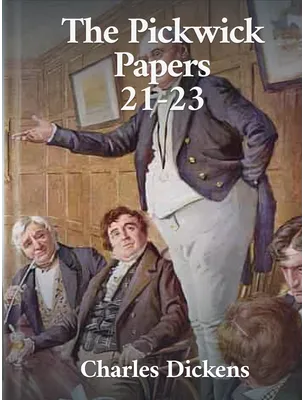
‘Aha!’ said the old man, a brief description of whose manner and appearance concluded the last chapter, ‘aha! who was talking about the inns?’
‘I was, Sir,’ replied Mr. Pickwick — ‘I was observing what singular old places they are.’
‘You!’ said the old man contemptuously. ‘What do you know of the time when young men shut themselves up in those lonely rooms, and read and read, hour after hour, and night after night, till their reason wandered beneath their midnight studies; till their mental powers were exhausted; till morning’s light brought no freshness or health to them; and they sank beneath the unnatural devotion of their youthful energies to their dry old books? Coming down to a later time, and a very different day, what do you know of the gradual sinking beneath consumption, or the quick wasting of fever — the grand results of “life” and dissipation — which men have undergone in these same rooms? How many vain pleaders for mercy, do you think, have turned away heart-sick from the lawyer’s office, to find a resting-place in the Thames, or a refuge in the jail? They are no ordinary houses, those. There is not a panel in the old wainscotting, but what, if it were endowed with the powers of speech and memory, could start from the wall, and tell its tale of horror — the romance of life, Sir, the romance of life! Common-place as they may seem now, I tell you they are strange old places, and I would rather hear many a legend with a terrific-sounding name, than the true history of one old set of chambers.’
There was something so odd in the old man’s sudden energy, and the subject which had called it forth, that Mr. Pickwick was prepared with no observation in reply; and the old man checking his impetuosity, and resuming the leer, which had disappeared during his previous excitement, said —
‘Look at them in another light — their most common-place and least romantic. What fine places of slow torture they are! Think of the needy man who has spent his all, beggared himself, and pinched his friends, to enter the profession, which is destined never to yield him a morsel of bread. The waiting — the hope — the disappointment — the fear — the misery — the poverty — the blight on his hopes, and end to his career — the suicide perhaps, or the shabby, slipshod drunkard. Am I not right about them?’ And the old man rubbed his hands, and leered as if in delight at having found another point of view in which to place his favourite subject.
Mr. Pickwick eyed the old man with great curiosity, and the remainder of the company smiled, and looked on in silence.
‘Talk of your German universities,’ said the little old man. ‘Pooh, pooh! there’s romance enough at home without going half a mile for it; only people never think of it.’
‘I never thought of the romance of this particular subject before, certainly,’ said Mr. Pickwick, laughing.
‘To be sure you didn’t,’ said the little old man; ‘of course not. As a friend of mine used to say to me, “What is there in chambers in particular?” “Queer old places,” said I. “Not at all,” said he. “Lonely,” said I. “Not a bit of it,” said he. He died one morning of apoplexy, as he was going to open his outer door. Fell with his head in his own letter-box, and there he lay for eighteen months. Everybody thought he’d gone out of town.’
‘And how was he found out at last?’ inquired Mr. Pickwick.
‘The benchers determined to have his door broken open, as he hadn’t paid any rent for two years. So they did. Forced the lock; and a very dusty skeleton in a blue coat, black knee-shorts, and silks, fell forward in the arms of the porter who opened the door. Queer, that. Rather, perhaps; rather, eh?’ The little old man put his head more on one side, and rubbed his hands with unspeakable glee.
‘I know another case,’ said the little old man, when his chuckles had in some degree subsided. ‘It occurred in Clifford’s Inn. Tenant of a top set — bad character — shut himself up in his bedroom closet, and took a dose of arsenic. The steward thought he had run away: opened the door, and put a bill up. Another man came, took the chambers, furnished them, and went to live there. Somehow or other he couldn’t sleep — always restless and uncomfortable. “Odd,” says he. “I’ll make the other room my bedchamber, and this my sitting-room.” He made the change, and slept very well at night, but suddenly found that, somehow, he couldn’t read in the evening: he got nervous and uncomfortable, and used to be always snuffing his candles and staring about him. “I can’t make this out,” said he, when he came home from the play one night, and was drinking a glass of cold grog, with his back to the wall, in order that he mightn’t be able to fancy there was any one behind him — “I can’t make it out,” said he; and just then his eyes rested on the little closet that had been always locked up, and a shudder ran through his whole frame from top to toe. “I have felt this strange feeling before,” said he, “I cannot help thinking there’s something wrong about that closet.” He made a strong effort, plucked up his courage, shivered the lock with a blow or two of the poker, opened the door, and there, sure enough, standing bolt upright in the corner, was the last tenant, with a little bottle clasped firmly in his hand, and his face — well!’ As the little old man concluded, he looked round on the attentive faces of his wondering auditory with a smile of grim delight.
‘What strange things these are you tell us of, Sir,’ said Mr. Pickwick, minutely scanning the old man’s countenance, by the aid of his glasses.
‘Strange!’ said the little old man. ‘Nonsense; you think them strange, because you know nothing about it. They are funny, but not uncommon.’
‘Funny!’ exclaimed Mr. Pickwick involuntarily.
‘Yes, funny, are they not?’ replied the little old man, with a diabolical leer; and then, without pausing for an answer, he continued —
‘I knew another man — let me see — forty years ago now — who took an old, damp, rotten set of chambers, in one of the most ancient inns, that had been shut up and empty for years and years before. There were lots of old women’s stories about the place, and it certainly was very far from being a cheerful one; but he was poor, and the rooms were cheap, and that would have been quite a sufficient reason for him, if they had been ten times worse than they really were. He was obliged to take some mouldering fixtures that were on the place, and, among the rest, was a great lumbering wooden press for papers, with large glass doors, and a green curtain inside; a pretty useless thing for him, for he had no papers to put in it; and as to his clothes, he carried them about with him, and that wasn’t very hard work, either. Well, he had moved in all his furniture — it wasn’t quite a truck-full — and had sprinkled it about the room, so as to make the four chairs look as much like a dozen as possible, and was sitting down before the fire at night, drinking the first glass of two gallons of whisky he had ordered on credit, wondering whether it would ever be paid for, and if so, in how many years’ time, when his eyes encountered the glass doors of the wooden press. “Ah,” says he, “if I hadn’t been obliged to take that ugly article at the old broker’s valuation, I might have got something comfortable for the money. I’ll tell you what it is, old fellow,” he said, speaking aloud to the press, having nothing else to speak to, “if it wouldn’t cost more to break up your old carcass, than it would ever be worth afterward, I’d have a fire out of you in less than no time.” He had hardly spoken the words, when a sound resembling a faint groan, appeared to issue from the interior of the case. It startled him at first, but thinking, on a moment’s reflection, that it must be some young fellow in the next chamber, who had been dining out, he put his feet on the fender, and raised the poker to stir the fire. At that moment, the sound was repeated; and one of the glass doors slowly opening, disclosed a pale and emaciated figure in soiled and worn apparel, standing erect in the press. The figure was tall and thin, and the countenance expressive of care and anxiety; but there was something in the hue of the skin, and gaunt and unearthly appearance of the whole form, which no being of this world was ever seen to wear. “Who are you?” said the new tenant, turning very pale; poising the poker in his hand, however, and taking a very decent aim at the countenance of the figure. “Who are you?” “Don’t throw that poker at me,” replied the form; “if you hurled it with ever so sure an aim, it would pass through me, without resistance, and expend its force on the wood behind. I am a spirit.” “And pray, what do you want here?” faltered the tenant. “In this room,” replied the apparition, “my worldly ruin was worked, and I and my children beggared. In this press, the papers in a long, long suit, which accumulated for years, were deposited. In this room, when I had died of grief, and long-deferred hope, two wily harpies divided the wealth for which I had contested during a wretched existence, and of which, at last, not one farthing was left for my unhappy descendants. I terrified them from the spot, and since that day have prowled by night — the only period at which I can revisit the earth — about the scenes of my long-protracted misery. This apartment is mine: leave it to me.” “If you insist upon making your appearance here,” said the tenant, who had had time to collect his presence of mind during this prosy statement of the ghost’s, “I shall give up possession with the greatest pleasure; but I should like to ask you one question, if you will allow me.” “Say on,” said the apparition sternly. “Well,” said the tenant, “I don’t apply the observation personally to you, because it is equally applicable to most of the ghosts I ever heard of; but it does appear to me somewhat inconsistent, that when you have an opportunity of visiting the fairest spots of earth — for I suppose space is nothing to you — you should always return exactly to the very places where you have been most miserable.” “Egad, that’s very true; I never thought of that before,” said the ghost. “You see, Sir,” pursued the tenant, “this is a very uncomfortable room. From the appearance of that press, I should be disposed to say that it is not wholly free from bugs; and I really think you might find much more comfortable quarters: to say nothing of the climate of London, which is extremely disagreeable.” “You are very right, Sir,” said the ghost politely, “it never struck me till now; I’ll try change of air directly” — and, in fact, he began to vanish as he spoke; his legs, indeed, had quite disappeared. “And if, Sir,” said the tenant, calling after him, “if you would have the goodness to suggest to the other ladies and gentlemen who are now engaged in haunting old empty houses, that they might be much more comfortable elsewhere, you will confer a very great benefit on society.” “I will,” replied the ghost; “we must be dull fellows — very dull fellows, indeed; I can’t imagine how we can have been so stupid.” With these words, the spirit disappeared; and what is rather remarkable,’ added the old man, with a shrewd look round the table, ‘he never came back again.’
‘That ain’t bad, if it’s true,’ said the man in the Mosaic studs, lighting a fresh cigar.
‘If!’ exclaimed the old man, with a look of excessive contempt. ‘I suppose,’ he added, turning to Lowten, ‘he’ll say next, that my story about the queer client we had, when I was in an attorney’s office, is not true either — I shouldn’t wonder.’
‘I shan’t venture to say anything at all about it, seeing that I never heard the story,’ observed the owner of the Mosaic decorations.
‘I wish you would repeat it, Sir,’ said Mr. Pickwick.
‘Ah, do,’ said Lowten, ‘nobody has heard it but me, and I have nearly forgotten it.’
The old man looked round the table, and leered more horribly than ever, as if in triumph, at the attention which was depicted in every face. Then rubbing his chin with his hand, and looking up to the ceiling as if to recall the circumstances to his memory, he began as follows: —
THE OLD MAN’S TALE ABOUT THE QUEER CLIENT
‘It matters little,’ said the old man, ‘where, or how, I picked up this brief history. If I were to relate it in the order in which it reached me, I should commence in the middle, and when I had arrived at the conclusion, go back for a beginning. It is enough for me to say that some of its circumstances passed before my own eyes; for the remainder I know them to have happened, and there are some persons yet living, who will remember them but too well.
‘In the Borough High Street, near St. George’s Church, and on the same side of the way, stands, as most people know, the smallest of our debtors’ prisons, the Marshalsea. Although in later times it has been a very different place from the sink of filth and dirt it once was, even its improved condition holds out but little temptation to the extravagant, or consolation to the improvident. The condemned felon has as good a yard for air and exercise in Newgate, as the insolvent debtor in the Marshalsea Prison. [Better. But this is past, in a better age, and the prison exists no longer.]
‘It may be my fancy, or it may be that I cannot separate the place from the old recollections associated with it, but this part of London I cannot bear. The street is broad, the shops are spacious, the noise of passing vehicles, the footsteps of a perpetual stream of people — all the busy sounds of traffic, resound in it from morn to midnight; but the streets around are mean and close; poverty and debauchery lie festering in the crowded alleys; want and misfortune are pent up in the narrow prison; an air of gloom and dreariness seems, in my eyes at least, to hang about the scene, and to impart to it a squalid and sickly hue.
‘Many eyes, that have long since been closed in the grave, have looked round upon that scene lightly enough, when entering the gate of the old Marshalsea Prison for the first time; for despair seldom comes with the first severe shock of misfortune. A man has confidence in untried friends, he remembers the many offers of service so freely made by his boon companions when he wanted them not; he has hope — the hope of happy inexperience — and however he may bend beneath the first shock, it springs up in his bosom, and flourishes there for a brief space, until it droops beneath the blight of disappointment and neglect. How soon have those same eyes, deeply sunken in the head, glared from faces wasted with famine, and sallow from confinement, in days when it was no figure of speech to say that debtors rotted in prison, with no hope of release, and no prospect of liberty! The atrocity in its full extent no longer exists, but there is enough of it left to give rise to occurrences that make the heart bleed.
‘Twenty years ago, that pavement was worn with the footsteps of a mother and child, who, day by day, so surely as the morning came, presented themselves at the prison gate; often after a night of restless misery and anxious thoughts, were they there, a full hour too soon, and then the young mother turning meekly away, would lead the child to the old bridge, and raising him in her arms to show him the glistening water, tinted with the light of the morning’s sun, and stirring with all the bustling preparations for business and pleasure that the river presented at that early hour, endeavour to interest his thoughts in the objects before him. But she would quickly set him down, and hiding her face in her shawl, give vent to the tears that blinded her; for no expression of interest or amusement lighted up his thin and sickly face. His recollections were few enough, but they were all of one kind — all connected with the poverty and misery of his parents. Hour after hour had he sat on his mother’s knee, and with childish sympathy watched the tears that stole down her face, and then crept quietly away into some dark corner, and sobbed himself to sleep. The hard realities of the world, with many of its worst privations — hunger and thirst, and cold and want — had all come home to him, from the first dawnings of reason; and though the form of childhood was there, its light heart, its merry laugh, and sparkling eyes were wanting.
‘The father and mother looked on upon this, and upon each other, with thoughts of agony they dared not breathe in words. The healthy, strong-made man, who could have borne almost any fatigue of active exertion, was wasting beneath the close confinement and unhealthy atmosphere of a crowded prison. The slight and delicate woman was sinking beneath the combined effects of bodily and mental illness. The child’s young heart was breaking.
‘Winter came, and with it weeks of cold and heavy rain. The poor girl had removed to a wretched apartment close to the spot of her husband’s imprisonment; and though the change had been rendered necessary by their increasing poverty, she was happier now, for she was nearer him. For two months, she and her little companion watched the opening of the gate as usual. One day she failed to come, for the first time. Another morning arrived, and she came alone. The child was dead.
‘They little know, who coldly talk of the poor man’s bereavements, as a happy release from pain to the departed, and a merciful relief from expense to the survivor — they little know, I say, what the agony of those bereavements is. A silent look of affection and regard when all other eyes are turned coldly away — the consciousness that we possess the sympathy and affection of one being when all others have deserted us — is a hold, a stay, a comfort, in the deepest affliction, which no wealth could purchase, or power bestow. The child had sat at his parents’ feet for hours together, with his little hands patiently folded in each other, and his thin wan face raised towards them. They had seen him pine away, from day to day; and though his brief existence had been a joyless one, and he was now removed to that peace and rest which, child as he was, he had never known in this world, they were his parents, and his loss sank deep into their souls.
‘It was plain to those who looked upon the mother’s altered face, that death must soon close the scene of her adversity and trial. Her husband’s fellow-prisoners shrank from obtruding on his grief and misery, and left to himself alone, the small room he had previously occupied in common with two companions. She shared it with him; and lingering on without pain, but without hope, her life ebbed slowly away.
‘She had fainted one evening in her husband’s arms, and he had borne her to the open window, to revive her with the air, when the light of the moon falling full upon her face, showed him a change upon her features, which made him stagger beneath her weight, like a helpless infant.
‘“Set me down, George,” she said faintly. He did so, and seating himself beside her, covered his face with his hands, and burst into tears.
‘“It is very hard to leave you, George,” she said; “but it is God’s will, and you must bear it for my sake. Oh! how I thank Him for having taken our boy! He is happy, and in heaven now. What would he have done here, without his mother!”
‘“You shall not die, Mary, you shall not die;” said the husband, starting up. He paced hurriedly to and fro, striking his head with his clenched fists; then reseating himself beside her, and supporting her in his arms, added more calmly, “Rouse yourself, my dear girl. Pray, pray do. You will revive yet.”
‘“Never again, George; never again,” said the dying woman. “Let them lay me by my poor boy now, but promise me, that if ever you leave this dreadful place, and should grow rich, you will have us removed to some quiet country churchyard, a long, long way off — very far from here — where we can rest in peace. Dear George, promise me you will.”
‘“I do, I do,” said the man, throwing himself passionately on his knees before her. “Speak to me, Mary, another word; one look — but one!”
‘He ceased to speak: for the arm that clasped his neck grew stiff and heavy. A deep sigh escaped from the wasted form before him; the lips moved, and a smile played upon the face; but the lips were pallid, and the smile faded into a rigid and ghastly stare. He was alone in the world.
‘That night, in the silence and desolation of his miserable room, the wretched man knelt down by the dead body of his wife, and called on God to witness a terrible oath, that from that hour, he devoted himself to revenge her death and that of his child; that thenceforth to the last moment of his life, his whole energies should be directed to this one object; that his revenge should be protracted and terrible; that his hatred should be undying and inextinguishable; and should hunt its object through the world.
‘The deepest despair, and passion scarcely human, had made such fierce ravages on his face and form, in that one night, that his companions in misfortune shrank affrighted from him as he passed by. His eyes were bloodshot and heavy, his face a deadly white, and his body bent as if with age. He had bitten his under lip nearly through in the violence of his mental suffering, and the blood which had flowed from the wound had trickled down his chin, and stained his shirt and neckerchief. No tear, or sound of complaint escaped him; but the unsettled look, and disordered haste with which he paced up and down the yard, denoted the fever which was burning within.
‘It was necessary that his wife’s body should be removed from the prison, without delay. He received the communication with perfect calmness, and acquiesced in its propriety. Nearly all the inmates of the prison had assembled to witness its removal; they fell back on either side when the widower appeared; he walked hurriedly forward, and stationed himself, alone, in a little railed area close to the lodge gate, from whence the crowd, with an instinctive feeling of delicacy, had retired. The rude coffin was borne slowly forward on men’s shoulders. A dead silence pervaded the throng, broken only by the audible lamentations of the women, and the shuffling steps of the bearers on the stone pavement. They reached the spot where the bereaved husband stood: and stopped. He laid his hand upon the coffin, and mechanically adjusting the pall with which it was covered, motioned them onward. The turnkeys in the prison lobby took off their hats as it passed through, and in another moment the heavy gate closed behind it. He looked vacantly upon the crowd, and fell heavily to the ground.
‘Although for many weeks after this, he was watched, night and day, in the wildest ravings of fever, neither the consciousness of his loss, nor the recollection of the vow he had made, ever left him for a moment. Scenes changed before his eyes, place succeeded place, and event followed event, in all the hurry of delirium; but they were all connected in some way with the great object of his mind. He was sailing over a boundless expanse of sea, with a blood-red sky above, and the angry waters, lashed into fury beneath, boiling and eddying up, on every side. There was another vessel before them, toiling and labouring in the howling storm; her canvas fluttering in ribbons from the mast, and her deck thronged with figures who were lashed to the sides, over which huge waves every instant burst, sweeping away some devoted creatures into the foaming sea. Onward they bore, amidst the roaring mass of water, with a speed and force which nothing could resist; and striking the stem of the foremost vessel, crushed her beneath their keel. From the huge whirlpool which the sinking wreck occasioned, arose a shriek so loud and shrill — the death-cry of a hundred drowning creatures, blended into one fierce yell — that it rung far above the war-cry of the elements, and echoed, and re-echoed till it seemed to pierce air, sky, and ocean. But what was that — that old gray head that rose above the water’s surface, and with looks of agony, and screams for aid, buffeted with the waves! One look, and he had sprung from the vessel’s side, and with vigorous strokes was swimming towards it. He reached it; he was close upon it. They were his features. The old man saw him coming, and vainly strove to elude his grasp. But he clasped him tight, and dragged him beneath the water. Down, down with him, fifty fathoms down; his struggles grew fainter and fainter, until they wholly ceased. He was dead; he had killed him, and had kept his oath.
‘He was traversing the scorching sands of a mighty desert, barefoot and alone. The sand choked and blinded him; its fine thin grains entered the very pores of his skin, and irritated him almost to madness. Gigantic masses of the same material, carried forward by the wind, and shone through by the burning sun, stalked in the distance like pillars of living fire. The bones of men, who had perished in the dreary waste, lay scattered at his feet; a fearful light fell on everything around; so far as the eye could reach, nothing but objects of dread and horror presented themselves. Vainly striving to utter a cry of terror, with his tongue cleaving to his mouth, he rushed madly forward. Armed with supernatural strength, he waded through the sand, until, exhausted with fatigue and thirst, he fell senseless on the earth. What fragrant coolness revived him; what gushing sound was that? Water! It was indeed a well; and the clear fresh stream was running at his feet. He drank deeply of it, and throwing his aching limbs upon the bank, sank into a delicious trance. The sound of approaching footsteps roused him. An old gray-headed man tottered forward to slake his burning thirst. It was he again! He wound his arms round the old man’s body, and held him back. He struggled, and shrieked for water — for but one drop of water to save his life! But he held the old man firmly, and watched his agonies with greedy eyes; and when his lifeless head fell forward on his bosom, he rolled the corpse from him with his feet.
‘When the fever left him, and consciousness returned, he awoke to find himself rich and free, to hear that the parent who would have let him die in jail — would! who had let those who were far dearer to him than his own existence die of want, and sickness of heart that medicine cannot cure — had been found dead in his bed of down. He had had all the heart to leave his son a beggar, but proud even of his health and strength, had put off the act till it was too late, and now might gnash his teeth in the other world, at the thought of the wealth his remissness had left him. He awoke to this, and he awoke to more. To recollect the purpose for which he lived, and to remember that his enemy was his wife’s own father — the man who had cast him into prison, and who, when his daughter and her child sued at his feet for mercy, had spurned them from his door. Oh, how he cursed the weakness that prevented him from being up, and active, in his scheme of vengeance!
‘He caused himself to be carried from the scene of his loss and misery, and conveyed to a quiet residence on the sea-coast; not in the hope of recovering his peace of mind or happiness, for both were fled for ever; but to restore his prostrate energies, and meditate on his darling object. And here, some evil spirit cast in his way the opportunity for his first, most horrible revenge.
‘It was summer-time; and wrapped in his gloomy thoughts, he would issue from his solitary lodgings early in the evening, and wandering along a narrow path beneath the cliffs, to a wild and lonely spot that had struck his fancy in his ramblings, seat himself on some fallen fragment of the rock, and burying his face in his hands, remain there for hours — sometimes until night had completely closed in, and the long shadows of the frowning cliffs above his head cast a thick, black darkness on every object near him.
‘He was seated here, one calm evening, in his old position, now and then raising his head to watch the flight of a sea-gull, or carry his eye along the glorious crimson path, which, commencing in the middle of the ocean, seemed to lead to its very verge where the sun was setting, when the profound stillness of the spot was broken by a loud cry for help; he listened, doubtful of his having heard aright, when the cry was repeated with even greater vehemence than before, and, starting to his feet, he hastened in the direction whence it proceeded.
‘The tale told itself at once: some scattered garments lay on the beach; a human head was just visible above the waves at a little distance from the shore; and an old man, wringing his hands in agony, was running to and fro, shrieking for assistance. The invalid, whose strength was now sufficiently restored, threw off his coat, and rushed towards the sea, with the intention of plunging in, and dragging the drowning man ashore.
‘“Hasten here, Sir, in God’s name; help, help, sir, for the love of Heaven. He is my son, Sir, my only son!” said the old man frantically, as he advanced to meet him. “My only son, Sir, and he is dying before his father’s eyes!”
‘At the first word the old man uttered, the stranger checked himself in his career, and, folding his arms, stood perfectly motionless.
‘“Great God!” exclaimed the old man, recoiling, “Heyling!”
‘The stranger smiled, and was silent.
‘“Heyling!” said the old man wildly; “my boy, Heyling, my dear boy, look, look!” Gasping for breath, the miserable father pointed to the spot where the young man was struggling for life.