The book was published in 1917.
[{"id":"para_1","index":0,"start":0,"offset":364,"words":5,"paraNum":"","lastModified":1763604969000,"semanticType":"title-book-title","voicework":"tts","blockId":"philosophy_of_rabindranath_tagore_en-bl2s","language":"en","wordsRange":{"start":100000000,"end":106000000},"paragraphVersion":216,"direction":"ltr","paragraph":"<h1 class=\"ilm-title ilm-x-large\" id=\"para_1\" semantictype=\"title-book-title\" data-ilmid=\"philosophy_of_rabindranath_tagore_en-bl2s\" data-audio=\"1\" data-chapter=\"para_1\" data-words-count=\"5\" data-before=\"0\" data-ww=\"\"><span class=\"block-pb\"> <span class=\"block-pb is-animated\"></span> </span><span class=\"itm-wrap\">The Philosophy of Rabindranath Tagore</span></h1>","hasContent":true,"isFirst":true,"isLast":false},{"id":"para_2","index":1,"start":364,"offset":670,"words":3,"paraNum":"","lastModified":1763604971000,"semanticType":"title-author","voicework":"tts","blockId":"philosophy_of_rabindranath_tagore_en-bl2t","language":"en","wordsRange":{"start":206000000,"end":211000000},"paragraphVersion":238,"direction":"ltr","paragraph":"<h1 class=\"ilm-title ilm-author ilm-large ilm-nopad\" id=\"para_2\" semantictype=\"title-author\" data-ilmid=\"philosophy_of_rabindranath_tagore_en-bl2t\" data-audio=\"1\" data-chapter=\"para_2\" data-words-count=\"3\" data-before=\"5\" data-ww=\"\"><span class=\"block-pb\"> <span class=\"block-pb is-animated\"></span> </span><span class=\"itm-wrap\">by <br>S. <span class=\"intricate-word\"><span class=\"-nowrap-content\">Radhakrishnan<a data-fnid=\"1\" epub:type=\"noteref\" href=\"#n0\" class=\"space\"></a> </span></span></span></h1><aside id=\"n0\" data-audio=\"0\" data-fnid=\"1\" class=\"bh-fn\" epub:type=\"footnote\" data-ww=\"\"><span>Professor of philosophy, maharajah’s college, mysore</span></aside>","hasContent":true,"isFirst":false,"isLast":false},{"id":"para_3","index":2,"start":1034,"offset":164,"words":0,"paraNum":"","lastModified":1763330074000,"semanticType":"line","blockId":"philosophy_of_rabindranath_tagore_en-bl2u","language":"en","wordsRange":{"start":311000000,"end":313000000},"paragraphVersion":188,"direction":"ltr","paragraph":"<hr class=\"ilm-hr ilm-small\" id=\"para_3\" semantictype=\"line\" data-ilmid=\"philosophy_of_rabindranath_tagore_en-bl2u\" data-words-count=\"0\" data-before=\"8\" data-ww=\"\">","hasContent":true,"isFirst":false,"isLast":false},{"id":"para_4","index":3,"start":1198,"offset":948,"words":0,"paraNum":"","lastModified":1763494907000,"semanticType":"illustration","blockId":"philosophy_of_rabindranath_tagore_en-bl2v","language":"en","wordsRange":{"start":413000000,"end":415000000},"paragraphVersion":240,"direction":"ltr","paragraph":"<div class=\"ilm-illustration\" id=\"para_4\" semantictype=\"illustration\" data-ilmid=\"philosophy_of_rabindranath_tagore_en-bl2v\" data-words-count=\"0\" data-before=\"8\" data-ww=\"\"><img width=\"460\" height=\"600\" data-src=\"ch0p0\" src=\"data:image/webp;base64,UklGRt4BAABXRUJQVlA4INIBAADQCQCdASouADwAPm0skUWkIqGWrM5IQAbEoAuzOTpcwgqvnngBccD/4U2G9hGIYIykzcySE1HaBuBx0JhtLXOYJ3msgjiQWXPHOGw5xTk5bb4Ia4J35AAA/qZ4VfKUaRgRbed3qhDZvNxeK97cSMUCJkewaV3EX/i30K6r36RzEidbMXDb40TJPONLicSOxa+ktwaFE+y2/jJ4EpR5KiUV1p9ekVDSSFmNqJQ/mHV23s6qiffH5tXy4LFqJcIIjNc8nCQj2fx7FOzHlIFvv4NniS+VkO1uqiMrgQZUUw1I4iM9Ub67q5A3LgIaI/YkhWNNVapQqH7e9XiZ6JjeUpFn7V7uFdXErnJ0gw3IgwLOY9hF2KGeNZKPyqJR1Rc32YWl/pbYHGvwFI0bJqrNgpMq9sJU2wwfT4cDglfCbD79awlAjMZaNmICo9Bh8Gaq2/axG1su7ZoXPZpuJxhcAwWXre6ubyNV/EJ2RGWCEcbVf+4n3iM3Hnbo/3IwemKHywZ1WIJw+adpa6P/o70WjSXzZLfuxkFido7rd5GNin8S72iGqzEUK1mEOPY6KSwrX1IiuuqAUxd/in1lSCvgQi+uviZbAvrzSOjB+J1KQR0EAAAA\" alt=\"The Philosophy of Rabindranath Tagore\"></div>","hasContent":true,"isFirst":false,"isLast":false},{"id":"para_5","index":4,"start":2146,"offset":313,"words":3,"paraNum":"","lastModified":1763463750000,"semanticType":"par","voicework":"tts","blockId":"philosophy_of_rabindranath_tagore_en-bl2w","language":"en","wordsRange":{"start":515000000,"end":520000000},"paragraphVersion":223,"direction":"ltr","paragraph":"<p class=\"ilm-dedication\" id=\"para_5\" semantictype=\"par\" data-ilmid=\"philosophy_of_rabindranath_tagore_en-bl2w\" data-audio=\"1\" data-words-count=\"3\" data-before=\"8\" data-ww=\"\"><span class=\"block-pb\"> <span class=\"block-pb is-animated\"></span> </span><span class=\"itm-wrap\">To <br>Sir Rabindranath Tagore</span></p>","hasContent":true,"isFirst":false,"isLast":false},{"id":"para_6","index":5,"start":2459,"offset":331,"words":1,"paraNum":"","lastModified":1763463818000,"semanticType":"header-subheader","voicework":"tts","blockId":"philosophy_of_rabindranath_tagore_en-bl3d","language":"en","wordsRange":{"start":620000000,"end":622000000},"paragraphVersion":206,"direction":"ltr","paragraph":"<h3 class=\"ilm-header ilm-h3\" id=\"para_6\" semantictype=\"header-subheader\" data-ilmid=\"philosophy_of_rabindranath_tagore_en-bl3d\" data-audio=\"1\" data-chapter=\"para_6\" data-words-count=\"1\" data-before=\"11\" data-ww=\"\"><span class=\"block-pb\"> <span class=\"block-pb is-animated\"></span> </span><span class=\"itm-wrap\">Preface</span></h3>","hasContent":true,"isFirst":false,"isLast":false},{"id":"para_7","index":6,"start":2790,"offset":625,"words":59,"paraNum":"p.1","lastModified":1763463692000,"semanticType":"par","voicework":"tts","blockId":"philosophy_of_rabindranath_tagore_en-bl3e","language":"en","wordsRange":{"start":722000000,"end":782000000},"paragraphVersion":207,"direction":"ltr","paragraph":"<p id=\"para_7\" semantictype=\"par\" data-ilmid=\"philosophy_of_rabindranath_tagore_en-bl3e\" data-audio=\"1\" data-words-count=\"59\" data-before=\"12\" data-ww=\"\"><span class=\"block-num\" data-id=\"p.1\"></span><span class=\"block-pb\"> <span class=\"block-pb is-animated\"></span> </span><span class=\"itm-wrap\">The book explains itself. The popularity of the writings of Sir Rabindranath Tagore shows that there is neither East nor West in the realm of spirit, and that his work meets a general want and satisfies a universal demand. What is the demand, and how it is met, are questions which I have tried to answer in this book.</span></p>","hasContent":true,"isFirst":false,"isLast":false},{"id":"para_8","index":7,"start":3415,"offset":1020,"words":124,"paraNum":"p.2","lastModified":1763463692000,"semanticType":"par","voicework":"tts","blockId":"philosophy_of_rabindranath_tagore_en-bl3h","language":"en","wordsRange":{"start":882000000,"end":1007000000},"paragraphVersion":204,"direction":"ltr","paragraph":"<p id=\"para_8\" semantictype=\"par\" data-ilmid=\"philosophy_of_rabindranath_tagore_en-bl3h\" data-audio=\"1\" data-words-count=\"124\" data-before=\"71\" data-ww=\"\"><span class=\"block-num\" data-id=\"p.2\"></span><span class=\"block-pb\"> <span class=\"block-pb is-animated\"></span> </span><span class=\"itm-wrap\">In interpreting the philosophy and message of Sir Rabindranath Tagore, we are interpreting the Indian ideal of philosophy, religion, and art, of which his work is the outcome and expression. We do not know whether it is Rabindranath’s own heart or the heart of India that is beating here. In his work, India finds the lost word she was seeking. The familiar truths of Hindu philosophy and religion, the value of which it has become fashionable to belittle even in the land of their birth, are here handled with such rare reverence and deep feeling that they seem to be almost new. My acquaintance with the soul of India from which Sir Rabindranath draws his inspiration has helped me in the work of exposition.</span></p>","hasContent":true,"isFirst":false,"isLast":false},{"id":"para_9","index":8,"start":4435,"offset":1141,"words":140,"paraNum":"p.3","lastModified":1763463692000,"semanticType":"par","voicework":"tts","blockId":"philosophy_of_rabindranath_tagore_en-bl3i","language":"en","wordsRange":{"start":1107000000,"end":1248000000},"paragraphVersion":204,"direction":"ltr","paragraph":"<p id=\"para_9\" semantictype=\"par\" data-ilmid=\"philosophy_of_rabindranath_tagore_en-bl3i\" data-audio=\"1\" data-words-count=\"140\" data-before=\"195\" data-ww=\"\"><span class=\"block-num\" data-id=\"p.3\"></span><span class=\"block-pb\"> <span class=\"block-pb is-animated\"></span> </span><span class=\"itm-wrap\">It may be said against this book that the author is trying to find a definite meaning where there is none, and is confusing his views with those of Sir Rabindranath. This charge raises a question too wide to discuss within the limits of a preface. But it must be remembered that Rabindranath writes poetry, while this book is in prose. Poetry is indefinite and suggestive, while prose is definite and expressive. What I have done here is simply to convert the vague suggestions of the poet into definite statements, supply the premises, draw out the conclusions, and give the setting where necessary. The book is an attempt to interpret Rabindranath’s philosophy in the light of its own fundamental principles. I may here mention that the poet has been pleased to express his appreciation of this interpretation of his philosophy.</span></p>","hasContent":true,"isFirst":false,"isLast":false},{"id":"para_10","index":9,"start":5576,"offset":585,"words":48,"paraNum":"p.4","lastModified":1763463692000,"semanticType":"par","voicework":"tts","blockId":"philosophy_of_rabindranath_tagore_en-bl3l","language":"en","wordsRange":{"start":1348000000,"end":1397000000},"paragraphVersion":204,"direction":"ltr","paragraph":"<p id=\"para_10\" semantictype=\"par\" data-ilmid=\"philosophy_of_rabindranath_tagore_en-bl3l\" data-audio=\"1\" data-words-count=\"48\" data-before=\"335\" data-ww=\"\"><span class=\"block-num\" data-id=\"p.4\"></span><span class=\"block-pb\"> <span class=\"block-pb is-animated\"></span> </span><span class=\"itm-wrap\">As the book would be lacking in wholeness without an account of Rabindranath’s views about Nationalism in the East and the West, we have noticed his views on this subject in Chapters IV. and V., keeping literally close to his writings while giving an inward account of them.</span></p>","hasContent":true,"isFirst":false,"isLast":false},{"id":"para_11","index":10,"start":6161,"offset":991,"words":122,"paraNum":"p.5","lastModified":1763471502000,"semanticType":"par","voicework":"tts","blockId":"philosophy_of_rabindranath_tagore_en-bl3m","language":"en","wordsRange":{"start":1497000000,"end":1619000000},"paragraphVersion":223,"direction":"ltr","paragraph":"<p id=\"para_11\" semantictype=\"par\" data-ilmid=\"philosophy_of_rabindranath_tagore_en-bl3m\" data-audio=\"1\" data-words-count=\"122\" data-before=\"383\" data-ww=\"\"><span class=\"block-num\" data-id=\"p.5\"></span><span class=\"block-pb\"> <span class=\"block-pb is-animated\"></span> </span><span class=\"itm-wrap\">It is the privilege of a preface to acknowledge obligations. I am very grateful to Sir Rabindranath Tagore for the permission given me to dedicate the book to him. Not to speak of the pleasure derived from association with such an honoured name, I seem to myself to repay in some degree the great obligation I owe him for having left a permanent impression on my mind, by inscribing this slender volume with his name. I am greatly indebted to Mr. C. F. Andrews of Shantiniketan for reading the proofs and making many valuable suggestions. My thanks are also due to the Editor of The Quest for granting me permission to use the two articles which originally appeared in his journal.</span></p>","hasContent":true,"isFirst":false,"isLast":false},{"id":"para_12","index":11,"start":7152,"offset":326,"words":3,"paraNum":"","lastModified":1763463692000,"semanticType":"par","voicework":"tts","blockId":"philosophy_of_rabindranath_tagore_en-bl3n","language":"en","wordsRange":{"start":1719000000,"end":1722000000},"paragraphVersion":223,"direction":"ltr","paragraph":"<p class=\"ilm-smallcaps ilm-right ilm-signature\" id=\"para_12\" semantictype=\"par\" data-ilmid=\"philosophy_of_rabindranath_tagore_en-bl3n\" data-audio=\"1\" data-words-count=\"3\" data-before=\"505\" data-ww=\"\"><span class=\"block-pb\"> <span class=\"block-pb is-animated\"></span> </span><span class=\"itm-wrap\">S. Radhakrishnan.</span></p>","hasContent":true,"isFirst":false,"isLast":false},{"id":"para_13","index":12,"start":7478,"offset":314,"words":4,"paraNum":"","lastModified":1763463692000,"semanticType":"par","voicework":"tts","blockId":"philosophy_of_rabindranath_tagore_en-bl3o","language":"en","wordsRange":{"start":1822000000,"end":1827000000},"paragraphVersion":226,"direction":"ltr","paragraph":"<p class=\"ilm-blockquote\" id=\"para_13\" semantictype=\"par\" data-ilmid=\"philosophy_of_rabindranath_tagore_en-bl3o\" data-audio=\"1\" data-words-count=\"4\" data-before=\"508\" data-ww=\"\"><span class=\"block-pb\"> <span class=\"block-pb is-animated\"></span> </span><span class=\"itm-wrap\">Madras, <i>May</i> 27, 1918.</span></p>","hasContent":true,"isFirst":false,"isLast":false},{"id":"para_14","index":13,"start":7792,"offset":167,"words":0,"paraNum":"","lastModified":1763330074000,"semanticType":"line","blockId":"philosophy_of_rabindranath_tagore_en-bl2x","language":"en","wordsRange":{"start":1927000000,"end":1929000000},"paragraphVersion":188,"direction":"ltr","paragraph":"<hr class=\"ilm-hr ilm-small\" id=\"para_14\" semantictype=\"line\" data-ilmid=\"philosophy_of_rabindranath_tagore_en-bl2x\" data-words-count=\"0\" data-before=\"512\" data-ww=\"\">","hasContent":true,"isFirst":false,"isLast":false},{"id":"para_15","index":14,"start":7959,"offset":567,"words":6,"paraNum":"","lastModified":1763464072000,"semanticType":"header-chapter-header","voicework":"tts","blockId":"philosophy_of_rabindranath_tagore_en-bl2y","language":"en","wordsRange":{"start":2029000000,"end":2037000000},"paragraphVersion":209,"direction":"ltr","paragraph":"<h2 class=\"ilm-header ilm-h2 ilm-large\" id=\"para_15\" semantictype=\"header-chapter-header\" data-ilmid=\"philosophy_of_rabindranath_tagore_en-bl2y\" data-audio=\"1\" data-chapter=\"para_15\" data-words-count=\"6\" data-before=\"512\" data-ww=\"\"><span class=\"block-pb\"> <span class=\"block-pb is-animated\"></span> </span><span class=\"itm-wrap\"><span class=\"chapter-text\"><span class=\"chapter-number\"><span class=\"chapter-label\"></span><span class=\"chapter-value\"></span></span><span class=\"chapter-title\">Chapter I<br>The Philosophy of Rabindranath Tagore</span></span></span></h2>","hasContent":true,"isFirst":false,"isLast":false},{"id":"para_16","index":15,"start":8526,"offset":328,"words":1,"paraNum":"","lastModified":1763463997000,"semanticType":"header-subheader","voicework":"tts","blockId":"philosophy_of_rabindranath_tagore_en-bl2z","language":"en","wordsRange":{"start":2137000000,"end":2139000000},"paragraphVersion":209,"direction":"ltr","paragraph":"<h3 class=\"ilm-header ilm-h3\" id=\"para_16\" semantictype=\"header-subheader\" data-ilmid=\"philosophy_of_rabindranath_tagore_en-bl2z\" data-audio=\"1\" data-chapter=\"para_16\" data-words-count=\"1\" data-before=\"518\" data-ww=\"\"><span class=\"block-pb\"> <span class=\"block-pb is-animated\"></span> </span><span class=\"itm-wrap\">I</span></h3>","hasContent":true,"isFirst":false,"isLast":false},{"id":"para_17","index":16,"start":8854,"offset":830,"words":70,"paraNum":"1.1.1","lastModified":1763471466000,"semanticType":"par","voicework":"tts","blockId":"philosophy_of_rabindranath_tagore_en-bl3z","language":"en","wordsRange":{"start":2239000000,"end":2322000000},"paragraphVersion":218,"direction":"ltr","paragraph":"<p class=\"ilm-blockquote\" id=\"para_17\" semantictype=\"par\" data-ilmid=\"philosophy_of_rabindranath_tagore_en-bl3z\" data-audio=\"1\" data-words-count=\"70\" data-before=\"519\" data-ww=\"\"><span class=\"block-num\" data-id=\"1.1.1\"></span><span class=\"block-pb\"> <span class=\"block-pb is-animated\"></span> </span><span class=\"itm-wrap\">In vast life’s unbounded tide<br>They alone content may gain<br>Who can good from ill divide<br>Or in ignorance abide —<br>All between is restless pain.<br>Before Thy prescience, power divine,<br>What is this idle sense of mine?<br>What all the learning of the schools?<br>What sages, priests, and pedants? — Fools!<br>The world is Thine, from Thee it rose<br>By Thee it ebbs, by Thee it flows.<br>Hence, worldly lore! By whom is wisdom shown?<br>The Eternal knows, knows all, and He alone.</span></p>","hasContent":true,"isFirst":false,"isLast":false},{"id":"para_18","index":17,"start":9684,"offset":314,"words":1,"paraNum":"","lastModified":1763471469000,"semanticType":"par","voicework":"tts","blockId":"philosophy_of_rabindranath_tagore_en-bl40","language":"en","wordsRange":{"start":2422000000,"end":2424000000},"paragraphVersion":228,"direction":"ltr","paragraph":"<p class=\"ilm-signature ilm-right ilm-smallcaps\" id=\"para_18\" semantictype=\"par\" data-ilmid=\"philosophy_of_rabindranath_tagore_en-bl40\" data-audio=\"1\" data-words-count=\"1\" data-before=\"589\" data-ww=\"\"><span class=\"block-pb\"> <span class=\"block-pb is-animated\"></span> </span><span class=\"itm-wrap\">Omar.</span></p>","hasContent":true,"isFirst":false,"isLast":false},{"id":"para_19","index":18,"start":9998,"offset":1359,"words":138,"paraNum":"1.1.2","lastModified":1763471527000,"semanticType":"par","voicework":"tts","blockId":"philosophy_of_rabindranath_tagore_en-bl45","language":"en","wordsRange":{"start":2524000000,"end":2663000000},"paragraphVersion":220,"direction":"ltr","paragraph":"<p id=\"para_19\" semantictype=\"par\" data-ilmid=\"philosophy_of_rabindranath_tagore_en-bl45\" data-audio=\"1\" data-words-count=\"138\" data-before=\"590\" data-ww=\"\"><span class=\"block-num\" data-id=\"1.1.2\"></span><span class=\"block-pb\"> <span class=\"block-pb is-animated\"></span> </span><span class=\"itm-wrap\">“The condemnation which a great man lays upon the world is to force it to explain <span class=\"intricate-word\"><span class=\"-nowrap-content\">him.”<a data-fnid=\"1\" epub:type=\"noteref\" href=\"#n1\"></a> </span></span>Rabindranath Tagore has not failed to force the world to come with its magazine articles and monographs to expound his views. The worldwide interest and popularity of his writings are due as much to the lofty idealism of his thoughts as to the literary grace and beauty of his writings. Rabindranath’s teaching, with its vital faith in the redeeming power of the spiritual forces and their up-building energy, has a particular value at the present moment, when the civilised world is passing through the crucible of a ghastly war which, whether or not it purges the nations of their pride and hate, lust for gold and greed of land, at least proclaims, in no uncertain tones, the utter bankruptcy of materialism.</span></p><aside id=\"n1\" data-audio=\"0\" data-fnid=\"1\" class=\"bh-fn\" epub:type=\"footnote\" data-ww=\"\"><span>Hegel.</span></aside>","hasContent":true,"isFirst":false,"isLast":false},{"id":"para_20","index":19,"start":11357,"offset":1536,"words":169,"paraNum":"1.1.3","lastModified":1763471514000,"semanticType":"par","voicework":"tts","blockId":"philosophy_of_rabindranath_tagore_en-bl30","language":"en","wordsRange":{"start":2763000000,"end":2933000000},"paragraphVersion":214,"direction":"ltr","paragraph":"<p id=\"para_20\" semantictype=\"par\" data-ilmid=\"philosophy_of_rabindranath_tagore_en-bl30\" data-audio=\"1\" data-words-count=\"169\" data-before=\"728\" data-ww=\"\"><span class=\"block-num\" data-id=\"1.1.3\"></span><span class=\"block-pb\"> <span class=\"block-pb is-animated\"></span> </span><span class=\"itm-wrap\">To be great is not merely to be talked about, it is also to be misunderstood, and Rabindranath has not escaped this fate. The many attempts made to explain him contradict each other, for “from the words of the poet men take what meanings please them.” There are two views regarding his philosophy of life. If we believe one side, he is a Vedantin, a thinker who draws his inspiration from the Upanishads. If we believe the other, he is an advocate of a theism more or less like, if not identical with, Christianity. Rabindranath inclines to the former view. “To me the verses of the Upanishads and the teachings of Buddha have ever been things of the spirit, and therefore endowed with boundless vital growth; and I have used them, both in my own life and in my preaching, as being instinct with individual meaning for me, as for others, and awaiting for their confirmation my own special testimony, which must have its value because of its <span class=\"intricate-word\"><span class=\"-nowrap-content\">individuality.”<a data-fnid=\"1\" epub:type=\"noteref\" href=\"#n2\"></a> </span></span></span></p><aside id=\"n2\" data-audio=\"0\" data-fnid=\"1\" class=\"bh-fn\" epub:type=\"footnote\" data-ww=\"\"><span><i>Sādhanā</i>, p. 8.</span></aside>","hasContent":true,"isFirst":false,"isLast":false},{"id":"para_21","index":20,"start":12893,"offset":2008,"words":186,"paraNum":"1.1.4","lastModified":1763471654000,"semanticType":"par","voicework":"tts","blockId":"philosophy_of_rabindranath_tagore_en-bl31","language":"en","wordsRange":{"start":3033000000,"end":3220666667},"paragraphVersion":243,"direction":"ltr","paragraph":"<p id=\"para_21\" semantictype=\"par\" data-ilmid=\"philosophy_of_rabindranath_tagore_en-bl31\" data-audio=\"1\" data-words-count=\"186\" data-before=\"897\" data-ww=\"\"><span class=\"block-num\" data-id=\"1.1.4\"></span><span class=\"block-pb\"> <span class=\"block-pb is-animated\"></span> </span><span class=\"itm-wrap\">Rabindranath’s philosophy by life is viewed by this school as nothing but the ancient wisdom of India restated to meet the needs of modern times. His writings are a commentary on the Upanishads by an individual of this generation on whom the present age has had its influence. The soul of ancient India is mirrored in them. His idealism is a true child of India’s own past and his philosophy is thoroughly Indian both in origin and development. In Dr. Coomaraswami’s words, “the work of Rabindranath is essentially Indian in sentiment and form.” The other view holds that Rabindranath Tagore, like other regenerators of Hinduism, has freely borrowed from Christianity and Western teaching, and has woven these alien elements into the woof of his own faith. If he does not confess his indebtedness to the West, it is, in the words of the Spectator’s reviewer, a case of “local patriotism,” “ingratitude,” and <span class=\"intricate-word\"><span class=\"-nowrap-content\">“insincerity.”<a data-fnid=\"1\" epub:type=\"noteref\" href=\"#n3\"></a> </span></span>“We have Mr. Tagore employing his remarkable literary talents in teaching borrowed Ethics to Europe as a thing characteristically Indian.” “There is a fatal flaw of insincerity in its most seemingly elevated <span class=\"intricate-word\"><span class=\"-nowrap-content\">utterances.”<a data-fnid=\"2\" epub:type=\"noteref\" href=\"#n4\"></a> </span></span></span></p><aside id=\"n3\" data-audio=\"0\" data-fnid=\"1\" class=\"bh-fn\" epub:type=\"footnote\" data-ww=\"\"><span><i>Spectator</i>, February 14, 1914.</span></aside><aside id=\"n4\" data-audio=\"0\" data-fnid=\"2\" class=\"bh-fn\" epub:type=\"footnote\" data-ww=\"\"><span><i>Ibid</i>.</span></aside>","hasContent":true,"isFirst":false,"isLast":false},{"id":"para_22","index":21,"start":14901,"offset":1626,"words":164,"paraNum":"1.1.5","lastModified":1763640477000,"semanticType":"par","voicework":"tts","blockId":"philosophy_of_rabindranath_tagore_en-bl120","language":"en","wordsRange":{"start":3220833333,"end":3383666667},"paragraphVersion":221,"direction":"ltr","paragraph":"<p id=\"para_22\" semantictype=\"par\" data-ilmid=\"philosophy_of_rabindranath_tagore_en-bl120\" data-audio=\"1\" data-words-count=\"164\" data-before=\"1083\" data-ww=\"\"><span class=\"block-num\" data-id=\"1.1.5\"></span><span class=\"block-pb\"> <span class=\"block-pb is-animated\"></span> </span><span class=\"itm-wrap\">These critics believe that the morals and philosophy underlying Rabindranath’s thought are essentially Christian. They identify the Vedanta philosophy with a doctrine that makes the absolute an abstract beyond, the world an illusion, contemplation the way of escape, and extinction of soul the end of man. Obviously Rabindranath is not all this. He gives us a “human” God, dismisses with contempt the concept of the world-illusion, praises action overmuch and promises fullness of life to the religious soul. These are essentially the features of the Christian religion, and what is Rabindranath Tagore if not a typical Christian of the type spiritual India would produce in larger numbers in years to come? The Rev. Mr. Saunders remarks: “The God of Gitanjali is no impersonal, imperturbable absolute of Hindu philosophy, but in fact, whether He be explicitly Christ or not, He is at least a Christ-like God, and the experience of His suppliant and lover is one with the deep core of all Christian <span class=\"intricate-word\"><span class=\"-nowrap-content\">experience.”<a data-fnid=\"1\" epub:type=\"noteref\" href=\"#n5\"></a> </span></span></span></p><aside id=\"n5\" data-audio=\"0\" data-fnid=\"1\" class=\"bh-fn\" epub:type=\"footnote\" data-ww=\"\"><span><i>International Review of Missions,</i> 1914, p. 149.</span></aside>","hasContent":true,"isFirst":false,"isLast":false},{"id":"para_23","index":22,"start":16527,"offset":1335,"words":112,"paraNum":"1.1.6","lastModified":1763465179000,"semanticType":"par","voicework":"tts","blockId":"philosophy_of_rabindranath_tagore_en-bl121","language":"en","wordsRange":{"start":3383833333,"end":3495333333},"paragraphVersion":181,"direction":"ltr","paragraph":"<p id=\"para_23\" semantictype=\"par\" data-ilmid=\"philosophy_of_rabindranath_tagore_en-bl121\" data-audio=\"1\" data-words-count=\"112\" data-before=\"1247\" data-ww=\"\"><span class=\"block-num\" data-id=\"1.1.6\"></span><span class=\"block-pb\"> <span class=\"block-pb is-animated\"></span> </span><span class=\"itm-wrap\">The Rev. Mr. Urquhart observes: “He opened his soul to the ideas of the West and he has drawn from Christianity, especially, ideas the influence of which upon his whole trend of thought has not always been acknowledged. The Eastern dress which he has given to these ideas has often concealed both from his own eyes and those of his readers their true origin, and although truth is one and inhabits no particular clime, absence of indication here has sometimes led to consequences prejudicial to the development of truth itself. The ideas of Rabindranath, like those of so many thinkers of modern India, have often been quite wrongly assigned to Indian <span class=\"intricate-word\"><span class=\"-nowrap-content\">sources.”<a data-fnid=\"1\" epub:type=\"noteref\" href=\"#n6\"></a> </span></span></span></p><aside id=\"n6\" data-audio=\"0\" data-fnid=\"1\" class=\"bh-fn\" epub:type=\"footnote\" data-ww=\"\"><span>“The Philosophical Inheritance of Rabindranath Tagore,” <i>International Journal of Ethics</i>, April 1916, p. 398.</span></aside>","hasContent":true,"isFirst":false,"isLast":false},{"id":"para_24","index":23,"start":17862,"offset":994,"words":67,"paraNum":"1.1.7","lastModified":1763471780000,"semanticType":"par","voicework":"tts","blockId":"philosophy_of_rabindranath_tagore_en-bl11p","language":"en","wordsRange":{"start":3495666667,"end":3563000000},"paragraphVersion":216,"direction":"ltr","paragraph":"<p id=\"para_24\" semantictype=\"par\" data-ilmid=\"philosophy_of_rabindranath_tagore_en-bl11p\" data-audio=\"1\" data-words-count=\"67\" data-before=\"1359\" data-ww=\"\"><span class=\"block-num\" data-id=\"1.1.7\"></span><span class=\"block-pb\"> <span class=\"block-pb is-animated\"></span> </span><span class=\"itm-wrap\">Mr. Edward J. Thompson, who calls it “nonsense” to say that <i>Gitanjali </i>represents “true Hinduism,” observes: “The man who henceforward must rank among the great religious poets of the world does not call himself a Christian: but in him we get a glimpse of what the Christianity of India will be like, and we see that it is something better than the Christianity which came to <span class=\"intricate-word\"><span class=\"-nowrap-content\">it.”<a data-fnid=\"1\" epub:type=\"noteref\" href=\"#n7\"></a> </span></span></span></p><aside id=\"n7\" data-audio=\"0\" data-fnid=\"1\" class=\"bh-fn\" epub:type=\"footnote\" data-ww=\"\"><span><i>Quarterly Review</i>, October 1914, p. 330.</span></aside>","hasContent":true,"isFirst":false,"isLast":false},{"id":"para_25","index":24,"start":18856,"offset":993,"words":120,"paraNum":"1.1.8","lastModified":1763465196000,"semanticType":"par","voicework":"tts","blockId":"philosophy_of_rabindranath_tagore_en-bl4h","language":"en","wordsRange":{"start":3663000000,"end":3784000000},"paragraphVersion":222,"direction":"ltr","paragraph":"<p id=\"para_25\" semantictype=\"par\" data-ilmid=\"philosophy_of_rabindranath_tagore_en-bl4h\" data-audio=\"1\" data-words-count=\"120\" data-before=\"1426\" data-ww=\"\"><span class=\"block-num\" data-id=\"1.1.8\"></span><span class=\"block-pb\"> <span class=\"block-pb is-animated\"></span> </span><span class=\"itm-wrap\">There is no use dogmatising at the very outset, for that would be to attack the central question at issue. An impartial exposition of Rabindranath’s views would set at rest all doubts and disputes. We do not find any systematic exposition of his philosophy of life in any of his writings. Even <i>Sādhanā </i>is a book of sermons, or mystic hymns, or perhaps meditations. It is a sigh of the soul rather than a reasoned account of metaphysics; an atmosphere rather than a system of philosophy. But we feel that the atmosphere is charged with a particular vision of reality. In his writings we have the reaction of his soul to the environment, his attitude in the face of life.</span></p>","hasContent":true,"isFirst":false,"isLast":false},{"id":"para_26","index":25,"start":19849,"offset":693,"words":58,"paraNum":"1.1.9","lastModified":1763465263000,"semanticType":"par","voicework":"tts","blockId":"philosophy_of_rabindranath_tagore_en-bl4l","language":"en","wordsRange":{"start":3884000000,"end":3943000000},"paragraphVersion":217,"direction":"ltr","paragraph":"<p id=\"para_26\" semantictype=\"par\" data-ilmid=\"philosophy_of_rabindranath_tagore_en-bl4l\" data-audio=\"1\" data-words-count=\"58\" data-before=\"1546\" data-ww=\"\"><span class=\"block-num\" data-id=\"1.1.9\"></span><span class=\"block-pb\"> <span class=\"block-pb is-animated\"></span> </span><span class=\"itm-wrap\">His personality is completely revealed in his poems, which are the unconscious expression of his soul, the outpourings of his devotional heart, and the revelation of his poetic consciousness. His writings must and do contain suggestions of his intellectual creed. Though poetry is not philosophy, it is possible for us to derive from Rabindranath’s works his philosophical views.</span></p>","hasContent":true,"isFirst":false,"isLast":false},{"id":"para_27","index":26,"start":20542,"offset":168,"words":0,"paraNum":"","lastModified":1763330074000,"semanticType":"line","blockId":"philosophy_of_rabindranath_tagore_en-bl32","language":"en","wordsRange":{"start":4043000000,"end":4045000000},"paragraphVersion":188,"direction":"ltr","paragraph":"<hr class=\"ilm-hr ilm-small\" id=\"para_27\" semantictype=\"line\" data-ilmid=\"philosophy_of_rabindranath_tagore_en-bl32\" data-words-count=\"0\" data-before=\"1604\" data-ww=\"\">","hasContent":true,"isFirst":false,"isLast":false},{"id":"para_28","index":27,"start":20710,"offset":330,"words":1,"paraNum":"","lastModified":1763471887000,"semanticType":"header-subheader","voicework":"tts","blockId":"philosophy_of_rabindranath_tagore_en-bl33","language":"en","wordsRange":{"start":4145000000,"end":4147000000},"paragraphVersion":219,"direction":"ltr","paragraph":"<h3 class=\"ilm-header ilm-h3\" id=\"para_28\" semantictype=\"header-subheader\" data-ilmid=\"philosophy_of_rabindranath_tagore_en-bl33\" data-audio=\"1\" data-chapter=\"para_28\" data-words-count=\"1\" data-before=\"1604\" data-ww=\"\"><span class=\"block-pb\"> <span class=\"block-pb is-animated\"></span> </span><span class=\"itm-wrap\">II</span></h3>","hasContent":true,"isFirst":false,"isLast":false},{"id":"para_29","index":28,"start":21040,"offset":2368,"words":255,"paraNum":"1.2.1","lastModified":1763636747000,"semanticType":"par","voicework":"tts","blockId":"philosophy_of_rabindranath_tagore_en-bl4q","language":"en","wordsRange":{"start":4247000000,"end":4505000000},"paragraphVersion":227,"direction":"ltr","paragraph":"<p id=\"para_29\" semantictype=\"par\" data-ilmid=\"philosophy_of_rabindranath_tagore_en-bl4q\" data-audio=\"1\" data-words-count=\"255\" data-before=\"1605\" data-ww=\"\"><span class=\"block-num\" data-id=\"1.2.1\"></span><span class=\"block-pb\"> <span class=\"block-pb is-animated\"></span> </span><span class=\"itm-wrap\">Human consciousness is the starting-point of all philosophic inquiry. The contradictions of human life provoke the quest for truth. Man is a finite-infinite being. He combines in himself spirit and nature. He is earth’s child but heaven’s heir. “At one pole of my being I am one with stocks and stones …. but at the other pole of my being I am separate from <span class=\"intricate-word\"><span class=\"-nowrap-content\">all.”<a data-fnid=\"1\" epub:type=\"noteref\" href=\"#n8\"></a> </span></span>As a link in the natural chain of events, man is subject to the law of necessity; as a member of the spiritual realm of ends, he is free. It is this contradiction, which we come across in science, art, and morality, that demands a solution. The individual aspires after perfect truth, perfect beauty, and perfect goodness. But in the finite world he can only approximate to, but never completely possess, them. We can see the ideals as through a mist. Intellectually we aspire after an ideal of truth which is complete, harmonious, and all-comprehensive. The world of isolated facts is at best finite and conditioned. Intellect, with its separatist tendencies and dissecting habits, finds itself unable to grasp the whole. On the moral side, we feel the break between ideal aspirations and actual facts. There is a struggle between the infinite within, which makes the soul yearn for an ideal, and the lower finite, which is the heritage from the past evolution. “O Great Beyond, O the keen call of thy flute! I forget, I ever forget, that the gates are shut everywhere in the house where I dwell <span class=\"intricate-word\"><span class=\"-nowrap-content\">alone.”<a data-fnid=\"2\" epub:type=\"noteref\" href=\"#n9\"></a> </span></span></span></p><aside id=\"n8\" data-audio=\"0\" data-fnid=\"1\" class=\"bh-fn\" epub:type=\"footnote\" data-ww=\"\"><span><i>Sādhanā</i>, p. 69; see also <i>Fruit-Gathering</i>, XXXIII.</span></aside><aside id=\"n9\" data-audio=\"0\" data-fnid=\"2\" class=\"bh-fn\" epub:type=\"footnote\" data-ww=\"\"><span><i>The Gardener</i>, 5; see also 6.</span></aside>","hasContent":true,"isFirst":false,"isLast":false},{"id":"para_30","index":29,"start":23408,"offset":640,"words":57,"paraNum":"1.2.2","lastModified":1763636747000,"semanticType":"par","voicework":"tts","blockId":"philosophy_of_rabindranath_tagore_en-bl4u","language":"en","wordsRange":{"start":4605000000,"end":4663000000},"paragraphVersion":214,"direction":"ltr","paragraph":"<p id=\"para_30\" semantictype=\"par\" data-ilmid=\"philosophy_of_rabindranath_tagore_en-bl4u\" data-audio=\"1\" data-words-count=\"57\" data-before=\"1860\" data-ww=\"\"><span class=\"block-num\" data-id=\"1.2.2\"></span><span class=\"block-pb\"> <span class=\"block-pb is-animated\"></span> </span><span class=\"itm-wrap\">There is a tension between the higher and the lower. The two elements have not attained a harmony. The higher self presents us with a moral imperative which we recognise to be right, but our actual lower self contests its higher birth and pays homage to the delights of sense. This conflict is described in <i>Gitanjali</i>, 28.</span></p>","hasContent":true,"isFirst":false,"isLast":false},{"id":"para_31","index":30,"start":24048,"offset":1899,"words":104,"paraNum":"1.2.3","lastModified":1763636747000,"semanticType":"par","voicework":"tts","blockId":"philosophy_of_rabindranath_tagore_en-bl4v","language":"en","wordsRange":{"start":4763000000,"end":5277000000},"paragraphVersion":253,"direction":"ltr","paragraph":"<p class=\"ilm-blockquote\" id=\"para_31\" semantictype=\"par\" data-ilmid=\"philosophy_of_rabindranath_tagore_en-bl4v\" data-audio=\"1\" data-words-count=\"104\" data-before=\"1917\" data-ww=\"\"><span class=\"block-num\" data-id=\"1.2.3\"></span><span class=\"block-pb\"> <span class=\"block-pb is-animated\"></span> </span><span class=\"itm-wrap\">Obstinate are the trammels, but my heart aches when I try to break them. <br>Freedom is all I want, but to hope for it I feel ashamed. <br>I am certain that priceless wealth is in thee, and that thou art my best friend, but I have not the heart to sweep away the tinsel that fills my room. <br>The shroud that covers me is a shroud of dust and death; I hate it, yet hug it in love. <br>My debts are large, my failures great, my shame secret and heavy; yet when I come to ask for my good, I quake in fear lest my prayer be <span class=\"intricate-word\"><span class=\"-nowrap-content\">granted.<a data-fnid=\"1\" epub:type=\"noteref\" href=\"#n10\"></a> </span></span></span></p><aside id=\"n10\" data-audio=\"0\" data-fnid=\"1\" class=\"bh-fn\" epub:type=\"footnote\" data-ww=\"\"><span>These lines remind us of the classical passage in St. Augustine’s <i>Confessions</i>: “Often does a man, when heavy sleepiness is on his limbs, defer to shake it off, and, though not approving, encourage it; even so was I sure it was better to surrender to thy love than to yield to my own lusts; yet though the former course convinced me, the latter pleased and held me back. There is nothing in me to answer thy call, ‘Awake! thou sleeper,’ but only drawling, drowsy words, ‘Presently, yes, presently; wait a little while.’ But the ‘presently ‘had no present, and the ‘little while ‘grew long, for I was afraid thou wouldst hear me too soon, and heal me at once of my disease of lust, which I wished to satiate rather than to see extinguished” (<i>Confessions</i>, xi.).</span></aside>","hasContent":true,"isFirst":false,"isLast":false},{"id":"para_32","index":31,"start":25947,"offset":1461,"words":208,"paraNum":"1.2.4","lastModified":1763636747000,"semanticType":"par","voicework":"tts","blockId":"philosophy_of_rabindranath_tagore_en-bl53","language":"en","wordsRange":{"start":5615000000,"end":5824000000},"paragraphVersion":223,"direction":"ltr","paragraph":"<p id=\"para_32\" semantictype=\"par\" data-ilmid=\"philosophy_of_rabindranath_tagore_en-bl53\" data-audio=\"1\" data-words-count=\"208\" data-before=\"2021\" data-ww=\"\"><span class=\"block-num\" data-id=\"1.2.4\"></span><span class=\"block-pb\"> <span class=\"block-pb is-animated\"></span> </span><span class=\"itm-wrap\">Even if we identify ourselves with the higher and fight the lower, it sometimes happens that we feel worsted. The natural forces seem too much for the moral. In this distress the finite individual asks: Is the moral ideal a dream, and am I a fool to fight for it against the tremendous odds of nature? Have I a fighting chance of victory, or is the enterprise foredoomed to failure? Is the struggle between good and evil presided over by a higher Being on whom I could depend, or is it a great hazard where the result can be anything? As a rational being he craves for a working probability. So long as nothing definite is known, the finite soul, struck by the galling injustice and evil of the world, wrings his hands in despair and cries out to Heaven: What must I do to be saved? Wretched man that I am, who shall deliver me from the body of this death? The contradictions of finite life clearly establish that the finite individual is not the ultimate in the world but only an incomplete something requiring supplementation. The need for a philosophy which would reconcile the opposing elements of life, self and not-self, is felt to be urgent.</span></p>","hasContent":true,"isFirst":false,"isLast":false},{"id":"para_33","index":32,"start":27408,"offset":168,"words":0,"paraNum":"","lastModified":1763330074000,"semanticType":"line","blockId":"philosophy_of_rabindranath_tagore_en-bl36","language":"en","wordsRange":{"start":5924000000,"end":5926000000},"paragraphVersion":188,"direction":"ltr","paragraph":"<hr class=\"ilm-hr ilm-small\" id=\"para_33\" semantictype=\"line\" data-ilmid=\"philosophy_of_rabindranath_tagore_en-bl36\" data-words-count=\"0\" data-before=\"2229\" data-ww=\"\">","hasContent":true,"isFirst":false,"isLast":false},{"id":"para_34","index":33,"start":27576,"offset":331,"words":1,"paraNum":"","lastModified":1763636747000,"semanticType":"header-subheader","voicework":"tts","blockId":"philosophy_of_rabindranath_tagore_en-bl54","language":"en","wordsRange":{"start":6026000000,"end":6028000000},"paragraphVersion":217,"direction":"ltr","paragraph":"<h3 class=\"ilm-header ilm-h3\" id=\"para_34\" semantictype=\"header-subheader\" data-ilmid=\"philosophy_of_rabindranath_tagore_en-bl54\" data-audio=\"1\" data-chapter=\"para_34\" data-words-count=\"1\" data-before=\"2229\" data-ww=\"\"><span class=\"block-pb\"> <span class=\"block-pb is-animated\"></span> </span><span class=\"itm-wrap\">III</span></h3>","hasContent":true,"isFirst":false,"isLast":false},{"id":"para_35","index":34,"start":27907,"offset":2168,"words":221,"paraNum":"1.3.1","lastModified":1763636747000,"semanticType":"par","voicework":"tts","blockId":"philosophy_of_rabindranath_tagore_en-bl5d","language":"en","wordsRange":{"start":6128000000,"end":6350666667},"paragraphVersion":216,"direction":"ltr","paragraph":"<p id=\"para_35\" semantictype=\"par\" data-ilmid=\"philosophy_of_rabindranath_tagore_en-bl5d\" data-audio=\"1\" data-words-count=\"221\" data-before=\"2230\" data-ww=\"\"><span class=\"block-num\" data-id=\"1.3.1\"></span><span class=\"block-pb\"> <span class=\"block-pb is-animated\"></span> </span><span class=\"itm-wrap\">If what our intellect reveals to us is true, if the world is a chance congeries of individuals attempting without success to fight and conquer nature, the best thing for the wise man would be to withdraw from the universe and contemplate the noble ideals in his cloister, leaving the world to rack and ruin. Mr. Bertrand Russell represents this tendency very forcibly in his brilliant article on “The Free Man’s Worship”: “That man is the product of causes which had no prevision of the end they were achieving; that his origin, his growth, his hopes and fears, his loves and his beliefs are but the outcome of accidental collocations of atoms; that no fire, no heroism, no intensity of thought and feeling can preserve an individual life beyond the grave; that all the labours of the ages, all the devotion, all the inspiration, all the noonday brightness of human genius, are destined to extinction in the vast depth of the solar system, and that the whole temple of Man’s achievement must inevitably be buried beneath the debris of a universe in ruins, — all these things, if not quite beyond dispute, are yet so nearly certain that no philosophy which rejects them can hope to <span class=\"intricate-word\"><span class=\"-nowrap-content\">stand.”<a data-fnid=\"1\" epub:type=\"noteref\" href=\"#n11\"></a> </span></span>“Blind to good and evil, reckless of destruction, omnipotent matter rolls on its relentless <span class=\"intricate-word\"><span class=\"-nowrap-content\">way.”<a data-fnid=\"2\" epub:type=\"noteref\" href=\"#n12\"></a> </span></span></span></p><aside id=\"n11\" data-audio=\"0\" data-fnid=\"1\" class=\"bh-fn\" epub:type=\"footnote\" data-ww=\"\"><span><i>Philosophical Essays</i>, pp. 60-61.</span></aside><aside id=\"n12\" data-audio=\"0\" data-fnid=\"2\" class=\"bh-fn\" epub:type=\"footnote\" data-ww=\"\"><span><i>Philosophical Essays</i>, p. 70.</span></aside>","hasContent":true,"isFirst":false,"isLast":false},{"id":"para_36","index":35,"start":30075,"offset":1477,"words":156,"paraNum":"1.3.2","lastModified":1763636747000,"semanticType":"par","voicework":"tts","blockId":"philosophy_of_rabindranath_tagore_en-bl122","language":"en","wordsRange":{"start":6350833333,"end":6507333333},"paragraphVersion":188,"direction":"ltr","paragraph":"<p id=\"para_36\" semantictype=\"par\" data-ilmid=\"philosophy_of_rabindranath_tagore_en-bl122\" data-audio=\"1\" data-words-count=\"156\" data-before=\"2451\" data-ww=\"\"><span class=\"block-num\" data-id=\"1.3.2\"></span><span class=\"block-pb\"> <span class=\"block-pb is-animated\"></span> </span><span class=\"itm-wrap\">Spiritual tempers recognise the high worth of human aspirations and require of men a contemplation of the ideals sacred to humanity. The way to escape from the sway of fate lies in giving up the ties binding man to the external world. We are exhorted by Mr. Russell “to abandon the struggle for private happiness, to expel all eagerness of temporary desire, to burn with passion for eternal things. This is emancipation, this is Free Man’s <span class=\"intricate-word\"><span class=\"-nowrap-content\">Worship.”<a data-fnid=\"1\" epub:type=\"noteref\" href=\"#n13\"></a> </span></span>The pessimists of all ages demand an extirpation of desires and an attainment of inner freedom. The world is full of contradictions and human life is a great discord. The external world appears to be so awry that it drives man into the deepest solitudes of the soul. A sort of other-worldly mysticism which treats with contempt both nature and man develops. The Absolute is said to be quite different from the world, just the opposite of the finite. </span></p><aside id=\"n13\" data-audio=\"0\" data-fnid=\"1\" class=\"bh-fn\" epub:type=\"footnote\" data-ww=\"\"><span><i>Ibid</i>. p. 69.</span></aside>","hasContent":true,"isFirst":false,"isLast":false},{"id":"para_37","index":36,"start":31552,"offset":1150,"words":153,"paraNum":"1.3.3","lastModified":1763640597000,"semanticType":"par","voicework":"tts","blockId":"philosophy_of_rabindranath_tagore_en-bl123","language":"en","wordsRange":{"start":6507666667,"end":6661000000},"paragraphVersion":192,"direction":"ltr","paragraph":"<p id=\"para_37\" semantictype=\"par\" data-ilmid=\"philosophy_of_rabindranath_tagore_en-bl123\" data-audio=\"1\" data-words-count=\"153\" data-before=\"2607\" data-ww=\"\"><span class=\"block-num\" data-id=\"1.3.3\"></span><span class=\"block-pb\"> <span class=\"block-pb is-animated\"></span> </span><span class=\"itm-wrap\">The characteristics we are acquainted with in the finite universe can only be denied of it. It alone is real and the world is unreal. Such an intellectualist philosophy will make the Absolute an abstract beyond, the world an unreality, contemplation the way of escape, and extinction of soul the end of man. But the Absolute will then be left in a perilous state, having nothing to do with the universe. This view is a confession of the defeat or discomfiture of man and can never satisfy his real needs. In this conflict of forces, self and not-self, right and might, there are thinkers who ask us to take up sides with might and wickedness. Nietzsche demands worship of force. The God of earth is a God of might and vengeance and not a God of right and conscience. This view is so patently absurd that we need not waste words over it.</span></p>","hasContent":true,"isFirst":false,"isLast":false},{"id":"para_38","index":37,"start":32702,"offset":1934,"words":63,"paraNum":"1.3.4","lastModified":1763636747000,"semanticType":"par","voicework":"tts","blockId":"philosophy_of_rabindranath_tagore_en-bl37","language":"en","wordsRange":{"start":6761000000,"end":6826000000},"paragraphVersion":219,"direction":"ltr","paragraph":"<p id=\"para_38\" semantictype=\"par\" data-ilmid=\"philosophy_of_rabindranath_tagore_en-bl37\" data-audio=\"1\" data-words-count=\"63\" data-before=\"2760\" data-ww=\"\"><span class=\"block-num\" data-id=\"1.3.4\"></span><span class=\"block-pb\"> <span class=\"block-pb is-animated\"></span> </span><span class=\"itm-wrap\">A different view, meant especially to emphasise the religious needs of man, prevails in the West. According to it self and not-self are opposed. “The West seems to take a pride in thinking that it is subduing nature, as if we are living in a hostile world where we have to wrest everything we want from an unwilling and alien arrangement of <span class=\"intricate-word\"><span class=\"-nowrap-content\">things.”<a data-fnid=\"1\" epub:type=\"noteref\" href=\"#n14\"></a> </span></span></span></p><aside id=\"n14\" data-audio=\"0\" data-fnid=\"1\" class=\"bh-fn\" epub:type=\"footnote\" data-ww=\"\"><span><i>Sadhand</i>, p. 5. Professor Baillie, of Aberdeen, concurs with this view, and thinks that the characteristic differences in mentality between religious Asia and scientific Europe can be traced ultimately to this difference in view regarding man and environment. He writes: “The scientific movement arises from a peculiar attitude of the mind to the world found amongst certain peoples of the globe, and without this attitude science will always appear a curiosity or an irrelevance. The attitude may be shortly described as due to a sense of the detachment of man from the world as something alien and external, to a sense of the supremacy of his aims over the process of the outer nature. In the East man seems to feel no sense of alienation; he seems to feel himself as much a part of the universe as a plant is inseparable from its environment. So much is this the case that man’s life is felt to be part of the very current of the stream of the vaster life of the world” (<i>Hibbert Journal</i>, April 19171 p. 363).</span></aside>","hasContent":true,"isFirst":false,"isLast":false},{"id":"para_39","index":38,"start":34636,"offset":1355,"words":184,"paraNum":"1.3.5","lastModified":1763636747000,"semanticType":"par","voicework":"tts","blockId":"philosophy_of_rabindranath_tagore_en-bl39","language":"en","wordsRange":{"start":7207000000,"end":7391333333},"paragraphVersion":224,"direction":"ltr","paragraph":"<p id=\"para_39\" semantictype=\"par\" data-ilmid=\"philosophy_of_rabindranath_tagore_en-bl39\" data-audio=\"1\" data-words-count=\"184\" data-before=\"2823\" data-ww=\"\"><span class=\"block-num\" data-id=\"1.3.5\"></span><span class=\"block-pb\"> <span class=\"block-pb is-animated\"></span> </span><span class=\"itm-wrap\">The world of nature is regarded as a refractory force hard in resisting and slow in giving in. Man in his battlings with matter presided over by Satan requires the help of God. God along with mankind struggles to overcome the forces of evil and darkness. All such theistic conceptions generally end in making God a finite being. Leibnitz, in his famous <i>Theodicy</i>, makes God a limited one. He says the existing world is the best of all possible worlds. Evidently all worlds were not possible to God; He selected the best possible, and it has turned out to be not quite a good one. Mill holds to a limited God in his <i>Essay </i><i>on </i><i>Religion</i>. Doctors James, Schiller, and Rashdall postulate a finite and personal God. These thinkers hold to a pluralistic conception of the universe and find themselves unable to account for the unity of the world-process. No religion can finally rest in a God who is engaged in a conflict with evil in which He requires the help of man. We can never be sure of the outcome of the struggle. </span></p>","hasContent":true,"isFirst":false,"isLast":false},{"id":"para_40","index":39,"start":35991,"offset":1479,"words":217,"paraNum":"1.3.6","lastModified":1763636747000,"semanticType":"par","voicework":"tts","blockId":"philosophy_of_rabindranath_tagore_en-bl124","language":"en","wordsRange":{"start":7391666667,"end":7608333333},"paragraphVersion":186,"direction":"ltr","paragraph":"<p id=\"para_40\" semantictype=\"par\" data-ilmid=\"philosophy_of_rabindranath_tagore_en-bl124\" data-audio=\"1\" data-words-count=\"217\" data-before=\"3007\" data-ww=\"\"><span class=\"block-num\" data-id=\"1.3.6\"></span><span class=\"block-pb\"> <span class=\"block-pb is-animated\"></span> </span><span class=\"itm-wrap\">It is quite possible that a God who is limited by the resisting evil may have, like man, defeat for His end; only, if man fails with the help of God, great is his fall indeed. The defeat is more fearful when God has not deserted the side on which man is. A suffering God, a deity with a crown of thorns, cannot satisfy the religious soul. He is one among many, subject to the limitations of man. There is a great gulf fixed between humanity presided over by God and nature led by His opposite. So long as one principle has not universal sway, so long the basis of pessimism is sound and safe. How can man, without the joy of hope and confidence in victory, bear up against the pressure of alien force? The fear of what the unknown and the unknowable energy might do fills his life with doubt and misery, weakness and distraction. Only a universal principle can deliver human life from despair. The Absolute is nothing short of the universe in its totality. It is the whole of perfection in which the opposition of good and evil is overcome. But the theist’s God is identified with a part of the universe, the good, while the evil is left in its own independence. </span></p>","hasContent":true,"isFirst":false,"isLast":false},{"id":"para_41","index":40,"start":37470,"offset":1483,"words":136,"paraNum":"1.3.7","lastModified":1763636747000,"semanticType":"par","voicework":"tts","blockId":"philosophy_of_rabindranath_tagore_en-bl125","language":"en","wordsRange":{"start":7608666667,"end":7746000000},"paragraphVersion":181,"direction":"ltr","paragraph":"<p id=\"para_41\" semantictype=\"par\" data-ilmid=\"philosophy_of_rabindranath_tagore_en-bl125\" data-audio=\"1\" data-words-count=\"136\" data-before=\"3224\" data-ww=\"\"><span class=\"block-num\" data-id=\"1.3.7\"></span><span class=\"block-pb\"> <span class=\"block-pb is-animated\"></span> </span><span class=\"itm-wrap\">God is the virtue of the virtuous, and there is another opposing Him, the wickedness of the wicked. The God of theism is only an aspect of the Absolute, an appearance of a deeper reality. Modern theism, aware of this difficulty, lays stress on Divine immanence, thus watering down the personal God into the Absolute <span class=\"intricate-word\"><span class=\"-nowrap-content\">whole.<a data-fnid=\"1\" epub:type=\"noteref\" href=\"#n15\"></a> </span></span>The views here referred to “read the world wrong” and do not give us a philosophic synthesis of God, world and self, for in a true synthesis we cannot have absolute divisions between man and nature. We need a principle, superior to them all, which would assign to each, self and not-self, its appropriate value, and give harmony to their mutual relations; a principle of synthesis which would comprehend both elements and transform their apparent antagonism into an organic relationship.</span></p><aside id=\"n15\" data-audio=\"0\" data-fnid=\"1\" class=\"bh-fn\" epub:type=\"footnote\" data-ww=\"\"><span>See Dr. Campbell, <i>New Theology</i>, and <i>Foundations</i>, by Oxford thinkers, especially Dr. Moberly’s essays.</span></aside>","hasContent":true,"isFirst":false,"isLast":false},{"id":"para_42","index":41,"start":38953,"offset":1593,"words":170,"paraNum":"1.3.8","lastModified":1763636747000,"semanticType":"par","voicework":"tts","blockId":"philosophy_of_rabindranath_tagore_en-bl5p","language":"en","wordsRange":{"start":7962000000,"end":8134000000},"paragraphVersion":235,"direction":"ltr","paragraph":"<p id=\"para_42\" semantictype=\"par\" data-ilmid=\"philosophy_of_rabindranath_tagore_en-bl5p\" data-audio=\"1\" data-words-count=\"170\" data-before=\"3360\" data-ww=\"\"><span class=\"block-num\" data-id=\"1.3.8\"></span><span class=\"block-pb\"> <span class=\"block-pb is-animated\"></span> </span><span class=\"itm-wrap\">A closer scrutiny reveals to us the kinship of nature and spirit, not self and self. The fact that we are able to interpret nature, know it, appreciate it, fight and conquer it, shows that it is akin to human consciousness: “We could have no communication whatever with our surroundings if they were absolutely foreign to us.” Man is “reaping success every day, and that shows there is a rational connection between him and nature, for we never can make anything our own except that which is truly related to us.” If we separate man from nature “it is like dividing the bud and the blossom into two separate categories, and putting their grace to the credit of two different and antithetical principles.” “The Indian mind never has any hesitation in acknowledging its kinship with nature, its unbroken relation with <span class=\"intricate-word\"><span class=\"-nowrap-content\">all.”<a data-fnid=\"1\" epub:type=\"noteref\" href=\"#n16\"></a> </span></span>In India where civilisation developed in forests near to nature, there was no thought of an antagonism between man and nature, no idea of forcibly wresting treasures from nature.</span></p><aside id=\"n16\" data-audio=\"0\" data-fnid=\"1\" class=\"bh-fn\" epub:type=\"footnote\" data-ww=\"\"><span><i>Sādhanā</i>, pp. 5-7.</span></aside>","hasContent":true,"isFirst":false,"isLast":false},{"id":"para_43","index":42,"start":40546,"offset":1764,"words":195,"paraNum":"1.3.9","lastModified":1763636747000,"semanticType":"par","voicework":"tts","blockId":"philosophy_of_rabindranath_tagore_en-bl3c","language":"en","wordsRange":{"start":8339000000,"end":8535333333},"paragraphVersion":239,"direction":"ltr","paragraph":"<p id=\"para_43\" semantictype=\"par\" data-ilmid=\"philosophy_of_rabindranath_tagore_en-bl3c\" data-audio=\"1\" data-words-count=\"195\" data-before=\"3530\" data-ww=\"\"><span class=\"block-num\" data-id=\"1.3.9\"></span><span class=\"block-pb\"> <span class=\"block-pb is-animated\"></span> </span><span class=\"itm-wrap\">Human consciousness, animal life, and inanimate nature are different grades of the same energy, stages of the same development. Self and not-self into which the universe has been dichotomised are no rivals, but are the different expressions of the same Absolute, different modes of its existence. Nature is not antagonistic to spirit; not-self is there for the purpose of being used up by the spirit. It is fuel for the flame of the spirit. The Taittiriya Upanishad calls matter <i>annam </i>or food. The human will convert its environment into food. Objective nature is capable of being determined in accordance with the subject’s wishes. The past progress of the Universe clearly establishes the success which has attended man’s attempt to utilise the environment for the ends of life and spirit. The not-self is a means for the manifestation of spiritual power. Only through nature can spirit realise itself. “The earth, water and light, fruits and flowers, to her were not merely physical phenomena to be turned to use and then left aside. They were necessary to her in the attainment of the ideal of perfection, as every note is necessary to the completeness of the <span class=\"intricate-word\"><span class=\"-nowrap-content\">symphony.”<a data-fnid=\"1\" epub:type=\"noteref\" href=\"#n17\"></a> </span></span></span></p><aside id=\"n17\" data-audio=\"0\" data-fnid=\"1\" class=\"bh-fn\" epub:type=\"footnote\" data-ww=\"\"><span><i>Sādhanā</i>, p. 7.</span></aside>","hasContent":true,"isFirst":false,"isLast":false},{"id":"para_44","index":43,"start":42310,"offset":1590,"words":182,"paraNum":"1.3.10","lastModified":1763636747000,"semanticType":"par","voicework":"tts","blockId":"philosophy_of_rabindranath_tagore_en-bl126","language":"en","wordsRange":{"start":8535666667,"end":8718333333},"paragraphVersion":184,"direction":"ltr","paragraph":"<p id=\"para_44\" semantictype=\"par\" data-ilmid=\"philosophy_of_rabindranath_tagore_en-bl126\" data-audio=\"1\" data-words-count=\"182\" data-before=\"3725\" data-ww=\"\"><span class=\"block-num\" data-id=\"1.3.10\"></span><span class=\"block-pb\"> <span class=\"block-pb is-animated\"></span> </span><span class=\"itm-wrap\"> If we adopt the right attitude to nature, we feel the pulse of spirit throbbing through it. A true seer sees in natural facts spiritual significance. The poetic temper hears the voice of spirit crying aloud in nature. “The man whose acquaintance with the world does not lead him deeper than science leads him, will never understand what it is that the man with the spiritual vision finds in these natural phenomena. The water does not merely cleanse his limbs, but it purifies his heart; for it touches his soul. The earth does not merely hold his body, but it gladdens his mind; for its contact is more than a physical contact, it is a living presence. When a man does not realise his kinship with the world, he lives in a prison-house whose walls are alien to him. When he meets the eternal spirit in all objects, then is he emancipated, for then he discovers the fullest significance of the world into which he is born; then he finds himself in perfect truth, and his harmony with the All is <span class=\"intricate-word\"><span class=\"-nowrap-content\">established.”<a data-fnid=\"1\" epub:type=\"noteref\" href=\"#n18\"></a> </span></span></span></p><aside id=\"n18\" data-audio=\"0\" data-fnid=\"1\" class=\"bh-fn\" epub:type=\"footnote\" data-ww=\"\"><span><i>Sādhanā</i>, p. 8.</span></aside>","hasContent":true,"isFirst":false,"isLast":false},{"id":"para_45","index":44,"start":43900,"offset":2616,"words":273,"paraNum":"1.3.11","lastModified":1763636747000,"semanticType":"par","voicework":"tts","blockId":"philosophy_of_rabindranath_tagore_en-bl127","language":"en","wordsRange":{"start":8718666667,"end":8995000000},"paragraphVersion":179,"direction":"ltr","paragraph":"<p id=\"para_45\" semantictype=\"par\" data-ilmid=\"philosophy_of_rabindranath_tagore_en-bl127\" data-audio=\"1\" data-words-count=\"273\" data-before=\"3907\" data-ww=\"\"><span class=\"block-num\" data-id=\"1.3.11\"></span><span class=\"block-pb\"> <span class=\"block-pb is-animated\"></span> </span><span class=\"itm-wrap\"> The eye of an artist is needed to perceive the spiritual beauty of the things of nature. Only.his eye can penetrate through the confusing chaos of shadows and appearances, and see the cosmos within. Rabindranath has the eye which pierces into the secret of which the natural fact is the sign and prophecy. He is a poet of nature in whose hands the crudest stuff of existence acquires a poetic colouring. The spiritual phases of nature leap up to his God-filled eyes, kindle devotion in his heart, and set song on his lips. To his soul touched by God the physisal world of science appears in all its sweetness and simplicity as to a child. It is a “fairy universe where the stars talk and the sky stoops down to amuse him, and all nature comes to his window with trays of bright <span class=\"intricate-word\"><span class=\"-nowrap-content\">toys.”<a data-fnid=\"1\" epub:type=\"noteref\" href=\"#n19\"></a> </span></span>To him “the touch of an infinite mystery passes over the trivial and the familiar, making it break out into ineffable music.” “The trees, the stars, and the blue hills “ache “with a meaning which can never be uttered in <span class=\"intricate-word\"><span class=\"-nowrap-content\">words.”<a data-fnid=\"2\" epub:type=\"noteref\" href=\"#n20\"></a> </span></span>A breath of divine passion passes over the whole world, making it pure and perfect. He feels “a thrill passing through the air with the notes of the far-away song floating from the other <span class=\"intricate-word\"><span class=\"-nowrap-content\">shore.”<a data-fnid=\"3\" epub:type=\"noteref\" href=\"#n21\"></a> </span></span>He can never escape the divine presence, twist and turn as he will. The deep shadows of the rainy July and the stormy night suggest God’s presence. He is a mystic soul who can hear the voice of God in the tempest and see His hand in the stilling of the wave.</span></p><aside id=\"n19\" data-audio=\"0\" data-fnid=\"1\" class=\"bh-fn\" epub:type=\"footnote\" data-ww=\"\"><span>See “Baby’s World” in <i>The Crescent Moon</i>.</span></aside><aside id=\"n20\" data-audio=\"0\" data-fnid=\"2\" class=\"bh-fn\" epub:type=\"footnote\" data-ww=\"\"><span><i>Sādhanā, p. 43.</i></span></aside><aside id=\"n21\" data-audio=\"0\" data-fnid=\"3\" class=\"bh-fn\" epub:type=\"footnote\" data-ww=\"\"><span><i>Gitanjali</i>, 21.</span></aside>","hasContent":true,"isFirst":false,"isLast":false},{"id":"para_46","index":45,"start":46516,"offset":904,"words":107,"paraNum":"1.3.12","lastModified":1763636747000,"semanticType":"par","voicework":"tts","blockId":"philosophy_of_rabindranath_tagore_en-bl3g","language":"en","wordsRange":{"start":9220000000,"end":9328000000},"paragraphVersion":232,"direction":"ltr","paragraph":"<p id=\"para_46\" semantictype=\"par\" data-ilmid=\"philosophy_of_rabindranath_tagore_en-bl3g\" data-audio=\"1\" data-words-count=\"107\" data-before=\"4180\" data-ww=\"\"><span class=\"block-num\" data-id=\"1.3.12\"></span><span class=\"block-pb\"> <span class=\"block-pb is-animated\"></span> </span><span class=\"itm-wrap\">It is no wonder that Rabindranath advocates life in nature and in the open as the best means of spiritual progress, for in nature the religious eye will see the infinite lying stretched in silent smiling repose. Rabindranath sings not of the cloister or the retreat, but of the open highway and the King’s Post Office. He revels in the open air and is not afraid to stand under the golden canopy. According to him the best way to derive divine inspiration is to lose oneself in the contemplation of nature. In silence and in solitude we have to enjoy the presence of the divine in nature.</span></p>","hasContent":true,"isFirst":false,"isLast":false},{"id":"para_47","index":46,"start":47420,"offset":918,"words":57,"paraNum":"1.3.13","lastModified":1763636747000,"semanticType":"par","voicework":"tts","blockId":"philosophy_of_rabindranath_tagore_en-bl64","language":"en","wordsRange":{"start":9428000000,"end":9691000000},"paragraphVersion":252,"direction":"ltr","paragraph":"<p class=\"ilm-blockquote\" id=\"para_47\" semantictype=\"par\" data-ilmid=\"philosophy_of_rabindranath_tagore_en-bl64\" data-audio=\"1\" data-words-count=\"57\" data-before=\"4287\" data-ww=\"\"><span class=\"block-num\" data-id=\"1.3.13\"></span><span class=\"block-pb\"> <span class=\"block-pb is-animated\"></span> </span><span class=\"itm-wrap\">I woke and found his letter with the morning. <br>When the night grows still and stars come out one by one I will spread it on my lap and stay silent. <br>The rustling leaves will read it aloud to me, the rushing stream will chant it, and the seven wise stars will sing it to me from the <span class=\"intricate-word\"><span class=\"-nowrap-content\">sky.<a data-fnid=\"1\" epub:type=\"noteref\" href=\"#n22\"></a> </span></span></span></p><aside id=\"n22\" data-audio=\"0\" data-fnid=\"1\" class=\"bh-fn\" epub:type=\"footnote\" data-ww=\"\"><span><i>Fruit-Gathering</i> IV; see also XV. and LXVIII.</span></aside>","hasContent":true,"isFirst":false,"isLast":false},{"id":"para_48","index":47,"start":48338,"offset":1129,"words":144,"paraNum":"1.3.14","lastModified":1763636747000,"semanticType":"par","voicework":"tts","blockId":"philosophy_of_rabindranath_tagore_en-bl69","language":"en","wordsRange":{"start":9900000000,"end":10045000000},"paragraphVersion":240,"direction":"ltr","paragraph":"<p id=\"para_48\" semantictype=\"par\" data-ilmid=\"philosophy_of_rabindranath_tagore_en-bl69\" data-audio=\"1\" data-words-count=\"144\" data-before=\"4344\" data-ww=\"\"><span class=\"block-num\" data-id=\"1.3.14\"></span><span class=\"block-pb\"> <span class=\"block-pb is-animated\"></span> </span><span class=\"itm-wrap\">He does not lay stress on religious instruction in the Bolpur school, but believes that religious feeling and piety will work their way into the life of the students if the environment is pure and noble. “We do not want nowadays temples of worship and outward rites and ceremonies. What we really want is an <i>Asram</i>. We want a place where the beauty of nature and the noblest pursuits of man are in a sweet harmony. Our temple of worship is there where outward nature and human soul meet in union.” Recognising the influence of environment upon temperament, the ancient teachers chose the forest shades or the banks of holy rivers as the sites for their Asrams. When we are filled with the sense of the divinity that surrounds us, then we feel impelled to give ourselves up to reverie or meditation on God.</span></p>","hasContent":true,"isFirst":false,"isLast":false},{"id":"para_49","index":48,"start":49467,"offset":870,"words":50,"paraNum":"1.3.15","lastModified":1763636747000,"semanticType":"par","voicework":"tts","blockId":"philosophy_of_rabindranath_tagore_en-bl6a","language":"en","wordsRange":{"start":10145000000,"end":10299000000},"paragraphVersion":250,"direction":"ltr","paragraph":"<p class=\"ilm-blockquote\" id=\"para_49\" semantictype=\"par\" data-ilmid=\"philosophy_of_rabindranath_tagore_en-bl6a\" data-audio=\"1\" data-words-count=\"50\" data-before=\"4488\" data-ww=\"\"><span class=\"block-num\" data-id=\"1.3.15\"></span><span class=\"block-pb\"> <span class=\"block-pb is-animated\"></span> </span><span class=\"itm-wrap\">To-day the summer has come at my window with its sighs and murmurs; and the bees are plying their minstrelsy at the court of their flowering grove. <br>Now it is time to sit quiet, face to face with thee, and to sing dedication of life in this silent and overflowing <span class=\"intricate-word\"><span class=\"-nowrap-content\">leisure.<a data-fnid=\"1\" epub:type=\"noteref\" href=\"#n23\"></a> </span></span></span></p><aside id=\"n23\" data-audio=\"0\" data-fnid=\"1\" class=\"bh-fn\" epub:type=\"footnote\" data-ww=\"\"><span><i>Gitanjali</i>, 5.</span></aside>","hasContent":true,"isFirst":false,"isLast":false},{"id":"para_50","index":49,"start":50337,"offset":322,"words":1,"paraNum":"1.3.16","lastModified":1763636747000,"semanticType":"par","voicework":"tts","blockId":"philosophy_of_rabindranath_tagore_en-bl6f","language":"en","wordsRange":{"start":10399000000,"end":10400333333},"paragraphVersion":243,"direction":"ltr","paragraph":"<p id=\"para_50\" semantictype=\"par\" data-ilmid=\"philosophy_of_rabindranath_tagore_en-bl6f\" data-audio=\"1\" data-words-count=\"1\" data-before=\"4538\" data-ww=\"\"><span class=\"block-num\" data-id=\"1.3.16\"></span><span class=\"block-pb\"> <span class=\"block-pb is-animated\"></span> </span><span class=\"itm-wrap\">Again:<br></span></p>","hasContent":true,"isFirst":false,"isLast":false},{"id":"para_51","index":50,"start":50659,"offset":841,"words":51,"paraNum":"1.3.17","lastModified":1763636747000,"semanticType":"par","voicework":"tts","blockId":"philosophy_of_rabindranath_tagore_en-bl11q","language":"en","wordsRange":{"start":10400666667,"end":10555000000},"paragraphVersion":225,"direction":"ltr","paragraph":"<p class=\"ilm-blockquote\" id=\"para_51\" semantictype=\"par\" data-ilmid=\"philosophy_of_rabindranath_tagore_en-bl11q\" data-audio=\"1\" data-words-count=\"51\" data-before=\"4539\" data-ww=\"\"><span class=\"block-num\" data-id=\"1.3.17\"></span><span class=\"block-pb\"> <span class=\"block-pb is-animated\"></span> </span><span class=\"itm-wrap\">In the busy moments of the noontide work I am with the crowd, but on this dark lonely day it is only for thee that I hope. <br>If thou showest me not thy face, if thou leavest me wholly aside, I know not how I am to pass these long rainy <span class=\"intricate-word\"><span class=\"-nowrap-content\">hours.<a data-fnid=\"1\" epub:type=\"noteref\" href=\"#n24\"></a> </span></span></span></p><aside id=\"n24\" data-audio=\"0\" data-fnid=\"1\" class=\"bh-fn\" epub:type=\"footnote\" data-ww=\"\"><span><i>Gitanjali</i>, 18.</span></aside>","hasContent":true,"isFirst":false,"isLast":false},{"id":"para_52","index":51,"start":51500,"offset":1061,"words":126,"paraNum":"1.3.18","lastModified":1763636747000,"semanticType":"par","voicework":"tts","blockId":"philosophy_of_rabindranath_tagore_en-bl6h","language":"en","wordsRange":{"start":10759000000,"end":10886000000},"paragraphVersion":245,"direction":"ltr","paragraph":"<p id=\"para_52\" semantictype=\"par\" data-ilmid=\"philosophy_of_rabindranath_tagore_en-bl6h\" data-audio=\"1\" data-words-count=\"126\" data-before=\"4590\" data-ww=\"\"><span class=\"block-num\" data-id=\"1.3.18\"></span><span class=\"block-pb\"> <span class=\"block-pb is-animated\"></span> </span><span class=\"itm-wrap\">In moments of such exaltation when we silently adore the living presence that reveals itself through the grandeur of nature, which makes itself heard in the soul through the contemplation of the world of immanent divinity, a great peace steals over us. The infinite then murmurs its secret into our ears, and tells the story of the soul and the legend of the earth. To commune with the unutterable, we should get away from the noisy world of action, escape from the machinery of life which kills the soul. Dull mechanical work degrades and brutalises the individual, while a life of nature elevates and purifies the soul. Rabindranath beautifully depicts how an enthusiastic surrender to the spontaneity of natural scenery leads a man to his goal.</span></p>","hasContent":true,"isFirst":false,"isLast":false},{"id":"para_53","index":52,"start":52561,"offset":1262,"words":120,"paraNum":"1.3.19","lastModified":1763636747000,"semanticType":"par","voicework":"tts","blockId":"philosophy_of_rabindranath_tagore_en-bl6i","language":"en","wordsRange":{"start":10986000000,"end":11312000000},"paragraphVersion":267,"direction":"ltr","paragraph":"<p class=\"ilm-blockquote\" id=\"para_53\" semantictype=\"par\" data-ilmid=\"philosophy_of_rabindranath_tagore_en-bl6i\" data-audio=\"1\" data-words-count=\"120\" data-before=\"4716\" data-ww=\"\"><span class=\"block-num\" data-id=\"1.3.19\"></span><span class=\"block-pb\"> <span class=\"block-pb is-animated\"></span> </span><span class=\"itm-wrap\">I laid myself down by the water and stretched my tired limbs on the grass. <br>My companions laughed at me in scorn. They held their heads high and hurried on; they never looked back nor rested; they vanished in the distant blue haze. They crossed many meadows and hills, and passed through strange, far-away countries. All honour to you, heroic host of the interminable path! Mockery and reproach pricked me to rise, but found no response in me. I gave myself up for lost in the depth of a glad humiliation — in the shadow of a dim delight. <br>At last, when I woke from my slumber and opened my eyes, I saw thee standing by me, flooding my sleep with thy <span class=\"intricate-word\"><span class=\"-nowrap-content\">smile.<a data-fnid=\"1\" epub:type=\"noteref\" href=\"#n25\"></a> </span></span></span></p><aside id=\"n25\" data-audio=\"0\" data-fnid=\"1\" class=\"bh-fn\" epub:type=\"footnote\" data-ww=\"\"><span><i>Gitanjali</i>, 48.</span></aside>","hasContent":true,"isFirst":false,"isLast":false},{"id":"para_54","index":53,"start":53823,"offset":1909,"words":193,"paraNum":"1.3.20","lastModified":1763636747000,"semanticType":"par","voicework":"tts","blockId":"philosophy_of_rabindranath_tagore_en-bl6n","language":"en","wordsRange":{"start":11516000000,"end":11712000000},"paragraphVersion":264,"direction":"ltr","paragraph":"<p id=\"para_54\" semantictype=\"par\" data-ilmid=\"philosophy_of_rabindranath_tagore_en-bl6n\" data-audio=\"1\" data-words-count=\"193\" data-before=\"4836\" data-ww=\"\"><span class=\"block-num\" data-id=\"1.3.20\"></span><span class=\"block-pb\"> <span class=\"block-pb is-animated\"></span> </span><span class=\"itm-wrap\">We then lie exposed to all the winds of heaven that blow. We feel a presence, all love and peace. The load slips off our heart, and the soul is lifted above life, petty, vexatious, and harassing, and slides into a perfect harmony. The divine light floods the soul, the divine music ravishes it, and the soul expresses its joy by humming the hymn of the universe. So running “upon the dusty path of the despised” takes us nearer to <span class=\"intricate-word\"><span class=\"-nowrap-content\">God.<a data-fnid=\"1\" epub:type=\"noteref\" href=\"#n26\"></a> </span></span>In <i>The </i><i>Post </i><i>Office</i>, the child Amal, rid of the prejudices of the sophisticated Madhav, wistfully yearns to get away from the clank of crowds, the noise and glare of the town, into countryside with its hills and dales. Even though his continuance in the world is said to depend on his keeping indoors, the cage bird longs to be a free bird and enjoy the freedom of the woodland. For as it is put in <i>The </i><i>Cycle </i><i>of </i><i>Spring</i>: “This outer world has been made with a lavish expenditure of sun and moon and stars. Let us enjoy it, and then we can save God’s face for indulging in such <span class=\"intricate-word\"><span class=\"-nowrap-content\">extravagance.”<a data-fnid=\"2\" epub:type=\"noteref\" href=\"#n27\"></a> </span></span></span></p><aside id=\"n26\" data-audio=\"0\" data-fnid=\"1\" class=\"bh-fn\" epub:type=\"footnote\" data-ww=\"\"><span><i>Fruit-Gathering</i>, X.</span></aside><aside id=\"n27\" data-audio=\"0\" data-fnid=\"2\" class=\"bh-fn\" epub:type=\"footnote\" data-ww=\"\"><span>Page 51.</span></aside>","hasContent":true,"isFirst":false,"isLast":false},{"id":"para_55","index":54,"start":55732,"offset":1610,"words":185,"paraNum":"1.3.21","lastModified":1763636747000,"semanticType":"par","voicework":"tts","blockId":"philosophy_of_rabindranath_tagore_en-bl6t","language":"en","wordsRange":{"start":11919000000,"end":12106000000},"paragraphVersion":258,"direction":"ltr","paragraph":"<p id=\"para_55\" semantictype=\"par\" data-ilmid=\"philosophy_of_rabindranath_tagore_en-bl6t\" data-audio=\"1\" data-words-count=\"185\" data-before=\"5029\" data-ww=\"\"><span class=\"block-num\" data-id=\"1.3.21\"></span><span class=\"block-pb\"> <span class=\"block-pb is-animated\"></span> </span><span class=\"itm-wrap\">Rabindranath’s conception of nature is antagonistic to the view which makes nature opposed to the self and its aspirations. He has a positive view of the relation of spirit to nature. The two are aspects of the Absolute. Nature and society are revelations of the divine spirit. The same light dwells in the world outside and the world within. This ultimate oneness of things is what the Hindu is required to remember every moment of his life. “The text of our everyday meditation is the <i>Gayatri</i>, a verse which is considered to be the epitome of all the Vedas. By its help we try to realise the essential unity of the world with the conscious soul of man; we learn to perceive the unity held together by the one Eternal Spirit, whose power creates the earth, the sky, and the stars, and at the same time irradiates our minds with the light of a consciousness that moves and exists in unbroken continuity with the outer <span class=\"intricate-word\"><span class=\"-nowrap-content\">world.”<a data-fnid=\"1\" epub:type=\"noteref\" href=\"#n28\"></a> </span></span>The song of the soul and the music of the spheres are but the expressions of the divine harmony.</span></p><aside id=\"n28\" data-audio=\"0\" data-fnid=\"1\" class=\"bh-fn\" epub:type=\"footnote\" data-ww=\"\"><span><i>Sādhanā</i>, p. 9.</span></aside>","hasContent":true,"isFirst":false,"isLast":false},{"id":"para_56","index":55,"start":57342,"offset":716,"words":22,"paraNum":"1.3.22","lastModified":1763636747000,"semanticType":"par","voicework":"tts","blockId":"philosophy_of_rabindranath_tagore_en-bl6u","language":"en","wordsRange":{"start":12206000000,"end":12230000000},"paragraphVersion":261,"direction":"ltr","paragraph":"<p class=\"ilm-blockquote\" id=\"para_56\" semantictype=\"par\" data-ilmid=\"philosophy_of_rabindranath_tagore_en-bl6u\" data-audio=\"1\" data-words-count=\"22\" data-before=\"5214\" data-ww=\"\"><span class=\"block-num\" data-id=\"1.3.22\"></span><span class=\"block-pb\"> <span class=\"block-pb is-animated\"></span> </span><span class=\"itm-wrap\">The same stream of life that runs through my veins night and day runs through the world and dances in rhythmic <span class=\"intricate-word\"><span class=\"-nowrap-content\">measures.<a data-fnid=\"1\" epub:type=\"noteref\" href=\"#n29\"></a> </span></span></span></p><aside id=\"n29\" data-audio=\"0\" data-fnid=\"1\" class=\"bh-fn\" epub:type=\"footnote\" data-ww=\"\"><span><i>Gitanjali</i>, 69.</span></aside>","hasContent":true,"isFirst":false,"isLast":false},{"id":"para_57","index":56,"start":58058,"offset":492,"words":35,"paraNum":"1.3.23","lastModified":1763636747000,"semanticType":"par","voicework":"tts","blockId":"philosophy_of_rabindranath_tagore_en-bl6v","language":"en","wordsRange":{"start":12330000000,"end":12366000000},"paragraphVersion":252,"direction":"ltr","paragraph":"<p id=\"para_57\" semantictype=\"par\" data-ilmid=\"philosophy_of_rabindranath_tagore_en-bl6v\" data-audio=\"1\" data-words-count=\"35\" data-before=\"5236\" data-ww=\"\"><span class=\"block-num\" data-id=\"1.3.23\"></span><span class=\"block-pb\"> <span class=\"block-pb is-animated\"></span> </span><span class=\"itm-wrap\">The same spirit dwells in the most distant sun and in the darkest depths of the soul. Nature is not a hostile power harassing man at every turn; the universe is not foreign to us.</span></p>","hasContent":true,"isFirst":false,"isLast":false},{"id":"para_58","index":57,"start":58550,"offset":690,"words":22,"paraNum":"1.3.24","lastModified":1763636747000,"semanticType":"par","voicework":"tts","blockId":"philosophy_of_rabindranath_tagore_en-bl6w","language":"en","wordsRange":{"start":12466000000,"end":12490000000},"paragraphVersion":256,"direction":"ltr","paragraph":"<p class=\"ilm-blockquote\" id=\"para_58\" semantictype=\"par\" data-ilmid=\"philosophy_of_rabindranath_tagore_en-bl6w\" data-audio=\"1\" data-words-count=\"22\" data-before=\"5271\" data-ww=\"\"><span class=\"block-num\" data-id=\"1.3.24\"></span><span class=\"block-pb\"> <span class=\"block-pb is-animated\"></span> </span><span class=\"itm-wrap\">When in the morning I looked upon the light I felt in a moment that I was no stranger in this <span class=\"intricate-word\"><span class=\"-nowrap-content\">world.<a data-fnid=\"1\" epub:type=\"noteref\" href=\"#n30\"></a> </span></span></span></p><aside id=\"n30\" data-audio=\"0\" data-fnid=\"1\" class=\"bh-fn\" epub:type=\"footnote\" data-ww=\"\"><span><i>Ibid </i>95.</span></aside>","hasContent":true,"isFirst":false,"isLast":false},{"id":"para_59","index":58,"start":59240,"offset":1377,"words":140,"paraNum":"1.3.25","lastModified":1763636747000,"semanticType":"par","voicework":"tts","blockId":"philosophy_of_rabindranath_tagore_en-bl73","language":"en","wordsRange":{"start":12590000000,"end":12731333333},"paragraphVersion":258,"direction":"ltr","paragraph":"<p id=\"para_59\" semantictype=\"par\" data-ilmid=\"philosophy_of_rabindranath_tagore_en-bl73\" data-audio=\"1\" data-words-count=\"140\" data-before=\"5293\" data-ww=\"\"><span class=\"block-num\" data-id=\"1.3.25\"></span><span class=\"block-pb\"> <span class=\"block-pb is-animated\"></span> </span><span class=\"itm-wrap\">Rabindranath’s conception of the unity of the world gives us the assurance that the ideals of Science and Morality are real, and sustains us on the path of right untempered by the grim realities of pain and crime. It makes us realise how the spiritual forces of the world co-operate with us in our endeavours. If the distinction of man and world, self and not-self, were the last thing, then “there would have been absolute misery and unmitigated evil in this world. Then from untruth we never could reach truth, and from sin we never could hope to attain purity of heart; then all opposites would ever remain opposites, and we could never find a medium through which our differences could ever tend to <span class=\"intricate-word\"><span class=\"-nowrap-content\">meet.”<a data-fnid=\"1\" epub:type=\"noteref\" href=\"#n31\"></a> </span></span>Then our life would become a hideous tragedy of waste and wrong, fear and weakness. </span></p><aside id=\"n31\" data-audio=\"0\" data-fnid=\"1\" class=\"bh-fn\" epub:type=\"footnote\" data-ww=\"\"><span><i>Sādhanā</i>, p. 105.</span></aside>","hasContent":true,"isFirst":false,"isLast":false},{"id":"para_60","index":59,"start":60617,"offset":1730,"words":155,"paraNum":"1.3.26","lastModified":1763641183000,"semanticType":"par","voicework":"tts","blockId":"philosophy_of_rabindranath_tagore_en-bl128","language":"en","wordsRange":{"start":12731666667,"end":12889000000},"paragraphVersion":187,"direction":"ltr","paragraph":"<p id=\"para_60\" semantictype=\"par\" data-ilmid=\"philosophy_of_rabindranath_tagore_en-bl128\" data-audio=\"1\" data-words-count=\"155\" data-before=\"5433\" data-ww=\"\"><span class=\"block-num\" data-id=\"1.3.26\"></span><span class=\"block-pb\"> <span class=\"block-pb is-animated\"></span> </span><span class=\"itm-wrap\">But progress in the realms of Science, Art, and Morality shows that self and not-self are only relatively opposed. It is the business of man to break down the opposition, and make both express the one spirit. This view restores the balance between nature and spirit, and makes life worth living. “It were well to die if there be Gods, and sad to live if there be <span class=\"intricate-word\"><span class=\"-nowrap-content\">none.”<a data-fnid=\"1\" epub:type=\"noteref\" href=\"#n32\"></a> </span></span>If there is the allembracing spirit, the glooms and shadows of life lose their edge and bitterness. Then we feel that we are not battling with an unknown antagonist on a doubtful issue, but that we are trying to realise progressively a victory that is guaranteed to us. Perfect confidence takes the place of blank despair. The confused and shadowy world of experience becomes quite clear and transparent. Doubt is vanquished; the contradictions of life cease. “All that is harsh and dissonant melts into one sweet <span class=\"intricate-word\"><span class=\"-nowrap-content\">harmony.”<a data-fnid=\"2\" epub:type=\"noteref\" href=\"#n33\"></a> </span></span></span></p><aside id=\"n32\" data-audio=\"0\" data-fnid=\"1\" class=\"bh-fn\" epub:type=\"footnote\" data-ww=\"\"><span>Marcus Antoninus.</span></aside><aside id=\"n33\" data-audio=\"0\" data-fnid=\"2\" class=\"bh-fn\" epub:type=\"footnote\" data-ww=\"\"><span><i>Gitanjali</i>, 2.</span></aside>","hasContent":true,"isFirst":false,"isLast":false}]
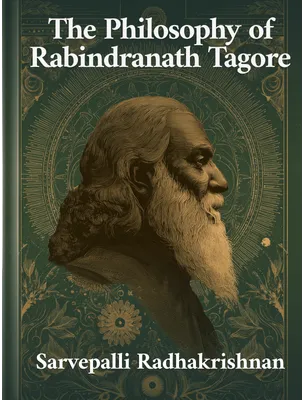

To
Sir Rabindranath Tagore
Preface
The book explains itself. The popularity of the writings of Sir Rabindranath Tagore shows that there is neither East nor West in the realm of spirit, and that his work meets a general want and satisfies a universal demand. What is the demand, and how it is met, are questions which I have tried to answer in this book.
In interpreting the philosophy and message of Sir Rabindranath Tagore, we are interpreting the Indian ideal of philosophy, religion, and art, of which his work is the outcome and expression. We do not know whether it is Rabindranath’s own heart or the heart of India that is beating here. In his work, India finds the lost word she was seeking. The familiar truths of Hindu philosophy and religion, the value of which it has become fashionable to belittle even in the land of their birth, are here handled with such rare reverence and deep feeling that they seem to be almost new. My acquaintance with the soul of India from which Sir Rabindranath draws his inspiration has helped me in the work of exposition.
It may be said against this book that the author is trying to find a definite meaning where there is none, and is confusing his views with those of Sir Rabindranath. This charge raises a question too wide to discuss within the limits of a preface. But it must be remembered that Rabindranath writes poetry, while this book is in prose. Poetry is indefinite and suggestive, while prose is definite and expressive. What I have done here is simply to convert the vague suggestions of the poet into definite statements, supply the premises, draw out the conclusions, and give the setting where necessary. The book is an attempt to interpret Rabindranath’s philosophy in the light of its own fundamental principles. I may here mention that the poet has been pleased to express his appreciation of this interpretation of his philosophy.
As the book would be lacking in wholeness without an account of Rabindranath’s views about Nationalism in the East and the West, we have noticed his views on this subject in Chapters IV. and V., keeping literally close to his writings while giving an inward account of them.
It is the privilege of a preface to acknowledge obligations. I am very grateful to Sir Rabindranath Tagore for the permission given me to dedicate the book to him. Not to speak of the pleasure derived from association with such an honoured name, I seem to myself to repay in some degree the great obligation I owe him for having left a permanent impression on my mind, by inscribing this slender volume with his name. I am greatly indebted to Mr. C. F. Andrews of Shantiniketan for reading the proofs and making many valuable suggestions. My thanks are also due to the Editor of The Quest for granting me permission to use the two articles which originally appeared in his journal.
S. Radhakrishnan.
Madras, May 27, 1918.
Chapter I
The Philosophy of Rabindranath Tagore
I
In vast life’s unbounded tide
They alone content may gain
Who can good from ill divide
Or in ignorance abide —
All between is restless pain.
Before Thy prescience, power divine,
What is this idle sense of mine?
What all the learning of the schools?
What sages, priests, and pedants? — Fools!
The world is Thine, from Thee it rose
By Thee it ebbs, by Thee it flows.
Hence, worldly lore! By whom is wisdom shown?
The Eternal knows, knows all, and He alone.
Omar.
“The condemnation which a great man lays upon the world is to force it to explain him.” Rabindranath Tagore has not failed to force the world to come with its magazine articles and monographs to expound his views. The worldwide interest and popularity of his writings are due as much to the lofty idealism of his thoughts as to the literary grace and beauty of his writings. Rabindranath’s teaching, with its vital faith in the redeeming power of the spiritual forces and their up-building energy, has a particular value at the present moment, when the civilised world is passing through the crucible of a ghastly war which, whether or not it purges the nations of their pride and hate, lust for gold and greed of land, at least proclaims, in no uncertain tones, the utter bankruptcy of materialism.
To be great is not merely to be talked about, it is also to be misunderstood, and Rabindranath has not escaped this fate. The many attempts made to explain him contradict each other, for “from the words of the poet men take what meanings please them.” There are two views regarding his philosophy of life. If we believe one side, he is a Vedantin, a thinker who draws his inspiration from the Upanishads. If we believe the other, he is an advocate of a theism more or less like, if not identical with, Christianity. Rabindranath inclines to the former view. “To me the verses of the Upanishads and the teachings of Buddha have ever been things of the spirit, and therefore endowed with boundless vital growth; and I have used them, both in my own life and in my preaching, as being instinct with individual meaning for me, as for others, and awaiting for their confirmation my own special testimony, which must have its value because of its individuality.”
Rabindranath’s philosophy by life is viewed by this school as nothing but the ancient wisdom of India restated to meet the needs of modern times. His writings are a commentary on the Upanishads by an individual of this generation on whom the present age has had its influence. The soul of ancient India is mirrored in them. His idealism is a true child of India’s own past and his philosophy is thoroughly Indian both in origin and development. In Dr. Coomaraswami’s words, “the work of Rabindranath is essentially Indian in sentiment and form.” The other view holds that Rabindranath Tagore, like other regenerators of Hinduism, has freely borrowed from Christianity and Western teaching, and has woven these alien elements into the woof of his own faith. If he does not confess his indebtedness to the West, it is, in the words of the Spectator’s reviewer, a case of “local patriotism,” “ingratitude,” and “insincerity.” “We have Mr. Tagore employing his remarkable literary talents in teaching borrowed Ethics to Europe as a thing characteristically Indian.” “There is a fatal flaw of insincerity in its most seemingly elevated utterances.”
These critics believe that the morals and philosophy underlying Rabindranath’s thought are essentially Christian. They identify the Vedanta philosophy with a doctrine that makes the absolute an abstract beyond, the world an illusion, contemplation the way of escape, and extinction of soul the end of man. Obviously Rabindranath is not all this. He gives us a “human” God, dismisses with contempt the concept of the world-illusion, praises action overmuch and promises fullness of life to the religious soul. These are essentially the features of the Christian religion, and what is Rabindranath Tagore if not a typical Christian of the type spiritual India would produce in larger numbers in years to come? The Rev. Mr. Saunders remarks: “The God of Gitanjali is no impersonal, imperturbable absolute of Hindu philosophy, but in fact, whether He be explicitly Christ or not, He is at least a Christ-like God, and the experience of His suppliant and lover is one with the deep core of all Christian experience.”
The Rev. Mr. Urquhart observes: “He opened his soul to the ideas of the West and he has drawn from Christianity, especially, ideas the influence of which upon his whole trend of thought has not always been acknowledged. The Eastern dress which he has given to these ideas has often concealed both from his own eyes and those of his readers their true origin, and although truth is one and inhabits no particular clime, absence of indication here has sometimes led to consequences prejudicial to the development of truth itself. The ideas of Rabindranath, like those of so many thinkers of modern India, have often been quite wrongly assigned to Indian sources.”
Mr. Edward J. Thompson, who calls it “nonsense” to say that Gitanjali represents “true Hinduism,” observes: “The man who henceforward must rank among the great religious poets of the world does not call himself a Christian: but in him we get a glimpse of what the Christianity of India will be like, and we see that it is something better than the Christianity which came to it.”
There is no use dogmatising at the very outset, for that would be to attack the central question at issue. An impartial exposition of Rabindranath’s views would set at rest all doubts and disputes. We do not find any systematic exposition of his philosophy of life in any of his writings. Even Sādhanā is a book of sermons, or mystic hymns, or perhaps meditations. It is a sigh of the soul rather than a reasoned account of metaphysics; an atmosphere rather than a system of philosophy. But we feel that the atmosphere is charged with a particular vision of reality. In his writings we have the reaction of his soul to the environment, his attitude in the face of life.
His personality is completely revealed in his poems, which are the unconscious expression of his soul, the outpourings of his devotional heart, and the revelation of his poetic consciousness. His writings must and do contain suggestions of his intellectual creed. Though poetry is not philosophy, it is possible for us to derive from Rabindranath’s works his philosophical views.
II
Human consciousness is the starting-point of all philosophic inquiry. The contradictions of human life provoke the quest for truth. Man is a finite-infinite being. He combines in himself spirit and nature. He is earth’s child but heaven’s heir. “At one pole of my being I am one with stocks and stones …. but at the other pole of my being I am separate from all.” As a link in the natural chain of events, man is subject to the law of necessity; as a member of the spiritual realm of ends, he is free. It is this contradiction, which we come across in science, art, and morality, that demands a solution. The individual aspires after perfect truth, perfect beauty, and perfect goodness. But in the finite world he can only approximate to, but never completely possess, them. We can see the ideals as through a mist. Intellectually we aspire after an ideal of truth which is complete, harmonious, and all-comprehensive. The world of isolated facts is at best finite and conditioned. Intellect, with its separatist tendencies and dissecting habits, finds itself unable to grasp the whole. On the moral side, we feel the break between ideal aspirations and actual facts. There is a struggle between the infinite within, which makes the soul yearn for an ideal, and the lower finite, which is the heritage from the past evolution. “O Great Beyond, O the keen call of thy flute! I forget, I ever forget, that the gates are shut everywhere in the house where I dwell alone.”
There is a tension between the higher and the lower. The two elements have not attained a harmony. The higher self presents us with a moral imperative which we recognise to be right, but our actual lower self contests its higher birth and pays homage to the delights of sense. This conflict is described in Gitanjali, 28.
Obstinate are the trammels, but my heart aches when I try to break them.
Freedom is all I want, but to hope for it I feel ashamed.
I am certain that priceless wealth is in thee, and that thou art my best friend, but I have not the heart to sweep away the tinsel that fills my room.
The shroud that covers me is a shroud of dust and death; I hate it, yet hug it in love.
My debts are large, my failures great, my shame secret and heavy; yet when I come to ask for my good, I quake in fear lest my prayer be granted.
Even if we identify ourselves with the higher and fight the lower, it sometimes happens that we feel worsted. The natural forces seem too much for the moral. In this distress the finite individual asks: Is the moral ideal a dream, and am I a fool to fight for it against the tremendous odds of nature? Have I a fighting chance of victory, or is the enterprise foredoomed to failure? Is the struggle between good and evil presided over by a higher Being on whom I could depend, or is it a great hazard where the result can be anything? As a rational being he craves for a working probability. So long as nothing definite is known, the finite soul, struck by the galling injustice and evil of the world, wrings his hands in despair and cries out to Heaven: What must I do to be saved? Wretched man that I am, who shall deliver me from the body of this death? The contradictions of finite life clearly establish that the finite individual is not the ultimate in the world but only an incomplete something requiring supplementation. The need for a philosophy which would reconcile the opposing elements of life, self and not-self, is felt to be urgent.
III
If what our intellect reveals to us is true, if the world is a chance congeries of individuals attempting without success to fight and conquer nature, the best thing for the wise man would be to withdraw from the universe and contemplate the noble ideals in his cloister, leaving the world to rack and ruin. Mr. Bertrand Russell represents this tendency very forcibly in his brilliant article on “The Free Man’s Worship”: “That man is the product of causes which had no prevision of the end they were achieving; that his origin, his growth, his hopes and fears, his loves and his beliefs are but the outcome of accidental collocations of atoms; that no fire, no heroism, no intensity of thought and feeling can preserve an individual life beyond the grave; that all the labours of the ages, all the devotion, all the inspiration, all the noonday brightness of human genius, are destined to extinction in the vast depth of the solar system, and that the whole temple of Man’s achievement must inevitably be buried beneath the debris of a universe in ruins, — all these things, if not quite beyond dispute, are yet so nearly certain that no philosophy which rejects them can hope to stand.” “Blind to good and evil, reckless of destruction, omnipotent matter rolls on its relentless way.”
Spiritual tempers recognise the high worth of human aspirations and require of men a contemplation of the ideals sacred to humanity. The way to escape from the sway of fate lies in giving up the ties binding man to the external world. We are exhorted by Mr. Russell “to abandon the struggle for private happiness, to expel all eagerness of temporary desire, to burn with passion for eternal things. This is emancipation, this is Free Man’s Worship.” The pessimists of all ages demand an extirpation of desires and an attainment of inner freedom. The world is full of contradictions and human life is a great discord. The external world appears to be so awry that it drives man into the deepest solitudes of the soul. A sort of other-worldly mysticism which treats with contempt both nature and man develops. The Absolute is said to be quite different from the world, just the opposite of the finite.
The characteristics we are acquainted with in the finite universe can only be denied of it. It alone is real and the world is unreal. Such an intellectualist philosophy will make the Absolute an abstract beyond, the world an unreality, contemplation the way of escape, and extinction of soul the end of man. But the Absolute will then be left in a perilous state, having nothing to do with the universe. This view is a confession of the defeat or discomfiture of man and can never satisfy his real needs. In this conflict of forces, self and not-self, right and might, there are thinkers who ask us to take up sides with might and wickedness. Nietzsche demands worship of force. The God of earth is a God of might and vengeance and not a God of right and conscience. This view is so patently absurd that we need not waste words over it.
A different view, meant especially to emphasise the religious needs of man, prevails in the West. According to it self and not-self are opposed. “The West seems to take a pride in thinking that it is subduing nature, as if we are living in a hostile world where we have to wrest everything we want from an unwilling and alien arrangement of things.”
The world of nature is regarded as a refractory force hard in resisting and slow in giving in. Man in his battlings with matter presided over by Satan requires the help of God. God along with mankind struggles to overcome the forces of evil and darkness. All such theistic conceptions generally end in making God a finite being. Leibnitz, in his famous Theodicy, makes God a limited one. He says the existing world is the best of all possible worlds. Evidently all worlds were not possible to God; He selected the best possible, and it has turned out to be not quite a good one. Mill holds to a limited God in his Essay on Religion. Doctors James, Schiller, and Rashdall postulate a finite and personal God. These thinkers hold to a pluralistic conception of the universe and find themselves unable to account for the unity of the world-process. No religion can finally rest in a God who is engaged in a conflict with evil in which He requires the help of man. We can never be sure of the outcome of the struggle.
It is quite possible that a God who is limited by the resisting evil may have, like man, defeat for His end; only, if man fails with the help of God, great is his fall indeed. The defeat is more fearful when God has not deserted the side on which man is. A suffering God, a deity with a crown of thorns, cannot satisfy the religious soul. He is one among many, subject to the limitations of man. There is a great gulf fixed between humanity presided over by God and nature led by His opposite. So long as one principle has not universal sway, so long the basis of pessimism is sound and safe. How can man, without the joy of hope and confidence in victory, bear up against the pressure of alien force? The fear of what the unknown and the unknowable energy might do fills his life with doubt and misery, weakness and distraction. Only a universal principle can deliver human life from despair. The Absolute is nothing short of the universe in its totality. It is the whole of perfection in which the opposition of good and evil is overcome. But the theist’s God is identified with a part of the universe, the good, while the evil is left in its own independence.
God is the virtue of the virtuous, and there is another opposing Him, the wickedness of the wicked. The God of theism is only an aspect of the Absolute, an appearance of a deeper reality. Modern theism, aware of this difficulty, lays stress on Divine immanence, thus watering down the personal God into the Absolute whole. The views here referred to “read the world wrong” and do not give us a philosophic synthesis of God, world and self, for in a true synthesis we cannot have absolute divisions between man and nature. We need a principle, superior to them all, which would assign to each, self and not-self, its appropriate value, and give harmony to their mutual relations; a principle of synthesis which would comprehend both elements and transform their apparent antagonism into an organic relationship.
A closer scrutiny reveals to us the kinship of nature and spirit, not self and self. The fact that we are able to interpret nature, know it, appreciate it, fight and conquer it, shows that it is akin to human consciousness: “We could have no communication whatever with our surroundings if they were absolutely foreign to us.” Man is “reaping success every day, and that shows there is a rational connection between him and nature, for we never can make anything our own except that which is truly related to us.” If we separate man from nature “it is like dividing the bud and the blossom into two separate categories, and putting their grace to the credit of two different and antithetical principles.” “The Indian mind never has any hesitation in acknowledging its kinship with nature, its unbroken relation with all.” In India where civilisation developed in forests near to nature, there was no thought of an antagonism between man and nature, no idea of forcibly wresting treasures from nature.
Human consciousness, animal life, and inanimate nature are different grades of the same energy, stages of the same development. Self and not-self into which the universe has been dichotomised are no rivals, but are the different expressions of the same Absolute, different modes of its existence. Nature is not antagonistic to spirit; not-self is there for the purpose of being used up by the spirit. It is fuel for the flame of the spirit. The Taittiriya Upanishad calls matter annam or food. The human will convert its environment into food. Objective nature is capable of being determined in accordance with the subject’s wishes. The past progress of the Universe clearly establishes the success which has attended man’s attempt to utilise the environment for the ends of life and spirit. The not-self is a means for the manifestation of spiritual power. Only through nature can spirit realise itself. “The earth, water and light, fruits and flowers, to her were not merely physical phenomena to be turned to use and then left aside. They were necessary to her in the attainment of the ideal of perfection, as every note is necessary to the completeness of the symphony.”
If we adopt the right attitude to nature, we feel the pulse of spirit throbbing through it. A true seer sees in natural facts spiritual significance. The poetic temper hears the voice of spirit crying aloud in nature. “The man whose acquaintance with the world does not lead him deeper than science leads him, will never understand what it is that the man with the spiritual vision finds in these natural phenomena. The water does not merely cleanse his limbs, but it purifies his heart; for it touches his soul. The earth does not merely hold his body, but it gladdens his mind; for its contact is more than a physical contact, it is a living presence. When a man does not realise his kinship with the world, he lives in a prison-house whose walls are alien to him. When he meets the eternal spirit in all objects, then is he emancipated, for then he discovers the fullest significance of the world into which he is born; then he finds himself in perfect truth, and his harmony with the All is established.”
The eye of an artist is needed to perceive the spiritual beauty of the things of nature. Only.his eye can penetrate through the confusing chaos of shadows and appearances, and see the cosmos within. Rabindranath has the eye which pierces into the secret of which the natural fact is the sign and prophecy. He is a poet of nature in whose hands the crudest stuff of existence acquires a poetic colouring. The spiritual phases of nature leap up to his God-filled eyes, kindle devotion in his heart, and set song on his lips. To his soul touched by God the physisal world of science appears in all its sweetness and simplicity as to a child. It is a “fairy universe where the stars talk and the sky stoops down to amuse him, and all nature comes to his window with trays of bright toys.” To him “the touch of an infinite mystery passes over the trivial and the familiar, making it break out into ineffable music.” “The trees, the stars, and the blue hills “ache “with a meaning which can never be uttered in words.” A breath of divine passion passes over the whole world, making it pure and perfect. He feels “a thrill passing through the air with the notes of the far-away song floating from the other shore.” He can never escape the divine presence, twist and turn as he will. The deep shadows of the rainy July and the stormy night suggest God’s presence. He is a mystic soul who can hear the voice of God in the tempest and see His hand in the stilling of the wave.
It is no wonder that Rabindranath advocates life in nature and in the open as the best means of spiritual progress, for in nature the religious eye will see the infinite lying stretched in silent smiling repose. Rabindranath sings not of the cloister or the retreat, but of the open highway and the King’s Post Office. He revels in the open air and is not afraid to stand under the golden canopy. According to him the best way to derive divine inspiration is to lose oneself in the contemplation of nature. In silence and in solitude we have to enjoy the presence of the divine in nature.
He does not lay stress on religious instruction in the Bolpur school, but believes that religious feeling and piety will work their way into the life of the students if the environment is pure and noble. “We do not want nowadays temples of worship and outward rites and ceremonies. What we really want is an Asram. We want a place where the beauty of nature and the noblest pursuits of man are in a sweet harmony. Our temple of worship is there where outward nature and human soul meet in union.” Recognising the influence of environment upon temperament, the ancient teachers chose the forest shades or the banks of holy rivers as the sites for their Asrams. When we are filled with the sense of the divinity that surrounds us, then we feel impelled to give ourselves up to reverie or meditation on God.
Again:
In moments of such exaltation when we silently adore the living presence that reveals itself through the grandeur of nature, which makes itself heard in the soul through the contemplation of the world of immanent divinity, a great peace steals over us. The infinite then murmurs its secret into our ears, and tells the story of the soul and the legend of the earth. To commune with the unutterable, we should get away from the noisy world of action, escape from the machinery of life which kills the soul. Dull mechanical work degrades and brutalises the individual, while a life of nature elevates and purifies the soul. Rabindranath beautifully depicts how an enthusiastic surrender to the spontaneity of natural scenery leads a man to his goal.
I laid myself down by the water and stretched my tired limbs on the grass.
My companions laughed at me in scorn. They held their heads high and hurried on; they never looked back nor rested; they vanished in the distant blue haze. They crossed many meadows and hills, and passed through strange, far-away countries. All honour to you, heroic host of the interminable path! Mockery and reproach pricked me to rise, but found no response in me. I gave myself up for lost in the depth of a glad humiliation — in the shadow of a dim delight.
At last, when I woke from my slumber and opened my eyes, I saw thee standing by me, flooding my sleep with thy smile.
We then lie exposed to all the winds of heaven that blow. We feel a presence, all love and peace. The load slips off our heart, and the soul is lifted above life, petty, vexatious, and harassing, and slides into a perfect harmony. The divine light floods the soul, the divine music ravishes it, and the soul expresses its joy by humming the hymn of the universe. So running “upon the dusty path of the despised” takes us nearer to God. In The Post Office, the child Amal, rid of the prejudices of the sophisticated Madhav, wistfully yearns to get away from the clank of crowds, the noise and glare of the town, into countryside with its hills and dales. Even though his continuance in the world is said to depend on his keeping indoors, the cage bird longs to be a free bird and enjoy the freedom of the woodland. For as it is put in The Cycle of Spring: “This outer world has been made with a lavish expenditure of sun and moon and stars. Let us enjoy it, and then we can save God’s face for indulging in such extravagance.”
Rabindranath’s conception of nature is antagonistic to the view which makes nature opposed to the self and its aspirations. He has a positive view of the relation of spirit to nature. The two are aspects of the Absolute. Nature and society are revelations of the divine spirit. The same light dwells in the world outside and the world within. This ultimate oneness of things is what the Hindu is required to remember every moment of his life. “The text of our everyday meditation is the Gayatri, a verse which is considered to be the epitome of all the Vedas. By its help we try to realise the essential unity of the world with the conscious soul of man; we learn to perceive the unity held together by the one Eternal Spirit, whose power creates the earth, the sky, and the stars, and at the same time irradiates our minds with the light of a consciousness that moves and exists in unbroken continuity with the outer world.” The song of the soul and the music of the spheres are but the expressions of the divine harmony.
The same spirit dwells in the most distant sun and in the darkest depths of the soul. Nature is not a hostile power harassing man at every turn; the universe is not foreign to us.
Rabindranath’s conception of the unity of the world gives us the assurance that the ideals of Science and Morality are real, and sustains us on the path of right untempered by the grim realities of pain and crime. It makes us realise how the spiritual forces of the world co-operate with us in our endeavours. If the distinction of man and world, self and not-self, were the last thing, then “there would have been absolute misery and unmitigated evil in this world. Then from untruth we never could reach truth, and from sin we never could hope to attain purity of heart; then all opposites would ever remain opposites, and we could never find a medium through which our differences could ever tend to meet.” Then our life would become a hideous tragedy of waste and wrong, fear and weakness.
But progress in the realms of Science, Art, and Morality shows that self and not-self are only relatively opposed. It is the business of man to break down the opposition, and make both express the one spirit. This view restores the balance between nature and spirit, and makes life worth living. “It were well to die if there be Gods, and sad to live if there be none.” If there is the allembracing spirit, the glooms and shadows of life lose their edge and bitterness. Then we feel that we are not battling with an unknown antagonist on a doubtful issue, but that we are trying to realise progressively a victory that is guaranteed to us. Perfect confidence takes the place of blank despair. The confused and shadowy world of experience becomes quite clear and transparent. Doubt is vanquished; the contradictions of life cease. “All that is harsh and dissonant melts into one sweet harmony.”