The book was published in 1795.
[{"id":"para_1","index":0,"start":0,"offset":337,"words":2,"paraNum":"","lastModified":1594022068000,"semanticType":"title-book-title","voicework":"audio_file","blockId":"the_perpetual_peace_ivyleague_ffa_en-bl2s","language":"en","wordsRange":{"start":100000000,"end":103000000},"paragraphVersion":81,"direction":"ltr","paragraph":"<h1 class=\"ilm-title ilm-h1\" id=\"para_1\" semantictype=\"title-book-title\" data-ilmid=\"the_perpetual_peace_ivyleague_ffa_en-bl2s\" data-audio=\"1\" data-chapter=\"para_1\" data-words-count=\"2\" data-before=\"0\" data-ww=\"\"><span class=\"block-pb\"> <span class=\"block-pb is-animated\"></span> </span><span class=\"itm-wrap\">Perpetual Peace</span></h1>","hasContent":true,"isFirst":true,"isLast":false},{"id":"para_2","index":1,"start":337,"offset":330,"words":1,"paraNum":"","lastModified":1594022221000,"semanticType":"title-subtitle","voicework":"audio_file","blockId":"the_perpetual_peace_ivyleague_ffa_en-bl5z","language":"en","wordsRange":{"start":203000000,"end":205000000},"paragraphVersion":86,"direction":"ltr","paragraph":"<h1 class=\"ilm-title ilm-subtitle\" id=\"para_2\" semantictype=\"title-subtitle\" data-ilmid=\"the_perpetual_peace_ivyleague_ffa_en-bl5z\" data-audio=\"1\" data-chapter=\"para_2\" data-words-count=\"1\" data-before=\"2\" data-ww=\"\"><span class=\"block-pb\"> <span class=\"block-pb is-animated\"></span> </span><span class=\"itm-wrap\">1795</span></h1>","hasContent":true,"isFirst":false,"isLast":false},{"id":"para_3","index":2,"start":667,"offset":370,"words":2,"paraNum":"","lastModified":1598626882000,"semanticType":"title-author","voicework":"audio_file","blockId":"the_perpetual_peace_ivyleague_ffa_en-bl2t","language":"en","wordsRange":{"start":305000000,"end":309000000},"paragraphVersion":98,"direction":"ltr","paragraph":"<h1 class=\"ilm-title ilm-h1 ilm-author ilm-x-large ilm-nopad\" id=\"para_3\" semantictype=\"title-author\" data-ilmid=\"the_perpetual_peace_ivyleague_ffa_en-bl2t\" data-audio=\"1\" data-chapter=\"para_3\" data-words-count=\"2\" data-before=\"3\" data-ww=\"\"><span class=\"block-pb\"> <span class=\"block-pb is-animated\"></span> </span><span class=\"itm-wrap\">by<br>Immanuel Kant</span></h1>","hasContent":true,"isFirst":false,"isLast":false},{"id":"para_4","index":3,"start":1037,"offset":164,"words":0,"paraNum":"","lastModified":1598626906000,"semanticType":"line","blockId":"the_perpetual_peace_ivyleague_ffa_en-bl5t","language":"en","wordsRange":{"start":409000000,"end":509000000},"paragraphVersion":40,"direction":"ltr","paragraph":"<hr class=\"ilm-hr ilm-small\" id=\"para_4\" semantictype=\"line\" data-ilmid=\"the_perpetual_peace_ivyleague_ffa_en-bl5t\" data-words-count=\"0\" data-before=\"5\" data-ww=\"\">","hasContent":true,"isFirst":false,"isLast":false},{"id":"para_5","index":4,"start":1201,"offset":787,"words":0,"paraNum":"","lastModified":1598627159000,"semanticType":"illustration","blockId":"the_perpetual_peace_ivyleague_ffa_en-bl5u","language":"en","wordsRange":{"start":609000000,"end":709000000},"paragraphVersion":40,"direction":"ltr","paragraph":"<div class=\"ilm-illustration\" id=\"para_5\" semantictype=\"illustration\" data-ilmid=\"the_perpetual_peace_ivyleague_ffa_en-bl5u\" data-words-count=\"0\" data-before=\"5\" data-ww=\"\"><img width=\"249\" height=\"328\" data-src=\"ch0p0\" src=\"data:image/webp;base64,UklGRlgBAABXRUJQVlA4IEwBAABQBgCdASoZACEAPm0uk0WkIqGVVgBABsS0gAipzpuloHdeH7Zn+mo2paCF37pewmHHezGa3/0hPt/dAAD+/Ui+acg+citKri9XPOi4v0UXxM1g6U1megqbzrL2EO7htrIxi9+SwPUWwfvDvKuywry0H4BqI6ln0RUJS/OiFH7ZU+LQgmeeGNbtsgT9WX8CP0OtOU32+lLD9cXe9+ah57f85tawZfB10sJ1D+jzrCeIv/6wRx3cSAN28XtO28VXER3M4/xrBu9fFPE3Ci2yYfVKhS8d8odaPYVdBo1UYkJzz0hP7+e72vGozUH6kphPqo7v2+bDH/RaMt/fyvu/5FHQKEGG1CKPemAuh0jN7QTF05zynQX/hYCvgsKclMXd8fF261BfV9uZYXvWcpJU+hfgLYbARrklPYJWlwC45dU3J+eC6I1heOP5hAAAAA==\" alt=\"‘Perpetual Peace: A Philosophical Sketch’ (1795)\"></div>","hasContent":true,"isFirst":false,"isLast":false},{"id":"para_6","index":5,"start":1988,"offset":349,"words":3,"paraNum":"","lastModified":1594974619000,"semanticType":"header-section-header","voicework":"audio_file","blockId":"the_perpetual_peace_ivyleague_ffa_en-bl5w","language":"en","wordsRange":{"start":809000000,"end":813000000},"paragraphVersion":100,"direction":"ltr","paragraph":"<h1 class=\"ilm-header ilm-h1\" id=\"para_6\" semantictype=\"header-section-header\" data-ilmid=\"the_perpetual_peace_ivyleague_ffa_en-bl5w\" data-audio=\"1\" data-chapter=\"para_6\" data-words-count=\"3\" data-before=\"5\" data-ww=\"\"><span class=\"block-pb\"> <span class=\"block-pb is-animated\"></span> </span><span class=\"itm-wrap\">\"The Perpetual Peace\"</span></h1>","hasContent":true,"isFirst":false,"isLast":false},{"id":"para_7","index":6,"start":2337,"offset":1622,"words":220,"paraNum":"i.1","lastModified":1594023344000,"semanticType":"par","voicework":"audio_file","blockId":"the_perpetual_peace_ivyleague_ffa_en-bl2u","language":"en","wordsRange":{"start":913000000,"end":1134000000},"paragraphVersion":91,"direction":"ltr","paragraph":"<p id=\"para_7\" semantictype=\"par\" data-ilmid=\"the_perpetual_peace_ivyleague_ffa_en-bl2u\" data-audio=\"1\" data-words-count=\"220\" data-before=\"8\" data-ww=\"\"><span class=\"block-num\" data-id=\"i.1\"></span><span class=\"block-pb\"> <span class=\"block-pb is-animated\"></span> </span><span class=\"itm-wrap\">These words were once put by a Dutch innkeeper on his signboard, as a satirical inscription over the representation of a churchyard. We need not inquire whether they hold of men in general, or particularly of the rulers of States who seem never to be satiated of war, or even only of the Philosophers who dream that sweet dream of Peace. The author of the present Sketch, however, would make one remark by way of reservation in reference to it. It is well known that the practical politician looks down, with great self-complacency, on the theoretical Politician, when he comes in the way, as a mere pedant whose empty ideas can bring no danger to the State, proceeding as it does, upon principles derived from experience; and the theorizer may, therefore, be allowed to throw down his eleven skittle-pins at once, while the sagacious Statesman who knows the world, need not, on that account, even give himself a turn! This being so, should any matter of controversy arise between them, the practical Statesman must so far proceed consistently and not scent out a danger for the State behind the opinions of the theoretical thinker, which he has ventured in a good intent publicly to express. By which ‘saving clause,’ the Author will consider himself expressly safeguarded against all malicious interpretation.</span></p>","hasContent":true,"isFirst":false,"isLast":false},{"id":"para_8","index":7,"start":3959,"offset":166,"words":0,"paraNum":"","lastModified":1594030650000,"semanticType":"line","blockId":"the_perpetual_peace_ivyleague_ffa_en-bl63","language":"en","wordsRange":{"start":1234000000,"end":1334000000},"paragraphVersion":76,"direction":"ltr","paragraph":"<hr class=\"ilm-hr ilm-small\" id=\"para_8\" semantictype=\"line\" data-ilmid=\"the_perpetual_peace_ivyleague_ffa_en-bl63\" data-words-count=\"0\" data-before=\"228\" data-ww=\"\">","hasContent":true,"isFirst":false,"isLast":false},{"id":"para_9","index":8,"start":4125,"offset":609,"words":13,"paraNum":"","lastModified":1598626947000,"semanticType":"header-chapter-header","voicework":"audio_file","blockId":"the_perpetual_peace_ivyleague_ffa_en-bl2v","language":"en","wordsRange":{"start":1434000000,"end":1448000000},"paragraphVersion":100,"direction":"ltr","paragraph":"<h2 class=\"ilm-header ilm-h2 ilm-large\" id=\"para_9\" semantictype=\"header-chapter-header\" data-ilmid=\"the_perpetual_peace_ivyleague_ffa_en-bl2v\" data-audio=\"1\" data-chapter=\"para_9\" data-words-count=\"13\" data-before=\"228\" data-ww=\"\"><span class=\"block-pb\"> <span class=\"block-pb is-animated\"></span> </span><span class=\"itm-wrap\"><span class=\"chapter-text\"><span class=\"chapter-number\"><span class=\"chapter-label\"></span><span class=\"chapter-value\"></span></span><span class=\"chapter-title\">First Section Which Contains the Preliminary Articles of a Perpetual Peace between States<br></span></span></span></h2>","hasContent":true,"isFirst":false,"isLast":false},{"id":"para_10","index":9,"start":4734,"offset":480,"words":29,"paraNum":"","lastModified":1594023446000,"semanticType":"header-subheader","voicework":"audio_file","blockId":"the_perpetual_peace_ivyleague_ffa_en-bl2w","language":"en","wordsRange":{"start":1548000000,"end":1578000000},"paragraphVersion":106,"direction":"ltr","paragraph":"<h3 class=\"ilm-header ilm-h3\" id=\"para_10\" semantictype=\"header-subheader\" data-ilmid=\"the_perpetual_peace_ivyleague_ffa_en-bl2w\" data-audio=\"1\" data-chapter=\"para_10\" data-words-count=\"29\" data-before=\"241\" data-ww=\"\"><span class=\"block-pb\"> <span class=\"block-pb is-animated\"></span> </span><span class=\"itm-wrap\">1<br>‘No conclusion of Peace shall be held to be valid as such, when it has been made with the secret reservation of the material for a future War.’</span></h3>","hasContent":true,"isFirst":false,"isLast":false},{"id":"para_11","index":10,"start":5214,"offset":1837,"words":259,"paraNum":"1.1.1","lastModified":1594023931000,"semanticType":"par","voicework":"audio_file","blockId":"the_perpetual_peace_ivyleague_ffa_en-bl2y","language":"en","wordsRange":{"start":1678000000,"end":1938000000},"paragraphVersion":98,"direction":"ltr","paragraph":"<p id=\"para_11\" semantictype=\"par\" data-ilmid=\"the_perpetual_peace_ivyleague_ffa_en-bl2y\" data-audio=\"1\" data-words-count=\"259\" data-before=\"270\" data-ww=\"\"><span class=\"block-num\" data-id=\"1.1.1\"></span><span class=\"block-pb\"> <span class=\"block-pb is-animated\"></span> </span><span class=\"itm-wrap\">For, in that case, it would be a mere truce, or a suspension of hostilities, and not a Peace. A Peace properly signifies the end of all hostilities; and to qualify it by the addition of the epithet ‘perpetual’ or ‘eternal’ is pleonastic and suspicious. All existing causes for a future war — although they were perhaps unknown to the contracting parties at the time — are to be regarded as entirely removed, or annihilated by the Treaty of Peace, even if they could be picked out by the dexterity of an acute interpretation from the terms of documents in the public Archives. There may be a mental reservation of old pretensions or claims with the view of asserting them at a future time, of which, however, neither party makes any mention for the present because they are too exhausted to continue the war, while there remains the evil will to take advantage of the first favourable opportunity for this purpose; but this is illegitimate and belongs to the Jesuitical casuistry of Politics. If we consider the subject of reservation in itself, it is beneath the dignity of the Rulers of States to have to do with it, and, in like manner, the complacent participation in such deductions is beneath the dignity of their Ministers. But if the true glory of the State is placed in the continual increase of its power, by any means whatever — according to certain ‘enlightened’ notions of national policy — then this judgment will certainly appear to those who adopt that view, to be impractical and pedantic.</span></p>","hasContent":true,"isFirst":false,"isLast":false},{"id":"para_12","index":11,"start":7051,"offset":504,"words":26,"paraNum":"","lastModified":1594023488000,"semanticType":"header-subheader","voicework":"audio_file","blockId":"the_perpetual_peace_ivyleague_ffa_en-bl2z","language":"en","wordsRange":{"start":2038000000,"end":2065000000},"paragraphVersion":112,"direction":"ltr","paragraph":"<h3 class=\"ilm-header ilm-h3\" id=\"para_12\" semantictype=\"header-subheader\" data-ilmid=\"the_perpetual_peace_ivyleague_ffa_en-bl2z\" data-audio=\"1\" data-chapter=\"para_12\" data-words-count=\"26\" data-before=\"529\" data-ww=\"\"><span class=\"block-pb\"> <span class=\"block-pb is-animated\"></span> </span><span class=\"itm-wrap\">2<br>‘No State having an existence by itself — whether it be small or large — shall be acquirable by another State through inheritance, exchange, purchase or donation.’</span></h3>","hasContent":true,"isFirst":false,"isLast":false},{"id":"para_13","index":12,"start":7555,"offset":2079,"words":243,"paraNum":"1.2.1","lastModified":1594063761000,"semanticType":"par","voicework":"audio_file","blockId":"the_perpetual_peace_ivyleague_ffa_en-bl31","language":"en","wordsRange":{"start":2165000000,"end":2410000000},"paragraphVersion":119,"direction":"ltr","paragraph":"<p id=\"para_13\" semantictype=\"par\" data-ilmid=\"the_perpetual_peace_ivyleague_ffa_en-bl31\" data-audio=\"1\" data-words-count=\"243\" data-before=\"555\" data-ww=\"\"><span class=\"block-num\" data-id=\"1.2.1\"></span><span class=\"block-pb\"> <span class=\"block-pb is-animated\"></span> </span><span class=\"itm-wrap\">A State is not to be regarded as a property or patrimony, like the soil on which it may be settled. It is a society of men, over which no one but itself has the right to rule or to dispone. Like the stem of a tree it has its own root, and to incorporate it as a graft in another State, is to destroy its existence as a moral Person; it is to reduce it to a Thing, and thereby to contradict the idea of the original Compact without which a Right over a people is <span class=\"intricate-word\"><span class=\"-nowrap-content\">inconceivable.<a data-fnid=\"1\" epub:type=\"noteref\" href=\"#n0\"></a> </span></span>Everyone knows what danger the prejudice in favor of thus acquiring States has brought to Europe, for in the other parts of the world it has never been known; and that this has gone on even up to our own times. It was considered that the States might marry one another; and hence, on the one hand, a new kind of industry in the effort to acquire predominance by family alliances, without any expenditure of power; and, on the other hand, to increase, in this way, by new possessions the extent of a Country. Further, the lending of the troops of one State to another on pay, to fight against an enemy not at war with their own State, has arisen from the same erroneous view; for the Subjects of the State are thus used and abused as Things that may be managed at will.</span></p><aside id=\"n0\" data-audio=\"0\" data-fnid=\"1\" class=\"bh-fn\" epub:type=\"footnote\" data-ww=\"\"><span>An hereditary kingdom is not a state which can be inherited by another state, but one whose sovereign power can be inherited by another physical person. The state then acquires a ruler, but the ruler as such (that is, as one already possessing another realm) does not acquire the state.</span></aside>","hasContent":true,"isFirst":false,"isLast":false},{"id":"para_14","index":13,"start":9634,"offset":405,"words":12,"paraNum":"","lastModified":1594022954000,"semanticType":"header-subheader","voicework":"audio_file","blockId":"the_perpetual_peace_ivyleague_ffa_en-bl32","language":"en","wordsRange":{"start":2510000000,"end":2523000000},"paragraphVersion":111,"direction":"ltr","paragraph":"<h3 class=\"ilm-header ilm-h3\" id=\"para_14\" semantictype=\"header-subheader\" data-ilmid=\"the_perpetual_peace_ivyleague_ffa_en-bl32\" data-audio=\"1\" data-chapter=\"para_14\" data-words-count=\"12\" data-before=\"798\" data-ww=\"\"><span class=\"block-pb\"> <span class=\"block-pb is-animated\"></span> </span><span class=\"itm-wrap\">3<br>‘Standing Armies shall be entirely abolished in the course of time.’</span></h3>","hasContent":true,"isFirst":false,"isLast":false},{"id":"para_15","index":14,"start":10039,"offset":1796,"words":269,"paraNum":"1.3.1","lastModified":1594063705000,"semanticType":"par","voicework":"audio_file","blockId":"the_perpetual_peace_ivyleague_ffa_en-bl34","language":"en","wordsRange":{"start":2623000000,"end":2893000000},"paragraphVersion":111,"direction":"ltr","paragraph":"<p id=\"para_15\" semantictype=\"par\" data-ilmid=\"the_perpetual_peace_ivyleague_ffa_en-bl34\" data-audio=\"1\" data-words-count=\"269\" data-before=\"810\" data-ww=\"\"><span class=\"block-num\" data-id=\"1.3.1\"></span><span class=\"block-pb\"> <span class=\"block-pb is-animated\"></span> </span><span class=\"itm-wrap\">For, they threaten other States incessantly with War, by their appearing to be always equipped to enter upon it. Standing armies (miles perpetuus) excite the States to outrival each other in the number of their armed men which has no limits. By the expense occasioned thereby, Peace becomes in the long run even more oppressive than a short war; and Standing Armies are thus the cause of aggressive wars undertaken in order to get rid of this burden. Besides, it has to be considered that for men to be hired for pay to kill or to be killed, appears to imply the using of them as mere machines and instruments in the hand of another, although it be the State; and that this cannot be well reconciled with the Right of humanity in our own person. It is quite otherwise, however, as regards the voluntary exercise of the citizens in arms at certain appointed periods; for the object in view is thereby to protect themselves and their country from external attacks. The accumulation of treasure in a State would have the same sort of influence as regular troops, in so far as, being regarded by other States as a threat of war, it might compel them to anticipate such a war by an attack upon the State. For of the three powers known in the State as the Power of the Army, the Power of external Alliance and the Power of Money, the money-power might well become the most reliable instrument of war, did not the difficulty of determining its real force stand in the way of its employment.</span></p>","hasContent":true,"isFirst":false,"isLast":false},{"id":"para_16","index":15,"start":11835,"offset":431,"words":16,"paraNum":"","lastModified":1594023008000,"semanticType":"header-subheader","voicework":"audio_file","blockId":"the_perpetual_peace_ivyleague_ffa_en-bl35","language":"en","wordsRange":{"start":2993000000,"end":3010000000},"paragraphVersion":113,"direction":"ltr","paragraph":"<h3 class=\"ilm-header ilm-h3\" id=\"para_16\" semantictype=\"header-subheader\" data-ilmid=\"the_perpetual_peace_ivyleague_ffa_en-bl35\" data-audio=\"1\" data-chapter=\"para_16\" data-words-count=\"16\" data-before=\"1079\" data-ww=\"\"><span class=\"block-pb\"> <span class=\"block-pb is-animated\"></span> </span><span class=\"itm-wrap\">4<br>‘No National Debts shall be contracted in connection with the external affairs of the State.’</span></h3>","hasContent":true,"isFirst":false,"isLast":false},{"id":"para_17","index":16,"start":12266,"offset":2121,"words":309,"paraNum":"1.4.1","lastModified":1594037984000,"semanticType":"par","voicework":"audio_file","blockId":"the_perpetual_peace_ivyleague_ffa_en-bl37","language":"en","wordsRange":{"start":3110000000,"end":3420000000},"paragraphVersion":108,"direction":"ltr","paragraph":"<p id=\"para_17\" semantictype=\"par\" data-ilmid=\"the_perpetual_peace_ivyleague_ffa_en-bl37\" data-audio=\"1\" data-words-count=\"309\" data-before=\"1095\" data-ww=\"\"><span class=\"block-num\" data-id=\"1.4.1\"></span><span class=\"block-pb\"> <span class=\"block-pb is-animated\"></span> </span><span class=\"itm-wrap\">No objection can be taken to seeking assistance, either without or within the State, in behalf of the economical administration of the country; such as, for the improvement of highways, or in support of new colonies, or in the establishment of resources against dearth and famine. A loan, whether raised externally or internally, as a source of aid in such cases is above suspicion. But a Credit System when used by the Powers as a hostile antagonistic instrument against each other, and when the debts under it go on increasing to an excessive extent and yet are always secured for the present (because all the creditors are not to put in their claims at once), is a dangerous money power. This arrangement — the ingenious invention of a commercial people in this century — constitutes, in fact, a treasure for the carrying on of War; it may exceed the treasures of all the other States taken together, and it can only be exhausted by the forthcoming deficit of the taxes, which, however, may be long delayed even by the animation of the national commerce from the reaction of the system upon industry and trade. The facility given by this system for engaging in War, combined with the inclination of Rulers towards it (an inclination which seems to be implanted in human nature), is, therefore, a great obstacle in the way of a Perpetual Peace. The prohibition of it must be laid down as a Preliminary Article in the conditions of such a Peace, even more strongly on the further ground, that the national bankruptcy, which it inevitably brings at last, would necessarily involve many other States that are without debt in the loss; and this would be a public lesion of these other States. And, consequently, the other States are justified in allying themselves against such a State and its pretensions.</span></p>","hasContent":true,"isFirst":false,"isLast":false},{"id":"para_18","index":17,"start":14387,"offset":429,"words":15,"paraNum":"","lastModified":1594023027000,"semanticType":"header-subheader","voicework":"audio_file","blockId":"the_perpetual_peace_ivyleague_ffa_en-bl38","language":"en","wordsRange":{"start":3520000000,"end":3536000000},"paragraphVersion":117,"direction":"ltr","paragraph":"<h3 class=\"ilm-header ilm-h3\" id=\"para_18\" semantictype=\"header-subheader\" data-ilmid=\"the_perpetual_peace_ivyleague_ffa_en-bl38\" data-audio=\"1\" data-chapter=\"para_18\" data-words-count=\"15\" data-before=\"1404\" data-ww=\"\"><span class=\"block-pb\"> <span class=\"block-pb is-animated\"></span> </span><span class=\"itm-wrap\">5<br>‘No State shall intermeddle by force with the Constitution or Government of another State.’</span></h3>","hasContent":true,"isFirst":false,"isLast":false},{"id":"para_19","index":18,"start":14816,"offset":1437,"words":201,"paraNum":"1.5.1","lastModified":1594039158000,"semanticType":"par","voicework":"audio_file","blockId":"the_perpetual_peace_ivyleague_ffa_en-bl3a","language":"en","wordsRange":{"start":3636000000,"end":3838000000},"paragraphVersion":115,"direction":"ltr","paragraph":"<p id=\"para_19\" semantictype=\"par\" data-ilmid=\"the_perpetual_peace_ivyleague_ffa_en-bl3a\" data-audio=\"1\" data-words-count=\"201\" data-before=\"1419\" data-ww=\"\"><span class=\"block-num\" data-id=\"1.5.1\"></span><span class=\"block-pb\"> <span class=\"block-pb is-animated\"></span> </span><span class=\"itm-wrap\">For what could justify it in doing so? Mayhap the scandal or offence given by that State to the subjects of another State? Then the offending State should much rather serve as a warning by the example of the great Evils which peoples have drawn upon themselves through their lawlessness; and generally a bad example given by one free person to another (as a scandalum acceptum), is not a lesion of his Right. But it is a different case where a State has become divided in two by internal disunion, and when each of the parts represents itself as a separate State laying claim to the whole; for, to furnish assistance to one of them under these circumstances might not be reckoned as the intermeddling of an External State with the Constitution of another, as that other is then in a condition of Anarchy. Yet so long as this internal strife is not decided, such an interference on the part of external Powers would be a violation of the Rights of an independent people that is only struggling with an external evil. It would, therefore, itself be a cause of offence, and would make the Autonomy of all other States insecure.</span></p>","hasContent":true,"isFirst":false,"isLast":false},{"id":"para_20","index":19,"start":16253,"offset":631,"words":45,"paraNum":"","lastModified":1594063547000,"semanticType":"header-subheader","voicework":"audio_file","blockId":"the_perpetual_peace_ivyleague_ffa_en-bl3b","language":"en","wordsRange":{"start":3938000000,"end":3985000000},"paragraphVersion":132,"direction":"ltr","paragraph":"<h3 class=\"ilm-header ilm-h3\" id=\"para_20\" semantictype=\"header-subheader\" data-ilmid=\"the_perpetual_peace_ivyleague_ffa_en-bl3b\" data-audio=\"1\" data-chapter=\"para_20\" data-words-count=\"45\" data-before=\"1620\" data-ww=\"\"><span class=\"block-pb\"> <span class=\"block-pb is-animated\"></span> </span><span class=\"itm-wrap\">6<br>‘No State at war with another shall adopt such modes of hostility as would necessarily render mutual confidence impossible in a future Peace; such as, the employment of Assassins (percussores) or Poisoners (venefici), the violation of a Capitulation, the instigation of Treason and such like.’</span></h3>","hasContent":true,"isFirst":false,"isLast":false},{"id":"para_21","index":20,"start":16884,"offset":2048,"words":299,"paraNum":"1.6.1","lastModified":1594063524000,"semanticType":"par","voicework":"audio_file","blockId":"the_perpetual_peace_ivyleague_ffa_en-bl3d","language":"en","wordsRange":{"start":4085000000,"end":4385000000},"paragraphVersion":122,"direction":"ltr","paragraph":"<p id=\"para_21\" semantictype=\"par\" data-ilmid=\"the_perpetual_peace_ivyleague_ffa_en-bl3d\" data-audio=\"1\" data-words-count=\"299\" data-before=\"1665\" data-ww=\"\"><span class=\"block-num\" data-id=\"1.6.1\"></span><span class=\"block-pb\"> <span class=\"block-pb is-animated\"></span> </span><span class=\"itm-wrap\">These are dishonorable stratagems. For there must be some trust in the habit and disposition even of an enemy in War, otherwise no Peace could be concluded, and the hostilities would pass into an internecine war of extermination. War, however, is only a melancholy necessity of asserting Right by force — where, as in the state of Nature, there is no common tribunal with the rightful power to adjudicate on causes of quarrel. In such circumstances neither of the two parties can be declared to be an unjust enemy as this presupposes a judicial sentence: but the issue of the conflict — as in the so-called ‘judgments of God’ — has to decide on which side is the Right. As between States, however, a punitive war, according to the principle of punishment, is inconceivable; because there is no relation of subordination between them, as between Superior and Inferior. Hence it follows that a war of extermination, in which the process of annihilation would strike at both parties, and likewise at all Right at the same time, would reach Perpetual Peace only on the final Golgotha of the human race. Such a war, therefore, as well as the use of such means as might lead to it, must be absolutely unallowable. And that the means referred to inevitably lead to that result, is apparent from the fact that when these hellish arts, which are debasing in themselves, are once brought into use, they are not kept long within the limits of war. Such, for instance, is the employment of Spies. In this case it is only the dishonesty of others that is employed, and as such practices and habits cannot be exterminated at once, they would be carried over into the state of Peace, and thus its very purpose would be entirely frustrated.</span></p>","hasContent":true,"isFirst":false,"isLast":false},{"id":"para_22","index":21,"start":18932,"offset":5211,"words":242,"paraNum":"1.6.2","lastModified":1594063501000,"semanticType":"par","voicework":"audio_file","blockId":"the_perpetual_peace_ivyleague_ffa_en-bl3e","language":"en","wordsRange":{"start":4485000000,"end":4729000000},"paragraphVersion":135,"direction":"ltr","paragraph":"<p id=\"para_22\" semantictype=\"par\" data-ilmid=\"the_perpetual_peace_ivyleague_ffa_en-bl3e\" data-audio=\"1\" data-words-count=\"242\" data-before=\"1964\" data-ww=\"\"><span class=\"block-num\" data-id=\"1.6.2\"></span><span class=\"block-pb\"> <span class=\"block-pb is-animated\"></span> </span><span class=\"itm-wrap\">The Articles thus indicated, when viewed objectively, or as to the intention of the Powers, represent merely Prohibitive Laws. Some of them, however, are Strict Laws (leges strictæ); that are valid without distinction of circumstances, and press immediately for the abolition of certain things. Such are Nos. 1, 5, 6. Others, again — as Nos. 2, 3, 4, — have a certain subjective breadth (leges latæ) in respect of their application. Although they present no exceptions to the rule of Right, they imply a regard to circumstances in practice. They include permissions to delay their fulfillment without, however, losing sight of their end; for their end allows such delay. Thus, for instance, in regard to the restoration of certain States to the Liberty of which they have been deprived, it is allowable, according to the Second Article, to postpone it — not, indeed to ‘the Greek Kalends,’ as Augustus was wont to say, so that its time would never come; but only so as not to precipitate its coming, and thus by overhaste to act contrary to the very purpose in view. The prohibition in question, bears only upon a mode of Acquisition which is to be no longer valid, but not upon the state of possession which, although it may not hold the requisite title of Right, was, nevertheless, regarded as rightful and valid by all the States at the date of the putative acquisition, in accordance with the public opinion of the <span class=\"intricate-word\"><span class=\"-nowrap-content\">time.<a data-fnid=\"1\" epub:type=\"noteref\" href=\"#n1\"></a> </span></span></span></p><aside id=\"n1\" data-audio=\"0\" data-fnid=\"1\" class=\"bh-fn\" epub:type=\"footnote\" data-ww=\"\"><span>It has been hitherto doubted, not without reason, whether there can be laws of permission (leges permissivae) of pure reason as well as commands (leges praecetivae) and prohibitions (leges prohibitivae). For law in general has a basis of objective practical necessity: permission, on the other hand, is based upon the contingency of certain actions in practice. It follows that a law of permission would enforce what cannot be enforced; and this would involve a contradiction, if the object of the law should be the same in both cases. Here, however, in the present case of a law of permission, the presuposed prohibition is aimed merely at the future manner of acquisition of a right — for example, acquisition through inheritance: the exemption from this prohibition (i. e. the permission) refers to the present state of possession. In the transition from a state of nature to the civil state, this holding of property can continue as a bona fde, if usurpatory, ownership, under the new social conditions, in accordance with a permission of the Law of Nature. Ownership of this kind, as soon as ill true nature becomes known, is seen to be mere nominal possession (possessio putativa) sanctioned by opinion and customs in a natural state of society. After the transition stage is passed, such modes of acquisition are likewise forbidden in the subsequently evolved civil state: and this power to remain in possession would not be admitted if the supposed acquisition had taken place in the civilized community. It would be bound to come to an end as an injury to the right of others, the moment its illegality became patent. I have wished here only by the way to draw the attention of teachers of the Law of Nature to the idea of a lex permissiva, which presents itself spontaneously in any system of rational classifcation. I do so chiefly because use is often made of this concept in civil law with reference to statutes; with this difference, that the law of prohibition stands alone by itself, while permission is not, as it ought to be, introduced into that law as a limiting clause, but is thrown among the exceptions. <br>Thus ‘this or that is forbidden,’ as in the case of Nos. I, 2, and 3, and so on in an infnite progression, while permissions are only added to the law incidentally: they are not reached by the application of some principle, but only by groping about among cases which have actually<br>occurred. Were this not so, qualifcations would have had to be brought into the formulation of the prohibitive laws which would have immediately transformed them into laws of permission. Count von Windischgratz, a man whose wisdom was equal to his discrimination, urged this very point in the form of a question propounded by him for a prize essay. One must therefore regret that this ingenious problem has been so soon neglected and left unsolved. For the possibility of a formula similar to those of mathematics is the sole real test of a legislation that would be consistent. Without this, the so-called ius certum will remain forever a mere pious wish: we can have only general laws, valid on the whole, but no universal laws possessing the universal validity that the concept of law requires. <br></span></aside>","hasContent":true,"isFirst":false,"isLast":false},{"id":"para_23","index":22,"start":24143,"offset":168,"words":0,"paraNum":"","lastModified":1594030624000,"semanticType":"line","blockId":"the_perpetual_peace_ivyleague_ffa_en-bl5v","language":"en","wordsRange":{"start":4829000000,"end":4929000000},"paragraphVersion":77,"direction":"ltr","paragraph":"<hr class=\"ilm-hr ilm-small\" id=\"para_23\" semantictype=\"line\" data-ilmid=\"the_perpetual_peace_ivyleague_ffa_en-bl5v\" data-words-count=\"0\" data-before=\"2206\" data-ww=\"\">","hasContent":true,"isFirst":false,"isLast":false},{"id":"para_24","index":23,"start":24311,"offset":608,"words":13,"paraNum":"","lastModified":1598626964000,"semanticType":"header-chapter-header","voicework":"audio_file","blockId":"the_perpetual_peace_ivyleague_ffa_en-bl3f","language":"en","wordsRange":{"start":5029000000,"end":5043000000},"paragraphVersion":135,"direction":"ltr","paragraph":"<h2 class=\"ilm-header ilm-h2 ilm-large\" id=\"para_24\" semantictype=\"header-chapter-header\" data-ilmid=\"the_perpetual_peace_ivyleague_ffa_en-bl3f\" data-audio=\"1\" data-chapter=\"para_24\" data-words-count=\"13\" data-before=\"2206\" data-ww=\"\"><span class=\"block-pb\"> <span class=\"block-pb is-animated\"></span> </span><span class=\"itm-wrap\"><span class=\"chapter-text\"><span class=\"chapter-number\"><span class=\"chapter-label\"></span><span class=\"chapter-value\"></span></span><span class=\"chapter-title\">Second Section which Contains The Definitive Articles of A Perpetual Peace Between States</span></span></span></h2>","hasContent":true,"isFirst":false,"isLast":false},{"id":"para_25","index":24,"start":24919,"offset":3231,"words":106,"paraNum":"2.0","lastModified":1594049915000,"semanticType":"par","voicework":"audio_file","blockId":"the_perpetual_peace_ivyleague_ffa_en-bl3g","language":"en","wordsRange":{"start":5143000000,"end":5251000000},"paragraphVersion":118,"direction":"ltr","paragraph":"<p id=\"para_25\" semantictype=\"par\" data-ilmid=\"the_perpetual_peace_ivyleague_ffa_en-bl3g\" data-audio=\"1\" data-words-count=\"106\" data-before=\"2219\" data-ww=\"\"><span class=\"block-num\" data-id=\"2.0\"></span><span class=\"block-pb\"> <span class=\"block-pb is-animated\"></span> </span><span class=\"itm-wrap\">A state of Peace among men who live side by side with each other, is not the natural state. The state of Nature is rather a state of War; for although it may not always present the outbreak of hostilities, it is nevertheless continually threatened with them. The state of Peace must, therefore, be established; for the mere cessation of hostilities furnishes no security against their recurrence, and where there is no guarantee of peace between neighboring States — which can only be furnished under conditions that are regulated by Law — the one may treat the other, when proclamation is made to that effect, as an <span class=\"intricate-word\"><span class=\"-nowrap-content\">enemy.<a data-fnid=\"1\" epub:type=\"noteref\" href=\"#n2\"></a> </span></span></span></p><aside id=\"n2\" data-audio=\"0\" data-fnid=\"1\" class=\"bh-fn\" epub:type=\"footnote\" data-ww=\"\"><span>It is usually accepted that a man may not take hostile steps against any one, unless the latter has already injured him by act. This is quite accurate, if both are citizens of a state governed by civil law. For, in becoming a member of this community, each gives the other the security he demands against injury, by means of the supreme authority exercising control over them both. However, the individual (or nation) who remains in a mere state of nature deprives me of this security and does me injury, even if by mere proximity. There is perhaps no active (facto) molestation, but there is a state of lawlessness (status iniusto), which, by its very existence, offers a continual menace to me. I can therefore compel him, either to enter into relations with me under which we are both subject to law, or to withdraw from my neighborhood. So that the postulate upon which the following articles are based is: ‘All men who have the power to exert a mutual influence upon one another must be under a civil government of some kind.’ A legal constitution is, according to the nature of the individuals who compose the state, one of the following three:<br> (1) A constitution formed in accordance with the right of citizenship of the individuals who constitute a nation (ius civitatis). <br> (2) A constitution formed in accordance with international law which determines the rights of nations (ius gentium). <br> (3) A constitution formed in accordance with the rights of world citizenship; in as far as both individuals and nations, standing in an external relation of mutual reaction, may be regarded as citizens of one world-state (ius cosmopoliticum). <br>This classifcation is not an arbitrary one, but is necessary with reference to the idea of perpetual peace. For, if even one of these units of society were in a position physically to influence another, while yet remaining a member of a primitive order of society, then a state of war would be joined with these primitive condition; and from this it is our present purpose to free ourselves.</span></aside>","hasContent":true,"isFirst":false,"isLast":false},{"id":"para_26","index":25,"start":28150,"offset":456,"words":18,"paraNum":"","lastModified":1594063441000,"semanticType":"header-subheader","voicework":"audio_file","blockId":"the_perpetual_peace_ivyleague_ffa_en-bl3h","language":"en","wordsRange":{"start":5351000000,"end":5370000000},"paragraphVersion":140,"direction":"ltr","paragraph":"<h3 class=\"ilm-header ilm-h3\" id=\"para_26\" semantictype=\"header-subheader\" data-ilmid=\"the_perpetual_peace_ivyleague_ffa_en-bl3h\" data-audio=\"1\" data-chapter=\"para_26\" data-words-count=\"18\" data-before=\"2325\" data-ww=\"\"><span class=\"block-pb\"> <span class=\"block-pb is-animated\"></span> </span><span class=\"itm-wrap\">First Definitive Article in the Conditions of Perpetual Peace. ‘The Civil Constitution in every State shall be Republican.’</span></h3>","hasContent":true,"isFirst":false,"isLast":false},{"id":"para_27","index":26,"start":28606,"offset":4991,"words":133,"paraNum":"2.1.1","lastModified":1594063436000,"semanticType":"par","voicework":"audio_file","blockId":"the_perpetual_peace_ivyleague_ffa_en-bl3j","language":"en","wordsRange":{"start":5470000000,"end":5605000000},"paragraphVersion":131,"direction":"ltr","paragraph":"<p id=\"para_27\" semantictype=\"par\" data-ilmid=\"the_perpetual_peace_ivyleague_ffa_en-bl3j\" data-audio=\"1\" data-words-count=\"133\" data-before=\"2343\" data-ww=\"\"><span class=\"block-num\" data-id=\"2.1.1\"></span><span class=\"block-pb\"> <span class=\"block-pb is-animated\"></span> </span><span class=\"itm-wrap\">A Republican Constitution is one that is founded, firstly, according to the principle of the Liberty of the Members of a Society, as Men; secondly, according to the principle of the Dependence of all its members on a single common Legislation, as Subjects; and, thirdly, according to the law of the Equality of its Members as <span class=\"intricate-word\"><span class=\"-nowrap-content\">Citizens.<a data-fnid=\"1\" epub:type=\"noteref\" href=\"#n3\"></a> </span></span>The Republican Constitution is, thus, the only one which arises out of the idea of the Original Compact, upon which all the rightful legislation of a people is founded. As regards public Right, the republican principles, therefore, lie originally and essentially at the basis of the Civil Constitution in all its forms; and the only question for us now is as to whether it is also the only Constitution that can lead to a Perpetual Peace?</span></p><aside id=\"n3\" data-audio=\"0\" data-fnid=\"1\" class=\"bh-fn\" epub:type=\"footnote\" data-ww=\"\"><span>Lawful, which is to say, external freedom cannot be defned, as it so often is, as the right ‘to do whatever one likes, so long as this does not wrong anyone else. ’ For what is this right? It is the possibility of actions which do not lead to the injury of others. So the explanation of a ‘right’ would be something like this: ‘Freedom is the possibility of actions which do not injure anyone. A man does not wrong another — whatever his action — if he does not wrong another.’ This is a mere tautology. My external (which is to say, lawful) freedom is rather to be explained in this way: it is the right through which I require not to obey any external laws except those to which I could have given my consent. In exactly the same way, external (which is to say, lawful) equality in a state is that relation of the subjects in consequence of which no individual can legally bind or oblige another to anything, without at the same time submitting himself to the law which ensures that he can, in his turn, be bound and obliged in like manner by this other. The principle of lawful independence requires no explanation, as it is involved in the general concept of a constitution. The validity of this hereditary and<br>inalienable right, which belongs of necessity to mankind, is affrmed and ennobled by the principle of a lawful relation between man himself and higher beings, if indeed he believes in such beings. This is so, because he thinks of himself, in accordance with these very principles, as a citizen of a transcendental world as well as of the world of sense. For, as far as my freedom goes, I am bound by no obligation even with regard to Divine Laws — which are apprehended by me only through my reason — except insofar as I could have given my assent to them; for it is through the law of freedom of my own reason that I frst form for myself a concept of Divine Will. As for the principle of equality, in so far as it applies to the most sublime being in the universe next to God — a being I might perhaps fgure to myself as ‘mighty emanation of the Divine spirit’ — there is no reason why, if I perform my duty in the sphere in which I am placed, as that aeon does in his, the duty of obedience alone should fall to my share, the right to command to him. That this principle of equality, (unlike the principle of freedom), does not apply to our relation to God is due to the fact that, to this Being alone, the idea of duty does not belong. <br> As for the right to equality which belongs to all citizens as subjects, the solution of the problem of the admissibility of an hereditary nobility hinges on the following question: ‘Does social rank — acknowledged by the state to be higher in the case of one subject than another — stand above desert, or does merit take precedence of social standing?’ Now it is obvious that, if high position is combined with good family, it is quite uncertain whether merit, that is to say, skill and fdelity in offce, will follow as well. This amounts to granting a commanding position on some favored individual without any<br>question of deserving; to this, the universal will of the people, expressed in an original contract which is the fundamental principle of all right, would never consent. For it does not follow that a nobleman is made of noble character. In the case of offcial nobility, as one might term the rank of higher magistracy that one must acquire by virtue of merit and is not attached like property to the person, equality is not thereby disturbed; for, if a man gives up offce, he lays down with it his offcial rank and falls back into the rank of his fellows.</span></aside>","hasContent":true,"isFirst":false,"isLast":false},{"id":"para_28","index":27,"start":33597,"offset":2239,"words":344,"paraNum":"2.1.2","lastModified":1594063425000,"semanticType":"par","voicework":"audio_file","blockId":"the_perpetual_peace_ivyleague_ffa_en-bl3k","language":"en","wordsRange":{"start":5705000000,"end":6050000000},"paragraphVersion":127,"direction":"ltr","paragraph":"<p id=\"para_28\" semantictype=\"par\" data-ilmid=\"the_perpetual_peace_ivyleague_ffa_en-bl3k\" data-audio=\"1\" data-words-count=\"344\" data-before=\"2476\" data-ww=\"\"><span class=\"block-num\" data-id=\"2.1.2\"></span><span class=\"block-pb\"> <span class=\"block-pb is-animated\"></span> </span><span class=\"itm-wrap\">Now, in point of fact, the Republican Constitution, in addition to the purity of its origin as arising from the original source of the conception of Right, includes also the prospect of realizing the desired object: Perpetual Peace among the nations. And the reason of this may be stated as follows. According to the Republican Constitution, the consent of the citizens as members of the State is required to determine at any time the question, ‘Whether there shall be war or not?’ Hence, nothing is more natural than that they should be very loath to enter upon so undesirable an undertaking; for in decreeing it, they would necessarily be resolving to bring upon themselves all the horrors of War. And, in their case, this implies such consequences as these: to have to fight in their own persons; to supply the costs of the war out of their own property; to have sorrowfully to repair the devastation which it leaves behind; and, as a crowning evil, to have to take upon themselves at the end a burden of debt which will go on embittering peace itself, and which it will be impossible ever to pay off on account of the constant threatening of further impending wars. On the other hand, in a Constitution where the Subject is not a voting member of the State, and which is, therefore, not Republican, the resolution to go to war is a matter of the smallest concern in the world. For, in this case, the Ruler, who, as such, is not a mere citizen but the Owner of the State, need not in the least suffer personally by war, nor has he to sacrifice his pleasures of the table or of the chase or his pleasant palaces, court festivals and such like. He can, therefore, resolve for war from insignificant reasons, as if it were but a hunting expedition; and, as regards its propriety, he may leave the justification of it without concern to the diplomatic body, who are always too ready to give their services for that purpose.</span></p>","hasContent":true,"isFirst":false,"isLast":false},{"id":"para_29","index":28,"start":35836,"offset":2416,"words":362,"paraNum":"2.1.3","lastModified":1594063390000,"semanticType":"par","voicework":"audio_file","blockId":"the_perpetual_peace_ivyleague_ffa_en-bl3l","language":"en","wordsRange":{"start":6150000000,"end":6513000000},"paragraphVersion":147,"direction":"ltr","paragraph":"<p id=\"para_29\" semantictype=\"par\" data-ilmid=\"the_perpetual_peace_ivyleague_ffa_en-bl3l\" data-audio=\"1\" data-words-count=\"362\" data-before=\"2820\" data-ww=\"\"><span class=\"block-num\" data-id=\"2.1.3\"></span><span class=\"block-pb\"> <span class=\"block-pb is-animated\"></span> </span><span class=\"itm-wrap\">The Republican Constitution is not to be confounded with the Democratic Constitution. But as this is commonly done, the following remarks must be made in order to guard against this confusion. The various forms of the State (Civitas) may be divided either according to the difference of the Persons who hold the highest authority in the State, or according to the mode of the governing of the people through its supreme Head. The first is properly called the form of the Sovereignty in the State (forma imperii). There are only three forms of this kind possible, according as one only, or as some in connection with each other, or as all those constituting the Civil Society combined together may happen to possess the governing power; and thus we have either an Autocracy constituted by the power of a Monarch, or an Aristocracy constituted by the power of the Nobles, or a Democracy constituted by the power of the People. The second principle of division is taken from the form of the Government (forma regiminis); and viewing the Constitution as the act of the common or universal will by which a number of men become a People, it regards the mode in which the State, founding on the Constitution, makes use of its supreme power. In this connection, the form of government is either republican or despotic. Republicanism regarded as the constitutive principle of a State is the political severance of the Executive Power of the Government from the Legislative Power. Despotism is in principle the irresponsible executive administration of the State by laws laid down and enacted by the same power that administers them; and consequently the Ruler so far exercises his own private will as if it were the public Will. Of the three forms of the State, a Democracy, in the proper sense of the word, is necessarily a despotism; because it establishes an Executive power in which All resolve about, and, it may be, also against, any One who is not in accord with it; and consequently the All who thus resolve are really not all; which is a contradiction of the Universal Will with itself and with liberty.</span></p>","hasContent":true,"isFirst":false,"isLast":false},{"id":"para_30","index":29,"start":38252,"offset":4705,"words":361,"paraNum":"2.1.4","lastModified":1594063328000,"semanticType":"par","voicework":"audio_file","blockId":"the_perpetual_peace_ivyleague_ffa_en-bl3m","language":"en","wordsRange":{"start":6613000000,"end":6977000000},"paragraphVersion":144,"direction":"ltr","paragraph":"<p id=\"para_30\" semantictype=\"par\" data-ilmid=\"the_perpetual_peace_ivyleague_ffa_en-bl3m\" data-audio=\"1\" data-words-count=\"361\" data-before=\"3182\" data-ww=\"\"><span class=\"block-num\" data-id=\"2.1.4\"></span><span class=\"block-pb\"> <span class=\"block-pb is-animated\"></span> </span><span class=\"itm-wrap\">Every form of Government, in fact, which is not representative, is properly a spurious form of Government or not a form of Government at all; because the Lawgiver in one and the same person, may, at the same time, be the executive administrator of his own Will. And although the other two political constitutions — Autocracy and Aristocracy — are always so far defective in that they afford opportunity for such a mode of government, it is at least possible in their cases that a mode of government may be adopted in conformity with the spirit of a representative system. Thus Frederick the Great was wont to say of himself that he was ‘merely the highest servant of the <span class=\"intricate-word\"><span class=\"-nowrap-content\">State.’<a data-fnid=\"1\" epub:type=\"noteref\" href=\"#n4\"></a> </span></span>But the Democratic Constitution, on the contrary, makes such a spirit impossible; because under it everyone wishes to be master. It may, therefore, be said that the fewer the number of the Rulers or personal Administrators of the power of the State, and the greater the representation embodied in them, so much the more does the political constitution harmonise with the possibility of Republicanism; and such a constitution may hope to raise itself, by gradual reforms, to the Republican Ideal. On this account, it is more difficult to attain to this one perfect constitution according to the principles of Right in an Aristocracy than in a Monarchy, and in a Democracy it is impossible otherwise than by violent revolution. As regards the people, however, the mode of Government is incomparably more important than the form of the Constitution, although the degree of conformity in the Constitution to the end of government is also of much importance. But if the mode of Government is to conform to the idea of Right, it must embody the representative system. For in this system alone is a really republican mode of <span class=\"intricate-word\"><span class=\"-nowrap-content\">Government<a data-fnid=\"2\" epub:type=\"noteref\" href=\"#n5\" class=\"space\"></a> </span></span>possible; and without it, let the Constitution be what it may, it will be despotic and violent. In none of the ancient so-called ‘Republics,’ was this known; and they necessarily became resolved in consequence, into an absolute form of despotism, which is always most bearable when the supreme power is concentrated in a single individual.</span></p><aside id=\"n4\" data-audio=\"0\" data-fnid=\"1\" class=\"bh-fn\" epub:type=\"footnote\" data-ww=\"\"><span>The lofty appellations which are often given to a ruler — such as the ‘the Lord’s Anointed One,’ ‘executor of the Divine Will upon earth,’ or ‘Vicar of God,’ have been many times censured as flattery gross enough to make one giddy. But this seems to me without cause. Far from making a prince arrogant, names like these must rather make him humble at heart, if he has any intelligence (which we take for granted he has) and reflects that he has undertaken an offce too great for any human being. For, indeed, it is the holiest one that God has established on earth; namely, the guardian of the rights of mankind, and he must always live in fear of injuring God’s secret treasure on earth in some respect or another.</span></aside><aside id=\"n5\" data-audio=\"0\" data-fnid=\"2\" class=\"bh-fn\" epub:type=\"footnote\" data-ww=\"\"><span>Mallet du Pan boasts in his seemingly brilliant but shallow and superfcial language that, after many years experience, he has come at last to be convinced of the truth of Pope’s well known saying: ‘For Forms of Government let fools contest; Whate’er is best administered is best.’ If this means that the best administered government is best administered, then, in Swift’s phrase, he has cracked a nut to fnd a worm in it. If it means, however, that the best conducted government is also the best kind of government, that is, the best form of political constitution, then it is utterly false: for examples of wise administration are no proof of the kind of government. Who ever ruled better than Titus and Marcus Aurelius, and yet the one left Domltian, the other Commodus, as his successor. This could not have happened where the constitution was a good one, for their absolute unftness for the position was known early enough, and the power of the emperor was suffciently great to exclude them from it</span></aside>","hasContent":true,"isFirst":false,"isLast":false},{"id":"para_31","index":30,"start":42957,"offset":470,"words":23,"paraNum":"","lastModified":1594063243000,"semanticType":"header-subheader","voicework":"audio_file","blockId":"the_perpetual_peace_ivyleague_ffa_en-bl3n","language":"en","wordsRange":{"start":7077000000,"end":7101000000},"paragraphVersion":144,"direction":"ltr","paragraph":"<h3 class=\"ilm-header ilm-h3\" id=\"para_31\" semantictype=\"header-subheader\" data-ilmid=\"the_perpetual_peace_ivyleague_ffa_en-bl3n\" data-audio=\"1\" data-chapter=\"para_31\" data-words-count=\"23\" data-before=\"3543\" data-ww=\"\"><span class=\"block-pb\"> <span class=\"block-pb is-animated\"></span> </span><span class=\"itm-wrap\">Second Definitive Article in the conditions of a Perpetual Peace. ‘The Right of Nations shall be founded on a Federation of Free States.’</span></h3>","hasContent":true,"isFirst":false,"isLast":false},{"id":"para_32","index":31,"start":43427,"offset":1372,"words":187,"paraNum":"2.2.1","lastModified":1594053005000,"semanticType":"par","voicework":"audio_file","blockId":"the_perpetual_peace_ivyleague_ffa_en-bl3p","language":"en","wordsRange":{"start":7201000000,"end":7389000000},"paragraphVersion":125,"direction":"ltr","paragraph":"<p id=\"para_32\" semantictype=\"par\" data-ilmid=\"the_perpetual_peace_ivyleague_ffa_en-bl3p\" data-audio=\"1\" data-words-count=\"187\" data-before=\"3566\" data-ww=\"\"><span class=\"block-num\" data-id=\"2.2.1\"></span><span class=\"block-pb\"> <span class=\"block-pb is-animated\"></span> </span><span class=\"itm-wrap\">Peoples or nations regarded as States, may be judged like individual men. Now men living in a state of Nature independent of external laws, by their very contiguity to each other, give occasion to mutual injury or lesion. Every people, for the sake of its own security, thus may and ought to demand from any other, that it shall enter along with it into a constitution, similar to the Civil Constitution, in which the Right of each shall be secured. This would give rise to an International Federation of the Peoples. This, however, would not have to take the form of a State made up of these Nations. For that would involve a contradiction, since every State, properly so called, contains the relation of a Superior as the lawgiver to an Inferior as the people subject to their laws. Many nations, however, in one State, would constitute only one nation, which is contradictory to the principle assumed, as we are here considering the Right of Nations in relation to each other, in so far as they constitute different States and are not to be fused into one.</span></p>","hasContent":true,"isFirst":false,"isLast":false},{"id":"para_33","index":32,"start":44799,"offset":2149,"words":238,"paraNum":"2.2.2","lastModified":1594063220000,"semanticType":"par","voicework":"audio_file","blockId":"the_perpetual_peace_ivyleague_ffa_en-bl5y","language":"en","wordsRange":{"start":7489000000,"end":7728000000},"paragraphVersion":107,"direction":"ltr","paragraph":"<p id=\"para_33\" semantictype=\"par\" data-ilmid=\"the_perpetual_peace_ivyleague_ffa_en-bl5y\" data-audio=\"1\" data-words-count=\"238\" data-before=\"3753\" data-ww=\"\"><span class=\"block-num\" data-id=\"2.2.2\"></span><span class=\"block-pb\"> <span class=\"block-pb is-animated\"></span> </span><span class=\"itm-wrap\">The attachment of Savages to the lawless liberty of rather being engaged in incessant conflict with each other than submitting to a legal constraint constituted by themselves, is well known. Hence their preference of wild freedom to rational liberty is looked upon by us with profound contempt, and characterised as barbarism, coarseness, and a brutal degradation of humanity. Thus it might be thought that civilized Nations, being each united into a State, would of necessity make all haste to advance as soon as possible out of any semblance to a condition that is so much condemned. Instead of this, however, we rather find that every State founds its Majesty on not being subject to any external legal coercion; and the glory of its Ruler or Head is made to consist in the fact that without his requiring to encounter any danger himself, many thousands stand ready to be sacrificed at his command for a cause which may be no concern of <span class=\"intricate-word\"><span class=\"-nowrap-content\">theirs.<a data-fnid=\"1\" epub:type=\"noteref\" href=\"#n6\"></a> </span></span>Thus the difference between the white savages of Europe and the red savages of America consists mainly in this: that while some tribes of the latter have been entirely eaten up by their enemies, the former know how to make a better use of the vanquished than to eat them, by rather adding them to the number of their subjects, and thereby increasing the multitude of their instruments and means for still more extensive wars.</span></p><aside id=\"n6\" data-audio=\"0\" data-fnid=\"1\" class=\"bh-fn\" epub:type=\"footnote\" data-ww=\"\"><span>Thus a Greek Emperor who magnanimously volunteered to settle by a duel his quarrel with a Bulgarian Prince got the following answer: ‘A smith who has tongs will not pluck the glowing iron from the fre with his hands. ’<br></span></aside>","hasContent":true,"isFirst":false,"isLast":false},{"id":"para_34","index":33,"start":46948,"offset":1960,"words":287,"paraNum":"2.2.3","lastModified":1594063201000,"semanticType":"par","voicework":"audio_file","blockId":"the_perpetual_peace_ivyleague_ffa_en-bl68","language":"en","wordsRange":{"start":7828000000,"end":8116000000},"paragraphVersion":87,"direction":"ltr","paragraph":"<p id=\"para_34\" semantictype=\"par\" data-ilmid=\"the_perpetual_peace_ivyleague_ffa_en-bl68\" data-audio=\"1\" data-words-count=\"287\" data-before=\"3991\" data-ww=\"\"><span class=\"block-num\" data-id=\"2.2.3\"></span><span class=\"block-pb\"> <span class=\"block-pb is-animated\"></span> </span><span class=\"itm-wrap\">The depravity of human nature is exhibited without disguise in the unrestrained relations of the Nations to each other, whereas in the legalised state of Civil Society it is greatly veiled under the constraint of government. In view of it, we may well wonder that the word ‘Right’ has not yet been entirely banished from the policy of war as pedantic, and that no State has as yet ventured to declare itself publicly in favour of that doctrine. For Grotius, Puffendorf, Vattel and the others — miserable comforters all of them — are still always quoted cordially for the justification of an outbreak of war, although their philosophically or diplomatically composed codes has not, nor could have, the slightest legal force, since the States as such stand under no common legal constraint; and there is not an example of a State having been ever moved to desist from its purpose by arguments, although armed with testimonies of such important men. Yet the homage which every State thus renders — at least in words — to the conception of Right still proves that there is to be found in man a higher and greater moral capacity; though it may slumber for a time; and it is evidently felt that this capacity will yet attain the mastery over the evil principle in him, the existence of which cannot be denied; and this gives a ground of hope to others. For the word ‘Right’ would otherwise never enter into the vocabulary of States desirous to go to war with each other, unless it were merely to make a jest of it, in the manner of the Gallic prince who declared that ‘it is the prerogative of the strong to make the weak obey them.’</span></p>","hasContent":true,"isFirst":false,"isLast":false},{"id":"para_35","index":34,"start":48908,"offset":3023,"words":483,"paraNum":"2.2.4","lastModified":1594063186000,"semanticType":"par","voicework":"audio_file","blockId":"the_perpetual_peace_ivyleague_ffa_en-bl5x","language":"en","wordsRange":{"start":8216000000,"end":8700000000},"paragraphVersion":89,"direction":"ltr","paragraph":"<p id=\"para_35\" semantictype=\"par\" data-ilmid=\"the_perpetual_peace_ivyleague_ffa_en-bl5x\" data-audio=\"1\" data-words-count=\"483\" data-before=\"4278\" data-ww=\"\"><span class=\"block-num\" data-id=\"2.2.4\"></span><span class=\"block-pb\"> <span class=\"block-pb is-animated\"></span> </span><span class=\"itm-wrap\">The means by which States prosecute their Rights at present can never be by a form of process — as if there were an external tribunal, — but can only be by War; but even the favorable issue of war in victory will not decide a matter of Right. A treaty of Peace may, indeed, put an end to a particular war, yet not to the general condition of war, in which a pretext can always be found for new hostilities. Nor can such a pretext under these circumstances be regarded as ‘unjust;’ for in that state of society, every nation is the judge of its own cause. At the same time, the position which, according to the Right of nature, holds of men in a lawless condition that ‘they ought to advance out of that condition,’ cannot according to the Right of Nations be directly applied to States; because as States they have already within themselves a legal Constitution and have thus outgrown the coercive Right of others to bring them under a wider legal constitution according to conceptions of Right. And yet Reason on the throne of the highest moral law giving power, absolutely condemns War as a mode of Right, and, on the contrary, makes the state of Peace an immediate duty. But the state of Peace cannot be founded or secured without a compact of the Nations with each other. Hence there must be a compact of a special kind which may be called a Pacific Federation (foedus pacifcum), and which would be distinguished from a mere treaty or Compact of Peace (pactum pacis), in that the latter merely puts an end to one war, whereas the former would seek to put an end to all wars forever. This Federation will not aim at the acquisition of any of the political powers of a State, but merely at the preservation and guarantee for itself, and likewise for the other confederated States, of the liberty that is proper to a State; and this would not require these States to subject themselves for this purpose — as is the case with men in the state of nature — to public laws and to coercion under them. The practicability and objective realization of this idea of Federalism, inasmuch as it has to spread itself over all States and thereby lead to Perpetual Peace, may be easily shown. For if happy circumstances bring it about that a powerful and enlightened people form themselves into a Republic — which by its very nature must be disposed in favour of Perpetual Peace — this will furnish a center of federative union for other States to attach themselves to, and thus to secure the conditions of Liberty among all States, according to the idea of the Right of Nations. And such a Union would extend wider and wider, in the course of time, by the addition of further connections of this kind.</span></p>","hasContent":true,"isFirst":false,"isLast":false},{"id":"para_36","index":35,"start":51931,"offset":1123,"words":140,"paraNum":"2.2.5","lastModified":1594056831000,"semanticType":"par","voicework":"audio_file","blockId":"the_perpetual_peace_ivyleague_ffa_en-bl3q","language":"en","wordsRange":{"start":8800000000,"end":8941000000},"paragraphVersion":134,"direction":"ltr","paragraph":"<p id=\"para_36\" semantictype=\"par\" data-ilmid=\"the_perpetual_peace_ivyleague_ffa_en-bl3q\" data-audio=\"1\" data-words-count=\"140\" data-before=\"4761\" data-ww=\"\"><span class=\"block-num\" data-id=\"2.2.5\"></span><span class=\"block-pb\"> <span class=\"block-pb is-animated\"></span> </span><span class=\"itm-wrap\"> It is intelligible that a People should say: ‘There shall be no war among us: for we will form ourselves into a State, and constitute of ourselves a supreme legislative, governing and judicial Power which will peacefully settle our differences.’ But if this State says: ‘There shall be no war between me and other States, although I recognize no supreme legislative power which will secure me my Right and whose Right I will also secure;’ then there is no intelligible basis upon which any security for such Rights could be founded unless it were a surrogate of the union embodied in Civil Society. And this can be nothing but a free Federation of the States, which Reason must necessarily connect with the idea of the Right of Nations if there is anything further to be thought in connection with it.</span></p>","hasContent":true,"isFirst":false,"isLast":false},{"id":"para_37","index":36,"start":53054,"offset":3374,"words":323,"paraNum":"2.2.6","lastModified":1594062930000,"semanticType":"par","voicework":"audio_file","blockId":"the_perpetual_peace_ivyleague_ffa_en-bl3r","language":"en","wordsRange":{"start":9041000000,"end":9366000000},"paragraphVersion":155,"direction":"ltr","paragraph":"<p id=\"para_37\" semantictype=\"par\" data-ilmid=\"the_perpetual_peace_ivyleague_ffa_en-bl3r\" data-audio=\"1\" data-words-count=\"323\" data-before=\"4901\" data-ww=\"\"><span class=\"block-num\" data-id=\"2.2.6\"></span><span class=\"block-pb\"> <span class=\"block-pb is-animated\"></span> </span><span class=\"itm-wrap\">The notion of a Right to go to war, cannot be properly conceived as an element in the Right of Nations. For it would be equivalent to a Right to determine what is just not by universal external laws limiting the freedom of every individual alike, but through one-sided maxims that operate by means of force. If such a Right be conceivable at all it would amount, in fact, to this: that in the case of men who are so disposed, it is quite right for them to destroy and devour each other, and thus to find Perpetual Peace only in the wide grave, which is to cover all the abomination of the deeds of violence and their authors! For States viewed in relation to each other, there can be only one way, according to reason, of emerging from that lawless condition which contains nothing but occasions of war. Just as in the case of individual men, Reason would drive them to give up their savage lawless freedom, to accommodate themselves to public coercive laws, and thus to form an ever-growing State of Nations, such as would at last embrace all the Nations of the Earth. But as the Nations, according to their ideas of international Right, will not have such a positive rational system, and consequently reject in fact (in thesi) what is right in theory (in hypothesi), it cannot be realized in this pure form. Hence, instead of the positive idea of a Universal Republic — if all is not to be lost — we shall have as result only the negative surrogate of a Federation of the States averting war, subsisting in an external union, and always extending itself over the world. And thus the current of those inclinations and passions of men which are antagonistic to Right and productive of war, may be checked, although there will still be a danger of their breaking out <span class=\"intricate-word\"><span class=\"-nowrap-content\">betimes.<a data-fnid=\"1\" epub:type=\"noteref\" href=\"#n7\"></a> </span></span>For as Virgil puts it: </span></p><aside id=\"n7\" data-audio=\"0\" data-fnid=\"1\" class=\"bh-fn\" epub:type=\"footnote\" data-ww=\"\"><span>Upon concluding peace at the end of a war, it might not be unseemly for a nation to appoint a day of atonement after the festival of thanksgiving, in order to invoke the mercy of Heaven for the terrible sin which the human race are guilty of in their continued unwillingness to submit to a law-governed constitution in their relations with other states, but preferring instead the pride of their independence to use the barbarous method of war, which after all does not really settle what is wanted, namely, the right of each state in a quarrel. The feasts of thanksgiving during a war for a victorious battle, the hymns which are sung ‘to the Lord of Hosts’ (to use the Israelite expression) could not be in stronger contrast to the ethical idea of a father of mankind; for, apart from the indifference these customs show to the way in which nations seek to establish their rights (sad as it is) these rejoicings bring in an element of exultation in the destruction of great number of human beings and their happiness.</span></aside>","hasContent":true,"isFirst":false,"isLast":false},{"id":"para_38","index":37,"start":56428,"offset":364,"words":7,"paraNum":"2.2.7","lastModified":1594051411000,"semanticType":"par","voicework":"audio_file","blockId":"the_perpetual_peace_ivyleague_ffa_en-bl61","language":"en","wordsRange":{"start":9466000000,"end":9474000000},"paragraphVersion":75,"direction":"ltr","paragraph":"<p id=\"para_38\" semantictype=\"par\" data-ilmid=\"the_perpetual_peace_ivyleague_ffa_en-bl61\" data-audio=\"1\" data-words-count=\"7\" data-before=\"5224\" data-ww=\"\"><span class=\"block-num\" data-id=\"2.2.7\"></span><span class=\"block-pb\"> <span class=\"block-pb is-animated\"></span> </span><span class=\"itm-wrap\">‘Furor Impius intus fremit horridus ore cruento.’</span></p>","hasContent":true,"isFirst":false,"isLast":false},{"id":"para_39","index":38,"start":56792,"offset":531,"words":31,"paraNum":"","lastModified":1594062851000,"semanticType":"header-subheader","voicework":"audio_file","blockId":"the_perpetual_peace_ivyleague_ffa_en-bl3s","language":"en","wordsRange":{"start":9574000000,"end":9606000000},"paragraphVersion":161,"direction":"ltr","paragraph":"<h3 class=\"ilm-header ilm-h3\" id=\"para_39\" semantictype=\"header-subheader\" data-ilmid=\"the_perpetual_peace_ivyleague_ffa_en-bl3s\" data-audio=\"1\" data-chapter=\"para_39\" data-words-count=\"31\" data-before=\"5231\" data-ww=\"\"><span class=\"block-pb\"> <span class=\"block-pb is-animated\"></span> </span><span class=\"itm-wrap\">Third Definitive Article in the conditions of a Perpetual Peace. ‘The Rights of men as Citizens of the world in a cosmo-political system, shall be restricted to conditions of universal Hospitality.’</span></h3>","hasContent":true,"isFirst":false,"isLast":false},{"id":"para_40","index":39,"start":57323,"offset":2602,"words":406,"paraNum":"2.3.1","lastModified":1594062840000,"semanticType":"par","voicework":"audio_file","blockId":"the_perpetual_peace_ivyleague_ffa_en-bl3u","language":"en","wordsRange":{"start":9706000000,"end":10113000000},"paragraphVersion":146,"direction":"ltr","paragraph":"<p id=\"para_40\" semantictype=\"par\" data-ilmid=\"the_perpetual_peace_ivyleague_ffa_en-bl3u\" data-audio=\"1\" data-words-count=\"406\" data-before=\"5262\" data-ww=\"\"><span class=\"block-num\" data-id=\"2.3.1\"></span><span class=\"block-pb\"> <span class=\"block-pb is-animated\"></span> </span><span class=\"itm-wrap\">In this as in the previous Articles, the question is not about a relation of Philanthropy, but one of Right. ‘Hospitality’ here indicates the Right of a stranger in consequence of his arrival on the soil of another country, not to be treated by its citizens as an enemy. As a stranger he may be turned away, if this can be done without involving his death; but so long as he conducts himself peacefully in the place where he may happen to be, he is not to be dealt with in a hostile way. The stranger may not lay claim to be entertained by right as a Guest, for this would require a special friendly compact to make him for a certain time the member of a household, he may only claim a Right of Resort or of visitation. All men are entitled to present themselves thus to society in virtue of their Right to the common possession of the surface of the earth, to no part of which anyone had originally more right than another; and upon which, from its being a globe, they cannot scatter themselves to infinite distances, but must at last bear to live side by side with each other. Uninhabitable portions of this surface are formed by seas and deserts; these present barriers to the fellowship of men in society; but they are of such a nature that the ship or the camel, ‘the ship of the desert,’ makes it possible for men to approach each other over these unappropriated regions, and thus to turn the Right, which the human species have in common to the surface of the earth, into a means for social intercourse. The inhospitality practiced, for instance, on the Barbary coasts, of plundering ships in the neighboring seas and making slaves of stranded mariners, or that of the sandy deserts, as practiced by Arab Bedouins who regard their access to nomadic tribes as constituting a right to plunder them, is thus contrary to the Right of Nature. But this Right of Hospitality as vested in strangers arriving in another State, does not extend further than the conditions of the possibility of entering into social intercourse with the inhabitants of the country. In this way distant continents may enter into peaceful relations with each other. These may at last become publicly regulated by law, and thus the human race may be always brought nearer to a Cosmopolitical Constitution.</span></p>","hasContent":true,"isFirst":false,"isLast":false},{"id":"para_41","index":40,"start":59925,"offset":1199,"words":140,"paraNum":"2.3.2","lastModified":1594062802000,"semanticType":"par","voicework":"audio_file","blockId":"the_perpetual_peace_ivyleague_ffa_en-bl3v","language":"en","wordsRange":{"start":10213000000,"end":10354000000},"paragraphVersion":143,"direction":"ltr","paragraph":"<p id=\"para_41\" semantictype=\"par\" data-ilmid=\"the_perpetual_peace_ivyleague_ffa_en-bl3v\" data-audio=\"1\" data-words-count=\"140\" data-before=\"5668\" data-ww=\"\"><span class=\"block-num\" data-id=\"2.3.2\"></span><span class=\"block-pb\"> <span class=\"block-pb is-animated\"></span> </span><span class=\"itm-wrap\">If we compare the barbarian instances of inhospitality referred to with the inhuman behavior of the civilized, and especially the commercial, States of our Continent, the injustice practiced by them in their first contact with foreign lands and peoples, fills us even with horror, the mere visiting of such peoples being regarded by them as equivalent to a conquest. America, the Negro Lands, the Spice Islands, the Cape of Good Hope, etc., on being discovered, were treated as countries that belonged to nobody; for the Aboriginal inhabitants were reckoned as nothing. In the East Indies, under the pretext of intending merely to plant commercial settlements, the Europeans introduced foreign troops, and with them oppression of the Natives, instigation of the different States to widespread wars, famine, sedition, perfidy, and all the litany of evils that can oppress the human race.</span></p>","hasContent":true,"isFirst":false,"isLast":false},{"id":"para_42","index":41,"start":61124,"offset":4621,"words":179,"paraNum":"2.3.3","lastModified":1594062777000,"semanticType":"par","voicework":"audio_file","blockId":"the_perpetual_peace_ivyleague_ffa_en-bl3w","language":"en","wordsRange":{"start":10454000000,"end":10635000000},"paragraphVersion":146,"direction":"ltr","paragraph":"<p id=\"para_42\" semantictype=\"par\" data-ilmid=\"the_perpetual_peace_ivyleague_ffa_en-bl3w\" data-audio=\"1\" data-words-count=\"179\" data-before=\"5808\" data-ww=\"\"><span class=\"block-num\" data-id=\"2.3.3\"></span><span class=\"block-pb\"> <span class=\"block-pb is-animated\"></span> </span><span class=\"itm-wrap\"><span class=\"intricate-word\"><span class=\"-nowrap-content\">China<a data-fnid=\"1\" epub:type=\"noteref\" href=\"#n8\" class=\"space\"></a> </span></span>and Japan, having had experience of such guests, therefore, did wisely in limiting their intercourse. China only permitted access to her coasts but not entrance into the country. Japan restricted access to one European people, the Dutch, and they were even treated like prisoners by being excluded from social intercourse with the Natives. The worst (or, regarded from the standpoint of a moral judge, the best) of all this is that no satisfaction is derived from this violence, as all these commercial Societies are at present on the verge of ruin. The Sugar Islands — that seat of the cruellest and completest slavery — have thrown up no real profit, but have been only indirectly of account, and that in no praiseworthy relation. They have only furnished sailors for ships of war, and have thereby contributed to the carrying on of wars in Europe. And all this has been done by nations who make a great ado about their piety, and who, while drinking up iniquity like water, would have themselves regarded as the very elect of the orthodox Faith.</span></p><aside id=\"n8\" data-audio=\"0\" data-fnid=\"1\" class=\"bh-fn\" epub:type=\"footnote\" data-ww=\"\"><span>In order to call this great empire by the name which it gives itself — namely, China, not Sina nor a word of similar sound — we have only to look at Georgii: Alpllab. Tibet., pp. 651-654, particularly note b., below. According to the observation of Professor Fischer of St. Petersburg, there is really no particular name which it always goes by: the most usual is the word Kin, i. e. gold, which the inhabitants of Tibet call Sir. Hence the emperor is called the king or gold, i. e. the king of the most splendid country in the world. This word Kin may probably be pronounced ‘Chen’ in the empire itself, but was pronounced Kin by the Italian missionaries (on account of the gutturals). Thus, we see that ‘the Land of Seres, often mentioned by the Romans, was China: the silk, however, was dispatched to Europe across Greater-Tibet (probably through Lesser Tibet, Bucharia, Persia and so on). This leads to many reflections as to the antiquity of this amazing nation, as compared with Hindustan, at the time of its union with Tibet and Japan. On the other hand, the name Sina or Tschina, which is said to be given to this land by neighboring peoples leads to nothing. Perhaps we can explain the ancient intercourse of Europe with Tibet, a fact at no time widely known, by looking at what Hesychius has preserved on the matter. I refer to Konx Ompax, the cry of the Hierophants in the Eleusinian mysteries (cf. travels of Anacharsis the Younger, Part V., p. 447, seq). For, according to Georgi’s Alph. Tibet, the word Concioa means God and bears a striking resemblance to Knox. Pah-cio (ib. p. 520), which might easily be pronounced like pax by the Greeks, means pronulgator legis, the divine principle permeating all of nature (called also, on p. 177, Cencresi). Om however, which La Croze translates by benedictus, i. e. blessed, can when applied to the Deity mean nothing but beatifed (p. 507). Now P. Franz. Horatius, when be asked the Lhamas of Tibet, as he often did, what they understood by God (Concioa) always got the answer: ‘It is the assembly of all the saints,’ i. e. the assembly of those blessed ones who have been born again according to the faith of the Lama and, after many wanderings in changing forms, have at last returned to God, or Burchane: that is to say, they are beings to be worshipped, souls which have undergone transmigration (p. 223). So the mysterious expression Knox Ompax ought probably to mean the holy (Knox), blessed, (Om.) and wise (Pax) supreme Being pervading all the universe, the personifcation of nature. Its use in the Greek mysteries probably signifed monotheism for the Epoptes in contrast to the polytheism of the people, although Horatius detected the presence of an atheism here. How that mysterious word came by way of Tibet to the Greeks may be explained in the foregoing manner, and in this way is made probable by an early intercourse between Europe with China through Tibet, earlier perhaps than the commerce with Hindustan. <br></span></aside>","hasContent":true,"isFirst":false,"isLast":false},{"id":"para_43","index":42,"start":65745,"offset":1043,"words":126,"paraNum":"2.3.4","lastModified":1594058248000,"semanticType":"par","voicework":"audio_file","blockId":"the_perpetual_peace_ivyleague_ffa_en-bl3x","language":"en","wordsRange":{"start":10735000000,"end":10862000000},"paragraphVersion":138,"direction":"ltr","paragraph":"<p id=\"para_43\" semantictype=\"par\" data-ilmid=\"the_perpetual_peace_ivyleague_ffa_en-bl3x\" data-audio=\"1\" data-words-count=\"126\" data-before=\"5987\" data-ww=\"\"><span class=\"block-num\" data-id=\"2.3.4\"></span><span class=\"block-pb\"> <span class=\"block-pb is-animated\"></span> </span><span class=\"itm-wrap\">But the social relations between the various Peoples of the world, in narrower or wider circles, have now advanced everywhere so far that a violation of Right in one place of the earth, is felt all over it. Hence the idea of a Cosmo-political Right of the whole Human Race, is no fantastic or overstrained mode of representing Right, but is a necessary completion of the unwritten Code which carries national and international Right to a consummation in the Public Right of Mankind. Thus the whole system leads to the conclusion of a Perpetual Peace among the Nations. And it is only under the conditions now laid down that men may flatter themselves with the belief, that they are making a continual approach to its realization.</span></p>","hasContent":true,"isFirst":false,"isLast":false},{"id":"para_44","index":43,"start":66788,"offset":168,"words":0,"paraNum":"","lastModified":1594031314000,"semanticType":"line","blockId":"the_perpetual_peace_ivyleague_ffa_en-bl65","language":"en","wordsRange":{"start":10962000000,"end":11062000000},"paragraphVersion":74,"direction":"ltr","paragraph":"<hr class=\"ilm-hr ilm-small\" id=\"para_44\" semantictype=\"line\" data-ilmid=\"the_perpetual_peace_ivyleague_ffa_en-bl65\" data-words-count=\"0\" data-before=\"6113\" data-ww=\"\">","hasContent":true,"isFirst":false,"isLast":false},{"id":"para_45","index":44,"start":66956,"offset":571,"words":8,"paraNum":"","lastModified":1598626977000,"semanticType":"header-chapter-header","voicework":"audio_file","blockId":"the_perpetual_peace_ivyleague_ffa_en-bl3y","language":"en","wordsRange":{"start":11162000000,"end":11171000000},"paragraphVersion":159,"direction":"ltr","paragraph":"<h2 class=\"ilm-header ilm-h2 ilm-large\" id=\"para_45\" semantictype=\"header-chapter-header\" data-ilmid=\"the_perpetual_peace_ivyleague_ffa_en-bl3y\" data-audio=\"1\" data-chapter=\"para_45\" data-words-count=\"8\" data-before=\"6113\" data-ww=\"\"><span class=\"block-pb\"> <span class=\"block-pb is-animated\"></span> </span><span class=\"itm-wrap\"><span class=\"chapter-text\"><span class=\"chapter-number\"><span class=\"chapter-label\"></span><span class=\"chapter-value\"></span></span><span class=\"chapter-title\">First Supplement. Of the Guarantee of Perpetual Peace</span></span></span></h2>","hasContent":true,"isFirst":false,"isLast":false},{"id":"para_46","index":45,"start":67527,"offset":7204,"words":346,"paraNum":"3.1","lastModified":1594062729000,"semanticType":"par","voicework":"audio_file","blockId":"the_perpetual_peace_ivyleague_ffa_en-bl62","language":"en","wordsRange":{"start":11271000000,"end":11619000000},"paragraphVersion":87,"direction":"ltr","paragraph":"<p id=\"para_46\" semantictype=\"par\" data-ilmid=\"the_perpetual_peace_ivyleague_ffa_en-bl62\" data-audio=\"1\" data-words-count=\"346\" data-before=\"6121\" data-ww=\"\"><span class=\"block-num\" data-id=\"3.1\"></span><span class=\"block-pb\"> <span class=\"block-pb is-animated\"></span> </span><span class=\"itm-wrap\">The guarantee of Perpetual Peace is furnished by no less a power than the great artist Nature herself: Natura Daedala rerum. The mechanical course of Nature visibly exhibits a design to bring forth concord out of the discord of men, even against their will. This power as a cause working by laws which are unknown to us, is commonly called Fate; but in view of the design manifested in the course of the world, it is to be regarded as the deep wisdon of a Higher Cause directed towards the realization of the final purpose of the human race, and predetermining the course of the world by relation to it, and as such we call it <span class=\"intricate-word\"><span class=\"-nowrap-content\">Providence.<a data-fnid=\"1\" epub:type=\"noteref\" href=\"#n9\"></a> </span></span>This power we do not indeed perceive externally in the artistic formations of Nature, nor can we even infer from them to it; but as in all referring of the form of things to final causes generally, we not only can, but must conjoin this thought with them in order to make their possibility conceivable after the analogy of the operations of human art. The relation and accord of these things to the moral purpose which reason immediately prescribes to us, can only be represented by an idea which theoretically indeed transcends our experience, but which is practically determinable and is well founded in reality. Such for example is the idea of a Perpetual Peace being a duty when the mechanism of nature is regarded as conducing to its realization. The employment of the term ‘Nature’ rather than ‘Providence’ for the designation of this power, is more proper and more modest in view of the limits of human reason, when we are dealing with it merely from the theoretical and not from the religious point of view. For human reason, when dealing with the relation of effects to their causes, must keep within the limits of possible experience; and to speak of Providence as knowable by us in this relation, would be putting on Icarian wings with presumptuous rashness in order to approach the mystery of His unfathomable purposes.</span></p><aside id=\"n9\" data-audio=\"0\" data-fnid=\"1\" class=\"bh-fn\" epub:type=\"footnote\" data-ww=\"\"><span>In the mechanical system of nature to which man belongs as a sentient being, there appears, as the underlying ground of its existence, a certain form which we cannot make intelligible to ourselves except by thinking into the physical world the idea of an end preconceived by the Author of the universe: this predetermination of nature on the part of God we generally refer to as (divine) Providence. In so far as this providence appears in the origin of the universe, we speak of a grounding providence (providentia conditrix; semel iussit, semper parent, Augustine). Where this purposiveness in the course of nature is maintained through universal laws of adaptation to preconceived ends [i. e. teleological laws], we call it a ruling providence (providentia gubernatrix). However, we name it guiding providence (providentia directrix) when applied to specifc ends, which we could not foresee, but only infer from the result. Finally, with regard to particular events as divine ends, we speak no longer of providence, but rather of dispensation (directio extraordinaria). However, this term really suggests the idea of miracles, although the events are not spoken of by this name and the desire to fathom<br>dispensation, as such, is a foolish presumption in men.) For, from one single occurrence, to jump at the conclusion that there is a particular principle of effcient cause and that this event is an end and not merely the natural [naturmechanische] sequence of a design quite unknown to us is absurd and presumptuous, however pious and humble a spirit we may speak of it. In the same way, to distinguish between a universal and a particular providence when regarding it materially, in its relation to actual objects in the world (to say, for instance, that there may be, indeed, a providence for the preservation of the different species of creation, but that individuals are left to chance) is false and contradictory. For providence is called universal for the very reason that no single thing may be thought of as shutout from its care. Probably the distinction of two kinds of providence, formally considered, had reference to the manner in which its purposes are fulflled. So that we have ordinary providence (e. g. the yearly decay and awakening to new life in nature with change of season) and what we may call unusual or special providence (e. g. the bringing of timber by ocean currents to Arctic shores where it does not grow, and where without this aid the inhabitants could not live). Here, although we can quite well explain the physico-mechanical cause of these phenomena (in this case, for example, the banks of the rivers in temperate countries are over-grown with trees, some of which fall into the water and are carried along, probably by the Gulf Stream) we must not overlook the teleological cause which points to the providential care of a ruling wisdom above nature. But the concept, commonly used in the Schools, of a divine participation, or a concurrence (concursus) with every effect experienced in the world of sense, must be abandoned. For it is, frstly, self-contradictory to attempt to conjoin dissimilar things together (gryphes iungere equis) and to let Him who is Himself the entire cause of thechanges in the universe make good on any shortcomings in His own predetermining providence (which is to imply that providence must have already been defective); for example, to say that after God the physician has assisted with curing the illness. For causa solitaria non iuvat. God created the physician as well as his medicines; therefore, we must ascribe the result wholly to Him if we will go back to the supreme First Cause which, theoretically, is beyond our comprehension. Or, we can ascribe the result entirely to the physician, insofar as we follow up this event as explicable in the chain of physical causes, according to the order of nature. Secondly, moreover, such a way of looking at this question destroys all the fxed principles by which we judge an effect. Nevertheless, from a morally-practical point of view, which looks entirely to the transcendental side of things, the idea of a divine concurrence is quite proper and even necessary; for example, in the faith that God will make good the imperfection of our human justice, if only our feelings and intentions are sincere; and that He will do this by means beyond our comprehension, and therefore we should not slacken our effort after what is good. Whence it follows, as a matter of course, that no one must attempt to explain a good action as a mere event in time by this concursus, for that would be to pretend a theoretical knowledge of the supersensible and be absurd.</span></aside>","hasContent":true,"isFirst":false,"isLast":false},{"id":"para_47","index":46,"start":74731,"offset":4753,"words":580,"paraNum":"3.2","lastModified":1595419640000,"semanticType":"par","voicework":"audio_file","blockId":"the_perpetual_peace_ivyleague_ffa_en-bl3z","language":"en","wordsRange":{"start":11719000000,"end":12301000000},"paragraphVersion":164,"direction":"ltr","paragraph":"<p id=\"para_47\" semantictype=\"par\" data-ilmid=\"the_perpetual_peace_ivyleague_ffa_en-bl3z\" data-audio=\"1\" data-words-count=\"580\" data-before=\"6467\" data-ww=\"\"><span class=\"block-num\" data-id=\"3.2\"></span><span class=\"block-pb\"> <span class=\"block-pb is-animated\"></span> </span><span class=\"itm-wrap\"> Before determining this guarantee more exactly, it will be necessary to look frst at that state of things arranged by nature for those who live and act upon the stage of her great theatre, which ultimately gives the guarantee of Peace. Thereafter we shall consider the manner in which this guarantee is furnished. The provisory arrangements of nature in this relation consist mainly in these three things: 1st, she has provided so that men shall be able to live in all parts of the earth; 2nd, she has scattered them everywhere by means of war so that they might populate even the most inhospitable regions; and 3rd, by this same means she has compelled them to enter into relations more or less rightful with one another. The facts that come here into view are truly wonderful. Thus in the cold, icy wastes around the Arctic Ocean there grows the moss which the reindeer scrapes forth from beneath the snow in order that it may itself become food, or that it may be yoked to the sledge of the Ostiak or the Samojan. And in like manner, the wildernesses of sand, barren though they be, do yet contain the camel which appears to have been created for travelling through them, in order that they might not be left unutilised. Still more distinctly does design appear when we come to know how, along with the fur-clad animals on the shores of the Arctic Ocean, there are seals, walruses and whales that furnish food by their flesh, and warmth and light by their fat to the inhabitants around. But most of all does the provident care of nature excite our admiration by the driftwood which it brings to the treeless shores, even when it is not well known whence it comes; and yet without this material the dwellers in the region could neither construct their canoes, nor their arms, nor huts for their abode; and this too under such conditions as compel them to carry on war against the wild beasts, so that they have to live at peace with each other. Moreover, it is remarkable that it was probably nothing but war that drove men into different regions. And the first instrument of war which man appropriated to himself from among all the animals was the horse, which he had learned to tame and to domesticate in the early period of the populating of the earth; for the elephant belongs to the later period of the luxury which arose with established States. In like manner, the art of cultivating certain grasses called ‘cereals,’ which are now no longer recognizable by us in their original condition, as well as the multiplication and improvement of species of fruits by transplanting and grafting them, could only arise under the conditions of regulated States when property in the soil had been rendered secure. These arts could only arise after men who had been previously existing in lawless freedom, had advanced from the mode of life of the <span class=\"intricate-word\"><span class=\"-nowrap-content\">hunter,<a data-fnid=\"1\" epub:type=\"noteref\" href=\"#n10\"></a> </span></span>the fisher, and the shepherd to that of the cultivator of the land. Then in connection with the life of the agriculturist, salt and iron were discovered which were perhaps the first articles that were sought far and near, and which entered into the commercial intercourse of different peoples. Thereby they would be first brought into a peaceful relation to one another; and thus the most distant of them would come to mutual understanding, sociability and pacific intercourse.</span></p><aside id=\"n10\" data-audio=\"0\" data-fnid=\"1\" class=\"bh-fn\" epub:type=\"footnote\" data-ww=\"\"><span>Of all modes of livelihood, the life of the hunter is undoubtedly most incompatible with a civilized constitution. Because, to live by hunting, families must isolate themselves from their neighbors, soon becoming estranged and spread over widely scattered forests, to be before long on terms of hostility, since each requires a great deal of space to obtain food and raiment. God’s command to Noah not to shed blood (Gen., IX. 4-6) is frequently quoted, and was afterwards (in another connection it is true) made a condition by baptized Jews to which Christians, newly converted from heathendom, had to conform (Cf. Acts 15:20 , 21:25). However, this command seems originally to have been nothing else than a prohibition of the life of the hunter; for here he possibility of eating raw flesh must often occur, and in forbidding the one custom, we condemn the other.</span></aside>","hasContent":true,"isFirst":false,"isLast":false},{"id":"para_48","index":47,"start":79484,"offset":3827,"words":450,"paraNum":"3.3","lastModified":1594062672000,"semanticType":"par","voicework":"audio_file","blockId":"the_perpetual_peace_ivyleague_ffa_en-bl40","language":"en","wordsRange":{"start":12401000000,"end":12853000000},"paragraphVersion":160,"direction":"ltr","paragraph":"<p id=\"para_48\" semantictype=\"par\" data-ilmid=\"the_perpetual_peace_ivyleague_ffa_en-bl40\" data-audio=\"1\" data-words-count=\"450\" data-before=\"7047\" data-ww=\"\"><span class=\"block-num\" data-id=\"3.3\"></span><span class=\"block-pb\"> <span class=\"block-pb is-animated\"></span> </span><span class=\"itm-wrap\">Now as nature has provided so that men could thus be able to live everywhere on the earth, she has likewise at the same time despotically willed that they shall live everywhere upon it, although against their own inclination and even without any idea of duty being connected with this determination through a moral law. On the contrary, she has chosen War as the means of attaining to this end. In point of fact, we see certain peoples whose unity of descent is made known by the unity of their language, far divided from each other. Thus the Samojades on the Arctic Ocean are of the same race as other tribes speaking a similar language a thousand miles away from them in the Altaian Mountains: another race of Mongolian origin equipped with horses and of a warlike character having pressed in between them and having thus driven the former apart from the latter into the most inhospitable regions, whither their own inclination would certainly never have carried <span class=\"intricate-word\"><span class=\"-nowrap-content\">them.<a data-fnid=\"1\" epub:type=\"noteref\" href=\"#n11\"></a> </span></span>In like manner, the Finns in the northernmost tract of Europe, where they are called Lapps, have been separated by as great a distance from the Hungarians who are affiliated to them in language, by the intrusion of Gothic and Sarmatian races. Nor can anything else but war well account for the presence in the far north of America of the Eskimo, a race entirely distinct from all the other American tribes, and perhaps descended from early European adventurers; and the same may be said of the Pesheræ who have been driven into Tierra del Fuego, in the far south of America. Nature has thus used War as the means of getting the earth everywhere populated. War, however, requires no special motive for its explanation; it appears to be ingrafted on human nature and is even regarded as noble in itself, man being stimulated to it by the love of glory without regard to selfish interests. Thus martial courage, not only among the American savages but even among Europeans in the age of chivalry, was considered to be of great value in itself, not merely in time of war — as was right enough — but just because it was war; and thus war was often entered upon merely to show off this quality. An inherent dignity was thus attached to war itself, so that even philosophers have glorified it as giving a certain nobleness to humanity, unmindful of the Greek saying that ‘War is bad in that it makes more bad people than it takes away.’ So much then in reference to what nature does in carrying out her own design in regard to the Human Race as a class of her creatures.</span></p><aside id=\"n11\" data-audio=\"0\" data-fnid=\"1\" class=\"bh-fn\" epub:type=\"footnote\" data-ww=\"\"><span>The question might be posed that if it is nature’s will that these Arctic shores should not remain unpopulated, what will become of their inhabitants, if, as is to be expected, at some time or other no more driftwood should be brought to them? For we may believe that, with the advance of civilization, the inhabitants of temperate zones will utilize better the wood which grows on the banks of their rivers, and not let it fall into the stream and so be swept away. I answer: the inhabitants of the shores of the River Obi, the Yenisei, and the Lena will supply them with it through trade, and take in exchange the animal produce in which the seas of Arctic shores are so rich, that is, if nature has first brought peace among them.</span></aside>","hasContent":true,"isFirst":false,"isLast":false},{"id":"para_49","index":48,"start":83311,"offset":1311,"words":185,"paraNum":"3.4","lastModified":1594059938000,"semanticType":"par","voicework":"audio_file","blockId":"the_perpetual_peace_ivyleague_ffa_en-bl41","language":"en","wordsRange":{"start":12953000000,"end":13139000000},"paragraphVersion":149,"direction":"ltr","paragraph":"<p id=\"para_49\" semantictype=\"par\" data-ilmid=\"the_perpetual_peace_ivyleague_ffa_en-bl41\" data-audio=\"1\" data-words-count=\"185\" data-before=\"7497\" data-ww=\"\"><span class=\"block-num\" data-id=\"3.4\"></span><span class=\"block-pb\"> <span class=\"block-pb is-animated\"></span> </span><span class=\"itm-wrap\">The question then arises, as to what is the essential meaning and aim of this design of a Perpetual Peace. It may be put thus: ‘What does Nature do in this respect with reference to the end which man’s own reason presents to him as a duty; and, consequently, what does she do for the furtherance of his moral purpose in life? And, further, how does she guarantee that what man ought to do according to the laws of his freedom, and yet does not do, shall be done by him without prejudice to his freedom even by a certain constraint of nature; and how does she secure this in all the three relationships of Public Right as Political Right, International Right and Cosmopolitan Right?’ When I say of nature that she wills a certain thing to be done, I do not mean that she imposes upon us a duty to do it, for only the Practical Reason as essentially free from constraint, can do this; but I mean that she does it herself whether we be willing or not. ‘Fata volentem ducunt, nolentem trahunt.’</span></p>","hasContent":true,"isFirst":false,"isLast":false},{"id":"para_50","index":49,"start":84622,"offset":329,"words":1,"paraNum":"","lastModified":1594051567000,"semanticType":"header-subheader","voicework":"audio_file","blockId":"the_perpetual_peace_ivyleague_ffa_en-bl42","language":"en","wordsRange":{"start":13239000000,"end":13241000000},"paragraphVersion":171,"direction":"ltr","paragraph":"<h3 class=\"ilm-header ilm-h3\" id=\"para_50\" semantictype=\"header-subheader\" data-ilmid=\"the_perpetual_peace_ivyleague_ffa_en-bl42\" data-audio=\"1\" data-chapter=\"para_50\" data-words-count=\"1\" data-before=\"7682\" data-ww=\"\"><span class=\"block-pb\"> <span class=\"block-pb is-animated\"></span> </span><span class=\"itm-wrap\">1</span></h3>","hasContent":true,"isFirst":false,"isLast":false},{"id":"para_51","index":50,"start":84951,"offset":1871,"words":277,"paraNum":"3.5.1","lastModified":1594060680000,"semanticType":"par","voicework":"audio_file","blockId":"the_perpetual_peace_ivyleague_ffa_en-bl60","language":"en","wordsRange":{"start":13341000000,"end":13619000000},"paragraphVersion":92,"direction":"ltr","paragraph":"<p id=\"para_51\" semantictype=\"par\" data-ilmid=\"the_perpetual_peace_ivyleague_ffa_en-bl60\" data-audio=\"1\" data-words-count=\"277\" data-before=\"7683\" data-ww=\"\"><span class=\"block-num\" data-id=\"3.5.1\"></span><span class=\"block-pb\"> <span class=\"block-pb is-animated\"></span> </span><span class=\"itm-wrap\">Even if a people were not compelled by internal discord to submit to the coercion of public laws, War as an external influence would effect this. For, according to the arrangement of nature already indicated, every people finds another pressing upon it in its neighborhood, and it must form itself internally into a State in order to be equipped as a Power so as to defend itself. Now the Republican Constitution is the only one which perfectly corresponds to the Rights of man; but it is at the same time the most difficult to found, and still more so to maintain. So much is this the case that many have asserted that the realization of a true Republic would be like a State formed by angels, because men with their selfish inclinations are incapable of carrying out a constitution of so sublime a form. In these circumstances, then, nature comes to the aid of the rational and universal will of man, which, however honoured in itself, is impotent in practice; and it does this just by means of these selfish inclinations. Thus it comes that the chief interest turns only upon a good organization of the State, which is certainly within the power of man, whereby the powers of the human will shall be so directed in relation to each other, that the one will check the destructive effects of the other, or nullify them; and hence the result will be as regards reason the same as if these forces did not exist when their evil effects are thus neutralized; and man, although not possessed of real moral goodness, yet becomes constrained to be a good citizen.</span></p>","hasContent":true,"isFirst":false,"isLast":false},{"id":"para_52","index":51,"start":86822,"offset":1012,"words":125,"paraNum":"3.5.2","lastModified":1594060569000,"semanticType":"par","voicework":"audio_file","blockId":"the_perpetual_peace_ivyleague_ffa_en-bl64","language":"en","wordsRange":{"start":13719000000,"end":13845000000},"paragraphVersion":80,"direction":"ltr","paragraph":"<p id=\"para_52\" semantictype=\"par\" data-ilmid=\"the_perpetual_peace_ivyleague_ffa_en-bl64\" data-audio=\"1\" data-words-count=\"125\" data-before=\"7960\" data-ww=\"\"><span class=\"block-num\" data-id=\"3.5.2\"></span><span class=\"block-pb\"> <span class=\"block-pb is-animated\"></span> </span><span class=\"itm-wrap\"> The problem of the institution of a State, however hard it may appear, would not be insoluble even for a race of devils, assuming only that they have intelligence, and it may be put as follows: ‘A multitude of rational beings all requiring laws in common for their own preservation, and yet of such a nature that each of them is inclined secretly to except himself from their sway, have to be put under order, and a constitution has to be established among them so that, although they may be antagonistic to one another in their private sentiments, they have yet to be so organized that, in their public relations, their conduct will have the same result as if they had no such bad sentiments.’</span></p>","hasContent":true,"isFirst":false,"isLast":false},{"id":"para_53","index":52,"start":87834,"offset":2011,"words":300,"paraNum":"3.5.3","lastModified":1594061354000,"semanticType":"par","voicework":"audio_file","blockId":"the_perpetual_peace_ivyleague_ffa_en-bl43","language":"en","wordsRange":{"start":13945000000,"end":14246000000},"paragraphVersion":171,"direction":"ltr","paragraph":"<p id=\"para_53\" semantictype=\"par\" data-ilmid=\"the_perpetual_peace_ivyleague_ffa_en-bl43\" data-audio=\"1\" data-words-count=\"300\" data-before=\"8085\" data-ww=\"\"><span class=\"block-num\" data-id=\"3.5.3\"></span><span class=\"block-pb\"> <span class=\"block-pb is-animated\"></span> </span><span class=\"itm-wrap\"> Such a problem must be capable of solution. For it does not turn directly upon the moral improvement of men, but only upon the mechanism of nature; and the problem is to know how men can use the conditions of nature in order so to regulate the antagonism of the hostile sentiments at work among the people that the individuals composing it shall have to compel each other to submit to common compulsory laws, and that there shall thus be brought about a state of peace in which the laws will have full power. This process may be seen going on in the actually existing, although still very imperfectly organized States. For, in their external relations to one another, they already approach what the idea of Right prescribes, although the essential principle of Morality is certainly not the cause of it; and indeed a good political constitution is not so much to be expected from that principle but rather conversely the good moral culture of a people from such a constitution. Hence the mechanism of nature as it works through selfish inclinations which are externally and naturally antagonistic in their operation to each other, may be used by reason as a means of making way for the realization of her own end by the application of a Rule of Right, and thereby of furthering and securing Peace both internal and external, so far as it may lie within the power of the State to do so. It may then be said that Nature irresistibly wills that Right shall at last obtain the supremacy. What men may here neglect to do will at length be done of itself, although through much inconvenience, and as Bouterwek says: - ‘Bend but the reed too strong, it breaks; Who wills too much, but nothing makes.’</span></p>","hasContent":true,"isFirst":false,"isLast":false},{"id":"para_54","index":53,"start":89845,"offset":329,"words":1,"paraNum":"","lastModified":1594049335000,"semanticType":"header-subheader","voicework":"audio_file","blockId":"the_perpetual_peace_ivyleague_ffa_en-bl44","language":"en","wordsRange":{"start":14346000000,"end":14348000000},"paragraphVersion":168,"direction":"ltr","paragraph":"<h3 class=\"ilm-header ilm-h3\" id=\"para_54\" semantictype=\"header-subheader\" data-ilmid=\"the_perpetual_peace_ivyleague_ffa_en-bl44\" data-audio=\"1\" data-chapter=\"para_54\" data-words-count=\"1\" data-before=\"8385\" data-ww=\"\"><span class=\"block-pb\"> <span class=\"block-pb is-animated\"></span> </span><span class=\"itm-wrap\">2</span></h3>","hasContent":true,"isFirst":false,"isLast":false},{"id":"para_55","index":54,"start":90174,"offset":2836,"words":275,"paraNum":"3.6.1","lastModified":1594062554000,"semanticType":"par","voicework":"audio_file","blockId":"the_perpetual_peace_ivyleague_ffa_en-bl45","language":"en","wordsRange":{"start":14448000000,"end":14725000000},"paragraphVersion":180,"direction":"ltr","paragraph":"<p id=\"para_55\" semantictype=\"par\" data-ilmid=\"the_perpetual_peace_ivyleague_ffa_en-bl45\" data-audio=\"1\" data-words-count=\"275\" data-before=\"8386\" data-ww=\"\"><span class=\"block-num\" data-id=\"3.6.1\"></span><span class=\"block-pb\"> <span class=\"block-pb is-animated\"></span> </span><span class=\"itm-wrap\">The idea of International Right presupposes the separation of several neighboring States that are independent of each other; and such a condition of things is of itself already one of war, unless by their federated union they can prevent the outbreak of hostilities. Such a condition of things is, however, better, according to the idea of reason, than the fusion of all the States into a Universal Monarchy by one Power that has overgrown the rest and subjected them to its sway. This is so because the laws lose always something of their defniteness as the range of a government becomes enlarged; and soulless despotism when it has choked the seeds of good, at length lapses into anarchy. Nevertheless there is a desire on the part of every State, or of its Sovereign, to attain to a lasting condition of Peace by subjecting the whole world, were it possible, to its sway. But nature wills it otherwise. She employs two means to prevent the peoples from intermingling, and to keep them apart. These are the differences of their Languages and of their <span class=\"intricate-word\"><span class=\"-nowrap-content\">Religions,<a data-fnid=\"1\" epub:type=\"noteref\" href=\"#n12\"></a> </span></span>which bring with them a certain tendency to mutual hatred, and furnish pretexts for war. However, as civilization increases, there is a gradual approach of men to greater unanimity in principles, and to a mutual understanding of the conditions of peace even in view of these differences. This pacific spirit, unlike that despotism which revels upon the grave of liberty, is developed and secured, not by the weakening of all the separate powers of the States, but by an equilibrium which is brought forth and guaranteed through their rivalry with each other.</span></p><aside id=\"n12\" data-audio=\"0\" data-fnid=\"1\" class=\"bh-fn\" epub:type=\"footnote\" data-ww=\"\"><span>Differences in religion: a strange expression! Just as if one were to speak of different kinds of morality. There may indeed be different historical forms of belief, that is to say, the various means which have been used in the course of time to promote religion, but they are mere subjects of learned investigation, and do not really lie within the sphere of religion. In the same way there are many religiousm works (the Zendavesta, the Vedas, Koran, etc.) but there is only one religion binding for all men and for all times. These are each no more than the accidental mouthpiece of religion, and may be different according to differences in time and place<br></span></aside>","hasContent":true,"isFirst":false,"isLast":false},{"id":"para_56","index":55,"start":93010,"offset":329,"words":1,"paraNum":"","lastModified":1594049458000,"semanticType":"header-subheader","voicework":"audio_file","blockId":"the_perpetual_peace_ivyleague_ffa_en-bl47","language":"en","wordsRange":{"start":14825000000,"end":14827000000},"paragraphVersion":173,"direction":"ltr","paragraph":"<h3 class=\"ilm-header ilm-h3\" id=\"para_56\" semantictype=\"header-subheader\" data-ilmid=\"the_perpetual_peace_ivyleague_ffa_en-bl47\" data-audio=\"1\" data-chapter=\"para_56\" data-words-count=\"1\" data-before=\"8661\" data-ww=\"\"><span class=\"block-pb\"> <span class=\"block-pb is-animated\"></span> </span><span class=\"itm-wrap\">3</span></h3>","hasContent":true,"isFirst":false,"isLast":false},{"id":"para_57","index":56,"start":93339,"offset":1365,"words":184,"paraNum":"3.7.1","lastModified":1594062513000,"semanticType":"par","voicework":"audio_file","blockId":"the_perpetual_peace_ivyleague_ffa_en-bl48","language":"en","wordsRange":{"start":14927000000,"end":15112000000},"paragraphVersion":175,"direction":"ltr","paragraph":"<p id=\"para_57\" semantictype=\"par\" data-ilmid=\"the_perpetual_peace_ivyleague_ffa_en-bl48\" data-audio=\"1\" data-words-count=\"184\" data-before=\"8662\" data-ww=\"\"><span class=\"block-num\" data-id=\"3.7.1\"></span><span class=\"block-pb\"> <span class=\"block-pb is-animated\"></span> </span><span class=\"itm-wrap\">Nature wisely separates the nations which the will of each State, even according to the principles of International Right, would fain combine into one by fraud or force. But, on the other hand, she again unites the nations whom the idea of a universal Cosmopolitan Right would not have secured from violence and war by regard to their mutual interests. This is effected by the commercial spirit which cannot exist along with war, and which sooner or later controls every people. Among all the means of power subordinate to the regulation of the State, the power of money is the most reliable, and thus the States find themselves driven to further the noble interest of peace, although not directly from motives of morality. Hence wherever war threatens to break out in the world, the States have an interest to avert it by mediations, just as if they stood in a constant league with each other for this purpose. Thus great combinations with a view to war can but very rarely occur from the very nature of things, and still more rarely can they succeed.</span></p>","hasContent":true,"isFirst":false,"isLast":false},{"id":"para_58","index":57,"start":94704,"offset":735,"words":70,"paraNum":"3.7.2","lastModified":1594061533000,"semanticType":"par","voicework":"audio_file","blockId":"the_perpetual_peace_ivyleague_ffa_en-bl49","language":"en","wordsRange":{"start":15212000000,"end":15283000000},"paragraphVersion":166,"direction":"ltr","paragraph":"<p id=\"para_58\" semantictype=\"par\" data-ilmid=\"the_perpetual_peace_ivyleague_ffa_en-bl49\" data-audio=\"1\" data-words-count=\"70\" data-before=\"8846\" data-ww=\"\"><span class=\"block-num\" data-id=\"3.7.2\"></span><span class=\"block-pb\"> <span class=\"block-pb is-animated\"></span> </span><span class=\"itm-wrap\">In this way Nature guarantees the conditions of Perpetual Peace by the mechanism involved in our human inclinations themselves; and although this is not realized with a guarantee that is suffcient to enable us to prophesy the future theoretically, yet the security involved is suffcient for all practical relations. And thus it becomes a duty to labor for the realization of this purpose as not at all chimerical in itself.</span></p>","hasContent":true,"isFirst":false,"isLast":false},{"id":"para_59","index":58,"start":95439,"offset":168,"words":0,"paraNum":"","lastModified":1594031966000,"semanticType":"line","blockId":"the_perpetual_peace_ivyleague_ffa_en-bl6d","language":"en","wordsRange":{"start":15383000000,"end":15483000000},"paragraphVersion":67,"direction":"ltr","paragraph":"<hr class=\"ilm-hr ilm-small\" id=\"para_59\" semantictype=\"line\" data-ilmid=\"the_perpetual_peace_ivyleague_ffa_en-bl6d\" data-words-count=\"0\" data-before=\"8916\" data-ww=\"\">","hasContent":true,"isFirst":false,"isLast":false},{"id":"para_60","index":59,"start":95607,"offset":579,"words":8,"paraNum":"","lastModified":1598626990000,"semanticType":"header-chapter-header","voicework":"audio_file","blockId":"the_perpetual_peace_ivyleague_ffa_en-bl4a","language":"en","wordsRange":{"start":15583000000,"end":15592000000},"paragraphVersion":189,"direction":"ltr","paragraph":"<h2 class=\"ilm-header ilm-h2 ilm-large\" id=\"para_60\" semantictype=\"header-chapter-header\" data-ilmid=\"the_perpetual_peace_ivyleague_ffa_en-bl4a\" data-audio=\"1\" data-chapter=\"para_60\" data-words-count=\"8\" data-before=\"8916\" data-ww=\"\"><span class=\"block-pb\"> <span class=\"block-pb is-animated\"></span> </span><span class=\"itm-wrap\"><span class=\"chapter-text\"><span class=\"chapter-number\"><span class=\"chapter-label\"></span><span class=\"chapter-value\"></span></span><span class=\"chapter-title\">Second Supplement. Secret Article relating to Perpetual Peace</span></span></span></h2>","hasContent":true,"isFirst":false,"isLast":false}]
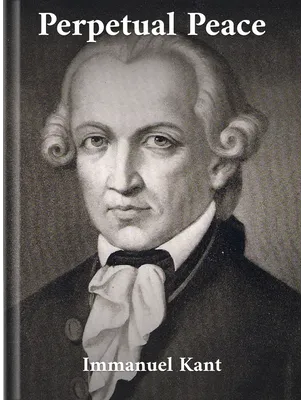
1795
by
Immanuel Kant

"The Perpetual Peace"
These words were once put by a Dutch innkeeper on his signboard, as a satirical inscription over the representation of a churchyard. We need not inquire whether they hold of men in general, or particularly of the rulers of States who seem never to be satiated of war, or even only of the Philosophers who dream that sweet dream of Peace. The author of the present Sketch, however, would make one remark by way of reservation in reference to it. It is well known that the practical politician looks down, with great self-complacency, on the theoretical Politician, when he comes in the way, as a mere pedant whose empty ideas can bring no danger to the State, proceeding as it does, upon principles derived from experience; and the theorizer may, therefore, be allowed to throw down his eleven skittle-pins at once, while the sagacious Statesman who knows the world, need not, on that account, even give himself a turn! This being so, should any matter of controversy arise between them, the practical Statesman must so far proceed consistently and not scent out a danger for the State behind the opinions of the theoretical thinker, which he has ventured in a good intent publicly to express. By which ‘saving clause,’ the Author will consider himself expressly safeguarded against all malicious interpretation.
First Section Which Contains the Preliminary Articles of a Perpetual Peace between States
1
‘No conclusion of Peace shall be held to be valid as such, when it has been made with the secret reservation of the material for a future War.’
For, in that case, it would be a mere truce, or a suspension of hostilities, and not a Peace. A Peace properly signifies the end of all hostilities; and to qualify it by the addition of the epithet ‘perpetual’ or ‘eternal’ is pleonastic and suspicious. All existing causes for a future war — although they were perhaps unknown to the contracting parties at the time — are to be regarded as entirely removed, or annihilated by the Treaty of Peace, even if they could be picked out by the dexterity of an acute interpretation from the terms of documents in the public Archives. There may be a mental reservation of old pretensions or claims with the view of asserting them at a future time, of which, however, neither party makes any mention for the present because they are too exhausted to continue the war, while there remains the evil will to take advantage of the first favourable opportunity for this purpose; but this is illegitimate and belongs to the Jesuitical casuistry of Politics. If we consider the subject of reservation in itself, it is beneath the dignity of the Rulers of States to have to do with it, and, in like manner, the complacent participation in such deductions is beneath the dignity of their Ministers. But if the true glory of the State is placed in the continual increase of its power, by any means whatever — according to certain ‘enlightened’ notions of national policy — then this judgment will certainly appear to those who adopt that view, to be impractical and pedantic.
2
‘No State having an existence by itself — whether it be small or large — shall be acquirable by another State through inheritance, exchange, purchase or donation.’
A State is not to be regarded as a property or patrimony, like the soil on which it may be settled. It is a society of men, over which no one but itself has the right to rule or to dispone. Like the stem of a tree it has its own root, and to incorporate it as a graft in another State, is to destroy its existence as a moral Person; it is to reduce it to a Thing, and thereby to contradict the idea of the original Compact without which a Right over a people is inconceivable. Everyone knows what danger the prejudice in favor of thus acquiring States has brought to Europe, for in the other parts of the world it has never been known; and that this has gone on even up to our own times. It was considered that the States might marry one another; and hence, on the one hand, a new kind of industry in the effort to acquire predominance by family alliances, without any expenditure of power; and, on the other hand, to increase, in this way, by new possessions the extent of a Country. Further, the lending of the troops of one State to another on pay, to fight against an enemy not at war with their own State, has arisen from the same erroneous view; for the Subjects of the State are thus used and abused as Things that may be managed at will.
3
‘Standing Armies shall be entirely abolished in the course of time.’
For, they threaten other States incessantly with War, by their appearing to be always equipped to enter upon it. Standing armies (miles perpetuus) excite the States to outrival each other in the number of their armed men which has no limits. By the expense occasioned thereby, Peace becomes in the long run even more oppressive than a short war; and Standing Armies are thus the cause of aggressive wars undertaken in order to get rid of this burden. Besides, it has to be considered that for men to be hired for pay to kill or to be killed, appears to imply the using of them as mere machines and instruments in the hand of another, although it be the State; and that this cannot be well reconciled with the Right of humanity in our own person. It is quite otherwise, however, as regards the voluntary exercise of the citizens in arms at certain appointed periods; for the object in view is thereby to protect themselves and their country from external attacks. The accumulation of treasure in a State would have the same sort of influence as regular troops, in so far as, being regarded by other States as a threat of war, it might compel them to anticipate such a war by an attack upon the State. For of the three powers known in the State as the Power of the Army, the Power of external Alliance and the Power of Money, the money-power might well become the most reliable instrument of war, did not the difficulty of determining its real force stand in the way of its employment.
4
‘No National Debts shall be contracted in connection with the external affairs of the State.’
No objection can be taken to seeking assistance, either without or within the State, in behalf of the economical administration of the country; such as, for the improvement of highways, or in support of new colonies, or in the establishment of resources against dearth and famine. A loan, whether raised externally or internally, as a source of aid in such cases is above suspicion. But a Credit System when used by the Powers as a hostile antagonistic instrument against each other, and when the debts under it go on increasing to an excessive extent and yet are always secured for the present (because all the creditors are not to put in their claims at once), is a dangerous money power. This arrangement — the ingenious invention of a commercial people in this century — constitutes, in fact, a treasure for the carrying on of War; it may exceed the treasures of all the other States taken together, and it can only be exhausted by the forthcoming deficit of the taxes, which, however, may be long delayed even by the animation of the national commerce from the reaction of the system upon industry and trade. The facility given by this system for engaging in War, combined with the inclination of Rulers towards it (an inclination which seems to be implanted in human nature), is, therefore, a great obstacle in the way of a Perpetual Peace. The prohibition of it must be laid down as a Preliminary Article in the conditions of such a Peace, even more strongly on the further ground, that the national bankruptcy, which it inevitably brings at last, would necessarily involve many other States that are without debt in the loss; and this would be a public lesion of these other States. And, consequently, the other States are justified in allying themselves against such a State and its pretensions.
5
‘No State shall intermeddle by force with the Constitution or Government of another State.’
For what could justify it in doing so? Mayhap the scandal or offence given by that State to the subjects of another State? Then the offending State should much rather serve as a warning by the example of the great Evils which peoples have drawn upon themselves through their lawlessness; and generally a bad example given by one free person to another (as a scandalum acceptum), is not a lesion of his Right. But it is a different case where a State has become divided in two by internal disunion, and when each of the parts represents itself as a separate State laying claim to the whole; for, to furnish assistance to one of them under these circumstances might not be reckoned as the intermeddling of an External State with the Constitution of another, as that other is then in a condition of Anarchy. Yet so long as this internal strife is not decided, such an interference on the part of external Powers would be a violation of the Rights of an independent people that is only struggling with an external evil. It would, therefore, itself be a cause of offence, and would make the Autonomy of all other States insecure.
6
‘No State at war with another shall adopt such modes of hostility as would necessarily render mutual confidence impossible in a future Peace; such as, the employment of Assassins (percussores) or Poisoners (venefici), the violation of a Capitulation, the instigation of Treason and such like.’
These are dishonorable stratagems. For there must be some trust in the habit and disposition even of an enemy in War, otherwise no Peace could be concluded, and the hostilities would pass into an internecine war of extermination. War, however, is only a melancholy necessity of asserting Right by force — where, as in the state of Nature, there is no common tribunal with the rightful power to adjudicate on causes of quarrel. In such circumstances neither of the two parties can be declared to be an unjust enemy as this presupposes a judicial sentence: but the issue of the conflict — as in the so-called ‘judgments of God’ — has to decide on which side is the Right. As between States, however, a punitive war, according to the principle of punishment, is inconceivable; because there is no relation of subordination between them, as between Superior and Inferior. Hence it follows that a war of extermination, in which the process of annihilation would strike at both parties, and likewise at all Right at the same time, would reach Perpetual Peace only on the final Golgotha of the human race. Such a war, therefore, as well as the use of such means as might lead to it, must be absolutely unallowable. And that the means referred to inevitably lead to that result, is apparent from the fact that when these hellish arts, which are debasing in themselves, are once brought into use, they are not kept long within the limits of war. Such, for instance, is the employment of Spies. In this case it is only the dishonesty of others that is employed, and as such practices and habits cannot be exterminated at once, they would be carried over into the state of Peace, and thus its very purpose would be entirely frustrated.
The Articles thus indicated, when viewed objectively, or as to the intention of the Powers, represent merely Prohibitive Laws. Some of them, however, are Strict Laws (leges strictæ); that are valid without distinction of circumstances, and press immediately for the abolition of certain things. Such are Nos. 1, 5, 6. Others, again — as Nos. 2, 3, 4, — have a certain subjective breadth (leges latæ) in respect of their application. Although they present no exceptions to the rule of Right, they imply a regard to circumstances in practice. They include permissions to delay their fulfillment without, however, losing sight of their end; for their end allows such delay. Thus, for instance, in regard to the restoration of certain States to the Liberty of which they have been deprived, it is allowable, according to the Second Article, to postpone it — not, indeed to ‘the Greek Kalends,’ as Augustus was wont to say, so that its time would never come; but only so as not to precipitate its coming, and thus by overhaste to act contrary to the very purpose in view. The prohibition in question, bears only upon a mode of Acquisition which is to be no longer valid, but not upon the state of possession which, although it may not hold the requisite title of Right, was, nevertheless, regarded as rightful and valid by all the States at the date of the putative acquisition, in accordance with the public opinion of the time.
Second Section which Contains The Definitive Articles of A Perpetual Peace Between States
A state of Peace among men who live side by side with each other, is not the natural state. The state of Nature is rather a state of War; for although it may not always present the outbreak of hostilities, it is nevertheless continually threatened with them. The state of Peace must, therefore, be established; for the mere cessation of hostilities furnishes no security against their recurrence, and where there is no guarantee of peace between neighboring States — which can only be furnished under conditions that are regulated by Law — the one may treat the other, when proclamation is made to that effect, as an enemy.
First Definitive Article in the Conditions of Perpetual Peace. ‘The Civil Constitution in every State shall be Republican.’
A Republican Constitution is one that is founded, firstly, according to the principle of the Liberty of the Members of a Society, as Men; secondly, according to the principle of the Dependence of all its members on a single common Legislation, as Subjects; and, thirdly, according to the law of the Equality of its Members as Citizens. The Republican Constitution is, thus, the only one which arises out of the idea of the Original Compact, upon which all the rightful legislation of a people is founded. As regards public Right, the republican principles, therefore, lie originally and essentially at the basis of the Civil Constitution in all its forms; and the only question for us now is as to whether it is also the only Constitution that can lead to a Perpetual Peace?
Now, in point of fact, the Republican Constitution, in addition to the purity of its origin as arising from the original source of the conception of Right, includes also the prospect of realizing the desired object: Perpetual Peace among the nations. And the reason of this may be stated as follows. According to the Republican Constitution, the consent of the citizens as members of the State is required to determine at any time the question, ‘Whether there shall be war or not?’ Hence, nothing is more natural than that they should be very loath to enter upon so undesirable an undertaking; for in decreeing it, they would necessarily be resolving to bring upon themselves all the horrors of War. And, in their case, this implies such consequences as these: to have to fight in their own persons; to supply the costs of the war out of their own property; to have sorrowfully to repair the devastation which it leaves behind; and, as a crowning evil, to have to take upon themselves at the end a burden of debt which will go on embittering peace itself, and which it will be impossible ever to pay off on account of the constant threatening of further impending wars. On the other hand, in a Constitution where the Subject is not a voting member of the State, and which is, therefore, not Republican, the resolution to go to war is a matter of the smallest concern in the world. For, in this case, the Ruler, who, as such, is not a mere citizen but the Owner of the State, need not in the least suffer personally by war, nor has he to sacrifice his pleasures of the table or of the chase or his pleasant palaces, court festivals and such like. He can, therefore, resolve for war from insignificant reasons, as if it were but a hunting expedition; and, as regards its propriety, he may leave the justification of it without concern to the diplomatic body, who are always too ready to give their services for that purpose.
The Republican Constitution is not to be confounded with the Democratic Constitution. But as this is commonly done, the following remarks must be made in order to guard against this confusion. The various forms of the State (Civitas) may be divided either according to the difference of the Persons who hold the highest authority in the State, or according to the mode of the governing of the people through its supreme Head. The first is properly called the form of the Sovereignty in the State (forma imperii). There are only three forms of this kind possible, according as one only, or as some in connection with each other, or as all those constituting the Civil Society combined together may happen to possess the governing power; and thus we have either an Autocracy constituted by the power of a Monarch, or an Aristocracy constituted by the power of the Nobles, or a Democracy constituted by the power of the People. The second principle of division is taken from the form of the Government (forma regiminis); and viewing the Constitution as the act of the common or universal will by which a number of men become a People, it regards the mode in which the State, founding on the Constitution, makes use of its supreme power. In this connection, the form of government is either republican or despotic. Republicanism regarded as the constitutive principle of a State is the political severance of the Executive Power of the Government from the Legislative Power. Despotism is in principle the irresponsible executive administration of the State by laws laid down and enacted by the same power that administers them; and consequently the Ruler so far exercises his own private will as if it were the public Will. Of the three forms of the State, a Democracy, in the proper sense of the word, is necessarily a despotism; because it establishes an Executive power in which All resolve about, and, it may be, also against, any One who is not in accord with it; and consequently the All who thus resolve are really not all; which is a contradiction of the Universal Will with itself and with liberty.
Every form of Government, in fact, which is not representative, is properly a spurious form of Government or not a form of Government at all; because the Lawgiver in one and the same person, may, at the same time, be the executive administrator of his own Will. And although the other two political constitutions — Autocracy and Aristocracy — are always so far defective in that they afford opportunity for such a mode of government, it is at least possible in their cases that a mode of government may be adopted in conformity with the spirit of a representative system. Thus Frederick the Great was wont to say of himself that he was ‘merely the highest servant of the State.’ But the Democratic Constitution, on the contrary, makes such a spirit impossible; because under it everyone wishes to be master. It may, therefore, be said that the fewer the number of the Rulers or personal Administrators of the power of the State, and the greater the representation embodied in them, so much the more does the political constitution harmonise with the possibility of Republicanism; and such a constitution may hope to raise itself, by gradual reforms, to the Republican Ideal. On this account, it is more difficult to attain to this one perfect constitution according to the principles of Right in an Aristocracy than in a Monarchy, and in a Democracy it is impossible otherwise than by violent revolution. As regards the people, however, the mode of Government is incomparably more important than the form of the Constitution, although the degree of conformity in the Constitution to the end of government is also of much importance. But if the mode of Government is to conform to the idea of Right, it must embody the representative system. For in this system alone is a really republican mode of Government possible; and without it, let the Constitution be what it may, it will be despotic and violent. In none of the ancient so-called ‘Republics,’ was this known; and they necessarily became resolved in consequence, into an absolute form of despotism, which is always most bearable when the supreme power is concentrated in a single individual.
Second Definitive Article in the conditions of a Perpetual Peace. ‘The Right of Nations shall be founded on a Federation of Free States.’
Peoples or nations regarded as States, may be judged like individual men. Now men living in a state of Nature independent of external laws, by their very contiguity to each other, give occasion to mutual injury or lesion. Every people, for the sake of its own security, thus may and ought to demand from any other, that it shall enter along with it into a constitution, similar to the Civil Constitution, in which the Right of each shall be secured. This would give rise to an International Federation of the Peoples. This, however, would not have to take the form of a State made up of these Nations. For that would involve a contradiction, since every State, properly so called, contains the relation of a Superior as the lawgiver to an Inferior as the people subject to their laws. Many nations, however, in one State, would constitute only one nation, which is contradictory to the principle assumed, as we are here considering the Right of Nations in relation to each other, in so far as they constitute different States and are not to be fused into one.
The attachment of Savages to the lawless liberty of rather being engaged in incessant conflict with each other than submitting to a legal constraint constituted by themselves, is well known. Hence their preference of wild freedom to rational liberty is looked upon by us with profound contempt, and characterised as barbarism, coarseness, and a brutal degradation of humanity. Thus it might be thought that civilized Nations, being each united into a State, would of necessity make all haste to advance as soon as possible out of any semblance to a condition that is so much condemned. Instead of this, however, we rather find that every State founds its Majesty on not being subject to any external legal coercion; and the glory of its Ruler or Head is made to consist in the fact that without his requiring to encounter any danger himself, many thousands stand ready to be sacrificed at his command for a cause which may be no concern of theirs. Thus the difference between the white savages of Europe and the red savages of America consists mainly in this: that while some tribes of the latter have been entirely eaten up by their enemies, the former know how to make a better use of the vanquished than to eat them, by rather adding them to the number of their subjects, and thereby increasing the multitude of their instruments and means for still more extensive wars.
The depravity of human nature is exhibited without disguise in the unrestrained relations of the Nations to each other, whereas in the legalised state of Civil Society it is greatly veiled under the constraint of government. In view of it, we may well wonder that the word ‘Right’ has not yet been entirely banished from the policy of war as pedantic, and that no State has as yet ventured to declare itself publicly in favour of that doctrine. For Grotius, Puffendorf, Vattel and the others — miserable comforters all of them — are still always quoted cordially for the justification of an outbreak of war, although their philosophically or diplomatically composed codes has not, nor could have, the slightest legal force, since the States as such stand under no common legal constraint; and there is not an example of a State having been ever moved to desist from its purpose by arguments, although armed with testimonies of such important men. Yet the homage which every State thus renders — at least in words — to the conception of Right still proves that there is to be found in man a higher and greater moral capacity; though it may slumber for a time; and it is evidently felt that this capacity will yet attain the mastery over the evil principle in him, the existence of which cannot be denied; and this gives a ground of hope to others. For the word ‘Right’ would otherwise never enter into the vocabulary of States desirous to go to war with each other, unless it were merely to make a jest of it, in the manner of the Gallic prince who declared that ‘it is the prerogative of the strong to make the weak obey them.’
The means by which States prosecute their Rights at present can never be by a form of process — as if there were an external tribunal, — but can only be by War; but even the favorable issue of war in victory will not decide a matter of Right. A treaty of Peace may, indeed, put an end to a particular war, yet not to the general condition of war, in which a pretext can always be found for new hostilities. Nor can such a pretext under these circumstances be regarded as ‘unjust;’ for in that state of society, every nation is the judge of its own cause. At the same time, the position which, according to the Right of nature, holds of men in a lawless condition that ‘they ought to advance out of that condition,’ cannot according to the Right of Nations be directly applied to States; because as States they have already within themselves a legal Constitution and have thus outgrown the coercive Right of others to bring them under a wider legal constitution according to conceptions of Right. And yet Reason on the throne of the highest moral law giving power, absolutely condemns War as a mode of Right, and, on the contrary, makes the state of Peace an immediate duty. But the state of Peace cannot be founded or secured without a compact of the Nations with each other. Hence there must be a compact of a special kind which may be called a Pacific Federation (foedus pacifcum), and which would be distinguished from a mere treaty or Compact of Peace (pactum pacis), in that the latter merely puts an end to one war, whereas the former would seek to put an end to all wars forever. This Federation will not aim at the acquisition of any of the political powers of a State, but merely at the preservation and guarantee for itself, and likewise for the other confederated States, of the liberty that is proper to a State; and this would not require these States to subject themselves for this purpose — as is the case with men in the state of nature — to public laws and to coercion under them. The practicability and objective realization of this idea of Federalism, inasmuch as it has to spread itself over all States and thereby lead to Perpetual Peace, may be easily shown. For if happy circumstances bring it about that a powerful and enlightened people form themselves into a Republic — which by its very nature must be disposed in favour of Perpetual Peace — this will furnish a center of federative union for other States to attach themselves to, and thus to secure the conditions of Liberty among all States, according to the idea of the Right of Nations. And such a Union would extend wider and wider, in the course of time, by the addition of further connections of this kind.
It is intelligible that a People should say: ‘There shall be no war among us: for we will form ourselves into a State, and constitute of ourselves a supreme legislative, governing and judicial Power which will peacefully settle our differences.’ But if this State says: ‘There shall be no war between me and other States, although I recognize no supreme legislative power which will secure me my Right and whose Right I will also secure;’ then there is no intelligible basis upon which any security for such Rights could be founded unless it were a surrogate of the union embodied in Civil Society. And this can be nothing but a free Federation of the States, which Reason must necessarily connect with the idea of the Right of Nations if there is anything further to be thought in connection with it.
The notion of a Right to go to war, cannot be properly conceived as an element in the Right of Nations. For it would be equivalent to a Right to determine what is just not by universal external laws limiting the freedom of every individual alike, but through one-sided maxims that operate by means of force. If such a Right be conceivable at all it would amount, in fact, to this: that in the case of men who are so disposed, it is quite right for them to destroy and devour each other, and thus to find Perpetual Peace only in the wide grave, which is to cover all the abomination of the deeds of violence and their authors! For States viewed in relation to each other, there can be only one way, according to reason, of emerging from that lawless condition which contains nothing but occasions of war. Just as in the case of individual men, Reason would drive them to give up their savage lawless freedom, to accommodate themselves to public coercive laws, and thus to form an ever-growing State of Nations, such as would at last embrace all the Nations of the Earth. But as the Nations, according to their ideas of international Right, will not have such a positive rational system, and consequently reject in fact (in thesi) what is right in theory (in hypothesi), it cannot be realized in this pure form. Hence, instead of the positive idea of a Universal Republic — if all is not to be lost — we shall have as result only the negative surrogate of a Federation of the States averting war, subsisting in an external union, and always extending itself over the world. And thus the current of those inclinations and passions of men which are antagonistic to Right and productive of war, may be checked, although there will still be a danger of their breaking out betimes. For as Virgil puts it:
‘Furor Impius intus fremit horridus ore cruento.’
Third Definitive Article in the conditions of a Perpetual Peace. ‘The Rights of men as Citizens of the world in a cosmo-political system, shall be restricted to conditions of universal Hospitality.’
In this as in the previous Articles, the question is not about a relation of Philanthropy, but one of Right. ‘Hospitality’ here indicates the Right of a stranger in consequence of his arrival on the soil of another country, not to be treated by its citizens as an enemy. As a stranger he may be turned away, if this can be done without involving his death; but so long as he conducts himself peacefully in the place where he may happen to be, he is not to be dealt with in a hostile way. The stranger may not lay claim to be entertained by right as a Guest, for this would require a special friendly compact to make him for a certain time the member of a household, he may only claim a Right of Resort or of visitation. All men are entitled to present themselves thus to society in virtue of their Right to the common possession of the surface of the earth, to no part of which anyone had originally more right than another; and upon which, from its being a globe, they cannot scatter themselves to infinite distances, but must at last bear to live side by side with each other. Uninhabitable portions of this surface are formed by seas and deserts; these present barriers to the fellowship of men in society; but they are of such a nature that the ship or the camel, ‘the ship of the desert,’ makes it possible for men to approach each other over these unappropriated regions, and thus to turn the Right, which the human species have in common to the surface of the earth, into a means for social intercourse. The inhospitality practiced, for instance, on the Barbary coasts, of plundering ships in the neighboring seas and making slaves of stranded mariners, or that of the sandy deserts, as practiced by Arab Bedouins who regard their access to nomadic tribes as constituting a right to plunder them, is thus contrary to the Right of Nature. But this Right of Hospitality as vested in strangers arriving in another State, does not extend further than the conditions of the possibility of entering into social intercourse with the inhabitants of the country. In this way distant continents may enter into peaceful relations with each other. These may at last become publicly regulated by law, and thus the human race may be always brought nearer to a Cosmopolitical Constitution.
If we compare the barbarian instances of inhospitality referred to with the inhuman behavior of the civilized, and especially the commercial, States of our Continent, the injustice practiced by them in their first contact with foreign lands and peoples, fills us even with horror, the mere visiting of such peoples being regarded by them as equivalent to a conquest. America, the Negro Lands, the Spice Islands, the Cape of Good Hope, etc., on being discovered, were treated as countries that belonged to nobody; for the Aboriginal inhabitants were reckoned as nothing. In the East Indies, under the pretext of intending merely to plant commercial settlements, the Europeans introduced foreign troops, and with them oppression of the Natives, instigation of the different States to widespread wars, famine, sedition, perfidy, and all the litany of evils that can oppress the human race.
China and Japan, having had experience of such guests, therefore, did wisely in limiting their intercourse. China only permitted access to her coasts but not entrance into the country. Japan restricted access to one European people, the Dutch, and they were even treated like prisoners by being excluded from social intercourse with the Natives. The worst (or, regarded from the standpoint of a moral judge, the best) of all this is that no satisfaction is derived from this violence, as all these commercial Societies are at present on the verge of ruin. The Sugar Islands — that seat of the cruellest and completest slavery — have thrown up no real profit, but have been only indirectly of account, and that in no praiseworthy relation. They have only furnished sailors for ships of war, and have thereby contributed to the carrying on of wars in Europe. And all this has been done by nations who make a great ado about their piety, and who, while drinking up iniquity like water, would have themselves regarded as the very elect of the orthodox Faith.
But the social relations between the various Peoples of the world, in narrower or wider circles, have now advanced everywhere so far that a violation of Right in one place of the earth, is felt all over it. Hence the idea of a Cosmo-political Right of the whole Human Race, is no fantastic or overstrained mode of representing Right, but is a necessary completion of the unwritten Code which carries national and international Right to a consummation in the Public Right of Mankind. Thus the whole system leads to the conclusion of a Perpetual Peace among the Nations. And it is only under the conditions now laid down that men may flatter themselves with the belief, that they are making a continual approach to its realization.
First Supplement. Of the Guarantee of Perpetual Peace
The guarantee of Perpetual Peace is furnished by no less a power than the great artist Nature herself: Natura Daedala rerum. The mechanical course of Nature visibly exhibits a design to bring forth concord out of the discord of men, even against their will. This power as a cause working by laws which are unknown to us, is commonly called Fate; but in view of the design manifested in the course of the world, it is to be regarded as the deep wisdon of a Higher Cause directed towards the realization of the final purpose of the human race, and predetermining the course of the world by relation to it, and as such we call it Providence. This power we do not indeed perceive externally in the artistic formations of Nature, nor can we even infer from them to it; but as in all referring of the form of things to final causes generally, we not only can, but must conjoin this thought with them in order to make their possibility conceivable after the analogy of the operations of human art. The relation and accord of these things to the moral purpose which reason immediately prescribes to us, can only be represented by an idea which theoretically indeed transcends our experience, but which is practically determinable and is well founded in reality. Such for example is the idea of a Perpetual Peace being a duty when the mechanism of nature is regarded as conducing to its realization. The employment of the term ‘Nature’ rather than ‘Providence’ for the designation of this power, is more proper and more modest in view of the limits of human reason, when we are dealing with it merely from the theoretical and not from the religious point of view. For human reason, when dealing with the relation of effects to their causes, must keep within the limits of possible experience; and to speak of Providence as knowable by us in this relation, would be putting on Icarian wings with presumptuous rashness in order to approach the mystery of His unfathomable purposes.
Before determining this guarantee more exactly, it will be necessary to look frst at that state of things arranged by nature for those who live and act upon the stage of her great theatre, which ultimately gives the guarantee of Peace. Thereafter we shall consider the manner in which this guarantee is furnished. The provisory arrangements of nature in this relation consist mainly in these three things: 1st, she has provided so that men shall be able to live in all parts of the earth; 2nd, she has scattered them everywhere by means of war so that they might populate even the most inhospitable regions; and 3rd, by this same means she has compelled them to enter into relations more or less rightful with one another. The facts that come here into view are truly wonderful. Thus in the cold, icy wastes around the Arctic Ocean there grows the moss which the reindeer scrapes forth from beneath the snow in order that it may itself become food, or that it may be yoked to the sledge of the Ostiak or the Samojan. And in like manner, the wildernesses of sand, barren though they be, do yet contain the camel which appears to have been created for travelling through them, in order that they might not be left unutilised. Still more distinctly does design appear when we come to know how, along with the fur-clad animals on the shores of the Arctic Ocean, there are seals, walruses and whales that furnish food by their flesh, and warmth and light by their fat to the inhabitants around. But most of all does the provident care of nature excite our admiration by the driftwood which it brings to the treeless shores, even when it is not well known whence it comes; and yet without this material the dwellers in the region could neither construct their canoes, nor their arms, nor huts for their abode; and this too under such conditions as compel them to carry on war against the wild beasts, so that they have to live at peace with each other. Moreover, it is remarkable that it was probably nothing but war that drove men into different regions. And the first instrument of war which man appropriated to himself from among all the animals was the horse, which he had learned to tame and to domesticate in the early period of the populating of the earth; for the elephant belongs to the later period of the luxury which arose with established States. In like manner, the art of cultivating certain grasses called ‘cereals,’ which are now no longer recognizable by us in their original condition, as well as the multiplication and improvement of species of fruits by transplanting and grafting them, could only arise under the conditions of regulated States when property in the soil had been rendered secure. These arts could only arise after men who had been previously existing in lawless freedom, had advanced from the mode of life of the hunter, the fisher, and the shepherd to that of the cultivator of the land. Then in connection with the life of the agriculturist, salt and iron were discovered which were perhaps the first articles that were sought far and near, and which entered into the commercial intercourse of different peoples. Thereby they would be first brought into a peaceful relation to one another; and thus the most distant of them would come to mutual understanding, sociability and pacific intercourse.
Now as nature has provided so that men could thus be able to live everywhere on the earth, she has likewise at the same time despotically willed that they shall live everywhere upon it, although against their own inclination and even without any idea of duty being connected with this determination through a moral law. On the contrary, she has chosen War as the means of attaining to this end. In point of fact, we see certain peoples whose unity of descent is made known by the unity of their language, far divided from each other. Thus the Samojades on the Arctic Ocean are of the same race as other tribes speaking a similar language a thousand miles away from them in the Altaian Mountains: another race of Mongolian origin equipped with horses and of a warlike character having pressed in between them and having thus driven the former apart from the latter into the most inhospitable regions, whither their own inclination would certainly never have carried them. In like manner, the Finns in the northernmost tract of Europe, where they are called Lapps, have been separated by as great a distance from the Hungarians who are affiliated to them in language, by the intrusion of Gothic and Sarmatian races. Nor can anything else but war well account for the presence in the far north of America of the Eskimo, a race entirely distinct from all the other American tribes, and perhaps descended from early European adventurers; and the same may be said of the Pesheræ who have been driven into Tierra del Fuego, in the far south of America. Nature has thus used War as the means of getting the earth everywhere populated. War, however, requires no special motive for its explanation; it appears to be ingrafted on human nature and is even regarded as noble in itself, man being stimulated to it by the love of glory without regard to selfish interests. Thus martial courage, not only among the American savages but even among Europeans in the age of chivalry, was considered to be of great value in itself, not merely in time of war — as was right enough — but just because it was war; and thus war was often entered upon merely to show off this quality. An inherent dignity was thus attached to war itself, so that even philosophers have glorified it as giving a certain nobleness to humanity, unmindful of the Greek saying that ‘War is bad in that it makes more bad people than it takes away.’ So much then in reference to what nature does in carrying out her own design in regard to the Human Race as a class of her creatures.
The question then arises, as to what is the essential meaning and aim of this design of a Perpetual Peace. It may be put thus: ‘What does Nature do in this respect with reference to the end which man’s own reason presents to him as a duty; and, consequently, what does she do for the furtherance of his moral purpose in life? And, further, how does she guarantee that what man ought to do according to the laws of his freedom, and yet does not do, shall be done by him without prejudice to his freedom even by a certain constraint of nature; and how does she secure this in all the three relationships of Public Right as Political Right, International Right and Cosmopolitan Right?’ When I say of nature that she wills a certain thing to be done, I do not mean that she imposes upon us a duty to do it, for only the Practical Reason as essentially free from constraint, can do this; but I mean that she does it herself whether we be willing or not. ‘Fata volentem ducunt, nolentem trahunt.’
1
Even if a people were not compelled by internal discord to submit to the coercion of public laws, War as an external influence would effect this. For, according to the arrangement of nature already indicated, every people finds another pressing upon it in its neighborhood, and it must form itself internally into a State in order to be equipped as a Power so as to defend itself. Now the Republican Constitution is the only one which perfectly corresponds to the Rights of man; but it is at the same time the most difficult to found, and still more so to maintain. So much is this the case that many have asserted that the realization of a true Republic would be like a State formed by angels, because men with their selfish inclinations are incapable of carrying out a constitution of so sublime a form. In these circumstances, then, nature comes to the aid of the rational and universal will of man, which, however honoured in itself, is impotent in practice; and it does this just by means of these selfish inclinations. Thus it comes that the chief interest turns only upon a good organization of the State, which is certainly within the power of man, whereby the powers of the human will shall be so directed in relation to each other, that the one will check the destructive effects of the other, or nullify them; and hence the result will be as regards reason the same as if these forces did not exist when their evil effects are thus neutralized; and man, although not possessed of real moral goodness, yet becomes constrained to be a good citizen.
The problem of the institution of a State, however hard it may appear, would not be insoluble even for a race of devils, assuming only that they have intelligence, and it may be put as follows: ‘A multitude of rational beings all requiring laws in common for their own preservation, and yet of such a nature that each of them is inclined secretly to except himself from their sway, have to be put under order, and a constitution has to be established among them so that, although they may be antagonistic to one another in their private sentiments, they have yet to be so organized that, in their public relations, their conduct will have the same result as if they had no such bad sentiments.’
Such a problem must be capable of solution. For it does not turn directly upon the moral improvement of men, but only upon the mechanism of nature; and the problem is to know how men can use the conditions of nature in order so to regulate the antagonism of the hostile sentiments at work among the people that the individuals composing it shall have to compel each other to submit to common compulsory laws, and that there shall thus be brought about a state of peace in which the laws will have full power. This process may be seen going on in the actually existing, although still very imperfectly organized States. For, in their external relations to one another, they already approach what the idea of Right prescribes, although the essential principle of Morality is certainly not the cause of it; and indeed a good political constitution is not so much to be expected from that principle but rather conversely the good moral culture of a people from such a constitution. Hence the mechanism of nature as it works through selfish inclinations which are externally and naturally antagonistic in their operation to each other, may be used by reason as a means of making way for the realization of her own end by the application of a Rule of Right, and thereby of furthering and securing Peace both internal and external, so far as it may lie within the power of the State to do so. It may then be said that Nature irresistibly wills that Right shall at last obtain the supremacy. What men may here neglect to do will at length be done of itself, although through much inconvenience, and as Bouterwek says: - ‘Bend but the reed too strong, it breaks; Who wills too much, but nothing makes.’
2
The idea of International Right presupposes the separation of several neighboring States that are independent of each other; and such a condition of things is of itself already one of war, unless by their federated union they can prevent the outbreak of hostilities. Such a condition of things is, however, better, according to the idea of reason, than the fusion of all the States into a Universal Monarchy by one Power that has overgrown the rest and subjected them to its sway. This is so because the laws lose always something of their defniteness as the range of a government becomes enlarged; and soulless despotism when it has choked the seeds of good, at length lapses into anarchy. Nevertheless there is a desire on the part of every State, or of its Sovereign, to attain to a lasting condition of Peace by subjecting the whole world, were it possible, to its sway. But nature wills it otherwise. She employs two means to prevent the peoples from intermingling, and to keep them apart. These are the differences of their Languages and of their Religions, which bring with them a certain tendency to mutual hatred, and furnish pretexts for war. However, as civilization increases, there is a gradual approach of men to greater unanimity in principles, and to a mutual understanding of the conditions of peace even in view of these differences. This pacific spirit, unlike that despotism which revels upon the grave of liberty, is developed and secured, not by the weakening of all the separate powers of the States, but by an equilibrium which is brought forth and guaranteed through their rivalry with each other.
3
Nature wisely separates the nations which the will of each State, even according to the principles of International Right, would fain combine into one by fraud or force. But, on the other hand, she again unites the nations whom the idea of a universal Cosmopolitan Right would not have secured from violence and war by regard to their mutual interests. This is effected by the commercial spirit which cannot exist along with war, and which sooner or later controls every people. Among all the means of power subordinate to the regulation of the State, the power of money is the most reliable, and thus the States find themselves driven to further the noble interest of peace, although not directly from motives of morality. Hence wherever war threatens to break out in the world, the States have an interest to avert it by mediations, just as if they stood in a constant league with each other for this purpose. Thus great combinations with a view to war can but very rarely occur from the very nature of things, and still more rarely can they succeed.
In this way Nature guarantees the conditions of Perpetual Peace by the mechanism involved in our human inclinations themselves; and although this is not realized with a guarantee that is suffcient to enable us to prophesy the future theoretically, yet the security involved is suffcient for all practical relations. And thus it becomes a duty to labor for the realization of this purpose as not at all chimerical in itself.