'Paradise Regained' was published in 1671.
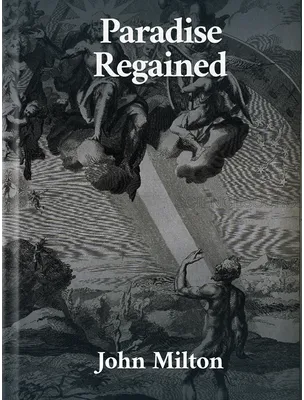
Paradise Regained is a sequel by John Milton to his most famous poem Paradise Lost. It dives back into the same themes of theology, Christianity, and specifically the temptation of Christ. Overall, the story has more of a heroic and optimistic feeling and calls on prayer, faith, and spiritual strength. Paradise Regained is twice the size of Paradise Lost and is considered an epic.
In the evocative poem "Paradise Regained," renowned poet John Milton invites readers into a profound exploration of temptation, redemption, and the enduring struggle between good and evil. The story centers around the figure of Jesus Christ, who faces the ultimate test of his faith and purpose in the wilderness. As he confronts the cunning temptations of Satan, the narrative unfolds a powerful conflict that resonates with the human experience of choice and sacrifice. Milton's masterful verses capture the essence of inner turmoil, illustrating the strength it takes to uphold one's values in the face of alluring distractions. Through vivid imagery and philosophical depth, the poem invites us to reflect on our own journeys toward spiritual fulfillment. With each stanza, readers are drawn deeper into a world where the stakes are monumental, and the quest for paradise is both timeless and universal. "Paradise Regained" is not just a tale of struggle; it is a celebration of the resilience of the human spirit and the hope of redemption.
Full Name: John Milton
Birthdate: December 9, 1608
Place of Birth: London, England
Date and Place of Death: November 8, 1674, in Bunhill Fields, London, England
Occupation: Poet, pamphleteer, and civil servant
Notable Works: "Paradise Lost," "Paradise Regained," "Samson Agonistes," and "Areopagitica"
Early Life: John Milton was born into a prosperous family. His father was a composer and his mother was the daughter of a wealthy family. Milton was well-educated, attending St. Paul's School and later Christ's College, Cambridge. He was a bright student and showed a strong interest in literature and languages from a young age.
Literary Career: Milton's poetry and prose reflect his deep religious beliefs and views on politics. His most famous work, "Paradise Lost," was published in 1667 and tells the story of the biblical fall of man. It is regarded as one of the greatest poems in the English language. Milton also wrote pamphlets advocating for freedom of speech and the press.
Personal Life: Milton married three times and had several children. He became blind in his later years but continued to write with the help of aides. Despite his personal challenges, he remained a passionate advocate for his beliefs throughout his life.
The author is John Milton, an English poet and intellectual known for his epic works.
Milton was inspired by the biblical story of Jesus' temptation in the desert and wanted to explore themes of faith and redemption.
'Paradise Regained' is a poetic epic, often seen as a sequel to Milton's earlier work, 'Paradise Lost'.
The main characters are Jesus Christ and Satan, who engage in a battle of wits and morality.
The plot follows Jesus as he faces temptation from Satan in the wilderness, showcasing his strength and commitment to God.
Key themes include temptation, faith, redemption, and the struggle between good and evil.
The wilderness symbolizes a place of testing and spiritual growth, while the temptations represent the challenges to one's faith.
'Paradise Regained' received mixed reviews; some praised its depth, while others found it less compelling than 'Paradise Lost'.
Yes, the themes and ideas of 'Paradise Regained' have inspired various adaptations in literature, theater, and art.
'Paradise Regained' has influenced discussions on theology and morality, and it remains an important text in the study of English literature.