'Miss Harriet' was first published in 1884.
[{"id":"para_1","index":0,"start":0,"offset":337,"words":2,"paraNum":"","lastModified":1774304061000,"semanticType":"title-book-title","voicework":"tts","blockId":"miss_harriet_short_story_ffa_1_en-bl2s","language":"en","wordsRange":{"start":100000000,"end":103000000},"paragraphVersion":27,"direction":"ltr","paragraph":"<h1 class=\"ilm-title ilm-x-large\" id=\"para_1\" semantictype=\"title-book-title\" data-ilmid=\"miss_harriet_short_story_ffa_1_en-bl2s\" data-audio=\"1\" data-chapter=\"para_1\" data-words-count=\"2\" data-before=\"0\" data-ww=\"\"><span class=\"block-pb\"> <span class=\"block-pb is-animated\"></span> </span><span class=\"itm-wrap\">Miss Harriet </span></h1>","hasContent":true,"isFirst":true,"isLast":false},{"id":"para_2","index":1,"start":337,"offset":332,"words":1,"paraNum":"","lastModified":1774304047000,"semanticType":"title-subtitle","voicework":"tts","blockId":"miss_harriet_short_story_ffa_1_en-bl83","language":"en","wordsRange":{"start":136333333,"end":169666667},"paragraphVersion":34,"direction":"ltr","paragraph":"<h1 class=\"ilm-title ilm-subtitle\" id=\"para_2\" semantictype=\"title-subtitle\" data-ilmid=\"miss_harriet_short_story_ffa_1_en-bl83\" data-audio=\"1\" data-chapter=\"para_2\" data-words-count=\"1\" data-before=\"2\" data-ww=\"\"><span class=\"block-pb\"> <span class=\"block-pb is-animated\"></span> </span><span class=\"itm-wrap\">[adapted]</span></h1>","hasContent":true,"isFirst":false,"isLast":false},{"id":"para_3","index":2,"start":669,"offset":367,"words":4,"paraNum":"","lastModified":1774619774000,"semanticType":"title-author","voicework":"tts","blockId":"miss_harriet_short_story_ffa_1_en-bl7z","language":"en","wordsRange":{"start":203000000,"end":208000000},"paragraphVersion":93,"direction":"ltr","paragraph":"<h1 class=\"ilm-title ilm-author ilm-nopad ilm-large\" id=\"para_3\" semantictype=\"title-author\" data-ilmid=\"miss_harriet_short_story_ffa_1_en-bl7z\" data-audio=\"1\" data-chapter=\"para_3\" data-words-count=\"4\" data-before=\"3\" data-ww=\"\"><span class=\"block-pb\"> <span class=\"block-pb is-animated\"></span> </span><span class=\"itm-wrap\">by <br>Guy de Maupassant<br></span></h1>","hasContent":true,"isFirst":false,"isLast":false},{"id":"para_4","index":3,"start":1036,"offset":161,"words":0,"paraNum":"","lastModified":1660143270000,"semanticType":"line","blockId":"miss_harriet_short_story_ffa_1_en-bl80","language":"en","wordsRange":{"start":308000000,"end":408000000},"paragraphVersion":15,"direction":"ltr","paragraph":"<hr class=\"ilm-hr ilm-small\" id=\"para_4\" semantictype=\"line\" data-ilmid=\"miss_harriet_short_story_ffa_1_en-bl80\" data-words-count=\"0\" data-before=\"7\" data-ww=\"\">","hasContent":true,"isFirst":false,"isLast":false},{"id":"para_5","index":4,"start":1197,"offset":1126,"words":0,"paraNum":"","lastModified":1661855583000,"semanticType":"illustration","blockId":"miss_harriet_short_story_ffa_1_en-bl82","language":"en","wordsRange":{"start":508000000,"end":608000000},"paragraphVersion":15,"direction":"ltr","paragraph":"<div class=\"ilm-illustration\" id=\"para_5\" semantictype=\"illustration\" data-ilmid=\"miss_harriet_short_story_ffa_1_en-bl82\" data-words-count=\"0\" data-before=\"7\" data-ww=\"\"><img width=\"347\" height=\"512\" data-src=\"ch0p0\" src=\"data:image/webp;base64,UklGRnACAABXRUJQVlA4IGQCAACwDACdASojADMAPm0ukEWkIqGVVvxABsSzgF2Dej8goU40U3uWbpdPiGzGnb5cEZHLWAIVjX1fi+BlEDTdsJPveKmJE7VBVjYRpVHQmWcsJmnsSVYREmOOZ7e2vLiGchQv0m6BKdLWDzsMIomTIAD+/PZAYATsXytzIeimJI6vsuazv25Wwm6Nw2T4O6ORf115nyzOFovTwTTmLNkQ195zh9dnt7XBSYrR5a9VYftXOhDioLWJG4fOZYUOgVvQZhdNPLZja/iSCb/qro+zTgkIuDSyFQH9SPd26NcL2tU+M7M9eVlqeUxjqe21ZdNccY7BcY1FS7ogKrEDmMxyuT9k3KR4erjp4P0WyDVjer/wGU3H6S5Dk3oZGBW8abAz6VRAlbIdnqZH/Pg/dkTzXKjQIIc9kNMD9VvXhz5+H75P3c1X7KFzlbW2jD6owkp30H0ps/l5mPNCqF7vP3gv9u5t/zIeaRZInAOSs4qg967z5e1PVJGRX4PPCK9vFXsZ6nsc7QozlxwcO60KX1a9obaygF3XdaIvC9g6Jr0eJSrrRQSTyZ4ekY+LW8QvjrnMScxTp8WR++mNWSapsOOpQ5S2rAEvFNGL2KSO9cqYFTME7vAST458Bb9nF7tw4ltKyXyEj25SyJfTBW2tRojm9sHKdndW24ESVQogCAoyky5h2Rmzio8Ra4xVeWWHOkWYxfKDABdU1s1A90R9gDLb1Yd580bVIsJ7jZECT0eJBN5CaH3ql1MrwiVlEBX9yJmlOfN8yAL9qeanFfad6bePO1gvKy9axewEORgDC5xP+UiyQDBiAAA=\" alt=\"Miss Harriet (adapted)\"></div>","hasContent":true,"isFirst":false,"isLast":false},{"id":"para_6","index":5,"start":2323,"offset":528,"words":46,"paraNum":"1","lastModified":1774304798000,"semanticType":"par","voicework":"tts","blockId":"miss_harriet_short_story_ffa_1_en-bl2t","language":"en","wordsRange":{"start":708000000,"end":752000000},"paragraphVersion":28,"direction":"ltr","paragraph":"<p id=\"para_6\" semantictype=\"par\" data-ilmid=\"miss_harriet_short_story_ffa_1_en-bl2t\" data-audio=\"1\" data-words-count=\"46\" data-before=\"7\" data-ww=\"\"><span class=\"block-num\" data-id=\"1\"></span><span class=\"block-pb\"> <span class=\"block-pb is-animated\"></span> </span><span class=\"itm-wrap\">There were seven of us on a drag, (an open coach or carriage) four women and three men; one of the men sat on the front seat beside the driver. We were going up, very slowly, the curving road up the steep cliff along the coast.</span></p>","hasContent":true,"isFirst":false,"isLast":false},{"id":"para_7","index":6,"start":2851,"offset":621,"words":56,"paraNum":"2","lastModified":1774304784000,"semanticType":"par","voicework":"tts","blockId":"miss_harriet_short_story_ffa_1_en-bl2u","language":"en","wordsRange":{"start":852000000,"end":914000000},"paragraphVersion":31,"direction":"ltr","paragraph":"<p id=\"para_7\" semantictype=\"par\" data-ilmid=\"miss_harriet_short_story_ffa_1_en-bl2u\" data-audio=\"1\" data-words-count=\"56\" data-before=\"53\" data-ww=\"\"><span class=\"block-num\" data-id=\"2\"></span><span class=\"block-pb\"> <span class=\"block-pb is-animated\"></span> </span><span class=\"itm-wrap\">Starting out from Etretat very early in the morning to visit the ruins of Tancarville, we were still half asleep, cold from the morning air. The women especially, who were not used to these early trips, half opened and closed their eyes every moment, nodding their heads or yawning, not noticing the beauty of the dawn.</span></p>","hasContent":true,"isFirst":false,"isLast":false},{"id":"para_8","index":7,"start":3472,"offset":604,"words":58,"paraNum":"3","lastModified":1774304770000,"semanticType":"par","voicework":"tts","blockId":"miss_harriet_short_story_ffa_1_en-bl2v","language":"en","wordsRange":{"start":1014000000,"end":1069000000},"paragraphVersion":28,"direction":"ltr","paragraph":"<p id=\"para_8\" semantictype=\"par\" data-ilmid=\"miss_harriet_short_story_ffa_1_en-bl2v\" data-audio=\"1\" data-words-count=\"58\" data-before=\"109\" data-ww=\"\"><span class=\"block-num\" data-id=\"3\"></span><span class=\"block-pb\"> <span class=\"block-pb is-animated\"></span> </span><span class=\"itm-wrap\">It was fall. On both sides of the road lay the empty fields, turned yellow by the short stalks of wheat and oats which covered the ground like a beard that had been badly shaved. The wet earth looked like it was steaming. Larks were singing high up in the air, while other birds chirped in the bushes.</span></p>","hasContent":true,"isFirst":false,"isLast":false},{"id":"para_9","index":8,"start":4076,"offset":543,"words":49,"paraNum":"4","lastModified":1774304753000,"semanticType":"par","voicework":"tts","blockId":"miss_harriet_short_story_ffa_1_en-bl2w","language":"en","wordsRange":{"start":1169000000,"end":1222000000},"paragraphVersion":28,"direction":"ltr","paragraph":"<p id=\"para_9\" semantictype=\"par\" data-ilmid=\"miss_harriet_short_story_ffa_1_en-bl2w\" data-audio=\"1\" data-words-count=\"49\" data-before=\"167\" data-ww=\"\"><span class=\"block-num\" data-id=\"4\"></span><span class=\"block-pb\"> <span class=\"block-pb is-animated\"></span> </span><span class=\"itm-wrap\">The sun rose at last in front of us, bright red on the horizon, and as it went up, growing clearer from minute to minute, the country seemed to wake up, to smile, to shake itself like a young girl leaving her bed in her white dress of mist.</span></p>","hasContent":true,"isFirst":false,"isLast":false},{"id":"para_10","index":9,"start":4619,"offset":841,"words":94,"paraNum":"5","lastModified":1774304817000,"semanticType":"par","voicework":"tts","blockId":"miss_harriet_short_story_ffa_1_en-bl2x","language":"en","wordsRange":{"start":1322000000,"end":1410000000},"paragraphVersion":28,"direction":"ltr","paragraph":"<p id=\"para_10\" semantictype=\"par\" data-ilmid=\"miss_harriet_short_story_ffa_1_en-bl2x\" data-audio=\"1\" data-words-count=\"94\" data-before=\"216\" data-ww=\"\"><span class=\"block-num\" data-id=\"5\"></span><span class=\"block-pb\"> <span class=\"block-pb is-animated\"></span> </span><span class=\"itm-wrap\">The Comte d’Etraille, who was sitting on the box, shouted: “Look! look! a hare!” and he stretched out his arm to the left, pointing to a field of clover. The animal ran quickly along, almost hidden by the clover, only its large ears showing. Then it turned quickly across a line in the field, stopped, started off again at full speed, changed its direction, stopped again, nervous, watching for every danger, not sure which way to go, when suddenly it began to run with big jumps, disappearing finally in a large field of beetroot.</span></p>","hasContent":true,"isFirst":false,"isLast":false},{"id":"para_11","index":10,"start":5460,"offset":677,"words":66,"paraNum":"6","lastModified":1774304890000,"semanticType":"par","voicework":"tts","blockId":"miss_harriet_short_story_ffa_1_en-bl2y","language":"en","wordsRange":{"start":1510000000,"end":1576333333},"paragraphVersion":35,"direction":"ltr","paragraph":"<p id=\"para_11\" semantictype=\"par\" data-ilmid=\"miss_harriet_short_story_ffa_1_en-bl2y\" data-audio=\"1\" data-words-count=\"66\" data-before=\"310\" data-ww=\"\"><span class=\"block-num\" data-id=\"6\"></span><span class=\"block-pb\"> <span class=\"block-pb is-animated\"></span> </span><span class=\"itm-wrap\">All the men had woken up to watch the animal run. <br>René Lamanoir said loudly: “We are not at all polite this morning,” and; looking at his neighbor, the little Baroness de Serennes, who was fighting sleep, he said to her in a low voice: “You are thinking of your husband, baroness. Do not worry; he will not return before Saturday, so you still have four days.”</span></p>","hasContent":true,"isFirst":false,"isLast":false},{"id":"para_12","index":11,"start":6137,"offset":614,"words":54,"paraNum":"7","lastModified":1774304963000,"semanticType":"par","voicework":"tts","blockId":"miss_harriet_short_story_ffa_1_en-bl84","language":"en","wordsRange":{"start":1576666667,"end":1636000000},"paragraphVersion":24,"direction":"ltr","paragraph":"<p id=\"para_12\" semantictype=\"par\" data-ilmid=\"miss_harriet_short_story_ffa_1_en-bl84\" data-audio=\"1\" data-words-count=\"54\" data-before=\"376\" data-ww=\"\"><span class=\"block-num\" data-id=\"7\"></span><span class=\"block-pb\"> <span class=\"block-pb is-animated\"></span> </span><span class=\"itm-wrap\">She answered with a sleepy smile: “How stupid you are!” Then, shaking off her sleepiness, she added: “Now, let somebody say something to make us laugh. You, Monsieur Chenal, who are known for having had more romances than the Duc de Richelieu, tell us a love story you were part of; anything you like.”</span></p>","hasContent":true,"isFirst":false,"isLast":false},{"id":"para_13","index":12,"start":6751,"offset":745,"words":81,"paraNum":"8","lastModified":1774304904000,"semanticType":"par","voicework":"tts","blockId":"miss_harriet_short_story_ffa_1_en-bl32","language":"en","wordsRange":{"start":1736000000,"end":1819000000},"paragraphVersion":37,"direction":"ltr","paragraph":"<p id=\"para_13\" semantictype=\"par\" data-ilmid=\"miss_harriet_short_story_ffa_1_en-bl32\" data-audio=\"1\" data-words-count=\"81\" data-before=\"430\" data-ww=\"\"><span class=\"block-num\" data-id=\"8\"></span><span class=\"block-pb\"> <span class=\"block-pb is-animated\"></span> </span><span class=\"itm-wrap\">Léon Chenal, an old painter, who had once been very handsome, very strong, very proud of his body and very popular with women, took his long white beard in his hand and smiled. Then, after thinking for a few moments, he suddenly became serious. <br>“Ladies, it will not be a funny story, because I am going to tell you the saddest love story of my life, and I really hope that none of my friends will ever go through a similar experience.</span></p>","hasContent":true,"isFirst":false,"isLast":false},{"id":"para_14","index":13,"start":7496,"offset":1075,"words":128,"paraNum":"9","lastModified":1774304925000,"semanticType":"par","voicework":"tts","blockId":"miss_harriet_short_story_ffa_1_en-bl34","language":"en","wordsRange":{"start":1919000000,"end":2051333333},"paragraphVersion":40,"direction":"ltr","paragraph":"<p id=\"para_14\" semantictype=\"par\" data-ilmid=\"miss_harriet_short_story_ffa_1_en-bl34\" data-audio=\"1\" data-words-count=\"128\" data-before=\"511\" data-ww=\"\"><span class=\"block-num\" data-id=\"9\"></span><span class=\"block-pb\"> <span class=\"block-pb is-animated\"></span> </span><span class=\"itm-wrap\">“I was twenty-five years old and was wandering along the coast of Normandy. I call ‘pillaging’ wandering about, with a backpack on one’s back, from inn to inn, under the excuse of studying and drawing landscapes. I knew nothing more enjoyable than that carefree wandering life, in which one is perfectly free, without chains of any kind, without care, without worry, without thinking even of tomorrow. One goes in any direction one pleases, without any guide except his wish, without any adviser except his eyes. One stops because a running stream attracts one, because the smell of potatoes frying tickles one’s nose when passing an inn. Sometimes it is the smell of clematis flowers which decides one’s choice, or the playful look of the servant at an inn.</span></p>","hasContent":true,"isFirst":false,"isLast":false},{"id":"para_15","index":14,"start":8571,"offset":691,"words":77,"paraNum":"10","lastModified":1774305144000,"semanticType":"par","voicework":"tts","blockId":"miss_harriet_short_story_ffa_1_en-bl85","language":"en","wordsRange":{"start":2051666667,"end":2128000000},"paragraphVersion":23,"direction":"ltr","paragraph":"<p id=\"para_15\" semantictype=\"par\" data-ilmid=\"miss_harriet_short_story_ffa_1_en-bl85\" data-audio=\"1\" data-words-count=\"77\" data-before=\"639\" data-ww=\"\"><span class=\"block-num\" data-id=\"10\"></span><span class=\"block-pb\"> <span class=\"block-pb is-animated\"></span> </span><span class=\"itm-wrap\">Do not hate me for my love for these country girls. These girls have a soul as well as senses, and also firm cheeks and fresh lips; while their warm and ready kisses have the taste of wild fruit. Love is always love, wherever it comes from. A heart that beats when you come near, an eye that cries when you go away are things so rare, so sweet, so special that they must never be hated.</span></p>","hasContent":true,"isFirst":false,"isLast":false},{"id":"para_16","index":15,"start":9262,"offset":649,"words":62,"paraNum":"11","lastModified":1774304979000,"semanticType":"par","voicework":"tts","blockId":"miss_harriet_short_story_ffa_1_en-bl35","language":"en","wordsRange":{"start":2228000000,"end":2288000000},"paragraphVersion":36,"direction":"ltr","paragraph":"<p id=\"para_16\" semantictype=\"par\" data-ilmid=\"miss_harriet_short_story_ffa_1_en-bl35\" data-audio=\"1\" data-words-count=\"62\" data-before=\"716\" data-ww=\"\"><span class=\"block-num\" data-id=\"11\"></span><span class=\"block-pb\"> <span class=\"block-pb is-animated\"></span> </span><span class=\"itm-wrap\">“I have had meetings in ditches full of flowers, behind the cow stable and in barns among the straw, still warm from the heat of the day. I have memories of rough gray cloth covering soft farm worker skin and I miss simple, honest kisses, more gentle in their natural honesty than the careful signs of love from charming and high-class women.</span></p>","hasContent":true,"isFirst":false,"isLast":false},{"id":"para_17","index":16,"start":9911,"offset":760,"words":81,"paraNum":"12","lastModified":1774305295000,"semanticType":"par","voicework":"tts","blockId":"miss_harriet_short_story_ffa_1_en-bl36","language":"en","wordsRange":{"start":2388000000,"end":2475333333},"paragraphVersion":36,"direction":"ltr","paragraph":"<p id=\"para_17\" semantictype=\"par\" data-ilmid=\"miss_harriet_short_story_ffa_1_en-bl36\" data-audio=\"1\" data-words-count=\"81\" data-before=\"778\" data-ww=\"\"><span class=\"block-num\" data-id=\"12\"></span><span class=\"block-pb\"> <span class=\"block-pb is-animated\"></span> </span><span class=\"itm-wrap\">“But what you love most among all these different adventures is the country, the woods, the sunrise, the evening light, the moonlight. These are, for the painter, honeymoon trips with Nature. You are alone with her in that long and quiet time together. You go to sleep in the fields, among daisies and poppies, and when you open your eyes in the bright sunlight you see in the distance the little village with its pointed clock tower that rings at noon.</span></p>","hasContent":true,"isFirst":false,"isLast":false},{"id":"para_18","index":17,"start":10671,"offset":884,"words":112,"paraNum":"13","lastModified":1774305013000,"semanticType":"par","voicework":"tts","blockId":"miss_harriet_short_story_ffa_1_en-bl86","language":"en","wordsRange":{"start":2475666667,"end":2585000000},"paragraphVersion":25,"direction":"ltr","paragraph":"<p id=\"para_18\" semantictype=\"par\" data-ilmid=\"miss_harriet_short_story_ffa_1_en-bl86\" data-audio=\"1\" data-words-count=\"112\" data-before=\"859\" data-ww=\"\"><span class=\"block-num\" data-id=\"13\"></span><span class=\"block-pb\"> <span class=\"block-pb is-animated\"></span> </span><span class=\"itm-wrap\">“You sit down by the side of a spring of water which flows out at the foot of an oak tree, among tall, thin weeds, shining with life. You go down on your knees, bend forward and drink that cold, clear water which wets your mustache and nose; you drink it with a pleasure in your body, as if you kissed the spring, mouth to mouth. Sometimes, when you find a deep pool along the path of these small streams, you jump in completely naked, and you feel on your skin, from head to foot, like a very cold and very pleasant gentle touch, the light and gentle trembling of the stream.</span></p>","hasContent":true,"isFirst":false,"isLast":false},{"id":"para_19","index":18,"start":11555,"offset":626,"words":66,"paraNum":"14","lastModified":1774304934000,"semanticType":"par","voicework":"tts","blockId":"miss_harriet_short_story_ffa_1_en-bl38","language":"en","wordsRange":{"start":2685000000,"end":2751000000},"paragraphVersion":38,"direction":"ltr","paragraph":"<p id=\"para_19\" semantictype=\"par\" data-ilmid=\"miss_harriet_short_story_ffa_1_en-bl38\" data-audio=\"1\" data-words-count=\"66\" data-before=\"971\" data-ww=\"\"><span class=\"block-num\" data-id=\"14\"></span><span class=\"block-pb\"> <span class=\"block-pb is-animated\"></span> </span><span class=\"itm-wrap\">“You are happy on the hills, sad on the edge of ponds, full of ideas when the sun is setting in a sea of dark red clouds and makes red light on the river. And at night, under the moon, which moves across the sky, you think of a thousand strange things that would never have come to your mind in the bright light of day.</span></p>","hasContent":true,"isFirst":false,"isLast":false},{"id":"para_20","index":19,"start":12181,"offset":1016,"words":133,"paraNum":"15","lastModified":1774304954000,"semanticType":"par","voicework":"tts","blockId":"miss_harriet_short_story_ffa_1_en-bl39","language":"en","wordsRange":{"start":2851000000,"end":2986000000},"paragraphVersion":37,"direction":"ltr","paragraph":"<p id=\"para_20\" semantictype=\"par\" data-ilmid=\"miss_harriet_short_story_ffa_1_en-bl39\" data-audio=\"1\" data-words-count=\"133\" data-before=\"1037\" data-ww=\"\"><span class=\"block-num\" data-id=\"15\"></span><span class=\"block-pb\"> <span class=\"block-pb is-animated\"></span> </span><span class=\"itm-wrap\">“So, while walking through the same area where we are, this year I came to the little village of Bénouville, on the cliff between Yport and Etretat. I came from Fécamp, following the coast, a high coast as straight as a wall, with its sticking-out chalk cliffs going straight down into the sea. I had walked since early morning on the short grass, smooth and soft like a carpet, that grows on the edge of the cliff. And, singing loudly, I walked with long steps, looking sometimes at the slow circling flight of a gull with its white curved wings against the blue sky, sometimes at the brown sails of a fishing boat on the green sea. In short, I had passed a happy day, a day of freedom and of no worries.</span></p>","hasContent":true,"isFirst":false,"isLast":false},{"id":"para_21","index":20,"start":13197,"offset":745,"words":80,"paraNum":"16","lastModified":1774305310000,"semanticType":"par","voicework":"tts","blockId":"miss_harriet_short_story_ffa_1_en-bl3a","language":"en","wordsRange":{"start":3086000000,"end":3170000000},"paragraphVersion":37,"direction":"ltr","paragraph":"<p id=\"para_21\" semantictype=\"par\" data-ilmid=\"miss_harriet_short_story_ffa_1_en-bl3a\" data-audio=\"1\" data-words-count=\"80\" data-before=\"1170\" data-ww=\"\"><span class=\"block-num\" data-id=\"16\"></span><span class=\"block-pb\"> <span class=\"block-pb is-animated\"></span> </span><span class=\"itm-wrap\">“A little farmhouse where travellers stayed was shown to me, a kind of inn, run by a country woman, which stood in the centre of a Norman yard surrounded by two rows of beech trees. Leaving the coast, I reached the small village, which was surrounded by big trees, and I went to the house of Mother Lecacheur. She was an old, wrinkled and strict country woman, who seemed always to receive customers not gladly, with a kind of challenge.</span></p>","hasContent":true,"isFirst":false,"isLast":false},{"id":"para_22","index":21,"start":13942,"offset":659,"words":62,"paraNum":"17","lastModified":1774305025000,"semanticType":"par","voicework":"tts","blockId":"miss_harriet_short_story_ffa_1_en-bl3d","language":"en","wordsRange":{"start":3270000000,"end":3333000000},"paragraphVersion":40,"direction":"ltr","paragraph":"<p id=\"para_22\" semantictype=\"par\" data-ilmid=\"miss_harriet_short_story_ffa_1_en-bl3d\" data-audio=\"1\" data-words-count=\"62\" data-before=\"1250\" data-ww=\"\"><span class=\"block-num\" data-id=\"17\"></span><span class=\"block-pb\"> <span class=\"block-pb is-animated\"></span> </span><span class=\"itm-wrap\">“It was the month of May. The apple trees with wide branches covered the yard with a rain of flowers which fell without stopping on people and on the grass. <br>I said: ‘Well, Madame Lecacheur, have you a room for me?’ <br>Surprised to find that I knew her name, she answered: ‘That depends; all the rooms are taken, but still I can find out.’</span></p>","hasContent":true,"isFirst":false,"isLast":false},{"id":"para_23","index":22,"start":14601,"offset":584,"words":57,"paraNum":"18","lastModified":1774305322000,"semanticType":"par","voicework":"tts","blockId":"miss_harriet_short_story_ffa_1_en-bl3h","language":"en","wordsRange":{"start":3433000000,"end":3494000000},"paragraphVersion":37,"direction":"ltr","paragraph":"<p id=\"para_23\" semantictype=\"par\" data-ilmid=\"miss_harriet_short_story_ffa_1_en-bl3h\" data-audio=\"1\" data-words-count=\"57\" data-before=\"1312\" data-ww=\"\"><span class=\"block-num\" data-id=\"18\"></span><span class=\"block-pb\"> <span class=\"block-pb is-animated\"></span> </span><span class=\"itm-wrap\">“In five minutes we had agreed, and I put my bag on the dirt floor of a simple room that had a bed, two chairs, a table and a washbowl. The room looked into the big, smoky kitchen, where the guests ate their meals with the people of the farm and the landlady, who was a widow.</span></p>","hasContent":true,"isFirst":false,"isLast":false},{"id":"para_24","index":23,"start":15185,"offset":643,"words":62,"paraNum":"19","lastModified":1774305039000,"semanticType":"par","voicework":"tts","blockId":"miss_harriet_short_story_ffa_1_en-bl3i","language":"en","wordsRange":{"start":3594000000,"end":3665000000},"paragraphVersion":43,"direction":"ltr","paragraph":"<p id=\"para_24\" semantictype=\"par\" data-ilmid=\"miss_harriet_short_story_ffa_1_en-bl3i\" data-audio=\"1\" data-words-count=\"62\" data-before=\"1369\" data-ww=\"\"><span class=\"block-num\" data-id=\"19\"></span><span class=\"block-pb\"> <span class=\"block-pb is-animated\"></span> </span><span class=\"itm-wrap\">“I washed my hands, and then I went out. The old woman was cooking a chicken stew for dinner in the large fireplace where an iron pot hung, black with smoke. <br>‘You have travellers here now?’ I said to her. <br>She answered in an upset voice: ‘I have a lady, an English lady, who is an older woman. She is in the other room.’</span></p>","hasContent":true,"isFirst":false,"isLast":false},{"id":"para_25","index":24,"start":15828,"offset":731,"words":85,"paraNum":"20","lastModified":1774304995000,"semanticType":"par","voicework":"tts","blockId":"miss_harriet_short_story_ffa_1_en-bl3m","language":"en","wordsRange":{"start":3765000000,"end":3853000000},"paragraphVersion":34,"direction":"ltr","paragraph":"<p id=\"para_25\" semantictype=\"par\" data-ilmid=\"miss_harriet_short_story_ffa_1_en-bl3m\" data-audio=\"1\" data-words-count=\"85\" data-before=\"1431\" data-ww=\"\"><span class=\"block-num\" data-id=\"20\"></span><span class=\"block-pb\"> <span class=\"block-pb is-animated\"></span> </span><span class=\"itm-wrap\">“I got, by paying an extra five sous a day, the permission to eat alone out in the yard when the weather was good. My place was set outside the door, and I was beginning to chew the thin legs of the Normandy chicken, to drink the clear cider and to eat the piece of white bread, which was four days old but very good, when suddenly the wooden gate that led to the road was opened and a strange lady walked toward the house.</span></p>","hasContent":true,"isFirst":false,"isLast":false},{"id":"para_26","index":25,"start":16559,"offset":914,"words":116,"paraNum":"21","lastModified":1774305387000,"semanticType":"par","voicework":"tts","blockId":"miss_harriet_short_story_ffa_1_en-bl3o","language":"en","wordsRange":{"start":3953000000,"end":4069000000},"paragraphVersion":37,"direction":"ltr","paragraph":"<p id=\"para_26\" semantictype=\"par\" data-ilmid=\"miss_harriet_short_story_ffa_1_en-bl3o\" data-audio=\"1\" data-words-count=\"116\" data-before=\"1516\" data-ww=\"\"><span class=\"block-num\" data-id=\"21\"></span><span class=\"block-pb\"> <span class=\"block-pb is-animated\"></span> </span><span class=\"itm-wrap\">“She was very thin, very tall, so tightly wrapped in a red Scottish plaid shawl that you might have thought she had no arms, if you had not seen a long hand appear just above her hips, holding a white tourist umbrella. Her face was like that of a mummy, surrounded by curls of gray hair, which moved about at every step she took and made me think, I do not know why, of a pickled herring in paper curlers. Lowering her eyes, she passed quickly in front of me and entered the house. That strange sight cheered me. She was surely my neighbor, the English lady of middle age who our hostess had spoken about.</span></p>","hasContent":true,"isFirst":false,"isLast":false},{"id":"para_27","index":26,"start":17473,"offset":652,"words":68,"paraNum":"22","lastModified":1774305069000,"semanticType":"par","voicework":"tts","blockId":"miss_harriet_short_story_ffa_1_en-bl3q","language":"en","wordsRange":{"start":4169000000,"end":4240333333},"paragraphVersion":38,"direction":"ltr","paragraph":"<p id=\"para_27\" semantictype=\"par\" data-ilmid=\"miss_harriet_short_story_ffa_1_en-bl3q\" data-audio=\"1\" data-words-count=\"68\" data-before=\"1632\" data-ww=\"\"><span class=\"block-num\" data-id=\"22\"></span><span class=\"block-pb\"> <span class=\"block-pb is-animated\"></span> </span><span class=\"itm-wrap\">“I did not see her again that day. The next day, when I had sat down to start painting at the end of that beautiful valley you know, which goes as far as Etretat, I saw, when I suddenly looked up, something strange standing on the top of the cliff, you could say a pole covered with flags. It was her. When she saw me, she suddenly disappeared.</span></p>","hasContent":true,"isFirst":false,"isLast":false},{"id":"para_28","index":27,"start":18125,"offset":719,"words":82,"paraNum":"23","lastModified":1774305055000,"semanticType":"par","voicework":"tts","blockId":"miss_harriet_short_story_ffa_1_en-bl87","language":"en","wordsRange":{"start":4240666667,"end":4323000000},"paragraphVersion":24,"direction":"ltr","paragraph":"<p id=\"para_28\" semantictype=\"par\" data-ilmid=\"miss_harriet_short_story_ffa_1_en-bl87\" data-audio=\"1\" data-words-count=\"82\" data-before=\"1700\" data-ww=\"\"><span class=\"block-num\" data-id=\"23\"></span><span class=\"block-pb\"> <span class=\"block-pb is-animated\"></span> </span><span class=\"itm-wrap\">I went back into the house at noon for lunch and sat down at the shared table, so I could get to know this strange person. But she did not answer my polite attempts, did not even notice my small acts of help. I kept pouring water for her, I handed her the dishes very eagerly. A small, almost not seen, movement of the head and an English word, spoken so softly that I did not understand it, were her only thanks.</span></p>","hasContent":true,"isFirst":false,"isLast":false},{"id":"para_29","index":28,"start":18844,"offset":460,"words":28,"paraNum":"24","lastModified":1774305351000,"semanticType":"par","voicework":"tts","blockId":"miss_harriet_short_story_ffa_1_en-bl3r","language":"en","wordsRange":{"start":4423000000,"end":4453000000},"paragraphVersion":37,"direction":"ltr","paragraph":"<p id=\"para_29\" semantictype=\"par\" data-ilmid=\"miss_harriet_short_story_ffa_1_en-bl3r\" data-audio=\"1\" data-words-count=\"28\" data-before=\"1782\" data-ww=\"\"><span class=\"block-num\" data-id=\"24\"></span><span class=\"block-pb\"> <span class=\"block-pb is-animated\"></span> </span><span class=\"itm-wrap\">“I stopped thinking about her, although she had bothered my thoughts. At the end of three days I knew as much about her as Madame Lecacheur herself did.</span></p>","hasContent":true,"isFirst":false,"isLast":false},{"id":"para_30","index":29,"start":19304,"offset":822,"words":96,"paraNum":"25","lastModified":1774305401000,"semanticType":"par","voicework":"tts","blockId":"miss_harriet_short_story_ffa_1_en-bl3t","language":"en","wordsRange":{"start":4553000000,"end":4652333333},"paragraphVersion":40,"direction":"ltr","paragraph":"<p id=\"para_30\" semantictype=\"par\" data-ilmid=\"miss_harriet_short_story_ffa_1_en-bl3t\" data-audio=\"1\" data-words-count=\"96\" data-before=\"1810\" data-ww=\"\"><span class=\"block-num\" data-id=\"25\"></span><span class=\"block-pb\"> <span class=\"block-pb is-animated\"></span> </span><span class=\"itm-wrap\">“She was called Miss Harriet. Looking for a quiet village in which to pass the summer, she had picked Bénouville about six months before and did not seem willing to leave it. She never spoke at table, ate quickly, reading a small Protestant book all the time. She gave a copy of it to everybody. The priest himself had received at least four copies, brought by a little boy to whom she had paid two sous as a fee. She said sometimes to our hostess, suddenly and without in any way preparing her for the statement:</span></p>","hasContent":true,"isFirst":false,"isLast":false},{"id":"para_31","index":30,"start":20126,"offset":548,"words":48,"paraNum":"26","lastModified":1774305082000,"semanticType":"par","voicework":"tts","blockId":"miss_harriet_short_story_ffa_1_en-bl88","language":"en","wordsRange":{"start":4652666667,"end":4699000000},"paragraphVersion":20,"direction":"ltr","paragraph":"<p id=\"para_31\" semantictype=\"par\" data-ilmid=\"miss_harriet_short_story_ffa_1_en-bl88\" data-audio=\"1\" data-words-count=\"48\" data-before=\"1906\" data-ww=\"\"><span class=\"block-num\" data-id=\"26\"></span><span class=\"block-pb\"> <span class=\"block-pb is-animated\"></span> </span><span class=\"itm-wrap\">‘I love Jesus more than all. I admire him in everything; I love him in all nature; I keep him always in my heart.’ And she would right away give the old woman one of her leaflets which were meant to change the whole world to her religion.</span></p>","hasContent":true,"isFirst":false,"isLast":false},{"id":"para_32","index":31,"start":20674,"offset":968,"words":120,"paraNum":"27","lastModified":1774305117000,"semanticType":"par","voicework":"tts","blockId":"miss_harriet_short_story_ffa_1_en-bl3w","language":"en","wordsRange":{"start":4799000000,"end":4919000000},"paragraphVersion":42,"direction":"ltr","paragraph":"<p id=\"para_32\" semantictype=\"par\" data-ilmid=\"miss_harriet_short_story_ffa_1_en-bl3w\" data-audio=\"1\" data-words-count=\"120\" data-before=\"1954\" data-ww=\"\"><span class=\"block-num\" data-id=\"27\"></span><span class=\"block-pb\"> <span class=\"block-pb is-animated\"></span> </span><span class=\"itm-wrap\">“In the village she was not liked. In fact, the schoolmaster said she was an atheist, and a kind of bad name stuck to her. The priest, who had been asked by Madame Lecacheur, answered: ‘She is a heretic, but God does not want the death of the sinner, and I believe she is a person of good morals.’ These words, ‘atheist,’ ‘heretic,’ words which no one can define exactly, put doubts in some minds. It was said, however, that this English woman was rich and that she had spent her life in travelling through every country in the world because her family had rejected her. Why had her family rejected her? Because of her lack of religion, of course!</span></p>","hasContent":true,"isFirst":false,"isLast":false},{"id":"para_33","index":32,"start":21642,"offset":1061,"words":136,"paraNum":"28","lastModified":1774305418000,"semanticType":"par","voicework":"tts","blockId":"miss_harriet_short_story_ffa_1_en-bl3z","language":"en","wordsRange":{"start":5019000000,"end":5143000000},"paragraphVersion":38,"direction":"ltr","paragraph":"<p id=\"para_33\" semantictype=\"par\" data-ilmid=\"miss_harriet_short_story_ffa_1_en-bl3z\" data-audio=\"1\" data-words-count=\"136\" data-before=\"2074\" data-ww=\"\"><span class=\"block-num\" data-id=\"28\"></span><span class=\"block-pb\"> <span class=\"block-pb is-animated\"></span> </span><span class=\"itm-wrap\">She was, in fact, one of those people with very strict ideas; one of those very sure-of-themselves people, which England has so many of; one of those good and hard to stand old unmarried women who are always at the common dining tables of every hotel in Europe, who spoil Italy, poison Switzerland, make the charming cities of the Mediterranean impossible to live in, carry everywhere their crazy habits, their manners like virgins turned to stone, their very strange clothes and a certain smell of rubber which makes you think that at night they are put into a rubber covering. Whenever I saw one of these people in a hotel I ran away like the birds who see a scarecrow in a field. This woman, however, seemed so very unusual that I did not dislike her.</span></p>","hasContent":true,"isFirst":false,"isLast":false},{"id":"para_34","index":33,"start":22703,"offset":891,"words":105,"paraNum":"29","lastModified":1774305102000,"semanticType":"par","voicework":"tts","blockId":"miss_harriet_short_story_ffa_1_en-bl42","language":"en","wordsRange":{"start":5243000000,"end":5346000000},"paragraphVersion":41,"direction":"ltr","paragraph":"<p id=\"para_34\" semantictype=\"par\" data-ilmid=\"miss_harriet_short_story_ffa_1_en-bl42\" data-audio=\"1\" data-words-count=\"105\" data-before=\"2210\" data-ww=\"\"><span class=\"block-num\" data-id=\"29\"></span><span class=\"block-pb\"> <span class=\"block-pb is-animated\"></span> </span><span class=\"itm-wrap\">“Madame Lecacheur, naturally unfriendly to everything that was not simple and from the country, felt in her small heart a sort of hate for the very excited words of the old maid. She had found a phrase to describe her, an insulting word that came to her lips, brought up by I do not know what confused and mysterious thinking. She said: ‘That woman is a demoniac.’ This name, used for that serious and emotional woman, seemed to me very funny. I myself now never called her anything but ‘the demoniac,’ feeling a special pleasure in saying this word out loud when I saw her.</span></p>","hasContent":true,"isFirst":false,"isLast":false},{"id":"para_35","index":34,"start":23594,"offset":677,"words":73,"paraNum":"30","lastModified":1774305430000,"semanticType":"par","voicework":"tts","blockId":"miss_harriet_short_story_ffa_1_en-bl43","language":"en","wordsRange":{"start":5446000000,"end":5520000000},"paragraphVersion":44,"direction":"ltr","paragraph":"<p id=\"para_35\" semantictype=\"par\" data-ilmid=\"miss_harriet_short_story_ffa_1_en-bl43\" data-audio=\"1\" data-words-count=\"73\" data-before=\"2315\" data-ww=\"\"><span class=\"block-num\" data-id=\"30\"></span><span class=\"block-pb\"> <span class=\"block-pb is-animated\"></span> </span><span class=\"itm-wrap\">“One day I asked Mother Lecacheur: ‘Well, what is our crazy woman doing to-day?’ <br>To this my country friend answered with a shocked look: ‘What do you think, sir? She picked up a toad whose paw had been crushed and carried it to her room and has put it in her washbowl and bandaged it as if it were a man. If that is not a sin I should like to know what is!’</span></p>","hasContent":true,"isFirst":false,"isLast":false},{"id":"para_36","index":35,"start":24271,"offset":849,"words":105,"paraNum":"31","lastModified":1774305132000,"semanticType":"par","voicework":"tts","blockId":"miss_harriet_short_story_ffa_1_en-bl46","language":"en","wordsRange":{"start":5620000000,"end":5725000000},"paragraphVersion":41,"direction":"ltr","paragraph":"<p id=\"para_36\" semantictype=\"par\" data-ilmid=\"miss_harriet_short_story_ffa_1_en-bl46\" data-audio=\"1\" data-words-count=\"105\" data-before=\"2388\" data-ww=\"\"><span class=\"block-num\" data-id=\"31\"></span><span class=\"block-pb\"> <span class=\"block-pb is-animated\"></span> </span><span class=\"itm-wrap\">“On another time, when walking along the shore she bought a large fish which had just been caught, simply to throw it back into the sea again. The sailor who sold it to her, though she paid him well, now started to swear, even angrier, really, than if she had put her hand into his pocket and taken his money. For more than a month he could not speak of the event without getting very angry and saying it was very wrong. Oh, yes! She was really a devil, this Miss Harriet, and Mother Lecacheur must have had a good idea in calling her that.</span></p>","hasContent":true,"isFirst":false,"isLast":false},{"id":"para_37","index":36,"start":25120,"offset":788,"words":87,"paraNum":"32","lastModified":1774305461000,"semanticType":"par","voicework":"tts","blockId":"miss_harriet_short_story_ffa_1_en-bl47","language":"en","wordsRange":{"start":5825000000,"end":5912000000},"paragraphVersion":41,"direction":"ltr","paragraph":"<p id=\"para_37\" semantictype=\"par\" data-ilmid=\"miss_harriet_short_story_ffa_1_en-bl47\" data-audio=\"1\" data-words-count=\"87\" data-before=\"2493\" data-ww=\"\"><span class=\"block-num\" data-id=\"32\"></span><span class=\"block-pb\"> <span class=\"block-pb is-animated\"></span> </span><span class=\"itm-wrap\">“The stable boy, who was called Sapeur because he had worked in Africa when he was young, had other opinions. He said with a naughty look: ‘She is an old witch who has done many things.’ <br>If the poor woman had only known! <br>The little kind Celeste did not want to serve her, but I was never able to understand why. Probably her only reason was that she was a stranger, from another race; who spoke a different language and had another religion. She was, in fact, a demon!</span></p>","hasContent":true,"isFirst":false,"isLast":false},{"id":"para_38","index":37,"start":25908,"offset":680,"words":69,"paraNum":"33","lastModified":1774305159000,"semanticType":"par","voicework":"tts","blockId":"miss_harriet_short_story_ffa_1_en-bl49","language":"en","wordsRange":{"start":6012000000,"end":6081000000},"paragraphVersion":41,"direction":"ltr","paragraph":"<p id=\"para_38\" semantictype=\"par\" data-ilmid=\"miss_harriet_short_story_ffa_1_en-bl49\" data-audio=\"1\" data-words-count=\"69\" data-before=\"2580\" data-ww=\"\"><span class=\"block-num\" data-id=\"33\"></span><span class=\"block-pb\"> <span class=\"block-pb is-animated\"></span> </span><span class=\"itm-wrap\">“She spent her time walking around the countryside, loving and looking for God in nature. I found her one evening on her knees in a group of bushes. After I saw something red through the leaves, I moved the branches away, and Miss Harriet right away stood up, confused at being found like that, looking at me with scared eyes like those of an owl surprised in the daytime.</span></p>","hasContent":true,"isFirst":false,"isLast":false},{"id":"para_39","index":38,"start":26588,"offset":824,"words":98,"paraNum":"34","lastModified":1774305192000,"semanticType":"par","voicework":"tts","blockId":"miss_harriet_short_story_ffa_1_en-bl4b","language":"en","wordsRange":{"start":6181000000,"end":6276000000},"paragraphVersion":38,"direction":"ltr","paragraph":"<p id=\"para_39\" semantictype=\"par\" data-ilmid=\"miss_harriet_short_story_ffa_1_en-bl4b\" data-audio=\"1\" data-words-count=\"98\" data-before=\"2649\" data-ww=\"\"><span class=\"block-num\" data-id=\"34\"></span><span class=\"block-pb\"> <span class=\"block-pb is-animated\"></span> </span><span class=\"itm-wrap\">Sometimes, when I was working among the rocks, I would suddenly see her on the edge of the cliff like a lighthouse light. She would be looking with great joy at the wide sea shining in the sunlight and the endless sky with its golden colors. Sometimes I would see her at the end of the valley, walking quickly with her light English step, and I would go toward her, attracted by I did not know what, just to see her bright face, her thin, hard to describe features, which seemed to shine with inner and deep happiness.</span></p>","hasContent":true,"isFirst":false,"isLast":false},{"id":"para_40","index":39,"start":27412,"offset":496,"words":38,"paraNum":"35","lastModified":1774305442000,"semanticType":"par","voicework":"tts","blockId":"miss_harriet_short_story_ffa_1_en-bl4c","language":"en","wordsRange":{"start":6376000000,"end":6417000000},"paragraphVersion":41,"direction":"ltr","paragraph":"<p id=\"para_40\" semantictype=\"par\" data-ilmid=\"miss_harriet_short_story_ffa_1_en-bl4c\" data-audio=\"1\" data-words-count=\"38\" data-before=\"2747\" data-ww=\"\"><span class=\"block-num\" data-id=\"35\"></span><span class=\"block-pb\"> <span class=\"block-pb is-animated\"></span> </span><span class=\"itm-wrap\">“I would often also see her in the corner of a field, sitting on the grass in the shade of an apple tree, with her small religious book open on her knee while she looked into the distance.</span></p>","hasContent":true,"isFirst":false,"isLast":false},{"id":"para_41","index":40,"start":27908,"offset":786,"words":89,"paraNum":"36","lastModified":1774305475000,"semanticType":"par","voicework":"tts","blockId":"miss_harriet_short_story_ffa_1_en-bl4d","language":"en","wordsRange":{"start":6517000000,"end":6615000000},"paragraphVersion":41,"direction":"ltr","paragraph":"<p id=\"para_41\" semantictype=\"par\" data-ilmid=\"miss_harriet_short_story_ffa_1_en-bl4d\" data-audio=\"1\" data-words-count=\"89\" data-before=\"2785\" data-ww=\"\"><span class=\"block-num\" data-id=\"36\"></span><span class=\"block-pb\"> <span class=\"block-pb is-animated\"></span> </span><span class=\"itm-wrap\">“I could not leave that quiet country area, to which I was very attached because I loved its wide and peaceful land. I was happy in this hidden farm, far from everything, but close to the earth, the good, beautiful, green earth. And — must I say it? — there was also a little curiosity that kept me at the house of Mother Lecacheur. I wanted to get to know this strange Miss Harriet a little and to know what happens in the lonely souls of those traveling old English women.</span></p>","hasContent":true,"isFirst":false,"isLast":false},{"id":"para_42","index":41,"start":28694,"offset":1051,"words":143,"paraNum":"37","lastModified":1774305179000,"semanticType":"par","voicework":"tts","blockId":"miss_harriet_short_story_ffa_1_en-bl4e","language":"en","wordsRange":{"start":6715000000,"end":6858000000},"paragraphVersion":41,"direction":"ltr","paragraph":"<p id=\"para_42\" semantictype=\"par\" data-ilmid=\"miss_harriet_short_story_ffa_1_en-bl4e\" data-audio=\"1\" data-words-count=\"143\" data-before=\"2874\" data-ww=\"\"><span class=\"block-num\" data-id=\"37\"></span><span class=\"block-pb\"> <span class=\"block-pb is-animated\"></span> </span><span class=\"itm-wrap\">“We met in a rather strange way. I had just finished a painting that seemed to me to be worth something, and so it was, as it sold for ten thousand francs fifteen years later. It was, however, as simple as two and two make four, and it did not follow the art school rules. The whole right side of my picture showed a rock, an enormous rock, covered with seaweed, brown, yellow and red, over which the sun poured like a stream of oil. The light fell on the rock as if it were on fire, without the sun, which was behind me, being visible. That was all. A first strange painting of bright, beautiful light. On the left was the sea, not the blue sea, the slate-colored sea, but a sea of jade, greenish, milky and solid under the dark-colored sky.</span></p>","hasContent":true,"isFirst":false,"isLast":false},{"id":"para_43","index":42,"start":29745,"offset":624,"words":69,"paraNum":"38","lastModified":1774305489000,"semanticType":"par","voicework":"tts","blockId":"miss_harriet_short_story_ffa_1_en-bl4g","language":"en","wordsRange":{"start":6958000000,"end":7027000000},"paragraphVersion":41,"direction":"ltr","paragraph":"<p id=\"para_43\" semantictype=\"par\" data-ilmid=\"miss_harriet_short_story_ffa_1_en-bl4g\" data-audio=\"1\" data-words-count=\"69\" data-before=\"3017\" data-ww=\"\"><span class=\"block-num\" data-id=\"38\"></span><span class=\"block-pb\"> <span class=\"block-pb is-animated\"></span> </span><span class=\"itm-wrap\">“I was so happy with my work that I danced from joy as I carried it back to the hotel. I wanted the whole world to see it right away. I remember that I showed it to a cow that was eating grass by the side of the road, shouting as I did so: ‘Look at that, my old beauty; you will not often see one like it again.’</span></p>","hasContent":true,"isFirst":false,"isLast":false},{"id":"para_44","index":43,"start":30369,"offset":615,"words":60,"paraNum":"39","lastModified":1774305220000,"semanticType":"par","voicework":"tts","blockId":"miss_harriet_short_story_ffa_1_en-bl4h","language":"en","wordsRange":{"start":7127000000,"end":7184000000},"paragraphVersion":41,"direction":"ltr","paragraph":"<p id=\"para_44\" semantictype=\"par\" data-ilmid=\"miss_harriet_short_story_ffa_1_en-bl4h\" data-audio=\"1\" data-words-count=\"60\" data-before=\"3086\" data-ww=\"\"><span class=\"block-num\" data-id=\"39\"></span><span class=\"block-pb\"> <span class=\"block-pb is-animated\"></span> </span><span class=\"itm-wrap\">“When I got to the house I called to Mother Lecacheur right away, shouting as loud as I could: ‘Hello, there! Mrs. Landlady, come here and look at this.’ The country woman came up and looked at my work with her stupid eyes that saw nothing and could not even tell if the picture showed an ox or a house.</span></p>","hasContent":true,"isFirst":false,"isLast":false},{"id":"para_45","index":44,"start":30984,"offset":718,"words":77,"paraNum":"40","lastModified":1774305205000,"semanticType":"par","voicework":"tts","blockId":"miss_harriet_short_story_ffa_1_en-bl4k","language":"en","wordsRange":{"start":7284000000,"end":7364000000},"paragraphVersion":41,"direction":"ltr","paragraph":"<p id=\"para_45\" semantictype=\"par\" data-ilmid=\"miss_harriet_short_story_ffa_1_en-bl4k\" data-audio=\"1\" data-words-count=\"77\" data-before=\"3146\" data-ww=\"\"><span class=\"block-num\" data-id=\"40\"></span><span class=\"block-pb\"> <span class=\"block-pb is-animated\"></span> </span><span class=\"itm-wrap\">“Miss Harriet just then came home, and she passed behind me just as I was holding out my canvas at arm’s length, showing it to our landlady. The madwoman could not help but see it, for I made sure to show the thing so that she could not miss it. She stopped suddenly and stood still, surprised. It was her rock which was painted, the one which she climbed to spend time dreaming without anyone bothering her.</span></p>","hasContent":true,"isFirst":false,"isLast":false},{"id":"para_46","index":45,"start":31702,"offset":738,"words":73,"paraNum":"41","lastModified":1774306025000,"semanticType":"par","voicework":"tts","blockId":"miss_harriet_short_story_ffa_1_en-bl4l","language":"en","wordsRange":{"start":7464000000,"end":7539000000},"paragraphVersion":55,"direction":"ltr","paragraph":"<p id=\"para_46\" semantictype=\"par\" data-ilmid=\"miss_harriet_short_story_ffa_1_en-bl4l\" data-audio=\"1\" data-words-count=\"73\" data-before=\"3223\" data-ww=\"\"><span class=\"block-num\" data-id=\"41\"></span><span class=\"block-pb\"> <span class=\"block-pb is-animated\"></span> </span><span class=\"itm-wrap\">“She said a British ‘Aoh,’ which was both so strong and so nice that I turned round to her, smiling, and said: “‘This is my latest study, mademoiselle.’ <br>She said softly, joyfully, comically and gently: ‘Oh! monsieur, you understand nature as a living thing.’ <br>I blushed and was more touched by that praise than if it had come from a queen. I was caught, beaten, defeated. I could have hugged her, on my honor.</span></p>","hasContent":true,"isFirst":false,"isLast":false},{"id":"para_47","index":46,"start":32440,"offset":570,"words":52,"paraNum":"42","lastModified":1774305248000,"semanticType":"par","voicework":"tts","blockId":"miss_harriet_short_story_ffa_1_en-bl4q","language":"en","wordsRange":{"start":7639000000,"end":7691000000},"paragraphVersion":38,"direction":"ltr","paragraph":"<p id=\"para_47\" semantictype=\"par\" data-ilmid=\"miss_harriet_short_story_ffa_1_en-bl4q\" data-audio=\"1\" data-words-count=\"52\" data-before=\"3296\" data-ww=\"\"><span class=\"block-num\" data-id=\"42\"></span><span class=\"block-pb\"> <span class=\"block-pb is-animated\"></span> </span><span class=\"itm-wrap\">“I sat at the table next to her as usual. For the first time she spoke, thinking out loud: ‘Oah! I really love nature.’ I gave her some bread, some water, some wine. She now accepted them with a little smile like a mummy. I then began to talk about the view.</span></p>","hasContent":true,"isFirst":false,"isLast":false},{"id":"para_48","index":47,"start":33010,"offset":685,"words":73,"paraNum":"43","lastModified":1774305534000,"semanticType":"par","voicework":"tts","blockId":"miss_harriet_short_story_ffa_1_en-bl4t","language":"en","wordsRange":{"start":7791000000,"end":7861000000},"paragraphVersion":38,"direction":"ltr","paragraph":"<p id=\"para_48\" semantictype=\"par\" data-ilmid=\"miss_harriet_short_story_ffa_1_en-bl4t\" data-audio=\"1\" data-words-count=\"73\" data-before=\"3348\" data-ww=\"\"><span class=\"block-num\" data-id=\"43\"></span><span class=\"block-pb\"> <span class=\"block-pb is-animated\"></span> </span><span class=\"itm-wrap\">After the meal we got up from the table together and walked slowly across the yard; then, no doubt attracted by the bright red light which the setting sun shone on the surface of the sea, I opened the gate which led to the cliff, and we walked along side by side, as happy as two people can be who have just learned to understand and see into each other’s reasons and feelings.</span></p>","hasContent":true,"isFirst":false,"isLast":false},{"id":"para_49","index":48,"start":33695,"offset":652,"words":64,"paraNum":"44","lastModified":1774305519000,"semanticType":"par","voicework":"tts","blockId":"miss_harriet_short_story_ffa_1_en-bl4u","language":"en","wordsRange":{"start":7961000000,"end":8022000000},"paragraphVersion":41,"direction":"ltr","paragraph":"<p id=\"para_49\" semantictype=\"par\" data-ilmid=\"miss_harriet_short_story_ffa_1_en-bl4u\" data-audio=\"1\" data-words-count=\"64\" data-before=\"3421\" data-ww=\"\"><span class=\"block-num\" data-id=\"44\"></span><span class=\"block-pb\"> <span class=\"block-pb is-animated\"></span> </span><span class=\"itm-wrap\">“It was one of those warm, soft evenings which give a feeling of comfort to body and mind alike. All is enjoyment, everything pleases. The warm, soft air, full of the scent of grasses and the smell of seaweed, calms the sense of smell with its wild scent, calms the mouth with its taste of the sea, calms the mind with its sweetness everywhere.</span></p>","hasContent":true,"isFirst":false,"isLast":false},{"id":"para_50","index":49,"start":34347,"offset":608,"words":57,"paraNum":"45","lastModified":1774305503000,"semanticType":"par","voicework":"tts","blockId":"miss_harriet_short_story_ffa_1_en-bl4v","language":"en","wordsRange":{"start":8122000000,"end":8180000000},"paragraphVersion":41,"direction":"ltr","paragraph":"<p id=\"para_50\" semantictype=\"par\" data-ilmid=\"miss_harriet_short_story_ffa_1_en-bl4v\" data-audio=\"1\" data-words-count=\"57\" data-before=\"3485\" data-ww=\"\"><span class=\"block-num\" data-id=\"45\"></span><span class=\"block-pb\"> <span class=\"block-pb is-animated\"></span> </span><span class=\"itm-wrap\">“We were now walking along the edge of the cliff, high above the endless sea which moved its small waves below us at a distance of a hundred metres. And we breathed in, with open mouths and chests out, the fresh wind, salty from touching the waves, that came from the ocean and passed over our faces.</span></p>","hasContent":true,"isFirst":false,"isLast":false},{"id":"para_51","index":50,"start":34955,"offset":932,"words":123,"paraNum":"46","lastModified":1774305282000,"semanticType":"par","voicework":"tts","blockId":"miss_harriet_short_story_ffa_1_en-bl4w","language":"en","wordsRange":{"start":8280000000,"end":8391000000},"paragraphVersion":38,"direction":"ltr","paragraph":"<p id=\"para_51\" semantictype=\"par\" data-ilmid=\"miss_harriet_short_story_ffa_1_en-bl4w\" data-audio=\"1\" data-words-count=\"123\" data-before=\"3542\" data-ww=\"\"><span class=\"block-num\" data-id=\"46\"></span><span class=\"block-pb\"> <span class=\"block-pb is-animated\"></span> </span><span class=\"itm-wrap\">“Wrapped in her patterned shawl, with a look of wonder as she faced the wind, the English woman looked steadily at the great ball of the sun as it went down toward the horizon. Far off in the distance a ship with three masts with all its sails open was seen against the dark red sky and a steamship, a little nearer, went past, leaving behind it a line of smoke on the horizon. The red globe of the sun sank slowly lower and lower and soon touched the water just behind the still ship, which, in its bright light, looked as if it was in a ring of fire. We saw it go down, grow smaller and disappear, swallowed by the ocean.</span></p>","hasContent":true,"isFirst":false,"isLast":false},{"id":"para_52","index":51,"start":35887,"offset":845,"words":110,"paraNum":"47","lastModified":1774305266000,"semanticType":"par","voicework":"tts","blockId":"miss_harriet_short_story_ffa_1_en-bl4x","language":"en","wordsRange":{"start":8491000000,"end":8597000000},"paragraphVersion":41,"direction":"ltr","paragraph":"<p id=\"para_52\" semantictype=\"par\" data-ilmid=\"miss_harriet_short_story_ffa_1_en-bl4x\" data-audio=\"1\" data-words-count=\"110\" data-before=\"3665\" data-ww=\"\"><span class=\"block-num\" data-id=\"47\"></span><span class=\"block-pb\"> <span class=\"block-pb is-animated\"></span> </span><span class=\"itm-wrap\">“Miss Harriet looked with great joy at the last light of the day that was ending. She seemed to want to hug the sky, the sea, the whole view. <br>She whispered: ‘Aoh! I love — I love’ — I saw a tear in her eye. She went on: ‘I wish I was a little bird, so that I could fly up into the sky.’ She stayed standing as I had often seen her before, standing on the cliff, her face as red as her shawl. I would have liked to draw her in my album. It would have been a funny picture of great joy. I turned away so I would not laugh.</span></p>","hasContent":true,"isFirst":false,"isLast":false},{"id":"para_53","index":52,"start":36732,"offset":663,"words":61,"paraNum":"48","lastModified":1774305550000,"semanticType":"par","voicework":"tts","blockId":"miss_harriet_short_story_ffa_1_en-bl51","language":"en","wordsRange":{"start":8697000000,"end":8762000000},"paragraphVersion":44,"direction":"ltr","paragraph":"<p id=\"para_53\" semantictype=\"par\" data-ilmid=\"miss_harriet_short_story_ffa_1_en-bl51\" data-audio=\"1\" data-words-count=\"61\" data-before=\"3775\" data-ww=\"\"><span class=\"block-num\" data-id=\"48\"></span><span class=\"block-pb\"> <span class=\"block-pb is-animated\"></span> </span><span class=\"itm-wrap\">“I then spoke to her about painting as I would have done to another artist, using the special words common among people in this job. She listened carefully, trying hard to guess the meaning of the words, so she could understand my ideas. From time to time she would say: ‘Oah! I understand, I understand. It is very interesting.’ <br>We returned home.</span></p>","hasContent":true,"isFirst":false,"isLast":false},{"id":"para_54","index":53,"start":37395,"offset":432,"words":26,"paraNum":"49","lastModified":1774305907000,"semanticType":"par","voicework":"tts","blockId":"miss_harriet_short_story_ffa_1_en-bl54","language":"en","wordsRange":{"start":8862000000,"end":8884000000},"paragraphVersion":38,"direction":"ltr","paragraph":"<p id=\"para_54\" semantictype=\"par\" data-ilmid=\"miss_harriet_short_story_ffa_1_en-bl54\" data-audio=\"1\" data-words-count=\"26\" data-before=\"3836\" data-ww=\"\"><span class=\"block-num\" data-id=\"49\"></span><span class=\"block-pb\"> <span class=\"block-pb is-animated\"></span> </span><span class=\"itm-wrap\">“The next day, when she saw me, she came to me, in a friendly way, holding out her hand; and we at once became good friends.</span></p>","hasContent":true,"isFirst":false,"isLast":false},{"id":"para_55","index":54,"start":37827,"offset":735,"words":85,"paraNum":"50","lastModified":1774305925000,"semanticType":"par","voicework":"tts","blockId":"miss_harriet_short_story_ffa_1_en-bl55","language":"en","wordsRange":{"start":8984000000,"end":9066000000},"paragraphVersion":38,"direction":"ltr","paragraph":"<p id=\"para_55\" semantictype=\"par\" data-ilmid=\"miss_harriet_short_story_ffa_1_en-bl55\" data-audio=\"1\" data-words-count=\"85\" data-before=\"3862\" data-ww=\"\"><span class=\"block-num\" data-id=\"50\"></span><span class=\"block-pb\"> <span class=\"block-pb is-animated\"></span> </span><span class=\"itm-wrap\">She was a good person who had a sort of soul like a spring, which became excited at once. She had no balance like all women who are unmarried at the age of fifty. She seemed to be kept fresh in her innocence, but her heart still kept something very young and easily excited. She loved both nature and animals with a strong feeling, a love like old wine that grew strong with age, with a warm love that she had never given to men.</span></p>","hasContent":true,"isFirst":false,"isLast":false},{"id":"para_56","index":55,"start":38562,"offset":667,"words":69,"paraNum":"51","lastModified":1774305579000,"semanticType":"par","voicework":"tts","blockId":"miss_harriet_short_story_ffa_1_en-bl56","language":"en","wordsRange":{"start":9166000000,"end":9227000000},"paragraphVersion":41,"direction":"ltr","paragraph":"<p id=\"para_56\" semantictype=\"par\" data-ilmid=\"miss_harriet_short_story_ffa_1_en-bl56\" data-audio=\"1\" data-words-count=\"69\" data-before=\"3947\" data-ww=\"\"><span class=\"block-num\" data-id=\"51\"></span><span class=\"block-pb\"> <span class=\"block-pb is-animated\"></span> </span><span class=\"itm-wrap\">“One thing is certain, that the sight of a mother dog feeding her puppies, a mother horse walking in a field with a baby horse at its side, a bird’s nest full of young ones, screaming, with their open mouths and their very big heads, touched her in a way I could see. Poor, lonely, sad, wandering creatures! I love you ever since I got to know Miss Harriet.</span></p>","hasContent":true,"isFirst":false,"isLast":false},{"id":"para_57","index":56,"start":39229,"offset":663,"words":73,"paraNum":"52","lastModified":1774305564000,"semanticType":"par","voicework":"tts","blockId":"miss_harriet_short_story_ffa_1_en-bl58","language":"en","wordsRange":{"start":9327000000,"end":9403000000},"paragraphVersion":38,"direction":"ltr","paragraph":"<p id=\"para_57\" semantictype=\"par\" data-ilmid=\"miss_harriet_short_story_ffa_1_en-bl58\" data-audio=\"1\" data-words-count=\"73\" data-before=\"4016\" data-ww=\"\"><span class=\"block-num\" data-id=\"52\"></span><span class=\"block-pb\"> <span class=\"block-pb is-animated\"></span> </span><span class=\"itm-wrap\">I soon found out that she had something she wanted to tell me, but did not dare, and I was amused by her shyness. When I started in the morning with my backpack on my back, she would go with me in silence up to the end of the village, clearly trying to find words to start a talk. Then she would leave me suddenly and walk away quickly with her bouncy step.</span></p>","hasContent":true,"isFirst":false,"isLast":false},{"id":"para_58","index":57,"start":39892,"offset":501,"words":34,"paraNum":"53","lastModified":1774305892000,"semanticType":"par","voicework":"tts","blockId":"miss_harriet_short_story_ffa_1_en-bl59","language":"en","wordsRange":{"start":9503000000,"end":9539000000},"paragraphVersion":41,"direction":"ltr","paragraph":"<p id=\"para_58\" semantictype=\"par\" data-ilmid=\"miss_harriet_short_story_ffa_1_en-bl59\" data-audio=\"1\" data-words-count=\"34\" data-before=\"4089\" data-ww=\"\"><span class=\"block-num\" data-id=\"53\"></span><span class=\"block-pb\"> <span class=\"block-pb is-animated\"></span> </span><span class=\"itm-wrap\">“One day, though, she found the courage: ‘I would like to see how you paint pictures. Will you? I have been very curious.’ <br>And she turned red as if she had said something very shocking.</span></p>","hasContent":true,"isFirst":false,"isLast":false},{"id":"para_59","index":58,"start":40393,"offset":565,"words":44,"paraNum":"54","lastModified":1774305638000,"semanticType":"par","voicework":"tts","blockId":"miss_harriet_short_story_ffa_1_en-bl5c","language":"en","wordsRange":{"start":9639000000,"end":9684000000},"paragraphVersion":41,"direction":"ltr","paragraph":"<p id=\"para_59\" semantictype=\"par\" data-ilmid=\"miss_harriet_short_story_ffa_1_en-bl5c\" data-audio=\"1\" data-words-count=\"44\" data-before=\"4123\" data-ww=\"\"><span class=\"block-num\" data-id=\"54\"></span><span class=\"block-pb\"> <span class=\"block-pb is-animated\"></span> </span><span class=\"itm-wrap\">“I led her to the bottom of the Petit-Val, where I had started a big picture. She stayed standing behind me, following all my movements with close attention. Then, suddenly, maybe afraid that she was bothering me, she said: ‘Thank you,’ and walked away.</span></p>","hasContent":true,"isFirst":false,"isLast":false},{"id":"para_60","index":59,"start":40958,"offset":1039,"words":137,"paraNum":"55","lastModified":1774305989000,"semanticType":"par","voicework":"tts","blockId":"miss_harriet_short_story_ffa_1_en-bl5e","language":"en","wordsRange":{"start":9784000000,"end":9917000000},"paragraphVersion":41,"direction":"ltr","paragraph":"<p id=\"para_60\" semantictype=\"par\" data-ilmid=\"miss_harriet_short_story_ffa_1_en-bl5e\" data-audio=\"1\" data-words-count=\"137\" data-before=\"4167\" data-ww=\"\"><span class=\"block-num\" data-id=\"55\"></span><span class=\"block-pb\"> <span class=\"block-pb is-animated\"></span> </span><span class=\"itm-wrap\">“But she soon became more friendly, and went with me every day, her face showing she was happy. She carried her camp stool under her arm, not letting me carry it. She would stay there for hours, silent and without moving, watching the tip of my brush with her eyes, in its every movement. When I got, unexpectedly, just the effect I wanted by a dash of color put on with the palette knife, she could not help saying a little ‘Aoh!’ of surprise, of joy, of praise. She had very deep respect for my paintings, an almost religious respect for that human copy of a part of nature’s work from God. My studies seemed to her a kind of religious pictures, and sometimes she spoke to me about God, with the idea of making me believe.</span></p>","hasContent":true,"isFirst":false,"isLast":false}]
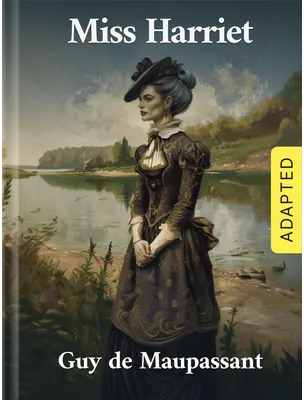
[adapted]
by
Guy de Maupassant

There were seven of us on a drag, (an open coach or carriage) four women and three men; one of the men sat on the front seat beside the driver. We were going up, very slowly, the curving road up the steep cliff along the coast.
Starting out from Etretat very early in the morning to visit the ruins of Tancarville, we were still half asleep, cold from the morning air. The women especially, who were not used to these early trips, half opened and closed their eyes every moment, nodding their heads or yawning, not noticing the beauty of the dawn.
It was fall. On both sides of the road lay the empty fields, turned yellow by the short stalks of wheat and oats which covered the ground like a beard that had been badly shaved. The wet earth looked like it was steaming. Larks were singing high up in the air, while other birds chirped in the bushes.
The sun rose at last in front of us, bright red on the horizon, and as it went up, growing clearer from minute to minute, the country seemed to wake up, to smile, to shake itself like a young girl leaving her bed in her white dress of mist.
The Comte d’Etraille, who was sitting on the box, shouted: “Look! look! a hare!” and he stretched out his arm to the left, pointing to a field of clover. The animal ran quickly along, almost hidden by the clover, only its large ears showing. Then it turned quickly across a line in the field, stopped, started off again at full speed, changed its direction, stopped again, nervous, watching for every danger, not sure which way to go, when suddenly it began to run with big jumps, disappearing finally in a large field of beetroot.
All the men had woken up to watch the animal run.
René Lamanoir said loudly: “We are not at all polite this morning,” and; looking at his neighbor, the little Baroness de Serennes, who was fighting sleep, he said to her in a low voice: “You are thinking of your husband, baroness. Do not worry; he will not return before Saturday, so you still have four days.”
She answered with a sleepy smile: “How stupid you are!” Then, shaking off her sleepiness, she added: “Now, let somebody say something to make us laugh. You, Monsieur Chenal, who are known for having had more romances than the Duc de Richelieu, tell us a love story you were part of; anything you like.”
Léon Chenal, an old painter, who had once been very handsome, very strong, very proud of his body and very popular with women, took his long white beard in his hand and smiled. Then, after thinking for a few moments, he suddenly became serious.
“Ladies, it will not be a funny story, because I am going to tell you the saddest love story of my life, and I really hope that none of my friends will ever go through a similar experience.
“I was twenty-five years old and was wandering along the coast of Normandy. I call ‘pillaging’ wandering about, with a backpack on one’s back, from inn to inn, under the excuse of studying and drawing landscapes. I knew nothing more enjoyable than that carefree wandering life, in which one is perfectly free, without chains of any kind, without care, without worry, without thinking even of tomorrow. One goes in any direction one pleases, without any guide except his wish, without any adviser except his eyes. One stops because a running stream attracts one, because the smell of potatoes frying tickles one’s nose when passing an inn. Sometimes it is the smell of clematis flowers which decides one’s choice, or the playful look of the servant at an inn.
Do not hate me for my love for these country girls. These girls have a soul as well as senses, and also firm cheeks and fresh lips; while their warm and ready kisses have the taste of wild fruit. Love is always love, wherever it comes from. A heart that beats when you come near, an eye that cries when you go away are things so rare, so sweet, so special that they must never be hated.
“I have had meetings in ditches full of flowers, behind the cow stable and in barns among the straw, still warm from the heat of the day. I have memories of rough gray cloth covering soft farm worker skin and I miss simple, honest kisses, more gentle in their natural honesty than the careful signs of love from charming and high-class women.
“But what you love most among all these different adventures is the country, the woods, the sunrise, the evening light, the moonlight. These are, for the painter, honeymoon trips with Nature. You are alone with her in that long and quiet time together. You go to sleep in the fields, among daisies and poppies, and when you open your eyes in the bright sunlight you see in the distance the little village with its pointed clock tower that rings at noon.
“You sit down by the side of a spring of water which flows out at the foot of an oak tree, among tall, thin weeds, shining with life. You go down on your knees, bend forward and drink that cold, clear water which wets your mustache and nose; you drink it with a pleasure in your body, as if you kissed the spring, mouth to mouth. Sometimes, when you find a deep pool along the path of these small streams, you jump in completely naked, and you feel on your skin, from head to foot, like a very cold and very pleasant gentle touch, the light and gentle trembling of the stream.
“You are happy on the hills, sad on the edge of ponds, full of ideas when the sun is setting in a sea of dark red clouds and makes red light on the river. And at night, under the moon, which moves across the sky, you think of a thousand strange things that would never have come to your mind in the bright light of day.
“So, while walking through the same area where we are, this year I came to the little village of Bénouville, on the cliff between Yport and Etretat. I came from Fécamp, following the coast, a high coast as straight as a wall, with its sticking-out chalk cliffs going straight down into the sea. I had walked since early morning on the short grass, smooth and soft like a carpet, that grows on the edge of the cliff. And, singing loudly, I walked with long steps, looking sometimes at the slow circling flight of a gull with its white curved wings against the blue sky, sometimes at the brown sails of a fishing boat on the green sea. In short, I had passed a happy day, a day of freedom and of no worries.
“A little farmhouse where travellers stayed was shown to me, a kind of inn, run by a country woman, which stood in the centre of a Norman yard surrounded by two rows of beech trees. Leaving the coast, I reached the small village, which was surrounded by big trees, and I went to the house of Mother Lecacheur. She was an old, wrinkled and strict country woman, who seemed always to receive customers not gladly, with a kind of challenge.
“It was the month of May. The apple trees with wide branches covered the yard with a rain of flowers which fell without stopping on people and on the grass.
I said: ‘Well, Madame Lecacheur, have you a room for me?’
Surprised to find that I knew her name, she answered: ‘That depends; all the rooms are taken, but still I can find out.’
“In five minutes we had agreed, and I put my bag on the dirt floor of a simple room that had a bed, two chairs, a table and a washbowl. The room looked into the big, smoky kitchen, where the guests ate their meals with the people of the farm and the landlady, who was a widow.
“I washed my hands, and then I went out. The old woman was cooking a chicken stew for dinner in the large fireplace where an iron pot hung, black with smoke.
‘You have travellers here now?’ I said to her.
She answered in an upset voice: ‘I have a lady, an English lady, who is an older woman. She is in the other room.’
“I got, by paying an extra five sous a day, the permission to eat alone out in the yard when the weather was good. My place was set outside the door, and I was beginning to chew the thin legs of the Normandy chicken, to drink the clear cider and to eat the piece of white bread, which was four days old but very good, when suddenly the wooden gate that led to the road was opened and a strange lady walked toward the house.
“She was very thin, very tall, so tightly wrapped in a red Scottish plaid shawl that you might have thought she had no arms, if you had not seen a long hand appear just above her hips, holding a white tourist umbrella. Her face was like that of a mummy, surrounded by curls of gray hair, which moved about at every step she took and made me think, I do not know why, of a pickled herring in paper curlers. Lowering her eyes, she passed quickly in front of me and entered the house. That strange sight cheered me. She was surely my neighbor, the English lady of middle age who our hostess had spoken about.
“I did not see her again that day. The next day, when I had sat down to start painting at the end of that beautiful valley you know, which goes as far as Etretat, I saw, when I suddenly looked up, something strange standing on the top of the cliff, you could say a pole covered with flags. It was her. When she saw me, she suddenly disappeared.
I went back into the house at noon for lunch and sat down at the shared table, so I could get to know this strange person. But she did not answer my polite attempts, did not even notice my small acts of help. I kept pouring water for her, I handed her the dishes very eagerly. A small, almost not seen, movement of the head and an English word, spoken so softly that I did not understand it, were her only thanks.
“I stopped thinking about her, although she had bothered my thoughts. At the end of three days I knew as much about her as Madame Lecacheur herself did.
“She was called Miss Harriet. Looking for a quiet village in which to pass the summer, she had picked Bénouville about six months before and did not seem willing to leave it. She never spoke at table, ate quickly, reading a small Protestant book all the time. She gave a copy of it to everybody. The priest himself had received at least four copies, brought by a little boy to whom she had paid two sous as a fee. She said sometimes to our hostess, suddenly and without in any way preparing her for the statement:
‘I love Jesus more than all. I admire him in everything; I love him in all nature; I keep him always in my heart.’ And she would right away give the old woman one of her leaflets which were meant to change the whole world to her religion.
“In the village she was not liked. In fact, the schoolmaster said she was an atheist, and a kind of bad name stuck to her. The priest, who had been asked by Madame Lecacheur, answered: ‘She is a heretic, but God does not want the death of the sinner, and I believe she is a person of good morals.’ These words, ‘atheist,’ ‘heretic,’ words which no one can define exactly, put doubts in some minds. It was said, however, that this English woman was rich and that she had spent her life in travelling through every country in the world because her family had rejected her. Why had her family rejected her? Because of her lack of religion, of course!
She was, in fact, one of those people with very strict ideas; one of those very sure-of-themselves people, which England has so many of; one of those good and hard to stand old unmarried women who are always at the common dining tables of every hotel in Europe, who spoil Italy, poison Switzerland, make the charming cities of the Mediterranean impossible to live in, carry everywhere their crazy habits, their manners like virgins turned to stone, their very strange clothes and a certain smell of rubber which makes you think that at night they are put into a rubber covering. Whenever I saw one of these people in a hotel I ran away like the birds who see a scarecrow in a field. This woman, however, seemed so very unusual that I did not dislike her.
“Madame Lecacheur, naturally unfriendly to everything that was not simple and from the country, felt in her small heart a sort of hate for the very excited words of the old maid. She had found a phrase to describe her, an insulting word that came to her lips, brought up by I do not know what confused and mysterious thinking. She said: ‘That woman is a demoniac.’ This name, used for that serious and emotional woman, seemed to me very funny. I myself now never called her anything but ‘the demoniac,’ feeling a special pleasure in saying this word out loud when I saw her.
“One day I asked Mother Lecacheur: ‘Well, what is our crazy woman doing to-day?’
To this my country friend answered with a shocked look: ‘What do you think, sir? She picked up a toad whose paw had been crushed and carried it to her room and has put it in her washbowl and bandaged it as if it were a man. If that is not a sin I should like to know what is!’
“On another time, when walking along the shore she bought a large fish which had just been caught, simply to throw it back into the sea again. The sailor who sold it to her, though she paid him well, now started to swear, even angrier, really, than if she had put her hand into his pocket and taken his money. For more than a month he could not speak of the event without getting very angry and saying it was very wrong. Oh, yes! She was really a devil, this Miss Harriet, and Mother Lecacheur must have had a good idea in calling her that.
“The stable boy, who was called Sapeur because he had worked in Africa when he was young, had other opinions. He said with a naughty look: ‘She is an old witch who has done many things.’
If the poor woman had only known!
The little kind Celeste did not want to serve her, but I was never able to understand why. Probably her only reason was that she was a stranger, from another race; who spoke a different language and had another religion. She was, in fact, a demon!
“She spent her time walking around the countryside, loving and looking for God in nature. I found her one evening on her knees in a group of bushes. After I saw something red through the leaves, I moved the branches away, and Miss Harriet right away stood up, confused at being found like that, looking at me with scared eyes like those of an owl surprised in the daytime.
Sometimes, when I was working among the rocks, I would suddenly see her on the edge of the cliff like a lighthouse light. She would be looking with great joy at the wide sea shining in the sunlight and the endless sky with its golden colors. Sometimes I would see her at the end of the valley, walking quickly with her light English step, and I would go toward her, attracted by I did not know what, just to see her bright face, her thin, hard to describe features, which seemed to shine with inner and deep happiness.
“I would often also see her in the corner of a field, sitting on the grass in the shade of an apple tree, with her small religious book open on her knee while she looked into the distance.
“I could not leave that quiet country area, to which I was very attached because I loved its wide and peaceful land. I was happy in this hidden farm, far from everything, but close to the earth, the good, beautiful, green earth. And — must I say it? — there was also a little curiosity that kept me at the house of Mother Lecacheur. I wanted to get to know this strange Miss Harriet a little and to know what happens in the lonely souls of those traveling old English women.
“We met in a rather strange way. I had just finished a painting that seemed to me to be worth something, and so it was, as it sold for ten thousand francs fifteen years later. It was, however, as simple as two and two make four, and it did not follow the art school rules. The whole right side of my picture showed a rock, an enormous rock, covered with seaweed, brown, yellow and red, over which the sun poured like a stream of oil. The light fell on the rock as if it were on fire, without the sun, which was behind me, being visible. That was all. A first strange painting of bright, beautiful light. On the left was the sea, not the blue sea, the slate-colored sea, but a sea of jade, greenish, milky and solid under the dark-colored sky.
“I was so happy with my work that I danced from joy as I carried it back to the hotel. I wanted the whole world to see it right away. I remember that I showed it to a cow that was eating grass by the side of the road, shouting as I did so: ‘Look at that, my old beauty; you will not often see one like it again.’
“When I got to the house I called to Mother Lecacheur right away, shouting as loud as I could: ‘Hello, there! Mrs. Landlady, come here and look at this.’ The country woman came up and looked at my work with her stupid eyes that saw nothing and could not even tell if the picture showed an ox or a house.
“Miss Harriet just then came home, and she passed behind me just as I was holding out my canvas at arm’s length, showing it to our landlady. The madwoman could not help but see it, for I made sure to show the thing so that she could not miss it. She stopped suddenly and stood still, surprised. It was her rock which was painted, the one which she climbed to spend time dreaming without anyone bothering her.
“She said a British ‘Aoh,’ which was both so strong and so nice that I turned round to her, smiling, and said: “‘This is my latest study, mademoiselle.’
She said softly, joyfully, comically and gently: ‘Oh! monsieur, you understand nature as a living thing.’
I blushed and was more touched by that praise than if it had come from a queen. I was caught, beaten, defeated. I could have hugged her, on my honor.
“I sat at the table next to her as usual. For the first time she spoke, thinking out loud: ‘Oah! I really love nature.’ I gave her some bread, some water, some wine. She now accepted them with a little smile like a mummy. I then began to talk about the view.
After the meal we got up from the table together and walked slowly across the yard; then, no doubt attracted by the bright red light which the setting sun shone on the surface of the sea, I opened the gate which led to the cliff, and we walked along side by side, as happy as two people can be who have just learned to understand and see into each other’s reasons and feelings.
“It was one of those warm, soft evenings which give a feeling of comfort to body and mind alike. All is enjoyment, everything pleases. The warm, soft air, full of the scent of grasses and the smell of seaweed, calms the sense of smell with its wild scent, calms the mouth with its taste of the sea, calms the mind with its sweetness everywhere.
“We were now walking along the edge of the cliff, high above the endless sea which moved its small waves below us at a distance of a hundred metres. And we breathed in, with open mouths and chests out, the fresh wind, salty from touching the waves, that came from the ocean and passed over our faces.
“Wrapped in her patterned shawl, with a look of wonder as she faced the wind, the English woman looked steadily at the great ball of the sun as it went down toward the horizon. Far off in the distance a ship with three masts with all its sails open was seen against the dark red sky and a steamship, a little nearer, went past, leaving behind it a line of smoke on the horizon. The red globe of the sun sank slowly lower and lower and soon touched the water just behind the still ship, which, in its bright light, looked as if it was in a ring of fire. We saw it go down, grow smaller and disappear, swallowed by the ocean.
“Miss Harriet looked with great joy at the last light of the day that was ending. She seemed to want to hug the sky, the sea, the whole view.
She whispered: ‘Aoh! I love — I love’ — I saw a tear in her eye. She went on: ‘I wish I was a little bird, so that I could fly up into the sky.’ She stayed standing as I had often seen her before, standing on the cliff, her face as red as her shawl. I would have liked to draw her in my album. It would have been a funny picture of great joy. I turned away so I would not laugh.
“I then spoke to her about painting as I would have done to another artist, using the special words common among people in this job. She listened carefully, trying hard to guess the meaning of the words, so she could understand my ideas. From time to time she would say: ‘Oah! I understand, I understand. It is very interesting.’
We returned home.
“The next day, when she saw me, she came to me, in a friendly way, holding out her hand; and we at once became good friends.
She was a good person who had a sort of soul like a spring, which became excited at once. She had no balance like all women who are unmarried at the age of fifty. She seemed to be kept fresh in her innocence, but her heart still kept something very young and easily excited. She loved both nature and animals with a strong feeling, a love like old wine that grew strong with age, with a warm love that she had never given to men.
“One thing is certain, that the sight of a mother dog feeding her puppies, a mother horse walking in a field with a baby horse at its side, a bird’s nest full of young ones, screaming, with their open mouths and their very big heads, touched her in a way I could see. Poor, lonely, sad, wandering creatures! I love you ever since I got to know Miss Harriet.
I soon found out that she had something she wanted to tell me, but did not dare, and I was amused by her shyness. When I started in the morning with my backpack on my back, she would go with me in silence up to the end of the village, clearly trying to find words to start a talk. Then she would leave me suddenly and walk away quickly with her bouncy step.
“One day, though, she found the courage: ‘I would like to see how you paint pictures. Will you? I have been very curious.’
And she turned red as if she had said something very shocking.
“I led her to the bottom of the Petit-Val, where I had started a big picture. She stayed standing behind me, following all my movements with close attention. Then, suddenly, maybe afraid that she was bothering me, she said: ‘Thank you,’ and walked away.
“But she soon became more friendly, and went with me every day, her face showing she was happy. She carried her camp stool under her arm, not letting me carry it. She would stay there for hours, silent and without moving, watching the tip of my brush with her eyes, in its every movement. When I got, unexpectedly, just the effect I wanted by a dash of color put on with the palette knife, she could not help saying a little ‘Aoh!’ of surprise, of joy, of praise. She had very deep respect for my paintings, an almost religious respect for that human copy of a part of nature’s work from God. My studies seemed to her a kind of religious pictures, and sometimes she spoke to me about God, with the idea of making me believe.