'Metamorphoses' by Ovid was originally published around 8 AD, and Book 4 is part of this larger work.
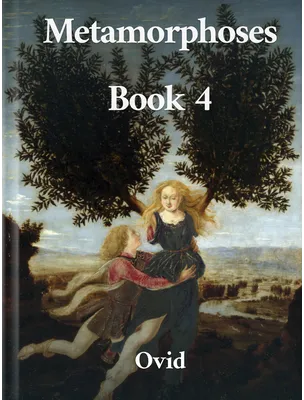
The daughters of Minyas weave and tell tales instead of honoring Bacchus, and their stories spill out in rich threads: the tragic love of Pyramus and Thisbe, whispered through a wall; the cunning of Mars and Venus, caught in Vulcan’s clever trap; and the misfortunes of others ensnared by passion and fate. As their defiance of the god grows, Bacchus’s presence darkens the air, and the boundaries between storyteller and story begin to blur.
In the captivating world of Ovid's "Metamorphoses, Book 4," the boundaries of love and transformation blur in a dance of desire and despair. This ancient tale weaves together the stories of powerful characters like Pygmalion, who falls for a lifeless statue, and the tragic figure of Io, a maiden turned into a heifer by the vengeful goddess Juno. As passion ignites and jealousy simmers, the characters navigate a landscape filled with gods, magic, and the struggle for identity. Each story unfolds with a rich tapestry of emotions, showcasing how love can lead to both creation and destruction. Ovid's lyrical prose invites readers to explore the depths of human longing, the pain of separation, and the quest for change. In this enchanting book, the theme of transformation takes center stage, revealing the profound ways in which love alters our very essence. Prepare to be enthralled by a world where the impossible becomes possible, and every heart has the potential to metamorphose.
Full Name: Publius Ovidius Naso
Birthdate: March 20, 43 BC
Place of Birth: Sulmo, Italy
Date and Place of Death: AD 17 or 18, Tomis (present-day Constanța, Romania)
Occupation: Poet
Notable Works: Ovid is best known for his works "Metamorphoses," "Amores," and "The Art of Love" (Ars Amatoria).
Early Life: Ovid was born into a wealthy family. He received a good education in Rome, studying rhetoric and poetry. His early life was marked by the privilege of his social status, allowing him to pursue his literary interests.
Literary Career: Ovid began his literary career in Rome, gaining popularity for his elegiac poetry. His work often explored themes of love and transformation. "Metamorphoses," his most famous work, is a narrative poem that tells stories of mythological transformations. His innovative style and engaging narratives made him a major figure in Roman literature.
Personal Life: Ovid's personal life was marked by romantic escapades, which inspired much of his poetry. However, he faced political trouble and was famously exiled by Emperor Augustus in AD 8, which deeply affected him. He spent his remaining years in Tomis, where he continued to write, reflecting on his exile.
Ovid, a Roman poet, is known for his narrative style and mythological themes. He was inspired by Greek mythology and the transformation stories within it.
'Metamorphoses' is a narrative poem that falls under the genres of mythology and epic poetry.
Key characters include Pygmalion, Galatea, and the gods involved in their stories.
Book 4 features tales of transformation, focusing on characters who undergo significant changes, often due to love or divine intervention.
Key themes include love, transformation, identity, and the power of the gods.
Common symbols include statues, representing desire and transformation, and nature, reflecting change.
The work has been praised for its imaginative storytelling and depth, influencing many writers and artists over the centuries.
Yes, there have been various adaptations in literature, theater, and visual arts, showcasing its lasting impact.
'Metamorphoses' has had a significant influence on Western literature and art, inspiring countless works and continuing to be studied today.