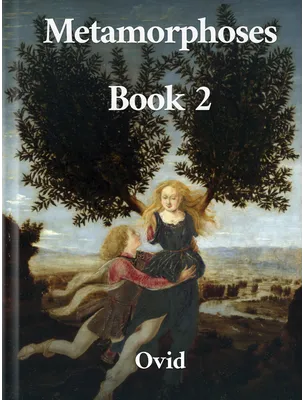
'Metamorphoses, Book 2' is part of Ovid's larger work, 'Metamorphoses', which was published around 8 AD.
[{"id":"para_1","index":0,"start":0,"offset":308,"words":1,"paraNum":"","lastModified":1752667532000,"semanticType":"title-book-title","voicework":"audio_file","blockId":"the_creation_en-bl1s5","language":"en","wordsRange":{"start":33333333,"end":66666667},"paragraphVersion":27,"direction":"ltr","paragraph":"<h1 class=\"ilm-title\" id=\"para_1\" semantictype=\"title-book-title\" data-ilmid=\"the_creation_en-bl1s5\" data-audio=\"1\" data-chapter=\"para_1\" data-words-count=\"1\" data-before=\"0\" data-ww=\"\"><span class=\"block-pb\"> <span class=\"block-pb is-animated\"></span> </span><span class=\"itm-wrap\">Metamorphoses</span></h1>","hasContent":true,"isFirst":true,"isLast":false},{"id":"para_2","index":1,"start":308,"offset":323,"words":2,"paraNum":"","lastModified":1753815923000,"semanticType":"title-subtitle","voicework":"audio_file","blockId":"the_creation_en-bl5c","language":"en","wordsRange":{"start":100000000,"end":103000000},"paragraphVersion":23,"direction":"ltr","paragraph":"<h1 class=\"ilm-title ilm-x-large ilm-subtitle\" id=\"para_2\" semantictype=\"title-subtitle\" data-ilmid=\"the_creation_en-bl5c\" data-audio=\"1\" data-chapter=\"para_2\" data-words-count=\"2\" data-before=\"1\" data-ww=\"\"><span class=\"block-pb\"> <span class=\"block-pb is-animated\"></span> </span><span class=\"itm-wrap\">Book 2</span></h1>","hasContent":true,"isFirst":false,"isLast":false},{"id":"para_3","index":2,"start":631,"offset":333,"words":3,"paraNum":"","lastModified":1753815942000,"semanticType":"title-author","voicework":"audio_file","blockId":"the_creation_en-bl1hh","language":"en","wordsRange":{"start":203000000,"end":208000000},"paragraphVersion":18,"direction":"ltr","paragraph":"<h1 class=\"ilm-title ilm-author ilm-large\" id=\"para_3\" semantictype=\"title-author\" data-ilmid=\"the_creation_en-bl1hh\" data-audio=\"1\" data-chapter=\"para_3\" data-words-count=\"3\" data-before=\"3\" data-ww=\"\"><span class=\"block-pb\"> <span class=\"block-pb is-animated\"></span> </span><span class=\"itm-wrap\">by<br>P. Ovidius Naso</span></h1>","hasContent":true,"isFirst":false,"isLast":false},{"id":"para_4","index":3,"start":964,"offset":143,"words":0,"paraNum":"","lastModified":1752217351000,"semanticType":"line","blockId":"the_creation_en-bl2t","language":"en","wordsRange":{"start":308000000,"end":310000000},"paragraphVersion":13,"direction":"ltr","paragraph":"<hr class=\"ilm-hr ilm-small\" id=\"para_4\" semantictype=\"line\" data-ilmid=\"the_creation_en-bl2t\" data-words-count=\"0\" data-before=\"6\" data-ww=\"\">","hasContent":true,"isFirst":false,"isLast":false},{"id":"para_5","index":4,"start":1107,"offset":1136,"words":0,"paraNum":"","lastModified":1755077807000,"semanticType":"illustration","blockId":"the_creation_en-bl1s8","language":"en","wordsRange":{"start":343333333,"end":376666667},"paragraphVersion":18,"direction":"ltr","paragraph":"<div class=\"ilm-illustration\" id=\"para_5\" semantictype=\"illustration\" data-ilmid=\"the_creation_en-bl1s8\" data-words-count=\"0\" data-before=\"6\" data-ww=\"\"><img width=\"600\" height=\"400\" data-src=\"ch0p0\" src=\"data:image/webp;base64,UklGRoYCAABXRUJQVlA4IHoCAACwDgCdASo8ACgAPmkoj0WkIqEZXbZkQAaEswBOmWqe4+U80C2ttcPHCk26vO06arvN8/BalXAbRYCntjncq32MRcEhdSDYm6cEkYVz9njg18/7jbEUJsvQyHqe47d+fXzEmp/BknzPg2j69tG/KvqXl3MKSU9rIVHUm8CtZMAA/vzpmCPzyK2yq3UYgDvPnKENAnQ7uxxdqJhXqv0KTJkN2w+zc1EWJWiRvP68EiT82fri3MBAH9XGBdwpLIWM0hO0LFJgnriG1/DKylZ2Gyiostjh+r6Q7e2hysijMsWmMamTJoQ2OIgG6t/oV5LCybr4vMmr1s2xcILVll0C0hrf87DloebgMaT7nFQ/NoNqLCoqrPC+G/o6B0qrHFWeH9ZpdpCGrEpFYa9y0HrXlEI+lKskIs4RpsMYKY4nRea/EwlBZCuHrVFIVwEO5fZNHOWEbmN8YdVhPaaqMFn5UrQeJhwJpb1kn8gAUsrlMfUXUeDwHA7GlRwE9i5xVrewphkULf19iycOjjE7suDcmBPuV6m/7qgRsuQSLeMBKqloCXgTpIUlh8Il6nnMmciLfdhuTFVbWzygQhlkczOJBTln1OcvDzicZShoWvuVAmqg0dypFGkONlnb9iQWGeU06vVFjOLcLrvfM0BCwwOsAzdrTLLqV+ilMyHlqEx4LLHI7RxiAs77904JxsFUltq+n1jr15c28H5KoEPqrQ6OtTHtAaAMYEwVu7TU2nGOiIy0Dq/M5BYUn2pHd+RA2DdZ8208rmO6HfMmENytnKg0WgIIcoqPTAEitIvfAtIj5nVGgdGAws6I0CCudolpLWHBgP8uNSfKFkdYAAAA\" alt=\"Metamorphoses, Book 2\"></div>","hasContent":true,"isFirst":false,"isLast":false},{"id":"para_6","index":5,"start":2243,"offset":497,"words":3,"paraNum":"","lastModified":1754677848000,"semanticType":"header-chapter-header","voicework":"no_audio","blockId":"the_creation_en-bl5d","language":"en","wordsRange":{"start":410000000,"end":414000000},"paragraphVersion":23,"direction":"ltr","paragraph":"<h2 class=\"ilm-header ilm-h2 ilm-large\" id=\"para_6\" semantictype=\"header-chapter-header\" data-ilmid=\"the_creation_en-bl5d\" data-chapter=\"para_6\" data-words-count=\"3\" data-before=\"6\" data-ww=\"\"><span class=\"block-pb\"> <span class=\"block-pb is-animated\"></span> </span><span class=\"itm-wrap\"><span class=\"chapter-text\"><span class=\"chapter-number\"><span class=\"chapter-label\"></span><span class=\"chapter-value\"></span></span><span class=\"chapter-title\">Phaethon and Phoebus</span></span></span></h2>","hasContent":true,"isFirst":false,"isLast":false},{"id":"para_7","index":6,"start":2740,"offset":683,"words":53,"paraNum":"1.1","lastModified":1752217351000,"semanticType":"par","voicework":"audio_file","blockId":"the_creation_en-bl5e","language":"en","wordsRange":{"start":514000000,"end":576000000},"paragraphVersion":12,"direction":"ltr","paragraph":"<p id=\"para_7\" semantictype=\"par\" data-ilmid=\"the_creation_en-bl5e\" data-audio=\"1\" data-words-count=\"53\" data-before=\"9\" data-ww=\"\"><span class=\"block-num\" data-id=\"1.1\"></span><span class=\"block-pb\"> <span class=\"block-pb is-animated\"></span> </span><span class=\"itm-wrap\">Glowing with gold, flaming with carbuncles<br>on stately columns raised, refulgent shone<br>the palace of the Sun, with polished dome<br>of ivory gleaming, and with portals twain<br>of burnished silver. And the workmanship<br>exceeded all the wealth of gems and gold;<br>for there had Mulciber engraved the seas<br>encircling middle earth; the round of earth,<br>and heaven impending over the land.</span></p>","hasContent":true,"isFirst":false,"isLast":false},{"id":"para_8","index":7,"start":3423,"offset":1029,"words":109,"paraNum":"1.2","lastModified":1753816102000,"semanticType":"par","voicework":"audio_file","blockId":"the_creation_en-bl5f","language":"en","wordsRange":{"start":676000000,"end":801000000},"paragraphVersion":18,"direction":"ltr","paragraph":"<p id=\"para_8\" semantictype=\"par\" data-ilmid=\"the_creation_en-bl5f\" data-audio=\"1\" data-words-count=\"109\" data-before=\"62\" data-ww=\"\"><span class=\"block-num\" data-id=\"1.2\"></span><span class=\"block-pb\"> <span class=\"block-pb is-animated\"></span> </span><span class=\"itm-wrap\"> And there<br>amid the waves were azure deities:<br>melodious Triton and elusive Proteus; there<br>Aegeaan pressing with his arms the backs.<br>Of monstrous whales; and Doris in the sea<br>and all her daughters; some amid the waves<br>and others sitting on the bank to dry<br>their sea-green hair, and others borne about<br>by fishes. Each was made to show a fair<br>resemblance to her sisters — yet not one<br> appearance was assigned to all — they seemed<br>as near alike as sisters should in truth.<br>And men and cities, woods and savage beasts,<br>and streams and nymphs, and sylvan deities<br>were carved upon the land; and over these<br>an image of the glittering sky was fixed; —<br>six signs were on the right, six on the left.</span></p>","hasContent":true,"isFirst":false,"isLast":false},{"id":"para_9","index":8,"start":4452,"offset":560,"words":35,"paraNum":"1.3","lastModified":1753816128000,"semanticType":"par","voicework":"audio_file","blockId":"the_creation_en-bl5g","language":"en","wordsRange":{"start":901000000,"end":943000000},"paragraphVersion":18,"direction":"ltr","paragraph":"<p id=\"para_9\" semantictype=\"par\" data-ilmid=\"the_creation_en-bl5g\" data-audio=\"1\" data-words-count=\"35\" data-before=\"171\" data-ww=\"\"><span class=\"block-num\" data-id=\"1.3\"></span><span class=\"block-pb\"> <span class=\"block-pb is-animated\"></span> </span><span class=\"itm-wrap\">Here when audacious Phaethon arrived<br>by steep ascending paths, without delay<br>he entered in the shining palace-gates<br>of his reputed parent, making haste<br>to stand in his paternal presence. There,<br>unable to endure the dazzling light,<br>he waited at a distance.</span></p>","hasContent":true,"isFirst":false,"isLast":false},{"id":"para_10","index":9,"start":5012,"offset":688,"words":55,"paraNum":"1.4","lastModified":1753816184000,"semanticType":"par","voicework":"audio_file","blockId":"the_creation_en-bl5h","language":"en","wordsRange":{"start":1043000000,"end":1107000000},"paragraphVersion":19,"direction":"ltr","paragraph":"<p id=\"para_10\" semantictype=\"par\" data-ilmid=\"the_creation_en-bl5h\" data-audio=\"1\" data-words-count=\"55\" data-before=\"206\" data-ww=\"\"><span class=\"block-num\" data-id=\"1.4\"></span><span class=\"block-pb\"> <span class=\"block-pb is-animated\"></span> </span><span class=\"itm-wrap\">Phoebus sat,<br>arrayed in royal purple, on a throne<br>that glittered with the purest emeralds. —<br>there to the left and right, Day, Month and Year,<br>time and the Hours, at equal distance stood;<br>and vernal Spring stood crowned with wreathed flowers;<br>and naked Summer stood with sheaves of wheat;<br>and Autumn stood besmeared with trodden grapes;<br>and icy Winter rough with hoary hair.</span></p>","hasContent":true,"isFirst":false,"isLast":false},{"id":"para_11","index":10,"start":5700,"offset":536,"words":34,"paraNum":"1.5","lastModified":1752217351000,"semanticType":"par","voicework":"audio_file","blockId":"the_creation_en-bl5i","language":"en","wordsRange":{"start":1207000000,"end":1247000000},"paragraphVersion":12,"direction":"ltr","paragraph":"<p id=\"para_11\" semantictype=\"par\" data-ilmid=\"the_creation_en-bl5i\" data-audio=\"1\" data-words-count=\"34\" data-before=\"261\" data-ww=\"\"><span class=\"block-num\" data-id=\"1.5\"></span><span class=\"block-pb\"> <span class=\"block-pb is-animated\"></span> </span><span class=\"itm-wrap\">And from the midst, with orbs that view the world,<br>Phoebus beheld the trembling youth, fear-struck,<br>in mute amazement, and he said; “Declare<br>the reason of thy journey. What wilt thou<br>in this my palace, Phaethon my child<br>beloved?”</span></p>","hasContent":true,"isFirst":false,"isLast":false},{"id":"para_12","index":11,"start":6236,"offset":621,"words":49,"paraNum":"1.6","lastModified":1752217351000,"semanticType":"par","voicework":"audio_file","blockId":"the_creation_en-bl5j","language":"en","wordsRange":{"start":1347000000,"end":1404000000},"paragraphVersion":12,"direction":"ltr","paragraph":"<p id=\"para_12\" semantictype=\"par\" data-ilmid=\"the_creation_en-bl5j\" data-audio=\"1\" data-words-count=\"49\" data-before=\"295\" data-ww=\"\"><span class=\"block-num\" data-id=\"1.6\"></span><span class=\"block-pb\"> <span class=\"block-pb is-animated\"></span> </span><span class=\"itm-wrap\">And to him replied the youth;<br>“O universal light of all the world,<br>my father Phoebus, if thy name be mine,<br>if Clymene has not concealed her sin<br>beneath some pretext, give to me, my sire,<br>a token to declare thy fatherhood<br>which may establish my assured descent,<br>and leave no dark suspicions in our minds.” —</span></p>","hasContent":true,"isFirst":false,"isLast":false},{"id":"para_13","index":12,"start":6857,"offset":719,"words":67,"paraNum":"1.7","lastModified":1752217351000,"semanticType":"par","voicework":"audio_file","blockId":"the_creation_en-bl5k","language":"en","wordsRange":{"start":1504000000,"end":1580000000},"paragraphVersion":12,"direction":"ltr","paragraph":"<p id=\"para_13\" semantictype=\"par\" data-ilmid=\"the_creation_en-bl5k\" data-audio=\"1\" data-words-count=\"67\" data-before=\"344\" data-ww=\"\"><span class=\"block-num\" data-id=\"1.7\"></span><span class=\"block-pb\"> <span class=\"block-pb is-animated\"></span> </span><span class=\"itm-wrap\"> then Phoebus from his shining brows cast down<br>his circling rays; called Phaethon to him,<br>and as he held him to his breast replied;<br>“O child most worthy of thy sire, the truth<br>was told thee by thy mother; wherefore doubts<br>to dissipate, consider thy desire,<br>and ask of me that I may freely give:<br>yea, let the Nether Lake, beyond our view,<br>(which is the oath of Gods inviolate)<br> be witness to my word.”</span></p>","hasContent":true,"isFirst":false,"isLast":false},{"id":"para_14","index":13,"start":7576,"offset":441,"words":23,"paraNum":"1.8","lastModified":1752217351000,"semanticType":"par","voicework":"audio_file","blockId":"the_creation_en-bl5l","language":"en","wordsRange":{"start":1680000000,"end":1707000000},"paragraphVersion":12,"direction":"ltr","paragraph":"<p id=\"para_14\" semantictype=\"par\" data-ilmid=\"the_creation_en-bl5l\" data-audio=\"1\" data-words-count=\"23\" data-before=\"411\" data-ww=\"\"><span class=\"block-num\" data-id=\"1.8\"></span><span class=\"block-pb\"> <span class=\"block-pb is-animated\"></span> </span><span class=\"itm-wrap\">When this was said<br>the happy youth at once began to plead<br>command and guidance of his father’s steeds,<br>wing-footed, and his chariot for a day.</span></p>","hasContent":true,"isFirst":false,"isLast":false},{"id":"para_15","index":14,"start":8017,"offset":635,"words":53,"paraNum":"1.9","lastModified":1752217351000,"semanticType":"par","voicework":"audio_file","blockId":"the_creation_en-bl1mp","language":"en","wordsRange":{"start":1807000000,"end":1868000000},"paragraphVersion":12,"direction":"ltr","paragraph":"<p id=\"para_15\" semantictype=\"par\" data-ilmid=\"the_creation_en-bl1mp\" data-audio=\"1\" data-words-count=\"53\" data-before=\"434\" data-ww=\"\"><span class=\"block-num\" data-id=\"1.9\"></span><span class=\"block-pb\"> <span class=\"block-pb is-animated\"></span> </span><span class=\"itm-wrap\">But Phoebus much repented that he sware,<br>and thrice and four times shook his radiant head;<br>“Ah, would I might refuse my plighted word;<br>and oh, that it were lawful to deny<br>the promised boon. — For I confess, O son,<br>this only I should keep from thee — and yet<br>‘Tis lawful to dissuade. It is unsafe<br>to satisfy thy will. </span></p>","hasContent":true,"isFirst":false,"isLast":false},{"id":"para_16","index":15,"start":8652,"offset":528,"words":33,"paraNum":"1.10","lastModified":1752217351000,"semanticType":"par","voicework":"audio_file","blockId":"the_creation_en-bl1r4","language":"en","wordsRange":{"start":1968000000,"end":2007000000},"paragraphVersion":12,"direction":"ltr","paragraph":"<p id=\"para_16\" semantictype=\"par\" data-ilmid=\"the_creation_en-bl1r4\" data-audio=\"1\" data-words-count=\"33\" data-before=\"487\" data-ww=\"\"><span class=\"block-num\" data-id=\"1.10\"></span><span class=\"block-pb\"> <span class=\"block-pb is-animated\"></span> </span><span class=\"itm-wrap\">It is a great<br>request, O Phaethon, which neither suits<br>thy utmost strength nor tender years; for thou<br>art mortal, and thou hast aspired to things<br>immortal. Ignorance has made thy thought<br>transcend the province of the Gods. </span></p>","hasContent":true,"isFirst":false,"isLast":false},{"id":"para_17","index":16,"start":9180,"offset":561,"words":39,"paraNum":"1.11","lastModified":1752217351000,"semanticType":"par","voicework":"audio_file","blockId":"the_creation_en-bl1r5","language":"en","wordsRange":{"start":2107000000,"end":2153000000},"paragraphVersion":12,"direction":"ltr","paragraph":"<p id=\"para_17\" semantictype=\"par\" data-ilmid=\"the_creation_en-bl1r5\" data-audio=\"1\" data-words-count=\"39\" data-before=\"520\" data-ww=\"\"><span class=\"block-num\" data-id=\"1.11\"></span><span class=\"block-pb\"> <span class=\"block-pb is-animated\"></span> </span><span class=\"itm-wrap\">I vaunt<br>no vain exploits; but only I can stand<br>securely on the flame-fraught axle-tree:<br>even the Ruler of Olympian Gods,<br>who hurls fierce lightnings with his great right hand,<br>may never dare to drive this chariot,<br>and what art thou to equal mighty Jove?</span></p>","hasContent":true,"isFirst":false,"isLast":false},{"id":"para_18","index":17,"start":9741,"offset":746,"words":64,"paraNum":"1.12","lastModified":1752217351000,"semanticType":"par","voicework":"audio_file","blockId":"the_creation_en-bl5m","language":"en","wordsRange":{"start":2253000000,"end":2326000000},"paragraphVersion":12,"direction":"ltr","paragraph":"<p id=\"para_18\" semantictype=\"par\" data-ilmid=\"the_creation_en-bl5m\" data-audio=\"1\" data-words-count=\"64\" data-before=\"559\" data-ww=\"\"><span class=\"block-num\" data-id=\"1.12\"></span><span class=\"block-pb\"> <span class=\"block-pb is-animated\"></span> </span><span class=\"itm-wrap\">“The opening path is steep and difficult,<br>for scarcely can the steeds, refreshed at dawn,<br>climb up the steeps: and when is reached the height,<br>extreme of midmost Heaven, and sea and earth<br>are viewed below, my trembling breast is filled<br>with fearful apprehensions: and requires<br>the last precipitous descent a sure<br>command. Then, also, Tethys, who receives<br> me in her subject waves, is wont to fear<br>lest I should fall disastrous. </span></p>","hasContent":true,"isFirst":false,"isLast":false},{"id":"para_19","index":18,"start":10487,"offset":527,"words":32,"paraNum":"1.13","lastModified":1752217351000,"semanticType":"par","voicework":"audio_file","blockId":"the_creation_en-bl1r6","language":"en","wordsRange":{"start":2426000000,"end":2464000000},"paragraphVersion":12,"direction":"ltr","paragraph":"<p id=\"para_19\" semantictype=\"par\" data-ilmid=\"the_creation_en-bl1r6\" data-audio=\"1\" data-words-count=\"32\" data-before=\"623\" data-ww=\"\"><span class=\"block-num\" data-id=\"1.13\"></span><span class=\"block-pb\"> <span class=\"block-pb is-animated\"></span> </span><span class=\"itm-wrap\">And around<br>the hastening sky revolves in constant whirl,<br>drawing the lofty stars with rapid twist.<br>I struggle on. The force that overcomes<br>the heavenly bodies overwhelms me not,<br>and I am borne against that rapid globe.<br></span></p>","hasContent":true,"isFirst":false,"isLast":false},{"id":"para_20","index":19,"start":11014,"offset":649,"words":53,"paraNum":"1.14","lastModified":1752217351000,"semanticType":"par","voicework":"audio_file","blockId":"the_creation_en-bl1r7","language":"en","wordsRange":{"start":2564000000,"end":2624000000},"paragraphVersion":12,"direction":"ltr","paragraph":"<p id=\"para_20\" semantictype=\"par\" data-ilmid=\"the_creation_en-bl1r7\" data-audio=\"1\" data-words-count=\"53\" data-before=\"655\" data-ww=\"\"><span class=\"block-num\" data-id=\"1.14\"></span><span class=\"block-pb\"> <span class=\"block-pb is-animated\"></span> </span><span class=\"itm-wrap\">Suppose the chariot thine: what canst thou do?<br>Canst thou drive straight against the twisted pole<br> and not be carried from the lofty path<br>by the swift car? Art thou deceived to think<br>there may be groves and cities of the Gods,<br>and costly temples wondrously endowed?<br>The journey is beset with dreadful snares<br>and shapes of savage animals. </span></p>","hasContent":true,"isFirst":false,"isLast":false},{"id":"para_21","index":20,"start":11663,"offset":588,"words":41,"paraNum":"1.15","lastModified":1752217351000,"semanticType":"par","voicework":"audio_file","blockId":"the_creation_en-bl1nf","language":"en","wordsRange":{"start":2724000000,"end":2771000000},"paragraphVersion":12,"direction":"ltr","paragraph":"<p id=\"para_21\" semantictype=\"par\" data-ilmid=\"the_creation_en-bl1nf\" data-audio=\"1\" data-words-count=\"41\" data-before=\"708\" data-ww=\"\"><span class=\"block-num\" data-id=\"1.15\"></span><span class=\"block-pb\"> <span class=\"block-pb is-animated\"></span> </span><span class=\"itm-wrap\">If thou<br>shouldst hold upon thy way without mistake<br>yet must thy journey be through Taurus’ horns,<br>and through the Bow Haemonian, and the jaws<br> of the fierce Lion, and the cruel arms<br>of Scorpion, bent throughout a vast expanse, —<br>and Cancer’s curving arms reversely bent.<br></span></p>","hasContent":true,"isFirst":false,"isLast":false},{"id":"para_22","index":21,"start":12251,"offset":610,"words":45,"paraNum":"1.16","lastModified":1752217351000,"semanticType":"par","voicework":"audio_file","blockId":"the_creation_en-bl1r8","language":"en","wordsRange":{"start":2871000000,"end":2922000000},"paragraphVersion":12,"direction":"ltr","paragraph":"<p id=\"para_22\" semantictype=\"par\" data-ilmid=\"the_creation_en-bl1r8\" data-audio=\"1\" data-words-count=\"45\" data-before=\"749\" data-ww=\"\"><span class=\"block-num\" data-id=\"1.16\"></span><span class=\"block-pb\"> <span class=\"block-pb is-animated\"></span> </span><span class=\"itm-wrap\">“It is no easy task for thee to rule<br>the mettled four-foot steeds, enflamed in fires<br>that kindle in their breasts, forth issuing<br>in breathings from their mouths and nostrils hot; —<br>I scarce restrain them, as their struggling necks<br> pull on the harness, when their heated fires<br>are thus aroused.<br></span></p>","hasContent":true,"isFirst":false,"isLast":false},{"id":"para_23","index":22,"start":12861,"offset":1298,"words":152,"paraNum":"1.17","lastModified":1752217351000,"semanticType":"par","voicework":"audio_file","blockId":"the_creation_en-bl1mq","language":"en","wordsRange":{"start":3022000000,"end":3197000000},"paragraphVersion":12,"direction":"ltr","paragraph":"<p id=\"para_23\" semantictype=\"par\" data-ilmid=\"the_creation_en-bl1mq\" data-audio=\"1\" data-words-count=\"152\" data-before=\"794\" data-ww=\"\"><span class=\"block-num\" data-id=\"1.17\"></span><span class=\"block-pb\"> <span class=\"block-pb is-animated\"></span> </span><span class=\"itm-wrap\">“And, O my son, lest I<br>may be the author of a baneful gift,<br>beware, and as the time permits recall<br>thy rash request. Forsooth thou hast besought<br>undoubted signs of thy descent from me?<br>My fears for thee are certain signs that thou<br>art of my race — by my paternal fears<br>‘Tis manifest I am thy father. Lo!<br>Behold my countenance! and oh, that thou<br>couldst even pierce my bosom with thine eyes,<br>and so discover my paternal cares!<br>Look round thee on the treasured world’s delights<br>and ask the greatest blessing of the sky,<br>or sea or land, and thou shalt suffer no<br>repulse: but only this I must deplore,<br>which rightly named would be a penalty<br>and not an honour. — Thou hast made request<br>of punishment and not a gift indeed.<br>O witless boy! why dost thou hold my neck<br>with thy caressing arms? For, doubt it not,<br>as I have sworn it by the Stygian Waves,<br>whatever thou shalt wish, it shall be given —<br>but thou shouldst wish more wisely.”</span></p>","hasContent":true,"isFirst":false,"isLast":false},{"id":"para_24","index":23,"start":14159,"offset":770,"words":64,"paraNum":"1.18","lastModified":1753947145000,"semanticType":"par","voicework":"audio_file","blockId":"the_creation_en-bl5n","language":"en","wordsRange":{"start":3297000000,"end":3438666667},"paragraphVersion":71,"direction":"ltr","paragraph":"<p id=\"para_24\" semantictype=\"par\" data-ilmid=\"the_creation_en-bl5n\" data-audio=\"1\" data-words-count=\"64\" data-before=\"946\" data-ww=\"\"><span class=\"block-num\" data-id=\"1.18\"></span><span class=\"block-pb\"> <span class=\"block-pb is-animated\"></span> </span><span class=\"itm-wrap\"> So were all<br>his admonitions said, availing naught;<br>for Phaethon resisted his advice,<br>and urged again his claim, and eagerly burned<br>to use the chariot. Wherefore, Phoebus long<br>delaying and reluctant, took the youth<br>to view the spacious chariot, gift of Vulcan<i>. —</i><br>gold was the axle and the beam was gold,<br>the great Wheel had a golden tire and spokes<br>of silver; chrysolites and diamonds<br>reflected from the spangled yoke the light<br>of Phoebus.</span></p>","hasContent":true,"isFirst":false,"isLast":false},{"id":"para_25","index":24,"start":14929,"offset":633,"words":43,"paraNum":"1.19","lastModified":1753867365000,"semanticType":"par","voicework":"audio_file","blockId":"the_creation_en-bl5o","language":"en","wordsRange":{"start":3472000000,"end":3523000000},"paragraphVersion":23,"direction":"ltr","paragraph":"<p id=\"para_25\" semantictype=\"par\" data-ilmid=\"the_creation_en-bl5o\" data-audio=\"1\" data-words-count=\"43\" data-before=\"1010\" data-ww=\"\"><span class=\"block-num\" data-id=\"1.19\"></span><span class=\"block-pb\"> <span class=\"block-pb is-animated\"></span> </span><span class=\"itm-wrap\">While aspiring Phaethon admired<br>the glittering chariot and its workmanship,<br>the vigilant Aurora opened forth<br>her purple portals from the ruddy east,<br>disclosing halls replete with roses. All<br>the stars took flight, while Lucifer, the last<br>to quit his vigil, gathered that great host<br>and disappeared from his celestial watch.</span></p>","hasContent":true,"isFirst":false,"isLast":false},{"id":"para_26","index":25,"start":15562,"offset":673,"words":51,"paraNum":"1.20","lastModified":1753867365000,"semanticType":"par","voicework":"audio_file","blockId":"the_creation_en-bl5p","language":"en","wordsRange":{"start":3623000000,"end":3682000000},"paragraphVersion":20,"direction":"ltr","paragraph":"<p id=\"para_26\" semantictype=\"par\" data-ilmid=\"the_creation_en-bl5p\" data-audio=\"1\" data-words-count=\"51\" data-before=\"1053\" data-ww=\"\"><span class=\"block-num\" data-id=\"1.20\"></span><span class=\"block-pb\"> <span class=\"block-pb is-animated\"></span> </span><span class=\"itm-wrap\">And when his father, Phoebus, saw the earth<br>and the wide universe in glowing tints<br>arrayed, as waned the Moon’s diminished horns,<br>far-distant, then he bade the nimble Hours<br>to yoke the steeds. — At once the Deities<br>accomplished his commands, and led the steeds,<br>ambrosia-fed and snorting flames, from out<br>their spacious stalls; and fixed their sounding bits.</span></p>","hasContent":true,"isFirst":false,"isLast":false},{"id":"para_27","index":26,"start":16235,"offset":705,"words":61,"paraNum":"1.21","lastModified":1753867365000,"semanticType":"par","voicework":"audio_file","blockId":"the_creation_en-bl5q","language":"en","wordsRange":{"start":3782000000,"end":3851000000},"paragraphVersion":20,"direction":"ltr","paragraph":"<p id=\"para_27\" semantictype=\"par\" data-ilmid=\"the_creation_en-bl5q\" data-audio=\"1\" data-words-count=\"61\" data-before=\"1104\" data-ww=\"\"><span class=\"block-num\" data-id=\"1.21\"></span><span class=\"block-pb\"> <span class=\"block-pb is-animated\"></span> </span><span class=\"itm-wrap\"> Then with a hallowed drug the father touched<br>the stripling’s face, to make him proof against<br>the rapid flame, and wrought around his hair<br>the sun-rays. But, foreboding grief, he said,<br>while many a sigh heaved from his anxious breast;<br>“If thou canst only heed thy father’s voice —<br>be sparing of the whip and use with nerve<br>the reins; for of their own accord the steeds<br> will hasten. </span></p>","hasContent":true,"isFirst":false,"isLast":false},{"id":"para_28","index":27,"start":16940,"offset":653,"words":55,"paraNum":"1.22","lastModified":1753867365000,"semanticType":"par","voicework":"audio_file","blockId":"the_creation_en-bl1rc","language":"en","wordsRange":{"start":3951000000,"end":4014000000},"paragraphVersion":20,"direction":"ltr","paragraph":"<p id=\"para_28\" semantictype=\"par\" data-ilmid=\"the_creation_en-bl1rc\" data-audio=\"1\" data-words-count=\"55\" data-before=\"1165\" data-ww=\"\"><span class=\"block-num\" data-id=\"1.22\"></span><span class=\"block-pb\"> <span class=\"block-pb is-animated\"></span> </span><span class=\"itm-wrap\">Difficult are they to check<br>in full career. Thou must not drive the car<br>directly through five circles, for the track<br>takes a wide curve, obliquely, and is bound<br>by the extreme edge of three zones. — It avoids<br>the Southern Pole, and it avoids the Bear<br>that roams around the north. The way is plain;<br>the traces of the Wheel are manifest.<br></span></p>","hasContent":true,"isFirst":false,"isLast":false},{"id":"para_29","index":28,"start":17593,"offset":922,"words":103,"paraNum":"1.23","lastModified":1753867365000,"semanticType":"par","voicework":"audio_file","blockId":"the_creation_en-bl1rb","language":"en","wordsRange":{"start":4114000000,"end":4228000000},"paragraphVersion":20,"direction":"ltr","paragraph":"<p id=\"para_29\" semantictype=\"par\" data-ilmid=\"the_creation_en-bl1rb\" data-audio=\"1\" data-words-count=\"103\" data-before=\"1220\" data-ww=\"\"><span class=\"block-num\" data-id=\"1.23\"></span><span class=\"block-pb\"> <span class=\"block-pb is-animated\"></span> </span><span class=\"itm-wrap\">Observe with care that both the earth and sky<br> have their appropriate heat — Drive not too low,<br>nor urge the chariot through the highest plane;<br>for if thy course attain too great a height<br>thou wilt consume the mansions of the sky,<br>and if too low the land will scorch with heat.<br>Take thou the middle plane, where all is safe;<br>nor let the Wheel turn over to the right<br>and bear thee to the twisted Snake! nor let<br> it take thee to the Altar on the left —<br>so close to earth — but steer the middle course. —<br>to Fortune I commit thy fate, whose care<br>for thee so reckless of thyself I pray.<br></span></p>","hasContent":true,"isFirst":false,"isLast":false},{"id":"para_30","index":29,"start":18515,"offset":794,"words":77,"paraNum":"1.24","lastModified":1753867365000,"semanticType":"par","voicework":"audio_file","blockId":"the_creation_en-bl1ra","language":"en","wordsRange":{"start":4328000000,"end":4415000000},"paragraphVersion":20,"direction":"ltr","paragraph":"<p id=\"para_30\" semantictype=\"par\" data-ilmid=\"the_creation_en-bl1ra\" data-audio=\"1\" data-words-count=\"77\" data-before=\"1323\" data-ww=\"\"><span class=\"block-num\" data-id=\"1.24\"></span><span class=\"block-pb\"> <span class=\"block-pb is-animated\"></span> </span><span class=\"itm-wrap\">“While I am speaking humid night has touched<br>the margin of Hesperian shores. ‘Tis not<br>for us to idle; we are called away; —<br>when bright Aurora shines the darkness flies.<br>Take up the reins! But if thy stubborn breast<br> be capable of change use not our car,<br>but heed my counsel while the time permits,<br>and while thy feet are on a solid base,<br>but not, according to thy foolish wish,<br>pressing the axle. Rather let me light<br>the world beneath thy safe and wondering gaze.”</span></p>","hasContent":true,"isFirst":false,"isLast":false},{"id":"para_31","index":30,"start":19309,"offset":458,"words":23,"paraNum":"1.25","lastModified":1753867365000,"semanticType":"par","voicework":"audio_file","blockId":"the_creation_en-bl5r","language":"en","wordsRange":{"start":4515000000,"end":4542000000},"paragraphVersion":20,"direction":"ltr","paragraph":"<p id=\"para_31\" semantictype=\"par\" data-ilmid=\"the_creation_en-bl5r\" data-audio=\"1\" data-words-count=\"23\" data-before=\"1400\" data-ww=\"\"><span class=\"block-num\" data-id=\"1.25\"></span><span class=\"block-pb\"> <span class=\"block-pb is-animated\"></span> </span><span class=\"itm-wrap\">But Phaethon with youthful vigor leaped,<br>and in the light-made chariot lightly stood:<br>and he rejoiced, and with the reins in hand<br>thanked his reluctant parent.</span></p>","hasContent":true,"isFirst":false,"isLast":false},{"id":"para_32","index":31,"start":19767,"offset":610,"words":41,"paraNum":"1.26","lastModified":1753867365000,"semanticType":"par","voicework":"audio_file","blockId":"the_creation_en-bl5s","language":"en","wordsRange":{"start":4642000000,"end":4691000000},"paragraphVersion":20,"direction":"ltr","paragraph":"<p id=\"para_32\" semantictype=\"par\" data-ilmid=\"the_creation_en-bl5s\" data-audio=\"1\" data-words-count=\"41\" data-before=\"1423\" data-ww=\"\"><span class=\"block-num\" data-id=\"1.26\"></span><span class=\"block-pb\"> <span class=\"block-pb is-animated\"></span> </span><span class=\"itm-wrap\"> Instantly<br>Eous, Aethon, Pyrois and Phlegon,<br>the winged horses of the Sun, gave vent<br>to flame-like neighs that filled the shaking air;<br>they pawed the barriers with their shining hoofs.<br>Then Tethys, witless of her grandson’s fate<br>let back the barriers, — and the universe<br>was theirs to traverse. </span></p>","hasContent":true,"isFirst":false,"isLast":false},{"id":"para_33","index":32,"start":20377,"offset":499,"words":27,"paraNum":"1.27","lastModified":1753867365000,"semanticType":"par","voicework":"audio_file","blockId":"the_creation_en-bl1rd","language":"en","wordsRange":{"start":4791000000,"end":4822000000},"paragraphVersion":20,"direction":"ltr","paragraph":"<p id=\"para_33\" semantictype=\"par\" data-ilmid=\"the_creation_en-bl1rd\" data-audio=\"1\" data-words-count=\"27\" data-before=\"1464\" data-ww=\"\"><span class=\"block-num\" data-id=\"1.27\"></span><span class=\"block-pb\"> <span class=\"block-pb is-animated\"></span> </span><span class=\"itm-wrap\">Taking the well-known road,<br>and moving through the air with winged feet,<br> they pierced resisting clouds, and spreading wide<br>their pinions soared upon the eastern wind,<br>far-wafted from that realm. </span></p>","hasContent":true,"isFirst":false,"isLast":false},{"id":"para_34","index":33,"start":20876,"offset":584,"words":44,"paraNum":"1.28","lastModified":1753867365000,"semanticType":"par","voicework":"audio_file","blockId":"the_creation_en-bl1re","language":"en","wordsRange":{"start":4922000000,"end":4973000000},"paragraphVersion":20,"direction":"ltr","paragraph":"<p id=\"para_34\" semantictype=\"par\" data-ilmid=\"the_creation_en-bl1re\" data-audio=\"1\" data-words-count=\"44\" data-before=\"1491\" data-ww=\"\"><span class=\"block-num\" data-id=\"1.28\"></span><span class=\"block-pb\"> <span class=\"block-pb is-animated\"></span> </span><span class=\"itm-wrap\">But Phaethon,<br>so easy of their yoke, lost all control,<br>and the great car was tossed, — as tapered ships<br>when lightened of their ballast toss and heave<br>unsteady in the surging seas: the car<br>leaped lightly in the air, and in the heights<br>was tossed unsteady as an empty shell.</span></p>","hasContent":true,"isFirst":false,"isLast":false},{"id":"para_35","index":34,"start":21460,"offset":573,"words":43,"paraNum":"1.29","lastModified":1753867365000,"semanticType":"par","voicework":"audio_file","blockId":"the_creation_en-bl5t","language":"en","wordsRange":{"start":5073000000,"end":5122000000},"paragraphVersion":20,"direction":"ltr","paragraph":"<p id=\"para_35\" semantictype=\"par\" data-ilmid=\"the_creation_en-bl5t\" data-audio=\"1\" data-words-count=\"43\" data-before=\"1535\" data-ww=\"\"><span class=\"block-num\" data-id=\"1.29\"></span><span class=\"block-pb\"> <span class=\"block-pb is-animated\"></span> </span><span class=\"itm-wrap\">Soon as the steeds perceived it, with a rush<br>impetuous, they left the beaten track;<br>regardless of all order and control;<br>and Phaethon filled with fear, knew not to guide<br>with trusted reins, nor where the way might be —<br>nor, if he knew, could he control their flight.</span></p>","hasContent":true,"isFirst":false,"isLast":false},{"id":"para_36","index":35,"start":22033,"offset":577,"words":41,"paraNum":"1.30","lastModified":1753867365000,"semanticType":"par","voicework":"audio_file","blockId":"the_creation_en-bl5u","language":"en","wordsRange":{"start":5222000000,"end":5270000000},"paragraphVersion":21,"direction":"ltr","paragraph":"<p id=\"para_36\" semantictype=\"par\" data-ilmid=\"the_creation_en-bl5u\" data-audio=\"1\" data-words-count=\"41\" data-before=\"1578\" data-ww=\"\"><span class=\"block-num\" data-id=\"1.30\"></span><span class=\"block-pb\"> <span class=\"block-pb is-animated\"></span> </span><span class=\"itm-wrap\">Warmed in the sunshine, never felt before,<br>the gelid Triones attempted vain<br>to bathe in seas forbid: the Serpent cold<br>and torpid by the frozen Pole, too cold<br>for contest, warmed, and rage assumed from heat<br>bootes, troubled by the heat, took flight,<br>impeded by his wain.</span></p>","hasContent":true,"isFirst":false,"isLast":false},{"id":"para_37","index":36,"start":22610,"offset":540,"words":35,"paraNum":"1.31","lastModified":1753867365000,"semanticType":"par","voicework":"audio_file","blockId":"the_creation_en-bl5v","language":"en","wordsRange":{"start":5370000000,"end":5411000000},"paragraphVersion":20,"direction":"ltr","paragraph":"<p id=\"para_37\" semantictype=\"par\" data-ilmid=\"the_creation_en-bl5v\" data-audio=\"1\" data-words-count=\"35\" data-before=\"1619\" data-ww=\"\"><span class=\"block-num\" data-id=\"1.31\"></span><span class=\"block-pb\"> <span class=\"block-pb is-animated\"></span> </span><span class=\"itm-wrap\"> And as from skies<br>of utmost height unhappy Phaethon<br>beheld the earth receding from his view,<br>a pallor spread his cheeks with sudden fear;<br>his knees began to quake; and through the flare<br>of vast effulgence darkness closed his eyes.<br></span></p>","hasContent":true,"isFirst":false,"isLast":false},{"id":"para_38","index":37,"start":23150,"offset":692,"words":64,"paraNum":"1.32","lastModified":1753867365000,"semanticType":"par","voicework":"audio_file","blockId":"the_creation_en-bl1rf","language":"en","wordsRange":{"start":5511000000,"end":5583000000},"paragraphVersion":20,"direction":"ltr","paragraph":"<p id=\"para_38\" semantictype=\"par\" data-ilmid=\"the_creation_en-bl1rf\" data-audio=\"1\" data-words-count=\"64\" data-before=\"1654\" data-ww=\"\"><span class=\"block-num\" data-id=\"1.32\"></span><span class=\"block-pb\"> <span class=\"block-pb is-animated\"></span> </span><span class=\"itm-wrap\">Now vainly he regrets he ever touched<br>his father’s steeds, and he is stunned with grief<br>that so entreating he prevailed to know<br> his true descent. He rather would be called<br>the son of Merops. As a ship is tossed<br>by raging Boreas, when the conquered helm<br>has been abandoned, and the pilot leaves<br>the vessel to his vows and to the Gods;<br>so, helpless, he is borne along the sky.</span></p>","hasContent":true,"isFirst":false,"isLast":false},{"id":"para_39","index":38,"start":23842,"offset":710,"words":66,"paraNum":"1.33","lastModified":1753867365000,"semanticType":"par","voicework":"audio_file","blockId":"the_creation_en-bl5w","language":"en","wordsRange":{"start":5683000000,"end":5758000000},"paragraphVersion":20,"direction":"ltr","paragraph":"<p id=\"para_39\" semantictype=\"par\" data-ilmid=\"the_creation_en-bl5w\" data-audio=\"1\" data-words-count=\"66\" data-before=\"1718\" data-ww=\"\"><span class=\"block-num\" data-id=\"1.33\"></span><span class=\"block-pb\"> <span class=\"block-pb is-animated\"></span> </span><span class=\"itm-wrap\">What can he? Much of heaven remains behind;<br>a longer distance is in front of him —<br>each way is measured in his anxious mind. —<br>at first his gaze is fixed upon the west,<br>which fate has destined he shall never reach,<br>and then his eyes turn backward to the east. —<br>so, stupefied and dazed he neither dares<br>to loose the bits, nor tighten on the reins,<br>and he is ignorant of the horses’ names.</span></p>","hasContent":true,"isFirst":false,"isLast":false},{"id":"para_40","index":39,"start":24552,"offset":768,"words":67,"paraNum":"1.34","lastModified":1753867365000,"semanticType":"par","voicework":"audio_file","blockId":"the_creation_en-bl5x","language":"en","wordsRange":{"start":5858000000,"end":5934000000},"paragraphVersion":20,"direction":"ltr","paragraph":"<p id=\"para_40\" semantictype=\"par\" data-ilmid=\"the_creation_en-bl5x\" data-audio=\"1\" data-words-count=\"67\" data-before=\"1784\" data-ww=\"\"><span class=\"block-num\" data-id=\"1.34\"></span><span class=\"block-pb\"> <span class=\"block-pb is-animated\"></span> </span><span class=\"itm-wrap\"> He sees horrific wonders scattered round,<br>and images of hideous animals. —<br>and there’s a spot where Scorpion bends his claws<br>in double circles, and with tail and arms<br>on either side, stretches his limbs throughout<br>the space of two Celestial Signs; and when<br>the lad beheld him, steeped in oozing slime<br>of venom, swart, and threatening to strike<br>grim wounds with jagged spear-points, he was lost;<br> and, fixed in chills of horror, dropped the reins.</span></p>","hasContent":true,"isFirst":false,"isLast":false},{"id":"para_41","index":40,"start":25320,"offset":738,"words":57,"paraNum":"1.35","lastModified":1753867365000,"semanticType":"par","voicework":"audio_file","blockId":"the_creation_en-bl5y","language":"en","wordsRange":{"start":6034000000,"end":6099000000},"paragraphVersion":27,"direction":"ltr","paragraph":"<p id=\"para_41\" semantictype=\"par\" data-ilmid=\"the_creation_en-bl5y\" data-audio=\"1\" data-words-count=\"57\" data-before=\"1851\" data-ww=\"\"><span class=\"block-num\" data-id=\"1.35\"></span><span class=\"block-pb\"> <span class=\"block-pb is-animated\"></span> </span><span class=\"itm-wrap\"> When these they felt upon their rising backs,<br>the startled steeds sprang forthwith; and, unchecked,<br>through atmospheres of regions unexplored,<br>thence goaded by their unchecked violence,<br>broke through the lawful bounds, and rushed upon<br>the high fixed stars. They dragged the chariot<br>through devious ways, and soared amid the heights;<br>dashed down deep pathways, far, precipitous,<br> and gained a level near the scorching earth.</span></p>","hasContent":true,"isFirst":false,"isLast":false},{"id":"para_42","index":41,"start":26058,"offset":793,"words":71,"paraNum":"1.36","lastModified":1753867365000,"semanticType":"par","voicework":"audio_file","blockId":"the_creation_en-bl5z","language":"en","wordsRange":{"start":6199000000,"end":6279000000},"paragraphVersion":20,"direction":"ltr","paragraph":"<p id=\"para_42\" semantictype=\"par\" data-ilmid=\"the_creation_en-bl5z\" data-audio=\"1\" data-words-count=\"71\" data-before=\"1908\" data-ww=\"\"><span class=\"block-num\" data-id=\"1.36\"></span><span class=\"block-pb\"> <span class=\"block-pb is-animated\"></span> </span><span class=\"itm-wrap\">Phoebe is wondering that her brother’s steeds<br>run lower than her own, and sees the smoke<br>of scorching clouds. The highest altitudes<br>are caught in flames, and as their moistures dry<br>they crack in chasms. The grass is blighted; trees<br>are burnt up with their leaves; the ripe brown crops<br>give fuel for self destruction — Oh what small<br>complaints! Great cities perish with their walls,<br> and peopled nations are consumed to dust —<br>the forests and the mountains are destroyed.</span></p>","hasContent":true,"isFirst":false,"isLast":false},{"id":"para_43","index":42,"start":26851,"offset":1017,"words":80,"paraNum":"1.37","lastModified":1753867365000,"semanticType":"par","voicework":"audio_file","blockId":"the_creation_en-bl60","language":"en","wordsRange":{"start":6379000000,"end":6472000000},"paragraphVersion":20,"direction":"ltr","paragraph":"<p id=\"para_43\" semantictype=\"par\" data-ilmid=\"the_creation_en-bl60\" data-audio=\"1\" data-words-count=\"80\" data-before=\"1979\" data-ww=\"\"><span class=\"block-num\" data-id=\"1.37\"></span><span class=\"block-pb\"> <span class=\"block-pb is-animated\"></span> </span><span class=\"itm-wrap\"> Cilician Taurus, <i>Athos</i> and Tmolus,<br>and Oeta are burning; and the far-famed Ida<br>and all her cooling rills are dry and burning,<br>and virgin Helicon, and Hoemos — later<br>Oeagrius called — and <i>Aetna</i> with tremendous,<br>redoubled flames, and double-peaked <i>Parnassus,</i><br>Sicilian Eryx, Cynthus — Othrys, pine-clad,<br>and <i>Rhodope, </i>deprived his snowy mantle,<br> and Dindyma and Mycale and Mimas,<br>and Mount Cithaeron, famed for sacred rites:<br>and <i>Scythia, </i>though a land of frost, is burning,<br>and <i>Caucasus, — </i>and <i>Ossa</i> burns with Pindus, —<br>and greater than those two <i>Olympus</i> burns —<br>the lofty <i>Alps, </i>the cloud-topped <i>Apennines.</i></span></p>","hasContent":true,"isFirst":false,"isLast":false},{"id":"para_44","index":43,"start":27868,"offset":649,"words":51,"paraNum":"1.38","lastModified":1753867365000,"semanticType":"par","voicework":"audio_file","blockId":"the_creation_en-bl61","language":"en","wordsRange":{"start":6572000000,"end":6631000000},"paragraphVersion":20,"direction":"ltr","paragraph":"<p id=\"para_44\" semantictype=\"par\" data-ilmid=\"the_creation_en-bl61\" data-audio=\"1\" data-words-count=\"51\" data-before=\"2059\" data-ww=\"\"><span class=\"block-num\" data-id=\"1.38\"></span><span class=\"block-pb\"> <span class=\"block-pb is-animated\"></span> </span><span class=\"itm-wrap\">And Phaethon, as he inhaled the air,<br>burning and scorching as a furnace blast,<br>and saw destruction on the flaming world,<br>and his great chariot wreathed in quenchless fires,<br>was suddenly unable to endure the heat,<br>the smoke and cinders, and he swooned away. —<br>if he had known the way, those winged steeds<br>would rush as wild unguided. —</span></p>","hasContent":true,"isFirst":false,"isLast":false},{"id":"para_45","index":44,"start":28517,"offset":695,"words":52,"paraNum":"1.39","lastModified":1753867365000,"semanticType":"par","voicework":"audio_file","blockId":"the_creation_en-bl62","language":"en","wordsRange":{"start":6731000000,"end":6791000000},"paragraphVersion":20,"direction":"ltr","paragraph":"<p id=\"para_45\" semantictype=\"par\" data-ilmid=\"the_creation_en-bl62\" data-audio=\"1\" data-words-count=\"52\" data-before=\"2110\" data-ww=\"\"><span class=\"block-num\" data-id=\"1.39\"></span><span class=\"block-pb\"> <span class=\"block-pb is-animated\"></span> </span><span class=\"itm-wrap\">then the skin<br>of Ethiopians took a swarthy hue,<br>the hot blood tingling to the surface: then<br>the heat dried up the land of <i>Libya;</i><br>dishevelled, the lorn Nymphs, lamenting, sought<br>for all their emptied springs and lakes in vain;<br><i>Boeotia</i> wailed for Dirce’s cooling wave,<br>and <i>Argos</i> wailed for Amymone’s stream —<br>and even <i>Corinth</i> for the clear Pyrene.</span></p>","hasContent":true,"isFirst":false,"isLast":false},{"id":"para_46","index":45,"start":29212,"offset":805,"words":58,"paraNum":"1.40","lastModified":1753867365000,"semanticType":"par","voicework":"audio_file","blockId":"the_creation_en-bl63","language":"en","wordsRange":{"start":6891000000,"end":6959000000},"paragraphVersion":20,"direction":"ltr","paragraph":"<p id=\"para_46\" semantictype=\"par\" data-ilmid=\"the_creation_en-bl63\" data-audio=\"1\" data-words-count=\"58\" data-before=\"2162\" data-ww=\"\"><span class=\"block-num\" data-id=\"1.40\"></span><span class=\"block-pb\"> <span class=\"block-pb is-animated\"></span> </span><span class=\"itm-wrap\"> Not safer from the flames were distant streams; —<br>the <i>Tanais</i> in middle stream was steaming<br>and old Peneus and Teuthrantian Caicus,<br>Ismenus rapid, and <i>Arcadian</i> Erymanthus;<br>and even <i>Xanthus</i> destined for a second burning,<br>and tawny-waved Lycormas, and Meander,<br>turning and twisting, and Thracian Melas burns,<br>and the Laconian Eurotas burns,<br> the mighty Babylonian Euphrates,<br>Orontes and the Ganges, swift Thermodon,<br>Ister and <i>Phasis</i> and Alpheus boil.<br></span></p>","hasContent":true,"isFirst":false,"isLast":false},{"id":"para_47","index":46,"start":30017,"offset":823,"words":73,"paraNum":"1.41","lastModified":1753867365000,"semanticType":"par","voicework":"audio_file","blockId":"the_creation_en-bl1ne","language":"en","wordsRange":{"start":7059000000,"end":7143000000},"paragraphVersion":20,"direction":"ltr","paragraph":"<p id=\"para_47\" semantictype=\"par\" data-ilmid=\"the_creation_en-bl1ne\" data-audio=\"1\" data-words-count=\"73\" data-before=\"2220\" data-ww=\"\"><span class=\"block-num\" data-id=\"1.41\"></span><span class=\"block-pb\"> <span class=\"block-pb is-animated\"></span> </span><span class=\"itm-wrap\">The banks of Spercheus burn, the gold of <i>Tagus</i><br>is melting in the flames. The swans whose songs <br>enhanced the beauties of Maeonian banks<br>are scalded in the Cayster’s middle wave.<br>The <i>Nile</i> affrighted fled to parts remote,<br>and hid his head forever from the world:<br>now empty are his seven mouths, and dry<br>without or wave or stream; and also dry<br>Ismenian Hebrus, Strymon and the streams<br>of Hesper-Land, the rivers <i>Rhine</i> and <i>Rhone,</i><br>and Po, and <i>Tiber, </i>ruler of the world.</span></p>","hasContent":true,"isFirst":false,"isLast":false},{"id":"para_48","index":47,"start":30840,"offset":604,"words":42,"paraNum":"1.42","lastModified":1753867365000,"semanticType":"par","voicework":"audio_file","blockId":"the_creation_en-bl65","language":"en","wordsRange":{"start":7243000000,"end":7292000000},"paragraphVersion":20,"direction":"ltr","paragraph":"<p id=\"para_48\" semantictype=\"par\" data-ilmid=\"the_creation_en-bl65\" data-audio=\"1\" data-words-count=\"42\" data-before=\"2293\" data-ww=\"\"><span class=\"block-num\" data-id=\"1.42\"></span><span class=\"block-pb\"> <span class=\"block-pb is-animated\"></span> </span><span class=\"itm-wrap\"> And even as the ground asunder burst,<br>the light amazed in gloomy Tartarus<br>the King Infernal and his Spouse. The sea<br>contracted and his level waste became<br>a sandy desert. The huge mountain tops,<br>once covered by the ocean’s waves, reared up,<br>by which the scattered <i>Cyclades</i> increased.<br></span></p>","hasContent":true,"isFirst":false,"isLast":false},{"id":"para_49","index":48,"start":31444,"offset":678,"words":54,"paraNum":"1.43","lastModified":1753867365000,"semanticType":"par","voicework":"audio_file","blockId":"the_creation_en-bl1rg","language":"en","wordsRange":{"start":7392000000,"end":7454000000},"paragraphVersion":20,"direction":"ltr","paragraph":"<p id=\"para_49\" semantictype=\"par\" data-ilmid=\"the_creation_en-bl1rg\" data-audio=\"1\" data-words-count=\"54\" data-before=\"2335\" data-ww=\"\"><span class=\"block-num\" data-id=\"1.43\"></span><span class=\"block-pb\"> <span class=\"block-pb is-animated\"></span> </span><span class=\"itm-wrap\">Even the fishes sought for deeper pools; —<br>the crooked dolphins dared not skip the waves;<br> the lifeless sea-calves floated on the top;<br>and it is even famed that Nereus hid<br>with Doris and her daughters, deep below<br>in seething caverns. With a dauntless mien<br>thrice Neptune tried to thrust his arms above<br>the waters; — thrice the heated air overcame<br>his courage.</span></p>","hasContent":true,"isFirst":false,"isLast":false},{"id":"para_50","index":49,"start":32122,"offset":726,"words":63,"paraNum":"1.44","lastModified":1753867365000,"semanticType":"par","voicework":"audio_file","blockId":"the_creation_en-bl66","language":"en","wordsRange":{"start":7554000000,"end":7626000000},"paragraphVersion":20,"direction":"ltr","paragraph":"<p id=\"para_50\" semantictype=\"par\" data-ilmid=\"the_creation_en-bl66\" data-audio=\"1\" data-words-count=\"63\" data-before=\"2389\" data-ww=\"\"><span class=\"block-num\" data-id=\"1.44\"></span><span class=\"block-pb\"> <span class=\"block-pb is-animated\"></span> </span><span class=\"itm-wrap\"> Then the genial Earth, although<br>surrounded by the waters of the sea,<br>was parched and dry; for all her streams had hid<br>deep in the darkness of her winding caves. —<br>she lifted her productive countenance,<br>up to her rounded neck, and held her palms<br>on her sad brows; and as the mountains huge<br>trembled and tottered, beneath her wonted plane<br>declined she for a space — and thus began,<br> with parched voice;<br></span></p>","hasContent":true,"isFirst":false,"isLast":false},{"id":"para_51","index":50,"start":32848,"offset":585,"words":43,"paraNum":"1.45","lastModified":1753867365000,"semanticType":"par","voicework":"audio_file","blockId":"the_creation_en-bl1rh","language":"en","wordsRange":{"start":7726000000,"end":7776000000},"paragraphVersion":20,"direction":"ltr","paragraph":"<p id=\"para_51\" semantictype=\"par\" data-ilmid=\"the_creation_en-bl1rh\" data-audio=\"1\" data-words-count=\"43\" data-before=\"2452\" data-ww=\"\"><span class=\"block-num\" data-id=\"1.45\"></span><span class=\"block-pb\"> <span class=\"block-pb is-animated\"></span> </span><span class=\"itm-wrap\">“If this is thy decree,<br>O, Highest of the Gods, — if I have sinned<br>why do thy lightnings linger? For if doomed<br>by fires consuming I to perish must,<br>let me now die in thy celestial flames —<br>hurled by thine arm — and thus alleviate,<br>by thine omnipotence, this agony.<br></span></p>","hasContent":true,"isFirst":false,"isLast":false},{"id":"para_52","index":51,"start":33433,"offset":743,"words":66,"paraNum":"1.46","lastModified":1753867365000,"semanticType":"par","voicework":"audio_file","blockId":"the_creation_en-bl1ri","language":"en","wordsRange":{"start":7876000000,"end":7951000000},"paragraphVersion":20,"direction":"ltr","paragraph":"<p id=\"para_52\" semantictype=\"par\" data-ilmid=\"the_creation_en-bl1ri\" data-audio=\"1\" data-words-count=\"66\" data-before=\"2495\" data-ww=\"\"><span class=\"block-num\" data-id=\"1.46\"></span><span class=\"block-pb\"> <span class=\"block-pb is-animated\"></span> </span><span class=\"itm-wrap\">“How difficult to open my parched mouth,<br>and speak these words! (the vapours choking her),<br> behold my scorching hair, and see the clouds<br>of ashes falling on my blinded eyes,<br>and on my features! What a recompense<br>for my fertility! How often have I <br>suffered from the wounds of crooked plows<br>and rending harrows — tortured year by year!<br>For this I give to cattle juicy leaves<br>and fruits to man and frankincense to thee!<br></span></p>","hasContent":true,"isFirst":false,"isLast":false},{"id":"para_53","index":52,"start":34176,"offset":976,"words":99,"paraNum":"1.47","lastModified":1753867365000,"semanticType":"par","voicework":"audio_file","blockId":"the_creation_en-bl1rj","language":"en","wordsRange":{"start":8051000000,"end":8163000000},"paragraphVersion":20,"direction":"ltr","paragraph":"<p id=\"para_53\" semantictype=\"par\" data-ilmid=\"the_creation_en-bl1rj\" data-audio=\"1\" data-words-count=\"99\" data-before=\"2561\" data-ww=\"\"><span class=\"block-num\" data-id=\"1.47\"></span><span class=\"block-pb\"> <span class=\"block-pb is-animated\"></span> </span><span class=\"itm-wrap\">“Suppose destruction is my just award<br> what have the waters and thy brother done?<br>Why should thy brother’s cooling waves decrease<br>and thus recede so distant from the skies?<br>If not thy brother’s good nor mine may touch<br>thy mercy, let the pity of thy Heaven,<br>for lo, the smoking poles on either side<br>attest, if flames consume them or destroy,<br>the ruin of thy palace. Atlas, huge,<br>with restive shoulders hardly can support<br> the burning heavens. If the seas and lands<br>together perish and thy palace fall,<br>the universe confused will plunge once more<br>to ancient Chaos. Save it from this wreck —<br>if anything survive the fury of the flames.”</span></p>","hasContent":true,"isFirst":false,"isLast":false},{"id":"para_54","index":53,"start":35152,"offset":423,"words":23,"paraNum":"1.48","lastModified":1753867365000,"semanticType":"par","voicework":"audio_file","blockId":"the_creation_en-bl67","language":"en","wordsRange":{"start":8263000000,"end":8289000000},"paragraphVersion":20,"direction":"ltr","paragraph":"<p id=\"para_54\" semantictype=\"par\" data-ilmid=\"the_creation_en-bl67\" data-audio=\"1\" data-words-count=\"23\" data-before=\"2660\" data-ww=\"\"><span class=\"block-num\" data-id=\"1.48\"></span><span class=\"block-pb\"> <span class=\"block-pb is-animated\"></span> </span><span class=\"itm-wrap\">So made the tortured Earth an end of speech;<br>and she was fain to hide her countenance<br>in caves that border on the nether night.</span></p>","hasContent":true,"isFirst":false,"isLast":false},{"id":"para_55","index":54,"start":35575,"offset":720,"words":62,"paraNum":"1.49","lastModified":1753867365000,"semanticType":"par","voicework":"audio_file","blockId":"the_creation_en-bl68","language":"en","wordsRange":{"start":8389000000,"end":8459000000},"paragraphVersion":20,"direction":"ltr","paragraph":"<p id=\"para_55\" semantictype=\"par\" data-ilmid=\"the_creation_en-bl68\" data-audio=\"1\" data-words-count=\"62\" data-before=\"2683\" data-ww=\"\"><span class=\"block-num\" data-id=\"1.49\"></span><span class=\"block-pb\"> <span class=\"block-pb is-animated\"></span> </span><span class=\"itm-wrap\">But now the Almighty Father, having called<br>to witness all the Gods of Heaven, and him<br>who gave the car, that, else his power be shown,<br>must perish all in dire confusion, high<br>he mounted to the altitude from which<br>he spreads the mantling clouds, and fulminates<br>his dreadful thunders and swift lightning-bolts<br>terrific. — Clouds were none to find on earth,<br> and the surrounding skies were void of rain. —</span></p>","hasContent":true,"isFirst":false,"isLast":false},{"id":"para_56","index":55,"start":36295,"offset":628,"words":49,"paraNum":"1.50","lastModified":1753867365000,"semanticType":"par","voicework":"audio_file","blockId":"the_creation_en-bl69","language":"en","wordsRange":{"start":8559000000,"end":8615000000},"paragraphVersion":21,"direction":"ltr","paragraph":"<p id=\"para_56\" semantictype=\"par\" data-ilmid=\"the_creation_en-bl69\" data-audio=\"1\" data-words-count=\"49\" data-before=\"2745\" data-ww=\"\"><span class=\"block-num\" data-id=\"1.50\"></span><span class=\"block-pb\"> <span class=\"block-pb is-animated\"></span> </span><span class=\"itm-wrap\">Jove, having reached that summit, stood and poised<br>in his almighty hand a flashing dart,<br>and, hurling it, deprived of life and seat<br>the youthful charioteer, and struck with fire<br>the raging flames — and by the same great force<br>those flames enveloping the earth were quenched,<br>and he who caused their fury lost his life.</span></p>","hasContent":true,"isFirst":false,"isLast":false},{"id":"para_57","index":56,"start":36923,"offset":627,"words":47,"paraNum":"1.51","lastModified":1753867365000,"semanticType":"par","voicework":"audio_file","blockId":"the_creation_en-bl6a","language":"en","wordsRange":{"start":8715000000,"end":8769000000},"paragraphVersion":20,"direction":"ltr","paragraph":"<p id=\"para_57\" semantictype=\"par\" data-ilmid=\"the_creation_en-bl6a\" data-audio=\"1\" data-words-count=\"47\" data-before=\"2794\" data-ww=\"\"><span class=\"block-num\" data-id=\"1.51\"></span><span class=\"block-pb\"> <span class=\"block-pb is-animated\"></span> </span><span class=\"itm-wrap\">Frantic in their affright the horses sprang<br>across the bounded way and cast their yokes,<br>and through the tangled harness lightly leaped.<br>And here the scattered harness lay, and there<br>the shattered axle, wrenched from off the pole,<br>and various portions of the broken car;<br>spokes of the broken Wheel were scattered round.</span></p>","hasContent":true,"isFirst":false,"isLast":false},{"id":"para_58","index":57,"start":37550,"offset":796,"words":70,"paraNum":"1.52","lastModified":1753867365000,"semanticType":"par","voicework":"audio_file","blockId":"the_creation_en-bl6b","language":"en","wordsRange":{"start":8869000000,"end":8949000000},"paragraphVersion":20,"direction":"ltr","paragraph":"<p id=\"para_58\" semantictype=\"par\" data-ilmid=\"the_creation_en-bl6b\" data-audio=\"1\" data-words-count=\"70\" data-before=\"2841\" data-ww=\"\"><span class=\"block-num\" data-id=\"1.52\"></span><span class=\"block-pb\"> <span class=\"block-pb is-animated\"></span> </span><span class=\"itm-wrap\"> And far fell Phaethon with flaming hair;<br>as haply from the summer sky appears<br>a falling star, although it never drops<br>to startled earth. — Far distant from his home<br>the deep <i>Eridanus</i> received the lad<br>and bathed his foaming face. His body charred<br>by triple flames Hesperian Naiads bore,<br>still smoking, to a tomb, and this engraved<br>upon the stone; “Here Phaethon’s remains<br> lie buried. He who drove his father’s car<br>and fell, although he made a great attempt.”</span></p>","hasContent":true,"isFirst":false,"isLast":false},{"id":"para_59","index":58,"start":38346,"offset":549,"words":35,"paraNum":"1.53","lastModified":1753867365000,"semanticType":"par","voicework":"audio_file","blockId":"the_creation_en-bl6c","language":"en","wordsRange":{"start":9049000000,"end":9090000000},"paragraphVersion":20,"direction":"ltr","paragraph":"<p id=\"para_59\" semantictype=\"par\" data-ilmid=\"the_creation_en-bl6c\" data-audio=\"1\" data-words-count=\"35\" data-before=\"2911\" data-ww=\"\"><span class=\"block-num\" data-id=\"1.53\"></span><span class=\"block-pb\"> <span class=\"block-pb is-animated\"></span> </span><span class=\"itm-wrap\">Filled with consuming woe, his father hid<br>his countenance which grief had overcast.<br>And now, surpassing our belief, they say<br>a day passed over with no glowing sun; —<br>but light-affording flames appeared to change<br>disaster to the cause of good.</span></p>","hasContent":true,"isFirst":false,"isLast":false},{"id":"para_60","index":59,"start":38895,"offset":718,"words":63,"paraNum":"1.54","lastModified":1753867365000,"semanticType":"par","voicework":"audio_file","blockId":"the_creation_en-bl6d","language":"en","wordsRange":{"start":9190000000,"end":9262000000},"paragraphVersion":20,"direction":"ltr","paragraph":"<p id=\"para_60\" semantictype=\"par\" data-ilmid=\"the_creation_en-bl6d\" data-audio=\"1\" data-words-count=\"63\" data-before=\"2946\" data-ww=\"\"><span class=\"block-num\" data-id=\"1.54\"></span><span class=\"block-pb\"> <span class=\"block-pb is-animated\"></span> </span><span class=\"itm-wrap\"> Amazed, the woeful Clymene, when she had moaned<br>in grief, amid her lamentations tore<br>her bosom, as across the world she roamed,<br>at first to seek his lifeless corpse, and then<br>his bones. She wandered to that distant land<br>and found at last his bones ensepulchred.<br>There, clinging to the grave she fell and bathed<br>with many tears his name on marble carved,<br>and with her bosom warmed the freezing<br> stone.</span></p>","hasContent":true,"isFirst":false,"isLast":false}]
Book 2
by
P. Ovidius Naso

Phaethon and Phoebus
Glowing with gold, flaming with carbuncles
on stately columns raised, refulgent shone
the palace of the Sun, with polished dome
of ivory gleaming, and with portals twain
of burnished silver. And the workmanship
exceeded all the wealth of gems and gold;
for there had Mulciber engraved the seas
encircling middle earth; the round of earth,
and heaven impending over the land.
And there
amid the waves were azure deities:
melodious Triton and elusive Proteus; there
Aegeaan pressing with his arms the backs.
Of monstrous whales; and Doris in the sea
and all her daughters; some amid the waves
and others sitting on the bank to dry
their sea-green hair, and others borne about
by fishes. Each was made to show a fair
resemblance to her sisters — yet not one
appearance was assigned to all — they seemed
as near alike as sisters should in truth.
And men and cities, woods and savage beasts,
and streams and nymphs, and sylvan deities
were carved upon the land; and over these
an image of the glittering sky was fixed; —
six signs were on the right, six on the left.
Here when audacious Phaethon arrived
by steep ascending paths, without delay
he entered in the shining palace-gates
of his reputed parent, making haste
to stand in his paternal presence. There,
unable to endure the dazzling light,
he waited at a distance.
Phoebus sat,
arrayed in royal purple, on a throne
that glittered with the purest emeralds. —
there to the left and right, Day, Month and Year,
time and the Hours, at equal distance stood;
and vernal Spring stood crowned with wreathed flowers;
and naked Summer stood with sheaves of wheat;
and Autumn stood besmeared with trodden grapes;
and icy Winter rough with hoary hair.
And from the midst, with orbs that view the world,
Phoebus beheld the trembling youth, fear-struck,
in mute amazement, and he said; “Declare
the reason of thy journey. What wilt thou
in this my palace, Phaethon my child
beloved?”
And to him replied the youth;
“O universal light of all the world,
my father Phoebus, if thy name be mine,
if Clymene has not concealed her sin
beneath some pretext, give to me, my sire,
a token to declare thy fatherhood
which may establish my assured descent,
and leave no dark suspicions in our minds.” —
then Phoebus from his shining brows cast down
his circling rays; called Phaethon to him,
and as he held him to his breast replied;
“O child most worthy of thy sire, the truth
was told thee by thy mother; wherefore doubts
to dissipate, consider thy desire,
and ask of me that I may freely give:
yea, let the Nether Lake, beyond our view,
(which is the oath of Gods inviolate)
be witness to my word.”
When this was said
the happy youth at once began to plead
command and guidance of his father’s steeds,
wing-footed, and his chariot for a day.
But Phoebus much repented that he sware,
and thrice and four times shook his radiant head;
“Ah, would I might refuse my plighted word;
and oh, that it were lawful to deny
the promised boon. — For I confess, O son,
this only I should keep from thee — and yet
‘Tis lawful to dissuade. It is unsafe
to satisfy thy will.
It is a great
request, O Phaethon, which neither suits
thy utmost strength nor tender years; for thou
art mortal, and thou hast aspired to things
immortal. Ignorance has made thy thought
transcend the province of the Gods.
I vaunt
no vain exploits; but only I can stand
securely on the flame-fraught axle-tree:
even the Ruler of Olympian Gods,
who hurls fierce lightnings with his great right hand,
may never dare to drive this chariot,
and what art thou to equal mighty Jove?
“The opening path is steep and difficult,
for scarcely can the steeds, refreshed at dawn,
climb up the steeps: and when is reached the height,
extreme of midmost Heaven, and sea and earth
are viewed below, my trembling breast is filled
with fearful apprehensions: and requires
the last precipitous descent a sure
command. Then, also, Tethys, who receives
me in her subject waves, is wont to fear
lest I should fall disastrous.
And around
the hastening sky revolves in constant whirl,
drawing the lofty stars with rapid twist.
I struggle on. The force that overcomes
the heavenly bodies overwhelms me not,
and I am borne against that rapid globe.
Suppose the chariot thine: what canst thou do?
Canst thou drive straight against the twisted pole
and not be carried from the lofty path
by the swift car? Art thou deceived to think
there may be groves and cities of the Gods,
and costly temples wondrously endowed?
The journey is beset with dreadful snares
and shapes of savage animals.
If thou
shouldst hold upon thy way without mistake
yet must thy journey be through Taurus’ horns,
and through the Bow Haemonian, and the jaws
of the fierce Lion, and the cruel arms
of Scorpion, bent throughout a vast expanse, —
and Cancer’s curving arms reversely bent.
“It is no easy task for thee to rule
the mettled four-foot steeds, enflamed in fires
that kindle in their breasts, forth issuing
in breathings from their mouths and nostrils hot; —
I scarce restrain them, as their struggling necks
pull on the harness, when their heated fires
are thus aroused.
“And, O my son, lest I
may be the author of a baneful gift,
beware, and as the time permits recall
thy rash request. Forsooth thou hast besought
undoubted signs of thy descent from me?
My fears for thee are certain signs that thou
art of my race — by my paternal fears
‘Tis manifest I am thy father. Lo!
Behold my countenance! and oh, that thou
couldst even pierce my bosom with thine eyes,
and so discover my paternal cares!
Look round thee on the treasured world’s delights
and ask the greatest blessing of the sky,
or sea or land, and thou shalt suffer no
repulse: but only this I must deplore,
which rightly named would be a penalty
and not an honour. — Thou hast made request
of punishment and not a gift indeed.
O witless boy! why dost thou hold my neck
with thy caressing arms? For, doubt it not,
as I have sworn it by the Stygian Waves,
whatever thou shalt wish, it shall be given —
but thou shouldst wish more wisely.”
So were all
his admonitions said, availing naught;
for Phaethon resisted his advice,
and urged again his claim, and eagerly burned
to use the chariot. Wherefore, Phoebus long
delaying and reluctant, took the youth
to view the spacious chariot, gift of Vulcan. —
gold was the axle and the beam was gold,
the great Wheel had a golden tire and spokes
of silver; chrysolites and diamonds
reflected from the spangled yoke the light
of Phoebus.
While aspiring Phaethon admired
the glittering chariot and its workmanship,
the vigilant Aurora opened forth
her purple portals from the ruddy east,
disclosing halls replete with roses. All
the stars took flight, while Lucifer, the last
to quit his vigil, gathered that great host
and disappeared from his celestial watch.
And when his father, Phoebus, saw the earth
and the wide universe in glowing tints
arrayed, as waned the Moon’s diminished horns,
far-distant, then he bade the nimble Hours
to yoke the steeds. — At once the Deities
accomplished his commands, and led the steeds,
ambrosia-fed and snorting flames, from out
their spacious stalls; and fixed their sounding bits.
Then with a hallowed drug the father touched
the stripling’s face, to make him proof against
the rapid flame, and wrought around his hair
the sun-rays. But, foreboding grief, he said,
while many a sigh heaved from his anxious breast;
“If thou canst only heed thy father’s voice —
be sparing of the whip and use with nerve
the reins; for of their own accord the steeds
will hasten.
Difficult are they to check
in full career. Thou must not drive the car
directly through five circles, for the track
takes a wide curve, obliquely, and is bound
by the extreme edge of three zones. — It avoids
the Southern Pole, and it avoids the Bear
that roams around the north. The way is plain;
the traces of the Wheel are manifest.
Observe with care that both the earth and sky
have their appropriate heat — Drive not too low,
nor urge the chariot through the highest plane;
for if thy course attain too great a height
thou wilt consume the mansions of the sky,
and if too low the land will scorch with heat.
Take thou the middle plane, where all is safe;
nor let the Wheel turn over to the right
and bear thee to the twisted Snake! nor let
it take thee to the Altar on the left —
so close to earth — but steer the middle course. —
to Fortune I commit thy fate, whose care
for thee so reckless of thyself I pray.
“While I am speaking humid night has touched
the margin of Hesperian shores. ‘Tis not
for us to idle; we are called away; —
when bright Aurora shines the darkness flies.
Take up the reins! But if thy stubborn breast
be capable of change use not our car,
but heed my counsel while the time permits,
and while thy feet are on a solid base,
but not, according to thy foolish wish,
pressing the axle. Rather let me light
the world beneath thy safe and wondering gaze.”
But Phaethon with youthful vigor leaped,
and in the light-made chariot lightly stood:
and he rejoiced, and with the reins in hand
thanked his reluctant parent.
Instantly
Eous, Aethon, Pyrois and Phlegon,
the winged horses of the Sun, gave vent
to flame-like neighs that filled the shaking air;
they pawed the barriers with their shining hoofs.
Then Tethys, witless of her grandson’s fate
let back the barriers, — and the universe
was theirs to traverse.
Taking the well-known road,
and moving through the air with winged feet,
they pierced resisting clouds, and spreading wide
their pinions soared upon the eastern wind,
far-wafted from that realm.
But Phaethon,
so easy of their yoke, lost all control,
and the great car was tossed, — as tapered ships
when lightened of their ballast toss and heave
unsteady in the surging seas: the car
leaped lightly in the air, and in the heights
was tossed unsteady as an empty shell.
Soon as the steeds perceived it, with a rush
impetuous, they left the beaten track;
regardless of all order and control;
and Phaethon filled with fear, knew not to guide
with trusted reins, nor where the way might be —
nor, if he knew, could he control their flight.
Warmed in the sunshine, never felt before,
the gelid Triones attempted vain
to bathe in seas forbid: the Serpent cold
and torpid by the frozen Pole, too cold
for contest, warmed, and rage assumed from heat
bootes, troubled by the heat, took flight,
impeded by his wain.
And as from skies
of utmost height unhappy Phaethon
beheld the earth receding from his view,
a pallor spread his cheeks with sudden fear;
his knees began to quake; and through the flare
of vast effulgence darkness closed his eyes.
Now vainly he regrets he ever touched
his father’s steeds, and he is stunned with grief
that so entreating he prevailed to know
his true descent. He rather would be called
the son of Merops. As a ship is tossed
by raging Boreas, when the conquered helm
has been abandoned, and the pilot leaves
the vessel to his vows and to the Gods;
so, helpless, he is borne along the sky.
What can he? Much of heaven remains behind;
a longer distance is in front of him —
each way is measured in his anxious mind. —
at first his gaze is fixed upon the west,
which fate has destined he shall never reach,
and then his eyes turn backward to the east. —
so, stupefied and dazed he neither dares
to loose the bits, nor tighten on the reins,
and he is ignorant of the horses’ names.
He sees horrific wonders scattered round,
and images of hideous animals. —
and there’s a spot where Scorpion bends his claws
in double circles, and with tail and arms
on either side, stretches his limbs throughout
the space of two Celestial Signs; and when
the lad beheld him, steeped in oozing slime
of venom, swart, and threatening to strike
grim wounds with jagged spear-points, he was lost;
and, fixed in chills of horror, dropped the reins.
When these they felt upon their rising backs,
the startled steeds sprang forthwith; and, unchecked,
through atmospheres of regions unexplored,
thence goaded by their unchecked violence,
broke through the lawful bounds, and rushed upon
the high fixed stars. They dragged the chariot
through devious ways, and soared amid the heights;
dashed down deep pathways, far, precipitous,
and gained a level near the scorching earth.
Phoebe is wondering that her brother’s steeds
run lower than her own, and sees the smoke
of scorching clouds. The highest altitudes
are caught in flames, and as their moistures dry
they crack in chasms. The grass is blighted; trees
are burnt up with their leaves; the ripe brown crops
give fuel for self destruction — Oh what small
complaints! Great cities perish with their walls,
and peopled nations are consumed to dust —
the forests and the mountains are destroyed.
Cilician Taurus, Athos and Tmolus,
and Oeta are burning; and the far-famed Ida
and all her cooling rills are dry and burning,
and virgin Helicon, and Hoemos — later
Oeagrius called — and Aetna with tremendous,
redoubled flames, and double-peaked Parnassus,
Sicilian Eryx, Cynthus — Othrys, pine-clad,
and Rhodope, deprived his snowy mantle,
and Dindyma and Mycale and Mimas,
and Mount Cithaeron, famed for sacred rites:
and Scythia, though a land of frost, is burning,
and Caucasus, — and Ossa burns with Pindus, —
and greater than those two Olympus burns —
the lofty Alps, the cloud-topped Apennines.
And Phaethon, as he inhaled the air,
burning and scorching as a furnace blast,
and saw destruction on the flaming world,
and his great chariot wreathed in quenchless fires,
was suddenly unable to endure the heat,
the smoke and cinders, and he swooned away. —
if he had known the way, those winged steeds
would rush as wild unguided. —
then the skin
of Ethiopians took a swarthy hue,
the hot blood tingling to the surface: then
the heat dried up the land of Libya;
dishevelled, the lorn Nymphs, lamenting, sought
for all their emptied springs and lakes in vain;
Boeotia wailed for Dirce’s cooling wave,
and Argos wailed for Amymone’s stream —
and even Corinth for the clear Pyrene.
Not safer from the flames were distant streams; —
the Tanais in middle stream was steaming
and old Peneus and Teuthrantian Caicus,
Ismenus rapid, and Arcadian Erymanthus;
and even Xanthus destined for a second burning,
and tawny-waved Lycormas, and Meander,
turning and twisting, and Thracian Melas burns,
and the Laconian Eurotas burns,
the mighty Babylonian Euphrates,
Orontes and the Ganges, swift Thermodon,
Ister and Phasis and Alpheus boil.
The banks of Spercheus burn, the gold of Tagus
is melting in the flames. The swans whose songs
enhanced the beauties of Maeonian banks
are scalded in the Cayster’s middle wave.
The Nile affrighted fled to parts remote,
and hid his head forever from the world:
now empty are his seven mouths, and dry
without or wave or stream; and also dry
Ismenian Hebrus, Strymon and the streams
of Hesper-Land, the rivers Rhine and Rhone,
and Po, and Tiber, ruler of the world.
And even as the ground asunder burst,
the light amazed in gloomy Tartarus
the King Infernal and his Spouse. The sea
contracted and his level waste became
a sandy desert. The huge mountain tops,
once covered by the ocean’s waves, reared up,
by which the scattered Cyclades increased.
Even the fishes sought for deeper pools; —
the crooked dolphins dared not skip the waves;
the lifeless sea-calves floated on the top;
and it is even famed that Nereus hid
with Doris and her daughters, deep below
in seething caverns. With a dauntless mien
thrice Neptune tried to thrust his arms above
the waters; — thrice the heated air overcame
his courage.
Then the genial Earth, although
surrounded by the waters of the sea,
was parched and dry; for all her streams had hid
deep in the darkness of her winding caves. —
she lifted her productive countenance,
up to her rounded neck, and held her palms
on her sad brows; and as the mountains huge
trembled and tottered, beneath her wonted plane
declined she for a space — and thus began,
with parched voice;
“If this is thy decree,
O, Highest of the Gods, — if I have sinned
why do thy lightnings linger? For if doomed
by fires consuming I to perish must,
let me now die in thy celestial flames —
hurled by thine arm — and thus alleviate,
by thine omnipotence, this agony.
“How difficult to open my parched mouth,
and speak these words! (the vapours choking her),
behold my scorching hair, and see the clouds
of ashes falling on my blinded eyes,
and on my features! What a recompense
for my fertility! How often have I
suffered from the wounds of crooked plows
and rending harrows — tortured year by year!
For this I give to cattle juicy leaves
and fruits to man and frankincense to thee!
“Suppose destruction is my just award
what have the waters and thy brother done?
Why should thy brother’s cooling waves decrease
and thus recede so distant from the skies?
If not thy brother’s good nor mine may touch
thy mercy, let the pity of thy Heaven,
for lo, the smoking poles on either side
attest, if flames consume them or destroy,
the ruin of thy palace. Atlas, huge,
with restive shoulders hardly can support
the burning heavens. If the seas and lands
together perish and thy palace fall,
the universe confused will plunge once more
to ancient Chaos. Save it from this wreck —
if anything survive the fury of the flames.”
So made the tortured Earth an end of speech;
and she was fain to hide her countenance
in caves that border on the nether night.
But now the Almighty Father, having called
to witness all the Gods of Heaven, and him
who gave the car, that, else his power be shown,
must perish all in dire confusion, high
he mounted to the altitude from which
he spreads the mantling clouds, and fulminates
his dreadful thunders and swift lightning-bolts
terrific. — Clouds were none to find on earth,
and the surrounding skies were void of rain. —
Jove, having reached that summit, stood and poised
in his almighty hand a flashing dart,
and, hurling it, deprived of life and seat
the youthful charioteer, and struck with fire
the raging flames — and by the same great force
those flames enveloping the earth were quenched,
and he who caused their fury lost his life.
Frantic in their affright the horses sprang
across the bounded way and cast their yokes,
and through the tangled harness lightly leaped.
And here the scattered harness lay, and there
the shattered axle, wrenched from off the pole,
and various portions of the broken car;
spokes of the broken Wheel were scattered round.
And far fell Phaethon with flaming hair;
as haply from the summer sky appears
a falling star, although it never drops
to startled earth. — Far distant from his home
the deep Eridanus received the lad
and bathed his foaming face. His body charred
by triple flames Hesperian Naiads bore,
still smoking, to a tomb, and this engraved
upon the stone; “Here Phaethon’s remains
lie buried. He who drove his father’s car
and fell, although he made a great attempt.”
Filled with consuming woe, his father hid
his countenance which grief had overcast.
And now, surpassing our belief, they say
a day passed over with no glowing sun; —
but light-affording flames appeared to change
disaster to the cause of good.
Amazed, the woeful Clymene, when she had moaned
in grief, amid her lamentations tore
her bosom, as across the world she roamed,
at first to seek his lifeless corpse, and then
his bones. She wandered to that distant land
and found at last his bones ensepulchred.
There, clinging to the grave she fell and bathed
with many tears his name on marble carved,
and with her bosom warmed the freezing
stone.