The story was published in 1904.
[{"id":"para_1","index":0,"start":0,"offset":356,"words":5,"paraNum":"","lastModified":1769507768000,"semanticType":"title-book-title","voicework":"tts","blockId":"memoirs_of_a_yellow_dog_short_story_en-blgm","language":"en","wordsRange":{"start":100000000,"end":106000000},"paragraphVersion":24,"direction":"ltr","paragraph":"<h1 class=\"ilm-title ilm-x-large\" id=\"para_1\" semantictype=\"title-book-title\" data-ilmid=\"memoirs_of_a_yellow_dog_short_story_en-blgm\" data-audio=\"1\" data-chapter=\"para_1\" data-words-count=\"5\" data-before=\"0\" data-ww=\"\"><span class=\"block-pb\"> <span class=\"block-pb is-animated\"></span> </span><span class=\"itm-wrap\">Memoirs of a Yellow Dog<br></span></h1>","hasContent":true,"isFirst":true,"isLast":false},{"id":"para_2","index":1,"start":356,"offset":338,"words":1,"paraNum":"","lastModified":1769508293000,"semanticType":"title-subtitle","voicework":"tts","blockId":"memoirs_of_a_yellow_dog_short_story_en-bl10h","language":"en","wordsRange":{"start":139333333,"end":172666667},"paragraphVersion":26,"direction":"ltr","paragraph":"<h1 class=\"ilm-title ilm-subtitle\" id=\"para_2\" semantictype=\"title-subtitle\" data-ilmid=\"memoirs_of_a_yellow_dog_short_story_en-bl10h\" data-audio=\"1\" data-chapter=\"para_2\" data-words-count=\"1\" data-before=\"5\" data-ww=\"\"><span class=\"block-pb\"> <span class=\"block-pb is-animated\"></span> </span><span class=\"itm-wrap\">[adapted]</span></h1>","hasContent":true,"isFirst":false,"isLast":false},{"id":"para_3","index":2,"start":694,"offset":360,"words":2,"paraNum":"","lastModified":1769508636000,"semanticType":"title-author","voicework":"tts","blockId":"memoirs_of_a_yellow_dog_short_story_en-bl10e","language":"en","wordsRange":{"start":206000000,"end":210000000},"paragraphVersion":33,"direction":"ltr","paragraph":"<h1 class=\"ilm-title ilm-author ilm-nopad ilm-large\" id=\"para_3\" semantictype=\"title-author\" data-ilmid=\"memoirs_of_a_yellow_dog_short_story_en-bl10e\" data-audio=\"1\" data-chapter=\"para_3\" data-words-count=\"2\" data-before=\"6\" data-ww=\"\"><span class=\"block-pb\"> <span class=\"block-pb is-animated\"></span> </span><span class=\"itm-wrap\">by <br>O. Henry</span></h1>","hasContent":true,"isFirst":false,"isLast":false},{"id":"para_4","index":3,"start":1054,"offset":167,"words":0,"paraNum":"","lastModified":1709288755000,"semanticType":"line","blockId":"memoirs_of_a_yellow_dog_short_story_en-bl10f","language":"en","wordsRange":{"start":310000000,"end":410000000},"paragraphVersion":10,"direction":"ltr","paragraph":"<hr class=\"ilm-hr ilm-small\" id=\"para_4\" semantictype=\"line\" data-ilmid=\"memoirs_of_a_yellow_dog_short_story_en-bl10f\" data-words-count=\"0\" data-before=\"8\" data-ww=\"\">","hasContent":true,"isFirst":false,"isLast":false},{"id":"para_5","index":4,"start":1221,"offset":1415,"words":0,"paraNum":"","lastModified":1709649233000,"semanticType":"illustration","blockId":"memoirs_of_a_yellow_dog_short_story_en-bl10g","language":"en","wordsRange":{"start":510000000,"end":610000000},"paragraphVersion":10,"direction":"ltr","paragraph":"<div class=\"ilm-illustration\" id=\"para_5\" semantictype=\"illustration\" data-ilmid=\"memoirs_of_a_yellow_dog_short_story_en-bl10g\" data-words-count=\"0\" data-before=\"8\" data-ww=\"\"><img width=\"600\" height=\"343\" data-src=\"ch0p0\" src=\"data:image/webp;base64,UklGRjwDAABXRUJQVlA4IDADAACwDgCdASo8ACIAPm0skUYkIiGhLVmbaIANiWMAuzPbdqHgn4Avb6Ab+i4QZbhkvvbdRqJy8D6PH0Es7P1V7BRFdKVsAHnzt6tH/R3+jU8tjynayPsWZxBV23RUeaGoSsE6gW14G1KZNJXWfxIUoslmyCW1ClkQ/6UrJh4YpQAA/v7DYizr1Qz7idNeAjBKvWcgoh7IquXDwUNEbTo+uiFMADDsaSIIcIkh9u9HfLrM3A3xID4+SUFwPcYHehW+U8G0R3YwbBDpWtJautWrC1DEYZlptdui6I7g+wUZkuCnxvXLlBzRzp2PEeQJTFrAX4XNcOUTKomp/yulpS+qPSrAIKAI3f/37MvklyJLa8ZmPLpQr87D16O5b/ndD23exIumIkHsd/YJBhxhOSB+4sOryzy67YSL+wqU5WkESO4Gxje4BxKDtjq0OYuaKwBTk3nYJYTY5r1wyaYmHWWZMebDb9F50ezHKma8jjc1kchBp8BwXTXbON2h29ShDFcTmrWIA9JsFcuOHca5XC/N5EGUVXNt1f1gqhFcVI59HoAadF3wQJVndfkNT8rFBgPKt2vsFm9A6c5qMGAkoi/jPzsO97c6Lg+k7YVL3R+TUFecJg/0VS/+rJtiDkEGnH0X6k+Zki+7vkotnwOhEiL0kE8vLCbjmfU25R5AP5zey9AKjCLWXgzNXZjRwSVEN6J1vKflK0ni/xb9B9OQXZ7Gm3CbXjnF6zJYQ7GiKd2LHXxyVzXUg7ripJZtEGQEQa5RiXcZOPX5Z0uvUwE9Y/qFHIWUW3Qa5wNiDDQbb2gQL2LJj0RUaeDg/bs180zA3OjMFxJDrSXvtk8AnNAOzxUuKUT+SDKYhjL2XUBVClRNmYsOOhmb+lEYXTJvdBCnbItbk21cIjLw733lzPRq/gwqXQTo4rSKbXag7gaaAvdhSY1Ssd6A0BRR96mMa15oANlPZW7CsuWwwwYeSu5SDQVyTdKgR13X+/yiHhHaWev6vTDP7lvcFMSYIS+hSgeWK4wNrb6zGUd6xBlzGSXLLHxvD5FEUNlvZty0SKtL1jAtl+9nGG0sy+7fOTA7ElrZ2HS4AAA=\" alt=\"Memoirs of a Yellow Dog (adapted)\"></div>","hasContent":true,"isFirst":false,"isLast":false},{"id":"para_6","index":5,"start":2636,"offset":663,"words":65,"paraNum":"1","lastModified":1769507756000,"semanticType":"par","voicework":"tts","blockId":"memoirs_of_a_yellow_dog_short_story_en-blgn","language":"en","wordsRange":{"start":710000000,"end":779000000},"paragraphVersion":23,"direction":"ltr","paragraph":"<p id=\"para_6\" semantictype=\"par\" data-ilmid=\"memoirs_of_a_yellow_dog_short_story_en-blgn\" data-audio=\"1\" data-words-count=\"65\" data-before=\"8\" data-ww=\"\"><span class=\"block-num\" data-id=\"1\"></span><span class=\"block-pb\"> <span class=\"block-pb is-animated\"></span> </span><span class=\"itm-wrap\">I don’t think it will surprise any of you people to read a piece from an animal. Mr. Kipling and many others have shown that animals can say what they want in English that makes money, and no magazine is printed now without an animal story in it, except the old-style monthly magazines that are still printing pictures of Bryan and the Mont Pélee horror.</span></p>","hasContent":true,"isFirst":false,"isLast":false},{"id":"para_7","index":6,"start":3299,"offset":717,"words":79,"paraNum":"2","lastModified":1769508238000,"semanticType":"par","voicework":"tts","blockId":"memoirs_of_a_yellow_dog_short_story_en-blgo","language":"en","wordsRange":{"start":879000000,"end":957000000},"paragraphVersion":26,"direction":"ltr","paragraph":"<p id=\"para_7\" semantictype=\"par\" data-ilmid=\"memoirs_of_a_yellow_dog_short_story_en-blgo\" data-audio=\"1\" data-words-count=\"79\" data-before=\"73\" data-ww=\"\"><span class=\"block-num\" data-id=\"2\"></span><span class=\"block-pb\"> <span class=\"block-pb is-animated\"></span> </span><span class=\"itm-wrap\">But you do not need to look for any fancy writing in my story, like Bearoo, the bear, and Snakoo, the snake, and Tammanoo, the tiger, who talk in the jungle books. A yellow dog that has spent most of his life in a cheap New York apartment, sleeping in a corner on an old satin skirt (the one she spilled port wine on at the Lady Longshoremen’s banquet), should not be expected to do any tricks with speaking.</span></p>","hasContent":true,"isFirst":false,"isLast":false},{"id":"para_8","index":7,"start":4016,"offset":740,"words":74,"paraNum":"3","lastModified":1769508028000,"semanticType":"par","voicework":"tts","blockId":"memoirs_of_a_yellow_dog_short_story_en-blgp","language":"en","wordsRange":{"start":1057000000,"end":1136333333},"paragraphVersion":27,"direction":"ltr","paragraph":"<p id=\"para_8\" semantictype=\"par\" data-ilmid=\"memoirs_of_a_yellow_dog_short_story_en-blgp\" data-audio=\"1\" data-words-count=\"74\" data-before=\"152\" data-ww=\"\"><span class=\"block-num\" data-id=\"3\"></span><span class=\"block-pb\"> <span class=\"block-pb is-animated\"></span> </span><span class=\"itm-wrap\">I was born a yellow pup; date, place, breed and weight unknown. The first thing I can remember, an old woman had me in a basket at Broadway and Twenty-third trying to sell me to a fat lady. Old Mother Hubbard was praising me a lot as a real Pomeranian-Hambletonian-Red-Irish-Cochin-China-Stoke-Pogis fox terrier. The fat lady chased a five-dollar bill around among the cloth samples in her shopping bag until she found it, and paid.</span></p>","hasContent":true,"isFirst":false,"isLast":false},{"id":"para_9","index":8,"start":4756,"offset":668,"words":60,"paraNum":"4","lastModified":1769507743000,"semanticType":"par","voicework":"tts","blockId":"memoirs_of_a_yellow_dog_short_story_en-bl10i","language":"en","wordsRange":{"start":1136666667,"end":1198000000},"paragraphVersion":19,"direction":"ltr","paragraph":"<p id=\"para_9\" semantictype=\"par\" data-ilmid=\"memoirs_of_a_yellow_dog_short_story_en-bl10i\" data-audio=\"1\" data-words-count=\"60\" data-before=\"226\" data-ww=\"\"><span class=\"block-num\" data-id=\"4\"></span><span class=\"block-pb\"> <span class=\"block-pb is-animated\"></span> </span><span class=\"itm-wrap\">From that moment I was a pet — a mamma’s own wootsey squidlums. Say, gentle reader, did you ever have a 200-pound woman smelling like Camembert cheese and Peau d’Espagne perfume pick you up and rub her nose all over you, remarking all the time in an Emma Eames tone of voice: “Oh, oo’s um oodlum, doodlum, woodlum, toodlum, bitsy-witsy skoodlums?”</span></p>","hasContent":true,"isFirst":false,"isLast":false},{"id":"para_10","index":9,"start":5424,"offset":706,"words":77,"paraNum":"5","lastModified":1769508178000,"semanticType":"par","voicework":"tts","blockId":"memoirs_of_a_yellow_dog_short_story_en-blgq","language":"en","wordsRange":{"start":1298000000,"end":1372000000},"paragraphVersion":26,"direction":"ltr","paragraph":"<p id=\"para_10\" semantictype=\"par\" data-ilmid=\"memoirs_of_a_yellow_dog_short_story_en-blgq\" data-audio=\"1\" data-words-count=\"77\" data-before=\"286\" data-ww=\"\"><span class=\"block-num\" data-id=\"5\"></span><span class=\"block-pb\"> <span class=\"block-pb is-animated\"></span> </span><span class=\"itm-wrap\">From a yellow puppy with good parents I grew up to be an unknown yellow mixed dog looking like a mix between an Angora cat and a box of lemons. But my owner never understood. She thought that the two very old puppies that Noah chased into the ark were only a side part of my family. It took two policemen to stop her from entering me at the Madison Square Garden for the Siberian bloodhound prize.</span></p>","hasContent":true,"isFirst":false,"isLast":false},{"id":"para_11","index":10,"start":6130,"offset":728,"words":75,"paraNum":"6","lastModified":1769507835000,"semanticType":"par","voicework":"tts","blockId":"memoirs_of_a_yellow_dog_short_story_en-blgr","language":"en","wordsRange":{"start":1472000000,"end":1540000000},"paragraphVersion":25,"direction":"ltr","paragraph":"<p id=\"para_11\" semantictype=\"par\" data-ilmid=\"memoirs_of_a_yellow_dog_short_story_en-blgr\" data-audio=\"1\" data-words-count=\"75\" data-before=\"363\" data-ww=\"\"><span class=\"block-num\" data-id=\"6\"></span><span class=\"block-pb\"> <span class=\"block-pb is-animated\"></span> </span><span class=\"itm-wrap\">I’ll tell you about that apartment. The house was the usual kind in New York, covered with white marble in the entrance hall and stones above the first floor. Our apartment was three — well, not sets of stairs — climbs up. My lady owner rented it with no furniture, and put in the usual things — 1903 old living room set with cloth, color picture of geisha women in a Harlem tea house, rubber plant and husband.</span></p>","hasContent":true,"isFirst":false,"isLast":false},{"id":"para_12","index":11,"start":6858,"offset":803,"words":98,"paraNum":"7","lastModified":1769508044000,"semanticType":"par","voicework":"tts","blockId":"memoirs_of_a_yellow_dog_short_story_en-blgs","language":"en","wordsRange":{"start":1640000000,"end":1734000000},"paragraphVersion":25,"direction":"ltr","paragraph":"<p id=\"para_12\" semantictype=\"par\" data-ilmid=\"memoirs_of_a_yellow_dog_short_story_en-blgs\" data-audio=\"1\" data-words-count=\"98\" data-before=\"438\" data-ww=\"\"><span class=\"block-num\" data-id=\"7\"></span><span class=\"block-pb\"> <span class=\"block-pb is-animated\"></span> </span><span class=\"itm-wrap\">By Sirius! there was a man I felt sorry for. He was a little man with sandy hair and whiskers very much like mine. Bossed by his wife? — well, it was like toucans and flamingoes and pelicans all had their beaks in him. He wiped the dishes and listened to my owner tell about the cheap, ragged things the lady with the squirrel-skin coat on the second floor hung out on her line to dry. And every evening while she was getting supper she made him take me out on the end of a string for a walk.</span></p>","hasContent":true,"isFirst":false,"isLast":false},{"id":"para_13","index":12,"start":7661,"offset":918,"words":114,"paraNum":"8","lastModified":1769508258000,"semanticType":"par","voicework":"tts","blockId":"memoirs_of_a_yellow_dog_short_story_en-blgt","language":"en","wordsRange":{"start":1834000000,"end":1945000000},"paragraphVersion":25,"direction":"ltr","paragraph":"<p id=\"para_13\" semantictype=\"par\" data-ilmid=\"memoirs_of_a_yellow_dog_short_story_en-blgt\" data-audio=\"1\" data-words-count=\"114\" data-before=\"536\" data-ww=\"\"><span class=\"block-num\" data-id=\"8\"></span><span class=\"block-pb\"> <span class=\"block-pb is-animated\"></span> </span><span class=\"itm-wrap\">If men knew how women spend their time when they are alone they would never marry. Laura Lean Jibbey, peanut brittle, a little almond cream on the neck muscles, dishes unwashed, half an hour’s talk with the ice man, reading a bundle of old letters, a couple of pickles and two bottles of malt drink, one hour looking through a hole in the window blind into the apartment across the air shaft — that’s about all there is to it. Twenty minutes before time for him to come home from work she tidies the house, fixes her hair pad so it won’t show, and gets out a lot of sewing to pretend for ten minutes.</span></p>","hasContent":true,"isFirst":false,"isLast":false},{"id":"para_14","index":13,"start":8579,"offset":726,"words":83,"paraNum":"9","lastModified":1769508224000,"semanticType":"par","voicework":"tts","blockId":"memoirs_of_a_yellow_dog_short_story_en-blgu","language":"en","wordsRange":{"start":2045000000,"end":2128000000},"paragraphVersion":25,"direction":"ltr","paragraph":"<p id=\"para_14\" semantictype=\"par\" data-ilmid=\"memoirs_of_a_yellow_dog_short_story_en-blgu\" data-audio=\"1\" data-words-count=\"83\" data-before=\"650\" data-ww=\"\"><span class=\"block-num\" data-id=\"9\"></span><span class=\"block-pb\"> <span class=\"block-pb is-animated\"></span> </span><span class=\"itm-wrap\">I lived a dog’s life in that apartment. Most of the day I lay there in my corner watching that fat woman pass the time. I slept sometimes and had daydreams about being outside chasing cats into basements and growling at old ladies with black mittens, as a dog was meant to do. Then she would jump on me with a lot of that silly poodle talk and kiss me on the nose — but what could I do? A dog can’t chew cloves.</span></p>","hasContent":true,"isFirst":false,"isLast":false},{"id":"para_15","index":14,"start":9305,"offset":585,"words":51,"paraNum":"10","lastModified":1769507905000,"semanticType":"par","voicework":"tts","blockId":"memoirs_of_a_yellow_dog_short_story_en-blgv","language":"en","wordsRange":{"start":2228000000,"end":2282000000},"paragraphVersion":25,"direction":"ltr","paragraph":"<p id=\"para_15\" semantictype=\"par\" data-ilmid=\"memoirs_of_a_yellow_dog_short_story_en-blgv\" data-audio=\"1\" data-words-count=\"51\" data-before=\"733\" data-ww=\"\"><span class=\"block-num\" data-id=\"10\"></span><span class=\"block-pb\"> <span class=\"block-pb is-animated\"></span> </span><span class=\"itm-wrap\">I began to feel sorry for Hubby, I really did. We looked so much alike that people noticed it when we went out; so we stayed away from the streets that Morgan’s cab drives down, and started climbing the piles of last December’s snow on the streets where poor people live.</span></p>","hasContent":true,"isFirst":false,"isLast":false},{"id":"para_16","index":15,"start":9890,"offset":578,"words":54,"paraNum":"11","lastModified":1769508054000,"semanticType":"par","voicework":"tts","blockId":"memoirs_of_a_yellow_dog_short_story_en-blgw","language":"en","wordsRange":{"start":2382000000,"end":2432000000},"paragraphVersion":25,"direction":"ltr","paragraph":"<p id=\"para_16\" semantictype=\"par\" data-ilmid=\"memoirs_of_a_yellow_dog_short_story_en-blgw\" data-audio=\"1\" data-words-count=\"54\" data-before=\"784\" data-ww=\"\"><span class=\"block-num\" data-id=\"11\"></span><span class=\"block-pb\"> <span class=\"block-pb is-animated\"></span> </span><span class=\"itm-wrap\">One evening when we were walking like this, and I was trying to look like a very good St. Bernard, and the old man was trying to look like he wouldn’t kill the first organ player he heard play the wedding march by Mendelssohn, I looked up at him and said, in my way:</span></p>","hasContent":true,"isFirst":false,"isLast":false},{"id":"para_17","index":16,"start":10468,"offset":626,"words":59,"paraNum":"12","lastModified":1769507981000,"semanticType":"par","voicework":"tts","blockId":"memoirs_of_a_yellow_dog_short_story_en-blgx","language":"en","wordsRange":{"start":2532000000,"end":2592000000},"paragraphVersion":25,"direction":"ltr","paragraph":"<p id=\"para_17\" semantictype=\"par\" data-ilmid=\"memoirs_of_a_yellow_dog_short_story_en-blgx\" data-audio=\"1\" data-words-count=\"59\" data-before=\"838\" data-ww=\"\"><span class=\"block-num\" data-id=\"12\"></span><span class=\"block-pb\"> <span class=\"block-pb is-animated\"></span> </span><span class=\"itm-wrap\">“What are you looking so upset about, you silly lobster? She don’t kiss you. You don’t have to sit on her lap and listen to talk that would make the book of a musical comedy sound like the sayings of Epictetus. You should be thankful you’re not a dog. Cheer up, Benedick, and tell your sadness to go away.”</span></p>","hasContent":true,"isFirst":false,"isLast":false},{"id":"para_18","index":17,"start":11094,"offset":395,"words":14,"paraNum":"13","lastModified":1769508068000,"semanticType":"par","voicework":"tts","blockId":"memoirs_of_a_yellow_dog_short_story_en-blgy","language":"en","wordsRange":{"start":2692000000,"end":2707000000},"paragraphVersion":25,"direction":"ltr","paragraph":"<p id=\"para_18\" semantictype=\"par\" data-ilmid=\"memoirs_of_a_yellow_dog_short_story_en-blgy\" data-audio=\"1\" data-words-count=\"14\" data-before=\"897\" data-ww=\"\"><span class=\"block-num\" data-id=\"13\"></span><span class=\"block-pb\"> <span class=\"block-pb is-animated\"></span> </span><span class=\"itm-wrap\">The marriage mistake looked down at me with almost dog-like intelligence in his face.</span></p>","hasContent":true,"isFirst":false,"isLast":false},{"id":"para_19","index":18,"start":11489,"offset":422,"words":18,"paraNum":"14","lastModified":1769507962000,"semanticType":"par","voicework":"tts","blockId":"memoirs_of_a_yellow_dog_short_story_en-blgz","language":"en","wordsRange":{"start":2807000000,"end":2826000000},"paragraphVersion":25,"direction":"ltr","paragraph":"<p id=\"para_19\" semantictype=\"par\" data-ilmid=\"memoirs_of_a_yellow_dog_short_story_en-blgz\" data-audio=\"1\" data-words-count=\"18\" data-before=\"911\" data-ww=\"\"><span class=\"block-num\" data-id=\"14\"></span><span class=\"block-pb\"> <span class=\"block-pb is-animated\"></span> </span><span class=\"itm-wrap\">“Well, doggie,” he says, “good doggie. You almost look like you can speak. What is it, doggie — Cats?”</span></p>","hasContent":true,"isFirst":false,"isLast":false},{"id":"para_20","index":19,"start":11911,"offset":327,"words":3,"paraNum":"15","lastModified":1769507933000,"semanticType":"par","voicework":"tts","blockId":"memoirs_of_a_yellow_dog_short_story_en-blh0","language":"en","wordsRange":{"start":2926000000,"end":2930000000},"paragraphVersion":25,"direction":"ltr","paragraph":"<p id=\"para_20\" semantictype=\"par\" data-ilmid=\"memoirs_of_a_yellow_dog_short_story_en-blh0\" data-audio=\"1\" data-words-count=\"3\" data-before=\"929\" data-ww=\"\"><span class=\"block-num\" data-id=\"15\"></span><span class=\"block-pb\"> <span class=\"block-pb is-animated\"></span> </span><span class=\"itm-wrap\">Cats! Could speak!</span></p>","hasContent":true,"isFirst":false,"isLast":false},{"id":"para_21","index":20,"start":12238,"offset":474,"words":29,"paraNum":"16","lastModified":1769508084000,"semanticType":"par","voicework":"tts","blockId":"memoirs_of_a_yellow_dog_short_story_en-blh1","language":"en","wordsRange":{"start":3030000000,"end":3061000000},"paragraphVersion":25,"direction":"ltr","paragraph":"<p id=\"para_21\" semantictype=\"par\" data-ilmid=\"memoirs_of_a_yellow_dog_short_story_en-blh1\" data-audio=\"1\" data-words-count=\"29\" data-before=\"932\" data-ww=\"\"><span class=\"block-num\" data-id=\"16\"></span><span class=\"block-pb\"> <span class=\"block-pb is-animated\"></span> </span><span class=\"itm-wrap\">But, of course, he couldn’t understand. People could not speak the language of animals. The only place where dogs and people can talk to each other is in stories.</span></p>","hasContent":true,"isFirst":false,"isLast":false},{"id":"para_22","index":21,"start":12712,"offset":587,"words":53,"paraNum":"17","lastModified":1769507816000,"semanticType":"par","voicework":"tts","blockId":"memoirs_of_a_yellow_dog_short_story_en-blh2","language":"en","wordsRange":{"start":3161000000,"end":3213000000},"paragraphVersion":25,"direction":"ltr","paragraph":"<p id=\"para_22\" semantictype=\"par\" data-ilmid=\"memoirs_of_a_yellow_dog_short_story_en-blh2\" data-audio=\"1\" data-words-count=\"53\" data-before=\"961\" data-ww=\"\"><span class=\"block-num\" data-id=\"17\"></span><span class=\"block-pb\"> <span class=\"block-pb is-animated\"></span> </span><span class=\"itm-wrap\">In the apartment across the hall from us lived a lady with a black-and-tan terrier. Her husband put it on a leash and took it out every evening, but he always came home happy and whistling. One day I touched noses with the black-and-tan in the hall, and I asked him to explain.</span></p>","hasContent":true,"isFirst":false,"isLast":false},{"id":"para_23","index":22,"start":13299,"offset":711,"words":83,"paraNum":"18","lastModified":1769508207000,"semanticType":"par","voicework":"tts","blockId":"memoirs_of_a_yellow_dog_short_story_en-blh3","language":"en","wordsRange":{"start":3313000000,"end":3394000000},"paragraphVersion":25,"direction":"ltr","paragraph":"<p id=\"para_23\" semantictype=\"par\" data-ilmid=\"memoirs_of_a_yellow_dog_short_story_en-blh3\" data-audio=\"1\" data-words-count=\"83\" data-before=\"1014\" data-ww=\"\"><span class=\"block-num\" data-id=\"18\"></span><span class=\"block-pb\"> <span class=\"block-pb is-animated\"></span> </span><span class=\"itm-wrap\">“See here, Wiggle-and-Skip,” I say, “you know that it is not the way of a real man to act like a nurse for a dog in public. I never saw one with a dog on a leash yet that didn’t look like he wanted to fight every other man that looked at him. But your boss comes in every day as cheerful and proud as a beginner magician doing the egg trick. How does he do it? Don’t tell me he likes it.”</span></p>","hasContent":true,"isFirst":false,"isLast":false},{"id":"para_24","index":23,"start":14010,"offset":717,"words":79,"paraNum":"19","lastModified":1769507788000,"semanticType":"par","voicework":"tts","blockId":"memoirs_of_a_yellow_dog_short_story_en-blh4","language":"en","wordsRange":{"start":3494000000,"end":3573000000},"paragraphVersion":25,"direction":"ltr","paragraph":"<p id=\"para_24\" semantictype=\"par\" data-ilmid=\"memoirs_of_a_yellow_dog_short_story_en-blh4\" data-audio=\"1\" data-words-count=\"79\" data-before=\"1097\" data-ww=\"\"><span class=\"block-num\" data-id=\"19\"></span><span class=\"block-pb\"> <span class=\"block-pb is-animated\"></span> </span><span class=\"itm-wrap\">“Him?” says the black-and-tan. “Why, he uses Nature’s Own Cure. He gets drunk. At first when we go out he’s as shy as the man on the ship who would rather play pedro when they make every game a jackpot. By the time we’ve been in eight bars he don’t care whether the thing on the end of his line is a dog or a catfish. I’ve lost two inches of my tail trying to avoid those swinging doors.”</span></p>","hasContent":true,"isFirst":false,"isLast":false},{"id":"para_25","index":24,"start":14727,"offset":397,"words":16,"paraNum":"20","lastModified":1769508143000,"semanticType":"par","voicework":"tts","blockId":"memoirs_of_a_yellow_dog_short_story_en-blh5","language":"en","wordsRange":{"start":3673000000,"end":3688000000},"paragraphVersion":25,"direction":"ltr","paragraph":"<p id=\"para_25\" semantictype=\"par\" data-ilmid=\"memoirs_of_a_yellow_dog_short_story_en-blh5\" data-audio=\"1\" data-words-count=\"16\" data-before=\"1176\" data-ww=\"\"><span class=\"block-num\" data-id=\"20\"></span><span class=\"block-pb\"> <span class=\"block-pb is-animated\"></span> </span><span class=\"itm-wrap\">The tip I got from that little dog — stage show, please take note — made me think.</span></p>","hasContent":true,"isFirst":false,"isLast":false},{"id":"para_26","index":25,"start":15124,"offset":680,"words":72,"paraNum":"21","lastModified":1769508134000,"semanticType":"par","voicework":"tts","blockId":"memoirs_of_a_yellow_dog_short_story_en-blh6","language":"en","wordsRange":{"start":3788000000,"end":3859000000},"paragraphVersion":25,"direction":"ltr","paragraph":"<p id=\"para_26\" semantictype=\"par\" data-ilmid=\"memoirs_of_a_yellow_dog_short_story_en-blh6\" data-audio=\"1\" data-words-count=\"72\" data-before=\"1192\" data-ww=\"\"><span class=\"block-num\" data-id=\"21\"></span><span class=\"block-pb\"> <span class=\"block-pb is-animated\"></span> </span><span class=\"itm-wrap\">One evening about 6 o’clock my owner told him to get to work and do the fresh air act for Lovey. I have hidden it until now, but that is what she called me. The black-and-tan was called “Tweetness.” I think that I have the advantage over him as far as you could chase a rabbit. Still “Lovey” is something of a name tin can on the tail of one’s self respect.</span></p>","hasContent":true,"isFirst":false,"isLast":false},{"id":"para_27","index":26,"start":15804,"offset":566,"words":51,"paraNum":"22","lastModified":1769508190000,"semanticType":"par","voicework":"tts","blockId":"memoirs_of_a_yellow_dog_short_story_en-blh7","language":"en","wordsRange":{"start":3959000000,"end":4014000000},"paragraphVersion":25,"direction":"ltr","paragraph":"<p id=\"para_27\" semantictype=\"par\" data-ilmid=\"memoirs_of_a_yellow_dog_short_story_en-blh7\" data-audio=\"1\" data-words-count=\"51\" data-before=\"1264\" data-ww=\"\"><span class=\"block-num\" data-id=\"22\"></span><span class=\"block-pb\"> <span class=\"block-pb is-animated\"></span> </span><span class=\"itm-wrap\">At a quiet place on a safe street I pulled hard on my owner’s leash in front of a pretty, fancy bar. I ran straight for the doors, whining like a dog in the news reports that tell the family that little Alice is stuck while picking lilies in the stream.</span></p>","hasContent":true,"isFirst":false,"isLast":false},{"id":"para_28","index":27,"start":16370,"offset":578,"words":52,"paraNum":"23","lastModified":1769508116000,"semanticType":"par","voicework":"tts","blockId":"memoirs_of_a_yellow_dog_short_story_en-blh8","language":"en","wordsRange":{"start":4114000000,"end":4166000000},"paragraphVersion":24,"direction":"ltr","paragraph":"<p id=\"para_28\" semantictype=\"par\" data-ilmid=\"memoirs_of_a_yellow_dog_short_story_en-blh8\" data-audio=\"1\" data-words-count=\"52\" data-before=\"1315\" data-ww=\"\"><span class=\"block-num\" data-id=\"23\"></span><span class=\"block-pb\"> <span class=\"block-pb is-animated\"></span> </span><span class=\"itm-wrap\">“Why, darn my eyes,” says the old man, with a grin; “darn my eyes if the yellow-colored son of a soda isn’t asking me in to take a drink. Let me see — how long has it been since I saved my shoes by keeping one foot on the foot-rest? I believe I’ll — ”</span></p>","hasContent":true,"isFirst":false,"isLast":false},{"id":"para_29","index":28,"start":16948,"offset":644,"words":66,"paraNum":"24","lastModified":1769508103000,"semanticType":"par","voicework":"tts","blockId":"memoirs_of_a_yellow_dog_short_story_en-blh9","language":"en","wordsRange":{"start":4266000000,"end":4327000000},"paragraphVersion":25,"direction":"ltr","paragraph":"<p id=\"para_29\" semantictype=\"par\" data-ilmid=\"memoirs_of_a_yellow_dog_short_story_en-blh9\" data-audio=\"1\" data-words-count=\"66\" data-before=\"1367\" data-ww=\"\"><span class=\"block-num\" data-id=\"24\"></span><span class=\"block-pb\"> <span class=\"block-pb is-animated\"></span> </span><span class=\"itm-wrap\">I knew I could get him to do what I wanted. He drank hot Scotch drinks, sitting at a table. For an hour he kept ordering more Scotch. I sat by his side, tapping for the waiter with my tail, and eating free lunch that mamma in her flat never matched with her homemade stuff bought at a deli store eight minutes before papa comes home.</span></p>","hasContent":true,"isFirst":false,"isLast":false},{"id":"para_30","index":29,"start":17592,"offset":537,"words":45,"paraNum":"25","lastModified":1769508265000,"semanticType":"par","voicework":"tts","blockId":"memoirs_of_a_yellow_dog_short_story_en-blha","language":"en","wordsRange":{"start":4427000000,"end":4472000000},"paragraphVersion":25,"direction":"ltr","paragraph":"<p id=\"para_30\" semantictype=\"par\" data-ilmid=\"memoirs_of_a_yellow_dog_short_story_en-blha\" data-audio=\"1\" data-words-count=\"45\" data-before=\"1433\" data-ww=\"\"><span class=\"block-num\" data-id=\"25\"></span><span class=\"block-pb\"> <span class=\"block-pb is-animated\"></span> </span><span class=\"itm-wrap\">When the drinks from Scotland were all used up except the rye bread, the old man untied me from the table leg and pulled me outside like a fisherman pulls a salmon. Out there he took off my collar and threw it into the street.</span></p>","hasContent":true,"isFirst":false,"isLast":false},{"id":"para_31","index":30,"start":18129,"offset":469,"words":29,"paraNum":"26","lastModified":1769507993000,"semanticType":"par","voicework":"tts","blockId":"memoirs_of_a_yellow_dog_short_story_en-blhb","language":"en","wordsRange":{"start":4572000000,"end":4604000000},"paragraphVersion":24,"direction":"ltr","paragraph":"<p id=\"para_31\" semantictype=\"par\" data-ilmid=\"memoirs_of_a_yellow_dog_short_story_en-blhb\" data-audio=\"1\" data-words-count=\"29\" data-before=\"1478\" data-ww=\"\"><span class=\"block-num\" data-id=\"26\"></span><span class=\"block-pb\"> <span class=\"block-pb is-animated\"></span> </span><span class=\"itm-wrap\">“Poor doggie,” he says; “good doggie. She won’t kiss you any more. It’s a terrible shame. Good doggie, go away and be hit by a tram and be happy.”</span></p>","hasContent":true,"isFirst":false,"isLast":false},{"id":"para_32","index":31,"start":18598,"offset":402,"words":20,"paraNum":"27","lastModified":1769507843000,"semanticType":"par","voicework":"tts","blockId":"memoirs_of_a_yellow_dog_short_story_en-blhc","language":"en","wordsRange":{"start":4704000000,"end":4725000000},"paragraphVersion":25,"direction":"ltr","paragraph":"<p id=\"para_32\" semantictype=\"par\" data-ilmid=\"memoirs_of_a_yellow_dog_short_story_en-blhc\" data-audio=\"1\" data-words-count=\"20\" data-before=\"1507\" data-ww=\"\"><span class=\"block-num\" data-id=\"27\"></span><span class=\"block-pb\"> <span class=\"block-pb is-animated\"></span> </span><span class=\"itm-wrap\">I would not leave. I jumped and played around the old man’s legs happy as a pug on a rug.</span></p>","hasContent":true,"isFirst":false,"isLast":false},{"id":"para_33","index":32,"start":19000,"offset":725,"words":73,"paraNum":"28","lastModified":1769507861000,"semanticType":"par","voicework":"tts","blockId":"memoirs_of_a_yellow_dog_short_story_en-blhd","language":"en","wordsRange":{"start":4825000000,"end":4899000000},"paragraphVersion":25,"direction":"ltr","paragraph":"<p id=\"para_33\" semantictype=\"par\" data-ilmid=\"memoirs_of_a_yellow_dog_short_story_en-blhd\" data-audio=\"1\" data-words-count=\"73\" data-before=\"1527\" data-ww=\"\"><span class=\"block-num\" data-id=\"28\"></span><span class=\"block-pb\"> <span class=\"block-pb is-animated\"></span> </span><span class=\"itm-wrap\">“You old flea-headed groundhog chaser,” I said to him — “you howling-at-the-moon, rabbit-pointing, egg-stealing old dog, can’t you see that I don’t want to leave you? Can’t you see that we’re both puppies in the wood and the wife is the cruel uncle chasing you with the dish towel and me with the flea medicine and a pink bow to tie on my tail. Why not stop all that and be friends forever more?”</span></p>","hasContent":true,"isFirst":false,"isLast":false},{"id":"para_34","index":33,"start":19725,"offset":465,"words":25,"paraNum":"29","lastModified":1769508278000,"semanticType":"par","voicework":"tts","blockId":"memoirs_of_a_yellow_dog_short_story_en-blhe","language":"en","wordsRange":{"start":4999000000,"end":5027000000},"paragraphVersion":25,"direction":"ltr","paragraph":"<p id=\"para_34\" semantictype=\"par\" data-ilmid=\"memoirs_of_a_yellow_dog_short_story_en-blhe\" data-audio=\"1\" data-words-count=\"25\" data-before=\"1600\" data-ww=\"\"><span class=\"block-num\" data-id=\"29\"></span><span class=\"block-pb\"> <span class=\"block-pb is-animated\"></span> </span><span class=\"itm-wrap\">Maybe you’ll say he didn’t understand — maybe he didn’t. But he kind of understood about the Hot Scotches, and stood still for a minute, thinking.</span></p>","hasContent":true,"isFirst":false,"isLast":false},{"id":"para_35","index":34,"start":20190,"offset":635,"words":64,"paraNum":"30","lastModified":1769507923000,"semanticType":"par","voicework":"tts","blockId":"memoirs_of_a_yellow_dog_short_story_en-blhf","language":"en","wordsRange":{"start":5127000000,"end":5191000000},"paragraphVersion":25,"direction":"ltr","paragraph":"<p id=\"para_35\" semantictype=\"par\" data-ilmid=\"memoirs_of_a_yellow_dog_short_story_en-blhf\" data-audio=\"1\" data-words-count=\"64\" data-before=\"1625\" data-ww=\"\"><span class=\"block-num\" data-id=\"30\"></span><span class=\"block-pb\"> <span class=\"block-pb is-animated\"></span> </span><span class=\"itm-wrap\">“Doggie,” he says, finally, “we don’t live more than twelve lives on this earth, and very few of us live to be more than 300. If I ever see that apartment any more I’m a fool, and if you do you’re a bigger fool; and that is not praise. I’m betting 60 to 1 that Westward Ho wins by the length of a dachshund.”</span></p>","hasContent":true,"isFirst":false,"isLast":false},{"id":"para_36","index":35,"start":20825,"offset":497,"words":36,"paraNum":"31","lastModified":1769508159000,"semanticType":"par","voicework":"tts","blockId":"memoirs_of_a_yellow_dog_short_story_en-blhg","language":"en","wordsRange":{"start":5291000000,"end":5326000000},"paragraphVersion":25,"direction":"ltr","paragraph":"<p id=\"para_36\" semantictype=\"par\" data-ilmid=\"memoirs_of_a_yellow_dog_short_story_en-blhg\" data-audio=\"1\" data-words-count=\"36\" data-before=\"1689\" data-ww=\"\"><span class=\"block-num\" data-id=\"31\"></span><span class=\"block-pb\"> <span class=\"block-pb is-animated\"></span> </span><span class=\"itm-wrap\">There was no string, but I ran along happily with my master to the Twenty-third street ferry. And the cats along the way had reason to be thankful that they had claws that could hold on.</span></p>","hasContent":true,"isFirst":false,"isLast":false},{"id":"para_37","index":36,"start":21322,"offset":393,"words":17,"paraNum":"32","lastModified":1769507889000,"semanticType":"par","voicework":"tts","blockId":"memoirs_of_a_yellow_dog_short_story_en-blhh","language":"en","wordsRange":{"start":5426000000,"end":5443000000},"paragraphVersion":25,"direction":"ltr","paragraph":"<p id=\"para_37\" semantictype=\"par\" data-ilmid=\"memoirs_of_a_yellow_dog_short_story_en-blhh\" data-audio=\"1\" data-words-count=\"17\" data-before=\"1725\" data-ww=\"\"><span class=\"block-num\" data-id=\"32\"></span><span class=\"block-pb\"> <span class=\"block-pb is-animated\"></span> </span><span class=\"itm-wrap\">On the New Jersey side my master said to a stranger who stood eating a raisin bun:</span></p>","hasContent":true,"isFirst":false,"isLast":false},{"id":"para_38","index":37,"start":21715,"offset":371,"words":11,"paraNum":"33","lastModified":1769507797000,"semanticType":"par","voicework":"tts","blockId":"memoirs_of_a_yellow_dog_short_story_en-blhi","language":"en","wordsRange":{"start":5543000000,"end":5555000000},"paragraphVersion":25,"direction":"ltr","paragraph":"<p id=\"para_38\" semantictype=\"par\" data-ilmid=\"memoirs_of_a_yellow_dog_short_story_en-blhi\" data-audio=\"1\" data-words-count=\"11\" data-before=\"1742\" data-ww=\"\"><span class=\"block-num\" data-id=\"33\"></span><span class=\"block-pb\"> <span class=\"block-pb is-animated\"></span> </span><span class=\"itm-wrap\">“Me and my doggie, we are going to the Rocky Mountains.”</span></p>","hasContent":true,"isFirst":false,"isLast":false},{"id":"para_39","index":38,"start":22086,"offset":529,"words":40,"paraNum":"34","lastModified":1769508012000,"semanticType":"par","voicework":"tts","blockId":"memoirs_of_a_yellow_dog_short_story_en-blhj","language":"en","wordsRange":{"start":5655000000,"end":5695000000},"paragraphVersion":25,"direction":"ltr","paragraph":"<p id=\"para_39\" semantictype=\"par\" data-ilmid=\"memoirs_of_a_yellow_dog_short_story_en-blhj\" data-audio=\"1\" data-words-count=\"40\" data-before=\"1753\" data-ww=\"\"><span class=\"block-num\" data-id=\"34\"></span><span class=\"block-pb\"> <span class=\"block-pb is-animated\"></span> </span><span class=\"itm-wrap\">But what made me happiest was when my old man pulled both of my ears until I cried out, and said: “You common, monkey-headed, rat-tailed, yellow-colored son of a door mat, do you know what I’m going to call you?”</span></p>","hasContent":true,"isFirst":false,"isLast":false},{"id":"para_40","index":39,"start":22615,"offset":355,"words":8,"paraNum":"35","lastModified":1769507873000,"semanticType":"par","voicework":"tts","blockId":"memoirs_of_a_yellow_dog_short_story_en-blhk","language":"en","wordsRange":{"start":5795000000,"end":5804000000},"paragraphVersion":25,"direction":"ltr","paragraph":"<p id=\"para_40\" semantictype=\"par\" data-ilmid=\"memoirs_of_a_yellow_dog_short_story_en-blhk\" data-audio=\"1\" data-words-count=\"8\" data-before=\"1793\" data-ww=\"\"><span class=\"block-num\" data-id=\"35\"></span><span class=\"block-pb\"> <span class=\"block-pb is-animated\"></span> </span><span class=\"itm-wrap\">I thought of “Lovey,” and I whined sadly.</span></p>","hasContent":true,"isFirst":false,"isLast":false},{"id":"para_41","index":40,"start":22970,"offset":457,"words":29,"paraNum":"36","lastModified":1769507948000,"semanticType":"par","voicework":"tts","blockId":"memoirs_of_a_yellow_dog_short_story_en-blhl","language":"en","wordsRange":{"start":5904000000,"end":5932000000},"paragraphVersion":25,"direction":"ltr","paragraph":"<p id=\"para_41\" semantictype=\"par\" data-ilmid=\"memoirs_of_a_yellow_dog_short_story_en-blhl\" data-audio=\"1\" data-words-count=\"29\" data-before=\"1801\" data-ww=\"\"><span class=\"block-num\" data-id=\"36\"></span><span class=\"block-pb\"> <span class=\"block-pb is-animated\"></span> </span><span class=\"itm-wrap\">“I’m going to call you ‘Pete,’” says my master; and if I had had five tails I could not have wagged them enough to show how happy I was.</span></p>","hasContent":true,"isFirst":false,"isLast":false},{"id":"para_42","index":41,"start":23427,"offset":171,"words":0,"paraNum":"","lastModified":1709288661000,"semanticType":"line","blockId":"memoirs_of_a_yellow_dog_short_story_en-bl10d","language":"en","wordsRange":{"start":6032000000,"end":6132000000},"paragraphVersion":10,"direction":"ltr","paragraph":"<hr class=\"ilm-hr ilm-small\" id=\"para_42\" semantictype=\"line\" data-ilmid=\"memoirs_of_a_yellow_dog_short_story_en-bl10d\" data-words-count=\"0\" data-before=\"1830\" data-ww=\"\">","hasContent":true,"isFirst":false,"isLast":true}]
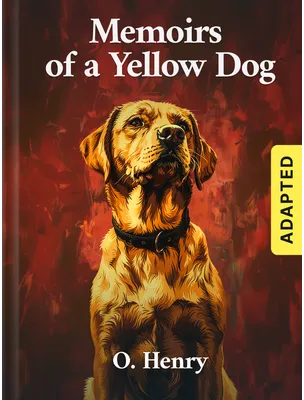
Memoirs of a Yellow Dog
[adapted]
by
O. Henry

I don’t think it will surprise any of you people to read a piece from an animal. Mr. Kipling and many others have shown that animals can say what they want in English that makes money, and no magazine is printed now without an animal story in it, except the old-style monthly magazines that are still printing pictures of Bryan and the Mont Pélee horror.
But you do not need to look for any fancy writing in my story, like Bearoo, the bear, and Snakoo, the snake, and Tammanoo, the tiger, who talk in the jungle books. A yellow dog that has spent most of his life in a cheap New York apartment, sleeping in a corner on an old satin skirt (the one she spilled port wine on at the Lady Longshoremen’s banquet), should not be expected to do any tricks with speaking.
I was born a yellow pup; date, place, breed and weight unknown. The first thing I can remember, an old woman had me in a basket at Broadway and Twenty-third trying to sell me to a fat lady. Old Mother Hubbard was praising me a lot as a real Pomeranian-Hambletonian-Red-Irish-Cochin-China-Stoke-Pogis fox terrier. The fat lady chased a five-dollar bill around among the cloth samples in her shopping bag until she found it, and paid.
From that moment I was a pet — a mamma’s own wootsey squidlums. Say, gentle reader, did you ever have a 200-pound woman smelling like Camembert cheese and Peau d’Espagne perfume pick you up and rub her nose all over you, remarking all the time in an Emma Eames tone of voice: “Oh, oo’s um oodlum, doodlum, woodlum, toodlum, bitsy-witsy skoodlums?”
From a yellow puppy with good parents I grew up to be an unknown yellow mixed dog looking like a mix between an Angora cat and a box of lemons. But my owner never understood. She thought that the two very old puppies that Noah chased into the ark were only a side part of my family. It took two policemen to stop her from entering me at the Madison Square Garden for the Siberian bloodhound prize.
I’ll tell you about that apartment. The house was the usual kind in New York, covered with white marble in the entrance hall and stones above the first floor. Our apartment was three — well, not sets of stairs — climbs up. My lady owner rented it with no furniture, and put in the usual things — 1903 old living room set with cloth, color picture of geisha women in a Harlem tea house, rubber plant and husband.
By Sirius! there was a man I felt sorry for. He was a little man with sandy hair and whiskers very much like mine. Bossed by his wife? — well, it was like toucans and flamingoes and pelicans all had their beaks in him. He wiped the dishes and listened to my owner tell about the cheap, ragged things the lady with the squirrel-skin coat on the second floor hung out on her line to dry. And every evening while she was getting supper she made him take me out on the end of a string for a walk.
If men knew how women spend their time when they are alone they would never marry. Laura Lean Jibbey, peanut brittle, a little almond cream on the neck muscles, dishes unwashed, half an hour’s talk with the ice man, reading a bundle of old letters, a couple of pickles and two bottles of malt drink, one hour looking through a hole in the window blind into the apartment across the air shaft — that’s about all there is to it. Twenty minutes before time for him to come home from work she tidies the house, fixes her hair pad so it won’t show, and gets out a lot of sewing to pretend for ten minutes.
I lived a dog’s life in that apartment. Most of the day I lay there in my corner watching that fat woman pass the time. I slept sometimes and had daydreams about being outside chasing cats into basements and growling at old ladies with black mittens, as a dog was meant to do. Then she would jump on me with a lot of that silly poodle talk and kiss me on the nose — but what could I do? A dog can’t chew cloves.
I began to feel sorry for Hubby, I really did. We looked so much alike that people noticed it when we went out; so we stayed away from the streets that Morgan’s cab drives down, and started climbing the piles of last December’s snow on the streets where poor people live.
One evening when we were walking like this, and I was trying to look like a very good St. Bernard, and the old man was trying to look like he wouldn’t kill the first organ player he heard play the wedding march by Mendelssohn, I looked up at him and said, in my way:
“What are you looking so upset about, you silly lobster? She don’t kiss you. You don’t have to sit on her lap and listen to talk that would make the book of a musical comedy sound like the sayings of Epictetus. You should be thankful you’re not a dog. Cheer up, Benedick, and tell your sadness to go away.”
The marriage mistake looked down at me with almost dog-like intelligence in his face.
“Well, doggie,” he says, “good doggie. You almost look like you can speak. What is it, doggie — Cats?”
Cats! Could speak!
But, of course, he couldn’t understand. People could not speak the language of animals. The only place where dogs and people can talk to each other is in stories.
In the apartment across the hall from us lived a lady with a black-and-tan terrier. Her husband put it on a leash and took it out every evening, but he always came home happy and whistling. One day I touched noses with the black-and-tan in the hall, and I asked him to explain.
“See here, Wiggle-and-Skip,” I say, “you know that it is not the way of a real man to act like a nurse for a dog in public. I never saw one with a dog on a leash yet that didn’t look like he wanted to fight every other man that looked at him. But your boss comes in every day as cheerful and proud as a beginner magician doing the egg trick. How does he do it? Don’t tell me he likes it.”
“Him?” says the black-and-tan. “Why, he uses Nature’s Own Cure. He gets drunk. At first when we go out he’s as shy as the man on the ship who would rather play pedro when they make every game a jackpot. By the time we’ve been in eight bars he don’t care whether the thing on the end of his line is a dog or a catfish. I’ve lost two inches of my tail trying to avoid those swinging doors.”
The tip I got from that little dog — stage show, please take note — made me think.
One evening about 6 o’clock my owner told him to get to work and do the fresh air act for Lovey. I have hidden it until now, but that is what she called me. The black-and-tan was called “Tweetness.” I think that I have the advantage over him as far as you could chase a rabbit. Still “Lovey” is something of a name tin can on the tail of one’s self respect.
At a quiet place on a safe street I pulled hard on my owner’s leash in front of a pretty, fancy bar. I ran straight for the doors, whining like a dog in the news reports that tell the family that little Alice is stuck while picking lilies in the stream.
“Why, darn my eyes,” says the old man, with a grin; “darn my eyes if the yellow-colored son of a soda isn’t asking me in to take a drink. Let me see — how long has it been since I saved my shoes by keeping one foot on the foot-rest? I believe I’ll — ”
I knew I could get him to do what I wanted. He drank hot Scotch drinks, sitting at a table. For an hour he kept ordering more Scotch. I sat by his side, tapping for the waiter with my tail, and eating free lunch that mamma in her flat never matched with her homemade stuff bought at a deli store eight minutes before papa comes home.
When the drinks from Scotland were all used up except the rye bread, the old man untied me from the table leg and pulled me outside like a fisherman pulls a salmon. Out there he took off my collar and threw it into the street.
“Poor doggie,” he says; “good doggie. She won’t kiss you any more. It’s a terrible shame. Good doggie, go away and be hit by a tram and be happy.”
I would not leave. I jumped and played around the old man’s legs happy as a pug on a rug.
“You old flea-headed groundhog chaser,” I said to him — “you howling-at-the-moon, rabbit-pointing, egg-stealing old dog, can’t you see that I don’t want to leave you? Can’t you see that we’re both puppies in the wood and the wife is the cruel uncle chasing you with the dish towel and me with the flea medicine and a pink bow to tie on my tail. Why not stop all that and be friends forever more?”
Maybe you’ll say he didn’t understand — maybe he didn’t. But he kind of understood about the Hot Scotches, and stood still for a minute, thinking.
“Doggie,” he says, finally, “we don’t live more than twelve lives on this earth, and very few of us live to be more than 300. If I ever see that apartment any more I’m a fool, and if you do you’re a bigger fool; and that is not praise. I’m betting 60 to 1 that Westward Ho wins by the length of a dachshund.”
There was no string, but I ran along happily with my master to the Twenty-third street ferry. And the cats along the way had reason to be thankful that they had claws that could hold on.
On the New Jersey side my master said to a stranger who stood eating a raisin bun:
“Me and my doggie, we are going to the Rocky Mountains.”
But what made me happiest was when my old man pulled both of my ears until I cried out, and said: “You common, monkey-headed, rat-tailed, yellow-colored son of a door mat, do you know what I’m going to call you?”
I thought of “Lovey,” and I whined sadly.
“I’m going to call you ‘Pete,’” says my master; and if I had had five tails I could not have wagged them enough to show how happy I was.