'The Man with Two Left Feet' was first published in 1911.
[{"id":"para_1","index":0,"start":0,"offset":410,"words":6,"paraNum":"","lastModified":1695207272000,"semanticType":"title-book-title","voicework":"audio_file","blockId":"the_man_with_two_left_feet_short_story_ffa_en-bl1nj","language":"en","wordsRange":{"start":100000000,"end":107000000},"paragraphVersion":19,"direction":"ltr","paragraph":"<h1 class=\"ilm-title ilm-h2 ilm-large\" id=\"para_1\" semantictype=\"title-book-title\" data-ilmid=\"the_man_with_two_left_feet_short_story_ffa_en-bl1nj\" data-audio=\"1\" data-chapter=\"para_1\" data-words-count=\"6\" data-before=\"0\" data-ww=\"\"><span class=\"block-pb\"> <span class=\"block-pb is-animated\"></span> </span><span class=\"itm-wrap\"><b>The </b><b>Man </b><b>with </b><b>Two </b><b>Left </b><b>Feet</b></span></h1>","hasContent":true,"isFirst":true,"isLast":false},{"id":"para_2","index":1,"start":410,"offset":402,"words":3,"paraNum":"","lastModified":1695207272000,"semanticType":"title-author","voicework":"audio_file","blockId":"the_man_with_two_left_feet_short_story_ffa_en-bl3b","language":"en","wordsRange":{"start":207000000,"end":212000000},"paragraphVersion":19,"direction":"ltr","paragraph":"<h1 class=\"ilm-title ilm-author ilm-x-large ilm-nopad\" id=\"para_2\" semantictype=\"title-author\" data-ilmid=\"the_man_with_two_left_feet_short_story_ffa_en-bl3b\" data-audio=\"1\" data-chapter=\"para_2\" data-words-count=\"3\" data-before=\"6\" data-ww=\"\"><span class=\"block-pb\"> <span class=\"block-pb is-animated\"></span> </span><span class=\"itm-wrap\"><b>by</b><b><br>P. </b><b>G. </b><b>Wodehouse</b></span></h1>","hasContent":true,"isFirst":false,"isLast":false},{"id":"para_3","index":2,"start":812,"offset":174,"words":0,"paraNum":"","lastModified":1695207272000,"semanticType":"line","blockId":"the_man_with_two_left_feet_short_story_ffa_en-bl20o","language":"en","wordsRange":{"start":312000000,"end":314000000},"paragraphVersion":20,"direction":"ltr","paragraph":"<hr class=\"ilm-hr ilm-small\" id=\"para_3\" semantictype=\"line\" data-ilmid=\"the_man_with_two_left_feet_short_story_ffa_en-bl20o\" data-words-count=\"0\" data-before=\"9\" data-ww=\"\">","hasContent":true,"isFirst":false,"isLast":false},{"id":"para_4","index":3,"start":986,"offset":1171,"words":0,"paraNum":"","lastModified":1695218309000,"semanticType":"illustration","blockId":"the_man_with_two_left_feet_short_story_ffa_en-bl21t","language":"en","wordsRange":{"start":347333333,"end":380666667},"paragraphVersion":25,"direction":"ltr","paragraph":"<div class=\"ilm-illustration\" id=\"para_4\" semantictype=\"illustration\" data-ilmid=\"the_man_with_two_left_feet_short_story_ffa_en-bl21t\" data-words-count=\"0\" data-before=\"9\" data-ww=\"\"><img width=\"437\" height=\"600\" data-src=\"ch0p0\" src=\"data:image/webp;base64,UklGRoYCAABXRUJQVlA4IHoCAACwDACdASosADwAPm0yk0ekIqGhJXgNmIANiWkAEgx6SMw6fuWnpjGiSzAayel4X9T9BJrN4g6lUb1UhOMt4HeD3rRIDw+lgu4LAFJMtcOF9kR0tGcKSXEWkQ17JJjy1xXpNo0dvNVlc/nHk8VQQAD++Qnm955L08g940FuWtF4iZHRzM8nnW1dM/6+ig3n78tkJ3IxnBRu/y/k67KZa0kBKlH6lHRe48zMJp+JV7fT8n2N6O+/5TZ0QQ6pWfk6cc7hhreTGfZWQnbBtw0+f0iaCzU4+4tWRZxkpfNgsXk2aq5796WGHrRlkhEIrIq6J44ltMWsVXNlvhG5hv/90XJXo76gU/LGivg1C5bzLfm0jqTsq0KeHNy6vNGltbp6CW+tmz+IdgMUeXXvXb1M1TPeY6TQM5VsiOnqvHLE0UawSgtGnh8nvrJra+ZgLgKoQzkJv+Mg0sdjV3mYLrOlZO2ft/I5S1zA+4hWDOaIAo44OlgAcP+BNTssrrNSWv+Qwv1VUGNoNQQ+mLaBrQrz9Y+mDHcgJ2RraWdrbtyqYs2spXLSRzxwMf6ZSapOSi8uNcCKeiWD3/xyulLVbPCZSipX7S/DVm2U1vT8xoOcWZYO7CaMW1zsIQp9j0t3oF/6JRXQjTigfcN1/BQPZ/HODqwAo4F9pfjHoWAGGepN+Qd8zKapOC+Iymx7pZ39A17mMYCaITaRrHoaLh3qZFg+v90i9Gr95G/gMp5+UWsEZNm9CRDUGa/bWvkhGUrsiz4GLUpMFBwEn3IXVoFKqrz0Ui1RZX2+hNxtx/I6h7cCKKcBcqmQoyq1Vz1DURI4LI1kaqJE7IS5v38hqoAA\" alt=\"The Man with Two Left Feet\"></div>","hasContent":true,"isFirst":false,"isLast":false},{"id":"para_5","index":4,"start":2157,"offset":810,"words":87,"paraNum":"1","lastModified":1695218309000,"semanticType":"par","voicework":"audio_file","blockId":"the_man_with_two_left_feet_short_story_ffa_en-bl1nk","language":"en","wordsRange":{"start":414000000,"end":502000000},"paragraphVersion":24,"direction":"ltr","paragraph":"<p id=\"para_5\" semantictype=\"par\" data-ilmid=\"the_man_with_two_left_feet_short_story_ffa_en-bl1nk\" data-audio=\"1\" data-words-count=\"87\" data-before=\"9\" data-ww=\"\"><span class=\"block-num\" data-id=\"1\"></span><span class=\"block-pb\"> <span class=\"block-pb is-animated\"></span> </span><span class=\"itm-wrap\">Students of the folk-lore of the United States of America are no doubt familiar with the quaint old story of Clarence MacFadden. Clarence MacFadden, it seems, was ‘wishful to dance, but his feet wasn’t gaited that way. So he sought a professor and asked him his price, and said he was willing to pay. The professor’ (the legend goes on) ‘looked down with alarm at his feet and marked their enormous expanse; and he tacked on a five to his regular price for teaching MacFadden to dance.’</span></p>","hasContent":true,"isFirst":false,"isLast":false},{"id":"para_6","index":5,"start":2967,"offset":1971,"words":288,"paraNum":"2","lastModified":1695218309000,"semanticType":"par","voicework":"audio_file","blockId":"the_man_with_two_left_feet_short_story_ffa_en-bl1nl","language":"en","wordsRange":{"start":602000000,"end":891000000},"paragraphVersion":23,"direction":"ltr","paragraph":"<p id=\"para_6\" semantictype=\"par\" data-ilmid=\"the_man_with_two_left_feet_short_story_ffa_en-bl1nl\" data-audio=\"1\" data-words-count=\"288\" data-before=\"96\" data-ww=\"\"><span class=\"block-num\" data-id=\"2\"></span><span class=\"block-pb\"> <span class=\"block-pb is-animated\"></span> </span><span class=\"itm-wrap\">I have often been struck by the close similarity between the case of Clarence and that of Henry Wallace Mills. One difference alone presents itself. It would seem to have been mere vanity and ambition that stimulated the former; whereas the motive force which drove Henry Mills to defy Nature and attempt dancing was the purer one of love. He did it to please his wife. Had he never gone to Ye Bonnie Briar-Bush Farm, that popular holiday resort, and there met Minnie Hill, he would doubtless have continued to spend in peaceful reading the hours not given over to work at the New York bank at which he was employed as paying-cashier. For Henry was a voracious reader. His idea of a pleasant evening was to get back to his little flat, take off his coat, put on his slippers, light a pipe, and go on from the point where he had left off the night before in his perusal of the BIS-CAL volume of the <i>Encyclopaedia </i><i>Britannica </i>— making notes as he read in a stout notebook. He read the BIS-CAL volume because, after many days, he had finished the A-AND, AND-AUS, and the AUS-BIS. There was something admirable — and yet a little horrible — about Henry’s method of study. He went after Learning with the cold and dispassionate relentlessness of a stoat pursuing a rabbit. The ordinary man who is paying instalments on the <i>Encyclopaedia </i><i>Britannica</i> is apt to get over-excited and to skip impatiently to Volume XXVIII (VET-ZYM) to see how it all comes out in the end. Not so Henry. His was not a frivolous mind. He intended to read the <i>Encyclopaedia</i> through, and he was not going to spoil his pleasure by peeping ahead.</span></p>","hasContent":true,"isFirst":false,"isLast":false},{"id":"para_7","index":6,"start":4938,"offset":1430,"words":197,"paraNum":"3","lastModified":1695218309000,"semanticType":"par","voicework":"audio_file","blockId":"the_man_with_two_left_feet_short_story_ffa_en-bl1nm","language":"en","wordsRange":{"start":991000000,"end":1189000000},"paragraphVersion":23,"direction":"ltr","paragraph":"<p id=\"para_7\" semantictype=\"par\" data-ilmid=\"the_man_with_two_left_feet_short_story_ffa_en-bl1nm\" data-audio=\"1\" data-words-count=\"197\" data-before=\"384\" data-ww=\"\"><span class=\"block-num\" data-id=\"3\"></span><span class=\"block-pb\"> <span class=\"block-pb is-animated\"></span> </span><span class=\"itm-wrap\">It would seem to be an inexorable law of Nature that no man shall shine at both ends. If he has a high forehead and a thirst for wisdom, his fox-trotting (if any) shall be as the staggerings of the drunken; while, if he is a good dancer, he is nearly always petrified from the ears upward. No better examples of this law could have been found than Henry Mills and his fellow-cashier, Sidney Mercer. In New York banks paying-cashiers, like bears, tigers, lions, and other fauna, are always shut up in a cage in pairs, and are consequently dependent on each other for entertainment and social intercourse when business is slack. Henry Mills and Sidney simply could not find a subject in common. Sidney knew absolutely nothing of even such elementary things as Abana, Aberration, Abraham, or Acrogenae; while Henry, on his side, was scarcely aware that there had been any developments in the dance since the polka. It was a relief to Henry when Sidney threw up his job to join the chorus of a musical comedy, and was succeeded by a man who, though full of limitations, could at least converse intelligently on Bowls.</span></p>","hasContent":true,"isFirst":false,"isLast":false},{"id":"para_8","index":7,"start":6368,"offset":885,"words":92,"paraNum":"4","lastModified":1695218309000,"semanticType":"par","voicework":"audio_file","blockId":"the_man_with_two_left_feet_short_story_ffa_en-bl1nn","language":"en","wordsRange":{"start":1289000000,"end":1382000000},"paragraphVersion":23,"direction":"ltr","paragraph":"<p id=\"para_8\" semantictype=\"par\" data-ilmid=\"the_man_with_two_left_feet_short_story_ffa_en-bl1nn\" data-audio=\"1\" data-words-count=\"92\" data-before=\"581\" data-ww=\"\"><span class=\"block-num\" data-id=\"4\"></span><span class=\"block-pb\"> <span class=\"block-pb is-animated\"></span> </span><span class=\"itm-wrap\">Such, then, was Henry Wallace Mills. He was in the middle thirties, temperate, studious, a moderate smoker, and — one would have said — a bachelor of the bachelors, armour-plated against Cupid’s well-meant but obsolete artillery. Sometimes Sidney Mercer’s successor in the teller’s cage, a sentimental young man, would broach the topic of Woman and Marriage. He would ask Henry if he ever intended to get married. On such occasions Henry would look at him in a manner which was a blend of scorn, amusement, and indignation; and would reply with a single word:</span></p>","hasContent":true,"isFirst":false,"isLast":false},{"id":"para_9","index":8,"start":7253,"offset":324,"words":1,"paraNum":"5","lastModified":1695218309000,"semanticType":"par","voicework":"audio_file","blockId":"the_man_with_two_left_feet_short_story_ffa_en-bl1no","language":"en","wordsRange":{"start":1482000000,"end":1484000000},"paragraphVersion":23,"direction":"ltr","paragraph":"<p id=\"para_9\" semantictype=\"par\" data-ilmid=\"the_man_with_two_left_feet_short_story_ffa_en-bl1no\" data-audio=\"1\" data-words-count=\"1\" data-before=\"673\" data-ww=\"\"><span class=\"block-num\" data-id=\"5\"></span><span class=\"block-pb\"> <span class=\"block-pb is-animated\"></span> </span><span class=\"itm-wrap\">‘Me!’</span></p>","hasContent":true,"isFirst":false,"isLast":false},{"id":"para_10","index":9,"start":7577,"offset":362,"words":10,"paraNum":"6","lastModified":1695218309000,"semanticType":"par","voicework":"audio_file","blockId":"the_man_with_two_left_feet_short_story_ffa_en-bl1np","language":"en","wordsRange":{"start":1584000000,"end":1595000000},"paragraphVersion":23,"direction":"ltr","paragraph":"<p id=\"para_10\" semantictype=\"par\" data-ilmid=\"the_man_with_two_left_feet_short_story_ffa_en-bl1np\" data-audio=\"1\" data-words-count=\"10\" data-before=\"674\" data-ww=\"\"><span class=\"block-num\" data-id=\"6\"></span><span class=\"block-pb\"> <span class=\"block-pb is-animated\"></span> </span><span class=\"itm-wrap\">It was the way he said it that impressed you.</span></p>","hasContent":true,"isFirst":false,"isLast":false},{"id":"para_11","index":10,"start":7939,"offset":777,"words":84,"paraNum":"7","lastModified":1695218309000,"semanticType":"par","voicework":"audio_file","blockId":"the_man_with_two_left_feet_short_story_ffa_en-bl1nq","language":"en","wordsRange":{"start":1695000000,"end":1780000000},"paragraphVersion":23,"direction":"ltr","paragraph":"<p id=\"para_11\" semantictype=\"par\" data-ilmid=\"the_man_with_two_left_feet_short_story_ffa_en-bl1nq\" data-audio=\"1\" data-words-count=\"84\" data-before=\"684\" data-ww=\"\"><span class=\"block-num\" data-id=\"7\"></span><span class=\"block-pb\"> <span class=\"block-pb is-animated\"></span> </span><span class=\"itm-wrap\">But Henry had yet to experience the unmanning atmosphere of a lonely summer resort. He had only just reached the position in the bank where he was permitted to take his annual vacation in the summer. Hitherto he had always been released from his cage during the winter months, and had spent his ten days of freedom at his flat, with a book in his hand and his feet on the radiator. But the summer after Sidney Mercer’s departure they unleashed him in August.</span></p>","hasContent":true,"isFirst":false,"isLast":false},{"id":"para_12","index":11,"start":8716,"offset":685,"words":60,"paraNum":"8","lastModified":1695218309000,"semanticType":"par","voicework":"audio_file","blockId":"the_man_with_two_left_feet_short_story_ffa_en-bl1nr","language":"en","wordsRange":{"start":1880000000,"end":1941000000},"paragraphVersion":23,"direction":"ltr","paragraph":"<p id=\"para_12\" semantictype=\"par\" data-ilmid=\"the_man_with_two_left_feet_short_story_ffa_en-bl1nr\" data-audio=\"1\" data-words-count=\"60\" data-before=\"768\" data-ww=\"\"><span class=\"block-num\" data-id=\"8\"></span><span class=\"block-pb\"> <span class=\"block-pb is-animated\"></span> </span><span class=\"itm-wrap\">It was meltingly warm in the city. Something in Henry cried out for the country. For a month before the beginning of his vacation he devoted much of the time that should have been given to the <i>Encyclopaedia </i><i>Britannica</i> in reading summer-resort literature. He decided at length upon Ye Bonnie Briar-Bush Farm because the advertisements spoke so well of it.</span></p>","hasContent":true,"isFirst":false,"isLast":false},{"id":"para_13","index":12,"start":9401,"offset":962,"words":108,"paraNum":"9","lastModified":1695218309000,"semanticType":"par","voicework":"audio_file","blockId":"the_man_with_two_left_feet_short_story_ffa_en-bl1ns","language":"en","wordsRange":{"start":2041000000,"end":2150000000},"paragraphVersion":23,"direction":"ltr","paragraph":"<p id=\"para_13\" semantictype=\"par\" data-ilmid=\"the_man_with_two_left_feet_short_story_ffa_en-bl1ns\" data-audio=\"1\" data-words-count=\"108\" data-before=\"828\" data-ww=\"\"><span class=\"block-num\" data-id=\"9\"></span><span class=\"block-pb\"> <span class=\"block-pb is-animated\"></span> </span><span class=\"itm-wrap\">Ye Bonnie Briar-Bush Farm was a rather battered frame building many miles from anywhere. Its attractions included a Lovers’ Leap, a Grotto, golf-links — a five-hole course where the enthusiast found unusual hazards in the shape of a number of goats tethered at intervals between the holes — and a silvery lake, only portions of which were used as a dumping-ground for tin cans and wooden boxes. It was all new and strange to Henry and caused him an odd exhilaration. Something of gaiety and reckless abandon began to creep into his veins. He had a curious feeling that in these romantic surroundings some adventure ought to happen to him.</span></p>","hasContent":true,"isFirst":false,"isLast":false},{"id":"para_14","index":13,"start":10363,"offset":549,"words":42,"paraNum":"10","lastModified":1695218309000,"semanticType":"par","voicework":"audio_file","blockId":"the_man_with_two_left_feet_short_story_ffa_en-bl1nt","language":"en","wordsRange":{"start":2250000000,"end":2293000000},"paragraphVersion":23,"direction":"ltr","paragraph":"<p id=\"para_14\" semantictype=\"par\" data-ilmid=\"the_man_with_two_left_feet_short_story_ffa_en-bl1nt\" data-audio=\"1\" data-words-count=\"42\" data-before=\"936\" data-ww=\"\"><span class=\"block-num\" data-id=\"10\"></span><span class=\"block-pb\"> <span class=\"block-pb is-animated\"></span> </span><span class=\"itm-wrap\">At this juncture Minnie Hill arrived. She was a small, slim girl, thinner and paler than she should have been, with large eyes that seemed to Henry pathetic and stirred his chivalry. He began to think a good deal about Minnie Hill.</span></p>","hasContent":true,"isFirst":false,"isLast":false},{"id":"para_15","index":14,"start":10912,"offset":771,"words":81,"paraNum":"11","lastModified":1695218309000,"semanticType":"par","voicework":"audio_file","blockId":"the_man_with_two_left_feet_short_story_ffa_en-bl1nu","language":"en","wordsRange":{"start":2393000000,"end":2475000000},"paragraphVersion":23,"direction":"ltr","paragraph":"<p id=\"para_15\" semantictype=\"par\" data-ilmid=\"the_man_with_two_left_feet_short_story_ffa_en-bl1nu\" data-audio=\"1\" data-words-count=\"81\" data-before=\"978\" data-ww=\"\"><span class=\"block-num\" data-id=\"11\"></span><span class=\"block-pb\"> <span class=\"block-pb is-animated\"></span> </span><span class=\"itm-wrap\">And then one evening he met her on the shores of the silvery lake. He was standing there, slapping at things that looked like mosquitoes, but could not have been, for the advertisements expressly stated that none were ever found in the neighbourhood of Ye Bonnie Briar-Bush Farm, when along she came. She walked slowly, as if she were tired. A strange thrill, half of pity, half of something else, ran through Henry. He looked at her. She looked at him.</span></p>","hasContent":true,"isFirst":false,"isLast":false},{"id":"para_16","index":15,"start":11683,"offset":346,"words":4,"paraNum":"12","lastModified":1695218309000,"semanticType":"par","voicework":"audio_file","blockId":"the_man_with_two_left_feet_short_story_ffa_en-bl1nv","language":"en","wordsRange":{"start":2575000000,"end":2580000000},"paragraphVersion":23,"direction":"ltr","paragraph":"<p id=\"para_16\" semantictype=\"par\" data-ilmid=\"the_man_with_two_left_feet_short_story_ffa_en-bl1nv\" data-audio=\"1\" data-words-count=\"4\" data-before=\"1059\" data-ww=\"\"><span class=\"block-num\" data-id=\"12\"></span><span class=\"block-pb\"> <span class=\"block-pb is-animated\"></span> </span><span class=\"itm-wrap\">‘Good evening,’ he said.</span></p>","hasContent":true,"isFirst":false,"isLast":false},{"id":"para_17","index":16,"start":12029,"offset":477,"words":32,"paraNum":"13","lastModified":1695218309000,"semanticType":"par","voicework":"audio_file","blockId":"the_man_with_two_left_feet_short_story_ffa_en-bl1nw","language":"en","wordsRange":{"start":2680000000,"end":2713000000},"paragraphVersion":23,"direction":"ltr","paragraph":"<p id=\"para_17\" semantictype=\"par\" data-ilmid=\"the_man_with_two_left_feet_short_story_ffa_en-bl1nw\" data-audio=\"1\" data-words-count=\"32\" data-before=\"1063\" data-ww=\"\"><span class=\"block-num\" data-id=\"13\"></span><span class=\"block-pb\"> <span class=\"block-pb is-animated\"></span> </span><span class=\"itm-wrap\">They were the first words he had spoken to her. She never contributed to the dialogue of the dining-room, and he had been too shy to seek her out in the open.</span></p>","hasContent":true,"isFirst":false,"isLast":false},{"id":"para_18","index":17,"start":12506,"offset":405,"words":15,"paraNum":"14","lastModified":1695218309000,"semanticType":"par","voicework":"audio_file","blockId":"the_man_with_two_left_feet_short_story_ffa_en-bl1nx","language":"en","wordsRange":{"start":2813000000,"end":2829000000},"paragraphVersion":23,"direction":"ltr","paragraph":"<p id=\"para_18\" semantictype=\"par\" data-ilmid=\"the_man_with_two_left_feet_short_story_ffa_en-bl1nx\" data-audio=\"1\" data-words-count=\"15\" data-before=\"1095\" data-ww=\"\"><span class=\"block-num\" data-id=\"14\"></span><span class=\"block-pb\"> <span class=\"block-pb is-animated\"></span> </span><span class=\"itm-wrap\">She said ‘Good evening,’ too, tying the score. And there was silence for a moment.</span></p>","hasContent":true,"isFirst":false,"isLast":false},{"id":"para_19","index":18,"start":12911,"offset":359,"words":4,"paraNum":"15","lastModified":1695218309000,"semanticType":"par","voicework":"audio_file","blockId":"the_man_with_two_left_feet_short_story_ffa_en-bl1ny","language":"en","wordsRange":{"start":2929000000,"end":2934000000},"paragraphVersion":23,"direction":"ltr","paragraph":"<p id=\"para_19\" semantictype=\"par\" data-ilmid=\"the_man_with_two_left_feet_short_story_ffa_en-bl1ny\" data-audio=\"1\" data-words-count=\"4\" data-before=\"1110\" data-ww=\"\"><span class=\"block-num\" data-id=\"15\"></span><span class=\"block-pb\"> <span class=\"block-pb is-animated\"></span> </span><span class=\"itm-wrap\">Commiseration overcame Henry’s shyness.</span></p>","hasContent":true,"isFirst":false,"isLast":false},{"id":"para_20","index":19,"start":13270,"offset":356,"words":5,"paraNum":"16","lastModified":1695218309000,"semanticType":"par","voicework":"audio_file","blockId":"the_man_with_two_left_feet_short_story_ffa_en-bl1nz","language":"en","wordsRange":{"start":3034000000,"end":3040000000},"paragraphVersion":23,"direction":"ltr","paragraph":"<p id=\"para_20\" semantictype=\"par\" data-ilmid=\"the_man_with_two_left_feet_short_story_ffa_en-bl1nz\" data-audio=\"1\" data-words-count=\"5\" data-before=\"1114\" data-ww=\"\"><span class=\"block-num\" data-id=\"16\"></span><span class=\"block-pb\"> <span class=\"block-pb is-animated\"></span> </span><span class=\"itm-wrap\">‘You’re looking tired,’ he said.</span></p>","hasContent":true,"isFirst":false,"isLast":false},{"id":"para_21","index":20,"start":13626,"offset":382,"words":11,"paraNum":"17","lastModified":1695218309000,"semanticType":"par","voicework":"audio_file","blockId":"the_man_with_two_left_feet_short_story_ffa_en-bl1o0","language":"en","wordsRange":{"start":3140000000,"end":3152000000},"paragraphVersion":23,"direction":"ltr","paragraph":"<p id=\"para_21\" semantictype=\"par\" data-ilmid=\"the_man_with_two_left_feet_short_story_ffa_en-bl1o0\" data-audio=\"1\" data-words-count=\"11\" data-before=\"1119\" data-ww=\"\"><span class=\"block-num\" data-id=\"17\"></span><span class=\"block-pb\"> <span class=\"block-pb is-animated\"></span> </span><span class=\"itm-wrap\">‘I feel tired.’ She paused. ‘I overdid it in the city.’</span></p>","hasContent":true,"isFirst":false,"isLast":false},{"id":"para_22","index":21,"start":14008,"offset":327,"words":1,"paraNum":"18","lastModified":1695218309000,"semanticType":"par","voicework":"audio_file","blockId":"the_man_with_two_left_feet_short_story_ffa_en-bl1o1","language":"en","wordsRange":{"start":3252000000,"end":3254000000},"paragraphVersion":23,"direction":"ltr","paragraph":"<p id=\"para_22\" semantictype=\"par\" data-ilmid=\"the_man_with_two_left_feet_short_story_ffa_en-bl1o1\" data-audio=\"1\" data-words-count=\"1\" data-before=\"1130\" data-ww=\"\"><span class=\"block-num\" data-id=\"18\"></span><span class=\"block-pb\"> <span class=\"block-pb is-animated\"></span> </span><span class=\"itm-wrap\">‘It?’</span></p>","hasContent":true,"isFirst":false,"isLast":false},{"id":"para_23","index":22,"start":14335,"offset":332,"words":1,"paraNum":"19","lastModified":1695218309000,"semanticType":"par","voicework":"audio_file","blockId":"the_man_with_two_left_feet_short_story_ffa_en-bl1o2","language":"en","wordsRange":{"start":3354000000,"end":3356000000},"paragraphVersion":23,"direction":"ltr","paragraph":"<p id=\"para_23\" semantictype=\"par\" data-ilmid=\"the_man_with_two_left_feet_short_story_ffa_en-bl1o2\" data-audio=\"1\" data-words-count=\"1\" data-before=\"1131\" data-ww=\"\"><span class=\"block-num\" data-id=\"19\"></span><span class=\"block-pb\"> <span class=\"block-pb is-animated\"></span> </span><span class=\"itm-wrap\">‘Dancing.’</span></p>","hasContent":true,"isFirst":false,"isLast":false},{"id":"para_24","index":23,"start":14667,"offset":356,"words":6,"paraNum":"20","lastModified":1695218309000,"semanticType":"par","voicework":"audio_file","blockId":"the_man_with_two_left_feet_short_story_ffa_en-bl1o3","language":"en","wordsRange":{"start":3456000000,"end":3463000000},"paragraphVersion":23,"direction":"ltr","paragraph":"<p id=\"para_24\" semantictype=\"par\" data-ilmid=\"the_man_with_two_left_feet_short_story_ffa_en-bl1o3\" data-audio=\"1\" data-words-count=\"6\" data-before=\"1132\" data-ww=\"\"><span class=\"block-num\" data-id=\"20\"></span><span class=\"block-pb\"> <span class=\"block-pb is-animated\"></span> </span><span class=\"itm-wrap\">‘Oh, dancing. Did you dance much?’</span></p>","hasContent":true,"isFirst":false,"isLast":false},{"id":"para_25","index":24,"start":15023,"offset":342,"words":4,"paraNum":"21","lastModified":1695218309000,"semanticType":"par","voicework":"audio_file","blockId":"the_man_with_two_left_feet_short_story_ffa_en-bl1o4","language":"en","wordsRange":{"start":3563000000,"end":3568000000},"paragraphVersion":23,"direction":"ltr","paragraph":"<p id=\"para_25\" semantictype=\"par\" data-ilmid=\"the_man_with_two_left_feet_short_story_ffa_en-bl1o4\" data-audio=\"1\" data-words-count=\"4\" data-before=\"1138\" data-ww=\"\"><span class=\"block-num\" data-id=\"21\"></span><span class=\"block-pb\"> <span class=\"block-pb is-animated\"></span> </span><span class=\"itm-wrap\">‘Yes; a great deal.’</span></p>","hasContent":true,"isFirst":false,"isLast":false},{"id":"para_26","index":25,"start":15365,"offset":327,"words":1,"paraNum":"22","lastModified":1695218309000,"semanticType":"par","voicework":"audio_file","blockId":"the_man_with_two_left_feet_short_story_ffa_en-bl1o5","language":"en","wordsRange":{"start":3668000000,"end":3670000000},"paragraphVersion":23,"direction":"ltr","paragraph":"<p id=\"para_26\" semantictype=\"par\" data-ilmid=\"the_man_with_two_left_feet_short_story_ffa_en-bl1o5\" data-audio=\"1\" data-words-count=\"1\" data-before=\"1142\" data-ww=\"\"><span class=\"block-num\" data-id=\"22\"></span><span class=\"block-pb\"> <span class=\"block-pb is-animated\"></span> </span><span class=\"itm-wrap\">‘Ah!’</span></p>","hasContent":true,"isFirst":false,"isLast":false},{"id":"para_27","index":26,"start":15692,"offset":699,"words":69,"paraNum":"23","lastModified":1695218309000,"semanticType":"par","voicework":"audio_file","blockId":"the_man_with_two_left_feet_short_story_ffa_en-bl1o6","language":"en","wordsRange":{"start":3770000000,"end":3840000000},"paragraphVersion":23,"direction":"ltr","paragraph":"<p id=\"para_27\" semantictype=\"par\" data-ilmid=\"the_man_with_two_left_feet_short_story_ffa_en-bl1o6\" data-audio=\"1\" data-words-count=\"69\" data-before=\"1143\" data-ww=\"\"><span class=\"block-num\" data-id=\"23\"></span><span class=\"block-pb\"> <span class=\"block-pb is-animated\"></span> </span><span class=\"itm-wrap\">A promising, even a dashing start. But how to continue? For the first time Henry regretted the steady determination of his methods with the <i>Encyclopaedia</i>. How pleasant if he could have been in a position to talk easily of Dancing. Then memory reminded him that, though he had not yet got up to Dancing, it was only a few weeks before that he had been reading of the Ballet.</span></p>","hasContent":true,"isFirst":false,"isLast":false},{"id":"para_28","index":27,"start":16391,"offset":587,"words":38,"paraNum":"24","lastModified":1695218309000,"semanticType":"par","voicework":"audio_file","blockId":"the_man_with_two_left_feet_short_story_ffa_en-bl1o7","language":"en","wordsRange":{"start":3940000000,"end":3979000000},"paragraphVersion":23,"direction":"ltr","paragraph":"<p id=\"para_28\" semantictype=\"par\" data-ilmid=\"the_man_with_two_left_feet_short_story_ffa_en-bl1o7\" data-audio=\"1\" data-words-count=\"38\" data-before=\"1212\" data-ww=\"\"><span class=\"block-num\" data-id=\"24\"></span><span class=\"block-pb\"> <span class=\"block-pb is-animated\"></span> </span><span class=\"itm-wrap\">‘I don’t dance myself,’ he said, ‘but I am fond of reading about it. Did you know that the word “ballet” incorporated three distinct modern words, “ballet”, “ball”, and “ballad”, and that ballet-dancing was originally accompanied by singing?’</span></p>","hasContent":true,"isFirst":false,"isLast":false},{"id":"para_29","index":28,"start":16978,"offset":433,"words":25,"paraNum":"25","lastModified":1695218309000,"semanticType":"par","voicework":"audio_file","blockId":"the_man_with_two_left_feet_short_story_ffa_en-bl1o8","language":"en","wordsRange":{"start":4079000000,"end":4105000000},"paragraphVersion":23,"direction":"ltr","paragraph":"<p id=\"para_29\" semantictype=\"par\" data-ilmid=\"the_man_with_two_left_feet_short_story_ffa_en-bl1o8\" data-audio=\"1\" data-words-count=\"25\" data-before=\"1250\" data-ww=\"\"><span class=\"block-num\" data-id=\"25\"></span><span class=\"block-pb\"> <span class=\"block-pb is-animated\"></span> </span><span class=\"itm-wrap\">It hit her. It had her weak. She looked at him with awe in her eyes. One might almost say that she gaped at Henry.</span></p>","hasContent":true,"isFirst":false,"isLast":false},{"id":"para_30","index":29,"start":17411,"offset":357,"words":6,"paraNum":"26","lastModified":1695218309000,"semanticType":"par","voicework":"audio_file","blockId":"the_man_with_two_left_feet_short_story_ffa_en-bl1o9","language":"en","wordsRange":{"start":4205000000,"end":4212000000},"paragraphVersion":23,"direction":"ltr","paragraph":"<p id=\"para_30\" semantictype=\"par\" data-ilmid=\"the_man_with_two_left_feet_short_story_ffa_en-bl1o9\" data-audio=\"1\" data-words-count=\"6\" data-before=\"1275\" data-ww=\"\"><span class=\"block-num\" data-id=\"26\"></span><span class=\"block-pb\"> <span class=\"block-pb is-animated\"></span> </span><span class=\"itm-wrap\">‘I hardly know anything,’ she said.</span></p>","hasContent":true,"isFirst":false,"isLast":false},{"id":"para_31","index":30,"start":17768,"offset":501,"words":25,"paraNum":"27","lastModified":1695218309000,"semanticType":"par","voicework":"audio_file","blockId":"the_man_with_two_left_feet_short_story_ffa_en-bl1oa","language":"en","wordsRange":{"start":4312000000,"end":4338000000},"paragraphVersion":23,"direction":"ltr","paragraph":"<p id=\"para_31\" semantictype=\"par\" data-ilmid=\"the_man_with_two_left_feet_short_story_ffa_en-bl1oa\" data-audio=\"1\" data-words-count=\"25\" data-before=\"1281\" data-ww=\"\"><span class=\"block-num\" data-id=\"27\"></span><span class=\"block-pb\"> <span class=\"block-pb is-animated\"></span> </span><span class=\"itm-wrap\">‘The first descriptive ballet seen in London, England,’ said Henry, quietly, ‘was “The Tavern Bilkers”, which was played at Drury Lane in — in seventeen — something.’</span></p>","hasContent":true,"isFirst":false,"isLast":false},{"id":"para_32","index":31,"start":18269,"offset":331,"words":2,"paraNum":"28","lastModified":1695218309000,"semanticType":"par","voicework":"audio_file","blockId":"the_man_with_two_left_feet_short_story_ffa_en-bl1ob","language":"en","wordsRange":{"start":4438000000,"end":4441000000},"paragraphVersion":23,"direction":"ltr","paragraph":"<p id=\"para_32\" semantictype=\"par\" data-ilmid=\"the_man_with_two_left_feet_short_story_ffa_en-bl1ob\" data-audio=\"1\" data-words-count=\"2\" data-before=\"1306\" data-ww=\"\"><span class=\"block-num\" data-id=\"28\"></span><span class=\"block-pb\"> <span class=\"block-pb is-animated\"></span> </span><span class=\"itm-wrap\">‘Was it?’</span></p>","hasContent":true,"isFirst":false,"isLast":false},{"id":"para_33","index":32,"start":18600,"offset":454,"words":24,"paraNum":"29","lastModified":1695218309000,"semanticType":"par","voicework":"audio_file","blockId":"the_man_with_two_left_feet_short_story_ffa_en-bl1oc","language":"en","wordsRange":{"start":4541000000,"end":4566000000},"paragraphVersion":23,"direction":"ltr","paragraph":"<p id=\"para_33\" semantictype=\"par\" data-ilmid=\"the_man_with_two_left_feet_short_story_ffa_en-bl1oc\" data-audio=\"1\" data-words-count=\"24\" data-before=\"1308\" data-ww=\"\"><span class=\"block-num\" data-id=\"29\"></span><span class=\"block-pb\"> <span class=\"block-pb is-animated\"></span> </span><span class=\"itm-wrap\">‘And the earliest modern ballet on record was that given by — by someone to celebrate the marriage of the Duke of Milan in 1489.’</span></p>","hasContent":true,"isFirst":false,"isLast":false},{"id":"para_34","index":33,"start":19054,"offset":557,"words":45,"paraNum":"30","lastModified":1695218309000,"semanticType":"par","voicework":"audio_file","blockId":"the_man_with_two_left_feet_short_story_ffa_en-bl1od","language":"en","wordsRange":{"start":4666000000,"end":4712000000},"paragraphVersion":23,"direction":"ltr","paragraph":"<p id=\"para_34\" semantictype=\"par\" data-ilmid=\"the_man_with_two_left_feet_short_story_ffa_en-bl1od\" data-audio=\"1\" data-words-count=\"45\" data-before=\"1332\" data-ww=\"\"><span class=\"block-num\" data-id=\"30\"></span><span class=\"block-pb\"> <span class=\"block-pb is-animated\"></span> </span><span class=\"itm-wrap\">There was no doubt or hesitation about the date this time. It was grappled to his memory by hoops of steel owing to the singular coincidence of it being also his telephone number. He gave it out with a roll, and the girl’s eyes widened.</span></p>","hasContent":true,"isFirst":false,"isLast":false},{"id":"para_35","index":34,"start":19611,"offset":351,"words":6,"paraNum":"31","lastModified":1695218309000,"semanticType":"par","voicework":"audio_file","blockId":"the_man_with_two_left_feet_short_story_ffa_en-bl1oe","language":"en","wordsRange":{"start":4812000000,"end":4819000000},"paragraphVersion":23,"direction":"ltr","paragraph":"<p id=\"para_35\" semantictype=\"par\" data-ilmid=\"the_man_with_two_left_feet_short_story_ffa_en-bl1oe\" data-audio=\"1\" data-words-count=\"6\" data-before=\"1377\" data-ww=\"\"><span class=\"block-num\" data-id=\"31\"></span><span class=\"block-pb\"> <span class=\"block-pb is-animated\"></span> </span><span class=\"itm-wrap\">‘What an awful lot you know!’</span></p>","hasContent":true,"isFirst":false,"isLast":false},{"id":"para_36","index":35,"start":19962,"offset":381,"words":10,"paraNum":"32","lastModified":1695218309000,"semanticType":"par","voicework":"audio_file","blockId":"the_man_with_two_left_feet_short_story_ffa_en-bl1of","language":"en","wordsRange":{"start":4919000000,"end":4930000000},"paragraphVersion":23,"direction":"ltr","paragraph":"<p id=\"para_36\" semantictype=\"par\" data-ilmid=\"the_man_with_two_left_feet_short_story_ffa_en-bl1of\" data-audio=\"1\" data-words-count=\"10\" data-before=\"1383\" data-ww=\"\"><span class=\"block-num\" data-id=\"32\"></span><span class=\"block-pb\"> <span class=\"block-pb is-animated\"></span> </span><span class=\"itm-wrap\">‘Oh, no,’ said Henry, modestly. ‘I read a great deal.’</span></p>","hasContent":true,"isFirst":false,"isLast":false},{"id":"para_37","index":36,"start":20343,"offset":474,"words":25,"paraNum":"33","lastModified":1695218309000,"semanticType":"par","voicework":"audio_file","blockId":"the_man_with_two_left_feet_short_story_ffa_en-bl1og","language":"en","wordsRange":{"start":5030000000,"end":5056000000},"paragraphVersion":23,"direction":"ltr","paragraph":"<p id=\"para_37\" semantictype=\"par\" data-ilmid=\"the_man_with_two_left_feet_short_story_ffa_en-bl1og\" data-audio=\"1\" data-words-count=\"25\" data-before=\"1393\" data-ww=\"\"><span class=\"block-num\" data-id=\"33\"></span><span class=\"block-pb\"> <span class=\"block-pb is-animated\"></span> </span><span class=\"itm-wrap\">‘It must be splendid to know a lot,’ she said, wistfully. ‘I’ve never had time for reading. I’ve always wanted to. I think you’re wonderful!’</span></p>","hasContent":true,"isFirst":false,"isLast":false},{"id":"para_38","index":37,"start":20817,"offset":480,"words":28,"paraNum":"34","lastModified":1695218309000,"semanticType":"par","voicework":"audio_file","blockId":"the_man_with_two_left_feet_short_story_ffa_en-bl1oh","language":"en","wordsRange":{"start":5156000000,"end":5185000000},"paragraphVersion":23,"direction":"ltr","paragraph":"<p id=\"para_38\" semantictype=\"par\" data-ilmid=\"the_man_with_two_left_feet_short_story_ffa_en-bl1oh\" data-audio=\"1\" data-words-count=\"28\" data-before=\"1418\" data-ww=\"\"><span class=\"block-num\" data-id=\"34\"></span><span class=\"block-pb\"> <span class=\"block-pb is-animated\"></span> </span><span class=\"itm-wrap\">Henry’s soul was expanding like a flower and purring like a well-tickled cat. Never in his life had he been admired by a woman. The sensation was intoxicating.</span></p>","hasContent":true,"isFirst":false,"isLast":false},{"id":"para_39","index":38,"start":21297,"offset":1124,"words":148,"paraNum":"35","lastModified":1695218309000,"semanticType":"par","voicework":"audio_file","blockId":"the_man_with_two_left_feet_short_story_ffa_en-bl1oi","language":"en","wordsRange":{"start":5285000000,"end":5434000000},"paragraphVersion":23,"direction":"ltr","paragraph":"<p id=\"para_39\" semantictype=\"par\" data-ilmid=\"the_man_with_two_left_feet_short_story_ffa_en-bl1oi\" data-audio=\"1\" data-words-count=\"148\" data-before=\"1446\" data-ww=\"\"><span class=\"block-num\" data-id=\"35\"></span><span class=\"block-pb\"> <span class=\"block-pb is-animated\"></span> </span><span class=\"itm-wrap\">Silence fell upon them. They started to walk back to the farm, warned by the distant ringing of a bell that supper was about to materialize. It was not a musical bell, but distance and the magic of this unusual moment lent it charm. The sun was setting. It threw a crimson carpet across the silvery lake. The air was very still. The creatures, unclassified by science, who might have been mistaken for mosquitoes had their presence been possible at Ye Bonnie Briar-Bush Farm, were biting harder than ever. But Henry heeded them not. He did not even slap at them. They drank their fill of his blood and went away to put their friends on to this good thing; but for Henry they did not exist. Strange things were happening to him. And, lying awake that night in bed, he recognized the truth. He was in love.</span></p>","hasContent":true,"isFirst":false,"isLast":false},{"id":"para_40","index":39,"start":22421,"offset":607,"words":53,"paraNum":"36","lastModified":1695218309000,"semanticType":"par","voicework":"audio_file","blockId":"the_man_with_two_left_feet_short_story_ffa_en-bl1oj","language":"en","wordsRange":{"start":5534000000,"end":5588000000},"paragraphVersion":23,"direction":"ltr","paragraph":"<p id=\"para_40\" semantictype=\"par\" data-ilmid=\"the_man_with_two_left_feet_short_story_ffa_en-bl1oj\" data-audio=\"1\" data-words-count=\"53\" data-before=\"1594\" data-ww=\"\"><span class=\"block-num\" data-id=\"36\"></span><span class=\"block-pb\"> <span class=\"block-pb is-animated\"></span> </span><span class=\"itm-wrap\">After that, for the remainder of his stay, they were always together. They walked in the woods, they sat by the silvery lake. He poured out the treasures of his learning for her, and she looked at him with reverent eyes, uttering from time to time a soft ‘Yes’ or a musical ‘Gee!’</span></p>","hasContent":true,"isFirst":false,"isLast":false},{"id":"para_41","index":40,"start":23028,"offset":360,"words":9,"paraNum":"37","lastModified":1695218309000,"semanticType":"par","voicework":"audio_file","blockId":"the_man_with_two_left_feet_short_story_ffa_en-bl1ok","language":"en","wordsRange":{"start":5688000000,"end":5698000000},"paragraphVersion":23,"direction":"ltr","paragraph":"<p id=\"para_41\" semantictype=\"par\" data-ilmid=\"the_man_with_two_left_feet_short_story_ffa_en-bl1ok\" data-audio=\"1\" data-words-count=\"9\" data-before=\"1647\" data-ww=\"\"><span class=\"block-num\" data-id=\"37\"></span><span class=\"block-pb\"> <span class=\"block-pb is-animated\"></span> </span><span class=\"itm-wrap\">In due season Henry went back to New York.</span></p>","hasContent":true,"isFirst":false,"isLast":false},{"id":"para_42","index":41,"start":23388,"offset":458,"words":19,"paraNum":"38","lastModified":1695218309000,"semanticType":"par","voicework":"audio_file","blockId":"the_man_with_two_left_feet_short_story_ffa_en-bl1ol","language":"en","wordsRange":{"start":5798000000,"end":5818000000},"paragraphVersion":23,"direction":"ltr","paragraph":"<p id=\"para_42\" semantictype=\"par\" data-ilmid=\"the_man_with_two_left_feet_short_story_ffa_en-bl1ol\" data-audio=\"1\" data-words-count=\"19\" data-before=\"1656\" data-ww=\"\"><span class=\"block-num\" data-id=\"38\"></span><span class=\"block-pb\"> <span class=\"block-pb is-animated\"></span> </span><span class=\"itm-wrap\">‘You’re dead wrong about love, Mills,’ said his sentimental fellow-cashier, shortly after his return. ‘You ought to get married.’</span></p>","hasContent":true,"isFirst":false,"isLast":false},{"id":"para_43","index":42,"start":23846,"offset":384,"words":8,"paraNum":"39","lastModified":1695218309000,"semanticType":"par","voicework":"audio_file","blockId":"the_man_with_two_left_feet_short_story_ffa_en-bl1om","language":"en","wordsRange":{"start":5918000000,"end":5927000000},"paragraphVersion":23,"direction":"ltr","paragraph":"<p id=\"para_43\" semantictype=\"par\" data-ilmid=\"the_man_with_two_left_feet_short_story_ffa_en-bl1om\" data-audio=\"1\" data-words-count=\"8\" data-before=\"1675\" data-ww=\"\"><span class=\"block-num\" data-id=\"39\"></span><span class=\"block-pb\"> <span class=\"block-pb is-animated\"></span> </span><span class=\"itm-wrap\">‘I’m going to,’ replied Henry, briskly. ‘Week tomorrow.’</span></p>","hasContent":true,"isFirst":false,"isLast":false},{"id":"para_44","index":43,"start":24230,"offset":514,"words":34,"paraNum":"40","lastModified":1695218309000,"semanticType":"par","voicework":"audio_file","blockId":"the_man_with_two_left_feet_short_story_ffa_en-bl1on","language":"en","wordsRange":{"start":6027000000,"end":6062000000},"paragraphVersion":23,"direction":"ltr","paragraph":"<p id=\"para_44\" semantictype=\"par\" data-ilmid=\"the_man_with_two_left_feet_short_story_ffa_en-bl1on\" data-audio=\"1\" data-words-count=\"34\" data-before=\"1683\" data-ww=\"\"><span class=\"block-num\" data-id=\"40\"></span><span class=\"block-pb\"> <span class=\"block-pb is-animated\"></span> </span><span class=\"itm-wrap\">Which stunned the other so thoroughly that he gave a customer who entered at that moment fifteen dollars for a ten-dollar cheque, and had to do some excited telephoning after the bank had closed.</span></p>","hasContent":true,"isFirst":false,"isLast":false},{"id":"para_45","index":44,"start":24744,"offset":1233,"words":153,"paraNum":"41","lastModified":1695218309000,"semanticType":"par","voicework":"audio_file","blockId":"the_man_with_two_left_feet_short_story_ffa_en-bl1oo","language":"en","wordsRange":{"start":6162000000,"end":6316000000},"paragraphVersion":23,"direction":"ltr","paragraph":"<p id=\"para_45\" semantictype=\"par\" data-ilmid=\"the_man_with_two_left_feet_short_story_ffa_en-bl1oo\" data-audio=\"1\" data-words-count=\"153\" data-before=\"1717\" data-ww=\"\"><span class=\"block-num\" data-id=\"41\"></span><span class=\"block-pb\"> <span class=\"block-pb is-animated\"></span> </span><span class=\"itm-wrap\">Henry’s first year as a married man was the happiest of his life. He had always heard this period described as the most perilous of matrimony. He had braced himself for clashings of tastes, painful adjustments of character, sudden and unavoidable quarrels. Nothing of the kind happened. From the very beginning they settled down in perfect harmony. She merged with his life as smoothly as one river joins another. He did not even have to alter his habits. Every morning he had his breakfast at eight, smoked a cigarette, and walked to the Underground. At five he left the bank, and at six he arrived home, for it was his practice to walk the first two miles of the way, breathing deeply and regularly. Then dinner. Then the quiet evening. Sometimes the moving-pictures, but generally the quiet evening, he reading the <i>Encyclopaedia </i>— aloud now — Minnie darning his socks, but never ceasing to listen.</span></p>","hasContent":true,"isFirst":false,"isLast":false},{"id":"para_46","index":45,"start":25977,"offset":570,"words":43,"paraNum":"42","lastModified":1695218309000,"semanticType":"par","voicework":"audio_file","blockId":"the_man_with_two_left_feet_short_story_ffa_en-bl1op","language":"en","wordsRange":{"start":6416000000,"end":6460000000},"paragraphVersion":23,"direction":"ltr","paragraph":"<p id=\"para_46\" semantictype=\"par\" data-ilmid=\"the_man_with_two_left_feet_short_story_ffa_en-bl1op\" data-audio=\"1\" data-words-count=\"43\" data-before=\"1870\" data-ww=\"\"><span class=\"block-num\" data-id=\"42\"></span><span class=\"block-pb\"> <span class=\"block-pb is-animated\"></span> </span><span class=\"itm-wrap\">Each day brought the same sense of grateful amazement that he should be so wonderfully happy, so extraordinarily peaceful. Everything was as perfect as it could be. Minnie was looking a different girl. She had lost her drawn look. She was filling out.</span></p>","hasContent":true,"isFirst":false,"isLast":false},{"id":"para_47","index":46,"start":26547,"offset":626,"words":57,"paraNum":"43","lastModified":1695218309000,"semanticType":"par","voicework":"audio_file","blockId":"the_man_with_two_left_feet_short_story_ffa_en-bl1oq","language":"en","wordsRange":{"start":6560000000,"end":6618000000},"paragraphVersion":23,"direction":"ltr","paragraph":"<p id=\"para_47\" semantictype=\"par\" data-ilmid=\"the_man_with_two_left_feet_short_story_ffa_en-bl1oq\" data-audio=\"1\" data-words-count=\"57\" data-before=\"1913\" data-ww=\"\"><span class=\"block-num\" data-id=\"43\"></span><span class=\"block-pb\"> <span class=\"block-pb is-animated\"></span> </span><span class=\"itm-wrap\">Sometimes he would suspend his reading for a moment, and look across at her. At first he would see only her soft hair, as she bent over her sewing. Then, wondering at the silence, she would look up, and he would meet her big eyes. And then Henry would gurgle with happiness, and demand of himself, silently:</span></p>","hasContent":true,"isFirst":false,"isLast":false},{"id":"para_48","index":47,"start":27173,"offset":340,"words":4,"paraNum":"44","lastModified":1695218309000,"semanticType":"par","voicework":"audio_file","blockId":"the_man_with_two_left_feet_short_story_ffa_en-bl1or","language":"en","wordsRange":{"start":6718000000,"end":6723000000},"paragraphVersion":23,"direction":"ltr","paragraph":"<p id=\"para_48\" semantictype=\"par\" data-ilmid=\"the_man_with_two_left_feet_short_story_ffa_en-bl1or\" data-audio=\"1\" data-words-count=\"4\" data-before=\"1970\" data-ww=\"\"><span class=\"block-num\" data-id=\"44\"></span><span class=\"block-pb\"> <span class=\"block-pb is-animated\"></span> </span><span class=\"itm-wrap\">‘Can you beat it!’</span></p>","hasContent":true,"isFirst":false,"isLast":false},{"id":"para_49","index":48,"start":27513,"offset":811,"words":84,"paraNum":"45","lastModified":1695218309000,"semanticType":"par","voicework":"audio_file","blockId":"the_man_with_two_left_feet_short_story_ffa_en-bl1os","language":"en","wordsRange":{"start":6823000000,"end":6908000000},"paragraphVersion":23,"direction":"ltr","paragraph":"<p id=\"para_49\" semantictype=\"par\" data-ilmid=\"the_man_with_two_left_feet_short_story_ffa_en-bl1os\" data-audio=\"1\" data-words-count=\"84\" data-before=\"1974\" data-ww=\"\"><span class=\"block-num\" data-id=\"45\"></span><span class=\"block-pb\"> <span class=\"block-pb is-animated\"></span> </span><span class=\"itm-wrap\">It was the anniversary of their wedding. They celebrated it in fitting style. They dined at a crowded and exhilarating Italian restaurant on a street off Seventh Avenue, where red wine was included in the bill, and excitable people, probably extremely clever, sat round at small tables and talked all together at the top of their voices. After dinner they saw a musical comedy. And then — the great event of the night — they went on to supper at a glittering restaurant near Times Square.</span></p>","hasContent":true,"isFirst":false,"isLast":false},{"id":"para_50","index":49,"start":28324,"offset":967,"words":110,"paraNum":"46","lastModified":1695218309000,"semanticType":"par","voicework":"audio_file","blockId":"the_man_with_two_left_feet_short_story_ffa_en-bl1ot","language":"en","wordsRange":{"start":7008000000,"end":7118000000},"paragraphVersion":23,"direction":"ltr","paragraph":"<p id=\"para_50\" semantictype=\"par\" data-ilmid=\"the_man_with_two_left_feet_short_story_ffa_en-bl1ot\" data-audio=\"1\" data-words-count=\"110\" data-before=\"2058\" data-ww=\"\"><span class=\"block-num\" data-id=\"46\"></span><span class=\"block-pb\"> <span class=\"block-pb is-animated\"></span> </span><span class=\"itm-wrap\">There was something about supper at an expensive restaurant which had always appealed to Henry’s imagination. Earnest devourer as he was of the solids of literature, he had tasted from time to time its lighter face — those novels which begin with the hero supping in the midst of the glittering throng and having his attention attracted to a distinguished-looking elderly man with a grey imperial who is entering with a girl so strikingly beautiful that the revellers turn, as she passes, to look after her. And then, as he sits and smokes, a waiter comes up to the hero and, with a soft ‘<i>Pardon, </i><i>m’sieu!</i>’ hands him a note.</span></p>","hasContent":true,"isFirst":false,"isLast":false},{"id":"para_51","index":50,"start":29291,"offset":1030,"words":122,"paraNum":"47","lastModified":1695218309000,"semanticType":"par","voicework":"audio_file","blockId":"the_man_with_two_left_feet_short_story_ffa_en-bl1ou","language":"en","wordsRange":{"start":7218000000,"end":7341000000},"paragraphVersion":23,"direction":"ltr","paragraph":"<p id=\"para_51\" semantictype=\"par\" data-ilmid=\"the_man_with_two_left_feet_short_story_ffa_en-bl1ou\" data-audio=\"1\" data-words-count=\"122\" data-before=\"2168\" data-ww=\"\"><span class=\"block-num\" data-id=\"47\"></span><span class=\"block-pb\"> <span class=\"block-pb is-animated\"></span> </span><span class=\"itm-wrap\">The atmosphere of Geisenheimer’s suggested all that sort of thing to Henry. They had finished supper, and he was smoking a cigar — his second that day. He leaned back in his chair and surveyed the scene. He felt braced up, adventurous. He had that feeling, which comes to all quiet men who like to sit at home and read, that this was the sort of atmosphere in which he really belonged. The brightness of it all — the dazzling lights, the music, the hubbub, in which the deep-throated gurgle of the wine-agent surprised while drinking soup blended with the shriller note of the chorus-girl calling to her mate — these things got Henry. He was thirty-six next birthday, but he felt a youngish twenty-one.</span></p>","hasContent":true,"isFirst":false,"isLast":false},{"id":"para_52","index":51,"start":30321,"offset":389,"words":13,"paraNum":"48","lastModified":1695218309000,"semanticType":"par","voicework":"audio_file","blockId":"the_man_with_two_left_feet_short_story_ffa_en-bl1ov","language":"en","wordsRange":{"start":7441000000,"end":7455000000},"paragraphVersion":23,"direction":"ltr","paragraph":"<p id=\"para_52\" semantictype=\"par\" data-ilmid=\"the_man_with_two_left_feet_short_story_ffa_en-bl1ov\" data-audio=\"1\" data-words-count=\"13\" data-before=\"2290\" data-ww=\"\"><span class=\"block-num\" data-id=\"48\"></span><span class=\"block-pb\"> <span class=\"block-pb is-animated\"></span> </span><span class=\"itm-wrap\">A voice spoke at his side. Henry looked up, to perceive Sidney Mercer.</span></p>","hasContent":true,"isFirst":false,"isLast":false},{"id":"para_53","index":52,"start":30710,"offset":830,"words":83,"paraNum":"49","lastModified":1695218309000,"semanticType":"par","voicework":"audio_file","blockId":"the_man_with_two_left_feet_short_story_ffa_en-bl1ow","language":"en","wordsRange":{"start":7555000000,"end":7639000000},"paragraphVersion":23,"direction":"ltr","paragraph":"<p id=\"para_53\" semantictype=\"par\" data-ilmid=\"the_man_with_two_left_feet_short_story_ffa_en-bl1ow\" data-audio=\"1\" data-words-count=\"83\" data-before=\"2303\" data-ww=\"\"><span class=\"block-num\" data-id=\"49\"></span><span class=\"block-pb\"> <span class=\"block-pb is-animated\"></span> </span><span class=\"itm-wrap\">The passage of a year, which had turned Henry into a married man, had turned Sidney Mercer into something so magnificent that the spectacle for a moment deprived Henry of speech. Faultless evening dress clung with loving closeness to Sidney’s lissom form. Gleaming shoes of perfect patent leather covered his feet. His light hair was brushed back into a smooth sleekness on which the electric lights shone like stars on some beautiful pool. His practically chinless face beamed amiably over a spotless collar.</span></p>","hasContent":true,"isFirst":false,"isLast":false},{"id":"para_54","index":53,"start":31540,"offset":340,"words":4,"paraNum":"50","lastModified":1695218309000,"semanticType":"par","voicework":"audio_file","blockId":"the_man_with_two_left_feet_short_story_ffa_en-bl1ox","language":"en","wordsRange":{"start":7739000000,"end":7744000000},"paragraphVersion":23,"direction":"ltr","paragraph":"<p id=\"para_54\" semantictype=\"par\" data-ilmid=\"the_man_with_two_left_feet_short_story_ffa_en-bl1ox\" data-audio=\"1\" data-words-count=\"4\" data-before=\"2386\" data-ww=\"\"><span class=\"block-num\" data-id=\"50\"></span><span class=\"block-pb\"> <span class=\"block-pb is-animated\"></span> </span><span class=\"itm-wrap\">Henry wore blue serge.</span></p>","hasContent":true,"isFirst":false,"isLast":false},{"id":"para_55","index":54,"start":31880,"offset":443,"words":21,"paraNum":"51","lastModified":1695218309000,"semanticType":"par","voicework":"audio_file","blockId":"the_man_with_two_left_feet_short_story_ffa_en-bl1oy","language":"en","wordsRange":{"start":7844000000,"end":7866000000},"paragraphVersion":23,"direction":"ltr","paragraph":"<p id=\"para_55\" semantictype=\"par\" data-ilmid=\"the_man_with_two_left_feet_short_story_ffa_en-bl1oy\" data-audio=\"1\" data-words-count=\"21\" data-before=\"2390\" data-ww=\"\"><span class=\"block-num\" data-id=\"51\"></span><span class=\"block-pb\"> <span class=\"block-pb is-animated\"></span> </span><span class=\"itm-wrap\">‘What are you doing here, Henry, old top?’ said the vision. ‘I didn’t know you ever came among the bright lights.’</span></p>","hasContent":true,"isFirst":false,"isLast":false},{"id":"para_56","index":55,"start":32323,"offset":419,"words":17,"paraNum":"52","lastModified":1695218309000,"semanticType":"par","voicework":"audio_file","blockId":"the_man_with_two_left_feet_short_story_ffa_en-bl1oz","language":"en","wordsRange":{"start":7966000000,"end":7984000000},"paragraphVersion":23,"direction":"ltr","paragraph":"<p id=\"para_56\" semantictype=\"par\" data-ilmid=\"the_man_with_two_left_feet_short_story_ffa_en-bl1oz\" data-audio=\"1\" data-words-count=\"17\" data-before=\"2411\" data-ww=\"\"><span class=\"block-num\" data-id=\"52\"></span><span class=\"block-pb\"> <span class=\"block-pb is-animated\"></span> </span><span class=\"itm-wrap\">His eyes wandered off to Minnie. There was admiration in them, for Minnie was looking her prettiest.</span></p>","hasContent":true,"isFirst":false,"isLast":false},{"id":"para_57","index":56,"start":32742,"offset":405,"words":12,"paraNum":"53","lastModified":1695218309000,"semanticType":"par","voicework":"audio_file","blockId":"the_man_with_two_left_feet_short_story_ffa_en-bl1p0","language":"en","wordsRange":{"start":8084000000,"end":8097000000},"paragraphVersion":23,"direction":"ltr","paragraph":"<p id=\"para_57\" semantictype=\"par\" data-ilmid=\"the_man_with_two_left_feet_short_story_ffa_en-bl1p0\" data-audio=\"1\" data-words-count=\"12\" data-before=\"2428\" data-ww=\"\"><span class=\"block-num\" data-id=\"53\"></span><span class=\"block-pb\"> <span class=\"block-pb is-animated\"></span> </span><span class=\"itm-wrap\">‘Wife,’ said Henry, recovering speech. And to Minnie: ‘Mr Mercer. Old friend.’</span></p>","hasContent":true,"isFirst":false,"isLast":false},{"id":"para_58","index":57,"start":33147,"offset":377,"words":9,"paraNum":"54","lastModified":1695218309000,"semanticType":"par","voicework":"audio_file","blockId":"the_man_with_two_left_feet_short_story_ffa_en-bl1p1","language":"en","wordsRange":{"start":8197000000,"end":8207000000},"paragraphVersion":23,"direction":"ltr","paragraph":"<p id=\"para_58\" semantictype=\"par\" data-ilmid=\"the_man_with_two_left_feet_short_story_ffa_en-bl1p1\" data-audio=\"1\" data-words-count=\"9\" data-before=\"2440\" data-ww=\"\"><span class=\"block-num\" data-id=\"54\"></span><span class=\"block-pb\"> <span class=\"block-pb is-animated\"></span> </span><span class=\"itm-wrap\">‘So you’re married? Wish you luck. How’s the bank?’</span></p>","hasContent":true,"isFirst":false,"isLast":false},{"id":"para_59","index":58,"start":33524,"offset":378,"words":12,"paraNum":"55","lastModified":1695218309000,"semanticType":"par","voicework":"audio_file","blockId":"the_man_with_two_left_feet_short_story_ffa_en-bl1p2","language":"en","wordsRange":{"start":8307000000,"end":8320000000},"paragraphVersion":23,"direction":"ltr","paragraph":"<p id=\"para_59\" semantictype=\"par\" data-ilmid=\"the_man_with_two_left_feet_short_story_ffa_en-bl1p2\" data-audio=\"1\" data-words-count=\"12\" data-before=\"2449\" data-ww=\"\"><span class=\"block-num\" data-id=\"55\"></span><span class=\"block-pb\"> <span class=\"block-pb is-animated\"></span> </span><span class=\"itm-wrap\">Henry said the bank was doing as well as could be expected.</span></p>","hasContent":true,"isFirst":false,"isLast":false},{"id":"para_60","index":59,"start":33902,"offset":347,"words":5,"paraNum":"56","lastModified":1695218309000,"semanticType":"par","voicework":"audio_file","blockId":"the_man_with_two_left_feet_short_story_ffa_en-bl1p3","language":"en","wordsRange":{"start":8420000000,"end":8426000000},"paragraphVersion":23,"direction":"ltr","paragraph":"<p id=\"para_60\" semantictype=\"par\" data-ilmid=\"the_man_with_two_left_feet_short_story_ffa_en-bl1p3\" data-audio=\"1\" data-words-count=\"5\" data-before=\"2461\" data-ww=\"\"><span class=\"block-num\" data-id=\"56\"></span><span class=\"block-pb\"> <span class=\"block-pb is-animated\"></span> </span><span class=\"itm-wrap\">‘You still on the stage?’</span></p>","hasContent":true,"isFirst":false,"isLast":false}]
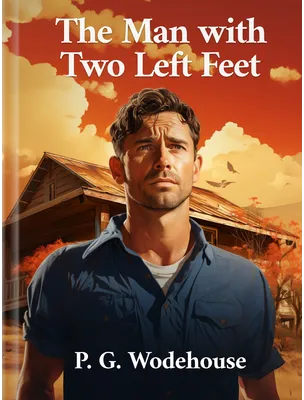
by
P. G. Wodehouse

Students of the folk-lore of the United States of America are no doubt familiar with the quaint old story of Clarence MacFadden. Clarence MacFadden, it seems, was ‘wishful to dance, but his feet wasn’t gaited that way. So he sought a professor and asked him his price, and said he was willing to pay. The professor’ (the legend goes on) ‘looked down with alarm at his feet and marked their enormous expanse; and he tacked on a five to his regular price for teaching MacFadden to dance.’
I have often been struck by the close similarity between the case of Clarence and that of Henry Wallace Mills. One difference alone presents itself. It would seem to have been mere vanity and ambition that stimulated the former; whereas the motive force which drove Henry Mills to defy Nature and attempt dancing was the purer one of love. He did it to please his wife. Had he never gone to Ye Bonnie Briar-Bush Farm, that popular holiday resort, and there met Minnie Hill, he would doubtless have continued to spend in peaceful reading the hours not given over to work at the New York bank at which he was employed as paying-cashier. For Henry was a voracious reader. His idea of a pleasant evening was to get back to his little flat, take off his coat, put on his slippers, light a pipe, and go on from the point where he had left off the night before in his perusal of the BIS-CAL volume of the Encyclopaedia Britannica — making notes as he read in a stout notebook. He read the BIS-CAL volume because, after many days, he had finished the A-AND, AND-AUS, and the AUS-BIS. There was something admirable — and yet a little horrible — about Henry’s method of study. He went after Learning with the cold and dispassionate relentlessness of a stoat pursuing a rabbit. The ordinary man who is paying instalments on the Encyclopaedia Britannica is apt to get over-excited and to skip impatiently to Volume XXVIII (VET-ZYM) to see how it all comes out in the end. Not so Henry. His was not a frivolous mind. He intended to read the Encyclopaedia through, and he was not going to spoil his pleasure by peeping ahead.
It would seem to be an inexorable law of Nature that no man shall shine at both ends. If he has a high forehead and a thirst for wisdom, his fox-trotting (if any) shall be as the staggerings of the drunken; while, if he is a good dancer, he is nearly always petrified from the ears upward. No better examples of this law could have been found than Henry Mills and his fellow-cashier, Sidney Mercer. In New York banks paying-cashiers, like bears, tigers, lions, and other fauna, are always shut up in a cage in pairs, and are consequently dependent on each other for entertainment and social intercourse when business is slack. Henry Mills and Sidney simply could not find a subject in common. Sidney knew absolutely nothing of even such elementary things as Abana, Aberration, Abraham, or Acrogenae; while Henry, on his side, was scarcely aware that there had been any developments in the dance since the polka. It was a relief to Henry when Sidney threw up his job to join the chorus of a musical comedy, and was succeeded by a man who, though full of limitations, could at least converse intelligently on Bowls.
Such, then, was Henry Wallace Mills. He was in the middle thirties, temperate, studious, a moderate smoker, and — one would have said — a bachelor of the bachelors, armour-plated against Cupid’s well-meant but obsolete artillery. Sometimes Sidney Mercer’s successor in the teller’s cage, a sentimental young man, would broach the topic of Woman and Marriage. He would ask Henry if he ever intended to get married. On such occasions Henry would look at him in a manner which was a blend of scorn, amusement, and indignation; and would reply with a single word:
‘Me!’
It was the way he said it that impressed you.
But Henry had yet to experience the unmanning atmosphere of a lonely summer resort. He had only just reached the position in the bank where he was permitted to take his annual vacation in the summer. Hitherto he had always been released from his cage during the winter months, and had spent his ten days of freedom at his flat, with a book in his hand and his feet on the radiator. But the summer after Sidney Mercer’s departure they unleashed him in August.
It was meltingly warm in the city. Something in Henry cried out for the country. For a month before the beginning of his vacation he devoted much of the time that should have been given to the Encyclopaedia Britannica in reading summer-resort literature. He decided at length upon Ye Bonnie Briar-Bush Farm because the advertisements spoke so well of it.
Ye Bonnie Briar-Bush Farm was a rather battered frame building many miles from anywhere. Its attractions included a Lovers’ Leap, a Grotto, golf-links — a five-hole course where the enthusiast found unusual hazards in the shape of a number of goats tethered at intervals between the holes — and a silvery lake, only portions of which were used as a dumping-ground for tin cans and wooden boxes. It was all new and strange to Henry and caused him an odd exhilaration. Something of gaiety and reckless abandon began to creep into his veins. He had a curious feeling that in these romantic surroundings some adventure ought to happen to him.
At this juncture Minnie Hill arrived. She was a small, slim girl, thinner and paler than she should have been, with large eyes that seemed to Henry pathetic and stirred his chivalry. He began to think a good deal about Minnie Hill.
And then one evening he met her on the shores of the silvery lake. He was standing there, slapping at things that looked like mosquitoes, but could not have been, for the advertisements expressly stated that none were ever found in the neighbourhood of Ye Bonnie Briar-Bush Farm, when along she came. She walked slowly, as if she were tired. A strange thrill, half of pity, half of something else, ran through Henry. He looked at her. She looked at him.
‘Good evening,’ he said.
They were the first words he had spoken to her. She never contributed to the dialogue of the dining-room, and he had been too shy to seek her out in the open.
She said ‘Good evening,’ too, tying the score. And there was silence for a moment.
Commiseration overcame Henry’s shyness.
‘You’re looking tired,’ he said.
‘I feel tired.’ She paused. ‘I overdid it in the city.’
‘It?’
‘Dancing.’
‘Oh, dancing. Did you dance much?’
‘Yes; a great deal.’
‘Ah!’
A promising, even a dashing start. But how to continue? For the first time Henry regretted the steady determination of his methods with the Encyclopaedia. How pleasant if he could have been in a position to talk easily of Dancing. Then memory reminded him that, though he had not yet got up to Dancing, it was only a few weeks before that he had been reading of the Ballet.
‘I don’t dance myself,’ he said, ‘but I am fond of reading about it. Did you know that the word “ballet” incorporated three distinct modern words, “ballet”, “ball”, and “ballad”, and that ballet-dancing was originally accompanied by singing?’
It hit her. It had her weak. She looked at him with awe in her eyes. One might almost say that she gaped at Henry.
‘I hardly know anything,’ she said.
‘The first descriptive ballet seen in London, England,’ said Henry, quietly, ‘was “The Tavern Bilkers”, which was played at Drury Lane in — in seventeen — something.’
‘Was it?’
‘And the earliest modern ballet on record was that given by — by someone to celebrate the marriage of the Duke of Milan in 1489.’
There was no doubt or hesitation about the date this time. It was grappled to his memory by hoops of steel owing to the singular coincidence of it being also his telephone number. He gave it out with a roll, and the girl’s eyes widened.
‘What an awful lot you know!’
‘Oh, no,’ said Henry, modestly. ‘I read a great deal.’
‘It must be splendid to know a lot,’ she said, wistfully. ‘I’ve never had time for reading. I’ve always wanted to. I think you’re wonderful!’
Henry’s soul was expanding like a flower and purring like a well-tickled cat. Never in his life had he been admired by a woman. The sensation was intoxicating.
Silence fell upon them. They started to walk back to the farm, warned by the distant ringing of a bell that supper was about to materialize. It was not a musical bell, but distance and the magic of this unusual moment lent it charm. The sun was setting. It threw a crimson carpet across the silvery lake. The air was very still. The creatures, unclassified by science, who might have been mistaken for mosquitoes had their presence been possible at Ye Bonnie Briar-Bush Farm, were biting harder than ever. But Henry heeded them not. He did not even slap at them. They drank their fill of his blood and went away to put their friends on to this good thing; but for Henry they did not exist. Strange things were happening to him. And, lying awake that night in bed, he recognized the truth. He was in love.
After that, for the remainder of his stay, they were always together. They walked in the woods, they sat by the silvery lake. He poured out the treasures of his learning for her, and she looked at him with reverent eyes, uttering from time to time a soft ‘Yes’ or a musical ‘Gee!’
In due season Henry went back to New York.
‘You’re dead wrong about love, Mills,’ said his sentimental fellow-cashier, shortly after his return. ‘You ought to get married.’
‘I’m going to,’ replied Henry, briskly. ‘Week tomorrow.’
Which stunned the other so thoroughly that he gave a customer who entered at that moment fifteen dollars for a ten-dollar cheque, and had to do some excited telephoning after the bank had closed.
Henry’s first year as a married man was the happiest of his life. He had always heard this period described as the most perilous of matrimony. He had braced himself for clashings of tastes, painful adjustments of character, sudden and unavoidable quarrels. Nothing of the kind happened. From the very beginning they settled down in perfect harmony. She merged with his life as smoothly as one river joins another. He did not even have to alter his habits. Every morning he had his breakfast at eight, smoked a cigarette, and walked to the Underground. At five he left the bank, and at six he arrived home, for it was his practice to walk the first two miles of the way, breathing deeply and regularly. Then dinner. Then the quiet evening. Sometimes the moving-pictures, but generally the quiet evening, he reading the Encyclopaedia — aloud now — Minnie darning his socks, but never ceasing to listen.
Each day brought the same sense of grateful amazement that he should be so wonderfully happy, so extraordinarily peaceful. Everything was as perfect as it could be. Minnie was looking a different girl. She had lost her drawn look. She was filling out.
Sometimes he would suspend his reading for a moment, and look across at her. At first he would see only her soft hair, as she bent over her sewing. Then, wondering at the silence, she would look up, and he would meet her big eyes. And then Henry would gurgle with happiness, and demand of himself, silently:
‘Can you beat it!’
It was the anniversary of their wedding. They celebrated it in fitting style. They dined at a crowded and exhilarating Italian restaurant on a street off Seventh Avenue, where red wine was included in the bill, and excitable people, probably extremely clever, sat round at small tables and talked all together at the top of their voices. After dinner they saw a musical comedy. And then — the great event of the night — they went on to supper at a glittering restaurant near Times Square.
There was something about supper at an expensive restaurant which had always appealed to Henry’s imagination. Earnest devourer as he was of the solids of literature, he had tasted from time to time its lighter face — those novels which begin with the hero supping in the midst of the glittering throng and having his attention attracted to a distinguished-looking elderly man with a grey imperial who is entering with a girl so strikingly beautiful that the revellers turn, as she passes, to look after her. And then, as he sits and smokes, a waiter comes up to the hero and, with a soft ‘Pardon, m’sieu!’ hands him a note.
The atmosphere of Geisenheimer’s suggested all that sort of thing to Henry. They had finished supper, and he was smoking a cigar — his second that day. He leaned back in his chair and surveyed the scene. He felt braced up, adventurous. He had that feeling, which comes to all quiet men who like to sit at home and read, that this was the sort of atmosphere in which he really belonged. The brightness of it all — the dazzling lights, the music, the hubbub, in which the deep-throated gurgle of the wine-agent surprised while drinking soup blended with the shriller note of the chorus-girl calling to her mate — these things got Henry. He was thirty-six next birthday, but he felt a youngish twenty-one.
A voice spoke at his side. Henry looked up, to perceive Sidney Mercer.
The passage of a year, which had turned Henry into a married man, had turned Sidney Mercer into something so magnificent that the spectacle for a moment deprived Henry of speech. Faultless evening dress clung with loving closeness to Sidney’s lissom form. Gleaming shoes of perfect patent leather covered his feet. His light hair was brushed back into a smooth sleekness on which the electric lights shone like stars on some beautiful pool. His practically chinless face beamed amiably over a spotless collar.
Henry wore blue serge.
‘What are you doing here, Henry, old top?’ said the vision. ‘I didn’t know you ever came among the bright lights.’
His eyes wandered off to Minnie. There was admiration in them, for Minnie was looking her prettiest.
‘Wife,’ said Henry, recovering speech. And to Minnie: ‘Mr Mercer. Old friend.’
‘So you’re married? Wish you luck. How’s the bank?’
Henry said the bank was doing as well as could be expected.
‘You still on the stage?’