'The Little Matchgirl' was first published in Denmark in 1845.
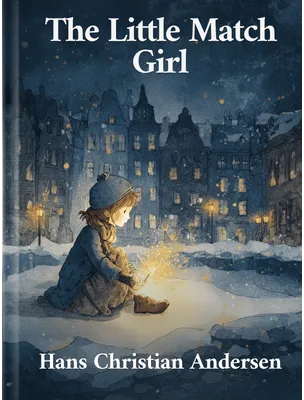
On a cold New Year’s Eve, a little girl walks through the snowy streets trying to sell matches. She is hungry, freezing, and afraid to go home with nothing sold. To stay warm, she lights her matches one by one, and each tiny flame shows her beautiful, magical visions that make her feel safe and loved.
As the night grows darker and colder, the glowing pictures become even more wonderful… and lead her toward something unexpected.
In the heart of a cold winter's night, a fragile little girl wanders the streets, clutching a bundle of matches. This is the world of “The Little Matchgirl,” a poignant tale by the beloved author Hans Christian Andersen. The story follows a nameless young girl who dreams of warmth and comfort while trying to sell her matches to passersby who are too busy to notice her plight.
As she strikes each match, flickers of light ignite her imagination, revealing visions of warmth and love that starkly contrast with her bleak surroundings. Through her eyes, we witness the harsh realities of poverty and loneliness, as well as the hope that can shimmer even in the darkest moments. This emotional journey invites readers to reflect on compassion and the fragility of life, making “The Little Matchgirl” a timeless classic that resonates with hearts young and old.
Full Name: Hans Christian Andersen
Birthdate: April 2, 1805
Place of Birth: Odense, Denmark
Date and Place of Death: August 4, 1875, in Copenhagen, Denmark
Occupation: Author and Poet
Notable Works: Some of his famous stories include "The Little Mermaid," "The Ugly Duckling," "The Princess and the Pea," and "Snow Queen."
Early Life: Andersen was born to a poor family. His father was a shoemaker, and his mother worked as a maid. Despite his humble beginnings, he showed early talent for storytelling and the arts.
Literary Career: Andersen began his writing career in the early 1830s. He published his first collection of fairy tales in 1835. His stories quickly gained popularity for their imaginative plots and moral lessons. He wrote over 150 tales in total.
Personal Life: Andersen never married, and his romantic life was often complicated. He had many close friendships but struggled with loneliness. He traveled extensively across Europe, which influenced his writing.
Hans Christian Andersen was a Danish author known for his fairy tales, born in 1805. He wrote many famous stories, including 'The Ugly Duckling' and 'The Princess and the Pea.'
'The Little Matchgirl' is a fairy tale and is often categorized as a children's story, though it addresses deep themes suitable for all ages.
The main character is a young, poor girl selling matches in the cold. Other characters include her visions of warmth and love, which represent her hopes and dreams.
The story follows a young girl on New Year's Eve as she struggles to sell matches in a snowy street. As she lights the matches to keep warm, she experiences beautiful visions.
Key themes include poverty, hope, love, and the tragic consequences of neglect. It reflects on the harsh realities of life and the power of dreams.
The matchgirl symbolizes innocence and the plight of the poor. Her visions represent hope and the warmth of love that she longs for.
'The Little Matchgirl' has been well-received over the years, praised for its poignant storytelling and emotional depth, making it a classic in children's literature.
Yes, 'The Little Matchgirl' has been adapted into various forms, including animated films, ballets, and stage performances.
'The Little Matchgirl' has influenced many discussions about poverty and social justice, inspiring readers and artists to reflect on the human condition.
0% · 0:00hPosition · Today