'Poems of Kabîr' is a collection of verses by the 15th-century Indian poet Kabîr. It has been published in various editions, with translations appearing in many languages, making Kabîr's work accessible to a global audience.
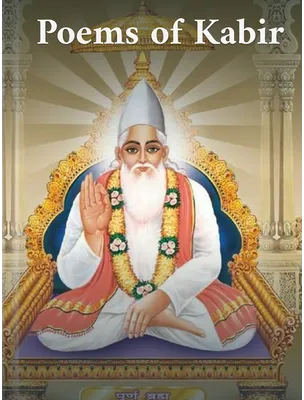
Kabir was a 15th-century Indian mystic who wrote his philosophies and ideas down in the form of poetry. The powerful poems, which contain essential teachings based on Hinduism and Sufism, are widely respected and have been deciphered and translated into many languages. The Poems of Kabir, written in 1915, contains 100 of Kabir's philosophical poems.
In the timeless collection "Poems of Kabîr," the revered poet and mystic Kabîr invites us into a world where the sacred and the everyday intertwine. With his profound verses, Kabîr explores the depths of human experience, addressing the struggles of love, faith, and the search for truth. The poems are imbued with the wisdom of a seeker who challenges the boundaries of religion and society, urging readers to look beyond the superficial and discover the essence of existence.
Through the voice of the main character, a wandering soul torn between tradition and inner enlightenment, Kabîr offers insights that resonate across generations. Each poem serves as a stepping stone on a journey towards self-realization, painting a vivid picture of the inner conflict between worldly attachments and spiritual awakening. With a blend of simplicity and depth, "Poems of Kabîr" captivates the heart and mind, inviting readers to reflect on their own paths to understanding and connection.
Full Name: Kabîr Das
Birthdate: Circa 1440
Place of Birth: Varanasi, India
Date and Place of Death: 1518, Maghar, India
Occupation: Poet, Saint, and Philosopher
Notable Works: Kabir's poems and verses found in the "Bijak," "Sakhis," and "Ramayana" are widely known. His teachings are also included in the Guru Granth Sahib, the holy scripture of Sikhism.
Early Life: Kabîr was born into a family of weavers. He grew up in the city of Varanasi, a center of spirituality. His early life was marked by poverty, but he was deeply interested in spirituality and sought knowledge from various spiritual leaders.
Literary Career: Kabîr began writing poetry in the local dialect known as Hindi. His verses often challenged religious orthodoxy and promoted a message of love and unity. He used simple language and metaphors to convey profound spiritual truths. His works addressed the importance of personal experience over ritualistic practices.
Personal Life: Kabîr was a mystic and a devoted follower of God. He was married and had children, but he lived a simple life focused on spirituality. His teachings emphasized love, devotion, and the oneness of all beings, making him a significant figure in Indian literature and spirituality.
Kabîr was a mystic poet and saint from India, known for his spiritual insights and critiques of organized religion. He was inspired by his experiences of love, devotion, and a quest for truth.
'Poems of Kabîr' is primarily a work of mystical poetry. Its style is lyrical and often incorporates folk idioms, making it relatable and profound.
While there are no traditional characters, Kabîr's poems often reflect the voices of seekers, spiritual guides, and the Divine, exploring the relationship between humans and the spiritual realm.
The 'Poems of Kabîr' do not follow a traditional plot. Instead, they present a series of reflections and teachings on spirituality, love, and the nature of existence.
Key themes include the search for truth, the importance of love and devotion, and the critique of religious dogma. Kabîr emphasizes inner experience over external rituals.
Kabîr uses rich symbolism, often drawing from nature, everyday life, and spiritual imagery to convey deeper truths about love, divinity, and the human experience.
The collection has been widely praised for its depth and beauty. Readers appreciate Kabîr's ability to express complex spiritual concepts in simple, relatable language.
Yes, Kabîr's poems have inspired various adaptations, including musical compositions, dance performances, and visual art that reflect his spiritual messages.
Kabîr's work has had a profound impact on Indian literature, spirituality, and the Bhakti movement, influencing countless artists, poets, and thinkers across cultures and centuries.