The book was first published in 1791.
[{"id":"para_1","index":0,"start":0,"offset":321,"words":5,"paraNum":"","lastModified":1667234608000,"semanticType":"title-book-title","voicework":"no_audio","blockId":"life_of_johnson_ffa_en-bl2z","language":"en","wordsRange":{"start":963000000,"end":970000000},"paragraphVersion":161,"direction":"ltr","paragraph":"<h1 class=\"ilm-title ilm-nopad\" id=\"para_1\" semantictype=\"title-book-title\" data-ilmid=\"life_of_johnson_ffa_en-bl2z\" data-chapter=\"para_1\" data-words-count=\"5\" data-before=\"0\" data-ww=\"\"><span class=\"block-pb\"> <span class=\"block-pb is-animated\"></span> </span><span class=\"itm-wrap\">Life of Johnson, Volume 1</span></h1>","hasContent":true,"isFirst":true,"isLast":false},{"id":"para_2","index":1,"start":321,"offset":354,"words":6,"paraNum":"","lastModified":1667146722000,"semanticType":"title-subtitle","voicework":"no_audio","blockId":"life_of_johnson_ffa_en-bl3mf","language":"en","wordsRange":{"start":1003333333,"end":1036666667},"paragraphVersion":70,"direction":"ltr","paragraph":"<h1 class=\"ilm-title ilm-subtitle ilm-x-small\" id=\"para_2\" semantictype=\"title-subtitle\" data-ilmid=\"life_of_johnson_ffa_en-bl3mf\" data-chapter=\"para_2\" data-words-count=\"6\" data-before=\"5\" data-ww=\"\"><span class=\"block-pb\"> <span class=\"block-pb is-animated\"></span> </span><span class=\"itm-wrap\">In Six Volumes<br>Volume I. Life (1709-1765)</span></h1>","hasContent":true,"isFirst":false,"isLast":false},{"id":"para_3","index":2,"start":675,"offset":336,"words":2,"paraNum":"","lastModified":1665070534000,"semanticType":"title-author","voicework":"no_audio","blockId":"life_of_johnson_ffa_en-bl30","language":"en","wordsRange":{"start":1070000000,"end":1072111111},"paragraphVersion":158,"direction":"ltr","paragraph":"<h1 class=\"ilm-title ilm-author ilm-x-large ilm-nopad\" id=\"para_3\" semantictype=\"title-author\" data-ilmid=\"life_of_johnson_ffa_en-bl30\" data-chapter=\"para_3\" data-words-count=\"2\" data-before=\"11\" data-ww=\"\"><span class=\"block-pb\"> <span class=\"block-pb is-animated\"></span> </span><span class=\"itm-wrap\">by <br>James Boswell</span></h1>","hasContent":true,"isFirst":false,"isLast":false},{"id":"para_4","index":3,"start":1011,"offset":353,"words":7,"paraNum":"","lastModified":1665070551000,"semanticType":"title-translator","voicework":"no_audio","blockId":"life_of_johnson_ffa_en-bl3m4","language":"en","wordsRange":{"start":1072126984,"end":1072333333},"paragraphVersion":65,"direction":"ltr","paragraph":"<h1 class=\"ilm-title ilm-translator ilm-x-small\" id=\"para_4\" semantictype=\"title-translator\" data-ilmid=\"life_of_johnson_ffa_en-bl3m4\" data-chapter=\"para_4\" data-words-count=\"7\" data-before=\"13\" data-ww=\"\"><span class=\"block-pb\"> <span class=\"block-pb is-animated\"></span> </span><span class=\"itm-wrap\">Edited by George Birkbeck Norman Hill </span></h1>","hasContent":true,"isFirst":false,"isLast":false},{"id":"para_5","index":4,"start":1364,"offset":152,"words":0,"paraNum":"","lastModified":1664802711000,"semanticType":"line","blockId":"life_of_johnson_ffa_en-bl3lb","language":"en","wordsRange":{"start":5034666667,"end":7488333333},"paragraphVersion":100,"direction":"ltr","paragraph":"<hr class=\"ilm-hr ilm-small\" id=\"para_5\" semantictype=\"line\" data-ilmid=\"life_of_johnson_ffa_en-bl3lb\" data-words-count=\"0\" data-before=\"20\" data-ww=\"\">","hasContent":true,"isFirst":false,"isLast":false},{"id":"para_6","index":5,"start":1516,"offset":1324,"words":0,"paraNum":"","lastModified":1667318806000,"semanticType":"illustration","blockId":"life_of_johnson_ffa_en-bl3n5","language":"en","wordsRange":{"start":8306222222,"end":9124111111},"paragraphVersion":31,"direction":"ltr","paragraph":"<div class=\"ilm-illustration\" id=\"para_6\" semantictype=\"illustration\" data-ilmid=\"life_of_johnson_ffa_en-bl3n5\" data-words-count=\"0\" data-before=\"20\" data-ww=\"\"><img width=\"495\" height=\"379\" data-src=\"ch0p0\" src=\"data:image/webp;base64,UklGRgoDAABXRUJQVlA4IP4CAABQDQCdASoyACYAPm00kUckIyGhKAuIgA2JZQC1G8F2ErX8iYN9oezPt/lmcYHfTYLL+kRNrsSJuWNKFnHhbD1KLQZDJ9NLqDnguYY5oge4Q3t9uBhPw/IGky1FTqQ+9KhVoIKfHuKu3Hu0dIkQZKfKv80AAP70F/bnvwfupvpCu654vn+k3dBS6mlXU7M5Cfscf/pZv0OzQPd9PfF7h6N8dBQ8BlYxl59N3EsbBDqwscO/fGpUB+g/Cj+ydYrbhv5a4+93skZAFHgDZHvPaysn0LEVjvxSfjSF3Su9bNndayWlyWCg0Dk0cMZ81OQ31JkC40VS1clrhtQ6JGEOKT6XGHI1iCkWiFYlHTLVKEDIbLUbs+iqs3vlnKEh45Axeo2vINrxoNVnpUQnNJqChMjObRq1E3spMr7mBI5Ggz7//U/HvYJhyz3LlDwP2+M7s+eXGoLscNwjlN6gFjYZ25Zdm6OXoCdS/I3J5YryIw0FfBX4cRiYfjfAYv1VrMSz7IqIxwfNnd9VmGRibRMWLsqTYHMhrV3WVHMzrbwEBkDWNK4StrwOICy6M2fdVajOyBhS+orVtCIXEDHw2obZwCycpf7ymhdM/7rUT1jMOaCMJ7nHiez2WUGEs4XK4m7sUSw5rhH+H3f3WEqYldbMqQUP0UU8IPS8sdxFZyMEUsBAlids1RjZQ0bDYaUreAzLz2GRmOc1KxJnvAfkmV5OeUkRXHNZvS+C4dxivwYC9SPcDYU5Rf7UZBv2Dhw0uU9QN8E+1u5Uudya/RVwYx6AHP8cmJcufqdD9NZLg9cKDeh2nb8H1ZlWrcKC7dwkfmYwDdCCgE1f/31NGOPqd6z5RV3oCN3+UDJ8ORPWByXxrtbY2MgayltxrkJH1IWeRK+/NxjHNSCNG5FWGcJ+joIAVC0VDgWMjiFIFr4RjgTf+8OJAGqq1NV/8DqLRitp2ZDytasHXJJq8FcI5NZ53JgtQVGtL3QWAiurA1nNytz7p+q+Kv74/vrB4cUbQAAAAAAA\" alt=\"Life of Johnson, Volume 1\"></div>","hasContent":true,"isFirst":false,"isLast":false},{"id":"para_7","index":6,"start":2840,"offset":302,"words":1,"paraNum":"","lastModified":1664801795000,"semanticType":"header-subheader","voicework":"no_audio","blockId":"life_of_johnson_ffa_en-bl5a","language":"en","wordsRange":{"start":9942000000,"end":9944000000},"paragraphVersion":283,"direction":"ltr","paragraph":"<h3 class=\"ilm-header ilm-h3\" id=\"para_7\" semantictype=\"header-subheader\" data-ilmid=\"life_of_johnson_ffa_en-bl5a\" data-chapter=\"para_7\" data-words-count=\"1\" data-before=\"20\" data-ww=\"\"><span class=\"block-pb\"> <span class=\"block-pb is-animated\"></span> </span><span class=\"itm-wrap\">Preface</span></h3>","hasContent":true,"isFirst":false,"isLast":false},{"id":"para_8","index":7,"start":3142,"offset":1404,"words":213,"paraNum":"p.1","lastModified":1664801795000,"semanticType":"par","voicework":"no_audio","blockId":"life_of_johnson_ffa_en-bl5b","language":"en","wordsRange":{"start":10044000000,"end":10258000000},"paragraphVersion":267,"direction":"ltr","paragraph":"<p id=\"para_8\" semantictype=\"par\" data-ilmid=\"life_of_johnson_ffa_en-bl5b\" data-words-count=\"213\" data-before=\"21\" data-ww=\"\"><span class=\"block-num\" data-id=\"p.1\"></span><span class=\"block-pb\"> <span class=\"block-pb is-animated\"></span> </span><span class=\"itm-wrap\">Fielding, it is said, drank confusion to the man who invented the fifth act of a play. He who has edited an extensive work, and has concluded his labours by the preparation of a copious index, might well be pardoned, if he omitted to include the inventor of the Preface among the benefactors of mankind. The long and arduous task that years before he had set himself to do is done, and the last thing that he desires is to talk about it. Liberty is what he asks for, liberty to range for a time wherever he pleases in the wide and fair fields of literature. Yet with this longing for freedom comes a touch of regret and a doubt lest the ‘fresh woods and pastures new’ may never wear the friendly and familiar face of the plot of ground within whose narrower confines he has so long been labouring, and whose every corner he knows so well. May-be he finds hope in the thought that should his new world seem strange to him and uncomfortable, ere long he may be called back to his old task, and in the preparation of a second edition find the quiet and the peace of mind that are often found alone in ‘old use and wont.’</span></p>","hasContent":true,"isFirst":false,"isLast":false},{"id":"para_9","index":8,"start":4546,"offset":5348,"words":781,"paraNum":"p.2","lastModified":1668255574000,"semanticType":"par","voicework":"no_audio","blockId":"life_of_johnson_ffa_en-bl5c","language":"en","wordsRange":{"start":10358000000,"end":11143000000},"paragraphVersion":281,"direction":"ltr","paragraph":"<p id=\"para_9\" semantictype=\"par\" data-ilmid=\"life_of_johnson_ffa_en-bl5c\" data-words-count=\"781\" data-before=\"234\" data-ww=\"\"><span class=\"block-num\" data-id=\"p.2\"></span><span class=\"block-pb\"> <span class=\"block-pb is-animated\"></span> </span><span class=\"itm-wrap\">With me the preparation of these volumes has, indeed, been the work of many years. Boswell’s <i>Life </i><i>of </i><i>Johnson</i> I read for the first time in my boyhood, when I was too young for it to lay any hold on me. When I entered Pembroke College, Oxford, though I loved to think that Johnson had been there before me, yet I cannot call to mind that I ever opened the pages of Boswell. By a happy chance I was turned to the study of the literature of the eighteenth century. Every week we were required by the rules of the College to turn into Latin, or what we called Latin, a passage from <i>The </i><i>Spectator</i>. Many a happy minute slipped by while, in forgetfulness of my task, I read on and on in its enchanting pages. It was always with a sigh that at last I tore myself away, and sat resolutely down to write bad Latin instead of reading good English. From Addison in the course of time I passed on to the other great writers of his and the succeeding age, finding in their exquisitely clear style, their admirable common sense and their freedom from all the tricks of affectation, a delightful contrast to so many of the eminent authors of our own time. Those troublesome doubts, doubts of all kinds, which since the great upheaval of the French Revolution have harassed mankind, had scarcely begun to ruffle the waters of their life. Even Johnson’s troubled mind enjoyed vast levels of repose. The unknown world alone was wrapped in stormy gloom; of this world ‘all the complaints which were made were <span class=\"intricate-word\"><span class=\"-nowrap-content\">unjust.’<a data-fnid=\"1\" epub:type=\"noteref\" href=\"#n0\"></a> </span></span>Though I was now familiar with many of the great writers, yet Boswell I had scarcely opened since my boyhood. A happy day came just eighteen years ago when in an old book-shop, almost under the shadow of a great cathedral, I bought a second-hand copy of a somewhat early edition of the <i>Life</i> in five well-bound volumes. Of all my books none I cherish more than these. In looking at them I have known what it is to feel Bishop Percy’s ‘uneasiness at the thoughts of leaving his books in <span class=\"intricate-word\"><span class=\"-nowrap-content\">death.’<a data-fnid=\"2\" epub:type=\"noteref\" href=\"#n1\"></a> </span></span>They became my almost inseparable companions. Before long I began to note the parallel passages and allusions not only in their pages, but in the various authors whom I studied. Yet in these early days I never dreamt of preparing a new edition. It fell to my lot as time went on to criticise in some of our leading publications works that bore both on Boswell and Johnson. Such was my love for the subject that on one occasion, when I was called upon to write a review that should fall two columns of a weekly newspaper, I read a new edition of the <i>Life</i> from beginning to end without, I believe, missing a single line of the text or a single note. At length, ‘towering in the <span class=\"intricate-word\"><span class=\"-nowrap-content\">confidence’<a data-fnid=\"3\" epub:type=\"noteref\" href=\"#n2\"></a> </span></span>of one who as yet has but set his foot on the threshold of some stately mansion in which he hopes to find for himself a home, I was rash enough more than twelve years ago to offer myself as editor of a new edition of Boswell’s <i>Life </i><i>of </i><i>Johnson</i>. Fortunately for me another writer had been already engaged by the publisher to whom I applied, and my offer was civilly declined. From that time on I never lost sight of my purpose but when in the troubles of life I well-nigh lost sight of every kind of hope. Everything in my reading that bore on my favourite author was carefully noted, till at length I felt that the materials which I had gathered from all sides were sufficient to shield me from a charge of rashness if I now began to raise the building. Much of the work of preparation had been done at a grievous disadvantage. My health more than once seemed almost hopelessly broken down. Nevertheless even then the time was not wholly lost. In the sleepless hours of many a winter night I almost forgot my miseries in the delightful pages of Horace Walpole’s Letters, and with pencil in hand and some little hope still in heart, managed to get a few notes taken. Three winters I had to spend on the shores of the Mediterranean. During two of them my malady and my distress allowed of no rival, and my work made scarcely any advance. The third my strength was returning, and in the six months that I spent three years ago in San Remo I wrote out very many of the notes which I am now submitting to my readers.</span></p><aside id=\"n0\" data-audio=\"0\" data-fnid=\"1\" class=\"bh-fn\" epub:type=\"footnote\" data-ww=\"\"><span><i>Post,</i> iv. 172. <br></span></aside><aside id=\"n1\" data-audio=\"0\" data-fnid=\"2\" class=\"bh-fn\" epub:type=\"footnote\" data-ww=\"\"><span><i>Post,</i> iii. 312. <br></span></aside><aside id=\"n2\" data-audio=\"0\" data-fnid=\"3\" class=\"bh-fn\" epub:type=\"footnote\" data-ww=\"\"><span><i>Post,</i> i. 324. <br></span></aside>","hasContent":true,"isFirst":false,"isLast":false},{"id":"para_10","index":9,"start":9894,"offset":2641,"words":407,"paraNum":"p.3","lastModified":1664801795000,"semanticType":"par","voicework":"no_audio","blockId":"life_of_johnson_ffa_en-bl5d","language":"en","wordsRange":{"start":11243000000,"end":11650000000},"paragraphVersion":267,"direction":"ltr","paragraph":"<p id=\"para_10\" semantictype=\"par\" data-ilmid=\"life_of_johnson_ffa_en-bl5d\" data-words-count=\"407\" data-before=\"1015\" data-ww=\"\"><span class=\"block-num\" data-id=\"p.3\"></span><span class=\"block-pb\"> <span class=\"block-pb is-animated\"></span> </span><span class=\"itm-wrap\">An interval of some years of comparative health that I enjoyed between my two severest illnesses allowed me to try my strength as a critic and an editor. In <i>Dr. </i><i>Johnson: </i><i>His </i><i>Friends </i><i>and </i><i>his </i><i>Critics</i>, which I published in the year 1878, I reviewed the judgments passed on Johnson and Boswell by Lord Macaulay and Mr. Carlyle, I described Oxford as it was known to Johnson, and I threw light on more than one important passage in the <i>Life</i>. The following year I edited Boswell’s Journal of a Tour to Corsica and his curious correspondence with the Hon. Andrew Erskine. The somewhat rare little volume in which are contained the lively but impudent letters that passed between these two friends I had found one happy day in an old book-stall underneath the town hall of Keswick. I hoped that among the almost countless readers of Boswell there would be many who would care to study in one of the earliest attempts of his joyous youth the man whose ripened genius was to place him at the very head of all the biographers of whom the world can boast. My hopes were increased by the elegance and the accuracy of the typography with which my publishers, Messrs. De La Rue & Co., adorned this reprint. I was disappointed in my expectations. These curious Letters met with a neglect which they did not deserve. Twice, moreover, I was drawn away from the task that I had set before me by other works. By the death of my uncle, Sir Rowland Hill, I was called upon to edit his <i>History </i><i>of </i><i>the </i><i>Penny </i><i>Postage</i>, and to write his <i>Life</i>. Later on General Gordon’s correspondence during the first six years of his government of the Soudan was entrusted to me to prepare for the press. In my <i>Colonel </i><i>Gordon </i><i>in </i><i>Central </i><i>Africa</i> I attempted to do justice to the rare genius, to the wise and pure enthusiasm, and to the exalted beneficence of that great man. The labour that I gave to these works was, as regards my main purpose, by no means wholly thrown away. I was trained by it in the duties of an editor, and by studying the character of two such men, who, though wide as the poles asunder in many things, were as devoted to truth and accuracy as they were patient in their pursuit, I was strengthened in my hatred of carelessness and error.</span></p>","hasContent":true,"isFirst":false,"isLast":false},{"id":"para_11","index":10,"start":12535,"offset":6298,"words":809,"paraNum":"p.4","lastModified":1668255511000,"semanticType":"par","voicework":"no_audio","blockId":"life_of_johnson_ffa_en-bl5e","language":"en","wordsRange":{"start":11750000000,"end":12565000000},"paragraphVersion":311,"direction":"ltr","paragraph":"<p id=\"para_11\" semantictype=\"par\" data-ilmid=\"life_of_johnson_ffa_en-bl5e\" data-words-count=\"809\" data-before=\"1422\" data-ww=\"\"><span class=\"block-num\" data-id=\"p.4\"></span><span class=\"block-pb\"> <span class=\"block-pb is-animated\"></span> </span><span class=\"itm-wrap\">With all these interruptions the summer of 1885 was upon me before I was ready for the compositors to make a beginning with my work. In revising my proofs very rarely indeed have I contented myself in verifying my quotations with comparing them merely with my own manuscript. In almost all instances I have once more examined the originals. ‘Diligence and accuracy,’ writes Gibbon, ‘are the only merits which an historical writer may ascribe to himself; if any merit indeed can be assumed from the performance of an indispensable <span class=\"intricate-word\"><span class=\"-nowrap-content\">duty.’<a data-fnid=\"1\" epub:type=\"noteref\" href=\"#n3\"></a> </span></span>By diligence and accuracy I have striven to win for myself a place in Johnson’s <i>school </i>— ‘a school distinguished,’ as Sir Joshua Reynolds said, ‘for a love of truth and <span class=\"intricate-word\"><span class=\"-nowrap-content\">accuracy.’<a data-fnid=\"2\" epub:type=\"noteref\" href=\"#n4\"></a> </span></span>I have steadily set before myself Boswell’s example where he says: — ‘Let me only observe, as a specimen of my trouble, that I have sometimes been obliged to run half over London, in order to fix a date correctly; which, when I had accomplished, I well knew would obtain me no praise, though a failure would have been to my <span class=\"intricate-word\"><span class=\"-nowrap-content\">discredit.’<a data-fnid=\"3\" epub:type=\"noteref\" href=\"#n5\"></a> </span></span>When the variety and the number of my notes are considered, when it is known that a great many of the authors I do not myself possess, but that they could only be examined in the Bodleian or the British Museum, it will be seen that the labour of revising the proofs was, indeed, unusually severe. In the course of the eighteen months during which they have been passing through the press, fresh reading has given fresh information, and caused many an addition, and not a few corrections moreover to be made, in passages which I had previously presumed to think already complete. Had it been merely the biography of a great man of letters that I was illustrating, such anxious care would scarcely have been needful. But Boswell’s <i>Life </i><i>of </i><i>Johnson</i>, as its author with just pride boasts on its title-page, ‘exhibits a view of literature and literary men in Great Britain, for near half a century during which Johnson flourished.’ Wide, indeed, is the gulf by which this half-century is separated from us. The reaction against the thought and style of the age over which Pope ruled in its prime, and Johnson in its decline, — this reaction, wise as it was in many ways and extravagant as it was perhaps in more, is very far from having spent its force. Young men are still far too often found in our Universities who think that one proof of their originality is a contempt of authors whose writings they have never read. Books which were in the hands of almost every reader of the <i>Life</i> when it first appeared are now read only by the curious. Allusions and quotations which once fell upon a familiar and a friendly ear now fall dead. Men whose names were known to every one, now often have not even a line in a Dictionary of Biography. Over manners too a change has come, and as Johnson justly observes, ‘all works which describe manners require notes in sixty or seventy years, or <span class=\"intricate-word\"><span class=\"-nowrap-content\">less.’<a data-fnid=\"4\" epub:type=\"noteref\" href=\"#n6\"></a> </span></span>But it is not only Boswell’s narrative that needs illustration. Johnson in his talk ranges over a vast number of subjects. In his capacious memory were stored up the fruits of an almost boundless curiosity, and a wide and varied reading. I have sought to follow him wherever a remark of his required illustration, and have read through many a book that I might trace to its source a reference or an allusion. I have examined, moreover, all the minor writings which are attributed to him by Boswell, but which are not for the most part included in his collected works. In some cases I have ventured to set my judgment against Boswell’s, and have refused to admit that Johnson was the author of the feeble pieces which were fathered on him. Once or twice in the course of my reading I have come upon essays which had escaped the notice of his biographer, but which bear the marks of his workmanship. To these I have given a reference. While the minute examination that I have so often had to make of Boswell’s narrative has done nothing but strengthen my trust in his statements and my admiration of his laborious truthfulness, yet in one respect I have not found him so accurate as I had expected. ‘I have,’ he says, ‘been extremely careful as to the exactness of my <span class=\"intricate-word\"><span class=\"-nowrap-content\">quotations.’<a data-fnid=\"5\" epub:type=\"noteref\" href=\"#n7\"></a> </span></span>Though in preparing his manuscript he referred in each case ‘to the originals,’ yet he did not, I conjecture, examine them once more in revising his proof-sheets. At all events he has allowed errors to slip in. These I have pointed out in my notes, for in every case where I could I have, I believe, verified his quotations.</span></p><aside id=\"n3\" data-audio=\"0\" data-fnid=\"1\" class=\"bh-fn\" epub:type=\"footnote\" data-ww=\"\"><span><i>History of the Decline and Fall of the Roman </i><i>Empire,</i> ed. 1807, vol. i. p. xi. <br></span></aside><aside id=\"n4\" data-audio=\"0\" data-fnid=\"2\" class=\"bh-fn\" epub:type=\"footnote\" data-ww=\"\"><span><i>Post</i>, iii. 230. <br></span></aside><aside id=\"n5\" data-audio=\"0\" data-fnid=\"3\" class=\"bh-fn\" epub:type=\"footnote\" data-ww=\"\"><span><i>Post</i>, i. 7. <br></span></aside><aside id=\"n6\" data-audio=\"0\" data-fnid=\"4\" class=\"bh-fn\" epub:type=\"footnote\" data-ww=\"\"><span><i>Post,</i> ii<i>.</i> 212. <br></span></aside><aside id=\"n7\" data-audio=\"0\" data-fnid=\"5\" class=\"bh-fn\" epub:type=\"footnote\" data-ww=\"\"><span><i>Post,</i> i. 7. <br></span></aside>","hasContent":true,"isFirst":false,"isLast":false},{"id":"para_12","index":11,"start":18833,"offset":2695,"words":285,"paraNum":"p.5","lastModified":1668182904000,"semanticType":"par","voicework":"no_audio","blockId":"life_of_johnson_ffa_en-bl5f","language":"en","wordsRange":{"start":12665000000,"end":12954000000},"paragraphVersion":299,"direction":"ltr","paragraph":"<p id=\"para_12\" semantictype=\"par\" data-ilmid=\"life_of_johnson_ffa_en-bl5f\" data-words-count=\"285\" data-before=\"2231\" data-ww=\"\"><span class=\"block-num\" data-id=\"p.5\"></span><span class=\"block-pb\"> <span class=\"block-pb is-animated\"></span> </span><span class=\"itm-wrap\">I have not thought that it was my duty as an editor to attempt to refute or even to criticise Johnson’s arguments. The story is told that when Peter the Great was on his travels and far from his country, some members of the Russian Council of State in St. Petersburgh ventured to withstand what was known to be his wish. His walking-stick was laid upon the table, and silence at once fell upon all. In like manner, before that editor who should trouble himself and his readers with attempting to refute Johnson’s arguments, paradoxical as they often were, should be placed Reynolds’s portrait of that ‘labouring working <span class=\"intricate-word\"><span class=\"-nowrap-content\">mind.’<a data-fnid=\"1\" epub:type=\"noteref\" href=\"#n8\"></a> </span></span>It might make him reflect that if the mighty reasoner could rise up and meet him face to face, he would be sure, on which ever side the right might be, even if at first his pistol missed fire to knock him down with the butt-end of <span class=\"intricate-word\"><span class=\"-nowrap-content\">it.<a data-fnid=\"2\" epub:type=\"noteref\" href=\"#n9\"></a> </span></span>I have attempted therefore not to criticise but to illustrate Johnson’s statements. I have compared them with the opinions of the more eminent men among his contemporaries, and with his own as they are contained in other parts of his <i>Life</i>, and in his writings. It is in his written works that his real opinion can be most surely found. ‘He owned he sometimes talked for victory; he was too conscientious to make error permanent and pernicious by deliberately writing <span class=\"intricate-word\"><span class=\"-nowrap-content\">it.’<a data-fnid=\"3\" epub:type=\"noteref\" href=\"#n10\"></a> </span></span>My numerous extracts from the eleven volumes of his collected works will, I trust, not only give a truer insight into the nature of the man, but also will show the greatness of the author to a generation of readers who have wandered into widely different paths.</span></p><aside id=\"n8\" data-audio=\"0\" data-fnid=\"1\" class=\"bh-fn\" epub:type=\"footnote\" data-ww=\"\"><span><i>Post,</i> iv. 444. <br></span></aside><aside id=\"n9\" data-audio=\"0\" data-fnid=\"2\" class=\"bh-fn\" epub:type=\"footnote\" data-ww=\"\"><span><i>Post</i>, ii. 100. <br></span></aside><aside id=\"n10\" data-audio=\"0\" data-fnid=\"3\" class=\"bh-fn\" epub:type=\"footnote\" data-ww=\"\"><span><i>Post,</i> iv. 429; v. 17. <br></span></aside>","hasContent":true,"isFirst":false,"isLast":false},{"id":"para_13","index":12,"start":21528,"offset":1244,"words":121,"paraNum":"p.6","lastModified":1668255599000,"semanticType":"par","voicework":"no_audio","blockId":"life_of_johnson_ffa_en-bl5g","language":"en","wordsRange":{"start":13054000000,"end":13177000000},"paragraphVersion":287,"direction":"ltr","paragraph":"<p id=\"para_13\" semantictype=\"par\" data-ilmid=\"life_of_johnson_ffa_en-bl5g\" data-words-count=\"121\" data-before=\"2516\" data-ww=\"\"><span class=\"block-num\" data-id=\"p.6\"></span><span class=\"block-pb\"> <span class=\"block-pb is-animated\"></span> </span><span class=\"itm-wrap\">In my attempts to trace the quotations of which both Johnson and Boswell were somewhat lavish, I have not in every case been successful, though I have received liberal assistance from more than one friend. In one case my long search was rewarded by the discovery that Boswell was quoting himself. That I have lighted upon the beautiful lines which Johnson quoted when he saw the Highland girl singing at her <span class=\"intricate-word\"><span class=\"-nowrap-content\">wheel,<a data-fnid=\"1\" epub:type=\"noteref\" href=\"#n11\"></a> </span></span>and have found out who was ‘one Giffard,’ or rather Gifford, ‘a parson,’ is to me a source of just triumph. I have not known many happier hours than the one in which in the Library of the British Museum my patient investigation was rewarded and I perused <i>Contemplation</i>.</span></p><aside id=\"n11\" data-audio=\"0\" data-fnid=\"1\" class=\"bh-fn\" epub:type=\"footnote\" data-ww=\"\"><span><i>Post,</i> v. 117. <br></span></aside>","hasContent":true,"isFirst":false,"isLast":false},{"id":"para_14","index":13,"start":22772,"offset":2755,"words":83,"paraNum":"p.7","lastModified":1668255678000,"semanticType":"par","voicework":"no_audio","blockId":"life_of_johnson_ffa_en-bl5h","language":"en","wordsRange":{"start":13277000000,"end":13368000000},"paragraphVersion":297,"direction":"ltr","paragraph":"<p id=\"para_14\" semantictype=\"par\" data-ilmid=\"life_of_johnson_ffa_en-bl5h\" data-words-count=\"83\" data-before=\"2637\" data-ww=\"\"><span class=\"block-num\" data-id=\"p.7\"></span><span class=\"block-pb\"> <span class=\"block-pb is-animated\"></span> </span><span class=\"itm-wrap\">Fifteen hitherto unpublished letters of <span class=\"intricate-word\"><span class=\"-nowrap-content\">Johnson;<a data-fnid=\"1\" epub:type=\"noteref\" href=\"#n12\"></a> </span></span>his college composition in Latin <span class=\"intricate-word\"><span class=\"-nowrap-content\">prose;<a data-fnid=\"2\" epub:type=\"noteref\" href=\"#n13\"></a> </span></span>a long extract from his manuscript <span class=\"intricate-word\"><span class=\"-nowrap-content\">diary;<a data-fnid=\"3\" epub:type=\"noteref\" href=\"#n14\"></a> </span></span>a suppressed passage in his Journey to the Western <span class=\"intricate-word\"><span class=\"-nowrap-content\">Islands;<a data-fnid=\"4\" epub:type=\"noteref\" href=\"#n15\"></a> </span></span>Boswell’s letters of acceptance of the office of Secretary for Foreign Correspondence to the Royal <span class=\"intricate-word\"><span class=\"-nowrap-content\">Academy;<a data-fnid=\"5\" epub:type=\"noteref\" href=\"#n16\"></a> </span></span>the proposal for the publication of a <i>Geographical </i><i>Dictionary</i> issued by Johnson’s beloved friend, Dr. <span class=\"intricate-word\"><span class=\"-nowrap-content\">Bathurst;<a data-fnid=\"6\" epub:type=\"noteref\" href=\"#n17\"></a> </span></span>and Mr. Recorder Longley’s record of his conversation with Johnson on Greek <span class=\"intricate-word\"><span class=\"-nowrap-content\">metres,<a data-fnid=\"7\" epub:type=\"noteref\" href=\"#n18\"></a> </span></span>will, I trust, throw some lustre on this edition.</span></p><aside id=\"n12\" data-audio=\"0\" data-fnid=\"1\" class=\"bh-fn\" epub:type=\"footnote\" data-ww=\"\"><span><i>Post</i>, i. 472, n. 4; iv. 260, n. 2; v. 405, n. 1, 454, n. 2; vi. i-xxxvii. <br></span></aside><aside id=\"n13\" data-audio=\"0\" data-fnid=\"2\" class=\"bh-fn\" epub:type=\"footnote\" data-ww=\"\"><span><i>Post,</i> i. 60, n. 7. <br></span></aside><aside id=\"n14\" data-audio=\"0\" data-fnid=\"3\" class=\"bh-fn\" epub:type=\"footnote\" data-ww=\"\"><span><i>Post,</i> ii. 476.</span></aside><aside id=\"n15\" data-audio=\"0\" data-fnid=\"4\" class=\"bh-fn\" epub:type=\"footnote\" data-ww=\"\"><span><i>Post,</i> vi. xxxiv. <br></span></aside><aside id=\"n16\" data-audio=\"0\" data-fnid=\"5\" class=\"bh-fn\" epub:type=\"footnote\" data-ww=\"\"><span><i>Post,</i> iii. 462. <br></span></aside><aside id=\"n17\" data-audio=\"0\" data-fnid=\"6\" class=\"bh-fn\" epub:type=\"footnote\" data-ww=\"\"><span><i>Post,</i> vi. xxii.</span></aside><aside id=\"n18\" data-audio=\"0\" data-fnid=\"7\" class=\"bh-fn\" epub:type=\"footnote\" data-ww=\"\"><span><i>Post,</i> iv. 8, n. 3. <br></span></aside>","hasContent":true,"isFirst":false,"isLast":false},{"id":"para_15","index":14,"start":25527,"offset":2714,"words":187,"paraNum":"p.8","lastModified":1668255714000,"semanticType":"par","voicework":"no_audio","blockId":"life_of_johnson_ffa_en-bl5i","language":"en","wordsRange":{"start":13468000000,"end":13661000000},"paragraphVersion":277,"direction":"ltr","paragraph":"<p id=\"para_15\" semantictype=\"par\" data-ilmid=\"life_of_johnson_ffa_en-bl5i\" data-words-count=\"187\" data-before=\"2720\" data-ww=\"\"><span class=\"block-num\" data-id=\"p.8\"></span><span class=\"block-pb\"> <span class=\"block-pb is-animated\"></span> </span><span class=\"itm-wrap\">In many notes I have been able to clear up statements in the text which were not fully understood even by the author, or were left intentionally dark by him, or have become obscure through lapse of time. I would particularly refer to the light that I have thrown on Johnson’s engaging in politics with William Gerard <span class=\"intricate-word\"><span class=\"-nowrap-content\">Hamilton,<a data-fnid=\"1\" epub:type=\"noteref\" href=\"#n19\"></a> </span></span>and on Burke’s ‘talk of <span class=\"intricate-word\"><span class=\"-nowrap-content\">retiring.’<a data-fnid=\"2\" epub:type=\"noteref\" href=\"#n20\"></a> </span></span>In many other notes I have established Boswell’s accuracy against attacks which had been made on it apparently with success. It was with much pleasure that I discovered that the story told of Johnson’s listening to Dr. Sacheverel’s sermon is not in any way <span class=\"intricate-word\"><span class=\"-nowrap-content\">improbable,<a data-fnid=\"3\" epub:type=\"noteref\" href=\"#n21\"></a> </span></span>and that Johnson’s ‘censure’ of Lord Kames was quite <span class=\"intricate-word\"><span class=\"-nowrap-content\">just.<a data-fnid=\"4\" epub:type=\"noteref\" href=\"#n22\"></a> </span></span>The ardent advocates of total abstinence will not, I fear, be pleased at finding at the end of my long note on Johnson’s wine-drinking that I have been obliged to show that he thought that the gout from which he suffered was due to his temperance. ‘I hope you persevere in drinking,’ he wrote to his friend, Dr. Taylor. ‘My opinion is that I have drunk too <span class=\"intricate-word\"><span class=\"-nowrap-content\">little.’<a data-fnid=\"5\" epub:type=\"noteref\" href=\"#n23\"></a> </span></span></span></p><aside id=\"n19\" data-audio=\"0\" data-fnid=\"1\" class=\"bh-fn\" epub:type=\"footnote\" data-ww=\"\"><span><i>Post,</i> i. 489, 518. <br></span></aside><aside id=\"n20\" data-audio=\"0\" data-fnid=\"2\" class=\"bh-fn\" epub:type=\"footnote\" data-ww=\"\"><span><i>Post,</i> iv. 223, n. 3. <br></span></aside><aside id=\"n21\" data-audio=\"0\" data-fnid=\"3\" class=\"bh-fn\" epub:type=\"footnote\" data-ww=\"\"><span><i>Post,</i> i. 39, n. 1. <br></span></aside><aside id=\"n22\" data-audio=\"0\" data-fnid=\"4\" class=\"bh-fn\" epub:type=\"footnote\" data-ww=\"\"><span><i>Post,</i> iii. 340, n. 2. <br></span></aside><aside id=\"n23\" data-audio=\"0\" data-fnid=\"5\" class=\"bh-fn\" epub:type=\"footnote\" data-ww=\"\"><span><i>Post,</i> i. 103, n. 3. <br></span></aside>","hasContent":true,"isFirst":false,"isLast":false},{"id":"para_16","index":15,"start":28241,"offset":2937,"words":176,"paraNum":"p.9","lastModified":1668255763000,"semanticType":"par","voicework":"no_audio","blockId":"life_of_johnson_ffa_en-bl5j","language":"en","wordsRange":{"start":13761000000,"end":13944000000},"paragraphVersion":279,"direction":"ltr","paragraph":"<p id=\"para_16\" semantictype=\"par\" data-ilmid=\"life_of_johnson_ffa_en-bl5j\" data-words-count=\"176\" data-before=\"2907\" data-ww=\"\"><span class=\"block-num\" data-id=\"p.9\"></span><span class=\"block-pb\"> <span class=\"block-pb is-animated\"></span> </span><span class=\"itm-wrap\">In the Appendices I have generally treated of subjects which demanded more space than could be given them in the narrow limits of a foot-note. In the twelve pages of the essay on Johnson’s Debates in <span class=\"intricate-word\"><span class=\"-nowrap-content\">Parliament<a data-fnid=\"1\" epub:type=\"noteref\" href=\"#n24\" class=\"space\"></a> </span></span>I have compressed the result of the reading of many weeks. In examining the character of George <span class=\"intricate-word\"><span class=\"-nowrap-content\">Psalmanazar<a data-fnid=\"2\" epub:type=\"noteref\" href=\"#n25\" class=\"space\"></a> </span></span>I have complied with the request of an unknown correspondent who was naturally interested in the history of that strange man, ‘after whom Johnson sought the <span class=\"intricate-word\"><span class=\"-nowrap-content\">most.’<a data-fnid=\"3\" epub:type=\"noteref\" href=\"#n26\"></a> </span></span>In my essay on Johnson’s Travels and Love of <span class=\"intricate-word\"><span class=\"-nowrap-content\">Travelling<a data-fnid=\"4\" epub:type=\"noteref\" href=\"#n27\" class=\"space\"></a> </span></span>I have, in opposition to Lord Macaulay’s wild and wanton rhetoric, shown how ardent and how elevated was the curiosity with which Johnson’s mind was possessed. In another essay I have explained, I do not say justified, his strong feelings towards the founders of the United <span class=\"intricate-word\"><span class=\"-nowrap-content\">States;<a data-fnid=\"5\" epub:type=\"noteref\" href=\"#n28\"></a> </span></span>and in a fifth I have examined the election of the Lord Mayors of London, at a time when the City was torn by political <span class=\"intricate-word\"><span class=\"-nowrap-content\">strife.<a data-fnid=\"6\" epub:type=\"noteref\" href=\"#n29\"></a> </span></span>To the other Appendices it is not needful particularly to refer.</span></p><aside id=\"n24\" data-audio=\"0\" data-fnid=\"1\" class=\"bh-fn\" epub:type=\"footnote\" data-ww=\"\"><span><i>Post,</i> i. 501. <br></span></aside><aside id=\"n25\" data-audio=\"0\" data-fnid=\"2\" class=\"bh-fn\" epub:type=\"footnote\" data-ww=\"\"><span><i>Post,</i> iii. 443. <br></span></aside><aside id=\"n26\" data-audio=\"0\" data-fnid=\"3\" class=\"bh-fn\" epub:type=\"footnote\" data-ww=\"\"><span><i>Post,</i> iii. 314. <br></span></aside><aside id=\"n27\" data-audio=\"0\" data-fnid=\"4\" class=\"bh-fn\" epub:type=\"footnote\" data-ww=\"\"><span><i>Post,</i> iii. 449. <br></span></aside><aside id=\"n28\" data-audio=\"0\" data-fnid=\"5\" class=\"bh-fn\" epub:type=\"footnote\" data-ww=\"\"><span><i>Post,</i> iii. 478. <br></span></aside><aside id=\"n29\" data-audio=\"0\" data-fnid=\"6\" class=\"bh-fn\" epub:type=\"footnote\" data-ww=\"\"><span><i>Post,</i> iii. 459. <br></span></aside>","hasContent":true,"isFirst":false,"isLast":false},{"id":"para_17","index":16,"start":31178,"offset":3166,"words":418,"paraNum":"p.10","lastModified":1668255783000,"semanticType":"par","voicework":"no_audio","blockId":"life_of_johnson_ffa_en-bl5k","language":"en","wordsRange":{"start":14044000000,"end":14465000000},"paragraphVersion":278,"direction":"ltr","paragraph":"<p id=\"para_17\" semantictype=\"par\" data-ilmid=\"life_of_johnson_ffa_en-bl5k\" data-words-count=\"418\" data-before=\"3083\" data-ww=\"\"><span class=\"block-num\" data-id=\"p.10\"></span><span class=\"block-pb\"> <span class=\"block-pb is-animated\"></span> </span><span class=\"itm-wrap\">In my Index, which has cost me many months’ heavy work, ‘while I bore burdens with dull patience and beat the track of the alphabet with sluggish <span class=\"intricate-word\"><span class=\"-nowrap-content\">resolution,’<a data-fnid=\"1\" epub:type=\"noteref\" href=\"#n30\"></a> </span></span>I have, I hope, shown that I am not unmindful of all that I owe to men of letters. To the dead we cannot pay the debt of gratitude that is their due. Some relief is obtained from its burthen, if we in our turn make the men of our own generation debtors to us. The plan on which my Index is made will, I trust, be found convenient. By the alphabetical arrangement in the separate entries of each article the reader, I venture to think, will be greatly facilitated in his researches. Certain subjects I have thought it best to form into groups. Under America, France Ireland, London, Oxford, Paris, and Scotland, are gathered together almost all the references to those subjects. The provincial towns of France, however, by some mistake I did not include in the general article. One important but intentional omission I must justify. In the case of the quotations in which my notes abound I have not thought it needful in the Index to refer to the book unless the eminence of the author required a separate and a second entry. My labour would have been increased beyond all endurance and my Index have been swollen almost into a monstrosity had I always referred to the book as well as to the matter which was contained in the passage that I extracted. Though in such a variety of subjects there must be many omissions, yet I shall be greatly disappointed if actual errors are discovered. Every entry I have made myself, and every entry I have verified in the proof-sheets, not by comparing it with my manuscript, but by turning to the reference in the printed volumes. Some indulgence nevertheless may well be claimed and granted. If Homer at times nods, an index-maker may be pardoned, should he in the fourth or fifth month of his task at the end of a day of eight hours’ work grow drowsy. May I fondly hope that to the maker of so large an Index will be extended the gratitude which Lord Bolingbroke says was once shown to lexicographers? ‘I approve,’ writes his Lordship, ‘the devotion of a studious man at Christ Church, who was overheard in his oratory entering into a detail with God, and acknowledging the divine goodness in furnishing the world with makers of <span class=\"intricate-word\"><span class=\"-nowrap-content\">dictionaries.’<a data-fnid=\"2\" epub:type=\"noteref\" href=\"#n31\"></a> </span></span></span></p><aside id=\"n30\" data-audio=\"0\" data-fnid=\"1\" class=\"bh-fn\" epub:type=\"footnote\" data-ww=\"\"><span><i>Post,</i> i. 189. n. 2. <br></span></aside><aside id=\"n31\" data-audio=\"0\" data-fnid=\"2\" class=\"bh-fn\" epub:type=\"footnote\" data-ww=\"\"><span>i. 296, n. 3. <br></span></aside>","hasContent":true,"isFirst":false,"isLast":false},{"id":"para_18","index":17,"start":34344,"offset":488,"words":41,"paraNum":"p.11","lastModified":1664801795000,"semanticType":"par","voicework":"no_audio","blockId":"life_of_johnson_ffa_en-bl5l","language":"en","wordsRange":{"start":14565000000,"end":14607000000},"paragraphVersion":267,"direction":"ltr","paragraph":"<p id=\"para_18\" semantictype=\"par\" data-ilmid=\"life_of_johnson_ffa_en-bl5l\" data-words-count=\"41\" data-before=\"3501\" data-ww=\"\"><span class=\"block-num\" data-id=\"p.11\"></span><span class=\"block-pb\"> <span class=\"block-pb is-animated\"></span> </span><span class=\"itm-wrap\">In the list that I give in the beginning of the sixth volume of the books which I quote, the reader will find stated in full the titles which in the notes, through regard to space, I was forced to compress.</span></p>","hasContent":true,"isFirst":false,"isLast":false},{"id":"para_19","index":18,"start":34832,"offset":1976,"words":150,"paraNum":"p.12","lastModified":1668255803000,"semanticType":"par","voicework":"no_audio","blockId":"life_of_johnson_ffa_en-bl5m","language":"en","wordsRange":{"start":14707000000,"end":14862000000},"paragraphVersion":279,"direction":"ltr","paragraph":"<p id=\"para_19\" semantictype=\"par\" data-ilmid=\"life_of_johnson_ffa_en-bl5m\" data-words-count=\"150\" data-before=\"3542\" data-ww=\"\"><span class=\"block-num\" data-id=\"p.12\"></span><span class=\"block-pb\"> <span class=\"block-pb is-animated\"></span> </span><span class=\"itm-wrap\">The Concordance of Johnson’s sayings which follows the <span class=\"intricate-word\"><span class=\"-nowrap-content\">Index<a data-fnid=\"1\" epub:type=\"noteref\" href=\"#n32\" class=\"space\"></a> </span></span>will be found convenient by the literary man who desires to make use of his strong and pointed utterances. Next to Shakespeare he is, I believe, quoted and misquoted the most frequently of all our writers. ‘It is not every man that can <i>carry</i> a <i>bon-mot</i>.’<i><span class=\"intricate-word\"><span class=\"-nowrap-content\"><a data-fnid=\"2\" epub:type=\"noteref\" href=\"#n33\"></a> </span></span></i> Bons-mots that are miscarried of all kinds of good things suffer the most. In this Concordance the general reader, moreover, may find much to delight him. Johnson’s trade was wit and <span class=\"intricate-word\"><span class=\"-nowrap-content\">wisdom,<a data-fnid=\"3\" epub:type=\"noteref\" href=\"#n34\"></a> </span></span>and some of his best wares are here set out in a small space. It was, I must confess, with no little pleasure that in revising my proof-sheets I found that the last line in my Concordance and the last line in my six long volumes is Johnson’s quotation of Goldsmith’s fine saying; ‘I do not love a man who is zealous for nothing.’</span></p><aside id=\"n32\" data-audio=\"0\" data-fnid=\"1\" class=\"bh-fn\" epub:type=\"footnote\" data-ww=\"\"><span><i>Post,</i> vi. 289. <br></span></aside><aside id=\"n33\" data-audio=\"0\" data-fnid=\"2\" class=\"bh-fn\" epub:type=\"footnote\" data-ww=\"\"><span><i>Post,</i> ii. 350. <br></span></aside><aside id=\"n34\" data-audio=\"0\" data-fnid=\"3\" class=\"bh-fn\" epub:type=\"footnote\" data-ww=\"\"><span><i>Post,</i> iii. 137, n. 1; 389. <br></span></aside>","hasContent":true,"isFirst":false,"isLast":false},{"id":"para_20","index":19,"start":36808,"offset":670,"words":68,"paraNum":"p.13","lastModified":1664801795000,"semanticType":"par","voicework":"no_audio","blockId":"life_of_johnson_ffa_en-bl5n","language":"en","wordsRange":{"start":14962000000,"end":15031000000},"paragraphVersion":267,"direction":"ltr","paragraph":"<p id=\"para_20\" semantictype=\"par\" data-ilmid=\"life_of_johnson_ffa_en-bl5n\" data-words-count=\"68\" data-before=\"3692\" data-ww=\"\"><span class=\"block-num\" data-id=\"p.13\"></span><span class=\"block-pb\"> <span class=\"block-pb is-animated\"></span> </span><span class=\"itm-wrap\">In the ‘forward’ references in the notes to other passages in the book, the reader may be surprised at finding that while often I only give the date under which the reference will be found, frequently I am able to quote the page and volume. The explanation is a simple one: two sets of compositors were generally at work, and two volumes were passing through the press simultaneously.</span></p>","hasContent":true,"isFirst":false,"isLast":false},{"id":"para_21","index":20,"start":37478,"offset":3296,"words":378,"paraNum":"p.14","lastModified":1668255833000,"semanticType":"par","voicework":"no_audio","blockId":"life_of_johnson_ffa_en-bl5o","language":"en","wordsRange":{"start":15131000000,"end":15513000000},"paragraphVersion":275,"direction":"ltr","paragraph":"<p id=\"para_21\" semantictype=\"par\" data-ilmid=\"life_of_johnson_ffa_en-bl5o\" data-words-count=\"378\" data-before=\"3760\" data-ww=\"\"><span class=\"block-num\" data-id=\"p.14\"></span><span class=\"block-pb\"> <span class=\"block-pb is-animated\"></span> </span><span class=\"itm-wrap\">In the selection of the text which I should adopt I hesitated for some time. In ordinary cases the edition which received the author’s final revision is the one which all future editors should follow. The second edition, which was the last that was brought out in Boswell’s life-time, could not, I became convinced, be conveniently reproduced. As it was passing through the press he obtained many additional anecdotes and letters. These he somewhat awkwardly inserted in an Introduction and an Appendix. He was engaged on his third edition when he died. ‘He had pointed out where some of these materials should be inserted,’ and ‘in the margin of the copy which he had in part revised he had written <span class=\"intricate-word\"><span class=\"-nowrap-content\">notes.’<a data-fnid=\"1\" epub:type=\"noteref\" href=\"#n35\"></a> </span></span>His interrupted labours were completed by Edmond Malone, to whom he had read aloud almost the whole of his original manuscript, and who had helped him in the revision of the first half of the book when it was in <span class=\"intricate-word\"><span class=\"-nowrap-content\">type.<a data-fnid=\"2\" epub:type=\"noteref\" href=\"#n36\"></a> </span></span>‘These notes,’ says Malone, ‘are faithfully preserved.’ He adds that ‘every new remark, not written by the author, for the sake of distinction has been enclosed within <span class=\"intricate-word\"><span class=\"-nowrap-content\">crotchets.’<a data-fnid=\"3\" epub:type=\"noteref\" href=\"#n37\"></a> </span></span>In the third edition therefore we have the work in the condition in which it would have most approved itself to Boswell’s own judgment. In one point only, and that a trifling one, had Malone to exercise his judgment. But so skilful an editor was very unlikely to go wrong in those few cases in which he was called upon to insert in their proper places the additional material which the author had already published in his second edition. Malone did not, however, correct the proof-sheets. I thought it my duty, therefore, in revising my work to have the text of Boswell’s second edition read aloud to me throughout. Some typographical errors might, I feared, have crept in. In a few unimportant cases early in the book I adopted the reading of the second edition, but as I read on I became convinced that almost all the verbal alterations were Boswell’s own. Slight errors, often of the nature of Scotticisms, had been corrected, and greater accuracy often given. Some of the corrections and additions in the third edition that were undoubtedly from his hand were of considerable importance.</span></p><aside id=\"n35\" data-audio=\"0\" data-fnid=\"1\" class=\"bh-fn\" epub:type=\"footnote\" data-ww=\"\"><span><i>Post,</i> i. 14<br></span></aside><aside id=\"n36\" data-audio=\"0\" data-fnid=\"2\" class=\"bh-fn\" epub:type=\"footnote\" data-ww=\"\"><span><i>Post,</i> i. 7-8<br></span></aside><aside id=\"n37\" data-audio=\"0\" data-fnid=\"3\" class=\"bh-fn\" epub:type=\"footnote\" data-ww=\"\"><span><i>Post,</i> i. 14-15. <br></span></aside>","hasContent":true,"isFirst":false,"isLast":false},{"id":"para_22","index":21,"start":40774,"offset":863,"words":49,"paraNum":"p.15","lastModified":1668255844000,"semanticType":"par","voicework":"no_audio","blockId":"life_of_johnson_ffa_en-bl5p","language":"en","wordsRange":{"start":15613000000,"end":15664000000},"paragraphVersion":273,"direction":"ltr","paragraph":"<p id=\"para_22\" semantictype=\"par\" data-ilmid=\"life_of_johnson_ffa_en-bl5p\" data-words-count=\"49\" data-before=\"4138\" data-ww=\"\"><span class=\"block-num\" data-id=\"p.15\"></span><span class=\"block-pb\"> <span class=\"block-pb is-animated\"></span> </span><span class=\"itm-wrap\">I have retained Boswell’s spelling in accordance with the wish that he expressed in the preface to his <i>Account </i><i>of </i><i>Corsica</i>. ‘If this work,’ he writes, ‘should at any future period be reprinted, I hope that care will be taken of my <span class=\"intricate-word\"><span class=\"-nowrap-content\">orthography.’<a data-fnid=\"1\" epub:type=\"noteref\" href=\"#n38\"></a> </span></span>The punctuation too has been preserved.</span></p><aside id=\"n38\" data-audio=\"0\" data-fnid=\"1\" class=\"bh-fn\" epub:type=\"footnote\" data-ww=\"\"><span><i>Post,</i> iv. 31, n. 3<br></span></aside>","hasContent":true,"isFirst":false,"isLast":false},{"id":"para_23","index":22,"start":41637,"offset":3296,"words":420,"paraNum":"p.16","lastModified":1668255880000,"semanticType":"par","voicework":"no_audio","blockId":"life_of_johnson_ffa_en-bl5q","language":"en","wordsRange":{"start":15764000000,"end":16187000000},"paragraphVersion":275,"direction":"ltr","paragraph":"<p id=\"para_23\" semantictype=\"par\" data-ilmid=\"life_of_johnson_ffa_en-bl5q\" data-words-count=\"420\" data-before=\"4187\" data-ww=\"\"><span class=\"block-num\" data-id=\"p.16\"></span><span class=\"block-pb\"> <span class=\"block-pb is-animated\"></span> </span><span class=\"itm-wrap\">I should be wanting in justice were I not to acknowledge that I owe much to the labours of Mr. Croker. No one can know better than I do his great failings as an editor. His remarks and criticisms far too often deserve the contempt that Macaulay so liberally poured on them. Without being deeply versed in books, he was shallow in himself. Johnson’s strong character was never known to him. Its breadth and length, and depth and height were far beyond his measure. With his writings even he shows few signs of being familiar. Boswell’s genius, a genius which even to Lord Macaulay was foolishness, was altogether hidden from his dull eye. No one surely but a ‘blockhead,’ a ‘barren <span class=\"intricate-word\"><span class=\"-nowrap-content\">rascal,’<a data-fnid=\"1\" epub:type=\"noteref\" href=\"#n39\"></a> </span></span>could with scissors and paste-pot have mangled the biography which of all others is the delight and the boast of the English-speaking world. He is careless in small matters, and his blunders are numerous. These I have only noticed in the more important cases, remembering what Johnson somewhere points out, that the triumphs of one critic over another only fatigue and disgust the reader. Yet he has added considerably to our knowledge of Johnson. He knew men who had intimately known both the hero and his biographer, and he gathered much that but for his care would have been lost for ever. He was diligent and successful in his search after Johnson’s letters, of so many of which Boswell with all his persevering and pushing diligence had not been able to get a sight. The editor of Mr. Croker’s <i>Correspondence </i><i>and </i><i>Diaries</i><i><span class=\"intricate-word\"><span class=\"-nowrap-content\"><a data-fnid=\"2\" epub:type=\"noteref\" href=\"#n40\" class=\"space\"></a> </span></span></i> goes, however, much too far when, in writing of Macaulay’s criticism, he says: ‘The attack defeated itself by its very violence, and therefore it did the book no harm whatever. Between forty and fifty thousand copies have been sold, although Macaulay boasted with great glee that he had smashed it.’ The book that Macaulay attacked was withdrawn. That monstrous medley reached no second edition. In its new form all the worst excrescences had been cleared away, and though what was left was not Boswell, still less was it unchastened Croker. His repentance, however, was not thorough. He never restored the text to its old state; wanton transpositions of passages still remain, and numerous insertions break the narrative. It was my good fortune to become a sound Boswellian before I even looked at his edition. It was not indeed till I came to write out my notes for the press that I examined his with any thoroughness.</span></p><aside id=\"n39\" data-audio=\"0\" data-fnid=\"1\" class=\"bh-fn\" epub:type=\"footnote\" data-ww=\"\"><span>ii. 173-4. <br></span></aside><aside id=\"n40\" data-audio=\"0\" data-fnid=\"2\" class=\"bh-fn\" epub:type=\"footnote\" data-ww=\"\"><span>vol. ii. p. 47. <br></span></aside>","hasContent":true,"isFirst":false,"isLast":false},{"id":"para_24","index":23,"start":44933,"offset":812,"words":36,"paraNum":"p.17","lastModified":1668256198000,"semanticType":"par","voicework":"no_audio","blockId":"life_of_johnson_ffa_en-bl5r","language":"en","wordsRange":{"start":16287000000,"end":16325000000},"paragraphVersion":278,"direction":"ltr","paragraph":"<p id=\"para_24\" semantictype=\"par\" data-ilmid=\"life_of_johnson_ffa_en-bl5r\" data-words-count=\"36\" data-before=\"4607\" data-ww=\"\"><span class=\"block-num\" data-id=\"p.17\"></span><span class=\"block-pb\"> <span class=\"block-pb is-animated\"></span> </span><span class=\"itm-wrap\">‘Notes,’ says Johnson, ‘are often necessary, but they are necessary <span class=\"intricate-word\"><span class=\"-nowrap-content\">evils.’<a data-fnid=\"1\" epub:type=\"noteref\" href=\"#n41\"></a> </span></span>To the young reader who for the first time turns over Boswell’s delightful pages I would venture to give the advice Johnson gives about Shakespeare: —</span></p><aside id=\"n41\" data-audio=\"0\" data-fnid=\"1\" class=\"bh-fn\" epub:type=\"footnote\" data-ww=\"\"><span>Johnson's <i>Works,</i> ed. 1825, vol. v. p. 152. <br></span></aside>","hasContent":true,"isFirst":false,"isLast":false},{"id":"para_25","index":24,"start":45745,"offset":1271,"words":120,"paraNum":"p.18","lastModified":1668256212000,"semanticType":"par","voicework":"no_audio","blockId":"life_of_johnson_ffa_en-bl5s","language":"en","wordsRange":{"start":16425000000,"end":16547000000},"paragraphVersion":273,"direction":"ltr","paragraph":"<p id=\"para_25\" semantictype=\"par\" data-ilmid=\"life_of_johnson_ffa_en-bl5s\" data-words-count=\"120\" data-before=\"4643\" data-ww=\"\"><span class=\"block-num\" data-id=\"p.18\"></span><span class=\"block-pb\"> <span class=\"block-pb is-animated\"></span> </span><span class=\"itm-wrap\">‘Let him that is yet unacquainted with the powers of Shakespeare, and who desires to feel the highest pleasure that the drama can give, read every play from the first scene to the last with utter negligence of all his commentators. When his fancy is once on the wing, let it not stoop at correction or explanation. When his attention is strongly engaged let it disdain alike to turn aside to the name of Theobald and of Pope. Let him read on through brightness and obscurity, through integrity and corruption; let him preserve his comprehension of the dialogue and his interest in the fable. And when the pleasures of novelty have ceased let him attempt exactness and read the <span class=\"intricate-word\"><span class=\"-nowrap-content\">commentators.’<a data-fnid=\"1\" epub:type=\"noteref\" href=\"#n42\"></a> </span></span></span></p><aside id=\"n42\" data-audio=\"0\" data-fnid=\"1\" class=\"bh-fn\" epub:type=\"footnote\" data-ww=\"\"><span>Johnson's <i>Works,</i> ed. 1825, vol. v. p. 152. <br></span></aside>","hasContent":true,"isFirst":false,"isLast":false},{"id":"para_26","index":25,"start":47016,"offset":860,"words":101,"paraNum":"p.19","lastModified":1664801795000,"semanticType":"par","voicework":"no_audio","blockId":"life_of_johnson_ffa_en-bl5t","language":"en","wordsRange":{"start":16647000000,"end":16749000000},"paragraphVersion":267,"direction":"ltr","paragraph":"<p id=\"para_26\" semantictype=\"par\" data-ilmid=\"life_of_johnson_ffa_en-bl5t\" data-words-count=\"101\" data-before=\"4763\" data-ww=\"\"><span class=\"block-num\" data-id=\"p.19\"></span><span class=\"block-pb\"> <span class=\"block-pb is-animated\"></span> </span><span class=\"itm-wrap\">So too let him who reads the <i>Life </i><i>of </i><i>Johnson</i> for the first time read it in one of the <i>Pre-Crokerian</i> editions. They are numerous and good. With his attention undiverted by notes he will rapidly pass through one of the most charming narratives that the world has ever seen, and if his taste is uncorrupted by modern extravagances, will recognise the genius of an author who, in addition to other great qualities, has an admirable eye for the just proportions of an extensive work, and who is the master of a style that is as easy as it is inimitable.</span></p>","hasContent":true,"isFirst":false,"isLast":false},{"id":"para_27","index":26,"start":47876,"offset":2896,"words":303,"paraNum":"p.20","lastModified":1668256253000,"semanticType":"par","voicework":"no_audio","blockId":"life_of_johnson_ffa_en-bl5u","language":"en","wordsRange":{"start":16849000000,"end":17156000000},"paragraphVersion":277,"direction":"ltr","paragraph":"<p id=\"para_27\" semantictype=\"par\" data-ilmid=\"life_of_johnson_ffa_en-bl5u\" data-words-count=\"303\" data-before=\"4864\" data-ww=\"\"><span class=\"block-num\" data-id=\"p.20\"></span><span class=\"block-pb\"> <span class=\"block-pb is-animated\"></span> </span><span class=\"itm-wrap\">Johnson, I fondly believe, would have been pleased, perhaps would even have been proud, could he have foreseen this edition. Few distinctions he valued more highly than those which he received from his own great University. The honorary degrees that it conferred on him, the gown that it entitled him to wear, by him were highly esteemed. In the Clarendon Press he took a great <span class=\"intricate-word\"><span class=\"-nowrap-content\">interest.<a data-fnid=\"1\" epub:type=\"noteref\" href=\"#n43\"></a> </span></span>The efforts which that famous establishment has made in the excellence of the typography, the quality of the paper, and the admirably-executed illustrations and facsimiles to do honour to his memory and to the genius of his biographer would have highly delighted him. To his own college he was so deeply attached that he would not have been displeased to learn that his editor had been nursed in that once famous ‘nest of singing birds.’ Of Boswell’s pleasure I cannot doubt. How much he valued any tribute of respect from Oxford is shown by the absurd importance that he gave to a sermon which was preached before the University by an insignificant clergyman more than a year and a half after Johnson’s <span class=\"intricate-word\"><span class=\"-nowrap-content\">death.<a data-fnid=\"2\" epub:type=\"noteref\" href=\"#n44\"></a> </span></span>When Edmund Burke witnessed the long and solemn procession entering the Cathedral of St. Paul’s, as it followed Sir Joshua Reynolds to his grave, he wrote: ‘Everything, I think, was just as our deceased friend would, if living, have wished it to be; for he was, as you know, not altogether indifferent to this kind of <span class=\"intricate-word\"><span class=\"-nowrap-content\">observances.’<a data-fnid=\"3\" epub:type=\"noteref\" href=\"#n45\"></a> </span></span>It would, indeed, be presumptuous in me to flatter myself that in this edition everything is as Johnson and Boswell would, if living, have wished it. Yet to this kind of observances, the observances that can be shown by patient and long labour, and by the famous press of a great University, neither man was altogether indifferent.</span></p><aside id=\"n43\" data-audio=\"0\" data-fnid=\"1\" class=\"bh-fn\" epub:type=\"footnote\" data-ww=\"\"><span>See <i>Post,</i> ii. 35, 424-6, 441. <br></span></aside><aside id=\"n44\" data-audio=\"0\" data-fnid=\"2\" class=\"bh-fn\" epub:type=\"footnote\" data-ww=\"\"><span>See <i>Post,</i> iv. 422. <br></span></aside><aside id=\"n45\" data-audio=\"0\" data-fnid=\"3\" class=\"bh-fn\" epub:type=\"footnote\" data-ww=\"\"><span><i>Correspondence of Edmund Burke,</i> ii. 425. <br></span></aside>","hasContent":true,"isFirst":false,"isLast":false},{"id":"para_28","index":27,"start":50772,"offset":2361,"words":249,"paraNum":"p.21","lastModified":1668256271000,"semanticType":"par","voicework":"no_audio","blockId":"life_of_johnson_ffa_en-bl5v","language":"en","wordsRange":{"start":17256000000,"end":17508000000},"paragraphVersion":275,"direction":"ltr","paragraph":"<p id=\"para_28\" semantictype=\"par\" data-ilmid=\"life_of_johnson_ffa_en-bl5v\" data-words-count=\"249\" data-before=\"5167\" data-ww=\"\"><span class=\"block-num\" data-id=\"p.21\"></span><span class=\"block-pb\"> <span class=\"block-pb is-animated\"></span> </span><span class=\"itm-wrap\">Should my work find favour with the world of readers, I hope again to labour in the same fields. I had indeed at one time intended to enlarge this edition by essays on Boswell, Johnson, Mrs. Thrale, and perhaps on other subjects. Their composition would, however, have delayed publication more than seemed advisable, and their length might have rendered the volumes bulky beyond all reason. A more favourable opportunity may come. I have in hand a Selection of the Wit and Wisdom of Dr. Johnson. I purpose, moreover, to collect and edit all of his letters that are not in the <i>Life</i>. Some hundreds of these were published by Mrs. Piozzi; many more are contained in Mr. Croker’s edition; while others have already appeared in <i>Notes </i><i>and </i><span class=\"intricate-word\"><span class=\"-nowrap-content\"><i>Queries.</i><i><a data-fnid=\"1\" epub:type=\"noteref\" href=\"#n46\"></a> </i></span></span> Not a few, doubtless, are still lurking in the desks of the collectors of autographs. As a letter-writer Johnson stands very high. While the correspondence of David Garrick has been given to the world in two large volumes, it is not right that the letters of his far greater friend should be left scattered and almost neglected. ‘He that sees before him to his third dinner,’ says Johnson, ‘has a long <span class=\"intricate-word\"><span class=\"-nowrap-content\">prospect.’<a data-fnid=\"2\" epub:type=\"noteref\" href=\"#n47\"></a> </span></span>My prospect is still longer; for, if health be spared, and a fair degree of public favour shown, I see before me to my third book. When I have published my <i>Letters</i>, I hope to enter upon a still more arduous task in editing the <i>Lives </i><i>of </i><i>the </i><i>Poets</i>.</span></p><aside id=\"n46\" data-audio=\"0\" data-fnid=\"1\" class=\"bh-fn\" epub:type=\"footnote\" data-ww=\"\"><span>To this interesting and accurate publication I am indebted for many valuable notes. <br></span></aside><aside id=\"n47\" data-audio=\"0\" data-fnid=\"2\" class=\"bh-fn\" epub:type=\"footnote\" data-ww=\"\"><span><i>Post,</i> iii. 51, n. 3. <br></span></aside>","hasContent":true,"isFirst":false,"isLast":false},{"id":"para_29","index":28,"start":53133,"offset":3328,"words":540,"paraNum":"p.22","lastModified":1664808244000,"semanticType":"par","voicework":"no_audio","blockId":"life_of_johnson_ffa_en-bl5w","language":"en","wordsRange":{"start":17608000000,"end":18149000000},"paragraphVersion":269,"direction":"ltr","paragraph":"<p id=\"para_29\" semantictype=\"par\" data-ilmid=\"life_of_johnson_ffa_en-bl5w\" data-words-count=\"540\" data-before=\"5416\" data-ww=\"\"><span class=\"block-num\" data-id=\"p.22\"></span><span class=\"block-pb\"> <span class=\"block-pb is-animated\"></span> </span><span class=\"itm-wrap\">In my work I have received much kind assistance, not only from friends, but also from strangers to whom I had applied in cases where special knowledge could alone throw light on some obscure point. My acknowledgments I have in most instances made in my notes. In some cases, either through want of opportunity or forgetfulness, this has not been done. I gladly avail myself of the present opportunity to remedy this deficiency. The Earl of Crawford and Balcarres I have to thank for so liberally allowing the original of the famous Round Robin, which is in his Lordship’s possession, to be reproduced by a photographic process for this edition. It is by the kindness of Mr. J.L.G. Mowat, M.A., Fellow and Bursar of Pembroke College, Oxford, that I have been able to make a careful examination of the Johnsonian manuscripts in which our college is so rich. If the vigilance with which he keeps guard over these treasures while they are being inspected is continued by his successors in office, the college will never have to mourn over the loss of a single leaf. To the Rev. W.D. Macray, M.A., of the manuscript department of the Bodleian, to Mr. Falconer Madan, M.A., Sub-Librarian of the same Library, and to Mr. George Parker, one of the Assistants, I am indebted for the kindness with which they have helped me in my inquiries. To Mr. W.H. Allnutt, another of the Assistants, I owe still more. When I was abroad, I too frequently, I fear, troubled him with questions which no one could have answered who was not well versed in bibliographical lore. It was not often that his acuteness was baffled, while his kindness was never exhausted. My old friend Mr. E.J. Payne, M.A., Fellow of University College, Oxford, the learned editor of the <i>Select </i><i>Works </i><i>of </i><i>Burke</i> published by the Clarendon Press, has allowed me, whenever I pleased, to draw on his extensive knowledge of the history and the literature of the eighteenth century. Mr. C.G. Crump, B.A., of Balliol College, Oxford, has traced for me not a few of the quotations which had baffled my search. To Mr. G.K. Fortescue, Superintendent of the Reading Room of the British Museum, my most grateful acknowledgments are due. His accurate and extensive knowledge of books and his unfailing courtesy and kindness have lightened many a day’s heavy work in the spacious room over which he so worthily presides. But most of all am I indebted to Mr. C.E. Doble, M.A., of the Clarendon Press. He has read all my proof-sheets, and by his almost unrivalled knowledge of the men of letters of the close of the seventeenth and of the beginning of the eighteenth centuries, he has saved my notes from some blunders and has enriched them with much valuable information. In my absence abroad he has in more instances than I care to think of consulted for me the Bodleian Library. It is some relief to my conscience to know that the task was rendered lighter to him by his intimate familiarity with its treasures, and by the deep love for literature with which he is inspired.</span></p>","hasContent":true,"isFirst":false,"isLast":false},{"id":"para_30","index":29,"start":56461,"offset":1057,"words":83,"paraNum":"p.23","lastModified":1668256289000,"semanticType":"par","voicework":"no_audio","blockId":"life_of_johnson_ffa_en-bl5x","language":"en","wordsRange":{"start":18249000000,"end":18334000000},"paragraphVersion":277,"direction":"ltr","paragraph":"<p id=\"para_30\" semantictype=\"par\" data-ilmid=\"life_of_johnson_ffa_en-bl5x\" data-words-count=\"83\" data-before=\"5956\" data-ww=\"\"><span class=\"block-num\" data-id=\"p.23\"></span><span class=\"block-pb\"> <span class=\"block-pb is-animated\"></span> </span><span class=\"itm-wrap\">There are other thanks due which I cannot here fittingly express. ‘An author partakes of the common condition of humanity; he is born and married like another man; he has hopes and fears, expectations and disappointments, griefs and joys like a courtier or a <span class=\"intricate-word\"><span class=\"-nowrap-content\">statesman.’<a data-fnid=\"1\" epub:type=\"noteref\" href=\"#n48\"></a> </span></span>In the hopes and fears, in the expectations and disappointments, in the griefs and joys — nay, in the very labours of his literary life, if his hearth is not a solitary one, he has those who largely share.</span></p><aside id=\"n48\" data-audio=\"0\" data-fnid=\"1\" class=\"bh-fn\" epub:type=\"footnote\" data-ww=\"\"><span>Johnson's <i>Works,</i> ed. 1825, vol. iv. p. 446. <br></span></aside>","hasContent":true,"isFirst":false,"isLast":false},{"id":"para_31","index":30,"start":57518,"offset":1133,"words":106,"paraNum":"p.24","lastModified":1668256303000,"semanticType":"par","voicework":"no_audio","blockId":"life_of_johnson_ffa_en-bl5y","language":"en","wordsRange":{"start":18434000000,"end":18543000000},"paragraphVersion":286,"direction":"ltr","paragraph":"<p id=\"para_31\" semantictype=\"par\" data-ilmid=\"life_of_johnson_ffa_en-bl5y\" data-words-count=\"106\" data-before=\"6039\" data-ww=\"\"><span class=\"block-num\" data-id=\"p.24\"></span><span class=\"block-pb\"> <span class=\"block-pb is-animated\"></span> </span><span class=\"itm-wrap\">I have now come to the end of my long labours. ‘There are few things not purely evil,’ wrote Johnson, ‘of which we can say without some emotion of uneasiness, <i>this </i><i>is </i><i>the </i><i>last</i>.’<i><span class=\"intricate-word\"><span class=\"-nowrap-content\"><a data-fnid=\"1\" epub:type=\"noteref\" href=\"#n49\"></a> </span></span></i> From this emotion I cannot feign that I am free. My book has been my companion in many a sad and many a happy hour. I take leave of it with a pang of regret, but I am cheered by the hope that it may take its place, if a lowly one, among the works of men who have laboured patiently but not unsuccessfully in the great and shining fields of English literature.</span></p><aside id=\"n49\" data-audio=\"0\" data-fnid=\"1\" class=\"bh-fn\" epub:type=\"footnote\" data-ww=\"\"><span><i>Post,</i> i. 331, n. 7. <br></span></aside>","hasContent":true,"isFirst":false,"isLast":false},{"id":"para_32","index":31,"start":58651,"offset":243,"words":3,"paraNum":"","lastModified":1664808621000,"semanticType":"par","voicework":"no_audio","blockId":"life_of_johnson_ffa_en-bl5z","language":"en","wordsRange":{"start":18643000000,"end":18647000000},"paragraphVersion":269,"direction":"ltr","paragraph":"<p id=\"para_32\" semantictype=\"par\" data-ilmid=\"life_of_johnson_ffa_en-bl5z\" data-words-count=\"3\" data-before=\"6145\" data-ww=\"\"><span class=\"block-pb\"> <span class=\"block-pb is-animated\"></span> </span><span class=\"itm-wrap\">G. B. H.</span></p>","hasContent":true,"isFirst":false,"isLast":false},{"id":"para_33","index":32,"start":58894,"offset":279,"words":5,"paraNum":"","lastModified":1667235587000,"semanticType":"par","voicework":"no_audio","blockId":"life_of_johnson_ffa_en-bl60","language":"en","wordsRange":{"start":18747000000,"end":18753000000},"paragraphVersion":301,"direction":"ltr","paragraph":"<p id=\"para_33\" semantictype=\"par\" data-ilmid=\"life_of_johnson_ffa_en-bl60\" data-words-count=\"5\" data-before=\"6148\" data-ww=\"\"><span class=\"block-pb\"> <span class=\"block-pb is-animated\"></span> </span><span class=\"itm-wrap\">Clarens, Switzerland: <i>March</i> 16, 1887.</span></p>","hasContent":true,"isFirst":false,"isLast":false},{"id":"para_34","index":33,"start":59173,"offset":155,"words":0,"paraNum":"","lastModified":1664808754000,"semanticType":"line","blockId":"life_of_johnson_ffa_en-bl3lc","language":"en","wordsRange":{"start":19518333333,"end":19551666667},"paragraphVersion":100,"direction":"ltr","paragraph":"<hr class=\"ilm-hr ilm-small\" id=\"para_34\" semantictype=\"line\" data-ilmid=\"life_of_johnson_ffa_en-bl3lc\" data-words-count=\"0\" data-before=\"6153\" data-ww=\"\">","hasContent":true,"isFirst":false,"isLast":false},{"id":"para_35","index":34,"start":59328,"offset":553,"words":5,"paraNum":"","lastModified":1665322840000,"semanticType":"header-chapter-header","voicework":"no_audio","blockId":"life_of_johnson_ffa_en-bl67","language":"en","wordsRange":{"start":19585000000,"end":19692000000},"paragraphVersion":318,"direction":"ltr","paragraph":"<h2 class=\"ilm-header ilm-h2 ilm-large\" id=\"para_35\" semantictype=\"header-chapter-header\" data-ilmid=\"life_of_johnson_ffa_en-bl67\" data-chapter=\"para_35\" data-words-count=\"5\" data-before=\"6153\" data-ww=\"\"><span class=\"block-pb\"> <span class=\"block-pb is-animated\"></span> </span><span class=\"itm-wrap\"><span class=\"chapter-text\"><span class=\"chapter-number\"><span class=\"chapter-label\"></span><span class=\"chapter-value\"></span></span><span class=\"chapter-title\">Dedication<br><i>To </i><i>Sir </i><i>Joshua </i><i>Reynolds</i></span></span></span></h2>","hasContent":true,"isFirst":false,"isLast":false},{"id":"para_36","index":35,"start":59881,"offset":478,"words":33,"paraNum":"1.1","lastModified":1665322556000,"semanticType":"par","voicework":"no_audio","blockId":"life_of_johnson_ffa_en-bl69","language":"en","wordsRange":{"start":19792000000,"end":19928000000},"paragraphVersion":296,"direction":"ltr","paragraph":"<p id=\"para_36\" semantictype=\"par\" data-ilmid=\"life_of_johnson_ffa_en-bl69\" data-words-count=\"33\" data-before=\"6158\" data-ww=\"\"><span class=\"block-num\" data-id=\"1.1\"></span><span class=\"block-pb\"> <span class=\"block-pb is-animated\"></span> </span><span class=\"itm-wrap\">My Dear Sir, <br><br>Every liberal motive that can actuate an Authour in the dedication of his labours, concurs in directing me to you, as the person to whom the following Work should be inscribed.</span></p>","hasContent":true,"isFirst":false,"isLast":false},{"id":"para_37","index":36,"start":60359,"offset":1672,"words":148,"paraNum":"1.2","lastModified":1668256327000,"semanticType":"par","voicework":"no_audio","blockId":"life_of_johnson_ffa_en-bl6b","language":"en","wordsRange":{"start":20028000000,"end":20178000000},"paragraphVersion":301,"direction":"ltr","paragraph":"<p id=\"para_37\" semantictype=\"par\" data-ilmid=\"life_of_johnson_ffa_en-bl6b\" data-words-count=\"148\" data-before=\"6191\" data-ww=\"\"><span class=\"block-num\" data-id=\"1.2\"></span><span class=\"block-pb\"> <span class=\"block-pb is-animated\"></span> </span><span class=\"itm-wrap\">If there be a pleasure in celebrating the distinguished merit of a contemporary, mixed with a certain degree of vanity not altogether inexcusable, in appearing fully sensible of it, where can I find one, in complimenting whom I can with more general approbation gratify those feelings? Your excellence not only in the Art over which you have long presided with unrivalled fame, but also in Philosophy and elegant Literature, is well known to the present, and will continue to be the admiration of future ages. Your equal and placid <span class=\"intricate-word\"><span class=\"-nowrap-content\">temper,<a data-fnid=\"1\" epub:type=\"noteref\" href=\"#n50\"></a> </span></span>your variety of conversation, your true politeness, by which you are so amiable in private society, and that enlarged hospitality which has long made your house a common centre of union for the great, the accomplished, the learned, and the ingenious; all these qualities I can, in perfect confidence of not being accused of flattery, ascribe to you.</span></p><aside id=\"n50\" data-audio=\"0\" data-fnid=\"1\" class=\"bh-fn\" epub:type=\"footnote\" data-ww=\"\"><span>Johnson said of him:—'Sir Joshua Reynolds is the same all the year round;' <i>post,</i> March 28, 1776. Boswell elsewhere describes him as 'he who used to be looked upon as perhaps the most happy man in the world.' <i>Letters of </i><i>Boswell,</i> p. 344. <br></span></aside>","hasContent":true,"isFirst":false,"isLast":false},{"id":"para_38","index":37,"start":62031,"offset":672,"words":71,"paraNum":"1.3","lastModified":1665322556000,"semanticType":"par","voicework":"no_audio","blockId":"life_of_johnson_ffa_en-bl6c","language":"en","wordsRange":{"start":20278000000,"end":20350000000},"paragraphVersion":296,"direction":"ltr","paragraph":"<p id=\"para_38\" semantictype=\"par\" data-ilmid=\"life_of_johnson_ffa_en-bl6c\" data-words-count=\"71\" data-before=\"6339\" data-ww=\"\"><span class=\"block-num\" data-id=\"1.3\"></span><span class=\"block-pb\"> <span class=\"block-pb is-animated\"></span> </span><span class=\"itm-wrap\">If a man may indulge an honest pride, in having it known to the world, that he has been thought worthy of particular attention by a person of the first eminence in the age in which he lived, whose company has been universally courted, I am justified in availing myself of the usual privilege of a Dedication, when I mention that there has been a long and uninterrupted friendship between us.</span></p>","hasContent":true,"isFirst":false,"isLast":false},{"id":"para_39","index":38,"start":62703,"offset":2056,"words":70,"paraNum":"1.4","lastModified":1668256352000,"semanticType":"par","voicework":"no_audio","blockId":"life_of_johnson_ffa_en-bl6e","language":"en","wordsRange":{"start":20554000000,"end":20627000000},"paragraphVersion":317,"direction":"ltr","paragraph":"<p id=\"para_39\" semantictype=\"par\" data-ilmid=\"life_of_johnson_ffa_en-bl6e\" data-words-count=\"70\" data-before=\"6410\" data-ww=\"\"><span class=\"block-num\" data-id=\"1.4\"></span><span class=\"block-pb\"> <span class=\"block-pb is-animated\"></span> </span><span class=\"itm-wrap\">If gratitude should be acknowledged for favours received, I have this opportunity, my dear Sir, most sincerely to thank you for the many happy hours which I owe to your kindness, — for the cordiality with which you have at all times been pleased to welcome me, — for the number of valuable acquaintances to whom you have introduced me, — for the noctes coenaeque <span class=\"intricate-word\"><span class=\"-nowrap-content\">Deûm,<a data-fnid=\"1\" epub:type=\"noteref\" href=\"#n51\"></a> </span></span>which I have enjoyed under your <span class=\"intricate-word\"><span class=\"-nowrap-content\">roof.<a data-fnid=\"2\" epub:type=\"noteref\" href=\"#n52\"></a> </span></span></span></p><aside id=\"n51\" data-audio=\"0\" data-fnid=\"1\" class=\"bh-fn\" epub:type=\"footnote\" data-ww=\"\"><span>'O noctes coenaeque Deum!' 'O joyous nights! delicious feasts! At which the gods might be my guests. <i>Francis</i>. Horace, <i>Sat</i>, ii. 6. 65. <br></span></aside><aside id=\"n52\" data-audio=\"0\" data-fnid=\"2\" class=\"bh-fn\" epub:type=\"footnote\" data-ww=\"\"><span>Six years before this Dedication Sir Joshua had conferred on him another favour. 'I have a proposal to make to you,' Boswell had written to him, 'I am for certain to be called to the English bar next February. Will you now do my picture? and the price shall be paid out of the first fees which I receive as a barrister in Westminster Hall. Or if that fund should fail, it shall be paid at any rate five years hence by myself or my representatives.' Boswell told him at the same time that the debts which he had contracted in his father's lifetime would not be cleared off for some years. The letter was endorsed by Sir Joshua:—'I agree to the above conditions;' and the portrait was painted. Taylor's <i>Reynolds,</i> ii. 477. <br></span></aside>","hasContent":true,"isFirst":false,"isLast":false},{"id":"para_40","index":39,"start":64759,"offset":2259,"words":184,"paraNum":"1.5","lastModified":1668256371000,"semanticType":"par","voicework":"no_audio","blockId":"life_of_johnson_ffa_en-bl6f","language":"en","wordsRange":{"start":20727000000,"end":20914000000},"paragraphVersion":309,"direction":"ltr","paragraph":"<p id=\"para_40\" semantictype=\"par\" data-ilmid=\"life_of_johnson_ffa_en-bl6f\" data-words-count=\"184\" data-before=\"6480\" data-ww=\"\"><span class=\"block-num\" data-id=\"1.5\"></span><span class=\"block-pb\"> <span class=\"block-pb is-animated\"></span> </span><span class=\"itm-wrap\">If a work should be inscribed to one who is master of the subject of it, and whose approbation, therefore, must ensure it credit and success, the <i>Life </i><i>of </i><i>Dr. </i><i>Johnson</i> is, with the greatest propriety, dedicated to Sir Joshua Reynolds, who was the intimate and beloved friend of that great man; the friend, whom he declared to be ‘the most invulnerable man he knew; whom, if he should quarrel with him, he should find the most difficulty how to <span class=\"intricate-word\"><span class=\"-nowrap-content\">abuse.’<a data-fnid=\"1\" epub:type=\"noteref\" href=\"#n53\"></a> </span></span>You, my dear Sir, studied him, and knew him well: you venerated and admired him. Yet, luminous as he was upon the whole, you perceived all the shades which mingled in the grand composition; all the little peculiarities and slight blemishes which marked the literary Colossus. Your very warm commendation of the specimen which I gave in my <i>Journal </i><i>of </i><i>a </i><i>Tour </i><i>to </i><i>the </i><i>Hebrides</i>, of my being able to preserve his conversation in an authentick and lively manner, which opinion the Publick has confirmed, was the best encouragement for me to persevere in my purpose of producing the whole of my <span class=\"intricate-word\"><span class=\"-nowrap-content\">stores.<a data-fnid=\"2\" epub:type=\"noteref\" href=\"#n54\"></a> </span></span></span></p><aside id=\"n53\" data-audio=\"0\" data-fnid=\"1\" class=\"bh-fn\" epub:type=\"footnote\" data-ww=\"\"><span>See Boswell's <i>Hebrides,</i> Aug. 24, 1773. <br></span></aside><aside id=\"n54\" data-audio=\"0\" data-fnid=\"2\" class=\"bh-fn\" epub:type=\"footnote\" data-ww=\"\"><span>'I surely have the art of writing agreeably. The Lord Chancellor [Thurlow] told me he had read every word of my <i>Hebridian </i><i>Journa</i>l;' he could not help it; adding, 'could you give a rule how to write a book that a man <i>must</i> read? I believe Longinus could not.' <i>Letters of </i><i>Boswell</i>, p. 322. <br></span></aside>","hasContent":true,"isFirst":false,"isLast":false},{"id":"para_41","index":40,"start":67018,"offset":1301,"words":175,"paraNum":"1.6","lastModified":1665322556000,"semanticType":"par","voicework":"no_audio","blockId":"life_of_johnson_ffa_en-bl6g","language":"en","wordsRange":{"start":21014000000,"end":21190000000},"paragraphVersion":299,"direction":"ltr","paragraph":"<p id=\"para_41\" semantictype=\"par\" data-ilmid=\"life_of_johnson_ffa_en-bl6g\" data-words-count=\"175\" data-before=\"6664\" data-ww=\"\"><span class=\"block-num\" data-id=\"1.6\"></span><span class=\"block-pb\"> <span class=\"block-pb is-animated\"></span> </span><span class=\"itm-wrap\">In one respect, this Work will, in some passages, be different from the former. In my <i>Tour</i>, I was almost unboundedly open in my communications, and from my eagerness to display the wonderful fertility and readiness of Johnson’s wit, freely shewed to the world its dexterity, even when I was myself the object of it. I trusted that I should be liberally understood, as knowing very well what I was about, and by no means as simply unconscious of the pointed effects of the satire. I own, indeed, that I was arrogant enough to suppose that the tenour of the rest of the book would sufficiently guard me against such a strange imputation. But it seems I judged too well of the world; for, though I could scarcely believe it, I have been undoubtedly informed, that many persons, especially in distant quarters, not penetrating enough into Johnson’s character, so as to understand his mode of treating his friends, have arraigned my judgement, instead of seeing that I was sensible of all that they could observe.</span></p>","hasContent":true,"isFirst":false,"isLast":false},{"id":"para_42","index":41,"start":68319,"offset":3024,"words":152,"paraNum":"1.7","lastModified":1668256397000,"semanticType":"par","voicework":"no_audio","blockId":"life_of_johnson_ffa_en-bl6h","language":"en","wordsRange":{"start":21290000000,"end":22058000000},"paragraphVersion":364,"direction":"ltr","paragraph":"<p id=\"para_42\" semantictype=\"par\" data-ilmid=\"life_of_johnson_ffa_en-bl6h\" data-words-count=\"152\" data-before=\"6839\" data-ww=\"\"><span class=\"block-num\" data-id=\"1.7\"></span><span class=\"block-pb\"> <span class=\"block-pb is-animated\"></span> </span><span class=\"itm-wrap\">It is related of the great Dr. <span class=\"intricate-word\"><span class=\"-nowrap-content\">Clarke,<a data-fnid=\"1\" epub:type=\"noteref\" href=\"#n55\"></a> </span></span>that when in one of his leisure hours he was unbending himself with a few friends in the most playful and frolicksome manner, he observed Beau Nash approaching; upon which he suddenly stopped: — ‘My boys, (said he,) let us be grave: here comes a fool.’ The world, my friend, I have found to be a great fool, as to that particular, on which it has become necessary to speak very plainly. I have, therefore, in this Work been more <span class=\"intricate-word\"><span class=\"-nowrap-content\">reserved;<a data-fnid=\"2\" epub:type=\"noteref\" href=\"#n56\"></a> </span></span>and though I tell nothing but the truth, I have still kept in my mind that the whole truth is not always to be exposed. This, however, I have managed so as to occasion no diminution of the pleasure which my book should afford; though malignity may sometimes be disappointed of its gratifications. <br><br>I am, <br>My dear Sir, <br>Your much obliged friend, <br>And faithful humble servant, <br>James Boswell.</span></p><aside id=\"n55\" data-audio=\"0\" data-fnid=\"1\" class=\"bh-fn\" epub:type=\"footnote\" data-ww=\"\"><span>Boswell perhaps quotes from memory the following passage in Goldsmith's <i>Life of </i><i>Nash</i>:—'The doctor was one day conversing with Locke and two or three more of his learned and intimate companions, with that freedom, gaiety, and cheerfulness, which is ever the result of innocence. In the midst of their mirth and laughter, the doctor, looking from the window, saw Nash's chariot stop at the door. \"Boys, boys,\" cried the philosopher, \"let us now be wise, for here is a fool coming.\"' Cunningham's Goldsmith's <i>Works</i>, iv. 96. Dr. Warton in his criticism on Pope's line<br><br>'Unthought of frailties cheat us in the wise, '<br><br> (<i>Moral </i><i>Essays</i>, i. 69) says:—'For who could imagine that Dr. Clarke valued himself for his agility, and frequently amused himself in a private room of his house in leaping over the tables and chairs.' Warton's <i>Essay on </i><i>Pope</i>, ii. 125. 'It is a good remark of Montaigne's,' wrote Goldsmith, 'that the wisest men often have friends with whom they do not care how much they play the fool.' Forster's <i>Goldsmith,</i> i. 166. Mr. Seward says in his <i>Anecdotes,</i> ii. 320, that 'in the opinion of Dr. Johnson' Dr. Clarke was the most complete literary character that England ever produced.' For Dr. Clarke's sermons see <i>post</i>, April 7, 1778. <br></span></aside><aside id=\"n56\" data-audio=\"0\" data-fnid=\"2\" class=\"bh-fn\" epub:type=\"footnote\" data-ww=\"\"><span>See <i>post,</i> Oct. 16, 1769, note. <br></span></aside>","hasContent":true,"isFirst":false,"isLast":false},{"id":"para_43","index":42,"start":71343,"offset":262,"words":3,"paraNum":"","lastModified":1667147636000,"semanticType":"par","voicework":"no_audio","blockId":"life_of_johnson_ffa_en-bl6o","language":"en","wordsRange":{"start":22158000000,"end":22264000000},"paragraphVersion":344,"direction":"ltr","paragraph":"<p id=\"para_43\" semantictype=\"par\" data-ilmid=\"life_of_johnson_ffa_en-bl6o\" data-words-count=\"3\" data-before=\"6991\" data-ww=\"\"><span class=\"block-pb\"> <span class=\"block-pb is-animated\"></span> </span><span class=\"itm-wrap\">London, <br>April 20, 1791.</span></p>","hasContent":true,"isFirst":false,"isLast":false},{"id":"para_44","index":43,"start":71605,"offset":155,"words":0,"paraNum":"","lastModified":1667147652000,"semanticType":"line","blockId":"life_of_johnson_ffa_en-bl3n4","language":"en","wordsRange":{"start":22297333333,"end":22330666667},"paragraphVersion":36,"direction":"ltr","paragraph":"<hr class=\"ilm-hr ilm-small\" id=\"para_44\" semantictype=\"line\" data-ilmid=\"life_of_johnson_ffa_en-bl3n4\" data-words-count=\"0\" data-before=\"6994\" data-ww=\"\">","hasContent":true,"isFirst":false,"isLast":false},{"id":"para_45","index":44,"start":71760,"offset":526,"words":4,"paraNum":"","lastModified":1665322791000,"semanticType":"header-chapter-header","voicework":"no_audio","blockId":"life_of_johnson_ffa_en-bl6q","language":"en","wordsRange":{"start":22364000000,"end":22366000000},"paragraphVersion":347,"direction":"ltr","paragraph":"<h2 class=\"ilm-header ilm-h2 ilm-large\" id=\"para_45\" semantictype=\"header-chapter-header\" data-ilmid=\"life_of_johnson_ffa_en-bl6q\" data-chapter=\"para_45\" data-words-count=\"4\" data-before=\"6994\" data-ww=\"\"><span class=\"block-pb\"> <span class=\"block-pb is-animated\"></span> </span><span class=\"itm-wrap\"><span class=\"chapter-text\"><span class=\"chapter-number\"><span class=\"chapter-label\"></span><span class=\"chapter-value\"></span></span><span class=\"chapter-title\">Advertisement<br>To the First Edition</span></span></span></h2>","hasContent":true,"isFirst":false,"isLast":false},{"id":"para_46","index":45,"start":72286,"offset":2863,"words":104,"paraNum":"2.1","lastModified":1668256414000,"semanticType":"par","voicework":"no_audio","blockId":"life_of_johnson_ffa_en-bl6t","language":"en","wordsRange":{"start":22672000000,"end":22779000000},"paragraphVersion":350,"direction":"ltr","paragraph":"<p id=\"para_46\" semantictype=\"par\" data-ilmid=\"life_of_johnson_ffa_en-bl6t\" data-words-count=\"104\" data-before=\"6998\" data-ww=\"\"><span class=\"block-num\" data-id=\"2.1\"></span><span class=\"block-pb\"> <span class=\"block-pb is-animated\"></span> </span><span class=\"itm-wrap\">I at last deliver to the world a Work which I have long promised, and of which, I am afraid, too high expectations have been <span class=\"intricate-word\"><span class=\"-nowrap-content\">raised.<a data-fnid=\"1\" epub:type=\"noteref\" href=\"#n57\"></a> </span></span>The delay of its publication must be imputed, in a considerable degree, to the extraordinary zeal which has been shewn by distinguished persons in all quarters to supply me with additional information concerning its illustrious subject; resembling in this the grateful tribes of ancient nations, of which every individual was eager to throw a stone upon the grave of a departed Hero, and thus to share in the pious office of erecting an honourable monument to his <span class=\"intricate-word\"><span class=\"-nowrap-content\">memory.<a data-fnid=\"2\" epub:type=\"noteref\" href=\"#n58\"></a> </span></span></span></p><aside id=\"n57\" data-audio=\"0\" data-fnid=\"1\" class=\"bh-fn\" epub:type=\"footnote\" data-ww=\"\"><span>How much delighted would Boswell have been, had he been shewn the following passage, recorded by Miss Burney, in an account she gives of a conversation with the Queen:—<br><br><i>The </i><i>Queen</i>:—'Miss Burney, have you heard that Boswell is going to publish a life of your friend Dr. Johnson?' 'No, ma'am!' 'I tell you as I heard, I don't know for the truth of it, and I can't tell what he will do. He is so extraordinary a man that perhaps he will devise something extraordinary.' <i>Mme. D'Artlay's </i><i>Diary,</i> ii. 400. 'Dr. Johnson's history,' wrote Horace Walpole, on June 20, 1785, 'though he is going to have as many lives as a cat, might be reduced to four lines; but I shall wait to extract the quintessence till Sir John Hawkins, Madame Piozzi, and Mr. Boswell have produced their quartos.' Horace Walpole's <i>Letters,</i> viii. 557. <br></span></aside><aside id=\"n58\" data-audio=\"0\" data-fnid=\"2\" class=\"bh-fn\" epub:type=\"footnote\" data-ww=\"\"><span>The delay was in part due to Boswell's dissipation and place-hunting, as is shewn by the following passages in his <i>Letters</i> to Temple:—'Feb. 24, 1788, I have been wretchedly dissipated, so that I have not written a line for a fortnight.' p. 266. 'Nov. 28, 1789, Malone's hospitality, and my other invitations, and particularly my attendance at Lord Lonsdale's, have lost us many evenings.' <i>Ib</i>. p. 311. 'June 21, 1790, How unfortunate to be obliged to interrupt my work! Never was a poor ambitious projector more mortified. I am suffering without any prospect of reward, and only from my own folly.' <i>Ib</i>. p. 326. <br></span></aside>","hasContent":true,"isFirst":false,"isLast":false},{"id":"para_47","index":46,"start":75149,"offset":6303,"words":275,"paraNum":"2.2","lastModified":1668256548000,"semanticType":"par","voicework":"no_audio","blockId":"life_of_johnson_ffa_en-bl6v","language":"en","wordsRange":{"start":22987000000,"end":23263000000},"paragraphVersion":360,"direction":"ltr","paragraph":"<p id=\"para_47\" semantictype=\"par\" data-ilmid=\"life_of_johnson_ffa_en-bl6v\" data-words-count=\"275\" data-before=\"7102\" data-ww=\"\"><span class=\"block-num\" data-id=\"2.2\"></span><span class=\"block-pb\"> <span class=\"block-pb is-animated\"></span> </span><span class=\"itm-wrap\">The labour and anxious attention with which I have collected and arranged the materials of which these volumes are composed, will hardly be conceived by those who read them with careless <span class=\"intricate-word\"><span class=\"-nowrap-content\">facility.<a data-fnid=\"1\" epub:type=\"noteref\" href=\"#n59\"></a> </span></span>The stretch of mind and prompt assiduity by which so many conversations were <span class=\"intricate-word\"><span class=\"-nowrap-content\">preserved,<a data-fnid=\"2\" epub:type=\"noteref\" href=\"#n60\"></a> </span></span>I myself, at some distance of time, contemplate with wonder; and I must be allowed to suggest, that the nature of the work, in other respects, as it consists of innumerable detached particulars, all which, even the most minute, I have spared no pains to ascertain with a scrupulous authenticity, has occasioned a degree of trouble far beyond that of any other species of composition. Were I to detail the books which I have consulted, and the inquiries which I have found it necessary to make by various channels, I should probably be thought ridiculously ostentatious. Let me only observe, as a specimen of my trouble, that I have sometimes been obliged to run half over London, in order to fix a date correctly; which, when I had accomplished, I well knew would obtain me no praise, though a failure would have been to my discredit. And after all, perhaps, hard as it may be, I shall not be surprized if omissions or mistakes be pointed out with invidious severity. I have also been extremely careful as to the exactness of my quotations; holding that there is a respect due to the publick which should oblige every Authour to attend to this, and never to presume to introduce them with, — ‘<i>I </i><i>think </i><i>I </i><i>have </i><i>read</i>;’ — or, — ‘If I remember right;’ — when the originals may be <span class=\"intricate-word\"><span class=\"-nowrap-content\">examined.<a data-fnid=\"3\" epub:type=\"noteref\" href=\"#n61\"></a> </span></span></span></p><aside id=\"n59\" data-audio=\"0\" data-fnid=\"1\" class=\"bh-fn\" epub:type=\"footnote\" data-ww=\"\"><span>'You cannot imagine what labour, what perplexity, what vexation I have endured in arranging a prodigious multiplicity of materials, in supplying omissions, in searching for papers, buried in different masses, and all this besides the exertion of composing and polishing; many a time have I thought of giving it up.' <i>Letters of Boswell,</i> p. 311. <br></span></aside><aside id=\"n60\" data-audio=\"0\" data-fnid=\"2\" class=\"bh-fn\" epub:type=\"footnote\" data-ww=\"\"><span>Boswell writing to Temple in 1775, says:—'I try to keep a journal, and shall shew you that I have done tolerably; but it is hardly credible what ground I go over, and what a variety of men and manners I contemplate in a day; and all the time I myself am <i>pars magna, </i>for my exuberant spirits will not let me listen enough.' <i>Ib</i>. p. 188. Mr. Barclay said that 'he had seen Boswell lay down his knife and fork, and take out his tablets, in order to register a good anecdote.' Croker's <i>Boswell,</i> p. 837. The account given by Paoli to Miss Burney, shows that very early in life Boswell took out his tablets:—'He came to my country, and he fetched me some letter of recommending him; but I was of the belief he might be an impostor, and I supposed in my minde he was an espy; for I look away from him, and in a moment I look to him again, and I behold his tablets. Oh! he was to the work of writing down all I say. Indeed I was angry. But soon I discover he was no impostor and no espy; and I only find I was myself the monster he had come to discern. Oh! he is a very good man; I love him indeed; so cheerful, so gay, so pleasant! but at the first, oh! I was indeed angry.' <i>Mme. D'Arblay's </i><i>Diary,</i> ii. 155. Boswell not only recorded the conversations, he often stimulated them. On one occasion 'he assumed,' he said, 'an air of ignorance to incite Dr. Johnson to talk, for which it was often necessary to employ some address.' See <i>post</i>, April 12, 1776. 'Tom Tyers,' said Johnson, 'described me the best. He once said to me, \"Sir, you are like a ghost: you never speak till you are spoken to.\"' Boswell's <i>Hebrides,</i> Aug. 20, 1773. Boswell writing of this Tour said:—'I also may be allowed to claim some merit in leading the conversation; I do not mean leading, as in an orchestra, by playing the first fiddle; but leading as one does in examining a witness—starting topics, and making him pursue them.' Ib. Sept. 28. One day he recorded:—'I did not exert myself to get Dr. Johnson to talk, that I might not have the labour of writing down his conversation.' <i>Ib</i>. Sept. 7. His industry grew much less towards the close of Johnson's life. Under May 8, 1781, he records:—'Of his conversation on that and other occasions during this period, I neglected to keep any regular record.' On May 15, 1783:—'I have no minute of any interview with Johnson [from May 1] till May 15. 'May 15, 1784:—'Of these days and others on which I saw him I have no memorials. '<br></span></aside><aside id=\"n61\" data-audio=\"0\" data-fnid=\"3\" class=\"bh-fn\" epub:type=\"footnote\" data-ww=\"\"><span>It is an interesting question how far Boswell derived his love of truth from himself, and how far from Johnson's training. He was one of Johnson's <i>school.</i> He himself quotes Reynolds's observation, 'that all who were of his <i>school</i> are distinguished for a love of truth and accuracy, which they would not have possessed in the same degree if they had not been acquainted with Johnson' (post, under March 30, 1778). Writing to Temple in 1789, he said:—'Johnson taught me to cross-question in common life.' <i>Letters of </i><i>Boswell,</i> p. 280. His quotations, nevertheless, are not unfrequently inaccurate. Yet to him might fairly be applied the words that Gibbon used of Tillemont:—'His inimitable accuracy almost assumes the character of genius.' Gibbon's <i>Misc. </i><i>Words,</i> i. 213. <br></span></aside>","hasContent":true,"isFirst":false,"isLast":false},{"id":"para_48","index":47,"start":81452,"offset":1529,"words":92,"paraNum":"2.3","lastModified":1668256556000,"semanticType":"par","voicework":"no_audio","blockId":"life_of_johnson_ffa_en-bl6w","language":"en","wordsRange":{"start":23363000000,"end":23457000000},"paragraphVersion":341,"direction":"ltr","paragraph":"<p id=\"para_48\" semantictype=\"par\" data-ilmid=\"life_of_johnson_ffa_en-bl6w\" data-words-count=\"92\" data-before=\"7377\" data-ww=\"\"><span class=\"block-num\" data-id=\"2.3\"></span><span class=\"block-pb\"> <span class=\"block-pb is-animated\"></span> </span><span class=\"itm-wrap\">I beg leave to express my warmest thanks to those who have been pleased to favour me with communications and advice in the conduct of my Work. But I cannot sufficiently acknowledge my obligations to my friend Mr. <i>Malone</i>, who was so good as to allow me to read to him almost the whole of my manuscript, and make such remarks as were greatly for the advantage of the <span class=\"intricate-word\"><span class=\"-nowrap-content\">Work;<a data-fnid=\"1\" epub:type=\"noteref\" href=\"#n62\"></a> </span></span>though it is but fair to him to mention, that upon many occasions I differed from him, and followed my own judgement.</span></p><aside id=\"n62\" data-audio=\"0\" data-fnid=\"1\" class=\"bh-fn\" epub:type=\"footnote\" data-ww=\"\"><span>'The revision of my <i>Life of Johnson,</i> by so acute and knowing a critic as Mr. Malone, is of most essential consequence, especially as he is <i>Johnsonianissimum</i>.' <i>Letters of </i><i>Boswell</i>, p. 310. A few weeks earlier he had written:—'Yesterday afternoon Malone and I made ready for the press thirty pages of Johnson's <i>Life</i>; he is much pleased with it; but I feel a sad indifference [he had lately lost his wife], and he says, \"I have not the use of my faculties.\"' <i>Ib</i>. p. 308. <br></span></aside>","hasContent":true,"isFirst":false,"isLast":false},{"id":"para_49","index":48,"start":82981,"offset":1310,"words":121,"paraNum":"2.4","lastModified":1668256567000,"semanticType":"par","voicework":"no_audio","blockId":"life_of_johnson_ffa_en-bl6x","language":"en","wordsRange":{"start":23557000000,"end":23680000000},"paragraphVersion":345,"direction":"ltr","paragraph":"<p id=\"para_49\" semantictype=\"par\" data-ilmid=\"life_of_johnson_ffa_en-bl6x\" data-words-count=\"121\" data-before=\"7469\" data-ww=\"\"><span class=\"block-num\" data-id=\"2.4\"></span><span class=\"block-pb\"> <span class=\"block-pb is-animated\"></span> </span><span class=\"itm-wrap\">I regret exceedingly that I was deprived of the benefit of his revision, when not more than one half of the book had passed through the press; but after having completed his very laborious and admirable edition of <i>Shakespeare</i>, for which he generously would accept of no other reward but that fame which he has so deservedly obtained, he fulfilled his promise of a long-wished-for visit to his relations in Ireland; from whence his safe return <i>finibus </i><i>Atticis</i> is desired by his friends here, with all the classical ardour of <i>Sic </i><i>te </i><i>Diva </i><i>potens </i><i>Cypri;</i><i><span class=\"intricate-word\"><span class=\"-nowrap-content\"><a data-fnid=\"1\" epub:type=\"noteref\" href=\"#n63\"></a> </span></span></i> for there is no man in whom more elegant and worthy qualities are united; and whose society, therefore, is more valued by those who know him.</span></p><aside id=\"n63\" data-audio=\"0\" data-fnid=\"1\" class=\"bh-fn\" epub:type=\"footnote\" data-ww=\"\"><span>Horace, <i>Odes,</i> i. 3. 1. <br></span></aside>","hasContent":true,"isFirst":false,"isLast":false},{"id":"para_50","index":49,"start":84291,"offset":3009,"words":323,"paraNum":"2.5","lastModified":1668256592000,"semanticType":"par","voicework":"no_audio","blockId":"life_of_johnson_ffa_en-bl6y","language":"en","wordsRange":{"start":23780000000,"end":24106000000},"paragraphVersion":350,"direction":"ltr","paragraph":"<p id=\"para_50\" semantictype=\"par\" data-ilmid=\"life_of_johnson_ffa_en-bl6y\" data-words-count=\"323\" data-before=\"7590\" data-ww=\"\"><span class=\"block-num\" data-id=\"2.5\"></span><span class=\"block-pb\"> <span class=\"block-pb is-animated\"></span> </span><span class=\"itm-wrap\">It is painful to me to think, that while I was carrying on this Work, several of those to whom it would have been most interesting have died. Such melancholy disappointments we know to be incident to humanity; but we do not feel them the less. Let me particularly lament the Reverend <i>Thomas </i><i>Warton</i>, and the Reverend Dr. <i>Adams</i>. Mr. <i>Warton</i>, amidst his variety of genius and learning, was an excellent Biographer. His contributions to my Collection are highly estimable; and as he had a true relish of my <i>Tour </i><i>to </i><i>the </i><i>Hebrides</i>, I trust I should now have been gratified with a larger share of his kind approbation. Dr. <i>Adams</i>, eminent as the Head of a College, as a <span class=\"intricate-word\"><span class=\"-nowrap-content\">writer,<a data-fnid=\"1\" epub:type=\"noteref\" href=\"#n64\"></a> </span></span>and as a most amiable man, had known <i>Johnson</i> from his early years, and was his friend through life. What reason I had to hope for the countenance of that venerable Gentleman to this Work, will appear from what he wrote to me upon a former occasion from Oxford, November 17, 1785: — ‘Dear Sir, I hazard this letter, not knowing where it will find you, to thank you for your very agreeable <i>Tour</i>, which I found here on my return from the country, and in which you have depicted our friend so perfectly to my fancy, in every attitude, every scene and situation, that I have thought myself in the company, and of the party almost throughout. It has given very general satisfaction; and those who have found most fault with a passage here and there, have agreed that they could not help going through, and being entertained with the whole. I wish, indeed, some few gross expressions had been softened, and a few of our hero’s foibles had been a little more shaded; but it is useful to see the weaknesses incident to great minds; and you have given us Dr. Johnson’s authority that in history all ought to be <span class=\"intricate-word\"><span class=\"-nowrap-content\">told.’<a data-fnid=\"2\" epub:type=\"noteref\" href=\"#n65\"></a> </span></span></span></p><aside id=\"n64\" data-audio=\"0\" data-fnid=\"1\" class=\"bh-fn\" epub:type=\"footnote\" data-ww=\"\"><span>He had published an answer to Hume's <i>Essay on </i><i>Miracles</i>. See <i>post</i>, March 20, 1776. <br></span></aside><aside id=\"n65\" data-audio=\"0\" data-fnid=\"2\" class=\"bh-fn\" epub:type=\"footnote\" data-ww=\"\"><span>Macleod asked if it was not wrong in Orrery to expose the defects of a man [Swift] with whom he lived in intimacy, Johnson, 'Why no, Sir, after the man is dead; for then it is done historically.' Boswell's <i>Hebrides,</i> Sept. 22, 1773. See also <i>post,</i> Sept 17, 1777. <br></span></aside>","hasContent":true,"isFirst":false,"isLast":false},{"id":"para_51","index":50,"start":87300,"offset":955,"words":58,"paraNum":"2.6","lastModified":1668256615000,"semanticType":"par","voicework":"no_audio","blockId":"life_of_johnson_ffa_en-bl6z","language":"en","wordsRange":{"start":24206000000,"end":24266000000},"paragraphVersion":345,"direction":"ltr","paragraph":"<p id=\"para_51\" semantictype=\"par\" data-ilmid=\"life_of_johnson_ffa_en-bl6z\" data-words-count=\"58\" data-before=\"7913\" data-ww=\"\"><span class=\"block-num\" data-id=\"2.6\"></span><span class=\"block-pb\"> <span class=\"block-pb is-animated\"></span> </span><span class=\"itm-wrap\">Such a sanction to my faculty of giving a just representation of Dr. <i>Johnson</i> I could not conceal. Nor will I suppress my satisfaction in the consciousness, that by recording so considerable a portion of the wisdom and wit of ‘the brightest ornament of the eighteenth century.’<span class=\"intricate-word\"><span class=\"-nowrap-content\"><a data-fnid=\"1\" epub:type=\"noteref\" href=\"#n66\"></a> </span></span>I have largely provided for the instruction and entertainment of mankind.</span></p><aside id=\"n66\" data-audio=\"0\" data-fnid=\"1\" class=\"bh-fn\" epub:type=\"footnote\" data-ww=\"\"><span>See Mr. Malone's Preface to his edition of Shakespeare. <i>Boswell.</i><br></span></aside>","hasContent":true,"isFirst":false,"isLast":false},{"id":"para_52","index":51,"start":88255,"offset":1625,"words":4,"paraNum":"","lastModified":1668256641000,"semanticType":"par","voicework":"no_audio","blockId":"life_of_johnson_ffa_en-bl70","language":"en","wordsRange":{"start":24366000000,"end":24372000000},"paragraphVersion":359,"direction":"ltr","paragraph":"<p id=\"para_52\" semantictype=\"par\" data-ilmid=\"life_of_johnson_ffa_en-bl70\" data-words-count=\"4\" data-before=\"7971\" data-ww=\"\"><span class=\"block-pb\"> <span class=\"block-pb is-animated\"></span> </span><span class=\"itm-wrap\">London, April 20, <span class=\"intricate-word\"><span class=\"-nowrap-content\">1791.<a data-fnid=\"1\" epub:type=\"noteref\" href=\"#n67\"></a> </span></span></span></p><aside id=\"n67\" data-audio=\"0\" data-fnid=\"1\" class=\"bh-fn\" epub:type=\"footnote\" data-ww=\"\"><span>'April 6, 1791. <br><br>'My <i>Life of </i><i>Johnson</i> is at last drawing to a close…. I really hope to publish it on the 25th current.... I am at present in such bad spirits that I have every fear concerning it—that I may get no profit, nay, may lose—that the Public may be disappointed, and think that I have done it poorly—that I may make many enemies, and even have quarrels. Yet perhaps the very reverse of all this may happen. '<i> </i><i>Letters of </i><i>Boswell,</i> p. 335. <br><br>'August 22, 1791. <br><br>'My <i>magnum</i> opus sells wonderfully; twelve hundred are now gone, and we hope the whole seventeen hundred may be gone before Christmas.' <i>Ib</i>. p. 342. <br><br>Malone in his Preface to the fourth edition, dated June 20, 1804, says that 'near four thousand copies have been dispersed.' The first edition was in 2 vols., quarto; the second (1793) in 3 vols., octavo; the third (1799), the fourth (1804), the fifth (1807), and the sixth (1811), were each in 4 vols., octavo. The last four were edited by Malone, Boswell having died while he was preparing notes for the third edition. '<br><br></span></aside>","hasContent":true,"isFirst":false,"isLast":false},{"id":"para_53","index":52,"start":89880,"offset":155,"words":0,"paraNum":"","lastModified":1664840478000,"semanticType":"line","blockId":"life_of_johnson_ffa_en-bl3le","language":"en","wordsRange":{"start":24405333333,"end":24438666667},"paragraphVersion":95,"direction":"ltr","paragraph":"<hr class=\"ilm-hr ilm-small\" id=\"para_53\" semantictype=\"line\" data-ilmid=\"life_of_johnson_ffa_en-bl3le\" data-words-count=\"0\" data-before=\"7975\" data-ww=\"\">","hasContent":true,"isFirst":false,"isLast":false},{"id":"para_54","index":53,"start":90035,"offset":527,"words":4,"paraNum":"","lastModified":1665322818000,"semanticType":"header-chapter-header","voicework":"no_audio","blockId":"life_of_johnson_ffa_en-bl71","language":"en","wordsRange":{"start":24472000000,"end":24474000000},"paragraphVersion":358,"direction":"ltr","paragraph":"<h2 class=\"ilm-header ilm-h2 ilm-large\" id=\"para_54\" semantictype=\"header-chapter-header\" data-ilmid=\"life_of_johnson_ffa_en-bl71\" data-chapter=\"para_54\" data-words-count=\"4\" data-before=\"7975\" data-ww=\"\"><span class=\"block-pb\"> <span class=\"block-pb is-animated\"></span> </span><span class=\"itm-wrap\"><span class=\"chapter-text\"><span class=\"chapter-number\"><span class=\"chapter-label\"></span><span class=\"chapter-value\"></span></span><span class=\"chapter-title\">Advertisement<br>To the Second Edition</span></span></span></h2>","hasContent":true,"isFirst":false,"isLast":false},{"id":"para_55","index":54,"start":90562,"offset":2071,"words":167,"paraNum":"3.1","lastModified":1668256657000,"semanticType":"par","voicework":"no_audio","blockId":"life_of_johnson_ffa_en-bl74","language":"en","wordsRange":{"start":24780000000,"end":24950000000},"paragraphVersion":358,"direction":"ltr","paragraph":"<p id=\"para_55\" semantictype=\"par\" data-ilmid=\"life_of_johnson_ffa_en-bl74\" data-words-count=\"167\" data-before=\"7979\" data-ww=\"\"><span class=\"block-num\" data-id=\"3.1\"></span><span class=\"block-pb\"> <span class=\"block-pb is-animated\"></span> </span><span class=\"itm-wrap\">That I was anxious for the success of a Work which had employed much of my time and labour, I do not wish to conceal: but whatever doubts I at any time entertained, have been entirely removed by the very favourable reception with which it has been <span class=\"intricate-word\"><span class=\"-nowrap-content\">honoured.<a data-fnid=\"1\" epub:type=\"noteref\" href=\"#n68\"></a> </span></span>That reception has excited my best exertions to render my Book more perfect; and in this endeavour I have had the assistance not only of some of my particular friends, but of many other learned and ingenious men, by which I have been enabled to rectify some mistakes, and to enrich the Work with many valuable additions. These I have ordered to be printed separately in quarto, for the accommodation of the purchasers of the first <span class=\"intricate-word\"><span class=\"-nowrap-content\">edition.<a data-fnid=\"2\" epub:type=\"noteref\" href=\"#n69\"></a> </span></span>May I be permitted to say that the typography of both editions does honour to the press of Mr. <i>Henry </i><i>Baldwin</i>, now Master of the Worshipful Company of Stationers, whom I have long known as a worthy man and an obliging friend.</span></p><aside id=\"n68\" data-audio=\"0\" data-fnid=\"1\" class=\"bh-fn\" epub:type=\"footnote\" data-ww=\"\"><span>'Burke affirmed that Boswell's <i>Life</i> was a greater monument to Johnson's fame than all his writings put together. '<i> </i><i>Life of </i><i>Mackintosh,</i> i. 92. <br></span></aside><aside id=\"n69\" data-audio=\"0\" data-fnid=\"2\" class=\"bh-fn\" epub:type=\"footnote\" data-ww=\"\"><span>It is a pamphlet of forty-two pages, under the title of <i>The Principal Corrections and Additions to the First Edition of Mr. Boswell's Life Of </i><i>Johnson.</i> Price two shillings and sixpence. <br></span></aside>","hasContent":true,"isFirst":false,"isLast":false},{"id":"para_56","index":55,"start":92633,"offset":1668,"words":111,"paraNum":"3.2","lastModified":1668256671000,"semanticType":"par","voicework":"no_audio","blockId":"life_of_johnson_ffa_en-bl75","language":"en","wordsRange":{"start":25050000000,"end":25164000000},"paragraphVersion":353,"direction":"ltr","paragraph":"<p id=\"para_56\" semantictype=\"par\" data-ilmid=\"life_of_johnson_ffa_en-bl75\" data-words-count=\"111\" data-before=\"8146\" data-ww=\"\"><span class=\"block-num\" data-id=\"3.2\"></span><span class=\"block-pb\"> <span class=\"block-pb is-animated\"></span> </span><span class=\"itm-wrap\">In the strangely mixed scenes of human existence, our feelings are often at once pleasing and painful. Of this truth, the progress of the present Work furnishes a striking instance. It was highly gratifying to me that my friend, Sir <i>Joshua </i><i>Reynolds</i>, to whom it is inscribed, lived to peruse it, and to give the strongest testimony to its fidelity; but before a second edition, which he contributed to improve, could be finished, the world has been deprived of that most valuable <span class=\"intricate-word\"><span class=\"-nowrap-content\">man;<a data-fnid=\"1\" epub:type=\"noteref\" href=\"#n70\"></a> </span></span>a loss of which the regret will be deep, and lasting, and extensive, proportionate to the felicity which he diffused through a wide circle of admirers and <span class=\"intricate-word\"><span class=\"-nowrap-content\">friends.<a data-fnid=\"2\" epub:type=\"noteref\" href=\"#n71\"></a> </span></span></span></p><aside id=\"n70\" data-audio=\"0\" data-fnid=\"1\" class=\"bh-fn\" epub:type=\"footnote\" data-ww=\"\"><span>Reynolds died on Feb. 23, 1792. <br></span></aside><aside id=\"n71\" data-audio=\"0\" data-fnid=\"2\" class=\"bh-fn\" epub:type=\"footnote\" data-ww=\"\"><span>Sir Joshua in his will left £200 to Mr. Boswell 'to be expended, if he thought proper, in the purchase of a picture at the sale of his paintings, to be kept for his sake.' Taylor's <i>Reynolds,</i> ii. 636. <br></span></aside>","hasContent":true,"isFirst":false,"isLast":false},{"id":"para_57","index":56,"start":94301,"offset":2582,"words":124,"paraNum":"3.3","lastModified":1668256687000,"semanticType":"par","voicework":"no_audio","blockId":"life_of_johnson_ffa_en-bl77","language":"en","wordsRange":{"start":25372000000,"end":25498000000},"paragraphVersion":357,"direction":"ltr","paragraph":"<p id=\"para_57\" semantictype=\"par\" data-ilmid=\"life_of_johnson_ffa_en-bl77\" data-words-count=\"124\" data-before=\"8257\" data-ww=\"\"><span class=\"block-num\" data-id=\"3.3\"></span><span class=\"block-pb\"> <span class=\"block-pb is-animated\"></span> </span><span class=\"itm-wrap\">In reflecting that the illustrious subject of this Work, by being more extensively and intimately known, however elevated before, has risen in the veneration and love of mankind, I feel a satisfaction beyond what fame can afford. We cannot, indeed, too much or too often admire his wonderful powers of mind, when we consider that the principal store of wit and wisdom which this Work contains, was not a particular selection from his general conversation, but was merely his occasional talk at such times as I had the good fortune to be in his <span class=\"intricate-word\"><span class=\"-nowrap-content\">company;<a data-fnid=\"1\" epub:type=\"noteref\" href=\"#n72\"></a> </span></span>and, without doubt, if his discourse at other periods had been collected with the same attention, the whole tenor of what he uttered would have been found equally excellent.</span></p><aside id=\"n72\" data-audio=\"0\" data-fnid=\"1\" class=\"bh-fn\" epub:type=\"footnote\" data-ww=\"\"><span>Of the seventy-five years that Johnson lived, he and Boswell did not spend two years and two months in the same neighbourhood. Excluding the time they were together on their tour to the Hebrides, they were dwelling within reach of each other a few weeks less than two years. Moreover, when they were apart, there were great gaps in their correspondence. Between Dec. 8, 1763, and Jan. 14, 1766, and again between Nov. 10, 1769 and June 20, 1771, during which periods they did not meet, Boswell did not receive a single letter from Johnson. The following table shows the times they were in the same neighbourhood. <br><br>1763, May 16 to Aug. 6, London. 1766, a few days in February \"1768,\" \"March, Oxford. 1768, a few days in May, London. 1769, end of Sept. to Nov. 10,\" 1772, March 21 to about May 10, \"1773, April 3 to May 10,\" \"Aug. 14 to Nov. 22, Scotland. 1775, March 21 to April 18, London. May 2 to May 23,\" 1776, March 15 to May 16, London, Oxford, Birmingham, with an interval of Lichfield, about a fortnight, Ashbourne, when Johnson was at and Bath and Boswell at Bath. London, 1777, Sept. 14 to Sept. 24, Ashbourne. 1778, March 18 to May 19, London. 1779, March 15 to May 3,\" \"Oct. 4 to Oct. 18,\" 1781, March 19 to June 5, London and Southill. 1783, March 21 to May 30, London. 1784, May 5 to June 30, London and Oxford. <br></span></aside>","hasContent":true,"isFirst":false,"isLast":false},{"id":"para_58","index":57,"start":96883,"offset":840,"words":86,"paraNum":"3.4","lastModified":1664882469000,"semanticType":"par","voicework":"no_audio","blockId":"life_of_johnson_ffa_en-bl78","language":"en","wordsRange":{"start":25598000000,"end":25685000000},"paragraphVersion":350,"direction":"ltr","paragraph":"<p id=\"para_58\" semantictype=\"par\" data-ilmid=\"life_of_johnson_ffa_en-bl78\" data-words-count=\"86\" data-before=\"8381\" data-ww=\"\"><span class=\"block-num\" data-id=\"3.4\"></span><span class=\"block-pb\"> <span class=\"block-pb is-animated\"></span> </span><span class=\"itm-wrap\">His strong, clear, and animated enforcement of religion, morality, loyalty, and subordination, while it delights and improves the wise and the good, will, I trust, prove an effectual antidote to that detestable sophistry which has been lately imported from France, under the false name of <i>Philosophy</i>, and with a malignant industry has been employed against the peace, good order, and happiness of society, in our free and prosperous country; but thanks be to <i>God</i>, without producing the pernicious effects which were hoped for by its propagators.</span></p>","hasContent":true,"isFirst":false,"isLast":false},{"id":"para_59","index":58,"start":97723,"offset":729,"words":74,"paraNum":"3.5","lastModified":1664841059000,"semanticType":"par","voicework":"no_audio","blockId":"life_of_johnson_ffa_en-bl79","language":"en","wordsRange":{"start":25785000000,"end":25860000000},"paragraphVersion":351,"direction":"ltr","paragraph":"<p id=\"para_59\" semantictype=\"par\" data-ilmid=\"life_of_johnson_ffa_en-bl79\" data-words-count=\"74\" data-before=\"8467\" data-ww=\"\"><span class=\"block-num\" data-id=\"3.5\"></span><span class=\"block-pb\"> <span class=\"block-pb is-animated\"></span> </span><span class=\"itm-wrap\">It seems to me, in my moments of self-complacency, that this extensive biographical work, however inferior in its nature, may in one respect be assimilated to the <i>Odyssey</i>. Amidst a thousand entertaining and instructive episodes the <i>Hero</i> is never long out of sight; for they are all in some degree connected with him; and <i>He</i>, in the whole course of the History, is exhibited by the Authour for the best advantage of his readers.</span></p>","hasContent":true,"isFirst":false,"isLast":false},{"id":"para_60","index":59,"start":98452,"offset":770,"words":11,"paraNum":"3.6","lastModified":1668256699000,"semanticType":"par","voicework":"no_audio","blockId":"life_of_johnson_ffa_en-bl7a","language":"en","wordsRange":{"start":25960000000,"end":25973000000},"paragraphVersion":368,"direction":"ltr","paragraph":"<p class=\"ilm-blockquote\" id=\"para_60\" semantictype=\"par\" data-ilmid=\"life_of_johnson_ffa_en-bl7a\" data-words-count=\"11\" data-before=\"8541\" data-ww=\"\"><span class=\"block-num\" data-id=\"3.6\"></span><span class=\"block-pb\"> <span class=\"block-pb is-animated\"></span> </span><span class=\"itm-wrap\">‘ — Quid virtus et quid sapientia possit, <br> Utile proposuit nobis exemplar <span class=\"intricate-word\"><span class=\"-nowrap-content\">Ulyssen.’<a data-fnid=\"1\" epub:type=\"noteref\" href=\"#n73\"></a> </span></span></span></p><aside id=\"n73\" data-audio=\"0\" data-fnid=\"1\" class=\"bh-fn\" epub:type=\"footnote\" data-ww=\"\"><span>'To shew what wisdom and what sense can do, <br>The poet sets Ulysses in our view. '<br><br><i>Francis</i>. Horace, Ep. i. 2. 17. <br></span></aside>","hasContent":true,"isFirst":false,"isLast":false}]
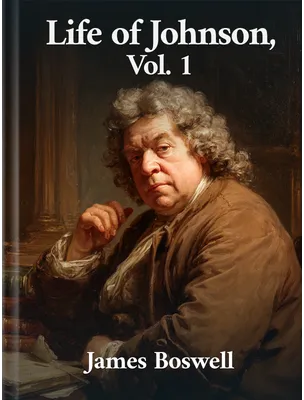
In Six Volumes
Volume I. Life (1709-1765)
by
James Boswell
Edited by George Birkbeck Norman Hill

Preface
Fielding, it is said, drank confusion to the man who invented the fifth act of a play. He who has edited an extensive work, and has concluded his labours by the preparation of a copious index, might well be pardoned, if he omitted to include the inventor of the Preface among the benefactors of mankind. The long and arduous task that years before he had set himself to do is done, and the last thing that he desires is to talk about it. Liberty is what he asks for, liberty to range for a time wherever he pleases in the wide and fair fields of literature. Yet with this longing for freedom comes a touch of regret and a doubt lest the ‘fresh woods and pastures new’ may never wear the friendly and familiar face of the plot of ground within whose narrower confines he has so long been labouring, and whose every corner he knows so well. May-be he finds hope in the thought that should his new world seem strange to him and uncomfortable, ere long he may be called back to his old task, and in the preparation of a second edition find the quiet and the peace of mind that are often found alone in ‘old use and wont.’
With me the preparation of these volumes has, indeed, been the work of many years. Boswell’s Life of Johnson I read for the first time in my boyhood, when I was too young for it to lay any hold on me. When I entered Pembroke College, Oxford, though I loved to think that Johnson had been there before me, yet I cannot call to mind that I ever opened the pages of Boswell. By a happy chance I was turned to the study of the literature of the eighteenth century. Every week we were required by the rules of the College to turn into Latin, or what we called Latin, a passage from The Spectator. Many a happy minute slipped by while, in forgetfulness of my task, I read on and on in its enchanting pages. It was always with a sigh that at last I tore myself away, and sat resolutely down to write bad Latin instead of reading good English. From Addison in the course of time I passed on to the other great writers of his and the succeeding age, finding in their exquisitely clear style, their admirable common sense and their freedom from all the tricks of affectation, a delightful contrast to so many of the eminent authors of our own time. Those troublesome doubts, doubts of all kinds, which since the great upheaval of the French Revolution have harassed mankind, had scarcely begun to ruffle the waters of their life. Even Johnson’s troubled mind enjoyed vast levels of repose. The unknown world alone was wrapped in stormy gloom; of this world ‘all the complaints which were made were unjust.’ Though I was now familiar with many of the great writers, yet Boswell I had scarcely opened since my boyhood. A happy day came just eighteen years ago when in an old book-shop, almost under the shadow of a great cathedral, I bought a second-hand copy of a somewhat early edition of the Life in five well-bound volumes. Of all my books none I cherish more than these. In looking at them I have known what it is to feel Bishop Percy’s ‘uneasiness at the thoughts of leaving his books in death.’ They became my almost inseparable companions. Before long I began to note the parallel passages and allusions not only in their pages, but in the various authors whom I studied. Yet in these early days I never dreamt of preparing a new edition. It fell to my lot as time went on to criticise in some of our leading publications works that bore both on Boswell and Johnson. Such was my love for the subject that on one occasion, when I was called upon to write a review that should fall two columns of a weekly newspaper, I read a new edition of the Life from beginning to end without, I believe, missing a single line of the text or a single note. At length, ‘towering in the confidence’ of one who as yet has but set his foot on the threshold of some stately mansion in which he hopes to find for himself a home, I was rash enough more than twelve years ago to offer myself as editor of a new edition of Boswell’s Life of Johnson. Fortunately for me another writer had been already engaged by the publisher to whom I applied, and my offer was civilly declined. From that time on I never lost sight of my purpose but when in the troubles of life I well-nigh lost sight of every kind of hope. Everything in my reading that bore on my favourite author was carefully noted, till at length I felt that the materials which I had gathered from all sides were sufficient to shield me from a charge of rashness if I now began to raise the building. Much of the work of preparation had been done at a grievous disadvantage. My health more than once seemed almost hopelessly broken down. Nevertheless even then the time was not wholly lost. In the sleepless hours of many a winter night I almost forgot my miseries in the delightful pages of Horace Walpole’s Letters, and with pencil in hand and some little hope still in heart, managed to get a few notes taken. Three winters I had to spend on the shores of the Mediterranean. During two of them my malady and my distress allowed of no rival, and my work made scarcely any advance. The third my strength was returning, and in the six months that I spent three years ago in San Remo I wrote out very many of the notes which I am now submitting to my readers.
An interval of some years of comparative health that I enjoyed between my two severest illnesses allowed me to try my strength as a critic and an editor. In Dr. Johnson: His Friends and his Critics, which I published in the year 1878, I reviewed the judgments passed on Johnson and Boswell by Lord Macaulay and Mr. Carlyle, I described Oxford as it was known to Johnson, and I threw light on more than one important passage in the Life. The following year I edited Boswell’s Journal of a Tour to Corsica and his curious correspondence with the Hon. Andrew Erskine. The somewhat rare little volume in which are contained the lively but impudent letters that passed between these two friends I had found one happy day in an old book-stall underneath the town hall of Keswick. I hoped that among the almost countless readers of Boswell there would be many who would care to study in one of the earliest attempts of his joyous youth the man whose ripened genius was to place him at the very head of all the biographers of whom the world can boast. My hopes were increased by the elegance and the accuracy of the typography with which my publishers, Messrs. De La Rue & Co., adorned this reprint. I was disappointed in my expectations. These curious Letters met with a neglect which they did not deserve. Twice, moreover, I was drawn away from the task that I had set before me by other works. By the death of my uncle, Sir Rowland Hill, I was called upon to edit his History of the Penny Postage, and to write his Life. Later on General Gordon’s correspondence during the first six years of his government of the Soudan was entrusted to me to prepare for the press. In my Colonel Gordon in Central Africa I attempted to do justice to the rare genius, to the wise and pure enthusiasm, and to the exalted beneficence of that great man. The labour that I gave to these works was, as regards my main purpose, by no means wholly thrown away. I was trained by it in the duties of an editor, and by studying the character of two such men, who, though wide as the poles asunder in many things, were as devoted to truth and accuracy as they were patient in their pursuit, I was strengthened in my hatred of carelessness and error.
With all these interruptions the summer of 1885 was upon me before I was ready for the compositors to make a beginning with my work. In revising my proofs very rarely indeed have I contented myself in verifying my quotations with comparing them merely with my own manuscript. In almost all instances I have once more examined the originals. ‘Diligence and accuracy,’ writes Gibbon, ‘are the only merits which an historical writer may ascribe to himself; if any merit indeed can be assumed from the performance of an indispensable duty.’ By diligence and accuracy I have striven to win for myself a place in Johnson’s school — ‘a school distinguished,’ as Sir Joshua Reynolds said, ‘for a love of truth and accuracy.’ I have steadily set before myself Boswell’s example where he says: — ‘Let me only observe, as a specimen of my trouble, that I have sometimes been obliged to run half over London, in order to fix a date correctly; which, when I had accomplished, I well knew would obtain me no praise, though a failure would have been to my discredit.’ When the variety and the number of my notes are considered, when it is known that a great many of the authors I do not myself possess, but that they could only be examined in the Bodleian or the British Museum, it will be seen that the labour of revising the proofs was, indeed, unusually severe. In the course of the eighteen months during which they have been passing through the press, fresh reading has given fresh information, and caused many an addition, and not a few corrections moreover to be made, in passages which I had previously presumed to think already complete. Had it been merely the biography of a great man of letters that I was illustrating, such anxious care would scarcely have been needful. But Boswell’s Life of Johnson, as its author with just pride boasts on its title-page, ‘exhibits a view of literature and literary men in Great Britain, for near half a century during which Johnson flourished.’ Wide, indeed, is the gulf by which this half-century is separated from us. The reaction against the thought and style of the age over which Pope ruled in its prime, and Johnson in its decline, — this reaction, wise as it was in many ways and extravagant as it was perhaps in more, is very far from having spent its force. Young men are still far too often found in our Universities who think that one proof of their originality is a contempt of authors whose writings they have never read. Books which were in the hands of almost every reader of the Life when it first appeared are now read only by the curious. Allusions and quotations which once fell upon a familiar and a friendly ear now fall dead. Men whose names were known to every one, now often have not even a line in a Dictionary of Biography. Over manners too a change has come, and as Johnson justly observes, ‘all works which describe manners require notes in sixty or seventy years, or less.’ But it is not only Boswell’s narrative that needs illustration. Johnson in his talk ranges over a vast number of subjects. In his capacious memory were stored up the fruits of an almost boundless curiosity, and a wide and varied reading. I have sought to follow him wherever a remark of his required illustration, and have read through many a book that I might trace to its source a reference or an allusion. I have examined, moreover, all the minor writings which are attributed to him by Boswell, but which are not for the most part included in his collected works. In some cases I have ventured to set my judgment against Boswell’s, and have refused to admit that Johnson was the author of the feeble pieces which were fathered on him. Once or twice in the course of my reading I have come upon essays which had escaped the notice of his biographer, but which bear the marks of his workmanship. To these I have given a reference. While the minute examination that I have so often had to make of Boswell’s narrative has done nothing but strengthen my trust in his statements and my admiration of his laborious truthfulness, yet in one respect I have not found him so accurate as I had expected. ‘I have,’ he says, ‘been extremely careful as to the exactness of my quotations.’ Though in preparing his manuscript he referred in each case ‘to the originals,’ yet he did not, I conjecture, examine them once more in revising his proof-sheets. At all events he has allowed errors to slip in. These I have pointed out in my notes, for in every case where I could I have, I believe, verified his quotations.
I have not thought that it was my duty as an editor to attempt to refute or even to criticise Johnson’s arguments. The story is told that when Peter the Great was on his travels and far from his country, some members of the Russian Council of State in St. Petersburgh ventured to withstand what was known to be his wish. His walking-stick was laid upon the table, and silence at once fell upon all. In like manner, before that editor who should trouble himself and his readers with attempting to refute Johnson’s arguments, paradoxical as they often were, should be placed Reynolds’s portrait of that ‘labouring working mind.’ It might make him reflect that if the mighty reasoner could rise up and meet him face to face, he would be sure, on which ever side the right might be, even if at first his pistol missed fire to knock him down with the butt-end of it. I have attempted therefore not to criticise but to illustrate Johnson’s statements. I have compared them with the opinions of the more eminent men among his contemporaries, and with his own as they are contained in other parts of his Life, and in his writings. It is in his written works that his real opinion can be most surely found. ‘He owned he sometimes talked for victory; he was too conscientious to make error permanent and pernicious by deliberately writing it.’ My numerous extracts from the eleven volumes of his collected works will, I trust, not only give a truer insight into the nature of the man, but also will show the greatness of the author to a generation of readers who have wandered into widely different paths.
In my attempts to trace the quotations of which both Johnson and Boswell were somewhat lavish, I have not in every case been successful, though I have received liberal assistance from more than one friend. In one case my long search was rewarded by the discovery that Boswell was quoting himself. That I have lighted upon the beautiful lines which Johnson quoted when he saw the Highland girl singing at her wheel, and have found out who was ‘one Giffard,’ or rather Gifford, ‘a parson,’ is to me a source of just triumph. I have not known many happier hours than the one in which in the Library of the British Museum my patient investigation was rewarded and I perused Contemplation.
Fifteen hitherto unpublished letters of Johnson; his college composition in Latin prose; a long extract from his manuscript diary; a suppressed passage in his Journey to the Western Islands; Boswell’s letters of acceptance of the office of Secretary for Foreign Correspondence to the Royal Academy; the proposal for the publication of a Geographical Dictionary issued by Johnson’s beloved friend, Dr. Bathurst; and Mr. Recorder Longley’s record of his conversation with Johnson on Greek metres, will, I trust, throw some lustre on this edition.
In many notes I have been able to clear up statements in the text which were not fully understood even by the author, or were left intentionally dark by him, or have become obscure through lapse of time. I would particularly refer to the light that I have thrown on Johnson’s engaging in politics with William Gerard Hamilton, and on Burke’s ‘talk of retiring.’ In many other notes I have established Boswell’s accuracy against attacks which had been made on it apparently with success. It was with much pleasure that I discovered that the story told of Johnson’s listening to Dr. Sacheverel’s sermon is not in any way improbable, and that Johnson’s ‘censure’ of Lord Kames was quite just. The ardent advocates of total abstinence will not, I fear, be pleased at finding at the end of my long note on Johnson’s wine-drinking that I have been obliged to show that he thought that the gout from which he suffered was due to his temperance. ‘I hope you persevere in drinking,’ he wrote to his friend, Dr. Taylor. ‘My opinion is that I have drunk too little.’
In the Appendices I have generally treated of subjects which demanded more space than could be given them in the narrow limits of a foot-note. In the twelve pages of the essay on Johnson’s Debates in Parliament I have compressed the result of the reading of many weeks. In examining the character of George Psalmanazar I have complied with the request of an unknown correspondent who was naturally interested in the history of that strange man, ‘after whom Johnson sought the most.’ In my essay on Johnson’s Travels and Love of Travelling I have, in opposition to Lord Macaulay’s wild and wanton rhetoric, shown how ardent and how elevated was the curiosity with which Johnson’s mind was possessed. In another essay I have explained, I do not say justified, his strong feelings towards the founders of the United States; and in a fifth I have examined the election of the Lord Mayors of London, at a time when the City was torn by political strife. To the other Appendices it is not needful particularly to refer.
In my Index, which has cost me many months’ heavy work, ‘while I bore burdens with dull patience and beat the track of the alphabet with sluggish resolution,’ I have, I hope, shown that I am not unmindful of all that I owe to men of letters. To the dead we cannot pay the debt of gratitude that is their due. Some relief is obtained from its burthen, if we in our turn make the men of our own generation debtors to us. The plan on which my Index is made will, I trust, be found convenient. By the alphabetical arrangement in the separate entries of each article the reader, I venture to think, will be greatly facilitated in his researches. Certain subjects I have thought it best to form into groups. Under America, France Ireland, London, Oxford, Paris, and Scotland, are gathered together almost all the references to those subjects. The provincial towns of France, however, by some mistake I did not include in the general article. One important but intentional omission I must justify. In the case of the quotations in which my notes abound I have not thought it needful in the Index to refer to the book unless the eminence of the author required a separate and a second entry. My labour would have been increased beyond all endurance and my Index have been swollen almost into a monstrosity had I always referred to the book as well as to the matter which was contained in the passage that I extracted. Though in such a variety of subjects there must be many omissions, yet I shall be greatly disappointed if actual errors are discovered. Every entry I have made myself, and every entry I have verified in the proof-sheets, not by comparing it with my manuscript, but by turning to the reference in the printed volumes. Some indulgence nevertheless may well be claimed and granted. If Homer at times nods, an index-maker may be pardoned, should he in the fourth or fifth month of his task at the end of a day of eight hours’ work grow drowsy. May I fondly hope that to the maker of so large an Index will be extended the gratitude which Lord Bolingbroke says was once shown to lexicographers? ‘I approve,’ writes his Lordship, ‘the devotion of a studious man at Christ Church, who was overheard in his oratory entering into a detail with God, and acknowledging the divine goodness in furnishing the world with makers of dictionaries.’
In the list that I give in the beginning of the sixth volume of the books which I quote, the reader will find stated in full the titles which in the notes, through regard to space, I was forced to compress.
The Concordance of Johnson’s sayings which follows the Index will be found convenient by the literary man who desires to make use of his strong and pointed utterances. Next to Shakespeare he is, I believe, quoted and misquoted the most frequently of all our writers. ‘It is not every man that can carry a bon-mot.’ Bons-mots that are miscarried of all kinds of good things suffer the most. In this Concordance the general reader, moreover, may find much to delight him. Johnson’s trade was wit and wisdom, and some of his best wares are here set out in a small space. It was, I must confess, with no little pleasure that in revising my proof-sheets I found that the last line in my Concordance and the last line in my six long volumes is Johnson’s quotation of Goldsmith’s fine saying; ‘I do not love a man who is zealous for nothing.’
In the ‘forward’ references in the notes to other passages in the book, the reader may be surprised at finding that while often I only give the date under which the reference will be found, frequently I am able to quote the page and volume. The explanation is a simple one: two sets of compositors were generally at work, and two volumes were passing through the press simultaneously.
In the selection of the text which I should adopt I hesitated for some time. In ordinary cases the edition which received the author’s final revision is the one which all future editors should follow. The second edition, which was the last that was brought out in Boswell’s life-time, could not, I became convinced, be conveniently reproduced. As it was passing through the press he obtained many additional anecdotes and letters. These he somewhat awkwardly inserted in an Introduction and an Appendix. He was engaged on his third edition when he died. ‘He had pointed out where some of these materials should be inserted,’ and ‘in the margin of the copy which he had in part revised he had written notes.’ His interrupted labours were completed by Edmond Malone, to whom he had read aloud almost the whole of his original manuscript, and who had helped him in the revision of the first half of the book when it was in type. ‘These notes,’ says Malone, ‘are faithfully preserved.’ He adds that ‘every new remark, not written by the author, for the sake of distinction has been enclosed within crotchets.’ In the third edition therefore we have the work in the condition in which it would have most approved itself to Boswell’s own judgment. In one point only, and that a trifling one, had Malone to exercise his judgment. But so skilful an editor was very unlikely to go wrong in those few cases in which he was called upon to insert in their proper places the additional material which the author had already published in his second edition. Malone did not, however, correct the proof-sheets. I thought it my duty, therefore, in revising my work to have the text of Boswell’s second edition read aloud to me throughout. Some typographical errors might, I feared, have crept in. In a few unimportant cases early in the book I adopted the reading of the second edition, but as I read on I became convinced that almost all the verbal alterations were Boswell’s own. Slight errors, often of the nature of Scotticisms, had been corrected, and greater accuracy often given. Some of the corrections and additions in the third edition that were undoubtedly from his hand were of considerable importance.
I should be wanting in justice were I not to acknowledge that I owe much to the labours of Mr. Croker. No one can know better than I do his great failings as an editor. His remarks and criticisms far too often deserve the contempt that Macaulay so liberally poured on them. Without being deeply versed in books, he was shallow in himself. Johnson’s strong character was never known to him. Its breadth and length, and depth and height were far beyond his measure. With his writings even he shows few signs of being familiar. Boswell’s genius, a genius which even to Lord Macaulay was foolishness, was altogether hidden from his dull eye. No one surely but a ‘blockhead,’ a ‘barren rascal,’ could with scissors and paste-pot have mangled the biography which of all others is the delight and the boast of the English-speaking world. He is careless in small matters, and his blunders are numerous. These I have only noticed in the more important cases, remembering what Johnson somewhere points out, that the triumphs of one critic over another only fatigue and disgust the reader. Yet he has added considerably to our knowledge of Johnson. He knew men who had intimately known both the hero and his biographer, and he gathered much that but for his care would have been lost for ever. He was diligent and successful in his search after Johnson’s letters, of so many of which Boswell with all his persevering and pushing diligence had not been able to get a sight. The editor of Mr. Croker’s Correspondence and Diaries goes, however, much too far when, in writing of Macaulay’s criticism, he says: ‘The attack defeated itself by its very violence, and therefore it did the book no harm whatever. Between forty and fifty thousand copies have been sold, although Macaulay boasted with great glee that he had smashed it.’ The book that Macaulay attacked was withdrawn. That monstrous medley reached no second edition. In its new form all the worst excrescences had been cleared away, and though what was left was not Boswell, still less was it unchastened Croker. His repentance, however, was not thorough. He never restored the text to its old state; wanton transpositions of passages still remain, and numerous insertions break the narrative. It was my good fortune to become a sound Boswellian before I even looked at his edition. It was not indeed till I came to write out my notes for the press that I examined his with any thoroughness.
‘Let him that is yet unacquainted with the powers of Shakespeare, and who desires to feel the highest pleasure that the drama can give, read every play from the first scene to the last with utter negligence of all his commentators. When his fancy is once on the wing, let it not stoop at correction or explanation. When his attention is strongly engaged let it disdain alike to turn aside to the name of Theobald and of Pope. Let him read on through brightness and obscurity, through integrity and corruption; let him preserve his comprehension of the dialogue and his interest in the fable. And when the pleasures of novelty have ceased let him attempt exactness and read the commentators.’
So too let him who reads the Life of Johnson for the first time read it in one of the Pre-Crokerian editions. They are numerous and good. With his attention undiverted by notes he will rapidly pass through one of the most charming narratives that the world has ever seen, and if his taste is uncorrupted by modern extravagances, will recognise the genius of an author who, in addition to other great qualities, has an admirable eye for the just proportions of an extensive work, and who is the master of a style that is as easy as it is inimitable.
Johnson, I fondly believe, would have been pleased, perhaps would even have been proud, could he have foreseen this edition. Few distinctions he valued more highly than those which he received from his own great University. The honorary degrees that it conferred on him, the gown that it entitled him to wear, by him were highly esteemed. In the Clarendon Press he took a great interest. The efforts which that famous establishment has made in the excellence of the typography, the quality of the paper, and the admirably-executed illustrations and facsimiles to do honour to his memory and to the genius of his biographer would have highly delighted him. To his own college he was so deeply attached that he would not have been displeased to learn that his editor had been nursed in that once famous ‘nest of singing birds.’ Of Boswell’s pleasure I cannot doubt. How much he valued any tribute of respect from Oxford is shown by the absurd importance that he gave to a sermon which was preached before the University by an insignificant clergyman more than a year and a half after Johnson’s death. When Edmund Burke witnessed the long and solemn procession entering the Cathedral of St. Paul’s, as it followed Sir Joshua Reynolds to his grave, he wrote: ‘Everything, I think, was just as our deceased friend would, if living, have wished it to be; for he was, as you know, not altogether indifferent to this kind of observances.’ It would, indeed, be presumptuous in me to flatter myself that in this edition everything is as Johnson and Boswell would, if living, have wished it. Yet to this kind of observances, the observances that can be shown by patient and long labour, and by the famous press of a great University, neither man was altogether indifferent.
Should my work find favour with the world of readers, I hope again to labour in the same fields. I had indeed at one time intended to enlarge this edition by essays on Boswell, Johnson, Mrs. Thrale, and perhaps on other subjects. Their composition would, however, have delayed publication more than seemed advisable, and their length might have rendered the volumes bulky beyond all reason. A more favourable opportunity may come. I have in hand a Selection of the Wit and Wisdom of Dr. Johnson. I purpose, moreover, to collect and edit all of his letters that are not in the Life. Some hundreds of these were published by Mrs. Piozzi; many more are contained in Mr. Croker’s edition; while others have already appeared in Notes and Queries. Not a few, doubtless, are still lurking in the desks of the collectors of autographs. As a letter-writer Johnson stands very high. While the correspondence of David Garrick has been given to the world in two large volumes, it is not right that the letters of his far greater friend should be left scattered and almost neglected. ‘He that sees before him to his third dinner,’ says Johnson, ‘has a long prospect.’ My prospect is still longer; for, if health be spared, and a fair degree of public favour shown, I see before me to my third book. When I have published my Letters, I hope to enter upon a still more arduous task in editing the Lives of the Poets.
In my work I have received much kind assistance, not only from friends, but also from strangers to whom I had applied in cases where special knowledge could alone throw light on some obscure point. My acknowledgments I have in most instances made in my notes. In some cases, either through want of opportunity or forgetfulness, this has not been done. I gladly avail myself of the present opportunity to remedy this deficiency. The Earl of Crawford and Balcarres I have to thank for so liberally allowing the original of the famous Round Robin, which is in his Lordship’s possession, to be reproduced by a photographic process for this edition. It is by the kindness of Mr. J.L.G. Mowat, M.A., Fellow and Bursar of Pembroke College, Oxford, that I have been able to make a careful examination of the Johnsonian manuscripts in which our college is so rich. If the vigilance with which he keeps guard over these treasures while they are being inspected is continued by his successors in office, the college will never have to mourn over the loss of a single leaf. To the Rev. W.D. Macray, M.A., of the manuscript department of the Bodleian, to Mr. Falconer Madan, M.A., Sub-Librarian of the same Library, and to Mr. George Parker, one of the Assistants, I am indebted for the kindness with which they have helped me in my inquiries. To Mr. W.H. Allnutt, another of the Assistants, I owe still more. When I was abroad, I too frequently, I fear, troubled him with questions which no one could have answered who was not well versed in bibliographical lore. It was not often that his acuteness was baffled, while his kindness was never exhausted. My old friend Mr. E.J. Payne, M.A., Fellow of University College, Oxford, the learned editor of the Select Works of Burke published by the Clarendon Press, has allowed me, whenever I pleased, to draw on his extensive knowledge of the history and the literature of the eighteenth century. Mr. C.G. Crump, B.A., of Balliol College, Oxford, has traced for me not a few of the quotations which had baffled my search. To Mr. G.K. Fortescue, Superintendent of the Reading Room of the British Museum, my most grateful acknowledgments are due. His accurate and extensive knowledge of books and his unfailing courtesy and kindness have lightened many a day’s heavy work in the spacious room over which he so worthily presides. But most of all am I indebted to Mr. C.E. Doble, M.A., of the Clarendon Press. He has read all my proof-sheets, and by his almost unrivalled knowledge of the men of letters of the close of the seventeenth and of the beginning of the eighteenth centuries, he has saved my notes from some blunders and has enriched them with much valuable information. In my absence abroad he has in more instances than I care to think of consulted for me the Bodleian Library. It is some relief to my conscience to know that the task was rendered lighter to him by his intimate familiarity with its treasures, and by the deep love for literature with which he is inspired.
There are other thanks due which I cannot here fittingly express. ‘An author partakes of the common condition of humanity; he is born and married like another man; he has hopes and fears, expectations and disappointments, griefs and joys like a courtier or a statesman.’ In the hopes and fears, in the expectations and disappointments, in the griefs and joys — nay, in the very labours of his literary life, if his hearth is not a solitary one, he has those who largely share.
I have now come to the end of my long labours. ‘There are few things not purely evil,’ wrote Johnson, ‘of which we can say without some emotion of uneasiness, this is the last.’ From this emotion I cannot feign that I am free. My book has been my companion in many a sad and many a happy hour. I take leave of it with a pang of regret, but I am cheered by the hope that it may take its place, if a lowly one, among the works of men who have laboured patiently but not unsuccessfully in the great and shining fields of English literature.
G. B. H.
Clarens, Switzerland: March 16, 1887.
Dedication
To Sir Joshua Reynolds
My Dear Sir,
Every liberal motive that can actuate an Authour in the dedication of his labours, concurs in directing me to you, as the person to whom the following Work should be inscribed.
If there be a pleasure in celebrating the distinguished merit of a contemporary, mixed with a certain degree of vanity not altogether inexcusable, in appearing fully sensible of it, where can I find one, in complimenting whom I can with more general approbation gratify those feelings? Your excellence not only in the Art over which you have long presided with unrivalled fame, but also in Philosophy and elegant Literature, is well known to the present, and will continue to be the admiration of future ages. Your equal and placid temper, your variety of conversation, your true politeness, by which you are so amiable in private society, and that enlarged hospitality which has long made your house a common centre of union for the great, the accomplished, the learned, and the ingenious; all these qualities I can, in perfect confidence of not being accused of flattery, ascribe to you.
If a man may indulge an honest pride, in having it known to the world, that he has been thought worthy of particular attention by a person of the first eminence in the age in which he lived, whose company has been universally courted, I am justified in availing myself of the usual privilege of a Dedication, when I mention that there has been a long and uninterrupted friendship between us.
If gratitude should be acknowledged for favours received, I have this opportunity, my dear Sir, most sincerely to thank you for the many happy hours which I owe to your kindness, — for the cordiality with which you have at all times been pleased to welcome me, — for the number of valuable acquaintances to whom you have introduced me, — for the noctes coenaeque Deûm, which I have enjoyed under your roof.
If a work should be inscribed to one who is master of the subject of it, and whose approbation, therefore, must ensure it credit and success, the Life of Dr. Johnson is, with the greatest propriety, dedicated to Sir Joshua Reynolds, who was the intimate and beloved friend of that great man; the friend, whom he declared to be ‘the most invulnerable man he knew; whom, if he should quarrel with him, he should find the most difficulty how to abuse.’ You, my dear Sir, studied him, and knew him well: you venerated and admired him. Yet, luminous as he was upon the whole, you perceived all the shades which mingled in the grand composition; all the little peculiarities and slight blemishes which marked the literary Colossus. Your very warm commendation of the specimen which I gave in my Journal of a Tour to the Hebrides, of my being able to preserve his conversation in an authentick and lively manner, which opinion the Publick has confirmed, was the best encouragement for me to persevere in my purpose of producing the whole of my stores.
In one respect, this Work will, in some passages, be different from the former. In my Tour, I was almost unboundedly open in my communications, and from my eagerness to display the wonderful fertility and readiness of Johnson’s wit, freely shewed to the world its dexterity, even when I was myself the object of it. I trusted that I should be liberally understood, as knowing very well what I was about, and by no means as simply unconscious of the pointed effects of the satire. I own, indeed, that I was arrogant enough to suppose that the tenour of the rest of the book would sufficiently guard me against such a strange imputation. But it seems I judged too well of the world; for, though I could scarcely believe it, I have been undoubtedly informed, that many persons, especially in distant quarters, not penetrating enough into Johnson’s character, so as to understand his mode of treating his friends, have arraigned my judgement, instead of seeing that I was sensible of all that they could observe.
It is related of the great Dr. Clarke, that when in one of his leisure hours he was unbending himself with a few friends in the most playful and frolicksome manner, he observed Beau Nash approaching; upon which he suddenly stopped: — ‘My boys, (said he,) let us be grave: here comes a fool.’ The world, my friend, I have found to be a great fool, as to that particular, on which it has become necessary to speak very plainly. I have, therefore, in this Work been more reserved; and though I tell nothing but the truth, I have still kept in my mind that the whole truth is not always to be exposed. This, however, I have managed so as to occasion no diminution of the pleasure which my book should afford; though malignity may sometimes be disappointed of its gratifications.
I am,
My dear Sir,
Your much obliged friend,
And faithful humble servant,
James Boswell.
London,
April 20, 1791.
Advertisement
To the First Edition
I at last deliver to the world a Work which I have long promised, and of which, I am afraid, too high expectations have been raised. The delay of its publication must be imputed, in a considerable degree, to the extraordinary zeal which has been shewn by distinguished persons in all quarters to supply me with additional information concerning its illustrious subject; resembling in this the grateful tribes of ancient nations, of which every individual was eager to throw a stone upon the grave of a departed Hero, and thus to share in the pious office of erecting an honourable monument to his memory.
The labour and anxious attention with which I have collected and arranged the materials of which these volumes are composed, will hardly be conceived by those who read them with careless facility. The stretch of mind and prompt assiduity by which so many conversations were preserved, I myself, at some distance of time, contemplate with wonder; and I must be allowed to suggest, that the nature of the work, in other respects, as it consists of innumerable detached particulars, all which, even the most minute, I have spared no pains to ascertain with a scrupulous authenticity, has occasioned a degree of trouble far beyond that of any other species of composition. Were I to detail the books which I have consulted, and the inquiries which I have found it necessary to make by various channels, I should probably be thought ridiculously ostentatious. Let me only observe, as a specimen of my trouble, that I have sometimes been obliged to run half over London, in order to fix a date correctly; which, when I had accomplished, I well knew would obtain me no praise, though a failure would have been to my discredit. And after all, perhaps, hard as it may be, I shall not be surprized if omissions or mistakes be pointed out with invidious severity. I have also been extremely careful as to the exactness of my quotations; holding that there is a respect due to the publick which should oblige every Authour to attend to this, and never to presume to introduce them with, — ‘I think I have read;’ — or, — ‘If I remember right;’ — when the originals may be examined.
I beg leave to express my warmest thanks to those who have been pleased to favour me with communications and advice in the conduct of my Work. But I cannot sufficiently acknowledge my obligations to my friend Mr. Malone, who was so good as to allow me to read to him almost the whole of my manuscript, and make such remarks as were greatly for the advantage of the Work; though it is but fair to him to mention, that upon many occasions I differed from him, and followed my own judgement.
I regret exceedingly that I was deprived of the benefit of his revision, when not more than one half of the book had passed through the press; but after having completed his very laborious and admirable edition of Shakespeare, for which he generously would accept of no other reward but that fame which he has so deservedly obtained, he fulfilled his promise of a long-wished-for visit to his relations in Ireland; from whence his safe return finibus Atticis is desired by his friends here, with all the classical ardour of Sic te Diva potens Cypri; for there is no man in whom more elegant and worthy qualities are united; and whose society, therefore, is more valued by those who know him.
It is painful to me to think, that while I was carrying on this Work, several of those to whom it would have been most interesting have died. Such melancholy disappointments we know to be incident to humanity; but we do not feel them the less. Let me particularly lament the Reverend Thomas Warton, and the Reverend Dr. Adams. Mr. Warton, amidst his variety of genius and learning, was an excellent Biographer. His contributions to my Collection are highly estimable; and as he had a true relish of my Tour to the Hebrides, I trust I should now have been gratified with a larger share of his kind approbation. Dr. Adams, eminent as the Head of a College, as a writer, and as a most amiable man, had known Johnson from his early years, and was his friend through life. What reason I had to hope for the countenance of that venerable Gentleman to this Work, will appear from what he wrote to me upon a former occasion from Oxford, November 17, 1785: — ‘Dear Sir, I hazard this letter, not knowing where it will find you, to thank you for your very agreeable Tour, which I found here on my return from the country, and in which you have depicted our friend so perfectly to my fancy, in every attitude, every scene and situation, that I have thought myself in the company, and of the party almost throughout. It has given very general satisfaction; and those who have found most fault with a passage here and there, have agreed that they could not help going through, and being entertained with the whole. I wish, indeed, some few gross expressions had been softened, and a few of our hero’s foibles had been a little more shaded; but it is useful to see the weaknesses incident to great minds; and you have given us Dr. Johnson’s authority that in history all ought to be told.’
Such a sanction to my faculty of giving a just representation of Dr. Johnson I could not conceal. Nor will I suppress my satisfaction in the consciousness, that by recording so considerable a portion of the wisdom and wit of ‘the brightest ornament of the eighteenth century.’ I have largely provided for the instruction and entertainment of mankind.
Advertisement
To the Second Edition
That I was anxious for the success of a Work which had employed much of my time and labour, I do not wish to conceal: but whatever doubts I at any time entertained, have been entirely removed by the very favourable reception with which it has been honoured. That reception has excited my best exertions to render my Book more perfect; and in this endeavour I have had the assistance not only of some of my particular friends, but of many other learned and ingenious men, by which I have been enabled to rectify some mistakes, and to enrich the Work with many valuable additions. These I have ordered to be printed separately in quarto, for the accommodation of the purchasers of the first edition. May I be permitted to say that the typography of both editions does honour to the press of Mr. Henry Baldwin, now Master of the Worshipful Company of Stationers, whom I have long known as a worthy man and an obliging friend.
In the strangely mixed scenes of human existence, our feelings are often at once pleasing and painful. Of this truth, the progress of the present Work furnishes a striking instance. It was highly gratifying to me that my friend, Sir Joshua Reynolds, to whom it is inscribed, lived to peruse it, and to give the strongest testimony to its fidelity; but before a second edition, which he contributed to improve, could be finished, the world has been deprived of that most valuable man; a loss of which the regret will be deep, and lasting, and extensive, proportionate to the felicity which he diffused through a wide circle of admirers and friends.
In reflecting that the illustrious subject of this Work, by being more extensively and intimately known, however elevated before, has risen in the veneration and love of mankind, I feel a satisfaction beyond what fame can afford. We cannot, indeed, too much or too often admire his wonderful powers of mind, when we consider that the principal store of wit and wisdom which this Work contains, was not a particular selection from his general conversation, but was merely his occasional talk at such times as I had the good fortune to be in his company; and, without doubt, if his discourse at other periods had been collected with the same attention, the whole tenor of what he uttered would have been found equally excellent.
His strong, clear, and animated enforcement of religion, morality, loyalty, and subordination, while it delights and improves the wise and the good, will, I trust, prove an effectual antidote to that detestable sophistry which has been lately imported from France, under the false name of Philosophy, and with a malignant industry has been employed against the peace, good order, and happiness of society, in our free and prosperous country; but thanks be to God, without producing the pernicious effects which were hoped for by its propagators.
It seems to me, in my moments of self-complacency, that this extensive biographical work, however inferior in its nature, may in one respect be assimilated to the Odyssey. Amidst a thousand entertaining and instructive episodes the Hero is never long out of sight; for they are all in some degree connected with him; and He, in the whole course of the History, is exhibited by the Authour for the best advantage of his readers.