'The Key to Theosophy' was first published in 1889.
[{"id":"para_1","index":0,"start":0,"offset":311,"words":4,"paraNum":"","lastModified":1673023522000,"semanticType":"title-book-title","voicework":"no_audio","blockId":"the_key_to_theosophy_ffa_en-bl2t","language":"en","wordsRange":{"start":203000000,"end":208000000},"paragraphVersion":115,"direction":"ltr","paragraph":"<h1 class=\"ilm-title\" id=\"para_1\" semantictype=\"title-book-title\" data-ilmid=\"the_key_to_theosophy_ffa_en-bl2t\" data-chapter=\"para_1\" data-words-count=\"4\" data-before=\"0\" data-ww=\"\"><span class=\"block-pb\"> <span class=\"block-pb is-animated\"></span> </span><span class=\"itm-wrap\">The Key to Theosophy</span></h1>","hasContent":true,"isFirst":true,"isLast":false},{"id":"para_2","index":1,"start":311,"offset":468,"words":28,"paraNum":"","lastModified":1673023944000,"semanticType":"title-subtitle","voicework":"no_audio","blockId":"the_key_to_theosophy_ffa_en-bl12a","language":"en","wordsRange":{"start":275666667,"end":343333333},"paragraphVersion":114,"direction":"ltr","paragraph":"<h1 class=\"ilm-title ilm-subtitle\" id=\"para_2\" semantictype=\"title-subtitle\" data-ilmid=\"the_key_to_theosophy_ffa_en-bl12a\" data-chapter=\"para_2\" data-words-count=\"28\" data-before=\"4\" data-ww=\"\"><span class=\"block-pb\"> <span class=\"block-pb is-animated\"></span> </span><span class=\"itm-wrap\">Being a Clear Exposition, in the Form of Question and Answer, of the Ethics, Science and Philosophy for the Study of Which the Theosophical Society Has Been Founded</span></h1>","hasContent":true,"isFirst":false,"isLast":false},{"id":"para_3","index":2,"start":779,"offset":343,"words":3,"paraNum":"","lastModified":1673024074000,"semanticType":"title-author","voicework":"no_audio","blockId":"the_key_to_theosophy_ffa_en-bl12b","language":"en","wordsRange":{"start":365888889,"end":388444444},"paragraphVersion":118,"direction":"ltr","paragraph":"<h1 class=\"ilm-title ilm-author ilm-x-large ilm-nopad\" id=\"para_3\" semantictype=\"title-author\" data-ilmid=\"the_key_to_theosophy_ffa_en-bl12b\" data-chapter=\"para_3\" data-words-count=\"3\" data-before=\"32\" data-ww=\"\"><span class=\"block-pb\"> <span class=\"block-pb is-animated\"></span> </span><span class=\"itm-wrap\">by<br>H. P. Blavatsky</span></h1>","hasContent":true,"isFirst":false,"isLast":false},{"id":"para_4","index":3,"start":1122,"offset":156,"words":0,"paraNum":"","lastModified":1670924417000,"semanticType":"line","blockId":"the_key_to_theosophy_ffa_en-bl2v","language":"en","wordsRange":{"start":411000000,"end":413000000},"paragraphVersion":121,"direction":"ltr","paragraph":"<hr class=\"ilm-hr ilm-small\" id=\"para_4\" semantictype=\"line\" data-ilmid=\"the_key_to_theosophy_ffa_en-bl2v\" data-words-count=\"0\" data-before=\"35\" data-ww=\"\">","hasContent":true,"isFirst":false,"isLast":false},{"id":"para_5","index":4,"start":1278,"offset":384,"words":12,"paraNum":"","lastModified":1674567009000,"semanticType":"par","voicework":"no_audio","blockId":"the_key_to_theosophy_ffa_en-bl39","language":"en","wordsRange":{"start":1882000000,"end":1888000000},"paragraphVersion":217,"direction":"ltr","paragraph":"<p class=\"ilm-dedication\" id=\"para_5\" semantictype=\"par\" data-ilmid=\"the_key_to_theosophy_ffa_en-bl39\" data-words-count=\"12\" data-before=\"35\" data-ww=\"\"><span class=\"block-pb\"> <span class=\"block-pb is-animated\"></span> </span><span class=\"itm-wrap\">Dedicated<br>by<br>“H. P. B.”<br><br>To all her Pupils<br>that<br>They may Learn and Teach<br>in their turn<br><br><br></span></p>","hasContent":true,"isFirst":false,"isLast":false},{"id":"para_6","index":5,"start":1662,"offset":156,"words":0,"paraNum":"","lastModified":1675004859000,"semanticType":"line","blockId":"the_key_to_theosophy_ffa_en-bl3c","language":"en","wordsRange":{"start":2203000000,"end":2205000000},"paragraphVersion":117,"direction":"ltr","paragraph":"<hr class=\"ilm-hr ilm-small\" id=\"para_6\" semantictype=\"line\" data-ilmid=\"the_key_to_theosophy_ffa_en-bl3c\" data-words-count=\"0\" data-before=\"47\" data-ww=\"\">","hasContent":true,"isFirst":false,"isLast":false},{"id":"para_7","index":6,"start":1818,"offset":7423,"words":0,"paraNum":"","lastModified":1676389446000,"semanticType":"illustration","blockId":"the_key_to_theosophy_ffa_en-bl14j","language":"en","wordsRange":{"start":2206255144,"end":2207510288},"paragraphVersion":29,"direction":"ltr","paragraph":"<div class=\"ilm-illustration\" id=\"para_7\" semantictype=\"illustration\" data-ilmid=\"the_key_to_theosophy_ffa_en-bl14j\" data-words-count=\"0\" data-before=\"47\" data-ww=\"\"><img width=\"527\" height=\"422\" data-src=\"ch0p0\" src=\"data:image/png;base64,iVBORw0KGgoAAAANSUhEUgAAADUAAAAqCAIAAACcBIRpAAAACXBIWXMAAA7EAAAOxAGVKw4bAAAUoUlEQVRYha2Y+VNa+ZbA/VNevarpV13pvI5Jt3FLjCZGjR01UeOKiogKiqAouC+ICgIi4AICCgIKKqsgKoqA4I6K2kk0i+ksndjuS0yM25R8u5yemlczUzXz+YG65b1+77lnP8fF4XAsOllYWJh3MjMzMz4+brVaTSaTTqdTKBRyuVyj0Wi1WpVK1dvbq9Fourq6VCqVVquVSCQtLS2tTiQSiUwma29v7+zsVKvVUqlULper1equri6xWHx5lFKp1Gq1Q0NDFovFarVOTk7Ozs46HI4FJ0+dLC0tLSwsOBwOF3DD4XDMzs7a7fapqamJiYnR0dGhoaH+/n6FQiGRSKRSqUgk6u7uFgqFYrG4s7NTIpF0dHRoNBoGg8FmsykUSn19PYfDARdCoZDH47U7aW1tFYvFAoGAx+Op1eoOJxqNpq+vb2hoyGw2j4+PT01NzTlxOBxLS0u//vrr0tISUJbL/Py8w4ndbp+enh4fHx8ZGRkeHgafKxAIRCIRm80mEAh8Jw0NDS0tLU1NTe3t7c3NzQQCoaWlBXwDj8dramoiEolkMjk/Pz83N5fJZLY44XA49fX1zc3NDAajq6tLIBDIZDKtE5PJZLPZpqamZmZm7Hb7wsLCkhMglQuQ2uFwzMzMTExMWCwWvV6vUqm6urqkUmlLS4tYLKZSqXQ6ncPhgHOVSmVnZ2dra2tzc7NCoWhoaKDT6UwnNTU1JSUlOTk5eDy+rq6ut7d3dHTUZrPp9XqBQFBdXc1kMoVCITikr69Pr9cPDg4ajcbh4WGr1Wqz2WZnZxcXF5eWloDLuczOzs7Pz8/NzY2Pj4+OjhoMht7eXmDBSztKpVIgTYOTuro6CoWCw+HodHp9fT2dTq+srKRSqXg8vrCwsNYJm822Wq3TTiYmJiYnJ8fGxtra2kgkkkAgaGpqAqrt6urSarU6na6vr294eNhsNk9NTV2GxOLi4oX+gNvZbDagPJlM1tnZyeFw+Hy+XC4Xi8UcDqepqYlKpZaXlxMIhMLCwurqagwGU1JSgsPhioqKiERiaWlpZmYmDofDYrFQKLSxsXFycnJqampycnJkZMRisYyPj7e3t7PZbHAgg8FgsVitra1SqbSnp0etVut0uuHh4YmJicXFxadPny4sLPwp3+zsLDhlaGiot7dXpVIpFAqhUMhms5lMJovFqquro9PpRCIxIyMjKyurtLQUh8Pl5+cXFBQkJSXhcDgUCpWamorD4RITE588eRIZGVlfXz84ODg2NjYxMWEwGIxGY39/f0dHB4vFAlZmMplVVVVkMpnBYAiFQrlc3t/fbzQabTabw+EAIby0tORit9snJyctFovBYFAoFFKpVKVSyWQyIBaPxxMIBHw+v6KiIj8/PysrKzExkUAgVFZWQiAQLBZbVlZWWFiYn5+flJQUExPz5MkTJBIJh8MJBEJ7e7tAIGhpaaFSqbW1tTwej81mFxYWFhcXV1dXl5WVFRcXUygUGo0mFovVanVfX5/BYLBarXa7/Vcnz549c5mcnLx0u56eHqFQyOfzW1tbm5qapFIpl8vl8XgMBoNEIqWnp6PRaCaTWV9fTyaTcTgcgUAoLy/HYrEJCQmZmZmJiYlBQUGJiYlJSUlkMpnL5aalpeHxeBwOB4fDBQKBRCKpqanBYrHl5eVwOByLxVKp1IyMDCaTqdFoFAqFRqMZHR0FLggSzYV8JpPJYDDIZDIul9vQ0NDe3t7Y2CiRSDgcDh6PJxKJdDq9uLgYg8FgsVgMBgOFQhEIRHp6ekpKSlJSUm5ubkpKSk5ODhKJjI+Ph8PhYWFhdDpdqVTW1taCDy4oKGhtbZXJZEgkEgqFVldXgwBvaGgoKCioqqqSSCQikUgulxsMBovFMjMzA6LEZWxszGg09vX18fl8JpNJo9FYLBZIKCwWKzc3t6amhs/nI5HI9PT0rKys6urqzs7Onp4eHo9HJBIjIyOTkpJKS0szMjKio6NhMBgCgYDBYBKJRKFQtLe3NzQ0YDAYOp0uk8nGxsYKCwvxeDydTs/LyystLS0qKqJQKGKxWCQSKRSK3t7e/v7+kZGR6enp+fn5P+UbGhpSqVRKpVIqlbJYLCaTWVJSgsfja2pqqqqqsrKy8Hg8FAoNDw9PS0sjkUiNjY2dnZ3AC2EwGBqNzs/Ph8FgISEh/v7+t27dSktL0zvhcDgQCCQ+Ph6DwfT09MzMzMhksrt378bFxUGh0PT0dBKJRHdSVVXV2dmp1WoNBoPNZpucnJyfn7+Ij+HhYYPBAGoryEw0Gg2Hw8FgMDwen5mZmZ6eDoFAEhISgoKCsrOza2trS0pK2Gx2bm4uBAJJSkoCMYtAICIjI3/++Wdvb++ysjKdTieXywsLC6lUqkwmo9FobDZ71Mndu3evX78eGxublpaWl5dHoVBqa2tbWlrkcnlPT09fX5/JZJqYmJifn7/Iz0ajUafTSaVSgUAACigajcZgMLm5uZmZmampqSkpKVAoND4+/vr16zU1NTMzM0ajcXBwUCaT4fH4gICAu078/f0fPHgA3lpTU6PX6yUSCYVC0el0AoGAy+U2Nzfr9fqZmZmMjAw3NzcoFJqRkYHFYkHyqq+vZzKZXC5XoVCYTKbJycnp6ekL+UZGRpRKpVgsbm1tpdFoWVlZSCQyIyMjz0liYmJCQkJiYmJMTIyrq2tra6vJZGpra+Pz+UKhsKen5/79+66urk+ePPH393/8+HF2dnZUVFRubu7AwIBQKORyuQKBABS9mpoakUg0OTnZ0NDg5eUVHR0NhULT0tIqKioYDAYWi8XhcCwWS61WWyyW6elpu91+4X8mk6m3txdEa2lpKQwGg0Ag0dHR2dnZeDwejUaXlJQgkcioqKgbN250dHRwudzS0lIymQyHw4VCYXh4+I0bN/z9/d3d3RMTE6Oiory8vFAo1ODgoEQiaWtrq6+vLy4uBk7c3NxsMBgkEklQUFBERERUVFRkZGRWVlZ9fT2DwQARw+PxlEql1Wp1OBwX/cvg4KBareZwOFQqNS8vLzk5OT4+PiYmJiwsLDExkUgkJicnR0dHP3jw4KeffmIwGP39/Xq9XqlUstlsuVx++/btkJCQlJQULy8vKBQaERHh6ekJh8OVSmVbW1tTU1N1dXVOTg6IfQKBIBKJOjo6QkNDw8LCYmJiHj9+jEajKRRKd3c3jUbLzMysrKwUCoVjY2Nzc3MX8vX19Uml0tra2oKCAjwej0AgkpKSgEBpaWlMJjM/Pz84ONjPz+/atWt4PF6pVPJ4PAqFwmKxamtrrzqJdwKBQGJiYjw8PFAolFgsBhWosrIyxwkGg0Gj0XV1dTQa7eHDhyEhIeAtKBSKTqeLxWKj0VhfX0+hULq6ukZHR0EKdNHpdGKxuK6uDiR6KBT6+PHjwMBAGAzW3NzM5/MpFAoMBgPyhYWFsdns2tra3NzcwsLCBw8eXLly5ccff/T393/48GFSUlJkZKSPjw8EAiGTycXFxaCBQKPRWVlZmZmZCASiurq6oKDg3r17YWFhJBIJBF9hYSGHw9HpdAaDQSwW9/b2jo+Pg776wr4ymYxEIhGJRAwG8+jRo7i4uPLycqFQyGKxQG1NSUnx8fHx9PT08PBAIBB8Pr+qqurhw4fff/+9m5ubu7v7rVu37t+/HxsbGxAQEBIS8uDBg7i4uOTk5PT0dBQKlZiYmJycjEAgUChUeXk5Eon08vLKzMxcWVkhkUhPnjwhk8ksFkssFg8MDIDWHZS4C/taLBatVkulUkkkEgqFio+PLygoaGlpAbUEj8fDYLCoqCgfH5+bN296eXm5ubn5+fm5ubn9/e9/v3r16s8//+zu7n7z5k0PDw9fX9/4+PiAgABfX183N7c7d+7ExMTA4fC4uLiMjAwEAgGHw4F9goKC0tPTTSYTBALJyMgoLCwUCAQajcZsNtudTE9PLy4uXtRfk8nU1dVFJpOxWGxqaiqo7rW1tSQSqaioCIvFJicnR0REBAQE/PTTT+7u7p6env/m5Acnbk6uXLly/fr10NDQ4ODgO3fu3L5929XV9R//+Ievry9Ijffu3fPx8bl79+7t27eDg4MfP34cGhqKRqMRCASTyQR9TVtb2+DgoM1mA10+6KJd9Hq9SCSiUCgYDCYpKQkKhZLJZJFIVFVVVVBQkJOTA4fDAwMD/fz8bt265e7ufvfu3Zs3bwK3c3V1BdfXrl375ZdffHx8goODQUHz8PDw9vZ2d3f//vvvXV1dv/vuux9++MHfSUhISHh4eFhYGBaLzcvLy87OLi4ubmpq0mg0oEceGxsDU9uF/lQqFZ/PZzAYBQUFUCg0ISGBSqUyGAwKhUIkEnNyctLS0h49euTt7e3r63vr1i1PT88ff/zxb3/723fffXf9+nVPT887d+7ExsZCIJDY2NisrCwoFPrLL78EBgYmJydDodDQ0NCrV6+iUKjY2Fh/f//IyMjQ0NDAwMCEhISoqKjLBAk6076+PrPZfGnci/5Pq9U2NTXR6fSioqLY2FgQVlwut7Gxsbq6uqSkBIVCRUdHe3t7A9Pcu3cvICDg0aNHaWlpWCy2oqKCRCIRCAQsFotGo5FIZFJSkru7e0hICBKJRKPRRUVFxcXFPB4PhUJ5e3uDfic8PDwmJiYvL0+r1YKmBAwfGo1mYmJienp6bm7uT//TarVsNrukpCQ7OzsyMhIOh4NuB3xZTU1NcXFxRkYGqIxDQ0MjIyOjo6PT09MOhwOMoQQCId8JEA4CgQQGBgYEBIBajEaj6XR6WloaDoejUCjh4eFRUVHJycmgFQKje2Njo8ViUalUAwMDk07APH5Rf9VqtUgkamhoKC8vB8Ztb28HQ3h3d7dCoSCRSCwWCwzSNpsNzFPDw8NGo9FkMqlUKhqNRiQSKyoq7t+/f+PGjZCQEF9f32vXrkVERMTExOTn5ycmJsbFxfH5fIPBwOPxQJ0lkUiVlZWgV2ez2YODg0NDQ6Ojo5edwZ/z+cDAQHd3N2gkQRB1O5FKpRqNRigU0mg0gUBAJpPb29ulUimBQMjMzPTw8IiOjq6srExPTwdzkMViSU1N9fT0fPjwIShcfn5+MBgsLy/v9u3bGAxmeHgYzGIgNhcWFkQiUW5uLoFA6OjoUKvVZrN5ZmZmdnYWDOp/zudms1mr1fb09PD5fA6HI5fLZTKZ1AmoK52dnTqdju0EjUaD1oFMJgM3VSqVZrPZZDLp9fqcnJzr16+Hh4cXFRXVOcnMzLx3756fnx8CgaBQKAqFAixcpqamgIdwOBwajaZUKnU6nclkApLZ7fbLL3GxWq1GoxGUfK1WOzg4qFKpgHwikai9vV2lUqnVai6XW1NTU1dXV11drVarx5wMDw8PDAzodLri4mImk4nD4fB4vFQqtVqt3d3dSqUyOjo6wElERERQUFBwcLBEIjEajWDLY3JitVrHncw4mZ2dBSuNubm5C/nGxsZsNpvRaBwaGjKZTGazub+/X6PRqNXqlpYWLperUql4PF5DQwOXy6XRaOXl5WCYkkqler2ezWYHBwdfuXIFiUR2dHSAqZnFYoHerKysDOMEj8eTyeSKigo+n9/T09PR0dHS0iIQCIBvAIWBggb2QYuLi2CEc7lcPpjNZpvNNj4+brFYRkdHVSoVh8Pp6ekBEzWRSKysrEQgECUlJcC7GQyGSCRKTU395z//6ePjk5yczGQy+Xw+kUgsKytLTU3NyMig0WiNjY0NDQ2gfA0PD2u12oGBAbDTGB0dHR8fn56eBjpb+gtPnz79c/9i/QvAajabDUxMvb29VCq1xkl+fj4Gg0lNTUUikdnZ2RgMBiwS8vPzUShUcnJyQkJCVlZWeXk5Ho9PTU0FCQV8oVwuB7kD1AabE6AXIB8QEdQMsBlyOBxghHMBaRAAtgpgQ7i8vGwymQYGBqampsbGxsD2aGRkBOR3q9U6MjJyuV4xm81Wq3VgYKDPiV6vN5lMlzXgxYsXr169Wl1dffPmzdu3bz9+/Pjhw4e1tbX19fW1tbU//vhjY2Njd3d328nOzs7m5ubW1tbGxsb29rbL+fn52dnZH3/8sbm5+e7du0+fPp2fn3/9+vXw8PDs7Oz8/PwPJ+Cxs7Ozzc3Nt2/fbm1tgb+cOwEX4Pf09BT8rq6ufvny5fz8/Nu3b7u7u5d3j46Ozs/Pj46Otra2wMOHh4e//fbb6enp8fHxt2/fzv+Cy9nZ2enp6c7OzqtXr+bm5g4PD1+/ft3d3f3s2bPT09OVlZW+vr6nT5++e/fu5cuXGxsb6+vrYEXy+vXr58+fr66uvnDy/v37jY0N8NjR0dHz589fvHjx8uXL9+/fv337dn5+fn9//+joaGlp6cOHD7u7uysrK0tLS+/evfv8+fO3b99ev3798ePHqamp33///fj4GOji7OzsQn8AoKcvX77s7e2tra1tbW3t7e3t7Oxsb2/b7fbt7e2jo6PDw8Pff//95OTk/fv3q6ur+/v7FotldXX14ODg5OTk8PDw4ODgs5PT09Otra2zs7Pd3d2Dg4O1tTWgQmCKo6Oj/f398/Pzk5MToLbNzc1LxZ+cnPyH/v5qoEsjnp+fLy8v22y23377bWRk5OnTp+DuwsKCwWDY398fHh5eW1v79ddf7Xb7p0+fdnd319fX5+fnT05OdDrds2fPPn369PHjx729veXl5b29vc3NzfPz85cvX66srHxwsre3t7u7++rVq48fP7548WJxcRF456Uk/0m+v0oGLA7UfnR0tLe3B3zi5ORkb2/v/Pz8+Pj45OTk4OAAvHV/f//4+Pjw8PDLly/Hx8fA5z5//ry9vX18fPz161dwzufPn1dWVk5PTw8ODvb39/f29tbX17e3ty8d7uTkBCj+X8v3v+f4+Pj169czMzMfPnz48uXLmzdvPnz4sLGxsbOz8/XrV2Cg5eXlN2/erK+vP3v2DETx5ubmycnJ9vb2ixcv7Hb78+fPl5eX3717d6mXf8n/LN9f/x9c7OzszM7OghSw7wT40+7uLrj+9u3bzs7OZR4Afnl4eAh8FDxwaYf/ev7/VX//L/w3Ovsr/w6lz7jyIF5WvwAAAABJRU5ErkJggg==\" alt=\"The Key to Theosophy\"></div>","hasContent":true,"isFirst":false,"isLast":false},{"id":"para_8","index":7,"start":9241,"offset":308,"words":1,"paraNum":"","lastModified":1673024497000,"semanticType":"header-subheader","voicework":"no_audio","blockId":"the_key_to_theosophy_ffa_en-bl12g","language":"en","wordsRange":{"start":2208765432,"end":2212530864},"paragraphVersion":118,"direction":"ltr","paragraph":"<h3 class=\"ilm-header ilm-h3\" id=\"para_8\" semantictype=\"header-subheader\" data-ilmid=\"the_key_to_theosophy_ffa_en-bl12g\" data-chapter=\"para_8\" data-words-count=\"1\" data-before=\"47\" data-ww=\"\"><span class=\"block-pb\"> <span class=\"block-pb is-animated\"></span> </span><span class=\"itm-wrap\">Preface</span></h3>","hasContent":true,"isFirst":false,"isLast":false},{"id":"para_9","index":8,"start":9549,"offset":1693,"words":249,"paraNum":"p.1","lastModified":1673024587000,"semanticType":"par","voicework":"no_audio","blockId":"the_key_to_theosophy_ffa_en-bl3i","language":"en","wordsRange":{"start":3232000000,"end":3480000000},"paragraphVersion":116,"direction":"ltr","paragraph":"<p id=\"para_9\" semantictype=\"par\" data-ilmid=\"the_key_to_theosophy_ffa_en-bl3i\" data-words-count=\"249\" data-before=\"48\" data-ww=\"\"><span class=\"block-num\" data-id=\"p.1\"></span><span class=\"block-pb\"> <span class=\"block-pb is-animated\"></span> </span><span class=\"itm-wrap\">The purpose of this book is exactly expressed in its title, “The Key to Theosophy,” and needs but few words of explanation. It is not a complete or exhaustive text-book of Theosophy, but only a key to unlock the door that leads to the deeper study. It traces the broad outlines of the Wisdom Religion, and explains its fundamental principles; meeting, at the same time, the various objections raised by the average Western enquirer, and endeavouring to present unfamiliar concepts in a form as simple and in language as clear as possible. That it should succeed in making Theosophy intelligible without mental effort on the part of the reader, would be too much to expect; but it is hoped that the obscurity still left is of the thought not of the language, is due to depth not to confusion. To the mentally lazy or obtuse, Theosophy must remain a riddle; for in the world mental as in the world spiritual each man must progress by his own efforts. The writer cannot do the reader’s thinking for him, nor would the latter be any the better off if such vicarious thought were possible. The need for such an exposition as the present has long been felt among those interested in the Theosophical Society and its work, and it is hoped that it will supply information, as free as possible from technicalities, to many whose attention has been awakened, but who, as yet, are merely puzzled and not convinced.</span></p>","hasContent":true,"isFirst":false,"isLast":false},{"id":"para_10","index":9,"start":11242,"offset":993,"words":119,"paraNum":"p.2","lastModified":1673024587000,"semanticType":"par","voicework":"no_audio","blockId":"the_key_to_theosophy_ffa_en-bl3j","language":"en","wordsRange":{"start":3580000000,"end":3700000000},"paragraphVersion":115,"direction":"ltr","paragraph":"<p id=\"para_10\" semantictype=\"par\" data-ilmid=\"the_key_to_theosophy_ffa_en-bl3j\" data-words-count=\"119\" data-before=\"297\" data-ww=\"\"><span class=\"block-num\" data-id=\"p.2\"></span><span class=\"block-pb\"> <span class=\"block-pb is-animated\"></span> </span><span class=\"itm-wrap\">Some care has been taken in disentangling some part of what is true from what is false in Spiritualistic teachings as to the post-mortem life, and to showing the true nature of Spiritualistic phænomena. Previous explanations of a similar kind have drawn much wrath upon the writer’s devoted head; the Spiritualists, like too many others, preferring to believe what is pleasant rather than what is true, and becoming very angry with anyone who destroys an agreeable delusion. For the past year Theosophy has been the target for every poisoned arrow of Spiritualism, as though the possessors of a half truth felt more antagonism to the possessors of the whole truth than those who had no share to boast of.</span></p>","hasContent":true,"isFirst":false,"isLast":false},{"id":"para_11","index":10,"start":12235,"offset":541,"words":45,"paraNum":"p.3","lastModified":1673024587000,"semanticType":"par","voicework":"no_audio","blockId":"the_key_to_theosophy_ffa_en-bl3k","language":"en","wordsRange":{"start":3800000000,"end":3846000000},"paragraphVersion":115,"direction":"ltr","paragraph":"<p id=\"para_11\" semantictype=\"par\" data-ilmid=\"the_key_to_theosophy_ffa_en-bl3k\" data-words-count=\"45\" data-before=\"416\" data-ww=\"\"><span class=\"block-num\" data-id=\"p.3\"></span><span class=\"block-pb\"> <span class=\"block-pb is-animated\"></span> </span><span class=\"itm-wrap\">Very hearty thanks are due from the author to many Theosophists who have sent suggestions and questions, or have otherwise contributed help during the writing of this book. The work will be the more useful for their aid, and that will be their best reward.</span></p>","hasContent":true,"isFirst":false,"isLast":false},{"id":"para_12","index":11,"start":12776,"offset":265,"words":3,"paraNum":"","lastModified":1673024900000,"semanticType":"par","voicework":"no_audio","blockId":"the_key_to_theosophy_ffa_en-bl3l","language":"en","wordsRange":{"start":3946000000,"end":3950000000},"paragraphVersion":121,"direction":"ltr","paragraph":"<p class=\"ilm-right\" id=\"para_12\" semantictype=\"par\" data-ilmid=\"the_key_to_theosophy_ffa_en-bl3l\" data-words-count=\"3\" data-before=\"461\" data-ww=\"\"><span class=\"block-pb\"> <span class=\"block-pb is-animated\"></span> </span><span class=\"itm-wrap\">H. P. B.</span></p>","hasContent":true,"isFirst":false,"isLast":false},{"id":"para_13","index":12,"start":13041,"offset":158,"words":0,"paraNum":"","lastModified":1670924417000,"semanticType":"line","blockId":"the_key_to_theosophy_ffa_en-bl3p","language":"en","wordsRange":{"start":4360000000,"end":4362000000},"paragraphVersion":106,"direction":"ltr","paragraph":"<hr class=\"ilm-hr ilm-small\" id=\"para_13\" semantictype=\"line\" data-ilmid=\"the_key_to_theosophy_ffa_en-bl3p\" data-words-count=\"0\" data-before=\"464\" data-ww=\"\">","hasContent":true,"isFirst":false,"isLast":false},{"id":"para_14","index":13,"start":13199,"offset":359,"words":6,"paraNum":"","lastModified":1673080801000,"semanticType":"header-section-header","voicework":"no_audio","blockId":"the_key_to_theosophy_ffa_en-bl3q","language":"en","wordsRange":{"start":4462000000,"end":4469000000},"paragraphVersion":132,"direction":"ltr","paragraph":"<h2 class=\"ilm-header ilm-h1\" id=\"para_14\" semantictype=\"header-section-header\" data-ilmid=\"the_key_to_theosophy_ffa_en-bl3q\" data-chapter=\"para_14\" data-words-count=\"6\" data-before=\"464\" data-ww=\"\"><span class=\"block-pb\"> <span class=\"block-pb is-animated\"></span> </span><span class=\"itm-wrap\">Section I<br>Theosophy and the Theosophical Society</span></h2>","hasContent":true,"isFirst":false,"isLast":false},{"id":"para_15","index":14,"start":13558,"offset":520,"words":5,"paraNum":"","lastModified":1673089097000,"semanticType":"header-chapter-header","voicework":"no_audio","blockId":"the_key_to_theosophy_ffa_en-bl3s","language":"en","wordsRange":{"start":4671000000,"end":4677000000},"paragraphVersion":124,"direction":"ltr","paragraph":"<h2 class=\"ilm-header ilm-h2 ilm-large\" id=\"para_15\" semantictype=\"header-chapter-header\" data-ilmid=\"the_key_to_theosophy_ffa_en-bl3s\" data-chapter=\"para_15\" data-words-count=\"5\" data-before=\"470\" data-ww=\"\"><span class=\"block-pb\"> <span class=\"block-pb is-animated\"></span> </span><span class=\"itm-wrap\"><span class=\"chapter-text\"><span class=\"chapter-number\"><span class=\"chapter-label\"></span><span class=\"chapter-value\"></span></span><span class=\"chapter-title\">The Meaning of the Name<br></span></span></span></h2>","hasContent":true,"isFirst":false,"isLast":false},{"id":"para_16","index":15,"start":14078,"offset":391,"words":18,"paraNum":"1.1.1","lastModified":1673080204000,"semanticType":"par","voicework":"no_audio","blockId":"the_key_to_theosophy_ffa_en-bl3t","language":"en","wordsRange":{"start":4777000000,"end":4795000000},"paragraphVersion":121,"direction":"ltr","paragraph":"<p id=\"para_16\" semantictype=\"par\" data-ilmid=\"the_key_to_theosophy_ffa_en-bl3t\" data-words-count=\"18\" data-before=\"475\" data-ww=\"\"><span class=\"block-num\" data-id=\"1.1.1\"></span><span class=\"block-pb\"> <span class=\"block-pb is-animated\"></span> </span><span class=\"itm-wrap\">Enquirer. Theosophy and its doctrines are often referred to as a new-fangled religion. Is it a religion?</span></p>","hasContent":true,"isFirst":false,"isLast":false},{"id":"para_17","index":16,"start":14469,"offset":352,"words":11,"paraNum":"1.1.2","lastModified":1673080204000,"semanticType":"par","voicework":"no_audio","blockId":"the_key_to_theosophy_ffa_en-bl3u","language":"en","wordsRange":{"start":4895000000,"end":4906000000},"paragraphVersion":121,"direction":"ltr","paragraph":"<p id=\"para_17\" semantictype=\"par\" data-ilmid=\"the_key_to_theosophy_ffa_en-bl3u\" data-words-count=\"11\" data-before=\"493\" data-ww=\"\"><span class=\"block-num\" data-id=\"1.1.2\"></span><span class=\"block-pb\"> <span class=\"block-pb is-animated\"></span> </span><span class=\"itm-wrap\">Theosophist. It is not. Theosophy is Divine Knowledge or Science.</span></p>","hasContent":true,"isFirst":false,"isLast":false},{"id":"para_18","index":17,"start":14821,"offset":329,"words":10,"paraNum":"1.1.3","lastModified":1673080204000,"semanticType":"par","voicework":"no_audio","blockId":"the_key_to_theosophy_ffa_en-bl3v","language":"en","wordsRange":{"start":5006000000,"end":5016000000},"paragraphVersion":121,"direction":"ltr","paragraph":"<p id=\"para_18\" semantictype=\"par\" data-ilmid=\"the_key_to_theosophy_ffa_en-bl3v\" data-words-count=\"10\" data-before=\"504\" data-ww=\"\"><span class=\"block-num\" data-id=\"1.1.3\"></span><span class=\"block-pb\"> <span class=\"block-pb is-animated\"></span> </span><span class=\"itm-wrap\">Enq. What is the real meaning of the term?</span></p>","hasContent":true,"isFirst":false,"isLast":false},{"id":"para_19","index":18,"start":15150,"offset":761,"words":72,"paraNum":"1.1.4","lastModified":1675130739000,"semanticType":"par","voicework":"no_audio","blockId":"the_key_to_theosophy_ffa_en-bl3w","language":"en","wordsRange":{"start":5116000000,"end":5188000000},"paragraphVersion":131,"direction":"ltr","paragraph":"<p id=\"para_19\" semantictype=\"par\" data-ilmid=\"the_key_to_theosophy_ffa_en-bl3w\" data-words-count=\"72\" data-before=\"514\" data-ww=\"\"><span class=\"block-num\" data-id=\"1.1.4\"></span><span class=\"block-pb\"> <span class=\"block-pb is-animated\"></span> </span><span class=\"itm-wrap\">Theo. “Divine Wisdom,” <b>Θεοσοφ</b><b>ία</b> (Theosophia) or Wisdom of the gods, as <b>Θεογονία</b> (theogonia), genealogy of the gods. The word <b>Θεὸς</b> means a god in Greek, one of the divine beings, certainly not “God” in the sense attached in our day to the term. Therefore, it is not “Wisdom of God,” as translated by some, but <i>Divine </i><i>Wisdom</i> such as that possessed by the gods. The term is many thousand years old.</span></p>","hasContent":true,"isFirst":false,"isLast":false},{"id":"para_20","index":19,"start":15911,"offset":322,"words":9,"paraNum":"1.1.5","lastModified":1673080204000,"semanticType":"par","voicework":"no_audio","blockId":"the_key_to_theosophy_ffa_en-bl3x","language":"en","wordsRange":{"start":5288000000,"end":5297000000},"paragraphVersion":121,"direction":"ltr","paragraph":"<p id=\"para_20\" semantictype=\"par\" data-ilmid=\"the_key_to_theosophy_ffa_en-bl3x\" data-words-count=\"9\" data-before=\"586\" data-ww=\"\"><span class=\"block-num\" data-id=\"1.1.5\"></span><span class=\"block-pb\"> <span class=\"block-pb is-animated\"></span> </span><span class=\"itm-wrap\">Enq. What is the origin of the name?</span></p>","hasContent":true,"isFirst":false,"isLast":false},{"id":"para_21","index":20,"start":16233,"offset":1822,"words":48,"paraNum":"1.1.6","lastModified":1673080204000,"semanticType":"par","voicework":"no_audio","blockId":"the_key_to_theosophy_ffa_en-bl3y","language":"en","wordsRange":{"start":5397000000,"end":5448000000},"paragraphVersion":121,"direction":"ltr","paragraph":"<p id=\"para_21\" semantictype=\"par\" data-ilmid=\"the_key_to_theosophy_ffa_en-bl3y\" data-words-count=\"48\" data-before=\"595\" data-ww=\"\"><span class=\"block-num\" data-id=\"1.1.6\"></span><span class=\"block-pb\"> <span class=\"block-pb is-animated\"></span> </span><span class=\"itm-wrap\">Theo. It comes to us from the Alexandrian philosophers, called lovers of truth, Philatheians, from <b>φιλ</b> (phil) “loving,” and <b>ἀλήθεια</b> (aletheia) “truth.” The name Theosophy dates from the third century of our era, and began with Ammonius Saccas and his <span class=\"intricate-word\"><span class=\"-nowrap-content\">disciples,<a data-fnid=\"1\" epub:type=\"noteref\" href=\"#n0\"></a> </span></span>who started the Eclectic Theosophical system.<span data-pg=\"2\"></span></span></p><aside id=\"n0\" data-audio=\"0\" data-fnid=\"1\" class=\"bh-fn\" epub:type=\"footnote\" data-ww=\"\"><span>Also called Analogeticists. As explained by Prof. Alex. Wilder, F. T. S., in his “Eclectic Philosophy,” they were called so because of their practice of interpreting all sacred legends and narratives, myths and mysteries, by a rule or principle of analogy and correspondence: so that events which were related as having occurred in the external world were regarded as expressing operations and experiences of the human soul. They were also denominated Neo-Platonists. Though Theosophy, or the Eclectic Theosophical system, is generally attributed to the third century, yet, if Diogenes Laertius is to be credited, its origin is much earlier, as he attributed the system to an Egyptian priest, Pot-Amun, who lived in the early days of the Ptolemaic dynasty. The same author tells us that the name is Coptic, and signifies one consecrated to Amun, the God of Wisdom. Theosophy is the equivalent of Brahma-Vidya, divine knowledge.</span></aside>","hasContent":true,"isFirst":false,"isLast":false},{"id":"para_22","index":21,"start":18055,"offset":326,"words":9,"paraNum":"1.1.7","lastModified":1673080204000,"semanticType":"par","voicework":"no_audio","blockId":"the_key_to_theosophy_ffa_en-bl3z","language":"en","wordsRange":{"start":5548000000,"end":5557000000},"paragraphVersion":121,"direction":"ltr","paragraph":"<p id=\"para_22\" semantictype=\"par\" data-ilmid=\"the_key_to_theosophy_ffa_en-bl3z\" data-words-count=\"9\" data-before=\"643\" data-ww=\"\"><span class=\"block-num\" data-id=\"1.1.7\"></span><span class=\"block-pb\"> <span class=\"block-pb is-animated\"></span> </span><span class=\"itm-wrap\">Enq. What was the object of this system?</span></p>","hasContent":true,"isFirst":false,"isLast":false},{"id":"para_23","index":22,"start":18381,"offset":4401,"words":79,"paraNum":"1.1.8","lastModified":1673084499000,"semanticType":"par","voicework":"no_audio","blockId":"the_key_to_theosophy_ffa_en-bl40","language":"en","wordsRange":{"start":5657000000,"end":5740000000},"paragraphVersion":130,"direction":"ltr","paragraph":"<p id=\"para_23\" semantictype=\"par\" data-ilmid=\"the_key_to_theosophy_ffa_en-bl40\" data-words-count=\"79\" data-before=\"652\" data-ww=\"\"><span class=\"block-num\" data-id=\"1.1.8\"></span><span class=\"block-pb\"> <span class=\"block-pb is-animated\"></span> </span><span class=\"itm-wrap\">Theo. First of all to inculcate certain great moral truths upon its disciples, and all those who were “lovers of the truth.” Hence the motto adopted by the Theosophical Society: “There is no religion higher than <span class=\"intricate-word\"><span class=\"-nowrap-content\">truth.”<a data-fnid=\"1\" epub:type=\"noteref\" href=\"#n1\"></a> </span></span>The chief aim of the Founders of the Eclectic Theosophical School was one of the three objects of its modern successor, the Theosophical Society, namely, to reconcile all religions, sects and nations under a common system of ethics, based on eternal verities.<span data-pg=\"3\"></span></span></p><aside id=\"n1\" data-audio=\"0\" data-fnid=\"1\" class=\"bh-fn\" epub:type=\"footnote\" data-ww=\"\"><span>Eclectic Theosophy was divided under three heads: (1) Belief in one absolute, incomprehensible and supreme Deity, or infinite essence, which is the root of all nature, and of all that is, visible and invisible. (2) Belief in man’s eternal immortal nature, because, being a radiation of the Universal Soul, it is of an identical essence with it. (3) <i>Theurgy</i>, or “divine work,” or <i>producing a work of gods</i>; from <i>theoi</i>, “gods,” and <i>ergein</i>, “to work.” The term is very old, but, as it belongs to the vocabulary of the <i>mysteries</i>, was not in popular use. It was a mystic belief — practically proven by initiated adepts and priests — that, by making oneself as pure as the incorporeal beings — <i>i. e.</i>, by returning to one’s pristine purity of nature — man could move the gods to impart to him Divine mysteries, and even cause them to become occasionally visible, either subjectively or objectively. It was the transcendental aspect of what is now called Spiritualism; but having been abused and misconceived by the populace, it had come to be regarded by some as necromancy, and was generally forbidden. A travestied practice of the theurgy of Iamblichus lingers still in the ceremonial magic of some modern Kabalists. Modern Theosophy avoids and rejects both these kinds of magic and “necromancy” as being very dangerous. Real <i>divine</i> theurgy requires an almost superhuman purity and holiness of life; otherwise it degenerates into mediumship or black magic. The immediate disciples of Ammonius Saccas, who was called <i>Theodidaktos</i>, “god-taught” — such as Plotinus and his follower Porphyry — rejected theurgy at first, but were finally reconciled to it through Iamblichus, who wrote a work to that effect entitled “De Mysteriis,” under the name of his own master, a famous Egyptian priest called Abammon. Ammonius Saccas was the son of Christian parents, and, having been repelled by dogmatic spiritualistic Christianity from his childhood, became a Neo-Platonist, and like J. Boehme and other great seers and mystics, is said to have had divine wisdom revealed to him in dreams and visions. Hence his name of <i>Theodidaktos</i>. He resolved to reconcile every system of religion, and by demonstrating their identical origin to establish one universal creed based on ethics. His life was so blameless and pure, his learning so profound and vast, that several Church Fathers were his secret disciples. Clemens Alexandrinus speaks very highly of him. Plotinus, the “St. John” of Ammonius, was also a man universally respected and esteemed, and of the most profound learning and integrity. When thirty-nine years of age he accompanied the Roman Emperor Gordian and his army to the East, to be instructed by the sages of Bactria and India. He had a School of Philosophy in Rome. Porphyry, his disciple, whose real name was Malek (a Hellenized Jew), collected all the writings of his master. Porphyry was himself a great author, and gave an allegorical interpretation to some parts of Homer’s writings. The system of meditation the Philaletheians resorted to was ecstacy, a system akin to Indian Yoga practice. What is known of the Eclectic School is due to Origen, Longinus, and Plotinus, the immediate disciples of Ammonius. — (<i>Vide Eclectic Philos.</i>, by A. Wilder).</span></aside>","hasContent":true,"isFirst":false,"isLast":false},{"id":"para_24","index":23,"start":22782,"offset":437,"words":28,"paraNum":"1.1.9","lastModified":1673082417000,"semanticType":"par","voicework":"no_audio","blockId":"the_key_to_theosophy_ffa_en-bl41","language":"en","wordsRange":{"start":5840000000,"end":5941000000},"paragraphVersion":124,"direction":"ltr","paragraph":"<p id=\"para_24\" semantictype=\"par\" data-ilmid=\"the_key_to_theosophy_ffa_en-bl41\" data-words-count=\"28\" data-before=\"731\" data-ww=\"\"><span class=\"block-num\" data-id=\"1.1.9\"></span><span class=\"block-pb\"> <span class=\"block-pb is-animated\"></span> </span><span class=\"itm-wrap\">Enq. What have you to show that this is not an impossible dream; and that all the world’s religions <i>are</i> based on the one and the same truth? </span></p>","hasContent":true,"isFirst":false,"isLast":false},{"id":"para_25","index":24,"start":23219,"offset":757,"words":72,"paraNum":"1.1.10","lastModified":1675131402000,"semanticType":"par","voicework":"no_audio","blockId":"the_key_to_theosophy_ffa_en-bl12h","language":"en","wordsRange":{"start":5974333333,"end":6007666667},"paragraphVersion":109,"direction":"ltr","paragraph":"<p id=\"para_25\" semantictype=\"par\" data-ilmid=\"the_key_to_theosophy_ffa_en-bl12h\" data-words-count=\"72\" data-before=\"759\" data-ww=\"\"><span class=\"block-num\" data-id=\"1.1.10\"></span><span class=\"block-pb\"> <span class=\"block-pb is-animated\"></span> </span><span class=\"itm-wrap\">Theo. Their comparative study and analysis. The “Wisdom-Religion” was one in antiquity; and the sameness of primitive religious philosophy is proven to us by the identical doctrines taught to the Initiates during the <i>mysteries</i>, an institution once universally diffused. “All the old worships indicate the existence of a single Theosophy anterior to them. The key that is to open one must open all; otherwise it cannot be the right key.” (Eclect. Philo.)</span></p>","hasContent":true,"isFirst":false,"isLast":false},{"id":"para_26","index":25,"start":23976,"offset":159,"words":0,"paraNum":"","lastModified":1675004848000,"semanticType":"line","blockId":"the_key_to_theosophy_ffa_en-bl12i","language":"en","wordsRange":{"start":6018777778,"end":6029888889},"paragraphVersion":109,"direction":"ltr","paragraph":"<hr class=\"ilm-hr ilm-small\" id=\"para_26\" semantictype=\"line\" data-ilmid=\"the_key_to_theosophy_ffa_en-bl12i\" data-words-count=\"0\" data-before=\"831\" data-ww=\"\">","hasContent":true,"isFirst":false,"isLast":false},{"id":"para_27","index":26,"start":24135,"offset":535,"words":6,"paraNum":"","lastModified":1673089097000,"semanticType":"header-chapter-header","voicework":"no_audio","blockId":"the_key_to_theosophy_ffa_en-bl42","language":"en","wordsRange":{"start":6041000000,"end":6048000000},"paragraphVersion":121,"direction":"ltr","paragraph":"<h2 class=\"ilm-header ilm-h2 ilm-large\" id=\"para_27\" semantictype=\"header-chapter-header\" data-ilmid=\"the_key_to_theosophy_ffa_en-bl42\" data-chapter=\"para_27\" data-words-count=\"6\" data-before=\"831\" data-ww=\"\"><span class=\"block-pb\"> <span class=\"block-pb is-animated\"></span> </span><span class=\"itm-wrap\"><span class=\"chapter-text\"><span class=\"chapter-number\"><span class=\"chapter-label\"></span><span class=\"chapter-value\"></span></span><span class=\"chapter-title\">The Policy of the Theosophical Society<br></span></span></span></h2>","hasContent":true,"isFirst":false,"isLast":false},{"id":"para_28","index":27,"start":24670,"offset":446,"words":28,"paraNum":"1.2.1","lastModified":1673082636000,"semanticType":"par","voicework":"no_audio","blockId":"the_key_to_theosophy_ffa_en-bl43","language":"en","wordsRange":{"start":6148000000,"end":6176000000},"paragraphVersion":125,"direction":"ltr","paragraph":"<p id=\"para_28\" semantictype=\"par\" data-ilmid=\"the_key_to_theosophy_ffa_en-bl43\" data-words-count=\"28\" data-before=\"837\" data-ww=\"\"><span class=\"block-num\" data-id=\"1.2.1\"></span><span class=\"block-pb\"> <span class=\"block-pb is-animated\"></span> </span><span class=\"itm-wrap\">Enq. In the days of Ammonius there were several ancient great religions, and numerous were the sects in Egypt and Palestine alone. How could he reconcile them?</span></p>","hasContent":true,"isFirst":false,"isLast":false},{"id":"para_29","index":28,"start":25116,"offset":3684,"words":185,"paraNum":"1.2.2","lastModified":1673084141000,"semanticType":"par","voicework":"no_audio","blockId":"the_key_to_theosophy_ffa_en-bl44","language":"en","wordsRange":{"start":6276000000,"end":6466000000},"paragraphVersion":129,"direction":"ltr","paragraph":"<p id=\"para_29\" semantictype=\"par\" data-ilmid=\"the_key_to_theosophy_ffa_en-bl44\" data-words-count=\"185\" data-before=\"865\" data-ww=\"\"><span class=\"block-num\" data-id=\"1.2.2\"></span><span class=\"block-pb\"> <span class=\"block-pb is-animated\"></span> </span><span class=\"itm-wrap\">Theo. By doing that which we again try to do now. The Neo-Platonists were a large body, and belonged to various religious <span class=\"intricate-word\"><span class=\"-nowrap-content\">philosophies;<a data-fnid=\"1\" epub:type=\"noteref\" href=\"#n2\"></a> </span></span><span data-pg=\"4\"></span> so do our Theosophists. In those days, the Jew Aristobulus affirmed that the ethics of Aristotle represented the <i>esoteric</i> teachings of the Law of Moses; Philo Judæus endeavoured to reconcile the <i>Pentateuch</i> with the Pythagorean and Platonic philosophy; and Josephus proved that the Essenes of Carmel were simply the copyists and followers of the Egyptian Therapeutæ (the healers). So it is in our day. We can show the line of descent of every Christian religion, as of every, even the smallest, sect. The latter are the minor twigs or shoots grown on the larger branches; but shoots and branches spring from the same trunk — the <i>Wisdom-Religion</i>. To prove this was the aim of Ammonius, who endeavoured to induce Gentiles and Christians, Jews and Idolators, to lay aside their contentions and strifes, remembering only that they were all in possession of the same truth under various vestments, and were all the children of a common <span class=\"intricate-word\"><span class=\"-nowrap-content\">mother.<a data-fnid=\"2\" epub:type=\"noteref\" href=\"#n3\"></a> </span></span>This is the aim of Theosophy likewise.</span></p><aside id=\"n2\" data-audio=\"0\" data-fnid=\"1\" class=\"bh-fn\" epub:type=\"footnote\" data-ww=\"\"><span>It was under Philadelphus that Judaism established itself in Alexandria, and forthwith the Hellenic teachers became the dangerous rivals of the College of Rabbis of Babylon. As the author of “Eclectic Philosophy” very pertinently remarks: “The Buddhistic, Vedantic, and Magian systems were expounded along with the philosophies of Greece at that period. It was not wonderful that thoughtful men supposed that the strife of words ought to cease, and considered it possible to extract one harmonious system from these various teachings.... Panænus, Athenagoras, and Clement were thoroughly instructed in Platonic philosophy, and comprehended its essential unity with the Oriental systems.”</span></aside><aside id=\"n3\" data-audio=\"0\" data-fnid=\"2\" class=\"bh-fn\" epub:type=\"footnote\" data-ww=\"\"><span>Says Mosheim of Ammonius: “Conceiving that not only the philosophers of Greece, but also all those of the different barbarian nations, were perfectly in unison with each other with regard to every essential point, he made it his business so to expound the thousand tenets of all these various sects as to show they had all originated from one and the same source, and tended all to one and the same end.” If the writer on Ammonius in the <i>Edinburgh Encyclopædia</i> knows what he is talking about, then he describes the modern Theosophists, their beliefs, and their work, for he says, speaking of the <i>Theodidaktos</i>: “He adopted the doctrines which were received in Egypt (the esoteric were those of India) concerning the Universe and the Deity, considered as constituting one great whole; concerning the eternity of the world … and established a system of moral discipline which allowed the people in general to live according to the laws of their country and the dictates of nature, but required the wise to exalt their mind by contemplation.”</span></aside>","hasContent":true,"isFirst":false,"isLast":false},{"id":"para_30","index":29,"start":28800,"offset":377,"words":15,"paraNum":"1.2.3","lastModified":1673082636000,"semanticType":"par","voicework":"no_audio","blockId":"the_key_to_theosophy_ffa_en-bl45","language":"en","wordsRange":{"start":6566000000,"end":6581000000},"paragraphVersion":125,"direction":"ltr","paragraph":"<p id=\"para_30\" semantictype=\"par\" data-ilmid=\"the_key_to_theosophy_ffa_en-bl45\" data-words-count=\"15\" data-before=\"1050\" data-ww=\"\"><span class=\"block-num\" data-id=\"1.2.3\"></span><span class=\"block-pb\"> <span class=\"block-pb is-animated\"></span> </span><span class=\"itm-wrap\">Enq. What are your authorities for saying this of the ancient Theosophists of Alexandria?</span></p>","hasContent":true,"isFirst":false,"isLast":false},{"id":"para_31","index":30,"start":29177,"offset":406,"words":14,"paraNum":"1.2.4","lastModified":1673084566000,"semanticType":"par","voicework":"no_audio","blockId":"the_key_to_theosophy_ffa_en-bl46","language":"en","wordsRange":{"start":6681000000,"end":6698000000},"paragraphVersion":127,"direction":"ltr","paragraph":"<p id=\"para_31\" semantictype=\"par\" data-ilmid=\"the_key_to_theosophy_ffa_en-bl46\" data-words-count=\"14\" data-before=\"1065\" data-ww=\"\"><span class=\"block-num\" data-id=\"1.2.4\"></span><span class=\"block-pb\"> <span class=\"block-pb is-animated\"></span> </span><span class=\"itm-wrap\">Theo. An almost countless number of well-known writers. Mosheim, one of them, says that: — <span data-pg=\"5\"></span></span></p>","hasContent":true,"isFirst":false,"isLast":false},{"id":"para_32","index":31,"start":29583,"offset":1002,"words":110,"paraNum":"1.2.5","lastModified":1673084615000,"semanticType":"par","voicework":"no_audio","blockId":"the_key_to_theosophy_ffa_en-bl47","language":"en","wordsRange":{"start":6798000000,"end":6909000000},"paragraphVersion":131,"direction":"ltr","paragraph":"<p class=\"ilm-blockquote\" id=\"para_32\" semantictype=\"par\" data-ilmid=\"the_key_to_theosophy_ffa_en-bl47\" data-words-count=\"110\" data-before=\"1079\" data-ww=\"\"><span class=\"block-num\" data-id=\"1.2.5\"></span><span class=\"block-pb\"> <span class=\"block-pb is-animated\"></span> </span><span class=\"itm-wrap\">“Ammonius taught that the religion of the multitude went hand-in-hand with philosophy, and with her had shared the fate of being by degrees corrupted and obscured with mere human conceits, superstitions, and lies; that it ought, therefore, to be brought back to its original purity by purging it of this dross and expounding it upon philosophical principles; and the whole Christ had in view was to reinstate and restore to its primitive integrity the wisdom of the ancients; to reduce within bounds the universally-prevailing dominion of superstition; and in part to correct, and in part to exterminate the various errors that had found their way into the different popular religions.”</span></p>","hasContent":true,"isFirst":false,"isLast":false},{"id":"para_33","index":32,"start":30585,"offset":823,"words":90,"paraNum":"1.2.6","lastModified":1674568066000,"semanticType":"par","voicework":"no_audio","blockId":"the_key_to_theosophy_ffa_en-bl48","language":"en","wordsRange":{"start":7009000000,"end":7100000000},"paragraphVersion":135,"direction":"ltr","paragraph":"<p id=\"para_33\" semantictype=\"par\" data-ilmid=\"the_key_to_theosophy_ffa_en-bl48\" data-words-count=\"90\" data-before=\"1189\" data-ww=\"\"><span class=\"block-num\" data-id=\"1.2.6\"></span><span class=\"block-pb\"> <span class=\"block-pb is-animated\"></span> </span><span class=\"itm-wrap\">This, again, is precisely what the modern Theosophists say. Only while the great Philaletheian was supported and helped in the policy he pursued by two Church Fathers, Clement and Athenagoras, by all the learned Rabbis of the Synagogue, the Academy and the Groves, and while he taught a common doctrine for all, we, his followers on the same line, receive no recognition, but, on the contrary, are abused and persecuted. People 1,500 years ago are thus shown to have been more tolerant than they are in this <i>enlightened</i> century.</span></p>","hasContent":true,"isFirst":false,"isLast":false},{"id":"para_34","index":33,"start":31408,"offset":427,"words":21,"paraNum":"1.2.7","lastModified":1674568085000,"semanticType":"par","voicework":"no_audio","blockId":"the_key_to_theosophy_ffa_en-bl49","language":"en","wordsRange":{"start":7200000000,"end":7221000000},"paragraphVersion":139,"direction":"ltr","paragraph":"<p id=\"para_34\" semantictype=\"par\" data-ilmid=\"the_key_to_theosophy_ffa_en-bl49\" data-words-count=\"21\" data-before=\"1279\" data-ww=\"\"><span class=\"block-num\" data-id=\"1.2.7\"></span><span class=\"block-pb\"> <span class=\"block-pb is-animated\"></span> </span><span class=\"itm-wrap\">Enq. Was he encouraged and supported by the Church because, notwithstanding his heresies, Ammonius taught Christianity and was a Christian?</span></p>","hasContent":true,"isFirst":false,"isLast":false},{"id":"para_35","index":34,"start":31835,"offset":405,"words":23,"paraNum":"1.2.8","lastModified":1674568096000,"semanticType":"par","voicework":"no_audio","blockId":"the_key_to_theosophy_ffa_en-bl4a","language":"en","wordsRange":{"start":7321000000,"end":7344000000},"paragraphVersion":139,"direction":"ltr","paragraph":"<p id=\"para_35\" semantictype=\"par\" data-ilmid=\"the_key_to_theosophy_ffa_en-bl4a\" data-words-count=\"23\" data-before=\"1300\" data-ww=\"\"><span class=\"block-num\" data-id=\"1.2.8\"></span><span class=\"block-pb\"> <span class=\"block-pb is-animated\"></span> </span><span class=\"itm-wrap\">Theo. Not at all. He was born a Christian, but never accepted Church Christianity. As said of him by the same writer:</span></p>","hasContent":true,"isFirst":false,"isLast":false},{"id":"para_36","index":35,"start":32240,"offset":1134,"words":133,"paraNum":"1.2.9","lastModified":1673085186000,"semanticType":"par","voicework":"no_audio","blockId":"the_key_to_theosophy_ffa_en-bl4b","language":"en","wordsRange":{"start":7444000000,"end":7578000000},"paragraphVersion":128,"direction":"ltr","paragraph":"<p class=\"ilm-blockquote\" id=\"para_36\" semantictype=\"par\" data-ilmid=\"the_key_to_theosophy_ffa_en-bl4b\" data-words-count=\"133\" data-before=\"1323\" data-ww=\"\"><span class=\"block-num\" data-id=\"1.2.9\"></span><span class=\"block-pb\"> <span class=\"block-pb is-animated\"></span> </span><span class=\"itm-wrap\">“He had but to propound his instructions according to the ancient pillars of Hermes, which Plato and Pythagoras knew before, and from them constituted their philosophy. Finding the same in the prologue of the Gospel according to St. John, he very properly supposed that the purpose of Jesus was to restore the great doctrine of wisdom in its primitive integrity. The narratives of the Bible and the stories of the gods he considered to be allegories illustrative of the truth, or else fables to be rejected.” Moreover, as says the <i>Edinburgh </i><i>Encyclopedia</i>, “he acknowledged that Jesus Christ was an excellent <i>man</i> and the ‘friend of God,’ but alleged that it was not his design entirely to abolish the worship of demons (gods), and that his only intention was to purify the ancient religion.”</span></p>","hasContent":true,"isFirst":false,"isLast":false},{"id":"para_37","index":36,"start":33374,"offset":160,"words":0,"paraNum":"","lastModified":1675004894000,"semanticType":"line","blockId":"the_key_to_theosophy_ffa_en-bl12j","language":"en","wordsRange":{"start":7611333333,"end":7644666667},"paragraphVersion":108,"direction":"ltr","paragraph":"<hr class=\"ilm-hr ilm-small\" id=\"para_37\" semantictype=\"line\" data-ilmid=\"the_key_to_theosophy_ffa_en-bl12j\" data-words-count=\"0\" data-before=\"1456\" data-ww=\"\">","hasContent":true,"isFirst":false,"isLast":false},{"id":"para_38","index":37,"start":33534,"offset":538,"words":6,"paraNum":"","lastModified":1673089097000,"semanticType":"header-chapter-header","voicework":"no_audio","blockId":"the_key_to_theosophy_ffa_en-bl4c","language":"en","wordsRange":{"start":7678000000,"end":7685000000},"paragraphVersion":120,"direction":"ltr","paragraph":"<h2 class=\"ilm-header ilm-h2 ilm-large\" id=\"para_38\" semantictype=\"header-chapter-header\" data-ilmid=\"the_key_to_theosophy_ffa_en-bl4c\" data-chapter=\"para_38\" data-words-count=\"6\" data-before=\"1456\" data-ww=\"\"><span class=\"block-pb\"> <span class=\"block-pb is-animated\"></span> </span><span class=\"itm-wrap\"><span class=\"chapter-text\"><span class=\"chapter-number\"><span class=\"chapter-label\"></span><span class=\"chapter-value\"></span></span><span class=\"chapter-title\">The Wisdom-Religion Esoteric in All Ages<br></span></span></span></h2>","hasContent":true,"isFirst":false,"isLast":false},{"id":"para_39","index":38,"start":34072,"offset":396,"words":19,"paraNum":"1.3.1","lastModified":1673085655000,"semanticType":"par","voicework":"no_audio","blockId":"the_key_to_theosophy_ffa_en-bl4d","language":"en","wordsRange":{"start":7785000000,"end":7804000000},"paragraphVersion":127,"direction":"ltr","paragraph":"<p id=\"para_39\" semantictype=\"par\" data-ilmid=\"the_key_to_theosophy_ffa_en-bl4d\" data-words-count=\"19\" data-before=\"1462\" data-ww=\"\"><span class=\"block-num\" data-id=\"1.3.1\"></span><span class=\"block-pb\"> <span class=\"block-pb is-animated\"></span> </span><span class=\"itm-wrap\">Enq. Since Ammonius never committed anything to writing, how can one feel sure that such were his teachings?</span></p>","hasContent":true,"isFirst":false,"isLast":false},{"id":"para_40","index":39,"start":34468,"offset":1009,"words":104,"paraNum":"1.3.2","lastModified":1673085655000,"semanticType":"par","voicework":"no_audio","blockId":"the_key_to_theosophy_ffa_en-bl4e","language":"en","wordsRange":{"start":7904000000,"end":8010000000},"paragraphVersion":127,"direction":"ltr","paragraph":"<p id=\"para_40\" semantictype=\"par\" data-ilmid=\"the_key_to_theosophy_ffa_en-bl4e\" data-words-count=\"104\" data-before=\"1481\" data-ww=\"\"><span class=\"block-num\" data-id=\"1.3.2\"></span><span class=\"block-pb\"> <span class=\"block-pb is-animated\"></span> </span><span class=\"itm-wrap\">Theo. Neither did Buddha, Pythagoras, Confucius, Orpheus,<span data-pg=\"6\"></span> Socrates, or even Jesus, leave behind them any writings. Yet most of these are historical personages, and their teachings have all survived. The disciples of Ammonius (among whom Origen and Herennius) wrote treatises and explained his ethics. Certainly the latter are as historical, if not more so, than the Apostolic writings. Moreover, his pupils — Origen, Plotinus, and Longinus (counsellor of the famous Queen Zenobia) — have all left voluminous records of the Philaletheian System — so far, at all events, as their public profession of faith was known, for the school was divided into exoteric and <i>esoteric</i> teachings.</span></p>","hasContent":true,"isFirst":false,"isLast":false},{"id":"para_41","index":40,"start":35477,"offset":421,"words":21,"paraNum":"1.3.3","lastModified":1673085789000,"semanticType":"par","voicework":"no_audio","blockId":"the_key_to_theosophy_ffa_en-bl4f","language":"en","wordsRange":{"start":8110000000,"end":8132000000},"paragraphVersion":129,"direction":"ltr","paragraph":"<p id=\"para_41\" semantictype=\"par\" data-ilmid=\"the_key_to_theosophy_ffa_en-bl4f\" data-words-count=\"21\" data-before=\"1585\" data-ww=\"\"><span class=\"block-num\" data-id=\"1.3.3\"></span><span class=\"block-pb\"> <span class=\"block-pb is-animated\"></span> </span><span class=\"itm-wrap\">Enq. How have the latter tenets reached our day, since you hold that what is properly called the <i>Wisdom-Religion</i> was esoteric?</span></p>","hasContent":true,"isFirst":false,"isLast":false},{"id":"para_42","index":41,"start":35898,"offset":553,"words":38,"paraNum":"1.3.4","lastModified":1673085840000,"semanticType":"par","voicework":"no_audio","blockId":"the_key_to_theosophy_ffa_en-bl4g","language":"en","wordsRange":{"start":8232000000,"end":8271000000},"paragraphVersion":129,"direction":"ltr","paragraph":"<p id=\"para_42\" semantictype=\"par\" data-ilmid=\"the_key_to_theosophy_ffa_en-bl4g\" data-words-count=\"38\" data-before=\"1606\" data-ww=\"\"><span class=\"block-num\" data-id=\"1.3.4\"></span><span class=\"block-pb\"> <span class=\"block-pb is-animated\"></span> </span><span class=\"itm-wrap\">Theo. The <i>Wisdom-Religion</i> was ever one, and being the last word of possible human knowledge, was, therefore, carefully preserved. It preceded by long ages the Alexandrian Theosophists, reached the modern, and will survive every other religion and philosophy.</span></p>","hasContent":true,"isFirst":false,"isLast":false},{"id":"para_43","index":42,"start":36451,"offset":331,"words":10,"paraNum":"1.3.5","lastModified":1673085655000,"semanticType":"par","voicework":"no_audio","blockId":"the_key_to_theosophy_ffa_en-bl4h","language":"en","wordsRange":{"start":8371000000,"end":8381000000},"paragraphVersion":127,"direction":"ltr","paragraph":"<p id=\"para_43\" semantictype=\"par\" data-ilmid=\"the_key_to_theosophy_ffa_en-bl4h\" data-words-count=\"10\" data-before=\"1644\" data-ww=\"\"><span class=\"block-num\" data-id=\"1.3.5\"></span><span class=\"block-pb\"> <span class=\"block-pb is-animated\"></span> </span><span class=\"itm-wrap\">Enq. Where and by whom was it so preserved?</span></p>","hasContent":true,"isFirst":false,"isLast":false},{"id":"para_44","index":43,"start":36782,"offset":511,"words":37,"paraNum":"1.3.6","lastModified":1673085655000,"semanticType":"par","voicework":"no_audio","blockId":"the_key_to_theosophy_ffa_en-bl4i","language":"en","wordsRange":{"start":8481000000,"end":8518000000},"paragraphVersion":127,"direction":"ltr","paragraph":"<p id=\"para_44\" semantictype=\"par\" data-ilmid=\"the_key_to_theosophy_ffa_en-bl4i\" data-words-count=\"37\" data-before=\"1654\" data-ww=\"\"><span class=\"block-num\" data-id=\"1.3.6\"></span><span class=\"block-pb\"> <span class=\"block-pb is-animated\"></span> </span><span class=\"itm-wrap\">Theo. Among Initiates of every country; among profound seekers after truth — their disciples; and in those parts of the world where such topics have always been most valued and pursued: in India, Central Asia, and Persia.</span></p>","hasContent":true,"isFirst":false,"isLast":false},{"id":"para_45","index":44,"start":37293,"offset":340,"words":11,"paraNum":"1.3.7","lastModified":1673085655000,"semanticType":"par","voicework":"no_audio","blockId":"the_key_to_theosophy_ffa_en-bl4j","language":"en","wordsRange":{"start":8618000000,"end":8629000000},"paragraphVersion":127,"direction":"ltr","paragraph":"<p id=\"para_45\" semantictype=\"par\" data-ilmid=\"the_key_to_theosophy_ffa_en-bl4j\" data-words-count=\"11\" data-before=\"1691\" data-ww=\"\"><span class=\"block-num\" data-id=\"1.3.7\"></span><span class=\"block-pb\"> <span class=\"block-pb is-animated\"></span> </span><span class=\"itm-wrap\">Enq. Can you give me some proofs of its esotericism?</span></p>","hasContent":true,"isFirst":false,"isLast":false},{"id":"para_46","index":45,"start":37633,"offset":3150,"words":426,"paraNum":"1.3.8","lastModified":1673086344000,"semanticType":"par","voicework":"no_audio","blockId":"the_key_to_theosophy_ffa_en-bl4k","language":"en","wordsRange":{"start":8729000000,"end":9158000000},"paragraphVersion":133,"direction":"ltr","paragraph":"<p id=\"para_46\" semantictype=\"par\" data-ilmid=\"the_key_to_theosophy_ffa_en-bl4k\" data-words-count=\"426\" data-before=\"1702\" data-ww=\"\"><span class=\"block-num\" data-id=\"1.3.8\"></span><span class=\"block-pb\"> <span class=\"block-pb is-animated\"></span> </span><span class=\"itm-wrap\">Theo. The best proof you can have of the fact is that every ancient religious, or rather philosophical, cult consisted of an esoteric or secret teaching, and an exoteric (outward public) worship. Furthermore, it is a well-known fact that the <i>mysteries</i> of the ancients comprised with every nation the “greater” (secret) and “Lesser” (public) <i>mysteries</i> — <i>e.</i><i>g.</i>, in the celebrated solemnities called the <i>Eleusinia</i>, in Greece. From the Hierophants of Samothrace, Egypt, and the initiated Brahmins of the India of old, down to the later Hebrew Rabbis, all preserved, for fear of profanation, their real <i>bona </i><i>fide</i> beliefs secret. The Jewish Rabbis called their secular religious<span data-pg=\"7\"></span> series the <i>Mercavah</i> (the exterior body), “the vehicle,” or, <i>the </i><i>covering </i><i>which </i><i>contains </i><i>the </i><i>hidden </i><i>soul</i> — <i>i.</i><i>e.</i>, their highest secret knowledge. Not one of the ancient nations ever imparted through its priests its real philosophical secrets to the masses, but allotted to the latter only the husks. Northern Buddhism has its “greater” and its “lesser” vehicle, known as the <i>Mahayana</i>, the esoteric, and the <i>Hinayana</i>, the exoteric, Schools. Nor can you blame them for such secrecy; for surely you would not think of feeding your flock of sheep on learned dissertations on botany instead of on grass? Pythagoras called his <i>Gnosis</i> “the knowledge of things that are,” or ἡ γνῶσις τῶν ὄντων, and preserved that knowledge for his pledged disciples only: for those who could digest such mental food and feel satisfied; and he pledged them to silence and secrecy. Occult alphabets and secret ciphers are the development of the old Egyptian <i>hieratic</i> writings, the secret of which was, in the days of old, in the possession only of the Hierogrammatists, or initiated Egyptian priests. Ammonius Saccas, as his biographers tell us, bound his pupils by oath not to divulge <i>his </i><i>higher </i><i>doctrines</i> except to those who had already been instructed in preliminary knowledge, and who were also bound by a pledge. Finally, do we not find the same even in early Christianity, among the Gnostics, and even in the teachings of Christ? Did he not speak to the multitudes in parables which had a two-fold meaning, and explain his reasons only to his disciples? “To you,” he says, “it is given to know the mysteries of the kingdom of heaven; but unto them that are without, all these things are done in parables” (Mark iv. 11). “The Essenes of Judea and Carmel made similar distinctions, dividing their adherents into neophytes, brethren, and the <i>perfect</i>, or those initiated” (Eclec. Phil.). Examples might be brought from every country to this effect.</span></p>","hasContent":true,"isFirst":false,"isLast":false},{"id":"para_47","index":46,"start":40783,"offset":774,"words":45,"paraNum":"1.3.9","lastModified":1673087027000,"semanticType":"par","voicework":"no_audio","blockId":"the_key_to_theosophy_ffa_en-bl4l","language":"en","wordsRange":{"start":9258000000,"end":9304000000},"paragraphVersion":131,"direction":"ltr","paragraph":"<p id=\"para_47\" semantictype=\"par\" data-ilmid=\"the_key_to_theosophy_ffa_en-bl4l\" data-words-count=\"45\" data-before=\"2128\" data-ww=\"\"><span class=\"block-num\" data-id=\"1.3.9\"></span><span class=\"block-pb\"> <span class=\"block-pb is-animated\"></span> </span><span class=\"itm-wrap\">Enq. Can you attain the “Secret Wisdom” simply by study? Encyclopædias define <i>Theosophy</i> pretty much as Webster’s Dictionary does, <i>i.</i><i>e.</i>, as “<i>supposed </i><i>intercourse </i><i>with </i><i>God </i><i>and </i><i>superior </i><i>spirits, </i><i>and </i><i>consequent </i><i>attainment </i><i>of </i><i>superhuman </i><i>knowledge </i><i>by </i><i>physical </i><i>means </i><i>and </i><i>chemical </i><i>processes</i>.” Is this so?<span data-pg=\"8\"></span></span></p>","hasContent":true,"isFirst":false,"isLast":false},{"id":"para_48","index":47,"start":41557,"offset":984,"words":104,"paraNum":"1.3.10","lastModified":1673085655000,"semanticType":"par","voicework":"no_audio","blockId":"the_key_to_theosophy_ffa_en-bl4m","language":"en","wordsRange":{"start":9404000000,"end":9507000000},"paragraphVersion":127,"direction":"ltr","paragraph":"<p id=\"para_48\" semantictype=\"par\" data-ilmid=\"the_key_to_theosophy_ffa_en-bl4m\" data-words-count=\"104\" data-before=\"2173\" data-ww=\"\"><span class=\"block-num\" data-id=\"1.3.10\"></span><span class=\"block-pb\"> <span class=\"block-pb is-animated\"></span> </span><span class=\"itm-wrap\">Theo. I think not. Nor is there any lexicographer capable of explaining, whether to himself or others, how <i>superhuman</i> knowledge can be attained by <i>physical</i> or chemical processes. Had Webster said “by <i>metaphysical</i> and alchemical processes,” the definition would be approximately correct: as it is, it is absurd. Ancient Theosophists claimed, and so do the modern, that the infinite cannot be known by the finite — <i>i.</i><i>e.</i>, sensed by the finite Self — but that the divine essence could be communicated to the higher Spiritual Self in a state of ecstacy. This condition can hardly be attained, like <i>hypnotism</i>, by “physical and chemical means.”</span></p>","hasContent":true,"isFirst":false,"isLast":false},{"id":"para_49","index":48,"start":42541,"offset":324,"words":8,"paraNum":"1.3.11","lastModified":1673085655000,"semanticType":"par","voicework":"no_audio","blockId":"the_key_to_theosophy_ffa_en-bl4n","language":"en","wordsRange":{"start":9607000000,"end":9615000000},"paragraphVersion":127,"direction":"ltr","paragraph":"<p id=\"para_49\" semantictype=\"par\" data-ilmid=\"the_key_to_theosophy_ffa_en-bl4n\" data-words-count=\"8\" data-before=\"2277\" data-ww=\"\"><span class=\"block-num\" data-id=\"1.3.11\"></span><span class=\"block-pb\"> <span class=\"block-pb is-animated\"></span> </span><span class=\"itm-wrap\">Enq. What is your explanation of it?</span></p>","hasContent":true,"isFirst":false,"isLast":false},{"id":"para_50","index":49,"start":42865,"offset":2848,"words":198,"paraNum":"1.3.12","lastModified":1673087397000,"semanticType":"par","voicework":"no_audio","blockId":"the_key_to_theosophy_ffa_en-bl4o","language":"en","wordsRange":{"start":9715000000,"end":9917000000},"paragraphVersion":129,"direction":"ltr","paragraph":"<p id=\"para_50\" semantictype=\"par\" data-ilmid=\"the_key_to_theosophy_ffa_en-bl4o\" data-words-count=\"198\" data-before=\"2285\" data-ww=\"\"><span class=\"block-num\" data-id=\"1.3.12\"></span><span class=\"block-pb\"> <span class=\"block-pb is-animated\"></span> </span><span class=\"itm-wrap\">Theo. Real ecstacy was defined by Plotinus as “the liberation of the mind from its finite consciousness, becoming one and identified with the infinite.” This is the highest condition, says Prof. Wilder, but not one of permanent duration, and it is reached only by the very <i>very</i> few. It is, indeed, identical with that state which is known in India as <i>Samadhi</i>. The latter is practised by the Yogis, who facilitate it physically by the greatest abstinence in food and drink, and mentally by an incessant endeavour to purify and elevate the mind. Meditation is silent and <i>unuttered</i> prayer, or, as Plato expressed it, “the ardent turning of the soul toward the divine; not to ask any particular good (as in the common meaning of prayer), but for good itself — for the universal Supreme Good” of which we are a part on earth, and out of the essence of which we have all emerged. Therefore, adds Plato, “remain silent in the presence of the <i>divine </i><i>ones</i>, till they remove the clouds from thy eyes and enable thee to see by the light which issues from themselves, not what appears as good to thee, but what is intrinsically <span class=\"intricate-word\"><span class=\"-nowrap-content\">good.”<a data-fnid=\"1\" epub:type=\"noteref\" href=\"#n4\"></a> </span></span><span data-pg=\"9\"></span></span></p><aside id=\"n4\" data-audio=\"0\" data-fnid=\"1\" class=\"bh-fn\" epub:type=\"footnote\" data-ww=\"\"><span>This is what the scholarly author of “The Eclectic Philosophy,” Prof. A. Wilder, F. T. S., describes as “<i>spiritual photography</i>”: “The soul is the camera in which facts and events, future, past, and present, are alike fixed; and the mind becomes conscious of them. Beyond our every-day world of limits all is one day or state — the past and future comprised in the present.” ... “Death is the last <i>ecstasis</i> on earth. Then the soul is freed from the constraint of the body, and its nobler part is united to higher nature and becomes partaker in the wisdom and foreknowledge of the higher beings.” Real Theosophy is, for the mystics, that state which Apollonius of Tyana was made to describe thus: “I can see the present and the future as in a clear mirror. The sage need not wait for the vapours of the earth and the corruption of the air to foresee events…. The <i>theoi</i>, or gods, see the future; common men the present; sages that which is about to take place.” “The Theosophy of the Sages” he speaks of is well expressed in the assertion, “The Kingdom of God is within us.”</span></aside>","hasContent":true,"isFirst":false,"isLast":false},{"id":"para_51","index":50,"start":45713,"offset":359,"words":14,"paraNum":"1.3.13","lastModified":1673085655000,"semanticType":"par","voicework":"no_audio","blockId":"the_key_to_theosophy_ffa_en-bl4p","language":"en","wordsRange":{"start":10017000000,"end":10031000000},"paragraphVersion":127,"direction":"ltr","paragraph":"<p id=\"para_51\" semantictype=\"par\" data-ilmid=\"the_key_to_theosophy_ffa_en-bl4p\" data-words-count=\"14\" data-before=\"2483\" data-ww=\"\"><span class=\"block-num\" data-id=\"1.3.13\"></span><span class=\"block-pb\"> <span class=\"block-pb is-animated\"></span> </span><span class=\"itm-wrap\">Enq. Theosophy, then, is not, as held by some, a newly devised scheme?</span></p>","hasContent":true,"isFirst":false,"isLast":false},{"id":"para_52","index":51,"start":46072,"offset":472,"words":38,"paraNum":"1.3.14","lastModified":1673085655000,"semanticType":"par","voicework":"no_audio","blockId":"the_key_to_theosophy_ffa_en-bl4q","language":"en","wordsRange":{"start":10131000000,"end":10169000000},"paragraphVersion":127,"direction":"ltr","paragraph":"<p id=\"para_52\" semantictype=\"par\" data-ilmid=\"the_key_to_theosophy_ffa_en-bl4q\" data-words-count=\"38\" data-before=\"2497\" data-ww=\"\"><span class=\"block-num\" data-id=\"1.3.14\"></span><span class=\"block-pb\"> <span class=\"block-pb is-animated\"></span> </span><span class=\"itm-wrap\">Theo. Only ignorant people can thus refer to it. It is as old as the world, in its teachings and ethics, if not in name, as it is also the broadest and most catholic system among all.</span></p>","hasContent":true,"isFirst":false,"isLast":false},{"id":"para_53","index":52,"start":46544,"offset":485,"words":35,"paraNum":"1.3.15","lastModified":1673085655000,"semanticType":"par","voicework":"no_audio","blockId":"the_key_to_theosophy_ffa_en-bl4r","language":"en","wordsRange":{"start":10269000000,"end":10304000000},"paragraphVersion":127,"direction":"ltr","paragraph":"<p id=\"para_53\" semantictype=\"par\" data-ilmid=\"the_key_to_theosophy_ffa_en-bl4r\" data-words-count=\"35\" data-before=\"2535\" data-ww=\"\"><span class=\"block-num\" data-id=\"1.3.15\"></span><span class=\"block-pb\"> <span class=\"block-pb is-animated\"></span> </span><span class=\"itm-wrap\">Enq. How comes it, then, that Theosophy has remained so unknown to the nations of the Western Hemisphere? Why should it have been a sealed book to races confessedly the most cultured and advanced?</span></p>","hasContent":true,"isFirst":false,"isLast":false},{"id":"para_54","index":53,"start":47029,"offset":822,"words":94,"paraNum":"1.3.16","lastModified":1673085655000,"semanticType":"par","voicework":"no_audio","blockId":"the_key_to_theosophy_ffa_en-bl4s","language":"en","wordsRange":{"start":10404000000,"end":10498000000},"paragraphVersion":127,"direction":"ltr","paragraph":"<p id=\"para_54\" semantictype=\"par\" data-ilmid=\"the_key_to_theosophy_ffa_en-bl4s\" data-words-count=\"94\" data-before=\"2570\" data-ww=\"\"><span class=\"block-num\" data-id=\"1.3.16\"></span><span class=\"block-pb\"> <span class=\"block-pb is-animated\"></span> </span><span class=\"itm-wrap\">Theo. We believe there were nations as cultured in days of old and certainly more spiritually “advanced” than we are. But there are several reasons for this willing ignorance. One of them was given by St. Paul to the cultured Athenians — a loss, for long centuries, of real spiritual insight, and even interest, owing to their too great devotion to things of sense and their long slavery to the dead letter of dogma and ritualism. But the strongest reason for its lies in the fact that real Theosophy has ever been kept secret.</span></p>","hasContent":true,"isFirst":false,"isLast":false},{"id":"para_55","index":54,"start":47851,"offset":392,"words":20,"paraNum":"1.3.17","lastModified":1673085655000,"semanticType":"par","voicework":"no_audio","blockId":"the_key_to_theosophy_ffa_en-bl4t","language":"en","wordsRange":{"start":10598000000,"end":10618000000},"paragraphVersion":127,"direction":"ltr","paragraph":"<p id=\"para_55\" semantictype=\"par\" data-ilmid=\"the_key_to_theosophy_ffa_en-bl4t\" data-words-count=\"20\" data-before=\"2664\" data-ww=\"\"><span class=\"block-num\" data-id=\"1.3.17\"></span><span class=\"block-pb\"> <span class=\"block-pb is-animated\"></span> </span><span class=\"itm-wrap\">Enq. You have brought forward proofs that such secrecy has existed; but what was the real cause for it?</span></p>","hasContent":true,"isFirst":false,"isLast":false},{"id":"para_56","index":55,"start":48243,"offset":950,"words":97,"paraNum":"1.3.18","lastModified":1673085655000,"semanticType":"par","voicework":"no_audio","blockId":"the_key_to_theosophy_ffa_en-bl4u","language":"en","wordsRange":{"start":10718000000,"end":10817000000},"paragraphVersion":128,"direction":"ltr","paragraph":"<p id=\"para_56\" semantictype=\"par\" data-ilmid=\"the_key_to_theosophy_ffa_en-bl4u\" data-words-count=\"97\" data-before=\"2684\" data-ww=\"\"><span class=\"block-num\" data-id=\"1.3.18\"></span><span class=\"block-pb\"> <span class=\"block-pb is-animated\"></span> </span><span class=\"itm-wrap\">Theo. The causes for it were: <i>Firstly</i>, the perversity of average human nature and its selfishness, always tending to the gratification of <i>personal</i> desires to the detriment of neighbours and next of kin. Such people could never be entrusted with <i>divine</i> secrets. <i>Secondly</i>, their unreliability to keep the sacred and divine knowledge from desecration. It is the latter that led to the perversion of the most sublime truths and symbols, and to the gradual transformation of things spiritual into anthropomorphic, concrete, and gross imagery — in other words, to the dwarfing of the god-idea and to idolatry.<span data-pg=\"10\"></span></span></p>","hasContent":true,"isFirst":false,"isLast":false},{"id":"para_57","index":56,"start":49193,"offset":160,"words":0,"paraNum":"","lastModified":1675004913000,"semanticType":"line","blockId":"the_key_to_theosophy_ffa_en-bl12k","language":"en","wordsRange":{"start":10850333333,"end":10883666667},"paragraphVersion":107,"direction":"ltr","paragraph":"<hr class=\"ilm-hr ilm-small\" id=\"para_57\" semantictype=\"line\" data-ilmid=\"the_key_to_theosophy_ffa_en-bl12k\" data-words-count=\"0\" data-before=\"2781\" data-ww=\"\">","hasContent":true,"isFirst":false,"isLast":false},{"id":"para_58","index":57,"start":49353,"offset":523,"words":4,"paraNum":"","lastModified":1673089097000,"semanticType":"header-chapter-header","voicework":"no_audio","blockId":"the_key_to_theosophy_ffa_en-bl4v","language":"en","wordsRange":{"start":10917000000,"end":10922000000},"paragraphVersion":124,"direction":"ltr","paragraph":"<h2 class=\"ilm-header ilm-h2 ilm-large\" id=\"para_58\" semantictype=\"header-chapter-header\" data-ilmid=\"the_key_to_theosophy_ffa_en-bl4v\" data-chapter=\"para_58\" data-words-count=\"4\" data-before=\"2781\" data-ww=\"\"><span class=\"block-pb\"> <span class=\"block-pb is-animated\"></span> </span><span class=\"itm-wrap\"><span class=\"chapter-text\"><span class=\"chapter-number\"><span class=\"chapter-label\"></span><span class=\"chapter-value\"></span></span><span class=\"chapter-title\">Theosophy Is Not Buddhism<br></span></span></span></h2>","hasContent":true,"isFirst":false,"isLast":false},{"id":"para_59","index":58,"start":49876,"offset":391,"words":18,"paraNum":"1.4.1","lastModified":1673088025000,"semanticType":"par","voicework":"no_audio","blockId":"the_key_to_theosophy_ffa_en-bl4w","language":"en","wordsRange":{"start":11022000000,"end":11040000000},"paragraphVersion":133,"direction":"ltr","paragraph":"<p id=\"para_59\" semantictype=\"par\" data-ilmid=\"the_key_to_theosophy_ffa_en-bl4w\" data-words-count=\"18\" data-before=\"2785\" data-ww=\"\"><span class=\"block-num\" data-id=\"1.4.1\"></span><span class=\"block-pb\"> <span class=\"block-pb is-animated\"></span> </span><span class=\"itm-wrap\">Enq. You are often spoken of as “Esoteric Buddhists.” Are you then all followers of Gautama Buddha?</span></p>","hasContent":true,"isFirst":false,"isLast":false},{"id":"para_60","index":59,"start":50267,"offset":1056,"words":103,"paraNum":"1.4.2","lastModified":1673088137000,"semanticType":"par","voicework":"no_audio","blockId":"the_key_to_theosophy_ffa_en-bl4x","language":"en","wordsRange":{"start":11140000000,"end":11244000000},"paragraphVersion":135,"direction":"ltr","paragraph":"<p id=\"para_60\" semantictype=\"par\" data-ilmid=\"the_key_to_theosophy_ffa_en-bl4x\" data-words-count=\"103\" data-before=\"2803\" data-ww=\"\"><span class=\"block-num\" data-id=\"1.4.2\"></span><span class=\"block-pb\"> <span class=\"block-pb is-animated\"></span> </span><span class=\"itm-wrap\">Theo. No more than musicians are all followers of Wagner. Some of us are Buddhists by religion; yet there are far more Hindus and Brahmins than Buddhists among us, and more Christian-born Europeans and Americans than <i>converted</i> Buddhists. The mistake has arisen from a misunderstanding of the real meaning of the title of Mr. Sinnett’s excellent work, “Esoteric Buddhism,” which last word ought to have been spelt <i>with </i><i>one, </i><i>instead </i><i>of </i><i>two, </i><i>d’s</i>, as then <i>Budhism</i> would have meant what it was intended for, merely “Wisdom<i>ism</i>” (Bodha, bodhi, “intelligence,” “wisdom”) instead of <i>Buddhism</i>, Gautama’s religious philosophy. Theosophy, as already said, is the <i>Wisdom-Religion</i>.</span></p>","hasContent":true,"isFirst":false,"isLast":false}]
Being a Clear Exposition, in the Form of Question and Answer, of the Ethics, Science and Philosophy for the Study of Which the Theosophical Society Has Been Founded
by
H. P. Blavatsky
Dedicated
by
“H. P. B.”
To all her Pupils
that
They may Learn and Teach
in their turn

Preface
The purpose of this book is exactly expressed in its title, “The Key to Theosophy,” and needs but few words of explanation. It is not a complete or exhaustive text-book of Theosophy, but only a key to unlock the door that leads to the deeper study. It traces the broad outlines of the Wisdom Religion, and explains its fundamental principles; meeting, at the same time, the various objections raised by the average Western enquirer, and endeavouring to present unfamiliar concepts in a form as simple and in language as clear as possible. That it should succeed in making Theosophy intelligible without mental effort on the part of the reader, would be too much to expect; but it is hoped that the obscurity still left is of the thought not of the language, is due to depth not to confusion. To the mentally lazy or obtuse, Theosophy must remain a riddle; for in the world mental as in the world spiritual each man must progress by his own efforts. The writer cannot do the reader’s thinking for him, nor would the latter be any the better off if such vicarious thought were possible. The need for such an exposition as the present has long been felt among those interested in the Theosophical Society and its work, and it is hoped that it will supply information, as free as possible from technicalities, to many whose attention has been awakened, but who, as yet, are merely puzzled and not convinced.
Some care has been taken in disentangling some part of what is true from what is false in Spiritualistic teachings as to the post-mortem life, and to showing the true nature of Spiritualistic phænomena. Previous explanations of a similar kind have drawn much wrath upon the writer’s devoted head; the Spiritualists, like too many others, preferring to believe what is pleasant rather than what is true, and becoming very angry with anyone who destroys an agreeable delusion. For the past year Theosophy has been the target for every poisoned arrow of Spiritualism, as though the possessors of a half truth felt more antagonism to the possessors of the whole truth than those who had no share to boast of.
Very hearty thanks are due from the author to many Theosophists who have sent suggestions and questions, or have otherwise contributed help during the writing of this book. The work will be the more useful for their aid, and that will be their best reward.
H. P. B.
Section I
Theosophy and the Theosophical Society
The Meaning of the Name
Enquirer. Theosophy and its doctrines are often referred to as a new-fangled religion. Is it a religion?
Theosophist. It is not. Theosophy is Divine Knowledge or Science.
Enq. What is the real meaning of the term?
Theo. “Divine Wisdom,” Θεοσοφία (Theosophia) or Wisdom of the gods, as Θεογονία (theogonia), genealogy of the gods. The word Θεὸς means a god in Greek, one of the divine beings, certainly not “God” in the sense attached in our day to the term. Therefore, it is not “Wisdom of God,” as translated by some, but Divine Wisdom such as that possessed by the gods. The term is many thousand years old.
Enq. What is the origin of the name?
Theo. It comes to us from the Alexandrian philosophers, called lovers of truth, Philatheians, from φιλ (phil) “loving,” and ἀλήθεια (aletheia) “truth.” The name Theosophy dates from the third century of our era, and began with Ammonius Saccas and his disciples, who started the Eclectic Theosophical system.
Enq. What was the object of this system?
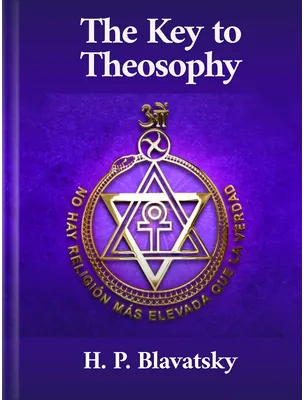
Theo. First of all to inculcate certain great moral truths upon its disciples, and all those who were “lovers of the truth.” Hence the motto adopted by the Theosophical Society: “There is no religion higher than truth.” The chief aim of the Founders of the Eclectic Theosophical School was one of the three objects of its modern successor, the Theosophical Society, namely, to reconcile all religions, sects and nations under a common system of ethics, based on eternal verities.
Enq. What have you to show that this is not an impossible dream; and that all the world’s religions are based on the one and the same truth?
Theo. Their comparative study and analysis. The “Wisdom-Religion” was one in antiquity; and the sameness of primitive religious philosophy is proven to us by the identical doctrines taught to the Initiates during the mysteries, an institution once universally diffused. “All the old worships indicate the existence of a single Theosophy anterior to them. The key that is to open one must open all; otherwise it cannot be the right key.” (Eclect. Philo.)
The Policy of the Theosophical Society
Enq. In the days of Ammonius there were several ancient great religions, and numerous were the sects in Egypt and Palestine alone. How could he reconcile them?
Theo. By doing that which we again try to do now. The Neo-Platonists were a large body, and belonged to various religious philosophies; so do our Theosophists. In those days, the Jew Aristobulus affirmed that the ethics of Aristotle represented the esoteric teachings of the Law of Moses; Philo Judæus endeavoured to reconcile the Pentateuch with the Pythagorean and Platonic philosophy; and Josephus proved that the Essenes of Carmel were simply the copyists and followers of the Egyptian Therapeutæ (the healers). So it is in our day. We can show the line of descent of every Christian religion, as of every, even the smallest, sect. The latter are the minor twigs or shoots grown on the larger branches; but shoots and branches spring from the same trunk — the Wisdom-Religion. To prove this was the aim of Ammonius, who endeavoured to induce Gentiles and Christians, Jews and Idolators, to lay aside their contentions and strifes, remembering only that they were all in possession of the same truth under various vestments, and were all the children of a common mother. This is the aim of Theosophy likewise.
Enq. What are your authorities for saying this of the ancient Theosophists of Alexandria?
Theo. An almost countless number of well-known writers. Mosheim, one of them, says that: —
“Ammonius taught that the religion of the multitude went hand-in-hand with philosophy, and with her had shared the fate of being by degrees corrupted and obscured with mere human conceits, superstitions, and lies; that it ought, therefore, to be brought back to its original purity by purging it of this dross and expounding it upon philosophical principles; and the whole Christ had in view was to reinstate and restore to its primitive integrity the wisdom of the ancients; to reduce within bounds the universally-prevailing dominion of superstition; and in part to correct, and in part to exterminate the various errors that had found their way into the different popular religions.”
This, again, is precisely what the modern Theosophists say. Only while the great Philaletheian was supported and helped in the policy he pursued by two Church Fathers, Clement and Athenagoras, by all the learned Rabbis of the Synagogue, the Academy and the Groves, and while he taught a common doctrine for all, we, his followers on the same line, receive no recognition, but, on the contrary, are abused and persecuted. People 1,500 years ago are thus shown to have been more tolerant than they are in this enlightened century.
Enq. Was he encouraged and supported by the Church because, notwithstanding his heresies, Ammonius taught Christianity and was a Christian?
Theo. Not at all. He was born a Christian, but never accepted Church Christianity. As said of him by the same writer:
“He had but to propound his instructions according to the ancient pillars of Hermes, which Plato and Pythagoras knew before, and from them constituted their philosophy. Finding the same in the prologue of the Gospel according to St. John, he very properly supposed that the purpose of Jesus was to restore the great doctrine of wisdom in its primitive integrity. The narratives of the Bible and the stories of the gods he considered to be allegories illustrative of the truth, or else fables to be rejected.” Moreover, as says the Edinburgh Encyclopedia, “he acknowledged that Jesus Christ was an excellent man and the ‘friend of God,’ but alleged that it was not his design entirely to abolish the worship of demons (gods), and that his only intention was to purify the ancient religion.”
The Wisdom-Religion Esoteric in All Ages
Enq. Since Ammonius never committed anything to writing, how can one feel sure that such were his teachings?
Theo. Neither did Buddha, Pythagoras, Confucius, Orpheus, Socrates, or even Jesus, leave behind them any writings. Yet most of these are historical personages, and their teachings have all survived. The disciples of Ammonius (among whom Origen and Herennius) wrote treatises and explained his ethics. Certainly the latter are as historical, if not more so, than the Apostolic writings. Moreover, his pupils — Origen, Plotinus, and Longinus (counsellor of the famous Queen Zenobia) — have all left voluminous records of the Philaletheian System — so far, at all events, as their public profession of faith was known, for the school was divided into exoteric and esoteric teachings.
Enq. How have the latter tenets reached our day, since you hold that what is properly called the Wisdom-Religion was esoteric?
Theo. The Wisdom-Religion was ever one, and being the last word of possible human knowledge, was, therefore, carefully preserved. It preceded by long ages the Alexandrian Theosophists, reached the modern, and will survive every other religion and philosophy.
Enq. Where and by whom was it so preserved?
Theo. Among Initiates of every country; among profound seekers after truth — their disciples; and in those parts of the world where such topics have always been most valued and pursued: in India, Central Asia, and Persia.
Enq. Can you give me some proofs of its esotericism?
Theo. The best proof you can have of the fact is that every ancient religious, or rather philosophical, cult consisted of an esoteric or secret teaching, and an exoteric (outward public) worship. Furthermore, it is a well-known fact that the mysteries of the ancients comprised with every nation the “greater” (secret) and “Lesser” (public) mysteries — e.g., in the celebrated solemnities called the Eleusinia, in Greece. From the Hierophants of Samothrace, Egypt, and the initiated Brahmins of the India of old, down to the later Hebrew Rabbis, all preserved, for fear of profanation, their real bona fide beliefs secret. The Jewish Rabbis called their secular religious series the Mercavah (the exterior body), “the vehicle,” or, the covering which contains the hidden soul — i.e., their highest secret knowledge. Not one of the ancient nations ever imparted through its priests its real philosophical secrets to the masses, but allotted to the latter only the husks. Northern Buddhism has its “greater” and its “lesser” vehicle, known as the Mahayana, the esoteric, and the Hinayana, the exoteric, Schools. Nor can you blame them for such secrecy; for surely you would not think of feeding your flock of sheep on learned dissertations on botany instead of on grass? Pythagoras called his Gnosis “the knowledge of things that are,” or ἡ γνῶσις τῶν ὄντων, and preserved that knowledge for his pledged disciples only: for those who could digest such mental food and feel satisfied; and he pledged them to silence and secrecy. Occult alphabets and secret ciphers are the development of the old Egyptian hieratic writings, the secret of which was, in the days of old, in the possession only of the Hierogrammatists, or initiated Egyptian priests. Ammonius Saccas, as his biographers tell us, bound his pupils by oath not to divulge his higher doctrines except to those who had already been instructed in preliminary knowledge, and who were also bound by a pledge. Finally, do we not find the same even in early Christianity, among the Gnostics, and even in the teachings of Christ? Did he not speak to the multitudes in parables which had a two-fold meaning, and explain his reasons only to his disciples? “To you,” he says, “it is given to know the mysteries of the kingdom of heaven; but unto them that are without, all these things are done in parables” (Mark iv. 11). “The Essenes of Judea and Carmel made similar distinctions, dividing their adherents into neophytes, brethren, and the perfect, or those initiated” (Eclec. Phil.). Examples might be brought from every country to this effect.
Enq. Can you attain the “Secret Wisdom” simply by study? Encyclopædias define Theosophy pretty much as Webster’s Dictionary does, i.e., as “supposed intercourse with God and superior spirits, and consequent attainment of superhuman knowledge by physical means and chemical processes.” Is this so?
Theo. I think not. Nor is there any lexicographer capable of explaining, whether to himself or others, how superhuman knowledge can be attained by physical or chemical processes. Had Webster said “by metaphysical and alchemical processes,” the definition would be approximately correct: as it is, it is absurd. Ancient Theosophists claimed, and so do the modern, that the infinite cannot be known by the finite — i.e., sensed by the finite Self — but that the divine essence could be communicated to the higher Spiritual Self in a state of ecstacy. This condition can hardly be attained, like hypnotism, by “physical and chemical means.”
Enq. What is your explanation of it?
Theo. Real ecstacy was defined by Plotinus as “the liberation of the mind from its finite consciousness, becoming one and identified with the infinite.” This is the highest condition, says Prof. Wilder, but not one of permanent duration, and it is reached only by the very very few. It is, indeed, identical with that state which is known in India as Samadhi. The latter is practised by the Yogis, who facilitate it physically by the greatest abstinence in food and drink, and mentally by an incessant endeavour to purify and elevate the mind. Meditation is silent and unuttered prayer, or, as Plato expressed it, “the ardent turning of the soul toward the divine; not to ask any particular good (as in the common meaning of prayer), but for good itself — for the universal Supreme Good” of which we are a part on earth, and out of the essence of which we have all emerged. Therefore, adds Plato, “remain silent in the presence of the divine ones, till they remove the clouds from thy eyes and enable thee to see by the light which issues from themselves, not what appears as good to thee, but what is intrinsically good.”
Enq. Theosophy, then, is not, as held by some, a newly devised scheme?
Theo. Only ignorant people can thus refer to it. It is as old as the world, in its teachings and ethics, if not in name, as it is also the broadest and most catholic system among all.
Enq. How comes it, then, that Theosophy has remained so unknown to the nations of the Western Hemisphere? Why should it have been a sealed book to races confessedly the most cultured and advanced?
Theo. We believe there were nations as cultured in days of old and certainly more spiritually “advanced” than we are. But there are several reasons for this willing ignorance. One of them was given by St. Paul to the cultured Athenians — a loss, for long centuries, of real spiritual insight, and even interest, owing to their too great devotion to things of sense and their long slavery to the dead letter of dogma and ritualism. But the strongest reason for its lies in the fact that real Theosophy has ever been kept secret.
Enq. You have brought forward proofs that such secrecy has existed; but what was the real cause for it?
Theo. The causes for it were: Firstly, the perversity of average human nature and its selfishness, always tending to the gratification of personal desires to the detriment of neighbours and next of kin. Such people could never be entrusted with divine secrets. Secondly, their unreliability to keep the sacred and divine knowledge from desecration. It is the latter that led to the perversion of the most sublime truths and symbols, and to the gradual transformation of things spiritual into anthropomorphic, concrete, and gross imagery — in other words, to the dwarfing of the god-idea and to idolatry.
Theosophy Is Not Buddhism
Enq. You are often spoken of as “Esoteric Buddhists.” Are you then all followers of Gautama Buddha?
Theo. No more than musicians are all followers of Wagner. Some of us are Buddhists by religion; yet there are far more Hindus and Brahmins than Buddhists among us, and more Christian-born Europeans and Americans than converted Buddhists. The mistake has arisen from a misunderstanding of the real meaning of the title of Mr. Sinnett’s excellent work, “Esoteric Buddhism,” which last word ought to have been spelt with one, instead of two, d’s, as then Budhism would have meant what it was intended for, merely “Wisdomism” (Bodha, bodhi, “intelligence,” “wisdom”) instead of Buddhism, Gautama’s religious philosophy. Theosophy, as already said, is the Wisdom-Religion.