'The Invisible Man' was first published in 1897.
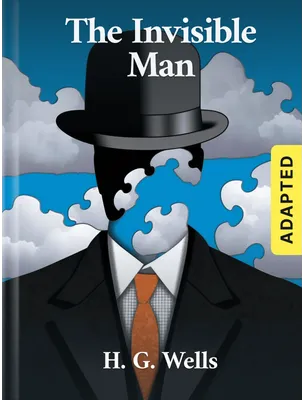
A strange man arrives at a small village. His face is covered with bandages, and he wears dark glasses. People find him unusual and start to ask questions. Later, it is discovered that he is invisible. He is a scientist who made himself invisible through an experiment. At first, he enjoys his power, but soon his life becomes difficult and dangerous... This an adapted version of the novel, shortened and simplified to A2 level.
Step into the shadowy world of "The Invisible Man," a thrilling adaptation of H. G. Wells' classic tale. This gripping story follows the enigmatic figure of Griffin, a brilliant scientist who discovers the secret to invisibility. But instead of using his power for good, Griffin descends into madness, confronting the fears and prejudices of society. As he grapples with his own identity, the line between genius and insanity blurs, leading to a series of mysterious and dangerous events.
In this haunting narrative, readers are drawn into a conflict that explores themes of isolation, ambition, and the consequences of unchecked power. Griffin's journey serves as a chilling reminder of how one man's quest for greatness can unravel not only his life but also the lives of those around him. Prepare to be captivated by the suspense, intrigue, and moral dilemmas that arise when one becomes invisible, both to the world and to themselves.
Full Name: Herbert George Wells
Birthdate: September 21, 1866
Place of Birth: Bromley, Kent, England
Date and Place of Death: August 13, 1946, in London, England
Occupation: Author, historian, and social commentator
Notable Works: Some of his most famous works include "The Time Machine," "The War of the Worlds," "The Invisible Man," and "The First Men in the Moon."
Early Life: H.G. Wells was born into a working-class family. His father was a shopkeeper, and his mother worked as a domestic servant. Wells had a difficult childhood but showed a talent for writing and storytelling from an early age. He attended several schools and eventually won a scholarship to the Normal School of Science in London.
Literary Career: Wells began his writing career as a journalist. He published his first novel, "The Time Machine," in 1895, which became an instant success. He is known as one of the pioneers of science fiction, exploring themes of technology, society, and human nature in his works. Wells wrote many novels, essays, and stories throughout his life, influencing future generations of writers.
Personal Life: Wells was married twice and had three children. He was an outspoken advocate for social reform and often expressed his views on politics and society in his writing. His ideas on socialism and human rights were significant to his work and personal beliefs.
The book was written by H. G. Wells, a British author known for his science fiction works.
Wells was inspired by the possibilities of science and the idea of invisibility, exploring how it could affect human behavior.
'The Invisible Man' is primarily a science fiction novel, but it also includes elements of horror and thriller.
The main character is Griffin, the Invisible Man, along with Dr. Kemp, who plays a significant role in the story.
The story follows Griffin, a scientist who discovers how to become invisible and faces the consequences of his actions.
Key themes include isolation, the abuse of power, and the moral implications of scientific discovery.
Invisibility symbolizes the desire for freedom and the darker side of human nature.
The book was well-received for its imaginative story and thought-provoking themes, becoming a classic of science fiction.
Yes, the story has been adapted into various films, television shows, and even stage productions over the years.