'Herland' was published in 1915.
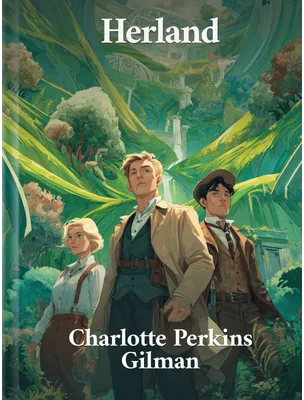
A utopian world with order, no conflict, and no domination is the subject of Herland. This society exists because the isolated community consists of only women. These women do not need men to reproduce either and seem to have found the perfect way to live. The story written by a feminist in 1915 brings some interesting ideas and topics to light through her fictional society.
In the thought-provoking utopian novel "Herland," Charlotte Perkins Gilman invites readers into a world unlike any other. The story follows three male explorers—Van, Jeff, and Terry—who embark on an expedition to discover a mysterious land rumored to be inhabited solely by women. As they journey into this hidden paradise, they are met with a society that thrives on cooperation, creativity, and nurturing, challenging their preconceived notions of gender roles and civilization. The main characters grapple with their expectations and biases as they encounter the women of Herland, who have built a harmonious community without men for generations. Central to the narrative is the exploration of feminism, societal norms, and the idea of what a truly equitable society could look like. Gilman's vivid imagination and sharp social critique encourage readers to reflect on their own beliefs about gender and humanity. Join the expedition into Herland, where every discovery leads to deeper questions about society and self.
Full Name: Charlotte Perkins Gilman
Birthdate: July 3, 1860
Place of Birth: Hartford, Connecticut, USA
Date and Place of Death: August 17, 1935, in Pasadena, California, USA
Occupation: Author, feminist, social reformer
Notable Works: "The Yellow Wallpaper," "Women and Economics," "Herland"
Early Life: Charlotte Perkins Gilman was born into a family of writers and intellectuals. Her father left the family when she was young, and her mother struggled to support them. Gilman grew up in a challenging environment, which influenced her views on women’s rights and social issues.
Literary Career: Gilman began her writing career in the late 19th century. Her most famous work, "The Yellow Wallpaper," was published in 1892. It is a powerful story about a woman suffering from mental illness and is often seen as a critique of the treatment of women during that time. Throughout her career, she wrote essays and books advocating for women's independence and social reform.
Personal Life: Gilman married Charles Walter Stetson in 1884, but their marriage was troubled, leading to a separation. She later married George Houghton Gilman. Throughout her life, she was active in the women’s movement and spoke publicly about issues such as gender equality and social justice.
The author is Charlotte Perkins Gilman, an American writer and social reformer known for her work on women's rights.
Gilman was inspired by her views on gender roles and her desire to explore a society where women could thrive without men's influence.
'Herland' is a utopian novel that combines elements of science fiction and feminist literature.
The main characters are three male explorers: Vandyck, Terry, and Jeff, who discover an all-female society.
The story follows three men who stumble upon a hidden society of women living in harmony, exploring their culture and societal structure.
Key themes include feminism, gender roles, and the critique of patriarchy.
The society of Herland symbolizes a potential future where women are empowered, and traditional gender norms are challenged.
'Herland' received mixed reviews; some praised its visionary ideas, while others criticized its portrayal of gender.
Yes, 'Herland' has inspired various adaptations, including stage plays and discussions in feminist literature courses.