'The Great Bear' was published in 1886.
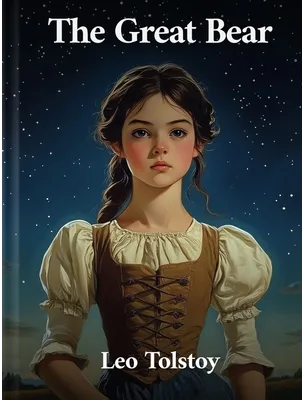
A Long, long time ago there was a big drought on the earth. One night a little girl went out with a pitcher to find some water for her sick mother. ...
The Great Bear is a story about moral values and self-sacrifice.
In "The Great Bear," renowned author Leo Tolstoy invites readers on a poignant journey of self-discovery and moral reflection. The story follows the life of a humble peasant, who finds himself entangled in a series of events that challenge his values and beliefs. As he confronts the harsh realities of life, the peasant must grapple with his own conscience and the weight of societal expectations. Through encounters with nature and fellow villagers, he learns about love, sacrifice, and the essence of true happiness. The central theme revolves around the struggle between material desires and spiritual fulfillment, a conflict that resonates deeply in today’s world. Tolstoy's masterful storytelling weaves together elements of adventure and introspection, creating a rich tapestry that captivates the heart and mind. Prepare to be immersed in a world where the beauty of the natural landscape contrasts with the complexities of human existence.
Join the peasant on his transformative journey as he seeks to understand not just the world around him, but the world within. "The Great Bear" is a timeless tale that encourages readers to reflect on their own lives, making it a must-read for those yearning for deeper meaning.
Full Name: Leo Nikolayevich Tolstoy
Birthdate: September 9, 1828
Place of Birth: Tula Province, Russia
Date and Place of Death: November 20, 1910, in Astapovo, Russia
Occupation: Novelist, playwright, essayist, and philosopher
Notable Works: "War and Peace," "Anna Karenina," "The Kreutzer Sonata," and "The Death of Ivan Ilyich."
Early Life: Tolstoy was born into an aristocratic family. He lost his mother at a young age and was raised by relatives. He attended Kazan University but left without completing his degree. His early life was marked by a struggle between his privileged upbringing and his desire for a more meaningful existence.
Literary Career: Tolstoy began writing in the 1850s. His early works were influenced by his experiences in the army and his travels. His major novels, "War and Peace" and "Anna Karenina," are considered masterpieces of world literature. Tolstoy's later writings focused on moral and philosophical themes, advocating for nonviolent resistance and social justice.
Personal Life: Tolstoy married Sophia Behrs in 1862, and they had 13 children. Despite his fame, he struggled with his beliefs and lifestyle. In his later years, he sought simplicity and spiritual fulfillment, eventually leaving his estate and family to live a more ascetic life. He passed away at a train station, fulfilling his desire for a peaceful end.
Leo Tolstoy was a famous Russian author known for his novels like 'War and Peace' and 'Anna Karenina.' He was also a philosopher and social reformer.
Tolstoy was inspired by his experiences in nature and his interest in animal rights and the human condition.
'The Great Bear' is a short story that falls under the genres of fiction and moral tale.
The main characters include a bear, who represents nature, and a man who embodies human conflict and greed.
The story explores the relationship between humans and nature, focusing on a man's encounter with a bear that challenges his understanding of life.
Key themes include the struggle between man and nature, the morality of human actions, and the quest for understanding and harmony.
The bear symbolizes the wildness of nature, while the man represents human civilization and its often destructive tendencies.
'The Great Bear' received positive feedback for its philosophical depth and beautiful prose, though it is less known than Tolstoy's major works.
While 'The Great Bear' has not been widely adapted, its themes resonate in various artistic interpretations and discussions about nature.