'George Eliot' was published in 1924.
[{"id":"para_1","index":0,"start":0,"offset":328,"words":2,"paraNum":"","lastModified":1737067515000,"semanticType":"title-book-title","voicework":"narration","blockId":"george_eliot_essay_ffa_en-bld8","language":"en","wordsRange":{"start":100000000,"end":103000000},"paragraphVersion":50,"direction":"ltr","paragraph":"<h1 class=\"ilm-title ilm-x-large\" id=\"para_1\" semantictype=\"title-book-title\" data-ilmid=\"george_eliot_essay_ffa_en-bld8\" data-audio=\"1\" data-chapter=\"para_1\" data-words-count=\"2\" data-before=\"0\" data-ww=\"\"><span class=\"block-pb\"> <span class=\"block-pb is-animated\"></span> </span><span class=\"itm-wrap\">George Eliot</span></h1>","hasContent":true,"isFirst":true,"isLast":false},{"id":"para_2","index":1,"start":328,"offset":351,"words":2,"paraNum":"","lastModified":1737067517000,"semanticType":"title-author","voicework":"narration","blockId":"george_eliot_essay_ffa_en-blio","language":"en","wordsRange":{"start":136333333,"end":169666667},"paragraphVersion":60,"direction":"ltr","paragraph":"<h1 class=\"ilm-title ilm-author ilm-large ilm-nopad\" id=\"para_2\" semantictype=\"title-author\" data-ilmid=\"george_eliot_essay_ffa_en-blio\" data-audio=\"1\" data-chapter=\"para_2\" data-words-count=\"2\" data-before=\"2\" data-ww=\"\"><span class=\"block-pb\"> <span class=\"block-pb is-animated\"></span> </span><span class=\"itm-wrap\">by<br>Virginia Woolf</span></h1>","hasContent":true,"isFirst":false,"isLast":false},{"id":"para_3","index":2,"start":679,"offset":153,"words":0,"paraNum":"","lastModified":1736175504000,"semanticType":"line","blockId":"george_eliot_essay_ffa_en-blip","language":"en","wordsRange":{"start":180777778,"end":191888889},"paragraphVersion":41,"direction":"ltr","paragraph":"<hr class=\"ilm-hr ilm-small\" id=\"para_3\" semantictype=\"line\" data-ilmid=\"george_eliot_essay_ffa_en-blip\" data-words-count=\"0\" data-before=\"4\" data-ww=\"\">","hasContent":true,"isFirst":false,"isLast":false},{"id":"para_4","index":3,"start":832,"offset":1676,"words":0,"paraNum":"","lastModified":1736259982000,"semanticType":"illustration","blockId":"george_eliot_essay_ffa_en-bliq","language":"en","wordsRange":{"start":195592593,"end":199296296},"paragraphVersion":37,"direction":"ltr","paragraph":"<div class=\"ilm-illustration\" id=\"para_4\" semantictype=\"illustration\" data-ilmid=\"george_eliot_essay_ffa_en-bliq\" data-words-count=\"0\" data-before=\"4\" data-ww=\"\"><img width=\"600\" height=\"343\" data-src=\"ch0p0\" src=\"data:image/webp;base64,UklGRhoEAABXRUJQVlA4IA4EAACwEgCdASo8ACIAPm0skkakIiGhKrv8AIANiWYAnTLezDe6eaBamvaGPsP+sjbd89h6Od5G3oz/P0Cbkx90e0HGL5Q8xfpxie5fbU/+L31zK9rlmeeRv6n9g0fDZH+lKAJeifVI+bzmxwtmvZbp70ZnWT2QNaq6BBwZjeY/+usafFQ5dhT8yWaJD6ebHrBU2RZKiowTvAcRZa4S5dhmgAD+/gIs57lrXawfzM98vuJBtxg8kdRJjN1991VlSCqVfZDezp8UC77Luh1SyFxRoZ3I1cerx00k4+ZkF3eQ9pxRgn3vSDx0fha48HuBlFGQ4r5yvEHJNT4/mrUM1+xIvD2dvoqu5akv/tdRidUF6psIDuuXNTecMaodDIinRXnXuPEvptQhR3y0zABN5SZljg+xBFm9q9dWyjx9bAACpILVZiXNzKKJROOQ7PvcvubLO1uC4E0wORHMX0r7IwkOeqx8j+GSWCBpBD2WP/CuvkCH39Ut5OrPtvj6a8ZYsGSok6oBahX/x72kUE68dcITFu5w+pb70OKaGDgHw4/pFf1pRdQQPpAiWy+f8Hhj95xW2Ds1iur3EyGAvohSONVSFivKgj3HsW+lNqFHWhX53iOQ9FVeLLj7urn51Shj888oElpOACtG1dGXpOfRp5xeB7j74XPeoGSxTMVTJyprCKcpPQbM+Drntfr/n7upG5p3OlzsM2p7HFeufVqaXzyp4Q4fKwIXsMdHksa6uKh9o8cOn6MBX2aGNEk8f5PJ4MD5uS+BjK4Q+XTplK81kNnk6sWxTnCHR2siGI2BGAJH0jGZONP0g5UuS+vWjG/PDSEp2p4gD3KPTTzjUdWNJw81wyu1aR+cZHO7keQLDoWCMctPzwKTbnq4sOsLkVNdXbt+05yhIu3XAM+MMtLtgjaSY9TR0qlHz8VswP7g2HNvS7VuzPcPP0emJqopumXctLWGa7qj+5NwktxgGiuFDGylNSLt/QBTWc8cLQF9b09PjOzqMFRqddPhAzJXfPhWAForqXXFFDpj8dKwqu/MdDnYdw0gpo0b83g+kA3Vdc+p9gkE6sxhb8gjyGl3S47u5WC+VG47xtCOTJ94HvG7S+gWjPqQ8v9PrGJ+Zmvz8wsH9sKqLPkM8csc5PTMKrd/ySat3ZCBo1L1W1NkTSuZfjBO3mibfA4WqPcLfCDlso02Owsl8/SN9egOjGWDeek4PYcBpmTDuqcnWOJT4L2OeoEG0pqVe9BgknN7a4/gWMZmYQvCwsI0ZK//cDfCDsNpsIClhs5a8qczJZMi4LDhK7TdFbIggVfQaAUQPQHPJzEseKfh/rku3o18lLPG/yb5oTz4IBqkCdOAN/eAglxMStFkddk0mAjmRACbDFzg9LgAAAA=\" alt=\"George Eliot\"></div>","hasContent":true,"isFirst":false,"isLast":false},{"id":"para_5","index":4,"start":2508,"offset":731,"words":75,"paraNum":"1","lastModified":1737031073000,"semanticType":"par","voicework":"narration","blockId":"george_eliot_essay_ffa_en-bld9","language":"en","wordsRange":{"start":203000000,"end":554000000},"paragraphVersion":128,"direction":"ltr","paragraph":"<p id=\"para_5\" semantictype=\"par\" data-ilmid=\"george_eliot_essay_ffa_en-bld9\" data-audio=\"1\" data-words-count=\"75\" data-before=\"4\" data-ww=\"\"><span class=\"block-num\" data-id=\"1\"></span><span class=\"block-pb\"> <span class=\"block-pb is-animated\"></span> </span><span class=\"itm-wrap\">To read George Eliot attentively is to become aware how little one knows about her. It is also to become aware of the credulity, not very creditable to one’s insight, with which, half consciously and partly maliciously, one had accepted the late Victorian version of a deluded woman who held phantom sway over subjects even more deluded than herself. At what moment, and by what means her spell was broken it is difficult to ascertain. </span></p>","hasContent":true,"isFirst":false,"isLast":false},{"id":"para_6","index":5,"start":3239,"offset":996,"words":123,"paraNum":"2","lastModified":1737031324000,"semanticType":"par","voicework":"narration","blockId":"george_eliot_essay_ffa_en-blj6","language":"en","wordsRange":{"start":587333333,"end":620666667},"paragraphVersion":41,"direction":"ltr","paragraph":"<p id=\"para_6\" semantictype=\"par\" data-ilmid=\"george_eliot_essay_ffa_en-blj6\" data-audio=\"1\" data-words-count=\"123\" data-before=\"79\" data-ww=\"\"><span class=\"block-num\" data-id=\"2\"></span><span class=\"block-pb\"> <span class=\"block-pb is-animated\"></span> </span><span class=\"itm-wrap\">Some people attribute it to the publication of her <i>Life</i>. Perhaps George Meredith, with his phrase about the “mercurial little showman” and the “errant woman” on the daïs, gave point and poison to the arrows of thousands incapable of aiming them so accurately, but delighted to let fly. She became one of the butts for youth to laugh at, the convenient symbol of a group of serious people who were all guilty of the same idolatry and could be dismissed with the same scorn. Lord Acton had said that she was greater than Dante; Herbert Spencer exempted her novels, as if they were not novels, when he banned all fiction from the London Library. She was the pride and paragon of her sex. </span></p>","hasContent":true,"isFirst":false,"isLast":false},{"id":"para_7","index":6,"start":4235,"offset":1158,"words":152,"paraNum":"3","lastModified":1737031484000,"semanticType":"par","voicework":"narration","blockId":"george_eliot_essay_ffa_en-blj7","language":"en","wordsRange":{"start":631777778,"end":642888889},"paragraphVersion":61,"direction":"ltr","paragraph":"<p id=\"para_7\" semantictype=\"par\" data-ilmid=\"george_eliot_essay_ffa_en-blj7\" data-audio=\"1\" data-words-count=\"152\" data-before=\"202\" data-ww=\"\"><span class=\"block-num\" data-id=\"3\"></span><span class=\"block-pb\"> <span class=\"block-pb is-animated\"></span> </span><span class=\"itm-wrap\">Moreover, her private record was not more alluring than her public. Asked to describe an afternoon at the Priory, the story-teller always intimated that the memory of those serious Sunday afternoons had come to tickle his sense of humour. He had been so much alarmed by the grave lady in her low chair; he had been so anxious to say the intelligent thing. Certainly, the talk had been very serious, as a note in the fine clear hand of the great novelist bore witness. It was dated on the Monday morning, and she accused herself of having spoken without due forethought of Marivaux when she meant another; but no doubt, she said, her listener had already supplied the correction. Still, the memory of talking about Marivaux to George Eliot on a Sunday afternoon was not a romantic memory. It had faded with the passage of the years. It had not become picturesque.</span></p>","hasContent":true,"isFirst":false,"isLast":false},{"id":"para_8","index":7,"start":5393,"offset":912,"words":99,"paraNum":"4","lastModified":1737031806000,"semanticType":"par","voicework":"narration","blockId":"george_eliot_essay_ffa_en-blda","language":"en","wordsRange":{"start":654000000,"end":856000000},"paragraphVersion":93,"direction":"ltr","paragraph":"<p id=\"para_8\" semantictype=\"par\" data-ilmid=\"george_eliot_essay_ffa_en-blda\" data-audio=\"1\" data-words-count=\"99\" data-before=\"354\" data-ww=\"\"><span class=\"block-num\" data-id=\"4\"></span><span class=\"block-pb\"> <span class=\"block-pb is-animated\"></span> </span><span class=\"itm-wrap\">Indeed, one cannot escape the conviction that the long, heavy face with its expression of serious and sullen and almost equine power has stamped itself depressingly upon the minds of people who remember George Eliot, so that it looks out upon them from her pages. Mr. Gosse has lately described her as he saw her driving through London in a victoria — <br><br>“a large, thick-set sybil, dreamy and immobile, whose massive features, somewhat grim when seen in profile, were incongruously bordered by a hat, always in the height of Paris fashion, which in those days commonly included an immense ostrich feather.”</span></p>","hasContent":true,"isFirst":false,"isLast":false},{"id":"para_9","index":8,"start":6305,"offset":737,"words":79,"paraNum":"5","lastModified":1737032030000,"semanticType":"par","voicework":"narration","blockId":"george_eliot_essay_ffa_en-bldc","language":"en","wordsRange":{"start":956000000,"end":1138000000},"paragraphVersion":90,"direction":"ltr","paragraph":"<p id=\"para_9\" semantictype=\"par\" data-ilmid=\"george_eliot_essay_ffa_en-bldc\" data-audio=\"1\" data-words-count=\"79\" data-before=\"453\" data-ww=\"\"><span class=\"block-num\" data-id=\"5\"></span><span class=\"block-pb\"> <span class=\"block-pb is-animated\"></span> </span><span class=\"itm-wrap\">Lady Ritchie, with equal skill, has left a more intimate indoor portrait: <br><br>“She sat by the fire in a beautiful black satin gown, with a green shaded lamp on the table beside her, where I saw German books lying and pamphlets and ivory paper-cutters. She was very quiet and noble, with two steady little eyes and a sweet voice. As I looked I felt her to be a friend, not exactly a personal friend, but a good and benevolent impulse.”</span></p>","hasContent":true,"isFirst":false,"isLast":false},{"id":"para_10","index":9,"start":7042,"offset":708,"words":69,"paraNum":"6","lastModified":1737031718000,"semanticType":"par","voicework":"narration","blockId":"george_eliot_essay_ffa_en-blde","language":"en","wordsRange":{"start":1238000000,"end":1308000000},"paragraphVersion":79,"direction":"ltr","paragraph":"<p id=\"para_10\" semantictype=\"par\" data-ilmid=\"george_eliot_essay_ffa_en-blde\" data-audio=\"1\" data-words-count=\"69\" data-before=\"532\" data-ww=\"\"><span class=\"block-num\" data-id=\"6\"></span><span class=\"block-pb\"> <span class=\"block-pb is-animated\"></span> </span><span class=\"itm-wrap\">A scrap of her talk is preserved. “We ought to respect our influence,” she said. “We know by our own experience how very much others affect our lives, and we must remember that we in turn must have the same effect upon others.” Jealously treasured, committed to memory, one can imagine recalling the scene, repeating the words, thirty years later and suddenly, for the first time, bursting into laughter.</span></p>","hasContent":true,"isFirst":false,"isLast":false},{"id":"para_11","index":10,"start":7750,"offset":1160,"words":150,"paraNum":"7","lastModified":1737032188000,"semanticType":"par","voicework":"narration","blockId":"george_eliot_essay_ffa_en-bldf","language":"en","wordsRange":{"start":1408000000,"end":1671000000},"paragraphVersion":121,"direction":"ltr","paragraph":"<p id=\"para_11\" semantictype=\"par\" data-ilmid=\"george_eliot_essay_ffa_en-bldf\" data-audio=\"1\" data-words-count=\"150\" data-before=\"601\" data-ww=\"\"><span class=\"block-num\" data-id=\"7\"></span><span class=\"block-pb\"> <span class=\"block-pb is-animated\"></span> </span><span class=\"itm-wrap\">In all these records one feels that the recorder, even when he was in the actual presence, kept his distance and kept his head, and never read the novels in later years with the light of a vivid, or puzzling, or beautiful personality dazzling in his eyes. In fiction, where so much of personality is revealed, the absence of charm is a great lack; and her critics, who have been, of course, mostly of the opposite sex, have resented, half consciously perhaps, her deficiency in a quality which is held to be supremely desirable in women. George Eliot was not charming; she was not strongly feminine; she had none of those eccentricities and inequalities of temper which give to so many artists the endearing simplicity of children. One feels that to most people, as to Lady Ritchie, she was “not exactly a personal friend, but a good and benevolent impulse”. </span></p>","hasContent":true,"isFirst":false,"isLast":false},{"id":"para_12","index":11,"start":8910,"offset":900,"words":112,"paraNum":"8","lastModified":1737032251000,"semanticType":"par","voicework":"narration","blockId":"george_eliot_essay_ffa_en-blir","language":"en","wordsRange":{"start":1704333333,"end":1737666667},"paragraphVersion":52,"direction":"ltr","paragraph":"<p id=\"para_12\" semantictype=\"par\" data-ilmid=\"george_eliot_essay_ffa_en-blir\" data-audio=\"1\" data-words-count=\"112\" data-before=\"751\" data-ww=\"\"><span class=\"block-num\" data-id=\"8\"></span><span class=\"block-pb\"> <span class=\"block-pb is-animated\"></span> </span><span class=\"itm-wrap\">But if we consider these portraits more closely we shall find that they are all the portraits of an elderly celebrated woman, dressed in black satin, driving in her victoria, a woman who has been through her struggle and issued from it with a profound desire to be of use to others, but with no wish for intimacy, save with the little circle who had known her in the days of her youth. We know very little about the days of her youth; but we do know that the culture, the philosophy, the fame, and the influence were all built upon a very humble foundation — she was the grand-daughter of a carpenter.</span></p>","hasContent":true,"isFirst":false,"isLast":false},{"id":"para_13","index":12,"start":9810,"offset":805,"words":88,"paraNum":"9","lastModified":1737032328000,"semanticType":"par","voicework":"narration","blockId":"george_eliot_essay_ffa_en-bldg","language":"en","wordsRange":{"start":1771000000,"end":2180000000},"paragraphVersion":146,"direction":"ltr","paragraph":"<p id=\"para_13\" semantictype=\"par\" data-ilmid=\"george_eliot_essay_ffa_en-bldg\" data-audio=\"1\" data-words-count=\"88\" data-before=\"863\" data-ww=\"\"><span class=\"block-num\" data-id=\"9\"></span><span class=\"block-pb\"> <span class=\"block-pb is-animated\"></span> </span><span class=\"itm-wrap\">The first volume of her life is a singularly depressing record. In it we see her raising herself with groans and struggles from the intolerable boredom of petty provincial society (her father had risen in the world and become more middle class, but less picturesque) to be the assistant editor of a highly intellectual London review, and the esteemed companion of Herbert Spencer. The stages are painful as she reveals them in the sad soliloquy in which Mr. Cross condemned her to tell the story of her life. </span></p>","hasContent":true,"isFirst":false,"isLast":false},{"id":"para_14","index":13,"start":10615,"offset":1312,"words":170,"paraNum":"10","lastModified":1737032492000,"semanticType":"par","voicework":"narration","blockId":"george_eliot_essay_ffa_en-blis","language":"en","wordsRange":{"start":2213333333,"end":2246666667},"paragraphVersion":72,"direction":"ltr","paragraph":"<p id=\"para_14\" semantictype=\"par\" data-ilmid=\"george_eliot_essay_ffa_en-blis\" data-audio=\"1\" data-words-count=\"170\" data-before=\"951\" data-ww=\"\"><span class=\"block-num\" data-id=\"10\"></span><span class=\"block-pb\"> <span class=\"block-pb is-animated\"></span> </span><span class=\"itm-wrap\">Marked in early youth as one “sure to get something up very soon in the way of a clothing club”, she proceeded to raise funds for restoring a church by making a chart of ecclesiastical history; and that was followed by a loss of faith which so disturbed her father that he refused to live with her. Next came the struggle with the translation of Strauss, which, dismal and “soul-stupefying” in itself, can scarcely have been made less so by the usual feminine tasks of ordering a household and nursing a dying father, and the distressing conviction, to one so dependent upon affection, that by becoming a blue-stocking she was forfeiting her brother’s respect. <br><br>“I used to go about like an owl,” she said, “to the great disgust of my brother.” <br><br>“Poor thing,” wrote a friend who saw her toiling through Strauss with a statue of the risen Christ in front of her, “I do pity her sometimes, with her pale sickly face and dreadful headaches, and anxiety, too, about her father.” </span></p>","hasContent":true,"isFirst":false,"isLast":false},{"id":"para_15","index":14,"start":11927,"offset":1137,"words":148,"paraNum":"11","lastModified":1737032707000,"semanticType":"par","voicework":"narration","blockId":"george_eliot_essay_ffa_en-blit","language":"en","wordsRange":{"start":2257777778,"end":2268888889},"paragraphVersion":54,"direction":"ltr","paragraph":"<p id=\"para_15\" semantictype=\"par\" data-ilmid=\"george_eliot_essay_ffa_en-blit\" data-audio=\"1\" data-words-count=\"148\" data-before=\"1121\" data-ww=\"\"><span class=\"block-num\" data-id=\"11\"></span><span class=\"block-pb\"> <span class=\"block-pb is-animated\"></span> </span><span class=\"itm-wrap\">Yet, though we cannot read the story without a strong desire that the stages of her pilgrimage might have been made, if not more easy, at least more beautiful, there is a dogged determination in her advance upon the citadel of culture which raises it above our pity. Her development was very slow and very awkward, but it had the irresistible impetus behind it of a deep-seated and noble ambition. Every obstacle at length was thrust from her path. She knew every one. She read everything. Her astonishing intellectual vitality had triumphed. Youth was over, but youth had been full of suffering. Then, at the age of thirty-five, at the height of her powers, and in the fullness of her freedom, she made the decision which was of such profound moment to her and still matters even to us, and went to Weimar, alone with George Henry Lewes.</span></p>","hasContent":true,"isFirst":false,"isLast":false},{"id":"para_16","index":15,"start":13064,"offset":768,"words":83,"paraNum":"12","lastModified":1737032797000,"semanticType":"par","voicework":"narration","blockId":"george_eliot_essay_ffa_en-bldh","language":"en","wordsRange":{"start":2280000000,"end":3204000000},"paragraphVersion":95,"direction":"ltr","paragraph":"<p id=\"para_16\" semantictype=\"par\" data-ilmid=\"george_eliot_essay_ffa_en-bldh\" data-audio=\"1\" data-words-count=\"83\" data-before=\"1269\" data-ww=\"\"><span class=\"block-num\" data-id=\"12\"></span><span class=\"block-pb\"> <span class=\"block-pb is-animated\"></span> </span><span class=\"itm-wrap\">The books which followed so soon after her union testify in the fullest manner to the great liberation which had come to her with personal happiness. In themselves they provide us with a plentiful feast. Yet at the threshold of her literary career one may find in some of the circumstances of her life influences that turned her mind to the past, to the country village, to the quiet and beauty and simplicity of childish memories and away from herself and the present. </span></p>","hasContent":true,"isFirst":false,"isLast":false},{"id":"para_17","index":16,"start":13832,"offset":1008,"words":124,"paraNum":"13","lastModified":1737032833000,"semanticType":"par","voicework":"narration","blockId":"george_eliot_essay_ffa_en-bliu","language":"en","wordsRange":{"start":3237333333,"end":3270666667},"paragraphVersion":81,"direction":"ltr","paragraph":"<p id=\"para_17\" semantictype=\"par\" data-ilmid=\"george_eliot_essay_ffa_en-bliu\" data-audio=\"1\" data-words-count=\"124\" data-before=\"1352\" data-ww=\"\"><span class=\"block-num\" data-id=\"13\"></span><span class=\"block-pb\"> <span class=\"block-pb is-animated\"></span> </span><span class=\"itm-wrap\">We understand how it was that her first book was <i>Scenes </i><i>of </i><i>Clerical </i><i>Life</i>, and not <i>Middlemarch</i>. Her union with Lewes had surrounded her with affection, but in view of the circumstances and of the conventions it had also isolated her. “I wish it to be understood,” she wrote in 1857, “that I should never invite any one to come and see me who did not ask for the invitation.” She had been “cut off from what is called the world”, she said later, but she did not regret it. By becoming thus marked, first by circumstances and later, inevitably, by her fame, she lost the power to move on equal terms unnoted among her kind; and the loss for a novelist was serious. </span></p>","hasContent":true,"isFirst":false,"isLast":false},{"id":"para_18","index":17,"start":14840,"offset":1413,"words":183,"paraNum":"14","lastModified":1737032971000,"semanticType":"par","voicework":"narration","blockId":"george_eliot_essay_ffa_en-bliv","language":"en","wordsRange":{"start":3281777778,"end":3292888889},"paragraphVersion":58,"direction":"ltr","paragraph":"<p id=\"para_18\" semantictype=\"par\" data-ilmid=\"george_eliot_essay_ffa_en-bliv\" data-audio=\"1\" data-words-count=\"183\" data-before=\"1476\" data-ww=\"\"><span class=\"block-num\" data-id=\"14\"></span><span class=\"block-pb\"> <span class=\"block-pb is-animated\"></span> </span><span class=\"itm-wrap\">Still, basking in the light and sunshine of <i>Scenes </i><i>of </i><i>Clerical </i><i>Life</i>, feeling the large mature mind spreading itself with a luxurious sense of freedom in the world of her “remotest past”, to speak of loss seems inappropriate. Everything to such a mind was gain. All experience filtered down through layer after layer of perception and reflection, enriching and nourishing. The utmost we can say, in qualifying her attitude towards fiction by what little we know of her life, is that she had taken to heart certain lessons not usually learnt early, if learnt at all, among which, perhaps, the most branded upon her was the melancholy virtue of tolerance; her sympathies are with the everyday lot, and play most happily in dwelling upon the homespun of ordinary joys and sorrows. She has none of that romantic intensity which is connected with a sense of one’s own individuality, unsated and unsubdued, cutting its shape sharply upon the background of the world. What were the loves and sorrows of a snuffy old clergyman, dreaming over his whisky, to the fiery egotism of Jane Eyre? </span></p>","hasContent":true,"isFirst":false,"isLast":false},{"id":"para_19","index":18,"start":16253,"offset":1503,"words":201,"paraNum":"15","lastModified":1737033150000,"semanticType":"par","voicework":"narration","blockId":"george_eliot_essay_ffa_en-bliw","language":"en","wordsRange":{"start":3296592593,"end":3300296296},"paragraphVersion":81,"direction":"ltr","paragraph":"<p id=\"para_19\" semantictype=\"par\" data-ilmid=\"george_eliot_essay_ffa_en-bliw\" data-audio=\"1\" data-words-count=\"201\" data-before=\"1659\" data-ww=\"\"><span class=\"block-num\" data-id=\"15\"></span><span class=\"block-pb\"> <span class=\"block-pb is-animated\"></span> </span><span class=\"itm-wrap\">The beauty of those first books, <i>Scenes </i><i>of </i><i>Clerical </i><i>Life</i>, <i>Adam </i><i>Bede</i>, <i>The </i><i>Mill </i><i>on </i><i>the </i><i>Floss</i>, is very great. It is impossible to estimate the merit of the Poysers, the Dodsons, the Gilfils, the Bartons, and the rest with all their surroundings and dependencies, because they have put on flesh and blood and we move among them, now bored, now sympathetic, but always with that unquestioning acceptance of all that they say and do, which we accord to the great originals only. The flood of memory and humour which she pours so spontaneously into one figure, one scene after another, until the whole fabric of ancient rural England is revived, has so much in common with a natural process that it leaves us with little consciousness that there is anything to criticise. We accept; we feel the delicious warmth and release of spirit which the great creative writers alone procure for us. As one comes back to the books after years of absence they pour out, even against our expectation, the same store of energy and heat, so that we want more than anything to idle in the warmth as in the sun beating down from the red orchard wall. </span></p>","hasContent":true,"isFirst":false,"isLast":false},{"id":"para_20","index":19,"start":17756,"offset":1402,"words":197,"paraNum":"16","lastModified":1737033478000,"semanticType":"par","voicework":"narration","blockId":"george_eliot_essay_ffa_en-blix","language":"en","wordsRange":{"start":3301530864,"end":3302765432},"paragraphVersion":105,"direction":"ltr","paragraph":"<p id=\"para_20\" semantictype=\"par\" data-ilmid=\"george_eliot_essay_ffa_en-blix\" data-audio=\"1\" data-words-count=\"197\" data-before=\"1860\" data-ww=\"\"><span class=\"block-num\" data-id=\"16\"></span><span class=\"block-pb\"> <span class=\"block-pb is-animated\"></span> </span><span class=\"itm-wrap\">If there is an element of unthinking abandonment in thus submitting to the humours of Midland farmers and their wives, that, too, is right in the circumstances. We scarcely wish to analyse what we feel to be so large and deeply human. And when we consider how distant in time the world of Shepperton and Hayslope is, and how remote the minds of farmer and agricultural labourers from those of most of George Eliot’s readers, we can only attribute the ease and pleasure with which we ramble from house to smithy, from cottage parlour to rectory garden, to the fact that George Eliot makes us share their lives, not in a spirit of condescension or of curiosity, but in a spirit of sympathy. She is no satirist. The movement of her mind was too slow and cumbersome to lend itself to comedy. But she gathers in her large grasp a great bunch of the main elements of human nature and groups them loosely together with a tolerant and wholesome understanding which, as one finds upon re-reading, has not only kept her figures fresh and free, but has given them an unexpected hold upon our laughter and tears. </span></p>","hasContent":true,"isFirst":false,"isLast":false},{"id":"para_21","index":20,"start":19158,"offset":1062,"words":135,"paraNum":"17","lastModified":1737033804000,"semanticType":"par","voicework":"narration","blockId":"george_eliot_essay_ffa_en-bliy","language":"en","wordsRange":{"start":3303176955,"end":3303588477},"paragraphVersion":49,"direction":"ltr","paragraph":"<p id=\"para_21\" semantictype=\"par\" data-ilmid=\"george_eliot_essay_ffa_en-bliy\" data-audio=\"1\" data-words-count=\"135\" data-before=\"2057\" data-ww=\"\"><span class=\"block-num\" data-id=\"17\"></span><span class=\"block-pb\"> <span class=\"block-pb is-animated\"></span> </span><span class=\"itm-wrap\">There is the famous Mrs. Poyser. It would have been easy to work her idiosyncrasies to death, and, as it is, perhaps, George Eliot gets her laugh in the same place a little too often. But memory, after the book is shut, brings out, as sometimes in real life, the details and subtleties which some more salient characteristic has prevented us from noticing at the time. We recollect that her health was not good. There were occasions upon which she said nothing at all. She was patience itself with a sick child. She doted upon Totty. Thus one can muse and speculate about the greater number of George Eliot’s characters and find, even in the least important, a roominess and margin where those qualities lurk which she has no call to bring from their obscurity.</span></p>","hasContent":true,"isFirst":false,"isLast":false},{"id":"para_22","index":21,"start":20220,"offset":1291,"words":166,"paraNum":"18","lastModified":1738835319000,"semanticType":"par","voicework":"narration","blockId":"george_eliot_essay_ffa_en-bldi","language":"en","wordsRange":{"start":3304000000,"end":3807000000},"paragraphVersion":154,"direction":"ltr","paragraph":"<p id=\"para_22\" semantictype=\"par\" data-ilmid=\"george_eliot_essay_ffa_en-bldi\" data-audio=\"1\" data-words-count=\"166\" data-before=\"2192\" data-ww=\"\"><span class=\"block-num\" data-id=\"18\"></span><span class=\"block-pb\"> <span class=\"block-pb is-animated\"></span> </span><span class=\"itm-wrap\">But in the midst of all this tolerance and sympathy there are, even in the early books, moments of greater stress. Her humour has shown itself broad enough to cover a wide range of fools and failures, mothers and children, dogs and flourishing midland fields, farmers, sagacious or fuddled over their ale, horse-dealers, inn-keepers, curates, and carpenters. Over them all broods a certain romance, the only romance that George Eliot allowed herself — the romance of the past. The books are astonishingly readable and have no trace of pomposity or pretence. But to the reader who holds a large stretch of her early work in view it will become obvious that the mist of recollection gradually withdraws. It is not that her power diminishes, for, to our thinking, it is at its highest in the mature <i>Middlemarch</i>, the magnificent book which with all its imperfections is one of the few English novels written for grown-up people. But the world of fields and farms no longer contents her. </span></p>","hasContent":true,"isFirst":false,"isLast":false},{"id":"para_23","index":22,"start":21511,"offset":1166,"words":141,"paraNum":"19","lastModified":1738836456000,"semanticType":"par","voicework":"narration","blockId":"george_eliot_essay_ffa_en-bliz","language":"en","wordsRange":{"start":3840333333,"end":3873666667},"paragraphVersion":147,"direction":"ltr","paragraph":"<p id=\"para_23\" semantictype=\"par\" data-ilmid=\"george_eliot_essay_ffa_en-bliz\" data-audio=\"1\" data-words-count=\"141\" data-before=\"2358\" data-ww=\"\"><span class=\"block-num\" data-id=\"19\"></span><span class=\"block-pb\"> <span class=\"block-pb is-animated\"></span> </span><span class=\"itm-wrap\">In real life she had sought her fortunes elsewhere; and though to look back into the past was calming and consoling, there are, even in the early works, traces of that troubled spirit, that exacting and questioning and baffled presence who was George Eliot herself. In <i>Adam </i><i>Bede</i> there is a hint of her in Dinah. She shows herself far more openly and completely in Maggie in <i>The </i><i>Mill </i><i>on </i><i>the </i><i>Floss. </i>She is Janet in <i>Janet’s </i><i>Repentance</i>, and Romola, and Dorothea seeking wisdom and finding one scarcely knows what in marriage with Ladislaw. Those who fall foul of George Eliot do so, we incline to think, on account of her heroines; and with good reason; for there is no doubt that they bring out the worst of her, lead her into difficult places, make her self-conscious, didactic, and occasionally vulgar. </span></p>","hasContent":true,"isFirst":false,"isLast":false},{"id":"para_24","index":23,"start":22677,"offset":1423,"words":195,"paraNum":"20","lastModified":1737069301000,"semanticType":"par","voicework":"narration","blockId":"george_eliot_essay_ffa_en-blj0","language":"en","wordsRange":{"start":3884777778,"end":3895888889},"paragraphVersion":64,"direction":"ltr","paragraph":"<p id=\"para_24\" semantictype=\"par\" data-ilmid=\"george_eliot_essay_ffa_en-blj0\" data-audio=\"1\" data-words-count=\"195\" data-before=\"2499\" data-ww=\"\"><span class=\"block-num\" data-id=\"20\"></span><span class=\"block-pb\"> <span class=\"block-pb is-animated\"></span> </span><span class=\"itm-wrap\">Yet if you could delete the whole sisterhood you would leave a much smaller and a much inferior world, albeit a world of greater artistic perfection and far superior jollity and comfort. In accounting for her failure, in so far as it was a failure, one recollects that she never wrote a story until she was thirty-seven, and that by the time she was thirty-seven she had come to think of herself with a mixture of pain and something like resentment. For long she preferred not to think of herself at all. Then, when the first flush of creative energy was exhausted and self-confidence had come to her, she wrote more and more from the personal standpoint, but she did so without the unhesitating abandonment of the young. Her self-consciousness is always marked when her heroines say what she herself would have said. She disguised them in every possible way. She granted them beauty and wealth into the bargain; she invented, more improbably, a taste for brandy. But the disconcerting and stimulating fact remained that she was compelled by the very power of her genius to step forth in person upon the quiet bucolic scene.</span></p>","hasContent":true,"isFirst":false,"isLast":false},{"id":"para_25","index":24,"start":24100,"offset":1198,"words":162,"paraNum":"21","lastModified":1737034724000,"semanticType":"par","voicework":"narration","blockId":"george_eliot_essay_ffa_en-bldj","language":"en","wordsRange":{"start":3907000000,"end":4127000000},"paragraphVersion":182,"direction":"ltr","paragraph":"<p id=\"para_25\" semantictype=\"par\" data-ilmid=\"george_eliot_essay_ffa_en-bldj\" data-audio=\"1\" data-words-count=\"162\" data-before=\"2694\" data-ww=\"\"><span class=\"block-num\" data-id=\"21\"></span><span class=\"block-pb\"> <span class=\"block-pb is-animated\"></span> </span><span class=\"itm-wrap\">The noble and beautiful girl who insisted upon being born into the Mill on the Floss is the most obvious example of the ruin which a heroine can strew about her. Humour controls her and keeps her lovable so long as she is small and can be satisfied by eloping with the gipsies or hammering nails into her doll; but she develops; and before George Eliot knows what has happened she has a full-grown woman on her hands demanding what neither gipsies nor dolls, nor St. Ogg’s itself is capable of giving her. First Philip Wakem is produced, and later Stephen Guest. The weakness of the one and the coarseness of the other have often been pointed out; but both, in their weakness and coarseness, illustrate not so much George Eliot’s inability to draw the portrait of a man, as the uncertainty, the infirmity, and the fumbling which shook her hand when she had to conceive a fit mate for a heroine. </span></p>","hasContent":true,"isFirst":false,"isLast":false},{"id":"para_26","index":25,"start":25298,"offset":937,"words":109,"paraNum":"22","lastModified":1737069399000,"semanticType":"par","voicework":"narration","blockId":"george_eliot_essay_ffa_en-blj1","language":"en","wordsRange":{"start":4160333333,"end":4281000000},"paragraphVersion":69,"direction":"ltr","paragraph":"<p id=\"para_26\" semantictype=\"par\" data-ilmid=\"george_eliot_essay_ffa_en-blj1\" data-audio=\"1\" data-words-count=\"109\" data-before=\"2856\" data-ww=\"\"><span class=\"block-num\" data-id=\"22\"></span><span class=\"block-pb\"> <span class=\"block-pb is-animated\"></span> </span><span class=\"itm-wrap\">She is in the first place driven beyond the home world she knew and loved, and forced to set foot in middle-class drawing-rooms where young men sing all the summer morning and young women sit embroidering smoking-caps for bazaars. She feels herself out of her element, as her clumsy satire of what she calls “good society” proves. <br><br>“Good society has its claret and its velvet carpets, its dinner engagements six weeks deep, its opera, and its faery ball rooms ... gets its science done by Faraday and its religion by the superior clergy who are to be met in the best houses; how should it have need of belief and emphasis?”</span></p>","hasContent":true,"isFirst":false,"isLast":false},{"id":"para_27","index":26,"start":26235,"offset":1051,"words":128,"paraNum":"23","lastModified":1737034802000,"semanticType":"par","voicework":"narration","blockId":"george_eliot_essay_ffa_en-bldl","language":"en","wordsRange":{"start":4381000000,"end":4620000000},"paragraphVersion":112,"direction":"ltr","paragraph":"<p id=\"para_27\" semantictype=\"par\" data-ilmid=\"george_eliot_essay_ffa_en-bldl\" data-audio=\"1\" data-words-count=\"128\" data-before=\"2965\" data-ww=\"\"><span class=\"block-num\" data-id=\"23\"></span><span class=\"block-pb\"> <span class=\"block-pb is-animated\"></span> </span><span class=\"itm-wrap\">There is no trace of humour or insight there, but only the vindictiveness of a grudge which we feel to be personal in its origin. But terrible as the complexity of our social system is in its demands upon the sympathy and discernment of a novelist straying across the boundaries, Maggie Tulliver did worse than drag George Eliot from her natural surroundings. She insisted upon the introduction of the great emotional scene. She must love; she must despair; she must be drowned clasping her brother in her arms. The more one examines the great emotional scenes the more nervously one anticipates the brewing and gathering and thickening of the cloud which will burst upon our heads at the moment of crisis in a shower of disillusionment and verbosity. </span></p>","hasContent":true,"isFirst":false,"isLast":false},{"id":"para_28","index":27,"start":27286,"offset":914,"words":110,"paraNum":"24","lastModified":1737034927000,"semanticType":"par","voicework":"narration","blockId":"george_eliot_essay_ffa_en-blj2","language":"en","wordsRange":{"start":4653333333,"end":4686666667},"paragraphVersion":88,"direction":"ltr","paragraph":"<p id=\"para_28\" semantictype=\"par\" data-ilmid=\"george_eliot_essay_ffa_en-blj2\" data-audio=\"1\" data-words-count=\"110\" data-before=\"3093\" data-ww=\"\"><span class=\"block-num\" data-id=\"24\"></span><span class=\"block-pb\"> <span class=\"block-pb is-animated\"></span> </span><span class=\"itm-wrap\">It is partly that her hold upon dialogue, when it is not dialect, is slack; and partly that she seems to shrink with an elderly dread of fatigue from the effort of emotional concentration. She allows her heroines to talk too much. She has little verbal felicity. She lacks the unerring taste which chooses one sentence and compresses the heart of the scene within that. “Whom are you going to dance with?” asked Mr. Knightley, at the Westons’ ball. “With you, if you will ask me,” said Emma; and she has said enough. Mrs. Casaubon would have talked for an hour and we should have looked out of the window.</span></p>","hasContent":true,"isFirst":false,"isLast":false},{"id":"para_29","index":28,"start":28200,"offset":754,"words":76,"paraNum":"25","lastModified":1737035024000,"semanticType":"par","voicework":"narration","blockId":"george_eliot_essay_ffa_en-bldm","language":"en","wordsRange":{"start":4720000000,"end":5261000000},"paragraphVersion":108,"direction":"ltr","paragraph":"<p id=\"para_29\" semantictype=\"par\" data-ilmid=\"george_eliot_essay_ffa_en-bldm\" data-audio=\"1\" data-words-count=\"76\" data-before=\"3203\" data-ww=\"\"><span class=\"block-num\" data-id=\"25\"></span><span class=\"block-pb\"> <span class=\"block-pb is-animated\"></span> </span><span class=\"itm-wrap\">Yet, dismiss the heroines without sympathy, confine George Eliot to the agricultural world of her “remotest past”, and you not only diminish her greatness but lose her true flavour. That greatness is here we can have no doubt. The width of the prospect, the large strong outlines of the principal features, the ruddy light of the early books, the searching power and reflective richness of the later tempt us to linger and expatiate beyond our limits. </span></p>","hasContent":true,"isFirst":false,"isLast":false},{"id":"para_30","index":29,"start":28954,"offset":1408,"words":197,"paraNum":"26","lastModified":1737069825000,"semanticType":"par","voicework":"narration","blockId":"george_eliot_essay_ffa_en-blj3","language":"en","wordsRange":{"start":5294333333,"end":5327666667},"paragraphVersion":122,"direction":"ltr","paragraph":"<p id=\"para_30\" semantictype=\"par\" data-ilmid=\"george_eliot_essay_ffa_en-blj3\" data-audio=\"1\" data-words-count=\"197\" data-before=\"3279\" data-ww=\"\"><span class=\"block-num\" data-id=\"26\"></span><span class=\"block-pb\"> <span class=\"block-pb is-animated\"></span> </span><span class=\"itm-wrap\">But it is upon the heroines that we would cast a final glance. “I have always been finding out my religion since I was a little girl,” says Dorothea Casaubon. “I used to pray so much — now I hardly ever pray. I try not to have desires merely for myself....” She is speaking for them all. That is their problem. They cannot live without religion, and they start out on the search for one when they are little girls. Each has the deep feminine passion for goodness, which makes the place where she stands in aspiration and agony the heart of the book — still and cloistered like a place of worship, but that she no longer knows to whom to pray. In learning they seek their goal; in the ordinary tasks of womanhood; in the wider service of their kind. They do not find what they seek, and we cannot wonder. The ancient consciousness of woman, charged with suffering and sensibility, and for so many ages dumb, seems in them to have brimmed and overflowed and uttered a demand for something — they scarcely know what — for something that is perhaps incompatible with the facts of human existence. </span></p>","hasContent":true,"isFirst":false,"isLast":false},{"id":"para_31","index":30,"start":30362,"offset":1044,"words":127,"paraNum":"27","lastModified":1737035552000,"semanticType":"par","voicework":"narration","blockId":"george_eliot_essay_ffa_en-blj4","language":"en","wordsRange":{"start":5338777778,"end":5349888889},"paragraphVersion":70,"direction":"ltr","paragraph":"<p id=\"para_31\" semantictype=\"par\" data-ilmid=\"george_eliot_essay_ffa_en-blj4\" data-audio=\"1\" data-words-count=\"127\" data-before=\"3476\" data-ww=\"\"><span class=\"block-num\" data-id=\"27\"></span><span class=\"block-pb\"> <span class=\"block-pb is-animated\"></span> </span><span class=\"itm-wrap\">George Eliot had far too strong an intelligence to tamper with those facts, and too broad a humour to mitigate the truth because it was a stern one. Save for the supreme courage of their endeavour, the struggle ends, for her heroines, in tragedy, or in a compromise that is even more melancholy. But their story is the incomplete version of the story of George Eliot herself. For her, too, the burden and the complexity of womanhood were not enough; she must reach beyond the sanctuary and pluck for herself the strange bright fruits of art and knowledge. Clasping them as few women have ever clasped them, she would not renounce her own inheritance — the difference of view, the difference of standard — nor accept an inappropriate reward. </span></p>","hasContent":true,"isFirst":false,"isLast":false},{"id":"para_32","index":31,"start":31406,"offset":1120,"words":140,"paraNum":"28","lastModified":1737036058000,"semanticType":"par","voicework":"narration","blockId":"george_eliot_essay_ffa_en-blj5","language":"en","wordsRange":{"start":5353592593,"end":5357296296},"paragraphVersion":75,"direction":"ltr","paragraph":"<p id=\"para_32\" semantictype=\"par\" data-ilmid=\"george_eliot_essay_ffa_en-blj5\" data-audio=\"1\" data-words-count=\"140\" data-before=\"3603\" data-ww=\"\"><span class=\"block-num\" data-id=\"28\"></span><span class=\"block-pb\"> <span class=\"block-pb is-animated\"></span> </span><span class=\"itm-wrap\">Thus we behold her, a memorable figure, inordinately praised and shrinking from her fame, despondent, reserved, shuddering back into the arms of love as if there alone were satisfaction and, it might be, justification, at the same time reaching out with “a fastidious yet hungry ambition” for all that life could offer the free and inquiring mind and confronting her feminine aspirations with the real world of men. Triumphant was the issue for her, whatever it may have been for her creations, and as we recollect all that she dared and achieved, how with every obstacle against her — sex and health and convention — she sought more knowledge and more freedom till the body, weighted with its double burden, sank worn out, we must lay upon her grave whatever we have it in our power to bestow of laurel and rose.</span></p>","hasContent":true,"isFirst":false,"isLast":false},{"id":"para_33","index":32,"start":32526,"offset":157,"words":0,"paraNum":"","lastModified":1736175351000,"semanticType":"line","blockId":"george_eliot_essay_ffa_en-blin","language":"en","wordsRange":{"start":5361000000,"end":5363000000},"paragraphVersion":33,"direction":"ltr","paragraph":"<hr class=\"ilm-hr ilm-small\" id=\"para_33\" semantictype=\"line\" data-ilmid=\"george_eliot_essay_ffa_en-blin\" data-words-count=\"0\" data-before=\"3743\" data-ww=\"\">","hasContent":true,"isFirst":false,"isLast":true}]
by
Virginia Woolf

To read George Eliot attentively is to become aware how little one knows about her. It is also to become aware of the credulity, not very creditable to one’s insight, with which, half consciously and partly maliciously, one had accepted the late Victorian version of a deluded woman who held phantom sway over subjects even more deluded than herself. At what moment, and by what means her spell was broken it is difficult to ascertain.
Some people attribute it to the publication of her Life. Perhaps George Meredith, with his phrase about the “mercurial little showman” and the “errant woman” on the daïs, gave point and poison to the arrows of thousands incapable of aiming them so accurately, but delighted to let fly. She became one of the butts for youth to laugh at, the convenient symbol of a group of serious people who were all guilty of the same idolatry and could be dismissed with the same scorn. Lord Acton had said that she was greater than Dante; Herbert Spencer exempted her novels, as if they were not novels, when he banned all fiction from the London Library. She was the pride and paragon of her sex.
Moreover, her private record was not more alluring than her public. Asked to describe an afternoon at the Priory, the story-teller always intimated that the memory of those serious Sunday afternoons had come to tickle his sense of humour. He had been so much alarmed by the grave lady in her low chair; he had been so anxious to say the intelligent thing. Certainly, the talk had been very serious, as a note in the fine clear hand of the great novelist bore witness. It was dated on the Monday morning, and she accused herself of having spoken without due forethought of Marivaux when she meant another; but no doubt, she said, her listener had already supplied the correction. Still, the memory of talking about Marivaux to George Eliot on a Sunday afternoon was not a romantic memory. It had faded with the passage of the years. It had not become picturesque.
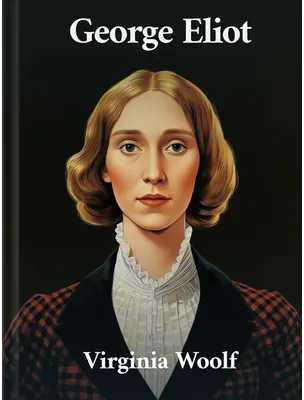
Indeed, one cannot escape the conviction that the long, heavy face with its expression of serious and sullen and almost equine power has stamped itself depressingly upon the minds of people who remember George Eliot, so that it looks out upon them from her pages. Mr. Gosse has lately described her as he saw her driving through London in a victoria —
“a large, thick-set sybil, dreamy and immobile, whose massive features, somewhat grim when seen in profile, were incongruously bordered by a hat, always in the height of Paris fashion, which in those days commonly included an immense ostrich feather.”
Lady Ritchie, with equal skill, has left a more intimate indoor portrait:
“She sat by the fire in a beautiful black satin gown, with a green shaded lamp on the table beside her, where I saw German books lying and pamphlets and ivory paper-cutters. She was very quiet and noble, with two steady little eyes and a sweet voice. As I looked I felt her to be a friend, not exactly a personal friend, but a good and benevolent impulse.”
A scrap of her talk is preserved. “We ought to respect our influence,” she said. “We know by our own experience how very much others affect our lives, and we must remember that we in turn must have the same effect upon others.” Jealously treasured, committed to memory, one can imagine recalling the scene, repeating the words, thirty years later and suddenly, for the first time, bursting into laughter.
In all these records one feels that the recorder, even when he was in the actual presence, kept his distance and kept his head, and never read the novels in later years with the light of a vivid, or puzzling, or beautiful personality dazzling in his eyes. In fiction, where so much of personality is revealed, the absence of charm is a great lack; and her critics, who have been, of course, mostly of the opposite sex, have resented, half consciously perhaps, her deficiency in a quality which is held to be supremely desirable in women. George Eliot was not charming; she was not strongly feminine; she had none of those eccentricities and inequalities of temper which give to so many artists the endearing simplicity of children. One feels that to most people, as to Lady Ritchie, she was “not exactly a personal friend, but a good and benevolent impulse”.
But if we consider these portraits more closely we shall find that they are all the portraits of an elderly celebrated woman, dressed in black satin, driving in her victoria, a woman who has been through her struggle and issued from it with a profound desire to be of use to others, but with no wish for intimacy, save with the little circle who had known her in the days of her youth. We know very little about the days of her youth; but we do know that the culture, the philosophy, the fame, and the influence were all built upon a very humble foundation — she was the grand-daughter of a carpenter.
The first volume of her life is a singularly depressing record. In it we see her raising herself with groans and struggles from the intolerable boredom of petty provincial society (her father had risen in the world and become more middle class, but less picturesque) to be the assistant editor of a highly intellectual London review, and the esteemed companion of Herbert Spencer. The stages are painful as she reveals them in the sad soliloquy in which Mr. Cross condemned her to tell the story of her life.
Marked in early youth as one “sure to get something up very soon in the way of a clothing club”, she proceeded to raise funds for restoring a church by making a chart of ecclesiastical history; and that was followed by a loss of faith which so disturbed her father that he refused to live with her. Next came the struggle with the translation of Strauss, which, dismal and “soul-stupefying” in itself, can scarcely have been made less so by the usual feminine tasks of ordering a household and nursing a dying father, and the distressing conviction, to one so dependent upon affection, that by becoming a blue-stocking she was forfeiting her brother’s respect.
“I used to go about like an owl,” she said, “to the great disgust of my brother.”
“Poor thing,” wrote a friend who saw her toiling through Strauss with a statue of the risen Christ in front of her, “I do pity her sometimes, with her pale sickly face and dreadful headaches, and anxiety, too, about her father.”
Yet, though we cannot read the story without a strong desire that the stages of her pilgrimage might have been made, if not more easy, at least more beautiful, there is a dogged determination in her advance upon the citadel of culture which raises it above our pity. Her development was very slow and very awkward, but it had the irresistible impetus behind it of a deep-seated and noble ambition. Every obstacle at length was thrust from her path. She knew every one. She read everything. Her astonishing intellectual vitality had triumphed. Youth was over, but youth had been full of suffering. Then, at the age of thirty-five, at the height of her powers, and in the fullness of her freedom, she made the decision which was of such profound moment to her and still matters even to us, and went to Weimar, alone with George Henry Lewes.
The books which followed so soon after her union testify in the fullest manner to the great liberation which had come to her with personal happiness. In themselves they provide us with a plentiful feast. Yet at the threshold of her literary career one may find in some of the circumstances of her life influences that turned her mind to the past, to the country village, to the quiet and beauty and simplicity of childish memories and away from herself and the present.
We understand how it was that her first book was Scenes of Clerical Life, and not Middlemarch. Her union with Lewes had surrounded her with affection, but in view of the circumstances and of the conventions it had also isolated her. “I wish it to be understood,” she wrote in 1857, “that I should never invite any one to come and see me who did not ask for the invitation.” She had been “cut off from what is called the world”, she said later, but she did not regret it. By becoming thus marked, first by circumstances and later, inevitably, by her fame, she lost the power to move on equal terms unnoted among her kind; and the loss for a novelist was serious.
Still, basking in the light and sunshine of Scenes of Clerical Life, feeling the large mature mind spreading itself with a luxurious sense of freedom in the world of her “remotest past”, to speak of loss seems inappropriate. Everything to such a mind was gain. All experience filtered down through layer after layer of perception and reflection, enriching and nourishing. The utmost we can say, in qualifying her attitude towards fiction by what little we know of her life, is that she had taken to heart certain lessons not usually learnt early, if learnt at all, among which, perhaps, the most branded upon her was the melancholy virtue of tolerance; her sympathies are with the everyday lot, and play most happily in dwelling upon the homespun of ordinary joys and sorrows. She has none of that romantic intensity which is connected with a sense of one’s own individuality, unsated and unsubdued, cutting its shape sharply upon the background of the world. What were the loves and sorrows of a snuffy old clergyman, dreaming over his whisky, to the fiery egotism of Jane Eyre?
The beauty of those first books, Scenes of Clerical Life, Adam Bede, The Mill on the Floss, is very great. It is impossible to estimate the merit of the Poysers, the Dodsons, the Gilfils, the Bartons, and the rest with all their surroundings and dependencies, because they have put on flesh and blood and we move among them, now bored, now sympathetic, but always with that unquestioning acceptance of all that they say and do, which we accord to the great originals only. The flood of memory and humour which she pours so spontaneously into one figure, one scene after another, until the whole fabric of ancient rural England is revived, has so much in common with a natural process that it leaves us with little consciousness that there is anything to criticise. We accept; we feel the delicious warmth and release of spirit which the great creative writers alone procure for us. As one comes back to the books after years of absence they pour out, even against our expectation, the same store of energy and heat, so that we want more than anything to idle in the warmth as in the sun beating down from the red orchard wall.
If there is an element of unthinking abandonment in thus submitting to the humours of Midland farmers and their wives, that, too, is right in the circumstances. We scarcely wish to analyse what we feel to be so large and deeply human. And when we consider how distant in time the world of Shepperton and Hayslope is, and how remote the minds of farmer and agricultural labourers from those of most of George Eliot’s readers, we can only attribute the ease and pleasure with which we ramble from house to smithy, from cottage parlour to rectory garden, to the fact that George Eliot makes us share their lives, not in a spirit of condescension or of curiosity, but in a spirit of sympathy. She is no satirist. The movement of her mind was too slow and cumbersome to lend itself to comedy. But she gathers in her large grasp a great bunch of the main elements of human nature and groups them loosely together with a tolerant and wholesome understanding which, as one finds upon re-reading, has not only kept her figures fresh and free, but has given them an unexpected hold upon our laughter and tears.
There is the famous Mrs. Poyser. It would have been easy to work her idiosyncrasies to death, and, as it is, perhaps, George Eliot gets her laugh in the same place a little too often. But memory, after the book is shut, brings out, as sometimes in real life, the details and subtleties which some more salient characteristic has prevented us from noticing at the time. We recollect that her health was not good. There were occasions upon which she said nothing at all. She was patience itself with a sick child. She doted upon Totty. Thus one can muse and speculate about the greater number of George Eliot’s characters and find, even in the least important, a roominess and margin where those qualities lurk which she has no call to bring from their obscurity.
But in the midst of all this tolerance and sympathy there are, even in the early books, moments of greater stress. Her humour has shown itself broad enough to cover a wide range of fools and failures, mothers and children, dogs and flourishing midland fields, farmers, sagacious or fuddled over their ale, horse-dealers, inn-keepers, curates, and carpenters. Over them all broods a certain romance, the only romance that George Eliot allowed herself — the romance of the past. The books are astonishingly readable and have no trace of pomposity or pretence. But to the reader who holds a large stretch of her early work in view it will become obvious that the mist of recollection gradually withdraws. It is not that her power diminishes, for, to our thinking, it is at its highest in the mature Middlemarch, the magnificent book which with all its imperfections is one of the few English novels written for grown-up people. But the world of fields and farms no longer contents her.
In real life she had sought her fortunes elsewhere; and though to look back into the past was calming and consoling, there are, even in the early works, traces of that troubled spirit, that exacting and questioning and baffled presence who was George Eliot herself. In Adam Bede there is a hint of her in Dinah. She shows herself far more openly and completely in Maggie in The Mill on the Floss. She is Janet in Janet’s Repentance, and Romola, and Dorothea seeking wisdom and finding one scarcely knows what in marriage with Ladislaw. Those who fall foul of George Eliot do so, we incline to think, on account of her heroines; and with good reason; for there is no doubt that they bring out the worst of her, lead her into difficult places, make her self-conscious, didactic, and occasionally vulgar.
Yet if you could delete the whole sisterhood you would leave a much smaller and a much inferior world, albeit a world of greater artistic perfection and far superior jollity and comfort. In accounting for her failure, in so far as it was a failure, one recollects that she never wrote a story until she was thirty-seven, and that by the time she was thirty-seven she had come to think of herself with a mixture of pain and something like resentment. For long she preferred not to think of herself at all. Then, when the first flush of creative energy was exhausted and self-confidence had come to her, she wrote more and more from the personal standpoint, but she did so without the unhesitating abandonment of the young. Her self-consciousness is always marked when her heroines say what she herself would have said. She disguised them in every possible way. She granted them beauty and wealth into the bargain; she invented, more improbably, a taste for brandy. But the disconcerting and stimulating fact remained that she was compelled by the very power of her genius to step forth in person upon the quiet bucolic scene.
The noble and beautiful girl who insisted upon being born into the Mill on the Floss is the most obvious example of the ruin which a heroine can strew about her. Humour controls her and keeps her lovable so long as she is small and can be satisfied by eloping with the gipsies or hammering nails into her doll; but she develops; and before George Eliot knows what has happened she has a full-grown woman on her hands demanding what neither gipsies nor dolls, nor St. Ogg’s itself is capable of giving her. First Philip Wakem is produced, and later Stephen Guest. The weakness of the one and the coarseness of the other have often been pointed out; but both, in their weakness and coarseness, illustrate not so much George Eliot’s inability to draw the portrait of a man, as the uncertainty, the infirmity, and the fumbling which shook her hand when she had to conceive a fit mate for a heroine.
She is in the first place driven beyond the home world she knew and loved, and forced to set foot in middle-class drawing-rooms where young men sing all the summer morning and young women sit embroidering smoking-caps for bazaars. She feels herself out of her element, as her clumsy satire of what she calls “good society” proves.
“Good society has its claret and its velvet carpets, its dinner engagements six weeks deep, its opera, and its faery ball rooms ... gets its science done by Faraday and its religion by the superior clergy who are to be met in the best houses; how should it have need of belief and emphasis?”
There is no trace of humour or insight there, but only the vindictiveness of a grudge which we feel to be personal in its origin. But terrible as the complexity of our social system is in its demands upon the sympathy and discernment of a novelist straying across the boundaries, Maggie Tulliver did worse than drag George Eliot from her natural surroundings. She insisted upon the introduction of the great emotional scene. She must love; she must despair; she must be drowned clasping her brother in her arms. The more one examines the great emotional scenes the more nervously one anticipates the brewing and gathering and thickening of the cloud which will burst upon our heads at the moment of crisis in a shower of disillusionment and verbosity.
It is partly that her hold upon dialogue, when it is not dialect, is slack; and partly that she seems to shrink with an elderly dread of fatigue from the effort of emotional concentration. She allows her heroines to talk too much. She has little verbal felicity. She lacks the unerring taste which chooses one sentence and compresses the heart of the scene within that. “Whom are you going to dance with?” asked Mr. Knightley, at the Westons’ ball. “With you, if you will ask me,” said Emma; and she has said enough. Mrs. Casaubon would have talked for an hour and we should have looked out of the window.
Yet, dismiss the heroines without sympathy, confine George Eliot to the agricultural world of her “remotest past”, and you not only diminish her greatness but lose her true flavour. That greatness is here we can have no doubt. The width of the prospect, the large strong outlines of the principal features, the ruddy light of the early books, the searching power and reflective richness of the later tempt us to linger and expatiate beyond our limits.
But it is upon the heroines that we would cast a final glance. “I have always been finding out my religion since I was a little girl,” says Dorothea Casaubon. “I used to pray so much — now I hardly ever pray. I try not to have desires merely for myself....” She is speaking for them all. That is their problem. They cannot live without religion, and they start out on the search for one when they are little girls. Each has the deep feminine passion for goodness, which makes the place where she stands in aspiration and agony the heart of the book — still and cloistered like a place of worship, but that she no longer knows to whom to pray. In learning they seek their goal; in the ordinary tasks of womanhood; in the wider service of their kind. They do not find what they seek, and we cannot wonder. The ancient consciousness of woman, charged with suffering and sensibility, and for so many ages dumb, seems in them to have brimmed and overflowed and uttered a demand for something — they scarcely know what — for something that is perhaps incompatible with the facts of human existence.
George Eliot had far too strong an intelligence to tamper with those facts, and too broad a humour to mitigate the truth because it was a stern one. Save for the supreme courage of their endeavour, the struggle ends, for her heroines, in tragedy, or in a compromise that is even more melancholy. But their story is the incomplete version of the story of George Eliot herself. For her, too, the burden and the complexity of womanhood were not enough; she must reach beyond the sanctuary and pluck for herself the strange bright fruits of art and knowledge. Clasping them as few women have ever clasped them, she would not renounce her own inheritance — the difference of view, the difference of standard — nor accept an inappropriate reward.
Thus we behold her, a memorable figure, inordinately praised and shrinking from her fame, despondent, reserved, shuddering back into the arms of love as if there alone were satisfaction and, it might be, justification, at the same time reaching out with “a fastidious yet hungry ambition” for all that life could offer the free and inquiring mind and confronting her feminine aspirations with the real world of men. Triumphant was the issue for her, whatever it may have been for her creations, and as we recollect all that she dared and achieved, how with every obstacle against her — sex and health and convention — she sought more knowledge and more freedom till the body, weighted with its double burden, sank worn out, we must lay upon her grave whatever we have it in our power to bestow of laurel and rose.