'A General View of Positivism' was published in 1848.
[{"id":"para_1","index":0,"start":0,"offset":330,"words":4,"paraNum":"","lastModified":1676904705000,"semanticType":"title-book-title","voicework":"no_audio","blockId":"a_general_view_of_positivism_ffa_en-bl2u","language":"en","wordsRange":{"start":318000000,"end":324000000},"paragraphVersion":41,"direction":"ltr","paragraph":"<h1 class=\"ilm-title\" id=\"para_1\" semantictype=\"title-book-title\" data-ilmid=\"a_general_view_of_positivism_ffa_en-bl2u\" data-chapter=\"para_1\" data-words-count=\"4\" data-before=\"0\" data-ww=\"\"><span class=\"block-pb\"> <span class=\"block-pb is-animated\"></span> </span><span class=\"itm-wrap\">A General View of<br>Positivism</span></h1>","hasContent":true,"isFirst":true,"isLast":false},{"id":"para_2","index":1,"start":330,"offset":351,"words":2,"paraNum":"","lastModified":1676904959000,"semanticType":"title-author","voicework":"no_audio","blockId":"a_general_view_of_positivism_ffa_en-bl2x","language":"en","wordsRange":{"start":632000000,"end":652000000},"paragraphVersion":51,"direction":"ltr","paragraph":"<h1 class=\"ilm-title ilm-author ilm-x-large ilm-nopad\" id=\"para_2\" semantictype=\"title-author\" data-ilmid=\"a_general_view_of_positivism_ffa_en-bl2x\" data-chapter=\"para_2\" data-words-count=\"2\" data-before=\"4\" data-ww=\"\"><span class=\"block-pb\"> <span class=\"block-pb is-animated\"></span> </span><span class=\"itm-wrap\">by<br>Auguste Comte<br></span></h1>","hasContent":true,"isFirst":false,"isLast":false},{"id":"para_3","index":2,"start":681,"offset":359,"words":7,"paraNum":"","lastModified":1676905132000,"semanticType":"title-translator","voicework":"no_audio","blockId":"a_general_view_of_positivism_ffa_en-blqh","language":"en","wordsRange":{"start":685333333,"end":718666667},"paragraphVersion":46,"direction":"ltr","paragraph":"<h1 class=\"ilm-title ilm-translator ilm-x-small\" id=\"para_3\" semantictype=\"title-translator\" data-ilmid=\"a_general_view_of_positivism_ffa_en-blqh\" data-chapter=\"para_3\" data-words-count=\"7\" data-before=\"6\" data-ww=\"\"><span class=\"block-pb\"> <span class=\"block-pb is-animated\"></span> </span><span class=\"itm-wrap\">Translated by J. H. Bridges, M.B.</span></h1>","hasContent":true,"isFirst":false,"isLast":false},{"id":"para_4","index":3,"start":1040,"offset":164,"words":0,"paraNum":"","lastModified":1676905419000,"semanticType":"line","blockId":"a_general_view_of_positivism_ffa_en-blqi","language":"en","wordsRange":{"start":770444445,"end":822222222},"paragraphVersion":48,"direction":"ltr","paragraph":"<hr class=\"ilm-hr ilm-small\" id=\"para_4\" semantictype=\"line\" data-ilmid=\"a_general_view_of_positivism_ffa_en-blqi\" data-words-count=\"0\" data-before=\"13\" data-ww=\"\">","hasContent":true,"isFirst":false,"isLast":false},{"id":"para_5","index":4,"start":1204,"offset":955,"words":0,"paraNum":"","lastModified":1677577061000,"semanticType":"illustration","blockId":"a_general_view_of_positivism_ffa_en-blqn","language":"en","wordsRange":{"start":1468148148,"end":2114074074},"paragraphVersion":29,"direction":"ltr","paragraph":"<div class=\"ilm-illustration\" id=\"para_5\" semantictype=\"illustration\" data-ilmid=\"a_general_view_of_positivism_ffa_en-blqn\" data-words-count=\"0\" data-before=\"13\" data-ww=\"\"><img width=\"467\" height=\"600\" data-src=\"ch0p0\" src=\"data:image/webp;base64,UklGRuoBAABXRUJQVlA4IN4BAAAwCgCdASovADwAPmkokUWkIqGaqwYAQAaEtIACiNd6WY2s1JsXIfpCYK3tAeuT9Heh3yj5KbWkADRY5v22iSj+tLG6IjnnOXOVGq+wzPYZ/zV4tudtH943AAAA/v6ULDguBKVhJ2LPppUHFwVrg74fwOLI/PuKPGfrCjX1cYVPGofe58wOOCsX9Dqhr9i/BAUEQjEmeF1MStLqcfh1FyBUw5S+/B9xoCv7n4w5Q1lW75tDp/dK3jCH6+DeDb/A3drsiL9tgd6+4/CZdWzTK5AQent5eA/+8HB/QKb284GdebhGBm22heh9NDQR5TZXRYygeud03umUSczF8XqRv7QwQGt1SgRjElxTdte6DzyexKJmdrbT5OnoZt8WBRp70XwHzsLCayFdrlIr/91/sJTq/2euPJ4h4ktVhnCxvoPRYWcelowWjLg7XTlivUW6MZSdbcJ3XOVPrPhrC/0vuZpIcmWSkEe0tWWFngq1DvDyUlwnElLh0QQgkjc7ziM3zF6b495LGov3Ic0d4LyKTzPppmAVQt721AsiDNzKPgXev2G3FCDTRaTjZgBTPVC3HUsKlCvzZgfrEY/nL0uf+EPYrcedc5fU+g7zJ1O3Z/sg+i4FJqRTxzS2CxKjmoAA\" alt=\"A General View of Positivism\"></div>","hasContent":true,"isFirst":false,"isLast":false},{"id":"para_6","index":5,"start":2159,"offset":348,"words":3,"paraNum":"","lastModified":1676966906000,"semanticType":"header-subheader","voicework":"no_audio","blockId":"a_general_view_of_positivism_ffa_en-bl3g","language":"en","wordsRange":{"start":2760000000,"end":2765000000},"paragraphVersion":52,"direction":"ltr","paragraph":"<h3 class=\"ilm-header ilm-h3\" id=\"para_6\" semantictype=\"header-subheader\" data-ilmid=\"a_general_view_of_positivism_ffa_en-bl3g\" data-chapter=\"para_6\" data-words-count=\"3\" data-before=\"13\" data-ww=\"\"><span class=\"block-pb\"> <span class=\"block-pb is-animated\"></span> </span><span class=\"itm-wrap\">Introduction<br>by Frederic Harrison<br></span></h3>","hasContent":true,"isFirst":false,"isLast":false},{"id":"para_7","index":6,"start":2507,"offset":1448,"words":187,"paraNum":"i.1","lastModified":1677554007000,"semanticType":"par","voicework":"no_audio","blockId":"a_general_view_of_positivism_ffa_en-bl3h","language":"en","wordsRange":{"start":2865000000,"end":3056000000},"paragraphVersion":59,"direction":"ltr","paragraph":"<p id=\"para_7\" semantictype=\"par\" data-ilmid=\"a_general_view_of_positivism_ffa_en-bl3h\" data-words-count=\"187\" data-before=\"16\" data-ww=\"\"><span class=\"block-num\" data-id=\"i.1\"></span><span class=\"block-pb\"> <span class=\"block-pb is-animated\"></span> </span><span class=\"itm-wrap\">Although Positivism has been pretty widely discussed of late, not only by those interested in philosophy and religion, but by the general reader and the public press, perhaps but few of them, whether readers or critics, have exactly grasped the full meaning of it as a system at once of thought and of life. The vast range of the ground it covers and the technical, allusive, and close style of Comte’s writings in the original have made it difficult to master the subject as a whole. It has accordingly been thought that the time has come to add to the ‘New Universal Library’ a translation of <i>The </i><i>General </i><i>View </i><i>of </i><i>Positivism</i>, i.e., the careful summary of the <i>Positive</i> <span data-pg=\"viii\"></span> <i>Polity</i> which Auguste Comte prefixed to the four volumes of his principal work. The translation which was published by Dr. J. H. Bridges in 1865 is at the same time a most accurate version by one of Comte’s earliest followers, and also it is turned in an easy and simpler style, with the references and allusions explained, marginal headings to the paragraphs, and a complete analysis of the contents.</span></p>","hasContent":true,"isFirst":false,"isLast":false},{"id":"para_8","index":7,"start":3955,"offset":856,"words":84,"paraNum":"i.2","lastModified":1677553981000,"semanticType":"par","voicework":"no_audio","blockId":"a_general_view_of_positivism_ffa_en-bl3i","language":"en","wordsRange":{"start":3156000000,"end":3243000000},"paragraphVersion":46,"direction":"ltr","paragraph":"<p id=\"para_8\" semantictype=\"par\" data-ilmid=\"a_general_view_of_positivism_ffa_en-bl3i\" data-words-count=\"84\" data-before=\"203\" data-ww=\"\"><span class=\"block-num\" data-id=\"i.2\"></span><span class=\"block-pb\"> <span class=\"block-pb is-animated\"></span> </span><span class=\"itm-wrap\">Positivism is not simply a system of Philosophy; nor is it simply a new form of Religion; nor is it simply a scheme of social regeneration. It partakes of all of these, and professes to harmonize them under one dominant conception that is equally philosophic and social. ‘Its primary object,’ writes Comte, ‘is twofold: to generalize our scientific conceptions and to systematize the art of social life.’ Accordingly Comte’s ideal embraces the three main elements of<span data-pg=\"ix\"></span> which human life consists — Thoughts, Feelings and Actions.</span></p>","hasContent":true,"isFirst":false,"isLast":false},{"id":"para_9","index":8,"start":4811,"offset":757,"words":79,"paraNum":"i.3","lastModified":1677553981000,"semanticType":"par","voicework":"no_audio","blockId":"a_general_view_of_positivism_ffa_en-bl3j","language":"en","wordsRange":{"start":3343000000,"end":3423000000},"paragraphVersion":46,"direction":"ltr","paragraph":"<p id=\"para_9\" semantictype=\"par\" data-ilmid=\"a_general_view_of_positivism_ffa_en-bl3j\" data-words-count=\"79\" data-before=\"287\" data-ww=\"\"><span class=\"block-num\" data-id=\"i.3\"></span><span class=\"block-pb\"> <span class=\"block-pb is-animated\"></span> </span><span class=\"itm-wrap\">Now it is clear that no such comprehensive system was ever before offered to the world. Neither the Gospel nor any known type of religion undertook to give a synthetic grouping of the Sciences. No synthetic scheme of philosophy ever attempted to correlate religion, politics, art, and industry. No system of Socialism, ancient or modern, started with mathematics and led up to an ideal of a human devotion to duty, with a ritual of worship, both public and private.</span></p>","hasContent":true,"isFirst":false,"isLast":false},{"id":"para_10","index":9,"start":5568,"offset":1520,"words":185,"paraNum":"i.4","lastModified":1677553981000,"semanticType":"par","voicework":"no_audio","blockId":"a_general_view_of_positivism_ffa_en-bl3k","language":"en","wordsRange":{"start":3523000000,"end":3711000000},"paragraphVersion":50,"direction":"ltr","paragraph":"<p id=\"para_10\" semantictype=\"par\" data-ilmid=\"a_general_view_of_positivism_ffa_en-bl3k\" data-words-count=\"185\" data-before=\"366\" data-ww=\"\"><span class=\"block-num\" data-id=\"i.4\"></span><span class=\"block-pb\"> <span class=\"block-pb is-animated\"></span> </span><span class=\"itm-wrap\">Now Comte’s famous <i>Positive </i><i>Polity</i> did attempt this gigantic task. And the novelty and extent of such a work explains and accounts for the extreme difficulty met with by readers of the original French, and also for the fascination which it has maintained more than fifty years after the author’s death. It has been talked about,<span data-pg=\"x\"></span> criticized, and even ridiculed, with an ignorance of its true character which can only be excused by the abstract and severe form in which Comte thought right to condense his thoughts. Comte was primarily a mathematician, and neither Descartes nor Newton troubled themselves about ‘the general reader’. Kepler, they say, declared himself satisfied if he had one convert in a century; and philosophers have seldom had justice done them until some generations have passed. The difficulties presented by the scientific form of Comte’s works have been obviated for English readers by the versions of his English followers, which are at once literal translations, analyses, and elucidations. For the ‘general reader’ nothing could be more serviceable than Bridges’ clear presentation of Comte’s own ‘general view’, or summary of his system.</span></p>","hasContent":true,"isFirst":false,"isLast":false},{"id":"para_11","index":10,"start":7088,"offset":1197,"words":145,"paraNum":"i.5","lastModified":1677553981000,"semanticType":"par","voicework":"no_audio","blockId":"a_general_view_of_positivism_ffa_en-bl3l","language":"en","wordsRange":{"start":3811000000,"end":3955000000},"paragraphVersion":46,"direction":"ltr","paragraph":"<p id=\"para_11\" semantictype=\"par\" data-ilmid=\"a_general_view_of_positivism_ffa_en-bl3l\" data-words-count=\"145\" data-before=\"551\" data-ww=\"\"><span class=\"block-num\" data-id=\"i.5\"></span><span class=\"block-pb\"> <span class=\"block-pb is-animated\"></span> </span><span class=\"itm-wrap\">The translation itself is a literary<span data-pg=\"xi\"></span> masterpiece. It renders an extremely abstract and complex French type of philosophical dogmatism into easy and simple English, whilst at the same time preserving and even elucidating the somewhat cryptic allusions and nuances of the original. The thought in the French is full, pregnant, and suggestive, at once subtle and abstract, and rich with words of a new coinage — such as altruism, sociology, dynamics (i.e., history), and old words used in a special sense. This difficulty Dr. Bridges surmounts by breaking up the involved sentences, supplying names and facts indirectly referred to, and by transferring technical language into popular English. The success of the translation has been proved by the thousands of copies sold in the original 12mo edition of 1865, in the 8vo edition of 1875, and in the stereotyped reprint of 1881.</span></p>","hasContent":true,"isFirst":false,"isLast":false},{"id":"para_12","index":11,"start":8285,"offset":864,"words":94,"paraNum":"i.6","lastModified":1677553981000,"semanticType":"par","voicework":"no_audio","blockId":"a_general_view_of_positivism_ffa_en-bl3m","language":"en","wordsRange":{"start":4055000000,"end":4152000000},"paragraphVersion":46,"direction":"ltr","paragraph":"<p id=\"para_12\" semantictype=\"par\" data-ilmid=\"a_general_view_of_positivism_ffa_en-bl3m\" data-words-count=\"94\" data-before=\"696\" data-ww=\"\"><span class=\"block-num\" data-id=\"i.6\"></span><span class=\"block-pb\"> <span class=\"block-pb is-animated\"></span> </span><span class=\"itm-wrap\">A pathetic interest attaches to the<span data-pg=\"xii\"></span> history of the translation. In 1860 Dr. Bridges, just settled as a physician in Melbourne, lost his young wife by fever. He at once returned to England, bringing the remains of his wife for interment in the family graveyard in Suffolk. In those days of sailing vessels the voyage home round Cape Horn occupied at least three months. Dr. Bridges resolved to conquer his sorrow, shut himself in his cabin during the voyage home and completed the translation (in 430 pages of print) within the time at sea: — </span></p>","hasContent":true,"isFirst":false,"isLast":false},{"id":"para_13","index":12,"start":9149,"offset":389,"words":9,"paraNum":"i.7","lastModified":1677553981000,"semanticType":"par","voicework":"no_audio","blockId":"a_general_view_of_positivism_ffa_en-bl3n","language":"en","wordsRange":{"start":4252000000,"end":4262000000},"paragraphVersion":50,"direction":"ltr","paragraph":"<p class=\"ilm-verse ilm-center\" id=\"para_13\" semantictype=\"par\" data-ilmid=\"a_general_view_of_positivism_ffa_en-bl3n\" data-words-count=\"9\" data-before=\"790\" data-ww=\"\"><span class=\"block-num\" data-id=\"i.7\"></span><span class=\"block-pb\"> <span class=\"block-pb is-animated\"></span> </span><span class=\"itm-wrap\">The sad mechanic exercise,<br>Like dull narcotics, numbing pain.<br></span></p>","hasContent":true,"isFirst":false,"isLast":false},{"id":"para_14","index":13,"start":9538,"offset":1133,"words":133,"paraNum":"i.8","lastModified":1677553981000,"semanticType":"par","voicework":"no_audio","blockId":"a_general_view_of_positivism_ffa_en-bl3o","language":"en","wordsRange":{"start":4362000000,"end":4498000000},"paragraphVersion":48,"direction":"ltr","paragraph":"<p id=\"para_14\" semantictype=\"par\" data-ilmid=\"a_general_view_of_positivism_ffa_en-bl3o\" data-words-count=\"133\" data-before=\"799\" data-ww=\"\"><span class=\"block-num\" data-id=\"i.8\"></span><span class=\"block-pb\"> <span class=\"block-pb is-animated\"></span> </span><span class=\"itm-wrap\">Auguste Comte always spoke of the Positive Polity as ‘his principal work’. The <i>Discours </i><i>sur </i><i>l’Ensemble, </i><i>or </i><i>General </i><i>View </i><i>of </i><i>Positivism</i>, formed the introduction to the four volumes. It forms a summary of the entire work, and it is indeed a systematic application of<span data-pg=\"xiii\"></span> the doctrine to the actual condition of society. As the Polity, taken as a whole, professes to embody a set of doctrines for the regulation of thought and life, the present Introduction is designed to show the need of such a body of doctrine, the result that they would produce, and the mode in which they are likely to work. Thus, one who desires to see in one view the social purpose which Positivism proposes to effect would find it in no single volume better than in this treatise.</span></p>","hasContent":true,"isFirst":false,"isLast":false},{"id":"para_15","index":14,"start":10671,"offset":1389,"words":178,"paraNum":"i.9","lastModified":1677553981000,"semanticType":"par","voicework":"no_audio","blockId":"a_general_view_of_positivism_ffa_en-bl3p","language":"en","wordsRange":{"start":4598000000,"end":4778000000},"paragraphVersion":46,"direction":"ltr","paragraph":"<p id=\"para_15\" semantictype=\"par\" data-ilmid=\"a_general_view_of_positivism_ffa_en-bl3p\" data-words-count=\"178\" data-before=\"932\" data-ww=\"\"><span class=\"block-num\" data-id=\"i.9\"></span><span class=\"block-pb\"> <span class=\"block-pb is-animated\"></span> </span><span class=\"itm-wrap\">The work consists of six chapters, treating Positivism respectively in its intellectual aspect, its social aspect, its influence on the working classes, on women, on art, and on religion. In other words it illustrates the application of the system to Philosophy, Politics, Industry, The Family, Poetry and The Future. It opens with a comparison of Positivist doctrines with those of the leading extant philosophies.<span data-pg=\"xiv\"></span> It closes with a picture of society should those doctrines be realized. It is thus both a criticism of current theories, and an utopia of a possible Future. Of the intermediate chapters, the first deals with the principal changes proposed in our actual political system: the next chapter deals with the changes proposed in our present social system. Then come the last two chapters, dealing with the principal agents, Art, Poetry and Religion, by which those changes may be promoted. The book is therefore a practical introduction to the subject as a whole; for it sets forth the aim of Positivism as a system, and then how it seeks to effect that aim.</span></p>","hasContent":true,"isFirst":false,"isLast":false},{"id":"para_16","index":15,"start":12060,"offset":167,"words":0,"paraNum":"","lastModified":1670924316000,"semanticType":"line","blockId":"a_general_view_of_positivism_ffa_en-bl3q","language":"en","wordsRange":{"start":4878000000,"end":4880000000},"paragraphVersion":48,"direction":"ltr","paragraph":"<hr class=\"ilm-hr ilm-small\" id=\"para_16\" semantictype=\"line\" data-ilmid=\"a_general_view_of_positivism_ffa_en-bl3q\" data-words-count=\"0\" data-before=\"1110\" data-ww=\"\">","hasContent":true,"isFirst":false,"isLast":false},{"id":"para_17","index":16,"start":12227,"offset":340,"words":5,"paraNum":"","lastModified":1676966930000,"semanticType":"header-subheader","voicework":"no_audio","blockId":"a_general_view_of_positivism_ffa_en-bl49","language":"en","wordsRange":{"start":8823000000,"end":8829000000},"paragraphVersion":60,"direction":"ltr","paragraph":"<h3 class=\"ilm-header ilm-h3\" id=\"para_17\" semantictype=\"header-subheader\" data-ilmid=\"a_general_view_of_positivism_ffa_en-bl49\" data-chapter=\"para_17\" data-words-count=\"5\" data-before=\"1110\" data-ww=\"\"><span class=\"block-pb\"> <span class=\"block-pb is-animated\"></span> </span><span class=\"itm-wrap\">A General View of Positivism</span></h3>","hasContent":true,"isFirst":false,"isLast":false},{"id":"para_18","index":17,"start":12567,"offset":338,"words":13,"paraNum":"","lastModified":1676966944000,"semanticType":"par","voicework":"no_audio","blockId":"a_general_view_of_positivism_ffa_en-bl4a","language":"en","wordsRange":{"start":8929000000,"end":8943000000},"paragraphVersion":55,"direction":"ltr","paragraph":"<p class=\"ilm-center\" id=\"para_18\" semantictype=\"par\" data-ilmid=\"a_general_view_of_positivism_ffa_en-bl4a\" data-words-count=\"13\" data-before=\"1115\" data-ww=\"\"><span class=\"block-pb\"> <span class=\"block-pb is-animated\"></span> </span><span class=\"itm-wrap\">‘We tire of thinking and even of acting; we never tire of loving.’</span></p>","hasContent":true,"isFirst":false,"isLast":false},{"id":"para_19","index":18,"start":12905,"offset":898,"words":102,"paraNum":"","lastModified":1676966945000,"semanticType":"par","voicework":"no_audio","blockId":"a_general_view_of_positivism_ffa_en-bl4b","language":"en","wordsRange":{"start":9043000000,"end":9146000000},"paragraphVersion":51,"direction":"ltr","paragraph":"<p id=\"para_19\" semantictype=\"par\" data-ilmid=\"a_general_view_of_positivism_ffa_en-bl4b\" data-words-count=\"102\" data-before=\"1128\" data-ww=\"\"><span class=\"block-pb\"> <span class=\"block-pb is-animated\"></span> </span><span class=\"itm-wrap\">In the following series of systematic essays upon Positivism the essential principles of the doctrine are first considered; I then point out the agencies by which its propagation will be effected; and I conclude by describing certain additional features indispensable to its completeness. My treatment of these questions will of course be summary; yet it will suffice, I hope, to overcome several excusable but unfounded prejudices. It will enable any competent reader to assure himself that the new general doctrine aims at something more than satisfying the Intellect; that it is in reality quite as favourable to Feeling and even to Imagination.</span></p>","hasContent":true,"isFirst":false,"isLast":false},{"id":"para_20","index":19,"start":13803,"offset":167,"words":0,"paraNum":"","lastModified":1676907922000,"semanticType":"line","blockId":"a_general_view_of_positivism_ffa_en-blqk","language":"en","wordsRange":{"start":9179333333,"end":9212666667},"paragraphVersion":35,"direction":"ltr","paragraph":"<hr class=\"ilm-hr ilm-small\" id=\"para_20\" semantictype=\"line\" data-ilmid=\"a_general_view_of_positivism_ffa_en-blqk\" data-words-count=\"0\" data-before=\"1230\" data-ww=\"\">","hasContent":true,"isFirst":false,"isLast":false},{"id":"para_21","index":20,"start":13970,"offset":332,"words":2,"paraNum":"","lastModified":1677556439000,"semanticType":"header-subheader","voicework":"no_audio","blockId":"a_general_view_of_positivism_ffa_en-bl4c","language":"en","wordsRange":{"start":9246000000,"end":9249000000},"paragraphVersion":49,"direction":"ltr","paragraph":"<h3 class=\"ilm-header ilm-h3\" id=\"para_21\" semantictype=\"header-subheader\" data-ilmid=\"a_general_view_of_positivism_ffa_en-bl4c\" data-chapter=\"para_21\" data-words-count=\"2\" data-before=\"1230\" data-ww=\"\"><span class=\"block-pb\"> <span class=\"block-pb is-animated\"></span> </span><span class=\"itm-wrap\">Introductory Remarks</span></h3>","hasContent":true,"isFirst":false,"isLast":false},{"id":"para_22","index":21,"start":14302,"offset":3354,"words":373,"paraNum":"i.2.1","lastModified":1677738077000,"semanticType":"par","voicework":"no_audio","blockId":"a_general_view_of_positivism_ffa_en-bl4d","language":"en","wordsRange":{"start":9349000000,"end":9728000000},"paragraphVersion":61,"direction":"ltr","paragraph":"<p id=\"para_22\" semantictype=\"par\" data-ilmid=\"a_general_view_of_positivism_ffa_en-bl4d\" data-words-count=\"373\" data-before=\"1232\" data-ww=\"\"><span class=\"block-num\" data-id=\"i.2.1\"></span><span class=\"block-pb\"> <span class=\"block-pb is-animated\"></span> </span><span class=\"itm-wrap\">Positivism consists essentially of a Philosophy and a Polity. These can never be dissevered; the former being the basis, and the latter the end of one comprehensive system, in which our intellectual faculties and our social sympathies are brought into close correlation with each other. For, in the first place, the science of Society, besides being more important than any other, supplies<span data-pg=\"2\"></span> the only logical and scientific link by which all our varied observations of phenomena can be brought into one consistent whole<span class=\"intricate-word\"><span class=\"-nowrap-content\"><a data-fnid=\"1\" epub:type=\"noteref\" href=\"#n0\" class=\"space\"></a> . </span></span>Of this science it is even more true than of any of the preceding sciences, that its real character cannot be understood without explaining its exact relation in all general features with the art corresponding to it. Now here we find a coincidence which is assuredly not fortuitous. At the very time when the theory of society is being laid down, an immense sphere is opened for the application of that theory; the direction, namely, of the social regeneration of Western Europe. For, if we take another point of view, and look at the great crisis of modern history, as its character is displayed in the natural course of events, it becomes every day more evident how hopeless is the task of reconstructing political institutions without the previous remodelling of opinion and of life. To form then a satisfactory synthesis of all human conceptions is the most urgent of our social wants: and it is needed equally for the sake of Order and of Progress. During the gradual accomplishment of this great philosophical work, a new moral power will arise spontaneously throughout the West, which, as its influence increases, will lay down a definite basis for the reorganization of society. It will offer a general system of education for the adoption of all civilized nations, and by this means will supply in every department of public and<span data-pg=\"3\"></span> private life fixed principles of judgment and of conduct. Thus the intellectual movement and the social crisis will be brought continually into close connexion with each other. Both will combine to prepare the advanced portion of humanity for the acceptance of a true spiritual power, a power more coherent, as well as more progressive, than the noble but premature attempt of mediaeval Catholicism.</span></p><aside id=\"n0\" data-audio=\"0\" data-fnid=\"1\" class=\"bh-fn\" epub:type=\"footnote\" data-ww=\"\"><span>The establishment of this great principle is the most important result of my System of Positive Philosophy. This work was published 1830–1842, with the title of <i>Course of Positive Philosophy</i>, because it was based upon a course of lectures delivered 1826–1829. But since that time I have always given it the more appropriate name of System. Should the work reach a second edition, the correction will be made formally: meanwhile, this will, I hope, remove all misconception on the subject.</span></aside>","hasContent":true,"isFirst":false,"isLast":false},{"id":"para_23","index":22,"start":17656,"offset":785,"words":83,"paraNum":"i.2.2","lastModified":1676966926000,"semanticType":"par","voicework":"no_audio","blockId":"a_general_view_of_positivism_ffa_en-bl4e","language":"en","wordsRange":{"start":9828000000,"end":9912000000},"paragraphVersion":52,"direction":"ltr","paragraph":"<p id=\"para_23\" semantictype=\"par\" data-ilmid=\"a_general_view_of_positivism_ffa_en-bl4e\" data-words-count=\"83\" data-before=\"1605\" data-ww=\"\"><span class=\"block-num\" data-id=\"i.2.2\"></span><span class=\"block-pb\"> <span class=\"block-pb is-animated\"></span> </span><span class=\"itm-wrap\">The primary object, then, of Positivism is two-fold: to generalize our scientific conceptions, and to systematize the art of social life. These are but two aspects of one and the same problem. They will form the subjects of the two first chapters of this work. I shall first explain the general spirit of the new philosophy. I shall then show its necessary connexion with the whole course of that vast revolution which is now about to terminate under its guidance in social reconstruction.</span></p>","hasContent":true,"isFirst":false,"isLast":false},{"id":"para_24","index":23,"start":18441,"offset":958,"words":105,"paraNum":"i.2.3","lastModified":1676966926000,"semanticType":"par","voicework":"no_audio","blockId":"a_general_view_of_positivism_ffa_en-bl4f","language":"en","wordsRange":{"start":10012000000,"end":10118000000},"paragraphVersion":52,"direction":"ltr","paragraph":"<p id=\"para_24\" semantictype=\"par\" data-ilmid=\"a_general_view_of_positivism_ffa_en-bl4f\" data-words-count=\"105\" data-before=\"1688\" data-ww=\"\"><span class=\"block-num\" data-id=\"i.2.3\"></span><span class=\"block-pb\"> <span class=\"block-pb is-animated\"></span> </span><span class=\"itm-wrap\">This will lead us naturally to another question. The regenerating doctrine cannot do its work without adherents; in what quarter should we hope to find them? Now, with individual exceptions of great value, we cannot expect the adhesion of any of the upper classes in society. They are all more or less under the influence of baseless metaphysical theories, and of aristocratic self-seeking. They are absorbed in blind political agitation and in disputes for the possession of the useless remnants of the old theological and military system. Their action only tends to prolong the revolutionary state indefinitely, and can never result in true social renovation.</span></p>","hasContent":true,"isFirst":false,"isLast":false},{"id":"para_25","index":24,"start":19399,"offset":1377,"words":174,"paraNum":"i.2.4","lastModified":1676966926000,"semanticType":"par","voicework":"no_audio","blockId":"a_general_view_of_positivism_ffa_en-bl4g","language":"en","wordsRange":{"start":10218000000,"end":10395000000},"paragraphVersion":52,"direction":"ltr","paragraph":"<p id=\"para_25\" semantictype=\"par\" data-ilmid=\"a_general_view_of_positivism_ffa_en-bl4g\" data-words-count=\"174\" data-before=\"1793\" data-ww=\"\"><span class=\"block-num\" data-id=\"i.2.4\"></span><span class=\"block-pb\"> <span class=\"block-pb is-animated\"></span> </span><span class=\"itm-wrap\">Whether we regard its intellectual character or its social objects, it is certain that Positivism must look elsewhere for support. It will find a welcome in those classes only whose good sense has been left unimpaired by our vicious system<span data-pg=\"4\"></span> of education, and whose generous sympathies are allowed to develop themselves freely. It is among women, therefore, and among the working classes that the heartiest supporters of the new doctrine will be found. It is intended, indeed, ultimately for all classes of society. But it will never gain much real influence over the higher ranks till it is forced upon their notice by these powerful patrons. When the work of spiritual reorganization is completed, it is on them that its maintenance will principally depend; and so too, their combined aid is necessary for its commencement. Having but little influence in political government, they are the more likely to appreciate the need of a moral government, the special object of which it will be to protect them against the oppressive action of the temporal power.</span></p>","hasContent":true,"isFirst":false,"isLast":false},{"id":"para_26","index":25,"start":20776,"offset":758,"words":78,"paraNum":"i.2.5","lastModified":1676966926000,"semanticType":"par","voicework":"no_audio","blockId":"a_general_view_of_positivism_ffa_en-bl4h","language":"en","wordsRange":{"start":10495000000,"end":10574000000},"paragraphVersion":52,"direction":"ltr","paragraph":"<p id=\"para_26\" semantictype=\"par\" data-ilmid=\"a_general_view_of_positivism_ffa_en-bl4h\" data-words-count=\"78\" data-before=\"1967\" data-ww=\"\"><span class=\"block-num\" data-id=\"i.2.5\"></span><span class=\"block-pb\"> <span class=\"block-pb is-animated\"></span> </span><span class=\"itm-wrap\">In the third chapter, therefore, I shall explain the mode in which philosophers and working men will co-operate. Both have been prepared for this coalition by the general course which modern history has taken, and it offers now the only hope we have of really decisive action. We shall find that the efforts of Positivism to regulate and develop the natural tendencies of the people, make it, even from the intellectual point of view, more coherent and complete.</span></p>","hasContent":true,"isFirst":false,"isLast":false},{"id":"para_27","index":26,"start":21534,"offset":1087,"words":125,"paraNum":"i.2.6","lastModified":1676966926000,"semanticType":"par","voicework":"no_audio","blockId":"a_general_view_of_positivism_ffa_en-bl4i","language":"en","wordsRange":{"start":10674000000,"end":10802000000},"paragraphVersion":52,"direction":"ltr","paragraph":"<p id=\"para_27\" semantictype=\"par\" data-ilmid=\"a_general_view_of_positivism_ffa_en-bl4i\" data-words-count=\"125\" data-before=\"2045\" data-ww=\"\"><span class=\"block-num\" data-id=\"i.2.6\"></span><span class=\"block-pb\"> <span class=\"block-pb is-animated\"></span> </span><span class=\"itm-wrap\">But there is another and a more unexpected source from which Positivism will obtain support; and not till then will its true character and the full extent of its constructive power be appreciated. I shall show in the fourth chapter how eminently calculated is the Positive doctrine to raise and regulate the social condition of women. It is from the feminine aspect only that human life, whether individually or collectively considered, can really be comprehended as a whole. For the only basis on which a system really embracing all the<span data-pg=\"5\"></span> requirements of life can be formed, is the subordination of intellect to social feeling: a subordination which we find directly represented in the womanly type of character, whether regarded in its personal or social relations.</span></p>","hasContent":true,"isFirst":false,"isLast":false},{"id":"para_28","index":27,"start":22621,"offset":1015,"words":120,"paraNum":"i.2.7","lastModified":1676966926000,"semanticType":"par","voicework":"no_audio","blockId":"a_general_view_of_positivism_ffa_en-bl4j","language":"en","wordsRange":{"start":10902000000,"end":11023000000},"paragraphVersion":52,"direction":"ltr","paragraph":"<p id=\"para_28\" semantictype=\"par\" data-ilmid=\"a_general_view_of_positivism_ffa_en-bl4j\" data-words-count=\"120\" data-before=\"2170\" data-ww=\"\"><span class=\"block-num\" data-id=\"i.2.7\"></span><span class=\"block-pb\"> <span class=\"block-pb is-animated\"></span> </span><span class=\"itm-wrap\">Although these questions cannot be treated fully in the present work, I hope to convince my readers that Positivism is more in accordance with the spontaneous tendencies of the people and of women than Catholicism, and is therefore better qualified to institute a spiritual power. It should be observed that the ground on which the support of both these classes is obtained is, that Positivism is the only system which can supersede the various subversive schemes that are growing every day more dangerous to all the relations of domestic and social life. Yet the tendency of the doctrine is to elevate the character of both of these classes; and it gives a most energetic sanction to all their legitimate aspirations.</span></p>","hasContent":true,"isFirst":false,"isLast":false},{"id":"para_29","index":28,"start":23636,"offset":2692,"words":405,"paraNum":"i.2.8","lastModified":1676966926000,"semanticType":"par","voicework":"no_audio","blockId":"a_general_view_of_positivism_ffa_en-bl4k","language":"en","wordsRange":{"start":11123000000,"end":11531000000},"paragraphVersion":52,"direction":"ltr","paragraph":"<p id=\"para_29\" semantictype=\"par\" data-ilmid=\"a_general_view_of_positivism_ffa_en-bl4k\" data-words-count=\"405\" data-before=\"2290\" data-ww=\"\"><span class=\"block-num\" data-id=\"i.2.8\"></span><span class=\"block-pb\"> <span class=\"block-pb is-animated\"></span> </span><span class=\"itm-wrap\">Thus it is that a philosophy originating in speculations of the most abstract character, is found applicable not merely to every department of practical life, but also to the sphere of our moral nature. But to complete the proof of its universality I have still to speak of another very essential feature. I shall show, in spite of prejudices which exist very naturally on this point, that Positivism is eminently calculated to call the Imaginative faculties into exercise. It is by these faculties that the unity of human nature is most distinctly represented: they are themselves intellectual, but their field lies principally in our moral nature, and the result of their operation is to influence the active powers. The subject of women treated in the fourth chapter, will lead me by a natural transition to speak in the fifth of the Esthetic aspects of Positivism. I<span data-pg=\"6\"></span> shall attempt to show that the new doctrine by the very fact of embracing the whole range of human relations in the spirit of reality, discloses the true theory of Art, which has hitherto been so great a deficiency in our speculative conceptions. The principle of the theory is that, in co-ordinating the primary functions of humanity, Positivism places the Idealities of the poet midway between the Ideas of the philosopher and the Realities of the statesman. We see from this theory how it is that the poetical power of Positivism cannot be manifested at present. We must wait until moral and mental regeneration has advanced far enough to awaken the sympathies which naturally belong to it, and on which Art in its renewed state must depend for the future. The first mental and social shock once passed, Poetry will at last take her proper rank. She will lead Humanity onward towards a future which is now no longer vague and visionary, while at the same time she enables us to pay due honour to all phases of the past. The great object which Positivism sets before us individually and socially, is the endeavour to become more perfect. The highest importance is attached therefore to the imaginative faculties, because in every sphere with which they deal they stimulate the sense of perfection. Limited as my explanations in this work must be, I shall be able to show that Positivism, while opening out a new and wide field for art, supplies in the same spontaneous way new means of expression.</span></p>","hasContent":true,"isFirst":false,"isLast":false},{"id":"para_30","index":29,"start":26328,"offset":1513,"words":203,"paraNum":"i.2.9","lastModified":1676966926000,"semanticType":"par","voicework":"no_audio","blockId":"a_general_view_of_positivism_ffa_en-bl4l","language":"en","wordsRange":{"start":11631000000,"end":11837000000},"paragraphVersion":52,"direction":"ltr","paragraph":"<p id=\"para_30\" semantictype=\"par\" data-ilmid=\"a_general_view_of_positivism_ffa_en-bl4l\" data-words-count=\"203\" data-before=\"2695\" data-ww=\"\"><span class=\"block-num\" data-id=\"i.2.9\"></span><span class=\"block-pb\"> <span class=\"block-pb is-animated\"></span> </span><span class=\"itm-wrap\">I shall thus have sketched with some detail the true character of the regenerating doctrine. All its principal aspects will have been considered. Beginning with its philosophical basis, I pass by natural transitions to its political purpose; thence to its action upon the people, its influence with women, and lastly, to its esthetic power. In concluding<span data-pg=\"7\"></span> this work, which is but the introduction to a larger treatise, I have only to speak of the conception which unites all these various aspects. As summed up in the positivist motto, Love, Order, Progress, they lead us to the conception of Humanity, which implicitly involves and gives new force to each of them. Rightly interpreting this conception, we view Positivism at last as a complete and consistent whole. The subject will naturally lead us to speak in general terms of the future progress of social regeneration, as far as the history of the past enables us to foresee it. The movement originates in France, and is limited at first to the great family of Western nations. I shall show that it will afterwards extend, in accordance with definite laws, to the rest of the white race, and finally to the other two great races of man.</span></p>","hasContent":true,"isFirst":false,"isLast":false},{"id":"para_31","index":30,"start":27841,"offset":167,"words":0,"paraNum":"","lastModified":1670924316000,"semanticType":"line","blockId":"a_general_view_of_positivism_ffa_en-bl4m","language":"en","wordsRange":{"start":11937000000,"end":11939000000},"paragraphVersion":31,"direction":"ltr","paragraph":"<hr class=\"ilm-hr ilm-small\" id=\"para_31\" semantictype=\"line\" data-ilmid=\"a_general_view_of_positivism_ffa_en-bl4m\" data-words-count=\"0\" data-before=\"2898\" data-ww=\"\">","hasContent":true,"isFirst":false,"isLast":false},{"id":"para_32","index":31,"start":28008,"offset":555,"words":6,"paraNum":"","lastModified":1676997108000,"semanticType":"header-chapter-header","voicework":"no_audio","blockId":"a_general_view_of_positivism_ffa_en-bl4o","language":"en","wordsRange":{"start":12142000000,"end":12150000000},"paragraphVersion":47,"direction":"ltr","paragraph":"<h2 class=\"ilm-header ilm-h2 ilm-large\" id=\"para_32\" semantictype=\"header-chapter-header\" data-ilmid=\"a_general_view_of_positivism_ffa_en-bl4o\" data-chapter=\"para_32\" data-words-count=\"6\" data-before=\"2898\" data-ww=\"\"><span class=\"block-pb\"> <span class=\"block-pb is-animated\"></span> </span><span class=\"itm-wrap\"><span class=\"chapter-text\"><span class=\"chapter-number\"><span class=\"chapter-label\"></span><span class=\"chapter-value\"></span></span><span class=\"chapter-title\">Chapter I<br>The Intellectual Character of Positivism</span></span></span></h2>","hasContent":true,"isFirst":false,"isLast":false},{"id":"para_33","index":32,"start":28563,"offset":2473,"words":352,"paraNum":"1.1","lastModified":1677555736000,"semanticType":"par","voicework":"no_audio","blockId":"a_general_view_of_positivism_ffa_en-bl4q","language":"en","wordsRange":{"start":12371000000,"end":12726000000},"paragraphVersion":47,"direction":"ltr","paragraph":"<p id=\"para_33\" semantictype=\"par\" data-ilmid=\"a_general_view_of_positivism_ffa_en-bl4q\" data-words-count=\"352\" data-before=\"2904\" data-ww=\"\"><span class=\"block-num\" data-id=\"1.1\"></span><span class=\"block-pb\"> <span class=\"block-pb is-animated\"></span> </span><span class=\"itm-wrap\">The object of all true Philosophy is to frame a system which shall comprehend human life under every aspect, social as well as individual. It embraces, therefore, the three kinds of phenomena of which our life consists, Thoughts, Feelings, and Actions. Under all these aspects, the growth of Humanity is primarily spontaneous; and the basis upon which all wise attempts to modify it should proceed, can only be furnished by an exact acquaintance with the natural process. We are, however, able to modify this process systematically; and the importance of this is extreme, since we can thereby greatly diminish the partial deviations, the disastrous delays, and the grave inconsistencies to which so complex a growth would be liable were it left entirely to itself. To effect this necessary intervention is the proper sphere of politics. But a right conception cannot be formed of it without the aid of the philosopher, whose business it is to define and amend the principles on which it is conducted. With this object in view the philosopher endeavours to co-ordinate the various elements of man’s existence, so that it may be conceived of theoretically as an integral whole. His synthesis can only be valid in so far as it is an exact and complete representation<span data-pg=\"9\"></span> of the relations naturally existing. The first condition is therefore that these relations be carefully studied. When the philosopher, instead of forming such a synthesis, attempts to interfere more directly with the course of practical life, he commits the error of usurping the province of the statesman, to whom all practical measures exclusively belong. Philosophy and Politics are the two principal functions of the great social organism. Morality, systematically considered, forms the connecting link and at the same time the line of demarcation between them. It is the most important application of philosophy, and it gives a general direction to polity. Natural morality, that is to say the various emotions of our moral nature, will, as I have shown in my previous work, always govern the speculations of the one and the operations of the other. This I shall explain more fully.</span></p>","hasContent":true,"isFirst":false,"isLast":false},{"id":"para_34","index":33,"start":31036,"offset":836,"words":88,"paraNum":"1.2","lastModified":1676967039000,"semanticType":"par","voicework":"no_audio","blockId":"a_general_view_of_positivism_ffa_en-bl4r","language":"en","wordsRange":{"start":12826000000,"end":12915000000},"paragraphVersion":39,"direction":"ltr","paragraph":"<p id=\"para_34\" semantictype=\"par\" data-ilmid=\"a_general_view_of_positivism_ffa_en-bl4r\" data-words-count=\"88\" data-before=\"3256\" data-ww=\"\"><span class=\"block-num\" data-id=\"1.2\"></span><span class=\"block-pb\"> <span class=\"block-pb is-animated\"></span> </span><span class=\"itm-wrap\">But the synthesis, which it is the social function of Philosophy to construct, will neither be real nor permanent, unless it embraces every department of human nature, whether speculative, effective, or practical. These three orders of phenomena react upon each other so intimately, that any system which does not include all of them must inevitably be unreal and inadequate. Yet it is only in the present day, when Philosophy is reaching the positive stage, that this which is her highest and most essential mission can be fully apprehended.</span></p>","hasContent":true,"isFirst":false,"isLast":false},{"id":"para_35","index":34,"start":31872,"offset":3121,"words":439,"paraNum":"1.3","lastModified":1676967044000,"semanticType":"par","voicework":"no_audio","blockId":"a_general_view_of_positivism_ffa_en-bl4t","language":"en","wordsRange":{"start":13128000000,"end":13572000000},"paragraphVersion":42,"direction":"ltr","paragraph":"<p id=\"para_35\" semantictype=\"par\" data-ilmid=\"a_general_view_of_positivism_ffa_en-bl4t\" data-words-count=\"439\" data-before=\"3344\" data-ww=\"\"><span class=\"block-num\" data-id=\"1.3\"></span><span class=\"block-pb\"> <span class=\"block-pb is-animated\"></span> </span><span class=\"itm-wrap\">The theological synthesis depended exclusively upon our affective nature; and this is owing its original supremacy and its ultimate decline. For a long time its influence over all our highest speculations was paramount. This was especially the case during the Polytheistic period,<span data-pg=\"10\"></span> when Imagination and Feeling still retained their sway under very slight restraint from the reasoning faculties. Yet even during the time of its highest development, intellectually and socially, theology exercised no real control over practical life. It reacted, of course, upon it to some extent, but the effects of this were in most cases far more apparent than real. There was a natural antagonism between them, which though at first hardly perceived, went on increasing till at last it brought about the entire destruction of the theological fabric. A system so purely subjective could not harmonize with the necessarily objective tendencies and stubborn realities of practical life. Theology asserted all phenomena to be under the dominion of Wills more or less arbitrary: whereas in practical life men were led more and more clearly to the conception of invariable Laws. For without laws human action would have admitted of no rule or plan. In consequence of this utter inability of theology to deal with practical life, its treatment of speculative and even of moral problems was exceedingly imperfect, such problems being all more or less dependent on the practical necessities of life. To present a perfectly synthetic view of human nature was, then, impossible as long as the influence of theology lasted; because the Intellect was impelled by Feeling and by the Active powers in two totally different directions. The failure of all metaphysical attempts to form a synthesis need not be dwelt upon here. Metaphysicians, in spite of their claims to absolute truth have never been able to supersede theology in questions of feeling, and have proved still more inadequate in practical questions. Ontology, even when it was most triumphant in the schools, was always limited to subjects of a purely intellectual nature; and even<span data-pg=\"11\"></span> here its abstractions, useless in themselves, dealt only with the case of individual development, the metaphysical spirit being thoroughly incompatible with the social point of view. In my work on Positive Philosophy I have clearly proved that it constitutes only a transitory phase of mind, and is totally inadequate for any constructive purpose. For a time it was supreme; but its utility lay simply in its revolutionary tendencies. It aided the preliminary development of Humanity by its gradual inroads upon Theology, which, though in ancient times entrusted with the sole direction of society, had long since become in every respect utterly retrograde.</span></p>","hasContent":true,"isFirst":false,"isLast":false},{"id":"para_36","index":35,"start":34993,"offset":2766,"words":400,"paraNum":"1.4","lastModified":1676967049000,"semanticType":"par","voicework":"no_audio","blockId":"a_general_view_of_positivism_ffa_en-bl4v","language":"en","wordsRange":{"start":13781000000,"end":14184000000},"paragraphVersion":43,"direction":"ltr","paragraph":"<p id=\"para_36\" semantictype=\"par\" data-ilmid=\"a_general_view_of_positivism_ffa_en-bl4v\" data-words-count=\"400\" data-before=\"3783\" data-ww=\"\"><span class=\"block-num\" data-id=\"1.4\"></span><span class=\"block-pb\"> <span class=\"block-pb is-animated\"></span> </span><span class=\"itm-wrap\">But all Positive speculations owe their first origin to the occupations of practical life; and, consequently, they have always given some indication of their capacity for regulating our active powers, which had been omitted from every former synthesis. Their value in this respect has been and still is materially impaired by their want of breadth, and their isolated and incoherent character; but it has always been instinctively felt. The importance that we attach to theories which teach the laws of phenomena, and give us the power of prevision, is chiefly due to the fact that they alone can regulate our otherwise blind action upon the external world. Hence it is that while the Positive spirit has been growing more and more theoretical, and has gradually extended to every department of speculation, it has never lost the practical tendencies which it derived from its source; and this even in the case of researches useless in themselves, and only to be justified as logical exercises. From its first origin in mathematics and astronomy, it has always shown its tendency to systematize the whole of our conceptions<span data-pg=\"12\"></span> in every new subject which has been brought within the scope of its fundamental principle. It exercised for a long time a modifying influence upon theological and metaphysical principles, which has gone on increasing; and since the time of Descartes and Bacon it has become evident that it is destined to supersede them altogether. Positivism has gradually taken possession of the preliminary sciences of Physics and Biology, and in these the old system no longer prevails. All that remained was to complete the range of its influence by including the study of social phenomena. For this study metaphysics had proved incompetent; by theological thinkers it had only been pursued indirectly and empirically as a condition of government. I believe that my work on Positive Philosophy has so far supplied what was wanting. I think it must now be clear to all that the Positive spirit can embrace the entire range of thought without lessening, or rather with the effect of strengthening its original tendency to regulate practical life. And it is a further guarantee for the stability of the new intellectual synthesis that Social science, which is the final result of our researches, gives them that systematic character in which they had hitherto been wanting, by supplying the only connecting link of which they all admit.</span></p>","hasContent":true,"isFirst":false,"isLast":false},{"id":"para_37","index":36,"start":37759,"offset":3702,"words":568,"paraNum":"1.5","lastModified":1676967049000,"semanticType":"par","voicework":"no_audio","blockId":"a_general_view_of_positivism_ffa_en-bl4w","language":"en","wordsRange":{"start":14284000000,"end":14857000000},"paragraphVersion":43,"direction":"ltr","paragraph":"<p id=\"para_37\" semantictype=\"par\" data-ilmid=\"a_general_view_of_positivism_ffa_en-bl4w\" data-words-count=\"568\" data-before=\"4183\" data-ww=\"\"><span class=\"block-num\" data-id=\"1.5\"></span><span class=\"block-pb\"> <span class=\"block-pb is-animated\"></span> </span><span class=\"itm-wrap\">This conception is already adopted by all true thinkers. All must now acknowledge that the Positive spirit tends necessarily towards the formation of a comprehensive and durable system, in which every practical as well as speculative subject shall be included. But such a system would still be far from realizing that universal character without which Positivism would be incompetent to supersede Theology in the spiritual government of Humanity. For the element which<span data-pg=\"13\"></span> really preponderates in every human being, that is to say, Affection, would still be left untouched. This element it is, and this only, which gives a stimulus and direction to the other two parts of our nature: without it the one would waste its force in ill-conceived, or, at least, useless studies, and the other in barren or even dangerous contention. With this immense deficiency the combination of our theoretical and active powers would be fruitless, because it would lack the only principle which could ensure its real and permanent stability. The failure would be even greater than the failure of Theology in dealing with practical questions; for the unity of human nature cannot really be made to depend either on the rational or the active faculties. In the life of the individual, and, still more, in the life of the race, the basis of unity, as I shall show in the fourth chapter, must always be feeling. It is to the fact that theology arose spontaneously from feeling that its influence is for the most part due. And although theology is now palpably on the decline, yet it will retain, in principle at least, some legitimate claims to the direction of society so long as the new philosophy fails to occupy this important vantage-ground. We come then to the final conditions with which the modern synthesis must comply. Without neglecting the spheres of Thought and Action it must also comprehend the moral sphere; and the very principle on which its claim to universality rests must be derived from Feeling. Then, and not till then, can the claims of theology be finally set aside. For then the new system will have surpassed the old in that which is the one essential purpose of all general doctrines. It will have shown itself able to effect what no other doctrine has done, that is, to bring the three primary elements of our nature into harmony. If<span data-pg=\"14\"></span> Positivism were to prove incapable of satisfying this condition, we must give up all hope of systematization of any kind. For while Positive principles are now sufficiently developed to neutralize those of Theology, yet, on the other hand, the influence of theology would continue to be far greater. Hence it is that many conscientious thinkers in the present day are so inclined to despair for the future of society. They see that the old principles on which society has been governed must finally become powerless. What they do not see is that a new basis for morality is being gradually laid down. Their theories are too imperfect and incoherent to show them the direction towards which the present time is ultimately tending. It must be owned, too, that their view seems borne out by the present character of the Positive method. While all allow its utility in the treatment of practical, and even of speculative, problems, it seems to most men, and very naturally, quite unfit to deal with questions of morality.</span></p>","hasContent":true,"isFirst":false,"isLast":false},{"id":"para_38","index":37,"start":41461,"offset":2080,"words":300,"paraNum":"1.6","lastModified":1676967056000,"semanticType":"par","voicework":"no_audio","blockId":"a_general_view_of_positivism_ffa_en-bl4y","language":"en","wordsRange":{"start":15072000000,"end":15375000000},"paragraphVersion":45,"direction":"ltr","paragraph":"<p id=\"para_38\" semantictype=\"par\" data-ilmid=\"a_general_view_of_positivism_ffa_en-bl4y\" data-words-count=\"300\" data-before=\"4751\" data-ww=\"\"><span class=\"block-num\" data-id=\"1.6\"></span><span class=\"block-pb\"> <span class=\"block-pb is-animated\"></span> </span><span class=\"itm-wrap\">But on closer examination they will see reason to rectify their judgment. They will see that the hardness with which Positive science has been justly reproached, is due to the speciality and want of purpose with which it has hitherto been pursued, and is not at all inherent in its nature. Originating as it did in the necessities of our material nature, which for a long time restricted it to the study of the inorganic world, it has not till now become sufficiently complete or systematic to harmonize well with our moral nature. But now that it is brought to bear upon social questions, which for the future will form its most important field, it loses all the defects peculiar to its long period of infancy. The very attribute of reality which is<span data-pg=\"15\"></span> claimed by the new philosophy, leads it to treat all subjects from the moral still more than from the intellectual side. The necessity of assigning with exact truth the place occupied by the intellect and by the heart in the organization of human nature and of society, leads to the decision that Affection must be the central point of the synthesis. In the treatment of social questions Positive science will be found utterly to discard those proud illusions of the supremacy of reason, to which it had been liable during its preliminary stages. Ratifying, in this respect, the common experience of men even more forcibly than Catholicism, it teaches us that individual happiness and public welfare are far more dependent upon the heart than upon the intellect. But, independently of this, the question of co-ordinating the faculties of our nature will convince us that the only basis on which they can be brought into harmonious union, is the preponderance of Affection over Reason, and even over Activity.</span></p>","hasContent":true,"isFirst":false,"isLast":false},{"id":"para_39","index":38,"start":43541,"offset":1091,"words":139,"paraNum":"1.7","lastModified":1676967056000,"semanticType":"par","voicework":"no_audio","blockId":"a_general_view_of_positivism_ffa_en-bl4z","language":"en","wordsRange":{"start":15475000000,"end":15615000000},"paragraphVersion":45,"direction":"ltr","paragraph":"<p id=\"para_39\" semantictype=\"par\" data-ilmid=\"a_general_view_of_positivism_ffa_en-bl4z\" data-words-count=\"139\" data-before=\"5051\" data-ww=\"\"><span class=\"block-num\" data-id=\"1.7\"></span><span class=\"block-pb\"> <span class=\"block-pb is-animated\"></span> </span><span class=\"itm-wrap\">The fact that intellect, as well as social sympathy, is a distinctive attribute of our nature, might lead us to suppose that either of these two might be supreme, and therefore that there might be more than one method of establishing unity. The fact, however, is that there is only one; because these two elements are by no means equal in their fitness for assuming the first place. Whether we look at the distinctive qualities of each, or at the degree of force which they possess, it is easy to see that the only position for which the intellect is permanently adapted is to be the servant of the social sympathies. If, instead of being content with this honourable post, it aspires to become supreme, its ambitious aims, which are never realized, result simply in the most deplorable disorder.</span></p>","hasContent":true,"isFirst":false,"isLast":false},{"id":"para_40","index":39,"start":44632,"offset":1279,"words":157,"paraNum":"1.8","lastModified":1676967056000,"semanticType":"par","voicework":"no_audio","blockId":"a_general_view_of_positivism_ffa_en-bl51","language":"en","wordsRange":{"start":15818000000,"end":15976000000},"paragraphVersion":48,"direction":"ltr","paragraph":"<p id=\"para_40\" semantictype=\"par\" data-ilmid=\"a_general_view_of_positivism_ffa_en-bl51\" data-words-count=\"157\" data-before=\"5190\" data-ww=\"\"><span class=\"block-num\" data-id=\"1.8\"></span><span class=\"block-pb\"> <span class=\"block-pb is-animated\"></span> </span><span class=\"itm-wrap\">Even with the individual, it is impossible to establish permanent harmony between our various impulses, except by giving complete supremacy to the feeling which prompts the sincere and habitual desire of doing good. This feeling is, no doubt, like the rest, in itself blind; it has to learn from reason the right means of obtaining satisfaction; and our active faculties are then called into requisition to apply those means. But common experience proves that after all the principal condition of right action is the benevolent impulse; with the ordinary amount of intellect and activity that is found in men this stimulus, if well sustained, is enough to direct our thoughts and energies to a good result. Without this habitual spring of action they would inevitably waste themselves in barren or incoherent efforts, and speedily relapse into their original torpor. Unity in our moral nature is, then, impossible, except so far as affection preponderates over intellect and activity.</span></p>","hasContent":true,"isFirst":false,"isLast":false},{"id":"para_41","index":40,"start":45911,"offset":2111,"words":300,"paraNum":"1.9","lastModified":1676967061000,"semanticType":"par","voicework":"no_audio","blockId":"a_general_view_of_positivism_ffa_en-bl53","language":"en","wordsRange":{"start":16189000000,"end":16492000000},"paragraphVersion":49,"direction":"ltr","paragraph":"<p id=\"para_41\" semantictype=\"par\" data-ilmid=\"a_general_view_of_positivism_ffa_en-bl53\" data-words-count=\"300\" data-before=\"5347\" data-ww=\"\"><span class=\"block-num\" data-id=\"1.9\"></span><span class=\"block-pb\"> <span class=\"block-pb is-animated\"></span> </span><span class=\"itm-wrap\">True as this fundamental principle is for the individual, it is in public life that its necessity can be demonstrated most irrefutably. The problem is in reality the same, nor is any different solution of it required; only it assumes such increased dimensions, that less uncertainty is felt as to the method to be adopted. The various beings whom it is sought to harmonize have in this case each a separate existence; it is clear, therefore, that the first condition of co-operation must be sought in their own inherent tendency to universal love. No calculations of self-interest can rival this social instinct, whether in promptitude and breadth of intuition, or in boldness and tenacity of purpose. True it is that the benevolent emotions have in most cases less intrinsic<span data-pg=\"17\"></span> energy than the selfish. But they have this beautiful quality, that social life not only permits their growth, but stimulates it to an almost unlimited extent, while it holds their antagonists in constant check. Indeed the increasing tendency in the former to prevail over the latter is the best measure by which to judge of the progress of Humanity. But the intellect may do much to confirm their influence. It may strengthen social feeling by diffusing juster views of the relations in which the various parts of society stand to each other; or it may guide its application by dwelling on the lessons which the past offers to the future. It is to this honourable service that the new philosophy would direct our intellectual powers. Here the highest sanction is given to their operations, and an exhaustless field is opened out for them, from which far deeper satisfaction may be gained than from the approbation of the learned societies, or from the puerile specialities with which they are at present occupied.</span></p>","hasContent":true,"isFirst":false,"isLast":false},{"id":"para_42","index":41,"start":48022,"offset":2342,"words":343,"paraNum":"1.10","lastModified":1676967061000,"semanticType":"par","voicework":"no_audio","blockId":"a_general_view_of_positivism_ffa_en-bl54","language":"en","wordsRange":{"start":16592000000,"end":16938000000},"paragraphVersion":48,"direction":"ltr","paragraph":"<p id=\"para_42\" semantictype=\"par\" data-ilmid=\"a_general_view_of_positivism_ffa_en-bl54\" data-words-count=\"343\" data-before=\"5647\" data-ww=\"\"><span class=\"block-num\" data-id=\"1.10\"></span><span class=\"block-pb\"> <span class=\"block-pb is-animated\"></span> </span><span class=\"itm-wrap\">In fact, the ambitious claims which, ever since the hopeless decline of the theological synthesis, have been advanced by the intellect, never were or could be realized. Their only value lay in their solvent action on the theological system when it had become hostile to progress. The intellect is intended for service, not for empire; when it imagines itself supreme, it is really only obeying the personal instead of the social instincts. It never acts independently of feeling, be that feeling good or bad. The first condition of command is force; now reason has but light; the impulse that moves it must come from elsewhere. The metaphysical Utopias, in which a life of pure contemplation is held out as the highest ideal, attract the notice of our men of science; but are really nothing but illusions of pride, or veils for dishonest schemes.<span data-pg=\"18\"></span> True there is a genuine satisfaction in the act of discovering truth; but it is not sufficiently intense to be an habitual guide of conduct. Indeed, so feeble is our intellect, that the impulse of some passion is necessary to direct and sustain it in almost every effort. When the impulse comes from kindly feeling it attracts attention on account of its rarity or value; when it springs from the selfish motives of glory, ambition, or gain, it is too common to be remarked. This is usually the only difference between the two cases. It does indeed occasionally happen that the intellect is actuated by a sort of passion for truth in itself, without any mixture of pride or vanity. Yet, in this case, as in every other, there is intense egotism in exercising the mental powers irrespectively of all social objects. Positivism, as I shall afterwards explain, is even more severe than Catholicism in its condemnation of this type of character, whether in metaphysicians or in men of science. The true philosopher would consider it a most culpable abuse of the opportunities which civilization affords him for the sake of the welfare of society, in leading a speculative life.</span></p>","hasContent":true,"isFirst":false,"isLast":false},{"id":"para_43","index":42,"start":50364,"offset":810,"words":84,"paraNum":"1.11","lastModified":1676967061000,"semanticType":"par","voicework":"no_audio","blockId":"a_general_view_of_positivism_ffa_en-bl55","language":"en","wordsRange":{"start":17038000000,"end":17123000000},"paragraphVersion":49,"direction":"ltr","paragraph":"<p id=\"para_43\" semantictype=\"par\" data-ilmid=\"a_general_view_of_positivism_ffa_en-bl55\" data-words-count=\"84\" data-before=\"5990\" data-ww=\"\"><span class=\"block-num\" data-id=\"1.11\"></span><span class=\"block-pb\"> <span class=\"block-pb is-animated\"></span> </span><span class=\"itm-wrap\">We have traced the Positive principle from its origin in the pursuits of active life, and have seen it extending successively to every department of speculation. We now find it, in its maturity, and that as a simple result of its strict adherence to fact, embracing the sphere of affection, and making that sphere the central point of its synthesis. It is henceforth a fundamental doctrine of Positivism, a doctrine of as great political as philosophical importance, that the Heart preponderates over the Intellect.</span></p>","hasContent":true,"isFirst":false,"isLast":false},{"id":"para_44","index":43,"start":51174,"offset":5891,"words":910,"paraNum":"1.12","lastModified":1676967068000,"semanticType":"par","voicework":"no_audio","blockId":"a_general_view_of_positivism_ffa_en-bl57","language":"en","wordsRange":{"start":17338000000,"end":18255000000},"paragraphVersion":54,"direction":"ltr","paragraph":"<p id=\"para_44\" semantictype=\"par\" data-ilmid=\"a_general_view_of_positivism_ffa_en-bl57\" data-words-count=\"910\" data-before=\"6074\" data-ww=\"\"><span class=\"block-num\" data-id=\"1.12\"></span><span class=\"block-pb\"> <span class=\"block-pb is-animated\"></span> </span><span class=\"itm-wrap\">It is true that this doctrine, which is the only basis for establishing harmony in our nature, had been, as I<span data-pg=\"19\"></span> before remarked, instinctively accepted by theological systems. But it was one of the fatalities of society in its preliminary phase, that the doctrine was coupled with an error which, after a time, destroyed all its value. In acknowledging the superiority of the heart the intellect was reduced to abject submission. Its only chance of growth lay in resistance to the established system. This course it followed with increasing effect, till after twenty centuries of insurrection, the system collapsed. The natural result of the process was to stimulate metaphysical and scientific pride, and to promote views subversive of all social order. But Positivism, while systematically adopting the principle here spoken of as the foundation of individual and social discipline, interprets that principle in a different way. It teaches that while it is for the heart to suggest our problems, it is for the intellect to solve them. Now the intellect was at first quite inadequate to this task, for which a long and laborious training was needed. The heart, therefore, had to take its place, and in default of objective truth, to give free play to its subjective inspirations. But for these inspirations, all progress, as I showed in my <i>System </i><i>of </i><i>Positive </i><i>Philosophy</i>, would have been totally impossible. For a long time it was necessary that they should be believed absolutely; but as soon as our reason began to mould its conceptions upon observations, more or less accurate, of the external world, these supernatural dogmas became inevitably an obstacle to its growth. Here lies the chief source of the important modifications which theological belief has successively undergone. No further modifications are now possible without violating its essential principles; and since, meantime, Positive science is assuming every day larger proportions, the conflict between<span data-pg=\"20\"></span> them is advancing with increasing vehemence and danger. The tendency on the one side is becoming more retrograde, on the other more revolutionary; because the impossibility of reconciling the two opposing forces is felt more and more strongly. Never was this position of affairs more manifest than now. The restoration of theology to its original power, supposing such a thing were possible, would have the most degrading influence on the intellect, and, consequently, on the character also; since it would involve the admission that our views of scientific truth were to be strained into accordance with our wishes and our wants. Therefore no important step in the progress of Humanity can now be made without totally abandoning the theological principle. The only service of any real value which it still renders, is that of forcing the attention of Western Europe, by the very fact of its reactionary tendencies, upon the greatest of all social questions. It is owing to its influence that the central point of the new synthesis is placed in our moral rather than our intellectual nature; and this, in spite of every prejudice and habit of thought that has been formed during the revolutionary period of the last five centuries. And while in this, which is the primary condition of social organization, Positivism, proves more efficient than Theology, it at the same time terminates the disunion which has existed so long between the intellect and the heart. For it follows logically from its principles, and also from the whole spirit of the system, that the intellect shall be free to exercise its full share of influence in every department of human life. When it is said that the intellect should be subordinate to the heart, what is meant is, that the intellect should devote itself exclusively to the problems which the heart suggests, the ultimate object being to<span data-pg=\"21\"></span> find proper satisfaction for our various wants. Without this limitation, experience has shown too clearly that it would almost always follow its natural bent for useless or insoluble questions, which are the most plentiful and the easiest to deal with. But when any problem of a legitimate kind has been once proposed, it is the sole judge of the method to be pursued, and of the utility of the results obtained. Its province is to inquire into the present, in order to foresee the future, and to discover the means of improving it. In this province it is not to be interfered with. In a word the intellect is to be the servant of the heart, not its slave. Under these two correlative conditions the elements of our nature will at last be brought into harmony. The equilibrium of these two elements, once established, is in little danger of being disturbed. For since it is equally favourable to both of them, both will be interested in maintaining it. The fact that Reason in modern times has become habituated to revolt, is no ground for supposing that it will always retain its revolutionary character, even when its legitimate claims have been fully satisfied. Supposing the case to arise, however, society, as I shall show afterwards, would not be without the means of repressing any pretensions that were subversive of order. There is another point of view which may assure us that the position given to the heart under the new system will involve no danger to the growth of intellect. Love, when real, ever desires light, in order to attain its ends. The influence of true feeling is as favourable to sound thought as to wise activity.</span></p>","hasContent":true,"isFirst":false,"isLast":false},{"id":"para_45","index":44,"start":57065,"offset":1784,"words":243,"paraNum":"1.13","lastModified":1676967075000,"semanticType":"par","voicework":"no_audio","blockId":"a_general_view_of_positivism_ffa_en-bl59","language":"en","wordsRange":{"start":18470000000,"end":18716000000},"paragraphVersion":54,"direction":"ltr","paragraph":"<p id=\"para_45\" semantictype=\"par\" data-ilmid=\"a_general_view_of_positivism_ffa_en-bl59\" data-words-count=\"243\" data-before=\"6984\" data-ww=\"\"><span class=\"block-num\" data-id=\"1.13\"></span><span class=\"block-pb\"> <span class=\"block-pb is-animated\"></span> </span><span class=\"itm-wrap\">Our doctrine, therefore, is one which renders hypocrisy and oppression alike impossible. And it now stands forward as the result of all the efforts of<span data-pg=\"22\"></span> the past, for the regeneration of order, which, whether considered individually or socially, is so deeply compromised by the anarchy of the present time. It establishes a fundamental principle by which true philosophy and sound polity are brought into correlation; a principle which can be felt as well as proved, and which is at once the keystone of a system and a basis of government. I shall show, moreover, in the fifth chapter, that the doctrine is as rich in esthetic beauty as in philosophical power and in social influence. This will complete the proof of its efficacy as the centre of a universal system. Viewed from the moral, scientific, or poetical aspect, it is equally valuable; and it is the only principle which can bring Humanity safely through the most formidable crisis that she has ever yet undergone. It will be now clear to all that the force of demonstration, a force peculiar to modern times, and which still retains much of its destructive character, becomes matured and elevated by Positivism. It begins to develop constructive tendencies, which will soon be developed more largely. It is not too much, then, to say that Positivism, notwithstanding its speculative origin, offers as much to natures of deep sympathy as to men of highly cultivated intellects, or of energetic character.</span></p>","hasContent":true,"isFirst":false,"isLast":false},{"id":"para_46","index":45,"start":58849,"offset":546,"words":42,"paraNum":"1.14","lastModified":1676967131000,"semanticType":"par","voicework":"no_audio","blockId":"a_general_view_of_positivism_ffa_en-bl5b","language":"en","wordsRange":{"start":18931000000,"end":18974000000},"paragraphVersion":55,"direction":"ltr","paragraph":"<p id=\"para_46\" semantictype=\"par\" data-ilmid=\"a_general_view_of_positivism_ffa_en-bl5b\" data-words-count=\"42\" data-before=\"7227\" data-ww=\"\"><span class=\"block-num\" data-id=\"1.14\"></span><span class=\"block-pb\"> <span class=\"block-pb is-animated\"></span> </span><span class=\"itm-wrap\">The spirit and the principle of the synthesis which all true philosophers should endeavour to establish, have now been defined. I proceed to explain the method that should be followed in the task, and the peculiar difficulty with which it is attended.</span></p>","hasContent":true,"isFirst":false,"isLast":false},{"id":"para_47","index":46,"start":59395,"offset":1069,"words":120,"paraNum":"1.15","lastModified":1676967131000,"semanticType":"par","voicework":"no_audio","blockId":"a_general_view_of_positivism_ffa_en-bl5c","language":"en","wordsRange":{"start":19074000000,"end":19197000000},"paragraphVersion":54,"direction":"ltr","paragraph":"<p id=\"para_47\" semantictype=\"par\" data-ilmid=\"a_general_view_of_positivism_ffa_en-bl5c\" data-words-count=\"120\" data-before=\"7269\" data-ww=\"\"><span class=\"block-num\" data-id=\"1.15\"></span><span class=\"block-pb\"> <span class=\"block-pb is-animated\"></span> </span><span class=\"itm-wrap\">The object of the synthesis will not be secured until it embraces the whole extent of its domain, the moral and practical departments as well as<span data-pg=\"23\"></span> the intellectual. But these three departments cannot be dealt with simultaneously. They follow an order of succession which, so far from dissevering them from the whole to which they belong, is seen when carefully examined to be a natural result of their mutual dependence. The truth is, and it is a truth of great importance, that Thoughts must be systematized before Feelings, Feelings before Actions. It is doubtless, owing to a confused apprehension of this truth, that philosophers hitherto, in framing their systems of human nature, have dealt almost exclusively, with our intellectual faculties.</span></p>","hasContent":true,"isFirst":false,"isLast":false},{"id":"para_48","index":47,"start":60464,"offset":895,"words":99,"paraNum":"1.16","lastModified":1676967131000,"semanticType":"par","voicework":"no_audio","blockId":"a_general_view_of_positivism_ffa_en-bl5d","language":"en","wordsRange":{"start":19297000000,"end":19397000000},"paragraphVersion":54,"direction":"ltr","paragraph":"<p id=\"para_48\" semantictype=\"par\" data-ilmid=\"a_general_view_of_positivism_ffa_en-bl5d\" data-words-count=\"99\" data-before=\"7389\" data-ww=\"\"><span class=\"block-num\" data-id=\"1.16\"></span><span class=\"block-pb\"> <span class=\"block-pb is-animated\"></span> </span><span class=\"itm-wrap\">The necessity of commencing with the co-ordination of ideas is not merely due to the fact that the relations of these, being more simple and more susceptible of demonstration, form a useful logical preparation for the remainder of the task. On closer examination we find a more important, though less obvious reason. If this first portion of the work be once efficiently performed, it is the foundation of all the rest. In what remains no very serious difficulty will occur, provided always that we content ourselves with that degree of completeness which the ultimate purpose of the system requires.</span></p>","hasContent":true,"isFirst":false,"isLast":false},{"id":"para_49","index":48,"start":61359,"offset":784,"words":86,"paraNum":"1.17","lastModified":1676967131000,"semanticType":"par","voicework":"no_audio","blockId":"a_general_view_of_positivism_ffa_en-bl5e","language":"en","wordsRange":{"start":19497000000,"end":19584000000},"paragraphVersion":54,"direction":"ltr","paragraph":"<p id=\"para_49\" semantictype=\"par\" data-ilmid=\"a_general_view_of_positivism_ffa_en-bl5e\" data-words-count=\"86\" data-before=\"7488\" data-ww=\"\"><span class=\"block-num\" data-id=\"1.17\"></span><span class=\"block-pb\"> <span class=\"block-pb is-animated\"></span> </span><span class=\"itm-wrap\">To give such paramount importance to this portion of the subject may seem at first sight inconsistent with the proposition just laid down, that the strength of the intellectual faculties is far inferior to that of the other elements of our nature. It is quite certain that Feeling and Activity have much more to do with any practical step that we take than pure Reason. In attempting to explain this paradox, we come at last to the peculiar difficulty of this great problem of human Unity.</span></p>","hasContent":true,"isFirst":false,"isLast":false},{"id":"para_50","index":49,"start":62143,"offset":1438,"words":183,"paraNum":"1.18","lastModified":1676967131000,"semanticType":"par","voicework":"no_audio","blockId":"a_general_view_of_positivism_ffa_en-bl5f","language":"en","wordsRange":{"start":19684000000,"end":19870000000},"paragraphVersion":54,"direction":"ltr","paragraph":"<p id=\"para_50\" semantictype=\"par\" data-ilmid=\"a_general_view_of_positivism_ffa_en-bl5f\" data-words-count=\"183\" data-before=\"7574\" data-ww=\"\"><span class=\"block-num\" data-id=\"1.18\"></span><span class=\"block-pb\"> <span class=\"block-pb is-animated\"></span> </span><span class=\"itm-wrap\">The first condition of unity is a subjective principle; and this principle in the Positive system<span data-pg=\"24\"></span> is the subordination of the intellect to the heart: Without this the unity that we seek can never be placed on a permanent basis, whether individually or collectively. It is essential to have some influence sufficiently powerful to produce convergence amid the heterogeneous and often antagonistic tendencies of so complex an organism as ours. But this first condition, indispensable as it is, would be quite insufficient for the purpose, without some objective basis, existing independently of ourselves in the external world. That basis consists for us in the laws or Order of the phenomena by which Humanity is regulated. The subjection of human life to this order is incontestable; and as soon as the intellect has enabled us to comprehend it, it becomes possible for the feeling of love to exercise a controlling influence over our discordant tendencies. This, then, is the mission allotted to the intellect in the Positive synthesis; in this sense it is that it should be consecrated to the service of the heart.</span></p>","hasContent":true,"isFirst":false,"isLast":false},{"id":"para_51","index":50,"start":63581,"offset":1439,"words":182,"paraNum":"1.19","lastModified":1676967131000,"semanticType":"par","voicework":"no_audio","blockId":"a_general_view_of_positivism_ffa_en-bl5g","language":"en","wordsRange":{"start":19970000000,"end":20155000000},"paragraphVersion":55,"direction":"ltr","paragraph":"<p id=\"para_51\" semantictype=\"par\" data-ilmid=\"a_general_view_of_positivism_ffa_en-bl5g\" data-words-count=\"182\" data-before=\"7757\" data-ww=\"\"><span class=\"block-num\" data-id=\"1.19\"></span><span class=\"block-pb\"> <span class=\"block-pb is-animated\"></span> </span><span class=\"itm-wrap\">I have said that our conception of human unity must be totally inadequate, and, indeed, cannot deserve the name, so long as it does not embrace every element of our nature. But it would be equally fatal to the completeness of this great conception to think of human nature irrespectively of what lies outside it. A purely subjective unity, without any objective basis, would be simply impossible. In the first place any attempt to co-ordinate man’s moral nature, without regard to the external world, supposing the attempt feasible, would have very little permanent influence on our happiness, whether collectively or individually; since happiness depends so largely upon our relations to all that exists around us. Besides this, we have to consider the exceeding imperfection of our nature. Self-love is deeply implanted in<span data-pg=\"25\"></span> it, and when left to itself is far stronger than Social Sympathy. The social instincts would never gain the mastery were they not sustained and called into constant exercise by the economy of the external world, an influence which at the same time checks the power of the selfish instincts.</span></p>","hasContent":true,"isFirst":false,"isLast":false},{"id":"para_52","index":51,"start":65020,"offset":1379,"words":174,"paraNum":"1.20","lastModified":1676967183000,"semanticType":"par","voicework":"no_audio","blockId":"a_general_view_of_positivism_ffa_en-bl5i","language":"en","wordsRange":{"start":20366000000,"end":20541000000},"paragraphVersion":57,"direction":"ltr","paragraph":"<p id=\"para_52\" semantictype=\"par\" data-ilmid=\"a_general_view_of_positivism_ffa_en-bl5i\" data-words-count=\"174\" data-before=\"7939\" data-ww=\"\"><span class=\"block-num\" data-id=\"1.20\"></span><span class=\"block-pb\"> <span class=\"block-pb is-animated\"></span> </span><span class=\"itm-wrap\">To understand this economy aright; we must remember that it embraces not merely the inorganic world, but also the phenomena of our own existence. The phenomena of human life, though more modifiable than any others, are yet equally subject to invariable laws; laws which form the principal objects of Positive speculation. Now the benevolent affections, which themselves act in harmony with the laws of social development, incline us to submit to all other laws, as soon as the intellect has discovered their existence. The possibility of moral unity depends, therefore, even in the case of the individual, but still more in that of society, upon the necessity of recognizing our subjection to an external power. By this means our self-regarding instincts are rendered susceptible of discipline. In themselves they are strong enough to neutralize all sympathetic tendencies, were it not for the support that the latter find in this External Order. Its discovery is due to the intellect; which is thus enlisted in the service of feeling, with the ultimate purpose of regulating action.</span></p>","hasContent":true,"isFirst":false,"isLast":false},{"id":"para_53","index":52,"start":66399,"offset":1746,"words":242,"paraNum":"1.21","lastModified":1676967183000,"semanticType":"par","voicework":"no_audio","blockId":"a_general_view_of_positivism_ffa_en-bl5j","language":"en","wordsRange":{"start":20641000000,"end":20886000000},"paragraphVersion":56,"direction":"ltr","paragraph":"<p id=\"para_53\" semantictype=\"par\" data-ilmid=\"a_general_view_of_positivism_ffa_en-bl5j\" data-words-count=\"242\" data-before=\"8113\" data-ww=\"\"><span class=\"block-num\" data-id=\"1.21\"></span><span class=\"block-pb\"> <span class=\"block-pb is-animated\"></span> </span><span class=\"itm-wrap\">Thus it is that an intellectual synthesis, or systematic study of the laws of nature, is needed on far higher grounds than those of satisfying our theoretical faculties, which are, for the most part, very feeble, even in men who devote themselves to a life of thought. It is needed, because it solves at once the most difficult problem of the moral synthesis. The higher impulses within us are brought under the influence of a powerful stimulus<span data-pg=\"26\"></span> from without. By its means they are enabled to control our discordant impulses, and to maintain a state of harmony towards which they have always tended, but which, without such aid, could never be realized. Moreover, this conception of the order of nature evidently supplies the basis for a synthesis of human action; for the efficacy of our action depends entirely upon their conformity to this order. But this part of the subject has been fully explained in my previous work, and I need not enlarge upon it further. As soon as the synthesis of mental conceptions enables us to form a synthesis of feelings, it is clear that there will be no very serious difficulties in constructing a synthesis of actions. Unity of action depends upon unity of impulse, and unity of design; and thus we find that the co-ordination of human nature, as a whole, depends ultimately upon the co-ordination of mental conceptions, a subject which seemed at first of comparatively slight importance.</span></p>","hasContent":true,"isFirst":false,"isLast":false},{"id":"para_54","index":53,"start":68145,"offset":1270,"words":154,"paraNum":"1.22","lastModified":1676967183000,"semanticType":"par","voicework":"no_audio","blockId":"a_general_view_of_positivism_ffa_en-bl5k","language":"en","wordsRange":{"start":20986000000,"end":21143000000},"paragraphVersion":57,"direction":"ltr","paragraph":"<p id=\"para_54\" semantictype=\"par\" data-ilmid=\"a_general_view_of_positivism_ffa_en-bl5k\" data-words-count=\"154\" data-before=\"8355\" data-ww=\"\"><span class=\"block-num\" data-id=\"1.22\"></span><span class=\"block-pb\"> <span class=\"block-pb is-animated\"></span> </span><span class=\"itm-wrap\">The subjective principle of Positivism, that is, the subordination of the intellect to the heart is thus fortified by an objective basis, the immutable Necessity of the external world; and by this means it becomes possible to bring human life within the influence of social sympathy. The superiority of the new synthesis to the old is even more evident under this second aspect than under the first. In theological systems the objective basis was supplied by spontaneous belief in a supernatural Will. Now, whatever the degree of reality attributed to these fictions, they all proceeded from a subjective source; and therefore their influence in most cases must have been very confused and fluctuating. In respect of moral discipline they cannot be compared either for precision, for force, or for stability, to the conception<span data-pg=\"27\"></span> of an invariable Order, actually existing without us, and attested, whether we will or no, by every act of our existence.</span></p>","hasContent":true,"isFirst":false,"isLast":false},{"id":"para_55","index":54,"start":69415,"offset":3966,"words":607,"paraNum":"1.23","lastModified":1676967372000,"semanticType":"par","voicework":"no_audio","blockId":"a_general_view_of_positivism_ffa_en-bl5m","language":"en","wordsRange":{"start":21363000000,"end":21975000000},"paragraphVersion":60,"direction":"ltr","paragraph":"<p id=\"para_55\" semantictype=\"par\" data-ilmid=\"a_general_view_of_positivism_ffa_en-bl5m\" data-words-count=\"607\" data-before=\"8509\" data-ww=\"\"><span class=\"block-num\" data-id=\"1.23\"></span><span class=\"block-pb\"> <span class=\"block-pb is-animated\"></span> </span><span class=\"itm-wrap\">This fundamental doctrine of Positivism is not to be attributed in the full breadth of its meanings to any single thinker. It is the slow result of a vast process carried out in separate departments, which began with the first use of our intellectual powers, and which is only just completed in those who exhibit those powers in their highest form. During the long period of her infancy Humanity has been preparing this the most precious of her intellectual attainments, as the basis for the only system of life which is permanently adapted to our nature. The doctrine has to be demonstrated in all the more essential cases from observation only, except so far as we admit argument from analogy. Deductive argument is not admissible, except in such cases as are evidently compounded of others in which the proof given has been sufficient. Thus, for instance, we are authorized by sound logic to assert the existence of laws of weather; though most of these are still, and, perhaps, always will be, unknown. For it is clear that meteorological phenomena result from a combination of astronomical, physical and chemical influences, each of which has been proved to be subject to invariable laws. But in all phenomena which are not thus reducible, we must have recourse to inductive reasoning; for a principle which is the basis of all deduction cannot be itself deduced. Hence it is that the doctrine, being so entirely foreign as it is to our primitive mental state, requires such a long course of preparation. Without such preparation even the greatest thinkers could not anticipate it. It is true that in some cases metaphysical<span data-pg=\"28\"></span> conceptions of a law have been formed before the proof really required had been furnished. But they were never of much service, except so far as they generalized in a more or less confused way the analogies naturally suggested by the laws which had actually been discovered in simpler phenomena. Besides, such assertions always remained very doubtful and very barren in result, until they were based upon some outline of a really Positive theory. Thus, in spite of the apparent potency of this metaphysical method, to which modern intellects are so addicted, the conception of an External Order is still extremely imperfect in many of the most cultivated minds, because they have not verified it sufficiently in the most intricate and important class of phenomena, the phenomena of society. I am not, of course, speaking of the few thinkers who accept my discovery of the principal laws of Sociology. Such uncertainty in a subject so closely related to all others, produces great confusion in men’s minds, and affects their perception of an invariable order, even in the simplest subjects. A proof of this is the utter delusion into which most geometricians of the present day have fallen with respect to what they call the Calculus of Chances; a conception which presupposes that the phenomena considered are not subject to law. The doctrine, therefore, cannot be considered as firmly established in any one case, until it has been verified specially in every one of the primary categories in which phenomena may be classed. But now that this difficult condition has really been fulfilled by the few thinkers who have risen to the level of their age, we have at last a firm objective basis on which to establish the harmony of our moral nature. That basis is, that all events whatever, the events of our own personal and social<span data-pg=\"29\"></span> life included, are always subject to natural relations of sequence and similitude, which in all essential respects lie beyond the reach of our interference.</span></p>","hasContent":true,"isFirst":false,"isLast":false},{"id":"para_56","index":55,"start":73381,"offset":3650,"words":550,"paraNum":"1.24","lastModified":1676967478000,"semanticType":"par","voicework":"no_audio","blockId":"a_general_view_of_positivism_ffa_en-bl5o","language":"en","wordsRange":{"start":22190000000,"end":22743000000},"paragraphVersion":61,"direction":"ltr","paragraph":"<p id=\"para_56\" semantictype=\"par\" data-ilmid=\"a_general_view_of_positivism_ffa_en-bl5o\" data-words-count=\"550\" data-before=\"9116\" data-ww=\"\"><span class=\"block-num\" data-id=\"1.24\"></span><span class=\"block-pb\"> <span class=\"block-pb is-animated\"></span> </span><span class=\"itm-wrap\">This, then, is the external basis of our synthesis, which includes the moral and practical faculties, as well as the speculative. It rests at every point upon the unchangeable Order of the world. The right understanding of this order is the principal subject of our thoughts; its preponderating influence determines the general course of our feelings; its gradual improvement is the constant object of our actions. To form a more precise notion of its influence, let us imagine that for a moment it were really to cease. The result would be that our intellectual faculties, after wasting themselves in wild extravagancies, would sink rapidly into incurable sloth; our nobler feelings would be unable to prevent the ascendancy of the lower instincts; and our active powers would abandon themselves to purposeless agitation. Men have, it is true, been for a long time ignorant of this Order. Nevertheless we have been always subject to it; and its influence has always tended, though without our knowledge, to control our whole being; our actions first, and subsequently our thoughts, and even our affections. As we have advanced in our knowledge of it, our thoughts have become less vague, our desires less capricious, our conduct less arbitrary. And now that we are able to grasp the full meaning of the conception, its influence extends to every part of our conduct. For it teaches us that the object to be aimed at in the economy devised by man, is wise development of the irresistible economy of nature, which cannot be amended till it is first studied and obeyed. In some departments it has the character of fate; that is, it admits of no modification. But even<span data-pg=\"30\"></span> here, in spite of the superficial objections to it which have arisen from intellectual pride, it is necessary for the proper regulation of human life. Suppose, for instance, that man were exempt from the necessity of living on the earth, and were free to pass at will from one planet to another, the very notion of society would be rendered impossible by the licence which each individual would have to give way to whatever unsettling and distracting impulses his nature might incline him. Our propensities are so heterogeneous and so deficient in elevation, that there would be no fixity or consistency in our conduct, but for these insurmountable conditions. Our feeble reason may fret at such restrictions, but without them all its deliberations would be confused and purposeless. We are powerless to create: all that we can do in bettering our condition is to modify an order in which we can produce no radical change. Supposing us in possession of that absolute independence to which metaphysical pride aspires, it is certain that so far from improving our condition, it would be a bar to all development, whether social or individual. The true path of human progress lies in the opposite direction; in diminishing the vacillation, inconsistency, and discordance of our designs by furnishing external motives for those operations of our intellectual, moral and practical powers, of which the original source was purely internal. The ties by which our various diverging tendencies are held together would be quite inadequate for their purpose, without a basis of support in the external world, which is unaffected by the spontaneous variations of our nature.</span></p>","hasContent":true,"isFirst":false,"isLast":false},{"id":"para_57","index":56,"start":77031,"offset":1773,"words":244,"paraNum":"1.25","lastModified":1676967478000,"semanticType":"par","voicework":"no_audio","blockId":"a_general_view_of_positivism_ffa_en-bl5p","language":"en","wordsRange":{"start":22843000000,"end":23090000000},"paragraphVersion":61,"direction":"ltr","paragraph":"<p id=\"para_57\" semantictype=\"par\" data-ilmid=\"a_general_view_of_positivism_ffa_en-bl5p\" data-words-count=\"244\" data-before=\"9666\" data-ww=\"\"><span class=\"block-num\" data-id=\"1.25\"></span><span class=\"block-pb\"> <span class=\"block-pb is-animated\"></span> </span><span class=\"itm-wrap\">But, however great the value of Positive doctrine in pointing out the unchangeable aspects of the universal Order, what we have principally to consider are the numerous departments in which<span data-pg=\"31\"></span> that order admits of artificial modifications. Here lies the most important sphere of human activity. The only phenomena, indeed, which we are wholly unable to modify are the simplest of all, the phenomena of the Solar System which we inhabit. It is true that now that we know its laws we can easily conceive them improved in certain respects; but to whatever degree our power over nature may extend, we shall never be able to produce the slightest change in them. What we have to do is so to dispose our life as to submit to these resistless fatalities in the best way we can; and this is comparatively easy, because their greater simplicity enables us to foresee them with more precision and in a more distinct future. Their interpretation by Positive science has had a most important influence on the gradual education of the human intellect: and it will always continue to be the source from which we obtain the clearest and most impressive sense of Immutability. Too exclusively studied they might even now lead to fatalism; but controlled as their influence will be henceforward by a more philosophic education, they may well become a means of moral improvement, by disposing us to submit with resignation to all evils which are absolutely insurmountable.</span></p>","hasContent":true,"isFirst":false,"isLast":false},{"id":"para_58","index":57,"start":78804,"offset":1211,"words":140,"paraNum":"1.26","lastModified":1676967749000,"semanticType":"par","voicework":"no_audio","blockId":"a_general_view_of_positivism_ffa_en-bl5r","language":"en","wordsRange":{"start":23313000000,"end":23457000000},"paragraphVersion":65,"direction":"ltr","paragraph":"<p id=\"para_58\" semantictype=\"par\" data-ilmid=\"a_general_view_of_positivism_ffa_en-bl5r\" data-words-count=\"140\" data-before=\"9910\" data-ww=\"\"><span class=\"block-num\" data-id=\"1.26\"></span><span class=\"block-pb\"> <span class=\"block-pb is-animated\"></span> </span><span class=\"itm-wrap\">In other parts of the external economy, invariability in all primary aspects is found compatible with modifications in points of secondary importance. These modifications become more numerous and extensive as the phenomena are more complex. The reason of this is that the causes from a combination of which the effects proceed being more varied and more accessible, offer greater facilities to our feeble powers to interfere with advantage. But all this has been fully explained in my <i>System</i> <span data-pg=\"32\"></span> <i>of </i><i>Positive </i><i>Philosophy.</i> The tendency of that work was to show that our intervention became more efficacious in proportion as the phenomena upon which we acted had a closer relation to the life of man or society. Indeed the extensive modifications of which society admits, go far to keep up the common mistake that social phenomena are not subject to any constant law.</span></p>","hasContent":true,"isFirst":false,"isLast":false},{"id":"para_59","index":58,"start":80015,"offset":1306,"words":160,"paraNum":"1.27","lastModified":1676967749000,"semanticType":"par","voicework":"no_audio","blockId":"a_general_view_of_positivism_ffa_en-bl5s","language":"en","wordsRange":{"start":23557000000,"end":23718000000},"paragraphVersion":62,"direction":"ltr","paragraph":"<p id=\"para_59\" semantictype=\"par\" data-ilmid=\"a_general_view_of_positivism_ffa_en-bl5s\" data-words-count=\"160\" data-before=\"10050\" data-ww=\"\"><span class=\"block-num\" data-id=\"1.27\"></span><span class=\"block-pb\"> <span class=\"block-pb is-animated\"></span> </span><span class=\"itm-wrap\">At the same time we have to remember that this increased possibility of human intervention in certain parts of the External Order necessarily coexists with increased imperfection, for which it is a valuable but very inadequate compensation. Both features alike result from the increase of complexity. Even the laws of the Solar System are very far from perfect, notwithstanding their greater simplicity, which indeed makes their defects more perceptible. The existence of these defects should be taken into careful consideration; not indeed with the hope of amending them, but as a check upon unreasoning admiration. Besides, they lead us to a clearer conception of the true position of Humanity, a position of which the most striking feature is the necessity of struggling against difficulties of every kind. Lastly, by observing these defects we are less likely to waste our time in seeking for absolute perfection, and so neglecting the wiser course of looking for such improvements as are really possible.</span></p>","hasContent":true,"isFirst":false,"isLast":false},{"id":"para_60","index":59,"start":81321,"offset":2815,"words":420,"paraNum":"1.28","lastModified":1676967749000,"semanticType":"par","voicework":"no_audio","blockId":"a_general_view_of_positivism_ffa_en-bl5t","language":"en","wordsRange":{"start":23818000000,"end":24243000000},"paragraphVersion":62,"direction":"ltr","paragraph":"<p id=\"para_60\" semantictype=\"par\" data-ilmid=\"a_general_view_of_positivism_ffa_en-bl5t\" data-words-count=\"420\" data-before=\"10210\" data-ww=\"\"><span class=\"block-num\" data-id=\"1.28\"></span><span class=\"block-pb\"> <span class=\"block-pb is-animated\"></span> </span><span class=\"itm-wrap\">In all other phenomena, the increasing imperfection of the economy of nature becomes a powerful stimulus to all our faculties, whether moral, intellectual or practical. Here we find sufferings which can really be alleviated to a large extent by wise and well-sustained combination of efforts. This consideration should give a firmness and dignity of bearing, to which Humanity could never attain during her period of infancy. Those who<span data-pg=\"33\"></span> look wisely into the future of society will feel that the conception of man becoming, without fear or boast, the arbiter, within certain limits, of his own destiny, has in it something far more satisfying than the old belief in Providence, which implied our remaining passive. Social union will be strengthened by the conception, because every one will see that union forms our principal resource against the miseries of human life. And while it calls out our noblest sympathies, it impresses us more strongly with the importance of high intellectual culture, being itself the object for which such culture is required. These important results have been ever on the increase in modern times; yet hitherto they have been too limited and casual to be appreciated rightly, except so far as we could anticipate the future of society by the light of sound historical principles. Art, so far as it is yet organized, does not include that part of the economy of nature which, being the most modifiable, the most imperfect, and the most important of all, ought on every ground to be regarded as the principal object of human exertions. Even Medical Art, specially so called, is only just beginning to free itself from its primitive routine. And Social Art, whether moral or political, is plunged in routine so deeply that few statesmen admit the possibility of shaking it off. Yet of all the arts, it is the one which best admits of being reduced to a system; and until this is done it will be impossible to place on a rational basis all the rest of our practical life. All these narrow views are due simply to insufficient recognition of the fact, that the highest phenomena are as much subject to laws as others. When the conception of the Order of Nature has become generally accepted in its full extent, the ordinary definition of Art will become as comprehensive<span data-pg=\"34\"></span> and as homogeneous as that of Science; and it will then become obvious to all sound thinkers that the principal sphere of both Art and Science is the social life of man.</span></p>","hasContent":true,"isFirst":false,"isLast":false}]
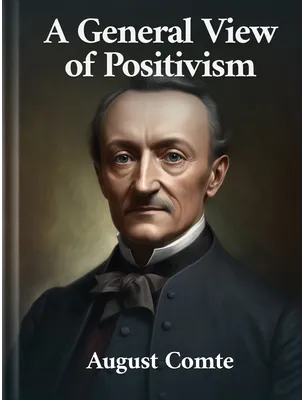
A General View of
by
Auguste Comte
Translated by J. H. Bridges, M.B.

Introduction
by Frederic Harrison
Although Positivism has been pretty widely discussed of late, not only by those interested in philosophy and religion, but by the general reader and the public press, perhaps but few of them, whether readers or critics, have exactly grasped the full meaning of it as a system at once of thought and of life. The vast range of the ground it covers and the technical, allusive, and close style of Comte’s writings in the original have made it difficult to master the subject as a whole. It has accordingly been thought that the time has come to add to the ‘New Universal Library’ a translation of The General View of Positivism, i.e., the careful summary of the Positive Polity which Auguste Comte prefixed to the four volumes of his principal work. The translation which was published by Dr. J. H. Bridges in 1865 is at the same time a most accurate version by one of Comte’s earliest followers, and also it is turned in an easy and simpler style, with the references and allusions explained, marginal headings to the paragraphs, and a complete analysis of the contents.
Positivism is not simply a system of Philosophy; nor is it simply a new form of Religion; nor is it simply a scheme of social regeneration. It partakes of all of these, and professes to harmonize them under one dominant conception that is equally philosophic and social. ‘Its primary object,’ writes Comte, ‘is twofold: to generalize our scientific conceptions and to systematize the art of social life.’ Accordingly Comte’s ideal embraces the three main elements of which human life consists — Thoughts, Feelings and Actions.
Now it is clear that no such comprehensive system was ever before offered to the world. Neither the Gospel nor any known type of religion undertook to give a synthetic grouping of the Sciences. No synthetic scheme of philosophy ever attempted to correlate religion, politics, art, and industry. No system of Socialism, ancient or modern, started with mathematics and led up to an ideal of a human devotion to duty, with a ritual of worship, both public and private.
Now Comte’s famous Positive Polity did attempt this gigantic task. And the novelty and extent of such a work explains and accounts for the extreme difficulty met with by readers of the original French, and also for the fascination which it has maintained more than fifty years after the author’s death. It has been talked about, criticized, and even ridiculed, with an ignorance of its true character which can only be excused by the abstract and severe form in which Comte thought right to condense his thoughts. Comte was primarily a mathematician, and neither Descartes nor Newton troubled themselves about ‘the general reader’. Kepler, they say, declared himself satisfied if he had one convert in a century; and philosophers have seldom had justice done them until some generations have passed. The difficulties presented by the scientific form of Comte’s works have been obviated for English readers by the versions of his English followers, which are at once literal translations, analyses, and elucidations. For the ‘general reader’ nothing could be more serviceable than Bridges’ clear presentation of Comte’s own ‘general view’, or summary of his system.
The translation itself is a literary masterpiece. It renders an extremely abstract and complex French type of philosophical dogmatism into easy and simple English, whilst at the same time preserving and even elucidating the somewhat cryptic allusions and nuances of the original. The thought in the French is full, pregnant, and suggestive, at once subtle and abstract, and rich with words of a new coinage — such as altruism, sociology, dynamics (i.e., history), and old words used in a special sense. This difficulty Dr. Bridges surmounts by breaking up the involved sentences, supplying names and facts indirectly referred to, and by transferring technical language into popular English. The success of the translation has been proved by the thousands of copies sold in the original 12mo edition of 1865, in the 8vo edition of 1875, and in the stereotyped reprint of 1881.
A pathetic interest attaches to the history of the translation. In 1860 Dr. Bridges, just settled as a physician in Melbourne, lost his young wife by fever. He at once returned to England, bringing the remains of his wife for interment in the family graveyard in Suffolk. In those days of sailing vessels the voyage home round Cape Horn occupied at least three months. Dr. Bridges resolved to conquer his sorrow, shut himself in his cabin during the voyage home and completed the translation (in 430 pages of print) within the time at sea: —
The sad mechanic exercise,
Like dull narcotics, numbing pain.
Auguste Comte always spoke of the Positive Polity as ‘his principal work’. The Discours sur l’Ensemble, or General View of Positivism, formed the introduction to the four volumes. It forms a summary of the entire work, and it is indeed a systematic application of the doctrine to the actual condition of society. As the Polity, taken as a whole, professes to embody a set of doctrines for the regulation of thought and life, the present Introduction is designed to show the need of such a body of doctrine, the result that they would produce, and the mode in which they are likely to work. Thus, one who desires to see in one view the social purpose which Positivism proposes to effect would find it in no single volume better than in this treatise.
The work consists of six chapters, treating Positivism respectively in its intellectual aspect, its social aspect, its influence on the working classes, on women, on art, and on religion. In other words it illustrates the application of the system to Philosophy, Politics, Industry, The Family, Poetry and The Future. It opens with a comparison of Positivist doctrines with those of the leading extant philosophies. It closes with a picture of society should those doctrines be realized. It is thus both a criticism of current theories, and an utopia of a possible Future. Of the intermediate chapters, the first deals with the principal changes proposed in our actual political system: the next chapter deals with the changes proposed in our present social system. Then come the last two chapters, dealing with the principal agents, Art, Poetry and Religion, by which those changes may be promoted. The book is therefore a practical introduction to the subject as a whole; for it sets forth the aim of Positivism as a system, and then how it seeks to effect that aim.
A General View of Positivism
‘We tire of thinking and even of acting; we never tire of loving.’
In the following series of systematic essays upon Positivism the essential principles of the doctrine are first considered; I then point out the agencies by which its propagation will be effected; and I conclude by describing certain additional features indispensable to its completeness. My treatment of these questions will of course be summary; yet it will suffice, I hope, to overcome several excusable but unfounded prejudices. It will enable any competent reader to assure himself that the new general doctrine aims at something more than satisfying the Intellect; that it is in reality quite as favourable to Feeling and even to Imagination.
Introductory Remarks
Positivism consists essentially of a Philosophy and a Polity. These can never be dissevered; the former being the basis, and the latter the end of one comprehensive system, in which our intellectual faculties and our social sympathies are brought into close correlation with each other. For, in the first place, the science of Society, besides being more important than any other, supplies the only logical and scientific link by which all our varied observations of phenomena can be brought into one consistent whole . Of this science it is even more true than of any of the preceding sciences, that its real character cannot be understood without explaining its exact relation in all general features with the art corresponding to it. Now here we find a coincidence which is assuredly not fortuitous. At the very time when the theory of society is being laid down, an immense sphere is opened for the application of that theory; the direction, namely, of the social regeneration of Western Europe. For, if we take another point of view, and look at the great crisis of modern history, as its character is displayed in the natural course of events, it becomes every day more evident how hopeless is the task of reconstructing political institutions without the previous remodelling of opinion and of life. To form then a satisfactory synthesis of all human conceptions is the most urgent of our social wants: and it is needed equally for the sake of Order and of Progress. During the gradual accomplishment of this great philosophical work, a new moral power will arise spontaneously throughout the West, which, as its influence increases, will lay down a definite basis for the reorganization of society. It will offer a general system of education for the adoption of all civilized nations, and by this means will supply in every department of public and private life fixed principles of judgment and of conduct. Thus the intellectual movement and the social crisis will be brought continually into close connexion with each other. Both will combine to prepare the advanced portion of humanity for the acceptance of a true spiritual power, a power more coherent, as well as more progressive, than the noble but premature attempt of mediaeval Catholicism.
The primary object, then, of Positivism is two-fold: to generalize our scientific conceptions, and to systematize the art of social life. These are but two aspects of one and the same problem. They will form the subjects of the two first chapters of this work. I shall first explain the general spirit of the new philosophy. I shall then show its necessary connexion with the whole course of that vast revolution which is now about to terminate under its guidance in social reconstruction.
This will lead us naturally to another question. The regenerating doctrine cannot do its work without adherents; in what quarter should we hope to find them? Now, with individual exceptions of great value, we cannot expect the adhesion of any of the upper classes in society. They are all more or less under the influence of baseless metaphysical theories, and of aristocratic self-seeking. They are absorbed in blind political agitation and in disputes for the possession of the useless remnants of the old theological and military system. Their action only tends to prolong the revolutionary state indefinitely, and can never result in true social renovation.
Whether we regard its intellectual character or its social objects, it is certain that Positivism must look elsewhere for support. It will find a welcome in those classes only whose good sense has been left unimpaired by our vicious system of education, and whose generous sympathies are allowed to develop themselves freely. It is among women, therefore, and among the working classes that the heartiest supporters of the new doctrine will be found. It is intended, indeed, ultimately for all classes of society. But it will never gain much real influence over the higher ranks till it is forced upon their notice by these powerful patrons. When the work of spiritual reorganization is completed, it is on them that its maintenance will principally depend; and so too, their combined aid is necessary for its commencement. Having but little influence in political government, they are the more likely to appreciate the need of a moral government, the special object of which it will be to protect them against the oppressive action of the temporal power.
In the third chapter, therefore, I shall explain the mode in which philosophers and working men will co-operate. Both have been prepared for this coalition by the general course which modern history has taken, and it offers now the only hope we have of really decisive action. We shall find that the efforts of Positivism to regulate and develop the natural tendencies of the people, make it, even from the intellectual point of view, more coherent and complete.
But there is another and a more unexpected source from which Positivism will obtain support; and not till then will its true character and the full extent of its constructive power be appreciated. I shall show in the fourth chapter how eminently calculated is the Positive doctrine to raise and regulate the social condition of women. It is from the feminine aspect only that human life, whether individually or collectively considered, can really be comprehended as a whole. For the only basis on which a system really embracing all the requirements of life can be formed, is the subordination of intellect to social feeling: a subordination which we find directly represented in the womanly type of character, whether regarded in its personal or social relations.
Although these questions cannot be treated fully in the present work, I hope to convince my readers that Positivism is more in accordance with the spontaneous tendencies of the people and of women than Catholicism, and is therefore better qualified to institute a spiritual power. It should be observed that the ground on which the support of both these classes is obtained is, that Positivism is the only system which can supersede the various subversive schemes that are growing every day more dangerous to all the relations of domestic and social life. Yet the tendency of the doctrine is to elevate the character of both of these classes; and it gives a most energetic sanction to all their legitimate aspirations.
Thus it is that a philosophy originating in speculations of the most abstract character, is found applicable not merely to every department of practical life, but also to the sphere of our moral nature. But to complete the proof of its universality I have still to speak of another very essential feature. I shall show, in spite of prejudices which exist very naturally on this point, that Positivism is eminently calculated to call the Imaginative faculties into exercise. It is by these faculties that the unity of human nature is most distinctly represented: they are themselves intellectual, but their field lies principally in our moral nature, and the result of their operation is to influence the active powers. The subject of women treated in the fourth chapter, will lead me by a natural transition to speak in the fifth of the Esthetic aspects of Positivism. I shall attempt to show that the new doctrine by the very fact of embracing the whole range of human relations in the spirit of reality, discloses the true theory of Art, which has hitherto been so great a deficiency in our speculative conceptions. The principle of the theory is that, in co-ordinating the primary functions of humanity, Positivism places the Idealities of the poet midway between the Ideas of the philosopher and the Realities of the statesman. We see from this theory how it is that the poetical power of Positivism cannot be manifested at present. We must wait until moral and mental regeneration has advanced far enough to awaken the sympathies which naturally belong to it, and on which Art in its renewed state must depend for the future. The first mental and social shock once passed, Poetry will at last take her proper rank. She will lead Humanity onward towards a future which is now no longer vague and visionary, while at the same time she enables us to pay due honour to all phases of the past. The great object which Positivism sets before us individually and socially, is the endeavour to become more perfect. The highest importance is attached therefore to the imaginative faculties, because in every sphere with which they deal they stimulate the sense of perfection. Limited as my explanations in this work must be, I shall be able to show that Positivism, while opening out a new and wide field for art, supplies in the same spontaneous way new means of expression.
I shall thus have sketched with some detail the true character of the regenerating doctrine. All its principal aspects will have been considered. Beginning with its philosophical basis, I pass by natural transitions to its political purpose; thence to its action upon the people, its influence with women, and lastly, to its esthetic power. In concluding this work, which is but the introduction to a larger treatise, I have only to speak of the conception which unites all these various aspects. As summed up in the positivist motto, Love, Order, Progress, they lead us to the conception of Humanity, which implicitly involves and gives new force to each of them. Rightly interpreting this conception, we view Positivism at last as a complete and consistent whole. The subject will naturally lead us to speak in general terms of the future progress of social regeneration, as far as the history of the past enables us to foresee it. The movement originates in France, and is limited at first to the great family of Western nations. I shall show that it will afterwards extend, in accordance with definite laws, to the rest of the white race, and finally to the other two great races of man.
Chapter I
The Intellectual Character of Positivism
The object of all true Philosophy is to frame a system which shall comprehend human life under every aspect, social as well as individual. It embraces, therefore, the three kinds of phenomena of which our life consists, Thoughts, Feelings, and Actions. Under all these aspects, the growth of Humanity is primarily spontaneous; and the basis upon which all wise attempts to modify it should proceed, can only be furnished by an exact acquaintance with the natural process. We are, however, able to modify this process systematically; and the importance of this is extreme, since we can thereby greatly diminish the partial deviations, the disastrous delays, and the grave inconsistencies to which so complex a growth would be liable were it left entirely to itself. To effect this necessary intervention is the proper sphere of politics. But a right conception cannot be formed of it without the aid of the philosopher, whose business it is to define and amend the principles on which it is conducted. With this object in view the philosopher endeavours to co-ordinate the various elements of man’s existence, so that it may be conceived of theoretically as an integral whole. His synthesis can only be valid in so far as it is an exact and complete representation of the relations naturally existing. The first condition is therefore that these relations be carefully studied. When the philosopher, instead of forming such a synthesis, attempts to interfere more directly with the course of practical life, he commits the error of usurping the province of the statesman, to whom all practical measures exclusively belong. Philosophy and Politics are the two principal functions of the great social organism. Morality, systematically considered, forms the connecting link and at the same time the line of demarcation between them. It is the most important application of philosophy, and it gives a general direction to polity. Natural morality, that is to say the various emotions of our moral nature, will, as I have shown in my previous work, always govern the speculations of the one and the operations of the other. This I shall explain more fully.
But the synthesis, which it is the social function of Philosophy to construct, will neither be real nor permanent, unless it embraces every department of human nature, whether speculative, effective, or practical. These three orders of phenomena react upon each other so intimately, that any system which does not include all of them must inevitably be unreal and inadequate. Yet it is only in the present day, when Philosophy is reaching the positive stage, that this which is her highest and most essential mission can be fully apprehended.
The theological synthesis depended exclusively upon our affective nature; and this is owing its original supremacy and its ultimate decline. For a long time its influence over all our highest speculations was paramount. This was especially the case during the Polytheistic period, when Imagination and Feeling still retained their sway under very slight restraint from the reasoning faculties. Yet even during the time of its highest development, intellectually and socially, theology exercised no real control over practical life. It reacted, of course, upon it to some extent, but the effects of this were in most cases far more apparent than real. There was a natural antagonism between them, which though at first hardly perceived, went on increasing till at last it brought about the entire destruction of the theological fabric. A system so purely subjective could not harmonize with the necessarily objective tendencies and stubborn realities of practical life. Theology asserted all phenomena to be under the dominion of Wills more or less arbitrary: whereas in practical life men were led more and more clearly to the conception of invariable Laws. For without laws human action would have admitted of no rule or plan. In consequence of this utter inability of theology to deal with practical life, its treatment of speculative and even of moral problems was exceedingly imperfect, such problems being all more or less dependent on the practical necessities of life. To present a perfectly synthetic view of human nature was, then, impossible as long as the influence of theology lasted; because the Intellect was impelled by Feeling and by the Active powers in two totally different directions. The failure of all metaphysical attempts to form a synthesis need not be dwelt upon here. Metaphysicians, in spite of their claims to absolute truth have never been able to supersede theology in questions of feeling, and have proved still more inadequate in practical questions. Ontology, even when it was most triumphant in the schools, was always limited to subjects of a purely intellectual nature; and even here its abstractions, useless in themselves, dealt only with the case of individual development, the metaphysical spirit being thoroughly incompatible with the social point of view. In my work on Positive Philosophy I have clearly proved that it constitutes only a transitory phase of mind, and is totally inadequate for any constructive purpose. For a time it was supreme; but its utility lay simply in its revolutionary tendencies. It aided the preliminary development of Humanity by its gradual inroads upon Theology, which, though in ancient times entrusted with the sole direction of society, had long since become in every respect utterly retrograde.
But all Positive speculations owe their first origin to the occupations of practical life; and, consequently, they have always given some indication of their capacity for regulating our active powers, which had been omitted from every former synthesis. Their value in this respect has been and still is materially impaired by their want of breadth, and their isolated and incoherent character; but it has always been instinctively felt. The importance that we attach to theories which teach the laws of phenomena, and give us the power of prevision, is chiefly due to the fact that they alone can regulate our otherwise blind action upon the external world. Hence it is that while the Positive spirit has been growing more and more theoretical, and has gradually extended to every department of speculation, it has never lost the practical tendencies which it derived from its source; and this even in the case of researches useless in themselves, and only to be justified as logical exercises. From its first origin in mathematics and astronomy, it has always shown its tendency to systematize the whole of our conceptions in every new subject which has been brought within the scope of its fundamental principle. It exercised for a long time a modifying influence upon theological and metaphysical principles, which has gone on increasing; and since the time of Descartes and Bacon it has become evident that it is destined to supersede them altogether. Positivism has gradually taken possession of the preliminary sciences of Physics and Biology, and in these the old system no longer prevails. All that remained was to complete the range of its influence by including the study of social phenomena. For this study metaphysics had proved incompetent; by theological thinkers it had only been pursued indirectly and empirically as a condition of government. I believe that my work on Positive Philosophy has so far supplied what was wanting. I think it must now be clear to all that the Positive spirit can embrace the entire range of thought without lessening, or rather with the effect of strengthening its original tendency to regulate practical life. And it is a further guarantee for the stability of the new intellectual synthesis that Social science, which is the final result of our researches, gives them that systematic character in which they had hitherto been wanting, by supplying the only connecting link of which they all admit.
This conception is already adopted by all true thinkers. All must now acknowledge that the Positive spirit tends necessarily towards the formation of a comprehensive and durable system, in which every practical as well as speculative subject shall be included. But such a system would still be far from realizing that universal character without which Positivism would be incompetent to supersede Theology in the spiritual government of Humanity. For the element which really preponderates in every human being, that is to say, Affection, would still be left untouched. This element it is, and this only, which gives a stimulus and direction to the other two parts of our nature: without it the one would waste its force in ill-conceived, or, at least, useless studies, and the other in barren or even dangerous contention. With this immense deficiency the combination of our theoretical and active powers would be fruitless, because it would lack the only principle which could ensure its real and permanent stability. The failure would be even greater than the failure of Theology in dealing with practical questions; for the unity of human nature cannot really be made to depend either on the rational or the active faculties. In the life of the individual, and, still more, in the life of the race, the basis of unity, as I shall show in the fourth chapter, must always be feeling. It is to the fact that theology arose spontaneously from feeling that its influence is for the most part due. And although theology is now palpably on the decline, yet it will retain, in principle at least, some legitimate claims to the direction of society so long as the new philosophy fails to occupy this important vantage-ground. We come then to the final conditions with which the modern synthesis must comply. Without neglecting the spheres of Thought and Action it must also comprehend the moral sphere; and the very principle on which its claim to universality rests must be derived from Feeling. Then, and not till then, can the claims of theology be finally set aside. For then the new system will have surpassed the old in that which is the one essential purpose of all general doctrines. It will have shown itself able to effect what no other doctrine has done, that is, to bring the three primary elements of our nature into harmony. If Positivism were to prove incapable of satisfying this condition, we must give up all hope of systematization of any kind. For while Positive principles are now sufficiently developed to neutralize those of Theology, yet, on the other hand, the influence of theology would continue to be far greater. Hence it is that many conscientious thinkers in the present day are so inclined to despair for the future of society. They see that the old principles on which society has been governed must finally become powerless. What they do not see is that a new basis for morality is being gradually laid down. Their theories are too imperfect and incoherent to show them the direction towards which the present time is ultimately tending. It must be owned, too, that their view seems borne out by the present character of the Positive method. While all allow its utility in the treatment of practical, and even of speculative, problems, it seems to most men, and very naturally, quite unfit to deal with questions of morality.
But on closer examination they will see reason to rectify their judgment. They will see that the hardness with which Positive science has been justly reproached, is due to the speciality and want of purpose with which it has hitherto been pursued, and is not at all inherent in its nature. Originating as it did in the necessities of our material nature, which for a long time restricted it to the study of the inorganic world, it has not till now become sufficiently complete or systematic to harmonize well with our moral nature. But now that it is brought to bear upon social questions, which for the future will form its most important field, it loses all the defects peculiar to its long period of infancy. The very attribute of reality which is claimed by the new philosophy, leads it to treat all subjects from the moral still more than from the intellectual side. The necessity of assigning with exact truth the place occupied by the intellect and by the heart in the organization of human nature and of society, leads to the decision that Affection must be the central point of the synthesis. In the treatment of social questions Positive science will be found utterly to discard those proud illusions of the supremacy of reason, to which it had been liable during its preliminary stages. Ratifying, in this respect, the common experience of men even more forcibly than Catholicism, it teaches us that individual happiness and public welfare are far more dependent upon the heart than upon the intellect. But, independently of this, the question of co-ordinating the faculties of our nature will convince us that the only basis on which they can be brought into harmonious union, is the preponderance of Affection over Reason, and even over Activity.
The fact that intellect, as well as social sympathy, is a distinctive attribute of our nature, might lead us to suppose that either of these two might be supreme, and therefore that there might be more than one method of establishing unity. The fact, however, is that there is only one; because these two elements are by no means equal in their fitness for assuming the first place. Whether we look at the distinctive qualities of each, or at the degree of force which they possess, it is easy to see that the only position for which the intellect is permanently adapted is to be the servant of the social sympathies. If, instead of being content with this honourable post, it aspires to become supreme, its ambitious aims, which are never realized, result simply in the most deplorable disorder.
Even with the individual, it is impossible to establish permanent harmony between our various impulses, except by giving complete supremacy to the feeling which prompts the sincere and habitual desire of doing good. This feeling is, no doubt, like the rest, in itself blind; it has to learn from reason the right means of obtaining satisfaction; and our active faculties are then called into requisition to apply those means. But common experience proves that after all the principal condition of right action is the benevolent impulse; with the ordinary amount of intellect and activity that is found in men this stimulus, if well sustained, is enough to direct our thoughts and energies to a good result. Without this habitual spring of action they would inevitably waste themselves in barren or incoherent efforts, and speedily relapse into their original torpor. Unity in our moral nature is, then, impossible, except so far as affection preponderates over intellect and activity.
True as this fundamental principle is for the individual, it is in public life that its necessity can be demonstrated most irrefutably. The problem is in reality the same, nor is any different solution of it required; only it assumes such increased dimensions, that less uncertainty is felt as to the method to be adopted. The various beings whom it is sought to harmonize have in this case each a separate existence; it is clear, therefore, that the first condition of co-operation must be sought in their own inherent tendency to universal love. No calculations of self-interest can rival this social instinct, whether in promptitude and breadth of intuition, or in boldness and tenacity of purpose. True it is that the benevolent emotions have in most cases less intrinsic energy than the selfish. But they have this beautiful quality, that social life not only permits their growth, but stimulates it to an almost unlimited extent, while it holds their antagonists in constant check. Indeed the increasing tendency in the former to prevail over the latter is the best measure by which to judge of the progress of Humanity. But the intellect may do much to confirm their influence. It may strengthen social feeling by diffusing juster views of the relations in which the various parts of society stand to each other; or it may guide its application by dwelling on the lessons which the past offers to the future. It is to this honourable service that the new philosophy would direct our intellectual powers. Here the highest sanction is given to their operations, and an exhaustless field is opened out for them, from which far deeper satisfaction may be gained than from the approbation of the learned societies, or from the puerile specialities with which they are at present occupied.
In fact, the ambitious claims which, ever since the hopeless decline of the theological synthesis, have been advanced by the intellect, never were or could be realized. Their only value lay in their solvent action on the theological system when it had become hostile to progress. The intellect is intended for service, not for empire; when it imagines itself supreme, it is really only obeying the personal instead of the social instincts. It never acts independently of feeling, be that feeling good or bad. The first condition of command is force; now reason has but light; the impulse that moves it must come from elsewhere. The metaphysical Utopias, in which a life of pure contemplation is held out as the highest ideal, attract the notice of our men of science; but are really nothing but illusions of pride, or veils for dishonest schemes. True there is a genuine satisfaction in the act of discovering truth; but it is not sufficiently intense to be an habitual guide of conduct. Indeed, so feeble is our intellect, that the impulse of some passion is necessary to direct and sustain it in almost every effort. When the impulse comes from kindly feeling it attracts attention on account of its rarity or value; when it springs from the selfish motives of glory, ambition, or gain, it is too common to be remarked. This is usually the only difference between the two cases. It does indeed occasionally happen that the intellect is actuated by a sort of passion for truth in itself, without any mixture of pride or vanity. Yet, in this case, as in every other, there is intense egotism in exercising the mental powers irrespectively of all social objects. Positivism, as I shall afterwards explain, is even more severe than Catholicism in its condemnation of this type of character, whether in metaphysicians or in men of science. The true philosopher would consider it a most culpable abuse of the opportunities which civilization affords him for the sake of the welfare of society, in leading a speculative life.
We have traced the Positive principle from its origin in the pursuits of active life, and have seen it extending successively to every department of speculation. We now find it, in its maturity, and that as a simple result of its strict adherence to fact, embracing the sphere of affection, and making that sphere the central point of its synthesis. It is henceforth a fundamental doctrine of Positivism, a doctrine of as great political as philosophical importance, that the Heart preponderates over the Intellect.
It is true that this doctrine, which is the only basis for establishing harmony in our nature, had been, as I before remarked, instinctively accepted by theological systems. But it was one of the fatalities of society in its preliminary phase, that the doctrine was coupled with an error which, after a time, destroyed all its value. In acknowledging the superiority of the heart the intellect was reduced to abject submission. Its only chance of growth lay in resistance to the established system. This course it followed with increasing effect, till after twenty centuries of insurrection, the system collapsed. The natural result of the process was to stimulate metaphysical and scientific pride, and to promote views subversive of all social order. But Positivism, while systematically adopting the principle here spoken of as the foundation of individual and social discipline, interprets that principle in a different way. It teaches that while it is for the heart to suggest our problems, it is for the intellect to solve them. Now the intellect was at first quite inadequate to this task, for which a long and laborious training was needed. The heart, therefore, had to take its place, and in default of objective truth, to give free play to its subjective inspirations. But for these inspirations, all progress, as I showed in my System of Positive Philosophy, would have been totally impossible. For a long time it was necessary that they should be believed absolutely; but as soon as our reason began to mould its conceptions upon observations, more or less accurate, of the external world, these supernatural dogmas became inevitably an obstacle to its growth. Here lies the chief source of the important modifications which theological belief has successively undergone. No further modifications are now possible without violating its essential principles; and since, meantime, Positive science is assuming every day larger proportions, the conflict between them is advancing with increasing vehemence and danger. The tendency on the one side is becoming more retrograde, on the other more revolutionary; because the impossibility of reconciling the two opposing forces is felt more and more strongly. Never was this position of affairs more manifest than now. The restoration of theology to its original power, supposing such a thing were possible, would have the most degrading influence on the intellect, and, consequently, on the character also; since it would involve the admission that our views of scientific truth were to be strained into accordance with our wishes and our wants. Therefore no important step in the progress of Humanity can now be made without totally abandoning the theological principle. The only service of any real value which it still renders, is that of forcing the attention of Western Europe, by the very fact of its reactionary tendencies, upon the greatest of all social questions. It is owing to its influence that the central point of the new synthesis is placed in our moral rather than our intellectual nature; and this, in spite of every prejudice and habit of thought that has been formed during the revolutionary period of the last five centuries. And while in this, which is the primary condition of social organization, Positivism, proves more efficient than Theology, it at the same time terminates the disunion which has existed so long between the intellect and the heart. For it follows logically from its principles, and also from the whole spirit of the system, that the intellect shall be free to exercise its full share of influence in every department of human life. When it is said that the intellect should be subordinate to the heart, what is meant is, that the intellect should devote itself exclusively to the problems which the heart suggests, the ultimate object being to find proper satisfaction for our various wants. Without this limitation, experience has shown too clearly that it would almost always follow its natural bent for useless or insoluble questions, which are the most plentiful and the easiest to deal with. But when any problem of a legitimate kind has been once proposed, it is the sole judge of the method to be pursued, and of the utility of the results obtained. Its province is to inquire into the present, in order to foresee the future, and to discover the means of improving it. In this province it is not to be interfered with. In a word the intellect is to be the servant of the heart, not its slave. Under these two correlative conditions the elements of our nature will at last be brought into harmony. The equilibrium of these two elements, once established, is in little danger of being disturbed. For since it is equally favourable to both of them, both will be interested in maintaining it. The fact that Reason in modern times has become habituated to revolt, is no ground for supposing that it will always retain its revolutionary character, even when its legitimate claims have been fully satisfied. Supposing the case to arise, however, society, as I shall show afterwards, would not be without the means of repressing any pretensions that were subversive of order. There is another point of view which may assure us that the position given to the heart under the new system will involve no danger to the growth of intellect. Love, when real, ever desires light, in order to attain its ends. The influence of true feeling is as favourable to sound thought as to wise activity.
Our doctrine, therefore, is one which renders hypocrisy and oppression alike impossible. And it now stands forward as the result of all the efforts of the past, for the regeneration of order, which, whether considered individually or socially, is so deeply compromised by the anarchy of the present time. It establishes a fundamental principle by which true philosophy and sound polity are brought into correlation; a principle which can be felt as well as proved, and which is at once the keystone of a system and a basis of government. I shall show, moreover, in the fifth chapter, that the doctrine is as rich in esthetic beauty as in philosophical power and in social influence. This will complete the proof of its efficacy as the centre of a universal system. Viewed from the moral, scientific, or poetical aspect, it is equally valuable; and it is the only principle which can bring Humanity safely through the most formidable crisis that she has ever yet undergone. It will be now clear to all that the force of demonstration, a force peculiar to modern times, and which still retains much of its destructive character, becomes matured and elevated by Positivism. It begins to develop constructive tendencies, which will soon be developed more largely. It is not too much, then, to say that Positivism, notwithstanding its speculative origin, offers as much to natures of deep sympathy as to men of highly cultivated intellects, or of energetic character.
The spirit and the principle of the synthesis which all true philosophers should endeavour to establish, have now been defined. I proceed to explain the method that should be followed in the task, and the peculiar difficulty with which it is attended.
The object of the synthesis will not be secured until it embraces the whole extent of its domain, the moral and practical departments as well as the intellectual. But these three departments cannot be dealt with simultaneously. They follow an order of succession which, so far from dissevering them from the whole to which they belong, is seen when carefully examined to be a natural result of their mutual dependence. The truth is, and it is a truth of great importance, that Thoughts must be systematized before Feelings, Feelings before Actions. It is doubtless, owing to a confused apprehension of this truth, that philosophers hitherto, in framing their systems of human nature, have dealt almost exclusively, with our intellectual faculties.
The necessity of commencing with the co-ordination of ideas is not merely due to the fact that the relations of these, being more simple and more susceptible of demonstration, form a useful logical preparation for the remainder of the task. On closer examination we find a more important, though less obvious reason. If this first portion of the work be once efficiently performed, it is the foundation of all the rest. In what remains no very serious difficulty will occur, provided always that we content ourselves with that degree of completeness which the ultimate purpose of the system requires.
To give such paramount importance to this portion of the subject may seem at first sight inconsistent with the proposition just laid down, that the strength of the intellectual faculties is far inferior to that of the other elements of our nature. It is quite certain that Feeling and Activity have much more to do with any practical step that we take than pure Reason. In attempting to explain this paradox, we come at last to the peculiar difficulty of this great problem of human Unity.
The first condition of unity is a subjective principle; and this principle in the Positive system is the subordination of the intellect to the heart: Without this the unity that we seek can never be placed on a permanent basis, whether individually or collectively. It is essential to have some influence sufficiently powerful to produce convergence amid the heterogeneous and often antagonistic tendencies of so complex an organism as ours. But this first condition, indispensable as it is, would be quite insufficient for the purpose, without some objective basis, existing independently of ourselves in the external world. That basis consists for us in the laws or Order of the phenomena by which Humanity is regulated. The subjection of human life to this order is incontestable; and as soon as the intellect has enabled us to comprehend it, it becomes possible for the feeling of love to exercise a controlling influence over our discordant tendencies. This, then, is the mission allotted to the intellect in the Positive synthesis; in this sense it is that it should be consecrated to the service of the heart.
I have said that our conception of human unity must be totally inadequate, and, indeed, cannot deserve the name, so long as it does not embrace every element of our nature. But it would be equally fatal to the completeness of this great conception to think of human nature irrespectively of what lies outside it. A purely subjective unity, without any objective basis, would be simply impossible. In the first place any attempt to co-ordinate man’s moral nature, without regard to the external world, supposing the attempt feasible, would have very little permanent influence on our happiness, whether collectively or individually; since happiness depends so largely upon our relations to all that exists around us. Besides this, we have to consider the exceeding imperfection of our nature. Self-love is deeply implanted in it, and when left to itself is far stronger than Social Sympathy. The social instincts would never gain the mastery were they not sustained and called into constant exercise by the economy of the external world, an influence which at the same time checks the power of the selfish instincts.
To understand this economy aright; we must remember that it embraces not merely the inorganic world, but also the phenomena of our own existence. The phenomena of human life, though more modifiable than any others, are yet equally subject to invariable laws; laws which form the principal objects of Positive speculation. Now the benevolent affections, which themselves act in harmony with the laws of social development, incline us to submit to all other laws, as soon as the intellect has discovered their existence. The possibility of moral unity depends, therefore, even in the case of the individual, but still more in that of society, upon the necessity of recognizing our subjection to an external power. By this means our self-regarding instincts are rendered susceptible of discipline. In themselves they are strong enough to neutralize all sympathetic tendencies, were it not for the support that the latter find in this External Order. Its discovery is due to the intellect; which is thus enlisted in the service of feeling, with the ultimate purpose of regulating action.
Thus it is that an intellectual synthesis, or systematic study of the laws of nature, is needed on far higher grounds than those of satisfying our theoretical faculties, which are, for the most part, very feeble, even in men who devote themselves to a life of thought. It is needed, because it solves at once the most difficult problem of the moral synthesis. The higher impulses within us are brought under the influence of a powerful stimulus from without. By its means they are enabled to control our discordant impulses, and to maintain a state of harmony towards which they have always tended, but which, without such aid, could never be realized. Moreover, this conception of the order of nature evidently supplies the basis for a synthesis of human action; for the efficacy of our action depends entirely upon their conformity to this order. But this part of the subject has been fully explained in my previous work, and I need not enlarge upon it further. As soon as the synthesis of mental conceptions enables us to form a synthesis of feelings, it is clear that there will be no very serious difficulties in constructing a synthesis of actions. Unity of action depends upon unity of impulse, and unity of design; and thus we find that the co-ordination of human nature, as a whole, depends ultimately upon the co-ordination of mental conceptions, a subject which seemed at first of comparatively slight importance.
The subjective principle of Positivism, that is, the subordination of the intellect to the heart is thus fortified by an objective basis, the immutable Necessity of the external world; and by this means it becomes possible to bring human life within the influence of social sympathy. The superiority of the new synthesis to the old is even more evident under this second aspect than under the first. In theological systems the objective basis was supplied by spontaneous belief in a supernatural Will. Now, whatever the degree of reality attributed to these fictions, they all proceeded from a subjective source; and therefore their influence in most cases must have been very confused and fluctuating. In respect of moral discipline they cannot be compared either for precision, for force, or for stability, to the conception of an invariable Order, actually existing without us, and attested, whether we will or no, by every act of our existence.
This fundamental doctrine of Positivism is not to be attributed in the full breadth of its meanings to any single thinker. It is the slow result of a vast process carried out in separate departments, which began with the first use of our intellectual powers, and which is only just completed in those who exhibit those powers in their highest form. During the long period of her infancy Humanity has been preparing this the most precious of her intellectual attainments, as the basis for the only system of life which is permanently adapted to our nature. The doctrine has to be demonstrated in all the more essential cases from observation only, except so far as we admit argument from analogy. Deductive argument is not admissible, except in such cases as are evidently compounded of others in which the proof given has been sufficient. Thus, for instance, we are authorized by sound logic to assert the existence of laws of weather; though most of these are still, and, perhaps, always will be, unknown. For it is clear that meteorological phenomena result from a combination of astronomical, physical and chemical influences, each of which has been proved to be subject to invariable laws. But in all phenomena which are not thus reducible, we must have recourse to inductive reasoning; for a principle which is the basis of all deduction cannot be itself deduced. Hence it is that the doctrine, being so entirely foreign as it is to our primitive mental state, requires such a long course of preparation. Without such preparation even the greatest thinkers could not anticipate it. It is true that in some cases metaphysical conceptions of a law have been formed before the proof really required had been furnished. But they were never of much service, except so far as they generalized in a more or less confused way the analogies naturally suggested by the laws which had actually been discovered in simpler phenomena. Besides, such assertions always remained very doubtful and very barren in result, until they were based upon some outline of a really Positive theory. Thus, in spite of the apparent potency of this metaphysical method, to which modern intellects are so addicted, the conception of an External Order is still extremely imperfect in many of the most cultivated minds, because they have not verified it sufficiently in the most intricate and important class of phenomena, the phenomena of society. I am not, of course, speaking of the few thinkers who accept my discovery of the principal laws of Sociology. Such uncertainty in a subject so closely related to all others, produces great confusion in men’s minds, and affects their perception of an invariable order, even in the simplest subjects. A proof of this is the utter delusion into which most geometricians of the present day have fallen with respect to what they call the Calculus of Chances; a conception which presupposes that the phenomena considered are not subject to law. The doctrine, therefore, cannot be considered as firmly established in any one case, until it has been verified specially in every one of the primary categories in which phenomena may be classed. But now that this difficult condition has really been fulfilled by the few thinkers who have risen to the level of their age, we have at last a firm objective basis on which to establish the harmony of our moral nature. That basis is, that all events whatever, the events of our own personal and social life included, are always subject to natural relations of sequence and similitude, which in all essential respects lie beyond the reach of our interference.
This, then, is the external basis of our synthesis, which includes the moral and practical faculties, as well as the speculative. It rests at every point upon the unchangeable Order of the world. The right understanding of this order is the principal subject of our thoughts; its preponderating influence determines the general course of our feelings; its gradual improvement is the constant object of our actions. To form a more precise notion of its influence, let us imagine that for a moment it were really to cease. The result would be that our intellectual faculties, after wasting themselves in wild extravagancies, would sink rapidly into incurable sloth; our nobler feelings would be unable to prevent the ascendancy of the lower instincts; and our active powers would abandon themselves to purposeless agitation. Men have, it is true, been for a long time ignorant of this Order. Nevertheless we have been always subject to it; and its influence has always tended, though without our knowledge, to control our whole being; our actions first, and subsequently our thoughts, and even our affections. As we have advanced in our knowledge of it, our thoughts have become less vague, our desires less capricious, our conduct less arbitrary. And now that we are able to grasp the full meaning of the conception, its influence extends to every part of our conduct. For it teaches us that the object to be aimed at in the economy devised by man, is wise development of the irresistible economy of nature, which cannot be amended till it is first studied and obeyed. In some departments it has the character of fate; that is, it admits of no modification. But even here, in spite of the superficial objections to it which have arisen from intellectual pride, it is necessary for the proper regulation of human life. Suppose, for instance, that man were exempt from the necessity of living on the earth, and were free to pass at will from one planet to another, the very notion of society would be rendered impossible by the licence which each individual would have to give way to whatever unsettling and distracting impulses his nature might incline him. Our propensities are so heterogeneous and so deficient in elevation, that there would be no fixity or consistency in our conduct, but for these insurmountable conditions. Our feeble reason may fret at such restrictions, but without them all its deliberations would be confused and purposeless. We are powerless to create: all that we can do in bettering our condition is to modify an order in which we can produce no radical change. Supposing us in possession of that absolute independence to which metaphysical pride aspires, it is certain that so far from improving our condition, it would be a bar to all development, whether social or individual. The true path of human progress lies in the opposite direction; in diminishing the vacillation, inconsistency, and discordance of our designs by furnishing external motives for those operations of our intellectual, moral and practical powers, of which the original source was purely internal. The ties by which our various diverging tendencies are held together would be quite inadequate for their purpose, without a basis of support in the external world, which is unaffected by the spontaneous variations of our nature.
But, however great the value of Positive doctrine in pointing out the unchangeable aspects of the universal Order, what we have principally to consider are the numerous departments in which that order admits of artificial modifications. Here lies the most important sphere of human activity. The only phenomena, indeed, which we are wholly unable to modify are the simplest of all, the phenomena of the Solar System which we inhabit. It is true that now that we know its laws we can easily conceive them improved in certain respects; but to whatever degree our power over nature may extend, we shall never be able to produce the slightest change in them. What we have to do is so to dispose our life as to submit to these resistless fatalities in the best way we can; and this is comparatively easy, because their greater simplicity enables us to foresee them with more precision and in a more distinct future. Their interpretation by Positive science has had a most important influence on the gradual education of the human intellect: and it will always continue to be the source from which we obtain the clearest and most impressive sense of Immutability. Too exclusively studied they might even now lead to fatalism; but controlled as their influence will be henceforward by a more philosophic education, they may well become a means of moral improvement, by disposing us to submit with resignation to all evils which are absolutely insurmountable.
In other parts of the external economy, invariability in all primary aspects is found compatible with modifications in points of secondary importance. These modifications become more numerous and extensive as the phenomena are more complex. The reason of this is that the causes from a combination of which the effects proceed being more varied and more accessible, offer greater facilities to our feeble powers to interfere with advantage. But all this has been fully explained in my System of Positive Philosophy. The tendency of that work was to show that our intervention became more efficacious in proportion as the phenomena upon which we acted had a closer relation to the life of man or society. Indeed the extensive modifications of which society admits, go far to keep up the common mistake that social phenomena are not subject to any constant law.
At the same time we have to remember that this increased possibility of human intervention in certain parts of the External Order necessarily coexists with increased imperfection, for which it is a valuable but very inadequate compensation. Both features alike result from the increase of complexity. Even the laws of the Solar System are very far from perfect, notwithstanding their greater simplicity, which indeed makes their defects more perceptible. The existence of these defects should be taken into careful consideration; not indeed with the hope of amending them, but as a check upon unreasoning admiration. Besides, they lead us to a clearer conception of the true position of Humanity, a position of which the most striking feature is the necessity of struggling against difficulties of every kind. Lastly, by observing these defects we are less likely to waste our time in seeking for absolute perfection, and so neglecting the wiser course of looking for such improvements as are really possible.
In all other phenomena, the increasing imperfection of the economy of nature becomes a powerful stimulus to all our faculties, whether moral, intellectual or practical. Here we find sufferings which can really be alleviated to a large extent by wise and well-sustained combination of efforts. This consideration should give a firmness and dignity of bearing, to which Humanity could never attain during her period of infancy. Those who look wisely into the future of society will feel that the conception of man becoming, without fear or boast, the arbiter, within certain limits, of his own destiny, has in it something far more satisfying than the old belief in Providence, which implied our remaining passive. Social union will be strengthened by the conception, because every one will see that union forms our principal resource against the miseries of human life. And while it calls out our noblest sympathies, it impresses us more strongly with the importance of high intellectual culture, being itself the object for which such culture is required. These important results have been ever on the increase in modern times; yet hitherto they have been too limited and casual to be appreciated rightly, except so far as we could anticipate the future of society by the light of sound historical principles. Art, so far as it is yet organized, does not include that part of the economy of nature which, being the most modifiable, the most imperfect, and the most important of all, ought on every ground to be regarded as the principal object of human exertions. Even Medical Art, specially so called, is only just beginning to free itself from its primitive routine. And Social Art, whether moral or political, is plunged in routine so deeply that few statesmen admit the possibility of shaking it off. Yet of all the arts, it is the one which best admits of being reduced to a system; and until this is done it will be impossible to place on a rational basis all the rest of our practical life. All these narrow views are due simply to insufficient recognition of the fact, that the highest phenomena are as much subject to laws as others. When the conception of the Order of Nature has become generally accepted in its full extent, the ordinary definition of Art will become as comprehensive and as homogeneous as that of Science; and it will then become obvious to all sound thinkers that the principal sphere of both Art and Science is the social life of man.