The book was published in 1916.
[{"id":"para_1","index":0,"start":0,"offset":339,"words":6,"paraNum":"","lastModified":1680484123000,"semanticType":"title-book-title","voicework":"no_audio","blockId":"foundation_of_ottoman_empire_ffa_en-bl2t","language":"en","wordsRange":{"start":208000000,"end":232000000},"paragraphVersion":60,"direction":"ltr","paragraph":"<h1 class=\"ilm-title\" id=\"para_1\" semantictype=\"title-book-title\" data-ilmid=\"foundation_of_ottoman_empire_ffa_en-bl2t\" data-chapter=\"para_1\" data-words-count=\"6\" data-before=\"0\" data-ww=\"\"><span class=\"block-pb\"> <span class=\"block-pb is-animated\"></span> </span><span class=\"itm-wrap\">The Foundation of the Ottoman Empire<br></span></h1>","hasContent":true,"isFirst":true,"isLast":false},{"id":"para_2","index":1,"start":339,"offset":378,"words":13,"paraNum":"","lastModified":1680484517000,"semanticType":"title-subtitle","voicework":"no_audio","blockId":"foundation_of_ottoman_empire_ffa_en-bl1p7","language":"en","wordsRange":{"start":269666667,"end":307333333},"paragraphVersion":51,"direction":"ltr","paragraph":"<h1 class=\"ilm-title ilm-subtitle\" id=\"para_2\" semantictype=\"title-subtitle\" data-ilmid=\"foundation_of_ottoman_empire_ffa_en-bl1p7\" data-chapter=\"para_2\" data-words-count=\"13\" data-before=\"6\" data-ww=\"\"><span class=\"block-pb\"> <span class=\"block-pb is-animated\"></span> </span><span class=\"itm-wrap\">A History of the Osmanlis up to the Death of Bayezid I (1300-1403)</span></h1>","hasContent":true,"isFirst":false,"isLast":false},{"id":"para_3","index":2,"start":717,"offset":364,"words":5,"paraNum":"","lastModified":1680484555000,"semanticType":"title-author","voicework":"no_audio","blockId":"foundation_of_ottoman_empire_ffa_en-bl1p4","language":"en","wordsRange":{"start":345000000,"end":458000000},"paragraphVersion":67,"direction":"ltr","paragraph":"<h1 class=\"ilm-title ilm-author ilm-x-large ilm-nopad\" id=\"para_3\" semantictype=\"title-author\" data-ilmid=\"foundation_of_ottoman_empire_ffa_en-bl1p4\" data-chapter=\"para_3\" data-words-count=\"5\" data-before=\"19\" data-ww=\"\"><span class=\"block-pb\"> <span class=\"block-pb is-animated\"></span> </span><span class=\"itm-wrap\">by<br>Herbert Adams Gibbons, Ph.D.</span></h1>","hasContent":true,"isFirst":false,"isLast":false},{"id":"para_4","index":3,"start":1081,"offset":165,"words":0,"paraNum":"","lastModified":1680484327000,"semanticType":"line","blockId":"foundation_of_ottoman_empire_ffa_en-bl1p5","language":"en","wordsRange":{"start":495666667,"end":533333333},"paragraphVersion":53,"direction":"ltr","paragraph":"<hr class=\"ilm-hr ilm-small\" id=\"para_4\" semantictype=\"line\" data-ilmid=\"foundation_of_ottoman_empire_ffa_en-bl1p5\" data-words-count=\"0\" data-before=\"24\" data-ww=\"\">","hasContent":true,"isFirst":false,"isLast":false},{"id":"para_5","index":4,"start":1246,"offset":5649,"words":15,"paraNum":"","lastModified":1680484432000,"semanticType":"illustration","blockId":"foundation_of_ottoman_empire_ffa_en-bl30","language":"en","wordsRange":{"start":992000000,"end":995000000},"paragraphVersion":62,"direction":"ltr","paragraph":"<p id=\"para_5\" data-words-count=\"15\" class=\"ilm-illustration\" data-ilmid=\"foundation_of_ottoman_empire_ffa_en-bl30\" ilm-block=\"\" ilm-display=\"\"><span class=\"block-pb\"> <span class=\"block-pb is-animated\"></span> </span><span class=\"itm-wrap\"><img width=\"500\" height=\"327\" data-src=\"ch0p0\" src=\"data:image/png;base64,iVBORw0KGgoAAAANSUhEUgAAADIAAAAhCAIAAAAUH2/TAAAACXBIWXMAAAsTAAALEwEAmpwYAAAOwUlEQVRYhT1YWXfaVhf1v+z3M5rVhzylzWqmpnGalSZ2PWEbO44xMzaYGQkEiEkTICEmIRBICMQkBpnB8C1z2+wHlpa0kM7d95x99rk7DMOQJJnNZhmGiUajKIoWi0XmP9A0ncvlMplMNBp1Op04jpMkSRBEYotUKoWiKARBDocDhmEcx8F9FEVTqVQ8Hg+HwwiCGI1Gv9+Pomg0Gg3/BwiCwuGw1WrV6XR+v9/tdns8HpfLZTAYAoHATiQSYRimUqlgGObz+Ww2GwzD6XSaZVmfz2e1Wu/v78F7LRbL5eWlTqe7urpSFKXVakEQlMvleJ7/9OkTjuPtdluW5Xa7LYoiuJAkSZblbDZbKpVYliUIgqIoDMPoLcAKcRyvVqv5fB5FUZIkE4mE1+vdSSQSvV7v8fFRURSKonAcj8fjMAwnEonv378LgtDv90ej0WQy6ff7rVaLJEme5yeTSaPRqFar0WjUbDZ/+/atWCwOh8PBYNDv95Uter2eoij9fr9UKnEcR5JkMBhEUTQWi/2gPBqNYhhGEASKom63G0EQgiDC4fBOJpOp1+vRaJRhGBRF2+22qqper/fy8jIcDi8Wi80W8/l8MBiA6/V6vdlsJEkaDodOp/Pk5IQkyW63Cx6ttliv149bbDabTqcjSZKqqjzPV6vVcrncbDYrlQrLst1ulyTJfD5P0zTDMO12u1gswjC8k06nh8NhOp0ulUoEQdA0XalU7Hb7t2/fKpVKNpsF0YzH49FotNls6vU6SEQEQRRFiUajsix3Oh1N0x4fH5fL5XyLxX9Yr9fdblcQhNVqVS6XqS1IkkylUrlcrlgsUhRF03Q8HkdRVFVVlmWf2Eqn0/1+n+f5+XxeqVR8Pl8qlfL5fJ1OZzQaiaIoCIIsyxzHhcPhXC6XTqdbrZYsy41GYz6fwzAMdk3TtPV6vVwuF4vFcrkEnIGwFEVpNBqbzUZRlG6322w2BUFoNBqSJLVarVqt9uPOcrlkWRZBkB2CIGq1mtPpzOVyvS0URSkUChAEkSRZrVZFUURRtFKp4DhOUZQoio1GYzabPT4+gjwdj8e9Xu/h4WG9xePj42q1Ar/gjizL9Xp9s9mAPRVFMZ1OcxzXarUajQaCIDzPgzxZLpfFYjEaje6kUqlSqRSPx4fDoSiKtVqNZVmO42ia7nQ6kUgEhmEURTEMSyQS6XTaYrF4vV6z2ZzL5UKhkCzL8/l8PB5PJpPNZsPzfK/XazQasiyv1+tMJrNYLHq9XrPZzOfzQGsqlQpFURzHNRqNer0eDAZLpVKj0QBbWSgUnsLKZDJ2ux2G4Zubm2AwiON4KpUiSRLUFMMwsVjM7Xbb7Xaj0RgIBCwWSyQSCW2hKMpms1kul4IgcBxXr9fH47GmaSC9xuNxpVLRNK3b7Var1Xq93m63W1tIktTv93u9XrvdrlarHMd1u12O40AM6XR6h2EYHMdPT0/1ej2GYS6XKxgMiqJI07TdbocgKJvNiqIYi8VgGAapCtIrGAxyHDedTufzeSAQmM/nYI9Wq9V0Oh0Oh81ms71FsVhMpVKiKK5WK4ZhQJ5JkgRWlc/nK5XKcrnsdDqXl5evXr0iSXKnUCiUy+X7+3u3280wTCgU8vl8oVAon8/7/f67uzubzWY0Gu/u7giCwDCsXq9rmrZarcC6QfZMJpOHh4fHx8fFYrFarYCEXlxcXF1dnZ2dmUymvb09s9mMYVin01EUZTqd5nI5QRDm8znHcaVSSRRFjuPevHnz888/5/P5HZZleZ6/vb31eDyhUIhhGAiCYBjOZrM+ny8cDrtcLqvV6vP5KIrqdDrhcBjDMJZlBUFIp9O9Xk9V1cFgMJlMgGi12+1IJJJIJARBSCaTMAxnMpk///zTYrHc3997vV4URUF19/t9mqYzmUyxWCRJ8sWLF//73/+8Xu+/bNVqNa/X6/F4UBS1bwGigWHYbDa7tggEAjiOg5oACwA9jiAIp9OZz+er1aosyzzPO51OIK2bzaZUKjmdzlKpZDAYKIqy2Wynp6eZTEan011fXwcCgVAo5HA4nj179tNPP/3yyy9ms/nu7o6iqJ1yuZzNZi0WCwRB1S2AWpZKpVQqFYlEQDfweDw0TReLxXK5zPN8Mpn0+XzpdBqCIJfLhWEYSZLJZPLm5sbpdIJSr9frLMsC0SJJMpPJCIIQi8UikcjZ2dnBwcHp6anRaNzb23v16tXz58/1ev319fXFxQVN0zsQBMVisfPzcxzHe71eJpOhKKpSqbjdbr/f32g03G43yDaPx+P3+x0Ox83NjcViAa7B7XZTFJXL5QiCYBhGURQEQViWBWyNx+NSqaSq6mw2E0VxPB6Logi0ECzDZrO9fv364uLi3bt3Npvt9vb29evXEATtYBiWz+d1Ot3Z2VkymQwEAqAtlkqlRCJxdXWl1+vj8fjt7e3BwcH19bXT6XQ4HAzDpNPpQCDg8/ncbjfLsul0WlVVSZIqlQrP8xzHaZrG8zx4W7vd1jQNBJfL5RiGGWwB1DUcDgcCgVwul81m7XY7juM72WxWkqR8Pv/mzZsf/ZwkyXA4TNN0vV4vl8vFYlGv19tsNpCzFEWBCspkMuFwGMdxTdNQFD05Obm5uQmFQizLdjqdZDIpSdJqtVJVtd/vdzqder0eiUSazabb7b6/v+90OhRFXVxcfPnyxWKx+Hw+HMdBte2QJDkcDiVJcrvdMAwPh8Nyuex0OmEYNplMiUTC6XQ2m81cLodhGIIgFxcXJpNpMpnUarVOp7NarTabzWw2a7fbFEWVy+XpdAqa+mKxkGVZ0zTQWIbDocPhwDBM07RMJjObzSAIstvt0+l0s9k4HI6TkxOapt1u91Ml4jg+mUyGwyFN07u7u7lcjqZpo9EYCoV+/fXXi4sLl8sVjUYBw5FIxOVy+f1+mqaBs+N5XlXVTqdTq9Umk8lyuez3+6ARNZtN0BLi8ThwY4DCXq8HeoMsy/l8PpvN0jS9t7d3eHh4cnJyfX39lPIEQUwmE1EUr66u3r59C+TfZDJ5PB6SJA8ODjweDwzDzWYTx/H7+/v9/X2bzZbNZh0ORyQSkSRpMBg8PDxMp1NZlpvNZrFYBB9GUfTt27cej6dQKKRSKYfDkc/nb25uyuUyaAbz+Rzawmg0GgwGQRAURbFYLE9sURQ1nU5FUbRarbu7u9YtLi4ujo+PQVbpdDoMw3q9nsvl+vTpk16vd7vdf/31l06n63a72WyWZdl+v79YLFRVDQQCwWAwkUgsl0tAWLFYBF4ZCNXJyUkmk6Fp+uvXr06nc7PZtFqt7hbAXTIMk0qlnsIChrhQKOzt7YEW9Pnz58vLy6urq+PjY5/Pd3h46Pf75/M5QRC3t7c2m+379+9///03SP9CocBxXKVSIQgCjBWj0QhYbZBh1Wr1+vraYrEYDAZJkkql0tHRUTAYnEwmnU5HEIRutwvDsCiKiqLk8/mnsEiSVFV1Mpm0Wq16vW42myEI8vl8R0dHNzc3BoPh5OTk69evz549w3HcarW+f//+y5cvEAQFAoFwOHx9fR2Lxer1eiwWwzAsGAwCDgaDgSiKQFc3m835+XkikeA4LpfLHRwcBAKB6XSqKIogCNPp9OHhQZZlq9UKsvYpLIIg+v3+YDBYLpez2ez6+lqn0wHrcnd31+124/H4/v7++/fvj46OUBQ9Pj4+OTmJRqNA6xEEAY6gVqtFo1GPx3N5eckwDHBdi8Wi3++DVzUajWazGQgEzs7OQNz1ev3x8XE2m2maJsuyqqrr9bpQKCQSiSe2+lus12tN06LR6MHBwf7+vsFgQBBEVVWj0fjixYvXr1//9ttvR0dHd3d3Hz58OD4+9ng80WjU6/WyLFur1QiCsNlser3earUaDAav12swGEBZ4Dj+7du3eDzu8XjOz89zuRzY3GazORwOHx4e5vN5t9uVJGk+n/8bFkEQg8FgOBwCmzudTnmed7vd796983q9wCGhKHp0dHR2dnZ6eup0Om022+Hh4e+//27b4vnz5x8+fHi/xf39vclkcjgcTqczlUo1Gg1BELxer91uN5vN79+/393dTafTiqKs12tJkrrd7nw+n81m/X4fXOfz+Xg8/m9Yg8Hgxyw1nU4FQfD7/cALgHmhVqvF4/FyuTwajdrtNoIgnz9/ttvtqVRKr9d//Pjx5cuXRqMRqLnH4wkEAtlsNpPJHB0dxePxZrNJkqTBYAiHw4+Pj5PJZLFYDAYDjuOq1SpoPrVabTwex+Pxp6k6mUw2m83xeAzqE2C5XLZaLbPZfHl5iSAIEE9N0xaLxXQ6tdlsEAR5PB5gXHu9HrFFo9EYjUaqqtZqtVgsFgwGEQTBMCwUCrlcLtDvDAZDMpkEgvLw8ACqbTabCYIQDAaHw2EikXC73TuBQCCfz7fbbVDSgDmw8be3t4eHhzqdzmq1mkwmm80WCoUgCHr58iVBEMCjAo41TZtOp2AU0zRNEIRyuXx3d2cymU5PT//44w+Px1MsFh0Oh16vB2WoqupoNALjZ7fblWUZwzCKom5vb81m81PzkSTp4eEBdK75fA6cuCiKhULh5ubGZrNdb/Hx40eggfF4nOM4QIyqqmAgkyRpNBqBP4bD4d3d3dPTU6/X+/XrV7PZzDAMQRBut9vpdJbL5U6nA2y+JEmAEVmWwbRts9ksFsuTsalvAeyvqqo/tnKxWICuV6vVeJ5XFKVarfb7fTA6T6fTyX8YDoegwkejUafTCQaD//zzz/7+/vn5udVqBfvbaDSA9W21WovFAvic6XQKmFZVtdlsapqGIIjD4XgayKxWq9lsvr+/9/l8LpeLoqhsNgvOBfL5PJjJMAwrFArAoFYqldoWPM+DWgPnTe12u16vA8MTCARMJpPX6y0WiyzLFgqFUCh0e3t7fHwMpK68BcuyxWKxUCgUi8VQKFQoFGAY9vl8O8CAA0rBMFOr1TiOA18Fn2cYBvwTjKDATYBTFwzDcBxHEATY62QyCTx+Op0Gj3AcTyaTqVQKhmFwAJHJZMABWDKZjMVi0WgUQZB4PO5yuSAIAv7q/yj8zc8YpX+nAAAAAElFTkSuQmCC\" alt=\"Conquests of Murad & BayezidIn the Balkan Peninsula & of Bayezid in Asia Minor\">Conquests of Murad & Bayezid In the Balkan Peninsula & of Bayezid in Asia Minor </span></p>","hasContent":true,"isFirst":false,"isLast":false},{"id":"para_6","index":5,"start":6895,"offset":315,"words":1,"paraNum":"","lastModified":1680485284000,"semanticType":"header-subheader","voicework":"no_audio","blockId":"foundation_of_ottoman_empire_ffa_en-bl39","language":"en","wordsRange":{"start":1947000000,"end":1949000000},"paragraphVersion":57,"direction":"ltr","paragraph":"<h3 class=\"ilm-header ilm-h3\" id=\"para_6\" semantictype=\"header-subheader\" data-ilmid=\"foundation_of_ottoman_empire_ffa_en-bl39\" data-chapter=\"para_6\" data-words-count=\"1\" data-before=\"39\" data-ww=\"\"><span class=\"block-pb\"> <span class=\"block-pb is-animated\"></span> </span><span class=\"itm-wrap\">Preface</span></h3>","hasContent":true,"isFirst":false,"isLast":false},{"id":"para_7","index":6,"start":7210,"offset":768,"words":85,"paraNum":"p.1","lastModified":1680485284000,"semanticType":"par","voicework":"no_audio","blockId":"foundation_of_ottoman_empire_ffa_en-bl3a","language":"en","wordsRange":{"start":2049000000,"end":2134000000},"paragraphVersion":52,"direction":"ltr","paragraph":"<p id=\"para_7\" semantictype=\"par\" data-ilmid=\"foundation_of_ottoman_empire_ffa_en-bl3a\" data-words-count=\"85\" data-before=\"40\" data-ww=\"\"><span class=\"block-num\" data-id=\"p.1\"></span><span class=\"block-pb\"> <span class=\"block-pb is-animated\"></span> </span><span class=\"itm-wrap\">Four years of residence in the Ottoman Empire, chiefly in Constantinople, during the most disastrous period of its decline, have led me to investigate its origin. This book is written because I feel that the result of my research brings a new point of view to the student of the twentieth-century problems of the Near East, as well as to those who are interested in fourteenth-century Europe. If we study the past, it is to understand the present and to prepare for the future.</span></p>","hasContent":true,"isFirst":false,"isLast":false},{"id":"para_8","index":7,"start":7978,"offset":557,"words":43,"paraNum":"p.2","lastModified":1680485284000,"semanticType":"par","voicework":"no_audio","blockId":"foundation_of_ottoman_empire_ffa_en-bl3b","language":"en","wordsRange":{"start":2234000000,"end":2278000000},"paragraphVersion":52,"direction":"ltr","paragraph":"<p id=\"para_8\" semantictype=\"par\" data-ilmid=\"foundation_of_ottoman_empire_ffa_en-bl3b\" data-words-count=\"43\" data-before=\"125\" data-ww=\"\"><span class=\"block-num\" data-id=\"p.2\"></span><span class=\"block-pb\"> <span class=\"block-pb is-animated\"></span> </span><span class=\"itm-wrap\">I plead guilty to many footnotes. Much of my text is controversial in character, and the subject-matter is so little known that the general reader would hardly be able to form judgements without a constant — but I trust not wearisome — reference to authorities.</span></p>","hasContent":true,"isFirst":false,"isLast":false},{"id":"para_9","index":8,"start":8535,"offset":809,"words":83,"paraNum":"p.3","lastModified":1680485284000,"semanticType":"par","voicework":"no_audio","blockId":"foundation_of_ottoman_empire_ffa_en-bl3c","language":"en","wordsRange":{"start":2378000000,"end":2462000000},"paragraphVersion":52,"direction":"ltr","paragraph":"<p id=\"para_9\" semantictype=\"par\" data-ilmid=\"foundation_of_ottoman_empire_ffa_en-bl3c\" data-words-count=\"83\" data-before=\"168\" data-ww=\"\"><span class=\"block-num\" data-id=\"p.3\"></span><span class=\"block-pb\"> <span class=\"block-pb is-animated\"></span> </span><span class=\"itm-wrap\">The risk that I run of incurring criticism from Oriental philologists on the ground of nomenclature is very great. I ask their indulgence. Will they not take into consideration the fact that there is no accepted standard among English-speaking scholars for the transliteration of Turkish and Slavic names? Wherever possible, I have adopted the spelling in general usage in the Near East, and in English standard lexicons and encyclopaedias. When a general usage cannot be determined, I have frequently been at a loss.</span></p>","hasContent":true,"isFirst":false,"isLast":false},{"id":"para_10","index":9,"start":9344,"offset":1266,"words":151,"paraNum":"p.4","lastModified":1680485284000,"semanticType":"par","voicework":"no_audio","blockId":"foundation_of_ottoman_empire_ffa_en-bl3d","language":"en","wordsRange":{"start":2562000000,"end":2716000000},"paragraphVersion":52,"direction":"ltr","paragraph":"<p id=\"para_10\" semantictype=\"par\" data-ilmid=\"foundation_of_ottoman_empire_ffa_en-bl3d\" data-words-count=\"151\" data-before=\"251\" data-ww=\"\"><span class=\"block-num\" data-id=\"p.4\"></span><span class=\"block-pb\"> <span class=\"block-pb is-animated\"></span> </span><span class=\"itm-wrap\">There was the effort to be as consistent in spelling as sources and authorities would permit. But where<span data-pg=\"{6}\"></span> consistency was lacking in originals, a consistent transliteration sometimes presented difficulties with which I was incompetent to cope. Even a philologist, with a system, would be puzzled when he found his sources conflicting with each other in spelling, and — as is often the case — with themselves. And if a philologist thinks that he can establish his system by transliterating the <i>spoken</i> word, let him travel from Constantinople to Cairo overland, and he will have a bewildering collection of variants before he reaches his journey’s end. I was not long in Turkey before I learned that <i>Osman</i> and <i>Othman</i> were both correct. It depended merely upon whether you were in Constantinople or Konia! After you had decided to accept the pronunciation of the capital, you were told that Konia is the Tours of Turkey.</span></p>","hasContent":true,"isFirst":false,"isLast":false},{"id":"para_11","index":10,"start":10610,"offset":1076,"words":126,"paraNum":"p.5","lastModified":1680485284000,"semanticType":"par","voicework":"no_audio","blockId":"foundation_of_ottoman_empire_ffa_en-bl3e","language":"en","wordsRange":{"start":2816000000,"end":2943000000},"paragraphVersion":52,"direction":"ltr","paragraph":"<p id=\"para_11\" semantictype=\"par\" data-ilmid=\"foundation_of_ottoman_empire_ffa_en-bl3e\" data-words-count=\"126\" data-before=\"402\" data-ww=\"\"><span class=\"block-num\" data-id=\"p.5\"></span><span class=\"block-pb\"> <span class=\"block-pb is-animated\"></span> </span><span class=\"itm-wrap\">My acknowledgements to kind friends are many. I am grateful for the year-in and year-out patience and willingness of the officials of the Bibliothèque Nationale during long periods of constant demand upon their time and attention. Professors John De Witt, D.D., LL.D., of Princeton Theological Seminary, Duncan B. Macdonald, Ph.D., of Hartford Theological Seminary, and Edward P. Cheyney, Ph.D., LL.D., of the University of Pennsylvania, have read portions of the manuscript, and have made important and helpful suggestions. The whole manuscript has been read by Professors Talcott Williams, LL.D., of Columbia University, and R. M. McElroy, Ph.D., of Princeton University, who have not hesitated to give many hours to discussion and criticism of the theory that the book presents.</span></p>","hasContent":true,"isFirst":false,"isLast":false},{"id":"para_12","index":11,"start":11686,"offset":833,"words":90,"paraNum":"p.6","lastModified":1680485284000,"semanticType":"par","voicework":"no_audio","blockId":"foundation_of_ottoman_empire_ffa_en-bl3f","language":"en","wordsRange":{"start":3043000000,"end":3136000000},"paragraphVersion":52,"direction":"ltr","paragraph":"<p id=\"para_12\" semantictype=\"par\" data-ilmid=\"foundation_of_ottoman_empire_ffa_en-bl3f\" data-words-count=\"90\" data-before=\"528\" data-ww=\"\"><span class=\"block-num\" data-id=\"p.6\"></span><span class=\"block-pb\"> <span class=\"block-pb is-animated\"></span> </span><span class=\"itm-wrap\">Above all, I am indebted for practical aid and<span data-pg=\"{7}\"></span> encouragement in research and in writing, from the inception of the idea of the book until the manuscript went to press, to my wife, with her Bryn Mawr insistence upon accuracy of detail and care for form of narrative, and to Alexander Souter, D.Litt., Regius Professor of Humanity in Aberdeen University, my two comrades in research through a succession of happy years in the rue de Richelieu, rue Servandoni, and rue du Montparnasse of the queen city of the world.</span></p>","hasContent":true,"isFirst":false,"isLast":false},{"id":"para_13","index":12,"start":12519,"offset":273,"words":3,"paraNum":"","lastModified":1680485058000,"semanticType":"par","voicework":"no_audio","blockId":"foundation_of_ottoman_empire_ffa_en-bl3g","language":"en","wordsRange":{"start":3236000000,"end":3240000000},"paragraphVersion":56,"direction":"ltr","paragraph":"<p class=\"ilm-right\" id=\"para_13\" semantictype=\"par\" data-ilmid=\"foundation_of_ottoman_empire_ffa_en-bl3g\" data-words-count=\"3\" data-before=\"618\" data-ww=\"\"><span class=\"block-pb\"> <span class=\"block-pb is-animated\"></span> </span><span class=\"itm-wrap\">H. A. G.</span></p>","hasContent":true,"isFirst":false,"isLast":false},{"id":"para_14","index":13,"start":12792,"offset":324,"words":3,"paraNum":"","lastModified":1681352381000,"semanticType":"par","voicework":"no_audio","blockId":"foundation_of_ottoman_empire_ffa_en-bl3h","language":"en","wordsRange":{"start":3340000000,"end":3349000000},"paragraphVersion":73,"direction":"ltr","paragraph":"<p id=\"para_14\" semantictype=\"par\" data-ilmid=\"foundation_of_ottoman_empire_ffa_en-bl3h\" data-words-count=\"3\" data-before=\"621\" data-ww=\"\"><span class=\"block-pb\"> <span class=\"block-pb is-animated\"></span> </span><span class=\"itm-wrap\">Paris,<br><i>September </i><i>1, </i><i>1915</i>. <span data-pg=\"{9}\"></span></span></p>","hasContent":true,"isFirst":false,"isLast":false},{"id":"para_15","index":14,"start":13116,"offset":166,"words":0,"paraNum":"","lastModified":1680485247000,"semanticType":"line","blockId":"foundation_of_ottoman_empire_ffa_en-bl3n","language":"en","wordsRange":{"start":4088000000,"end":4091000000},"paragraphVersion":67,"direction":"ltr","paragraph":"<hr class=\"ilm-hr ilm-small\" id=\"para_15\" semantictype=\"line\" data-ilmid=\"foundation_of_ottoman_empire_ffa_en-bl3n\" data-words-count=\"0\" data-before=\"624\" data-ww=\"\">","hasContent":true,"isFirst":false,"isLast":false},{"id":"para_16","index":15,"start":13282,"offset":553,"words":7,"paraNum":"","lastModified":1681352531000,"semanticType":"header-chapter-header","voicework":"no_audio","blockId":"foundation_of_ottoman_empire_ffa_en-bl1pg","language":"en","wordsRange":{"start":4234333333,"end":4267666667},"paragraphVersion":51,"direction":"ltr","paragraph":"<h2 class=\"ilm-header ilm-h2 ilm-large\" id=\"para_16\" semantictype=\"header-chapter-header\" data-ilmid=\"foundation_of_ottoman_empire_ffa_en-bl1pg\" data-chapter=\"para_16\" data-words-count=\"7\" data-before=\"624\" data-ww=\"\"><span class=\"block-pb\"> <span class=\"block-pb is-animated\"></span> </span><span class=\"itm-wrap\"><span class=\"chapter-text\"><span class=\"chapter-number\"><span class=\"chapter-label\"></span><span class=\"chapter-value\"></span></span><span class=\"chapter-title\">Chapter I<br>Osman<br>A New Race Appears in History</span></span></span></h2>","hasContent":true,"isFirst":false,"isLast":false},{"id":"para_17","index":16,"start":13835,"offset":312,"words":1,"paraNum":"","lastModified":1682089110000,"semanticType":"header-subheader","voicework":"no_audio","blockId":"foundation_of_ottoman_empire_ffa_en-bl3p","language":"en","wordsRange":{"start":4301000000,"end":4303000000},"paragraphVersion":54,"direction":"ltr","paragraph":"<h3 class=\"ilm-header ilm-h3\" id=\"para_17\" semantictype=\"header-subheader\" data-ilmid=\"foundation_of_ottoman_empire_ffa_en-bl3p\" data-chapter=\"para_17\" data-words-count=\"1\" data-before=\"631\" data-ww=\"\"><span class=\"block-pb\"> <span class=\"block-pb is-animated\"></span> </span><span class=\"itm-wrap\">I</span></h3>","hasContent":true,"isFirst":false,"isLast":false},{"id":"para_18","index":17,"start":14147,"offset":1317,"words":176,"paraNum":"1.1","lastModified":1682088040000,"semanticType":"par","voicework":"no_audio","blockId":"foundation_of_ottoman_empire_ffa_en-bl3q","language":"en","wordsRange":{"start":4403000000,"end":4579000000},"paragraphVersion":68,"direction":"ltr","paragraph":"<p id=\"para_18\" semantictype=\"par\" data-ilmid=\"foundation_of_ottoman_empire_ffa_en-bl3q\" data-words-count=\"176\" data-before=\"632\" data-ww=\"\"><span class=\"block-num\" data-id=\"1.1\"></span><span class=\"block-pb\"> <span class=\"block-pb is-animated\"></span> </span><span class=\"itm-wrap\">The traveller who desires to penetrate Asia Minor by railway may start either from Smyrna or from Constantinople. The Constantinople terminus of the Anatolian Railway is at Haïdar Pasha, on the Asiatic shore, where the Bosphorus opens into the Sea of Marmora. Three hours along the Gulf of Ismidt, past the Princes’ Islands, brings one to Ismidt, the ancient Nicomedia, eastern capital of the Roman Empire under Diocletian. It is at the very end of the gulf. From Ismidt, the railway crosses a fertile plain, coasts the western shore of Lake Sabandja, and enters the valley of the Sangarius as far as Lefké. Here it turns southward, and mounts rapidly the course of the Kara Su, a tributary of the Sangarius, through the picturesque town of Biledjik, to a plateau, at the north-western end of which is Eski Sheïr, seven hours distant from Ismidt. Eski Sheïr is the ancient Dorylaeum. It was here that Godfrey de Bouillon in 1097 won from the Turks the victory that opened for his Crusaders the way through Asia Minor.</span></p>","hasContent":true,"isFirst":false,"isLast":false},{"id":"para_19","index":18,"start":15464,"offset":739,"words":72,"paraNum":"1.2","lastModified":1682088040000,"semanticType":"par","voicework":"no_audio","blockId":"foundation_of_ottoman_empire_ffa_en-bl3r","language":"en","wordsRange":{"start":4679000000,"end":4754000000},"paragraphVersion":68,"direction":"ltr","paragraph":"<p id=\"para_19\" semantictype=\"par\" data-ilmid=\"foundation_of_ottoman_empire_ffa_en-bl3r\" data-words-count=\"72\" data-before=\"808\" data-ww=\"\"><span class=\"block-num\" data-id=\"1.2\"></span><span class=\"block-pb\"> <span class=\"block-pb is-animated\"></span> </span><span class=\"itm-wrap\">From Eski Sheïr there are two railway lines. One, running eastward, has its terminus at Angora, the ancient Ancyra, after thirteen hours of rather slow running. The other, the main line, runs south to Afion Kara Hissar, where the line from Smyrna joins it, and then south-west to Konia, the ancient Iconium, which is the western terminus of the new Bagdad Railway. The time from Eski Sheïr to Konia is fifteen hours.<span data-pg=\"{12}\"></span></span></p>","hasContent":true,"isFirst":false,"isLast":false},{"id":"para_20","index":19,"start":16203,"offset":959,"words":121,"paraNum":"1.3","lastModified":1682088040000,"semanticType":"par","voicework":"no_audio","blockId":"foundation_of_ottoman_empire_ffa_en-bl3s","language":"en","wordsRange":{"start":4854000000,"end":4976000000},"paragraphVersion":68,"direction":"ltr","paragraph":"<p id=\"para_20\" semantictype=\"par\" data-ilmid=\"foundation_of_ottoman_empire_ffa_en-bl3s\" data-words-count=\"121\" data-before=\"880\" data-ww=\"\"><span class=\"block-num\" data-id=\"1.3\"></span><span class=\"block-pb\"> <span class=\"block-pb is-animated\"></span> </span><span class=\"itm-wrap\">From Lefké or from Mekedjé, near the junction of the Kara Su and the Sangarius, one can drive in four hours west to Isnik (ancient Nicaea), or in twelve hours to Brusa, which lies at the foot of Keshish Dagh (Mount Olympus). Between Lefké and Eski Sheïr, where the railway begins to mount above the river-bed of the Kara Su, is Biledjik. Between Eski Sheïr and Biledjik is Sugut. West from Eski Sheïr, six hours on horse across one low mountain range, lies Inoenu. South from Eski Sheïr, a day by carriage, is Kutayia. There is a short branch line of the Anatolian Railway to Kutayia from Alayund, two and a half hours beyond Eski Sheïr on the way to Konia.</span></p>","hasContent":true,"isFirst":false,"isLast":false},{"id":"para_21","index":20,"start":17162,"offset":1045,"words":117,"paraNum":"1.4","lastModified":1682088040000,"semanticType":"par","voicework":"no_audio","blockId":"foundation_of_ottoman_empire_ffa_en-bl3t","language":"en","wordsRange":{"start":5076000000,"end":5194000000},"paragraphVersion":68,"direction":"ltr","paragraph":"<p id=\"para_21\" semantictype=\"par\" data-ilmid=\"foundation_of_ottoman_empire_ffa_en-bl3t\" data-words-count=\"117\" data-before=\"1001\" data-ww=\"\"><span class=\"block-num\" data-id=\"1.4\"></span><span class=\"block-pb\"> <span class=\"block-pb is-animated\"></span> </span><span class=\"itm-wrap\">If one will read the above paragraphs with a map before him, he will readily see that this country, the extreme north-western corner of Asia Minor, corresponds roughly to the borderland between the Roman provinces of Phrygia Epictetus and Bithynia, and is near to Constantinople. Eski Sheïr, Sugut, and Biledjik are close to Brusa, Nicaea, and Nicomedia. Owing to the convenient waterways furnished by the Gulfs of Mudania and Ismidt, Brusa, Nicaea, and Nicomedia have always been within a day’s sail of Constantinople, even in the periods of primitive navigation. From the hills behind Eski Sheïr, Mount Olympus is the commanding landmark of the western horizon. From Constantinople, Mount Olympus is easily distinguishable even in dull weather.</span></p>","hasContent":true,"isFirst":false,"isLast":false},{"id":"para_22","index":21,"start":18207,"offset":685,"words":59,"paraNum":"1.5","lastModified":1682088040000,"semanticType":"par","voicework":"no_audio","blockId":"foundation_of_ottoman_empire_ffa_en-bl3u","language":"en","wordsRange":{"start":5294000000,"end":5356000000},"paragraphVersion":68,"direction":"ltr","paragraph":"<p id=\"para_22\" semantictype=\"par\" data-ilmid=\"foundation_of_ottoman_empire_ffa_en-bl3u\" data-words-count=\"59\" data-before=\"1118\" data-ww=\"\"><span class=\"block-num\" data-id=\"1.5\"></span><span class=\"block-pb\"> <span class=\"block-pb is-animated\"></span> </span><span class=\"itm-wrap\">It was this country, adjacent to Constantinople, and separated from the rest of Asia Minor by rugged mountain ranges and the dreary, treeless plateau stretching eastward towards the Salt Desert, which gave birth to the people who, a century after their appearance, were to inherit the Byzantine Empire and to place their sovereigns upon the throne of the Caesars.<span data-pg=\"{13}\"></span></span></p>","hasContent":true,"isFirst":false,"isLast":false},{"id":"para_23","index":22,"start":18892,"offset":314,"words":1,"paraNum":"","lastModified":1682089121000,"semanticType":"header-subheader","voicework":"no_audio","blockId":"foundation_of_ottoman_empire_ffa_en-bl3v","language":"en","wordsRange":{"start":5456000000,"end":5458000000},"paragraphVersion":53,"direction":"ltr","paragraph":"<h3 class=\"ilm-header ilm-h3\" id=\"para_23\" semantictype=\"header-subheader\" data-ilmid=\"foundation_of_ottoman_empire_ffa_en-bl3v\" data-chapter=\"para_23\" data-words-count=\"1\" data-before=\"1177\" data-ww=\"\"><span class=\"block-pb\"> <span class=\"block-pb is-animated\"></span> </span><span class=\"itm-wrap\">II</span></h3>","hasContent":true,"isFirst":false,"isLast":false},{"id":"para_24","index":23,"start":19206,"offset":1122,"words":142,"paraNum":"1.6","lastModified":1682088040000,"semanticType":"par","voicework":"no_audio","blockId":"foundation_of_ottoman_empire_ffa_en-bl3w","language":"en","wordsRange":{"start":5558000000,"end":5701000000},"paragraphVersion":68,"direction":"ltr","paragraph":"<p id=\"para_24\" semantictype=\"par\" data-ilmid=\"foundation_of_ottoman_empire_ffa_en-bl3w\" data-words-count=\"142\" data-before=\"1178\" data-ww=\"\"><span class=\"block-num\" data-id=\"1.6\"></span><span class=\"block-pb\"> <span class=\"block-pb is-animated\"></span> </span><span class=\"itm-wrap\">At the end of the thirteenth century, Asia Minor, so long the battleground between the Khalifs and the Byzantines, almost entirely abandoned by the latter for a brief time to the Seljuk emperors of Rum, who had their seat at Konia, then again disturbed by the invasion of the Crusaders from the west and the Mongols from the east, was left to itself. The Byzantines, despite (or perhaps because of!) their re-establishment at Constantinople, were too weak to make any serious attempt to recover what they had lost to the Seljuk Turks. The Mongols of the horde of Djenghiz Khan had destroyed the independence of the Sultanate of Konia, and had established their authority in that city. But they made no real effort to bring under their dominion the districts north-west and west of Konia to which they had logically fallen heir.</span></p>","hasContent":true,"isFirst":false,"isLast":false},{"id":"para_25","index":24,"start":20328,"offset":815,"words":79,"paraNum":"1.7","lastModified":1682088040000,"semanticType":"par","voicework":"no_audio","blockId":"foundation_of_ottoman_empire_ffa_en-bl3x","language":"en","wordsRange":{"start":5801000000,"end":5881000000},"paragraphVersion":68,"direction":"ltr","paragraph":"<p id=\"para_25\" semantictype=\"par\" data-ilmid=\"foundation_of_ottoman_empire_ffa_en-bl3x\" data-words-count=\"79\" data-before=\"1320\" data-ww=\"\"><span class=\"block-num\" data-id=\"1.7\"></span><span class=\"block-pb\"> <span class=\"block-pb is-animated\"></span> </span><span class=\"itm-wrap\">At the beginning of the fourteenth century, we find two Christian kingdoms, Trebizond and Little Armenia, or Cilicia, at the north-eastern and south-eastern extremities of the peninsula. In the north-western corner, the Byzantines retained Philadelphia, Brusa, Nicaea, Nicomedia, and the districts in which these cities were located — a narrow strip along the Hellespont, the Sea of Marmora, and the Bosphorus. Asia Minor, without even a semblance of centralized authority, was to him who could gain and who could hold.</span></p>","hasContent":true,"isFirst":false,"isLast":false},{"id":"para_26","index":25,"start":21143,"offset":942,"words":107,"paraNum":"1.8","lastModified":1682088040000,"semanticType":"par","voicework":"no_audio","blockId":"foundation_of_ottoman_empire_ffa_en-bl3y","language":"en","wordsRange":{"start":5981000000,"end":6091000000},"paragraphVersion":68,"direction":"ltr","paragraph":"<p id=\"para_26\" semantictype=\"par\" data-ilmid=\"foundation_of_ottoman_empire_ffa_en-bl3y\" data-words-count=\"107\" data-before=\"1399\" data-ww=\"\"><span class=\"block-num\" data-id=\"1.8\"></span><span class=\"block-pb\"> <span class=\"block-pb is-animated\"></span> </span><span class=\"itm-wrap\">Had there been in Asia Minor in the latter half of the thirteenth century a predominant element, with an historical past and with a strong leader, we might have seen a revival of the sultanate of Konia. Or we might have seen a revival of Hellenism, a grafting, perhaps, on fresh stock, which would have put new foundations under the Byzantine Empire by a reconquest of the Asiatic themes. But the Mongols and the Crusaders had done their work too well. The Latins at Constantinople, and the Mongols in Persia<span data-pg=\"{14}\"></span> and Mesopotamia, had removed any possibility of a revival of either Arab Moslem or Greek Christian traditions.</span></p>","hasContent":true,"isFirst":false,"isLast":false},{"id":"para_27","index":26,"start":22085,"offset":1956,"words":162,"paraNum":"1.9","lastModified":1682088040000,"semanticType":"par","voicework":"no_audio","blockId":"foundation_of_ottoman_empire_ffa_en-bl3z","language":"en","wordsRange":{"start":6191000000,"end":6355000000},"paragraphVersion":68,"direction":"ltr","paragraph":"<p id=\"para_27\" semantictype=\"par\" data-ilmid=\"foundation_of_ottoman_empire_ffa_en-bl3z\" data-words-count=\"162\" data-before=\"1506\" data-ww=\"\"><span class=\"block-num\" data-id=\"1.9\"></span><span class=\"block-pb\"> <span class=\"block-pb is-animated\"></span> </span><span class=\"itm-wrap\">Sixty years of Latin rule at Constantinople, and in the lower portion of the Balkan peninsula, had demonstrated the futility of any further effort on the part of western Europe to inherit the Eastern Roman Empire. The Mongols, the strongest cohesive military power at that time in the world, had not been won to Christianity, and thus inspired with a desire to re-establish for themselves the succession of the Caesars in the <span class=\"intricate-word\"><span class=\"-nowrap-content\">Levant.<a data-fnid=\"1\" epub:type=\"noteref\" href=\"#n0\"></a> </span></span>The Italians, imbued with the city ideal which had been so fatal to the ancient Greeks, and divided into factions in their cities, were beginning a bitter struggle for commercial supremacy in the East that was to lose its vital importance from the discoveries of Vasco da Gama, Columbus, and Magellan, and to render them impotent before the Osmanlis after centuries of misdirected energy and useless sacrifice. The last great crusade had passed by Asia Minor to spend itself in a losing fight against the one remaining Moslem power.</span></p><aside id=\"n0\" data-audio=\"0\" data-fnid=\"1\" class=\"bh-fn\" epub:type=\"footnote\" data-ww=\"\"><span>The Keraites, a tribe of large numbers, established on the frontier of China, were Christians in the early times: Resheddin, Quatremère edition, i. 93. The Council of Lyons sent missionaries to Mongols in the reign of Innocent IV, 1245. For account of missions to Mongols in the thirteenth and fourteenth centuries see Howorth, i. 68 f., 189-92; ii. 183 <i>n.</i>; iii. 72-5, 278-81, 348-55, 576-80: also documents of the Ming period, trans. by Hirth, p. 65.</span></aside>","hasContent":true,"isFirst":false,"isLast":false},{"id":"para_28","index":27,"start":24041,"offset":594,"words":52,"paraNum":"1.10","lastModified":1682088040000,"semanticType":"par","voicework":"no_audio","blockId":"foundation_of_ottoman_empire_ffa_en-bl40","language":"en","wordsRange":{"start":6455000000,"end":6508000000},"paragraphVersion":68,"direction":"ltr","paragraph":"<p id=\"para_28\" semantictype=\"par\" data-ilmid=\"foundation_of_ottoman_empire_ffa_en-bl40\" data-words-count=\"52\" data-before=\"1668\" data-ww=\"\"><span class=\"block-num\" data-id=\"1.10\"></span><span class=\"block-pb\"> <span class=\"block-pb is-animated\"></span> </span><span class=\"itm-wrap\">As in other critical periods of history, then, an entirely new people, with an entirely new line of sovereigns, must work out its destiny in this abandoned country, or — to state what actually did happen — must come, with a strength and prestige gained in Europe, to subdue it and to possess it.</span></p>","hasContent":true,"isFirst":false,"isLast":false},{"id":"para_29","index":28,"start":24635,"offset":2082,"words":292,"paraNum":"1.11","lastModified":1682088040000,"semanticType":"par","voicework":"no_audio","blockId":"foundation_of_ottoman_empire_ffa_en-bl41","language":"en","wordsRange":{"start":6608000000,"end":6903000000},"paragraphVersion":68,"direction":"ltr","paragraph":"<p id=\"para_29\" semantictype=\"par\" data-ilmid=\"foundation_of_ottoman_empire_ffa_en-bl41\" data-words-count=\"292\" data-before=\"1720\" data-ww=\"\"><span class=\"block-num\" data-id=\"1.11\"></span><span class=\"block-pb\"> <span class=\"block-pb is-animated\"></span> </span><span class=\"itm-wrap\">From the eighth to the thirteenth centuries a number of new ethnic elements had entered Asia Minor. Except along the range of the Taurus and in the valleys of rivers which emptied into the Aegaean Sea, the Greek element,<span data-pg=\"{15}\"></span> or more specifically, the Hellenic organization of imperial institutions, had gone back to the coast cities from which it had originally come. The progress of Moslem conquest, after driving before it into Asia Minor the more zealous and militant Armenian and Syrian Christians, had brought a considerable immigration, partly Syrian, partly Arab, and varying in faith. The earlier Turks, who came largely by way of Persia, with a period of settlement in that country, belonged to the great Seljuk movement. They were nominally Moslems, and very quickly became an indigenous element, because they had settled themselves permanently in every place that had been opened up to Turkish immigration by the Seljuk armies. So firmly rooted did they become that, when the fortunes of war allotted again temporarily some of the places which they inhabited to the Crusaders and to the Nicaean Byzantines, they did not dream of moving out. This was the best country they had ever seen and they had no intention of leaving it. When the Osmanlis captured Brusa and Nicaea, they found many Moslems who had been there for three generations. Simple-minded, tolerant of others, totally unconscious of the privileges as well as of the obligations of an organized society, the Turks of the earlier immigration neither opposed nor aided in the political changes which have so frequently been the lot of Asia Minor since their coming. This holds true of the Anatolian Turks of the present day, and will be so as long as they remain illiterate and uninstructed.</span></p>","hasContent":true,"isFirst":false,"isLast":false},{"id":"para_30","index":29,"start":26717,"offset":1621,"words":148,"paraNum":"1.12","lastModified":1682088040000,"semanticType":"par","voicework":"no_audio","blockId":"foundation_of_ottoman_empire_ffa_en-bl42","language":"en","wordsRange":{"start":7003000000,"end":7155000000},"paragraphVersion":68,"direction":"ltr","paragraph":"<p id=\"para_30\" semantictype=\"par\" data-ilmid=\"foundation_of_ottoman_empire_ffa_en-bl42\" data-words-count=\"148\" data-before=\"2012\" data-ww=\"\"><span class=\"block-num\" data-id=\"1.12\"></span><span class=\"block-pb\"> <span class=\"block-pb is-animated\"></span> </span><span class=\"itm-wrap\">In the first quarter of the thirteenth century there was another great migration towards Asia Minor, towards rather than into the peninsula, because it partly scattered itself in the mountains of Armenia and partly turned southward, going over the Taurus and Amanus ranges into Cilicia and Syria. Some got as far as Egypt. The earlier Seljuk invasion had been that of settlers following a victorious army. This invasion was that of refugees fleeing before<span data-pg=\"{16}\"></span> a terrible foe. For Djenghiz Khan and his Mongol horde had come out of central Asia, and all who could, even the bravest, fled before him. The lesson had been quickly learned that to resist him meant certain death. Because it was a migration of families, with all their worldly possessions, and because they had to hurry and did not know where they were going, the great bulk of them did not advance <span class=\"intricate-word\"><span class=\"-nowrap-content\">far.<a data-fnid=\"1\" epub:type=\"noteref\" href=\"#n1\"></a> </span></span></span></p><aside id=\"n1\" data-audio=\"0\" data-fnid=\"1\" class=\"bh-fn\" epub:type=\"footnote\" data-ww=\"\"><span>I have witnessed a similar migration, when the Bulgarians broke into Thrace in October 1912. The progress of the fleeing Turks, even on the plains, was painfully slow, and the mortality was frightful.</span></aside>","hasContent":true,"isFirst":false,"isLast":false},{"id":"para_31","index":30,"start":28338,"offset":1813,"words":206,"paraNum":"1.13","lastModified":1682088040000,"semanticType":"par","voicework":"no_audio","blockId":"foundation_of_ottoman_empire_ffa_en-bl43","language":"en","wordsRange":{"start":7255000000,"end":7463000000},"paragraphVersion":68,"direction":"ltr","paragraph":"<p id=\"para_31\" semantictype=\"par\" data-ilmid=\"foundation_of_ottoman_empire_ffa_en-bl43\" data-words-count=\"206\" data-before=\"2160\" data-ww=\"\"><span class=\"block-num\" data-id=\"1.13\"></span><span class=\"block-pb\"> <span class=\"block-pb is-animated\"></span> </span><span class=\"itm-wrap\">Most of the bands, after settling for some years in the mountains of Armenia and in the upper valley of the Euphrates, were tempted by the death of Djenghiz Khan to return home. The steep mountains and narrow valleys of Rum had dissuaded them from trying for better luck farther west. It was too much up hill and down dale for their <span class=\"intricate-word\"><span class=\"-nowrap-content\">cattle.<a data-fnid=\"1\" epub:type=\"noteref\" href=\"#n2\"></a> </span></span>The resolute and adventurous pushed on into Asia Minor, although in doing so they must have lost or have left behind most of their women and children and flocks. For they were small warrior bands, bent upon enlisting in the army of Alaeddin Kaï Kobad, the last illustrious sultan of the Konia Seljuk line — illustrious because he had not yet met the Mongols and was looked upon by the fugitives as a possible saviour and avenger. Even if they had not the intention of putting themselves under the protection of Alaeddin when they set their faces westward, they must needs have come into contact with him. For of the two roads into Asia Minor from Armenia, the upper one lay through Sivas and Angora, and the lower through Caesarea, Akseraï, and Konia. Whichever route they took would lead them through the Seljuk dominions.</span></p><aside id=\"n2\" data-audio=\"0\" data-fnid=\"1\" class=\"bh-fn\" epub:type=\"footnote\" data-ww=\"\"><span>Neshri (Nöldeke’s translation), in <i>Zeitschrift der deutschen morgenländischen Gesellschaft</i>, xiii. 190.</span></aside>","hasContent":true,"isFirst":false,"isLast":false},{"id":"para_32","index":31,"start":30151,"offset":1366,"words":181,"paraNum":"1.14","lastModified":1682088040000,"semanticType":"par","voicework":"no_audio","blockId":"foundation_of_ottoman_empire_ffa_en-bl44","language":"en","wordsRange":{"start":7563000000,"end":7747000000},"paragraphVersion":68,"direction":"ltr","paragraph":"<p id=\"para_32\" semantictype=\"par\" data-ilmid=\"foundation_of_ottoman_empire_ffa_en-bl44\" data-words-count=\"181\" data-before=\"2366\" data-ww=\"\"><span class=\"block-num\" data-id=\"1.14\"></span><span class=\"block-pb\"> <span class=\"block-pb is-animated\"></span> </span><span class=\"itm-wrap\">It is doubtful if Alaeddin viewed the appearance of these<span data-pg=\"{17}\"></span> fighting bands with any other emotion than that of alarm. In spite of their undoubted skill as fighters, the Seljuk Sultan did not dare to enroll many of them in his army. If he were defeated in battle, or if he should die, he knew well that such vigorous mercenaries might upset his line. He could rely upon their fidelity neither against the Kharesmians with whom he was at that time fighting (many of them were from that Sultan’s country), nor against the Mongols with whom he must soon measure his strength. So he followed the policy dictated by prudence. Resisting the temptation of using them in his own army, he granted to their leaders as fiefs districts on the frontiers of his rapidly diminishing empire which were hardly his own to give, where they would have to work out their own salvation by mastering local anarchy in their respective ‘grants’, or, like the Israelites of Canaan, fight for what had been allotted to them, against the Byzantine Emperors of Nicaea.</span></p>","hasContent":true,"isFirst":false,"isLast":false},{"id":"para_33","index":32,"start":31517,"offset":1240,"words":65,"paraNum":"1.15","lastModified":1682088040000,"semanticType":"par","voicework":"no_audio","blockId":"foundation_of_ottoman_empire_ffa_en-bl45","language":"en","wordsRange":{"start":7847000000,"end":7915000000},"paragraphVersion":68,"direction":"ltr","paragraph":"<p id=\"para_33\" semantictype=\"par\" data-ilmid=\"foundation_of_ottoman_empire_ffa_en-bl45\" data-words-count=\"65\" data-before=\"2547\" data-ww=\"\"><span class=\"block-num\" data-id=\"1.15\"></span><span class=\"block-pb\"> <span class=\"block-pb is-animated\"></span> </span><span class=\"itm-wrap\">Under these circumstances, the tribe of destiny would be that which occupied the grant nearest Constantinople and the remnant of the Byzantine Empire. The Turkish tribe which settled on the borders of Bithynia, either by the direction and with the permission of Alaeddin Kaï <span class=\"intricate-word\"><span class=\"-nowrap-content\">Kobad,<a data-fnid=\"1\" epub:type=\"noteref\" href=\"#n3\"></a> </span></span>or independently of the Seljuks of <span class=\"intricate-word\"><span class=\"-nowrap-content\">Konia,<a data-fnid=\"2\" epub:type=\"noteref\" href=\"#n4\"></a> </span></span>was that whose first historic chief was Osman, the father of the Osmanlis.</span></p><aside id=\"n3\" data-audio=\"0\" data-fnid=\"1\" class=\"bh-fn\" epub:type=\"footnote\" data-ww=\"\"><span>Seadeddin, <i>Casa Ottomana</i> (Bratutti trans.), i. 6.</span></aside><aside id=\"n4\" data-audio=\"0\" data-fnid=\"2\" class=\"bh-fn\" epub:type=\"footnote\" data-ww=\"\"><span>Neshri, xiii. 190.</span></aside>","hasContent":true,"isFirst":false,"isLast":false},{"id":"para_34","index":33,"start":32757,"offset":767,"words":32,"paraNum":"1.16","lastModified":1682088040000,"semanticType":"par","voicework":"no_audio","blockId":"foundation_of_ottoman_empire_ffa_en-bl46","language":"en","wordsRange":{"start":8015000000,"end":8049000000},"paragraphVersion":68,"direction":"ltr","paragraph":"<p id=\"para_34\" semantictype=\"par\" data-ilmid=\"foundation_of_ottoman_empire_ffa_en-bl46\" data-words-count=\"32\" data-before=\"2612\" data-ww=\"\"><span class=\"block-num\" data-id=\"1.16\"></span><span class=\"block-pb\"> <span class=\"block-pb is-animated\"></span> </span><span class=\"itm-wrap\">With the other Turkish tribes, which succeeded in establishing independent emirates, the Osmanlis did not come into contact until the reign of Orkhan. So it is unnecessary to trace their fortunes <span class=\"intricate-word\"><span class=\"-nowrap-content\">here.<a data-fnid=\"1\" epub:type=\"noteref\" href=\"#n5\"></a> </span></span></span></p><aside id=\"n5\" data-audio=\"0\" data-fnid=\"1\" class=\"bh-fn\" epub:type=\"footnote\" data-ww=\"\"><span>See Appendix B for these emirates.</span></aside>","hasContent":true,"isFirst":false,"isLast":false},{"id":"para_35","index":34,"start":33524,"offset":315,"words":1,"paraNum":"","lastModified":1682089166000,"semanticType":"header-subheader","voicework":"no_audio","blockId":"foundation_of_ottoman_empire_ffa_en-bl47","language":"en","wordsRange":{"start":8149000000,"end":8151000000},"paragraphVersion":53,"direction":"ltr","paragraph":"<h3 class=\"ilm-header ilm-h3\" id=\"para_35\" semantictype=\"header-subheader\" data-ilmid=\"foundation_of_ottoman_empire_ffa_en-bl47\" data-chapter=\"para_35\" data-words-count=\"1\" data-before=\"2644\" data-ww=\"\"><span class=\"block-pb\"> <span class=\"block-pb is-animated\"></span> </span><span class=\"itm-wrap\">III</span></h3>","hasContent":true,"isFirst":false,"isLast":false},{"id":"para_36","index":35,"start":33839,"offset":2619,"words":178,"paraNum":"1.17","lastModified":1682088040000,"semanticType":"par","voicework":"no_audio","blockId":"foundation_of_ottoman_empire_ffa_en-bl48","language":"en","wordsRange":{"start":8251000000,"end":8435000000},"paragraphVersion":68,"direction":"ltr","paragraph":"<p id=\"para_36\" semantictype=\"par\" data-ilmid=\"foundation_of_ottoman_empire_ffa_en-bl48\" data-words-count=\"178\" data-before=\"2645\" data-ww=\"\"><span class=\"block-num\" data-id=\"1.17\"></span><span class=\"block-pb\"> <span class=\"block-pb is-animated\"></span> </span><span class=\"itm-wrap\">There are no Ottoman sources to which the historian may go for the origin of the Ottoman people and royal house,<span data-pg=\"{18}\"></span> or for their history during the fourteenth century. They have no written records of the period before the capture of <span class=\"intricate-word\"><span class=\"-nowrap-content\">Constantinople.<a data-fnid=\"1\" epub:type=\"noteref\" href=\"#n6\"></a> </span></span>Their earliest historians date from the end of the fifteenth century, and the two writers to whom they give greatest weight wrote at the end of the sixteenth and the early part of the seventeenth <span class=\"intricate-word\"><span class=\"-nowrap-content\">century.<a data-fnid=\"2\" epub:type=\"noteref\" href=\"#n7\"></a> </span></span>From the point of view, then, of recording historical facts, one hesitates in our day to follow the example of von Hammer, by setting forth at length, after a scientific collation, the legends which the simple-minded Osmanlis have always accepted without question. The Byzantines give us nothing worthy of credence about the origin of the Osmanlis, for the reason that they had no means of getting authoritative information. As for the early European writers, their testimony is valuable only as a reflection of the idea which Christendom had of the Osmanlis when they were becoming a menace to European <span class=\"intricate-word\"><span class=\"-nowrap-content\">civilization.<a data-fnid=\"3\" epub:type=\"noteref\" href=\"#n8\"></a> </span></span></span></p><aside id=\"n6\" data-audio=\"0\" data-fnid=\"1\" class=\"bh-fn\" epub:type=\"footnote\" data-ww=\"\"><span>There is a collection of State papers in Persian, Arabic and Turkish, Feridun (Bibl. Nat., Paris, MS. turc, 79), which contains some letters and decrees of the earliest sultans, but there is no proof of the authenticity of these documents.</span></aside><aside id=\"n7\" data-audio=\"0\" data-fnid=\"2\" class=\"bh-fn\" epub:type=\"footnote\" data-ww=\"\"><span>Neshri and Idris, end fifteenth century; Seadeddin, end sixteenth century; Hadji Khalfa, seventeenth century. See Bibliography.</span></aside><aside id=\"n8\" data-audio=\"0\" data-fnid=\"3\" class=\"bh-fn\" epub:type=\"footnote\" data-ww=\"\"><span>In the Bibliothèque Nationale, Paris, I have examined, as far as I know, all the books concerning Turkey printed before 1600. See list in Bibliography.</span></aside>","hasContent":true,"isFirst":false,"isLast":false},{"id":"para_37","index":36,"start":36458,"offset":1200,"words":83,"paraNum":"1.18","lastModified":1682088040000,"semanticType":"par","voicework":"no_audio","blockId":"foundation_of_ottoman_empire_ffa_en-bl49","language":"en","wordsRange":{"start":8535000000,"end":8622000000},"paragraphVersion":68,"direction":"ltr","paragraph":"<p id=\"para_37\" semantictype=\"par\" data-ilmid=\"foundation_of_ottoman_empire_ffa_en-bl49\" data-words-count=\"83\" data-before=\"2823\" data-ww=\"\"><span class=\"block-num\" data-id=\"1.18\"></span><span class=\"block-pb\"> <span class=\"block-pb is-animated\"></span> </span><span class=\"itm-wrap\">On the other hand, these legends are not to be ignored, as they have been by the latest authoritative writer on Ottoman <span class=\"intricate-word\"><span class=\"-nowrap-content\">history.<a data-fnid=\"1\" epub:type=\"noteref\" href=\"#n9\"></a> </span></span>Where authenticated facts are lacking, traditions must be examined and carefully weighed. This is essential when we are considering the origins of a people. For no race has ever recorded its birth. The beginnings of a people are so insignificant that they remain unnoticed in general history until the attention of others is attracted to them by their own achievements.<span data-pg=\"{19}\"></span></span></p><aside id=\"n9\" data-audio=\"0\" data-fnid=\"1\" class=\"bh-fn\" epub:type=\"footnote\" data-ww=\"\"><span>Jorga, <i>Geschichte des Osmanischen Reiches</i> (in the <i>Geschichte der europaïschen Staaten</i>), published 1908-13, preface and i. 152-3.</span></aside>","hasContent":true,"isFirst":false,"isLast":false},{"id":"para_38","index":37,"start":37658,"offset":925,"words":106,"paraNum":"1.19","lastModified":1682088040000,"semanticType":"par","voicework":"no_audio","blockId":"foundation_of_ottoman_empire_ffa_en-bl4a","language":"en","wordsRange":{"start":8722000000,"end":8829000000},"paragraphVersion":68,"direction":"ltr","paragraph":"<p id=\"para_38\" semantictype=\"par\" data-ilmid=\"foundation_of_ottoman_empire_ffa_en-bl4a\" data-words-count=\"106\" data-before=\"2906\" data-ww=\"\"><span class=\"block-num\" data-id=\"1.19\"></span><span class=\"block-pb\"> <span class=\"block-pb is-animated\"></span> </span><span class=\"itm-wrap\">Who were the people that took upon themselves the name of Osman, their chief, and whom we must, from the moment of their very first encounters with the Byzantines, clearly distinguish from the other groups of Anatolian Turks that had gathered around other leaders? Did they, at the beginning of Osman’s career, have any distinct national consciousness? Did they have any past? Did they start the foundation of a state with a definite goal before them? Was there any other cause for their amazing growth and success than the mere fact that they had the most fortunate geographical position, on the confines of a decaying empire?</span></p>","hasContent":true,"isFirst":false,"isLast":false},{"id":"para_39","index":38,"start":38583,"offset":935,"words":43,"paraNum":"1.20","lastModified":1682088040000,"semanticType":"par","voicework":"no_audio","blockId":"foundation_of_ottoman_empire_ffa_en-bl4b","language":"en","wordsRange":{"start":8929000000,"end":8974000000},"paragraphVersion":68,"direction":"ltr","paragraph":"<p id=\"para_39\" semantictype=\"par\" data-ilmid=\"foundation_of_ottoman_empire_ffa_en-bl4b\" data-words-count=\"43\" data-before=\"3012\" data-ww=\"\"><span class=\"block-num\" data-id=\"1.20\"></span><span class=\"block-pb\"> <span class=\"block-pb is-animated\"></span> </span><span class=\"itm-wrap\">With the purpose, then, of suggesting an answer to some of these questions, and paving the way for an answer to the others later on, what the Osmanlis accept concerning their origin and their history before 1300 must be set forth and <span class=\"intricate-word\"><span class=\"-nowrap-content\">examined.<a data-fnid=\"1\" epub:type=\"noteref\" href=\"#n10\"></a> </span></span></span></p><aside id=\"n10\" data-audio=\"0\" data-fnid=\"1\" class=\"bh-fn\" epub:type=\"footnote\" data-ww=\"\"><span>Up to the death of Ertogrul (1288), I follow Neshri, <i>ZDMG.</i>, xiii. 188-98, unless otherwise specified. Direct quotation is indicated by quotation marks.</span></aside>","hasContent":true,"isFirst":false,"isLast":false},{"id":"para_40","index":39,"start":39518,"offset":3622,"words":230,"paraNum":"1.21","lastModified":1682088040000,"semanticType":"par","voicework":"no_audio","blockId":"foundation_of_ottoman_empire_ffa_en-bl4c","language":"en","wordsRange":{"start":9074000000,"end":9310000000},"paragraphVersion":68,"direction":"ltr","paragraph":"<p id=\"para_40\" semantictype=\"par\" data-ilmid=\"foundation_of_ottoman_empire_ffa_en-bl4c\" data-words-count=\"230\" data-before=\"3055\" data-ww=\"\"><span class=\"block-num\" data-id=\"1.21\"></span><span class=\"block-pb\"> <span class=\"block-pb is-animated\"></span> </span><span class=\"itm-wrap\">In the year of the Hegira <span class=\"intricate-word\"><span class=\"-nowrap-content\">616,<a data-fnid=\"1\" epub:type=\"noteref\" href=\"#n11\"></a> </span></span>‘because there was no more rest to be found in all Persia’ for the Turks who had been forced out of the <span class=\"intricate-word\"><span class=\"-nowrap-content\">Khorassan<a data-fnid=\"2\" epub:type=\"noteref\" href=\"#n12\" class=\"space\"></a> </span></span>by the approach of Djenghiz Khan, ‘all the wandering Turks, fifty thousand<span data-pg=\"{20}\"></span> families, followed their leader, Soleiman <span class=\"intricate-word\"><span class=\"-nowrap-content\">Shah,<a data-fnid=\"3\" epub:type=\"noteref\" href=\"#n13\"></a> </span></span>and set out for Rum. Then was Alaeddin I, son of Kaï Kosrew, the builder of Konia, entered upon the rule of Rum. These fifty thousand nomad families journeyed several years in the neighbourhood of Erzerum and Erzindjian, changing from winter to summer quarters and plundering the unbelievers who lived there. But … finally … Soleiman Shah marched again towards his homeland, with the intention of passing through the district of Aleppo. As they came to the neighbourhood of Djaber, they wanted to venture across the Euphrates. Soleiman Shah drove his horse into the river to seek a ford. The bank was rocky, so the horse slipped and fell into the river with Soleiman Shah. His end was regarded as a warning (decision) of destiny: it appeared to be the command of God…. A part of these Turks remained to dwell there…. There was a division among the followers of Soleiman Shah. Some of them, who now carry the name of Turcomans of Syria, went into the wilderness. Others went towards Rum, and became ancestors of the nomad tribes who still wander in Rum.</span></p><aside id=\"n11\" data-audio=\"0\" data-fnid=\"1\" class=\"bh-fn\" epub:type=\"footnote\" data-ww=\"\"><span>A. D. 1219. Evliya effendi, i. 27, gives A. H. 600; Seadeddin and Hadji Khalfa, A. H. 619; Drechsler, <i>Chron. Saracenorum</i>, A. H. 610.</span></aside><aside id=\"n12\" data-audio=\"0\" data-fnid=\"2\" class=\"bh-fn\" epub:type=\"footnote\" data-ww=\"\"><span>Or Kharesm? Schéfer, in preface to his translation of Riza Kouly’s embassy to Kharesm, <i>Bibl. de l’École des langues viv. orientales</i>, 1<sup>re</sup> série, vol. iii., says that Kharesm in part was identical with Khorassan. But Shehabeddin, trans. by Quatremère in <i>Notices et Extraits</i>, xiii. 289, declares that Kharesm is a country distinct from Khorassan. Hadji Khalfa, <i>Djihannuma</i>, MS. fr., Bibl. Nat., Paris, nouv. ac., no. 888, p. 815, supports this opinion. The very fact that these writers are so careful to make this assertion shows, however, that there was much confusion as to these terms. According to Vambéry, Kharesm is still in Djagatai Turkish, the diplomatical and political name for the modern Khanate of Khiva. Howorth, <i>History of Mongols</i>, ii. 78, says that the Turkish tribes remained in these countries after the Mongol conquest. Is this the Organa or Urgheuz of Marco Polo?</span></aside><aside id=\"n13\" data-audio=\"0\" data-fnid=\"3\" class=\"bh-fn\" epub:type=\"footnote\" data-ww=\"\"><span>Hussein Hezarfenn, ii. 287, and Chalcocondylas (<i>Patr. Graec.</i>, Migne, vol. clix), 21, call the father of Ertogrul Oguzalp. For critical discussion see Appendix A.</span></aside>","hasContent":true,"isFirst":false,"isLast":false},{"id":"para_41","index":40,"start":43140,"offset":1552,"words":86,"paraNum":"1.22","lastModified":1682088040000,"semanticType":"par","voicework":"no_audio","blockId":"foundation_of_ottoman_empire_ffa_en-bl4d","language":"en","wordsRange":{"start":9410000000,"end":9501000000},"paragraphVersion":68,"direction":"ltr","paragraph":"<p id=\"para_41\" semantictype=\"par\" data-ilmid=\"foundation_of_ottoman_empire_ffa_en-bl4d\" data-words-count=\"86\" data-before=\"3285\" data-ww=\"\"><span class=\"block-num\" data-id=\"1.22\"></span><span class=\"block-pb\"> <span class=\"block-pb is-animated\"></span> </span><span class=\"itm-wrap\">‘Soleiman Shah at his death left four sons: Sonkur tigin, Gundogdu, Ertogrul, the champion of the <span class=\"intricate-word\"><span class=\"-nowrap-content\">faith,<a data-fnid=\"1\" epub:type=\"noteref\" href=\"#n14\"></a> </span></span>and Dundar. Some of the Turks followed these four brothers, turned themselves again in the direction of Rum, and came to the … source of the Euphrates. While Ertogrul and Dundar remained there with about four hundred nomad families, the two other brothers turned back again to their home.’ Ertogrul marched farther into Rum, and settled near Angora at the foot of Karadjadagh. From there he wandered to Sultan <span class=\"intricate-word\"><span class=\"-nowrap-content\">Oejoenu.<a data-fnid=\"2\" epub:type=\"noteref\" href=\"#n15\"></a> </span></span><span data-pg=\"{21}\"></span></span></p><aside id=\"n14\" data-audio=\"0\" data-fnid=\"1\" class=\"bh-fn\" epub:type=\"footnote\" data-ww=\"\"><span>This title is invariably given by Neshri to every ruler in the direct line of Osman, just as he calls the Christian opponents of the Osmanlis unbelievers.</span></aside><aside id=\"n15\" data-audio=\"0\" data-fnid=\"2\" class=\"bh-fn\" epub:type=\"footnote\" data-ww=\"\"><span>Probably Sultan Inoenu, anticipating the later name of this district.</span></aside>","hasContent":true,"isFirst":false,"isLast":false},{"id":"para_42","index":41,"start":44692,"offset":743,"words":81,"paraNum":"1.23","lastModified":1682088040000,"semanticType":"par","voicework":"no_audio","blockId":"foundation_of_ottoman_empire_ffa_en-bl4e","language":"en","wordsRange":{"start":9601000000,"end":9683000000},"paragraphVersion":68,"direction":"ltr","paragraph":"<p id=\"para_42\" semantictype=\"par\" data-ilmid=\"foundation_of_ottoman_empire_ffa_en-bl4e\" data-words-count=\"81\" data-before=\"3371\" data-ww=\"\"><span class=\"block-num\" data-id=\"1.23\"></span><span class=\"block-pb\"> <span class=\"block-pb is-animated\"></span> </span><span class=\"itm-wrap\">Neshri now tells a story which is repeated by later Ottoman historians as a fact. Neshri says that he heard this story from a ‘trustworthy’ man, who had heard it from the stirrup-holder of Orkhan, who, in turn, had heard it from his father and his grandfather. This is worthy of mention, for it is one of the very few instances where an Oriental historian has taken the trouble to connect his facts with what might be termed an original source:</span></p>","hasContent":true,"isFirst":false,"isLast":false},{"id":"para_43","index":42,"start":45435,"offset":2847,"words":290,"paraNum":"1.24","lastModified":1682088040000,"semanticType":"par","voicework":"no_audio","blockId":"foundation_of_ottoman_empire_ffa_en-bl4f","language":"en","wordsRange":{"start":9783000000,"end":10078000000},"paragraphVersion":68,"direction":"ltr","paragraph":"<p id=\"para_43\" semantictype=\"par\" data-ilmid=\"foundation_of_ottoman_empire_ffa_en-bl4f\" data-words-count=\"290\" data-before=\"3452\" data-ww=\"\"><span class=\"block-num\" data-id=\"1.24\"></span><span class=\"block-pb\"> <span class=\"block-pb is-animated\"></span> </span><span class=\"itm-wrap\">‘As Ertogrul, with about four hundred men, was marching into Rum, Sultan <span class=\"intricate-word\"><span class=\"-nowrap-content\">Alaeddin<a data-fnid=\"1\" epub:type=\"noteref\" href=\"#n16\" class=\"space\"></a> </span></span>was engaged in a fight with some of his enemies. As they came near, they found that the Tartars were on the point of beating Sultan Alaeddin. Now Ertogrul had several hundred excellent companions with him. He spoke to them: “Friends, we come straight upon a battle. We carry swords at our side. To flee like women and resume our journey is not manly. We must help one of the two. Shall we aid those who are winning or those who are losing?” Then they said unto him, “It will be difficult to aid the losers. Our people are weak in number, and the victors are strong!” Ertogrul replied, “This is not the speech of bold men. The manly part is to aid the vanquished. The prophet says that he shall come to the helpless in time of need. Were man to make a thousand pilgrimages, he finds not the reward that comes to him when at the right moment he turns aside affliction from the helpless!” Thereupon Ertogrul and his followers immediately grasped their swords, and fell upon the Tartars … and drove them in flight. When the Sultan saw this he came to meet Ertogrul, who dismounted, and kissed the Sultan’s hand. Whereupon Alaeddin gave him a splendid robe of honour and many gifts for his companions. Then gave he to the people of Ertogrul a country by name Sugut<span data-pg=\"{22}\"></span> for winter and the mountain range of <span class=\"intricate-word\"><span class=\"-nowrap-content\">Dumanij<a data-fnid=\"2\" epub:type=\"noteref\" href=\"#n17\" class=\"space\"></a> </span></span>for summer residence. From this decides one rightly that the champion of the faith, Osman, was born at Sugut. Then was Karadja Hissar, like Biledjik, not yet captured, but was subject to Sultan Alaeddin. These were three districts.’</span></p><aside id=\"n16\" data-audio=\"0\" data-fnid=\"1\" class=\"bh-fn\" epub:type=\"footnote\" data-ww=\"\"><span>Sagredo, the Italian historian, whose work was greatly esteemed by Gibbon, makes the curious error of calling Alaeddin ‘Lord of Aleppo and Damascus’.</span></aside><aside id=\"n17\" data-audio=\"0\" data-fnid=\"2\" class=\"bh-fn\" epub:type=\"footnote\" data-ww=\"\"><span>‘A great mountain situated between Kutayia and Brusa’: Hadji Khalfa, <i>Djihannuma</i>, fol. 1975; ‘The paths up this mountain are so difficult that one on foot has a thousand pains to reach the top’: ibid., fol. 1850.</span></aside>","hasContent":true,"isFirst":false,"isLast":false},{"id":"para_44","index":43,"start":48282,"offset":1913,"words":207,"paraNum":"1.25","lastModified":1682088040000,"semanticType":"par","voicework":"no_audio","blockId":"foundation_of_ottoman_empire_ffa_en-bl4g","language":"en","wordsRange":{"start":10178000000,"end":10387000000},"paragraphVersion":68,"direction":"ltr","paragraph":"<p id=\"para_44\" semantictype=\"par\" data-ilmid=\"foundation_of_ottoman_empire_ffa_en-bl4g\" data-words-count=\"207\" data-before=\"3742\" data-ww=\"\"><span class=\"block-num\" data-id=\"1.25\"></span><span class=\"block-pb\"> <span class=\"block-pb is-animated\"></span> </span><span class=\"itm-wrap\">Some time later, Ertogrul, acting as commander of the advance-guard of Alaeddin’s army, defeated a force of Greeks and their Tartar mercenaries, in a three days’ battle, and pursued them as far as the Hellespont. Ertogrul’s force consisted of four hundred and forty-four horsemen, which he commanded in person. After this battle Alaeddin bestowed upon Ertogrul as fief the district of Eski Sheïr, comprising Sugut on the north, and Karadja Hissar on the south, of Eski Sheïr. Karadja Hissar was reported captured after an elaborate siege and assault by Ertogrul when he first came into the country. But it is again mentioned as one of the first conquests of Osman from the Christians after his father’s <span class=\"intricate-word\"><span class=\"-nowrap-content\">death.<a data-fnid=\"1\" epub:type=\"noteref\" href=\"#n18\"></a> </span></span>None of the Ottoman historians records any progress of conquest during the long years of Ertogrul’s peaceable existence. When he died, in 1288, Osman was thirty years old. He gave to his son less than the Ottoman historians claim was his actual grant from Alaeddin I. If their own records of Osman’s conquests after 1289 are correct, we must believe that his tribe possessed only Sugut and a portion of the mountain range lying directly west. When Ertogrul died, they had no other village — not even a small mountain castle.</span></p><aside id=\"n18\" data-audio=\"0\" data-fnid=\"1\" class=\"bh-fn\" epub:type=\"footnote\" data-ww=\"\"><span>Rasmussen, <i>Annales Islamici</i>, p. 41, confuses this city with Kutayia, and gives its capture by Ertogrul under date of 1285.</span></aside>","hasContent":true,"isFirst":false,"isLast":false},{"id":"para_45","index":44,"start":50195,"offset":314,"words":1,"paraNum":"","lastModified":1682089176000,"semanticType":"header-subheader","voicework":"no_audio","blockId":"foundation_of_ottoman_empire_ffa_en-bl4h","language":"en","wordsRange":{"start":10487000000,"end":10489000000},"paragraphVersion":53,"direction":"ltr","paragraph":"<h3 class=\"ilm-header ilm-h3\" id=\"para_45\" semantictype=\"header-subheader\" data-ilmid=\"foundation_of_ottoman_empire_ffa_en-bl4h\" data-chapter=\"para_45\" data-words-count=\"1\" data-before=\"3949\" data-ww=\"\"><span class=\"block-pb\"> <span class=\"block-pb is-animated\"></span> </span><span class=\"itm-wrap\">IV</span></h3>","hasContent":true,"isFirst":false,"isLast":false},{"id":"para_46","index":45,"start":50509,"offset":791,"words":78,"paraNum":"1.26","lastModified":1682088040000,"semanticType":"par","voicework":"no_audio","blockId":"foundation_of_ottoman_empire_ffa_en-bl4i","language":"en","wordsRange":{"start":10589000000,"end":10670000000},"paragraphVersion":68,"direction":"ltr","paragraph":"<p id=\"para_46\" semantictype=\"par\" data-ilmid=\"foundation_of_ottoman_empire_ffa_en-bl4i\" data-words-count=\"78\" data-before=\"3950\" data-ww=\"\"><span class=\"block-num\" data-id=\"1.26\"></span><span class=\"block-pb\"> <span class=\"block-pb is-animated\"></span> </span><span class=\"itm-wrap\">After Ertogrul’s death there was an amazing change. Osman and his villagers began to attack their neighbours,<span data-pg=\"{23}\"></span> extend their boundaries, and form a state. We cannot go on to a consideration of these events without mentioning some traditions of this period which furnish us with a clue to the explanation of this sudden change of a very small pastoral tribe, leading a harmless sleepy existence in the valley of the Kara Su, into a warlike, aggressive, fighting people.</span></p>","hasContent":true,"isFirst":false,"isLast":false},{"id":"para_47","index":46,"start":51300,"offset":1374,"words":120,"paraNum":"1.27","lastModified":1682088040000,"semanticType":"par","voicework":"no_audio","blockId":"foundation_of_ottoman_empire_ffa_en-bl4j","language":"en","wordsRange":{"start":10770000000,"end":10892000000},"paragraphVersion":68,"direction":"ltr","paragraph":"<p id=\"para_47\" semantictype=\"par\" data-ilmid=\"foundation_of_ottoman_empire_ffa_en-bl4j\" data-words-count=\"120\" data-before=\"4028\" data-ww=\"\"><span class=\"block-num\" data-id=\"1.27\"></span><span class=\"block-pb\"> <span class=\"block-pb is-animated\"></span> </span><span class=\"itm-wrap\">Osman once passed the night in the home of a pious Moslem. Before he went to sleep his host entered the room, and placed on a shelf a book, of which Osman asked the title. ‘It is the Koran,’ he responded. ‘What is its object?’ again asked Osman. ‘The Koran’, his host explained, ‘is the word of God, given to the world through his prophet Mohammed.’ Osman took the book and began to read. He remained standing, and read all night. Towards morning he fell asleep exhausted. An angel appeared to him, and said, ‘Since thou hast read my eternal word with so great respect, thy children and the children of thy children shall be honoured from generation to <span class=\"intricate-word\"><span class=\"-nowrap-content\">generation.’<a data-fnid=\"1\" epub:type=\"noteref\" href=\"#n19\"></a> </span></span></span></p><aside id=\"n19\" data-audio=\"0\" data-fnid=\"1\" class=\"bh-fn\" epub:type=\"footnote\" data-ww=\"\"><span>Thus in Ali and Neshri. Seadeddin attributes this dream to Ertogrul. But the confusion between Ertogrul and Osman is marked in all the Ottoman historians.</span></aside>","hasContent":true,"isFirst":false,"isLast":false},{"id":"para_48","index":47,"start":52674,"offset":1316,"words":78,"paraNum":"1.28","lastModified":1682088040000,"semanticType":"par","voicework":"no_audio","blockId":"foundation_of_ottoman_empire_ffa_en-bl4k","language":"en","wordsRange":{"start":10992000000,"end":11072000000},"paragraphVersion":68,"direction":"ltr","paragraph":"<p id=\"para_48\" semantictype=\"par\" data-ilmid=\"foundation_of_ottoman_empire_ffa_en-bl4k\" data-words-count=\"78\" data-before=\"4148\" data-ww=\"\"><span class=\"block-num\" data-id=\"1.28\"></span><span class=\"block-pb\"> <span class=\"block-pb is-animated\"></span> </span><span class=\"itm-wrap\">In Itburnu, a village not far from Eski Sheïr, and also not far from Sugut, lived a Moslem cadi, who dispensed justice and legal advice to those of his faith in that neighbourhood. He had a daughter, Malkhatun, whose hand was demanded in marriage by Osman. But the sheik Edebali, for a period of two years, persisted in refusing his consent to this <span class=\"intricate-word\"><span class=\"-nowrap-content\">union.<a data-fnid=\"1\" epub:type=\"noteref\" href=\"#n20\"></a> </span></span>Finally, Osman, when sleeping one night in the home of Edebali, had a dream.</span></p><aside id=\"n20\" data-audio=\"0\" data-fnid=\"1\" class=\"bh-fn\" epub:type=\"footnote\" data-ww=\"\"><span>The Ottoman historians give as reason for the refusal the social difference between his daughter and the ‘young prince’. This is an excellent illustration of how, writing in the zenith of Ottoman prosperity, the historians lost their sense of proportion or were actually compelled to write in flattering terms of the founder of their royal house.</span></aside>","hasContent":true,"isFirst":false,"isLast":false},{"id":"para_49","index":48,"start":53990,"offset":1987,"words":230,"paraNum":"1.29","lastModified":1682088040000,"semanticType":"par","voicework":"no_audio","blockId":"foundation_of_ottoman_empire_ffa_en-bl4l","language":"en","wordsRange":{"start":11172000000,"end":11406000000},"paragraphVersion":68,"direction":"ltr","paragraph":"<p id=\"para_49\" semantictype=\"par\" data-ilmid=\"foundation_of_ottoman_empire_ffa_en-bl4l\" data-words-count=\"230\" data-before=\"4226\" data-ww=\"\"><span class=\"block-num\" data-id=\"1.29\"></span><span class=\"block-pb\"> <span class=\"block-pb is-animated\"></span> </span><span class=\"itm-wrap\">He saw himself lying beside the sheik. A moon arose<span data-pg=\"{24}\"></span> out of the breast of Edebali, and, when it had become full, descended and hid itself in his breast. Then from his own loins there began to arise a tree which, as it grew, became greener and more beautiful, and covered with the shadow of its branches the whole world. Beneath the tree he saw four mountain ranges, the Caucasus, the Atlas, the Taurus, and the Balkans. From the roots of the tree issued forth the Tigris, the Euphrates, the Nile, and the Danube, covered with vessels like the sea. The fields were full of harvests, and the mountains were crowned with thick forests. In the valleys everywhere were cities, whose golden domes were invariably surmounted by a crescent, and from whose countless minarets sounded forth the call to prayer, that mingled itself with the chattering of birds upon the branches of the tree. The leaves of the tree began to lengthen out into swordblades. Then came a wind that pointed the leaves towards the city of Constantinople, which, ‘situated at the junction of two seas and of two continents, seemed like a diamond mounted between two sapphires and two emeralds, and appeared thus to form the precious stone of the ring of a vast dominion which embraced the entire world.’ As Osman was putting on the ring he <span class=\"intricate-word\"><span class=\"-nowrap-content\">awoke.<a data-fnid=\"1\" epub:type=\"noteref\" href=\"#n21\"></a> </span></span></span></p><aside id=\"n21\" data-audio=\"0\" data-fnid=\"1\" class=\"bh-fn\" epub:type=\"footnote\" data-ww=\"\"><span>Hammer, i. 67, in relating this dream, has transcribed with fidelity and felicity the Persian poetry of Idris.</span></aside>","hasContent":true,"isFirst":false,"isLast":false},{"id":"para_50","index":49,"start":55977,"offset":1566,"words":45,"paraNum":"1.30","lastModified":1682088040000,"semanticType":"par","voicework":"no_audio","blockId":"foundation_of_ottoman_empire_ffa_en-bl4m","language":"en","wordsRange":{"start":11506000000,"end":11555000000},"paragraphVersion":68,"direction":"ltr","paragraph":"<p id=\"para_50\" semantictype=\"par\" data-ilmid=\"foundation_of_ottoman_empire_ffa_en-bl4m\" data-words-count=\"45\" data-before=\"4456\" data-ww=\"\"><span class=\"block-num\" data-id=\"1.30\"></span><span class=\"block-pb\"> <span class=\"block-pb is-animated\"></span> </span><span class=\"itm-wrap\">When this dream was told to Edebali, he interpreted it as a sign from God that he should give his daughter to Osman in order that these wonderful things might be brought about for the glory of the true faith. So the marriage was <span class=\"intricate-word\"><span class=\"-nowrap-content\">arranged.<a data-fnid=\"1\" epub:type=\"noteref\" href=\"#n22\"></a> </span></span><span data-pg=\"{25}\"></span></span></p><aside id=\"n22\" data-audio=\"0\" data-fnid=\"1\" class=\"bh-fn\" epub:type=\"footnote\" data-ww=\"\"><span>Leunclavius, <i>Pandectes</i>, p. 113, following Ali, attributes the moon dream to Ertogrul, and places it at Konia. Boecler, <i>Commentarius de rebus turcicis</i>, pp. 104-5, following Chalcocondylas, does likewise, but relates the Koran dream of Osman. Seadeddin, p. 11, makes the dream distinctly religious, and while not mentioning the love story or Malkhatun by name, infers that Osman receives intimation of his marriage with Edebali’s daughter only through Edebali’s interpretation of the dream. This failure to mention Malkhatun is all the more significant when we see later how much attention Seadeddin gives to Nilufer. Evliya effendi, ii. 19, says that through the marriage of Osman to Malkhatun, the Ottoman sultans became descendants of the Prophet!</span></aside>","hasContent":true,"isFirst":false,"isLast":false},{"id":"para_51","index":50,"start":57543,"offset":1912,"words":151,"paraNum":"1.31","lastModified":1682088040000,"semanticType":"par","voicework":"no_audio","blockId":"foundation_of_ottoman_empire_ffa_en-bl4n","language":"en","wordsRange":{"start":11655000000,"end":11808000000},"paragraphVersion":68,"direction":"ltr","paragraph":"<p id=\"para_51\" semantictype=\"par\" data-ilmid=\"foundation_of_ottoman_empire_ffa_en-bl4n\" data-words-count=\"151\" data-before=\"4501\" data-ww=\"\"><span class=\"block-num\" data-id=\"1.31\"></span><span class=\"block-pb\"> <span class=\"block-pb is-animated\"></span> </span><span class=\"itm-wrap\">That Osman and his people were good Moslems themselves, and of Moslem ancestry, is not questioned by the Ottoman and Byzantine writers, and seems to have been accepted as a matter of fact by the European historians who have written upon the history of the Ottoman <span class=\"intricate-word\"><span class=\"-nowrap-content\">Empire.<a data-fnid=\"1\" epub:type=\"noteref\" href=\"#n23\"></a> </span></span>But it seems very clear that Osman and his tribe, when they settled at Sugut, must have been pagans. There is no direct mention, in any historical record, of the conversion to Islam of the tribes from the Khorassan and other transoxanian regions which, in the beginning of the thirteenth century, appeared on the confines of Asia Minor. The earlier Turkish invaders entered the country only after they had already for generations been in contact with Arabic Islam. Although they displayed no great knowledge of or zeal for their religion and were free from the fanaticism of the Saracens, the Seljuks were certainly Moslems.</span></p><aside id=\"n23\" data-audio=\"0\" data-fnid=\"1\" class=\"bh-fn\" epub:type=\"footnote\" data-ww=\"\"><span>I should except from this statement Rambaud, who, in <i>Hist. générale</i>, iii. 822-4, states that the conversion of the Osmanlis to Islam took place during the chieftainship of Osman. The general character of the work to which he was contributing, and the limits of space, did not allow him to give any reasons in support of this position. Vanell, <i>Histoire de l’Empire ottoman</i>, p. 357, says that Ertogrul was a pagan until he became converted through reading the Koran.</span></aside>","hasContent":true,"isFirst":false,"isLast":false},{"id":"para_52","index":51,"start":59455,"offset":1568,"words":129,"paraNum":"1.32","lastModified":1682088040000,"semanticType":"par","voicework":"no_audio","blockId":"foundation_of_ottoman_empire_ffa_en-bl4o","language":"en","wordsRange":{"start":11908000000,"end":12041000000},"paragraphVersion":68,"direction":"ltr","paragraph":"<p id=\"para_52\" semantictype=\"par\" data-ilmid=\"foundation_of_ottoman_empire_ffa_en-bl4o\" data-words-count=\"129\" data-before=\"4652\" data-ww=\"\"><span class=\"block-num\" data-id=\"1.32\"></span><span class=\"block-pb\"> <span class=\"block-pb is-animated\"></span> </span><span class=\"itm-wrap\">But the Turks of the later immigration, from whom Osman sprang, had never come to any great extent under the influence of Islam, even though they had settled for some generations on the frontiers of Persia. If we accept the testimony of the Osmanlis themselves concerning their descent from Soleiman Shah, who had left Mahan with fifty thousand families, we have a clear indication of their being non-Moslems from Neshri’s account of the dispersion of this horde after the death of Soleiman Shah. He says that some were ancestors of the Syrian Turcomans and others of all the wandering tribes in Rum — the habitual nomads of his<span data-pg=\"{26}\"></span> own day. The testimony of travellers from the twelfth century onwards is overwhelming in support of the pagan character of these <span class=\"intricate-word\"><span class=\"-nowrap-content\">tribes.<a data-fnid=\"1\" epub:type=\"noteref\" href=\"#n24\"></a> </span></span></span></p><aside id=\"n24\" data-audio=\"0\" data-fnid=\"1\" class=\"bh-fn\" epub:type=\"footnote\" data-ww=\"\"><span>From personal acquaintance with them, I can testify that these nomads (Yuruks) have remained up to the twentieth century with only the most vague idea of Mohammed and with no idea at all of the Koran and the ritual observances of Islam.</span></aside>","hasContent":true,"isFirst":false,"isLast":false},{"id":"para_53","index":52,"start":61023,"offset":2265,"words":166,"paraNum":"1.33","lastModified":1682088040000,"semanticType":"par","voicework":"no_audio","blockId":"foundation_of_ottoman_empire_ffa_en-bl4p","language":"en","wordsRange":{"start":12141000000,"end":12311000000},"paragraphVersion":68,"direction":"ltr","paragraph":"<p id=\"para_53\" semantictype=\"par\" data-ilmid=\"foundation_of_ottoman_empire_ffa_en-bl4p\" data-words-count=\"166\" data-before=\"4781\" data-ww=\"\"><span class=\"block-num\" data-id=\"1.33\"></span><span class=\"block-pb\"> <span class=\"block-pb is-animated\"></span> </span><span class=\"itm-wrap\">The various Turkish tribes which entered Asia Minor at the same time as that of Osman, and had penetrated into the western part of the peninsula, soon found themselves in a Moslem atmosphere. They were few in number. Nothing was more natural for them than to adopt the faith of their Seljuk kinsmen. This they did, for exactly the same reason that the Bulgarians, although they had originally a tendency towards Islam, adopted <span class=\"intricate-word\"><span class=\"-nowrap-content\">Christianity.<a data-fnid=\"1\" epub:type=\"noteref\" href=\"#n25\"></a> </span></span>It was so natural that it passed without comment. These Turks were primarily warriors, indifferent to deep religious feeling and conviction. So they could take on a new faith — if we can say that they ever had a faith before — without any trouble or without any noise being made over it. Between 800 and 1000 the Seljuks changed their religion three <span class=\"intricate-word\"><span class=\"-nowrap-content\">times.<a data-fnid=\"2\" epub:type=\"noteref\" href=\"#n26\"></a> </span></span>At the sack of Mosul, in 1286, the Turks and Turcomans made no distinction between Moslem and Christian, massacring the men and carrying off the women of both sects <span class=\"intricate-word\"><span class=\"-nowrap-content\">alike.<a data-fnid=\"3\" epub:type=\"noteref\" href=\"#n27\"></a> </span></span></span></p><aside id=\"n25\" data-audio=\"0\" data-fnid=\"1\" class=\"bh-fn\" epub:type=\"footnote\" data-ww=\"\"><span>See Shehabeddin, MS. Paris, Bibl. Nat., fonds arabe 2325, fol. 69 vº-70 rº, citing Mesoudi and earlier writers for the propagation of Islam among the Bulgarians.</span></aside><aside id=\"n26\" data-audio=\"0\" data-fnid=\"2\" class=\"bh-fn\" epub:type=\"footnote\" data-ww=\"\"><span>Cf. Cahun’s masterly contribution to <i>Hist. générale</i>, ii. 887.</span></aside><aside id=\"n27\" data-audio=\"0\" data-fnid=\"3\" class=\"bh-fn\" epub:type=\"footnote\" data-ww=\"\"><span>Abul Faradj, <i>Chronicon Syr.</i>, pp. 606-8.</span></aside>","hasContent":true,"isFirst":false,"isLast":false},{"id":"para_54","index":53,"start":63288,"offset":731,"words":71,"paraNum":"1.34","lastModified":1682088040000,"semanticType":"par","voicework":"no_audio","blockId":"foundation_of_ottoman_empire_ffa_en-bl4q","language":"en","wordsRange":{"start":12411000000,"end":12485000000},"paragraphVersion":68,"direction":"ltr","paragraph":"<p id=\"para_54\" semantictype=\"par\" data-ilmid=\"foundation_of_ottoman_empire_ffa_en-bl4q\" data-words-count=\"71\" data-before=\"4947\" data-ww=\"\"><span class=\"block-num\" data-id=\"1.34\"></span><span class=\"block-pb\"> <span class=\"block-pb is-animated\"></span> </span><span class=\"itm-wrap\">The tractability of the Turks, as of the Tartars and Mongols, in the matter of religion was noted by every traveller, and was so well known in western Europe that strenuous efforts were made by the popes at various times from Djenghiz Khan to Gazan Khan to bring these Asiatic hordes into the Christian fold. A united Christendom, even a united Rome, might have seen its missionary work crowned with success.<span data-pg=\"{27}\"></span></span></p>","hasContent":true,"isFirst":false,"isLast":false},{"id":"para_55","index":54,"start":64019,"offset":1303,"words":119,"paraNum":"1.35","lastModified":1682088040000,"semanticType":"par","voicework":"no_audio","blockId":"foundation_of_ottoman_empire_ffa_en-bl4r","language":"en","wordsRange":{"start":12585000000,"end":12706000000},"paragraphVersion":68,"direction":"ltr","paragraph":"<p id=\"para_55\" semantictype=\"par\" data-ilmid=\"foundation_of_ottoman_empire_ffa_en-bl4r\" data-words-count=\"119\" data-before=\"5018\" data-ww=\"\"><span class=\"block-num\" data-id=\"1.35\"></span><span class=\"block-pb\"> <span class=\"block-pb is-animated\"></span> </span><span class=\"itm-wrap\">Of the village and castle chieftains with whom Osman at the beginning of his career lived on friendly terms, almost every one was a Christian. His lot was cast with them. He was cut off from the decaying Seljuk dominion of Konia. He had practically no intercourse with the other Turkish emirs of Asia <span class=\"intricate-word\"><span class=\"-nowrap-content\">Minor.<a data-fnid=\"1\" epub:type=\"noteref\" href=\"#n28\"></a> </span></span>His only serious foes were the Mongols, pagans like himself, who had, at the very year of his birth, given what seemed a death-blow to Islam in destroying the Khalifate at Bagdad in 1258, and who were, when Osman began his active career, plotting with the Franks of the Holy Land to aid them against the Egyptian sultanate — the last strong bulwark of Islam.</span></p><aside id=\"n28\" data-audio=\"0\" data-fnid=\"1\" class=\"bh-fn\" epub:type=\"footnote\" data-ww=\"\"><span>The Ottoman historians mention none, either of friendship or enmity, during the entire life of Osman.</span></aside>","hasContent":true,"isFirst":false,"isLast":false},{"id":"para_56","index":55,"start":65322,"offset":1031,"words":128,"paraNum":"1.36","lastModified":1682088040000,"semanticType":"par","voicework":"no_audio","blockId":"foundation_of_ottoman_empire_ffa_en-bl4s","language":"en","wordsRange":{"start":12806000000,"end":12935000000},"paragraphVersion":68,"direction":"ltr","paragraph":"<p id=\"para_56\" semantictype=\"par\" data-ilmid=\"foundation_of_ottoman_empire_ffa_en-bl4s\" data-words-count=\"128\" data-before=\"5137\" data-ww=\"\"><span class=\"block-num\" data-id=\"1.36\"></span><span class=\"block-pb\"> <span class=\"block-pb is-animated\"></span> </span><span class=\"itm-wrap\">We see, then, the tremendous importance of these dreams of Osman, of his meeting with Edebali, and of his marriage with Malkhatun. We cannot regard these events in any other light than as recording, in a truly Oriental way, his conversion to Islam. The interpretation of the dream of the Holy Book strikes one immediately. Except in Seadeddin, the religious significance of the moon and tree dream is overshadowed by the romance of Osman and Malkhatun. Let us give to sheik Edebali his proper place in history as the great missionary of Islam, who found for his faith in its hour of dire need a race of swordbearers worthy of the task of reconstituting the Khalifate and of spreading once more the name of Mohammed in three continents.</span></p>","hasContent":true,"isFirst":false,"isLast":false},{"id":"para_57","index":56,"start":66353,"offset":2423,"words":77,"paraNum":"1.37","lastModified":1682088040000,"semanticType":"par","voicework":"no_audio","blockId":"foundation_of_ottoman_empire_ffa_en-bl4t","language":"en","wordsRange":{"start":13035000000,"end":13117000000},"paragraphVersion":68,"direction":"ltr","paragraph":"<p id=\"para_57\" semantictype=\"par\" data-ilmid=\"foundation_of_ottoman_empire_ffa_en-bl4t\" data-words-count=\"77\" data-before=\"5265\" data-ww=\"\"><span class=\"block-num\" data-id=\"1.37\"></span><span class=\"block-pb\"> <span class=\"block-pb is-animated\"></span> </span><span class=\"itm-wrap\">It was the conversion of Osman and his tribe which gave birth to the Osmanli people, because it welded into one race the various elements living in the north-western corner of Asia Minor. The new faith gave them a <i>raison </i><i>d’être</i>. This conversion, and not the disappearance of the Seljuks of <span class=\"intricate-word\"><span class=\"-nowrap-content\">Konia,<a data-fnid=\"1\" epub:type=\"noteref\" href=\"#n29\"></a> </span></span>is the explanation of the activity of Osman after<span data-pg=\"{28}\"></span> 1290, as in sharp contrast with the preceding fifty <span class=\"intricate-word\"><span class=\"-nowrap-content\">years<a data-fnid=\"2\" epub:type=\"noteref\" href=\"#n30\" class=\"space\"></a> </span></span>of easy, slothful existence at Sugut.</span></p><aside id=\"n29\" data-audio=\"0\" data-fnid=\"1\" class=\"bh-fn\" epub:type=\"footnote\" data-ww=\"\"><span>The improbable connexion between Ertogrul and Osman and the Seljuk sovereigns of Konia has been accepted without question by European historians, on the strength of the assertions of the Ottoman historians. This is curious, because the evidence against this connexion is overwhelming. The Seljuk Empire of Rum lost its independence at the battle of Erzindjian, 1244 (cf. Heyd, <i>Histoire du commerce dans le Levant</i>, i. 534). Neshri himself confesses that after this date ‘now remained only the bare name of the Seljuk Kings’: <i>ZDMG.</i>, xiii. 195. In view of the established facts of history, it is astonishing that European historians should have up to this time perpetuated, and given their sanction to, a fiction which was invented for the purpose of helping Mohammed II to incorporate Karamania in his empire! The limits of a footnote forbidding the adequate discussion of this question and the citation of the authorities, I must refer my readers to Appendix A.</span></aside><aside id=\"n30\" data-audio=\"0\" data-fnid=\"2\" class=\"bh-fn\" epub:type=\"footnote\" data-ww=\"\"><span>Neshri, <i>ZDMG.</i>, xiii. 196, says seventy years. But in his reckoning he constantly contradicts himself. <i>Sheïr</i> means city, <i>eski</i> old, and <i>yeni</i> new.</span></aside>","hasContent":true,"isFirst":false,"isLast":false},{"id":"para_58","index":57,"start":68776,"offset":1889,"words":144,"paraNum":"1.38","lastModified":1682088040000,"semanticType":"par","voicework":"no_audio","blockId":"foundation_of_ottoman_empire_ffa_en-bl4u","language":"en","wordsRange":{"start":13217000000,"end":13364000000},"paragraphVersion":68,"direction":"ltr","paragraph":"<p id=\"para_58\" semantictype=\"par\" data-ilmid=\"foundation_of_ottoman_empire_ffa_en-bl4u\" data-words-count=\"144\" data-before=\"5342\" data-ww=\"\"><span class=\"block-num\" data-id=\"1.38\"></span><span class=\"block-pb\"> <span class=\"block-pb is-animated\"></span> </span><span class=\"itm-wrap\">Ertogrul and Osman, village chieftain at Sugut, had lived the life of a simple, pastoral folk, with no ambition beyond the horizon of their little village. No record exists of any battle fought, of any conquest made. Turks had already made their appearance in raids against the coast cities of Asia Minor, upon the islands of the Aegaean Sea, and even in the Balkan peninsula. But they were not the Turks of Osman. Until the students of the later Byzantine Empire, and of the Italian commercial cities in their relations with the Levant, make a clear distinction between Turk and Osmanli, there will always be confusion upon this point. Ertogrul had about four hundred fighting <span class=\"intricate-word\"><span class=\"-nowrap-content\">men.<a data-fnid=\"1\" epub:type=\"noteref\" href=\"#n31\"></a> </span></span>There is no reason to believe that Osman had more. His relations with his neighbours were those of perfect <span class=\"intricate-word\"><span class=\"-nowrap-content\">amity.<a data-fnid=\"2\" epub:type=\"noteref\" href=\"#n32\"></a> </span></span>There is no question of believer and unbeliever.</span></p><aside id=\"n31\" data-audio=\"0\" data-fnid=\"1\" class=\"bh-fn\" epub:type=\"footnote\" data-ww=\"\"><span>All the Ottoman historians agree upon this number.</span></aside><aside id=\"n32\" data-audio=\"0\" data-fnid=\"2\" class=\"bh-fn\" epub:type=\"footnote\" data-ww=\"\"><span>‘The unbelievers and believers of that land honoured Ertogrul and his son’: Neshri, p. 197. That Christians lived everywhere without molestation in the midst of non-converted Turkish tribes is asserted by Heyd, ii. 65.</span></aside>","hasContent":true,"isFirst":false,"isLast":false},{"id":"para_59","index":58,"start":70665,"offset":1769,"words":172,"paraNum":"1.39","lastModified":1682088040000,"semanticType":"par","voicework":"no_audio","blockId":"foundation_of_ottoman_empire_ffa_en-bl4v","language":"en","wordsRange":{"start":13464000000,"end":13640000000},"paragraphVersion":68,"direction":"ltr","paragraph":"<p id=\"para_59\" semantictype=\"par\" data-ilmid=\"foundation_of_ottoman_empire_ffa_en-bl4v\" data-words-count=\"172\" data-before=\"5486\" data-ww=\"\"><span class=\"block-num\" data-id=\"1.39\"></span><span class=\"block-pb\"> <span class=\"block-pb is-animated\"></span> </span><span class=\"itm-wrap\">Suddenly we find Osman attacking his neighbours and capturing their castles. During the decade from 1290 to 1300 he extends his boundaries until he comes into contact<span data-pg=\"{29}\"></span> with the Byzantines. His four hundred warriors grow to four thousand. We begin to hear of a people called, not Turks, but Osmanlis, after a leader whose own name first appears at the same time as that of his <span class=\"intricate-word\"><span class=\"-nowrap-content\">people.<a data-fnid=\"1\" epub:type=\"noteref\" href=\"#n33\"></a> </span></span>They are foes of Greeks and Tartars alike. They are definitely allied to Islam. They possess a missionary spirit and a desire to proselytize such as one always finds in new converts. Their unity among themselves, and their distinctively different character from that of the other Turks of Asia Minor, becomes, during the first sixty years of the fourteenth century, so marked that Europe is forced to recognize them as a nation. Being more in the presence of Europe than the other groups of Asia Minor, the Europeans begin to call them simply Turks, and to take them as representing all the Turks of Anatolia.</span></p><aside id=\"n33\" data-audio=\"0\" data-fnid=\"1\" class=\"bh-fn\" epub:type=\"footnote\" data-ww=\"\"><span>It is altogether likely that Osman received his name at the time of his conversion. Is it not significant that his father, his brothers, his son even, as well as most of his warriors, had purely pagan Turkish names?</span></aside>","hasContent":true,"isFirst":false,"isLast":false},{"id":"para_60","index":59,"start":72434,"offset":1536,"words":158,"paraNum":"1.40","lastModified":1682088040000,"semanticType":"par","voicework":"no_audio","blockId":"foundation_of_ottoman_empire_ffa_en-bl4w","language":"en","wordsRange":{"start":13740000000,"end":13902000000},"paragraphVersion":68,"direction":"ltr","paragraph":"<p id=\"para_60\" semantictype=\"par\" data-ilmid=\"foundation_of_ottoman_empire_ffa_en-bl4w\" data-words-count=\"158\" data-before=\"5658\" data-ww=\"\"><span class=\"block-num\" data-id=\"1.40\"></span><span class=\"block-pb\"> <span class=\"block-pb is-animated\"></span> </span><span class=\"itm-wrap\">But they had never called themselves Turks until they got the habit of doing so through the influence of European education upon their higher classes, and because of the awakening since 1789 of the sentiment of nationality among the subject Christian races. Mouradjea d’Ohsson, who understood the Osmanlis better than any other European writer of his day, wrote in 1785: ‘The Osmanlis employ the term “Turk” in referring to a coarse and brutal man. According to the Osmanlis, the word Turk belongs only to the peoples of the Turkestan and to those vagabond hordes who lead a stagnant life in the deserts of the Khorassan. All the peoples submitted to the Empire are designated under the name “Osmanlis”, and they do not understand why they are called Turks by Europeans. As they attach to this word the idea of the most marked insult, no foreigner in the Empire ever allows himself to use it in speaking to <span class=\"intricate-word\"><span class=\"-nowrap-content\">them.’<a data-fnid=\"1\" epub:type=\"noteref\" href=\"#n34\"></a> </span></span><span data-pg=\"{30}\"></span></span></p><aside id=\"n34\" data-audio=\"0\" data-fnid=\"1\" class=\"bh-fn\" epub:type=\"footnote\" data-ww=\"\"><span><i>Tableau de l’Empire ottoman</i>, iv. 373.</span></aside>","hasContent":true,"isFirst":false,"isLast":false}]
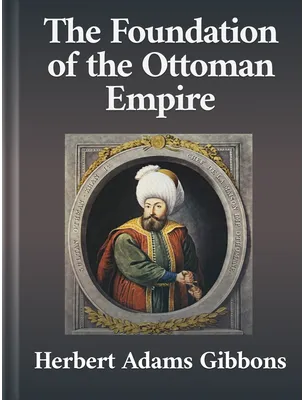
The Foundation of the Ottoman Empire
A History of the Osmanlis up to the Death of Bayezid I (1300-1403)
by
Herbert Adams Gibbons, Ph.D.
 Conquests of Murad & Bayezid In the Balkan Peninsula & of Bayezid in Asia Minor
Preface
Four years of residence in the Ottoman Empire, chiefly in Constantinople, during the most disastrous period of its decline, have led me to investigate its origin. This book is written because I feel that the result of my research brings a new point of view to the student of the twentieth-century problems of the Near East, as well as to those who are interested in fourteenth-century Europe. If we study the past, it is to understand the present and to prepare for the future.
I plead guilty to many footnotes. Much of my text is controversial in character, and the subject-matter is so little known that the general reader would hardly be able to form judgements without a constant — but I trust not wearisome — reference to authorities.
The risk that I run of incurring criticism from Oriental philologists on the ground of nomenclature is very great. I ask their indulgence. Will they not take into consideration the fact that there is no accepted standard among English-speaking scholars for the transliteration of Turkish and Slavic names? Wherever possible, I have adopted the spelling in general usage in the Near East, and in English standard lexicons and encyclopaedias. When a general usage cannot be determined, I have frequently been at a loss.
There was the effort to be as consistent in spelling as sources and authorities would permit. But where consistency was lacking in originals, a consistent transliteration sometimes presented difficulties with which I was incompetent to cope. Even a philologist, with a system, would be puzzled when he found his sources conflicting with each other in spelling, and — as is often the case — with themselves. And if a philologist thinks that he can establish his system by transliterating the spoken word, let him travel from Constantinople to Cairo overland, and he will have a bewildering collection of variants before he reaches his journey’s end. I was not long in Turkey before I learned that Osman and Othman were both correct. It depended merely upon whether you were in Constantinople or Konia! After you had decided to accept the pronunciation of the capital, you were told that Konia is the Tours of Turkey.
My acknowledgements to kind friends are many. I am grateful for the year-in and year-out patience and willingness of the officials of the Bibliothèque Nationale during long periods of constant demand upon their time and attention. Professors John De Witt, D.D., LL.D., of Princeton Theological Seminary, Duncan B. Macdonald, Ph.D., of Hartford Theological Seminary, and Edward P. Cheyney, Ph.D., LL.D., of the University of Pennsylvania, have read portions of the manuscript, and have made important and helpful suggestions. The whole manuscript has been read by Professors Talcott Williams, LL.D., of Columbia University, and R. M. McElroy, Ph.D., of Princeton University, who have not hesitated to give many hours to discussion and criticism of the theory that the book presents.
Above all, I am indebted for practical aid and encouragement in research and in writing, from the inception of the idea of the book until the manuscript went to press, to my wife, with her Bryn Mawr insistence upon accuracy of detail and care for form of narrative, and to Alexander Souter, D.Litt., Regius Professor of Humanity in Aberdeen University, my two comrades in research through a succession of happy years in the rue de Richelieu, rue Servandoni, and rue du Montparnasse of the queen city of the world.
H. A. G.
Paris,
September 1, 1915.
Chapter I
Osman
A New Race Appears in History
I
The traveller who desires to penetrate Asia Minor by railway may start either from Smyrna or from Constantinople. The Constantinople terminus of the Anatolian Railway is at Haïdar Pasha, on the Asiatic shore, where the Bosphorus opens into the Sea of Marmora. Three hours along the Gulf of Ismidt, past the Princes’ Islands, brings one to Ismidt, the ancient Nicomedia, eastern capital of the Roman Empire under Diocletian. It is at the very end of the gulf. From Ismidt, the railway crosses a fertile plain, coasts the western shore of Lake Sabandja, and enters the valley of the Sangarius as far as Lefké. Here it turns southward, and mounts rapidly the course of the Kara Su, a tributary of the Sangarius, through the picturesque town of Biledjik, to a plateau, at the north-western end of which is Eski Sheïr, seven hours distant from Ismidt. Eski Sheïr is the ancient Dorylaeum. It was here that Godfrey de Bouillon in 1097 won from the Turks the victory that opened for his Crusaders the way through Asia Minor.
From Eski Sheïr there are two railway lines. One, running eastward, has its terminus at Angora, the ancient Ancyra, after thirteen hours of rather slow running. The other, the main line, runs south to Afion Kara Hissar, where the line from Smyrna joins it, and then south-west to Konia, the ancient Iconium, which is the western terminus of the new Bagdad Railway. The time from Eski Sheïr to Konia is fifteen hours.
From Lefké or from Mekedjé, near the junction of the Kara Su and the Sangarius, one can drive in four hours west to Isnik (ancient Nicaea), or in twelve hours to Brusa, which lies at the foot of Keshish Dagh (Mount Olympus). Between Lefké and Eski Sheïr, where the railway begins to mount above the river-bed of the Kara Su, is Biledjik. Between Eski Sheïr and Biledjik is Sugut. West from Eski Sheïr, six hours on horse across one low mountain range, lies Inoenu. South from Eski Sheïr, a day by carriage, is Kutayia. There is a short branch line of the Anatolian Railway to Kutayia from Alayund, two and a half hours beyond Eski Sheïr on the way to Konia.
If one will read the above paragraphs with a map before him, he will readily see that this country, the extreme north-western corner of Asia Minor, corresponds roughly to the borderland between the Roman provinces of Phrygia Epictetus and Bithynia, and is near to Constantinople. Eski Sheïr, Sugut, and Biledjik are close to Brusa, Nicaea, and Nicomedia. Owing to the convenient waterways furnished by the Gulfs of Mudania and Ismidt, Brusa, Nicaea, and Nicomedia have always been within a day’s sail of Constantinople, even in the periods of primitive navigation. From the hills behind Eski Sheïr, Mount Olympus is the commanding landmark of the western horizon. From Constantinople, Mount Olympus is easily distinguishable even in dull weather.
It was this country, adjacent to Constantinople, and separated from the rest of Asia Minor by rugged mountain ranges and the dreary, treeless plateau stretching eastward towards the Salt Desert, which gave birth to the people who, a century after their appearance, were to inherit the Byzantine Empire and to place their sovereigns upon the throne of the Caesars.
II
At the end of the thirteenth century, Asia Minor, so long the battleground between the Khalifs and the Byzantines, almost entirely abandoned by the latter for a brief time to the Seljuk emperors of Rum, who had their seat at Konia, then again disturbed by the invasion of the Crusaders from the west and the Mongols from the east, was left to itself. The Byzantines, despite (or perhaps because of!) their re-establishment at Constantinople, were too weak to make any serious attempt to recover what they had lost to the Seljuk Turks. The Mongols of the horde of Djenghiz Khan had destroyed the independence of the Sultanate of Konia, and had established their authority in that city. But they made no real effort to bring under their dominion the districts north-west and west of Konia to which they had logically fallen heir.
At the beginning of the fourteenth century, we find two Christian kingdoms, Trebizond and Little Armenia, or Cilicia, at the north-eastern and south-eastern extremities of the peninsula. In the north-western corner, the Byzantines retained Philadelphia, Brusa, Nicaea, Nicomedia, and the districts in which these cities were located — a narrow strip along the Hellespont, the Sea of Marmora, and the Bosphorus. Asia Minor, without even a semblance of centralized authority, was to him who could gain and who could hold.
Had there been in Asia Minor in the latter half of the thirteenth century a predominant element, with an historical past and with a strong leader, we might have seen a revival of the sultanate of Konia. Or we might have seen a revival of Hellenism, a grafting, perhaps, on fresh stock, which would have put new foundations under the Byzantine Empire by a reconquest of the Asiatic themes. But the Mongols and the Crusaders had done their work too well. The Latins at Constantinople, and the Mongols in Persia and Mesopotamia, had removed any possibility of a revival of either Arab Moslem or Greek Christian traditions.
Sixty years of Latin rule at Constantinople, and in the lower portion of the Balkan peninsula, had demonstrated the futility of any further effort on the part of western Europe to inherit the Eastern Roman Empire. The Mongols, the strongest cohesive military power at that time in the world, had not been won to Christianity, and thus inspired with a desire to re-establish for themselves the succession of the Caesars in the Levant. The Italians, imbued with the city ideal which had been so fatal to the ancient Greeks, and divided into factions in their cities, were beginning a bitter struggle for commercial supremacy in the East that was to lose its vital importance from the discoveries of Vasco da Gama, Columbus, and Magellan, and to render them impotent before the Osmanlis after centuries of misdirected energy and useless sacrifice. The last great crusade had passed by Asia Minor to spend itself in a losing fight against the one remaining Moslem power.
As in other critical periods of history, then, an entirely new people, with an entirely new line of sovereigns, must work out its destiny in this abandoned country, or — to state what actually did happen — must come, with a strength and prestige gained in Europe, to subdue it and to possess it.
From the eighth to the thirteenth centuries a number of new ethnic elements had entered Asia Minor. Except along the range of the Taurus and in the valleys of rivers which emptied into the Aegaean Sea, the Greek element, or more specifically, the Hellenic organization of imperial institutions, had gone back to the coast cities from which it had originally come. The progress of Moslem conquest, after driving before it into Asia Minor the more zealous and militant Armenian and Syrian Christians, had brought a considerable immigration, partly Syrian, partly Arab, and varying in faith. The earlier Turks, who came largely by way of Persia, with a period of settlement in that country, belonged to the great Seljuk movement. They were nominally Moslems, and very quickly became an indigenous element, because they had settled themselves permanently in every place that had been opened up to Turkish immigration by the Seljuk armies. So firmly rooted did they become that, when the fortunes of war allotted again temporarily some of the places which they inhabited to the Crusaders and to the Nicaean Byzantines, they did not dream of moving out. This was the best country they had ever seen and they had no intention of leaving it. When the Osmanlis captured Brusa and Nicaea, they found many Moslems who had been there for three generations. Simple-minded, tolerant of others, totally unconscious of the privileges as well as of the obligations of an organized society, the Turks of the earlier immigration neither opposed nor aided in the political changes which have so frequently been the lot of Asia Minor since their coming. This holds true of the Anatolian Turks of the present day, and will be so as long as they remain illiterate and uninstructed.
In the first quarter of the thirteenth century there was another great migration towards Asia Minor, towards rather than into the peninsula, because it partly scattered itself in the mountains of Armenia and partly turned southward, going over the Taurus and Amanus ranges into Cilicia and Syria. Some got as far as Egypt. The earlier Seljuk invasion had been that of settlers following a victorious army. This invasion was that of refugees fleeing before a terrible foe. For Djenghiz Khan and his Mongol horde had come out of central Asia, and all who could, even the bravest, fled before him. The lesson had been quickly learned that to resist him meant certain death. Because it was a migration of families, with all their worldly possessions, and because they had to hurry and did not know where they were going, the great bulk of them did not advance far.
Most of the bands, after settling for some years in the mountains of Armenia and in the upper valley of the Euphrates, were tempted by the death of Djenghiz Khan to return home. The steep mountains and narrow valleys of Rum had dissuaded them from trying for better luck farther west. It was too much up hill and down dale for their cattle. The resolute and adventurous pushed on into Asia Minor, although in doing so they must have lost or have left behind most of their women and children and flocks. For they were small warrior bands, bent upon enlisting in the army of Alaeddin Kaï Kobad, the last illustrious sultan of the Konia Seljuk line — illustrious because he had not yet met the Mongols and was looked upon by the fugitives as a possible saviour and avenger. Even if they had not the intention of putting themselves under the protection of Alaeddin when they set their faces westward, they must needs have come into contact with him. For of the two roads into Asia Minor from Armenia, the upper one lay through Sivas and Angora, and the lower through Caesarea, Akseraï, and Konia. Whichever route they took would lead them through the Seljuk dominions.
It is doubtful if Alaeddin viewed the appearance of these fighting bands with any other emotion than that of alarm. In spite of their undoubted skill as fighters, the Seljuk Sultan did not dare to enroll many of them in his army. If he were defeated in battle, or if he should die, he knew well that such vigorous mercenaries might upset his line. He could rely upon their fidelity neither against the Kharesmians with whom he was at that time fighting (many of them were from that Sultan’s country), nor against the Mongols with whom he must soon measure his strength. So he followed the policy dictated by prudence. Resisting the temptation of using them in his own army, he granted to their leaders as fiefs districts on the frontiers of his rapidly diminishing empire which were hardly his own to give, where they would have to work out their own salvation by mastering local anarchy in their respective ‘grants’, or, like the Israelites of Canaan, fight for what had been allotted to them, against the Byzantine Emperors of Nicaea.
Under these circumstances, the tribe of destiny would be that which occupied the grant nearest Constantinople and the remnant of the Byzantine Empire. The Turkish tribe which settled on the borders of Bithynia, either by the direction and with the permission of Alaeddin Kaï Kobad, or independently of the Seljuks of Konia, was that whose first historic chief was Osman, the father of the Osmanlis.
III
There are no Ottoman sources to which the historian may go for the origin of the Ottoman people and royal house, or for their history during the fourteenth century. They have no written records of the period before the capture of Constantinople. Their earliest historians date from the end of the fifteenth century, and the two writers to whom they give greatest weight wrote at the end of the sixteenth and the early part of the seventeenth century. From the point of view, then, of recording historical facts, one hesitates in our day to follow the example of von Hammer, by setting forth at length, after a scientific collation, the legends which the simple-minded Osmanlis have always accepted without question. The Byzantines give us nothing worthy of credence about the origin of the Osmanlis, for the reason that they had no means of getting authoritative information. As for the early European writers, their testimony is valuable only as a reflection of the idea which Christendom had of the Osmanlis when they were becoming a menace to European civilization.
On the other hand, these legends are not to be ignored, as they have been by the latest authoritative writer on Ottoman history. Where authenticated facts are lacking, traditions must be examined and carefully weighed. This is essential when we are considering the origins of a people. For no race has ever recorded its birth. The beginnings of a people are so insignificant that they remain unnoticed in general history until the attention of others is attracted to them by their own achievements.
Who were the people that took upon themselves the name of Osman, their chief, and whom we must, from the moment of their very first encounters with the Byzantines, clearly distinguish from the other groups of Anatolian Turks that had gathered around other leaders? Did they, at the beginning of Osman’s career, have any distinct national consciousness? Did they have any past? Did they start the foundation of a state with a definite goal before them? Was there any other cause for their amazing growth and success than the mere fact that they had the most fortunate geographical position, on the confines of a decaying empire?
In the year of the Hegira 616, ‘because there was no more rest to be found in all Persia’ for the Turks who had been forced out of the Khorassan by the approach of Djenghiz Khan, ‘all the wandering Turks, fifty thousand families, followed their leader, Soleiman Shah, and set out for Rum. Then was Alaeddin I, son of Kaï Kosrew, the builder of Konia, entered upon the rule of Rum. These fifty thousand nomad families journeyed several years in the neighbourhood of Erzerum and Erzindjian, changing from winter to summer quarters and plundering the unbelievers who lived there. But … finally … Soleiman Shah marched again towards his homeland, with the intention of passing through the district of Aleppo. As they came to the neighbourhood of Djaber, they wanted to venture across the Euphrates. Soleiman Shah drove his horse into the river to seek a ford. The bank was rocky, so the horse slipped and fell into the river with Soleiman Shah. His end was regarded as a warning (decision) of destiny: it appeared to be the command of God…. A part of these Turks remained to dwell there…. There was a division among the followers of Soleiman Shah. Some of them, who now carry the name of Turcomans of Syria, went into the wilderness. Others went towards Rum, and became ancestors of the nomad tribes who still wander in Rum.
‘Soleiman Shah at his death left four sons: Sonkur tigin, Gundogdu, Ertogrul, the champion of the faith, and Dundar. Some of the Turks followed these four brothers, turned themselves again in the direction of Rum, and came to the … source of the Euphrates. While Ertogrul and Dundar remained there with about four hundred nomad families, the two other brothers turned back again to their home.’ Ertogrul marched farther into Rum, and settled near Angora at the foot of Karadjadagh. From there he wandered to Sultan Oejoenu.
Neshri now tells a story which is repeated by later Ottoman historians as a fact. Neshri says that he heard this story from a ‘trustworthy’ man, who had heard it from the stirrup-holder of Orkhan, who, in turn, had heard it from his father and his grandfather. This is worthy of mention, for it is one of the very few instances where an Oriental historian has taken the trouble to connect his facts with what might be termed an original source:
‘As Ertogrul, with about four hundred men, was marching into Rum, Sultan Alaeddin was engaged in a fight with some of his enemies. As they came near, they found that the Tartars were on the point of beating Sultan Alaeddin. Now Ertogrul had several hundred excellent companions with him. He spoke to them: “Friends, we come straight upon a battle. We carry swords at our side. To flee like women and resume our journey is not manly. We must help one of the two. Shall we aid those who are winning or those who are losing?” Then they said unto him, “It will be difficult to aid the losers. Our people are weak in number, and the victors are strong!” Ertogrul replied, “This is not the speech of bold men. The manly part is to aid the vanquished. The prophet says that he shall come to the helpless in time of need. Were man to make a thousand pilgrimages, he finds not the reward that comes to him when at the right moment he turns aside affliction from the helpless!” Thereupon Ertogrul and his followers immediately grasped their swords, and fell upon the Tartars … and drove them in flight. When the Sultan saw this he came to meet Ertogrul, who dismounted, and kissed the Sultan’s hand. Whereupon Alaeddin gave him a splendid robe of honour and many gifts for his companions. Then gave he to the people of Ertogrul a country by name Sugut for winter and the mountain range of Dumanij for summer residence. From this decides one rightly that the champion of the faith, Osman, was born at Sugut. Then was Karadja Hissar, like Biledjik, not yet captured, but was subject to Sultan Alaeddin. These were three districts.’
Some time later, Ertogrul, acting as commander of the advance-guard of Alaeddin’s army, defeated a force of Greeks and their Tartar mercenaries, in a three days’ battle, and pursued them as far as the Hellespont. Ertogrul’s force consisted of four hundred and forty-four horsemen, which he commanded in person. After this battle Alaeddin bestowed upon Ertogrul as fief the district of Eski Sheïr, comprising Sugut on the north, and Karadja Hissar on the south, of Eski Sheïr. Karadja Hissar was reported captured after an elaborate siege and assault by Ertogrul when he first came into the country. But it is again mentioned as one of the first conquests of Osman from the Christians after his father’s death. None of the Ottoman historians records any progress of conquest during the long years of Ertogrul’s peaceable existence. When he died, in 1288, Osman was thirty years old. He gave to his son less than the Ottoman historians claim was his actual grant from Alaeddin I. If their own records of Osman’s conquests after 1289 are correct, we must believe that his tribe possessed only Sugut and a portion of the mountain range lying directly west. When Ertogrul died, they had no other village — not even a small mountain castle.
IV
After Ertogrul’s death there was an amazing change. Osman and his villagers began to attack their neighbours, extend their boundaries, and form a state. We cannot go on to a consideration of these events without mentioning some traditions of this period which furnish us with a clue to the explanation of this sudden change of a very small pastoral tribe, leading a harmless sleepy existence in the valley of the Kara Su, into a warlike, aggressive, fighting people.
Osman once passed the night in the home of a pious Moslem. Before he went to sleep his host entered the room, and placed on a shelf a book, of which Osman asked the title. ‘It is the Koran,’ he responded. ‘What is its object?’ again asked Osman. ‘The Koran’, his host explained, ‘is the word of God, given to the world through his prophet Mohammed.’ Osman took the book and began to read. He remained standing, and read all night. Towards morning he fell asleep exhausted. An angel appeared to him, and said, ‘Since thou hast read my eternal word with so great respect, thy children and the children of thy children shall be honoured from generation to generation.’
In Itburnu, a village not far from Eski Sheïr, and also not far from Sugut, lived a Moslem cadi, who dispensed justice and legal advice to those of his faith in that neighbourhood. He had a daughter, Malkhatun, whose hand was demanded in marriage by Osman. But the sheik Edebali, for a period of two years, persisted in refusing his consent to this union. Finally, Osman, when sleeping one night in the home of Edebali, had a dream.
He saw himself lying beside the sheik. A moon arose out of the breast of Edebali, and, when it had become full, descended and hid itself in his breast. Then from his own loins there began to arise a tree which, as it grew, became greener and more beautiful, and covered with the shadow of its branches the whole world. Beneath the tree he saw four mountain ranges, the Caucasus, the Atlas, the Taurus, and the Balkans. From the roots of the tree issued forth the Tigris, the Euphrates, the Nile, and the Danube, covered with vessels like the sea. The fields were full of harvests, and the mountains were crowned with thick forests. In the valleys everywhere were cities, whose golden domes were invariably surmounted by a crescent, and from whose countless minarets sounded forth the call to prayer, that mingled itself with the chattering of birds upon the branches of the tree. The leaves of the tree began to lengthen out into swordblades. Then came a wind that pointed the leaves towards the city of Constantinople, which, ‘situated at the junction of two seas and of two continents, seemed like a diamond mounted between two sapphires and two emeralds, and appeared thus to form the precious stone of the ring of a vast dominion which embraced the entire world.’ As Osman was putting on the ring he awoke.
That Osman and his people were good Moslems themselves, and of Moslem ancestry, is not questioned by the Ottoman and Byzantine writers, and seems to have been accepted as a matter of fact by the European historians who have written upon the history of the Ottoman Empire. But it seems very clear that Osman and his tribe, when they settled at Sugut, must have been pagans. There is no direct mention, in any historical record, of the conversion to Islam of the tribes from the Khorassan and other transoxanian regions which, in the beginning of the thirteenth century, appeared on the confines of Asia Minor. The earlier Turkish invaders entered the country only after they had already for generations been in contact with Arabic Islam. Although they displayed no great knowledge of or zeal for their religion and were free from the fanaticism of the Saracens, the Seljuks were certainly Moslems.
But the Turks of the later immigration, from whom Osman sprang, had never come to any great extent under the influence of Islam, even though they had settled for some generations on the frontiers of Persia. If we accept the testimony of the Osmanlis themselves concerning their descent from Soleiman Shah, who had left Mahan with fifty thousand families, we have a clear indication of their being non-Moslems from Neshri’s account of the dispersion of this horde after the death of Soleiman Shah. He says that some were ancestors of the Syrian Turcomans and others of all the wandering tribes in Rum — the habitual nomads of his own day. The testimony of travellers from the twelfth century onwards is overwhelming in support of the pagan character of these tribes.
The various Turkish tribes which entered Asia Minor at the same time as that of Osman, and had penetrated into the western part of the peninsula, soon found themselves in a Moslem atmosphere. They were few in number. Nothing was more natural for them than to adopt the faith of their Seljuk kinsmen. This they did, for exactly the same reason that the Bulgarians, although they had originally a tendency towards Islam, adopted Christianity. It was so natural that it passed without comment. These Turks were primarily warriors, indifferent to deep religious feeling and conviction. So they could take on a new faith — if we can say that they ever had a faith before — without any trouble or without any noise being made over it. Between 800 and 1000 the Seljuks changed their religion three times. At the sack of Mosul, in 1286, the Turks and Turcomans made no distinction between Moslem and Christian, massacring the men and carrying off the women of both sects alike.
The tractability of the Turks, as of the Tartars and Mongols, in the matter of religion was noted by every traveller, and was so well known in western Europe that strenuous efforts were made by the popes at various times from Djenghiz Khan to Gazan Khan to bring these Asiatic hordes into the Christian fold. A united Christendom, even a united Rome, might have seen its missionary work crowned with success.
Of the village and castle chieftains with whom Osman at the beginning of his career lived on friendly terms, almost every one was a Christian. His lot was cast with them. He was cut off from the decaying Seljuk dominion of Konia. He had practically no intercourse with the other Turkish emirs of Asia Minor. His only serious foes were the Mongols, pagans like himself, who had, at the very year of his birth, given what seemed a death-blow to Islam in destroying the Khalifate at Bagdad in 1258, and who were, when Osman began his active career, plotting with the Franks of the Holy Land to aid them against the Egyptian sultanate — the last strong bulwark of Islam.
We see, then, the tremendous importance of these dreams of Osman, of his meeting with Edebali, and of his marriage with Malkhatun. We cannot regard these events in any other light than as recording, in a truly Oriental way, his conversion to Islam. The interpretation of the dream of the Holy Book strikes one immediately. Except in Seadeddin, the religious significance of the moon and tree dream is overshadowed by the romance of Osman and Malkhatun. Let us give to sheik Edebali his proper place in history as the great missionary of Islam, who found for his faith in its hour of dire need a race of swordbearers worthy of the task of reconstituting the Khalifate and of spreading once more the name of Mohammed in three continents.
It was the conversion of Osman and his tribe which gave birth to the Osmanli people, because it welded into one race the various elements living in the north-western corner of Asia Minor. The new faith gave them a raison d’être. This conversion, and not the disappearance of the Seljuks of Konia, is the explanation of the activity of Osman after 1290, as in sharp contrast with the preceding fifty years of easy, slothful existence at Sugut.
Ertogrul and Osman, village chieftain at Sugut, had lived the life of a simple, pastoral folk, with no ambition beyond the horizon of their little village. No record exists of any battle fought, of any conquest made. Turks had already made their appearance in raids against the coast cities of Asia Minor, upon the islands of the Aegaean Sea, and even in the Balkan peninsula. But they were not the Turks of Osman. Until the students of the later Byzantine Empire, and of the Italian commercial cities in their relations with the Levant, make a clear distinction between Turk and Osmanli, there will always be confusion upon this point. Ertogrul had about four hundred fighting men. There is no reason to believe that Osman had more. His relations with his neighbours were those of perfect amity. There is no question of believer and unbeliever.
Suddenly we find Osman attacking his neighbours and capturing their castles. During the decade from 1290 to 1300 he extends his boundaries until he comes into contact with the Byzantines. His four hundred warriors grow to four thousand. We begin to hear of a people called, not Turks, but Osmanlis, after a leader whose own name first appears at the same time as that of his people. They are foes of Greeks and Tartars alike. They are definitely allied to Islam. They possess a missionary spirit and a desire to proselytize such as one always finds in new converts. Their unity among themselves, and their distinctively different character from that of the other Turks of Asia Minor, becomes, during the first sixty years of the fourteenth century, so marked that Europe is forced to recognize them as a nation. Being more in the presence of Europe than the other groups of Asia Minor, the Europeans begin to call them simply Turks, and to take them as representing all the Turks of Anatolia.
But they had never called themselves Turks until they got the habit of doing so through the influence of European education upon their higher classes, and because of the awakening since 1789 of the sentiment of nationality among the subject Christian races. Mouradjea d’Ohsson, who understood the Osmanlis better than any other European writer of his day, wrote in 1785: ‘The Osmanlis employ the term “Turk” in referring to a coarse and brutal man. According to the Osmanlis, the word Turk belongs only to the peoples of the Turkestan and to those vagabond hordes who lead a stagnant life in the deserts of the Khorassan. All the peoples submitted to the Empire are designated under the name “Osmanlis”, and they do not understand why they are called Turks by Europeans. As they attach to this word the idea of the most marked insult, no foreigner in the Empire ever allows himself to use it in speaking to them.’