'Euthydemus' was written by Plato around 380 BCE. It is part of his early dialogues.
[{"id":"para_1","index":0,"start":0,"offset":329,"words":1,"paraNum":"","lastModified":1728540741000,"semanticType":"title-book-title","voicework":"tts","blockId":"euthydemus_plato_ivy2_ffa_en-bl2s","language":"en","wordsRange":{"start":100000000,"end":102000000},"paragraphVersion":74,"direction":"ltr","paragraph":"<h1 class=\"ilm-title ilm-x-large\" id=\"para_1\" semantictype=\"title-book-title\" data-ilmid=\"euthydemus_plato_ivy2_ffa_en-bl2s\" data-audio=\"1\" data-chapter=\"para_1\" data-words-count=\"1\" data-before=\"0\" data-ww=\"\"><span class=\"block-pb\"> <span class=\"block-pb is-animated\"></span> </span><span class=\"itm-wrap\">Euthydemus</span></h1>","hasContent":true,"isFirst":true,"isLast":false},{"id":"para_2","index":1,"start":329,"offset":336,"words":1,"paraNum":"","lastModified":1728512071000,"semanticType":"title-author","voicework":"tts","blockId":"euthydemus_plato_ivy2_ffa_en-bl2t","language":"en","wordsRange":{"start":202000000,"end":205000000},"paragraphVersion":83,"direction":"ltr","paragraph":"<h1 class=\"ilm-title ilm-author ilm-large\" id=\"para_2\" semantictype=\"title-author\" data-ilmid=\"euthydemus_plato_ivy2_ffa_en-bl2t\" data-audio=\"1\" data-chapter=\"para_2\" data-words-count=\"1\" data-before=\"1\" data-ww=\"\"><span class=\"block-pb\"> <span class=\"block-pb is-animated\"></span> </span><span class=\"itm-wrap\">by <br>Plato</span></h1>","hasContent":true,"isFirst":false,"isLast":false},{"id":"para_3","index":2,"start":665,"offset":156,"words":0,"paraNum":"","lastModified":1659513969000,"semanticType":"line","blockId":"euthydemus_plato_ivy2_ffa_en-blki","language":"en","wordsRange":{"start":238333333,"end":271666667},"paragraphVersion":47,"direction":"ltr","paragraph":"<hr class=\"ilm-hr ilm-small\" id=\"para_3\" semantictype=\"line\" data-ilmid=\"euthydemus_plato_ivy2_ffa_en-blki\" data-words-count=\"0\" data-before=\"2\" data-ww=\"\">","hasContent":true,"isFirst":false,"isLast":false},{"id":"para_4","index":3,"start":821,"offset":288,"words":2,"paraNum":"","lastModified":1728293545000,"semanticType":"par","voicework":"tts","blockId":"euthydemus_plato_ivy2_ffa_en-bl2u","language":"en","wordsRange":{"start":305000000,"end":308000000},"paragraphVersion":84,"direction":"ltr","paragraph":"<p class=\"ilm-center\" id=\"para_4\" semantictype=\"par\" data-ilmid=\"euthydemus_plato_ivy2_ffa_en-bl2u\" data-audio=\"1\" data-words-count=\"2\" data-before=\"2\" data-ww=\"\"><span class=\"block-pb\"> <span class=\"block-pb is-animated\"></span> </span><span class=\"itm-wrap\">Dramatis Personæ</span></p>","hasContent":true,"isFirst":false,"isLast":false},{"id":"para_5","index":4,"start":1109,"offset":325,"words":1,"paraNum":"","lastModified":1728294129000,"semanticType":"par","voicework":"tts","blockId":"euthydemus_plato_ivy2_ffa_en-bl2v","language":"en","wordsRange":{"start":408000000,"end":415000000},"paragraphVersion":79,"direction":"ltr","paragraph":"<p id=\"para_5\" semantictype=\"par\" data-ilmid=\"euthydemus_plato_ivy2_ffa_en-bl2v\" data-audio=\"1\" data-words-count=\"1\" data-before=\"4\" data-ww=\"\"><span class=\"block-pb\"> <span class=\"block-pb is-animated\"></span> </span><span class=\"itm-wrap\">Socrates<br>Crito<br>Cleinias<br>Euthydemus<br>Dionysodorus<br>Ctesippus.</span></p>","hasContent":true,"isFirst":false,"isLast":false},{"id":"para_6","index":5,"start":1434,"offset":312,"words":2,"paraNum":"","lastModified":1728293557000,"semanticType":"par","voicework":"tts","blockId":"euthydemus_plato_ivy2_ffa_en-bl2w","language":"en","wordsRange":{"start":515000000,"end":517000000},"paragraphVersion":82,"direction":"ltr","paragraph":"<p class=\"ilm-large\" id=\"para_6\" semantictype=\"par\" data-ilmid=\"euthydemus_plato_ivy2_ffa_en-bl2w\" data-audio=\"1\" data-words-count=\"2\" data-before=\"5\" data-ww=\"\"><span class=\"block-pb\"> <span class=\"block-pb is-animated\"></span> </span><span class=\"itm-wrap\"><b>Scene: </b><b>The </b><b>Lyceum</b><br></span></p>","hasContent":true,"isFirst":false,"isLast":false},{"id":"para_7","index":6,"start":1746,"offset":601,"words":60,"paraNum":"1","lastModified":1728294757000,"semanticType":"par","voicework":"tts","blockId":"euthydemus_plato_ivy2_ffa_en-bl2y","language":"en","wordsRange":{"start":720000000,"end":780000000},"paragraphVersion":69,"direction":"ltr","paragraph":"<p id=\"para_7\" semantictype=\"par\" data-ilmid=\"euthydemus_plato_ivy2_ffa_en-bl2y\" data-audio=\"1\" data-words-count=\"60\" data-before=\"7\" data-ww=\"\"><span class=\"block-num\" data-id=\"1\"></span><span class=\"block-pb\"> <span class=\"block-pb is-animated\"></span> </span><span class=\"itm-wrap\"><b>Crito:</b> Who was the person, Socrates, with whom you were talking yesterday at the Lyceum? There was such a crowd around you that I could not get within hearing, but I caught a sight of him over their heads, and I made out, as I thought, that he was a stranger with whom you were talking: who was he?</span></p>","hasContent":true,"isFirst":false,"isLast":false},{"id":"para_8","index":7,"start":2347,"offset":363,"words":12,"paraNum":"2","lastModified":1728294531000,"semanticType":"par","voicework":"tts","blockId":"euthydemus_plato_ivy2_ffa_en-bl2z","language":"en","wordsRange":{"start":880000000,"end":892000000},"paragraphVersion":73,"direction":"ltr","paragraph":"<p id=\"para_8\" semantictype=\"par\" data-ilmid=\"euthydemus_plato_ivy2_ffa_en-bl2z\" data-audio=\"1\" data-words-count=\"12\" data-before=\"67\" data-ww=\"\"><span class=\"block-num\" data-id=\"2\"></span><span class=\"block-pb\"> <span class=\"block-pb is-animated\"></span> </span><span class=\"itm-wrap\"><b>Socrates:</b> There were two, Crito; which of them do you mean?</span></p>","hasContent":true,"isFirst":false,"isLast":false},{"id":"para_9","index":8,"start":2710,"offset":605,"words":57,"paraNum":"3","lastModified":1728294758000,"semanticType":"par","voicework":"tts","blockId":"euthydemus_plato_ivy2_ffa_en-bl30","language":"en","wordsRange":{"start":992000000,"end":1050000000},"paragraphVersion":63,"direction":"ltr","paragraph":"<p id=\"para_9\" semantictype=\"par\" data-ilmid=\"euthydemus_plato_ivy2_ffa_en-bl30\" data-audio=\"1\" data-words-count=\"57\" data-before=\"79\" data-ww=\"\"><span class=\"block-num\" data-id=\"3\"></span><span class=\"block-pb\"> <span class=\"block-pb is-animated\"></span> </span><span class=\"itm-wrap\"><b>Crito:</b> The one whom I mean was seated second from you on the right-hand side. In the middle was Cleinias the young son of Axiochus, who has wonderfully grown; he is only about the age of my own Critobulus, but he is much forwarder and very good-looking: the other is thin and looks younger than he is.</span></p>","hasContent":true,"isFirst":false,"isLast":false},{"id":"para_10","index":9,"start":3315,"offset":451,"words":27,"paraNum":"4","lastModified":1728296743000,"semanticType":"par","voicework":"tts","blockId":"euthydemus_plato_ivy2_ffa_en-bl31","language":"en","wordsRange":{"start":1150000000,"end":1176000000},"paragraphVersion":85,"direction":"ltr","paragraph":"<p id=\"para_10\" semantictype=\"par\" data-ilmid=\"euthydemus_plato_ivy2_ffa_en-bl31\" data-audio=\"1\" data-words-count=\"27\" data-before=\"136\" data-ww=\"\"><span class=\"block-num\" data-id=\"4\"></span><span class=\"block-pb\"> <span class=\"block-pb is-animated\"></span> </span><span class=\"itm-wrap\"><b>Socrates:</b> He whom you mean, Crito, is Euthydemus; and on my left hand there was his brother Dionysodorus, who also took part in the conversation.</span></p>","hasContent":true,"isFirst":false,"isLast":false},{"id":"para_11","index":10,"start":3766,"offset":476,"words":32,"paraNum":"5","lastModified":1728294757000,"semanticType":"par","voicework":"tts","blockId":"euthydemus_plato_ivy2_ffa_en-bl32","language":"en","wordsRange":{"start":1276000000,"end":1309000000},"paragraphVersion":63,"direction":"ltr","paragraph":"<p id=\"para_11\" semantictype=\"par\" data-ilmid=\"euthydemus_plato_ivy2_ffa_en-bl32\" data-audio=\"1\" data-words-count=\"32\" data-before=\"163\" data-ww=\"\"><span class=\"block-num\" data-id=\"5\"></span><span class=\"block-pb\"> <span class=\"block-pb is-animated\"></span> </span><span class=\"itm-wrap\"><b>Crito:</b> Neither of them are known to me, Socrates; they are a new importation of Sophists, as I should imagine. Of what country are they, and what is their line of wisdom?</span></p>","hasContent":true,"isFirst":false,"isLast":false},{"id":"para_12","index":11,"start":4242,"offset":1642,"words":248,"paraNum":"6","lastModified":1728294617000,"semanticType":"par","voicework":"tts","blockId":"euthydemus_plato_ivy2_ffa_en-bl33","language":"en","wordsRange":{"start":1409000000,"end":1657000000},"paragraphVersion":65,"direction":"ltr","paragraph":"<p id=\"para_12\" semantictype=\"par\" data-ilmid=\"euthydemus_plato_ivy2_ffa_en-bl33\" data-audio=\"1\" data-words-count=\"248\" data-before=\"195\" data-ww=\"\"><span class=\"block-num\" data-id=\"6\"></span><span class=\"block-pb\"> <span class=\"block-pb is-animated\"></span> </span><span class=\"itm-wrap\"><b>Socrates:</b> As to their origin, I believe that they are natives of this part of the world, and have migrated from Chios to Thurii; they were driven out of Thurii, and have been living for many years past in these regions. As to their wisdom, about which you ask, Crito, they are wonderful — consummate! I never knew what the true pancratiast was before; they are simply made up of fighting, not like the two Acarnanian brothers who fight with their bodies only, but this pair of heroes, besides being perfect in the use of their bodies, are invincible in every sort of warfare; for they are capital at fighting in armour, and will teach the art to any one who pays them; and also they are most skilful in legal warfare; they will plead themselves and teach others to speak and to compose speeches which will have an effect upon the courts. And this was only the beginning of their wisdom, but they have at last carried out the pancratiastic art to the very end, and have mastered the only mode of fighting which had been hitherto neglected by them; and now no one dares even to stand up against them: such is their skill in the war of words, that they can refute any proposition whether true or false. Now I am thinking, Crito, of placing myself in their hands; for they say that in a short time they can impart their skill to any one.</span></p>","hasContent":true,"isFirst":false,"isLast":false},{"id":"para_13","index":12,"start":5884,"offset":382,"words":16,"paraNum":"7","lastModified":1728294704000,"semanticType":"par","voicework":"tts","blockId":"euthydemus_plato_ivy2_ffa_en-bl34","language":"en","wordsRange":{"start":1757000000,"end":1773000000},"paragraphVersion":63,"direction":"ltr","paragraph":"<p id=\"para_13\" semantictype=\"par\" data-ilmid=\"euthydemus_plato_ivy2_ffa_en-bl34\" data-audio=\"1\" data-words-count=\"16\" data-before=\"443\" data-ww=\"\"><span class=\"block-num\" data-id=\"7\"></span><span class=\"block-pb\"> <span class=\"block-pb is-animated\"></span> </span><span class=\"itm-wrap\"><b>Crito:</b> But, Socrates, are you not too old? there may be reason to fear that.</span></p>","hasContent":true,"isFirst":false,"isLast":false},{"id":"para_14","index":13,"start":6266,"offset":1260,"words":185,"paraNum":"8","lastModified":1728294616000,"semanticType":"par","voicework":"tts","blockId":"euthydemus_plato_ivy2_ffa_en-bl35","language":"en","wordsRange":{"start":1873000000,"end":2058000000},"paragraphVersion":63,"direction":"ltr","paragraph":"<p id=\"para_14\" semantictype=\"par\" data-ilmid=\"euthydemus_plato_ivy2_ffa_en-bl35\" data-audio=\"1\" data-words-count=\"185\" data-before=\"459\" data-ww=\"\"><span class=\"block-num\" data-id=\"8\"></span><span class=\"block-pb\"> <span class=\"block-pb is-animated\"></span> </span><span class=\"itm-wrap\"><b>Socrates:</b> Certainly not, Crito; as I will prove to you, for I have the consolation of knowing that they began this art of disputation which I covet, quite, as I may say, in old age; last year, or the year before, they had none of their new wisdom. I am only apprehensive that I may bring the two strangers into disrepute, as I have done Connus the son of Metrobius, the harp-player, who is still my music-master; for when the boys who go to him see me going with them, they laugh at me and call him grandpapa’s master. Now I should not like the strangers to experience similar treatment; the fear of ridicule may make them unwilling to receive me; and therefore, Crito, I shall try and persuade some old men to accompany me to them, as I persuaded them to go with me to Connus, and I hope that you will make one: and perhaps we had better take your sons as a bait; they will want to have them as pupils, and for the sake of them willing to receive us.</span></p>","hasContent":true,"isFirst":false,"isLast":false},{"id":"para_15","index":14,"start":7526,"offset":481,"words":35,"paraNum":"9","lastModified":1728294718000,"semanticType":"par","voicework":"tts","blockId":"euthydemus_plato_ivy2_ffa_en-bl36","language":"en","wordsRange":{"start":2158000000,"end":2193000000},"paragraphVersion":63,"direction":"ltr","paragraph":"<p id=\"para_15\" semantictype=\"par\" data-ilmid=\"euthydemus_plato_ivy2_ffa_en-bl36\" data-audio=\"1\" data-words-count=\"35\" data-before=\"644\" data-ww=\"\"><span class=\"block-num\" data-id=\"9\"></span><span class=\"block-pb\"> <span class=\"block-pb is-animated\"></span> </span><span class=\"itm-wrap\"><b>Crito:</b> I see no objection, Socrates, if you like; but first I wish that you would give me a description of their wisdom, that I may know beforehand what we are going to learn.</span></p>","hasContent":true,"isFirst":false,"isLast":false},{"id":"para_16","index":15,"start":8007,"offset":1126,"words":153,"paraNum":"10","lastModified":1728295559000,"semanticType":"par","voicework":"tts","blockId":"euthydemus_plato_ivy2_ffa_en-bl37","language":"en","wordsRange":{"start":2293000000,"end":2444333333},"paragraphVersion":81,"direction":"ltr","paragraph":"<p id=\"para_16\" semantictype=\"par\" data-ilmid=\"euthydemus_plato_ivy2_ffa_en-bl37\" data-audio=\"1\" data-words-count=\"153\" data-before=\"679\" data-ww=\"\"><span class=\"block-num\" data-id=\"10\"></span><span class=\"block-pb\"> <span class=\"block-pb is-animated\"></span> </span><span class=\"itm-wrap\"><b>Socrates:</b> In less than no time you shall hear; for I cannot say that I did not attend — I paid great attention to them, and I remember and will endeavour to repeat the whole story. Providentially I was sitting alone in the dressing-room of the Lyceum where you saw me, and was about to depart; when I was getting up I recognized the familiar divine sign: so I sat down again, and in a little while the two brothers Euthydemus and Dionysodorus came in, and several others with them, whom I believe to be their disciples, and they walked about in the covered court; they had not taken more than two or three turns when Cleinias entered, who, as you truly say, is very much improved: he was followed by a host of lovers, one of whom was Ctesippus the Paeanian, a well-bred youth, but also having the wildness of youth. </span></p>","hasContent":true,"isFirst":false,"isLast":false},{"id":"para_17","index":16,"start":9133,"offset":699,"words":78,"paraNum":"11","lastModified":1728308796000,"semanticType":"par","voicework":"tts","blockId":"euthydemus_plato_ivy2_ffa_en-blkk","language":"en","wordsRange":{"start":2444666667,"end":2520333333},"paragraphVersion":56,"direction":"ltr","paragraph":"<p id=\"para_17\" semantictype=\"par\" data-ilmid=\"euthydemus_plato_ivy2_ffa_en-blkk\" data-audio=\"1\" data-words-count=\"78\" data-before=\"832\" data-ww=\"\"><span class=\"block-num\" data-id=\"11\"></span><span class=\"block-pb\"> <span class=\"block-pb is-animated\"></span> </span><span class=\"itm-wrap\">Cleinias saw me from the entrance as I was sitting alone, and at once came and sat down on the right hand of me, as you describe; and Dionysodorus and Euthydemus, when they saw him, at first stopped and talked with one another, now and then glancing at us, for I particularly watched them; and then Euthydemus came and sat down by the youth, and the other by me on the left hand; the rest anywhere. </span></p>","hasContent":true,"isFirst":false,"isLast":false},{"id":"para_18","index":17,"start":9832,"offset":759,"words":94,"paraNum":"12","lastModified":1728308766000,"semanticType":"par","voicework":"tts","blockId":"euthydemus_plato_ivy2_ffa_en-blks","language":"en","wordsRange":{"start":2520666667,"end":2614000000},"paragraphVersion":23,"direction":"ltr","paragraph":"<p id=\"para_18\" semantictype=\"par\" data-ilmid=\"euthydemus_plato_ivy2_ffa_en-blks\" data-audio=\"1\" data-words-count=\"94\" data-before=\"910\" data-ww=\"\"><span class=\"block-num\" data-id=\"12\"></span><span class=\"block-pb\"> <span class=\"block-pb is-animated\"></span> </span><span class=\"itm-wrap\">I saluted the brothers, whom I had not seen for a long time; and then I said to Cleinias: Here are two wise men, Euthydemus and Dionysodorus, Cleinias, wise not in a small but in a large way of wisdom, for they know all about war, — all that a good general ought to know about the array and command of an army, and the whole art of fighting in armour: and they know about law too, and can teach a man how to use the weapons of the courts when he is injured.</span></p>","hasContent":true,"isFirst":false,"isLast":false},{"id":"para_19","index":18,"start":10591,"offset":546,"words":43,"paraNum":"13","lastModified":1728308766000,"semanticType":"par","voicework":"tts","blockId":"euthydemus_plato_ivy2_ffa_en-bl38","language":"en","wordsRange":{"start":2714000000,"end":2757000000},"paragraphVersion":69,"direction":"ltr","paragraph":"<p id=\"para_19\" semantictype=\"par\" data-ilmid=\"euthydemus_plato_ivy2_ffa_en-bl38\" data-audio=\"1\" data-words-count=\"43\" data-before=\"1004\" data-ww=\"\"><span class=\"block-num\" data-id=\"13\"></span><span class=\"block-pb\"> <span class=\"block-pb is-animated\"></span> </span><span class=\"itm-wrap\">They heard me say this, but only despised me. I observed that they looked at one another, and both of them laughed; and then Euthydemus said: Those, Socrates, are matters which we no longer pursue seriously; to us they are secondary occupations.</span></p>","hasContent":true,"isFirst":false,"isLast":false},{"id":"para_20","index":19,"start":11137,"offset":452,"words":28,"paraNum":"14","lastModified":1728308766000,"semanticType":"par","voicework":"tts","blockId":"euthydemus_plato_ivy2_ffa_en-bl39","language":"en","wordsRange":{"start":2857000000,"end":2886000000},"paragraphVersion":63,"direction":"ltr","paragraph":"<p id=\"para_20\" semantictype=\"par\" data-ilmid=\"euthydemus_plato_ivy2_ffa_en-bl39\" data-audio=\"1\" data-words-count=\"28\" data-before=\"1047\" data-ww=\"\"><span class=\"block-num\" data-id=\"14\"></span><span class=\"block-pb\"> <span class=\"block-pb is-animated\"></span> </span><span class=\"itm-wrap\">Indeed, I said, if such occupations are regarded by you as secondary, what must the principal one be; tell me, I beseech you, what that noble study is?</span></p>","hasContent":true,"isFirst":false,"isLast":false},{"id":"para_21","index":20,"start":11589,"offset":445,"words":25,"paraNum":"15","lastModified":1728308766000,"semanticType":"par","voicework":"tts","blockId":"euthydemus_plato_ivy2_ffa_en-bl3a","language":"en","wordsRange":{"start":2986000000,"end":3012000000},"paragraphVersion":63,"direction":"ltr","paragraph":"<p id=\"para_21\" semantictype=\"par\" data-ilmid=\"euthydemus_plato_ivy2_ffa_en-bl3a\" data-audio=\"1\" data-words-count=\"25\" data-before=\"1075\" data-ww=\"\"><span class=\"block-num\" data-id=\"15\"></span><span class=\"block-pb\"> <span class=\"block-pb is-animated\"></span> </span><span class=\"itm-wrap\">The teaching of virtue, Socrates, he replied, is our principal occupation; and we believe that we can impart it better and quicker than any man.</span></p>","hasContent":true,"isFirst":false,"isLast":false},{"id":"para_22","index":21,"start":12034,"offset":855,"words":106,"paraNum":"16","lastModified":1728308766000,"semanticType":"par","voicework":"tts","blockId":"euthydemus_plato_ivy2_ffa_en-bl3b","language":"en","wordsRange":{"start":3112000000,"end":3218000000},"paragraphVersion":66,"direction":"ltr","paragraph":"<p id=\"para_22\" semantictype=\"par\" data-ilmid=\"euthydemus_plato_ivy2_ffa_en-bl3b\" data-audio=\"1\" data-words-count=\"106\" data-before=\"1100\" data-ww=\"\"><span class=\"block-num\" data-id=\"16\"></span><span class=\"block-pb\"> <span class=\"block-pb is-animated\"></span> </span><span class=\"itm-wrap\">My God! I said, and where did you learn that? I always thought, as I was saying just now, that your chief accomplishment was the art of fighting in armour; and I used to say as much of you, for I remember that you professed this when you were here before. But now if you really have the other knowledge, O forgive me: I address you as I would superior beings, and ask you to pardon the impiety of my former expressions. But are you quite sure about this, Dionysodorus and Euthydemus? the promise is so vast, that a feeling of incredulity steals over me.</span></p>","hasContent":true,"isFirst":false,"isLast":false},{"id":"para_23","index":22,"start":12889,"offset":346,"words":9,"paraNum":"17","lastModified":1728308766000,"semanticType":"par","voicework":"tts","blockId":"euthydemus_plato_ivy2_ffa_en-bl3c","language":"en","wordsRange":{"start":3318000000,"end":3328000000},"paragraphVersion":63,"direction":"ltr","paragraph":"<p id=\"para_23\" semantictype=\"par\" data-ilmid=\"euthydemus_plato_ivy2_ffa_en-bl3c\" data-audio=\"1\" data-words-count=\"9\" data-before=\"1206\" data-ww=\"\"><span class=\"block-num\" data-id=\"17\"></span><span class=\"block-pb\"> <span class=\"block-pb is-animated\"></span> </span><span class=\"itm-wrap\">You may take our word, Socrates, for the fact.</span></p>","hasContent":true,"isFirst":false,"isLast":false},{"id":"para_24","index":23,"start":13235,"offset":494,"words":38,"paraNum":"18","lastModified":1728308766000,"semanticType":"par","voicework":"tts","blockId":"euthydemus_plato_ivy2_ffa_en-bl3d","language":"en","wordsRange":{"start":3428000000,"end":3467000000},"paragraphVersion":63,"direction":"ltr","paragraph":"<p id=\"para_24\" semantictype=\"par\" data-ilmid=\"euthydemus_plato_ivy2_ffa_en-bl3d\" data-audio=\"1\" data-words-count=\"38\" data-before=\"1215\" data-ww=\"\"><span class=\"block-num\" data-id=\"18\"></span><span class=\"block-pb\"> <span class=\"block-pb is-animated\"></span> </span><span class=\"itm-wrap\">Then I think you happier in having such a treasure than the great king is in the possession of his kingdom. And please to tell me whether you intend to exhibit your wisdom; or what will you do?</span></p>","hasContent":true,"isFirst":false,"isLast":false},{"id":"para_25","index":24,"start":13729,"offset":429,"words":26,"paraNum":"19","lastModified":1728308766000,"semanticType":"par","voicework":"tts","blockId":"euthydemus_plato_ivy2_ffa_en-bl3e","language":"en","wordsRange":{"start":3567000000,"end":3594000000},"paragraphVersion":63,"direction":"ltr","paragraph":"<p id=\"para_25\" semantictype=\"par\" data-ilmid=\"euthydemus_plato_ivy2_ffa_en-bl3e\" data-audio=\"1\" data-words-count=\"26\" data-before=\"1253\" data-ww=\"\"><span class=\"block-num\" data-id=\"19\"></span><span class=\"block-pb\"> <span class=\"block-pb is-animated\"></span> </span><span class=\"itm-wrap\">That is why we have come hither, Socrates; and our purpose is not only to exhibit, but also to teach any one who likes to learn.</span></p>","hasContent":true,"isFirst":false,"isLast":false},{"id":"para_26","index":25,"start":14158,"offset":1203,"words":163,"paraNum":"20","lastModified":1728309934000,"semanticType":"par","voicework":"tts","blockId":"euthydemus_plato_ivy2_ffa_en-bl3f","language":"en","wordsRange":{"start":3694000000,"end":3854333333},"paragraphVersion":104,"direction":"ltr","paragraph":"<p id=\"para_26\" semantictype=\"par\" data-ilmid=\"euthydemus_plato_ivy2_ffa_en-bl3f\" data-audio=\"1\" data-words-count=\"163\" data-before=\"1279\" data-ww=\"\"><span class=\"block-num\" data-id=\"20\"></span><span class=\"block-pb\"> <span class=\"block-pb is-animated\"></span> </span><span class=\"itm-wrap\">But I can promise you, I said, that every unvirtuous person will want to learn. I shall be the first; and there is the youth Cleinias, and Ctesippus: and here are several others, I said, pointing to the lovers of Cleinias, who were beginning to gather round us. Now Ctesippus was sitting at some distance from Cleinias; and when Euthydemus leaned forward in talking with me, he was prevented from seeing Cleinias, who was between us; and so, partly because he wanted to look at his love, and also because he was interested, he jumped up and stood opposite to us: and all the other admirers of Cleinias, as well as the disciples of Euthydemus and Dionysodorus, followed his example. And these were the persons whom I showed to Euthydemus, telling him that they were all eager to learn: to which Ctesippus and all of them with one voice vehemently assented, and bid him exhibit the power of his wisdom. </span></p>","hasContent":true,"isFirst":false,"isLast":false},{"id":"para_27","index":26,"start":15361,"offset":914,"words":122,"paraNum":"21","lastModified":1728514957000,"semanticType":"par","voicework":"tts","blockId":"euthydemus_plato_ivy2_ffa_en-blkl","language":"en","wordsRange":{"start":3854666667,"end":3976000000},"paragraphVersion":65,"direction":"ltr","paragraph":"<p id=\"para_27\" semantictype=\"par\" data-ilmid=\"euthydemus_plato_ivy2_ffa_en-blkl\" data-audio=\"1\" data-words-count=\"122\" data-before=\"1442\" data-ww=\"\"><span class=\"block-num\" data-id=\"21\"></span><span class=\"block-pb\"> <span class=\"block-pb is-animated\"></span> </span><span class=\"itm-wrap\">Then I said: O Euthydemus and Dionysodorus, I earnestly request you to do myself and the company the favour to exhibit. There may be some trouble in giving the whole exhibition; but tell me one thing, — can you make a good man of him only who is already convinced that he ought to learn of you, or of him also who is not convinced, either because he imagines that virtue is a thing which cannot be taught at all, or that you are not the teachers of it? Has your art power to persuade him, who is of the latter temper of mind, that virtue can be taught; and that you are the men from whom he will best learn it?</span></p>","hasContent":true,"isFirst":false,"isLast":false},{"id":"para_28","index":27,"start":16275,"offset":361,"words":9,"paraNum":"22","lastModified":1728309899000,"semanticType":"par","voicework":"tts","blockId":"euthydemus_plato_ivy2_ffa_en-bl3g","language":"en","wordsRange":{"start":4076000000,"end":4086000000},"paragraphVersion":68,"direction":"ltr","paragraph":"<p id=\"para_28\" semantictype=\"par\" data-ilmid=\"euthydemus_plato_ivy2_ffa_en-bl3g\" data-audio=\"1\" data-words-count=\"9\" data-before=\"1564\" data-ww=\"\"><span class=\"block-num\" data-id=\"22\"></span><span class=\"block-pb\"> <span class=\"block-pb is-animated\"></span> </span><span class=\"itm-wrap\">Certainly, Socrates, said Dionysodorus; our art will do both.</span></p>","hasContent":true,"isFirst":false,"isLast":false},{"id":"para_29","index":28,"start":16636,"offset":457,"words":30,"paraNum":"23","lastModified":1728309899000,"semanticType":"par","voicework":"tts","blockId":"euthydemus_plato_ivy2_ffa_en-bl3h","language":"en","wordsRange":{"start":4186000000,"end":4217000000},"paragraphVersion":67,"direction":"ltr","paragraph":"<p id=\"para_29\" semantictype=\"par\" data-ilmid=\"euthydemus_plato_ivy2_ffa_en-bl3h\" data-audio=\"1\" data-words-count=\"30\" data-before=\"1573\" data-ww=\"\"><span class=\"block-num\" data-id=\"23\"></span><span class=\"block-pb\"> <span class=\"block-pb is-animated\"></span> </span><span class=\"itm-wrap\">And you and your brother, Dionysodorus, I said, of all men who are now living are the most likely to stimulate him to philosophy and to the study of virtue?</span></p>","hasContent":true,"isFirst":false,"isLast":false},{"id":"para_30","index":29,"start":17093,"offset":342,"words":8,"paraNum":"24","lastModified":1728309899000,"semanticType":"par","voicework":"tts","blockId":"euthydemus_plato_ivy2_ffa_en-bl3i","language":"en","wordsRange":{"start":4317000000,"end":4326000000},"paragraphVersion":67,"direction":"ltr","paragraph":"<p id=\"para_30\" semantictype=\"par\" data-ilmid=\"euthydemus_plato_ivy2_ffa_en-bl3i\" data-audio=\"1\" data-words-count=\"8\" data-before=\"1603\" data-ww=\"\"><span class=\"block-num\" data-id=\"24\"></span><span class=\"block-pb\"> <span class=\"block-pb is-animated\"></span> </span><span class=\"itm-wrap\">Yes, Socrates, I rather think that we are.</span></p>","hasContent":true,"isFirst":false,"isLast":false},{"id":"para_31","index":30,"start":17435,"offset":1101,"words":160,"paraNum":"25","lastModified":1728309899000,"semanticType":"par","voicework":"tts","blockId":"euthydemus_plato_ivy2_ffa_en-bl3j","language":"en","wordsRange":{"start":4426000000,"end":4587000000},"paragraphVersion":67,"direction":"ltr","paragraph":"<p id=\"para_31\" semantictype=\"par\" data-ilmid=\"euthydemus_plato_ivy2_ffa_en-bl3j\" data-audio=\"1\" data-words-count=\"160\" data-before=\"1611\" data-ww=\"\"><span class=\"block-num\" data-id=\"25\"></span><span class=\"block-pb\"> <span class=\"block-pb is-animated\"></span> </span><span class=\"itm-wrap\">Then I wish that you would be so good as to defer the other part of the exhibition, and only try to persuade the youth whom you see here that he ought to be a philosopher and study virtue. Exhibit that, and you will confer a great favour on me and on every one present; for the fact is I and all of us are extremely anxious that he should become truly good. His name is Cleinias, and he is the son of Axiochus, and grandson of the old Alcibiades, cousin of the Alcibiades that now is. He is quite young, and we are naturally afraid that some one may get the start of us, and turn his mind in a wrong direction, and he may be ruined. Your visit, therefore, is most happily timed; and I hope that you will make a trial of the young man, and converse with him in our presence, if you have no objection.</span></p>","hasContent":true,"isFirst":false,"isLast":false},{"id":"para_32","index":31,"start":18536,"offset":521,"words":40,"paraNum":"26","lastModified":1728309899000,"semanticType":"par","voicework":"tts","blockId":"euthydemus_plato_ivy2_ffa_en-bl3k","language":"en","wordsRange":{"start":4687000000,"end":4726000000},"paragraphVersion":70,"direction":"ltr","paragraph":"<p id=\"para_32\" semantictype=\"par\" data-ilmid=\"euthydemus_plato_ivy2_ffa_en-bl3k\" data-audio=\"1\" data-words-count=\"40\" data-before=\"1771\" data-ww=\"\"><span class=\"block-num\" data-id=\"26\"></span><span class=\"block-pb\"> <span class=\"block-pb is-animated\"></span> </span><span class=\"itm-wrap\">These were pretty nearly the expressions which I used; and Euthydemus, in a manly and at the same time encouraging tone, replied: There can be no objection, Socrates, if the young man is only willing to answer questions.</span></p>","hasContent":true,"isFirst":false,"isLast":false},{"id":"para_33","index":32,"start":19057,"offset":461,"words":31,"paraNum":"27","lastModified":1728309899000,"semanticType":"par","voicework":"tts","blockId":"euthydemus_plato_ivy2_ffa_en-bl3l","language":"en","wordsRange":{"start":4826000000,"end":4858000000},"paragraphVersion":67,"direction":"ltr","paragraph":"<p id=\"para_33\" semantictype=\"par\" data-ilmid=\"euthydemus_plato_ivy2_ffa_en-bl3l\" data-audio=\"1\" data-words-count=\"31\" data-before=\"1811\" data-ww=\"\"><span class=\"block-num\" data-id=\"27\"></span><span class=\"block-pb\"> <span class=\"block-pb is-animated\"></span> </span><span class=\"itm-wrap\">He is quite accustomed to do so, I replied; for his friends often come and ask him questions and argue with him; and therefore he is quite at home in answering.</span></p>","hasContent":true,"isFirst":false,"isLast":false},{"id":"para_34","index":33,"start":19518,"offset":636,"words":59,"paraNum":"28","lastModified":1728309899000,"semanticType":"par","voicework":"tts","blockId":"euthydemus_plato_ivy2_ffa_en-bl3m","language":"en","wordsRange":{"start":4958000000,"end":5017000000},"paragraphVersion":70,"direction":"ltr","paragraph":"<p id=\"para_34\" semantictype=\"par\" data-ilmid=\"euthydemus_plato_ivy2_ffa_en-bl3m\" data-audio=\"1\" data-words-count=\"59\" data-before=\"1842\" data-ww=\"\"><span class=\"block-num\" data-id=\"28\"></span><span class=\"block-pb\"> <span class=\"block-pb is-animated\"></span> </span><span class=\"itm-wrap\">What followed, Crito, how can I rightly narrate? For not slight is the task of rehearsing infinite wisdom, and therefore, like the poets, I ought to commence my relation with an invocation to Memory and the Muses. Now Euthydemus, if I remember rightly, began nearly as follows: O Cleinias, are those who learn the wise or the ignorant?</span></p>","hasContent":true,"isFirst":false,"isLast":false},{"id":"para_35","index":34,"start":20154,"offset":588,"words":49,"paraNum":"29","lastModified":1728309899000,"semanticType":"par","voicework":"tts","blockId":"euthydemus_plato_ivy2_ffa_en-bl3n","language":"en","wordsRange":{"start":5117000000,"end":5167000000},"paragraphVersion":67,"direction":"ltr","paragraph":"<p id=\"para_35\" semantictype=\"par\" data-ilmid=\"euthydemus_plato_ivy2_ffa_en-bl3n\" data-audio=\"1\" data-words-count=\"49\" data-before=\"1901\" data-ww=\"\"><span class=\"block-num\" data-id=\"29\"></span><span class=\"block-pb\"> <span class=\"block-pb is-animated\"></span> </span><span class=\"itm-wrap\">The youth, overpowered by the question blushed, and in his perplexity looked at me for help; and I, knowing that he was disconcerted, said: Take courage, Cleinias, and answer like a man whichever you think; for my belief is that you will derive the greatest benefit from their questions.</span></p>","hasContent":true,"isFirst":false,"isLast":false},{"id":"para_36","index":35,"start":20742,"offset":458,"words":26,"paraNum":"30","lastModified":1728309899000,"semanticType":"par","voicework":"tts","blockId":"euthydemus_plato_ivy2_ffa_en-bl3o","language":"en","wordsRange":{"start":5267000000,"end":5294000000},"paragraphVersion":67,"direction":"ltr","paragraph":"<p id=\"para_36\" semantictype=\"par\" data-ilmid=\"euthydemus_plato_ivy2_ffa_en-bl3o\" data-audio=\"1\" data-words-count=\"26\" data-before=\"1950\" data-ww=\"\"><span class=\"block-num\" data-id=\"30\"></span><span class=\"block-pb\"> <span class=\"block-pb is-animated\"></span> </span><span class=\"itm-wrap\">Whichever he answers, said Dionysodorus, leaning forward so as to catch my ear, his face beaming with laughter, I prophesy that he will be refuted, Socrates.</span></p>","hasContent":true,"isFirst":false,"isLast":false},{"id":"para_37","index":36,"start":21200,"offset":492,"words":37,"paraNum":"31","lastModified":1728309899000,"semanticType":"par","voicework":"tts","blockId":"euthydemus_plato_ivy2_ffa_en-bl3p","language":"en","wordsRange":{"start":5394000000,"end":5432000000},"paragraphVersion":67,"direction":"ltr","paragraph":"<p id=\"para_37\" semantictype=\"par\" data-ilmid=\"euthydemus_plato_ivy2_ffa_en-bl3p\" data-audio=\"1\" data-words-count=\"37\" data-before=\"1976\" data-ww=\"\"><span class=\"block-num\" data-id=\"31\"></span><span class=\"block-pb\"> <span class=\"block-pb is-animated\"></span> </span><span class=\"itm-wrap\">While he was speaking to me, Cleinias gave his answer: and therefore I had no time to warn him of the predicament in which he was placed, and he answered that those who learned were the wise.</span></p>","hasContent":true,"isFirst":false,"isLast":false},{"id":"para_38","index":37,"start":21692,"offset":382,"words":14,"paraNum":"32","lastModified":1728309899000,"semanticType":"par","voicework":"tts","blockId":"euthydemus_plato_ivy2_ffa_en-bl3q","language":"en","wordsRange":{"start":5532000000,"end":5546000000},"paragraphVersion":85,"direction":"ltr","paragraph":"<p id=\"para_38\" semantictype=\"par\" data-ilmid=\"euthydemus_plato_ivy2_ffa_en-bl3q\" data-audio=\"1\" data-words-count=\"14\" data-before=\"2013\" data-ww=\"\"><span class=\"block-num\" data-id=\"32\"></span><span class=\"block-pb\"> <span class=\"block-pb is-animated\"></span> </span><span class=\"itm-wrap\">Euthydemus proceeded: There are some whom you would call teachers, are there not?</span></p>","hasContent":true,"isFirst":false,"isLast":false},{"id":"para_39","index":38,"start":22074,"offset":317,"words":3,"paraNum":"33","lastModified":1728309899000,"semanticType":"par","voicework":"tts","blockId":"euthydemus_plato_ivy2_ffa_en-bl3r","language":"en","wordsRange":{"start":5646000000,"end":5650000000},"paragraphVersion":67,"direction":"ltr","paragraph":"<p id=\"para_39\" semantictype=\"par\" data-ilmid=\"euthydemus_plato_ivy2_ffa_en-bl3r\" data-audio=\"1\" data-words-count=\"3\" data-before=\"2027\" data-ww=\"\"><span class=\"block-num\" data-id=\"33\"></span><span class=\"block-pb\"> <span class=\"block-pb is-animated\"></span> </span><span class=\"itm-wrap\">The boy assented.</span></p>","hasContent":true,"isFirst":false,"isLast":false},{"id":"para_40","index":39,"start":22391,"offset":449,"words":26,"paraNum":"34","lastModified":1728309899000,"semanticType":"par","voicework":"tts","blockId":"euthydemus_plato_ivy2_ffa_en-bl3s","language":"en","wordsRange":{"start":5750000000,"end":5777000000},"paragraphVersion":72,"direction":"ltr","paragraph":"<p id=\"para_40\" semantictype=\"par\" data-ilmid=\"euthydemus_plato_ivy2_ffa_en-bl3s\" data-audio=\"1\" data-words-count=\"26\" data-before=\"2030\" data-ww=\"\"><span class=\"block-num\" data-id=\"34\"></span><span class=\"block-pb\"> <span class=\"block-pb is-animated\"></span> </span><span class=\"itm-wrap\">And they are the teachers of those who learn — the grammar-master and the lyre-master used to teach you and other boys; and you were the learners?</span></p>","hasContent":true,"isFirst":false,"isLast":false},{"id":"para_41","index":40,"start":22840,"offset":304,"words":1,"paraNum":"35","lastModified":1728309899000,"semanticType":"par","voicework":"tts","blockId":"euthydemus_plato_ivy2_ffa_en-bl3t","language":"en","wordsRange":{"start":5877000000,"end":5879000000},"paragraphVersion":67,"direction":"ltr","paragraph":"<p id=\"para_41\" semantictype=\"par\" data-ilmid=\"euthydemus_plato_ivy2_ffa_en-bl3t\" data-audio=\"1\" data-words-count=\"1\" data-before=\"2056\" data-ww=\"\"><span class=\"block-num\" data-id=\"35\"></span><span class=\"block-pb\"> <span class=\"block-pb is-animated\"></span> </span><span class=\"itm-wrap\">Yes.</span></p>","hasContent":true,"isFirst":false,"isLast":false},{"id":"para_42","index":41,"start":23144,"offset":387,"words":17,"paraNum":"36","lastModified":1728309899000,"semanticType":"par","voicework":"tts","blockId":"euthydemus_plato_ivy2_ffa_en-bl3u","language":"en","wordsRange":{"start":5979000000,"end":5997000000},"paragraphVersion":67,"direction":"ltr","paragraph":"<p id=\"para_42\" semantictype=\"par\" data-ilmid=\"euthydemus_plato_ivy2_ffa_en-bl3u\" data-audio=\"1\" data-words-count=\"17\" data-before=\"2057\" data-ww=\"\"><span class=\"block-num\" data-id=\"36\"></span><span class=\"block-pb\"> <span class=\"block-pb is-animated\"></span> </span><span class=\"itm-wrap\">And when you were learners you did not as yet know the things which you were learning?</span></p>","hasContent":true,"isFirst":false,"isLast":false},{"id":"para_43","index":42,"start":23531,"offset":312,"words":3,"paraNum":"37","lastModified":1728309899000,"semanticType":"par","voicework":"tts","blockId":"euthydemus_plato_ivy2_ffa_en-bl3v","language":"en","wordsRange":{"start":6097000000,"end":6101000000},"paragraphVersion":67,"direction":"ltr","paragraph":"<p id=\"para_43\" semantictype=\"par\" data-ilmid=\"euthydemus_plato_ivy2_ffa_en-bl3v\" data-audio=\"1\" data-words-count=\"3\" data-before=\"2074\" data-ww=\"\"><span class=\"block-num\" data-id=\"37\"></span><span class=\"block-pb\"> <span class=\"block-pb is-animated\"></span> </span><span class=\"itm-wrap\">No, he said.</span></p>","hasContent":true,"isFirst":false,"isLast":false},{"id":"para_44","index":43,"start":23843,"offset":323,"words":5,"paraNum":"38","lastModified":1728309899000,"semanticType":"par","voicework":"tts","blockId":"euthydemus_plato_ivy2_ffa_en-bl3w","language":"en","wordsRange":{"start":6201000000,"end":6207000000},"paragraphVersion":67,"direction":"ltr","paragraph":"<p id=\"para_44\" semantictype=\"par\" data-ilmid=\"euthydemus_plato_ivy2_ffa_en-bl3w\" data-audio=\"1\" data-words-count=\"5\" data-before=\"2077\" data-ww=\"\"><span class=\"block-num\" data-id=\"38\"></span><span class=\"block-pb\"> <span class=\"block-pb is-animated\"></span> </span><span class=\"itm-wrap\">And were you wise then?</span></p>","hasContent":true,"isFirst":false,"isLast":false},{"id":"para_45","index":44,"start":24166,"offset":320,"words":4,"paraNum":"39","lastModified":1728309899000,"semanticType":"par","voicework":"tts","blockId":"euthydemus_plato_ivy2_ffa_en-bl3x","language":"en","wordsRange":{"start":6307000000,"end":6312000000},"paragraphVersion":67,"direction":"ltr","paragraph":"<p id=\"para_45\" semantictype=\"par\" data-ilmid=\"euthydemus_plato_ivy2_ffa_en-bl3x\" data-audio=\"1\" data-words-count=\"4\" data-before=\"2082\" data-ww=\"\"><span class=\"block-num\" data-id=\"39\"></span><span class=\"block-pb\"> <span class=\"block-pb is-animated\"></span> </span><span class=\"itm-wrap\">No, indeed, he said.</span></p>","hasContent":true,"isFirst":false,"isLast":false},{"id":"para_46","index":45,"start":24486,"offset":344,"words":9,"paraNum":"40","lastModified":1728309899000,"semanticType":"par","voicework":"tts","blockId":"euthydemus_plato_ivy2_ffa_en-bl3y","language":"en","wordsRange":{"start":6412000000,"end":6422000000},"paragraphVersion":67,"direction":"ltr","paragraph":"<p id=\"para_46\" semantictype=\"par\" data-ilmid=\"euthydemus_plato_ivy2_ffa_en-bl3y\" data-audio=\"1\" data-words-count=\"9\" data-before=\"2086\" data-ww=\"\"><span class=\"block-num\" data-id=\"40\"></span><span class=\"block-pb\"> <span class=\"block-pb is-animated\"></span> </span><span class=\"itm-wrap\">But if you were not wise you were unlearned?</span></p>","hasContent":true,"isFirst":false,"isLast":false},{"id":"para_47","index":46,"start":24830,"offset":310,"words":1,"paraNum":"41","lastModified":1728309899000,"semanticType":"par","voicework":"tts","blockId":"euthydemus_plato_ivy2_ffa_en-bl3z","language":"en","wordsRange":{"start":6522000000,"end":6524000000},"paragraphVersion":67,"direction":"ltr","paragraph":"<p id=\"para_47\" semantictype=\"par\" data-ilmid=\"euthydemus_plato_ivy2_ffa_en-bl3z\" data-audio=\"1\" data-words-count=\"1\" data-before=\"2095\" data-ww=\"\"><span class=\"block-num\" data-id=\"41\"></span><span class=\"block-pb\"> <span class=\"block-pb is-animated\"></span> </span><span class=\"itm-wrap\">Certainly.</span></p>","hasContent":true,"isFirst":false,"isLast":false},{"id":"para_48","index":47,"start":25140,"offset":381,"words":14,"paraNum":"42","lastModified":1728309899000,"semanticType":"par","voicework":"tts","blockId":"euthydemus_plato_ivy2_ffa_en-bl40","language":"en","wordsRange":{"start":6624000000,"end":6639000000},"paragraphVersion":67,"direction":"ltr","paragraph":"<p id=\"para_48\" semantictype=\"par\" data-ilmid=\"euthydemus_plato_ivy2_ffa_en-bl40\" data-audio=\"1\" data-words-count=\"14\" data-before=\"2096\" data-ww=\"\"><span class=\"block-num\" data-id=\"42\"></span><span class=\"block-pb\"> <span class=\"block-pb is-animated\"></span> </span><span class=\"itm-wrap\">You then, learning what you did not know, were unlearned when you were learning?</span></p>","hasContent":true,"isFirst":false,"isLast":false},{"id":"para_49","index":48,"start":25521,"offset":324,"words":4,"paraNum":"43","lastModified":1728309899000,"semanticType":"par","voicework":"tts","blockId":"euthydemus_plato_ivy2_ffa_en-bl41","language":"en","wordsRange":{"start":6739000000,"end":6744000000},"paragraphVersion":67,"direction":"ltr","paragraph":"<p id=\"para_49\" semantictype=\"par\" data-ilmid=\"euthydemus_plato_ivy2_ffa_en-bl41\" data-audio=\"1\" data-words-count=\"4\" data-before=\"2110\" data-ww=\"\"><span class=\"block-num\" data-id=\"43\"></span><span class=\"block-pb\"> <span class=\"block-pb is-animated\"></span> </span><span class=\"itm-wrap\">The youth nodded assent.</span></p>","hasContent":true,"isFirst":false,"isLast":false},{"id":"para_50","index":49,"start":25845,"offset":370,"words":12,"paraNum":"44","lastModified":1728309899000,"semanticType":"par","voicework":"tts","blockId":"euthydemus_plato_ivy2_ffa_en-bl42","language":"en","wordsRange":{"start":6844000000,"end":6857000000},"paragraphVersion":67,"direction":"ltr","paragraph":"<p id=\"para_50\" semantictype=\"par\" data-ilmid=\"euthydemus_plato_ivy2_ffa_en-bl42\" data-audio=\"1\" data-words-count=\"12\" data-before=\"2114\" data-ww=\"\"><span class=\"block-num\" data-id=\"44\"></span><span class=\"block-pb\"> <span class=\"block-pb is-animated\"></span> </span><span class=\"itm-wrap\">Then the unlearned learn, and not the wise, Cleinias, as you imagine.</span></p>","hasContent":true,"isFirst":false,"isLast":false},{"id":"para_51","index":50,"start":26215,"offset":672,"words":64,"paraNum":"45","lastModified":1728514760000,"semanticType":"par","voicework":"tts","blockId":"euthydemus_plato_ivy2_ffa_en-bl43","language":"en","wordsRange":{"start":6957000000,"end":7021000000},"paragraphVersion":120,"direction":"ltr","paragraph":"<p id=\"para_51\" semantictype=\"par\" data-ilmid=\"euthydemus_plato_ivy2_ffa_en-bl43\" data-audio=\"1\" data-words-count=\"64\" data-before=\"2126\" data-ww=\"\"><span class=\"block-num\" data-id=\"45\"></span><span class=\"block-pb\"> <span class=\"block-pb is-animated\"></span> </span><span class=\"itm-wrap\">At these words the followers of Euthydemus, of whom I spoke, like a chorus at the bidding of their director, laughed and cheered. Then, before the youth had time to recover his breath, Dionysodorus cleverly took him in hand, and said: Yes, Cleinias; and when the grammar-master dictated anything to you, were they the wise boys or the unlearned who learned the dictation?</span></p>","hasContent":true,"isFirst":false,"isLast":false},{"id":"para_52","index":51,"start":26887,"offset":327,"words":4,"paraNum":"46","lastModified":1728309899000,"semanticType":"par","voicework":"tts","blockId":"euthydemus_plato_ivy2_ffa_en-bl44","language":"en","wordsRange":{"start":7121000000,"end":7126000000},"paragraphVersion":67,"direction":"ltr","paragraph":"<p id=\"para_52\" semantictype=\"par\" data-ilmid=\"euthydemus_plato_ivy2_ffa_en-bl44\" data-audio=\"1\" data-words-count=\"4\" data-before=\"2190\" data-ww=\"\"><span class=\"block-num\" data-id=\"46\"></span><span class=\"block-pb\"> <span class=\"block-pb is-animated\"></span> </span><span class=\"itm-wrap\">The wise, replied Cleinias.</span></p>","hasContent":true,"isFirst":false,"isLast":false},{"id":"para_53","index":52,"start":27214,"offset":410,"words":21,"paraNum":"47","lastModified":1728309899000,"semanticType":"par","voicework":"tts","blockId":"euthydemus_plato_ivy2_ffa_en-bl45","language":"en","wordsRange":{"start":7226000000,"end":7247000000},"paragraphVersion":75,"direction":"ltr","paragraph":"<p id=\"para_53\" semantictype=\"par\" data-ilmid=\"euthydemus_plato_ivy2_ffa_en-bl45\" data-audio=\"1\" data-words-count=\"21\" data-before=\"2194\" data-ww=\"\"><span class=\"block-num\" data-id=\"47\"></span><span class=\"block-pb\"> <span class=\"block-pb is-animated\"></span> </span><span class=\"itm-wrap\">Then after all the wise are the learners and not the unlearned; and your last answer to Euthydemus was wrong.</span></p>","hasContent":true,"isFirst":false,"isLast":false},{"id":"para_54","index":53,"start":27624,"offset":749,"words":82,"paraNum":"48","lastModified":1728309899000,"semanticType":"par","voicework":"tts","blockId":"euthydemus_plato_ivy2_ffa_en-bl46","language":"en","wordsRange":{"start":7347000000,"end":7429000000},"paragraphVersion":70,"direction":"ltr","paragraph":"<p id=\"para_54\" semantictype=\"par\" data-ilmid=\"euthydemus_plato_ivy2_ffa_en-bl46\" data-audio=\"1\" data-words-count=\"82\" data-before=\"2215\" data-ww=\"\"><span class=\"block-num\" data-id=\"48\"></span><span class=\"block-pb\"> <span class=\"block-pb is-animated\"></span> </span><span class=\"itm-wrap\">Then once more the admirers of the two heroes, in an ecstasy at their wisdom, gave vent to another peal of laughter, while the rest of us were silent and amazed. Euthydemus, observing this, determined to persevere with the youth; and in order to heighten the effect went on asking another similar question, which might be compared to the double turn of an expert dancer. Do those, said he, who learn, learn what they know, or what they do not know?</span></p>","hasContent":true,"isFirst":false,"isLast":false},{"id":"para_55","index":54,"start":28373,"offset":386,"words":14,"paraNum":"49","lastModified":1728309899000,"semanticType":"par","voicework":"tts","blockId":"euthydemus_plato_ivy2_ffa_en-bl47","language":"en","wordsRange":{"start":7529000000,"end":7544000000},"paragraphVersion":67,"direction":"ltr","paragraph":"<p id=\"para_55\" semantictype=\"par\" data-ilmid=\"euthydemus_plato_ivy2_ffa_en-bl47\" data-audio=\"1\" data-words-count=\"14\" data-before=\"2297\" data-ww=\"\"><span class=\"block-num\" data-id=\"49\"></span><span class=\"block-pb\"> <span class=\"block-pb is-animated\"></span> </span><span class=\"itm-wrap\">Again Dionysodorus whispered to me: That, Socrates, is just another of the same sort.</span></p>","hasContent":true,"isFirst":false,"isLast":false},{"id":"para_56","index":55,"start":28759,"offset":358,"words":11,"paraNum":"50","lastModified":1728309899000,"semanticType":"par","voicework":"tts","blockId":"euthydemus_plato_ivy2_ffa_en-bl48","language":"en","wordsRange":{"start":7644000000,"end":7656000000},"paragraphVersion":67,"direction":"ltr","paragraph":"<p id=\"para_56\" semantictype=\"par\" data-ilmid=\"euthydemus_plato_ivy2_ffa_en-bl48\" data-audio=\"1\" data-words-count=\"11\" data-before=\"2311\" data-ww=\"\"><span class=\"block-num\" data-id=\"50\"></span><span class=\"block-pb\"> <span class=\"block-pb is-animated\"></span> </span><span class=\"itm-wrap\">Good heavens, I said; and your last question was so good!</span></p>","hasContent":true,"isFirst":false,"isLast":false},{"id":"para_57","index":56,"start":29117,"offset":366,"words":9,"paraNum":"51","lastModified":1728309899000,"semanticType":"par","voicework":"tts","blockId":"euthydemus_plato_ivy2_ffa_en-bl49","language":"en","wordsRange":{"start":7756000000,"end":7766000000},"paragraphVersion":69,"direction":"ltr","paragraph":"<p id=\"para_57\" semantictype=\"par\" data-ilmid=\"euthydemus_plato_ivy2_ffa_en-bl49\" data-audio=\"1\" data-words-count=\"9\" data-before=\"2322\" data-ww=\"\"><span class=\"block-num\" data-id=\"51\"></span><span class=\"block-pb\"> <span class=\"block-pb is-animated\"></span> </span><span class=\"itm-wrap\">Like all our other questions, Socrates, he replied — inevitable.</span></p>","hasContent":true,"isFirst":false,"isLast":false},{"id":"para_58","index":57,"start":29483,"offset":379,"words":15,"paraNum":"52","lastModified":1728309899000,"semanticType":"par","voicework":"tts","blockId":"euthydemus_plato_ivy2_ffa_en-bl4a","language":"en","wordsRange":{"start":7866000000,"end":7882000000},"paragraphVersion":67,"direction":"ltr","paragraph":"<p id=\"para_58\" semantictype=\"par\" data-ilmid=\"euthydemus_plato_ivy2_ffa_en-bl4a\" data-audio=\"1\" data-words-count=\"15\" data-before=\"2331\" data-ww=\"\"><span class=\"block-num\" data-id=\"52\"></span><span class=\"block-pb\"> <span class=\"block-pb is-animated\"></span> </span><span class=\"itm-wrap\">I see the reason, I said, why you are in such reputation among your disciples.</span></p>","hasContent":true,"isFirst":false,"isLast":false},{"id":"para_59","index":58,"start":29862,"offset":460,"words":29,"paraNum":"53","lastModified":1728309899000,"semanticType":"par","voicework":"tts","blockId":"euthydemus_plato_ivy2_ffa_en-bl4b","language":"en","wordsRange":{"start":7982000000,"end":8011000000},"paragraphVersion":79,"direction":"ltr","paragraph":"<p id=\"para_59\" semantictype=\"par\" data-ilmid=\"euthydemus_plato_ivy2_ffa_en-bl4b\" data-audio=\"1\" data-words-count=\"29\" data-before=\"2346\" data-ww=\"\"><span class=\"block-num\" data-id=\"53\"></span><span class=\"block-pb\"> <span class=\"block-pb is-animated\"></span> </span><span class=\"itm-wrap\">Meanwhile Cleinias had answered Euthydemus that those who learned learn what they do not know; and he put him through a series of questions the same as before.</span></p>","hasContent":true,"isFirst":false,"isLast":false},{"id":"para_60","index":59,"start":30322,"offset":324,"words":5,"paraNum":"54","lastModified":1728309899000,"semanticType":"par","voicework":"tts","blockId":"euthydemus_plato_ivy2_ffa_en-bl4c","language":"en","wordsRange":{"start":8111000000,"end":8117000000},"paragraphVersion":67,"direction":"ltr","paragraph":"<p id=\"para_60\" semantictype=\"par\" data-ilmid=\"euthydemus_plato_ivy2_ffa_en-bl4c\" data-audio=\"1\" data-words-count=\"5\" data-before=\"2375\" data-ww=\"\"><span class=\"block-num\" data-id=\"54\"></span><span class=\"block-pb\"> <span class=\"block-pb is-animated\"></span> </span><span class=\"itm-wrap\">Do you not know letters?</span></p>","hasContent":true,"isFirst":false,"isLast":false}]
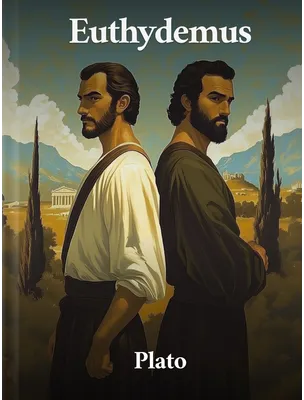
by
Plato
Dramatis Personæ
Socrates
Crito
Cleinias
Euthydemus
Dionysodorus
Ctesippus.
Scene: The Lyceum
Crito: Who was the person, Socrates, with whom you were talking yesterday at the Lyceum? There was such a crowd around you that I could not get within hearing, but I caught a sight of him over their heads, and I made out, as I thought, that he was a stranger with whom you were talking: who was he?
Socrates: There were two, Crito; which of them do you mean?
Crito: The one whom I mean was seated second from you on the right-hand side. In the middle was Cleinias the young son of Axiochus, who has wonderfully grown; he is only about the age of my own Critobulus, but he is much forwarder and very good-looking: the other is thin and looks younger than he is.
Socrates: He whom you mean, Crito, is Euthydemus; and on my left hand there was his brother Dionysodorus, who also took part in the conversation.
Crito: Neither of them are known to me, Socrates; they are a new importation of Sophists, as I should imagine. Of what country are they, and what is their line of wisdom?
Socrates: As to their origin, I believe that they are natives of this part of the world, and have migrated from Chios to Thurii; they were driven out of Thurii, and have been living for many years past in these regions. As to their wisdom, about which you ask, Crito, they are wonderful — consummate! I never knew what the true pancratiast was before; they are simply made up of fighting, not like the two Acarnanian brothers who fight with their bodies only, but this pair of heroes, besides being perfect in the use of their bodies, are invincible in every sort of warfare; for they are capital at fighting in armour, and will teach the art to any one who pays them; and also they are most skilful in legal warfare; they will plead themselves and teach others to speak and to compose speeches which will have an effect upon the courts. And this was only the beginning of their wisdom, but they have at last carried out the pancratiastic art to the very end, and have mastered the only mode of fighting which had been hitherto neglected by them; and now no one dares even to stand up against them: such is their skill in the war of words, that they can refute any proposition whether true or false. Now I am thinking, Crito, of placing myself in their hands; for they say that in a short time they can impart their skill to any one.
Crito: But, Socrates, are you not too old? there may be reason to fear that.
Socrates: Certainly not, Crito; as I will prove to you, for I have the consolation of knowing that they began this art of disputation which I covet, quite, as I may say, in old age; last year, or the year before, they had none of their new wisdom. I am only apprehensive that I may bring the two strangers into disrepute, as I have done Connus the son of Metrobius, the harp-player, who is still my music-master; for when the boys who go to him see me going with them, they laugh at me and call him grandpapa’s master. Now I should not like the strangers to experience similar treatment; the fear of ridicule may make them unwilling to receive me; and therefore, Crito, I shall try and persuade some old men to accompany me to them, as I persuaded them to go with me to Connus, and I hope that you will make one: and perhaps we had better take your sons as a bait; they will want to have them as pupils, and for the sake of them willing to receive us.
Crito: I see no objection, Socrates, if you like; but first I wish that you would give me a description of their wisdom, that I may know beforehand what we are going to learn.
Socrates: In less than no time you shall hear; for I cannot say that I did not attend — I paid great attention to them, and I remember and will endeavour to repeat the whole story. Providentially I was sitting alone in the dressing-room of the Lyceum where you saw me, and was about to depart; when I was getting up I recognized the familiar divine sign: so I sat down again, and in a little while the two brothers Euthydemus and Dionysodorus came in, and several others with them, whom I believe to be their disciples, and they walked about in the covered court; they had not taken more than two or three turns when Cleinias entered, who, as you truly say, is very much improved: he was followed by a host of lovers, one of whom was Ctesippus the Paeanian, a well-bred youth, but also having the wildness of youth.
Cleinias saw me from the entrance as I was sitting alone, and at once came and sat down on the right hand of me, as you describe; and Dionysodorus and Euthydemus, when they saw him, at first stopped and talked with one another, now and then glancing at us, for I particularly watched them; and then Euthydemus came and sat down by the youth, and the other by me on the left hand; the rest anywhere.
I saluted the brothers, whom I had not seen for a long time; and then I said to Cleinias: Here are two wise men, Euthydemus and Dionysodorus, Cleinias, wise not in a small but in a large way of wisdom, for they know all about war, — all that a good general ought to know about the array and command of an army, and the whole art of fighting in armour: and they know about law too, and can teach a man how to use the weapons of the courts when he is injured.
They heard me say this, but only despised me. I observed that they looked at one another, and both of them laughed; and then Euthydemus said: Those, Socrates, are matters which we no longer pursue seriously; to us they are secondary occupations.
Indeed, I said, if such occupations are regarded by you as secondary, what must the principal one be; tell me, I beseech you, what that noble study is?
The teaching of virtue, Socrates, he replied, is our principal occupation; and we believe that we can impart it better and quicker than any man.
My God! I said, and where did you learn that? I always thought, as I was saying just now, that your chief accomplishment was the art of fighting in armour; and I used to say as much of you, for I remember that you professed this when you were here before. But now if you really have the other knowledge, O forgive me: I address you as I would superior beings, and ask you to pardon the impiety of my former expressions. But are you quite sure about this, Dionysodorus and Euthydemus? the promise is so vast, that a feeling of incredulity steals over me.
You may take our word, Socrates, for the fact.
Then I think you happier in having such a treasure than the great king is in the possession of his kingdom. And please to tell me whether you intend to exhibit your wisdom; or what will you do?
That is why we have come hither, Socrates; and our purpose is not only to exhibit, but also to teach any one who likes to learn.
But I can promise you, I said, that every unvirtuous person will want to learn. I shall be the first; and there is the youth Cleinias, and Ctesippus: and here are several others, I said, pointing to the lovers of Cleinias, who were beginning to gather round us. Now Ctesippus was sitting at some distance from Cleinias; and when Euthydemus leaned forward in talking with me, he was prevented from seeing Cleinias, who was between us; and so, partly because he wanted to look at his love, and also because he was interested, he jumped up and stood opposite to us: and all the other admirers of Cleinias, as well as the disciples of Euthydemus and Dionysodorus, followed his example. And these were the persons whom I showed to Euthydemus, telling him that they were all eager to learn: to which Ctesippus and all of them with one voice vehemently assented, and bid him exhibit the power of his wisdom.
Then I said: O Euthydemus and Dionysodorus, I earnestly request you to do myself and the company the favour to exhibit. There may be some trouble in giving the whole exhibition; but tell me one thing, — can you make a good man of him only who is already convinced that he ought to learn of you, or of him also who is not convinced, either because he imagines that virtue is a thing which cannot be taught at all, or that you are not the teachers of it? Has your art power to persuade him, who is of the latter temper of mind, that virtue can be taught; and that you are the men from whom he will best learn it?
Certainly, Socrates, said Dionysodorus; our art will do both.
And you and your brother, Dionysodorus, I said, of all men who are now living are the most likely to stimulate him to philosophy and to the study of virtue?
Yes, Socrates, I rather think that we are.
Then I wish that you would be so good as to defer the other part of the exhibition, and only try to persuade the youth whom you see here that he ought to be a philosopher and study virtue. Exhibit that, and you will confer a great favour on me and on every one present; for the fact is I and all of us are extremely anxious that he should become truly good. His name is Cleinias, and he is the son of Axiochus, and grandson of the old Alcibiades, cousin of the Alcibiades that now is. He is quite young, and we are naturally afraid that some one may get the start of us, and turn his mind in a wrong direction, and he may be ruined. Your visit, therefore, is most happily timed; and I hope that you will make a trial of the young man, and converse with him in our presence, if you have no objection.
These were pretty nearly the expressions which I used; and Euthydemus, in a manly and at the same time encouraging tone, replied: There can be no objection, Socrates, if the young man is only willing to answer questions.
He is quite accustomed to do so, I replied; for his friends often come and ask him questions and argue with him; and therefore he is quite at home in answering.
What followed, Crito, how can I rightly narrate? For not slight is the task of rehearsing infinite wisdom, and therefore, like the poets, I ought to commence my relation with an invocation to Memory and the Muses. Now Euthydemus, if I remember rightly, began nearly as follows: O Cleinias, are those who learn the wise or the ignorant?
The youth, overpowered by the question blushed, and in his perplexity looked at me for help; and I, knowing that he was disconcerted, said: Take courage, Cleinias, and answer like a man whichever you think; for my belief is that you will derive the greatest benefit from their questions.
Whichever he answers, said Dionysodorus, leaning forward so as to catch my ear, his face beaming with laughter, I prophesy that he will be refuted, Socrates.
While he was speaking to me, Cleinias gave his answer: and therefore I had no time to warn him of the predicament in which he was placed, and he answered that those who learned were the wise.
Euthydemus proceeded: There are some whom you would call teachers, are there not?
The boy assented.
And they are the teachers of those who learn — the grammar-master and the lyre-master used to teach you and other boys; and you were the learners?
Yes.
And when you were learners you did not as yet know the things which you were learning?
No, he said.
And were you wise then?
No, indeed, he said.
But if you were not wise you were unlearned?
Certainly.
You then, learning what you did not know, were unlearned when you were learning?
The youth nodded assent.
Then the unlearned learn, and not the wise, Cleinias, as you imagine.
At these words the followers of Euthydemus, of whom I spoke, like a chorus at the bidding of their director, laughed and cheered. Then, before the youth had time to recover his breath, Dionysodorus cleverly took him in hand, and said: Yes, Cleinias; and when the grammar-master dictated anything to you, were they the wise boys or the unlearned who learned the dictation?
The wise, replied Cleinias.
Then after all the wise are the learners and not the unlearned; and your last answer to Euthydemus was wrong.
Then once more the admirers of the two heroes, in an ecstasy at their wisdom, gave vent to another peal of laughter, while the rest of us were silent and amazed. Euthydemus, observing this, determined to persevere with the youth; and in order to heighten the effect went on asking another similar question, which might be compared to the double turn of an expert dancer. Do those, said he, who learn, learn what they know, or what they do not know?
Again Dionysodorus whispered to me: That, Socrates, is just another of the same sort.
Good heavens, I said; and your last question was so good!
Like all our other questions, Socrates, he replied — inevitable.
I see the reason, I said, why you are in such reputation among your disciples.
Meanwhile Cleinias had answered Euthydemus that those who learned learn what they do not know; and he put him through a series of questions the same as before.
Do you not know letters?